HARYANA: COLLEGES TO REOPEN ON 26TH SEP FOR TRIAL RUN

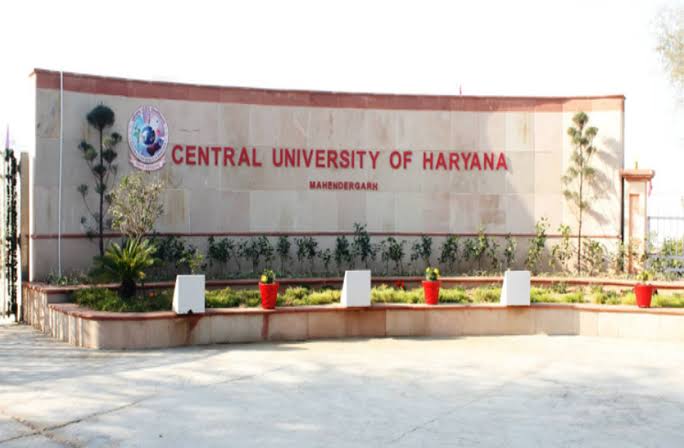
The Haryana government has allowed reopening of universities and colleges amid COVID-19 outbreak to enable the students to seek guidance from their teachers, with a trial run to start from September 26.

In a communication, dated September 22, to all universities and colleges in the state, the higher education department has directed them to complete all safety protocols related to COVID-19 and communicate the same by Friday.

The letter from the Director-General of the department refers to the Ministry of Home Affairs (MHA) guidelines wherein students from classes 9 to 12 are allowed to visit schools from September 21 on voluntary basis for taking guidance from their teachers with their parents’ consent.

“Keeping this in view, the universities and colleges may also be allowed to open for students seeking guidance from teachers in a staggered manner,” the letter read.

All protocols recommended by the government, including for sanitisation and social distancing, shall be followed by the institutions, as per the letter.

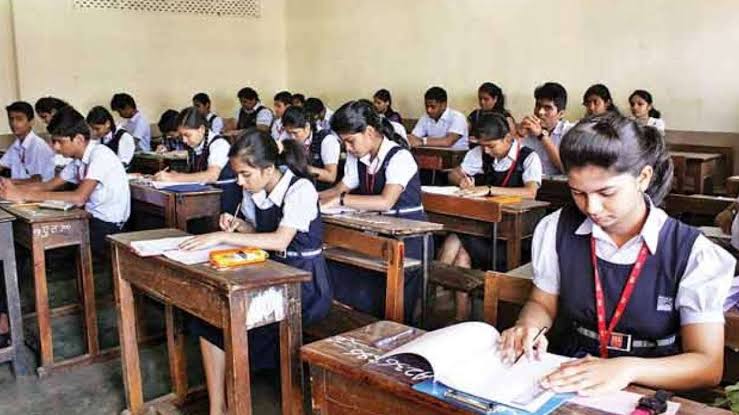
After remaining shut for the past six months due to the COVID-19 outbreak, the Haryana government had recently allowed students of classes 9 to 12 to visit their schools in areas outside COVID containment zones, on voluntary basis for academic guidance.

The decision was taken in compliance with the Unlock-4 guidelines issued by the Union Ministry of Home Affairs.

In view of the coronavirus-induced lockdown, educational institutes across the country have switched to online mode to impart academic lessons.

According to the schedule prepared by the Haryana higher education department, Bachelor of Arts (BA) first-year students may visit the colleges and universities between 9 am to 12 noon on Mondays and Tuesdays.

“BCom and BSc first-year students will visit the institutes between 12.30 pm to 3.30 pm on Mondays and Tuesdays.

BA second-year students will visit on Wednesdays and Thursdays between 9 am and 12 pm, while BCom and BSc second-year students may go between 12.30 pm to 3.30 pm on Wednesdays and Thursdays.

“BA third-year and Post Graduation (PG) first year students may visit the colleges between 9 am to 12 noon on Fridays and Saturdays; while BCom and BSc final-year students and PG second-year students can go between 12.30 pm to 3.30 pm on Fridays and Saturdays,” the letter added.

Energy Vampires.

We all have a finite amount of energy to use each day and we’re exposed to people who either fill us with energy or drain us of energy. People who drain our energy are known as energy vampires. These people could be colleagues, friends, family members – even people we encounter while out running errands.

Some people bring unexpected lightness and comfort to your life. They crackle with energy, practically electrify you with their presence. And then there are those who leave you feeling stressed out. Or guilty. Or exhausted down to your very last molecule. They are called energy vampires, and obnoxious or meek, they come in all forms.

The sobbing people, always considers themselves the victim. The world is always against them and they’ll recount every horrible thing that has happened to them, wallowing in every perceived slight.

The charmer is a constant talker or joke-teller who has to be the center of attention. The blamer, on the other hand, doles out endless servings of guilt. And then there’s the drama queen, the co-worker who claims that he/she almost died from a high fever or the neighbor who lives in extremes of emotion—life is unbelievably good or horrifically bad.

No matter which type of energy vampire you’re dealing with, you’re allowed to walk away. Many of us find this really hard to do. We’re afraid of being thought of as impolite; we don’t want to offend people. But there are plenty of ways to remove yourself from a killing conversation. When leaving isn’t an option, you can still maintain your energy level by making a few minor adjustments.

One of the first things to do is to recognize when you’re being drained, and that begins with tuning in to your physical reactions. Is there a tightening in your chest when a certain person enters the conversation? Do you feel tired when you hang up the phone after speaking with someone?

Setting boundaries is one the ways of protecting yourself; you draw a line saying, for instance, “This is what I can do for you, and this is what I can’t.” You don’t have to convince the vampire of the rightness of your stance. Getting defensive simply adds to the negative charge of the encounter. You want to remain neutral. When someone starts pushing your buttons, and you start sizzling inside, you’ve got to make the decision not to react.

One of the first things to do when dealing with these people is to figure out if they are a temporary vampire or whether they are inherently an energy vampire. Temporary energy vampires might be going through a difficult time in their life (divorce, loss of a family member, job, etc.). In the short-term, they need to lean on others and that’s okay, even though it may be draining.

Conversely, inherent energy vampires are always this way; and they aren’t looking to change. The easiest way to identify this type of person is to assess how you feel after you walk away from them. If you feel exhausted, then chances are that person is an energy vampire.

In  most cases, you have the freedom to excise this person from your life entirely. This may seem dramatic, but you have to remember that you’re protecting yourself in the end.

By recognizing the toxic behaviors of these people and trying to put an end to it, you’re protecting yourself, your health, and your overall well-being.

No one deserves to be mistreated or used in this manner. It’s certainly not your fault.

Some people refuse to accept responsibility for their own emotional maturity — and that isn’t your burden to bear.

Bhopal to follow Indore waste management system

The protem speaker of Madhya Pradesh Legislative Assembly, Rameshwar Sharma (MLA from Huzur Vidhan Sabha constituency of Bhopal) and Bhopal municipal commissioner, KVS Choudhary visited the city on Thursday to know about Indore’s waste management system.They were welcomed by Indore collector Manish Singh and Indore municipal commissioner, Pratibha Pal at Regional Park. IMC additional commissioner Sandeep Soni was also present.

The duo visited the trenching ground to see the garbage management and the processing plants installed there. They were informed about the segregation of dry and wet garbage as well as the processing of garbage. IMC additional commissioner Soni told them about the door-to-door garbage collection in the city and the use of wet garbage in making manure. Also, he informed them about the dry waste plant where 12 kinds of material were segregated and then recycled into useful material. He also told them about the construction of a park at trenching ground where earlier there used to be mounds of rotting garbage.

The protem speaker and Bhopal municipal commissioner also visited the Bio-gas plant near Choithram Mandi where the wet garbage collected from the mandi is processed in the plant to make a bio-gas.

The protem speaker, Sharma told the officers about the problem of garbage in his constituency. He said that there is no garbage processing or recycling unit in his constituency due to which mountains of garbage can be seen in his area. Due to this problem, nearby water bodies have also got contaminated.

He appreciated the Indore model of garbage processing and said that he will try to replicate such a model and management system in his constituency. He instructed the Bhopal municipal commissioner Choudhary to observe the things minutely and bring similar developments in Bhopal.

BIHAR SCHOOLS TO OPEN PARTIALLY FROM 28TH SEPTEMBER FOR HIGHER CLASSES

Schools in Bihar will partially reopen from September 28, for students of Class 9 to Class 12 belonging to non-containment zones. An order issued by the state education department on Tuesday said that Classes 9-12 students will be allowed to visit schools for seeking academic guidance, following health advisories and SOPs issued by the Central Government.

However, hostels and coaching institutes in the state will continue to remain closed. Classes 9-12 students visiting schools will be subject to written consent from parents, the order said.

Bihar School Reopening Guidelines & SOPs

  1. No students or teachers from containment zones to be permitted to attend the school
  2. Proper sanitization protocol, as laid out by the Health Ministry, has to be followed before the schools reopen and thereafter.
  3. Only 50 per cent teaching and non teaching staff allowed to schools on any given day
  4. Only one third of students allowed to attend classes
  5. School management would be required to prepare a schedule for the classes such that students are allowed to attend the classes for two days in a week
  6. Wearing for face mask is mandatory for students whilst in schools – in classrooms as well as on the campus
  7. Instructions to manage social distancing properly to be provided to students and strictly maintained
  8. Students will have to carry their own hand sanitisers and wash their hands at regular intervals

Tariq Anwar honored by All India Qaumi Tanzeem

Tariq Anwar was honoured by a welcome reception thrown by the All India Qaumi Tanzeem.


He has been elevated to the All India Congress Committee (AICC) as a general secretary and was also Included in the top most policy making part – Congress working committee (CWC) for which the ceremony was conducted.


It was organised under the guidance of Abdul Sami Salmani, director of AIQT, Delhi. On this occasion. The Delhi director and the South Delhi Director Syed Kamruddin, Both said that Tariq is a known face in the Congress party, experienced politician and the party will be benefited after this elevation. The both thanked the Congress President Sonia Gandhi and Rahul Gandhi and added that the Tanzeem will work towards strengthening the party.


Syed Kamruddin said, “Static unwed has a clear past and we will all play an important role in making the Congress stronger. We will follow the rules of Tariq ji because His previous tenure cannot be forgotten as he always worked for the betterment of the society as a whole, without discriminating. The Congress took the right step at the right time.”


Abdul Sami Salmani said, “In the past, Tarik Anwar has been honoured with this position, He has great achievements in that tenure and will have that in future too.”


Maulana Allauddin, MD. Imtiaz, MD. Yusuf Chowdhury, Shankat Ali, Subrat Ali, Foorkhan Salmani were also present in this reception.

Beauty standards.

Throughout human history, the world has witnessed several unusual and downright bizarre traditions when it comes to upholding standards of beauty. Through the ages, standards of beauty, and the means to achieve them, have tested our limits for gross and gag-inducing phantom pains.

From the long list of strange beauty practices, here is our rundown of the most bizarre rituals from across the world. Beauty truly lies in the eyes of the beholder, or the tribe or community that conditions you to buy in to a painful oppressive notion of beauty. Here’s proof.

1. Receding Hairline.
In 14th century England, the forehead was considered the most beautiful part of a woman’s face, and women went to great lengths to expose their forehead. From plucking their eyebrows to gradually pulling out and reducing their hairline, women tried it all to get the perfect oval face.

2. Men’s calves over abs.
Women’s legs are highly admired these days, but back in the Middle Ages and well through the 18th century, men’s calves were what it was all about. Men wore stockings like women in order to show off their well-shaped calves, and some even wore padding inside their stockings to improve their unsatisfactory gams. King Henry VIII, for example, was renowned for his excellent calves.

3.Beauty Patches were in.
In the 18th century, the previous standard of bare-faced women disappeared, and women began wearing heavy makeup. They also started wearing beauty patches, small pieces of fabric that were adhered to the face. They came in many shapes, such as stars, circles, and squares, and their placement on the face had specific meaning. For example, one by the mouth implied flirtatiousness, and one on the right cheek meant that the woman was married.

4. Dimple horror in the 1930’s.
In 1936, Isabelle Gilbert invented a machine that allegedly created dimples. Marketed to women, the machine had two knobs that pressed into the wearer’s cheeks.
The device was painful, and it didn’t even work. Plus, the American Medical Association said it could potentially cause cancer. Luckily, this trend didn’t last long

5. Thin waist madness.
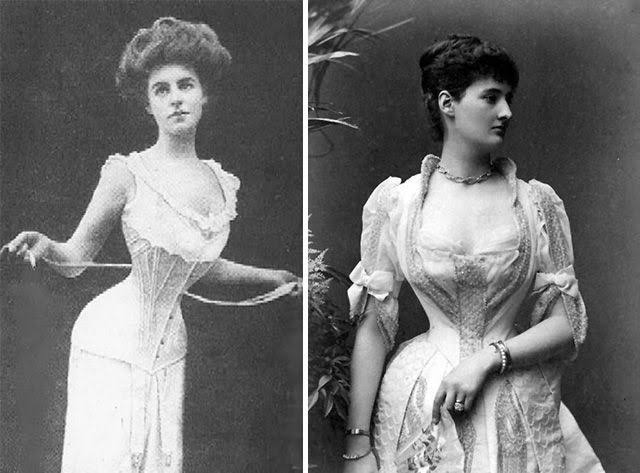
Although the hourglass figure has always held a special appeal across Western cultures, the Victorians took their obsession to a whole new level in their use of corsets. These waist-cinching devices, while successful in achieving a “wasp waist,” had some major health repercussions. Besides causing fainting spells, which the era’s ladies unsurprisingly became famous for, the restriction on women’s lungs likely worsened potentially deadly ailments like pneumonia and tuberculosis.

6. Unibrow.
The Greeks embraced a truly low maintenance beauty look: the unibrow. Yes, that’s right—no need for tweezers back in the ancient days. This singular stretch of hair was so desirable—it denoted intelligence—that separated brows were even joined using kohl or dark pastes.

7. Obsession with Fair skin tone.
In India, fair complexion is considered the ultimate beauty standard. Although the natural skin of Indian women is of beautiful brown colour, still they are compelled by society to use products to make their skin colour ‘lighter’ and hence ‘beautiful truly’.

Korean women, also consider fair, very fair skin to be the ultimate beauty standard. In the country, darker skin is considered a sign of low social status and lesser wealth. They willingly hide their naturally beautiful porcelain skin under an artificial sham of blinding fairness.

Interim Extension of Rashtriya Uchchatar Shiksha Abhiyan

The second phase of the Centrally Sponsored Scheme of Rashtriya Uchchatar Shiksha Abhiyan (RUSA) was approved by the Cabinet Committee for Economic Affairs for a period of three years i.e. 1st April 2017 to 31st March 2020.

The Ministry of Finance vide their O.M. no. 42(02)/PF-II/2014 dated 10th January, 2020 has given an interim extension of the schemes beyond 31st March 2020 till 31st March 2021 or till the date the recommendations of 15th Finance Commission come into effect, whichever is earlier. Further, according to this O.M., the approval for continuation of the scheme for the 15th Finance Commission cycle would be based on an evaluation report and outcome review.

This information was given by the Union Minister for Human Resource Development, Shri Ramesh Pokhriyal ‘Nishank’ in a written reply in the Rajya Sabha today.

NEP to create a new system that is aligned with the aspirational goals of 21st century education : Education Minister

Ministry of Education has announced the National Education Policy 2020 (NEP 2020) on 29.07.2020 after obtaining approval of Cabinet which is available at Ministry of Education’s website at https://www.mhrd.gov.in/sites/upload_files/mhrd/files/NEP_Final_English_0.pdf. NEP 2020 is the first education policy of the 21st century and aims to address the many growing developmental imperatives of our country. This Policy proposes the revision and revamping of all aspects of the education structure, including its regulation and governance, to create a new system that is aligned with the aspirational goals of 21st century education, including Sustainable Development Goal (SDG) 4 of ensuring free, equitable, and quality primary and secondary education for all children, while building upon India’s traditions and value systems.

The NEP 2020 has been finalised after detailed consultation process with all stakeholders including State/UT Governments. This Ministry has communicated to all States/UT Governments for implementation of NEP 2020 in letter and spirit. Ministry of Education is also organising ‘Shikshak Parv’ from 8th September to 25th September, 2020 to deliberate on various themes and implementation of NEP 2020 aimed at eliciting suggestions. Ministry has also organised a Conference of Governors on “Role of National Education Policy in Transforming Higher Education”. In the conference, Governors and Lt. Governors of State and Union Territories, Education Minister of State and UTs, Vice Chancellors of State Universities and other dignitaries participated. There has been wide publicity with a positive and overwhelming response from stakeholders on NEP 2020.

This information was given by the Union Education Minister, Shri Ramesh Pokhriyal ‘Nishank’ in a written reply in the Rajya Sabha today.

Steps taken for Training of teachers for online classes

DIKSHA has been leveraged to deliver online courses to teachers on multiple competencies. Till now, 6 states, NCERT and CBSE have already started their programs and have uploaded more than 200 courses and have collectively trained 12 Lakh teachers. This has led to 8 crore learning sessions for these teachers.

CBSE has uploaded 20 courses on competencies like Experiential learning, pedagogical competencies, ICT etc. and have trained more than 1 Lakh teachers already. NCERT has also started leveraging DIKSHA and has uploaded 2 courses and NISHTHA training modules are being uploaded with the goal of training 40 Lakh teachers across the country.

States such as UP has launched 88 courses, Gujarat has launched 30 courses, Madhya Pradesh has uploaded 11 courses and both Haryana and Rajasthan have launched 5 courses which are relevant to the needs of their teachers leading to high enrolment and completion rate.

The courses are available on https://diksha.gov.in/explore-course

This information was given by the Union Education Minister, Shri Ramesh Pokhriyal ‘Nishank’ in a written reply in the Rajya Sabha today.

Provision of Multi Disciplinary Study Options in Rural Areas Under NEP

On the issues of multidisciplinary options, the National Education Policy, 2020 has stated that teacher preparation will also be done in integrated and multidisciplinary manner. The policy also states that to ensure an adequate number of teachers across subjects – particularly in subjects such as art, physical education, vocational education, and languages – teachers could be recruited to a school or school complex and the sharing of teachers across schools could be considered in accordance with the grouping-of-schools adopted by State/Union Territory Governments.

The National Education Policy, 2020provides that to prepare an initial cadre of high-quality Early Childhood Care and Education (ECCE) teachers in Anganwadis, current Anganwadi workers/teachers will be trained through a systematic effort in accordance with the curricular/pedagogical framework developed by the National Council of Educational Research and Training (NCERT). Anganwadi workers/teachers with qualifications of 10+2 and above shall be given a 6-month certificate programme in ECCE; and those with lower educational qualifications shall be given a one-year diploma programme covering early literacy, numeracy, and other relevant aspects of ECCE. These programmes may be run through digital/distance mode using DTH channels as well as smartphones, allowing teachers to acquire ECCE qualifications with minimal disruption to their current work. The ECCE training of Anganwadi workers/teachers will be mentored by the Cluster Resource Centres of the School Education Department which shall hold at least one monthly contact class for continuous assessment.

This information was given by the Union Education Minister, Shri Ramesh Pokhriyal ‘Nishank’ in a written reply in the RajyaSabha today.

Selection of candidates for 2019-20 under the MANF Scheme has been made through JRF-NET examination conducted by National Testing Agency: Sh Mukhtar Abbas Naqvi

The Ministry of Minority Affairs implements Maulana Azad National Fellowship (MANF) Scheme for educational empowerment of students belonging to six notified minority communities i.e. Buddhist, Christian, Jain, Muslim, Sikh, Zoroastrian (Parsi). Selections under the MANF Scheme are done as per the approved guidelines.

The MANF Scheme is implemented through the University Grants Commission (UGC) and no waiting list is prepared under the Scheme by UGC.

Candidates belonging to the Six centrally notified minority communities’ viz., Buddhist, Christian, Jain, Muslim, Sikh, Zoroastrian (Parsi) are considered for award of fellowship under the MANF Scheme.

The selection of candidates for 2019-20 under the MANF Scheme has been made through JRF-NET (Junior Research Fellow- National Eligibility Test) examination conducted by National Testing Agency and the merit list has been prepared by UGC on the basis of all India ranking of candidates. Prior to 2019-20, the merit list was prepared on the basis of marks obtained by the candidates in their Post Graduate examination. However in 2018-19 only the candidates who had qualified CBSE-UGC-NET/JRF or CSIR-NET/JRF were eligible to apply.

This information was given by Shri Mukhtar Abbas Naqvi, Minister of Minority Affairs, in a written reply in the Lok Sabha today.

Government Schemes/programmes for welfare and development of minorities

Ministry of Minority Affairs implements various programmes/schemes across the country for the welfare and development of the six (6) centrally notified minority communities namely, Buddhists, Christians, Jains, Muslims, Parsis and Sikhs as under:-

(1) Pre-Matric Scholarship Scheme, Post-Matric Scholarship Scheme, Merit-cum-Means based Scholarship Scheme – For educational empowerment of students, through Direct Benefit Transfer (DBT) mode.

(2) Maulana Azad National Fellowship Scheme – Provide fellowships in the form of financial assistance.

(3) NayaSavera – Free Coaching and Allied Scheme – The Scheme aims to provide free coaching to students/candidates belonging to economically weaker sections of minority communities for preparation of entrance examinations of technical/ professional courses and competitive examinations.

(4) PadhoPardesh – Scheme of interest subsidy to students of economically weaker sections of minority communities on educational loans for overseas higher studies.

(5) Nai Udaan – Support for students clearing Prelims conducted by Union Public Service Commission (UPSC), State Public Service Commission (SPSC) and Staff Selection Commission (SSC) etc.

(6) Nai Roshni – Leadership development of women belonging to minority communities.

(7) SeekhoAurKamao – Skill development scheme for youth of 14 – 35 years age group and aiming at improving the employability of existing workers, school dropouts etc.

(8) Pradhan Mantri Jan Vikas Karyakram (PMJVK) – Implemented for the benefit of the people from all sections of the society in identified Areas for development of infrastructure projects with emphasis on education, skill , health sectors etc.

(9) Jiyo Parsi – Scheme for containing population decline of Parsis in India.

(10)USTTAD (Upgrading the Skills and Training in Traditional Arts/Crafts for Development) – Launched in May 2015 aims to preserve rich heritage of traditional skills of indigenous artisans/craftsmen. Under this scheme HunnarHaats are also held all over the country to provide nation-wide marketing platform to Minority artisans & entrepreneurs and to create employment opportunities.

(11) Nai Manzil – A scheme for formal school education & skilling of school dropouts

launched in Aug. 2015.

(12) HamariDharohar- A scheme to preserve rich heritage of minority communities

of India.

(13) Maulana Azad Education Foundation (MAEF) implements education and employment oriented related programmes as follows (a) Begum Hazrat Mahal National Scholarship for Meritorious Girls belonging to the economically weaker sections of Minorities under which scholarship is awarded to minority girl students (b) Gharib Nawaz Employment Scheme started in 2017-18 for providing short term job oriented skill development training to youth. (c) Bridge Course for madarsa students & school dropouts.

(14) Equity to National Minorities Development and Finance Corporation (NMDFC) for providing concessional loans to minorities for self-employment and income generating ventures.

In addition to the above, the Ministry also implements schemes for strengthening State Waqf Boards and coordinates arrangements for annual Haj pilgrimage.

Details of the schemes and its achievements in the country are available on the website of the Ministry ( www.minorityaffairs.gov.in) and on the website of MAEF (www.maef.nic.in) and NMDFC (www.nmdfc.org.) respectively).

This information was given by Shri Mukhtar Abbas Naqvi, Minister of Minority Affairs, in a written reply in the Lok Sabha today.

Webinar on “Examination and Assessment Reforms” under Shikshak Parv Initiative

A webinar on Examination and Assessment Reforms organised under Shiksha Parv, a series of Webinars to highlight the salient features of the New Education Policy (NEP 2020) on 21st September, 2020. Prof. Sridhar Srivastava, Joint Director, NCERT was the coordinator. Prof Yagnamurthy Sreekanth, Principal Regional Institute of Education, Mysuru; Dr Joseph Emmanuel, Director Academics, CBSE and Shri Surrender Singh, National Teacher Awardee were the key speakers. The webinar witnessed some great presentations from the speakers.

The major recommendations of NEP 2020 regarding assessment reforms were highlighted in the presentation of Prof. Shridhar Srivastava. He began by tracing the timeline of assessment practices in India from Pre-independence era to today. In terms of assessment, while National Policy on Education (NPE) 1968 recommended a shift in the focus of evaluation from certification to improvement in learning, NPE 1986 suggested elimination of excessive element of chance and subjectivity, de-emphasizing memorization, introduction of Continuous and Comprehensive Evaluation (CCE), use of grades in place of marks and introduction of semester system from secondary stage in a phased manner. Today, the New Education Policy 2020 (NEP-2020) emphasizes on transforming assessment for optimizing learning and development of all students.

Prof. Srivastava explained that NEP-2020 focuses on – regular, formative and competency-based assessment, promoting learning and development of students and testing higher-order skills (analysis, critical thinking and conceptual clarity etc.). The goal of NEP-2020 is to transform the culture of assessment.

He appreciated the provision in NEP-2020 regarding support for Gifted Students. Gifted/Talented students will be encouraged to pursue realm beyond the general school curriculum.

Prof. Srivastava concluded his presentation by calling on all stakeholders to work together for the successful implementation of NEP-2020 to fulfil the aspirations of 260 million students, their parents, teachers and the school system.

Prof. Yagnamurthy Sreekanth started his presentation by quoting the recommendation of Radhakrishnan Commission (1948-1949)- “If there is one thing to be reformed in education, it is the examination system”. He acknowledged that over the time India has moved from examination to evaluation and now to assessment. Still, more work needs to be done. He explained that research shows that students learning improve through active participation. Retention is significantly higher when learning involves discussion, practice by doing and teaching others.

Prof. Sreekanth detailed the benefits of formative assessment. ‘Assessment for learning’ and ‘assessment as learning’ are critical. He said that, formative assessment is an important tool for integrating teaching-learning and assessment. It also minimizes the load on teachers of documentation and encourages child- centred and activity based pedagogy. The focus is on competency development rather than content memorisation, which makes the assessment non-threatening and stress free for the students. Formative assessment is useful for broadening the scope of assessment by way of including self-assessment, peer-assessment besides teacher assessment, focusing on learning rather than evaluation of achievement, reposing faith on teacher leads to motivation and enhancing self confidence in pupils.

Dr. Joseph Emmanuel’s presentation focused on the Plan of Action for assessment reforms from the perspective of an implementing agency, namely CBSE.

Dr. Emmanuel acknowledged that the present Board Examinations have become high stakes with a lot of emphasis on marks. He highlighted the steps CBSE is taking to change this. Internal Assessment is conducted in all subjects and given due weightage of 20% in final examination to distribute the burden. CBSE has also incorporated different sets of questions such as objective type questions (MCQs and other types), source- based and case-based questions etc. to focus on higher level competencies beyond recall and understanding. He specified that CBSE has started two levels Mathematics Examination –Basic and Standard in 10th class to cater to different kinds of learners and reduce overall student stress levels. A similar model will be replicated in 12th class as well

Furthermore, Dr. Emmanuel informed the audience that CBSE has come out with handbooks and manuals as steps towards Competency-based education. CBSE has started handholding school leaders to kickstart transformation of assessment practices. It has come out with a Handbook for Principals, where principals are guided in their role of pedagogical leaders. Recently, CBSE has released a Handbook on 21st Century Skills, he added. There are also handbooks for teachers and students available such a as ‘Cogito’ and ‘The Question Book’–A series on Thinking skills for students and Teacher Energized Manuals (TERM) of Science and Mathematics.

Shri Surrender Singh shared the practitioner’s perspective on assessment. He mentioned that the pattern of examination has remained unchanged for a very long time. The main aim for students has become getting good marks. Society too gives preferential treatment to those who attain high marks. He opined that it is time that the main aim of examination should shift towards all-round development of students. He stated that assessment should facilitate attainment of competencies specified in terms of learning outcomes in a holistic manner during teaching learning process. The focus should be on holistic child development and assessment of all the related areas should go hand in hand.

Development in MSME Sector

As a measure to help the MSMEs grow, the Government, vide notification no.S.O. 2119 (E) dated 26.06.2020, has notified composite criteria of classification of MSMEs based on investment in plant and machinery or equipment and turnover of the enterprise. The new criteria is effective from 1.7.2020. However, to provide hassle free transition from old system of Udyog Aadhaar Memorandum to Udyam Registration, 31.03.2021 has been fixed as deadline. The New criteria provides that the turnover with respect to exports will not be counted in the limits of turnover for any category of MSME units whether micro, small or medium. There is no difference between manufacturing and service sector enterprises. The actual figures for Turnover with different investment limits depend upon a variety of socio-economic factors such as demand from consumers, Inflation, availability of labour and raw materials, price fluctuations, etc., in different cases. There is no uniform investment / turnover ratio. The new composite criteria is expected to bring about many benefits. This will also help in attracting investments and creating more jobs in the MSME sector. Moreover, the Udyam registration portal developed by this Ministry has facilitated MSMEs by providing the MSMEs to link themselves with (i) GeM portal for ensuring their participation in Government procurements, (ii) linkages with TReDS platform for helping the MSEs in realizing their delayed payments (iii) In case of change in status as a result of re classification due to changes in investment or turnover, the benefit associated with the status would be effective from 1st April of the financial year following the year in which such change took place.

This information was given by Shri  Pratap Chandra Sarangi, Minister of State for Micro, Small and Medium Enterprises in written reply to a question in Lok Sabha today.