Implementation of PMEGP Projects Records 44% Jump in 2020

At a time when the country’s economy took a severe jolt due to Covid-19 lockdown, the flagship Prime Minister Employment Generation Program (PMEGP) implemented by Khadi and Village Industries Commission (KVIC) progressed at a much rapid pace. Thanks to a major decision of the Ministry of MSME introducing a new&faster mechanism  in approving the PMEGP projects, the approval of projects during the first five months of this financial year, i.e. from April 1, 2020 to August 18, 2020, increased by a whopping 44%.

Khadi and Village Industries Commission (KVIC), has approved and forwarded 1.03 lakh project applications to the financing banks as compared to 71,556 projects during the corresponding period last year and thus registering a jump of 44%.

PMEGP is the flagship employment generation program of the Central government and KVIC is the nodal agency for implementing the scheme. The Ministry on April 28, this year amended the guidelines to do away with the role of the District Level Task Force Committee (DLTFC) in approving the PMEGP projects. The role of DLTFC, headed by the District Collectors, was time consuming. As such, the swift execution of projects under PMEGP and KVIC was demanding doing away with the same as this important scheme required greater priority. As per the amended guidelines, KVIC, the nodal agency for implementing PMEGP scheme, was entrusted the task of clearing the applications from prospective entrepreneurs and forward it to the Banks for taking credit decisions.

During the period from April to August in 2020, financing banks sanctioned 11,191 projects and Rs 345.43 crore margin money was disbursed to applicants as compared to Rs 276.09 crore margin money disbursed for 9161 projects in the first five months of previous year, i.e. 2019. The number of sanctioned projects by banks thus increased by 22% while the disbursement of margin money by KVIC increased by 24% as compared to previous year.

The faster implementation of PMEGP projects this year assumes greater significance as the entire country was under lockdown for most part of these five months. The higher number of projects also signifies the government’s resolve to create self-employment and sustainable livelihood for the people by promoting local manufacturing.

KVIC Chairman Shri Vinai Kumar Saxena said the massive jump in approval of PMEGP projects is a result of the  Prime Minister’s call for “Minimum Government, Maximum Governance”. “Discontinuing the role of District Collectors has ensured swift implementation of the projects. However, the banks must also expedite the process of sanctioning funds so as to benefit the maximum number of applicants. Timely disbursal of funds is crucial for execution of projects and creating employment in the country,” Saxena said.

Union Minister of Agriculture and Farmers’ Welfare Shri Narendra Singh Tomar holds meeting with industry representatives on initiatives and reforms for rapid agricultural development and increasing farmers’ incomesGovernment making concerted efforts to bring reforms in agricultural marketing and freeing agriculture sector of various restrictions through strategic interventions – Shri TomarIndustry representatives appreciate efforts of Government in bringing rapid farmer centric reforms to unleash the potential of the agriculture sector and move towards “One Nation, One Market”

Union Minister of Agriculture and Farmers’ Welfare Shri Narendra Singh Tomar held a meeting through Video Conference today with industry representatives on the Ordinances i.e “the Farmers’ Produce Trade and Commerce (Promotion and Facilitation) Ordinance, 2020” and “The Farmers (Empowerment and Protection) Agreement on Price Assurance and Farm Services Ordinance, 2020” promulgated by Government of India. Shri Parshottam Rupala, Minister of State for Agriculture, Shri Sanjay Agarwal, Secretary (Agriculture) and senior officers of the Department of Agriculture, Cooperation and Farmers Welfare were present.

Speaking on the occasion, the Union Minister of Agriculture and Farmers’ Welfare thanked Prime Minister Shri Narendra Modi for his vision in bringing strategic interventions in market reforms for rapid agricultural development and increasing farmers’ income. He mentioned that the Government is taking several measures for the welfare of farmers with a specific focus on ‘AatmaNirbhar Bharat’. The Ministry has been making concerted efforts to bring reforms in agricultural marketing and freeing agriculture sector of various restrictions through strategic interventions.

Giving details of various initiatives, Shri Tomar said that the Government has created the  Agriculture Infrastructure Fund of Rs. 1 lakh crore to be used over the next four years. This fund is for building post-harvest storage and processing facilities, largely anchored at the Farmer Producer Organisations (FPOs), but can also be availed by individual entrepreneurs. The Agriculture Infrastructure Fund would facilitate in strengthening the agricultural infrastructure, development and improvement of warehouses, cold storage, pack houses and marketing facilities in the rural areas, which would enhance the income of farmers and boost rural economy. He stated that within one month of its approval by the Union Cabinet, the Prime Minister has inaugurated the Agriculture Infrastructure Fund on 9th August 2020 and Rs. 1128 crore has been sanctioned to Primary Agriculture Credit Cooperative Societies.

More than 8 lakh net subscribers added during first quarter of FY 21: EPFO payroll data


The provisional payroll data published by EPFO on 20th August 2020 reveals that the subscriber base of EPFO increased by around 8.47 lakh members during the first quarter of FY21. The COVID-19 pandemic outbreak had adversely affected the enrolments in the month of April and May 2020. Despite the lockdown, around 0.20 lakh and 1.72 lakh net new subscribers were added to social security schemes of EPFO in the month of April and May 2020.The month of June has seen speedy recovery with addition of 6.55 lakh net subscribers registering a remarkable 280% month on month growth. The data published comprises of all the new members who have joined during the month and whose contribution is received.

The subscriber base growth is on account of increased number of new subscribers, lower exits and higher rejoining by exited members. The new subscriber joining has increased roughly by 64 % from 3.03 lakh in May to 4.98 lakh in June 2020. In addition, the exits from EPFO subscriber base declined by nearly 33% from 4.45 lakh in May to 2.96 lakh in June 2020.

The number of members who exited and then rejoined, indicates switching of jobs by subscribers within the establishments covered by EPFO.  This has also increased by approximately 44% for the month of June, 2020 over May, 2020, with more subscribers choosing to retain membership by transferring funds rather than opting for final settlement.

Gender wise analysis highlights that the new enrolment of female workers has improved from 37085 in April 2020 to 106059 in June 2020 in absolute terms, even though the overall female participation in workforce remains low.

Category wise analysis of industry indicates “Expert services” category had a share of approximately 46% and 45% during 2018-19 and 2019-20 respectively. In the first quarter of 2020-21 it stands at 52.7% which is reflecting that many industries are yet to recover but Expert Services has made good progress. The absolute figure for net enrolment in Expert Services category during June 2020 is 3.45 lakh, which is more than the monthly average of 3 lakh during 2019-20. Expert services predominantly consist of man power agencies, private security agencies and small contractors.

The new establishments that remitted their first ECR has grown from its low of 820 in April 2020 to 1802 in May. In the month of June 2020 the growth continued with 2390 establishments registering their first ECR recording a month on month growth of 32%

EPFO manages social security funds of workers in the organised/semi organised sector in India and has more than 6 crore active members. The payroll data is provisional as updation of employee records is a continuous process and it gets updated in subsequent months.

Dr. Harsh Vardhan launches an interactive game and IEC content to promote COVID Appropriate Behaviours“Social Vaccine against COVID-19 no Rocket Science”


Dr. Harsh Vardhan, Union Minister of Health & Family Welfarelaunched an interactive first-of-its-kind game on COVID-19, The Corona Fighters (www.thecoronafighters.in), and two new videos urging adherence to key COVID Appropriate Behaviours, here today, in the presence of Sh. Ashwini Kumar Choubey, Minister of State for Health & Family Welfare.

Expressing his pleasure at the launch of theuniquely designed game, Dr. Harsh Vardhan said that the game “presents a new and extremely creative way to teach people the right tools and behaviours to fight the Covid-19 pandemic.” He stated that the game was designed to “influence the players’ actions in the real world, reminding them to take the right precautions and escape infection.”He further added that this along with two promotional videos “is a simply designed and enjoyable medium to get a serious message across to the wider public.”

Dr Harsh Vardhan also recollected his experience with the Polio Abhiyaan which was transformed into a social movement through Jan Bhagidari (people’s participation) and support and contribution of many film industry professionals.He said, “The Pulse Polio programme,through its targeted and engaging IEC and outreach campaigns, encouraged the last mile mothers to get their children immunized. The same effort can contain COVID by publicizing COVID appropriate behaviour through caller tunes and other mediums throughout the lockdown and thereafter during the phases of unlocking.” Till we get a vaccine for fighting COVID-19, the COVID appropriate behaviours will serve as a potent social vaccine and keep us protected and safe, he stated.

Congratulating the makers of the game and promotional videos, Shri Ashwini K. Choubey said, “Communication is the key in today’s world. It has played a great part in the fight against COVID during the lockdown when the trajectory of the disease and its containment strategy could be effectively communicated to the last man.” The IEC videos and game launched today  will influence children, and through them the elders in the community, and spread the message and importance of COVID appropriate behaviour,” he added.

Dr V K Paul, Member (Health), NITI Aayog, Shri Rajesh Bhushan, Secretary for Health and Family Welfare, Shri Parmeswaran Iyer, Secretary, Department of Drinking Water and Sanitationin, and senior officials of the Health Ministry were also present at the occasion.

Union Minister Dr Jitendra Singh virtually releasing a book on Cancer edited by noted Oncologist Dr Ashok Vaid.

Union Minister Dr Jitendra Singh, who is himself a known Diabetologist and medical professional, released a book on Cancer edited by noted Oncologist and Padma Shree recipient, Dr Ashok K. Vaid DM (Oncology) in a special session organized exclusively for the ceremony during the 3 -day virtual conference on Oncology beginning here from today.

Referring to the changing spectrum of disease in India, Dr Jitendra Singh said, over the last two decades there had been a significant shift from communicable diseases to non-communicable diseases with an upsurge in disorders like Diabetes Mellitus, hypertension, Coronary Heart Disease and Cancer. Meanwhile, he said, we were suddenly taken over by COVID pandemic which has also proved to be more virulent for susceptible individuals suffering from these comorbidities and diseases.

Dr Jitendra Singh said, the prevalence of Cancer has rapidly increased across the country and has begun to affect different organs. For example, while in Jammu & Kashmir, particularly in the Valley, Gastrointestinal and Lung Cancers are more prevalent, in the North Eastern Region Cancers of head and neck take the highest toll.

Hailing the National Digital Health Mission launched by Prime Minister Narendra Modi on the Independence Day, Dr Jitendra Singh said, this is going to provide a unique health identity to every Indian citizen in order to facilitate seamless flow of information and updated healthcare. This, he said, along with Ayushman Bharat and ban on e-cigarette, have been among the major health related initiatives of the Modi government.

PM congratulates cities which have secured top positions in Swachh Survekshan-2020

The Prime Minister, Shri Narendra Modi has congratulated cities which have secured top positions in Swachh Survekshan-2020.

The Prime Minister said, “Congratulations to all those cities who have secured top positions in Swachh Survekshan-2020. May other cities also be inspired to further ramp up their efforts towards ensuring cleanliness. Such competitive spirit strengthens the Swachh Bharat Mission and benefits millions.”

Ministry of Tribal Affairs and Ministry of Rural Development Sign a Joint Communication to Promote Sustainable Livelihood Opportunities Among Tribal Women SHGs in Rural India

Shri Deepak Khandekar, Secretary Ministry of Tribal Affairs and Shri N.N. Sinha,Secretary,Ministry of Rural Developmentsigned a Joint Communication on 18.08.2020 for leveraging each other’s strengths to propel the rural economy and jointly promote sustainable livelihood opportunities among tribal women Self  Help Groups (SHGs) under National Rural Livelihood Mission (NRLM).  The occasion was graced by Shri Arjun Munda, Union Minister for Tribal Affairs (MoTA), Shri Narendra Singh Tomar, Union Minister for Rural Development (MoRD), Smt. Harsimrat Kaur Badal, Union Minister for Food Processing Industries (MoFPI),  Smt. Renuka Singh Saruta, Minister of State for Tribal Affairs (MoTA), Sadhvi Niranjan Jyoti, Minister of State for Rural Development (MoRD) and several senior officers.

The features of joint communication are as under:

The DeendayalAntyodayaYojana- National Rural Livelihoods Mission (DAY-NRLM) implemented by the Ministry of Rural Development has built an extensive network of women-led Self-Help Groups (SHGs) in India, including 8.9 lakh ST SHGs. The programme provides institutionalsupports, livelihood services, access to credit and market through its SHGs. Similarly, the Ministry of Tribal Affairs provides grants to the States based on prefixed criteria through a number of initiatives such as Special Central Assistance to Tribal Sub-Schemes (SCA to TSS), Grant-in-Aid under Proviso to Article 275 (1) of Constitution of Indiatothe States having notified STs, Development ofParticularly Vulnerable Tribal Groups (PVTGs) to the States / UTshaving notified PVTGs etc.

Since the initiatives of the Ministry of Tribal Affairs and objectives of DAY-NRLM deeply complement each other, the Ministries have decided to come together to improve the economic opportunities available to tribal women. To take this convergence initiativeforward, the series of activities will be carried out by both theMinistries to synergize the efforts to fetch tangibleresults.

Activities by Ministry of Rural Development will include: identification and mapping of tribal women SHG members and their individual livelihood assets; mapping of common tribal community assets; development of comprehensive proposal for the economic development of PVTGs through the strengthening of their traditional livelihood and  occupations; convergence of GPDPs and CCD plan of OVTG habitations; assistance of SHGs to identify tribal households for enrolment under Van Dhan Yojana; and capacity building and credit access support to tribal communities through SHGs

Activities by Ministry of Tribal Affairs will include: planning support to SRLM to finalize the State Annual Action Plan and inclusion of the plan in its Livelihood Annual Action Plan; promotion of livelihood opportunities among women identified by SRLM through avenues such as Mess Management,Outsourcing works of EMRS schools like housekeeping, cleaning and otheractivities in the EMRSs and Ashram Schools; augmenting the creation of individual as well as common livelihood assets as per beneficiaries identified by SRLM; implementing proposals for PVTG inco-ordination with the SRLM; inclusion of tribal SHGs / PG with majority of members from tribal households in Van Dhan Yojana and providing marketing support to produces fromSHGs and PGs through its marketing network.

Ministry of Tribal Affairs is the nodal Ministry for the welfare of tribals.  At the same time, there are 37 other Ministries, who have to spend assigned percentage of their budget as per mechanism designed by NITI Aayog, under Tribal sub Plan or Schedule Tribe Component (STC) for welfare of tribals. NITI Aayog and Secretary Tribal Affairs have been monitoring STC component of such Ministries regularly as per the mandate given to the MoTA in 2017. The total Central budget under STC component during FY 2020-21 is Rs. 51,000crore and MoTA is monitoring such expenditure through a dedicated web portal(stcmis.gov.in), which captures expenditure data of respective Ministries from PFMS.  The performance of such Ministries in respect of utilization of STC funds can also be seen on Performance Dashboard (http://dashboard.tribal.gov.in), developed by MoTA, which was launched jointly by Sh. Amitabh Kant, CEO NITI Aayog and Sh Ramesh Kumar, Member NITI Aayog on 10th August 2020.   Recently under the guidance of NITI Aayog, all such schemes numbering more than 300 were examined in consultation with respective Ministries, to deliberate how MoTA and sectoral ministries can collaborate and work together for tribal welfare.  

As per STC mechanism, MoRD isspending about Rs.  20000 cr on tribal welfare in 3 main schemes namely Pradhan Mantri AwasYojna (PMAY) which has STC component of Rs 4700 Cr , National Rural Livelihood Mission- Program, STC Component of 1284 cr and rest of expenditure is under MNREGA, which is a demand based scheme. Both MoTA and RD have developed robust IT system and has developed mechanism to share data amongst themselves.  On the basis of data of Anatodya Mission provided by RD, MoTA has done Infrastructural gap analysis of 1170000 villages (available on tritribal.gov.in) with population more than 50% and States have been asked to use this data for making plans in SCA to TSS and 275(1) schemes.   The present collaboration between RD and MoTA is part of such collaborative mechanism, which will go a long way in socio-economic development of STs across the country and strengthen STC mechanism. There is vast scope of expanding such mechanism with other Ministries like Agriculture, Health, Education, MSME and Food Processing to achieve real objective of STC mechanism. 

AGATHA CHRISTIE : MURDER ON THE ORIENT EXPRESS

IT IS 12:35 AM AND I HAVE JUST WINDED UP WITH THIS BOOK TITLED “MURDER ON THE ORIENT EXPRESS” , A DETECTIVE NOVEL. AN ANALYTICAL EXPIRIENCE IT WAS , FELT LIKE I AM THE ONLY ONE GETTING THE CASE SOLVED. A WONDERFUL NOVEL IT IS ! , AUTHORED BY AGATHA CHRISTIE. IT WAS MY FIRST NOVEL OF CHRISTIE AND IMPACT HAD BEEN GREAT , STILL THERE. BEFORE READING HER NOVELS , I ASKED ABOUT THE FEEDBACK FROM FEW PEOPLE , IT WAS BETWEEN OK AND NICE , SOME SAID “WASTE OF TIME ” . I WAS INCREDIBLY SHOCKED BY THE REVIEWS , AS , LISTEN THE ” BEST DETECTIVE ” NOVEL BY THE BEST WRITERS . I DECIDED NOT TO LISTEN OTHERS , BUT , TO TRUST MY HEART , HAVING FEELING FOR IT WHILE READING AND MY LIPS READING THE WORDS . I ORDERED IT .

WOAH ! WHAT AN EXCITING COVER ! THE BOOK HAS , IT ALEARDY SEND ME CHILLS , ONLY AND ONLY “GOOSEBUMPS” !.I EXAMINED THE BOOK FULLY FROM ITS COVER TO COLOR , FONT TO ITS THICKNESS , ITS FRAGNANCE ,YES! I AM A BOOKWORM . AFTER DOING MY USUAL RITUALS , WHEN I READ THE BLURB , INTRIGUED ME , IT SAYS :

“THE MURDERER IS WITH US – ON THE TRAIN NOW…”

JUST AFTER MIDNIGHT , THE FAMOUS ORIENT EXPRESS IS STOPPED IN ITS TRACKS BY A SNOWDRIFT .A PASSENGER LIES DEAD IN HIS COMPARTMENT , STABBED DOZEN TIMES HIS DOOR LOCKED FROM THE INSIDE .

ISOLATED BY THE STORM AND WITH A KILLER IN THEIR MOIST , DETECTIVE HERCULE POIROT MUST IDENTIFY THE PRIME SUSPECTS FROMA SCORNFUL AND IMPATIENT ARRAY OF PASSENGERS – BEFORE THE MURDERER DECIDES TO STRIKE AGAIN…

DOES N’T IT READ HORRIFYING? , IS N’T IT FILL YOUR HEART AND MIND WITH THRILL ? , WELL , MINE DID ! . IT IS WRITTEN IN THREE PARTS – PART 1 THE FACTS , PART 2 THE EVIDENCES , PART 3 HERCULE POIROT SITS BACK AND THINKS . IT IS AN EASY TO READ NOVEL BUT REQURES ALERTNESS AS A DETECTIVE ONE IT IS . THE NOVEL STARTS OFF WITH THE TAURAS EXPRESS , WHERE ALMOST ALL THE CHARACTERS ARE INTRODUCED . BUT , THE MAINS ARE HERCULE POIROT , MR BOC AND DR.CONSTANTINE , PRETTY DIFFRENT NAMES . THEY ARE THE MAIN CHARACTERS , THE INCIDENT OCCURRED ON THE ORIENT EXPRESS WHICH WAS CHANGED BY ALL THE PASSENGERS SAME IN TAURAS EXPRESS . EVERYTHING WAS PRE-PLANNED , MR RATCHET WHO WAS MUDERED , HAS MUDERED HIS DAUGHTERS , AND WHAT FASCINATING TO ME IS , EACH OF THE PERSON PRESENT ON THE TRAUN IS CONNECTED TO HIM EITHER WAYS , DIRECTLY OR INDIRECTLY. EVEN HIS SCRETARY IS SUSPECTED MR MAC QUEEN . AFTER MIDNIGHT , MR RATCHET WAS MURDERED AND STABBED TWELVE TIMES WITH FEW IMPRESSIONS WITNESSED AROUND HIS BODY . WHILE I READING IT , I FELT LIKE THE THREE MAINS ARE SURROUNDED BY THE MUDERERS , COULD N’T GUESS WHETHER ITS IS TRUE OR NOT . THE BLOODED KNIFE FOUND IN THE BAG OF MRS HUBBARD AND SCARLET GOWN IN THE LUGGAGE OF POIROT HIMSELF WHO IS HANDLING THE CASE . THEESE ALL ADD UP TO THE EVIDENCES , WHEN INQUIRING WITH THE PASSENGERS , POIROT CAME TO KNOW ABOUT THE SCARLET GOWN WORE BY A WOMAN NEAR MR RATCHET’S COMPARTMENT AND WOMANISH VOICE OF MEN , AS, POTRAYED BY THE PASSENGERS . THE MURDERER IS IN THE TRAIN NOW BUT IS HIDDEN FROM THEM SMARTLY .

WHAT YOU GUYS THINK ? WHO IS THE MURDERER ? , STAB TWELVE TIMES ! , CAN IT BE ONE OR MORE ? , DOES POIROT KILLED HIM? OR MRS HUBBARD ? , TO KNOW MORE WHAT THE PASSENGERS HAS TO TELL AND HOW THE CASE GOES AHEAD .

YOU HAVE TO READ IT !

FULL ASSURANCE TO YOU ALL , GONNA HAVE CHILLER JOURNEY!

8 Good Habits to Develop

Habits are a necessary part of our life. Most of us develop many habits throughout our lives. Although it may seem small or trivial habits can influence a person’s life in many ways. Some can lead to drastic changes in life over a period of many years while some can lead to changes in a month. Good habits can make one transform their lives with time and help to achieve new heights. While bad habits may slowly lead to reduction in the quality of one’s life. The following list features some of the habits you can develop in order to become a better person and achieve success in life.

Photo by Alina Vilchenko on Pexels.com
  • Maintaining a journal – Writing a diary or a journal is a very helpful practice for self-growth. It also helps you to improve your writing skills. Jotting down your thoughts or even writing about your daily life can be a simple yet helpful practice. It helps you to form the habit of gathering your thoughts and expressing yourself. Years after when you go through that journal it makes you realise how far you’ve come and also revisiting the past and engaging with memories is something which we all like to do once in a while.
  • Setting up a routine – Humans like to go about their day in an orderly manner. No matter what profession you take maintaining routine and order is something which is necessary for all. Setting a routine beforehand also helps you to have a look at your tasks and helps you complete them. You can also try and make a to-do list which is extremely effective for completing tasks.
  • Reduce procrastinating – Procrastination is a habit most of us have. Leaving our work for the last minute is a very common practice. Reducing procrastination can lead you to slowly move away from it and make you more punctual.
  • Reading habit – Reading a book everyday for even as little as half an hour can work wonders for your life. Books help you build vocabulary and helps you gain knowledge. It also makes you a better writer and story teller. People who have a habit of reading books from a very early age are found to have better memorisation capacity.
Photo by Andrea Piacquadio on Pexels.com
  • Exercise – Exercising often is a very healthy habit and helps to maintain a healthy mind and body. Doing simple exercises or yoga will also secrete hormones or endorphins which will boost your mental outlook and help you have a good mood. Exercises will result in a better posture too.
  • Meditate – Meditating for a while helps us to calm our minds. There is no fixed rule as to how one should meditate. One can just sit and close their eyes for some time or follow a meditation guideline. According to some studies, painting or colouring simple shapes and patterns can also act as a form of meditation.
Photo by Maggie My Photo Album on Pexels.com
  • Gardening – You need not know a lot about gardening. A small cactus near your desk or a simple flower plant can do magic. Watering them and taking care of them will help you make some time for yourself in a hectic or busy schedule. Plants can help you exercise the idea of effort. It helps you build patience and improves your life.
  • Smile – Having a positive outlook towards everything is a secret to having a happy and better life. A smile can help you brighten your day and maintain a positive relationship with people around you.

MARKETING PHILOSOPHIES

MOST OF US ARE FASCINATED TOWARDS SPORT WEARS , AS THEIR IS PHYSCHOLOGICAL PERCEPTION THAT IT MAKES US LOOK COOL AND BUILDS OUR PERSONALITY . WE FEEL THE DISTINCT VIBE ALTOGETHER . IF I LIST OUT THE BRANDS DELIVERING THE SPORT WEARS , THE LIST IS ENDLESS , STARTING FROM REEEBOK TO SKETCHERS AND THE LIST GOES ON . THE COMPETITION IS VERY TOUGH IN THIS MARKET , AS THE PRODUCTS ARE SUBSITUTE TO EACH OTHER , THE DIFFRENTIATION CAN ONLY BE MADE IN THEIR PRICES AND QUALITY . WE USUALLY BUY THE PRODUCT ONLY IF WE ARE SATISFIED WITH IT . SO , TO SATISFY THE CUSTOMERS , TO BUILD PROFITABLE RELATIONSHIPS WITH THE CUSTOMERS , TO UNDERSTAND THE NEEDS OF THE CUSTOMERS AND DEVOLOP THE PRODUCT , MARKETERS USE THE MARKETING PHILOSOPHIES AND DESIGN MARKETING STRATEGIES TO ENGAGE THE TARGET MARKET.

FIVE CONCEPTS

THE PRODUCTION CONCEPT

IN THIS CONCEPT , THE MAIN FOCUS OF THE MARKETER IS TO INCREASE THE VOLUME OF PRODUCTION AND ITS DISTRIBUTION TO THE CUSTOMERS. IT IS ASSUMED BY THE MARKETERS THAT THE PRODUCTS ARE AVAILABLE AND HIGHLY AFFORDABLE. THE ELEMENTS ARE LOW COST , HIGH PRODUCTION AND MASS DISTRIBUTION.

TAKING THE EXAMPLE OF REEBOK , IT IS SPORT COMPANY HAVING WIDE REACH TO THE CUSTOMERS AND TARGETING ALMOST ALL THE INCOME GROUPS IN THE COUNTRY. THE PRODUCTS ARE ALSO CHEAPER TO BUY COMPARED TO OTHER BRANDS OF SAME LINE.

THE PRODUCT CONCEPT

IN THIS CONCEPT , THE MAIN FOCUS OF THE MARKETER IS TO DEVOLOP THE PRODUCT INNOVATIVELY. THIS STRATEGY FAVOURS THE CUSTOMERS BY AIMING TO OFFER THE BEST PRODUCT QUALITY , PERFORMANCE AND ITS FEATURES. THE MAIN ELEMENTS OF THIS CONCEPT ARE PRODUCT INNOVATION AND CUSTOMER SATISFACTION.

TAKING THE EXAMPLE OF SKETCHERS , THEIR SHOES , TROUSERS , TEES AND PANTS ARE DIFFRENT FROM OTHER BRANDS. THEIR SHOES ARE FASHIONABLE , CAN BE WEARED IN ANY OCCASSIONS , EVEN FOR COLLEGE. THEY LOOK COOL AND CLASSY. THERE ARE VARIETIES OF COLORS IN PANTS AND TROUSERS WITH LOOSE POCKETS , GIVING IT A ROYAL WEAR LOOK.

THE SELLING CONCEPT

IN THIS CONCEPT , THE MARKETERS MAINLY FOCUS ON INCREASING THE VOLUMES OF SALES WITH STRONG SALES PROMOTION. THE CUSTOMERS CAN ONLY BUY THE PRODUCT IF IT’S IMAGE IS CREATED IN THEIR MINDS WHICH CAN ONLY BE DONE THROUGH RIGOROUS SALES PROMOTION.

I MOST OF THE BUSINESSES USE THIS SO AS TO GAIN SALES . ALSO , NOT EVERY GOOD IS CONSUMED BY THE CUSTOMERS . THIS IS THE BEST STRATEGY TO IMPLEMENT THE SALES OF PRODUCT , NOT IN THE INTRESTS OF BUYERS , FOR INSTANCE , BLOOD DONATIONS , LIFE INSURANCE ETC.

THE MARKETING CONCEPT

IN THIS CONCEPT , THE MAIN FOCUS OF THE MARKETER IS THE ACHEIVEMENT IN THE ORGANSATIONAL GOALS . THE PRIORITY OF THE ENTERPRISES FOLLOWING THIS STRATEGY IS TO UNDERSTAND THE NEEDS OF THE CUSTOMERS , WANTS OF THEIR TARGET MARKET IS WHAT THE ORGANISATIONAL GOALS DEPENDS UPON.IT IS NOT A PRODUCT CENTRED PHILOSOPHY THAT IS MAKE AND SELL PHILOSOPHY . BUT , A CONSUMER CENTRED STRATEGY , SENSE AND RESPOND PHILOSOPHY . THE IDEA BEHIND IS NOT TO FIND RIGHT CUSTOMERS FOR THEIR PRODUCTS BUT TO DEVOLOP RIGHT PRODUCT FOR THE CUSTOMERS.

THE SOCIETAL MARKETING CONCEPT

IN THIS CONCEPT , THE MAIN FOCUS OF THE MARKETER IS THE LONG TERM PROFITS AND LONG TERM SATISFACTION OF THE CUSTOMERS. THIS CONCPT HOLDS THE STRATEGY TO DELIVER VALUE PRODUCTS TO THE CUSTOMERS FOR LONG TERM TO EARN LONG TERM PROFITS . AND IMPROVES BOTH CUSTOMER’s AND SOCIETY’s WELL BEING . BASICALLY , IT IS TO SELL THE PRODUCT TO SATISFY THE CUSTOMERS AND WITH A STRONG MESSAGE TO BRING CHANGE IN THE SOCIETY.

IT IS CALLED AS SUSTAINABLE MARKETING , SOCIALLY AND ENVIROMENTALLY RESPONSIBLE MARKETING .

The Joys of Volunteering

Volunteering is a voluntary act of an individual of doing some work for the society as community service. It may include different forms of work. Some volunteers are specially trained in a particular field while some offer to help and join hands for a good cause freely. Volunteering has different sectors like medical, disaster management, education and upliftment of community. There are several NGOs and organisations which offer volunteering opportunities.

Photo by Abel Tan Jun Yang on Pexels.com

It can help you to make new friends, advance your career, and feel better. Taking some time out of our busy schedules and finding time for volunteering can be difficult for some of us. But you can start small for the sake of trying it out. Volunteering lets you help and reach out to people from different backgrounds and create social change in your own little way. It provides vital help to individuals and gives you a chance to make lives better. Surely it makes people’s lives better but it gives you greater benefits. Give a little time to volunteering and you will get a lot in return!

Photo by Pixabay on Pexels.com

It helps you feel happier and healthier. Once you start volunteering, you will meet a lot of new people from different communities. Working with underprivileged communities makes us more aware of our surroundings and feel grateful about our own lives. Also, when you start doing something new it gives you a fresh start and brightens your mood. Most of us love doing new things. Volunteering will also help you spend some quality time outside of work. It will bring both fun and fulfillment to your life. It will help you combat better with issues of mental health like depression and anxiety. It will also improve your mood and give you immense joy. Seeing the smile on the face of a child will surely brighten your day.

You will meet a lot of new people. Your fellow volunteers will either be from similar fields as yours, which will definitely be a positive side or they will be from completely different walks of life giving you a chance to know about a lot of new things. If you are a person who struggles with making new friends, it is a great opportunity for you to start new friendships. Once you start working as a team with others, you will share your ideas and share responsibilities for carrying out a task. While working and planning together it is most likely that you will become great friends. This will also make you a more social person and increase your communication skills. Volunteering helps you to network with a lot of people. Especially if your career path values societal issues, it will be really helpful for you to meet important people and make connections.

Lastly it will help you enhance your career prospects. Almost all companies or educational institutions value a volunteering experience. They will be glad to know that you have been a part of something so meaningful. Volunteering increases your chances of getting selected and helps you improve your resume. It will also give you experience of working with a team and make you a more empathetic and responsible person.

Humanity is going to be in declining stage as faster than you are thinking.

As we all are aware of the current situation and what has happened all around the world.Due to which we have lost our loved ones,family members and some places the situation are so worse that full families have been lost their lives into this pandemic.It has came as a curse in the normal life of the people for some there is nothing left in this life for some the future seems of blank pages with nothing left in their hand.Only one thing can save is the God’s grace.But personally I would like to tell you all,’its not that one thing can decide the whole future you all can stand and be an inspiration to many.Face the storm right now and your future will shine like anything’.

Now,if we talk about the major concern in coming years is one most important topic of all is the slowly declining of human population which is not going to be good for the ecology due to which there will be many implications.This is what the data is showing and it feels like at a point that it is not a good situation for the future generation.A study of Lancet clearly says that slow and steady decline is not good for environment and future of human beings.Lets consider some important topic:

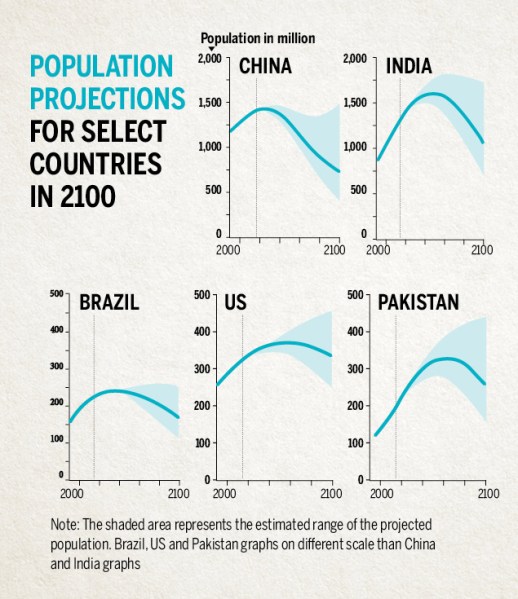
1)Analysis says that China’s population could be down to half of its population currently,India will have 300 million less population by 2100:

Lancet study says that India will be at peak in the year 2048 with 1.6 billion people but till 2100 it will have 300 million less people.It is said that including China and 23 other countries they are Spain,Japan would be at severe drop at in their population around 50%.

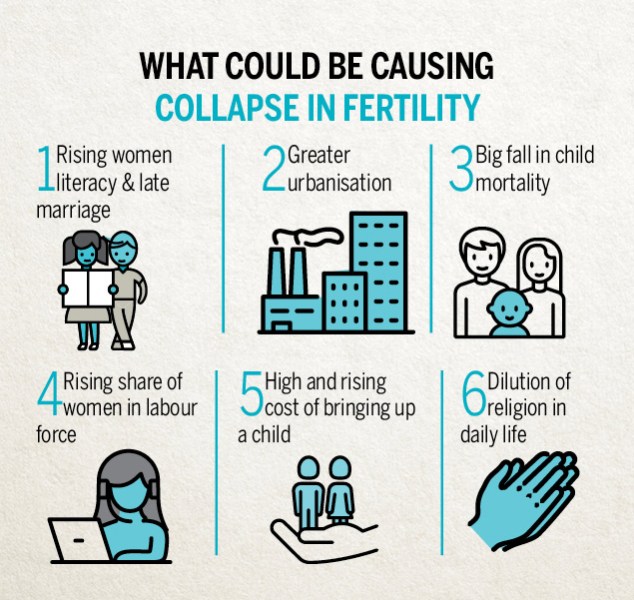
2)Due to fall in population it the fertility will be collapsed:

At 2.1 children per woman is the new outcome which the country will see.Already collapsing of fertility has started in every country including India.If the fertility comes below 2.1 than the country is below replacement level.

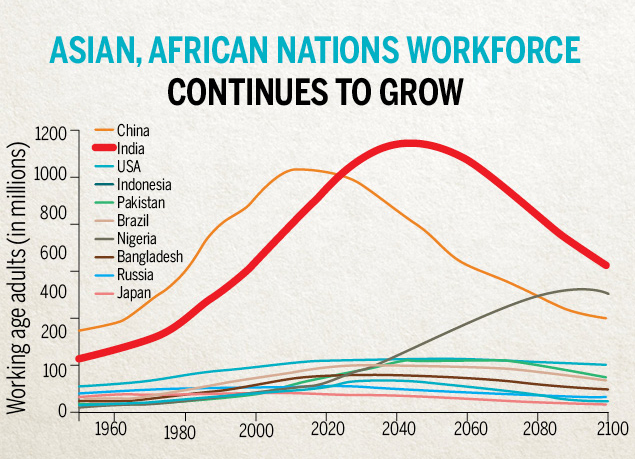
3)It is also predicted that from 2020s till 2100 will have the largest workforce:

As it is clearly seen that till now only the advanced countries were having the great strength of workforce from all around the world but now as India will be crucial country and it has already been considered the best developing nation in recent times.If we take example of Japan,it has the increased life expectancy more than one third of its population is over 60 years.But it is considered to be the smallest country as working age population.

4)Economic Burden the countries are going to face due to shrinking population:

In the year 2017,every person who used to turn 80 years old,there were 7 births.But it will come down to one in the year 2100.This is because right now the population of 80 plus is grows to 866 million from 141 million today.In 2017 it was noted that the average age was around 32.6 years but till 2100 it is going to rise to around 46.2 years.Other major economies like US and Australia will see decline in their workforce and India will see a peak in workforce in the year 2040s.Nigeria will peak in the end of the Century.

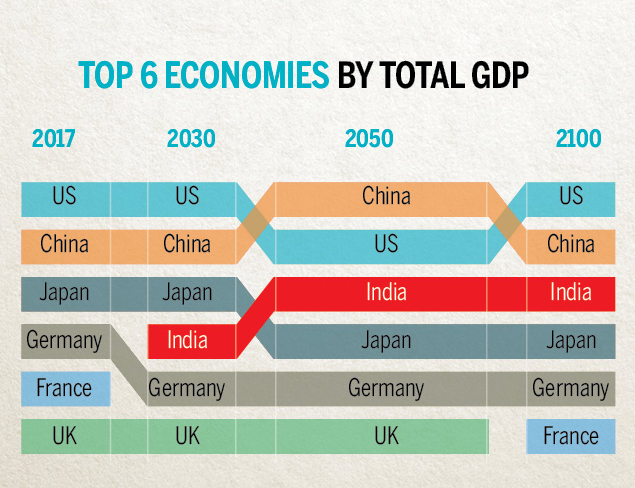
Lancet predicted that India will be at no 4 position in largest economy by 2030 and 3rd largest by 2050.It is also expected that China will be largest economy by 2050.All this data will more cleared in the year 2024 where the final report will be presented.

Is India truly free after Independence!?

Democracy is a government meant for the people, as it is by the people, and of the people. The news that us currently making rounds in the country is mostly about corruption, black money, Swiss bank accounts and what not. In this era, everyone wants to earn money without hard work.

The politicians of this country crave for money today. All they do in their long tenures is hog money illegally. Today many of these politicians are preying on the nation itself, which is very disgusting and immensely horrible to describe. We even talk a lot about unification or unity in diversity. Where did this unity disappear during the “Godhra incident”? India did lack the day so called brotherly feeling during the 92-93 Mumbai blasts as well as the 26/11 Mumbai terror attacks. When the media thinks of setting down and decides to focus on some other interesting topics, we say everything is fine, but what about the lives lost, the wives widowed and children orphaned?

The politicians even try to divide people on the basis of religion. Just take the example of Ram Mandir v/s Babri Masjid issue. These politicians present themselves in frontnif people for votes at the time of elections, saying that they will promise to build a respective religious place of worship. They just bribe the people for votes. After they win the elections, they simply abscond. They loot the money of the people and fool them. In this way, they try to segregate the people and create communal violence across the country, thereby breaking the unity and integrity of the nation.

I don’t think there is any state in India which can claim to have stable government. We at times forget that the land of the country’s territory belongs to the nation first and then to the states. We have even heard of tonnes if food grains rotting. Each grain is a token of happiness and satisfaction to the hungry stomachs of the poor, yet the Government has the audacity to let it rot without distributing the food grains amongst the needy.

I feel, currently in India only rich become richer and the poor beg for a living, and hence we love in an era of ignorance. We see the temples plundered, mosques demolished and the churches ransacked. So where is the so called brotherly love here!?

Japan got it’s freedom in 1945. It came out superbly from the shock of atomic attacks. India got freedom two years later still it is no match to the Japanese technology and competence. Instead, we rely on them for the construction of railways and roadways.

In India there have been some changes and development in the past few years, but they are not considerable in number. There are many changes and developments yet to to be done. We can see a lot of evil, dirty practices and policies going on in India that are huge in number even after Independence.

But do we do anything to stop all these? We think that someone, somewhere will take the initiative in order to control the situation to buy we don’t actually figure the fact that in one way or the other everyone thinks the same. Everyone has the same mentality. They think that why should I care about all these things when there are many others to think about it.

But we are wrong. If everyone thinks like this, do you think India can call itself a developed nation or a super power within 20-30 years? Do you think India will achieve this rank? Our country needs us, and by doing something for the country we can make a big difference. We say that India is a country of the youth, but what is the use finally the youths of this country sit quitely and watch all these atrocities and injustice? So, it is up to us, how seriously we take these issues and however solve them. Being the future citizens of India, it is our duty to lead our country to a better future.

On 15th August, evey year we celebrate Independence Day, but I feel, sadly, India is not truly free even after getting it’s independence.

How President of India is elected ?

The president of India, is the ceremonial head of state of India and the commander-in-chief of the Indian Armed Forces.

The president is indirectly elected by an electoral college comprising the Parliament of India (both houses) and the legislative assemblies of each of India’s states and territories, who themselves are all directly elected.

Although the Article 53 of the Constitution of India states that the president can exercise his powers directly or by subordinate authority, with few exceptions, all of the executive powers vested in the president are, in practice, exercised by the prime minister (a subordinate authority) with the help of the Council of Ministers. The president is bound by the constitution to act on the advice of the prime minister and cabinet as long as the advice is not violating the constitution.

Origin

India achieved independence from the British on 15 August 1947, initially as a dominion within the Common wealth of Nations with George VI as king, represented in the country by a governor-general. Still, following this, the Constituent Assembly of India, under the leadership of B.R.Ambedkar, undertook the process of drafting a completely new constitution for the country. The Constitution of India was eventually enacted on 26 November 1949 and came into force on 26 January 1950, making India a republic. The offices of monarch and governor-general were replaced by the new office of President of India, with Rajendra Prasad as its first incumbent.

The Indian constitution accords with the president, the responsibility and authority to defend and protect the Constitution of India and its rule of law. Invariably, any action taken by the executive or legislature entities of the constitution shall become law only after the president’s assent. The president shall not accept any actions of the executive or legislature which are unconstitutional. The president is the foremost, most empowered and prompt defender of the constitution (Article 60), who has pre-emptive power for ensuring constitutionality in the actions of the executive or legislature. The role of the judiciary in upholding the Constitution of India is the second line of defence in nullifying any unconstitutional actions of the executive and legislative entities of the Indian Union.

Difference between democracy and republic is a minor one where democracy refers to the government elected by the people while republic refers to the Head of the state elected by the people.   

In India, Prime Minister is the head of government while President is the head of the state. In England, Prime Minister is head of government and Queen is the head of the state. Since Prime minister is elected by the people of England but Queen is not, England is a democracy but not a republic. But in India both the head of the government as well as state both are elected by the people of India, India is a democratic as well as republic.   

As per Article 52 of the Constitution of India, there shall be a President of India and the executive powers of the Union shall be vested in the President. The President of India is the first citizen and represents the Indian nation and does not, therefore, belong to any particular political party. Election of President is conducted by the Election Commission of India. He / She  is indirectly elected by the people of India as the representatives of the people through an Electoral College.   

The main reasons behind the indirect election of President of India as discussed in the Constituent Assembly were –  

• If the direct election of the President were adopted, the Presidential candidate who has to carry on an election campaign from one corner of the country to another will certainly be put up by some party or the other, which may cause political excitement and generate party feelings. Thus the person elected to the Presidential office through this means will never be able to forget his party affiliations.  

• A directly elected President may not be content with his position of a mere constitutional head and can claim to derive his authority directly from the people. So, if he wanted to assume real power, it would lead to a constitutional deadlock.  

The Electoral College constitutes the elected members of Lok Sabha, Rajya Sabha and State Legislative Assemblies who elect the President through proportional representation single transferable vote.   

Candidate who corners the majority i.e. more than 50 percent of votes is the winner but it is possible that four aspiring candidates A, B, C and D gets 35 %, 30% 25 % and 20 % respectively and no one gains more than 50% of votes. In this case, single transferable vote is used where each voter gave preference to each candidate as first, second, third of fourth preference. Since in the said example, D gets least number of first preference votes, He will be eliminated from the race and his votes will be distributed among the other contestants on the basis of the second preference.   

The Proportional Representation is followed by assigning a value to the votes of MP and MLA. Each member of the Electoral College who is a member of a State Legislative Assembly will have a number of votes calculated as follows : 

On vote of MLA = Total population of state/ Number of MLAs in the state x 1000 Fractions exceeding one half being are counted as one.   

For example , The population of Punjab is 1,35,51,060. Let us take the total number of elected members of the Legislature of Punjab to be 117. Now applying the aforesaid process, if we divide 1,35,51,060 (i.e. the population) by 117 (i.e. the total number of elected members), the quotient is 115821.0256. Therefore, the number of votes which each member of the Punjab Legislature would be entitled to cast is 115,821.0256/1000 i.e. 116.  

The value of a vote of MP is = Total value of vote of all MLAs/ Total No. of MPs  

In 2012 Presidential elections,  Value of vote of each elector in Parliament = 1025179/776 = 1321(without fraction)  

Total value of votes of Parliament = 776 x 1321= 1025096  

Total value of votes of State electors (4120 MLAs) = 1025179  

Total value of 4896 electors for Presidential election in 2012 = 2050275  

In this manner, total 4896 electors from the country will vote to elect the President of India through a single transferable vote. In order to be elected as President of India, he / she    

• Must be a citizen of India. 

• Completed 35 yrs in age. 

• Eligible to be a member of Lok Sabha. 

• Must not hold any Government post     

Supreme Court inquires all disputes regarding President’s election. President takes oath in presence of Chief Justice of India, or in his absence, senior most judge of Supreme Court.


Impact of Insurance Bill

Insurance is a means of protection from financial loss. It is a form of risk management, primarily used to hedge against the risk of a contingent or uncertain loss.

An entity which provides insurance is known as an insurer, insurance company, insurance carrier or underwriter. A person or entity who buys insurance is known as an insured or as a policyholder. The insurance transaction involves the insured assuming a guaranteed and known relatively small loss in the form of payment to the insurer in exchange for the insurer’s promise to compensate the insured in the event of a covered loss. The loss may or may not be financial, but it must be reducible to financial terms, and usually involves something in which the insured has an insurable interest established by ownership, possession, or pre-existing relationship.

The insured receives a contract, called the insurance policy, which details the conditions and circumstances under which the insurer will compensate the insured. The amount of money charged by the insurer to the policyholder for the coverage set forth in the insurance policy is called the premium. If the insured experiences a loss which is potentially covered by the insurance policy, the insured submits a claim to the insurer for processing by a claims adjuster. The insurer may hegde its own risk by taking out reinsurance, whereby another insurance company agrees to carry some of the risks, especially if the primary insurer deems the risk too large for it to carry.

Insurance sector in India has seen instrumental change since the last two decades when there was only one player namely Life Insurance Cooperation (LIC) before it was opened up for the private and foreign players. Currently, there are 28 players in the non life insurance business and 24 players in life insurance thus infusing the competition in the sector. The Insurance Regulatory and Development Authority (IRDA), headquartered at Hyderabad, being the regulatory authority of the insurance sector in India is the sole authority which frames regulations for the sector, ranging from registration of insurance players to protection of policy holders’ interest, thus aiming to regulate and promote the growth of the insurance sector. 

The Insurance Laws (Amendment) Bill, 2015, which intended to increase the FDI limit in the insurance sector from 26% to 49% apart from introducing several other changes, got the nod of the parliament on March 12, 2015 after much deliberations. The bill is expected to provide a major fillip to growth of the sector. Some major changes introduced by the bill are as under –

Capital Infusion


Apart from increasing the foreign holding, the bill also provided various other avenues and flexibility in raising the capital for the cash strapped sector. The current insurance penetration is just 3.9% in India. The capital infusion would not only increase the penetration of insurance which is need of hour, but would also augment the product diversification.


Consumer Interests


In order to curb the miss-selling, heavy penalties have been imposed on intermediaries and insurance companies for misconduct. The penalty is increased to up to INR1.0 crore for the insurance companies and up to INR10,000 for agents depending upon the nature of violation. This would work as a deterrent to the companies and agents for any miss-selling. Further, if the policy is older than three years, no life insurance policy can now be rejected by the insurer on any ground. This will motivate insurers to strengthen their underwriting standards and increase faith amongst consumers and protect the policyholder’s interest. Ban is also imposed on multilevel marketing schemes.  

Commission and Pay Outs

The bill confers the power to determine the quantum of commission, pay outs and other expenses to the IRDA. From now onwards, IRDA would try to bring more transparency in the sector for the benefit of the end consumers. Meanwhile, agents and intermediaries have been banned from more than one company. 

Empowering IRDA

Empowering IRDA to frame operations related rules and regulations would provide it with the opportunity to adapt quickly with the changing environment while securing best interest of the policyholders. IRDAI is now empowered to regulate key aspects of operations including solvency, investments, expenses and commissions etc. It also empowers the Authority to regulate the functions, code of conduct, etc., of surveyors and loss assessors.

Changes in Health Insurance Sector

Under the revised regulations, minimum capital investment in health insurance sector has been increased to Rs 100 crore, to ensure that only serious players are present in the sector. The amendment Act has also expanded the definition of health insurance business by including travel and personal accident cover. This would result in further growth of the health sector, which is one of the most under-insured segments in India.

Thus the new amendments in the Insurance sector aims to bring a holistic improvement in the sector by augmenting competition, infusing capital, introducing product diversification as well as safeguarding the interests of the final consumer. In this way, insurance business can increase its depth and penetration in conformity to the developed world.