Register and Records required to be maintained by an enterprise: An Introduction
The Companies Act, 2013 (the Act) and the rules framed there under (“the Rules”) lays down that every Company incorporated under the Act has to maintain Statutory Registers (“the Registers”). With various provisions incorporated in Companies Act, 2013, it is made clear that every company governed under Companies Act, 2013 is required to maintain statutory registersat its registered office until the dissolution of the company.
Some important requirements relating to registers and records are as below:
1. The Registers need to maintained and kept updated and should be kept at the Registered Office of the Company.
2. Some of the Registers are required to be kept open for inspection by Directors, Members, Creditors and by other persons.
3. A Company is also required to provide the extracts of the Registers, if demanded by Directors, Members, Creditors and by other persons on payment of specified fees.
4. Hence, it is important for all the companies (including one person company incorporated in India to maintain statutory registers.
Place of Keeping the Records and Registers
Unless otherwise notified, it is assumed that statutory registers are kept at the address of the registered office of the company. Such registers may also be kept at any other place in India in which more than one-tenth of the total number of members entered in the register of members reside, if approved by a special resolution passed at a general meeting of the company.
Inspection of Statutory Registers
Companies are required by law to make their statutory registers available for public inspection at their registered office or the address as notified to the Registrar during business hours . The registers shall be open for inspection by any member, debenture-holder, other security holder or beneficial owner without payment of any fees and by any other person on payment of prescribed fees.
Suggested Method of Keeping Statutory Registers
The companies have an option to keep all of their statutory registers together in a bound or loose-leaf folder or book. This ensures all important company documents are filed together and easily accessible for inspection purposes. Furthermore one may also keep digital copies instead of, or in addition to the paper registers.
The “Startup India” initiative announced by the Hon‟ble Prime Minister on 15.08.2015 aims at fostering entrepreneurship and promoting innovation by creating an ecosystem that is conducive to growth of Startup. Startup India is a flagship initiative of the Government of India, intended to build a strong ecosystem for nurturing innovation and Startups in the country that will drive sustainable economic growth and generate large scale employment opportunities.
The efforts of the government are aimed at empowering Startups to grow through innovation and design. It is intended to provide the much needed impetus for the Startups to launch and scale greater heights. In order to meet the objectives of the initiative, the Hon‟ble Prime Minister on 16th January 2016 launched the Startup India Action Plan. The Startup India Action Plan consists of 19 action items spanning across areas such as “Simplification and handholding.”
“Funding support and incentives” and “Industry-academia partnership and incubation”. Since the launch of the programme, a number of forward looking strategic amendments to the existing policy ecology have been introduced, like:
Fund of Funds For providing fund support for Startups, Government has created a „Funds for Startups (FFS) at Small Industries Development Bank of India (SIDBI) with a corpus of Rs 10,000 crore. The FFS shall contribute to the corpus of Alternative Investment funds (AIFs) for investing in equity and equity linked instruments of various Startups. The FFS is managed by Small Industries Development Bank of India (SIDBI) for which operational guidelines have been issued. In 2015- 16, Rs.500 crores was released towards the FFS corpus.
2. Credit Guarantee Fund for Startups Since debt funding for Sartups is perceived as high risk activity, a Credit Guarantee Fund for Startups is being setup with a budgetary corpus of Rs.500 crore per year, over the next four years, to provide credit guarantee cover to banks and lending institutions providing loans to Startups. Once rolled out, the scheme in the lines of credit guarantee scheme for MSME, is likely to provide a huge impetus for enabling flow of much needed credit to the Startups which may run into several thousands of crores.
3. Relaxed Norms in Public Procurement for Startups Provision has been introduced in the procurement policy of Ministry of Micro, Small and Medium Enterprises (Policy Circular No. 1(2)(1)/2016-MA dated March 10, 2016) to relax norms pertaining to prior experience/ turnover for Micro and Small Enterprises. Department of Expenditure has issued a notification for relaxing public procurement norms in respect of all Startups (including medium enterprises) by all central Ministries/ Departments.
4. Tax Incentives
(i) Income Tax Exemption on profits under Section 80-IAC of Income Tax (IT) Act: The Inter-Ministerial Board of Certification is a Board set up by Department for Promotion of Industry and Internal Trade (DPIIT) which validates Startups for granting tax related benefits.
A DPIIT recognized Startup is eligible to apply to the Inter-Ministerial Board for full deduction on the profits and gains from business (exemption under Section 80IAC of the Income Tax Act) provided the following conditions are fulfilled.
The entity should be a private limited company or a limited liability partnership, Incorporated on or after 1st April 2016 but before 1st April 2021, and Products or services or processes are undifferentiated, have potential for commercialization and have significant incremental value for customers or workflow. The deduction is for any three consecutive years out of seven years from the year of incorporation of start-up.
(ii) Tax Exemption on Investments above Fair Market Value.
– DPIIT Recognized Startups are exempt from tax under Section 56(2)(viib) of the Income Tax Act when such a Startup receives any consideration for issue of shares which exceeds the Fair Market Value of such shares.
– The startup has to file a duly signed declaration in Form 2 to DPIIT {as per notification G.S.R. 127 (E)} to claim the exemption from the provisions of Section 56(2)(viib) of the Income Tax Act.
(iii) Introduction of Section 54EE in the Income Tax Act, 1961.
Exemption from tax on long-term capital gain if such long-term capital gain is invested in a fund notified by Central Government. The maximum amount that can be invested is Rs. 50 lakh.
(iv) Amendment in Section 54GB of the Income-tax Act
Exemption from tax on capital gains arising out of sale of residential house or a residential plot of land if the amount of net consideration is invested in prescribed stake of equity shares of eligible Startup for utilizing the same for purchase of specified asset:
a. The condition of minimum holding of 50% of share capital or voting rights in the start-up relaxed to 25%
b. The period of extension of capital gains arising from for sale of residential property for investment in start-ups has been extended up to 31st March 2021.
(v) Amendment in Section 79 of Income Tax Act.
Startups can carry forward their losses on satisfaction of any one of the following two conditions:
a. Continuity of 51% shareholding/voting power or
b. Continuity of 100% of original shareholder.
Legal Support and Fast-tracking Patent Examination at Lower Costs
A scheme for Startups IPR Protection (SIPP) for facilitating fast rack filing of Patents, Trademarks and Designs by Startups has been introduced. The scheme provides for expedited examination of patents filed by Startups. This will reduce the time taken in getting patents. The fee for filing of patents for Startups has also been reduced up to 80%.
Panels of facilitators for Patents and Trademark applications have been formed to facilitate the process of patent filing and acquisition. The facilitators would provide legal guidance and handholding through the entire patent acquisition process free of cost.
Self-Certification based Compliance Regime:
Compliance norms relating to Environmental and Labour laws have been eased in order to reduce the regulatory burden on Startups thereby allowing them to focus on their core business and keep compliance costs low. Ministry of Environment and Forests (MOEF) has published a list of 36 white category industries. Startups falling under the “White category” would be able to self certify compliance in respect of 3 Environment Acts.
The Water (Prevention & Control of Pollution) Act, 1974.
2. The Water (Prevention & Control of Pollution) Cess (Amendment) Act, 2003;
3. The Water (Prevention & Control of Pollution) Act, 1981.
Further, Ministry of Labour and Employment (MOLE) has issued guidelines to State Governments whereby Startups shall be allowed to self-certify compliance in respect of Labour laws. These shall be effective after concurrence of States/UTs.
The Acts are :
The Building and Other Constructions Works (Regulation of Employment & Conditions of Service) Act, 1996.
2. The Inter-State Migrant Workmen (Regulation of Employment & Conditions of Service) Act, 1979.
3. The Payment of Gratuity Act, 1972.
3. The Contract Labour (Regulation and Abolition)) Act, 1970.
4. The Employees Provident Funds and Miscellaneous Provisions Act, 1952
5. The Employees State Insurance Act, 1948
So far 9 States have confirmed compliance to the advisory issued by Ministry of Labour and Employment (MOLE):
Under Atal innovation Mission, Niti Aayog will set up Atal Incubation Centres (AICs) in Public and Private sector. Niti Aayog has received 3658 applications (1719) from academic institutions and 1939 from non-academic instution) for setting up Atal Incubation Centres (AICs) from both Public and Private sector organizations. Under the Mission, a grant in aid of Rs.10 crore would be provided to scale up an existing incubator for a maximum of 5 years to cover the capital and operational costs in running the centre. Niti Aayog has received 233 applications for providing scale up support for established incubation centres.
8. Setting up of Startup Centres and Technology Business Incubators (TBIs)
14 Startup Centres and 15 Technology Business incubators are to be set up collaboratively by Ministry of Human Resource Development (MHRD) and the Department of Science and Technology (DST). Out of the 14 Startup Centres, 10 have been approved. Once MHRD releases its share of Rs.25 lakhs each for the Startup centres, the Startup centres would be supported by DST by December, 2016. Against the target of sanctioning 15 TBIs, 9 TBIs have been approved and other 6 TBIs, 9 TBIs have been approved and other 6 TBIs are under process of being approved.
9. Research Parks
7 Research Parks will be set up as per the Startup India Action Plan. Out of these 7 IIT Kharagpur already has a functional Research Park. Further, DST will establish 1 Research Park at IIT Gandhinagar and the remaining 5 shall be set up by Ministry of Human Resource development (MHRD) at IIT Guwahati, IIT Hyderabad, IIT Kanpur, IIT Kanpur, IIT Delhi and IISc Bangalore.
Eligibility for becoming a Startup Company
The Government of India has announced ‘Startup India’ initiative for creating a conducive environment for startups in India. The various Ministries of the Government of India have initiated a number of activities for the purpose.
An entity shall be considered as a Startup:
i. Upto a period of ten years from the date of incorporation/ registration, if it is incorporated as a private limited company (as defined in the Companies Act, 2013) or registered as a partnership firm (registered under section 59 of the Partnership Act, 1932) or a limited liability partnership (under the Limited Liability Partnership Act, 2008) in India.
ii. Turnover of the entity for any of the financial years since incorporation/ registration has not exceeded one hundred crore rupees. The words “Turnover” is as defined under the Companies Act, 2013.
iii. Entity is working towards innovation, development or improvement of products or processes or services, or if it is a scalable business model with a high potential of employment generation or wealth creation.
Provided that an entity formed by splitting up or reconstruction of an existing business shall not be considered a ‘Startup’.
An entity shall cease to be a Startup on completion of ten years from the date of its incorporation/ registration or if its turnover for any previous year exceeds one hundred crore rupees.
Recognition as Startups
The process of recognition of an eligible entity as startup shall be as under:
i. A Startup shall make an online application over the mobile app or portal set up by the DPIIT.
ii. The application shall be accompanied by –
a. a copy of Certificate of Incorporation or Registration, as the case may be, and
b. a write-up about the nature of business highlighting how it is working towards innovation, development or improvement of products or processes or services, or its scalability in terms of employment generation or wealth creation.
iii. The DPIIT may, after calling for such documents or information and making such enquires, as it may deem fit, –
a. recognise the eligible entity as Startup; or
b. reject the application by providing reasons.
Certification of the Inter-Ministerial Board for availing the Tax Benefit under Section 80-IAC
A Startup being a private limited company or limited liability partnership, which fulfils the conditions specified in sub-clause (i) and sub-clause (ii) of the Explanation to section 80-IAC of the Income Tax Act,1961(Act) may, for obtaining a certificate for the purposes of section 80-IAC of the Act, make an application in Form-1 along with documents specified therein to the Board and the Board may, after calling for such documents or information and making such enquires, as it may deem fit, –
(i) grant the certificate referred to in sub-clause (c) of clause(ii) of the Explanation to section 80- IAC of the Act; or
(ii) reject the application by providing reasons.
The Board” means the Inter-Ministerial Board of Certification comprising of the following members: (i) Joint Secretary, Department of Promotion of Industry and Internal Trade, Convener
(ii) Representative of Department of Biotechnology, Member
(iii) Representative of Department of Science & Technology, Member
Post getting recognition a Startup may apply for Tax exemption under section 80 IAC of the Income Tax Act. Post getting clearance for Tax exemption, the Startup can avail tax holiday for 3 consecutive financial years out of its first ten years since incorporation.
Eligibility Criteria for applying to Income Tax exemption (80IAC)
-The entity should be a recognized Startup
– Only Private limited or a Limited Liability Partnership is eligible for Tax exemption under Section 80IAC
– The Startup should have been incorporated after 1st April, 2016.
Tax Exemption under Section 56 of the Income Tax Act (Angel Tax)
Post getting recognition a Startup may apply for Angel Tax Exemption. Eligibility Criteria for Tax Exemption under Section 56 of the Income Tax Act:
– The entity should be a DPIIT recognized Startup
– Aggregate amount of paid up share capital and share premium of the Startup after the proposed issue of share, if any, does not exceed INR 25 Crore.
Approval for the purposes of clause (viib) of sub-section (2) of section 56 of the Act:
A Startup shall be eligible for notification under clause (ii) of the proviso to clause (viib) of sub-section (2) of section 56 of the Act and consequent exemption from the provisions of that clause, if it fulfils the following conditions:
(i) it has been recognised by DPIIT under para 2(iii)(a) or as per any earlier notification on the subject.
(ii) aggregate amount of paid up share capital and share premium of the startup after issue or proposed issue of share, if any, does not exceed, twenty five crore rupees:
Provided that in computing the aggregate amount of paid up share capital, the amount of paid up share capital and share premium of twenty five crore rupees in respect of shares issued to any of the following persons shall not be included –
(a) a non-resident; or
(b) a venture capital company or a venture capital fund;
Provided further that considerations received by such startup for shares issued or proposed to be issued to a specified company shall also be exempt and shall not be included in computing the aggregate amount of paid up share capital and share premium of twenty five crore rupees.
(iii) It has not invested in any of the following assets,─
(a) building or land appurtenant thereto, being a residential house, other than that used by the Startup for the purposes of renting or held by it as stock-in-trade, in the ordinary course of business;
(b) land or building, or both, not being a residential house, other than that occupied by the Startup for its business or used by it for purposes of renting or held by it as stock-in trade, in the ordinary course of business;
(c) loans and advances, other than loans or advances extended in the ordinary course of business by the Startup where the lending of money is substantial part of its business;
(d) capital contribution made to any other entity;
(e) shares and securities;
(f) a motor vehicle, aircraft, yacht or any other mode of transport, the actual cost of which exceeds ten lakh rupees, other than that held by the Startup for the purpose of plying, hiring, leasing or as stock-in-trade, in the ordinary course of business;
(g) jewellery other than that held by the Startup as stock-in-trade in the ordinary course of business;
(h) any other asset, whether in the nature of capital asset or otherwise, of the nature specified in sub- clauses (iv) to (ix) of clause (d) of Explanation to clause (vii) of sub-section (2) of section 56 of the Act.
Provided the Startup shall not invest in any of the assets specified in sub-clauses (a) to (h) for the period of seven years from the end of the latest financial year in which shares are issued at premium;
Explanation.─ For the purposes of this paragraph,-
(i) “specified company” means a company whose shares are frequently traded within the meaning of Securities and Exchange Board of India (Substantial Acquisition of Shares and Takeovers) Regulations, 2011 and whose net worth on the last date of financial year preceding the year in which shares are issued exceeds one hundred crore rupees or turnover for the financial year preceding the year in which shares are issued exceeds two hundred fifty crore rupees.
(ii) the expressions “venture capital company” and “venture capital fund” shall have the same meanings as respectively assigned to them in the explanation to clause (viib) of sub Section( 2) of Section 56 of the Act.
A startup fulfilling conditions mentioned in para 4 (i) and para 4 (ii) shall file duly signed declaration in Form 2 to DIPP that it fulfills the conditions mentioned in para 4. On receipt of such declaration, the DPIIT shall forward the same to the CBDT.
Indian States with Startup policies
States have a vital role to play in promoting the Startup ecosystem. One of the core strengths of India lies in its diversity, leading to enormous opportunities for cross-learning from each other. Only four State Governments were actively supporting Startups before the launch of Startup India through a State Startup policy. The Startup movement across the country was fragmented and there was a need for consolidating standalone efforts.
Emphasis was also required simultaneously to encourage more and more States to undertake new initiatives. The national priority initiative has led to a wide spread movement across the country and presently 22 States have their own Startup policies. Many other States and Union Territories (UTs) are in the process of drafting their policies and operating guidelines.
CONCULSION
The core functioning of an enabling ecosystem in a State is a function of the policy framework and effective implementation of the same. In the journey of developing a conducive Startup community, it is important that States and UTs exchange and adopt good practices undertaken by each other. Another important role of State is to reduce the regulatory burden on budding Startup founders by simplifying labour, taxation, land, and other laws and regulations under the State purview. Many States are organizing hackathons, boot camps, pitching sessions to promote Startups. Several other States have already begun to actively setup world class incubators for Startups across various sectors.
WAY FORWARD
However, a significant effort is required to accelerate the pace of these initiatives to be at par with the pace of growth of Startups. Concerted initiatives by States will accelerate the growth of Startup ecosystems in their respective territories and transform the country into a flourishing Startup Nation.
National Sports Award Ceremony may be postponed for 1 or 2 months, scheduled to be held in Rashtrapati Bhavan on August 29 The last time President Ramnath Kovind honored Deepa Malik with the Rajiv Gandhi Khel Ratna Award. Deepa has won a silver medal in the Paralympics.A sports ministry official said that the final decision in this matter is yet to come from Rashtrapati Bhavan.This time the names of cricketer Rohit Sharma, athlete Hima Das and wrestler Vinesh Phogat were sent for Khel Ratna. Apart from these, the names of Neeraj Chopra (Javelin Throw), Monica Batra (Table Tennis) and Women Hockey Team Captain Rani Rampal have also been sent for Khel Ratna. At the same time, Paralympian Deepa Malik and wrestler Bajrang Punia received this award last year. Right now, the safety of the people is the priority of all of us. “. The program is held on the birth anniversary of Major Dhyan Chand
This year the National Sports Award Ceremony can be postponed for a month or two due to coronavirus. A Sports Ministry official said that the final decision in this matter is yet to come from Rashtrapati Bhavan. The Rajiv Gandhi Khel Ratna, Arjuna, Dronacharya and Dhyanchand Awards are given by the President on 29 August every year. This ceremony is also held in Rashtrapati Bhavan itself.
This time due to Corona, applications for sports awards were called for the first time through e-mail. Usually the process of sending nominations starts in April itself. Name of Neeraj Chopra and Rani Rampal also sent for Khel Ratna
National Sports Day is celebrated every year on 29 August on the birth anniversary of hockey player Major Dhyan Chand. On this occasion, awards are given in a simple ceremony held in Rashtrapati Bhavan. Khel Ratna is India’s highest sporting award. It is named after former Prime Minister Rajiv Gandhi. Every year it is given to the best player in the country. The player is awarded with a prize of Rs 7.5 lakh and a statue. At the same time, the player who wins the Arjuna Award is given five lakh rupees.
From film reels to memory cards to cell phones, it seems perfectly logical to trace the roots of the last dozen seismic shifts in photography to the physical devices used to capture images, but an exhibit at the Center for Photography at Woodstock has taken a more philosophical approach to the rise of smartphones and their drastic impact on the way we use and respond to photography. The Space Between: Redefining Public and Personal in Smartphone Photography is curated by photographer and film maker Henry Jacobson, and through a survey of 10 photographers, one collective and one collaborative project, delves into the never-ending debate around smartphones and their function as cameras capable of capturing a moment in time and distributing it all over the world in a matter of seconds. “Photography has always depended on technology, and every change in technology has affected the history of photography, but the smartphone, in its nature, is a device that is not for photography. It’s a device that is for communication ,”It makes perfect sense that a new kind of photography would evolve.”
LLP is a corporate business vehicle that enables professional expertise and entrepreneurial initiative to combine and operate in flexible, innovative and efficient manner, providing benefits of limited liability while allowing its members the flexibility for organizing their internal structure as a partnership.
The Limited Liability Partnership Act, 2008(LLP Act) does not provide an exhaustive definition. Sub-section (n) of section 2 of the Act states that “limited liability partnership” means a partnership formed and registered under this Act.
NATURE AND CHARACTERISTICS OF LLP
1. The LLP is a body corporate having separate entity from its partners and perpetual succession.
2. An LLP in India is governed by the Limited Liability Partnership Act, 2008 and, therefore, the provisions of Indian Partnership Act, 1932 are not applicable to it.
3. Every Limited Liability Partnership shall use the words “Limited Liability Partnership” or its acronym “LLP” as the last words of its name.
4. An LLP is a result of an agreement between the partners, and the mutual rights and duties of partners of an LLP are determined by the said agreement subject to the provisions of LLP Act, 2008.
5. The LLP being a separate legal entity is liable for all its assets, with the liability of the partners limited only to the amount of contributed by them just like a company. No partner will be individually liable for any wrongful acts of other partners. However if the LLP was formed for the purpose of defrauding creditors or for any fraudulent purpose, then the liability of the partners who had the knowledge will be unlimited.
6. There must be at least two designated partners in every LLP of whom one shall be resident in India.
7. Every LLP shall maintain annual accounts to show its true state of affairs. It must prepare a statement of accounts and solvency every year and file with the Registrar.
8. The Central Government may, whenever it thinks fit, investigate into the affairs of an LLP by appointing a competent Inspector.
9. A firm, private company or an unlisted public company have the option to convert itself into LLP as per the provisions of the Act. Upon such conversion, the Registrar will issue a certificate to that effect. After issuance of a certificate of registration, all the property of the firm or the company, all assets, rights, obligations relating to the company shall be vested in the LLP so formed, and the firm or the company stands dissolved.
10. The name of the firm or the company is then removed from the Registrar of Firms or Registrar of Companies, as the case may be. Like the company, an LLP can be wound up either voluntary or by the Tribunal established under the Companies Act, 2013
11. The LLP Act 2008 also enables the Central Government to apply the provisions of the Companies Act whenever it thinks appropriate.
ADVANTAGES OF LLP
Easy to form: Forming an LLP is an easy process. It is less complicated and time consuming unlike the process of formation of a company.
2. Liability: The partners of the LLP is having limited liability which means partners are not liable to pay the debts of the company from their personal assets. No partner is responsible for any other partner’s misconduct.
3. Perpetual succession: The life of the Limited Liability Partnership is not affected by death, retirement or insolvency of the partner. The LLP will get wound up only as per provisions of the LLP Act.
4. Management of the company: An LLP has partners, who own and manage the business. This is different from a private limited company, whose directors may be different from shareholders.
5. Easy transferability of ownership: There is no restriction upon joining and leaving the LLP. It is easy to admit as a partner and to leave the firm or to easily transfer the ownership to others.
6. Taxation: an LLP is not subject to Dividend Distribution Tax. (DDT). Distributed profits in the hands of the partners is not taxable. For Income Tax purposes, LLP is treated on par with partnership firms.
7. No compulsory audit required: Every business has to appoint an auditor for checking the internal management of the company and its accounts. However, in the case of LLP, there is no mandatory audit required. The audit is required only in those cases where the turnover of the company exceeds Rs 40 lakhs and where the contribution exceeds Rs 25 lakhs.
8. Fewer compliance requirements: An LLP is much easier and cheaper to run than a private limited company as there are just three compliances per year. On the other hand, a private limited company has a lot of compliances to fulfil and has to compulsorily conduct an audit of its books of accounts.
9. Flexible agreement: The partners are free to draft the agreement as they please, with regard to their rights and duties.
10. Easy to wind-up: Not only is it easy to start, it is also easier to wind-up an LLP, as compared to a private limited company.
DISADVANTAGES OF LLP
Restricted Access to Capital Markets: LLPs are small form of business and cannot get its shares listed in any stock exchange through initial public offerings. With this restriction, limited liability partnerships may find it difficult to attract outside investors to buy the shares.
2. Rights of partners: An LLP can be structured in such a way that one partner has more rights than another. So it isn’t a one vote per share system. So, some lesser partners may feel compromised if higher shareholders choose to move the business in a direction that affects their interests.
3. Public Disclosure of LLP Information: A LLP must file its Annual Returns, Financial Statements etc to the Registrar of LLPs annually. Which become public document once filed with Registrar of LLPs and may be inspected by general public including competitors by paying some fees to the Registrar of LLPs. Information disclosure can make an entity competitively disadvantaged. Competitors – especially those not required to disclose any documents – can access that information and use it to improve their own business.
4. Limitations in Formation of LLP: LLP cannot be formed by a single person. A non – resident Indian and a Foreign National willing to form a LLP in India must have one person resident in India to act as Designated Partner. Further FDI in LLP is allowed only through government route only and that too in those sectors only where 100% FDI is allowed under automatic route under the FDI Policy. This limitation makes LLP an unattractive form of business.
5. Offenses and penalties: Limited Liability Partnership Act, 2008 provides that for non-compliance on procedural matters such as delay in filing of e-forms, one has to pay default fee for every day for which the default continues. Such default fee would be payable at the rate of rupee one hundred per day after the expiry of the date of filing up to a period of three hundred days. The offense can result in either:-
(i)through payment of fine or
(ii) through payment of fine as well as imprisonment of the offender.
6. Exit Options are Not Easy for LLPs in default of Filings: A LLP who has defaulted in filings its statement of accounts and annual return with the Registrar of LLPs, willing to shut down its operations and wind up, will have to make its default good first by filing necessary e-forms with late filing fee. This provision is making LLP an unattractive form of business as in India there are many businesses that are ignorant about compliances.
7. Limitation in External Commercial Borrowings (ECB): Limited Liability Partnerships are not allowed to raise ECB. Therefore, a LLP cannot avail commercial loans from its foreign partners, FIIs, Foreign Banks, and any financial institution located outside India.
PROCEDURE FOR AN INCORPORATION OF LLP
The incorporation document shall be filed in Form FiLLiP (Form for incorporation of Limited Liability Partnership) with the Registrar having jurisdiction over the State in which the registered office of the limited liability partnership is to be situated.
If an individual required to be appointed as designated partner does not have a DPIN or DIN,application for allotment of DPIN shall be made in Form FiLLiP The application for allotment of DPIN shall not be made by more than two individuals in Form FiLLiP: an application for reservation of name may be made through Form FiLLiP: Provided also that where an applicant had applied for reservation of name under rule 18 in Form RUN-LLP (Reserve Unique Name-Limited Liability Partnership) and which has been approved, he may fill the reserved name as the proposed name of limited liability partnership.
THE SUMMARIES PROCEDURE FOR
Incorporation of LLP is as under:
Procure DSC and DIN:
Procure DSC and DIN for the individuals acting as Designated Partners of LLP. A person, who already has a DIN, is not require to obtain any new DIN. Existing DIN to be used for Designated Partner (However, DIN should have all latest details such as resident of India, name, address etc.). Any person proposed to become the Designated Partner in a new LLP shall have to make an application through eform FiLLiP. An application for allotment of DIN up to two Designated Partners, shall be filed in an e-form FILLiP with the Registrar, in case of proposed Designated Partners not having approved DIN.
2. Name reservation: The first step in incorporation of an LLP is reservation of name of the proposed LLP. There are two ways of reserving name of the proposed LLP.
i. File an application under LLP-RUN for ascertaining availability and reservation of the name of an LLP.
ii. Name can be proposed in eform FiLLiP, an application for incorporation of LLP.
3. Incorporate LLP: After reserving a name under LLP-RUN, applicant should file eform FiLLiP for incorporating a new LLP. eform FiLLiP contains the details of LLP proposed to be incorporated, Partners’/ Designated Partners’ details and consent of the Partner/ Designated Partners to act as Partners/ Designated Partners. On approval of the form, the RoC will issue the certificate of incorporation.
Where the Registrar, on examining Form FiLLiP, finds that it is necessary to call for further information or finds such application or document to be defective or incomplete in any respect, he shall give intimation to the applicant to remove the defects and re-submit the e-form within fifteen days from the date of such intimation given by the Registrar.
After re-submission of the document, if the Registrar still finds that the document is defective or incomplete in any respect, he shall give one more opportunity of fifteen days time to remove such defects or deficiencies: Provided that the total period for re-submission of documents shall not exceed thirty days.
Documents to be attached with form FiLLiP:
i. Consent of the partners.
ii. In case of the partners who are body corporates, certified true copy of the board resolution is passed by such body corporate partners.
iii. Proof of address of registered office of LLP.
iv. Subscribers’ sheet including consent.
v. Detail of LLP(s) and/ or company(s) in which partner/ designated partner is a director/ partner.
vi. Copy of approval obtained from any sectoral regulator/in-principle approval.
vii. Identity and address proof of individuals acting as Partner and/or Designated Partner.
viii. List of main objects of an LLP.
ix. If the name proposed is liked to registered trademark, NoC from the trade mark owner.
x. NOC of foreign body corporate for usage of name (In case of foreign entities intending to incorporate LLPs in India).
The companies can be divided into different types based on parameters such as Size of company, a number of its members, Control of ownership, Liability to shareholders, need of capital from public & On the basis of the manner in which capital can be accessed. A company is popularly referred as a group of person coming together with resources in terms of capital, manpower, and skill for the common objective of making profits.
In old companies Act 1956 a company should have at least 2 persons as its member or shareholder. However, the companies Act 2013 introduced a new concept of One Person Company in India wherein only one Indian person who is a citizen of India can register a private limited company with some limitation, the different types of companies can be classified based on different parameters.
CLASSIFICATION OF THE COMPANIES
1. Classification on the basis of Incorporation: Companies may be Incorporated under the following categories:
(a) Statutory Companies: These are constituted by a special Act of Parliament or State Legislature. The provisions of the Companies Act, 2013 do not apply to them. Examples of these types of companies are Reserve Bank of India, Life Insurance Corporation of India, etc.
(b) Registered Companies: The companies which are incorporated under the Companies Act, 2013 or under any previous company law and registered with the Registrar of Companies, fall under this category.
2. Classification on the basis of Liability: Under this category there are three types of companies: –
(a) Unlimited Companies: In this type of company, the liability of members of the company is unlimited, Section 2(92) of the Companies Act, 2013 provides that unlimited company means a company not having any limit on the liability of its members, Such companies may or may not have share capital. They may be either a public company or a private company. . The members is liable to the company and to any other person.
(b) Companies limited by guarantee: Section 2(21) of the Companies Act, 2013 provides that a company that has the liability of its members limited to such amount as the members may respectively undertake, by the memorandum, to contribute to the assets of the company in the event of its being wound-up, is known as a company limited by guarantee. The members of a guarantee company are, in effect, placed in the position of guarantors of the company’s debts up to the agreed amount. the members is liable to the company and to any other person.
(c) Companies limited by shares: A company that has the liability of its members limited by the liability clause in the memorandum to the amount, if any, unpaid on the shares respectively held by them is termed as a company limited by shares. Section 2(22) of the Companies Act, 2013 provides that “company limited by shares” means a company having the liability of its members limited by the memorandum to the amount, if any, unpaid on the shares respectively held by them.
For example,a shareholder who has paid Rs. 75 on a share of face value Rupees 100 can be called upon to pay the balance of Rupees.25 only’. Companies limited by shares are by far the most common and it may be either public or private.
3. Other Forms of Companies
(a) Section 8 Companies: a person or an association of persons proposed to be registered under this Act as a limited company and proved to the satisfaction of the Central Government that the company –
i. has in its objects the promotion of commerce, art, science, sports, education, research, social welfare, religion, charity, protection of environment or any such other object;
ii. intends to apply its profits, if any, or other income in promoting its objects; and
iii. intends to prohibit the payment of any dividend to its members such person or association of person may be allowed to be registered as a limited company without addition to its name of the word “limited” or private limited by the Central government by issuing a license and by prescribing specified condition.
The association proposed to be registered under section 8 shall not be proposed to be an unlimited company. However the same may be company limited by guarantee or a Company limited by shares.
(b) Government Companies: As per section 2(45) of the Companies Act, 2013 the Government company” means any company in which not less than fifty-one per cent of the paid-up share capital is held by the Central Government, or by any State Government or Governments, or partly by the Central Government and partly by one or more State Governments, and includes a company which is a subsidiary company of such a Government company;
(c) Foreign Companies: As per section 2(42) of the Companies Act, 2013 the “foreign company” means any company or body corporate incorporated outside India which,-
(a) has a place of business in India whether by itself or through an agent, physically or through electronic mode; and
(b) conducts any business activity in India in any other manner.
(d) Holding and Subsidiary Companies; As per section 2(46) of the Companies Act, 2013 46) the “holding company”, in relation to one or more other companies, means a company of which such companies are subsidiary companies and the expression “company” includes any body corporate.
As per section 2(87) of the Companies Act, 2013 “subsidiary company” or “subsidiary”, in relation to any other company (that is to say the holding company), means a company in which the holding company –
(i) controls the composition of the Board of Directors or
(ii) exercises or controls more than one-half of the 19[total voting power] either at its own or together with one or more of its subsidiary companies:
Provided that such class or classes of holding companies as may be prescribed shall not have layers of subsidiaries beyond such numbers as may be prescribed.
Explanation.- For the purposes of this clause, –
(a) a company shall be deemed to be a subsidiary company of the holding company even if the control referred to in sub-clause (i) or sub-clause (ii) is of another subsidiary company of the holding company;
(b) the composition of a company’s Board of Directors shall be deemed to be controlled by another company if that other company by exercise of some power exercisable by it at its discretion can appoint or remove all or a majority of the directors.
(c) the expression “company” includes any body corporate.
(d) “layer” in relation to a holding company means its subsidiary or subsidiaries.
As per section 2(11) of the Companies Act, 2013, the “body corporate” or “corporation” includes a company incorporated outside India, but does not include –
(i) a co-operative society registered under any law relating to co-operative societies and
(ii) any other body corporate (not being a company as defined in this Act), which the Central Government may, by notification, specify in this behalf.
(e) Associate Companies/ Joint Venture Company: As per section 2(6) of the Companies Act, 2013 the “associate company”, in relation to another company, means a company in which that other company has a significant influence, but which is not a subsidiary company of the company having such influence and includes a joint venture company.
Explanation.- For the purpose of this clause, –
(a) the expression “significant influence” means control of at least twenty per cent. of total voting power, or control of or participation in business decisions under an agreement.
(b) the expression “joint venture” means a joint arrangement whereby the parties that have joint control of the arrangement have rights to the net assets of the arrangement.
(f) Investment Companies: the term “investment company” includes a company whose principal business is the acquisition of shares, debentures or other securities 13[and a company will be deemed to be principally engaged in the business of acquisition of shares, debentures or other securities, if its assets in the form of investment in shares, debentures or other securities constitute not less than fifty per cent. of its total assets, or if its income derived from investment business constitutes not less than fifty per cent. as a proportion of its gross income.
(g) Producer Companies: Producer Company means a body corporate having objects or activities specified in section 581B of the Companies Act, 1956 and registered as Producer Company under the Companies Act.
The objects of the Producer Company shall relate to all or any of the following matters, namely:
i. production, harvesting, procurement, grading, pooling, handling, marketing, selling, export of primary produce of the Members or import of goods or services for their benefit: Provided that the Producer Company may carry on any of the activities specified in this clause either by itself or through other institution ;
ii. processing including preserving, drying, distilling, brewing, vinting, canning and packaging of produce of its Members ;
iii. manufacture, sale or supply of machinery, equipment or consumables mainly to its Members.
iv. providing education on the mutual assistance principles to its Members and others.
v. rendering technical services, consultancy services, training, research and development and all other activities for the promotion of the interests of its Members.
vi. generation, transmission and distribution of power, revitalisation of land and water resources, their use, conservation and communications relatable to primary produce.
vii. insurance of producers or their primary produce.
viii. promoting techniques of mutuality and mutual assistance.
ix. welfare measures or facilities for the benefit of Members as may be decided by the Board.
x. any other activity, ancillary or incidental to any of the activities referred above or other activities which may promote the principles of mutuality and mutual assistance amongst the members in any other manner.
xi. financing of procurement, processing, marketing or other activities specified above which include extending of credit facilities or any other financial services to its Members.
(h) Nidhi Companies: A nidhi company is a type of company in the Indian non-banking finance sector, recognized under section 406 of the Companies Act, 2013 their core business is borrowing and lending money between their members.
They are also known as Permanent Fund, Benefit Funds, Mutual Benefit Funds and Mutual Benefit Company. These companies are regulated under the Nidhi Rules, 2014 issued by the Ministry of Corporate affairs.
(i) Dormant Companies covered under Section 455 of the Companies Act. 2013 and includes a company which is formed and registered under the Act for a future project or to hold an asset or intellectual property and which has not been carrying on any business or operation, or has not made any significant accounting transaction during the last two financial years, or has not filed financial statements and annual returns during the last two financial years.
(j) Non-banking Financial Companies: A Non-Banking Financial Company (NBFC) is a company registered under the Companies Act, 1956 / 2013 engaged in the business of loans and advances, acquisition of shares/stocks/bonds/debentures/securities issued by Government or local authority or other marketable securities of a like nature, leasing, hire-purchase, insurance business, chit business but does not include any institution whose principal business is that of agriculture activity, industrial activity, purchase or sale of any goods (other than securities) or providing any services and sale/purchase/construction of immovable property.
A non-banking institution which is a company and has principal business of receiving deposits under any scheme or arrangement in one lump sum or in installments by way of contributions or in any other manner, is also a non- banking financial company.
(k) Listed Company: “listed company” means a company which has any of its securities listed on any recognised stock exchange.
The Expert panel which was setup by the Securities and Exchange Board of India (SEBI) has prepared certain draft norms for Social Stock Exchanges (SSE).
SSE is an electronic fundraising platform that allows investors to buy shares in a social enterprise that has been assessed by the exchange.
Such social enterprises include revenue-generating businesses whose primary goal is to achieve a social objective, for example, providing clean energy or healthcare.
Other recent steps which were taken in coal sector include the coal linkages that have been further rationalized in order to reduce the distance in transportation of the coal from the coal mines to the consumer. Under the coal linkage policy, power producers have been linked to the coal producers. The commitments under the linkages are binding and thus, coal cannot be transferred to other consumers.
Environment Protection Act, on the other hand, was amended to drop mandatorily washing coal for supply to thermal power plant. The reason cited was that it prompts industries to import coal. Instead of this, thermal power plants were directed to install the technology for handling ash content.
There were amendments made in the guidelines of preparation, processing and approval of Mining Plan. It was framed into more simplified guidelines. The same was done based on the similar measures which are being taken to formulate an online single window clearance system.
Amendments were also made to Mineral Concession Rule 1960 with the objective to provide more flexibility in the plan and operation.
Mineral Laws (Amendment) Act, 2020 which includes provisions like removal of restriction on end-use of coal, Composite license for prospecting and mining etc. is basically framed with the objective to promote ease of doing business in coal mining.
Alongwith it, announcements made under Atmanirbhar Bharat Abhiyan, mentioning of the spending ₹50,000 crore was done specifying the creation of infrastructure for coal extraction and transport, reimbursement of revenue share payable to government in cases of early production, producing excess of the scheduled target and also for the coal used in gasification etc.
The idea of a SSE for listing of social enterprise is for the voluntary organisations to raise capitals as debt, equity or like a mutual fund which was also as such specified in the Union Budget 2019-20. Later, SEBI constituted a panel to suggest norms for SSEs.
The most prominent SSEs in the world hail from the UK, USA, Canada, Singapore, South Africa and Mauritius.
Numbering the benefits of Social Stock Exchange can be a task as this is bound to certainly unlock funds from donors, philanthropic foundations and Corporate Social Responsibility (CSR) spenders. It might functionally impact investors for social development. As per Brookings India, only 57% of the total social enterprises at the moment have access to debt and equity. This fact stands as a barrier to growth and sustainability. That is certainly expected to change through this.
The Listing of social enterprises in the SSEs would also improve visibility of social enterprises in the eyes of large investors and humanitarian organisations. Also, SSEs will provide a better understanding of social sector to the investors which are routing their investment.
The Banks, NBFCs and other investors can also raise capital from SSE to participate in the growth journey of the social enterprises and thereby deepen their impact in the development.
Further, SSE will help to improve essential social services and important social sectors like health, education, clean energy and agriculture by channelling greater capital to them.
SSE is also expected to unlock large pools of social capital. Furthermore, it is also expected to encourage blended finance structures so that conventional capital can partner with social capital. This will in turn specifically address the urgent challenges of COVID-19.
But there are certain challenges in setting up SSE. Like there is no consensus about what is and isn’t a social enterprise. Prof Muhammad Yunus, a renowned expert in the field defined social business as what can be adopted as “a non-loss, non-dividend paying company which is created and designed to address a social problem.”
The valuing social initiatives, welfare and non-profits organisations is also difficult, because there is no set benchmark, no uniform structures to set minimum thresholds to enable their listing.
Apart from equity capital, social enterprises need debt particularly to meet working capital requirements, but only handful of private impact investors provide debt to early-stage social enterprises.
India at the moment has more than about 2 million social enterprises which includes the non-profits, for-profits and hybrid model and they certainly need careful planning with the designing of the social stock exchange.
Application under section 14 for conversion of public company into private company.
(1) An application under the second proviso to sub-section (1) of section 14 for the conversion of a public company into a private company, shall, within sixty days from the date of passing of special resolution, be filed with Regional Director in e-Form No. RD-l along with the fee as provided in the Companies (Registration Offices and Fees) Rules, 2014 and shall be accompanied by the following documents, namely:-
(a) a draft copy of Memorandum of Association and Articles of Association , with proposed alterations including the alterations pursuant to sub-section (68) of section 2 of the Act;
(b) a copy of the minutes of the general meeting at which the special resolution authorising such alteration was passed together with details of votes cast in favour and or against with names of dissenters;
(c) a copy of Board resolution or Power of Attorney dated not earlier than thirty days, as the case may be, authorising to file application for such conversion;
(d) declaration by a key managerial personnel that pursuant to the provisions of sub-section (68) of section 2 of the Act , the company limits the number of its members to two hundred and also stating that no deposit has been accepted by the company in violation of the Act and rules made thereunder;
(e) declaration by a key managerial personnel that there has been no non-compliance of sections 73 to 76A, 777 , 178,185,186 and 188 of the Act and rules made thereunder;
(f) declaration by a key managerial personnel that no resolution is pending to be filed in terms of sub- section (3) of section 779 and also stating that the company was never listed in any of the Regional
Stock Exchanges and if was so listed, all necessary procedures were complied with in full for complete delisting of the shares in accordance with the applicable rules and regulations laid down by Securities Exchange Board of India: Provided that in case of such companies where no key managerial personnel is required to be appointed, the aforesaid declarations shall be filed any of the director.
(2) Every application filed under sub-rule (1) shall set out the following particulars, namely:-
(a) the date of the Board meeting at which the proposal for alteration of Memorandum and Articles was approved;
(b) the date of the general meeting at which the proposed alteration was approved;
(c) reason for conversion into a private company, effect of such conversion on shareholders, creditors, debenture holders, deposit holders and other related parties;
(d) details of any conversion made within last five years and outcome thereof along with copy of order;
(e) details as to whether the company is registered under section 8.
(3) There shall be attached to the application, a list of creditors, debenture holders, drawn up to the latest practicable date preceding the date of filing of application by not more than thirty days, setting forth the following details, namely:-
(a) the names and address of every creditor and debenture holder of the company;
(b) the nature and respective amounts due to them in respect of debts, claims or liabilities;
(c) in respect of any contingent or unascertained debt, the value, so far as can be justly estimated of such debt: Provided that the company shall file an affidavit, signed by the Company Secretary of the company, if any, and not less than two directors of the company, one of whom shall be managing director, where there is one, to the effect that they have made a full enquiry into affairs of the company and, having done so, have formed an opinion that the list of creditors and debenture holders is correct, and that the estimated value as given in the list of the debts or claims payable on contingency or not ascertained are proper estimates of the values of such debts and claims that there are no other debts, or claims against, the company to their knowledge.
(4) A duly authenticated copy of the list of creditors and debenture holders shall be kept at the registered office of the company and any person desirous of inspecting the same may, at any time during the ordinary hours of business, inspect, and take extracts from the same on payment of ten rupees per page to the company.
(5) The company shall, at least twenty-one days before the date of filing of the application
(a) advertise in the Form No.INC.25A, in a vernacular newspaper in the principal vernacular language in the district and in English language in an English newspaper, widely circulated in the State in which the registered office of the company is situated;
(b) serve, by registered post with acknowledgement due, individual notice on each debenture holder and creditor of the company; and
(c) serve, by registered post with acknowledgement due, a notice to the Regional Director and Registrar and to the regulatory body, if the company is regulated under any law for the time being in force
(6)(a) Where no objection has been received from any person in response to the advertisement or notice referred to in sub-rule (5) and the application is complete in all respects, the same may be put up for orders without hearing and the concerned Regional Director shall pass an order approving the application within thirty days from the date of receipt of the application.
(b) Where the Regional Director on examining the application finds it necessary to call for further information or finds such application to be defective or incomplete in any respect, he shall within thirty days from the date of receipt of the application, give intimation of such information called for or defects or incompleteness, on the last intimated e-mail address of the person or the company, which has filed such application, directing the person or the company to furnish such information, to rectify defects or incompleteness and to re-submit such application within a period of fifteen days in e-Form No. RD-GNL-5:
Provided that maximum of two re-submissions shall be allowed
(c) In cases where such further information called for has not been provided or the defects or incompleteness has not been rectified to the satisfaction of the Regional Director within the period allowed under sub-rule (6), the Regional Director shall reject the application with reasons within thirty days from the date of filing application or within thirty days from the date of last re-submission made. as the case may be.
(d) Where no order for approval or re-submission or rejection has been explicitly made by the Regional Director within the stipulated period of thirty days, it shall be deemed that the application stands approved and an approval order shall be automatically issued to the applicant.
(9) (i) Where an objection has been received or Regional Director on examining the application has specific objection under the provisions of Act, the same shall be recorded in writing and the Regional Director shall hold a hearing or hearings within a period thirty days as required and direct the company to file an affidavit to record the consensus reached at the hearing, upon executing which, the Regional Director shall pass an order either approving or rejecting the application along with reasons within thirty days from the date of hearing, failing which it shall be deemed that application has been approved and approval order shall be automatically issued to the applicant.
(ii) In case where no consensus is received for conversion within sixty days of filing the application while hearing or otherwise, the Regional Director shall reject the application within stipulated period of sixty days: Provided that the conversion shall not be allowed if any inquiry, inspection or investigation has been initiated against the company or any prosecution is pending against the company under the Act.
(10) On completion of such inquiry inspection or investigation as a consequence of which no prosecution is envisaged or no prosecution is pending, conversion shall be allowed.
(11) The order conveyed by the Regional Director shall be filed by the company with the Registrar in Form No. lNC-28 within fifteen days from the date of receipt of approval along with fee as provided in the Companies (Registration Offices and Fees) Rules, 2014.
With the construction of Ram Mandir, Ayodhya will shine bright at the top, with tourist attraction. The tourism ministry has decided to connect ‘Ram Nagri’ with other religious places.
By the help of Railways, Ayodhya is in process to be connected with Rameshwaram directly since 2018. Now, Chitrakoot is also said to get connected with Rameshwaram and Ayodhya.
On wednesdays, a weekly train runs from Ayodhya to Rameshwaram. Member of Parliament of Ayodhya Lallu Singh has requested the ministry of railways to make a short and direct path connecting Ayodhya with Chitrakoot, Jagannath Puri and Vaishno Devi temple.
(1) Appointment process of independent directors shall be independent of the company management; while selecting independent directors the Board shall ensure that there is appropriate balance of skills, experience and knowledge in the Board so as to enable the Board to discharge its functions and duties effectively. Independent director may be selected from Databank.
(2) The appointment of independent director(s) of the company shall be approved by the company at the meeting of the shareholders.
(3) The explanatory statement attached to the notice of the meeting for approving the appointment of independent director shall include a statement that in the opinion of the Board, the independent director proposed to be appointed fulfils the conditions specified in the Act and the rules made thereunder and that the proposed director is independent of the management. It shall also indicate the justification for choosing the appointee for appointment as Independent Director.
(4) The appointment of independent directors shall be formalized through a letter of appointment, which shall set out:
(a) The term of appointment;
(b) The expectation of the Board from the appointed director; the Board-level committee(s) in which the director is expected to serve and its tasks;
(c) The fiduciary duties that come with such an appointment along with accompanying liabilities;
(d) Provision for Directors and Officers (D and O) insurance, if any;
(e) The Code of Business Ethics that the company expects its directors and employees to follow;
(f) The list of actions that a director should not do while functioning as such in the company; and
(g) The remuneration, mentioning periodic fees, reimbursement of expenses for participation in the Boards and other meetings and profit related commission, if any.
(5) The terms and conditions of appointment of independent directors shall be open for inspection at the registered office of the company by any member during normal business hours.
(6) The terms and conditions of appointment of independent directors shall also be posted on the company’s website.
(7) He shall be hold office for a term of upto 5 consecutive years of a company. [Section 149(10)]
RE-APPOINTMENT OF AN INDEPENDENT DIRECTOR
The re-appointment of independent director shall be on the basis of report of performance evaluation. (
Schedule IV – Code for Independent Directors)
Section 149(11) provides that the Independent Director shall be eligible for re-appointment on passing of special resolution. He shall not hold office for more than 2 consecutive terms, but such independent director shall be eligible for appointment after the expiration of 3 years of ceasing to become an independent director. However, he shall not, during the said period of 3 years, be appointed in or be associated with the company in any other capacity, either directly or indirectly.
Along with the Ram Mandir, a resplendent town is said to be built in the 70 acre premises as said by the Shree Ramjanmbhoomi Teerth Chhetra Trust.
The town will be decorated with a ‘Satsang Bhavan’, ‘Laser Show depicting Ramayana named HANUMAN MUKTAKASH’ and a massive mess alongwith the Ram Mandir which will be 161ft. tall and will have a support of 318 pillars with 6 domes. The 70 acre premises will also have restrooms and washroom facility for accomodating 1lac people.
For the devotees, a centralised water filter plant, multi-level parking would be set up. The whole area is said to be lighted with the help of solar panels.
NASA’s next-generation Mars rover has blasted off from Florida’s Cape Canaveral top an Atlas 5 rocket on a $US2.4 billion ($3.36 billion) mission to search for traces of potential past life on Earth’s planetary neighbour.
The next-generation robotic rover – a car-sized six-wheeled vehicle carrying seven scientific instruments – also is scheduled to deploy a mini helicopter on Mars and try out equipment for future human missions to the fourth planet from the sun.
Scientists have long debated whether Mars once a much more hospitable place than it is today ever harboured life.
Water is considered a key ingredient for life, and the Mars of billions of years ago had lots of it on the surface before the planet became a harsh and desolate planet.
One of the most journey will be what mission engineers call the “seven minutes of terror,” when the robot endures extreme heat and speeds during its descent through the Martian atmosphere, deploying a set of supersonic parachutes before igniting mini rocket engines to gently touch down on the planet’s surface.
Since NASA’s first Mars rover Sojourner landed in 1997, the agency has sent two others – Spirit and Opportunity – that have explored the geology of expansive Martian plains and detected signs of past water formations, among other discoveries. NASA also has successfully sent three landers – Pathfinder, Phoenix, InSight.
The United States has plans to send astronauts to Mars in the 2030s under a program that envisions using a return to the moon as a testing platform for human missions before making the more ambitious crewed journey to Mars.
The rover also is intended to help bring Martian rock samples back to Earth, collecting materials in cigar-sized capsules and leaving them in various spots on the surface for retrieval by a future “fetch” rover. That planned rover is expected to launch the samples back into space to link up with other spacecraft for an eventual Earth homecoming around 2031.
Covid-19 crisis has severely impacted almost all industries but disruptions in the airline industry is so profound and it has manifold implications that it is assumed to be greater than the combined crises of 9/11 terror attack in the US and the 2008 global financial crisis combined to put together.
The Government of India (acting through DGCA) (“GoI”) has vide its (i) order dated March 23, 2020, passed under Section 88(1) of the Aircraft Act, 1934; and (ii) orders dated March 26, 2020, and April 14, 2020, directed inter alia all aircraft operators to suspend the operations of all the domestic flights and all scheduled international commercial passenger services until May 3, 2020.
The forward air travel bookings are far outweighed by the cancellations due to which the air travel demand is in its all-time low and drying up in ways that are unprecedented with no semblance of normalcy on the horizon.
CURRENT SCENARIO DUE TO COVID-19
For an industry which is already in stress, the Covid-19 pandemic has only accelerated the process of a bankruptcy filing by several companies (like Virgin Australia and Air Mauritius).
Those airline companies which are still in business have also suffered huge losses and misfortunes as the novel coronavirus-forced lockdowns due to which the airlines had to keep their fleets at bay and grounded.
As per the market sources, apart from the pay cut, several airline companies from the likes of Indigo, Go Airlines etc in India have also taken other cost-cutting measures including furloughs.
Due to the turbulence caused by the outbreak of Covid-19 virus, the airline industry must focus on the horizon as there is always a silver lining in these tough times so that it can successfully navigate a wide array of challenges (including legal, financial and operational) which are likely to surface once the pandemic is behind us.
Future flight plan post the COVID-19 pandemic for the airlines will be influenced to a great extent by factors such as avoiding the countries that have been the virus epicentres and gauging government responses on the type and duration of travel restrictions and the conditions under which they might be relaxed.
Governments across the globe may likely consider imposing specific restrictions/limitations which is akin to the security measures put in place after terrorism events for inbound and outbound passengers.
RESTRICTIONS/ LIMITATIONS
Health screenings or certificates form prescribed by the medical practitioners before the boarding is a must. In the Post-COVID era, megatrends such as the dramatic rise in remote working, government or organisation-imposed limitations/restrictions on air travel, greater reliance on locally-oriented supply chains as well as avoiding non-essential travels will impact the recovery demand in the aviation industry and may lead to a major overhaul in the management and operation of the airline industry.
To fly safely through this turbulent time, it is of utmost importance that the airline companies launch a crisis management team or as its being coined by some in the industry – “Plan Ahead Team”. This Plan Ahead Team will be responsible for collecting forward-looking intelligence and provide a Post Covid-19 flight plan to guide and accelerate decision making.
CHALLENGES/ CONSIDERATIONS
Following are some of the challenges/considerations which airline companies in India may consider while formulating their Post Covid-19 flight plan.
Third-party contractor agreements/Hedging arrangement for jet fuel prices:
To determine the optimal size and dimensions of their networks and fleet, this will hold the key to the survival of airline companies. These companies may have to revamp their strategies vis-à-vis the air travel restrictions imposed by the governments to identify routes that are most likely to recover basis demand, regulatory and market structure scenarios.
The determination of routes that are most likely to recover will determine which fleet/route to recommission. For the routes that could not be recommissioned or are partially commissioned post-COVID-19 and withdrawal of lockdown orders, the airline companies may have to renegotiate/re-assess the legal risk that may arise according to their contracts with third-party contractors engaged for inter alia refuelling; catering; runway/taxiway construction and repair; aircraft maintenance and overhaul; crew training; and flight dispatch.
Further, airline companies must also consider revisiting/re-negotiating their existing contracts for hedging the jet fuel prices. Most of the airline are locked into contracts for hedging the jet fuel prices. There has been a steep drop and the prices of jet fuel is at an all-time low due to the upshot of the current crisis.
Accordingly, the airline companies will have to pay their higher hedged amount for jet fuel, creating hedging loses. In this context, the existing provisions of these contracts become relevant to determine the leverage of discussions from a legal rights perspective.
Financing Arrangements:
Given that the airline companies have suspended all their business, it would be imperative to ascertain if defaults would get triggered under the various financing agreements entered by the airline companies.
Where an event of default is only triggered upon a ‘voluntary’ suspension of business, it may be argued that such temporary cessation of business due to the virus outbreak is a direct consequence of the government regulations and therefore it is outside the purview and scope of such provision.
Further, it would be relevant to check if an event of default is qualified by a requirement that a suspension of business has a “material adverse effect” on the borrower’s ability to perform its contractual obligations.
If there is a significant impact on the borrower’s ability to pay, this will likely satisfy the test of ‘material adverse effect. Additionally, it is expected that post-COVID-19 and lifting of the lockdown orders, for reasons including financial and operational difficulties, the airline companies may not be able to commence operations in all the sectors or may not be in a position to recommission their entire fleet.
Given the aforesaid, it would be relevant for the airline companies to review an event of default provision relating to ‘cessation of business’ in their financing agreements.
Cessation of Business would typically include events where a company ‘threatens’ to suspend or cease to carry on its business and therefore, one may argue that such temporary closures post Covid-19 and/or lifting of lockdown orders, would constitute a ‘cessation’ of business. It would be prudent for airline companies to review their facility agreements when contemplating Covid-19 related measures and consider the impact of such measures may have on their financing arrangements. These tests can be carried out during the period of lockdown, such that the provisions can be re-considered by the parties.
Aircraft Lease Agreements:
The airline companies may have to revisit/review their aircraft lease agreements. The airline companies may consider approaching the lessors for seeking concessions concerning the lease obligations including ‘rental holiday’ on account of liquidity crunch consequent to fall in ticket receipts post Covid-19.
While the lessors may be entitled to decline requests for concessions on lease obligations, the commercial reality may well be that lessors will have to assess whether supporting an airline in some way may improve their financial health in the aftermath of the crisis or whether such benevolence will only delay the end of a business that was struggling in any case.
It may be worthwhile to consider that the relief package/concessions which an airline company may seek from the lessors may include inter alia a standstill for an agreed period with an agreed repayment schedule to recapture the unpaid rents, forbearance on event of default at a cost.
Governmental Support: Globally, the market structure for the airline industry is set to witness a major revamp. This change will be significantly influenced by government responses to the crisis and types and levels of support extended to the airline industry.
In the absence of specific announcements/ relief measures, the airline companies in India may consider approaching the Ministry of Civil Aviation and/or the GoI for relaxation/waiver concerning various fees/licenses including airport charges, AAI and Private Airport Operators’ space rentals and infrastructure charges which are to be paid by them.
This waiver may specifically be sought concerning air spaces/sectors, which the airline companies suspect will not be recommissioned or sectors where the travel demand likely to rebound slowly.
Resolution/Restructuring: Globally there are several airline companies which have filed for bankruptcy. Per CAPA-Centre of Aviation, most world airlines would be bankrupt by the end of May. In this context, the Ministry of Finance (“MoF”) has on March 24, 2020, indicated that if Covid-19 crisis continues beyond April 30, 2020, it may consider suspending Section 7, 9 and 10 of the Insolvency and Bankruptcy Code, 2016 for six months to stop companies from being forced into insolvency proceedings in such force majeure causes of default under the commercial agreements (e.g. financing agreements, lease agreements).
Import Duties and Trade barriers: Government of India is considering putting in place several trade restrictions/embargo on the import of goods from China.
CONCLUSION
As COVID -19 continues to spread across the globe, the challenges triggered by it are numerous and unprecedented. As COVID -19 continues to spread across the globe, the challenges triggered by it are numerous and unprecedented. The Indian tourism and hospitality industry is severely affected by the outbreak of COVID-19.
Once the COVID-19 crisis is contained, the GoI may inter alia consider developing an appropriate messaging/advertising campaign (similar to ‘Incredible India’ tourism campaign) to provide the necessary impetus to the recovery of the aviation industry post-COVID-19.
WEBSITES REFERRED
Covid-19: Flight Plan for Indian Aviation Industry by Subhojit Sadhu & Shrey Srivastava on May 6, 2020,
The Government of India had vide its circular dated April 14, 2020, has decided that all scheduled international commercial passenger services shall remain closed until May 3, 2020. Additionally, a collated list of the Global and regional Government measures related to Covid-19
Post 9/11, it is customary to have long lines at the airport and extensive security checks. The enhanced security measures are being monitored and implemented by the Transportation Security Administration (TSA). The TSA was created as a direct result of the 9/11 attacks
India is celebrating seventy years of Independence, but still the female of our country are not independent and not living truly free. Women are live under realm of darkness and fear. It is indeed a cloudy reality of India.
What is Marital Rape? Marital Rape is defined as unwanted sexual intercourse between by a man and his wife (one’s spouse without the spouse’s consent). The lack of consent is the essential element and it is obtained force, threat of force, or physical violence, or when she is unable to give consent. Marital rape could be by the use of force only, a battering rape or a sadistic rape. It is a non-consensual act of violent perversion by a spouse against his spouses where she is physically and sexually abused. It is also known as spousal rape.
LAWS : It is an important case to be a concern, while on the one side our country is celebrating some glorious decisions in the legal arena from the Hon’ble Supreme Court of India like landmark judgments in the matter of ‘Adhaar Card Case’ , ‘Triple Talaq’ and ‘Ayodhya disputes’ creating new cornerstones for the judiciary; while on the other side to the general disappointment, the Central Government has given its view against criminalizing marital rape, saying doing so would ‘destabilize the institution of marriage’. Approximations have quoted that every 7-8 hours; a young married woman is burnt or beaten to death, or driven to suicide from emotional abuse by her husband. The UN Population Fund states that more than 2/3rds of married women in India, aged between 16 to 48 have been beaten, raped or forced to provide sex. In 2005, 6789 cases were recorded of women murdered by their husbands or their husbands’ families. However, indeed the increasing number of cases of spousal rape in our country, spousal rape is not defined in any statue/ laws. It is to be noted that while ‘Rape'” is defined under section 375 of the Indian Penal Code, there is no definition of ‘Marital Rape’ till now and there is no reorganization of marital rape under the ambit of Indian Law. It is disheartening that such a sensitive issue like marital rape is being dismissed by the highest courts of India by giving the view that “You are espousing a personal cause and not a public cause…This is an individual case.” In the running days, a survey indicates that between 12 and 16% of married women are raped by their husbands and the incidents of marital rape soars to 1/3rd to ½ among clinical samples of battered women. Sexual assault by one’s spouse accounts for approximately 28% of rapes committed. Women who became prime targets for marital rape are those who attempt to flee. Criminal charges of sexual assault may be activating by other acts. Marital rape is not an offence in India. Despite amendments, law commissions and new legislations, one of the most humiliating and acts is tiring not an offence in India.
Section 375 of the Indian Penal Code defines “Rape” A man is said to commit “rape” if he is against her will and the situations falling under any of the following seven illustrations: First— He should be against her will. Second — the man should be without her consent. Third — the man with her consent, when her consent has been obtained by putting her or any person in whom she is interested, in fear of death or of hurt. Fourth — the man with her consent, when the man knows that he is not her husband and that her consent is given because she believes that he is another man to whom she is or believes herself to be lawfully married. Fifth — It should be in her consent when, at the time of giving such consent, by reason of unsoundness of mind or intoxication or the administration by him personally or through another of any stupefying or unwholesome substance, she is unable to understand the nature and consequences of that to which she gives consent. Sixth — it can be with or without her consent, when she is under the age of adult. Seventh — when she is unable to communicate consent.
Violation of Article 14 of the Indian Constitution Article 14 of the Indian Constitution defines that India provides for equality before the law or equal protection of the laws within the territory of India. “The State cannot not deny with any person equality before the law or the equal protection of the laws within the boundary of our country.” Therefore, the Constitution gives assurance of equality to all, Indian criminal law disfavour against female victims who have been raped by their own spouse. At the time the Indian Penal Code was drafted in the 1860s, a married woman was not considered an independent legal entity. Rather, the woman was considered to be the chattel of her spouse. As an output, she did not constitute many of the rights now guaranteed to her as an independent legal entity, including the right to file a complaint against another under her own identity.
Violation of Article 21 Marital Rape is also a violation of Article 21 of the Indian Constitution. Article 21 defines that “Protection of life and personal liberty No person shall be deprived of his life or personal liberty except according to procedure established by law. The Article forbids the deprivation of the above rights except according to a procedure established by law” The Supreme Court has interpreted this clause in various judgments to extend beyond the purely literal guarantee to life and liberty. Instead, it has held that the rights enshrined in Article 21 include the rights to health, privacy, dignity, safe living conditions, and safe environment, among others. The above conclusions clearly reflect that Section 375 of the IPC is an infringement of Articles 14 and 21 of the Constitution. It is time that Indian jurisprudence understands the inhumane nature of this provision of law and strikes it down.
Conclusion
Marital rape is not fully criminalized in our country. It certainly is an authentic type of wrongdoing against ladies and deserving of government’s consideration. Women who are raped by their husband are more inclined to various attacks and frequently endure long haul physical and enthusiastic issues. In this specific circumstance, marital rape is significantly more horrendous for a lady since she needs to remain with her aggressor ordinary. As the results of marital rape are truly high, there is obviously a dire requirement for criminalization of the offense of marital rape. Positive legitimate change for ladies by and large is going on in India, yet additionally steps are fundamental so that both lawful and social change happens, which would finish in criminalizing marital rape and changing the attitude about ladies in marriage. There are many loopholes in Protection of Women from Domestic Violence Act, as the Act does not straightforwardly talk against marital rape. On the brighter side sanctioning of a particular enactment against abusive behaviour at home has opened the entryway for an enactment criminalizing marital rape.



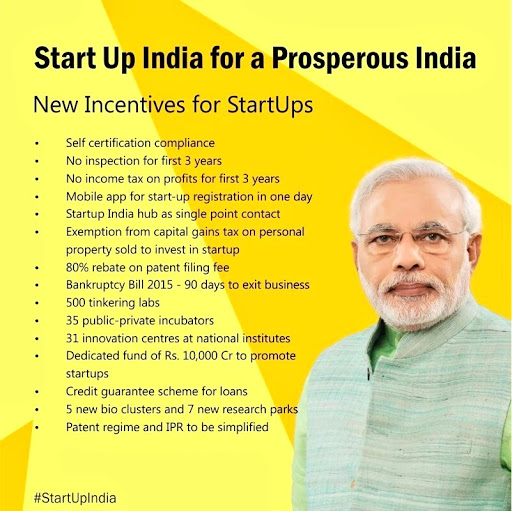






You must be logged in to post a comment.