TRUTH AND HONESTY: TWO SIDES OF THE SAME COIN

As the saying goes by “Honesty is the best policy”. The power of truth can be known from the fact that nobody, not even the greatest liar in the world, has the courage to say that he is telling a lie or that truth is not good. A man who tells a lie is like a criminal who has committed murder and is pleading not guilty even though all the facts, circumstances and evidences point towards the criminal. And the thing which a criminal pleads guilty for a crime which the hardened criminal is pleading not guilty yet it is that criminal who has committed the murder, one must always be truthful and honest no matter how henious the crime is and also avoid lying and being dishonest.

And when the truth is known, that person is terribly upset and highly afraid. An ordinary criminal may be afraid of fine, imprisonment or other punishment. But if the liar i.e the criminal happens to be a well-known popular figure, that person may be afraid of losing his popularity or reputation. In this respect, truth also becomes an acid test for our inner strength or bravery.

Many people may not be afraid of losing their life with a bullet but there must be few who have the courage to face the bullet of truth. A truly brave person sticks to the truth in all the circumstances. But many succumb to pressure or fear of torture or death like a criminal might. Joan of Arc, a young girl of eighteen, who refused to bow before the church and the government and embraced death by being burnt but she stuck to what she believed to be the truth.

WEBSITES REFERRED

  1. https://www.shareyouressays.com/english-essays/342-words-short-essay-on-the-value-of-truth/3031
  2. https://www.123rf.com/clipart-vector/honesty.html?sti=lj06uh9mvspsnqs4rk|
  3. https://www.dreamstime.com/stock-images-truth-not-lies-board-shows-honesty-image25845894

Transgender Rights In India.

Transgender Rights in India.

Transgender is an umbrella term used for persons whose gender identity and gender expression does not align with those assigned at birth. It can also refer to those who reject the gender binary of masculine and feminine. In India, they are often called Hijras, Aravanis, Jogtas and so on. The transgender community has always been an integral part of historical India where their presence and blessings at ceremonies was considered auspicious. Under the Mughal rule, they enjoyed strong royal connections and held high positions. With the advent of British colonization, the status and acceptance of transgenders declined. The imposition of a Euro-centric world view led to transgenders being viewed as moral and sexual contagion to supposedly deviant Indian males. The passing of the Criminal Tribes Act, 1871 (CTA) sought to further isolate transgenders by vilifying them as ‘habitual criminals’ and ‘sexual deviants.’

Newly independent India did little to better integrate transgender people into mainstream society. The census process, the most reliable source for data on demographic and literacy, omitted transgenders for the first 64 years. To relay the significance of this exclusion in numbers, when given the chance to identify themselves as transgenders in 2011, almost half a million out of 1.2 billion identified as transgenders. Transgenders are usually rejected from any means of employment and hence, resort to entertainment, begging, extortion or prostitution. The culmination of low literacy rates, low skill levels and the reluctance to accept transgenders has pushed them further into sex work and has increased the probability of violence against them. In terms of healthcare, the transgender community is 49 times more likely to be living with the Human Immunodeficiency Virus (HIV). The National Aids Control Organisation in (NACO) in India estimates HIV prevalence among transgenders to be 7.5%. The increased stigmatization makes it difficult for them to access adequate healthcare facilities.

The Ministry of External Affairs was the first official body that allowed transgenders to identify with a separate category ‘E’ while applying for passports. Not only was this categorization derogatory but it excluded a large spectrum of individuals who fell under the trans category. In case of competitive politics, transgenders are often provided positions as a means of tokenism rather than inclusion. 2014 was a turning point in the history of transgender rights in India. The Supreme Court in NALSA v Union of India guaranteed the fundamental rights of transgender persons and promised provision of equal opportunities under the constitutional framework. Notably, the Court held that they had the right to decide their self-identified gender and vowed to uphold the ideals liberty, equality and freedom of expression. The Constitution must be interpreted in such a manner so that it ensures a dignified life for transgenders. Other directions to combat the societal stigma and sexual health issues faced by transgender persons, were also conveyed by the Court.

However, the judgement was not backed by a capable legislative framework to centrally aid the transgender community. Hence, the ongoing efforts to do so fructified in the passing of the Transgender Persons (Protection of Rights) Act 2019 (hereafter ‘the Act’) which came into force on 10th January 2020. The Act aimed at providing a statutory basis to better protect the rights of transgender persons and establish procedures to orderly recognize their self-identified gender. Also, in the Act are provisions to prohibit discrimination against and secure the safety of the transgender community. Further, in April 2020, a Draft Transgender (Protections of Rights) Rules (hereafter, ‘the Rules’) under sub-section (1) and (2) of Section 22 of the Act was released by the Ministry of Social Justice and Empowerment. The Rules aim at strengthening the Act as well as focusing on the socio-economic hardships faced by transgender persons in the country.

Since its enactment, the Act has been challenged multiple times on the grounds that it violates the constitutional ideals recognized NALSA. For example, Section 6 and Section 7 of the Act have been criticized by members of the transgender community as violating guarantees against requirements of medical interventions for recognition of gender identity in NALSA. Further, the Act discards forceful binary instead establishing a trinary where ‘transgender’ is the only other alternative. This does not take into consideration those transgenders who would identify as male or female, and those who may be gender queer. Not only this but the wording of the Act also seems to impose a binary with ‘son/daughter’ and ‘his/her’ rather than the gender neutral ‘child’ and ‘their’.

Even with specific laws to help ease the life of the transgender community into mainstream society, their interaction with the legal and justice system is still tainted with unfair power dynamics. Cases of harassment, intimidation and violence at the hands of police are plenty but they are rarely acted against and the NCRB fails to maintain a record of these atrocities against transgender persons. The community often live with unrevealed sexual identities and this is taken advantage of by law enforcement. A study by the National Institute of Epidemiology among 60,000 transgender people across 17 states revealed that the biggest perpetrators of violence against transgender people were police and law enforcing authorities. One of the exceptions is the case of Jayalakshmi vs. Tamil Nadu, where the police was held accountable for the wrongful death of a transgender.

Implementation gap is most definitely the reason for deprivation of individual rights in India. While the Judiciary and Legislature have made efforts towards inclusion, the biggest challenge lies in better social acceptance and their integration normal, daily lives. We must aim grass-root level education that teaches that transgenders are not deviants and in fact, integral parts of our diverse society.

Commercial Advertising.

Commercial advertising.

INTRODUCTION

Advertising is an important and legitimate means for the seller to awaken interest in his goods and services. The success of advertising depends on public confidence. Hence no practice should be permitted which tends to impair this confidence. The standards laid down here should be taken as minimum standards of acceptability which would be liable to be reviewed from time to time in relation to the prevailing norms of viewer’s susceptibilities.

Definition –

  In this code, unless the context otherwise requires: –

  • “Government” means, Government of India.
  •  “Director General” means, the Director General, Doordarshan or any officer duly authorized by him on his behalf and includes the Director, Doordarshan Kendra.
  • “Advertiser” means any individual or organization including a commercial concern which has offered any advertisement to telecast over television.
  • “Advertising Agency” means any organization which is accreditation to or registered with Doordarshan as such.
  •  “Advertisement” includes any item of publicity for goods or services inserted in the programme telecast by Doordarshan with a view to increase sales.
  •  “Spot Advertisement” means any direct advertisement mentioning products/ services, their merits and other related details.
  • “Advertising Association” means an Association or Society or any other body of whose constituent members are advertising agencies registered or accredited to Doordarshan.

SCOPE: –

(a) The Director General, Doordarshan shall be the sole judge of the suitability or otherwise of an advertisement for telecast and his/her decision in this regard shall be final.

(b) Doordarshan time shall be sold to the Advertisers/ Advertising Agencies at the sole discretion of the Director General, Doordarshan according to the prescribed rate.

(c) The advertisement should be clearly distinguishable from the programme by using suitable wipes/blank, in order to avoid the message of the programme getting mixed up with the content and images of the advertisement.

The following standards of conduct are laid down in order to develop and promote healthy advertising practices in Doordarshan. Responsibility for the observance of these rules rests equally upon the Advertiser and the Advertising Agency.

All those engaged in advertising are strongly recommended to familiarize themselves with the legislation affecting advertising in this country, particularly the following Acts and the Rules framed under them:-

(1) Drugs and Cosmetics Act, 1940.

(2) Drugs Control Act, 1950.

(3) Drugs and Magic Remedies (objectionable Advertisements) Act, 1954.

(4) Copyright Act, 1957.

(5) Trade and Merchandise Marks Act, 1958.

(6) Prevention of Food Adulteration Act, 1954.

(7) Pharmacy Act, 1948.

(8) Prize Competition Act, 1955.

(9) Emblems and Names (Prevention of Improper Use) Act, 1950.

(10) Consumer Protection Act, 1986.

(11) Indecent Representation of Women (Prohibition) Act, 1986.

(12) AIR/ Doordarshan Code.

(13) Code of Ethics for advertising in India issued by the Advertising Standards Council of India.

  THE CODE

General Rules of Conduct in Advertising

1. Advertising shall be so designed as to conform to the laws of the country and should not offend morality, decency and religious susceptibilities of the people.

2. No Advertisement shall be permitted which-

     (i) derides any race, caste, colour, creed and nationality;

    (ii) is against any of the directive principles, or any other provision of the Constitution of India;

    (iii) tends to incite people to crime, cause disorder or violence, or breach of law or glorifies violence or obscenity in any way;

     (iv) presents criminality as desirable;

     (v) adversely affects friendly relations with foreign States;

     (vi) exploits the national emblem, or any part of the constitution or respected leaders, state dignitaries, Gods and Prophets belonging to various religions

    (vii) relates to or promotes cigarettes and tobacco products, liquor, wines and other intoxicants either directly or indirectly.

   (viii) shows institutions like Armed Forces, Paramilitary Forces, Police, Traffic Police etc. in poor light.

Advertisement for services concerned with the following shall not be accepted. (i) Unlicensed employment services; (ii) Sooth-Sayers etc. and those with claims of hypnotism; (iii) Betting tips and guide books etc. relating to horse-racing or other games of chance.

6. Doordarshan accepts the advertisements of educational institutions/colleges. However, it must be ensured that the institutions/colleges are genuine so as to ensure that students do not get misled.

 Doordarshan will also accept advertisements relating to holiday resorts and hotels.

 Doordarshan also accepts the advertisements relating to real estate including sale of flats/land, flats for rent both commercial and residential.

 Doordarshan has also allowed the telecast of:

(i) Foreign products and foreign banks including financial services;

(ii) Jewellery and precious stones;

(iii)Mutual funds approved by SEBI; (iv) Hair dyes; (v)Matrimonial agencies.

“VIEWERS ARE ADVISED TO CHECK THE GENUINENESS OF THE CLAIMS MADE”

7. The items advertised shall not suffer from any defect or deficiency as mentioned in Consumer Protection Act, 1986.

8. No advertisement shall contain references which are likely to lead the public to infer that the product advertised or any of its ingredients has some special or miraculous or super-natural property or quality which is difficult of being proved.

9. Scientific or statistical excerpts from technical literature etc., may be used only with a proper sense of responsibility to the ordinary viewer. Irrelevant data and scientific jargon shall not be used to make claims appear to have a scientific basis they do not possess. Statistics of limited validity should not be presented in a way as to make it appear that they are universally true.

10. Advertisements shall not contain disparaging or derogatory references to another product or service.

11. Visual and verbal representation of actual and comparative prices and costs shall be accurate and shall not mislead on account of undue emphasis or distortion.

12. The picture and the audible matter of the advertisement shall not be excessively „loud‟. This is to ensure that between the programme and the advertisement there is a smooth change-over avoiding jerkiness or shock to the viewers.

13. Information to consumer in matters of weight, quality or prices of products where given shall be accurate.

14. Advertisements indicating price comparisons or reductions must comply with relevant laws.

15. No advertisement shall be accepted which violates AIR and TV Broadcast Code which is reproduced below: –

General AIR/TV Code

(1) criticism friendly countries;

(2) attack on religions or communities;

(3) anything obscene or defamatory;

(4) incitement to violence or anything against maintenance of law and order;

(5) anything amounting to contempt of court;

(6) aspersions against the integrity of the President and Judiciary;

(7) anything affecting the integrity of the Nation; and

(8) criticism by name of any person.

16. No advertisement for a product or service shall be accepted if it suggests in any way that unless the children themselves buy or encourage other people to buy the products or services, they will be failing in their duty or lacking in loyalty to any person or organisation.

17. No advertisement shall be accepted which leads children to belief that if they do not own or use the product advertised they will be inferior in some way to other children or that they are liable to be condemned or ridiculed for not owning or using it.

18. Any advertisement which endangers the safety of the children or creates in them any interest in unhealthy practices, shall not be accepted.

19. Children shall not be shown begging or in undignified or indecent manner.

20. No advertisement likely to being advertising into contempt or disrepute shall be permitted. Advertising shall not take advantage of the superstition or ignorance of the general public.

21. No advertisements of talismans, charms and character reading from photographs or such other matter as well as those which trade on the superstition of general public shall be permitted.

22. Advertisements relating to or promoting astrology, numerology, palmistry and similar other forms of predictions shall not be permitted on Doordarshan.

23. Advertising shall be truthful, avoid distorting facts and misleading the public by means of implications and omissions. For instance, it shall not mislead the consumer by false statements, as to: (i) the character of the merchandise, i.e. its utility, materials, ingredients, origin etc.

(ii) the price of the merchandise, its value, its suitability or terms of purchase.

24. No advertisement shall be permitted to contain any claim exaggerated as to lead inevitably to disappointment in the minds of the public.

25. Methods of advertising designed to create confusion in the mind of the consumer as between goods by one maker and another maker are unfair and shall not be used. Such methods may consist in:

(i) the imitation of the trademark or name of competition or the packaging or labelling of goods; or

(ii) the imitation of advertising devices, copy, layout Or slogans.

26. Indecent, vulgar, suggestive, repulsive or offensive themes or treatment shall be avoided in all advertisements. This also applies to such advertisements which in themselves are not objectionable as defined above, but which advertise objectionable books, photographs or other matter and thereby lead to their sale and circulation.

27. Advertisements shall not portray animals or birds in a cruel, insensitive, disturbing or obnoxious manner. Such advertisements shall conform to the prevention of Cruelty to Animal Act, 1960.

28. No advertisement which promotes directly or indirectly production, sale or consumption of infant milk substitutes, feeding bottle or infant foods shall be permitted.


Financial Literacy For Girls In Today’s Time

In this modern age, we see women leading at every possible front. They are now more informed and educated and are confident enough to make their own decisions. They are masters of multi-tasking with juggling their careers and households at the same time.

Women have never felt more empowered than we do today. Women are running for office in record numbers. More women are pursuing entrepreneurship. Women are earning more bachelor’s degrees than men. More working mothers are the primary or sole earners in their households. The list goes on and on.

While they make their continuous progress, women should also pay a special attention to financial planning. This is one area which often takes a back seat in a woman’s life. Financial planning for women is a critical aspect for them to reach their personal as well as professional objectives, without being dependent on anyone.

Improving Financial Literacy Among Women

Financial planning is not a rocket science. It is more down to habit and careful management of your hard-earned money. Because of the limited exposure, women previously were not aware of the simple ways that contributed in successfully managing the finances.

Today, one way to tackle this is taking more interest in the subject and being aware about the basic things that build a solid financial foundation. It can also be called as improving the financial literacy. One can read books, finance magazines, news etc. to keep themselves updated about the latest trends in the domain.

Women deserve economic equality

On average, a woman today earns between 80 to 82 cents for every dollar a man earns or $9,308 less annually. By understanding how to manage personal finances, women will be better able to make informed economic decisions over the course of their lives. Also, women will have a better grasp of their worth in the marketplace. Ultimately this information can help to reduce the gender pay gap.

Financial Independence

One of the biggest reasons why women need financial planning is to be financially independent. With a sound plan, they can march confidently towards their personal and professional objectives without worrying about the financial implications. Also, it prepares them for any crisis in the future as well as raises corpus for retirement. Thus, it is high time for all the women to take active role in financial planning and take complete control of their finances. It is the first step towards achieving that coveted financial independence.

It becomes difficult to fathom an equal world without empowering women with equal social and economic opportunities. Making them financially literate is one of the most important area.

The highlighted factors that profoundly influenced financial literacy among Indian Women, which are:

  1. Lack of independence
  2. Culture
  3. General Literacy
  4. Lack of Confidence
  5. Access (to finance)

State Initiative

The situation has goaded the government to launch schemes aimed at boosting financial literacy among women. The rationale being, this would lead to greater financial inclusion in the country.. These schemes encourage women to take up personal finance activities as savings and investments. The programmes also spread awareness of financial of fundamental financial issues that impact their lives, and to design the address the key components of financial literacy such as:

  • The need to save
  • Benefits of investing
  • The difference between saving and investment
  • The need for insurance
  • The need for a regular stream of income after retirement, or in their old age
  • The necessity of saving or investing regularly
  • The advantages of savings in bank

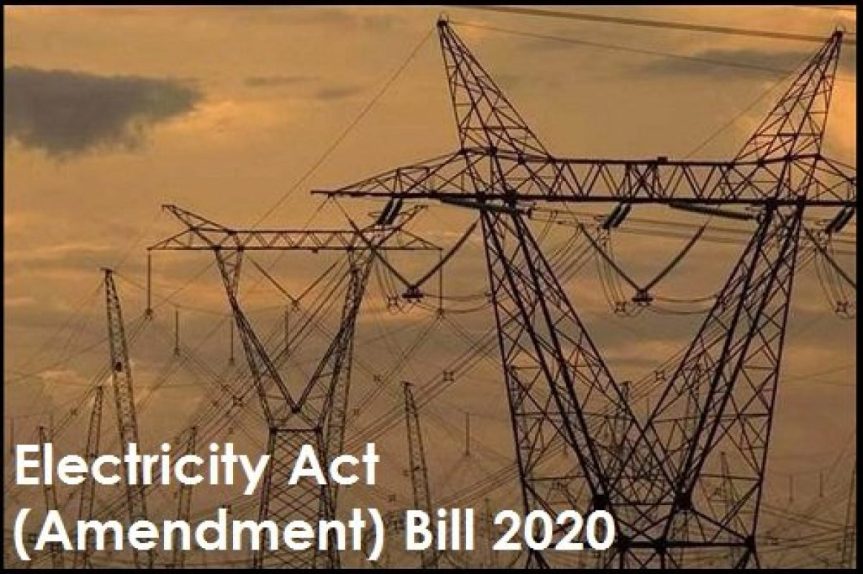
Electricity (Amendment) Bill 2020: A Gist and Overview

INTRODUCTION

Recently, the Central government has introduced the Electricity (Amendment) Bill 2020 to amend various provisions in the Electricity Act 2003.

The Electricity Act, 2003 (the “Electricity Act”) was enacted to consolidate the electricity laws in India. While the Electricity Act facilitated significant private investments, market development, and adoption of transparent tariff mechanism etc., the power sector has been facing various developmental hurdles for some time.

Consequently, to address various issues which have been highlighted by the industry and to further reform the power sector, the Ministry of Power (“MoP”), Government of India, released the draft Electricity (Amendment) Bill, 2020 (the “Amendment Bill”) on April 17, 2020, to amend the Electricity Act. 

The MoP has requested the stakeholders to provide their comments and suggestions on the Amendment Bill within 21 (twenty-one) days from the date of release of the Amendment Bill (i.e. by or before 8 May 2020).

The electricity amendment seeks to end the malaise in the production, distribution and transmission. Further, it seeks to revive investments and promote growth in line with the vision of a $5 trillion economy in the near future

KEY OBJECTIVES:

Following are the key objectives of the Electricity (Amendment) Bill 2020:

  1. Ensure consumer centricity
  2. Promote Ease of Doing Business
  3. Enhance the sustainability of the power sector
  4. Promote green power

THE DIMENSIONS 

There are two dimensions, these are as follows:

  1. Static Dimension: The Electricity Act, 2003 and Privatisation of Discoms and;
  2. Current Dimension: UDAY Scheme, T&D Losses, Need for a new amendment and Important features.

WHY IS THE NEW AMENDMENT REQUIRED

  1. Some of the provisions of the Act have become dated and archaic and needs an update. 
  2. Policy modifications are needed to address some recurring issues and to promote further commercial incentive for private players to enter the market in the generation, distribution and transmission of electricity.
  3. Measures need to be augmented to ease the financial crunch of the Discoms.
  4. It is necessary to promote a legal and administrative ecosystem which harbours special attention to renewable energy.

ISSUES INVOLVED

  1. Cost reflective tariff has been a concern for states like Telangana which provide free electricity to the farming sector.
  2. Formation of ECEA has also been criticized as a move towards centralization of power.
  3. Recognition of franchisees and sublicensees might open the sector to private players.

IMPORTANT FEATURES OF THE DRAFT

  1. The bill enables state as well as central power regulators to specify transmission charges under open access (earlier both functions were with the central commission).
  2. The draft law provides for the introduction of power distribution sub-licensee or franchisee, which would not require a separate licence from the state commission.
  3. The Electricity Act would be applicable to the entire country, including the Union Territories of Jammu and Kashmir and Ladakh.

KEY AMENDMENTS  

  1. National Selection Committee:  Instead of the separate Selection Committee (for appointment of Chairperson and Members of State Electricity Regulatory Commissions-SERCs), there is a proposal to set up a National Selection Committee.
  2. Introduction of Direct Benefit Transfer: Direct Benefit Transfer will be beneficial for both the State Governments and as well as Distribution Companies. It will be beneficial for the State Government because it will ensure that the subsidy reaches the people who are actually entitled and the State Government gets clear accounts of the amount given as subsidy.
  3. National Renewable Energy Policy: India is a signatory to the Paris Climate Agreement. It is therefore proposed to have a separate policy for the development and promotion of generation of electricity from renewable sources of energy. The policy prescribes a minimum percentage of the purchase of electricity from renewable sources of production. It seeks to give special attention to hydropower.
  4. Sustainability: To address this problem, the Amendment has prescribed a period of 60 days to adopt the determined tariffs. Failing such a timeline of 60 days, the tariff would be deemed to be accepted.
  5. Cost Reflective Tariff: To address this problem, the Amendment has prescribed a period of 60 days to adopt the determined tariffs. Failing such a timeline of 60 days, the tariff would be deemed to be accepted.
  6. Payment Security:  It is proposed to empower Load Dispatch Centres to oversee the establishment of adequate payment security mechanisms before dispatch of electricity, as per contracts.
  7. Ease of Doing Business:
  1. Establishment of Electricity Contract Enforcement Authority (ECEA): The Authority will enforce performance of contracts related to purchase or sale or transmission of power between a generating company, distribution licensee or transmission licensee.
  2. Central Electricity Regulatory Commission (CERC) and State Electricity Regulatory Commissions (SERCs) do not have powers to execute their orders as a decree of a civil court.
  3. Cross Subsidy: The Bill provides for the SERCs to reduce cross-subsidies as per the provisions of the Tariff Policy.

8. Open Access: Under the Electricity Act, open access can be granted to a consumer on the payment of surcharge and wheeling charges as determined by the relevant State Commission. However, such charges do not include charges for intra-state transmission and interstate transmission of power. In view of this, the Amendment Bill proposes to add such transmission charges, wherever applicable, to the existing charges (i.e. surcharge and wheeling charges). 

Further, it is proposed under the Amendment Bill that open access surcharge and cross-subsidies will be “progressively reduced” by the State Commission in the manner provided in the tariff policy – Section 42 of the Electricity Act envisaged reduction in cross-subsidy as per discretion of the relevant State Commission, however, the Amendment Bill seek to take away the discretion of the State Commission for determination of cross-subsidy and post amendment the State Commission will be bound to follow the mandate of the Central Government.

Miscellanous:

  1. Strengthening of the Appellate Tribunal (APTEL): It is proposed to increase the strength of APTEL to at least seven to facilitate quick disposal of cases.
  2. Penalties: In order to ensure compliance of the provisions of the Electricity Act and orders of the Commission, section 142 and section 146 of the Electricity Act are proposed to be amended to provide for higher penalties.
  3. Cross Border Trade in Electricity: Provisions have been added to facilitate and develop trade in electricity with other countries. and Lastly 
  4. The Distribution sub-licensees: To improve quality of supply, an option is proposed to be provided to Discoms to authorize another person as a sub-license to supply electricity in any particular part of its area, with the permission of the State Electricity Regulatory Commission.

WEBSITES REFERRED:

  1. https://powermin.nic.in/sites/default/files/webform/notices/Draft_Electricity_Amendment_Bill_2020_for_comments.pdf
  2. https://www.drishtiias.com/daily-updates/daily-news-analysis/electricity-amendment-bill-2020
  3. https://induslaw.com/app/webroot/publications/pdf/alerts-2020/InfoAlert-Highlights-of-the-Electricity-Amendment-Bill-2020-April-2020.pdf
  4. https://www.manifestias.com/2020/05/15/electricity-amendment-bill-2020/#:~:text=The%20Union%20power%20ministry%20has,power%20generation%20companies%20(gencos)
  5. https://www.indiathinkers.com/2020/04/electricity-act-amendment-bill-2020.html

COVID-19 recovery rate improves to 64.51%

Total recoveries from COVID-19 in the country today inched closer to touch the one million mark.

A total of nine lakh 88 thousand 29 people have recovered in the country so far and 35 thousand 286 recoveries were reported during the last 24 hours.

With this, the recovery rate improved to 64.51 per cent in the country. The case fatality rate has declined to 2.23 per cent.

The Health Ministry said, 48 thousand 513 new cases of COVID-19 were registered in the country in one day taking the total number of cases to 15 lakh 31 thousand 669.

Presently, the total number of active cases in the country is five lakh nine thousand 447. In a single day, 768 deaths were reported taking the toll to 34 thousand 193.

Meanwhile, Indian Council of Medical Research said that a record four lakh eight thousand 855 tests were conducted by various laboratories in the last 24 hours.

So far, one crore 77 lakh 43 thousand 740 tests have been conducted.

AIR correspondent reports that Delhi stands at top position with 88.83 per cent recovery rate.

Ladakh, Haryana, Assam and Telangana are other top performing States and Union Territories wherein the recovery rate is above 73 per cent.

Nearly, 16 States and Union Territories have better recovery rates than the national average of 64.51 per cent.

Maximum number of people have recovered in Maharashtra followed by Tamil Nadu, Delhi and Andhra Pradesh.

In terms of fatality rate, there are 29 States and Union Territories which have lower fatality rates than the national average.

In the total active cases, around 70 per cent caseloads are from Maharashtra, Karnataka, Tamil Nadu, Andhra Pradesh and Uttar Pradesh.

PM Modi, Mauritian counterpart to inaugurate new Supreme Court building in Port Louis today

Prime Minister Narendra Modi and his Mauritian counterpart Pravind Jugnauth will jointly inaugurate the new Supreme Court building of Mauritius today.

The inauguration is scheduled to take place through video conference in presence of senior members of Judiciary from Mauritius and other dignitaries from both the countries. The building has been constructed with Indian grant assistance and will be the first India-assisted infrastructure project within the capital city of Port Louis after the outbreak of Coronavirus pandemic.

The new Supreme Court building project is one of the five projects being implemented under the Special Economic Package of 353 million dollars extended by Government of India to Mauritius in 2016. The project has been completed within schedule and below expected costs. The building is spread over an area of more than 4,700 square metres with over 10 floors and a built up area of around 25 square metres.

In October 2019, Mr Modi and Prime Minister of Mauritius had jointly inaugurated the Phase-I of the Metro Express Project and the new ENT Hospital project in Mauritius, also built under the Special Economic Package. Under Phase-I of Metro Express project, construction of 12 kilometres of metro-line was completed in September last year, while work on its Phase-2 envisaging 14 kilometres of metro-line is ongoing. Through the ENT Hospital project, India assisted in construction of a 100-bed state of the art ENT hospital in Mauritius.

The new Supreme Court Building is expected to become an important landmark in the city centre symbolizing the strong bilateral partnership between the two countries.

In a tweet, Mr Modi said, it is another example of India-Mauritius friendship. He said, India is honoured to have assisted in this key project.

Rajasthan: Governor approves Cabinet proposal to convene State Assembly Session from Aug 14

In Rajasthan, Governor Kalraj Mishra has given the approval of the proposal of Cabinet to convene the State Assembly Session. The Session will start from 14th of August. Before this, the Governor had returned three proposals of the State Cabinet for calling an Assembly Session.

Meanwhile, Rajasthan High Court will hear today the petition related to the merger of six BSP MLAs in Congress. The court yesterday accepted the writ petition of BJP MLA Madan Dilawar. Bahujan Samaj Party also challenged the merger in the Rajasthan High Court, which has also been attached with the Mr. Dilawar’s petition.

PM Modi hails New Education Policy, says it will transform lives of millions of people in times to come

Prime Minister Narendra Modi wholeheartedly welcomed the approval of the National Education Policy, NEP 2020. In a series of tweets, he said, this was a long due and much awaited reform in the education sector, which will transform millions of lives in the times to come. 

The Prime Minister said, NEP 2020 is based on the pillars of Access, Equity, Quality, Affordability and Accountability. He said, in this era of knowledge, where learning, research and innovation are important, the National Education Policy will transform India into a vibrant knowledge hub. 

The Prime Minister added, NEP 2020 gives utmost importance towards ensuring universal access to school education. There is emphasis on aspects such as better infrastructure, innovative education centres to bring back dropouts into the mainstream, facilitating multiple pathways to learning among others. .

An Academic Bank of Credit will be set up to enable digital storage of credits earned from different HEIs, which can also be transferred and counted as a part of the final degree. The Prime Minister said, respecting the spirit ‘Ek Bharat Shreshtha Bharat’, the NEP 2020 includes systems to promote Indian languages, including Sanskrit. Many foreign languages will also be offered at the secondary level. Indian Sign Language will be standardised across the country.

He said, aspects such as widening the availability of scholarships, strengthening infrastructure for Open and Distance Learning, Online Education and increasing the usage of technology have received great attention in the NEP. He added that these are vital reforms for the education sector. 

The Prime Minister said, framing of NEP 2020 will be remembered as a shining example of participative governance. He thanked all those who have worked hard in the formulation of the NEP 2020. The Prime Minister hoped that education would brighten our nation and lead it to prosperity.

New Education Policy-2020 aims to have single regulator for higher education institutions and common entrance exams for universities

The Cabinet yesterday approved National Education Policy 2020. A single regulator for higher education institutions, multiple entry and exit options in degree courses, discontinuation of MPhil programmes, low stakes board exams, common entrance exams for universities are among the highlights of the new National Education Policy.

Briefing the media in New Delhi last evening, Information and Broadcasting Minister Prakash Javadekar said, the Cabinet chaired by Prime Minister Narendra Modi has given approval to a New Education Policy for the 21st century.

He said, it is important, as for 34 years there were no changes in the education policy. 

Education Minister Ramesh Pokhriyal Nishank said, New Education Policy 2020 will prove to be a milestone in the making of New India.

Mr Nishank said, the Cabinet also approved changing the name of the Human Resources Development Ministry to the Education Ministry.

Secretary Higher Education Amit Khare said, NEP 2020 aims to increase the Gross Enrolment Ratio in higher education including vocational education from 26.3 per cent in 2018 to 50 per cent by 2035.

He said, at least 3.5 crore new seats will be added to higher education institutions.

Mr Khare said, the policy envisages broad based, multi-disciplinary, holistic Under Graduate education with flexible curricula, creative combinations of subjects, integration of vocational education and multiple entry and exit points with appropriate certification.

He said, Under Graduate education can be of 3 or 4 years with multiple exit options and appropriate certification within this period.

The Higher Education Secretary said, affiliation of colleges is to be phased out in 15 years and a stage-wise mechanism is to be established for granting graded autonomy to colleges.

Over a period of time, it is envisaged that every college would develop into either an autonomous degree-granting college, or a constituent college of a university.

Among the key reforms in the policy are a single regulator for all higher education institutions except for legal and medical colleges, common entrance exam for admissions to universities and colleges to be conducted by the National Testing Agency and common norms to be in place for private and public higher education institutions.

Secretary, School Education and Literacy, Anita Karwal said, Board exams will be low stake and the focus will be on testing concepts and knowledge application.

She said, Home language, mother tongue or regional language to be medium of instruction up to class 5. Ms Karwal said, school curriculum will be reduced to core concepts and there will be integration of vocational education from class 6. 

In May 2016, a ‘Committee for Evolution of the New Education Policy’ under the chairmanship of TSR Subramanian, former cabinet secretary, submitted its report. 

Based on this, the Ministry prepared a document called ‘Some Inputs for the Draft National Education Policy, 2016′. 

Then, a panel led by former Indian Space Research Organisation (ISRO) chief K Kasturirangan had submitted the draft of the new NEP to Union Human Resource Development Minister Ramesh Pokhriyal ‘Nishank’ when he took charge last year.

The draft was then put in the public domain to seek feedback from various stakeholders and over two lakh suggestions were received by the HRD Ministry about the same.

Maharashtra extends lockdown till Aug 31 in view of rising Coronavirus cases

Maharashtra Government has extended the lockdown in the entire state till 31st of August in view of rising Coronavirus cases. A notification issued by Chief Secretary Sanjay Kumar said, the decision was taken as an emergency step to prevent and contain the spread of COVID-19.

The notification said that as part of the State Government’s Mission Begin Again initiative, malls and market complexes without theatres, food courts and restaurants will be operational between 9 AM and 7 PM from 5th of August. It said that large public gatherings and congregations will continue to remain prohibited and marriage-related gatherings will have only up to 50 guests. The maximum number of persons allowed at funerals will be 20.

Meanwhile, Maharashtra Chief Minister Uddhav Thackeray  directed officials  not to let their guard down and ramp up tracing COVID-19 patients and their contacts.

CM Thackeray told a Cabinet meeting that just lockdown is not important, but tracing of Cod -19 patients and their contacts should be the focus.He added that all municipalities across the state need to follow the rules strictly.

Meanwhile, Maharashtra’s COVID-19 case count has crossed the four lakh-mark in the last 24 hours. State Health Secretary Pradeep Vyas has informed that COVID-19 mortality rate in Maharashtra now stands at 3.62 per cent while the case doubling rate is 27 days, which has improved to 70 days in Mumbai.

Unlock 3.0 guidelines to come into force from Aug 1; Schools, Colleges to remain closed till Aug 31

Union Home Ministry has issued new guidelines for opening up of more activities in areas outside the Containment Zones. The process of phased re-opening of activities has been extended further in Unlock 3, which will come into effect from 1st of August. The new guidelines issued yesterday are based on feedback received from States and Union Territories and extensive consultations held with related Central Ministries and Departments.

AIR correspondent reports, restrictions on movement of individuals during night have been removed. Yoga institutes and gymnasiums will be allowed to open from 5th of August.

In this regard, Standard Operating Procedure will be issued by Health Ministry for ensuring social distancing. Independence Day functions will be allowed with social distancing and by following other health protocols. Schools, colleges and coaching institutions will remain closed till 31st of August.

International air travel of passengers has been permitted in a limited manner under the Vande Bharat Mission.  Further opening up will take place in a calibrated manner. All activities except Metro Rail, Cinema halls, swimming pools, entertainment parks, theatres, bars shall be permitted outside containment zones.  

Social, political,  sports, entertainment, academic, cultural, religious functions and other large congregations will not be permitted.  With Diwaker, Suparna Saikia, AIR News, Delhi.

Activities in the Containment Zones shall be monitored strictly by State and UT authorities and the guidelines relating to containment measures in these zones shall be strictly implemented. The Health Ministry will monitor the proper delineation of Containment Zones and implementation of the containment measures.

States and UTs, based on their assessment of the situation, may prohibit certain activities outside the Containment zones or impose such restrictions as deemed necessary. However, there shall be no restriction on inter-state and intra-state movement of persons and goods.

Understanding NIFTY

S&P CNX NIFTY is an Index computed from performance of top stocks from different sectors listed on NSE (National stock exchange). NIFTY consists of 50 companies from 24 different sectors. NIFTY stands for National Stock Exchange’s Fifty. The companies which form index of NIFTY may vary from time to time based on many factors considered by NSE.  NIFTY is for NSE similarly SENSEX is for BSE. Some mutual funds use NIFTY index as a benchmark meaning the mutual funds’ performance is compared against the performance of NIFTY. On NSE there are futures and options available for trading with NIFTY as underlying index. India Index Services and Products Ltd. (IISL) owns NIFTY.  

IISL is a joint venture of NSE and CRISIL. CRISIL is a subsidiary of Standard and Poor (S&P). And so NIFTY is also called as S&P CNX NIFTY. CNX ensures common branding of indices, to reflect the identities of both the promoters, i.e. NSE and CRISIL. Thus, ‘C’ stands for CRISIL, ‘N’ stands for NSE and X stands for Exchange or Index. The S&P prefix belongs to the US-based Standard & Poor’s Financial Information Services. Nifty stocks represent about 63 percent of the Free Float Market Capitalization. Impact cost of the S&P CNX Nifty for a portfolio size of Rs.50 laks is 0.06%. Market impact cost is the best measure of the liquidity of a stock. It accurately reflects the costs faced when actually trading an index. For a stock to qualify for possible inclusion into the S&P CNX Nifty, it has to reliably have market impact cost of below 0.75 percent when doing S&P CNX Nifty trades of Rs. 50 Lakhs. S&P CNX Nifty is professionally maintained and is ideal for derivatives trading.  

S&P CNX Nifty always uses the best stocks possible for its index. The weakest stocks are removed from inside the S&P CNX Nifty and the new stock into it. The world changes, so the index should change. Yet, the change should not be sudden – for that would disrupt the character of the index. S&P CNX Nifty uses clear, researched and publicly documented rules for index revision. These rules are applied regularly, to obtain changes to the index set. Index reviews are carried out every six months to ensure that each security in the index fulfills all the laid down criteria. IDBI was once not listed; SBI was once illiquid; Infosys was once an obscure software startup. The world changes, and one by one, these stocks have come into the S&P CNX Nifty. Each change in the S&P CNX Nifty is small, so the continuity of the index is maintained. Yet, at all times, S&P CNX Nifty represents the 50 most important liquid stocks in the country, the best stocks to build an index out of.  

NSE has the best surveillance procedures in India, so the extent of market manipulation is minimum. In NSE, since, the professional staff of the surveillance department has no positions on the market, this elimination of conflicts of interest and generates a more honest focus upon eliminating market manipulation. On a day to day basis millions of shares get traded on the NSE generating huge order flows. Due to the liquidity and order flow from numerous market players manipulation of the closing price becomes very hard. NSE is the most liquid exchange in India. Hence, the prices observed there are the most reliable. NSE has the highest trading intensity and their bid-ask spreads are the tightest.    

Sister indexes of NIFTY

S&P CNX Defty  

S&P CNX Defty is S&P CNX Nifty, measured in dollars. If the S&P CNX Nifty rises by 2percent it means that the Indian stock market rose by 2percent, measured in rupees. If the S&P CNX Defty rises by 2percent, it means that the Indian stock market rose by 2percent, measured in dollars.

S&P CNX 500  

S&P CNX 500 is India’s first broadbased benchmark of the Indian capital market. The S&P CNX 500 represents about 86percent of total market capitalisation and about 78percent of the total turnover on the NSE. The S&P CNX 500 companies are disaggregated into 72 industries, each of which has an index called S&P CNX Industry Index. Industry weightages in the index dynamically reflect the industry weightages in the market. So for e.g. if the banking sector has a 5percent weightage among the universe of stocks on the NSE, banking stocks in the index would have an approximate representation of 5percent in the index. The S&P CNX 500 is a market capitalisation weighted index. The base date for the index is the calendar year 1994 with the base index value being 1000. Companies in the index are selected based on their market capitalisation, industry representation, trading interest and financial performance. The index is calculated and disseminated real-time.  

CNX Nifty Junior  

S&P CNX Nifty is the first rung of the largest, highly liquid stocks in India. CNX Nifty Junior is an index built out of the next 50 large, liquid stocks in India. It is not as liquid as the S&P CNX Nifty, which implies that the information in the S&P CNX Nifty Junior is not as noise-free as that of the S&P CNX Nifty. S&P CNX Nifty and the CNX Nifty Junior taken together constitute 100 most liquid stocks in India. S&P CNX Nifty is the front line blue-chips, large and highly liquid stocks. The CNX Nifty Junior is the second rung of growth stocks, which are not as established as those in the S&P CNX Nifty. A stock like Satyam Computers, which recently graduated into the S&P CNX Nifty, was in the CNX Nifty Junior for a long time prior to this. CNX Nifty Junior can be viewed as an incubator where young growth stocks are found.   

As with the S&P CNX Nifty, stocks in the CNX Nifty Junior are filtered for liquidity, so they are the most liquid of the stocks excluded from the S&P CNX Nifty. Buying and selling the entire CNX Nifty Junior as a portfolio is feasible. The maintenance of the S&P CNX Nifty and the CNX Nifty Junior are synchronised so that the two indices will always be disjoint sets; i.e. a stock will never appear in both indices at the same time. Hence it is always meaningful to pool the S&P CNX Nifty and the CNX Nifty Junior into a composite 100 stock index or portfolio.

CNX MidCap

The medium capitalised segment of the stock market is being increasingly perceived as an attractive investment segment with high growth potential. The primary objective of the CNX MidCap Index is to capture the movement and be a benchmark of the midcap segment of the market. The CNX MidCap Index is a market capitalisation weighted index with its base period of the index being the calendar year 2003 and base value as 1000.The distribution of industries in the CNX MidCap Index represents the industry distribution in the MidCap segment of the market. All companies are evaluated for trading interest and financial performance.  

CNX MNC Index  

The CNX MNC Index comprises 15 listed companies in which the foreign shareholding is over 50percent and/or the management control is vested in the foreign company. The index is a market capitalisation weighted index with base period being the month of December, 1994 indexed to a value 1,000. Companies in the index should be MNCs and are selected based on their market capitalisation, industry representation, trading value and financial performance.  

CNX PSE Index  

As part of its agenda to reform the Public Sector Enterprises (PSE), the Government has selectively been divesting its holdings in public sector enterprises since 1991. With a view to provide regulators, investors and market intermediaries with an appropriate benchmark that captures the performance of this segment of the market, as well as to make available an appropriate basis for pricing forthcoming issues of PSEs, IISL has developed the CNX PSE Index, comprising of 20 PSE stocks.  

CNX IT Sector Index  

With the Information Technology (IT) sector in India growing at a fast rate, there is a need to provide investors, market intermediaries and regulators an appropriate benchmark that captures performance of this sector. Companies in this index should have more than 50percent of their turnover from IT related activities like software development, hardware manufacture, vending, support and maintenance. The index is a market capitalisation weighted index with its base period being December 1995 with base value 1,000. NSE being the leading stock exchange in India, the NIFTY index is not only a prime index for the exchange itself but also it is an indicator of the booming Indian economy. Despite of the recent slowdown in the global economic scene the NIFTY index has sustained a regular growth after overcoming the sudden impact. The index for so many reasons has attracted investors not only from the domestic market but also from foreign countries.

Patents in India

What is a patent ?

A patent is a legal document that is granted by the government of the state or the country, depending on the national rules. It gives an inventor of a particular thing, the exclusive right to make, use and sell his or her creation for a specified period of time. 

The basic idea of this system is to encourage the inventors to safeguard their own creations. Books, movies, and some artworks cannot be patented. However, one can protect these assets under the law of copyright. The law of patent is one branch of the larger legal field known as intellectual property, which also includes trademark and copyright law.

Patent is a form of intellectual property rights (IPR) which apart from patents also includes trademarks, copyrights, geographical indicators etc. A patent is an exclusive right granted for an innovation, which is a product or a process that provides, in general, a new way of doing something, or offers a new technical solution to a problem.

Objective of patent is to grant the innovator of the product or process some benefits where invention/innovation cannot be commercially made, used, distributed or sold without the patent owner’s consent. These patent rights are usually enforced in a court, which, in most systems, holds the authority to stop patent infringement. In India, patents are governed by Indian Patents Act 1970 which initially provided for the process patents only and not for product patents for food, chemicals and drugs.

Suppose if product has been developed by an inventor, then he can file patent for the process through which that product has been developed and not for that product itself. In the case of inventions being claimed relating to food, medicine, drugs or chemical substances, only patents relating to the methods or processes of manufacturer of such substances were provided. Thus patent act of 1970 emphasized public interest over monopoly rights. However, under World Trade Organization (WTO), Trade Related Intellectual Property Rights (TRIPS) agreement provides for product patent for 20 years. After the expiry of 20 years, anyone can manufacture that product. All WTO members had to comply with TRIPS agreement before 2005 because of which Indian parliament passed Patent Amendment Act 2005 which brought product patent regime in India. Important features of 2005 Amendment Act and extension of product patent protection to all fields of technology including drugs, foods and chemicals were granted.   

Exemptions under 2005 Act are –  

• Frivolous claims contrary to natural laws

• Anything contrary to law or morality or injurious to public health

• Mere arrangement or rearrangement of duplication of known devices.

• A method of agriculture or horticulture

• Inventions related to atomic energy  

Further, act also empowers the government to import, make or use for its own purpose. It also empowers import of drugs for public health distribution. It also empowers the government to revoke the patent which is found mischievous to state or prejudices to public. State can also acquire a patent to meet national requirements. Patents act is supposed to have most important bearing on the pharmaceutical industry. Drug manufacturing MNCs incur huge cost in the form of R&D for development of new drugs. In order to recover that cost, they sought patent and sell these drugs at exorbitant prices. After the term of patent (20years) is over, every company is free to manufacture those drugs and price of these drugs reduces drastically as new companies don’t engage in the R&D and its cost is reduced. Such drugs whose patent is expired are called as Generic medicines and Indian pharmaceutical companies produce these generic medicines at mush less cost than their western counterparts.  

Under the 1997 patent act, Indian companies could produce these drugs even before expiry of 20 years through different process but after 2005 amendment; they have to comply with the product patent. Therefore, it may have an adverse impact on price of medicines in India as they have to comply with TRIPS. Bolar Provision facilitates production and marketing of patented product immediately after the expiry of term of patent by permitting preparatory action by non patent companies during the term of the patent. According to this provision, despite the patent rights, research and tests for regulatory approval does not constitute infringement of patent. There have been few apprehensions in various quarters particularly for health sector regarding its impact on drug prices as it may rule out the availability of low cost drugs. However, it is said that 97 percent drugs manufactured in India are off patents and will remain unaffected.  

Further, legislation has strong provision for the outright acquisition of patents to meet national requirements. Besides, there is also Drug Price Control Order administered by National Pharmaceutical Price Authority. There are also adequate safeguards to protect the interest of domestic industry and common man from any increase in the prices of drugs. Although there are adequate safeguards are assured by the government, but some impact on prices cannot be ruled out which will further alienate the poor from the health due to rising cost of medicines. Since it is also nor immoral on part of the companies conducting extensive research on the development of life saving drugs, treatment can be assured to all the persons through universalization of Health Insurance which may be partially public funded.    Just like government had imposed cess on petrol and diesel to recover the cost of High development, some cess can also be imposed to recover the cost of universal health programme. In 2009-10, as many as 34287 patents were filed out which only 6168 patents were granted. Moreover, only 17 percent of these patents were granted to Indian while rests were granted to the foreigners. In 2010-11, of the total 7,486 patents granted, Indians could claim only 1,272. On the other hand, foreigners walked away with 6,214 patents. In the world, Japan is credited with maximum number of patents.