

Author: Eduindex News
Visit us for more news at https://eduindex.org
Unlock 3.0: MHA issues guidelines: Schools, Colleges and Coaching institutions to be shut till 31 August; yoga institutes, gyms to reopen from Aug 5
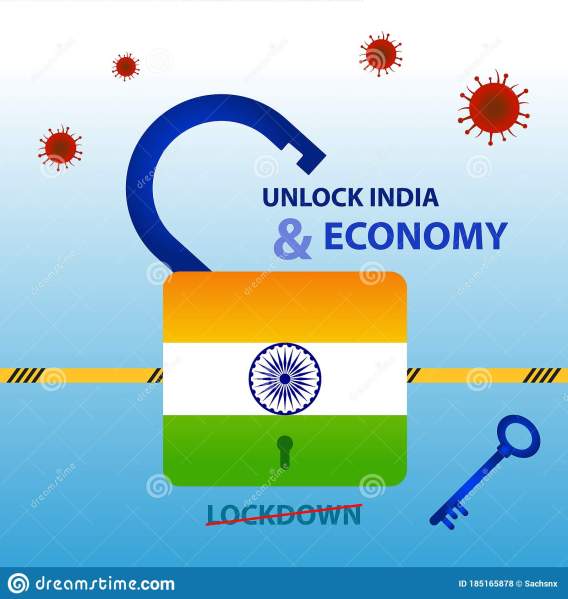
The Ministry of home affairs (MHA) has issued fresh guidelines for third phase of ‘Unlock’. These guidelines will come into effect from 1 August, 2020. The restrictions on the movement of individuals during night have been removed, while yoga institutes and gymnasiums will be allowed to open from August 5.
Lockdown shall continue to be implemented strictly in the containment zones till August 31. All activities, except the following shall be permitted outside containment zones – Metro Rail, cinema halls, swimming pools, entertainment parks, theatres, bars, auditoriums, assembly halls and similar places.
Also, schools, colleges and coaching institutions will remain closed till August 31. The government also said the new guidlines issued today are based on feedbacks received overtime by authorities and chief ministers of states and Union Territories. Social/political/sports/entertainment/academic/cultural/religious functions and other large congregations are still not permitted.
Guidelines for containment zones:
According to the order, lockdown in containment zones will remain imposed till 31 August, 2020. These virus containment zones need to be carefully demarcated by the state governments or UTs. Within the perimeters of containment zones, strict social distancing and other norms of containing the spread of the virus shall be maintained and only essential activities will be allowed, MHA said in a statement.
These containment zones will be notified on the websites of respective district collectors of the states and UTs and activities taking place in these zones will be strictly monitored by the authorities. MHA also stated that the states and UTs can impose its own guidelines outside the containment zones, which they deem necessary.
India went under a complete nationwide lockdown from 25 March in order to curb the spread of the novel coronavirus in the country. In an attempt to bring back normalcy, the MHA has been issuing a number of guidelines in its Unlock India mission in order to provide relaxations in a graded manner and kickstart the economy. Meanwhile, with 48,513 people testing positive for coronavirus in a day, India’s Covid-19 tally crossed 15 lakh-mark today, while the recoveries jumped to 9,88,029, according to the daily bulletin of Ministry of Health & Family Welfare.
The country’s death toll rose to 34,193 with 768 fatalities being recorded in a day. The fatality from covid currently stands at 2.25% in India as compared to global average of about 4%. Total virus positive cases now stand at 15,31,669 including 5,09,447 active cases, the health ministry said.
WEBSITES REFERRED:
- https://www.mha.gov.in/sites/default/files/Unlock3_29072020.pdf
- https://timesofindia.indiatimes.com/videos/news/unlock-3-0-mha-issues-guidelines-yoga-institutes-gyms-to-reopen-from-aug-5/videoshow/77245574.cms
- https://www.livemint.com/news/india/unlock-3-0-night-curfew-removed-gymns-to-open-under-new-guidelines-details-here-11596030267259.html
- https://www.dreamstime.com/unlock-india-now-open-again-india-unlock-very-long-strict-lockdown-to-fight-covid-indian-economy-unlock-image185165878
EUTHANASIA LAW IN INDIA
WHAT IS EUTHANASIA?

The word Euthanasia originiates from the Greek words: Eu (good) and Thanatos (death) and it means “Good Death”, “Gentle and Easy Death.” It is also known as Mercy killing. It was first used in a medical context by Francis Bacon in the 17th century, to refer to an easy, painless, happy death, during which it was a “physician’s responsibility to alleviate the ‘physical sufferings’ of the body”.
According to the World Medical Association Euthanasia means:
Deliberate and intentional action with a clear intention to end another person’s life under the following conditions: The subject is a competent informed person with incurable illness. Who voluntarily asked for ending his life. The person who is acting knows about the state of this person and about his wish to die and is doing this action with an intention to end life of this person. The action is done with compassion and without any personal profit.
TYPES OF EUTHANASIA
Following are the types of euthanasia:-
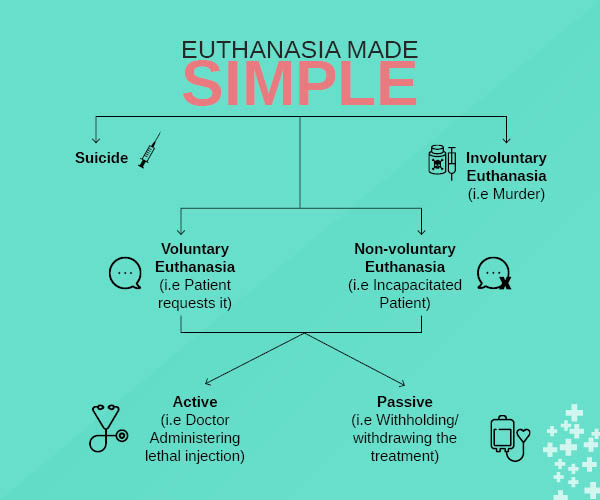
- Passive or Negative euthanasia means the withdrawal of necessary medical treatment with the deliberate intention to hasten the death of a terminally-ill patient is a must. In order for the death to be voluntary, the medicines which aids in saving lives will be discontinued so that death is brought about voluntarily. A common practice of this is a patient signing a ‘Do Not Resuscitate’ (DNR) document. It implies discontinuing or not using extraordinary life sustaining measures to prolong life. Others include act of omission such as failure to resuscitate a terminally ill or incapacitated patient (e.g. a severely defective new-born infant).
2. Active or Direct euthanasia means when one induces death by giving or providing medication or treatment leading to death.
3. Voluntary Euthanasia, sometimes called “assisted suicide”, is used in cases where the sufferer has made it clear that s/he wishes to die and has requested help to bring this about. When the euthanasia is practiced with the expressed desire and consent of the person concerned
4. Involuntary Euthanasia is one which is conducted without the consent and where an individual makes a decision for another person who is incapable of doing so. E.g. prolonged comma, old age, etc. It occurs when no consent or wish to die is expressed by the sufferer. When the euthanasia is practiced against the will of the person and also involuntary Euthanasia is one where patients can express a wish to die but don’t (this equates to murder).
5. Non- Voluntary Euthanasia is one where patients cannot express a wish to die. Patients who are in comas, infants, profound mentally retarded, severely brain damaged, cases of extreme senile dementia, those who cannot communicate for other reasons.
LEGAL VALIDITY IN INDIA
Passive euthanasia is legal in India. As per the 2018 ruling, The Supreme Court has held that the right to die with dignity is a fundamental right.
WHAT IS THE LEGAL POSITION AND TRENDS OF EUTHANASIA IN DIFFERENT COUNTRIES?

The Laws around the world vary greatly with regard to euthanasia, and are constantly subject to change as cultural values shift and better palliative care, or treatments become available. It is legal in some nations, while in others it may be criminalized. In some countries there is a divisive public controversy over the moral, ethical, and legal issues of euthanasia. Those who are against euthanasia may argue for the sanctity of life, while proponents of euthanasia rights emphasize alleviating suffering, and preserving bodily integrity, self-determination, and personal autonomy. Countries which have legitimized euthanasia are The Netherlands,Belgium, Oregon and Washington in the USA. In Switzerland only assisted suicide is legal. In India as mentioned above only passive euthanasia is legal.
LANDMARK CASE IN INDIA
Aruna Ramchandra Shanbaug vs Union Of India
FACTS OF THE CASE
Aruna Shanbaug, a nurse who was assaulted by a ward boy, and went into a vegetative state in 1973. • She remained blind, deaf, paralyzed and in a vegetative state till her death in 2015. A Writ Petition was filed by Pinki Virani claiming that her right to life guaranteed by the constitution had been violated. The petition was rejected by the court after medical examination. However, later in Aruna Ramchandra Shanbaug vs Union Of India, the Supreme Court in March 2011 held that passive euthanasia could be given a nod in case of exceptional circumstances and under strict monitoring of the apex court.
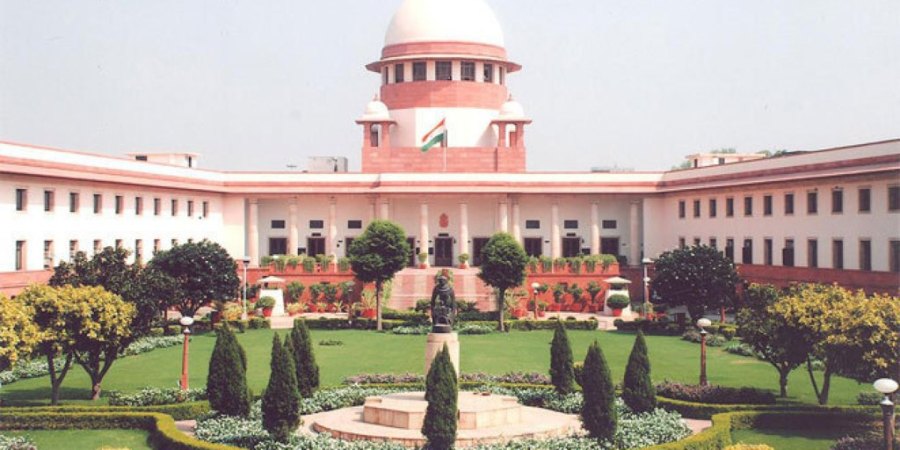
On 7 March 2011 the Supreme Court of India legalized passive euthanasia by means of the withdrawal of life support to patients in a permanent vegetative state. The decision was made as part of the verdict in a case involving Aruna Shanbaug, who had been in a Persistent Vegetative State (PVS) for 42 years until her death in 2015.
The Supreme Court of India specified two irreversible conditions to permit Passive Euthanasia:
- The Brain-Dead for whom the ventilator can be switched off.
- Those in a Persistent Vegetative State (PVS) for whom the feed can be tapered out and pain-managing palliatives be added, according to laid-down international specifications.
GUIDELINES LAID DOWN BY APEX COURT:
The following guidelines were laid down: A decision has to be taken to discontinue life support either by the parents or the spouse or other close relatives, or in the absence of any of them, such a decision can be taken even by a person or a body of persons acting as a next friend. It can also be taken by the doctors attending the patient. However, the decision should be taken bona fide in the best interest of the patient.
Even if a decision is taken by the near relatives or doctors or next friend to withdraw life support, such a decision requires approval from the High Court concerned. When such an application is filled the Chief Justice of the High Court should forthwith constitute a Bench of at least two Judges who should decide to grant approval or not.
A committee of three reputed doctors to be nominated by the Bench, who will give report regarding the condition of the patient. Before giving the verdict a notice regarding the report should be given to the close relatives and the State. After hearing the parties, the High Court can give its verdict.
WHAT ARE THE ARGUMENTS FOR AND AGAINST EUTHANASIA?
Benefits of Legalizing Euthanasia (Arguments For)
- Provides relief to extreme pain.
- Relieves physical, mental and psychological pain for the patient and the family.
- Provides more facilities and funds for other patients needing medical treatment and attention.
- Euthanasia provides a way of relief when a person’s quality of life is low.
- It is another case of freedom of choice – the right to commit suicide.
- People should not be forced to stay alive.
- Speedy termination of physical and emotional suffering.
- Organs can be put to good use.
- Relieve mental suffering for the patient and his relatives.
Consequences of legalizing Euthanasia (Arguments Against)
- The ‘living will’ could be misused
- Religious beliefs could pose as a conflict in few scenarios
- The person might not be well informed of the possible treatment options
- Guidelines of the content of ‘living will’ has to be standardized
- Euthanasia demeans and devalues the sanctity of human life.
- Euthanasia can become a means of health care cost containment.
- Euthanasia will become non-voluntary.
- Euthanasia would not only be for people who are terminally ill.
- It amounts to murder and it is only God who can take away human life.
- It destroys life, which has potential that could be yet unknown to the patient, doctor or the family members.
- It discourages scientists who are looking for a cure for incurable ailments.
- An irreversible damage
WEBSITES REFERRED:
- https://www.slideshare.net/digitaltejas/euthanasia-types-arguments-for-and-against
- https://www.slideshare.net/altacitglobal/euthanasia-law-in-india
- http://racolblegal.com/euthanasia-an-act-of-mercy-killing/
- https://www.latestlaws.com/articles/euthanasia-the-contemporary-art-of-dying-by-aman-kumar-and-richa-hudilwala/
- https://byjus.com/free-ias-prep/euthanasia-or-mercy-killing/
- https://www.123rf.com/photo_109776197_stock-vector-red-flat-line-banner-trends.html
- https://www.slideserve.com/nami/euthanasia-mercy-killing
- http://racolblegal.com/the-dharma-jurispudence-of-the-supreme-court/
Overqualified Employees : Pros And Cons.
When positions are tough to fill, it can be tempting to just hire any candidate simply to have someone doing the job. But we all know that hiring the wrong person can end up being more costly in the long run—especially if the new hire causes any problems.
The risk of hiring the wrong person can take many forms—no one wants to hire someone who is not capable of the job, nor someone who will cause interpersonal issues. But what about hiring someone who is clearly capable—so much so that they’re probably overqualified for the role in question? What are the pros and cons of hiring someone with an experience level that greatly exceeds the job requirements?
Pros to Hiring Someone Overqualified
First, let’s take a look at the potential advantages to hiring someone who is overqualified for the role:
- Broaden the talent pool. By simply having a hiring process that does not automatically screen out potentially overqualified candidates, you’re opening up the possibility of better qualified applicants into the talent funnel.
- Create a fast track to future responsibilities. A new hire with a lot of experience will be well-placed to move up in the organization and take on more responsibilities, which can help with talent development plans in the organization. The individual may be well suited to quickly evolve into a more senior role or take on more leadership responsibilities.
- Achieve a faster return to full productivity. With more experience, the new employee should be up to full productivity much faster than the average new hire.
- Reduce training costs. Likewise, the new hire should require less training when first getting started.
- Set higher expectations for the role. Getting a higher level of experience in the role could mean the person is able to accomplish his or her goals faster and achieve more in the position.
- Reduce management required. Someone with more experience likely will require less hands-on management, at least during the onboarding phase.
- Increase the stature of the role. Bringing on someone highly qualified is a way to upgrade the overall talent level in the organization. With more experience, this person may have a lot of great ideas on how to improve processes. Additionally, he or she may bring new expertise to the role and may be able to more quickly spot opportunities. Someone with more experience may also be more likely to have great networking connections the organization can benefit from.
- Achieve a fast return on investment. The organization may be able to get a fast return on investment during the employee’s time there. As just noted, the employee may be able to make changes that improve the role long after he or she is gone. (This can help to offset the risk of short tenure and the possibility that the individual may require higher pay.)
- Elevate the whole team. Your overqualified employee may be able to teach things to other team members and bring up the skill set of the whole group. Separately, he or she may be a good candidate to mentor others. Other employees may appreciate that the new hire is already experienced and knowledgeable and doesn’t need a lot of help.
- Avoid legal questions. Hiring someone who is overqualified can be seen as a way to avoid the appearance of discrimination, thus reducing the risk of such a claim. (Such a risk may exist if the organization routinely dismisses otherwise qualified candidates.)
Cons to Hiring Someone Overqualified
Here are a few of the potential drawbacks to hiring someone overqualified for the role:
- Turnover risk is high. There is a risk the person will soon leave for a job he or she is better suited for.
- Boredom is also a risk. There is a risk of the new hire being bored or frustrated and having a negative influence on morale over time as a result.
- Training may not be as simple as you’d like. If the individual already has a lot of experience, he or she may be set in his or her ways—making it tougher to adapt to your organization’s specific processes and thus taking more time to train instead of less.
- Other employees may be wary. Bringing someone overqualified into a role can cause anxiety among other employees (or even the new hire’s manager) if it is perceived that the new person may end up replacing existing employees.
- Payroll budget may be stretched. You may have to pay more for the position than you originally intended, in order to bring someone on who has more skills. (Though it’s worth noting this is not always the case; you may be able to avoid this issue by posting the salary range on offer directly in the job post.)
- Skill set may need refreshed. Even with a lot of experience, there’s not a guarantee of having updated skills. The new hire may not be as advanced on newer processes or technology options and may still require training. This isn’t a deal breaker but may negate some of the benefit of hiring someone overqualified if he or she still requires substantial training.
If you find yourself in the position of considering hiring someone who is overqualified, take some time to assess the risks. For example, take time to understand the individual’s goals. Is this person looking for fast progression in the organization? If yes, will that be possible?
Ask the potential new hire what he or she is looking for in the position. Is this a way to gain experience in a new area, or a way to get started with a new company? Or is it just a placeholder role while the candidate keeps looking for something better? (Obviously, he or she may never say the latter, but by asking what the candidate is looking for in this role, you can get a feel for how serious he or she is about the company.)
Once you ask these questions, you can start to get an idea of how the individual views the role and whether he or she will be an asset to the team in the long run.
Sexual Harassment Among Employees | Strategies to Eliminate it
Sexual harassment at work can have very serious consequences both for the harassed individual as well as for other working women who experience it secondhand.
The consequences to the individual employee can be many and serious. In some situations, a harassed woman risks losing her job or the chance for a promotion if she refuses to give in to the sexual demands of someone in authority. In other situations, the unwelcome sexual conduct of co-workers makes the working conditions hostile and unpleasant- putting indirect pressure on her to leave the job. Sometimes, the employee is so traumatized by the harassment that she suffers serious emotional and physical consequences and very often, becomes unable to perform her job properly.
According to data complied by Equal Rights Advocates, a women’s law center in the U.S., 90 to 95% of sexually harassed women suffer from some debilitating stress reaction, including anxiety, depression, headaches, sleep disorders, weight loss or gain, nausea, lowered self-esteem and sexual dysfunction. In addition, victims of sexual harassment lose $4.4 million dollars in wages and 973,000 hours in unpaid leave each year in the United States.
The consequences to working women as a group are no less serious. Sexual harassment has a cumulative, demoralizing effect that discourages women from asserting themselves within the workplace, while among men it reinforces stereotypes of women employees as sex objects.Severe or pervasive sexual harassment in certain types of businesses creates a hostile or intimidating environment that causes women to leave their jobs and look elsewhere for work or discourages them from seeking those jobs in the first place.
The effect on the morale of all employees can also be serious. Both men and women in a workplace can find their work disrupted by sexual harassment even if they are not directly involved. Sexual harassment can have a demoralizing effect on everyone within range of it, and it often negatively impacts company productivity on the whole.
Strategies
to prevent sexual harassment
It is recommended that employers take the following steps to prevent sexual
harassment.
(a) Get
high-level management support
Obtain high level support from the chief executive officer and senior
management for implementing a comprehensive strategy to address sexual
harassment.
(b) Write
and implement a sexual harassment policy
- Develop a written policy which prohibits sexual harassment in consultation
with staff and relevant unions. - Regularly distribute and promote the policy at all levels of the
organisation. Ensure the policy is easily accessible on the organisation’s
intranet. - Provide the policy and other relevant information on sexual harassment to
new staff as a standard part of induction. - Translate the policy into relevant community languages where required so it
is accessible to employees from culturally and linguistically diverse
backgrounds. - Ensure that the policy is accessible to staff members with a
disability. - Ensure that managers and supervisors discuss and reinforce the policy at
staff meetings. Verbal communication of the policy is particularly important in
workplaces where the literacy of staff may be an issue. - Periodically review the policy to ensure it is operating effectively and
contains up-to-date information.
(c) Provide
regular training and information on sexual harassment to all staff and
management
- Conduct regular training sessions for all staff and management on sexual
harassment and the organisational policy. This training should be behaviourally
based which means it should increase knowledge and understanding of specific
behaviours that may amount to sexual harassment under the Sex Discrimination
Act. Regular refresher training is recommended. - Train all line managers on their role in ensuring that the workplace is free
from sexual harassment. - Display anti-sexual harassment posters on notice boards in common work areas
and distribute relevant brochures.
(d) Encourage
appropriate conduct by managers
- Line managers should understand the need to model appropriate standards of
professional conduct at all times. - Include accountability mechanisms in position descriptions for
managers. - Ensure that selection criteria for management positions include the
requirement that managers have a demonstrated understanding of and ability to
deal with discrimination and harassment issues as part of their overall
responsibility for human resources. - Check that managers are fulfilling their responsibilities through
performance appraisal schemes.
(e) Create
a positive workplace environment
- Remove offensive, sexually explicit or pornographic calendars, literature,
posters and other materials from the workplace. - Develop a policy prohibiting inappropriate use of computer technology, such
as e-mail, screen savers and the internet. - It is recommended that medium and large employers undertake regular audits
to monitor the incidence of sexual harassment in their workplaces and the use
and effectiveness of their complaints procedures.
Consumer Protection Bill 2019, (E-Commerce) Rules, 2020
An Act to provide for protection of the interests of consumers and for the said purpose, to establish authorities for timely and effective administration and settlement of consumers’ disputes and for matters connected therewith or incidental thereto.
The Indian Parliament, on 6 August 2019, passed the landmark Consumer Protection Bill, 2019 which aims to provide the timely and effective administration and settlement of consumer disputes. The Consumer Protection Act, 2019 (New Act) received the assent of the President of India and was published in the official gazette on 9 August 2019. The New Act will come into force on such date as the Central Government may so notify. The New Act seeks to replace the more than 3 (three) decades old Consumer Protection Act, 1986 (Act).
While e-commerce has opened new avenues and has made transactions faster and more convenient, they have also been prone to unfair trade practices. Although e-commerce platforms tried to resolve the grievance of the customers, there was a need to streamline the functioning of the same. With this perspective, the Central government notified the Consumer Protection (E-commerce) Rules, 2020.
From Amazon to Walmart and now Facebook and Google, through Reliance Jio are all betting on India being their next big online consumer market.
Walmart has invested $1.2 billion in Flipkart in an equity round, two years after it bought a 77% stake in the Indian retail giant for $16 billion. Walmart’s investment came just days after Amazon invested ₹2300 crore or $305 million into its Indian arm, following Jeff Bezos’ $1 billion investment promise to India. Earlier this year, Amazon had also signed a long-term business agreement with Kishore Biyani’s Future Group.
Meanwhile, Facebook’s $5.7 billion investment and Google’s $4.5 billion bet on Reliance Jio come at a time when Reliance chairperson Mukesh Ambani is betting on retail as the next big venture. One of the most significant factors of the Facebook-Jio deal was that Reliance Retail and WhatsApp are now in a commercial partnership to accelerate JioMart’s growth. Through JioMart and WhatsApp, the entities will now help support consumer businesses.
E-commerce Rule, 2020
The intention of the Legislature to specifically deal with e-commerce and online transactions was evident from the very enlargement of the definition of consumer under Section 2(7) of the Act by including both online and offline transactions within the scope of ‘buying goods’ and ‘hiring services’. Further, the Act categorically defines relevant e-commerce, electronic service provider and misleading advertisement while specifically addressing the most commonly faced issues such as refusing to take back defective goods or refusing to refund the amount.
The Rules are pretty exhaustive in their sweep and, at the outset, declares its application to:
(i) All goods and services bought or sold over digital or electronic network including digital products;
(ii) All models of e-commerce, including marketplace and inventory models of e-commerce;
(iii) All e-commerce retail, including multi-channel single brand retailers and single brand retailers in single or multiple formats; and
(iv) All forms of unfair trade practices across all models of e-commerce.
A bare perusal of the same demonstrates that the intention of the Legislature is, clearly, to encompass every aspect of e-commerce and keep consumer interests on the highest pedestal while streamlining the functioning of e-commerce platforms. This is also demonstrated from the fact that the Rules clearly define the relevant players of the e-commerce space, such as e-commerce entity, inventory e-commerce entity, marketplace e-commerce entity and seller.
6 habits of incredibly happy people and how they do it.
Examining how to be happy is benefited from observing the patterns of others, and then taking only what you find useful. Inspiration is the goal, not rigid rules on being happy.
Below I’ll cover a few of my favorite studies.
1. Be Busy, but Not Rushed
Easier said than done, right?
Quite true, because although the research shows that feeling “rushed” is a one-way street to stress and unhappiness, it also notes that less and less people can find that happy medium of being just busy enough.
2. Treat Yourself (the Small Pleasures Matter)
Jokes aside about treating yourself, surprisingly, the research has shown that you need to have small wins along the way in order to be truly happy — across many different domains, happiness is more strongly associated with the frequency than the intensity of people’s positive effective experiences.
3. Plan Fun, and Spend Money on Experiences
While spontaneous fun is always a good thing, a variety of interesting research has shown that it’s the planning of future activities that often adds to the fun.
4. Show Some Appreciation
Psychology doesn’t always tell us what we want to hear, so it’s nice when a good deed lines up with a great personal benefit.
5. Observe Happiness in Others
This one was really interesting.
Most of us like to think we are unique snowflakes, but sometimes things are popular for a reason. In fact, research suggests that the best way to predict how much we will enjoy an experience is to see how much someone else enjoyed it.
6. Pick a Skill; Master It
Excellence in anything increases your potential in everything.
As it turns out, regularly engaging in your signature strengths (is that not the most stereotypical positive psychology term ever?) is a great way to feel better about yourself.
Be happy. Smile when you read this. Take a deep breath. It’s okay. Things will pass. Everything is temporary and so is your sorrows.
First Indian pilot to fly Rafale jet
Kashmiri Hilal Ahmed Rather was the India’s first pilot to fly Rafale. The first batch of the much-awaited five Rafale fighter jets that took off from France and reached India. The first batch of five Rafale fighter jets arrived at Ambala air base today. The aircraft flew out of the Dassault Aviation Merignac airbase in French port city of Bordeaux on Monday July 27 2020, to arrive in India covering a distance of nearly 7,000 km.
The man behind the quick delivery of Rafale jets is touted to be Air Commodore Hilal Ahmad Rather, who is currently serving as an Air Attaché to France. He was Born in the south Kashmir’s Anantnag district to middle-class parents, Hilal’s father, late Mohammad Abdullah Rather retired as a deputy superintendent of police (Dy SP) in J&K police department. He has three sisters and is the only son of his parents. Hilal studied in Sainik School in Nagrota town of Jammu district.
He was commissioned in IAF as a fighter pilot on December 17, 1988, became flight lieutenant in 1993, wing commander in 2004, group captain in 2016 and air commodore in 2019.He graduated from defence services staff college (DSSC). He also graduated from air war college (USA) with distinction. He won the sword of honour in NDA. Hilal is also the recipient of Vayu Sena Medal and Vishisht Seva medal.
India and France had inked an inter-governmental agreement in September 2016 for 36 Rafale jets worth Rs 59,000 crore. Defence Minister Rajnath Singh had gone to Merignac airbase on October 9, 2019 to perform ‘Puja’ to get the early delivery of the first batch of Rafale fighter jets purchased by India.
At that time it was said that it would take a minimum for 2-3 yrs for the plane to arrive in India. Thanks to Air Commodore Hilal Ahmad Rather the momentous moment for India has arrived earlier than expected.
The key person in fast forwarding the Rafale delivery is Air Commodore Hilal Ahmad Rather and his team who played a big role in weaponizing the jets as per Indian conditions and they worked upon further enhancements of the planes and made it ready for delivery in a record time.
Air Commodore Hilal Ahmad Rather is a decorated officer of the Indian Air Force and has the distinction to be the first IAF officer to fly a Rafale jet. He hails from the Bakshiabad area of Anantnag district of Kashmir.
Rather, he was commissioned in IAF as a fighter Pilot in the Flying branch on 17 December 1988. He was promoted as Flight lieutenant in 1993, Wing Commander in 2004, Group Captain in 2010 and Air Commodore in 2016.
Air Commodore Rather is a Fighter Combat Leader and a qualified Flying Instructor. He has more than 3000 hours of accident free flying on MiG-21s, Mirage-2000 and Kiran aircraft. He has commanded a Mirage-2000 Squadron and also a front-line Air Force Base.
Rather received the Vayu Sena Medal as a Wing Commander in 2010. He received the Vishisht Seva Medal in 2016 as a Group Captain.
Air Commodore Rather has won several awards. He has won the Sword of honor in NDA Khadakwasla, Pune. He has graduated from Defence Services Staff College (DSSC) Wellington where he later served as a Directing Staff. He further graduated from the Air War College in the USA with academic distinction.
India has ordered 36 Rafale fighter jets from France in a deal worth Rs 59,000 crore in September 2016. All the jets are expected to arrive in India by September 2022. , The Indian Air Force has made preparations for receiving the Rafale jet planes. It is ready with required infrastructure and training of pilots and other such perquisites.
The Rafale is a twin-jet fighter aircraft able to operate from both an aircraft carrier and a shore base. The manufacturers describe it as a fully versatile aircraft which can carry out all combat aviation missions to achieve air superiority and air defence, close air support, in-depth strikes, reconnaissance, anti-ship strikes and nuclear deterrence.
The Rafale fighter jets are being projected as a “game changer” in the region in the realm of air combat. It is seen as a shot in the arm for Indian defence forces amid the ongoing crisis with China.
National Education Policy 2020

The Union Cabinet has given a green signal to National Education Policy 2020. The Cabinet has also approved the change of Union HRD Ministry’s name to ‘Ministry of Education’.
Union Cabinet on Wednesday gave a nod to India’s new National Education Policy 2020, which provides for major reforms in higher education, increased focus on non-academic skills and increased inclusion through language diversity and course fluidity. The new academic session will begin in September-October – the delay is due to the unprecedented coronavirus disease (Covid-19) outbreak – and the government aims to introduce the policy before the new session kicks in.
“Cabinet under Prime Minister Narendra Modi has given approval to new education policy for the 21st century. It is important, as for 34 years there were no changes in the education policy.”
Union Minister Prakash Javadekar said
The Cabinet has also approved a proposal to rename the Ministry of Human Resource Development as the Ministry of Education.
The NEP 2020, which proposes several structural changes in the early as well as the higher education system, has been developed after consultations for nearly five years with stakeholders and the general public.
The new policy aims to achieve 100 per cent youth and adult literacy in India. While announcing the policy details, Amit Khare, Secretary, Higher Education said that the government aims to increase the public investment in the education sector from the current 4.3 per cent to reach 6 per cent of GDP at the earliest.
Here’s are the highlights of India’s new National Education Policy 2020:
School Education:
Universal Access: The NEP 2020 has provisions to ensure universal access to school education at all levels- pre school to secondary.
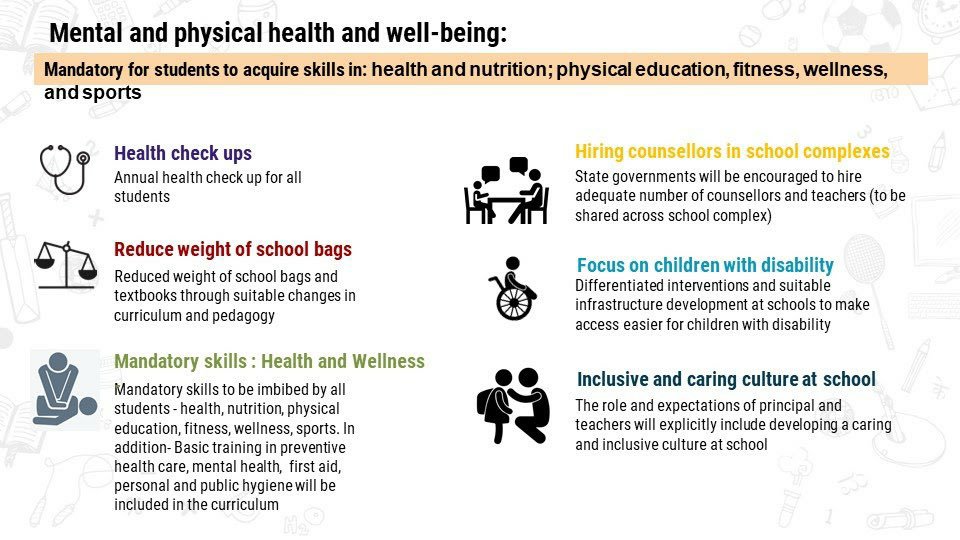
Some of these provisions include infrastructure support, innovative education centres to bring back dropouts into the mainstream, tracking of students and their learning levels, facilitating multiple pathways to learning involving both formal and non-formal education modes and association of counselors or well-trained social workers with schools.
The NEP 2020 also provides for open learning for classes 3, 5 and 8 through NIOS and State Open Schools, secondary education programs equivalent to Grades 10 and 12, vocational courses, adult literacy and life-enrichment programs.
Through NEP 2020, the Centre hopes to bring back about 2 crore out of school children into main stream.
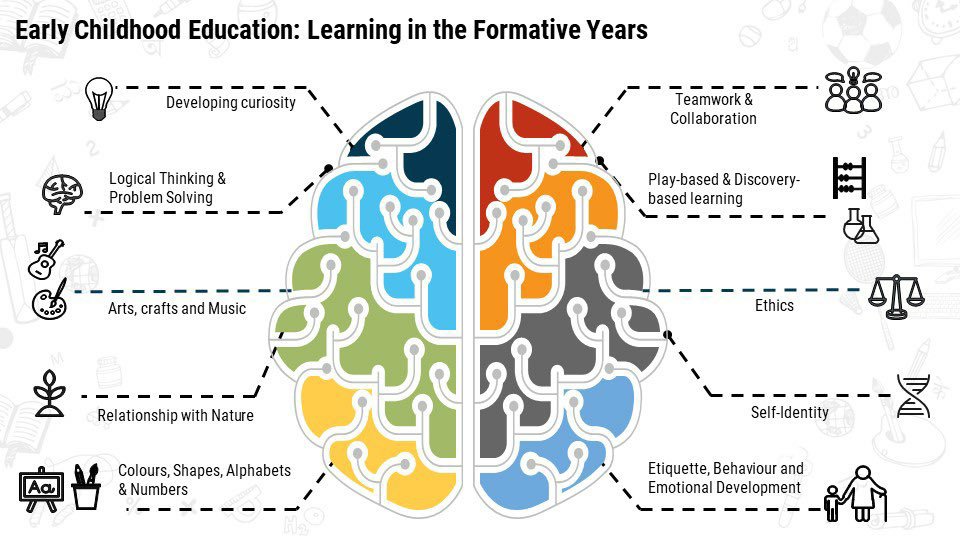
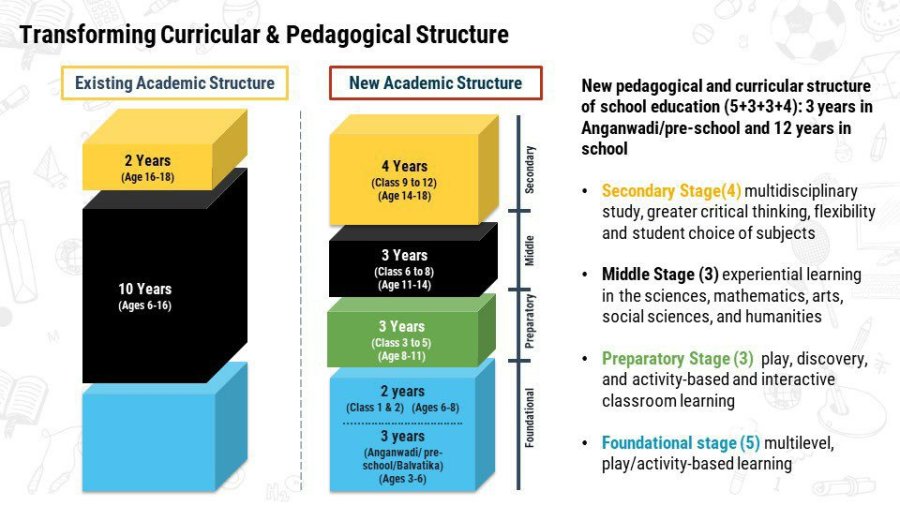
Early Childhood Care & Education: The 10 and +2 structure of school curricula is to be replaced by a 5+3+3+4 curricular structure corresponding to ages 3-8, 8-11, 11-14, and 14-18 years respectively. This will bring the uncovered age group of 3-6 years under school curriculum, which has been recognised globally as the crucial stage for the development of mental faculties of a child. The new system will have 12 years of schooling with three years of Anganwadi/pre-schooling.
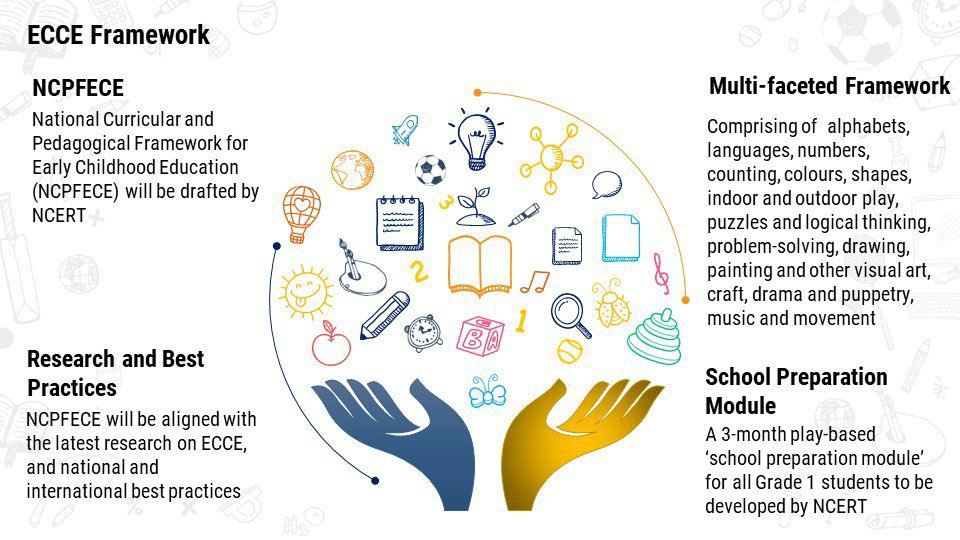
NCERT will develop a framework of the early childhood education of children up to the age of 8.
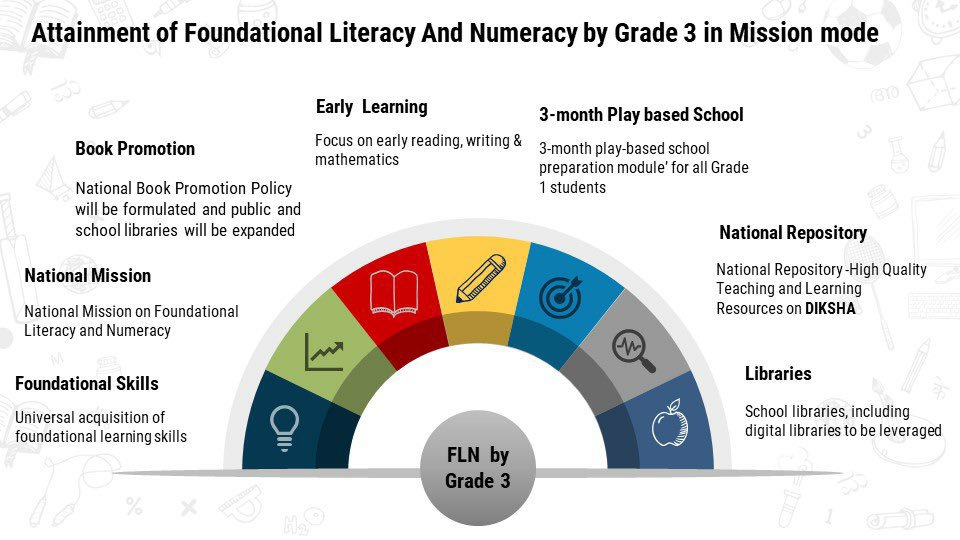
Attaining Foundational Literacy and Numeracy: A National Mission on Foundational Literacy and Numeracy will be set up by the MHRD. States will prepare an implementation plan for attaining universal foundational literacy and numeracy in all primary schools for all learners by grade 3 by 2025. A National Book Promotion Policy will also be formulated.
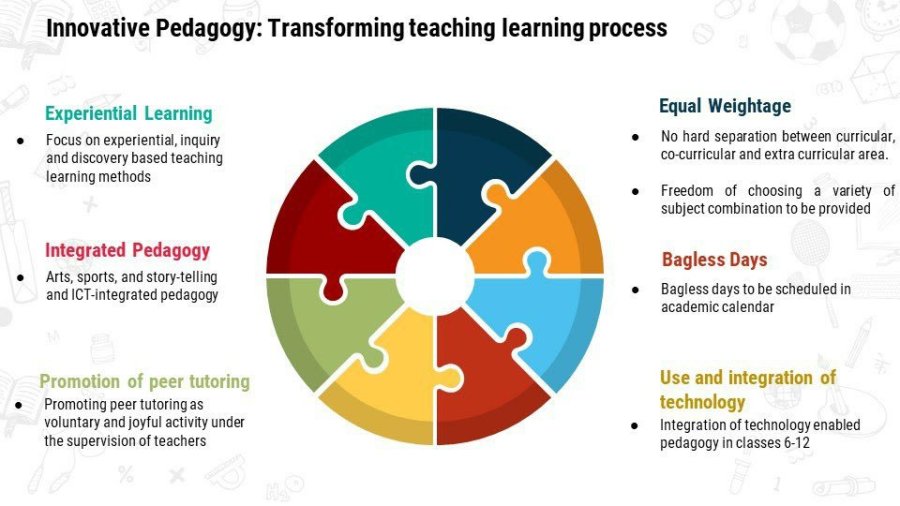
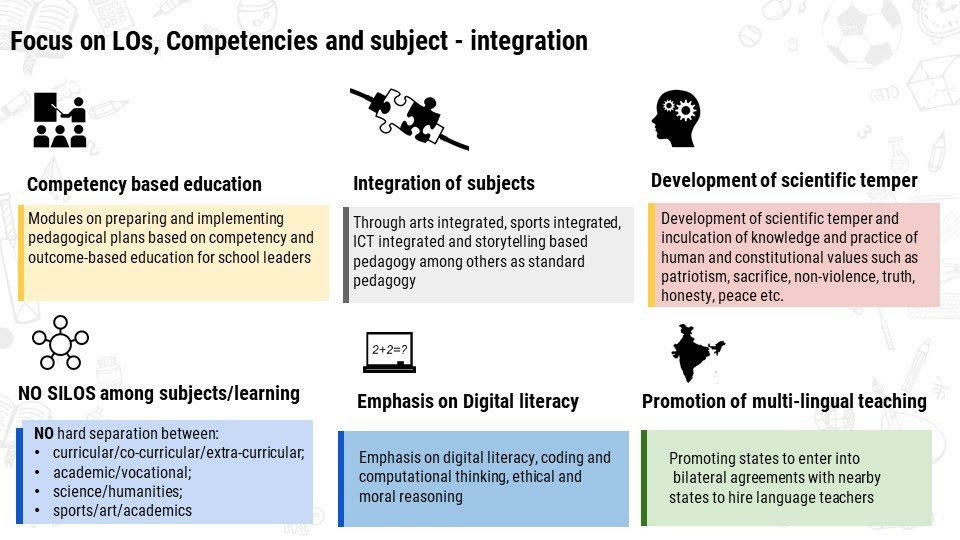
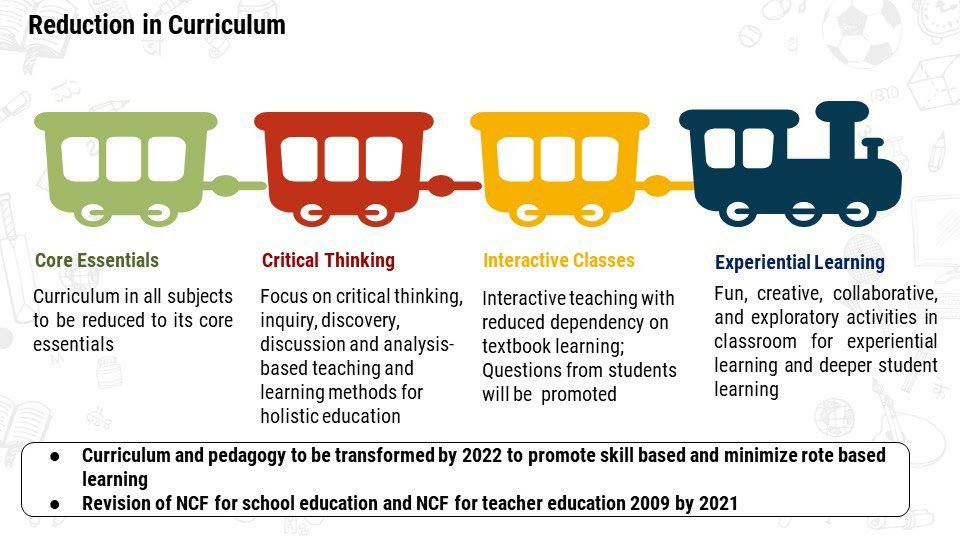
Reforms in School Curricula and Pedagogy: The school curricula and pedagogy will aim for holistic development of learners by equipping them with the key 21st century skills, reduction in curricular content to enhance essential learning and critical thinking and greater focus on experiential learning. Students will have increased flexibility and choice of subjects. There will be no rigid separations between arts and sciences, between curricular and extra-curricular activities, between vocational and academic streams.
Vocational education will start in schools from the 6th grade, and will include internships.
Multilingualism and the Power of Language: The NEP 2020 advocates for mother tongue/local language/regional language as the medium of instruction at least till Grade 5, but preferably till Grade 8 and beyond. Sanskrit to be offered at all levels of school and higher education as an option for students, including in the three-language formula. Other classical languages and literatures of India also to be available as options. No language will be imposed on any student. Several foreign languages will also be offered at the secondary level.
Assessment Reforms: With NEP 2020, the Centre hopes to shift from summative assessment to a more competency-based regular assessment which tests analysis, critical thinking and conceptual clarity. All students will take school examinations in Grades 3, 5, and 8. Board exams for Grades 10 and 12 will be continued, but redesigned with holistic development as the aim. A new National Assessment Centre, PARAKH (Performance Assessment, Review, and Analysis of Knowledge for Holistic Development), will be set up as a standard-setting body.
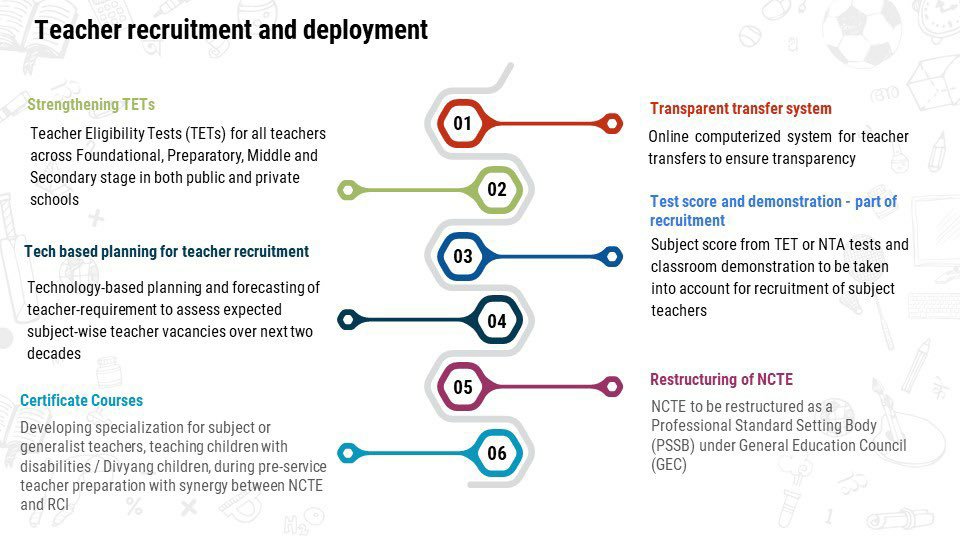
Equitable and Inclusive Education: NEP 2020 provides for setting up of Gender Inclusion Fund and also Special Education Zones for disadvantaged regions and groups. Children with disabilities will be enabled to fully participate in the regular schooling process from the foundational stage to higher education, with support of educators with cross-disability training, resource centres, accommodations, assistive devices, appropriate technology-based tools and other support mechanisms tailored to suit their needs.
Higher Education:
Increase GER to 50% by 2035: NEP 2020 aims to increase the Gross Enrolment Ratio in higher education including vocational education from 26.3 per cent (2018) to 50 per cent by 2035. At least 3.5 crore new seats will be added to higher education institutions.
Holistic Multidisciplinary Education: The policy introduces broad-based, multi-disciplinary, holistic undergraduate education with flexible curricula, creative combinations of subjects, integration of vocational education and multiple entry and exit points with appropriate certification. UG education can be of 3 or 4 years with multiple exit options and appropriate certification within this period. For example, certificate after 1 year, advanced diploma after 2 years, Bachelor’s degree after 3 years and Bachelor’s with research after 4 years.
An Academic Bank of Credit is to be established for digitally storing academic credits earned from different institutes so that these can be transferred and counted towards final degree earned.
Multidisciplinary Education and Research Universities (MERUs), at part with IITs, IIMs, to be set up as models of best multidisciplinary education of global standards in the country.
The National Research Foundation will be created as an apex body for fostering a strong research culture and building research capacity across higher education.
Regulation: Higher Education Commission of India (HECI) will be set up as a single overarching umbrella body the for entire higher education, excluding medical and legal education. HECI will function through faceless intervention through technology, and will have powers to penalise higher education institutions for not conforming to norms and standards. Public and private higher education institutions will be governed by the same set of norms for regulation, accreditation and academic standards.
Rationalised Institutional Architecture: The definition of the university will allow a spectrum of institutions that range from Research-intensive universities to teaching-intensive universities and autonomous degree-granting colleges. Affiliation of colleges is to be phased out in 15 years and a stage-wise mechanism is to be established for granting graded autonomy to colleges. Over a period of time, it is envisaged that every college would develop into either an autonomous degree-granting college, or a constituent college of a university.
Financial support for students: Efforts will be made to incentivise the merit of students belonging to SC, ST, OBC, and other SEDGs. The National Scholarship Portal will be expanded to support, foster, and track the progress of students receiving scholarships. Private HEIs will be encouraged to offer larger numbers of free ships and scholarships to their students.
Open and Distance Learning: This will be expanded to play a significant role in increasing GER. Measures such as online courses and digital repositories, funding for research, improved student services, credit-based recognition of MOOCs, etc, will be taken to ensure it is at par with the highest quality in-class programmes.
Online and Digital Education: A dedicated unit for the building of digital infrastructure, digital content and capacity building will be created in the MHRD to look after the e-education needs of both school and higher education.
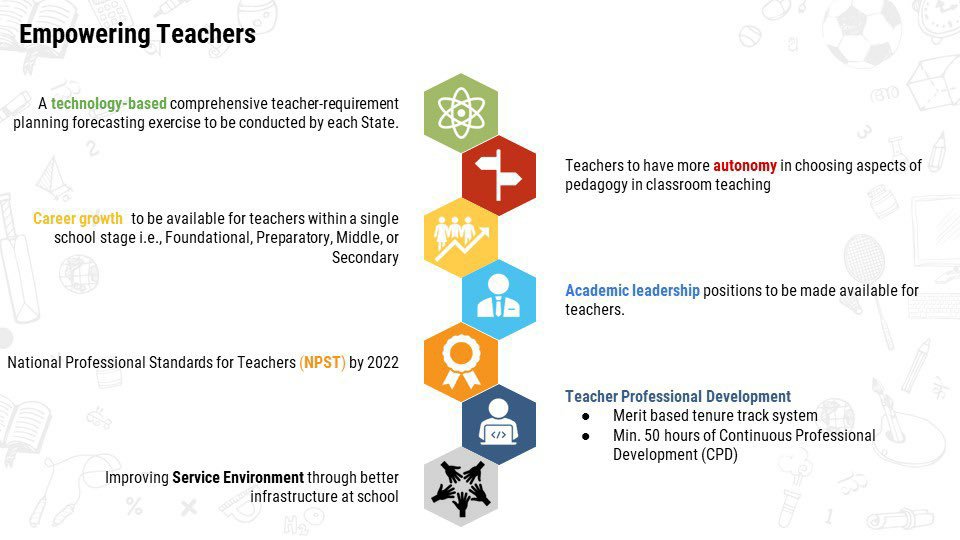
Technology in Education: An autonomous body, the National Educational Technology Forum (NETF), will be created to provide a platform for the free exchange of ideas on the use of technology to enhance learning, assessment, planning, administration. Appropriate integration of technology into all levels of education will be done to improve classroom processes, support teacher professional development, enhance educational access for disadvantaged groups and streamline educational planning, administration and management.
Promotion of Indian Languages: To ensure the preservation, growth, and vibrancy of all Indian languages, NEP recommends setting an Indian Institute of Translation and Interpretation (IITI), National Institute (or Institutes) for Pali, Persian and Prakrit, strengthening of Sanskrit and all language departments in HEIs, and use mother tongue/local language as a medium of instruction in more HEI programmes.
Professional Education: All professional education will be an integral part of the higher education system. Stand-alone technical universities, health science universities, legal and agricultural universities etc will aim to become multi-disciplinary institutions.
Loss Of Ice Cover In The Arctic Sea
The National Centre of Polar and Ocean Research (NCPOR) recently found the largest decline in the Arctic Sea ice as seen in last 41 years due to global warming in July 2019.
Between 1979 and 2018, NCPOR noted that the sea ice has seen a declination at a rate of -4.7 per cent per decade while its rate in July 2019 was found to be -13 per cent.
Sea ice is basically frozen seawater that floats on the ocean surface. It forms in each hemisphere’s winter of both the Arctic and the Antarctic. The ice retreats in the summer. However, it does not completely disappear.
The Research has clarified that if this trend continues, there would be no ice left by 2050 in the Arctic sea since the volume of ice loss during summers might surpass the volume of the same formed during winters. This rapid decline in Arctic sea ice cover has been linked with growing carbon emissions and subsequent global warming.
The Impacts of Declining Arctic Sea ice cover can be huge. It would have an influence on regional weather as the decline of sea ice may impact the evaporation rates, cloud cover, air humility and rainfall of neighbouring regions.
The National Centre for Polar and Ocean Research (NCPOR) was established in 1998 as an autonomous Research and Development Institution under the Ministry of Earth Sciences. The objective was to primarily carry out research activities in the polar and Southern Ocean realms.
It is also responsible for maintenance of the Indian stations in Arctic (Himadri) and Antarctica (Maitri & Bharati).
In recent times, the high temperatures that have been recorded in the Siberian region have caused a prolonged heatwave that has been ascribed to the absence of sea ice among other factors.
Loss of habitat for seals and polar bears have also increased resulting encounters between polar bears and humans. As the sea ice retreats from coastlines, wind-driven waves combined with melting permafrost may also lead to more rapid coastal erosion.
In the Arctic region, the ocean circulation is driven by the sinking of dense and salty water. Fresh meltwater coming largely from the Greenland Ice Sheet could furthermore interfere with ocean circulation at high latitudes, ultimately slowing it down. Any changes in ocean circulations can have unpredictable global impacts even in lower latitudes such as extreme weather events, droughts etc.
It is a result from the positive feedback cycle known as the ice-albedo feedback states that sea ice has higher albedo than ocean water. Once sea ice begins to melt, a self-reinforcing cycle often begins whereby as more ice melts and exposes more dark water. Then the water absorbs more sunlight and the sun-warm water then melts more ice.
On concluding, Arctic sea ice is part of a complex global system, and as a result it affects communities at all latitudes. The loss of Arctic sea ice has to be slowed down existentially by reducing carbon dioxide and other greenhouse gas emissions and also by conserving other natural resources that have global impacts. The world needs to come together as one.
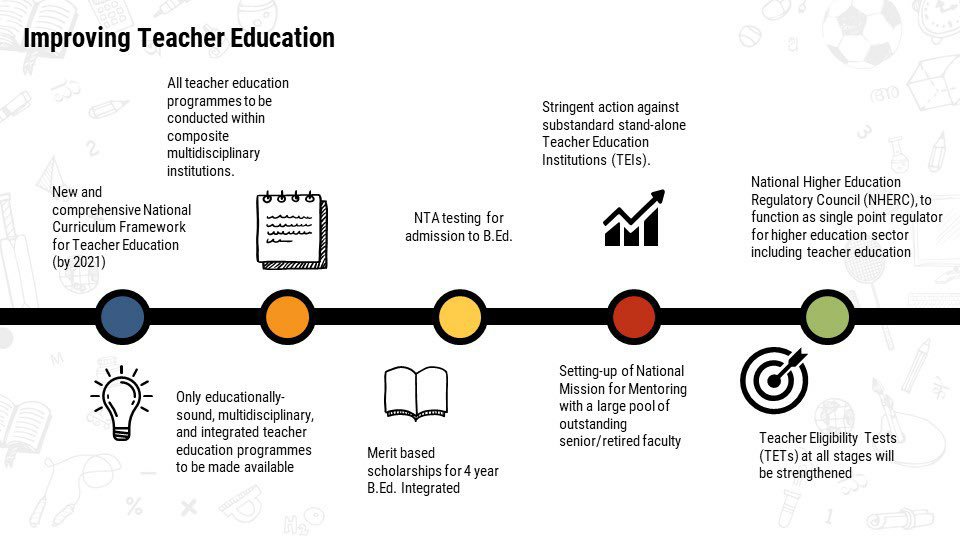
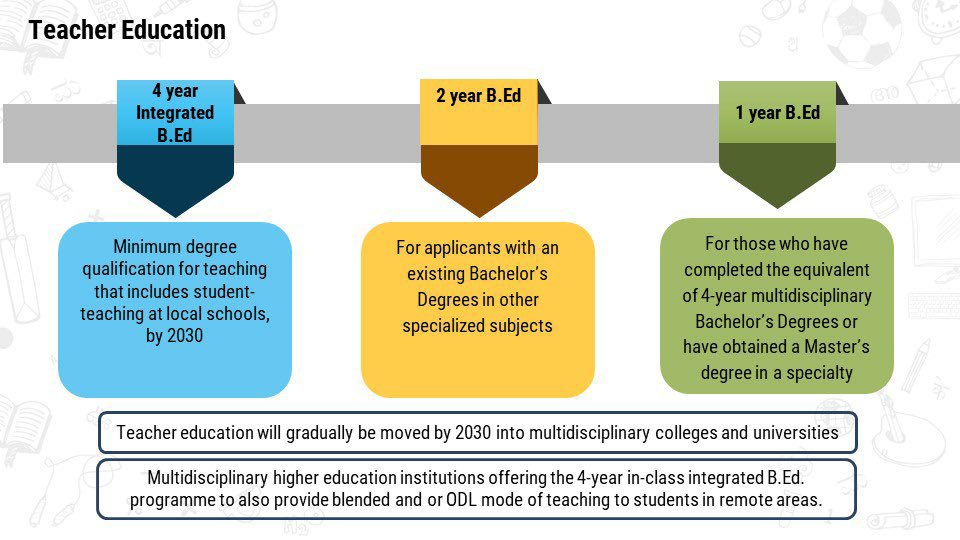
The New Education Policy 2020
The New Education Policy, NEP 2020, has been approved by the Union Cabinet. The new policy will come into effect by 2030. Union Ministers Prakash Javadekar and Ramesh Pokhriyal Nishank, together unveiled it and shared the details. The Ministry of Human Resource Management, MHRD has also been renamed as Education Ministry.
The draft of NEP 2020, has been prepared by a panel of experts led by former Indian Space Research Organisation (ISRO) chief K Kasturirangan and reviewed by the Prime Minister Narendra Modi.
The existing education policy was framed in 1986 and revised in 1992.


How Education can change the Lives of Underprivileged Children
In India, even today, millions of children go without any access to education. Education is the most powerful tool which empowers communities to turn around their lives, If any member of a family is educated, especially women, it can help coming generations to break the inter-generational cycled of poverty. Unprivileged children, who are the world’s poorest children living in slum areas and on the streets, lead a life where in there is no money, no education, lack of sanitation facilities, food and safe drinking water and no proper houses. All this leads to problems like child labour, child marriage, major health issues and crime, posing a threat to urban society and development of the country. The same conditions are passed on to the coming generations of slum dwellers, making their upliftment difficult in the society. It is the primary responsibility of a society to help children to fulfill their dream. Developed countries like US and China know the importance of it that is why these countries give special attention to skills and education.
Education is a great enabler – it makes people skilled and equips them to engage in meaningful professions and thus contribute to their own and society’s socio-economic well-being. In India, even today, millions of children go without any access to education. As many as 8.4 crore children in India continue to remain out of school. It’s a major social problem plaguing modern-day India and strong measures are needed to ensure the benefits of education touch everyone. Over the years, Save the Children has emerged as a trusted Non Governmental Organization which has provided lakhs of disadvantaged children the access to quality and enabling education. The organization’s work has made it possible for gifted and hard working children to have access to opportunities they could not have imagined before. The NGO is closely aligned with the government’s vision for education, jobs and prosperity for all.
When it comes to education, girls lag behind boys significantly. This situation arises due to the patriarchal mindset of a lot of families in India. Girls are often viewed as future housewives and family caretakers. They are often deprived higher education and in some cases even school education. Being educated gives an equal opportunity to women to be skilled workers who use their learning as a boon that will help better the future of their families and their communities. NGOs like Save the Children have projects dedicated to fostering girl child education. Educated girls also help end unfair social evils like child marriage and dowry and improve maternal health.
As aware and responsible citizens of the country, we need to ensure that businesses are sensitized towards the harms of child labour and they refrain from hiring children for work which will, in turn, discourage parents and children to choose money over education. The need of the hour is to make communities aware of their rights and proud of child’s education. Educated communities will not just create better citizens but also ensure better employment and enterprise. In 2015, the NGO touched the lives of over 1 lakh children in the city of New Delhi via the Childhood Care and Development programme which was involved in street children rehabilitation, child labour rescue, and maternal and newborn care. In 2016, Save the Children brought almost 90,000 children into the fold of education. It marked a new beginning in the lives of these children. In Bengaluru, the NGO has advocated for implementing the Right to Education for the street children with various school authorities and also helped in building up capacities of 26 Anganwadi centres and 60 primary schools that benefitted 7,000 children. In Kolkata and Mumbai, Save the Children operates Mobile Learning Centres where dropouts, child labourers, slum children and street children come and are mainstreamed into education.
NGOs like Save the Children need the support of government bodies, corporations, and most importantly, individuals. Along with enthusiasm and support from the common individual, it is heartening to see hard-earned donations and sense of public concern power an NGO’s influence and reach across India. To play your part, you should also donate to NGO to give India’s children a future.
We can see that children who are the future of tomorrow’s India have an immense power in themselves. With little support these stars can shine brightly in this world and touch success ladder with each passing time.
Mankind lost!?
Few days ago, i was reading an article on Mother Teresa. I came to know that on October 17th, 1979, Mother Teressa was awarded Nobel Peace Prize for her humanitarian work for the needy. She had devoted herself to them.
Don’t you agree that in today’s world very few people are available to help the needy?
The key thing to remember is that beauty is in harmony. The happiest are those who are ready to help others. Nevertheless, we should not let interfere what we cannot do with what we can do.
One should get involved in social services so that a needy or a poor person gets to meet his basic needs. In short, one should strive to be a philanthropist.
In the end, it is us who can make the world a better place.
Resume writing
The word resume is originated from a french word meaning ‘summary’. Just like the meaning suggests, a resume is a document that summarizes one’s educational, work experience and background details. It is one of the main documents used by the employer in order to screen the job applicants. Every person who seeks for a job should have a resume. It is a tool used by the companies to screen the applicants. The real purpose of a resume is to make you shortlisted for the job you have applied for. So, it is important that a resume should be attractive and it should stand out from others. A resume should be written effectively always. Let’s look what all components can make an excellent resume.
- Personal information. This has to be written first in the resume for reference. Always make sure the details provided are accurate and up to date. Personal information should contain your name, address, contact number( keep in mind that the number that you provide will be the one that the companies use for further communication), your professional email address. Based on the company you applied for, you can add any website link or portfolio link. Keep in mind that this is optional and is not mandatory all times. You need not add a photograph in your resume unless the organisation asks for it.
- A powerful opening statement. This section of your resume will let the reader know why you are considered yourself as perfect candidate for the particular job. The open statement has to grab attention and it should stand out from all others. This section will probably the shortest one in the resume.
- Work experience. This is the most important and relevant section in the resume. You are supposed to share all your work experience in this section. Your current job, previous jobs you have done, and internships etc. can be mentioned in this section. Make sure the organisation’s name the job profile and time period of your experience are mentioned correctly.
- Educational details. This section should summarizes your educational details. Add the details in reverse chronological order. So that, the recent degree you have done will be appeared in the first row.
- Skills and expertise. This section can make an impression about yourself to the readers. You can list out the relevant skills and talents you possess.
- Achievements and awards. This part of the resume will help you to mention the achievements that you have acquired in your life which is relevant to the job that you are looking for.
Life
First of all, Life refers to an aspect of existence. This aspect processes acts, evaluates, and evolves through growth. Life is what distinguishes humans from inorganic matter. Some individuals certainly enjoy free will in Life. Others like slaves and prisoners don’t have that privilege. However, Life isn’t just about living independently in society. It is certainly much more than that. Hence, quality of Life carries huge importance. Above all, the ultimate purpose should be to live a meaningful life. A meaningful life is one which allows us to connect with our deeper self.
Why is Life Important?
One important aspect of Life is that it keeps going forward. This means nothing is permanent. Hence, there should be a reason to stay in dejection. A happy occasion will come to pass, just like a sad one. Above all, one must be optimistic no matter how bad things get. This is because nothing will stay forever. Every situation, occasion, and event shall pass. This is certainly a beauty of Life.
Many people become very sad because of failures. However, these people certainly fail to see the bright side. The bright side is that there is a reason for every failure. Therefore, every failure teaches us a valuable lesson. This means every failure builds experience. This experience is what improves the skills and efficiency of humans.
Probably a huge number of individuals complain that Life is a pain. Many people believe that the word pain is a synonym for Life. However, it is pain that makes us stronger. Pain is certainly an excellent way of increasing mental resilience. Above all, pain enriches the mind.
The uncertainty of death is what makes life so precious. No one knows the hour of one’s death. This probably is the most important reason to live life to the fullest. Staying in depression or being a workaholic is an utter wastage of Life. One must certainly enjoy the beautiful blessings of Life before death overtakes.
How to Improve Quality of Life?
Most noteworthy, optimism is the ultimate way of enriching life. Optimism increases job performance, self-confidence, creativity, and skills. An optimistic person certainly can overcome huge hurdles.
Meditation is another useful way of improving Life quality. Meditation probably allows a person to dwell upon his past. This way one can avoid past mistakes. It also gives peace of mind to an individual. Furthermore, meditation reduces stress and tension.
Pursuing a hobby is a perfect way to bring meaning to life. Without a passion or interest, an individual’s life would probably be dull. Following a hobby certainly brings new energy to life. It provides new hope to live and experience Life.
In conclusion, Life is not something that one should take for granted. It’s certainly a shame to see individuals waste away their lives. We should be very thankful for experiencing our lives. Above all, everyone should try to make their life more meaningful.


You must be logged in to post a comment.