

The Science and Engineering Research Board has launched a new scheme called ‘Accelerate Vigyan’ to provide a single platform for research internships, capacity building programs and workshops across the country.
The primary objective of this inter-ministerial scheme is to encourage high-end scientific research and prepare scientific manpower, which can lead towards research careers and knowledge-based economy. Accelerate Vigyan will initiate and strengthen mechanisms for identifying research potential, mentoring, training and hands-on workshop on a national scale.
Author: Eduindex News
Visit us for more news at https://eduindex.org
Govt launches Special Liquidity Scheme of 30 thousand crore rupees to improve liquidity for NBFCs and HFCs
The Union Government has launched the Special Liquidity Scheme of 30 thousand crore rupees to improve the liquidity position for Non-Banking Finance Companies- NBFCs and Housing Finance Companies- HFCs. The scheme was launched yesterday through a Special Purpose Vehicle in the form of SLS Trust set up by SBI Capital Markets Limited (SBICAP).
Finance Minister Nirmala Sitharaman had announced it on 13th of March this year. Ministry of Finance in a statement said, Reserve Bank of India will provide funds for the Scheme by subscribing to government guaranteed special securities issued by the Trust. The total amount of such securities issued outstanding shall not exceed 30 thousand crore rupees at any point of time. The Central Government will provide an unconditional and irrevocable guarantee to the special securities issued by the Trust.
The Scheme will remain open for three months for making subions by the Trust. The period of lending by the Trust will be for a period of up to 90 days. The financing would be used by the NFBCs and HFCs only to repay existing liabilities and not to expand assets.
This facility is a part of the Central Government and RBI’s efforts to alleviate the concerns of the market participants on the availability of funds to the sector.
Any NBFC including Micro-finance Institutions registered with RBI and any HFC registered with the National Housing Bank complying with the given conditions will be eligible to raise funding from the said facility.
COVID-19 recovery rate improves to 59.43 percent; over 3, 47000 people cured so far
The recovery rate of COVID-19 patients has improved to 59.43 percent. During the last 24 hours, 13,157 patients have been cured, taking the cumulative figure to 3,47,978. Presently, there are 2,20,114 active cases and all are under medical supervision.
As a result of the coordinated steps taken by Central Government along with states for prevention, containment and management of COVID-19, there are 1,27,864 recovered cases more than the active COVID-19 cases, as on date.
In a statement, Health Ministry said the testing lab network in the country is further strengthened. With 764 labs in the government sector and 292 private labs, there are as many as 1056 labs in the country.
There has been steady rise in the number of samples tested each day. In the last 24 hours, 2,17,931 samples have been tested. The cumulative number of samples tested so far is over 88. 26 lakh.
UNSC demands immediate cessation of hostilities in conflict zones to tackle COVID-19 pandemic
The United Nations Security Council has demanded an immediate cessation of hostilities in key conflicts including Syria, Yemen, Libya, South Sudan and Congo to tackle COVID-19 in its first resolution on the Novel Coronavirus. The UN’s most powerful body voted unanimously yesterday to adopt the resolution after the United States and China resolved a lengthy dispute over mentioning the World Health Organization.
Germany’s UN Ambassador Christoph Heusgen, the Council President for July, announced the result, calling it a sign for hope for all people currently living in conflict zones around the world.
The resolution backs UN Secretary General Antonio Guterres’ March 23 call for global ceasefires to tackle the pandemic and demands an immediate cessation of hostilities in all conflicts on its agenda which include key conflicts in the Middle East, Africa and elsewhere.
The resolution, sponsored by France and Tunisia, states that these measures do not apply to military operations against the Islamic State and Al-Qaida extremist groups and their affiliates.
UNSC demands immediate cessation of hostilities in conflict zones to tackle COVID-19 pandemic
The United Nations Security Council has demanded an immediate cessation of hostilities in key conflicts including Syria, Yemen, Libya, South Sudan and Congo to tackle COVID-19 in its first resolution on the Novel Coronavirus. The UN’s most powerful body voted unanimously yesterday to adopt the resolution after the United States and China resolved a lengthy dispute over mentioning the World Health Organization.
Germany’s UN Ambassador Christoph Heusgen, the Council President for July, announced the result, calling it a sign for hope for all people currently living in conflict zones around the world.
The resolution backs UN Secretary General Antonio Guterres’ March 23 call for global ceasefires to tackle the pandemic and demands an immediate cessation of hostilities in all conflicts on its agenda which include key conflicts in the Middle East, Africa and elsewhere.
The resolution, sponsored by France and Tunisia, states that these measures do not apply to military operations against the Islamic State and Al-Qaida extremist groups and their affiliates.
Second Cabinet Expansion of Madhya Pradesh Cabinet to take place today
In Madhya Pradesh, the second expansion of the State Cabinet will take place today. The oath taking ceremony will be held at Raj Bhavan at 11 a.m. About two dozen Ministers along with many new faces will be administered the oath in this expansion. Around 10 supporters of senior leader Jyotiraditya Scindia are also likely to be made ministers.
Chief Minister Shivraj Singh Chouhan visited Delhi recently after a gap of about 120 days to discuss Cabinet expansion in the state. The Chief Minister was accompanied by State BJP President V. D. Sharma and General Secretary Party Organization Suhas Bhagat.
In Delhi, he had a meeting with several top BJP leaders including Prime Minister Narendra Modi, Home Minister Amit Shah,President J. P. Nadda and Union Minister Narendra Singh Tomar. The first expansion of the Cabinet took place on 21st of April when five Ministers were inducted into the Cabinet.
UP govt to launch a special campaign today for door to door medical screening in all districts of Meerut Division
Uttar Pradesh Government will launch a special campaign today for door to door medical screening in all districts of Meerut division which are having large numbers of Corona positive patients.
This kind of campaign will soon be launched in other parts of the state also. The State Government is also going to establish a big testing lab in Ghaziabad district for augmentation of COVID testing.
Food and Public Distribution Minister Ram Vilas Paswan rolls out details of second phase of PM Garib Kalyan Anna Yojana
The Union Minister for Food and Public Distribution Ram Vilas Paswan has rolled out the details of the Second Phase of Pradhan Mantri Gareeb Kalyan Ann Yojana. Under the programme, five kilograms of Wheat or Rice to every member of the family and one kilogram of Chana for each beneficiary family will be given free for five more months benefitting nearly 80 crore people in the country.
In a virtual media briefing, Mr. Paswan informed about the steps taken by the government for providing additional food grains to the states. He reiterated Prime Minister Narendra Modi’s commitment to ensure that poor and needy people will not go hungry in the country and that free ration will be provided to them during the rainy and forthcoming festival seasons amid the current COVID-19 pandemic.
The Minister said that in the span of next five months, a total of 200 Lakh Metric Tonnes of grain and nine lakh 78 thousand Metric Tonnes of Chana will be distributed among the National Food Security Act beneficiaries. He informed that both the phases of the Pradhan Mantri Gareeb Kalyan Ann Yojana will together incur a total expenditure of one lakh 50 thousand crore rupees.
Mr. Paswan informed that he has also written letters to the Chief Ministers of all the States and Union Territories and has requested them to make necessary arrangements to implement the One Nation, One Ration Card Scheme.
India and China committed to reduce tensions along LAC; Both sides to implement disengagement understanding of 6th June sincerely
India and China have emphasized the need for an expeditious, phased and stepwise de-escalation as a priority along the Line of Actual Control. Both sides have been engaged in discussions through established military and diplomatic channels to address the situation. Commanders from People’s Liberation Army (PLA) and Indian Army held a meeting at Chushul, on the Indian side yesterday for another round of talks.
This was the third senior Military Commander-level engagement to discuss issues related to disengagement at the face off sites along the LAC and de-escalation from the border areas. This is in keeping with the Agreement between External Affairs Minister Dr. S. Jaishankar and his Chinese counterpart during their conversation on 17th June. Both the leaders agreed that the overall situation would be handled in a responsible manner and both sides would sincerely implement the disengagement understanding of 6th June.
AIR correspondent quoting sources reports that the third meeting between the Lieutenant General-level officers of both the countries yesterday was long and held in a businesslike manner keeping in view the COVID-19 protocols. The discussions reflected the commitment of both sides to reduce the tensions along the LAC. The process of dis-engagement along the LAC is complex and in such a context, speculative and unsubstantiated reports need to be avoided.
Sources say, more meetings are expected, both at the military and at the diplomatic level, in future, to arrive at mutually agreeable solutions and to ensure peace and tranquility along the LAC as per bilateral agreements and protocols.
Defence Minister Rajnath Singh is likely to visit Ladakh tomorrow morning along with Army Chief General Manoj Naravane. He is expected to meet the brave hearts of the Indian Army who pushed back the Chinese forces during the face off which took place on 15th of last month in Galwan Valley.
TRAINING IN MANAGEMENT
Training is the process of helping employees to acquire more knowledge of the job and to learn or sharpen the needed skills, attitudes and values associated with the efficient performance of their job and new employees, as also existing employees, often need training as a means of their progress in their jobs and careers and it is an important element of the staffing function and many organizations make formal or informal arrangements for providing training to their managerial and non-managerial personnel. Training is practical education and it is a technique that brings out the hidden abilities in a person and teaches him to use his skills effectively. Training is an art and the trainer selects the best methods for training, keeping because of the requirements of the job and the ability of the concerned persons. Training is an activity which changes the outlook and behavior of persons and training may be understood as the practice of theoretical knowledge and the importance of training is well-recognized all over the world but the methods of training may vary from job to job and from industry to industry and typically, a separate training department under the charge of an expert in training techniques is established for the purpose. As Dale Yoder said, “Training is the process by which manpower is filled for the particular jobs it is to perform”.

METHODS OD TRAINING
1. On-the-job Method
On-the-jib methods are the methods that are applied, while the employee is working and it means Learning while doing and training is provided by superiors to subordinates and it is economical and less time consuming and it is used where jobs are simple, as in case of plumbers and motor mechanics.
a. Apprenticeship Programme
Under this method, trainees are apprentices and they work under the direct supervision of the experts, who guide and help them in learning the job.
b. Internship Training
In this method, professional institutes enter into arrangements with big business enterprises and send their students to these industrial enterprises to gain practical work experience.

c. Job Rotations
It is shifting the trainees from one department to another department or from one job position to another job position.
d. Induction Training
It is training to help a new employee to settle down quickly into the job by becoming familiar with fellow workers the job and its environment including other people and machines in the business.
2. Off-the-Job Methods
Off-the-road jobs methods are used away from the place of work and it means Learning before doing and it is provided by experts either from within or from outside the organization and it is more expensive and more time consuming than on-the-job and it is used where jobs are complex involving the use of sophisticated machinery.
a. Vestibule training
Under this method, training is given in a classroom and where the actual work environment is stimulated, a supplicate model of the workshop is prepared and instead of using original equipment, employees are trained on the dummy models.

b. Programming Instruction
The total information amount the job is broken into meaningful small units and are arranged in a logical sequence from simple to complex and the trainee goes through these units one by one by answering questions or by filling the blanks.
The Shopping…
Shopping is an activity during which a customer browses the available goods or services presented by one or more retailers with the potential intent to get an appropriate selection of them. A typology of customer types has been developed by scholars which identify one group of shoppers as recreational shoppers, that is, those that enjoy shopping and consider it as a leisure activity.
In antiquity, marketplaces and fairs were established to facilitate the exchange of products and services. People would buy goods at a daily market in nearby towns. However, the transient nature of stalls and stall-holders meant the consumers needed to form careful inspection of products before purchase. In ancient Greece, the agora served as a marketplace where merchants kept stalls or shops to sell their goods. Ancient Rome utilized an identical marketplace referred to as the forum. Rome had two forums; the Forum Romanum and Trajan’s Forum. Trajan’s Market at Trajan’s forum, built around 100-110CE, was a huge expanse, comprising multiple buildings with tabernae that served as retail shops, situated on four levels.
Archaeological evidence suggests that the British engaged in minimal shopping within the early Middle Ages. Instead, they provided for his or her basic needs through farming practices and a system of localized personal exchanges. However, by the late Middle Ages, consumers turned to markets for the acquisition of fresh produce, meat, and fish, and therefore the periodic fairs where non-perishables and luxury goods might be obtained. Women were liable for everyday household purchases, but most of their purchasing was mundane. For the most part, shopping was seen as a chore instead of a pleasure.
The modern phenomenon of buying pleasure is closely linked to the emergence of a bourgeoisie within the 17th and 18th-century Europe. As standards of living improved within the 17th century, consumers from a broad range of social backgrounds began to get goods that were quite necessities. An emergent bourgeoisie or bourgeoisie stimulated demand for luxury goods and commenced to get a wider range of luxury goods and imported goods, including Indian cotton and calico; silk, tea, and porcelain from China, spices from India and South-East Asia and tobacco, sugar, rum and occasional from the New World. The act of shopping came to be seen as an enjoyable pass-time or sort of entertainment.

Recently, the number of individuals who purchase various products and services online is increasing quite ever before. This has certainly affected the business of shopping centers to an excellent extent. E-shopping is usually considered to be more convenient for patrons than in-store purchasing. Perhaps, this is often because, many of us, nowadays, are unable to seek out adequate time to travel shopping as they’re too busy with professional or personal responsibilities. for instance, virtual shopping websites like, eBay and Amazon provide a good range of products online, which cater to the requirements of people from the comfort of their home. Moreover, such shopping sites have considerably reduced major inconveniences related to shopping, like traveling to distant shops, parking vehicles in crowded cities, and spending a substantial amount of your time.
shopping online allows consumers to browse for products and checking prices between these online shops. during this way, people can make a far better decision to shop for what they like after taking prices, sizes, and models into consideration. From my experience, people wont to buy a chic dress at a virtual shop, which was cheaper compared to some shops near their living area. as an example, popular online shops in India, namely Flipkart and Jabong haven’t only provided detailed information about their products on sale but also customers’ opinions and reviews on their product experience. Besides, placed orders on these websites are often altered or canceled by customers, and purchased products also can be returned if they are doing not meet the assured quality.
The fact that online shopping encourages us to shop for things that we don’t need or use can’t be denied. this will cause debts. Also, there are security concerns. once you buy things online, you run a little risk of getting your financial information exploited by hackers. Of course, good anti-virus and anti-malware programs offer an excellent deal of protection. But almost hebdomadally, we hear about data breaches at major online retailers.

Every person has information regarding the Black Friday, which celebrated by people all around the world, by shopping product from malls and online shops, As the first day after the last major holiday before Christmas, it marks the unofficial beginning of the Christmas shopping season. Additionally, many employers give their employees the day off as part of the Thanksgiving holiday weekend. In order to take advantage of this, virtually all retailers in the country, big and small, offer various sales including limited amounts of door buster/door crasher/door smasher items to entice traffic. The early 2010s have seen retailers extend beyond normal hours in order to maintain an edge or to simply keep up with the competition. Such hours may include opening as early as 12:00 a.m. or remaining open overnight on Thanksgiving Day and beginning sale prices at midnight. in year 2019, Black Friday shoppers spent $7.4 billion online, the second-largest Internet shopping day ever, according to data compiled by Adobe Analytics, 174 million US consumers went shopping online or in-store last year.
How Tik-Tok changed the World!!!
2020 has been a year of chaos, uncertainty and grief. A global pandemic, record unemployment and nationwide protests have left people reeling. Through it all though, there’s been TikTok, providing moments of levity and new dance crazes, interspersed with more serious commentary on the issues that we face.

TikTok, it’s like the party you want to be at, a t the moment. You’ll see hair tutorials, cooking tutorials. People can create challenges, they can create duets, they can interact, they can engage. TikTok is the most downloaded app of 2020. Since its global release less than two years ago, TikTok and its Chinese counterpart, Douyin, have amassed 800 million monthly active users, more than Reddit, Snapchat or Twitter. Its parent company, ByteDance, is the most valuable startup in the world. Its reach might surprise you unless you’re a member of Gen Z or the parent of one. But as millions scramble for connection amidst quarantines, more and more users of all ages are hopping aboard.

The Chinese-owned app faces a slew of regulatory hurdles, privacy concerns and allegations of censorship. Amidst these struggles, it’s brought in a new CEO. This guy is Kevin Mayer. Formerly the Head of Streaming at Disney. That’s basically what Kevin Mayer’s first priority needs to be, is to make sure that Americans trust TikTok. In the end of the day , t hat may prove complicated. But in the short term, it hasn’t prevented tens of thousands of new users from signing up. The predecessor to TikTok was an app called Musical.ly. Founded in 2014, it provided a platform for users to create short, 15 second videos set to a song of their choice. The content mostly involved lip-syncing and dancing, and it took off quickly among preteens and teenagers within the U.S. This is an app that was built around the fact that there was music that was licensed to be used on this app. This was something that Musical.ly decided really to invest in, because they knew that music and sharing music was inherently social.

In July 2015, a year after its launch, Musical.ly reached number one in the iTunes app store. It continued to grow and was bought by the Beijing-based startup ByteDance for one billion dollars in 2017. ByteDance already owned Tik Tok, a similar video sharing platform, and merged the two apps less than a year later. Now TikTok’s main office is in Los Angeles, California. They’re essentially an American startup that is subsidized by a successful Chinese tech company. As the app has grown, it’s given rise to a whole new pack of social media celebrities. Content is public by default TikTok, and therefore the algorithm that determines what appears on a user’s home page gives every creator the prospect to place their video in front of millions. Really what we saw was a different style of humor. It wasn’t the sketches that you saw on Vine, and it wasn’t longer-form YouTube videos. It was meme culture or like the general public’s take on a meme. What I enjoyed about it is there was some deeper humor in there if you were paying attention to the trends that were happening.
On TikTok, King uses creative video editing to make it look like he’s performing magic tricks, a skill which has earned him over 44 million followers, the second most on the app as of June 2020. But at 30, King represents the rare millennial that’s broken into TikTok’s top ranks. Many of the most followed users are in their teens, and lip syncing and dancing remain wildly popular. So I originally started when I was 14 years old, and so I started using my facial expressions and hand motions to make these like larger than life lip sync videos. And as I grew up, I think the app also grew up. Now there’s so much more that you can do. While Martin has found her niche with dancing and lifestyle content, she says there’s something out there for everyone. There’s like creators who are huge when it comes to comedy, some still do lip syncing, some cooking videos, tutorials. You can do whatever you want as long as it’s fun, it’s quick and it catches people’s eye. Stay at home orders have propelled the app’s rapid growth in the United States. The U.S. is third in terms of downloads and second in terms of revenue, and its influence continues to grow.
Viral dances and memes have propelled a number of songs to the top of the U.S. charts, most famously, Old Town Road in 2019 . And now the moms, dads and siblings of the TikTok o bsessed have began to get in on the trends also , learning dances and performing challenges together. You’re still laughing at them, but actually the fact that parents are getting on it, I mean they needed that demo so badly to even make it to this level that they’re at now. In order to build out a sustainable revenue model, e xperts say that TikTok eventually needs to attract older users. Advertisers are going after broader demographics and especially those with purchasing power. TikTok claims that all American user’s data is stored within the U.S. and is not subject to Chinese law, many security experts remain skeptical. Similar concerns exists in India, where data protection laws are weaker and thus citizens are more vulnerable. Regulators are going to be very weary of that separation. Most recently, the app received criticism for what it said was a technical glitch, in which post tagged with #BlackLivesMatter and #GeorgeFloyd appeared to have zero views when they actually have over two billion. And in the past, both India and Indonesia have instituted brief bans on the app due to concerns over inappropriate content like violence and pornography. Lastly, there are ongoing issues regarding children’s privacy.

Experts say that TikTok’s long-term prospects depend upon its ability to keep users engaged while building out a sustainable monetization strategy. YouTube could be seen as a model in the way that YouTube shares advertising revenue with its content creators. Mayer’s background in streaming services also has both analysts and creators excited about what new forms of content may lie on the horizon. I have been begging TikTok to get into the streaming game. People have speculated that TikTok might get involved in original programming. To make TikTok sustainable, you’re going to have to do long-form content. I don’t see a version where you make 60 second videos forever and it stays cool for another two to three years. King also says TikTok’s live-streaming feature has room to grow. It’s super popular in China, but hasn’t yet taken off in the U.S. I think what’s next for TikTok is how they figure out how to make money, how they figure out how to create a home for advertisers, and how they make sure that content creators themselves want to stick around and don’t want to go jump off to whatever the next cool app is going to be.
Coronil: an immunity booster not as corona cure.

Today, The Ayush ministry permitted Patanjali to sell Coronil as an immunity booster and not a coronavirus ‘cure’.
Yogguru Ramdev’s Patanjali Ayurved also said there are no Ayush Ministry restrictions on selling Coronil, the drug the company recently launched as medicine for Covid-19 but is now calling it a product to “manage” the disease.
The Union ministry confirmed that Patanjali can sell the product but not as a cure for Covid-19.
“Ayush Ministry has only given permission to sell this particular formulation as an immunity booster and not as a medicinal cure for Covid-19,” it said.
Ram dev baba’s coronil had received licensing from the Uttarakhand government, where Patanjali headquarters are located.
On Tuesday, Acharya Balkrishna, the MD of Patanjali Ayurved said that the company never claimed its drug could cure the highly-contagious virus that has infected more than 1 crore people around the world.
He said the company had not claimed the drug is a cure but simply publicised the results of its study.
Now the drug will be available in stores for public.
How To Make Peace With Your Noisy Mind- 7 Tips
“Leave your front door and your back door open. Let thoughts come and go. Just don’t serve them tea.” ~Shunryu Suzuki
There are few things more exasperating in life than having a noisy chatterbox in residence between your ears—a busy mind that never stops and won’t leave you in peace for a moment.
You are sitting by the pool on your long-awaited vacation.
The weather is perfect. Your diary is clear. You settle down on your deckchair with an ice-cold drink and your favorite book.
Everything is perfect—well, almost everything.
The message “on vacation” clearly hasn’t got through to the mind department.
“Man, that drink was expensive. Better suck your belly in, there’s someone coming. You are as white as a sheet. What on earth will people think? Okay, that’s it. I’m starting a diet on Monday. Oops, I forgot I’m on holiday. Okay, I’ll start when I get home.”
Just writing about it is exhausting enough, let alone living it.
Being subjected to a relentless torrent of mindless chatter and having no idea how to stop it can be exasperating to say the least.
I know. It was the intense suffering inside my own head that led me to sign up for a six-month meditation retreat and later become ordained as a monk.
Happily, I quickly discovered that quieting a noisy mind isn’t nearly as difficult as I’d imagined.
Hint: You don’t even have to change or fix your thoughts.
These days, although I still have my crazy moments when the mind shoots off on a mad rant, my general experience is so much quieter and more peaceful than it used to be.
I’d love to share some (possibly surprising) truths that will hopefully help you achieve the same.
Here are seven tips you can start applying right away.
- Accept Your Mind is busy.
Did you know that the average mind churns out around 70,000 thoughts per day? That’s a lot of thoughts.
No wonder it feels so busy in there!
Even people who are relatively laid back have a lot of traffic going on between their ears.
So don’t be surprised that your mind is busy. Don’t create an additional layer of suffering by thinking there’s something wrong with you for having a ton of thoughts. There isn’t.
Expecting your mind not to be busy is like expecting the grass not to be green.
Let it be busy.
- Engaging with the mind is optional.
If I were to choose one thing I learned about the mind in my time as a monk—the one thing that had the greatest impact on my peace, it would be this:
Engaging with the mind is optional.
It is not so much the thoughts themselves that cause us to suffer but our fascination and preoccupation with them.
We spend our days chewing on them, wallowing in them, stewing in them, and generally giving them an inordinate amount of our time and attention.
And we don’t need to.
Want to know the secret to ongoing peace?
The less you get involved in what the mind gets up to, the more peace you will experience.
Sit back and let the mind do its dance. Your involvement is not mandatory.
Which brings us to the next point.
- Watch your thoughts from a distance.
In order to disentangle ourselves from our thoughts, we need to create some distance, some breathing space, between ourselves and the mind.
Most of the thinking patterns that rob us of our peace run unconsciously on autopilot. The same old patterns play over and over, day in, day out—like broken records. And it is so habitual, we don’t even notice we are doing it.
The key is to bring more awareness to these unconscious patterns.
The first step when you learn to meditate is to take a step back and watch the mind objectively—with an attitude of curiosity and non-judgmental acceptance.
You may also find that the simple act of watching thoughts, rather than being wrapped up in them, will stop thinking it in its tracks—or at least slow it down.
- Give your thoughts the freedom to come and go.
If you want to tame an angry bull, the worst thing you can do is to tie him up or try to confine him in any way. This will only make him angrier and more difficult to control.
The best way to calm him down is to give him a huge open field to run around in. Meeting with no resistance, he will quickly run out of steam.
And it’s the same with the mind.
Thoughts themselves don’t cause trouble. Left alone, they appear in your awareness, remain for a moment, and move on again.
No problem.
It is when we try to control or manage them—through labelling them as bad, wrong, or unacceptable—that we get into trouble and create suffering for ourselves.
Let them wander freely through the vast, open field of your awareness and they will quickly run out of steam. Don’t energize them with your resistance.
If thoughts are there anyway, it is much better to befriend them rather than struggle against them.
What happens to a sad thought or an angry thought if you welcome it rather than reject it?
What happens if you don’t mind it being there?
- Don’t take your thoughts personally.
Seeing that ‘my’ thoughts are not personal was another game-changing insight for me.
For most people, what typically happens is this:
You feel jealous. You feel afraid. You feel angry. And you then beat yourself up, believing you are personally responsible for the thoughts (feelings and emotions too) that show up in your head—believing there’s something wrong with you for having these thoughts.
There isn’t. You are not the author of your thoughts.
If you watch the mind closely, you’ll notice that thoughts appear by themselves, apparently out of nowhere.
In mindfulness training, we use the analogy of “the undercurrent and the observer” to illustrate our relationship with the mind.
The key understanding is that the undercurrent—the continuous stream of thoughts, feelings and emotions that pass through your awareness—is self-arising.
It is not within your control and therefore impersonal.
What most people do is thrash about midstream, like a crazed thought traffic policeman, frantically trying to control the flow—welcoming this thought, rejecting that one.
Trying to control the river is futile and exhausting.
Better to be the observer, sitting calmly on the riverbank watching the river flow by—knowing it’s not personal.
The less involved you are in trying to control the flow, the more peace you’ll experience.
- Know the difference between thoughts arising and thinking.
Although there’s nothing you can do about the thoughts that show up in your head, thinking is another matter.
Let’s say the thought appears, “My boss doesn’t like me.”
It then triggers a dialogue in your head, “He’s definitely going to overlook me for the upcoming promotion. It is so unfair. I’ve been working here much longer than Jane. But he seems to like her a lot. Things never go my way. I’m just unlucky in life.”
This type of unproductive thinking is the primary cause of suffering for most people—and it is entirely within our control whether we choose to indulge in it or not.
Replaying the past over and over, catastrophising about the future, wallowing in unfounded beliefs and assumptions—these are some of the patterns that can create so much unnecessary misery.
And it’s entirely avoidable.
When you notice you’re caught up in an unproductive mind-movie, STOP.
There is nothing that can compel you to continue if you choose not to.
You’re the one in charge.
Focus instead on being present in the moment. Put your attention on your breath, on the sensations in the soles of your feet, on the sound of the wind rustling through the trees.
Unproductive thinking is mostly a habit. And like most habits, with a little awareness, it can be broken.
- Live more in the present moment.
One of the main insights in meditation practice is that your awareness can only be in one place at a time.
If you are lost in your thinking mind, you can’t simultaneously be aware of your surroundings. Likewise, when you shift your attention to the present moment, thinking stops.
When you are present here and now, the mind automatically becomes quiet.
Whenever you are aware enough to catch yourself falling into habitual thinking patterns, stop and engage your senses.
Tune into the sensation of the air caressing your skin, feel the weight of your body coming into contact with the chair, listen to the sounds around you.
Be intensely aware that now is happening and notice what happens to your thinking mind
Take Back Control From Your Busy Mind
The mind isn’t a bad thing of course. It would be pretty hard to get through life without one.
It can come in very useful for problem solving, writing articles, booking flights, or remembering which house is yours when you get home from work.
Used productively to carry out specific tasks, the human mind is an incredible tool.
But it can also be deeply destructive—like an out of control Frankenstein monster with a life of its own.
The mind can be a beautiful servant or a dangerous master.
It all depends on who’s in charge.
The next time you’re sitting on your deck chair trying to relax and the mind kicks off with its crazy dance (as it will do) remind it who’s boss.
Don’t give it the power to ruin your holiday.
Extreme Space Weather : Bigger Threat than Global Warming in the Context of Earth >>>>>>>>>
Extreme space weather has a global footprint and the potential to damage critical infrastructure on the ground and in space. A new report from the European Commission’s Joint Research Centre (JRC) calls for bridging knowledge gaps and for better coordination at EU level to reduce the potential impact of space weather events.
The sun shapes the space environment around the Earth. This so-called space weather can affect space assets but also critical infrastructure on the ground, potentially causing service disruptions or infrastructure failures. Numerous space weather events affecting the power grid, aviation, communication, and navigation systems have already been documented.

The impact of severe space weather can cross national borders, which means that a crisis in one country can affect the infrastructure in the neighbouring countries. This raises concerns due to the increasing reliance of society on the services that these infrastructures provide.
NEW REPORT IDENTIFIES KNOWLEDGE GAPS
The JRC has investigated the impacts of space weather on critical infrastructure in the EU. A new report identifies the gaps in reducing risks linked to space weather and makes recommendations for policy, industry and science on how to close these gaps.
The report summarises the results of a summit organised in partnership with the Swedish Civil Contingencies Agency and the UK Met Office, with the support of the US National Oceanic and Atmospheric Administration (NOAA) in November 2016. Representatives from European infrastructure operators, insurance, academia, ESA, and European and US government agencies attended the event.
INTERDEPENDENCIES AND CRISIS RESPONSE
The potential failure of critical infrastructures during extreme space weather can lead to cascading effects impacting other sectors.
New methodologies and tools, as well as a multi-risk governance approach are needed to assess these interdependencies and to enable the coordination of the many different actors that often manage risks in isolation from one other.

A pan-European vulnerability assessment of the power grid should be carried out to identify critical issues and transboundary effects in case of extreme space weather. Infrastructure operators should also assess whether their systems could be indirectly vulnerable to space weather, for instance due to dependencies on timing and positioning information provided by the Global Navigation Satellite System (GNSS).
Better communication between science and industry is also needed to provide relevant and reliable information to operators for decision making.
SPACE WEATHER FORECASTING
Early warning and preparedness are essential for limiting the effects of space-weather impacts.
In Europe and the USA, 24/7 space-weather forecasting capabilities are available to support the early warning of government and industry. However, it is important that the consistency of forecasts from different service providers are ensured.

There is a need to enhance forecasting capabilities for regional or local forecasts on the severity and duration of extreme space weather to ensure appropriate response from local operators.
Currently, geomagnetic storm forecasting is hampered by the limited understanding of the magnetic field orientation of Coronal Mass Ejections (CME) before they hit the Earth, and there are still significant knowledge gaps in physical and impact modelling, which affect the early-warning capabilities and preparedness in industry.
THE ROLE OF THE EU
In the EU, the European Programme on Critical Infrastructure Protection provides a policy background for critical infrastructure protection, while the EU disaster risk management policy covers prevention, preparedness and response for all types of disasters.
The Union Civil Protection Mechanism requires EU Member States to prepare a national risk assessment and list the priority risks they are facing. Six countries have included space weather in their risk assessment.
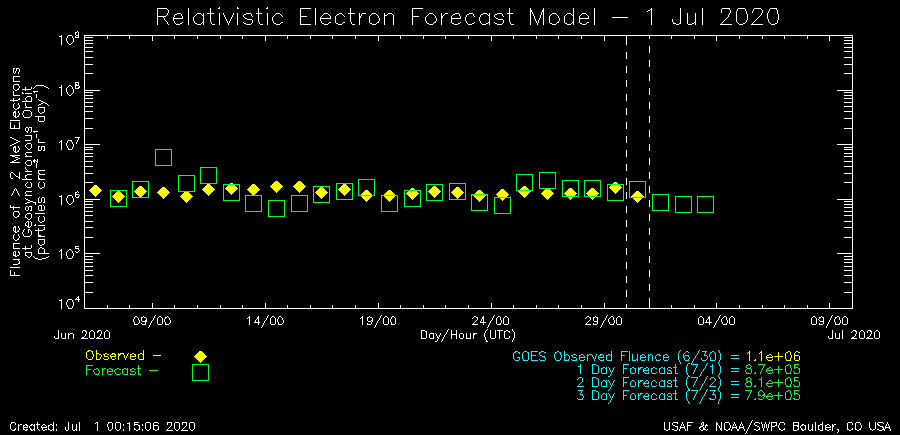
The participants of the summit indicated that there is a need for for improving coordination between the different space weather actors and recommended the establishment of a strategic European decision-making capability to coordinate space-weather risk mitigation and response at pan-European level.
They also advised that the roles and responsibilities of the key players in Europe should be better defined and suggested that coordinated strategic investments for improving the scientific know-how in this area could be explored.
Reference- https://divyanshspacetech.wordpress.com


You must be logged in to post a comment.