SELF- CONFIDENCE

Building Self-Confidence
Preparing Yourself for Success!
Everyone admires a self-confident person. We may even envy them a little! Self-confident people seem at ease with themselves and their work. They invite trust and inspire confidence in others. These are attractive characteristics.

It’s not always easy to be confident in yourself, particularly if you’re naturally self-critical, or if other people put you down. But there are steps that you can take to increase and maintain your self-confidence.

What is Self-Confidence – and Why Is It Important?

Self-confidence is understanding that you trust your own judgment and abilities, and that you value yourself and feel worthy, regardless of any imperfections or of what others may believe about you.

Self-efficacy and self-esteem are sometimes used interchangeably with self-confidence, but they are subtly different.

We gain a sense of self-efficacy when we see ourselves (and others like us) mastering skills and achieving goals. This encourages us to believe that, if we learn and work hard in a particular area, we’ll succeed. It’s this type of confidence that leads people to accept difficult challenges and to keep going in the face of setbacks.

Self-esteem  is a more general sense that we can cope with what’s going on in our lives, and that we have a right to be happy.

Also, self-esteem comes in part from the feeling that the people around us approve of us. We may or may not be able to control this, and if we experience a lot of criticism or rejection from other people, our self-esteem can easily suffer unless we support it in other ways.

Confidence and Behavior

Take a look at the examples in the table below, which compares confident behavior with behavior that’s associated with low self-confidence. Which thoughts or actions do you recognize in yourself and in the people around you?


Doing what you believe to be right, even if others mock or criticize you for it. (✓)

Governing your behavior based on what other people think. (×)


Being willing to take risks and to go the extra mile to achieve better things.(✓)

Staying in your comfort zone, fearing failure, and avoiding risk. (×)


Admitting your mistakes, and learning from them. (✓)

Working hard to cover up mistakes, and hoping that you can fix the problem before anyone notices.(×)


Waiting for others to congratulate you on your accomplishments. (×)

Extolling your own virtues as often as possible to as many people as possible.(×)


Accepting compliments graciously. “Thanks, I really worked hard on that prospectus. I’m pleased you recognize my efforts.” (✓)

Dismissing compliments offhandedly. “Oh that prospectus was nothing really, anyone could have done it.”(×)


As these examples show, low self-confidence can be self-destructive, and it may manifest itself as negativity.

Self-confident people are generally more positive – they value themselves and trust their own judgment. But they also acknowledge their failures and mistakes and learn from them.

Why Self-Confidence Matters

Self-confidence is vital in almost every aspect of our lives, yet many people struggle to find it. Sadly, this can be a vicious cycle: people who lack self-confidence are less likely to achieve the success that could give them more confidence.

For example, you might not want to back a project that’s pitched by someone who’s visibly nervous, fumbling, or constantly apologizing. On the other hand, you might be persuaded by someone who speaks clearly, who holds their head high, answers questions with assurance, and readily admits when they don’t know something.

Confident people inspire confidence in others: their audience, their co-workers, their bosses, their customers, and their friends. And gaining the confidence of others is one of the key ways to succeed. In the following sections we’ll see how you can do this.

How to Appear More Confident to Others


You can show self-confidence in many ways: in your behavior, your body language, and in what you say and how you say it.

Projecting a positive image to others can help you to improve your self-confidence. It’s not simply a matter of “faking it.” If you project with confidence, others are more likely to respond well, and this positive feedback will help you to believe in yourself.

Body Language

Adopt an open posture. Sit or stand upright and place your hands by your sides. Avoid standing with your hands on your hips, as this can communicate a desire to dominate. And be sure not to slouch!

Keep your head upright and level. Don’t lean too far forward or backward, as this can make you look aggressive. And if you’re presenting, use open hand gestures. Spread your hands apart, with your palms facing slightly toward your audience. This indicates a willingness to communicate and to share ideas. Keep your upper arms close to your body.

Face-to-Face Communication
People with low self-confidence often find it difficult to make a good first impression , whether they’re meeting a client, addressing a meeting, or giving a presentation. You may be shy or unsure of yourself, but you can take immediate steps to make yourself appear more confident.

Engaging with people is important, so maintain eye contact while you talk. This shows that you’re interested in what they’re saying, and that you’re taking an active part in the conversation. But bear in mind any cultural considerations when it comes to body language and communication.

Don’t fidget or look away while the conversation continues, as this can make you appear distracted or anxious.

If shaking hands is the usual greeting in your workplace, be firm. Not too firm, though, and avoid being too upfront. Reaching for the other person’s wrist or shoulder with your free hand is often seen as a way of establishing dominance, and it’s not recommended for a first meeting. Avoid making the encounter awkward – or, worse, painful!

Meeting Short-Term Challenges to Your Self-Confidence

Even the most outwardly confident person can find themselves doubting their abilities sometimes. For example, you may have a talent for coming up with great ideas or solutions but struggle to make your voice heard in meetings. Or, you may suddenly find yourself having to work from home for a long period of time, and feel lost or isolated without the company of your colleagues.

To address short-term dips in confidence, first try to identify the cause of the problem.

If you have difficulty maintaining confidence because of things you feel you can’t do, it makes sense to improve your skills. Carry out a Personal SWOT Analysis  to identify your strengths and weaknesses. Then draw up an action plan to work on the areas where you’re not so strong.

Other people’s attitudes or behavior may contribute to your lack of confidence. If you’re being bullied , if you’re subjected to microaggressions in the workplace, or if you feel that people are making unfair assumptions about you, you need to call this behavior out.

You can use the Situation-Behavior-Impact Feedback Tool  to make it clear to the person responsible that their behavior is harmful. If that doesn’t work, seek help from your line manager. If they’re part of the problem, speak to HR. No-one should accept workplace bullying.

Practice assertiveness  to build a sense that you have rights and needs as an individual, and make sure that others understand and respect your personal boundaries . This will help to build the psychological safety you need to develop self-confidence.

People with low self-confidence often feel that they don’t deserve to be happy, and that they somehow deserve to be treated badly. While the feeling may be true, the belief certainly is not!

How Do You Gain Self-Confidence, and Keep It?

Short-term action can fix immediate or acute issues with your self-confidence, but longer-term confidence-building needs more fundamental action. This can involve introducing changes to your lifestyle and making robust plans for the future.

Building Confident Habits


To build a strong sense of self-esteem, and the confidence that develops from it, aim to develop good habits (and to break bad ones !).

Look after your physical and mental health :

Regular exercise can improve both. Make sure that you’re getting enough sleep and eating properly. Not doing so can lead to feeling bad in yourself , and likely about yourself.

Working on your personal branding  can also have a positive impact on your self-confidence. If you can project a positive image of your authentic self, you’ll likely start to receive the positive feedback that’s so important to your self-confidence.

Reviewing Past Achievements

Your self-confidence can increase when you’re able to say, “I can do this, and here’s the evidence.” As part of your Personal SWOT Analysis, you’ll have identified things that you’re good at, based on your past achievements.

List the 10 things you’re most proud of in an “achievement log.” Perhaps you came top in an important test or exam, played a key role in an important team or project, or did something kind that made a positive difference in someone else’s life.

Review these achievements, and use them to make positive affirmations  about what you can do. These affirmations can be particularly powerful if you tend to undermine your own confidence with negative self-talk.

When you’ve identified the major goals you want to achieve, identify the first step you need to take for each one. Make sure it’s a very small step, perhaps taking no more than an hour to complete.

If, as you’re setting goals, you find doubts starting to surface, write them down and challenge them calmly and rationally. If they seem less serious under scrutiny, that’s great. However, if they are based on genuine risks, make sure you set additional goals to manage these appropriately.

Breaking down large goals into smaller steps in this way makes them seem far more attainable. It also allows you to track your progress and reflect on how far you’ve come already.

Key Points


When you’re self-confident, you trust your own judgment and abilities. It means having a strong sense of self-worth and self-belief.

You can take immediate steps to project greater self-confidence in the way you behave, and how you approach other people. You can then develop these short-term strategies into ways to build and maintain self-confidence for the longer term.

Boosting your confidence means developing good habits that will improve your self-esteem, whatever other people think of you. Feeling good about your past achievements, and setting yourself achievable goals for the future, helps you to build and maintain that confidence.

Video Making/Editing work from home job/internship at Eduindex News

About the work from home job/internship

Selected intern’s day-to-day responsibilities include:

1. Create 1 video daily. Covering Indian news- 20 news in 3-5 minutes

2. Video can be animated or Video
3. Audio quality should be good.

Who can apply

Only those candidates can apply who:

1. are available for the work from home job/internship

2. can start the work from home job/internship between 7th Jun’20 and 20th Jul’20

3. are available for duration of 2 months

4. have relevant skills and interests


Perks and Benefits

Certificate Letter of recommendation Flexible work hours

How to Apply for Job/Internship

Send mail to career@eduindex.org

Some Stats and Some Truth…

CORONA…CORONA…CORONA…!!!

The most negative word of 2020 is +ve.

Yes, you caught it right the most negative word of the year is +ve, didn’t get?

No worries, It tells that if there is +ve in terms of affected via corona the it is the most worrying and dangerous situation specially if it is in our surrounding. The cities are under great pressure due to novel corona virus. Many of the residents of urban area are now heading towards their hometown as seeking for a safe place, but this can be completely opposite to as there are many chances of delivering novel corona virus with them to their home town without their notice and also threatening their lives as well as of their relatives. So, it will be beneficial as there will be minimum travelling along the country. For a while

“let corona stay out and you stay in”

This are some recent data of COVID-19

Corona virus cases total- 6,850,614

Total death- 398,244

Total recovered cases- 3,351,249

Total active cases- 3,101,121 ( Serious cases- 53,619; stable cases- 3,047,502)

Daily around 125k and more cases are being added to the list and daily around 7.5k deaths are occurred due this powerful virus.

India stands at 6th position with total cases of 236,781; total deaths- 6,649; total recovered cases- 114,073; total active cases 116,059 with serious cases of 8,944 and rest with stable condition. If the same situation will continue without any vaccine than it would become very difficult to even breath.

It is very very important to follow the guidelines given by our government and to maintain social distancing with mask. It is

“Now or else forever situation”

If we fail to follow guidelines of our government than this situation will remain forever and unfortunately we have make social distancing and wearing mask as our part of life. If we are able to follow this for at least till the vaccine are discovered than the coming part of our life can be eliminated, or else we have to live our life with fear of death in every breath.

STAY HOME, STAY SAFE

The Great Chola Empire

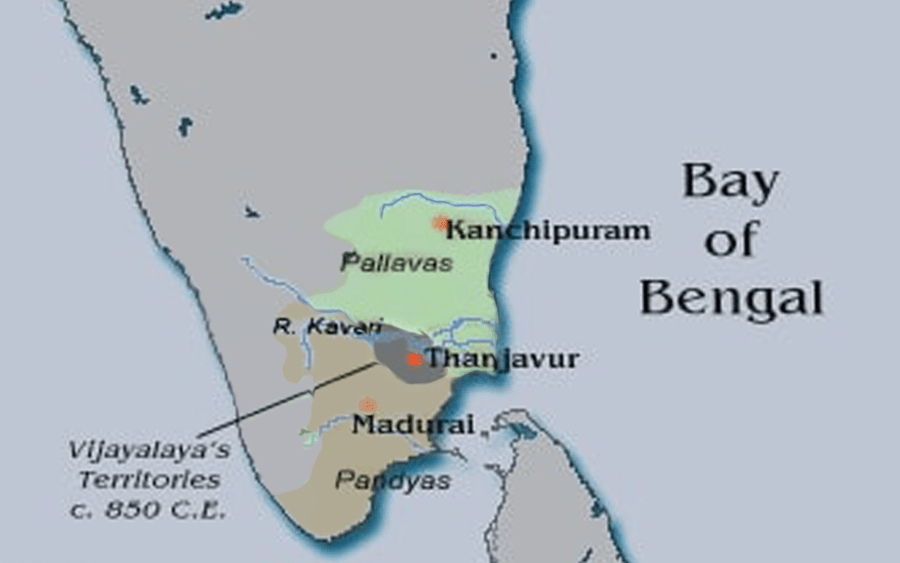
The Chola Dynasty is one of the finest and longest-ruled dynasties in India, it was the Tamil Kingdom and has a vast empire, it was first established in 300 BCE during the Sangam period but the real existence was known from Ashoka’s inscription on three great Tamil kingdoms in the southern part of India and it is one of the Three crowned kingdoms in south India along with the Pandyas and Cheras. The Chola dynasty was not during the earlier times i.e., during the Sangam period as the evidence was washed away due to natural calamities and but the known and the first king of Chola dynasty was Vijayalaya who was a feudatory to the Pallava Dynasty and took the opportunity to capture Thanjavur as there was tension prevailing between the Pandyas and Pallavas and Thanjavur was ruled Mutharaiyar a small community and established the Chola dynasty and in the present day of Thanjavur.


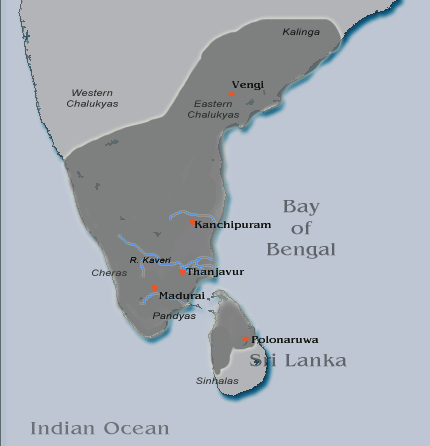
The above picture depicts the region occupied by Vijayalaya and after the demise of Vijayalaya his son Aditya I ascended the throne and brought the downfall of Pallavas and defeated the Pandyas in Madurai and annexed some parts of the Kannada territory and had ties with Western Ganga kingdoms. After him, his son Parantaka I defeated Rashtrakuta Dynasty in the battle of Vallava and he also annexed parts of Sri Lanka.
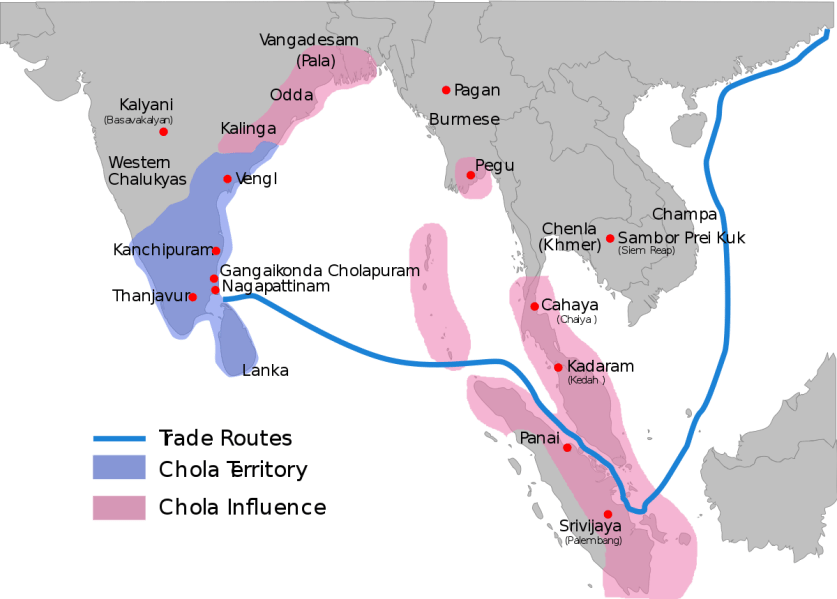
The two great rulers of the Chola kingdom under whom the Chola dynasty flourished in trade, governance, and power were the great Rajaraja Cholan and his son Rajendra Cholan I under whom the Chola dynasty attended the zenith of power.

Rajaraja Cholan

Rajaraja Cholan was born as Arulmoli Varman but changed has to Rajaraja Cholan after ascending the throne in 985 CE and ruled until he died in 1014 CE. He was a great king and an exceptional military solider who expand his kingdom to vast areas. When he ascended the throne the kingdom was relatively small in area and did not have the resources to build the kingdom and was recovering from the Rashtrakuta invasion and Rajaraja Chola was abled administrated and an efficient king who took the task of rebuilding the kingdom and succeeded in it. He restructured the Chola kingdom by taking land surveys and utilizing the resources to great extend and on the military side, he led and successfully captured and annexed various kingdom including Madurai and the Cheran region of parts of Kerala and led an invasion into Sri Lanka and successfully capturing parts of Sri Lanka and captured the kingdoms belonging to Rashtrakuta, Western Chalukyas, Hoysalas, Kalinga and various other kingdoms. He led the successful expedition into the Maldives and this act was deemed as the power of the Cholan Naval Fleet. He was an able administrator and build a powerful and well-structured society and was Succeeded by his abled and fearsome son Rajendra Chola.

Rajendra Cholan I

Under Rajendra Chola, the Chola kingdom was at the power of prosperity and became the most powerful kingdom in the southern region. He ascended the throne after the death of his father in 1014 CE. He led the conquest that his father left for him with the help of his abled and fearsome warrior son Rajadhiraja Chola who is known as Military king as he leads his army from the front and fights along with his soldiers and the other warrior is his commander-in-chief General Senapati Narakkan Sri Krishnan Raman both who was fierce in the battlefield and have helped his father to expand to other parts of Sri Lanka, Maldives, the South-Asia and other regions including Kalinga and some parts of Bengal. He was always supported by his fearsome son Rajadhiraja in every battle and the father-son due ruled the kingdom together, until his death in 1044 CE and was succeeded by his son Rajadhiraja I.

Corona Vaccine Update!!!

The situation in the world are very worse and so our hope for vaccine also. Scienticts are trying hard and hard to discover the vaccine. Scientist and pharma industry from all over the world are in danger in terms of health and wealth.

Here are some updates related to corona virus vaccine;

Moderna Therapeutics‘ invented mRNA-1273 vaccine prototypes which is heading towards success with high speed. The vaccine, is currently in its second phase of testing is more likely to be tested ahead on its third phase of clinical testing, Moderna therapeutics plans to involve about 30,000 participants between the ages of 18-55 and those who are at high risk of corona virus. If the trials are successful than it would be much relief for the people all around the world, by the time, Moderna promised to manufacture 100 million doses of the vaccine. The third phase of the testing is most likely to start in July.

Oxford University & AstraZeneca of Brazil which is worst affected country due to COVID-19 are jointly working to develop the corona virus vaccine. Once they tried to develop the vaccine but it failed in testing, now after much of research and time they again got hope and now they are soon ready to begin the trails on humans. To speed up the development of vaccine and minimizing the clinical trial time they are conducting both phase I and phase II trials at the same time.

Serum Institute of India (SII) India is also leading in development of  vaccine it has already tested for 18-55 age but side effects were observed and is again under development and testing. If India is able to development the vaccine first than India will become super nation as India will show to world that still India can do better in health sector and obvious youth is also at great potential so, ultimately it will attract many of the MNCs to India.

Order Convening General Court Martial Can Be Challenged Before AFT: SC

 In an interesting and significant development, the Supreme Court in Union Of India & Ors. Vs. P.S. Gill in Criminal Appeal No. 404 of 2013 decided on November 27, 2019 has held clearly and convincingly that an order convening a General Court Martial (GCM) can be challenged before an Armed Forces Tribunal (AFT). While differing with an order of the AFT, the Union of India had approached the top court claiming that an order by which the GCM was convened cannot be the subject matter of an appeal before the Tribunal. It was also contended that the jurisdiction of the Tribunal is only for adjudication of complaints and disputes regarding service matters and appeals arising out of the verdicts of the Court Martial.  But it got no relief on this and the top court made the picture clear by holding clearly and convincingly what has been stated above. It merits no reiteration that this should now certainly put to rest all speculations on this important topic.

                                       To start with, the ball is set rolling in para 1 of this noteworthy judgment authored by Justice L Nageswara Rao for himself and Justice Hemant Gupta wherein it is observed that, “The Union of India is in Appeal against the judgment of the Armed Forces Tribunal, Principal Bench, New Delhi (hereinafter, ‘the Tribunal’) quashing the order dated 23.02.2010 by which General Court Martial was convened against the Respondent.”

                                To recapitulate, it is then pointed out in para 2 that, “In the year 2005, the Chief of the Army Staff directed an investigation by the Court of Inquiry into the allegations pertaining to irregularities in procurement of ration, as a result of which the quality of supplies for the troops was compromised. A Court of Inquiry was convened on 10.10.2005 by the General Officer Commanding-in-Chief (GOC-in-C) Western Command to identify the Army personnel responsible for the aforementioned irregularities. Twenty-three witnesses were examined by the Court of Inquiry. The Court of Inquiry identified Twelve Army personnel who were prima facie responsible for the said improprieties. The Respondent who was working as the Chief Director of Purchase (CDP), Army Purchase Organisation, Ministry of Defence was one out of the twelve persons against whom a prima facie case was found. Disciplinary action was also initiated against the Respondent by the GOC-in-C, Western Command on 14.06.2006 which was challenged by the Respondent by filing a Writ Petition in the High Court of Delhi. By an order dated 11.01.2007, the High Court quashed the Court of Inquiry on the ground that Rule 180 of the Army Rules, 1954 (hereinafter, ‘the Army Rules’) was violated. However, an option was given to the Appellants to either hold a fresh Court of Inquiry after complying with Rule 180 of the Army Rules or to proceed directly under Rule 22 by hearing the charge without relying on the Court of Inquiry. The Court of Inquiry was re-constituted pursuant to the option given by the High Court. Later, the Appellants sought a modification of the order dated 29.07.2008 and informed the High Court that proceedings would be initiated under Rule 22 of the Army Rules since most of the officers involved had already retired and that it would be difficult to re-constitute a Court of Inquiry. The High Court permitted the Appellants to proceed under Rule 22 with the condition that no reliance can be placed on the old Court of Inquiry. The order of the Chief of the Army Staff by which cognizance was taken of the offences and the attachment order issued on 26.09.2008 were the subject matter of another Writ Petition filed by the Respondent in the High Court of Delhi which was dismissed on 03.10.2008.”      

                                   While elaborating further, it is then enumerated in para 3 stating that, “A hearing of the charge under Rule 22 against the Respondent was convened on 08.12.2008 and recording of summary of evidence under Rule 23 of the Army Rules was ordered against the Respondent on 24.12.2008. The Commanding Officer of the Respondent i.e. General Officer Commanding (GOC), 15 Infantry Division found that no offence was prima facie made out against the Respondent. The said view was approved by the GOC, 15 Corps on 28.04.2009. In the meanwhile, the Respondent retired on attaining the age of superannuation on 31.05.2009. However, Section 123 of the Army Act, 1950 was invoked by the Appellants to continue the proceedings against the Respondent. The GOC-in-C, Western Command examined the matter and the recommendations made by the GOC, 15 Infantry Division and GOC, 15 Corps and arrived at a conclusion that a prima facie case was made out against the Respondent. An attempt was made by the Respondent to challenge the findings of the GOC-in-C, Western Command, but in vain. The General Court Martial was convened by a letter dated 23.02.2010. The Respondent filed O.A. No. 147 of 2010, assailing the validity of the order convening the General Court Martial. He also sought for quashing the proceedings of the Court of Inquiry, summary of evidence and the conclusion of the GOC-in-C, Western Command holding him prima facie guilty. He further questioned the invocation of Section 123 of the Army Act against him to continue the proceedings even after his retirement. He also sought promotion to the rank of Major General along with his batchmates.”

                                         As it turned out, para 4 then holds that, “The Tribunal held that a prima facie case to proceed against the Respondent by a General Court Martial was not made out. The Tribunal was of the opinion that even if the entirety of evidence of the prosecution is taken to be true, no offence was made out against the Respondent. The Appellants made an attempt to obtain leave to Appeal under Section 31 of the Armed Forces Tribunal Act, 2007 (hereinafter, ‘the Act’) to approach this Court, which was not entertained. Aggrieved by the judgment of the Tribunal, the above Appeal is filed.”

                                   Be it noted, para 13 points out that, “At the outset, it is relevant to note that the O.A. was filed both under Sections 14 and 15 of the Act. Section 15 confers jurisdiction and power on the Tribunal to entertain appeal against any order, decision, finding or sentence passed by a Court Martial.”

                                   To put things in perspective, it is then pointed in para 14 that, “Section 15 (2) of the Act provides for an appeal which can be filed by the person aggrieved by an order, decision, finding or sentence passed by a Court Martial. The order challenged in the OA in this case is a proceeding by which the General Court Martial was convened. As there was no order, decision, finding or sentence by the Court Martial, an appeal under Section 15 per se is not maintainable.”

                                          While explaining the purpose of Section 14, it is then made clear in para 15 that, “Section 14 enables a person aggrieved to make an application to the Tribunal in any service matter. ‘Service matters’ are defined in Section 3 (o) to mean all matters relating to the conditions of their service, which shall include termination of service, inter alia. There are some matters which are excluded from the purview of the definition of ‘service matters’. There is no dispute in this case that the said exclusions do not come into play.”

                                      Of course, it is then also made clear in para 16 that, “Any matter relating to the conditions of service falls within the definition of ‘service matters’ under Section 3 (o) of the Act and can be the subject matter of an application filed before the Tribunal. ‘Conditions of service’ mean those conditions which regulate the holding of a post by any person right from the time of his appointment till his retirement and even after his retirement including pension etc. Therefore, conditions of service also include dismissal from service [State of Maharashtra v. Marwanjee Desai, (2002) 2 SCC 318].”

                                        To put it succinctly, the foregoing discussion leads the Bench to hold in para 18 that, “It is clear from the above that any proceeding which leads to an order of termination would fall within the expression ‘relating to conditions of service’. In any event, the proceedings initiated against the Respondent cannot be said to be not related to his service. A final order to be passed by the General Court Martial, apart from the imposition of other penalties, might have led to the termination of the service of the Respondent.”

                                      More importantly, the Bench then very rightly holds in para 19 that, “We have no doubt in our mind that Section 14 of the Act which confers jurisdiction over service matters of the Army personnel should receive wide construction. This Court had held that an interpretation which confers jurisdiction should be preferred over an interpretation which takes away jurisdiction. [Mantri Techozone v. Forward Foundation, 2019 SCC Online SC 322 (3JB).”

                                 Most importantly, it is then observed in para 20 that, “We are also conscious that the object with which the Act was made is to provide adjudication of complaints and disputes regarding service matters and not only appeals against the verdicts of the Court Martial. It is trite law that statement of objects and reasons can be used as a tool for interpretation. [S.S. Bola v. B.D. Sharma (1997) 2 SCC 522, State of Maharashtra v. Marwanjee F. Desai, (2002) 2 SCC 318]. The sequitur of the above discussion is that the impugned judgment of the Tribunal does not suffer from lack of jurisdiction.”

                                   Going ahead, it is then held in para 21 that, “Regarding the charges sought to be framed against the Respondent, we do not find any error in the approach of the Tribunal. The material on record was perused by the Tribunal to come to a conclusion that no prima facie case is made out against the Respondent. We do not see any reason to interfere with the said findings.” Finally, it is then held in the last para 22 that, “Accordingly, the Appeal is dismissed.”

                                      To summarise, we see that the Apex Court Bench in this latest, landmark and extremely laudable judgment very rightly upholds the AFT order. It has been very rightly held that an order convening a GCM can be challenged before an AFT. It was also rightly submitted by Mr K Ramesh that jurisdiction of the Tribunal cannot be curtailed on pedantic grounds and the order by which General Court Martial was convened was rightly set aside by the Tribunal. No wonder that the Apex Court Bench comprising of Justice L Nageswara Rao and Justice Hemant Gupta very rightly upheld the bona fide submission of the learned counsel Mr K Ramesh and emphatically ruled in his client’s favour while rejecting the submissions made by Ms. Diksha Rai who was the learned counsel appearing for the Appellant who contended that the judgment of the Tribunal is vitiated due to a jurisdictional error! There can be no denying or disputing it!    

Sanjeev Sirohi, Advocate,

s/o Col BPS Sirohi,

A 82, Defence Enclave,

Sardhana Road, Kankerkhera,

Meerut – 250001, Uttar Pradesh.

Age of motherhood, imperatives of lowering MMR, improvement of nutritional levels

The Government of India in a gazette notification issued on 04th June 2020, has set up a Task Force to examine matters pertaining to age of motherhood, imperatives of lowering MMR, improvement of nutritional levels and related issues.

Union Finance Minister, during her Budget Speech for 2020-21 in the Parliament stated that “Women’s age of marriage was increased from fifteen years to eighteen years in 1978, by amending erstwhile Sharda Act of 1929. As India progresses further, opportunities open up for women to pursue higher education and careers. There are imperatives of lowering MMR as well as improvement of nutrition levels. Entire issue about age of a girl entering motherhood needs to be seen in this light. I propose to appoint a task force that will present its recommendations in six months’ time..” (Ref.: Para 67 of the Budget Speech for FY 2020-21).

CeNS synthesises novel photo-sensitive cholesteric liquid crystals for display devices at room temperature

Scientists from Centre for Nano and Soft Matter Sciences (CeNS), Bengaluru an autonomous institute of the Department of Science & Technology have synthesised a series of novel photo-sensitive cholesteric liquid crystals at room temperature for widest thermal range which can be used to make optical storage devices such as optically rewritable boards, advertising boards and so on. 

Liquid crystals have become an integral part of human life, for example, the most modern display devices such as computers, mobiles, TV screens, and so on are made up of liquid crystals. Cholesteric liquid crystals are special kind of materials which have the property of reflecting the light of wavelength equal to its pitch length, and this pitch length is temperature-sensitive. So, they are generally used as thermal sensors. If such cholesteric liquid crystals are made photo-sensitive, then these materials can be used for optical storage devices and other related applications.

The team of scientists from CeNS headed by Dr Veena Prasad have synthesised these novel photo-sensitive cholesteric liquid crystals for temperature range from -10oC to 160oC. Hence, the devices made using these liquid crystals can be used in Syberia to Saudi Arabia where extreme temperatures were reported. A simple, cost-effective procedure was adopted to synthesise such materials. These room-temperature liquid crystals can be used for creating optical storage devices, liquid crystal displays and so on.

The phenomena driving such optical storage device lies in tuning the molecules with light. Energetically more stable trans-state of azobenzene based photosensitive molecules turned to metastable cis configuration with the illumination of suitable UV light. Bringing them back to the original trans-state can be done using either by shining light of higher wavelength (~ 450nm) or by keeping it in a dark state. The later process is known as thermal back relaxation, where only room temperature is playing the role. The idea behind the phenomena is to increase such thermal back relaxation to retain the optically written images for a long time.

An optical storage device based on above phenomena was fabricated, in collaboration with Dr Gurumurthy Hegde from BSN Centre for Nano-materials and Displays, BMS College of Engineering, Bengaluru, using one of these materials. The device has shown very high thermal back relaxation with good contrast between the illuminated region (dark state) and masked region (bright state). This process took almost 5 hours to relax back to its original configuration (i.e., trans-state). Such devices are extremely useful in creating rewritable advertisement boards where one can store the images for several hours and then can be rewritten or in some cases can be kept as permanent storage device. Then can also be used as optical rewritable boards for schools and colleges.

This invention will definitely help to bring down the cost of the devices with a very simple yet powerful photoisomerisation concept. An Indian patent has been filed for this invention.

Figure: High contrast images with masked regions (bright in colour) and dark regions (exposed regions) showing good contrast between bright and dark states. The image took almost 5 hours to relax to its original state.

[For further details, contact Dr Veena Prasad (veena@cens.res.in).]

*****

NB/KGS/(DST release)/ (DBT release) (CSIR Release)/(India Science Wire)/ (vigyansamachar)

Fabrication of Transparent Conducting Glass can bring down cost of smart windows, touch screens, solar cells

In recent years, the demand of transparent conducting glasses (TCG) with high light transparency has tremendously increased due to its wide range of applications in optoelectronic devices such as smart windows, solar cells, touch screen/ touch sensors, and so on.

Recently scientists from Centre for Nano and Soft Matter Sciences (CeNS), Bengaluru an autonomous institute of the Department of Science & Technology, Government of India have developed a novel recipe for fabrication of TCG which brings down its production cost by 80% compared to tin-doped indium oxide (ITO) based technology which is currently in use. Their current work has been published in the journal Materials Chemistry and Physics.

Industrially relevant TCG came up with conducting coatings such as tin-doped indium oxide (ITO) with a few hundred nanometres of thicknesses, where significant cost is attached to the slow deposition rates adopted for high-quality films.

The newly fabricated TCG consists of metal mesh on a glass substrate with thin overlayers of metal oxides. The design is attractive as the hybrid electrode possesses the excellent conductive property of the metal mesh (having a sheet resistance of about 5 ohms/square) while offering an oxide surface finish for the conductive glass, which makes it relate well with the existing industry requirements based on ITO.

The team lead by Prof. G U Kulkarni, along with his co-workers from CeNS and industrial partner Hind High Vacuum (HHV) Pvt. Ltd. have set-up a semi-automated production plant funded by DST-Nanomission in CeNS-Arkavathi campus for production of low-cost TCG.

Dr. Ashutosh K Singh, Scientist-C at CeNS who is working on this project, said, “We are fabricating various prototypes such as transparent heaters, transparent Electromagnetic Interference shields, smart window, etc. based on TCG to showcase its potential applications. Further, these electrodes have been sent out for field tests in various industries and R&D laboratories”.

These TCGs have been exhibited in various prestigious meetings and conferences such as Bengaluru INDIA NANO-2018 & 2020, ICONSAT-2018 & 2020, SPIE-2019, etc. for dissemination and marketing purpose and are also available for onsite testing and validation purposes.

Figure 1 (a) Reduction in the production cost of hybrid electrode wrt. ITO in (%) with sheet resistance values, (b) digital image of hybrid transparent electrode demonstrating its transparency and clarity.  

Thus, the TCG developed by CeNS have the potential to bring down the overall production cost of devices like smart windows, touch screens, solar cells, and so on due to its low-cost processing cost.

(Publication details:Ashutosh K. Singh, R. K. Govind, S. Kiruthika, M. G. Sreenivsasn, and G. U. Kulkarni, “Hybrid transparent conducting glasses made of metal nanomesh coated with metal oxide overlayer,” Materials Chemistry and Physics, 239, 121997 (2020)

DOI: https://doi.org/10.1016/j.matchemphys.2019.121997

For more details, Dr. Ashutosh K Singh (aksingh@cens.res.in) can be contacted).

100% household tap connections in rural areas of West Bengal

In continuation of various initiatives taken up to improve the lives of people of this country, ‘Jal Jeevan Mission’ was launched by Government of India last year to provide every rural household in the country a Functional Household Tap Connection for supply of potable water in adequate quantity and of prescribed quality on regular and long-term basis. Following the true spirit of cooperative federalism, State Governments are implementing this flagship programme to realize the objectives of the Mission so as to ensure ‘ease of living’ of people in rural areas as well as reduce the ‘drudgery’ of women, especially girls. This life changing Mission focuses on the key principles of ‘equity and inclusiveness’, i.e. every family in the village gets tap water connection in their households. With a departure from earlier programmes, JJM stresses on service delivery, rather than infrastructure creation.

The Annual Action Plan (AAP) is very important for timely implementation to achieve the goals of the mission, for which very intensive exercise was carried out in the Ministry in last couple of months and all the States have presented their annual action plan for JJM. West Bengal is yet to present its AAP before the National Committee of the Ministry of Jal Shakti.

            West Bengal has 1.63 Crore rural households spread over 41,357 villages, but only 2 lakh households have a tap connection in their premises. In 2019-20, against a target of 32.24 lakh households to be given tap connections, State could provide only 4,720 household tap connections. In 2020-21, the target fixed for providing tap connections is 64.43 lakh households including the shortfall of about 32.19 lakh from the previous year. This needs rigorous planning and robust implementation strategy to achieve the target.

            In 2019-20, Rs. 993.88 Crore of Central funds was released to the State, however only Rs 421.63 Crore was utilized and rest amount is lying unspent. Further, to provide potable water in Arsenic/ Fluoride-affected habitations, a sum of Rs. 1,305 Crore was provided, out of which Rs. 573.36 Crore is still lying unspent. Thus, as on 1.4.2020, State has an opening balance of Rs. 1,146.58 Crore as Central Share to provide tap water to rural households. During 2020-21, fund allocation to West Bengal has increased to Rs. 1,610.76 Crore. With an opening balance of Rs. 1,146.58 Crore, the State has an assured availability of Rs. 2,757.34 Crore of Central share funds. Therefore, in 2020-21, along with State share about Rs. 5,515 Crore will be available under Jal Jeevan Mission to provide household tap connections in West Bengal. Further, additional funds too can be provided based on progress of implementation in form of performance incentive under JJM. Therefore, the State needs to make a monthly plan for physical progress in terms of tap connections to be provided and expenditure plan for prudent financial management to spend the huge amount of funds available with State.

As Government of India is working in tandem with States to achieve the goals of JJM within the time frame, focus is on retrofitting/ augmentation of existing water supply systems to provide tap connections to remaining households. Out of total 41,357 villages In West Bengal, 22,155 (54%) villages already have piped water supply systems. However, only 2 lakh households in these villages have tap connections. Those which have been left out in such villages belong to poor and marginalized sections of the society. There is a potential to provide 1.08 Crore household tap connections in these villages. State needs to push this agenda forward with utmost speed to provide household tap connections in next 4-6 months in a ‘campaign mode’. Priority is to be given to saturation of villages in quality-affected habitations, aspirational districts, SC/ ST majority villages/ habitations and villages covered under Sansad Adarsh Gram Yojana.

Potable water supply to water quality-affected habitations is given top most priority under JJM and in view of interim order of National Green Tribunal, State has to ensure piped water supply to all households in 2,414 Arsenic and Fluoride affected habitations before 31 December, 2020. In case, potable water piped connections cannot be ensured before December, 2020, as an interim measure, potable water @ 8-10 lpcd for drinking and cooking purpose is to be provided by installing community water purification plants (CWPP).

West Bengal would receive Rs 4,412 Crore as 15th Finance Commission Grants to PRIs, 50% of which will mandatorily be spent on water and sanitation. There is need for convergence planning to be done by the State under various programmes like MGNREGS, JJM, SBM (G), 15th Finance Commission Grants to PRIs, District Mineral Development Fund, CAMPA, CSR Fund, Local Area Development Fund, etc. at village level and Village Action Plan (VAP) of every village is to be prepared by dovetailing all such funds for carrying out water conservation activities to strengthen water source leading to drinking water security.

In all villages, IEC campaign along with community mobilization is to be taken up to make JJM truly a people’s movement. State has to engage women Self Help Groups and voluntary organizations working in social sector and natural resources management to mobilize the rural community for creation of in-village water supply infrastructure as well as for their operation and maintenance.

To achieve the objectives of the Mission to provide tap connection to each rural household in every habitation/ village on long-term basis, skilled manpower in areas like masonry, plumbing, fitting, electricity, etc., will be needed for creation of water supply schemes and their operation & maintenance and such manpower will be required in each village/ habitation. Ministry of Jal Shakti has roped in National Skill Development Corporation to create a pool of skilled Human Resource in rural areas to make villages a self-reliant unit without depending on others for regular upkeep and maintenance of water supply systems.

In the prevailing CoVid-19 pandemic situation, State needs to start works related to water supply and water conservation immediately in villages so as to provide works to the skilled/ semi-skilled migrants to provide livelihood as well as to ensure potable water in the households of rural people as well as boost the rural economy.

Jal Jeevan Mission in Punjab

Union Minister of Jal Shakti, Shri Gajendra Singh Shekhawat has complimented the Chief Minister of Punjab, Captain Amarinder Singh for taking steps to provide tap connections to all rural households by March, 2020. In his letter he thanked the Chief Minister for showing his commitment towards the ethos of Jal Jeevan Mission.

         Minister expressed optimism that the State will not only provide remaining households with tap connections, but potable water service delivery in adequate quantity of prescribed quality on regular & long-term basis will be ensured to all households as envisaged under the Jal Jeevan Mission (JJM).

Minister stressed that funds to the State is provided by Government of India based on output in terms of number of FHTCs provided and utilization of funds. To that effect in 2019-20, Punjab was allocated and provided Rs. 227.46 Crore as Central share, out of which the State could utilize only Rs. 73.27 Crore. With opening balance of Rs. 257 Crore along with allocation of Rs. 362.79 Crore in 2020-21, Punjab has assured availability of Rs. 619.89 Crore Central fund. With State’s matching share, Rs. 1,239.78 Crore will be available under Jal Jeevan Mission to provide tap connections to families in rural areas of Punjab in 2020-21.

Union Minister requested the State to expedite the planning and implementation, in order to ensure that every household is provided with tap connections by March, 2022. He impressed upon the CM to focus on retrofitting/ augmentation of existing water supply systems in villages to provide household tap connections to the remaining households, mostly belonging to poorer section of the society. He urged the CM to provide remaining households with tap connections in next 4–6 months in a ‘campaign mode’ to provide 14 lakh tap connections by taking up augmentation and retrofitting of such schemes and these villages can become ‘Har Ghar Jal Gaon’.  While planning, priority should be given on saturating villages in water scarce areas and aspirational districts, & villages covered under Sansad Adarsh Gramin Yojana.

Since, potable water supply to water quality-affected habitations is a top priority under JJM and in the light of interim order of National Green Tribunal, Union Minister requested the CM to ensure piped water supply to all households in Arsenic and Fluoride affected habitations before December, 2020. In case, potable water piped connections cannot be ensured before December, 2020, as an interim measure potable water @ 8-10 lpcd for drinking and cooking purpose is to be provided by installing community water purification plants (CWPP).

Keeping the 73rd Constitutional Amendment, Jal Jeevan Mission mandates that local village community/ Gram Panchayats and or its sub-committee/ user groups are involved in planning, implementation, management, operation and maintenance of water supply systems in villages to ensure long-term sustainability of water supply schemes to achieve drinking water security.

In 2020-21, under 15th FC Grants to PRIs, Rs.1,388 Crore  is allocated  to the State, 50% of which is to be spent mandatorily on water and sanitation The State has been requested to utilize all available resources through convergence of various programmes like MGNREGS, SBM (G), 15th Finance Commission Grants to PRIs, CAMPA, CSR Fund, Local Area Development Fund, etc. for water supply works at village level and Village Action Plan of every village is to be prepared by dovetailing all such resources.

In the wake of COVID-19 pandemic situation, issue of drinking water gains prominence. At present, there is perhaps no higher priority but to ensure citizens have access to clean water for drinking and multifarious domestic uses. A tap at home will not only help practicing social distancing, but will also ensure better hygiene and hand-washing routine. Besides, the State will also help its local people and migrant workers in providing them with employment through Jal Jeevan Mission.

Clarification over Tiger Deaths in the Country during last 8 years.

It has come to light that some section of media has presented the figure of tiger deaths in the country, in a manner which is a lopsided view of tiger conservation in the country and has apparently attempted to malign efforts of the Government of India in this regard and sensationalize the issue.

The National Tiger Conservation Authority(NTCA),a statutory body of the Ministry of Environment, Forest and Climate Change would like to put across the following :

Due to efforts of the Government of India thorough the National Tiger Conservation Authority, the tiger has been taken from the brink to an assured path of recovery, which is evident in findings of the quadrennial All India Tiger Estimation conducted in 2006,2010,2014 and 2018.These results have shown a healthy annual growth rate of tigers at 6%, which offsets natural losses and keeps tigers at the habitats carrying capacity level, in the Indian context. For the period 2012 to 2019, one can observe that the average tiger deaths per year in the country hover around 94, which is balanced by the annual recruitment as highlighted by this robust growth rate. In addition, the National Tiger Conservation Authority has taken several steps under the ongoing Centrally Sponsored Scheme of Project Tiger to address poaching,which too,is significantly controlled as seen in the confirmed poaching and seizure cases.

The National Tiger Conservation Authority maintains the highest standards of transparency in so far as making tiger death statistics available to the citizen through its website as well as dedicated portal – www.tigernet.nic.in, so that people can make a logical assessment, if they desire. The presentation of data over a long time frame spread across 8 years indicates an intent to imprint the gullible reader with large numbers which may cause undue alarm. Also, not adequately covered is the fact that 60 percent of tiger deaths in India are not attributable topoaching.

It is also pertinent to mention that the NTCA, through a dedicated Standard Operating Procedure, has a stringent protocol to ascribe cause to a tiger death, which is treated as unnatural, unless otherwise proved by the State concerned through submission of necropsy reports, histopathological and forensic assessments besides photographs and circumstantial evidences. It is only after a detailed analysis of these documents that cause is ascribed to a tigerdeath.

While it is appreciated that figures as available on the NTCA’s website and as provided in the RTI reply have been used in these reports, the manner in which it has been presented causes alarm and does not take into account the gamut of processes that go into dealing with tiger death in the country and the natural gains that have been made in tiger conservation,as a result of sustained technical and financial interventions by the Government of India under its Centrally Sponsored Scheme of Project Tiger being steered by the NTCA.

It is expected that media, will inform the aforesaid facts, to the country so that there is no sensationalism and citizens are not led to believe that there is cause for alarm.

N-E Region has emerged as a role model of development & Corona Management

Union Minister of State (Independent Charge) Development of North Eastern Region (DoNER), MoS PMO, Personnel, Public Grievances & Pensions, Atomic Energy and Space, DrJitendra Singh today launched a Booklet and its e-version on one year achievements of the Ministry of Department of Development of North Eastern Region, MDoNER here. Secretary Ministry of DoNER and other senior officers of the Department were present on the occasion. Secretary NEC and other senior officers attended the launch through a Video Conference from Shillong.

In his address Dr. Jitendra Singh said that North Eastern Region has emerged as a role model in more than one way. After emerging as a successful model for development in the last six years, the region has also become a role model in Corona management and again by reverting back to normal working conditions, it has presented a model for the entire country to emulate the same. Dr Singh said that this has become possible due to priority and patronage, the North Eastern Region received by Prime Minister Narendra Modi Government in the last six years.         

Dr. Jitendra Singh congratulated the team MDoNER for achieving 100% expenditure during 2019-20 andsaid that there has been a significant development in terms of Road, Rail and Air connectivity, helping facilitate the movement of goods and persons not only across the region but also across the country. So far, the region has received more than 400 tonnes of Air Cargo supply, apart from parcel facilities. He said that Bamboo will get a special impetus in post COVID era and the region will witness young entrepreneurs making a mark in different fields.

The Minister stated that last one year has seen significant development in Infrastructure, Energy and other Sectors in the North Eastern Region.Under Govt. Policy of earmarking at least 10% of GBS for development of NER, Rs. 53,374 Cr were provided to NE States at RE stage by 55 non-exempt departments. Railways allocated of Rs.4745 Cr in addition to GBS. The allocation under 10% GBS has been rising sharply reflecting the focus of Hon’ble PM on North East.

Some of the major projects which have been approved, started or completed in the last one year in the NER and significant achievements of the Ministry of DoNER are mentioned below:

  1. Approved at a cost of Rs. 9265 Cr. Indradhanush Gas Grid Project would be a 1656 km long North East Gas Pipeline Grid covering all eight States. This would provide clean energy to NER and boost industrial growth without pollution. This would greatly help in preserving NE environment in its pristine form.
  1. The work on Greenfield Hollongi Airport for capital connectivity to Arunachal Pradesh,has started. The project with an estimated cost of Rs.955.67 Cr.is likely to be completed by December, 2022.
  1. Railways has completed Belonia-Sabroom (39.12 Km) Railway-line for providing easy access to Southern Tripura and Chattogram Port in Bangladesh.Doubling of Hawaipur-Lumding,25.05 Km long Section of New Jalpaiguri-Lumding Project has also been completed.

Sanction of major new works include (i)Doubling of New Bongaigaon to Aghri section via Rangia (142 km) at a cost of Rs.2042.51 Cr.; (ii) Bridges on Brahmaputra at Saraighatand TezpurSilghat at estimated cost of Rs.888 Cr & Rs.3512 Cr respectively; (iii) electrification of entire 2352 km long BG railway network of NER at an estimated cost of Rs.2293 Cr.

  1. In the roads sector,35 National HighwaysProjects having a lenth of 536 Km, with an estimated cost of Rs.7707.17 Cr have been awarded.  3 projects (66 km length) have been completed in Arunachal Pradesh.
  1. Bulk cargo and container movement from Kolkata and Haldia Ports to Guwahati Terminal via Indo-Bangladesh Protocol (IBP) Route and NW2 (Brahmaputra) has started. Operationalisation of this waterway would lead to and great savings in logistics cost. IBP route is being further developed in Bangladesh portion at estimated cost of Rs.305.84 Cr.
  1. KrishiUdaan Scheme launched in Union Budget 2020-21 has been operationalised and Transport of agricultural produce such as pineapple, ginger, kiwi, organic produce has commenced from Bagdogra, Guwahati and Agartala Airports.
  1. All impediments (legal, political and environmental) to Subansiri Hydro Power project in Arunachal Pradesh have been removed and the work on 2000 MW project(stalled since 2011) has started and is expected to be completed by 2023. 

Hon’ble Minister stated that the expenditure of Ministry during the last one year at Rs 2803 Cr has been highest over any one-year period. The expenditure of the Ministry in FY 2019-20 has been Rs 2670 Cr, 100% of the RE allocation has also been the highest for any financial year. The other significant achievements are:

  1. 215 Nos ongoing projects worth Rs.2800 Cr have been completed and 152 Nos of new projects worth Rs.2286 Cr have been sanctioned under various Schemes of MDoNER/NEC.
  1. Fighting COVID-19 Apart from release of Rs.7923.78 Cr by Ministry of Finance and Rs.235.59 Cr by Ministry of Health and Family Welfare, Rs. 25 croresof untied funds have been provided by MDoNER/NEC. MDoNER has also sanctioned projects worth Rs.152.18 Cr under NESIDSfor Strengthening Health Infrastructure in Mizoram, Meghalaya, Arunachal Pradesh and Manipur. Two quarantine facilities viz. CBTC Hostel Block, Burnihat, Guwahati, Assam and NEC House, New Delhi have been identified.
  1. NERLP and NERCORMP livelihood schemes of MDoNER, cover   6 States, 15 districts of NER has created livelihood for 4,12,644 households of the region. Under these schemes 36561 SHGs, 1506 SHG federations, 1599 Community Development Groups, 2899 Natural Resource Management Groups (NaRMG) and 286 NaMRG Associations have been created.
  1. For promotion of MSME & Micro Finance Sectors in the North Eastern Region, NEDFi has disbursed an amount of Rs.47.02 crore against a target of Rs 30 Cr as provided in MOU with Ministry during June 2019 to May 2020. It has also provided mentoring services through BFCs to total 539 entrepreneurs and facilitated credit link for 77 entrepreneurs.
  1. The major events conducted by the Ministry and its organisations like NEC, NEHHDC, CBTC etc included NEC Plenary in Guwahati chaired by Union Home Minister; Destination North- East at Varansi -to promote tourism andHnadlooms and Handicrafts of NER in UP and nearby areas of Bihar; North-East Handloom and Handicrafts exhibition at Aizwal; and Workshop cum Exhibition on Cane and Bamboo in J&K.

Union Minister congratulated the team MDoNER for achieving 100% expenditure during 2019-20.  He also appreciated the efforts of the Ministry for helping North Eastern States in developing Infrastructure for fighting COVID-19 and playing a coordinating role between NE States and various Central Ministries/Department, in various issues which required interventions by Central Ministries/Departments.He asked the Officers to maintain the tempo and keep up the good work.

SAMVAAD App launched to connect with employees and stakeholders digitally

Coal India Subsidiary Western Coalfields Ltd (WCL) opened 3 new coal mines in Maharashtra and Madhya Pradesh today having combined annual production capacity of 2.9 million tonnes (MT). The company will infuse total capital expenditure (Capex) of Rs. 849 crores on these projects and generate direct employment for 647 persons. Madhya Pradesh Chief Minister Shri Shivraj Singh Chouhan, Maharashtra Chief Minister Shri Uddhav Thackeray, Union Minister of Road Transport & Highways Shri Nitin Gadkari and Union Minister of Coal and Mines Shri Pralhad Joshi inaugurated the mines through video conference.

“WCL has to produce 75 MT of coal by financial year 2023-24. Opening of these mines will certainly add in the efforts of the company reaching this milestone and also help Coal India achieve 1 billion tonnes (BT) coal production target by financial year 2023-24.” Union Minister of Coal and Mines Shri Pralhad Joshi said on the occasion.

The three mines which WCL has opened, are a) Adasa Mine, an underground to open cast mine, in Nagpur Area of Maharashtra, b) Sharda underground Mine in Kanhan Area and c) Dhankasa underground mine in Pench Area of Madhya Pradesh. The annual coal production capacity of Adasa mine is 1.5 MT whereas Sharda and Dhankasa mines are having annual coal production capacities of 0.4 MT and 1 MT respectively.

The company launched a surveillance System named WCL EYE for monitoring of its mining operations and an App named SAMVAAD to connect with its employees and stakeholders on this occasion. WCL EYE will monitor operations of 15 major mines of the company round the clock that account for 70% of the company’s coal production. It will also help monitor coal stocks and availability of coal at sidings, keep a tab on placement of rakes and loading at railway sidings and ensure accountability.

SAMVAAD is a Mobile and Desktop App for employees & stakeholders, which will provide a virtual platform for suggestion/feedback/experience sharing. Quick Response Teams will respond to the queries and feedbacks in 7 days mandated period.

Shri Joshi announced that different subsidiaries of Coal India have given Rs. 20 crores to the Government of Madhya Pradesh to strengthen its fight against COVID-19 pandemic in the state. Coal India will also give Rs. 20 crores in a day or two to the Government of Maharashtra for strengthening its cause against COVID-19. 

WCL has launched “Mission 100 Days” a roadmap to achieve targets for the current fiscal. This mission will also help the company accomplish mid and long-term goals. The company’s coal production and offtake target for the current fiscal is 62 MT.

“Opening of these 3 Mines is a part of WCL’s future plan to start 20 new Projects by financial year 2023-24 including 14 in Maharashtra and 6 in Madhya Pradesh. The company will make total capital expenditure of Rs. 12753 crores on these projects and generate direct employment of over 14000” Shri Joshi said.

The company has already opened 20 new and expansion projects in the last 6 years with over Rs. 5300 crores of capital expenditure and 5250 direct employment to land losers.

WCL had produced 57.64 MT of Coal in financial year 2019-20, up over 8% in comparison to the last fiscal.

We are not lonely in the Universe : CETI World Exclusive Report >>>>>>

We are alone in the Universe ! It’s one of the biggest questions that haunts our imaginations. Astrobiologist Adam Frank argues in his new book “Light of the Stars” that we have never been in a better position to answer that question, thanks to a revolution in our knowledge gained by powerful telescopes like Hubble and space probes like Voyager. Indeed, the chances that there has never been another civilization in the universe are as low as one in ten billion trillion. But whether there is still one out there today is a more complicated question.

Your book centers on a relatively new field of study known as Astrobiology, which you call revolutionary. Explain what it means and why it is giving us new insights into our place in the universe.

Astrobiology is the study of life in its planetary or astronomical context. People will say we have only one example of life—here on Earth. But, if you take that position, you miss three revolutions that have happened in the last 30 years.

The first revolution is that we have been visiting other planets in our solar system. We have now sent probes to pretty much every kind of object in our solar system, including Mars. And from this we’ve learned about climate and how planets work in a generic sense. There’s an app you can pull up that will give you the weather on the Mars. We have climate models for Mars, Venus, and Saturn, and we know a huge amount about climate as a generic planetary phenomenon, not just on Earth.

Credit: Third Party Reference

The second revolution is studying the Earth’s history going back 4.5 billion years. We have been able to unspool in some detail the long history of the Earth and its life co-evolving over that time. We see that Earth has been many different kinds of planets, sometimes a snowball world, sometimes a hothouse world without ice. In the beginning there were no continents; it was pretty much a water world.

The last big revolution is the  revolution. When I was a school student in 2006, I did not know whether there were any stars in the universe with planets around them. Now we know that the universe has ten billion trillion planets that are in the right place for life to form. Those three revolutions completely changed not only how we think about life and planets, but also leads us to think very differently about exo-civilizations.

There are two possibilities, we are either alone in the universe or we are not. Both of these are equally terrifying.” Arthur C Clarke.

Workers in the search for extraterrestrial intelligence (SETI) would have needed more than a little luck in the first 45 years of the modern hunt for like-minded colleagues out there. Radio astronomer Frank Drake’s landmark Project Ozma was certainly a triumph of hope over daunting odds. In 1960, Drake pointed a 26-meter radio telescope dish in Green Bank, West Virginia, at two stars for a few days each. Given the vacuum-tube technology of the time, he could scan across 0.4 megahertz of the microwave spectrum one channel at a time.

Credit: Third Party Reference

Almost 45 years later, the SETI Institute in Mountain View, California, completed its 10-year-long Project Phoenix. Often using the 350-meter antenna at Arecibo, Puerto Rico, Phoenix researchers searched 710 star systems at 28 million channels simultaneously across an 1800-megahertz range. All in all, the Phoenix search was 100 trillion times more effective than Ozma was.

If Other beings live out there, if we’re to find them, we must do so before one or either of us is expired by the universe.” ~ Simon Farnell

Time as I have said before is such a relative thing, based on what we can perceive and measure with our minds. If we imagine the universe as a giant entity existing in its place we can maybe imagine that our existence is a fleeting and insignificant thing, a moment of time too short to measure and other races that may or may not exist will also be a similar fleeting moment.

Reference- divyanspacetech.wordpress.com and nationalgeographic.com