Prime Minister’s meeting with Shigeru Kitamura, Japan Secretary General of NSS

Mr. Shigeru Kitamura, Secretary General of National Security Secretariat (NSS) of Japan called on Prime Minister Shri Narendra Modi today.

The Prime Minister welcomed Mr. Kitamura on his first visit to India after assuming charge in September, 2019 and stressed the importance of the growing strategic partnership between the two countries for peace, progress and security in the region. He expressed the confidence that the discussions of Mr. Kitamura with the National Security Advisor of India would pave the way to strengthen this vital aspect of bilateral cooperation.

The Prime Minister recalled his warm friendship with Prime Minister Abe and conveyed that he looked forward to welcoming him in India for India-Japan Annual Summit next month.

***

Are teachers villains or victims?

At some point or the other in their lives, almost everyone has held the view: \’If only teachers did their work better, so many problems would be solved…\’  Schools would be so much better off, isn\’t it? Education would be great and our lives very different as a result; in fact, society itself would change, if only teachers did their work better.

People who think thus are, of course, only being \’nice\’. Because there are any number of others who have less \’nice\’ ways of putting it. \’Bloody teachers, curse them, they don\’t work at all. They\’re never there in school, and when they\’re there they don\’t teach. And if they teach, they don\’t teach properly, beat children, and don\’t even know themselves what they\’re supposed to teach. All they\’re interested in is their salaries, and making money from the grants that flow to the school.\’

In fact, this is unfortunately a very widely held view, especially among officials, supervisors, trainers and others who are in any way responsible for and towards teachers. Condemn them, point out all their flaws (exaggerate where it helps) and hold them accountable for all the ills of the education system. Teacher condemnation remains the starting point of many discussions related to improving education.

Anyone who spends time in school trying to implement what teachers are asked do on a daily basis soon finds that motivation has a way of evaporating rather rapidly. You\’re supposed to teach children of one class, but you find yourself teaching more than one class, of children at different ages, with huge variations among them.  Often, you don\’t know their language, and whatever you do, so many of them seem not to be getting it at all (partly also because they cannot attend regularly). Far from support, you get indifference (often derision) from those who are supposed to support you (head teachers, community representatives, supervisors, officials). Soon, if you happen to be from another area than your posting, you start trying to get yourself transferred.

Those \’above\’ them are not immune to exploiting teachers either – using their services to support their own administrative tasks, or even asking them to pay bribes for getting their travel allowance or even school grants (I came across a state where teachers used to be paid only Rs.400 as the TLM grant, with someone siphoning off Rs.100!).

But this doesn\’t mean teachers should absent themselves from school or beat children up, you would say. It\’s true, they shouldn\’t. It\’s just that it\’s so hard (and rare) to experience success as a teacher that it\’s not so surprising. Perhaps our system is victimizing teachers such that they\’re becoming villains? Or do you think they\’re only victims? Or are they really villains?

Call the SNP\’s bluff


Just in case you were not following the British elections, a small earthquake happened. The Tories won, the Lib Dems were wiped out, Labour performed poorly, and UKIP performed well but got no rewards. The bigger earthquake happened north of the border where the Scottish Nationalist party (SNP) won all seats bar three in a landslide, essentially running on a plank of Scottish independence.
This blog is a politics free zone and this blogger does not comment on political matters although he has (obviously !) strong views on every matter under the sun including Scottish independence 🙂 But he can and will argue a point of view on the economics of the issue of Scotland\’s secession.
Scotland runs a much higher level of expenditure as compared to the income it generates. If it were a separate nation, it will be running a deficit of 8% of GDP, as against the UK\’s 4%. The SNP is even more to the left than Labour and wants to spend more. In the cuckooland of irresponsibility that all opposition parties operate in, this is all very possible. 
Scotland\’s economy is tiny and is heavily influenced, even now, by oil. With the current low prices of crude, Scotland\’s already iffy finances would be in dire straits if it was an independent country. But thankfully it is not and is currently being bailed out by the English tax payer.
When the referendum was held last year (and Scotland voted to narrowly stay in the UK), it was promised to the Scots that the powers to tax and spend would be devolved to the Scottish parliament. What the SNP wants is the power to tax and spend, but continue to get the bailout by the English tax payer. For a period of transition this is acceptable, but this is not a sustainable proposition. What the Tory government would probably do is to immediately devolve the powers to tax and spend, but set a graded target of deficit reduction to the UK average over , say a five year period. That is enough to turn the squeeze on any government in Scotland. Independence would start to look an increasingly unattractive proposition.
The issue of independence will never be settled on economic grounds. Everywhere in the world it is settled on emotional and political grounds, even when it is blindingly obvious that it would be a case of economic suicide. It is for the electorate to decide, although every Anglophile, including this blogger, has a view. But one thing is certain. If the UK called the bluff and handed over the management of finances to a Scottish parliament, in an election five years later, whether Scotland is an independent nation by then or not, there is no chance that the SNP will win 56 seats. Its time to make the SNP accountable.

Call the SNP\’s bluff


Just in case you were not following the British elections, a small earthquake happened. The Tories won, the Lib Dems were wiped out, Labour performed poorly, and UKIP performed well but got no rewards. The bigger earthquake happened north of the border where the Scottish Nationalist party (SNP) won all seats bar three in a landslide, essentially running on a plank of Scottish independence.
This blog is a politics free zone and this blogger does not comment on political matters although he has (obviously !) strong views on every matter under the sun including Scottish independence 🙂 But he can and will argue a point of view on the economics of the issue of Scotland\’s secession.
Scotland runs a much higher level of expenditure as compared to the income it generates. If it were a separate nation, it will be running a deficit of 8% of GDP, as against the UK\’s 4%. The SNP is even more to the left than Labour and wants to spend more. In the cuckooland of irresponsibility that all opposition parties operate in, this is all very possible. 
Scotland\’s economy is tiny and is heavily influenced, even now, by oil. With the current low prices of crude, Scotland\’s already iffy finances would be in dire straits if it was an independent country. But thankfully it is not and is currently being bailed out by the English tax payer.
When the referendum was held last year (and Scotland voted to narrowly stay in the UK), it was promised to the Scots that the powers to tax and spend would be devolved to the Scottish parliament. What the SNP wants is the power to tax and spend, but continue to get the bailout by the English tax payer. For a period of transition this is acceptable, but this is not a sustainable proposition. What the Tory government would probably do is to immediately devolve the powers to tax and spend, but set a graded target of deficit reduction to the UK average over , say a five year period. That is enough to turn the squeeze on any government in Scotland. Independence would start to look an increasingly unattractive proposition.
The issue of independence will never be settled on economic grounds. Everywhere in the world it is settled on emotional and political grounds, even when it is blindingly obvious that it would be a case of economic suicide. It is for the electorate to decide, although every Anglophile, including this blogger, has a view. But one thing is certain. If the UK called the bluff and handed over the management of finances to a Scottish parliament, in an election five years later, whether Scotland is an independent nation by then or not, there is no chance that the SNP will win 56 seats. Its time to make the SNP accountable.

Call the SNP\’s bluff


Just in case you were not following the British elections, a small earthquake happened. The Tories won, the Lib Dems were wiped out, Labour performed poorly, and UKIP performed well but got no rewards. The bigger earthquake happened north of the border where the Scottish Nationalist party (SNP) won all seats bar three in a landslide, essentially running on a plank of Scottish independence.
This blog is a politics free zone and this blogger does not comment on political matters although he has (obviously !) strong views on every matter under the sun including Scottish independence 🙂 But he can and will argue a point of view on the economics of the issue of Scotland\’s secession.
Scotland runs a much higher level of expenditure as compared to the income it generates. If it were a separate nation, it will be running a deficit of 8% of GDP, as against the UK\’s 4%. The SNP is even more to the left than Labour and wants to spend more. In the cuckooland of irresponsibility that all opposition parties operate in, this is all very possible. 
Scotland\’s economy is tiny and is heavily influenced, even now, by oil. With the current low prices of crude, Scotland\’s already iffy finances would be in dire straits if it was an independent country. But thankfully it is not and is currently being bailed out by the English tax payer.
When the referendum was held last year (and Scotland voted to narrowly stay in the UK), it was promised to the Scots that the powers to tax and spend would be devolved to the Scottish parliament. What the SNP wants is the power to tax and spend, but continue to get the bailout by the English tax payer. For a period of transition this is acceptable, but this is not a sustainable proposition. What the Tory government would probably do is to immediately devolve the powers to tax and spend, but set a graded target of deficit reduction to the UK average over , say a five year period. That is enough to turn the squeeze on any government in Scotland. Independence would start to look an increasingly unattractive proposition.
The issue of independence will never be settled on economic grounds. Everywhere in the world it is settled on emotional and political grounds, even when it is blindingly obvious that it would be a case of economic suicide. It is for the electorate to decide, although every Anglophile, including this blogger, has a view. But one thing is certain. If the UK called the bluff and handed over the management of finances to a Scottish parliament, in an election five years later, whether Scotland is an independent nation by then or not, there is no chance that the SNP will win 56 seats. Its time to make the SNP accountable.

China\’s Issues

Every country faces challenges and China is no exception. But by global yardsticks, China\’s issues are less critical than what most other countries face.  It is after all the one country in the world which does not face a serious growth challenge (at least as of now).  China is however such a large country that even a seemingly minor issue is of gigantic scale and one that will affect the whole world. This is why everybody in the world ought to take a much greater interest in this country.
This post is a compendium of social, political, economic and moral issues that China faces at this point of time, in no particular order
Maintaining GDP Growth : The \”contract\” between the Communist Party and the people is a simple one – Economic growth for political control. When economic growth falters, this contract will be put under strain. There are a number of challenges to maintaining economic growth and some of them are articulated below. You can\’t grow endlessly at 8%+. The inflexion point has come.
Quantum of Debt  : China\’s debt to GDP ratio is galloping and is now above 300%. Much of the growth over the last decade has been debt fuelled. Growth will seriously falter if debt is cut. That\’s why the elusive \”soft landing\” is proving so difficult for China. Just for comparison, India\’s debt to GDP %, which I often cry about is \”only\” 130%. The United States, of course is a leader at 350% !
Income inequality : Every country faces this problem, but China faces it as bad as the US. The Gini coefficient, a measure of income inequality is 0.42 (higher the number, greater the inequality). The US is 0.46. India is 0.35. China is starting to have first world problems
Ageing population : Because of the one child policy that was rigidly enforced until recently, China is rapidly ageing. It will be the first country in history to have an ageing problem before it got rich (remember, on a per capita basis, China is still middling). With a poor social security network, who is going to pay for the aged and take care of them in a decade or two. China has the peculiar problem of one grandchild for four grandparents.
Corruption : We have spoken of it in previous posts. It is a serious problem.
Environment : China faces an acute environmental problem. The government is actively tackling it, but the problem is a huge one and one that was allowed to build up to crisis levels over decades. China also faces an acute water problem (worse than India\’s). There aren\’t easy solutions. Much of the north is virtually a desert, but with teeming populations.
Restive provinces : The one thing China is absolutely terrible at is integrating people who are culturally different. 93% of China is a homogeneous Han (those who talk about diversity in China have no clue what diversity really means – come to India).  The two largest provinces Tibet and Xinjiang are restive and brutally suppressed
Rising nationalism : Very few Chinese would recognise this as an issue, but it really is. Anti foreigner sentiment is high – its easy for a large number of Chinese to be fanatically against a nation if whipped into a frenzy of perceived slights. The Chinese government is increasingly bullying in its approach – Japan (Senkaku), entire East Asia (Nine dash line), India (Doklam and Arunachal). The average citizen who only has access to government propaganda gets whipped into dangerous nationalism. The Chinese would do well to ponder over this – why do they have so few friends ?
A moral vacuum : To an outsider, this might seem to be a strange issue, but many Chinese would immediately relate to it. Firstly during the Cultural Revolution and then in the breakneck speed of economic growth, its ancient culture, beliefs and traditions have gone. Today money is the predominant (only) religion.  In other countries, religious and  social organisations provide a balance to the materialism. In China they do not exist, or if they rise, are brutally exterminated by the government (see what happened to Falun Gong). So many Chinese wonder – after money what? And they may then turn their attention to demanding a level of freedom not in consonance with what the party is comfortable with.
And so this is the real major issue that China has faced since the mid 1980s and continues to face now. What is the balance between economic freedom and growth and political and other freedoms. The first flare up came when Zhou Enlai died in 1976. The second major flare up came during the Tiananmen incident in 1989. Since then there has been an uneasy truce, but one which has never gone away. Some day it will rear its head again. How China confronts it, and who is in power in China to confront it, will have tremendous consequences for the world. 

China\’s Issues

Every country faces challenges and China is no exception. But by global yardsticks, China\’s issues are less critical than what most other countries face.  It is after all the one country in the world which does not face a serious growth challenge (at least as of now).  China is however such a large country that even a seemingly minor issue is of gigantic scale and one that will affect the whole world. This is why everybody in the world ought to take a much greater interest in this country.
This post is a compendium of social, political, economic and moral issues that China faces at this point of time, in no particular order
Maintaining GDP Growth : The \”contract\” between the Communist Party and the people is a simple one – Economic growth for political control. When economic growth falters, this contract will be put under strain. There are a number of challenges to maintaining economic growth and some of them are articulated below. You can\’t grow endlessly at 8%+. The inflexion point has come.
Quantum of Debt  : China\’s debt to GDP ratio is galloping and is now above 300%. Much of the growth over the last decade has been debt fuelled. Growth will seriously falter if debt is cut. That\’s why the elusive \”soft landing\” is proving so difficult for China. Just for comparison, India\’s debt to GDP %, which I often cry about is \”only\” 130%. The United States, of course is a leader at 350% !
Income inequality : Every country faces this problem, but China faces it as bad as the US. The Gini coefficient, a measure of income inequality is 0.42 (higher the number, greater the inequality). The US is 0.46. India is 0.35. China is starting to have first world problems
Ageing population : Because of the one child policy that was rigidly enforced until recently, China is rapidly ageing. It will be the first country in history to have an ageing problem before it got rich (remember, on a per capita basis, China is still middling). With a poor social security network, who is going to pay for the aged and take care of them in a decade or two. China has the peculiar problem of one grandchild for four grandparents.
Corruption : We have spoken of it in previous posts. It is a serious problem.
Environment : China faces an acute environmental problem. The government is actively tackling it, but the problem is a huge one and one that was allowed to build up to crisis levels over decades. China also faces an acute water problem (worse than India\’s). There aren\’t easy solutions. Much of the north is virtually a desert, but with teeming populations.
Restive provinces : The one thing China is absolutely terrible at is integrating people who are culturally different. 93% of China is a homogeneous Han (those who talk about diversity in China have no clue what diversity really means – come to India).  The two largest provinces Tibet and Xinjiang are restive and brutally suppressed
Rising nationalism : Very few Chinese would recognise this as an issue, but it really is. Anti foreigner sentiment is high – its easy for a large number of Chinese to be fanatically against a nation if whipped into a frenzy of perceived slights. The Chinese government is increasingly bullying in its approach – Japan (Senkaku), entire East Asia (Nine dash line), India (Doklam and Arunachal). The average citizen who only has access to government propaganda gets whipped into dangerous nationalism. The Chinese would do well to ponder over this – why do they have so few friends ?
A moral vacuum : To an outsider, this might seem to be a strange issue, but many Chinese would immediately relate to it. Firstly during the Cultural Revolution and then in the breakneck speed of economic growth, its ancient culture, beliefs and traditions have gone. Today money is the predominant (only) religion.  In other countries, religious and  social organisations provide a balance to the materialism. In China they do not exist, or if they rise, are brutally exterminated by the government (see what happened to Falun Gong). So many Chinese wonder – after money what? And they may then turn their attention to demanding a level of freedom not in consonance with what the party is comfortable with.
And so this is the real major issue that China has faced since the mid 1980s and continues to face now. What is the balance between economic freedom and growth and political and other freedoms. The first flare up came when Zhou Enlai died in 1976. The second major flare up came during the Tiananmen incident in 1989. Since then there has been an uneasy truce, but one which has never gone away. Some day it will rear its head again. How China confronts it, and who is in power in China to confront it, will have tremendous consequences for the world. 

China\’s Issues

Every country faces challenges and China is no exception. But by global yardsticks, China\’s issues are less critical than what most other countries face.  It is after all the one country in the world which does not face a serious growth challenge (at least as of now).  China is however such a large country that even a seemingly minor issue is of gigantic scale and one that will affect the whole world. This is why everybody in the world ought to take a much greater interest in this country.
This post is a compendium of social, political, economic and moral issues that China faces at this point of time, in no particular order
Maintaining GDP Growth : The \”contract\” between the Communist Party and the people is a simple one – Economic growth for political control. When economic growth falters, this contract will be put under strain. There are a number of challenges to maintaining economic growth and some of them are articulated below. You can\’t grow endlessly at 8%+. The inflexion point has come.
Quantum of Debt  : China\’s debt to GDP ratio is galloping and is now above 300%. Much of the growth over the last decade has been debt fuelled. Growth will seriously falter if debt is cut. That\’s why the elusive \”soft landing\” is proving so difficult for China. Just for comparison, India\’s debt to GDP %, which I often cry about is \”only\” 130%. The United States, of course is a leader at 350% !
Income inequality : Every country faces this problem, but China faces it as bad as the US. The Gini coefficient, a measure of income inequality is 0.42 (higher the number, greater the inequality). The US is 0.46. India is 0.35. China is starting to have first world problems
Ageing population : Because of the one child policy that was rigidly enforced until recently, China is rapidly ageing. It will be the first country in history to have an ageing problem before it got rich (remember, on a per capita basis, China is still middling). With a poor social security network, who is going to pay for the aged and take care of them in a decade or two. China has the peculiar problem of one grandchild for four grandparents.
Corruption : We have spoken of it in previous posts. It is a serious problem.
Environment : China faces an acute environmental problem. The government is actively tackling it, but the problem is a huge one and one that was allowed to build up to crisis levels over decades. China also faces an acute water problem (worse than India\’s). There aren\’t easy solutions. Much of the north is virtually a desert, but with teeming populations.
Restive provinces : The one thing China is absolutely terrible at is integrating people who are culturally different. 93% of China is a homogeneous Han (those who talk about diversity in China have no clue what diversity really means – come to India).  The two largest provinces Tibet and Xinjiang are restive and brutally suppressed
Rising nationalism : Very few Chinese would recognise this as an issue, but it really is. Anti foreigner sentiment is high – its easy for a large number of Chinese to be fanatically against a nation if whipped into a frenzy of perceived slights. The Chinese government is increasingly bullying in its approach – Japan (Senkaku), entire East Asia (Nine dash line), India (Doklam and Arunachal). The average citizen who only has access to government propaganda gets whipped into dangerous nationalism. The Chinese would do well to ponder over this – why do they have so few friends ?
A moral vacuum : To an outsider, this might seem to be a strange issue, but many Chinese would immediately relate to it. Firstly during the Cultural Revolution and then in the breakneck speed of economic growth, its ancient culture, beliefs and traditions have gone. Today money is the predominant (only) religion.  In other countries, religious and  social organisations provide a balance to the materialism. In China they do not exist, or if they rise, are brutally exterminated by the government (see what happened to Falun Gong). So many Chinese wonder – after money what? And they may then turn their attention to demanding a level of freedom not in consonance with what the party is comfortable with.
And so this is the real major issue that China has faced since the mid 1980s and continues to face now. What is the balance between economic freedom and growth and political and other freedoms. The first flare up came when Zhou Enlai died in 1976. The second major flare up came during the Tiananmen incident in 1989. Since then there has been an uneasy truce, but one which has never gone away. Some day it will rear its head again. How China confronts it, and who is in power in China to confront it, will have tremendous consequences for the world. 

Naaz Khair

Where there is a will there is a way! Government is running the central schools par excellence. If it wants it can change things for its other set of schools as well. The RTE Act itself is very explicit in terms of who is supposed to do what i.e. the duties that need to be performed so that educational rights of children are upheld. The RTE Act almost reads like a program and contains step by step measures to taken at different levels to ensure its implementation. This forum, along-side raising its voice whenever RTE violations took place, has also been proposing possible solutions. It is more than time now for the people in the system to make decisions given the resources in hand.

China’s new lineup

Anybody who predicts what the next Standing Committee and the Politburo will be is almost certain to be wrong ! This is why most newspaper columnists are content with naming possible candidates and leaving it at that. This blogger does not care if he is proved wrong or even as a fool. There are no consequences to getting it dead wrong. So here’s my prediction what’s going to happen !
There are only two near certainties in this political game. One is that Xi Jinping will continue as Secretary of the Communist Party, Chairman of the Central Military Commission and as the President. The second is that Zhang Dejiang, Yu Zengsheng, Liu Yunshan and Zhang Gaoli will retire from the Standing Committee . Everything else is up for grabs.
Two of the key moves that is the subject of much speculation is what will happen to Li Keqiang the current Premier (most views are that he will stay on as Premier) and that of Wang Qishan (Xi’s ally in the anti corruption drive, but who is crossing the informal retirement age of 68).
My guess is that Li Keqiang will be pushed out and Wang Qishan will replace him as the Premier. This is not considered likely today and if it happens, will be radical and  unexpected. If it indeed does happen, it will indicate that Xi has taken total control of the Party. My reasoning is that Li has been a disappointment as  Premier  with his management of the economy, his key job. He will also carry the can for the stock market troubles of 2015. Li belongs to the Youth League faction which has been systematically defanged. There is precedence in China of the Premier being replaced – Li Peng giving way to Zhu Rongji in 1998. Wang Qishan , as we have seen in earlier posts, is the de facto No 2 in China today.  He is an expert on the economy and if he were to be appointed Premier, he will be Xi’s trusted lieutenant in the soft landing of the economy that is a big imperative for China. This will mean Xi is bending the retirement rule – something I am guessing he will do as a strawman for his own options 5 years from now when he will face this retirement rule himself.
I think Li Zhanshu is a shoo in for the Standing Committee. He is currently the Director of the General Office of the Party and is a right hand man of Xi.  Stacking the Standing Committee with his people will be a primary objective of Xi.
There is a good chance that Wang Yang, currently Vice Premier will be elevated to the Standing Committee. He is not a Xi loyalist  and was potentially a candidate for the Standing Committee  even the last time around. He is however efficient and strong and has quelled his reformer (read political) instincts. He has kept his head low over the last five years and for sheer ability is likely to rise.
Another likely name is Wang Huning. He is currently the head of the central policy research office. A  non controversial choice who doesn’t belong to any faction. A theoretician whom Xi seems to rely on and is often seen on Xi’s overseas trips as an important adviser.
If Xi is in total control of the Party and has not needed to cut any deals, then this is the likely Standing Committee – cut down to five members . Xi Jinping, Wang Qishan, Li Zhanshu, Wang Yang and Wang Huning.
If Xi however decides to stay with a seven member standing committee, then the two additional names, would be as my guess, Zhao Leji and Han Zheng. Both are “senior” but not powerful and therefore likely to simply make up the numbers and duly nod their heads to anything Xi says.
If my prediction is even 75% right, then it is clear that Xi is all powerful. None of these members can be a potential successor to Xi and it will also indicate that Xi is preparing to stay on after 2022 as he hasn’t groomed a successor unlike what his predecessors Jiang Zemin and Hu Jintao did.
 Just as important as who gets in, is who doesn’t get in. The disappointed persons would be
– Li Keqiang, the current Premier. He would be the biggest casualty if he were to fall. If he doesn’t get dropped, Xi is just being cautious not to make too many changes. Li’s power will continue to wane and he will, at best be a bureaucrat continuing to run the economy. Real decisions will  made by Xi.
– Hu Chunhua, the current party chief of Guangdong. He is of the next generation and had been touted as a potential successor to Xi even five years ago. He has recently been making noises pledging loyalty to Xi.  His elevation to the Standing Committee will mean he is the clear front runner next time around. His non inclusion will be a strong signal that Xi intends to stay on even after 2022.
– Chen Min’er, current party chief of Chongqing. He was just brought in there to replace the disgraced Sun Zhengcai, a potential successor to Xi who fell in a power struggle. Chen is a staunch Xi loyalist. Its unlikely that he would be nominated, but if he were, it would be a clear signal that he would take over from Xi at least nominally in 2022, while Xi holds real power from the backroom.
A team like the one I have predicted will mean the following for China
– Xi Jinping is all powerful. He will start to acquire Mao like cult status. It is only hoped that he wouldn’t unleash horrors on the country as Mao did.
– The Party will become even more ruthless in suppressing dissent. Personal freedoms will be even more curtailed and censorship will worsen.
– The economy will be managed efficiently. Economic troubles will come but they will be managed as best as could be.
– On foreign policy China will become increasingly belligerent and muscular.  They will be difficult to deal with diplomatically and might pick up fights with other countries. The current US administration will constantly lose on anything they pick up with China.
– The anti corruption drive and the defanging of political opponents will intensify. Xi might however face a challenge when Jiang Zemin dies. Major political activity tends to happen when somebody important dies.  The two major upheavals in China happened in 1976 after Zhou Enlai died and more famously in 1989 when Hu Yaobang died which led to the Tiananmen incidents. Jiang is nowhere near as liked as Zhou or Hu were, but it may be a trigger for old timers and those who had lost out in the Xi era to maybe flex their muscles.
– Xi will stay on post 2022 and will be the main power for at least another decade. He will install one of his men as the General Secretary, but will stay on as the Chairman of the CMC and wield real power. He may even be appointed Chairman of the Party, a post that was abolished after Mao.
How wrong I am would be revealed in the days after October 18th when the line of 5 or 7, which I alluded to in the first sentence of this series of posts will walk in and be introduced.  Even if I am 50% right, I will lay claim to being a “Zhōng guó tōng” (China expert) !
Enough of politics. This blog will go back to plodding on business and economic matters. It will return briefly to China and politics when the actual line up is announced in end October.


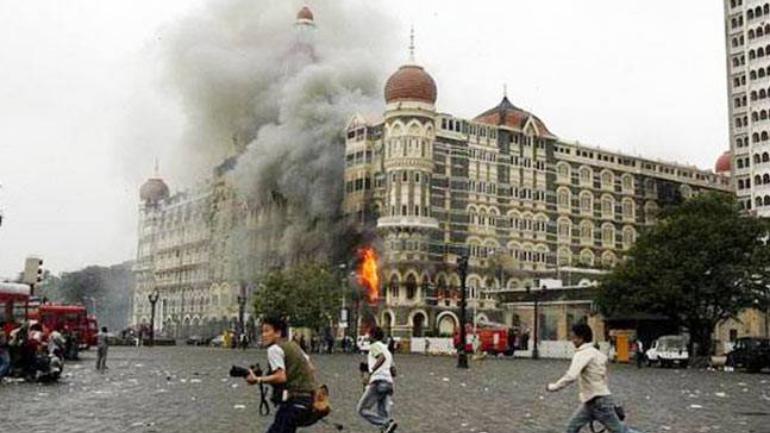
Vice President pays tribute to the martyrs of 26/11 Mumbai terror attacks

The Vice President, Shri M. Venkaiah Naidu has paid tribute to the martyrs of 26/11 Mumbai terror attack. Remembering the martyrs of the terror attack he said –

“My tributes to all those who lost their lives in the dastardly Mumbai terror attack of 2008. We stand in solidarity with the bereaved families.

I salute the bravery and devotion of our security personnel who laid down their lives to protect the motherland. The nation shall forever remain grateful to their sacrifices.”

*****

The Qualities of a Change-Maker

Improving educational quality ends up being about change rather than tinkering with some elements. 

What then are the qualities of those involved in bringing about this change? 

Here are my guesses. As can be expected, this is a long wish-list! I need your help to identify which ones are really important. And suggestions, too, about how to generate these qualities in the people we work with.
A change-maker:
  1. is sharp, can quickly see what needs to be changed, and has effective ways of helping others see this too, but without getting into a conflict!
  2. can spot opportunities for introducing change
  3. does not have a sense of hierarchy; does not discriminate
  4. has a sense of humour, which gives her/him the ability to live with the difficulties and slow pace of change
  5. at the same time, s/he can take quick decisions and act fast if needed
  6. is aware that he may himself by a victim of the old ways of thinking and living; so is constantly examining himself and trying to improve himself
  7. can help a person see what is wrong without feeling bad or without that person feeling he is being disliked.
  8. has a sense of strategy – that is, of actions that will slowly, perhaps indirectly, bring about the change desired, in stages
  9. is honest and has the greatest accountability to herself, on behalf of those she works for
  10. is aware that there will be some conflicts, and has a plan and ability to deal with this; if necessary, generates conflict, though in a calibrated manner
  11. is aware that his role is that of enabling others to deliver rather than deliver on their behalf
  12. knows how long change takes, and does not give up
  13. Can work as a team member, and also get others to work as a team – for which, helps by:
  • Sharing goals

  • Sharing information

  • Recognizing, utilizing and balancing the strengths and weaknesses of the group

  • Ensuring recognition as a team


What kind of process would help develop these qualities? 
What kind of reflection, debate and conversation do you think is needed? 
And can it be done in the kind of time-frames we usually have?

How does an American pronounce Pallagoundenpalayam ?

The most unlikely of bedfellows can come together in the business world. Consider this rather unusual \”marriage\”.

The bride is the city of Detroit. We shouldn\’t be uncharitable to a bride, but the immediate words that come to mind when you mention Detroit are decay, dilapidated, joblessness,  decline, etc etc. Can any good news come out of Detroit these days ?
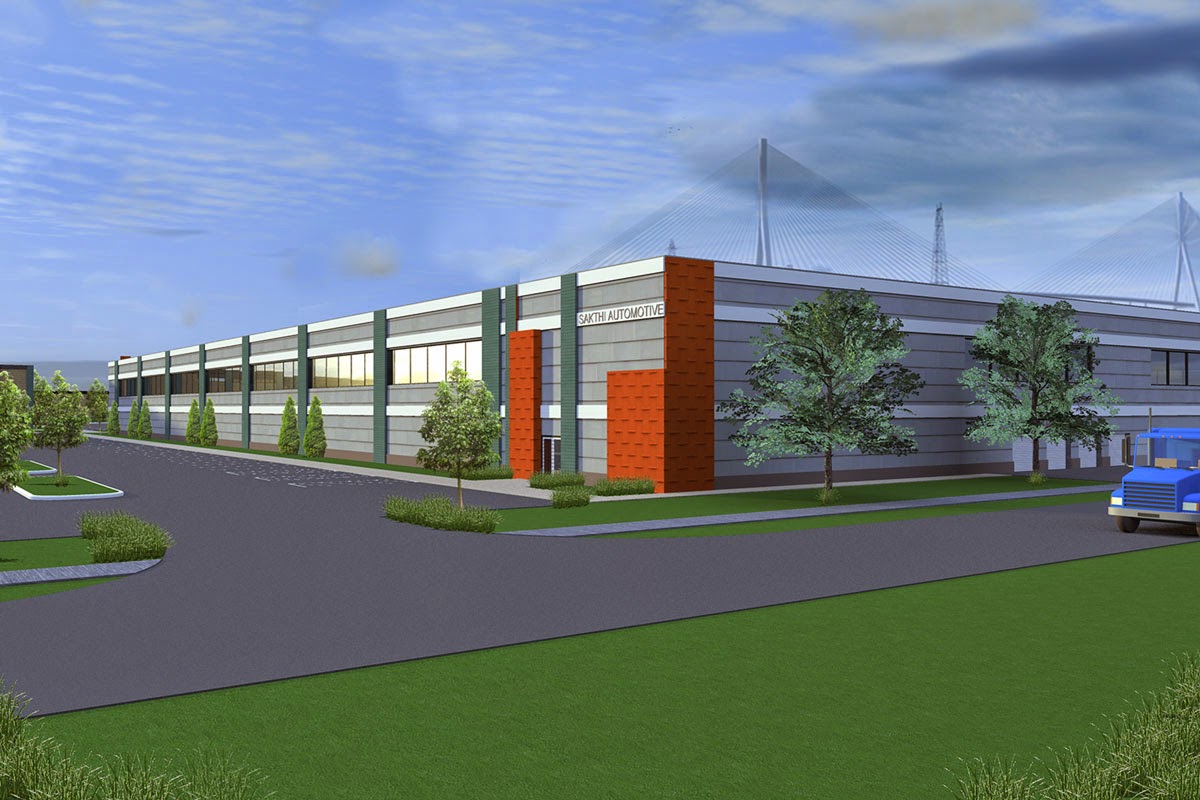
The groom is Sakthi Group. Sakthi who ? – even my Indian readers are entitled to ask. It\’s an unknown, small conglomerate from the South of India. They were essentially a sugar company, but have dipped their fingers into a bewildering array of businesses. They are still small by global standards – some $2 bn in size. One of their businesses is Automotive Components – a business in which Indian companies have excelled and are starting to lead the world. 
Sakthi announced a $ 31 m investment in a manufacturing facility in Detroit to make aluminium castings. GM and Ford are big customers for them and their logic for this investment is being close to customers.  Of course they have milked the incentives and subsidies – some $4 m.  But Sakthi has played the PR angle perfectly. The castings will substitute imports from China. The facility will create 650 jobs over 2 years. They have committed to hire at least 2 ex felons a month ( both a brilliant and a movingly human move). And the site they are developing is a historic school, now closed and left in ruins. Can there be a better feel good story ?
The sight of Michigan Governor Rick Snyder, waving a casting, as he welcomed Sakthi makes interesting viewing. And the Sakthi\’s chairman calling the marriage a Catholic marriage (meaning,  for the long term), is equally interesting Whether Sakthi will succeed in the most challenging location of all in the US remains to be seen. But you have to give it full marks for daring and boldness. It may fall flat on its face. But it will still have been an interesting experiment.
Meanwhile the American employees have to learn to pronounce Mukasi Pallagoundenpalayam ! That\’s where Sakthi\’s auto component headquarters is located in India. Even my good friend Sriram is going to struggle with that !

China\’s new lineup

Anybody who predicts what the next Standing Committee and the Politburo will be is almost certain to be wrong ! This is why most newspaper columnists are content with naming possible candidates and leaving it at that. This blogger does not care if he is proved wrong or even as a fool. There are no consequences to getting it dead wrong. So here\’s my prediction what\’s going to happen !
There are only two near certainties in this political game. One is that Xi Jinping will continue as Secretary of the Communist Party, Chairman of the Central Military Commission and as the President. The second is that Zhang Dejiang, Yu Zengsheng, Liu Yunshan and Zhang Gaoli will retire from the Standing Committee . Everything else is up for grabs.
Two of the key moves that is the subject of much speculation is what will happen to Li Keqiang the current Premier (most views are that he will stay on as Premier) and that of Wang Qishan (Xi\’s ally in the anti corruption drive, but who is crossing the informal retirement age of 68).
My guess is that Li Keqiang will be pushed out and Wang Qishan will replace him as the Premier. This is not considered likely today and if it happens, will be radical and  unexpected. If it indeed does happen, it will indicate that Xi has taken total control of the Party. My reasoning is that Li has been a disappointment as  Premier  with his management of the economy, his key job. He will also carry the can for the stock market troubles of 2015. Li belongs to the Youth League faction which has been systematically defanged. There is precedence in China of the Premier being replaced – Li Peng giving way to Zhu Rongji in 1998. Wang Qishan , as we have seen in earlier posts, is the de facto No 2 in China today.  He is an expert on the economy and if he were to be appointed Premier, he will be Xi\’s trusted lieutenant in the soft landing of the economy that is a big imperative for China. This will mean Xi is bending the retirement rule – something I am guessing he will do as a strawman for his own options 5 years from now when he will face this retirement rule himself.
I think Li Zhanshu is a shoo in for the Standing Committee. He is currently the Director of the General Office of the Party and is a right hand man of Xi.  Stacking the Standing Committee with his people will be a primary objective of Xi.
There is a good chance that Wang Yang, currently Vice Premier will be elevated to the Standing Committee. He is not a Xi loyalist  and was potentially a candidate for the Standing Committee  even the last time around. He is however efficient and strong and has quelled his reformer (read political) instincts. He has kept his head low over the last five years and for sheer ability is likely to rise.
Another likely name is Wang Huning. He is currently the head of the central policy research office. A  non controversial choice who doesn\’t belong to any faction. A theoretician whom Xi seems to rely on and is often seen on Xi\’s overseas trips as an important adviser.
If Xi is in total control of the Party and has not needed to cut any deals, then this is the likely Standing Committee – cut down to five members . Xi Jinping, Wang Qishan, Li Zhanshu, Wang Yang and Wang Huning.
If Xi however decides to stay with a seven member standing committee, then the two additional names, would be as my guess, Zhao Leji and Han Zheng. Both are \”senior\” but not powerful and therefore likely to simply make up the numbers and duly nod their heads to anything Xi says.
If my prediction is even 75% right, then it is clear that Xi is all powerful. None of these members can be a potential successor to Xi and it will also indicate that Xi is preparing to stay on after 2022 as he hasn\’t groomed a successor unlike what his predecessors Jiang Zemin and Hu Jintao did.
 Just as important as who gets in, is who doesn\’t get in. The disappointed persons would be
– Li Keqiang, the current Premier. He would be the biggest casualty if he were to fall. If he doesn\’t get dropped, Xi is just being cautious not to make too many changes. Li\’s power will continue to wane and he will, at best be a bureaucrat continuing to run the economy. Real decisions will  made by Xi.
– Hu Chunhua, the current party chief of Guangdong. He is of the next generation and had been touted as a potential successor to Xi even five years ago. He has recently been making noises pledging loyalty to Xi.  His elevation to the Standing Committee will mean he is the clear front runner next time around. His non inclusion will be a strong signal that Xi intends to stay on even after 2022.
– Chen Min\’er, current party chief of Chongqing. He was just brought in there to replace the disgraced Sun Zhengcai, a potential successor to Xi who fell in a power struggle. Chen is a staunch Xi loyalist. Its unlikely that he would be nominated, but if he were, it would be a clear signal that he would take over from Xi at least nominally in 2022, while Xi holds real power from the backroom.
A team like the one I have predicted will mean the following for China
– Xi Jinping is all powerful. He will start to acquire Mao like cult status. It is only hoped that he wouldn\’t unleash horrors on the country as Mao did.
– The Party will become even more ruthless in suppressing dissent. Personal freedoms will be even more curtailed and censorship will worsen.
– The economy will be managed efficiently. Economic troubles will come but they will be managed as best as could be.
– On foreign policy China will become increasingly belligerent and muscular.  They will be difficult to deal with diplomatically and might pick up fights with other countries. The current US administration will constantly lose on anything they pick up with China.
– The anti corruption drive and the defanging of political opponents will intensify. Xi might however face a challenge when Jiang Zemin dies. Major political activity tends to happen when somebody important dies.  The two major upheavals in China happened in 1976 after Zhou Enlai died and more famously in 1989 when Hu Yaobang died which led to the Tiananmen incidents. Jiang is nowhere near as liked as Zhou or Hu were, but it may be a trigger for old timers and those who had lost out in the Xi era to maybe flex their muscles.
– Xi will stay on post 2022 and will be the main power for at least another decade. He will install one of his men as the General Secretary, but will stay on as the Chairman of the CMC and wield real power. He may even be appointed Chairman of the Party, a post that was abolished after Mao.
How wrong I am would be revealed in the days after October 18th when the line of 5 or 7, which I alluded to in the first sentence of this series of posts will walk in and be introduced.  Even if I am 50% right, I will lay claim to being a \”Zhōng guó tōng\” (China expert) !
Enough of politics. This blog will go back to plodding on business and economic matters. It will return briefly to China and politics when the actual line up is announced in end October.

China\’s new lineup

Anybody who predicts what the next Standing Committee and the Politburo will be is almost certain to be wrong ! This is why most newspaper columnists are content with naming possible candidates and leaving it at that. This blogger does not care if he is proved wrong or even as a fool. There are no consequences to getting it dead wrong. So here\’s my prediction what\’s going to happen !
There are only two near certainties in this political game. One is that Xi Jinping will continue as Secretary of the Communist Party, Chairman of the Central Military Commission and as the President. The second is that Zhang Dejiang, Yu Zengsheng, Liu Yunshan and Zhang Gaoli will retire from the Standing Committee . Everything else is up for grabs.
Two of the key moves that is the subject of much speculation is what will happen to Li Keqiang the current Premier (most views are that he will stay on as Premier) and that of Wang Qishan (Xi\’s ally in the anti corruption drive, but who is crossing the informal retirement age of 68).
My guess is that Li Keqiang will be pushed out and Wang Qishan will replace him as the Premier. This is not considered likely today and if it happens, will be radical and  unexpected. If it indeed does happen, it will indicate that Xi has taken total control of the Party. My reasoning is that Li has been a disappointment as  Premier  with his management of the economy, his key job. He will also carry the can for the stock market troubles of 2015. Li belongs to the Youth League faction which has been systematically defanged. There is precedence in China of the Premier being replaced – Li Peng giving way to Zhu Rongji in 1998. Wang Qishan , as we have seen in earlier posts, is the de facto No 2 in China today.  He is an expert on the economy and if he were to be appointed Premier, he will be Xi\’s trusted lieutenant in the soft landing of the economy that is a big imperative for China. This will mean Xi is bending the retirement rule – something I am guessing he will do as a strawman for his own options 5 years from now when he will face this retirement rule himself.
I think Li Zhanshu is a shoo in for the Standing Committee. He is currently the Director of the General Office of the Party and is a right hand man of Xi.  Stacking the Standing Committee with his people will be a primary objective of Xi.
There is a good chance that Wang Yang, currently Vice Premier will be elevated to the Standing Committee. He is not a Xi loyalist  and was potentially a candidate for the Standing Committee  even the last time around. He is however efficient and strong and has quelled his reformer (read political) instincts. He has kept his head low over the last five years and for sheer ability is likely to rise.
Another likely name is Wang Huning. He is currently the head of the central policy research office. A  non controversial choice who doesn\’t belong to any faction. A theoretician whom Xi seems to rely on and is often seen on Xi\’s overseas trips as an important adviser.
If Xi is in total control of the Party and has not needed to cut any deals, then this is the likely Standing Committee – cut down to five members . Xi Jinping, Wang Qishan, Li Zhanshu, Wang Yang and Wang Huning.
If Xi however decides to stay with a seven member standing committee, then the two additional names, would be as my guess, Zhao Leji and Han Zheng. Both are \”senior\” but not powerful and therefore likely to simply make up the numbers and duly nod their heads to anything Xi says.
If my prediction is even 75% right, then it is clear that Xi is all powerful. None of these members can be a potential successor to Xi and it will also indicate that Xi is preparing to stay on after 2022 as he hasn\’t groomed a successor unlike what his predecessors Jiang Zemin and Hu Jintao did.
 Just as important as who gets in, is who doesn\’t get in. The disappointed persons would be
– Li Keqiang, the current Premier. He would be the biggest casualty if he were to fall. If he doesn\’t get dropped, Xi is just being cautious not to make too many changes. Li\’s power will continue to wane and he will, at best be a bureaucrat continuing to run the economy. Real decisions will  made by Xi.
– Hu Chunhua, the current party chief of Guangdong. He is of the next generation and had been touted as a potential successor to Xi even five years ago. He has recently been making noises pledging loyalty to Xi.  His elevation to the Standing Committee will mean he is the clear front runner next time around. His non inclusion will be a strong signal that Xi intends to stay on even after 2022.
– Chen Min\’er, current party chief of Chongqing. He was just brought in there to replace the disgraced Sun Zhengcai, a potential successor to Xi who fell in a power struggle. Chen is a staunch Xi loyalist. Its unlikely that he would be nominated, but if he were, it would be a clear signal that he would take over from Xi at least nominally in 2022, while Xi holds real power from the backroom.
A team like the one I have predicted will mean the following for China
– Xi Jinping is all powerful. He will start to acquire Mao like cult status. It is only hoped that he wouldn\’t unleash horrors on the country as Mao did.
– The Party will become even more ruthless in suppressing dissent. Personal freedoms will be even more curtailed and censorship will worsen.
– The economy will be managed efficiently. Economic troubles will come but they will be managed as best as could be.
– On foreign policy China will become increasingly belligerent and muscular.  They will be difficult to deal with diplomatically and might pick up fights with other countries. The current US administration will constantly lose on anything they pick up with China.
– The anti corruption drive and the defanging of political opponents will intensify. Xi might however face a challenge when Jiang Zemin dies. Major political activity tends to happen when somebody important dies.  The two major upheavals in China happened in 1976 after Zhou Enlai died and more famously in 1989 when Hu Yaobang died which led to the Tiananmen incidents. Jiang is nowhere near as liked as Zhou or Hu were, but it may be a trigger for old timers and those who had lost out in the Xi era to maybe flex their muscles.
– Xi will stay on post 2022 and will be the main power for at least another decade. He will install one of his men as the General Secretary, but will stay on as the Chairman of the CMC and wield real power. He may even be appointed Chairman of the Party, a post that was abolished after Mao.
How wrong I am would be revealed in the days after October 18th when the line of 5 or 7, which I alluded to in the first sentence of this series of posts will walk in and be introduced.  Even if I am 50% right, I will lay claim to being a \”Zhōng guó tōng\” (China expert) !
Enough of politics. This blog will go back to plodding on business and economic matters. It will return briefly to China and politics when the actual line up is announced in end October.