THE MAGNIFICENT FOLK PAINTINGS OF ARUNACHAL PRADESH

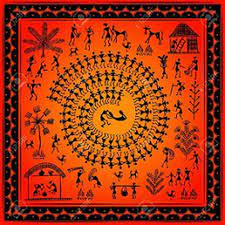
The ART and CRAFT of Arunachal Pradesh take their inspiration from the diverse cultures and traditions of the state. One finds a plethora of ethical richness when looking into the deep space, that is “The Land of Dawnlit Mountains” i.e. the ancient culture of Arunachal Pradesh.

Tanaka paintings are religious scroll paintings that depict Buddha and his preaching. These paintings are also an important tool to teach Buddhism primarily displayed in monasteries. The display of Tangkha signifies a great dedication towards religion and self-reliance to achieve salvation. The painting is prevalent in the Buddhist-dominated regions of Tawang, West kameng, Upper Siang Districts of Arunachal Pradesh.’

The women of Arunachal Pradesh excel in weaving handlooms and making handcrafts.

Thangka serves as important teaching tools depicting the life of the Buddha, various influential lamas and other deities and bodhisattvas. One subject is The Wheel of Life (Bhavachakra), which is a visual representation of the Abhidharma teachings (Art of Enlightenment).

The paintings describe historic events related to Lamas. Devotional images act as the centerpiece during a ritual or ceremony and are often used as mediums through which one can offer prayers or make requests.

  • Because the art is explicitly traditional, all symbols and allusions must be in accordance with strict guidelines laid out in Buddhist scripture. The artist must be properly trained and have sufficient religious understanding, knowledge, and background to create an accurate and appropriate Thangka.
  • Some common symbols found in these paintings are :
  • Treasure Vase
  • Conch Shell
  • Victory Banner
  • Lotus Flower
  • Parasol
  • Varada Mudra
  • Vitarka Mudra

The rising population of India as an asset

With the continuous rise in the young Indian population, India is growing younger. There is a “demographic dividend” that needs to be exploited. As per the findings of the ‘State of the Urban Youth, India 2012: Employment, Livelihoods, Skills,’ a report published by IRIS Knowledge Foundation in collaboration with UN-HABITAT, every third person in an Indian city today is a youth. In about seven years, the median individual age in India will be 29 years, very likely a city-dweller, making it the youngest country in the world.

No discussion in India about the environment, health, employment, and various other issues can be carried away by skipping the burning issue of the rising population. With a 1.2 Billion population (17% of the entire world population) India is the second most populated country after the People’s Republic of China. However, set to be utilized in a channelized manner Indian Population will prove to be a valuable asset rather than a liability.

Rising population and asset, how?

The youth segment of India’s population is growing rapidly and is projected to continue to do so for the next 30 years. This demographic dividend has the potential to inject new dynamism into the country’s flagging economy if the state acts quickly on health, education, and employment. Right now more than 50% of India’s population is below 25 which can be tapped for all-around socio-economic growth of the nation as the young workforce has more innovative minds.

Except for China, no country in the world has such big manpower as India has which is indeed a blessing for the country. Such a huge and skilled manpower coupled with resources needs to be regarded as an asset. The huge population offers a bigger pool of human resources and hence a bigger consumer market. Our population will remain our strength only when we have the power, strength, and will to feed the people, provide them clothing and shelter, good education, health care, and jobs. In the past decade, India has emerged as a major back office to the world with global firms outsourcing work to take advantage of the country’s less expensive, educated, young English-speaking workforce. India produces 2.5 million IT, engineering and life sciences graduates a year, besides about 650,000 postgraduates in science and IT-related subjects. The IT sector alone employs about 850,000 graduates and professionals while the pharmaceutical and biotechnology sectors are snapping up others.

Near about 402 million Indians are aged between 15 and 59 – the working-age – and this number is expected to grow to 820 million by 2020.

For the all-round progress of a large nation, its entire population must contribute significantly to diverse areas and sectors of the economy. A talented and hard-working population can easily emerge as a source of national development. A country like India can use vast natural resources coupled with huge manpower to make the country progress in the right direction. In India, there are more workers than dependents, which is good for the development of any economy.

How to channelize the continuously rising population?

No capital in the world can substitute human capital, the Indian state and the government need to properly utilize its skilled and talented population. There is a need for an increase in employment opportunities in the rural areas to make productive use of people’s skills. We cannot talk about the rising population without taking into account the problems of corruption, poverty, and illiteracy which go hand in hand and have been creating hurdles in the country’s progress as a whole. There is a need for the implementation of the government schemes like the National Rural Employment Guarantee Scheme in the rural areas at a massive scale so that more and more people can join the national mainstream. There is no doubt that India has one of the most highly skilled populations and these skills need to be used for employment generation.

There is a need to make the rural population of the country more and more literate and bring them out of poverty. The schools in the villages need to be made more developed with the curriculum and education system matching with that of the schools in the cities. The schemes like Mid Day meal need to be implemented properly and honestly and the education system in the rural areas should be made more attractive so that the rural children are attracted towards studies.  The public schemes targeting the poor need to be implemented properly and honestly because after that it would be easy to bring a large chunk of the country’s population into the national mainstream so that they can play a decisive role in nation-building. There is a need for various job schemes in the interior regions where there is not much industrial activity.

Conclusion

The advantages of such a large population can be had for the making the country more developed and to achieve these goal policies must be made to harness the potential of country’s youth population, which will certainly help in galloping the economy ahead in the double digits.  A huge population creates demand which is also a major indicator of the economic growth of a country. The need is to provide the right share of employment opportunities, education, a proper meal, and a corruption-free environment.

Science or Religion

It is a well-established fact among the human race that “Some things can only be emotionally and mentally felt, rather than being expressed” Catering to the above thought, I would like to open my side of the debate by arguing, that we as humans express our feelings or rather what we believe in, for the benefit of our companions and relatives. Our beliefs are rather stored in our minds and are sometimes difficult to be given a ” DEFINITION”. But, in no way does that signify how strong our emotions are, or the stability of our mindset. Let’s take the most famous example here, Science vs Religion( GOD), or rather how we know it – ILLUMINATI. Some argue, that God does not exist, it is just a notion of our minds that has or can never be clinically proven. I would reply to that with a “Science” fact- If the earth’s gravity were less than 0.000000000001% of what it is right now, our planet would collapse. And if it was increased by the same value, the Earth would explode. There was obviously something that made our planet so perfect that we can survive on it. I am not arguing that there is any specific God, rather, I say that there is some unnatural power that drives our lives every day. And this power is what most people call ” God”. But can we define it? No, we cannot. But do we believe in it? Of course, we do. And there are some cases, where people know that “GOD” does not exist, but still pray to him in the form of meditation, to achieve mental stability of the mind.

Distinguishing science from non-science or religion is generally an easy matter, as the two rarely seem to make claims to be scientific. When they do make claims of being scientific, this becomes known as pseudoscience. Even so, it is useful to recognize the distinctions, as science doesn’t always clearly do so. For the boundary between science and religion, a majority of the cases can be separated well through the verificationistic view. While empirical matters are primarily dealt with science, spiritual matters are primarily dealt with religion because they cannot be objectively and empirically observed.

When distinguishing science from non-science, it’s easiest to start by defining the fundamentals that make up what science is, and then define all of the fields that fall outside this definition as non-science. At it core, science is a system of acquiring knowledge about the physical world through objective experimentation and observation. Therefore, fields that do not involve the acquisition of knowledge, such as art and business, can be classified as being non-science. Moreover, mathematics is a field considered to be non-science because doesn’t acquire knowledge about the physical world. The field of engineering proves to be an interesting case. While engineers practically apply scientific knowledge, the field as a whole is non-scientific.

Reservation Policy of India

Reservation is a controversial and highly debatable topic in India. Furthermore, the main aim behind the reservation was the empowerment of the weaker sections of society. Reservation in its essence is a type of quota-based affirmative action. Reservation is a controversial and highly debatable topic in India. Furthermore, the main aim behind the reservation was the empowerment of the weaker sections of society. Reservation in its essence is a type of quota-based affirmative action. The constitution of India adopts the unique feature of reservation.

In the Hindu religion, the caste system divides people into four categories or varnas – Brahmins, Kshatriyas, Vaishyas, and the Shudras. According to Hindu beliefs, these four varnas originated from Brahma, the creator of the Universe, Vedas, and people. The caste system is considered the distorted form of the Varna system. In the hierarchy of the caste system, Brahmins were on the top. They were supposed to originate from the head of Brahma.

The idea of reservation policy in India was originally developed by William Hunter and Jyotirao Phule in the year 1882. The basic principle behind the reservation was the Caste System and the malpractice of untouchability in India. But the prevailing reservation system in today’s India was introduced in 1933 by British Prime Minister Ramsay Macdonald in the form of the ‘Communal Award.

Under the provisions of the communal award, there were separate electorates for Europeans, Anglo-Indians, Indian Christians, Muslims, Sikhs, and the Dalits. But on 24th September 1932 when the Poona Pact agreement between Mahatma Gandhi and Dr. Ambedkar was signed, it was decided that for Hindus there would be a single elective with certain reservations for the depressed classes in it.

When India got independence from British rule in 1947, the country was divided into two parts India and Pakistan. With the partition, much of the Muslim population migrated to Pakistan and Hinduism became the most prominent religion in India. So, when the constituent assembly was framing the Constitution of India, social discrimination based on the case system was a big hindrance to equality in society. So, the provision of reservation for the socially backward classes was introduced in the Constitution of India. Reservations were initially introduced for a period of 10 years and only for SCs and STs, but it kept on extending with several changes in it.

Reservation in Educational Institutions


In the year 2005, the government introduced the 93rd constitutional amendment act. With the enactment of the act, Article 15 (5) was inserted in the constitution of India. Article 15(5) provides that:
Nothing in this article or in sub-clause (g) of clause (1) of Article 19 shall prevent the State from making any special provision, by law, for the advancement of any socially and educationally backward classes of citizens or for the Scheduled Castes or the Scheduled Tribes in so far as such special provisions relate to their admission to educational institutions including private educational institutions, whether aided or unaided by the State, other than the minority educational institutions referred to in clause (1) of Article 30.

Reservation in Promotion


Reservation for SCs and STs in matters of promotion in public employment was a matter of continuous conflict between the parliament and Apex Court. In 1992, in the case of Indra Sawhney v. Union of India,[iii] the Supreme Court held that Article 16(4) does not allow the reservation in promotion.

Against it, the parliament came with the 77th Constitutional Amendment Act, 1995, and inserted a new clause (4A) under Article 16, which empowers the state to make the provisions of reservation in the matter of promotion to SCs and STs in public employment.

Reservation to Economically Weaker Section


In the 103rd Constitutional Amendment Act, 2019 the new reservation was introduced by the legislature. This amendment introduced a 10% reservation for the economically weaker section of the society popularly known as EWS. It provides reservation to economically weaker sections (EWS) in public employment as well as admission in public and private educational institutions.

Before this amendment, there was a ceiling limit of 50% on reservations. In which, 22.5% of available seats were reserved for Scheduled Caste (SC) and Scheduled Tribe (ST) (7.5% for STs, 15% for SCs). In addition to this 27% of seats, were reservation was given to OBCs. The total reservation provided before the 103rd constitutional amendment was 49.5%, which was in conformity with the rule of 50% ceiling limit on the reservation.

Latest update on reservation

The Supreme Court on Friday is considering widening the ambit of its examination of a Haryana law granting 75% quota for locals in the private sector, to similar laws said to be prevalent in States such as Andhra Pradesh and Jharkhand.

A Bench led by Justice L. Nageswara Rao asked the Haryana government to submit details of cases on domicile quota laws pending in the High Courts of Andhra Pradesh and Jharkhand.


MAKE IN INDIA

Make in India is a campaign launched by the PM, Narendra Modi, which facilitates all the big business investors worldwide who want to do business in India. This program was launched in 2014 on the 25th of September by the PM at the Vigyan Bhawan in New Delhi. It is a big step taken by the government of India to reduce the level of unemployment faced by the youths of the country. This campaign was launched a day after the Mars mission when PM was to go on his first visit to the USA as prime minister of India.

The aim of launching this campaign in India is to make India a world-level manufacturing powerhouse which will definitely help in solving the biggest issue of the Indian economy. This initiative was launched with new deals for foreign investors successfully in New Delhi with the top industrialists of India including Mukesh Ambani (Reliance Industries chairman), Azim Premji (Wipro chairman), etc. This initiative further aims at creating a favorable environment for investment, modern infrastructure, opening up new sectors for foreign investment, and establishing a partnership between government and industry through a broader outlook. 

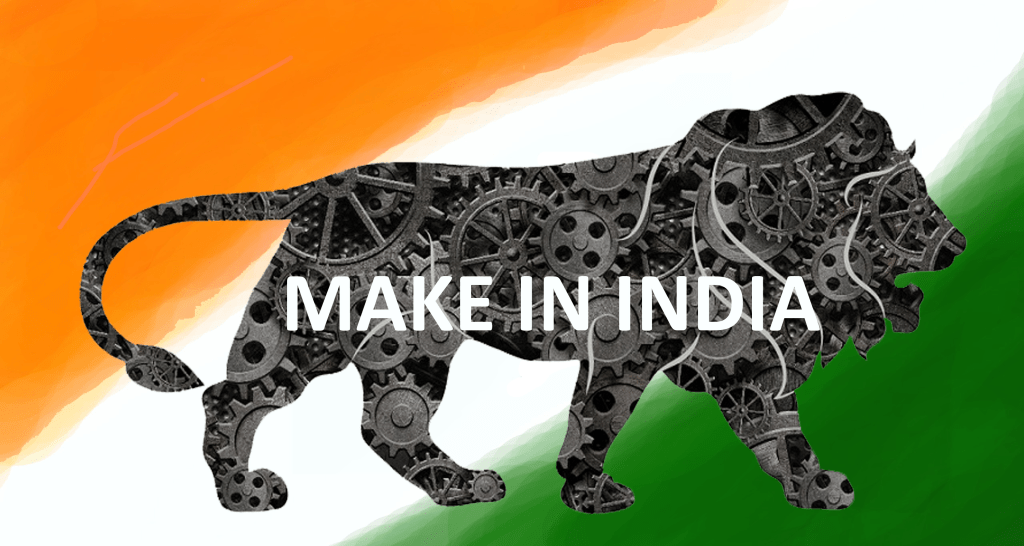
The symbol of this initiative is a giant lion having many wheels. This indicates peaceful progress and way to the vibrant future of the country. A giant walking lion with many wheels represents courage, strength, tenacity, and wisdom.

Guidelines and Policy for Make in India

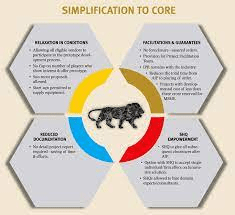
The government laid new Guidelines to start the mission successfully. The main objective of the Guidelines was to sanction the projects that are approved by state governments. Some Guidelines are like:

  1. Reduce paperwork required for establishing companies.
  2. Minimize the time required for government approvals.
  3. Abolish the Corporate Social Responsibility (CSR) from the project cost. 

Policies have been made for convenient transfer of funds while switching jobs anywhere in the country. A cell was dedicated to responding to the queries for business entities through a web portal. 

Pollution-The Evil that walks the Earth

Pollution changes a medium such as air, water, or soil in a way that can make it harmful to people or nature. Different types of pollutants include chemicals, dust, noise, and radiation. The word pollution comes from the Latin ‘polluere’ that simply means contamination. Hence, in layman terms, pollution is something that contaminates the environment. The presence of harmful substances in the air, land, and water, which can harm living beings and the environment is pollution. Referring to harmful gases, fluid, or other pernicious matter that are released or introduced in the natural environment.

Pollution and its causes

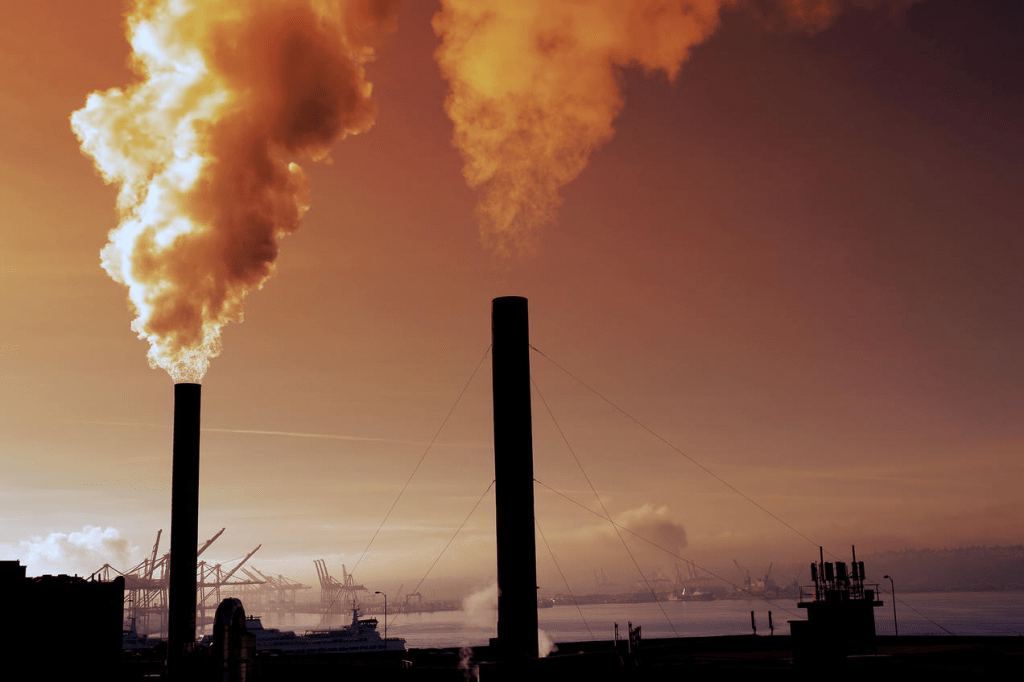
Inhaling poisonous air is as hazardous as smoking. It is not only the humans who are affected by this polluted environment but also the animals. Air is filled with highly toxic gases. These dangerous gases in the environment are released by the power industries that burn fossil fuels, industries that dispose of waste in the water, farmers using pesticides, high usage of artificial lights and loud sounds, etc. Each of these leads to the generation of the life-threatening cause – pollution.
Any use of natural resources at a rate higher than nature’s capacity to restore itself can result in pollution of air, water, and land. Other than human activities, there are a few periodic natural cycles that also result in the release of dangerous stuff. Natural activities other than human ones like volcanic eruptions and dust wildfires, etc also result in the creation of pollution.

Globalization is another major cause of pollution. Globalization has become an effective facilitator of environmental degradation.

Types of pollution

Pollution can be categorized as follows-

•  Air Pollution: It is the contamination of the natural air by mixing it with different pollutants such as harmful fumes and chemicals. This type of contamination can be caused by burning material or by gases emitted by vehicles or harmful fumes emitted as a by-product of industries. Global warming is one of the biggest side effects of air pollution as per the experts.

• Water Pollution: It is the contamination of the water on the planet Earth. It includes water contamination by pollutants such as bacterial, chemical, and particulate that reduces the purity of the water. Oil seepage, as well as littering, is one of the most common forms of pollution. It mainly occurs in lakes, oceans, rivers, and even underground reservoirs. 

•  Soil Pollution: It is also known as land pollution. It is the contamination of the soil or the land that prevents the growth of natural life. It includes land usage for irrigation, wildlife as well as habitation. The very common causes of soil pollution include hazardous wastage, mining as well as littering, non-sustainable farming practice, seepage into the soil, etc.  

• Noise Pollution: It is the loud noises that are fashioned by human activities that disturb the standard of living in the affected area. It can shoot from things such as railroads, traffic, loud music, concerts, airplanes, fireworks, etc. This can even result in permanent or temporary loss of hearing as well as disturbances to wildlife.

• Radioactive Pollution:- This is one of the most dangerous forms of pollution. It is enormously harmful and can even result in death. Radioactive pollution results in the pollution of the air and land with radioactive poisoning. Leakages or accidents at nuclear power plants, as well as from improper disposal of nuclear waste are also reasons for this pollution. This pollution results in birth defects, cancer, deteriorating health, and even death.

Living a stress-free life

Stress can have a very negative impact on a very positive life. Stress has many forms and many different ways of hitting one’s life hard. Luckily, there are steps to leading a healthy, stress-free life. Some steps include exercising regularly, adopting hobbies, stopping smoking, reducing caffeine intake, eating healthy, getting enough rest, learning relaxation techniques.


We can overcome anxiety and insecurity by getting involved in some practical and beneficial activities. Cultivating hobbies, spending time with family, and going on friendly trips helps us love a balanced and healthy life. Reading good books is equivalent to having good friends with great insight. We can try meditation by devising ways to the welfare of mankind. Some other factors include being positive and maintaining positivity all around us, being calm and peaceful, avoiding ugly fights and negative people, etc, Some sort of sport, vacations, indoor games, and healthy eating all sum up to making life stress-free and healthy.


Stress is the feeling of being mentally tired or it refers to the mental tiredness of an individual. When we feel exhausted, we feel stressed. When we have so much in mind, we feel stressed. When we overthink situations and many many things, we feel stressed out.


Despite knowing that stress can have many negative effects on our life, people still prefer denying that this could be a mental disorder. A stressful life can be a hindrance to our efficiency and ability to live a healthy life. Being stressed may cause us to fall sick often, feel grumpy, and sometimes irritated too. We can eliminate stress and lead a stress-free lifestyle by waking up early, following a routine, creating a to-do list, meditating, exercising, avoiding procrastination, and taking good care of ourselves.

Budget 2022

A country’s financial budget is a systematic representation of how it operates and is a defining factor of its reputation. The Indian Constitution does not use the word budget, rather it is stated as the “Annual Financial Statement”. This first Union Budget of British India was presented on 7th April 1860 by Sir James Nilson, and that of independent India, on 26th November 1947 by R.K. Shanmukhan Chetty.

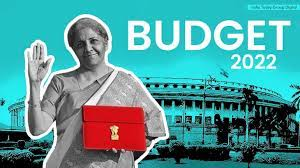
This year on 1st February, Finance Minister Nirmala Sitharaman delivered her 4th annual budget and the 10th under the Modi government. Before we get into the intrinsic details of this year’s budget, it is important to understand from where the Indian government attains most of its income.

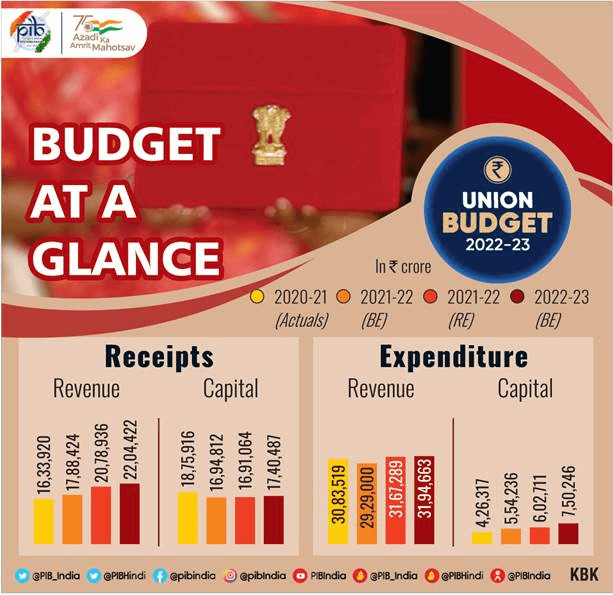
35% of India’s reserves come from borrowing and other liabilities. GST, Income Tax, and Corporation Tax constitute 16%,15% and 15% respectively. 7% comes from Union excise duties and another 5% from Customs and Non-Tax Revenue. Thus a majority of India’s resources come from the taxpayers and loan lenders only.

One of the most important points mentioned was the prediction of the Indian economy’s estimated growth rate, set at 9.2%. This is the highest growth rate for any recovering economy, as confirmed by the International Monetary Fund(IMF). The backbone of this year’s budget was the auspiciousness of India entering Amrit Kaal, that is in 25 years, we will be celebrating 100 years of our Independence. With this in mind, the Finance Minister set out certain milestones we hope to achieve as a country before 2047.

The budget’s index is comprised of four important areas-PM GatisShakti, Inclusive Development, Productivity, and Financing of Investments.

On India’s 75th Independence Day, Prime Minister Narendra Modi announced that the Centre will launch ‘PM Gati Shakti Master Plan’, a Rs. 100 lakh-crore project for developing ‘holistic infrastructure’.PM Modi said that the Gati Shakti plan will help raise the global profile of local manufacturers and help them compete with their counterparts worldwide. It also raises possibilities of new future economic zones.

The prime minister also said that India needs to increase both manufacturing and exports. Every product that is sold globally from India is attached to India, which is why I am saying that every product of yours is a brand ambassador for India, he said.

A number of new schemes were also introduced, such as Kisan Drones, Ken Betwa Project, ECLGS, GTMSE, RAMP, DESH-Stake-Portal, DrAAS, “One Class One TV”, Saksham Anganwadi, Har Gar, Nal se Jal, etc.

But the most crucial part of a budget is its Fiscal Management. A few important pointers are as follows:

  • Proposed fiscal deficit of 4.5% of GDP by 2025/26.
  • Projected fiscal deficit of 6.4% of GDP in 2022/23.
  • Revised fiscal deficit for 2021/22 at 6.9% of GDP.
  • 50-year interest-free loans over and above normal borrowing allowed for states.

Overall, even though this year a lot of improvements were seen, including the exemplary step towards mental health advocation, the middle class was left unimpressed. With no reduction in taxes and an extra 30% tax on the new cryptocurrency policies, the average man was yet again disappointed.

The story of Air India

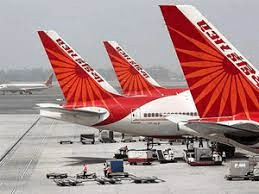
On 15th October 1932 Jehangir Ratanji Dadabhoy Tata, a prominent figure in Indian commerce, completed one of the most historical flights of Indian aviation, from Karachi to Bombay thus laying the foundation stone for Tata Air Services. What would later become of this venture, couldn’t possibly be foreseen by the founder himself. From Tata Air Services to Tata Airlines up until Air India, the story of this majestic airline is a long road full of twists and turns.
Tata Airlines was regarded as one of the most prosperous airlines in the world, gaining recognition from the United States and London to being an inspiration for Singapore Airlines as well. The experience, as described by travelers was one to remember. From an exquisite ambiance and top-notch cuisine to decorations of artworks, this airline was coined the “Palace in the sky”.


So what went wrong? Things took an unsettling turn when in 1953, the Government of India decided to nationalize the corporation. J.R.D. Tata was disheartened. Being an avid aviator himself, he was being asked to give up his dream, the company he founded. But, be as it may, Tata continued to be the Chairman of the airlines with little or no say in important matters. With the politicians and less experienced managers sitting at the top, the company’s downfall could have been easily predicted.


Air India went on to incur huge amounts of debts. In 2007 alone, the company bore a massive Rs. 541 crore loss, almost double of what another airline, Indian Airlines suffered. Since both of these companies were under the control of the government, to compensate for these losses it was decided to merge them into one, which would be known as National Aviation Co. of India Ltd.Even so, the government suffered major drawbacks, and could not reimburse its investors. Before this merger, the downfall of the airlines was already imminent. The poor leadership was unable to make wise decisions, and with unnecessary expenses and incompetency to manage the situation, the company suffered a total loss of 770 billion dollars.
This situation was finally put to bed by the government when it decided to privatize Air India in 2017. Over a long process of bidding and legal processes, finally, on 8th October 2021, the airline was sold to its original owner, the Tata group for Rs. 180 billion. Now we wait, and let the airline unfurl its fate. Will it emerge once again on the top, or will it keep scraping the bottom of the barrel? Only time will tell.

WHAT IF TECHNOLOGY’S ACTUALLY MAKING US MORE HUMANE

Some say, that it is Artificial Intelligence that will cause the next Big Bang, vanquishing the entire human race. Another pose is that technology has resulted in our mind losing its power to think. Well, let’s ask ourselves a question-“What defines a human?”


A human is defined through various characteristics, out of which the principle ones include emotional interaction and social well-being. Technology’s aim was never to transfigure the way humans think or perceive their surroundings. It slightly altered our emotions to a more positive outlook. A mobile phone is nothing but a simple way to contact our kith and kin living away from us. A social media app is nothing but a path to bliss through socialization with the world. The feature of face-time is the new cure to depression and anxiety.

The truth is that technological superiority can never surrogate humans because it is us humans only, who put forward these advancements.

Machinery and computers have only amended our lifestyle for the better. Let’s take television as an example. Would we ever have known about starving kids in Africa, had it not been for the television. But now that we do, we are compassionate towards them and are funding their nutrition. Technology can be used not just for interaction, but for improving our day-to-day lives. Fitness recorders encourage us to get up and engage in physical exercises, and still, we hear about indolence due to technology. A simple web search can help us transform our diet and thus become more productive.

Thus the role that technology has played so far was for the betterment of humanity, and the persistence of humanity.

UNPRECEDENTED TIMES REQUIRE UNPRECEDENTED MEASURES

“Vulnerability is not a weakness, it is our greatest measure of courage.”
What role does this impactful quote by Brene Brown play in our life? Arduous times have a tendency to shake the psychological well-being of any mortal. Sometimes, during unprecedented times, we are forced to take steps that were never dreamt of, by us.
Since the Big Bang, mankind’s path to advancement has been full of thorns. The Spanish Flu, the 1931 China floods, the 9/11 attacks, and numerous life-threatening scenarios were faced by us.
But if during those times, we hadn’t taken the necessary steps and shown impeccable courage, we wouldn’t have had the opportunity to write essays like this. We have to deal with emergency situations or when besieged by sorrows and life-threatening situations, we feel pressed to come out of our comfort zone of normalcy.

The most considerate example in front of us is the current pandemic that has befallen the planet-“The COVID-19 Pandemic”. This worldwide disaster crippled the economy of most of the countries, disavowed more than half of the businesses and industries, and forced millions to migrate.
Then the question that comes into our mind is-“How to avert this biological calamity?”And the first answer that we take into account is “Unprecedented measures”. We needed to do something that might not have happened in decades before. We were forced to go into a worldwide lock-down. People couldn’t step out of their houses and were forced to confine themselves within four walls. Collaborations were arrow-struck, the aviation sector was totally destroyed, and worse was the case of unemployment.
This was not the time to be insensitive or remain aloof. We had to support our families as their pillars, and console the infected.
There were various steps taken up by the governments, to control the situation. A few major ones include business shutdowns, work-from-home situations, and an obligation towards the country by wearing N-95 masks.
These times required us to keep ourselves immaculate and avoid as much contact with others as possible.
Even though hardships come and go in everyone’s lives, when we introspect, we find that the courage to overcome the difficulty is on the other bank of the river. The bridge that we need to cross, is that of self-confidence.
One of the main reasons people fail to scrutinize a burdensome task is an apathy. A lack of interest tends the bearer to give up easily. Thus being ebullient is very important to take unprecedented measures during unprecedented times.
The Indian directorate introduced a number of schemes for containing the economic fallout. An economic relief package of ₹20 lakh crore was announced by the Prime Minister in support of the financial victims of the pandemic. Numerous farmers and unemployed were funded by the government. Under the Pradhan Mantri Yojna, a sum of ₹12,000 crores was donated by PM Narendra Modi, to the farmers. Under the Ujjwal scheme, the government decided to provide free LPG refills to around 8.3 crore poor women. Close to 6 crore farmers were benefitted during the lockdown, because of the ingenious steps taken up.
There were countless such initiatives taken up in our country and the world. But the significance of these is often missed by us. The spontaneous reaction to the spread of the virus is often missed by us. The virtual operating system of the countries is often missed by us.
Many would still condemn the lock-down, rebuke the improvised and extrapolated agencies and organizations of the world, because they are unaware of the fact that even soothsayers cannot tell if a pandemic would fall upon the planet within a few days.
Difficulties and struggles do not knock on your door. They don’t even wait for you to be ready to tackle them. But if the wit of a person or country is strong, none can stop them from becoming the “difficulty for the difficulty”.
If we scrutinize a catastrophe and its victims closely, we find that the optimistic have a better chance of reverting back to normalcy, than the pessimistic. This also proves, that the degree of impact of our reaction towards a crisis, “is directly proportional” to our attitude. Giving up is too easy, winning may also be too easy, but the most difficult part is standing up, after falling down. The most important part is about how we perceive the situation in front of us.
What most individuals fail to acknowledge, is that preparing for an unprecedented time in advance is not possible, because of the word ”unprecedented”. Sometimes we have to go with our gut or rely on involuntary actions.
Looking back, we realize that even history provides a lot of classic ethics about times when people were given a chance to show their heroism.
Japan suffered two atomic bomb attacks in 1945, and it was predicted that it would take a few hundred years for the country to come back to its normal state. But as we see now, it is the world’s second-largest developed economy. How could that be possible? It was the civilians in Japan who fought vigorously against all anomalies to make their country one of the finest technologies in the world.
Recent events like the “Black Lives Matter” movement highlight the need for these unexpected times and measures. When George Floyd was cumbered to death by a policeman, thousands took to the streets and protested for the lives of the black community. Was this ever expected to happen? NO, but it still resulted in all 4 officers (who were responsible) being taken into custody. Thus, the reaction of a unified mass can change a lot of things.
Accomplished pilots gain their reputation from storms and tempests. Our valor often increases in proportion to the hindrances imposed upon it. Nobody learns to drive without knocking off a few trash cans or ace an examination without making mistakes.
Thus-
“A winner is never actually the person who wins, but it’s the loser because he knows the true meaning of winning.”

Secularism

Introduction

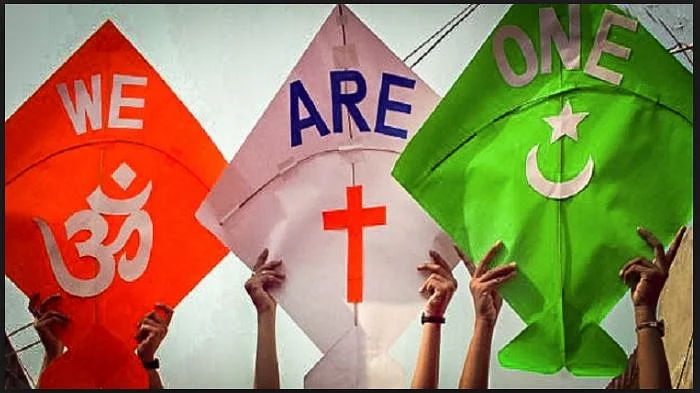
A country is divided not based on its geographical features, but its unique citizens. Even though the underlying principle of India’s success is “Unity in Diversity”, often these differences do not play well with ethnic communities. The intrusion of religion in politics can only yield unwelcoming outcomes. This is where secularism comes in, an ideology that clearly states” Civic affairs should not have any basis in religion”. In 1851, the British writer George Holyoake coined this term, in a quest to replace the aggravating word ‘Atheism’. The main objective of this ideology is to make appropriate decisions without harming the integrity of any religion. In lamen language, he did not want secularism to be misunderstood with discrimination. Not involving certain topics in a decision-making conference does not necessarily mean we deliberately excluded them or seek to prejudice them.

Types of secularism

Based on the intensity of secularism, it can be divided into two types-hard and soft. Hard secularism is a radical option, which aims to completely disavow any stance the topic takes in political decorum. It renders any form of religious knowledge illegitimate. On the other hand, soft secularism finds its roots in neutrality, tolerance, and liberalism. It argues that attaining the “absolute truth” is not possible without proper deliberation and tolerance of religious issues in civic issues.
Secularism is also divided into three different types based on its application. These are political secularism, philosophical secularism, and socio-cultural secularism. All three overlap and are related to each other, yet they exhibit divergent traits and embody discrete meanings.

Secularism in India

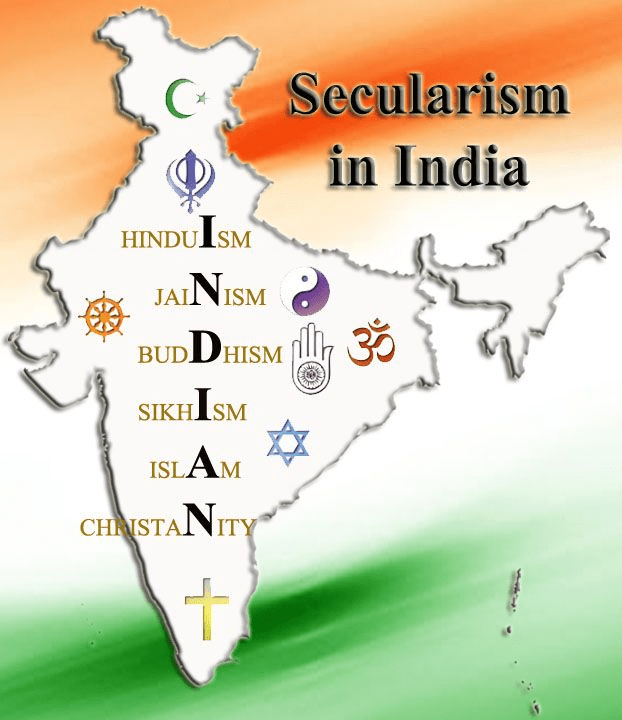
India is a multi-cultural and multi-ethnic society. From harboring Muslims, Christians, and Hindus to being the home of more than a hundred languages, our diversity is one that is marveled all over the world. Keeping in mind the conflicts of interest that might arrive with this heterogeneity, our leaders came up with an effective solution to keep the integrity of politics of this country intact. With the 42nd Amendment of the Constitution enacted in 1976, we declared ourselves a secular nation.
Secularism has always been an inspiration for modern India. We identify as a just nation that gives equal rights and opportunities to all its citizens despite their race, caste, or creed. But, the controversy surrounding Indian secularism has also had its share of attention. With many critics claiming that Indian secularism is “defrauded”, a good look at the positive changes bought about by this ideology might change the way they think about our nation.

One of the best examples of the success of the secularism amendment in India is Muslim Madrassas ( religious education schools) getting government funds. Or the fact that one of our own presidents, Dr. APJ Abdul Kalam, was a Muslim. Prime Minister Manmohan Singh was a Sikh, whilst the party leader Sonia Gandhi was a Christian(Born in Italy). Time after time we have witnessed different communities get their fair share of opportunities, and produce fruitful outcomes, all because Indian secularism was, has, and will always be a success.

The term “secular” means being “separate” from religion or having no religious basis. Religion is open to one and all and is given as a personal choice to an individual without any different treatment to the latter.This is the ideology that has done wonders for the world.

MGNREGA-The most important scheme of our government?

Inrtoduction

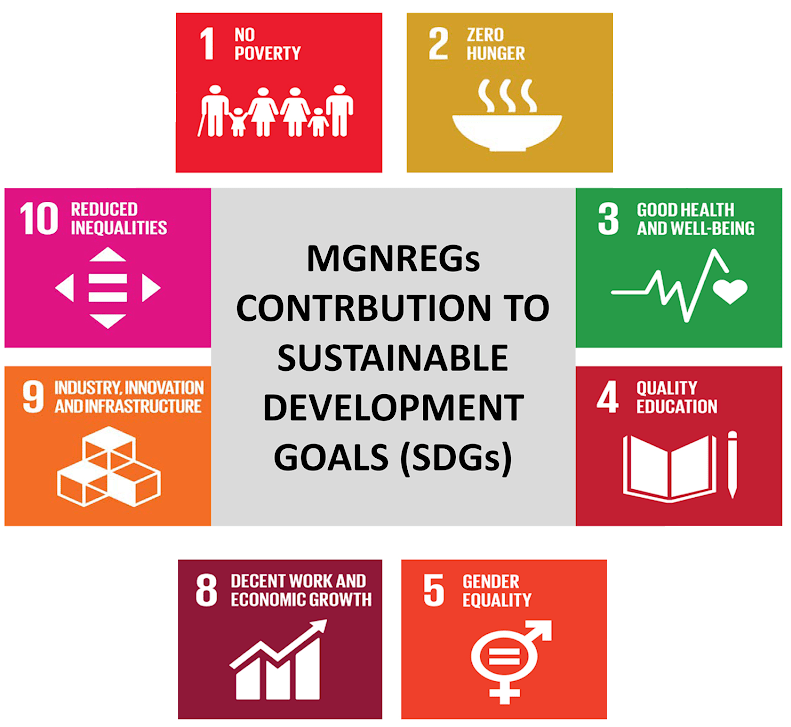
On 23rd August 2005, the Government of India launched a scheme that would prove to be one of the most sophisticated moves the then leadership would make. The National Rural Employment Guarantee Act 2005 (later renamed as the Mahatma Gandhi National Rural Employee Guarantee Act) was passed to guarantee the citizens their “Right to Work”.What would later prove to be a major success in the field of rural employment, the bill was one a lot of people were apprehensive of. India is a country where even the smartest of engineers are unemployed, and the conditions in rural areas are worse. This is a direct consequence of poor job security, availability, and restrictive labor laws. But the MGNREGA aims to eradicate this lineage of poverty.

Why MGNREGA?

The act was first proposed in 1991 by our then Prime Minister P.V. Narasimha Rao. After thorough scrutiny of the program, it was finally launched in 2005, covering 625 districts of India. The statute was praised as”the largest and most ambitious social security and public works program in the world”.In its World Development Report of 2014, the World Bank applauded it as a “stellar example of rural development”.But why was this scheme needed? According to tons of surveys and reports by the various governments of India, between 1980 and 2005, the number of unemployed persons in India steadily increased from around 7.8 million in 1983 to 12.3 million in 2004–5. Not only this, but several media organizations claim that “there is unanimity amongst scholars that the organized manufacturing sector [in India] registered “jobless growth” during 1980-81 to 1990-91”. Such deplorable conditions of our workers were sought to be amended by this act.

Objectives of the program

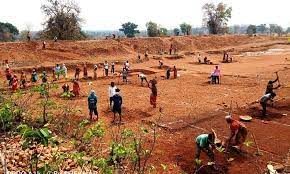
The key objective of the program is increasing the working days of a daily-wage worker to at least 100 per year, to one or more members of a family, willing to do unskilled work. In its early years, NREGA was claimed to be “making a difference to the lives of the rural poor, slowly but surely.”
Improving the negotiating power of labor who were incessantly exploited was one of the major objectives of the program. The key benefit of the scheme hangs on the reduction of wage volatility.
Another important aim of the program is parity between men and women working similar jobs. This highlights the importance of women’s empowerment through paid jobs and entitled compensations.
Another problem faced is that of water shortage in rural India. With water bodies shrinking, the sources of irrigation for farmers seem to be depleting. In a report covering the timeline of the last decade, it was found that almost half of the funds were directed towards solving this critical problem. Our country relies on agriculture for a large part of its economy, and any hindrance to its fruitful growth could simply not be tolerated.

Achievements of the program so far

Some of the many achievements of MGNREGA include providing a standard livelihood to the women of India, employing the people critically affected by Demonetization and GST, and benefitting the agricultural sector immensely.According to the National Council of Applied Economic Research (NCAER), this scheme has played a vital role in reducing poverty among the poor as well as the socially weaker sections (Dalits, tribals, and marginal farmers).

This program has indeed proved to be a boon for the Indian youth and is the epitome of the fine implementation ability of our democracy.

An Overview of Optimism

Being optimistic about one’s endeavors is a highly underappreciated quality. In a perpetual marathon, dubbed as “life” your positive outlook can turn the tables for any obstacle, living or not. Today, your grades can only take you so far on the success scale, whereas it’s the demeanor of a candidate which gets them shortlisted for prosperity. The opportunity to practice this buoyancy props up several times in a person’s life, but utilizing it to the full potential is where most people fail. Can optimism trigger audacity for introverts? Can it figure out tranquility for the ever-agitated? Can it find hope for the gloomy? The answer, well you can only find out once you try.

A ray of hope can be found anywhere

So how does optimism work?

Becoming an optimist isn’t something that can be mastered overnight. It is a process, that accompanies you in your life. It grows with you and basically embodies you. Many research has been carried out about the effectiveness of optimism as a psychological phenomenon. Optimism seems to have an indispensable role when it comes to mediating between depressing thoughts and suicidal idealization. Often, the key to becoming an optimist is to draw lines with the pessimists. Don’t rue it, don’t pity them, because you were once one of them. Now you are on the journey to self-development, and one day so will they. All it takes is changing your perspective.

How a single person can transform the room

Benefits of being optimistic

A principal benefit of being optimistic is finding the smallest silver lining in a grey cloud hanging over your head. Having a positive mindset has been scientifically proven to motivate you towards achieving your goals. Optimists view failures as new beginnings and work upon themselves accordingly. When things go bad, our world gets shaken up, which requires us to grow, see new things, and start afresh. Take the pandemic for example. The arduous times we confronted couldn’t have been conquered without the moral support of you, yourself.

A principal benefit of being optimistic is finding the smallest silver lining in a grey cloud hanging over your head. Having a positive mindset has been scientifically proven to motivate you towards achieving your goals. Optimists view failures as new beginnings and work upon themselves accordingly. When things go bad, our world gets shaken up, which requires us to grow, see new things, and start afresh. Take the pandemic for example. The arduous times we confronted couldn’t have been conquered without the moral support of you, yourself.

But, optimism doesn’t just have neurological benefits. In a study conducted by researchers at the University of Illinois, a survey of 5100 subjects showed that 76 percent of them are more likely to have health scores in an ideal range. Not only this, optimists showed significantly sounder blood sugar and cholesterol levels, worked out more, had a healthier body mass index, and were less likely to smoke.

One of the many advantages of having optimistic peers is that this quality is contagious, and spreads like wildfire in the grimmest of situations one may find themselves in. The institution Gallup conducted a survey and found that more than 65 percent of all 9 to 5 American managers don’t put their heart and soul into their jobs. This costs the decorum of the entire company, making the employees lethargic which further costs the US economy more than 77 billion USD every year. All of this can be avoided because it takes only one person the fuel the atmosphere.

Optimism-the need of the hour

Today, the world is not in a position to accommodate pessimists. With the onslaught of a new wave of coronavirus, the Ukraine-Russia tensions, and whatnot, optimism is the need of the hour. People are inspired by what they see, and every little show of enthusiasm can make society a better place. We more often learn from our experiences, than our mistakes. Let’s focus on making every single experience a joyful one, by being optimistic