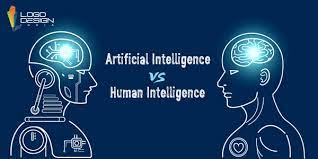
Human Intelligence And Artificial Intelligence Related

Human Intelligence:-

INTRODUCTION:-

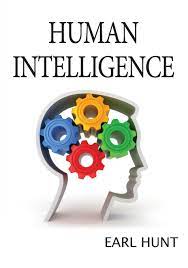
Human intelligence is the intellectual capability of humans, which is marked by complex cognitive feats and high levels of motivation and self-awareness.Through intelligence, humans possess the cognitive abilities to learn, form concepts, understand, apply logic, and reason, including the capacities to recognize patterns, plan, innovate, solve problems, make decisions, retain information, and use language to communicate. There are conflicting ideas about how intelligence is measured, ranging from the idea that intelligence is fixed upon birth, or that it is malleable and can change depending on an individual’s mindset and efforts.Several subcategories of intelligence, such as emotional intelligence or social intelligence, are heavily debated as to whether they are traditional forms of intelligence.They are generally thought to be distinct processes that occur, though there is speculation that they tie into traditional intelligence more than previously suspected.
Various definitions of intelligence tend to converge around similar notions designed to capture the essence of this psychological factor. Jensennotes Carl Bereiter’s definition of intelligence: “what you use when you don’t know what to do” (p 111). After their extensive survey, Snyderman and Rothmanunderscored reasoning, problem solving, and learning as crucial for intelligence. The “mainstream science on intelligence” report coordinated by Gottfredsonhighlights reasoning, planning, solving problems, thinking abstractly, comprehending complex ideas, learning quickly, and learning from experience. The American Psychological Association (APA) report on intelligence acknowledges that “individuals differ from one another in their ability to understand complex ideas, to adapt effectively to the environment, to learn from experience, to engage in various forms of reasoning, to overcome obstacles by taking thought.

An external file that holds a picture, illustration, etc.
Object name is DialoguesClinNeurosci-12-489-g001.jpg

For more than a century, psychologists have developed hundreds of tests for the standardized measurement of intelligence with varying degrees of reliability and validityThe resulting measures allowed for the organization of taxonomies identifying minor and major cognitive abilities. J. B. Carroll,for example, proposed a threestratum theory of intelligence after the extensive reanalysis of more than 400 datasets with thousands of subjects from almost 20 different countries around the world.shows a simplified depiction of the taxonomy of cognitive abilities.

An external file that holds a picture, illustration, etc.
Object name is DialoguesClinNeurosci-12-489-g002.jpg

This survey of factor analytic studies supports the view that intelligence has a hierarchical structure (ie, like a pyramid). There is strong evidence for a factor representing general intelligence (g) located at the apex of the hierarchy (stratum III). This g factor provides an index of the level of difficulty that an individual can handle in performing induction, reasoning, visualization, or language comprehension tests. At a lower order in the hierarchy (stratum II), several broad ability factors are distinguished: fluid intelligence, crystallized intelligence, general memory, visual perception, auditory perception, retrieval, or cognitive speed. Lastly, stratum I is based on specific abilities, such as induction, lexical knowledge, associative memory, spatial relations, general sound discrimination, or ideational fluency.

Artificial Intelligence:-

INTRODUCTION:-

Artificial intelligence (AI), the ability of a digital computer or computer-controlled robot to perform tasks commonly associated with intelligent beings. The term is frequently applied to the project of developing systems endowed with the intellectual processes characteristic of humans, such as the ability to reason, discover meaning, generalize, or learn from past experience. Since the development of the digital computer in the 1940s, it has been demonstrated that computers can be programmed to carry out very complex tasks—as, for example, discovering proofs for mathematical theorems or playing chess—with great proficiency. Still, despite continuing advances in computer processing speed and memory capacity, there are as yet no programs that can match human flexibility over wider domains or in tasks requiring much everyday knowledge. On the other hand, some programs have attained the performance levels of human experts and professionals in performing certain specific tasks, so that artificial intelligence in this limited sense is found in applications as diverse as medical diagnosis, computer search engines, and voice or handwriting recognition.

Guide To Understanding Artificial Intelligence - ReadWrite

Today, Artificial Intelligence is a very popular subject that is widely discussed in the technology and business circles. Many experts and industry analysts argue that AI or machine learning is the future – but if we look around, we are convinced that it’s not the future – it is the present.With the advancement in technology, we are already connected to AI in one way or the other – whether it is Siri, Watson or Alexa. Yes, the technology is in its initial phase and more and more companies are investing resources in machine learning, indicating a robust growth in AI products and apps in the near future.

The following statistics will give you an idea of growth!

– In 2014, more than $300 million was invested in AI startups, showing an increase of 300%, compared to the previous year (Bloomberg)

– By 2018, 6 billion connected devices will proactively ask for support. (Gartner)

– By the end of 2018, “customer digital assistants” will recognize customers by face and voice across channels and partners (Gartner)

–  Artificial intelligence will replace 16% of American jobs by the end of the decade (Forrester)

– 15% of Apple phone owners’ users use Siri’s voice recognition capabilities. (BGR)

Unlike general perception, artificial intelligence is not limited to just IT or technology industry; instead, it is being extensively used in other areas such as medical, business, education, law, and manufacturing.

In the following, we are listing down 9 very intelligent AI solutions that we are using today, marketing machine learning as a present thing – not the future.

  • Siri
  • Tesla
  • Cogito
  •  Netflix
  • Pandora
  •  Nest (Google)
  • Boxever
  • Flying Drones
  • Echo

1. Siri

Siri is one of the most popular personal assistant offered by Apple in iPhone and iPad. The friendly female voice-activated assistant interacts with the user on a daily routine. She assists us to find information, get directions, send messages, make voice calls, open applications and add events to the calendar.Siri uses machine-learning technology in order to get smarter and capable-to-understand natural language questions and requests. It is surely one of the most iconic examples of machine learning abilities of gadgets.

2. Tesla

Not only smartphones but automobiles are also shifting towards Artificial Intelligence. Tesla is something you are missing if you are a car geek. This is one of the best automobiles available until now. The car has not only been able to achieve many accolades but also features like self-driving, predictive capabilities, and absolute technological innovation.If you are a technology geek and dreamt of owning a car like shown in Hollywood movies, Tesla is one you need in your garage. The car is getting smarter day by day through over the air updates.

3. Cogito

Cogito originally co-founded by Dr. Sandy and Joshua is one of the best examples of the behavioral version to improve the intelligence of customer support representatives, currently on the market. The company is a synthesis of machine learning and behavioral science to enhance customer collaboration for phone professionals.Cogito is applicable on millions of voice calls that take place on a daily basis. The AI solution analyzes the human voice and provides real-time guidance to enhance behavior.

5. Pandora

Pandora is one of the most popular and highly demanded tech solutions that exist. It is also called the DNA of music. Depending on 400 musical characteristics, the team of expert musicians individually analyzes the song. The system is also good at recommending the track record for recommending songs that would never get noticed, despite people’s liking.

6. Nest (Google)

Nest was one of the most famous and successful artificial intelligence startups and it was acquired by Google in 2014 for $3.2 billion. The Nest Learning Thermostat uses behavioral algorithms to save energy based on your behavior and schedule.It employs a very intelligent machine learning process that learns the temperature you like and programs itself in about a week. Moreover, it will automatically turn off to save energy, if nobody is at home.In fact, it is a combination of both – artificial intelligence as well as Bluetooth low-energy because some components of this solution will use BLE services and solutions.

7. Boxever

Boxever is a company that heavily relies on machine learning to enhance the customer experience in the travel industry and conveys micro-moments or experiences that can please the customers.Boxover significantly improves customer engagement through machine learning and Artificial Intelligence to rule the playing field, helping customers to find new ways and make memorable journeys.

8. Flying Drones

The flying drones are already shipping products to customers home – though on a test mode. They indicate a powerful machine learning system that can translate the environment into a 3D model through sensors and video cameras.The sensors and cameras are able to notice the position of the drones in the room by attaching them to the ceiling. Trajectory generation algorithm guides the drone on how and where to move. Using a Wi-Fi system, we can control the drones and use them for specific purposes – product delivery, video-making, or news reporting.

9. Echo

Echo was launched by Amazon, which is getting smarter and adding new features. It is a revolutionary product that can help you to search the web for information, schedule appointments, shop, control lights, switches, thermostats, answers questions, reads audiobooks, reports traffic and weather, gives info on local businesses, provides sports scores and schedules, and more using the Alexa Voice Service

Conclusion

Artificial Intelligence is gaining popularity at a quicker pace; influencing the way we live, interact, and improve customer experience. There is much more to come in the coming years with more improvements, development, and governance.

Difference Between Artificial Intelligence and Human Intelligence
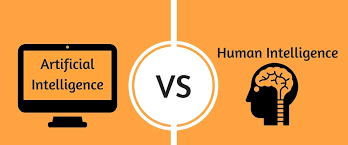
Artificial Intelligence: Artificial Intelligence is based on the human insights that can be decided in a way that can machine can effortlessly actualize the tasks, from the basic to those that are indeed more complex. The reason for manufactured insights is learning, problem-solving, reasoning, and perception.
This term may be connected to any machines which show related to a human intellect such as examination and decision-making and increments the efficiency.
AI covers assignments like robotics, control systems, face recognition, scheduling, data mining, and numerous others.

Human Intelligence: Human intelligence or the behaviour of the human being has come to past experiences and the doings based upon situation, environment. And it is completely based upon the ability to change his/her own surroundings through knowledge which we gained.
It gives diverse sorts of information. It can provide data on things related to the particular aptitude and knowledge, which can be another human subject, or, within the case of locators and spies, diplomatic data to which they had to get to. So, after concluding all it can give data on interpersonal connections and arrange of interest.

Below is a table of differences between Artificial intelligence and Human intelligence:

FeatureArtificial IntelligenceHuman Intelligence
EmergenceAI is an advancement made by human insights; its early improvement is credited to Norbert Weiner who theorized on criticism mechanisms.On the other hand, human creatures are made with the intrinsic capacity to think, reason, review, etc.
Pace/Rate of AI and humanAs compared to people, computers can handle more data at a speedier rate. For occurrence, in the event that the human intellect can solve a math problem in 5 minutes, AI can solve 10 problems in a minute.In terms of speed human cannot beat the speed of AI, or, machines.
Decision MakingAI is profoundly objective in choice making because it analyzes based on absolutely accumulated data.Human’s choices may be affected by subjective components which are not based on figures alone.
PerfectionAI frequently produces precise comes about because it capacities based on a set of modified rules.For human insights, there’s more often than not a room for “human error” as certain subtle elements may be missed at one point or the other.
Energy ConsumptionModern computer generally uses 2 watts energy.On the other hand, human brains uses about 25 watts
Modification of AI and HumanAI takes much more time to adjust to unused changes.Human insights can be adaptable in reaction to the changes to its environment. This makes individuals able to memorize and ace different skills.
VersatilityAI can as it were perform less assignments at the same time as a framework can as it were learn duties one at a time.The human judgment skills underpins multitasking as prove by differing and concurrent roles.
Social NetworkingAI has not aced the capacity to choose up on related social and enthusiastic cues.On the other hand, as social creatures, people are much way better at social interaction since they can prepare theoretical data, have self-awareness, and are delicate to others’ feelings.

Reference Links:-

https://www.ncbi.nlm.nih.gov/pmc/articles/PMC3181994/

https://www.iqvis.com/blog/9-powerful-examples-of-artificial-intelligence-in-use-today/

https://www.geeksforgeeks.org/difference-between-artificial-intelligence-and-human-intelligence/

Public administration and development related

INTRODUCTION:-

public administration at the local, regional, national and international levels where it is directed to managing development processes in low and medium income countries. It gives special attention to investigations of the management of all phases of public policy formulation and implementation which have an interest and importance beyond a particular government and state. PAD has a particular interest in the link between public administration practice and management research and provides a professional and academic forum for reporting on new experiences and experiments. PAD also publishes
articles on development management research in the NGO sector. It is widely read by academics and practitioners alike, including consultants, donors and policy advisers. With its case study approach, it is also frequently used for teaching and training purposes.

Public Administration and Development

Information for Subscribers

Public Administration and Development (Print ISSN 0271‐2075; Online ISSN 1099‐162X at Wiley Online Library, wileyonlinelibrary.com) is published in 5 issues per year. Institutional subscription prices for 2020 are: Print & Online: US$2987 (US and Rest of World), €1929 (Europe), £1528 (UK). Prices are exclusive of tax. Asia‐Pacific GST, Canadian GST/HST and European VAT will be applied at the appropriate rates. For more information on current tax rates, please go to http://www.wileyonlinelibrary.com.tax‐vat. The price includes online access to the current and all online back files to January 1st 2017, where available. For other pricing options, including access information and terms and conditions, please visit wileyonlinelibrary.com/access.

Delivery Terms and Legal Title

Where the subscription price includes print issues and delivery is to the recipient’s address, delivery terms are Delivered Duty Unpaid (DDU); the recipient is responsible for paying any import duty or taxes. Title to all issues transfers FOB our shipping point, freight prepaid. We will endeavour to fulfil claims for missing or damaged copies within six months of publication, within our reasonable discretion and subject to availability.

Services

Adver tisements

Advertisement Sales Department, John Wiley & Sons, Ltd.,

The Atrium, Southern Gate, Chichester, West Sussex

PO19 8SQ, UK.

Tel: +44 (0)1243 770254

Fax: +44 (0)1243 770432

e‐mail: adsales@wiley.co.uk

Commercial Reprints:

E‐mail: corporatesaleseurope@wiley.com;

corporatesalesusa@wiley.com; or

corporatesalesaustralia@wiley.com

Author Reprints (50–300 Copies):

Order online: http://www.sheridan.com/wiley/eoc

Backstock Agent

PSC

Back issues: Single issues from current and recent volumes are

available at the current single issue price from cs‐journals@wiley.com.

Earlier issues may be obtained from Periodicals Service Company,

351 Fairview Avenue ‐ Ste 300, Hudson, NY 12534, USA.

Tel: +1 518 822‐9300

Fax: +1 518 822‐9305,

Email: psc@periodicals.com

General Enquiries

Tel: +44 (0) 1243 779777,

Fax: +44 (0) 1243 775878.

Contact Details within John Wiley & Sons

Journal Customer Services: For ordering information, claims

and any enquiry concerning your journal subscription please go to

http://www.wileycustomerhelp.com/ask or contact your nearest office:

Americas: Email: cs‐journals@wiley.com; Tel: +1 781 388 8598 or

1 800 835 6770 (Toll free in the USA & Canada).

Europe, Middle East and Africa: Email: cs‐journals@wiley.com;

Tel: +44 (0) 1865 778315

Asia Pacific: Email: cs‐journals@wiley.com; Tel: +65 6511 8000

Japan: For Japanese speaking support, Email: cs‐japan@wiley.com;

Visit our Online Customer Help available in 7 languages at

http://www.wileycustomerhelp.com/ask

Copyright and Copying (in any format)

Copyright© 2021 John Wiley & Sons, Ltd. All rights reserved

No part of this publication may be reproduced, stored or trans

mitted in any form or by any means without the prior permission

in writing from the copyright holder. Authorization to copy items

for internal and personal use is granted by the copyright holder

for libraries and other users registered with their local Reproduction

Rights Organisation (RRO), e.g. Copyright Clearance Center

(CCC), 222 Rosewood Drive, Danvers, MA 01923, USA (www

copyright.com), provided the appropriate fee is paid directly to the

RRO. This consent does not extend to other kinds of copying such

as copying for general distribution, for advertising or promotional

purposes, for republication, for creating new collective works or

for resale. Permissions for such reuse can be obtained using the

RightsLink “Request Permissions” link on Wiley Online Library.

Special requests should be addressed to: permissions@wiley.com

Disclaimer

The Publisher and Editors cannot be held responsible for errors

or any consequences arising from the use of information

contained in this journal; the views and opinions expressed do

not necessarily reflect those of the Publisher and Editors, neither

does the publication of advertisements constitute any endorsement

by the Publisher and Editors of the products advertised.

Abstracting and Indexing

Public Administration and Development is covered by the following

abstracting and indexing services: Abstracts on Hygiene &

Communicable Diseases (CABI), ASSIA: Applied Social Sciences

Index & Abstracts (ProQuest), CAB Abstracts® (CABI), CAB

HEALTH (CABI), CABDirect (CABI). Current Contents: Social &

Behavioral Sciences (Thomson Reuters), Emerald Management

Reviews (Emerald), ERA: Educational Research Abstracts Online

(T&F), Forestry Abstracts (CABI), GEOBASE (Elsevier), Global

Health (CABI), Grasslands & Forage Abstracts (CABI), IBSS:

International Bibliography of the Social Sciences (ProQuest),

Journal Citation Reports/Social Science Edition (Thomson Reuters),

PAIS: Public Affairs Information Service (ProQuest), Plant Genetic

Resources Abstracts (CABI), ProQuest Central (ProQuest), Rural

Development Abstracts (CABI), SCOPUS (Elsevier), Social Sciences

Citation Index (Thomson Reuters), Social Services Abstracts

(ProQuest), Sociological Abstracts (ProQuest), Soils & Fertilizer

Abstracts (CABI), Studies on Women & Gender Abstracts (T&F),

Tropical Diseases Bulletin (CABI), Web of Science (Thomson Reuters),

World Agricultural Economics & Rural Sociology Abstracts (CABI),

Worldwide Political Sciences Abstracts (ProQuest).

Online open

Public Administration and Development accepts articles for Open

Access publication. Please visit http://olabout.wiley.com/

WileyCDA/Section/id‐406241.html for further information

about OnlineOpen.

Production Information

For manuscripts that have been accepted for publication,

please contact:

Podhumai Anban

e‐mail: padproofs@wiley.com

Production Details

Printed in Singapore by C.O.S. Printers Pte Ltd.

Identification Statement

PUBLIC ADMINISTRATION AND DEVELOPMENT (Print ISSN

0271‐2075; Online ISSN 1099‐162X) is published in February, May,

August, October and December. US mailing agent: Mercury Media

Processing, LLC 1850 Elizabeth Avenue, Suite , Rahway

NJ 07065 USA. Periodical postage paid at Rahway, NJ.

Postmaster: Send all address changes to PUBLIC ADMINISTRATION

AND DEVELOPMENT, Wiley Periodicals LLC, C/O The Sheridan

Press, PO Box 465, Hanover, PA 17331.

For submission instructions, subscription and all other information

visit: wileyonlinelibrary.com/journal/pad

Wiley’s Corporate Citizenship Initiative Statement

Wiley’s Corporate Citizenship initiative seeks to address the

environmental, social, economic, and ethical challenges faced in

our business and which are important to our diverse stakeholder

groups. Since launching the initiative, we have focused on sharing

our content with those in need, enhancing community philan

thropy, reducing our carbon impact, creating global guidelines

and best practices for paper use, establishing a vendor code of

ethics, and engaging our colleagues and other stakeholders in our

efforts. Follow our progress at http://www.wiley.com/go/citizenship

Statement on Research4Life

Wiley is a founding member of the UN‐backed HINARI, AGORA,

and OARE initiatives. They are now collectively known as

Research4Life, making online scientific content available free or

at nominal cost to researchers in developing countries. Please

visit Wiley’s Content Access – Corporate Citizenship site:

http://www.wiley.com/ WileyCDA/Section/id‐390082.html

Reference Link:-

https://onlinelibrary.wiley.com/journal/1099162x

https://onlinelibrary.wiley.com/loi/1099162x

Journalism and mass media

INTRODUCTION:-

Journalism and mass communication graduates work nationwide and worldwide at newspapers and magazines and in advertising, branding, broadcast news, social media, marketing, media research, photojournalism, publication design, public relations, radio, and other areas

Journalism:-

Journalism is the activity of gathering, assessing, creating, and presenting news and information. It is also the product of these activities.Journalism can be distinguished from other activities and products by certain identifiable characteristics and practices. These elements not only separate journalism from other forms of communication, they are what make it indispensable to democratic societies. History reveals that the more democratic a society, the more news and information it tends to have.

JOURNALISM ESSENTIALS

  1. What is journalism?
  2. What makes journalism different than other forms of communication?
  3. What is the purpose of journalism?
  4. The elements of journalism
  5. What does a journalist do?
  6. The journalist as a ‘committed observer’
  7. The theory of the interlocking public
  8. Bias and objectivity
  9. The lost meaning of ‘objectivity’
  10. Understanding bias

1.What is journalism?

Journalism is the activity of gathering, assessing, creating, and presenting news and information. … Journalism can be distinguished from other activities and products by certain identifiable characteristics and practices.

2. What makes journalism different than other forms of communication?

The vast majority of this communication, however, is not news and especially not journalism. Almost 70 percent of email traffic is spam, according to web security company Symantec. In 2012, there were an average of 175 million tweets each day. But almost all – 99% — consisted of “pointless babble,” according to researchers at Carnegie Mellon University.

3. What is the purpose of journalism?

“The purpose of journalism,” write Bill Kovach and Tom Rosenstiel in The Elements of Journalism, “is not defined by technology, nor by journalists or the techniques they employ.” Rather, “the principles and purpose of journalism are defined by something more basic: the function news plays in the lives of people.”

4. The elements of journalism?

In their book The Elements of Journalism, Bill Kovach and Tom Rosenstiel identify the essential principles and practices of journalism. Here are 10 elements common to good journalism, drawn from the book.

5. What does a journalist do?

Asking who is a journalist is the wrong question, because journalism can be produced by anyone.At the same time, merely engaging in journalistic-like activity – snapping a cell-phone picture at the scene of a fire or creating a blog site for news and comment – does not by itself produce a journalistic product. Though it can and sometimes does, there is a distinction between the act of journalism and the end result.

6. The journalist as a ‘committed observer’

Gil Thelen, the former publisher and president of The Tampa Tribune, believes the journalist has a very specific role in society. He calls it the “committed observer.” What he means by that, Thelen explains, is that the journalist is not removed from community, though at times may stand apart from others so as to view things from a different perspective.

7. The theory of the interlocking public

The splintering of mass media audiences and the migration of information consumers to tens of thousands of niche web sites is further evidence that everyone is interested, and expert, in something. The diversity and magnitude of the public, in fact, is its strength. A mix of publics is usually much wiser than a public comprised of just the elite or one segment of special interest.

8. Bias and objectivity

Journalism attempts to be fair and accurate. It does this through objective methods and managing bias. The guides in this section help you understand and navigate those processes.

9. The lost meaning of ‘objectivity’

One of the great confusions about journalism, write Bill Kovach and Tom Rosenstiel in The Elements of Journalism, is the concept of objectivity. When the concept originally evolved, it was not meant to imply that journalists were free of bias. Quite the contrary. The term began to appear as part of journalism after the turn of the 20th century, particularly in the 1920s, out of a growing recognition that journalists were full of bias, often unconsciously. Objectivity called for journalists to develop a consistent method of testing information – a transparent approach to evidence – precisely so that personal and cultural biases would not undermine the accuracy of their work.

10. Understanding bias

For a time, “bias” was the term of choice to describe anything people hated about journalism, whether the power and influence of corporate news organizations to the choices reporters made in writing individual stories. In 2001, in fact, a book about media unfairness entitled “Bias” was number one on the New York Times bestseller list. In recent years the public seems to have adopted a more nuanced view of bias.  Perhaps this is because many critics have found their voice online – where studies confirm that half the blogs contain just the author’s opinion – or that one-sidedness has become a successful business model, as Fox News Channel and MSNBC have demonstrated.

What Is Mass Media?

INTRODUCTION:-

Mass media is communication that is to a large group, or groups, of people in a short time (Mass Media, 2013, p. … This can be written, spoken or broadcast communication. Some of the most popular forms of mass media are newspapers, magazines, radio, advertisements, social media, television, Internet, and films/movies.

Mass Media:-

Think about this for a second: whenever you want to hear your favorite song, watch your favorite show, or see the latest current events, where do you go? You more than likely turn on your television, radio, or computer. The source that the majority of the general public uses to get their news and information from is considered mass media.Mass media means technology that is intended to reach a mass audience. It is the primary means of communication used to reach the vast majority of the general public. The most common platforms for mass media are newspapers, magazines, radio, television, and the Internet. The general public typically relies on the mass media to provide information regarding political issues, social issues, entertainment, and news in pop culture.

There are 6 main types of Mass Media:

  1. Traditional Media
  2. Print Media
  3. Electronic/Broadcasting Media
  4. Outdoor Media or Out of Home Media (OOH)
  5. Transit Media
  6. Digital Media/New Media/Internet

1. Traditional Media:-

People have developed different ways of communication depending upon their local language and culture. Traditional media is one of the oldest types of mass media to transfer traditions and culture over generations. The tools of communication have been developed from beliefs, customs, rituals, and practices of society. Traditional media imparts indigenous ways of communication for ages. Further, this type of mass media varied as per each culture and society as every culture has their own mediums to communicate to their mass audience. Thus, the traditional media can be folk songs, dances, folktales and folklore as well as paintings, sculptures, stupas, statues and fairs, festivals, rural or community radio and announcement mediums like nagada, etc.

Forms of Traditional Media

  • Folk Dances
  • Folk Songs and Music
  • Theatre, Drama, and Folktales
  • Painting, Sculptures, Inscriptions, Statues, and Stupas
  • Motifs and Symbols
  • Announcements made by beating drums or ‘nagada’
  • Shadow Puppetry and String Puppetry
  • Storytelling
  • Nautanki
  • Fairs and Festivals
  • Rural Radio

2. Print Media

In simple words, Print Media is all about the printed form of information and news. Before the invention of the printing press, printed materials had to be hand-written that made mass distribution almost impossible. Print media is one of the basic types of mass media tools making it very popular and convenient to reach a wider audience. Newspapers are considered as the oldest forms of mass media after the traditional mass media as for a long period of time, the general public relied on newspapers to know the latest happenings in their local areas as well as from around the world. Thus, print media originally refers to newspapers and then expanded towards magazines, tabloids, promotional brochures, journals, books, novels and comics.

Forms of Print Media

  • Newspapers (broadsheet and tabloid)
  • Periodicals, Newsletters, and Magazines (general or specific interest)
  • Brochures, Leaflets and Pamphlets
  • Journals
  • Books, Novels and Comics

3. Electronic/Broadcasting Media

Broadcasting is simply a distribution of audio and video content to a dispersed audience using the electronic broadcasting medium. Originally the term ‘broadcasting’ referred to the sowing of seeds on farms by scattering them over the large field. Broadcast media allows ease of news dissemination to even an illiterate person because it appeals to both the auditory and visual senses making it one of the most lucrative types of mass media. Centuries later after the newspapers were used as the original mass media, the advent of radio and television happened. Radio was the primary medium of news for the general public during wars as well as for sports and entertainment. When television was invented, it became the most effective type of mass media as it was primarily used for news dissemination and then for TV shows, live events and other entertainment purposes.

Forms of Broadcasting Media

  • Television
  • Radio (AM, FM, Pirate Radio, Terrestrial Radio, and Satellite)
  • Traditional Telephone
  • Film/Movie/Motion Picture
  • Video Games
  • Audio Recording and Reproduction

4. Outdoor Media or Out of Home Media (OOH)

This is also known as OOH or Out-of-Home Media and is focussed on transmitting information and news when the public is outside their home. Outdoor media gives importance to display advertising and attracting individuals towards new products, some social cause or any development or change in the society. These are prominent in brand promotion seen on buildings, streets, electric polls, roadside, vehicles, screens, kiosks, etc. This is one of the most prominent types of mass media used for commercial as well as public welfare advertising and mainly includes billboards, banners, posters, brochure distribution, ComPark Advertising, Wallscape, amongst others!

Forms of Outdoor Media

  • Billboards or Bulletins
  • Inflatable Billboards
  • Mobile Billboards
  • Banner
  • Lamppost Banners
  • Posters
  • Signs and Placards
  • Blimps, Skywriting
  • Brochure distribution
  • ComPark Advertising
  • Wallscape

5. Transit Media

Transit Media revolves around the concept of advertising and information dissemination when consumers are “on the go” in public places or in transit. These include display advertising on vehicles and transportation. With the aim “driving home a message” transit media is significantly used for massive brand promotion to millions of people who travel the country’s streets and highways every day.Some people might think that this type of mass media is outdated or ineffective, yet it is widely visible on the sides of buses, in subway cars, at transit stations where passengers enter or disembark from public transportation.

Forms of Transit Media

  • Bus Advertising
  • Railway Advertising
  • Taxi Advertising
  • Transit Shelter Advertising

6. Digital Media/New Media/Internet

Since the invention of the World Wide Web by English scientist Tim Berners-Lee in 1989, the Internet has drastically taken over all the types of mass media because of faster dissemination speed and higher digital technology. New Media is an interactive two-way communication with users being the active producers of content and information. The Internet is considered as a highly interactive mass medium and can be simply defined as the “network of networks”. It has quickly transformed as the centre of the mass media as it has marvellously integrated all the prominent types of mass media. Now, you can see news websites, broadcasted TV shows as well as listen to online radio using the internet and this is also called as the convergence of mass media!New Media is normally a re-conceptualization of the existing media. This is a rapidly growing mass media with the ease of accessibility with a computer and an Internet connection (broadband or WiFi). From Story Writing and Graphic Designing to Multimedia and Animation, pursuing a career in this field can be highly advantageous.

Forms of Digital Media

  • Websites
  • Emails
  • Social Media and Social Networking Sites (SNS)
  • Webcast and Podcast
  • Blogging and Vlogging
  • IPTV (Internet Protocol Television)
  • E-forums and E-books
  • E-commerce and M-commerce
  • Digital Videos
  • Computer Animation
  • Digital Video Games
  • Human-Computer Interface
  • Virtual World & Virtual Reality

Reference Link:-

https://www.americanpressinstitute.org/journalism-essentials/what-is-journalism/

https://leverageedu.com/blog/types-of-mass-media/

Introduction about different Schools, Colleges, Universities

Introduction about different Schools:-

INTRODUCTION:-

ust as teachers may teach a broad spectrum of subject matter from math, science, English, to foreign languages, technology and the arts, they also teach across a wide age range and in many different classroom settings around the country.

The specific type of school in which a teacher teaches can have a huge impact on many aspects of their teaching career. From public schools — including magnet schools, charter schools, urban schools, rural schools and high needs schools — to private schools including military schools and boarding schools, every classroom setting is different and each has it’s own unique benefits and challenges. Deciding where you are best able to make a difference can be difficult.

Learn more about each type of schools to help you decide where you can fit in best:

  • Public Schools
  • Charter Schools
  • Magnet Schools
  • Private Schools
  • High Needs Schools
  • Urban Schools
  • Rural Schools

1. Public Schools:-

 A public school is government funded and all students attend free of cost.Because of funding from several sources, private schools may teach above and beyond the standard curriculum, may cater to a specific kind of students (gifted, special needs, specific religion/language) or have an alternative curriculum like art, drama, technology etc. Public schools have to adhere to the curriculum charted out by the district, and cannot deny admission to any child within the residential school zone.Public schools are often thought of as shoddy, less disciplined and low-grade curriculum.

2. Charter Schools:-

A charter school is a public school that operates as a school of choice. Charter schools commit to obtaining specific educational objectives in return for a charter to operate a school. Charter schools are exempt from significant state or local regulations related to operation and management but otherwise adhere to regulations of public schools — for example, charter schools cannot charge tuition or be affiliated with a religious institution.In other words, charter schools are publicly accountable — they rely on families choosing to enroll their children, and they must have a written performance contract with the authorized public chartering agency. Charter schools are also autonomous — they have more flexibility in the operations and management of the school than traditional public schools.

3. What Is A Magnet School:-

Unlike charter schools or private schools, a magnet school is part of the local public school system. At regular public schools, students are generally zoned into their schools based on the location of their home – students go to the school that is nearest where they live. However, this may not always be true since boundaries can seem arbitrary and in some smaller towns schools are not zoned at all. But, magnet schools exist outside of zoned school boundaries. Whereas private schools are completely separate from local public school districts, and charter schools are public schools with private oversight, magnet schools remain part of the public school system and operate under the same administration and school board.

4. Private Schools:-

Many of the private primary and secondary schools in the United States were founded by religious institutions in order to incorporate religious beliefs and teachings into their students’ education, integrating it with a traditional academic curriculum. Some of the first religious schools were founded by the Catholic Church, and these parochial schools are still prevalent amongst private schools. Since then, however, many other religious denominations have started schools to provide religious education, and families often choose to enroll their children in schools whose policies reflect their own values. Nowadays, Protestant, Jewish, Muslim, Orthodox Christian and other religiously based schools are quite common. In addition, some private schools, boarding schools and military academies, offer their own unique approaches to education.

5. High Needs Schools:-

The No Child Left Behind Act of 2001 External link  defines a high-needs school as “within the top quartile of elementary and secondary schools statewide, as ranked by the number of unfilled, available teacher positions; or is located in an area where at least 30 percent of students come from families with incomes below the poverty line; or an area with a high percentage of out-of-field-teachers, high teacher turnover rate, or a high percentage of teachers who are not certified or licensed.” Essentially, high needs schools require teachers because they cannot fill job vacancies or retain teachers, or they have teachers who are not qualified or who teach in subjects outside their field. High-needs schools also serve communities of higher poverty rates, where classrooms are influenced by the difficulties of their students’ lives. Most high-needs schools are located in rural or urban areas.

6. Urban Schools:-

When thinking of high need schools, the first thing that comes to mind for many people is the image of an inner city school, crowded and poorly funded. The truth is, while this is a stereotype and many urban schools perform exceptionally well, there are still urban schools across the country that are in high need of teachers and resources.At the most technical level, urban schools are classified as city schools by the National Center for Education Statistics External link  (NCES). The NCES categorizes all schools into four locales by their size, population density and location in relation to a city. This is an “urban-centric” classification system. The four locale categories used by the NCES’ urban centric classification system External link  are city, suburb, town and rural. Urban schools are then broken down into three subcategories based on the Census Bureau External link ’s definitions of urbanicity:

7. Rural Schools:-

Ultimately, the technical definition of a rural school corresponds to our general understanding of rural areas; they are characterized by geographic isolation and small population size. All schools are categorized into four locales by their size, population density and location. The National Center for Education Statistics External link  (NCES) defines these locales by the school’s proximity to a city an “urban-centric” classification system. The four locale categories used by the NCES’ urban centric classification system External link  are city, suburb, town and rural. Rural schools are then broken down into three subcategories based on the Census Bureau External link ’s definitions of urbanicity. Rural schools are also all classified as high need schools.

Introduction about different Colleges:-

INTRODUCTION:-

college (Latin: collegium) is an educational institution or a constituent part of one. A college may be a degree-awarding tertiary educational institution, a part of a collegiate or federal university, an institution offering vocational education, or a secondary school.

In most of the world, a college may be a high school or secondary school, a college of further education, a training institution that awards trade qualifications, a higher-education provider that does not have university status (often without its own degree-awarding powers), or a constituent part of a university. In the United States, a college offers undergraduate programs; it may be independent or the undergraduate program of a university, it is generally also used as a synonym for a universitywhile in some instances a college may also be a residential college. A college in francophone countries [fr]—France (see secondary education in France), Belgium, and Switzerland—provides secondary education. However, the Collège de France is a prestigious advanced research institute in Paris.

Learn more about each type of colleges to help you decide where you can fit in best:

  • Community and Junior Colleges
  • Historically Black Colleges and Universities 
  • Liberal Arts Colleges
  • Women’s Colleges
  • Tribal Colleges
  • Technical Institutes and Professional Schools

1. Community and Junior Colleges:-

These colleges offer the first two years of a liberal arts education, as well as career or vocational training. Successful completion of a community or junior college curriculum earns graduates an associates degree. Many students continue on to a four-year institution after completing a community or junior college program.

2. Historically Black Colleges and Universities:-

These colleges originated when African-American students were legally denied access to most other institutions of higher education. Now, these colleges celebrate African-American culture and empowerment, and give black students the chance to experience an educational community in which they are finally part of the majority. A common abbreviation for this type of college is HBCU.

3. Liberal Arts Colleges:-

These colleges focus on the education of undergraduate students (students who are earning a bachelors degree). Classes are generally taught by professors who see teaching as their primary responsibility. Because most liberal arts colleges are smaller than universities, classes tend to be smaller and more personal attention  is available. Instead of preparing for a specific career path, students who attend liberal arts colleges are exposed to a broad sampling of classes. In addition, they select at least one area of in-depth study that is their college “major.” Many employers look for graduates of liberal arts programs.

4. Women’s Colleges:-

These colleges offer women the opportunity to enjoy a learning community where they are in the majority. Additionally, these colleges have a much larger population of female faculty and administrators. Women’s colleges graduate a high number of science majors, as well as students who continue on to graduate school or professional studies.

5. Tribal Colleges:-

Like HBCUs or Women’s colleges, these colleges focus on the needs and education of a group that has been traditionally underrepresented in higher education. In this case, these colleges focus on the education and empowerment of Native American students while celebrating a specific tribe’s unique culture and accomplishments.

6. Technical Institutes and Professional Schools:-

These colleges or institutes enroll students who have made a choice as to what career path they are taking. The curriculum at these colleges focuses solely on preparing students for these specific careers. Most of the career options offered at these colleges are in music, fine arts, engineering, or technical sciences.

Introduction about different Universities:-

INTRODUCTION:-

The original Latin word universitas refers in general to “a number of persons associated into one body, a society, company, community, guild, corporation, etc”. At the time of the emergence of urban town life and medieval guilds, specialized “associations of students and teachers with collective legal rights usually guaranteed by charters issued by princes, prelates, or the towns in which they were located” came to be denominated by this general term. Like other guilds, they were self-regulating and determined the qualifications of their members.

In modern usage the word has come to mean “An institution of higher education offering tuition in mainly non-vocational subjects and typically having the power to confer degrees,” with the earlier emphasis on its corporate organization considered as applying historically to Medieval universities.The original Latin word referred to degree-awarding institutions of learning in Western and Central Europe, where this form of legal organisation was prevalent and from where the institution spread around the world.

Learn more about each type of Universities to help you decide where you can fit in best:

  • Central universities, or Union universities
  • State Universities
  • Private Universities
  • Deemed university

1. Central universities, or Union universities:-

in India are established by an Act of Parliament and are under the purview of the Department of Higher Education in the Ministry of Education.In general, universities in India are recognised by the University Grants Commission (UGC), which draws its power from the University Grants Commission Act, 1956.In addition, 15 Professional Councils are established, controlling different aspects of accreditation and coordination.Central universities, in addition, are covered by the Central Universities Act, 2009, which regulates their purpose, powers, governance etc., and established 12 new universities.As of 1 June 2020, The list of central universities published by the UGC includes 54 central universities.

Other types of universities controlled by the UGC include:

  • State universities are run by the state government of each of the states and territories of India, and are usually established by a local legislative assembly act.
  • Deemed university, or “Deemed-to-be-University”, is a status of autonomy granted by the Department of Higher Education on the advice of the UGC, under Section 3 of UGC Act, 1956.
  • Private universities are approved by the UGC. They can grant degrees but they are not allowed to have off-campus affiliated colleges.

Apart from the above universities, other institutions are granted the permission to autonomously award degrees. These institutes do not affiliate colleges and are not officially called “universities” but “autonomous organisations” or “autonomous institutes”. They fall under the administrative control of the Department of Higher Education.These organisations include the Indian Institutes of Technology, the National Institutes of Technology, the Indian Institutes of Science Education and Research, the Indian Institutes of Engineering Science and Technology, the Indian Institutes of Management, the National Law Schools, the All India Institute of Medical Sciences, and other autonomous institutes.

2. State Universities:-

State universities are run by the state government of each of the states and territories of India, and are usually established by a local parliament act. As of 26 August 2011, the UGC lists 281 state universities, around 170 of which are receiving Central/UGC assistance. The oldest establishment date listed by the UGC is 1857, shared by the University of Mumbai, the University of Madras and the University of Calcutta.

In India, state universities are run and funded by the state government of each of the states of India.Following the adoption of the Constitution of India in 1950, education became a state responsibility. Following a constitutional change in 1976, it became a joint responsibility of the states and the central government.As of 17 March 2021, the UGC lists 426 state universities.

3. Private Universities:-

Private universities are approved by the UGC. They can grant degrees but they are not allowed to have off-campus affiliated colleges. The UGC list from 1 September 2011 lists 94 private universities.

Private universities and private colleges are usually not operated by governments, although many receive tax breaks, public student loans, and grants. Depending on their location, private universities may be subject to government regulation. This is in contrast to public universities and national universities. Many private universities are nonprofit organizations.

4. Deemed university:-

Deemed university, or deemed-to-be-university, is an accreditation granted to higher educational institutions in India, conferring the status of a university. It is granted by the Department of Higher Education.To quote the Ministry of Human Resource Development (MHRD), “An Institution of Higher Education, other than universities, working at a very high standard in specific area of study, can be declared by the Central Government on the advice of the University Grants Commission (UGC), as an Institution ‘Deemed-to-be-university’. Institutions that are ‘deemed-to-be-university’ enjoy the academic status and privileges of a university.”

Deemed university, or “Deemed-to-be-University”, is a status of autonomy granted by the Department of Higher Education on the advice of the UGC, under Section 3 of UGC Act, 1956. The UGC list from 23 June 2008 lists 130 deemed universities. According to this list, the first institute to be granted deemed university status was Indian Institute of Science which was granted this status on 12 May 1958. Note that in many cases, the same listing by the UGC covers several institutes. For example, the listing for Homi Bhabha National Institute covers the Institute of Mathematical Sciences, the Indira Gandhi Centre for Atomic Research and other institutes. The list below includes only the major institute granted the status, and such additional institutes are not listed separately.

Reference Link:-

https://teach.com/careers/become-a-teacher/where-can-i-teach/types-of-schools/rural/

https://www.cappex.com/articles/match-and-fit/the-different-types-of-colleges

https://sites.google.com/site/universitiesindiaonline/types-of-universities-in-india

Digital marketing

INTRODUCTION:-

Any marketing that uses electronic devices to convey promotional messaging and measure its impact. In practice, digital marketing typically refers to marketing campaigns that appear on a computer, phone, tablet, or other device. It can take many forms, including online video, display ads, and social media posts. Digital marketing is often compared to “traditional marketing” such as magazine ads, billboards, and direct mail. Oddly, television is usually lumped in with traditional marketing.
Did you know that more than 3 quarters of Americans go online on a daily basis? Not only that, but 43% go on more than once a day and 26% are online “almost constantly.” These figures are even higher among mobile internet users. 89% of Americans go online at least daily, and 31% are online almost constantly. As a marketer, it’s important to take advantage of the digital world with an online advertising presence, by building a brand, providing a great customer experience that also brings more potential customers and more, with a digital strategy

What is digital marketing?

Digital marketing, also called online marketing, is the promotion of brands to connect with potential customers using the internet and other forms of digital communication. This includes not only email, social media, and web-based advertising, but also text and multimedia messages as a marketing channel.
Essentially, if a marketing campaign involves digital communication, it’s digital marketing.

Inbound marketing versus digital marketing:-

Digital marketing and inbound marketing are easily confused, and for good reason. Digital marketing uses many of the same tools as inbound marketing—email and online content, to name a few. Both exist to capture the attention of prospects through the buyer’s journey and turn them into customers. But the 2 approaches take different views of the relationship between the tool and the goal.
Digital marketing considers how each individual tool can convert prospects. A brand’s digital marketing strategy may use multiple platforms or focus all of its efforts on 1 platform.
Inbound marketing is a holistic concept. It considers the goal first, then looks at the available tools to determine which will effectively reach target customers, and then at which stage of the sales funnel that should happen.
The most important thing to remember about digital marketing and inbound marketing is that as a marketing professional, you don’t have to choose between the 2. In fact, they work best together. Inbound marketing provides structure and purpose for effective digital marketing to digital marketing efforts, making sure that each digital marketing channel works toward a goal.

B2B versus B2C digital marketing:-

Digital marketing works for B2B as well as B2C companies, but best practices differ significantly between the 2.

  • B2B clients tend to have longer decision-making processes, and thus longer sales funnels. Relationship-building strategies work better for these clients, whereas B2C customers tend to respond better to short-term offers and messages.
  • B2B transactions are usually based on logic and evidence, which is what skilled B2B digital marketers present. B2C content is more likely to be emotionally-based, focusing on making the customer feel good about a purchase.
  • B2B decisions tend to need more than 1 person’s input. The marketing materials that best drive these decisions tend to be shareable and downloadable. B2C customers, on the other hand, favor one-on-one connections with a brand.
Of course, there are exceptions to every rule. A B2C company with a high-ticket product, such as a car or computer, might offer more informative and serious content. Your strategy always needs to be geared toward your own customer base, whether you’re B2B or B2C.

Types of digital marketing:-

What is Digital Marketing & Types of Digital Marketing (2021)

The 7 Types of Digital Marketing:-

INTRODUCTION:-

A group of men and women sitting around a conference room table working in their role as digital marketers.
Digital marketing can be broadly broken into 7 main categories including: Search Engine Optimization, Pay-per-Click, Social Media Marketing, Content Marketing, Email Marketing, Mobile Marketing, Marketing Analytics.
In the past decade, digital marketing has become a vital component in organizations’ overall marketing strategy. It allows companies to tailor messages to reach a specific audience, making it possible to market directly to people who are likely to be interested in their product. Digital marketing encompasses a wide variety of marketing tactics and technologies used to reach consumers online. Two academic team members from Southern New Hampshire University (SNHU) spoke about how digital marketing aligns with traditional tactics and shared information on some of the types of digital marketing in practice now.
A senior associate dean of business programs, Dr. Mark Hobson, said although digital marketing seems like a new world, in fact it is based in many of the principles familiar to traditional marketers and requires both foundational marketing knowledge and technical know-how.
Dr. Jessica Rogers, associate dean of marketing programs, said the two disciplines serve to connect with distinct groups of consumers. “… Traditional media is a great way to reach a broad consumer base, whereas digital media has the ability to reach very specific audiences,” she said “A key point is that depending on the target audience, some channels are more effective than others.”

Types of Digital Marketing:-

Rogers talked about some of the most popular types of digital marketing, providing a brief overview of each

1. Search Engine Optimization (SEO):-

The goal of SEO is to get a business to rank higher in Google search results, ultimately increasing search engine traffic to the business’s website. To accomplish this, SEO marketers research words and phrases consumers are using to search for information online, and use those terms in their own content. According to leading SEO software company Moz’s “Beginners Guide to SEO,” SEO encompasses many elements, from the words on your web pages to the way other sites link to you on the web to how your website is structured. An SEO specialist can make around $59,000, according to Salary.com.
So, what are some things that can improve a site’s SEO? It’s important to understand that one of the things that makes SEO challenging is that the answer to this question always depends on Google and its most current algorithm. Keeping that in mind, here are a few of the most important things for SEO strategists and marketers in general to understand about how SEO works today, from Moz’s Beginners Guide to SEO:
  • Content indexing – It is important to allow search engines to clearly “read” what your site content is, by doing things like adding alt text for images and text transcripts for video and audio content.
  • Good link structure – It is important that search engines can “crawl” your site structure to easily find all the content on your site. There are many things that an SEO specialist can do to properly format links, URLs, and sitemaps to make them most accessible to site crawlers.
  • Keywords and keyword targeting – Properly deploying your keywords – i.e. the search terms you want your site to be found for—in your content and headers is one of the fundamental building blocks of SEO. It is no longer good practice to “stuff” your content with as many keywords and keyword variations as possible. Writing high-quality content that uses keywords in the headers and a few times in the crawl-able page content is now considered better practice, and will make pages rank better in search results.

2. Pay-per-Click (PPC):-

A laptop screen showing the analytics behind a pay-per-click digital marketing campaign.

Pay-per-click refers to paid advertisements and promoted search engine results. This is a short-term form of digital marketing, meaning that once you are no longer paying, the ad no longer exists. Like SEO, PPC is a way to increase search traffic to a business online.
Pay-per-click can refer to the advertisements you see at the top and sides of a page of search results, the ads you see while browsing the web, ads before YouTube videos and in ads in mobile apps.
One of the other things that differentiates pay-per-click from SEO is that you only pay for the results. In a typical PPC model like a Google AdWords campaign, you will pay only when someone clicks on your ad and lands on your website. You can spend just about any amount of money on pay-per-click advertising. Some companies may see results from investing just a few hundred dollars, but plenty of large companies spend tens of thousands a month on pay-per-click.
How much it costs to run an ad or promote your search results will depend primarily on how much competition there is for your keywords. High competition keywords (i.e. keywords that many people are searching for and that many sites are trying to be found for) will be more expensive and lower competition terms will likely cost less.
When you set up a pay-per-click campaign, you will also be able to choose whether you want your ad or promoted results to be shown to users all over the world, or only within a specific geographic area. If you are marketing a brick-and-mortar business, this ability to tailor by location helps you not waste ad dollars serving ads to users who don’t live anywhere near your business, according to Google.

3. Social Media Marketing:-

A woman using her cell phone to track the results of a social media marketing campaign.

This includes everything a business does via social media channels. Just about everyone is familiar with social media, but marketers must approach social with an integrated and strategic approach. Social media marketing goes far beyond simply creating posts for social channels and responding to comments.
To be effective, efforts must be coordinated and consistent rather than an afterthought. To help keep posts consistent, there are many online tools available to automate and schedule social media posts, although marketers only should use automation as a tool, not a “set it and forget it” solution. Users will figure it out quickly if there is no real person behind the posts.
Social media marketers should not be in a silo separate from other marketing functions. Social marketers need to work with the company’s wider marketing team to coordinate their message across all platforms, online and off, so that every part of the brand is telling the same story.
A crucial part of social media marketing is analytics: Social media marketers must also be savvy at analyzing the performance of their posts, and creating strategies based on that data. Another reason for marketers to be consistently measuring and tracking their campaigns is that this data allows marketers to demonstrate to business leadership that their efforts are driving users to engage with the brand and eventually converting users into customers, therefore providing value to the company, according to Forbes contributor Jayson DeMers.
In other words, social media marketing is a lot more complicated than managing your personal Facebook or Twitter profile. It requires a blend of creative thinking and objective, data-driven strategy, and may be a great fit for professionals who enjoy blending these two disciplines. A social media analyst with a bachelor’s degree can earn about $63,841, according to Salary.com.

4. Content Marketing:-

A digital marketer working on a content marketing article on his laptop.

Content marketing uses storytelling and information sharing to increase brand awareness. Ultimately, the goal is to have the reader take an action towards becoming a customer, such as requesting more information, signing up for an email list, or making a purchase. “Content” can mean blog posts, resources like white papers and e-books, digital video, podcasts, and much more. In general, it should first and foremost provide value to the consumer, not just advertise the brand or try to make a sale. Content marketing is about building a sustainable, trusting relationship with your customers that can potentially lead to many sales over time, not just making a single transaction.
Content marketing works in symbiosis with other types of digital marketing: It is a way to incorporate SEO search terms into fresh website content, and the content created can be shared as social media posts and in email marketing publications. Looking at the analytics for your content marketing can tell you a lot about your customers: what are they looking for when they land on your site? What kinds of content make them stay on the site longer and keep looking around? What kinds make them lose interest and navigate away?
Unlike a method such as PPC, content marketing is a long-term strategy. Over time, marketers build up a library of content (text, video, podcasts etc.) that will continue to bring users to the site via search engines, according to Marketo, a marketing automation company. This content library also helps promote knowledge of your brand and increases your profile as a resource for information. And, if users are visiting your site for information, ideally they will remember you as an authority when it’s time to make a purchase.
Content marketing is a great avenue for people who enjoy writing and/or video and audio production. But as with digital marketing in general, it also calls for strong strategic and analytic skills.

5. Email Marketing:-

A cell phone displaying bar graphs associated with an email marketing campaign.

Even with the emergence of social media, mobile applications and other channels, email is still one of the most effective marketing techniques, Rogers said. It can be part of a content marketing strategy, providing value to consumers and over time convert an audience into customers. Email marketing pros not only know how to create compelling campaigns, they also understand optimal audience outreach and are skilled at analyzing customer interactions and data, and making strategic decisions based on that data, according to the American Marketing Association. 
Email marketing software can offer many different analytical measures, but two that marketers are always striving to improve are the open rate –the percentage of recipients who opened the email – and the click through rate – the number of recipients who opened the email and clicked on a link in the email. According to leading email marketing software company Constant Contact, there are many things marketers can do to make their emails more appealing to users and more likely to be opened. These include:
  • Create a Sense of Urgency – Writing email copy that lets your recipients know that time is running out to get a special deal or that there are only a limited number of the offer available, can increase the number of people clicking through to your website.
  • Personalize Your Email – Setting your emails and subject lines up to incorporate the recipient’s name is a proven way to increase open and click through rates. (A sample subject line: “Katie, a special offer just for you.”)
  • Let Recipients Set Their Preferences – Allowing users to specify how often they want to hear from you can help keep some of your email subscribers subscribed to your list and clicking on your emails.

6. Mobile Marketing:-

A group of digital marketer looking at a tablet displaying the results of a mobile marketing campaign.

This digital marketing type is this focused on reaching your target audience on their smart phone or tablet. Mobile marketing reaches people through text messages, social media, websites, email and mobile applications. Marketers can tailor offers or special content to a geographic location or time, such as when a customer walks into a store or enters an event.
ccording to a recent TechCrunch article, consumers in the United States now spend five hours a day on their phones. This represents a 20% increase from the fourth quarter of 2015. Users are also spending much more of their time in apps rather than on mobile browsers. In 2017, users are spending much more time with apps than watching television. 15% of that app time is spent with entertainment apps like Netflix and Hulu, 19% of it is spent on Facebook’s mobile app, 12% on other social and messaging apps, and 11% in gaming apps, according to the TechCrunch article.
Retail Dive reports that 45% of all shopping always or frequently involves a mobile device in some way, whether it’s used to do research, compare prices or make a purchase. For a majority of Millennials (defined the Pew Research Center as people born between 1981 and 1997), that number is 57%.
Marketers know that you need to take your message to where you customers are, and in 2019 it is very clear: your potential customers are on their phones.

7. Digital Marketing Skills:-

A laptop screen showing the analytics behind a digital marketing campaign.

Digital marketers support the wider marketing team and the strategic goals of the whole company by rolling out marketing strategies in the online environment, Hobson said. Digital marketers strive to be a voice for the customer and how they want to interact with a brand digitally, Rogers said. “(Marketers) strategically approach the brand’s channels to maximize investments, drive traffic and conversions, as well as manage integrated digital content,” she said.
The need to be where the customers are at all times means that digital marketers have a significant responsibility to be attuned to changes in technology, social media and software.
Technology changes quickly; the hot social media app of today may be all but abandoned by next year, but many of the foundational principles of marketing remain the same.
Today, many employers are requiring experience in Google Analytics, Google and Facebook Ads, HubSpot and Hootsuite, according to Rogers. In a master’s in digital marketing program, you’ll learn the foundations of tools such as these, exploring and applying them through coursework. They are also looking for candidates who are proficient in Adobe Creative Suites and have a working knowledge of SEO and keyword research.
However, some important pieces of the marketing puzzle have not changed since the days when companies primarily advertised in print, radio and TV. All marketers need strong communication skills and a strong basis in marketing principles.
Employers include these soft skills with the technology-related proficiencies in job posting requirements, according to Rogers. 
“A basic tenant of marketing is communicating a marketing message to a target audience,” she said. “… Not only must we communicate with our teammates, but we must be able to communicate to customers, executives and more. These folks are our target audience and without strong communication skills, messages will not be received in the way in which we intended.”
Since digital marketing is a rapidly changing space and it is imperative for companies to stay up to date on new and emerging strategies, Hobson said. There are many ways that companies do this, some of which are the responsibility of digital marketers and some of which is done by other departments.
“Staying ahead of the competition has never been more important,” Rogers said. “The landscape for businesses is changing so rapidly, that is has become a key strategy to include looking to the competition to help inform your own digital strategy.”

Reference Links:-

https://mailchimp.com/marketing-glossary/digital-marketing/

https://www.snhu.edu/about-us/newsroom/2017/11/types-of-digital-marketing

Research and Writing related

Best Research Paper Topics of 2021

For your convenience, we have organized the topics into different categories. It will also make it easier to find the type of research paper topics you’re looking for.

Simple research paper topics

  • How important is diversity within the team, and why?
  • What makes one sport more accepted than another?
  • How would the world be different without the discoveries of Albert Einstein?
  • Rise of anime; what made anime admired worldwide?
  • Is the traditional music of a country foremost than the international music that is popular around the world?
  • What causes people to change their leisure time activities as they get older?
  • What is the best way to deal with procrastination?
  • What are hobbies more favored with children and adults in your area?
  • Are there hobbies you can easily do in your own country but not so comfortable when you go to another country? Why?
  • What are stereotypes of people from your country, and how true are those?

1. How important is diversity within the team, and why?

Why We Need Diversity

When we hear the word “diversity” we think of race and maybe culture. Of course, when speaking about the diversity of ethnicity, race and culture are key aspects. But diversity is much broader. Diversity cuts across all facets of our lives and it plays an important role, as important as helping us to survive.

Nature can teach us a lot about the value of diversity.

Nature includes a broad variety of plant and animal life. Such variability among organisms builds strength and helps in survival. For example, planting all the same trees in a park means that when one gets a disease, they all get the disease. Planting different varieties ensures that some will thrive while others may have to fight off pests.

Diversity leads to better health.

Among plants and animals, diseases are less prevalent when there is greater diversity.2 Pathogens cannot easily find their ideal hosts among a variety of different plants and animals, leading to lower levels of disease. And the passing of diseases is lower when there are lots of different kinds of hosts, as some will not be as receptive as others making the reproduction of diseases less likely.

2. What makes one sport more accepted than another?

The Burden of Information: Why Some Sports Are More Popular than Others

Three sports have long dominated in the United States: football, basketball, and baseball. Why? It’s all in the numbers.
In the 21st century, we’ve reached a time when access to sport, while still not perfect, has expanded to the point where youth can choose to play a variety of different sports.
Television and the media have rapidly increased coverage of sports as a whole and the Olympic movement has provided a regular, global audience to emerging and niche sports, in addition to the traditional mainstays.
Yet, throughout society, and particularly at the professional level, it’s obvious that the popularity of individual sports is uneven. In the United States, three sports: football, basketball, and baseball have long dominated the landscape.
It’s a fact that goes relatively unquestioned. Although you will sometimes see hockey added to form a “Big 4” or talk of the growth of soccer, there is little doubt that football, basketball, and baseball drive the American sports machine. Some others show up during an important event, or when something amazing happens, while others seem to be shut out entirely.
Of course, it’s only natural for some sports to be more popular than others — to have more fans, participants, TV viewership, etc.

3. How would the world be different without the discoveries of Albert Einstein?

Without Albert Einstein, We’d All Be Lost

Do you like your GPS? Thank his general theory of relativity, an astonishing feat of the human mind.
One hundred years ago this week, on Nov. 4, 1915, Albert Einstein, working alone in wartime Berlin, submitted the first of four scientific papers that would change the course of physics and our view of the cosmos. His general theory of relativity is perhaps the greatest achievement of a single human mind. Although it made Einstein the most famous scientist in history, he did not live to see the full impact of his ideas.
Only now, a century later, are we gathering apples from the tree he planted: black holes that tear stars apart and produce the most violent explosions in the universe; cosmic gravitational lenses that distort images of faraway galaxies, as if seen through a funhouse mirror. And perhaps the biggest wonder of all: a comprehensive and detailed understanding of the evolution of the universe. Amazingly, in just 100 years, humankind has uncovered 13.8 billion years of cosmic history.
Only after Einstein’s death in 1955 did his theory become an active and respected scientific field. Fifty years ago the first physical evidence of the big bang was observed. This famous cosmic microwave background or “first light”—a signal produced a mere 380,000 years after the creation—you can actually observe in your home. Roughly 1% of the static on a blank television screen is caused by light particles dating from the beginning of time.
The past decade has brought a new cascade of discoveries. The most important is that we now know precisely what we don’t know. Einstein’s theory allows us to measure the weight of the universe and thereby its energy content. This has been a shocker.

4. Rise of anime; what made anime admired worldwide?

Wind blowing at the most dramatic moment, lethal injuries that do not kill, unrealistic body standards, and waking up in an alternate world surrounded by cute girls can only mean one thing: Anime. Sounds crazy, right? Anime is certainly a unique genre of entertainment but that is what makes it even more appealing. People today are delving into the world of anime, influenced by celebrity fans, like Michael B. Jordan, Keanu Reeves, and Megan Fox. With an increase in the availability of anime, the community is gaining newcomers.
With the rise of popular anime like Boku No Hero (My Hero Academia) and the childhood nostalgia of Pokémon, the majority of people can say that they have seen at least one of the more well-known shows. But why are more people watching anime? What makes this form of entertainment so appealing? Is it the bright colors, the colorful characters, the crazy fighting, or the over-the-top story line? Well, the short answer is yes, but there is more to it than just that. Personally, I have found that anime provides an escape from daily life into a fantastical and crazy world. One of the reasons why I believe it is so popular is because of how unrealistic it is. It allows the viewer to sit back and not take things too seriously.

5. Is the traditional music of a country foremost than the international music that is popular around the world?

Kinds of music people listen nowadays are of different tastes and types. For instance, modern international pop and rap music, as well as classical traditional country songs all, vary from each other and people listen to them with great interests. This is because music has been part of our daily lives even in the ancient times. In this essay, reasons on why music is necessary for every Filipino people and  the importance of the Philippine traditional folk music over foreign songs that young Filipinos and Filipinas always hear will be discussed.
Music is a vital part of every Filipinos’ lives. Firstly, Philippine folks considered it to be one of the most popular and ancient modes of human expressions. It features largely in all histories and all cultures and indeed has been one of the main ways of passing on cultural traditions to new generations of the country. Secondly, because of this, many people view music as a positive influence for the societies. This influence on individuals is wholly beneficial as it is a long-established way of communicating and helping us understand the whole range of human emotion and experience in a more spiritual language than words can represent.

Research Links:-

https://www.apguru.com/blog/115-best-research-paper-topics-of-2021

Courses and programs for students

Top Trending Online Courses in 2021 [For Both Students & Working Professionals]:-

Professional certifications provide excellent avenues for developing your knowledge and skills. They can help you demonstrate your interests and potential to prospective employers while building your profile for lucrative job positions. There are many trending courses lockdown has made prominent once again, to guide and prepare candidates for modern workplaces. We have detailed some of these programs for you below.

Professional courses and certifications have many advantages. They can help you in:

  • Demonstrating your skills and gaining credibility
  • Enhancing technical knowledge and upskilling
  • Qualifying for senior-level jobs
  • Staying abreast of the latest trends
  • Acquiring experience and hands-on training

Table of Contents

  • Top Trending Online Courses 
    • 1. Data Science
    • 2. Artificial Intelligence and Machine Learning
    • 3. Big Data
    • 4. Business Intelligence
    • 5. Cloud Computing
    • 6. Project Management
    • 7. Software Development
    • 8. Full-stack development
    • 9. Cybersecurity
    • 10. Networking
    • 11. DevOps
    • 12. Digital Marketing
    • 13. Blockchain
    • 14. Internet of Things
    • 15. Computer Science
  • Conclusion

Top Trending Online Courses 

1. Data Science:-

Study programs in data science typically focus on big data analytics, data visualization, statistics, and predictive analytics. The curriculum is designed for individuals pursuing technical job positions, such as data scientists, data analysts, business analysts, and machine learning engineers.

Whether you are a fresher, a marketing professional, or a software engineer, data science knowledge can advance your career. 

Usually, no prior coding experience is necessary for this course. If you have a bachelor level degree and a knack for numbers, you can enroll in a postgraduate level data science program. Many online options are also available, which provide accredited master degrees and diplomas in addition to placement support.

upGrad’s PG Certification in Data Science aims to equip working professionals with the following capabilities:

  • Python programming
  • Using Python and SQL for predictive analytics
  • Data visualization using Python, exploratory analytics, ML algorithms, and so on.

Upon completing the course, you earn a certificate from IIIT-Bangalore and get a chance to connect with a global community of data science professionals from diverse industries. The engaging pedagogy of upGrad courses includes case studies, projects, group coaching, and live sessions to provide personalized feedback and facilitate improvement. 

2. Artificial Intelligence and Machine Learning:-

Artificial Intelligence (AI) and Machine Learning (ML) are the exciting technologies of the 21st century. AI and ML certifications can help boost the careers of IT professionals who have a background in mathematical or statistical fields.

Such programs cover various programming languages, tools, and libraries to equip students with the required competencies. Examples of the technologies taught include Python, MySQL, AWS, Docker, Kubernetes, Keras, REST-API, etc. Moreover, learning opportunities would expand when the syllabus is delivered via videos and real-life industry projects. 

upGrad offers an online Master of Science in ML & AI for working professionals looking to jump-start their careers. The degree is recognized by Liverpool John Moores University, a prestigious educational institution in the UK, and comes with access to LJMU’s digital library.

And you can attain this qualification at a tenth of the cost of the offline program. Alternatively, you can go for advanced certifications that allow you to specialize in Big Data, Cloud, Deep Learning, and NLP. These upGrad courses arrange for resume feedback, interview preparation, career counseling, and job assistance.

The skills you learn prepare you for lucrative job opportunities like Big Data Analyst, Data Engineer, Machine learning engineer, etc. Hiring partners include Amazon, Flipkart, Myntra, PayTM, Make My Trip, American Express, Accenture, Standard Chartered, Adobe, Genpact, MobiKwik, and many other leading companies. 

3. Big Data:-

Big data certifications can help you go after more diverse roles than specific data science jobs. You can opt for different specializations depending on your background and career aspirations. Generally, learning tracks of big data certifications include:

  • Business Analytics
  • Data Engineer
  • Natural Language Processing
  • Deep Learning 
  • Business Intelligence

For example, the PG Diploma in Data Science from IIIT-B is certified by NASSCOM and delivered in partnership with industry leaders like Actify, Zee5, Uber AI Labs, AIQRATE, Genpact, Flipkart, Myntra, and Gramener.

The course follows an integrated approach to teach you about different programming languages and tools. These include Python, Tableau, MS Excel, Hadoop, PySpark, Power BI, MongoDB, Keras, TensorFlow, AirFlow, and many others. 

4. Business Intelligence:-

BI professionals put their numerical ability to work and solve real-world business problems. Their insights can translate into actionable metrics, leading to changes in planning, operations, product development, and strategic management.

Therefore, their primary responsibility is to maximize the use of data in an organization to direct it on the path of successful performance. Training in business intelligence can help IT professionals build aptitude in:

  • Data mining and analytics
  • Data visualization
  • Management reporting
  • Using Excel, SQL, R, Python, Spark, Hadoop, etc.

The Business Analytics Certification is one of the trending courses 2020 has drawn attention to, especially for those competing for business analyst and managerial roles.

You can also check out upGrad’s Executive MBA program from NMIMS Global Access School. The degree is AICTE-approved and incorporates a three-month capstone project and one-on-one interaction with industry mentors.

The faculty includes subject experts in Analytics, Marketing, Human Resources, Economics, Finance, and Supply Chain, and Operations. The MBA(X) course offers a Business Analytics specialization that qualifies for better job prospects in management consulting, business leadership, and growth and strategy roles. 

5. Cloud Computing:-

Cloud computing is one of the top IT fields that is experiencing an emerging trend in 2020. As organizations around the world go after dynamic and scalable applications, the demand for cloud services is only going to rise.

While making the shift, companies encounter many technical challenges. So, having qualified people with domain expertise would be necessary. It is already a top IT job globally. Software developers can go for specialized programs in cloud computing to learn the following things:

  • Understanding of cloud migration and multi-cloud environments
  • Knowledge of serverless architecture
  • Cloud security skills
  • Building cloud-native technologies, virtual machines, microservices, etc. 

PG Diploma in Software Development (cloud computing specialization) is suitable for engineering graduates who want to occupy titles like Cloud Developer, Cloud Architect, Cloud Administrator, and other similar positions.

6. Project Management:-

Project management is one of the trending courses 2020 has generated interest in, for both employers and aspirants. Project managers ensure that work assignments are delivered within time and budget constraints. They assign tasks to the concerned members, set deadlines, and drive the project team to achieve the desired goals. 

Those in core IT careers can gain knowledge in this discipline by earning a project management certification or take admission in an MBA program. Nowadays, top universities are offering online degrees in partnership with industry players. The syllabus has everything from core management concepts to business communication to strategy and leadership.

You can consider applying to the online PG Program in Management from IMT Ghaziabad, one of India’s leading business schools. The course is structured to acquaint students with Sales and Distribution, Marketing Management, Business Economics, Organizational Behavior, Accounting and Finance, and Decision Sciences.

These subjects allow candidates to develop their managerial acumen for senior positions. Moreover, the live projects help navigate the entry into work life as they are presented in collaboration with companies like Vodafone M-Pesa, LinkedIn, HP Enterprise, and ITC. 

7. Software Development:-

The primary duties of a software development job include designing, managing, and testing software applications. Being successful in this field requires efficiency in writing and implementing code. To build the necessary proficiencies, you can undertake training in Java programming, C programming, automation testing, SQL database, among other topics. Here are some of the job titles associated with this IT career:

  • Computer systems analyst
  • IT Coordinator
  • Network administrator
  • Systems architect
  • Computer and information research scientist
  • Junior software engineer
  • Senior programmer
  • Web developer

Online postgraduate degrees in software and technology are among the trending courses lockdown has made feasible. The MSc. in Computer Science from UK’s Liverpool John Moores University can get you the same quality and exposure in 18 months as any on-campus degree.

Moreover, you can choose from seven different specializations, interact with experienced professionals, and network with your fellow LJMU and IIIT-Bangalore alumni. 

8. Full-stack development:-

Full-stack development is concerned with both front-end and back-end technologies. A typical full-stack development course would familiarize you with programming languages and tools like Spring, Java, Typescript, Oracle, Git, Hibernate, React, AWS, Selenium WebDriver, and so on. The extensive program structure prepares you to work as:

  • Full-stack developer
  • Back-end developer
  • UI developer
  • Senior web developer
  • IT manager
  • Technical operations officer

After gaining relevant experience and spending several years in the industry, you can occupy senior-level positions like Director of Technology and Chief Technology Officer.

If you are searching for industry-oriented education programs that prepare you to work in a similar domain, upGrad’s PG Diploma in Software Development would be an excellent choice. The specialized learning track in full-stack development would teach you how to create robust and scalable applications, replete with back-end APIs and an interactive web UIs.

This 12-month program is delivered in an online format, dedicating sufficient time for introductory modules, experiential learning activities, and a capstone project. 

9. Cybersecurity:-

In recent years, the instances of data breaches and cyber attacks faced by companies have increased. In the wake of rising cyber crimes, the demand for security experts has also picked up. Most software development courses provide a specialized learning path for those interested in cyber security careers. Here is a snapshot of the skills taught in a postgraduate-level cyber security program:

  • Application security
  • Network security
  • Data secrecy and cryptography
  • Training in Python, Java, git, AWS, etc.

With upGrad and IIIT-B’s advanced PG Diploma, you can study cyber security in a way that goes beyond the classroom. This online software development course packages more than 400 content hours, six programming languages, over seven projects, and more than ten live sessions. In 12 months, you would learn, apply your skills, get mentored, and move ahead in your chosen career path.

10. Networking:-

Hardware and networking professionals build and maintain computer networks and ensure their smooth functioning, thus contributing to organizational success. Their job is not restricted to working behind the scenes on IT infrastructure but also involves aspects of analytics, security, and automation. 

A professional credential in networking can serve as a testimonial of your competencies to hiring managers and make a strong first impression. One of the accredited courses that can help you obtain and improve your computer programming skills is Master’s in Data Science.

11. DevOps

As the title suggests, DevOps combines the Development and Operations arms of software applications. In today’s fast-paced marketplace, tech companies need to stay ahead of their competitors. And DevOps enables agile methods in software development. A DevOps-oriented study program would emphasize the following things:

  • Agile methodologies for integration and deployment
  • Creation and management of software lifecycle
  • Continuous deployment through CI/CD practices and many more. 

To gain an in-depth understanding of the mentioned concepts, you can enroll in the specialized DevOps course, earning a software development diploma from IIIT-B and a data science certification from upGrad.

12. Digital Marketing:-

Digital marketing is an exciting subject for professionals like brand managers, sales personnel, entrepreneurs, and marketers. With increasing internet penetration and online activity, the scope of traditional marketing has also expanded. Digital marketing encompasses topics like Search Engine Optimization (SEO), content marketing, social media, and marketing analytics. 

Some popular examples include PG Certification in Digital Marketing and Communication on upGrad. This online course is offered by MICA, a leading higher education institution in India.

13. Blockchain:-

Blockchain is a rapidly growing discipline capable of bringing about significant transformations in the fields of real estate, healthcare, finance, insurance, among several others. The syllabus of blockchain development certifications comprises Ethereum, Smart Contracts, Hyperledger, Composer, Javascript, NodeJS, Solidity, etc. A background in engineering, mathematics, or computer science is a prerequisite for this stream. 

Blockchain is touted to be the disruptive technology that will dominate industries beyond 2020. Having a working knowledge of blockchain can prepare you for software development jobs and assist you in getting an accelerated start in business development, engineering, and operations. 

You can also complete an advanced course while working. For instance, IIIT-B & upGrad’s PG Diploma in Software Development (Specialization in BlockChain) requires you to dedicate 10-14 hours per week for 12 months. At the end of the program, you would have learned over ten software tools and worked on business problems for clients like Quora, Imgur, and DCB Bank. Additionally, you would receive comprehensive career support in the form of job fairs, mock interviews, and dedicated mentorship.

14. Internet of Things:-

IoT enables the exchange of information between people, things, and processes. Examples of “things” include wearable health monitors, smart home security systems, wireless inventory trackers, biometric scanners, and other connected appliances. 

According to IDC, there would be 41.6 billion connected IoT devices by 2025. The IT research agency forecasts that these devices would experience a compound annual growth rate or CAGR of 28.7 percent from 2018 to 2025. With every new connection, there would be possibilities of new security vulnerabilities and privacy concerns. So, companies adopting IoT would also have to take care of data hazards to maximize customer benefit.

Enrolling in an online IoT course can support your quest for knowledge and keep you engaged during the coronavirus pandemic. You would learn how to develop IoT solutions with the aid of sensors and other functions. After completing the training, you can apply for jobs like IoT developer, IoT architect, IoT cloud engineer, etc.

15. Computer Science:-

The program design of MSc. Computer Science consists of software development, primarily using languages like Java and Python. Online MCS programs allow you to select any specialization from full-stack development to big data to DevOps to Blockchain and IoT. Whether you hold a technical undergraduate degree or already working in an IT company, getting an advanced degree can improve your earning capability.

Recent studies have highlighted that certifications can help candidates stand out in the job market. Having completed a technical course in a specific domain can improve your chances of landing work or scoring a promotion. However, a certificate may not be enough to make a difference.

You would also have to seek out opportunities to gain industry experience and hands-on practice. Here, mentorship and live projects can prove immensely helpful. It is thus best to opt for programs that include such components in the curriculum. 

Conclusion:-

With this, we have put across the most relevant and trending courses lockdown has brought to the fore. We attempted to make you aware of the available options and make an informed choice about your career. So, pick a certification that matches your needs and start learning. 

5 Free Online Courses that you can take up from Home:-

1. Graphic Designing:-

graphic design

If the sight of blank papers and sketch pens have always excited you and you spend most of your free time drawing and doodling, then it’s time to take your hobby to another level and learn graphic designing online. If you have a creative bend of mind especially when it comes to express ideas through sketching and designing, try your hands at Photoshop and other popular graphic designing software and learn to build creative websites and much more.

2. Online MBA:-

Online MBA | Online MBA Courses | Online MBA Programs


Online MBA programs are very popular these days especially for working professionals who couldn’t afford to pursue full time MBA. Online MBA programs are offered by various prestigious institutes. They have identical syllabus like that of a full time MBA programs, the only difference being that online MBA course are shorter and have flexible timings for the ease of working professionals.

3. Social Media Marketing:-

social media

If you own a business, you need to to tell the world about it and what could be the best way to disseminate the information other than through social media? The promotion of your business online through social media channels like Facebook, Twitter etc is social media marketing and since everyone is social these days, what could be the best way to attract target audience if not through social media marketing?

4. Programming:-

Programming

Programming is a vital part of setting up a website. There are various programming language to learn from. Programmers basically code algorithms in programming languages to run a program successfully. If you are interesting in solving complex algorithms, learn programming online and help solving complex codes on back-end to smoothly run programs on front-end of a website.

6. Foreign Language Courses:-

language

Learning foreign language can add brownie points to your CV. Additionally, it will help you to improve your vocabulary and interacting skills. With online courses on offer, learning any foreign language of your choice is no more a distant dream. So enroll yourself to your favorite foreign language courses soon. Leaning foreign language can also help you to bag the job of a translator.

Reference Links:-

https://www.upgrad.com/blog/trending-courses-online/

https://www.indiaeducation.net/online-education/11-free-online-courses-that-you-can-take-up-from-home.htm

Educational and academic news and updates

Educational news and updates

1. IGNOU TEE June 2021 Exam Dates Announced, Details Here:-

IGNOU June TEE 2021: The Indira Gandhi National Open University (IGNOU) has announced June 2021 Term End Examination (TEE) dates.
IGNOU June TEE 2021 Exam Dates Announced, Details Here
IGNOU June TEE 2021: The Indira Gandhi National Open University (IGNOU) has announced June 2021 Term End Examination (TEE) dates. For undergraduate (UG) and postgraduate (PG) final year students, the exams will be conducted from August 3, along with exams for backlogs.
Similarly, postgraduate diploma (PGD), diploma, postgraduate certificate and certificate exams will also begin on August 3. Detailed date sheets will be released soon on the official website of the university.
“The Term-end Examination (TEE) June 2021 of the University will be conducted from 3rd August 2021 for the final year students of Under Graduate (UG) and Postgraduate (PG) programmes along with their backlogs, if any. The examination of Post Graduate Diploma, Diploma, Post Graduate Certificate and Certificate Programmes will also be held from 3rd August 2021. The Date-Sheet and other details will be notified shortly,” IGNOU said in a statement.

2. Online Classes Keep Students In Maharashtra’s Slums Far From Studies:-

Several parents expressed their hardship over the ordeal of not being able to provide their children with smart phones that have become an essential article of possession.
Online Classes Keep Students In Maharashtra's Slums Far From Studies
Nagpur: Amid the COVID-19 pandemic and its subsequent restrictions, students living in Nagpur’s Danteshwari Nagar slum are reeling under the effects of technological inaccessibility that has deprived them of the opportunity to attend online classes.
Several parents expressed their hardship over the ordeal of not being able to provide their children with smart phones that have become an essential article of possession.
“Since the time schools have closed, the lives of students have been severely affected. As we are labourers, we are not able to keep a check on our children. When they were going to school, we were assured that they were studying. We do not have the ability to provide them mobile phones with internet access,” said a parent.
Many other parents who live these slums echoed the same misery.
Nand Kumar Verma said, “We cannot afford smartphones. We have one phone which we need to carry to work. We do not earn so much to afford a smart phone for them. Studying from schools is a more convenient option for our children. Online classes have made things difficult. We are daily labourers and cannot look after their studies.”
His wife Rajini Verma stressed over her fear that her children will end up becoming labourers like themselves.
“Some of their teachers come and tell us to give mobile phones to children. This is not possible as our contractor calls us to give work during the day, and we need to keep it with us. Since they are not studying, we are afraid of how they will get admission for higher studies. We fear they will become labourers like us,” she said.
Students residing in the slum area are well aware of the issue. Laxmi Verma told ANI that she has four brothers and sisters. “It is difficult for all of us to study with one phone. Internet pack is also costly and sometimes there are network issues too,” she said.
Sonia Sahu, another student, said that due to network issues, she could not complete her online examination.
“Sometimes, when we are not able to recharge our phones, we miss out on our classes,” she added.
Jayshree Chikane, a teacher at a nearby government school said, “Students do face issues, especially the young kids. At least 50 per cent of our students do not have smart phone access. We try to send them notes over WhatsApp and tell them to call if they have doubts. Most of the kids in our school live in the slums. I am afraid that when they will rejoin, we will have to start from the very basics. Since they belong to lower-economic sections of society, their parents do not pay attention to them. Small children need their parents’ help to study.”

3. AKTU Even Semester Exams Will Be Held Online, Confirms University:-

Dr APJ Abdul Kalam Technical University (AKTU) even semester exams for the 2021-22 academic session will be conducted online and students will be able to take their exams from a place of their convenience. The exams will begin in August.
AKTU Even Semester Exams Will Be Held Online, Confirms University
New Delhi: Dr APJ Abdul Kalam Technical University (AKTU) even semester exams for the 2021-22 academic session will be conducted online and students will be able to take their exams from a place of their convenience. The exams will begin in August.
Requesting students not to believe in rumours related to exams, the university tweeted: “All the exams of even semester 2020-21 will be conducted in online mode only and students will be able to give their exams from anywhere. Please do not pay attention to any rumours in this regard. In case of any confusion, visit the University website. Best wishes to all the students.”
All the exams of Even Semester 2020-21 will be conducted in online mode only and students will be able to give their exams from anywhere.
Please do not pay attention to any rumours regarding this. In case of any confusion, visit the University website.
Best wishes to all the students.
examination controller
@AktuAcoe— AKTU (@AKTU_Lucknow) July 3, 2021
AKTU in June released the term-end examinations schedule, except final semester. Exams will held in online mode where students will be required to answer objective type questions, the university had said.

4. AKTU To Use UPCET 2021 Scores For MBA Admission:-

According to a statement from the NTA, many students were unable to take CMAT 2021 and therefore UPCET 2021 will also be considered as an eligibility test for AKTU MBA admissions.
AKTU To Use UPCET 2021 Scores For MBA Admission
New Delhi: In addition to the Common Management Admission Test (CMAT), Dr APJ Abdul Kalam Technical University (AKTU), Uttar Pradesh, will use the Uttar Pradesh Common Entrance Test (UPCET) 2021 for admitting students to the MBA programme, for the 2021-22 academic year. Both the exams are conducted by the National Testing Agency. While results of CMAT 2021 have been announced, UPCET 2021 is yet to be conducted.
According to a statement from the NTA, many students were unable to take CMAT 2021 and therefore UPCET 2021 will also be considered as an eligibility test for AKTU MBA admissions.
“To ensure larger participation and to provide relief to aspirants who could not appear in CMAT 2021, it has now been decided by AKTU that Uttar Pradesh Common Entrance Test (UPCET)- 2021 score will also be used for admission to the MBA programme of AKTU,” an official statement said.
Candidates with any one of the two exam scores –CMAT 2021 or UPCET 2021 – will be eligible to apply for MBA admission at AKTU, it added.
Registration for UPCET 2021 is going on. Students can submit their forms at upcet.nta.nic.in up to July 6, 2021.
Apart from MBA, the university will also use UPCET scores for MCA and some other undergraduate-level professional courses.
For admission to other postgraduate programmes – MTech, MPharm, MArch, MURP, and MDes – the university conducts its own entrance exam – APEE.
Registration for APEE 2021 is going on. The last date to apply is July 15.

5. Education Minister To Launch CBSE’s ‘Innovation Ambassador Programme’:-

The Innovation Ambassador Programme is a collaboration between the CBSE, the All India Council for Technical Education (AICTE) and the Innovation Cell of the Ministry of Education.
Education Minister To Launch CBSE’s ‘Innovation Ambassador Programme’
New Delhi: Education Minister Ramesh Pokhriyal ‘Nishank’ will launch the Innovation Ambassador – Online Training Programme for CBSE teachers on July 16, 2021, the Central Board of Secondary Education (CBSE) said.
The Innovation Ambassador Programme is a collaboration between the CBSE, the All India Council for Technical Education (AICTE) and the Innovation Cell of the Ministry of Education.
The programme aims to strengthen the mentoring capacity of teachers for nurturing innovative ideas from students.
Schools can register for the programme up to July 10 at mic.gov.in/sia. Each school can nominate up to five teachers to participate in the programme. Training will be provided on a first come, first served basis.
Through this programme, the CBSE aims to train 50,000 teachers – two or three teachers per school – from all affiliated schools as ‘Innovation Ambassadors’. Teachers will be shortlisted from nominations submitted by schools.
Teachers will be trained in four modules – design thinking and innovation, idea generation and ideal hand-holding, intellectual property rights, product/prototype development.
“The first batch of the first module of the first Programme, viz. Design Thinking & Innovation, will start from 20th July 2021,” an official statement said.
The trained teachers, or ‘Innovation Ambassadors’, will help in creating the culture of innovation in their schools, mentor other teachers, students, and provide support to other schools as resource persons, the CBSE had said.
They will also act as evaluators for national-level idea competitions, and act as mentors for the national level programme on innovation and related activities, the board had earlier said.

6. JMI Admissions 2021 UG, PG application deadline extended:-

Jamia Millia Islamia UG, PG and diploma programme applications will be accepted till July 10 at the official website jmicoe.in. “The Vice-Chancellors, JMI on the request of the aspirants has approved the extension in the last date of filing of admission forms for all undergraduate, postgraduate, diploma programmes, etc for the academic session 2021-22 till July 1,” said the official notification read.
Jamia Millia Islamia application forms were released on May 17. Earlier, the last date to fill the application form was June 30.

New departments in Jamia Millia Islamia

The varsity has started new departments, including — Department of Design and Innovation, the Department of Hospital Management and Hospice Studies, the Department of Foreign Languages and the Department of Environmental Sciences.
Information about the new courses and departments can be accessed on the university’s website — jmi.ac.in and portal of the controller of examinations jmicoe.in.

7. CBSE releases important update on Class 12 evaluation:-

CBSE has released an important update regarding the Class 12 evaluation process for students who changed their subjects and for absentee students.
Cbse, cbse notification, class 12 evaluation, evaluation formula, board exam, cbse updates, cbse news, Cbse evaluation
CBSE released a notification on Thursday providing certain key updates on the Class 12 evaluation process for students who changed their subjects and for absentee students.
blob:https://www.indiatoday.in/cfd34ea4-595b-4cf8-a984-466fab4ca449

8. UP Board Class 10, Class 12 Results 2021 declaration date not decided yet: All you need to know:-

Here’s when UP Board Class 10 and Class 12 Results 2021 will be declared by the Uttar Pradesh Madhyamik Shiksha Parishad, UPMSP.
UP Board Class 10, Class 12 Results 2021 declaration date not decided yet, says official (Image source: PTI)
UP Board Results 2021: The Uttar Pradesh Madhyamik Shiksha Parishad, UPMSP is expected to declare the Class 10 and Class 12 board results 2021 soon. All the candidates are advised to keep a close check on the official website of UP Board for latest updates on UP Board Class 10 and Class 12 Results 2021.

9. CBSE invites schools to send in teacher nominations for Innovation Ambassador Programme:-

CBSE has invited affiliated schools to send in teacher nominations for the Innovation Ambassador Programme which was jointly launched with AICTE to train teachers.
Cbse, aicte, train teachers, teacher training, mou, skill development, innovation ambassador programme
CBSE and AICTE joined hands in mid-June to launch the Innovation Ambassador Programme to train teachers. The programme will be launched on July 16 and CBSE schools can now nominate a maximum of five teachers each for this programme.
The recent CBSE notification said the training for the same will be carried out on a first-come-first-serve basis. CBSE schools can register their teachers within July 10 through the website mic.gov.in/sia.
The detailed guidelines, portal user manual and the registration process are available on the above link.
Schools who have already registered their teachers will need to log in at the above link with the registered email ID of an SPOC (Single Point of Contact). As per CBSE’s notification, the password has been emailed to this e-mail ID.
The first batch of the first module of the first Innovation Ambassador Programme will be on Design Thinking and Innovation. It will begin in July 20.

About the Innovation Ambassador Programme

To strengthen the mentoring capacity of teachers, CBSE, in collaboration with the Innovation Cell, AICTE, Ministry of Education, launched the ‘Innovation Ambassador Programme’ in which the teachers from affiliated schools shall be trained on the following five modules:

10. 3 scholarship and fellowship programmes at IIT, JNU and others you can apply for in July 2021:-

Here are 3 major scholarship and fellowship programmes in India you can apply to in July 2021.
Scholarship, scholarship programmes, scholarships in India
chool and college students pursuing graduation can benefit much from ace scholarship programmes. These can build confidence, increase exposure, and give a better idea about what to expect in the job industry after passing certain courses.
Getting through a scholarship programme in reputed institutes such as IIT, JNU, etc. can change the career trajectory of young students. In such programmes, you will get to work beside the top students and faculty of India.
Check out these three major scholarship and fellowship programmes in India you can apply to by July 2021:

(i). Jawaharlal Nehru University School of Environmental Sciences Research Associateship 2021

Jawaharlal Nehru University School of Environmental Sciences (SES) Junior Research Fellowship 2021 is an opportunity offered by JNU, New Delhi to MSc degree holders.
The selected candidate will be working on the project entitled ‘Estimating Mass Balance of Glaciers in the Bhaga Basin, Western Himalaya using GPR and Remote Sensing Methods’.

Eligibility

  • The fellowship is open for candidates who hold an MSc degree in any branch of Environmental Sciences/ Physical Sciences/Geology/Applied Geology/Chemistry/Biogeochemistry.
  • They must have research experience in Glaciology, Remote sensing, and GIS with glacier field experience and field data collection and analysis.
Prizes and rewards: As per rules of JNU and MOESADVERTISEMENT
Last date to apply: 15-07-2021
Application mode: Via email only
Url: https://www.jnu.ac.in/career

(ii). IIT Gandhinagar Department of Humanities and Social Sciences Post-Doctoral Fellowship 2021

IIT Gandhinagar Department of Humanities and Social Sciences Post-Doctoral Fellowship 2021 is for MA and PhD degree holders. The fellowship is meant for the project titled, ‘Western Indian Glass: Mapping Kapadvanj’.

Eligibility

  • The fellowship is open for candidates below 35 years of age who hold an MA and PhD degree in Cultural Anthropology/Archaeology, with a good publication record.
  • They are expected to be proficient in Field research, Data acquisition, and critical analysis alongside having excellent oral and written communication skills.
  • The candidates must have specialisation in Ethnoarchaeology, Ancient Crafts, Pyro-technology, Ethnohistorical Methods, and Early Historic Medieval Archaeology.
  • Besides, they must have independent fieldwork experience and good knowledge in Gujarati and Isotope Analysis.
Prizes and rewards: Up to INR 35,000 to 45,000 per month plus other benefits
Last date to apply: 15-07-2021
Application mode: Via email only
Url: https://drive.google.com/file/d/1k1XiEH0VvAucaVZTk3OET9ViRP3D22eW/view

(iii). Digital Bharati Covid Scholarship 2021-22

Digital Bharati Covid Scholarship invites applications from children who are left vulnerable with very little or no financial support for their further education owing to a Covid-led crisis in their family.ADVERTISEMENT

Students who have lost either or both of their parents during the Covid-19 pandemic can apply.

Eligibility

  • The scholarship is open for Indian students from Classes 1 to 12. Students who have lost one or both of their parents since January 2020.
Prizes and rewards: Vouchers to get educational subscriptions of leading ed-tech companies and access to tablets/laptops
Last date to apply: 31-07-2021
Application mode: Online applications only
Url: www.b4s.in/it/DBCS1

2. academic news and updates:-

1. Deep tech holds extreme relevance for management students too: Lakshmi Narayanan, Emeritus Vice Chairman, Cognizant:-

Narayanan classified space and aviation, renewable energy, nuclear power and fusion power as high-growth sectors. While explaining about the managerial and business potential lying in these high-growth sectors, he also shared with the students that the highest degree of innovation in these sectors, highest R&D spends, and highest investments globally convinced him and other economists of these being the high-growth sectors globally.
The notion that deep technology is of interest only science and technology scholars is false as it holds extreme relevance to management students as well, said Lakshmi Narayanan, Former CEO, Emeritus Vice Chairman, Cognizant and Chairman, ICT Academy while sharing his thoughts on Deep Technology Management in high-growth sectors as part of the Great Lakes’ Term Zero – CXO Interaction series.
He said he believes that business professionals are expected to deliver benefits to humanity while the scholars pursue knowledge.
Narayanan classified space and aviation, renewable energy, nuclear power and fusion power as high-growth sectors. While explaining about the managerial and business potential lying in these high-growth sectors, he also shared with the students that the highest degree of innovation in these sectors, highest R&D spends, and highest investments globally convinced him and other economists of these being the high-growth sectors globally.
He also spoke about renewable energy streams and the challenges posed by the discoveries of science and technology on the field. As he elaborated on the four sectors that are growing faster than any other industries, globally; he shared critical insights for management and business professional to tap into those high-growth sectors and create a new world order that is free of high carbon emission and allows aversion of the climate crisis that the world is headed towards.

2. Delhi govt schools will conduct physical PTMs from Jul 19-31: Manish Sisodia:-

Deputy Chief Minister Manish Sisodia stated on Wednesday that Delhi government schools will hold physical Parent Teacher Meetings (PTMs) for all classes from July 19 to July 31 to discuss kids’ progress in the new normal.
Delhi government schools will conduct physical Parent Teacher Meetings (PTMs) for all classes from July 19 to 31 to discuss the progress of students amid the new normal, Deputy Chief Minister Manish Sisodia announced on Wednesday. Sisodia, who is also the Education Minister of Delhi, said special PTMs will be conducted for students of class 6 who have joined the government schools this year from municipal schools.
“The schools have been closed in Delhi since March last year. They were briefly opened for senior classes earlier this year but again had to be closed due to the Covid-19 situation and there is no possibility of reopening schools anytime soon right now. However, the online classes are going on as per the schedule of the session,” Sisodia said during an online press conference.
“The meetings will be conducted following all Covid protocols and will be held over a period of two weeks to avoid crowd on a particular day,” he said.
Sisodia said there will be special focus on class 6 students whose PTMs will be conducted jointly by teachers of Delhi government schools and MCD schools.
Every year, nearly 1.7 lakh students from municipal schools join those run by the Delhi government in class 6.
“I have emphasised earlier too that there is a need to increase collaboration between municipal and Delhi government teachers for smooth transition of students in Class 6 from MCD schools to those run by the city government,” he said.
“In order to facilitate this, special PTMs will be conducted for them jointly by Delhi government school teachers and those from MCD schools,” he added.

3. Have some authority to certify if candidate can’t take CA exams due to COVID issues: SC to ICAI:-

The CA exams, conducted by the ICAI in May, were postponed due to the COVID-19 pandemic and are scheduled to be held from July 5-20. A bench headed by Justice A M Khanwilkar said this after it was told that this would be the last opportunity for candidates under the old syllabus and the benefit of opt-out option would be given only to those who would produce positive RT-PCR report.
The Supreme Court on Tuesday asked the Institute of Chartered Accountants of India (ICAI) to look into “all angles” and consider having a competent authority to certify that a candidate of CA examinations scheduled in July is unable to appear due to COVID-19 related issues. Observing that having a negative RT-PCR report may not reflect the fitness of a person as the effects of coronavirus may be felt for months, the apex court said that ICAI should look into all the aspects as the matter relates ..
The CA exams, conducted by the ICAI in May, were postponed due to the COVID-19 pandemic and are scheduled to be held from July 5-20.
A bench headed by Justice A M Khanwilkar said this after it was told that this would be the last opportunity for candidates under the old syllabus and the benefit of opt-out option would be given only to those who would produce positive RT-PCR report.
“This condition of positive RT-PCR, which is pointed out, may be very difficult. Persons who have recovered from COVID may still be shown as positive. Those who have recovered may have long term problems. These are different situations,” said the bench, also comprising Justices Dinesh Maheshwari and Aniruddha Bose.
The apex court was hearing a batch of pleas seeking different reliefs including an opt-out option for the candidates, postponement of the exam, and increase in number of centres this year.
During the hearing conducted through video-conferencing, the bench observed there are instances where the RT-PCR test may be negative but the person shows symptoms of COVID.
“We are asking you to consider evolving a policy and identify a competent authority which can certify that a candidat ..

4. Schools can’t deny admission on ground that child has declared name of one parent: Manish Sisodia:-

This assumes significance from the point of view of children who have lost one or both parents to Covid.
No school in Delhi can deny admission to a child on the ground of declaring the name of just one parent, Deputy Chief Minister Manish Sisodia announced on Monday.
This assumes significance from the point of view of children who have lost one or both parents to Covid.
“No student in Delhi shall deny admission to a child on grounds that the child is declaring name of his or her single parent only,” Sisodia tweeted.

5. Conducive time to hold CA exams as COVID-19 spread substantially low: ICAI to SC:-

The ICAI said the CA exams are normally scheduled to be held in May, but owing to the high number of cases at that time it postponed them, and after evaluating all factors, has now decided to hold the exams this month when the number of COVID-19 cases is comparatively low.
ICAI told the Supreme Court on Monday that it is the most conducive time to hold CA exams as the COVID-19 spread is now at a substantially low level, offering an opportune moment for chartered accountants to further their professional career. The CA examinations which are conducted by the Institute of Chartered Accountants of India (ICAI) in May, were postponed due to the COVID-19 pandemic and are now scheduled to be held from July 5-20.
ICAI told the top court that as on date, the numbers of COVID-19 cases are comparatively low and thus it would be in the best interests of the candidates if the examinations are held as per the schedule and not cancelled or postponed.
A bench of Justices AM Khanwilkar, Dinesh Maheshwari and Aniruddha Bose said that since it has not received the ICAI note, it will hear the matter on Tuesday.
The top court is hearing a batch of pleas seeking different reliefs including an opt-out option for the candidates, postponement of the exam, and increase in number of centres this year.
At the outset, senior advocate Ramji Srinivasan, appearing for ICAI, said that they have circulated a note which if taken into consideration deals with some of the issues raised in the petitions.
Senior advocate Meenakshi Arora, appearing for one of the petitioners, said that they are not seeking deferment but want more centres to be given as many of them have been unilaterally closed by ICAI.
The bench said it will hear the matter on Tuesday and asked Srinivasan to take instruction on the contention raised by Arora.
In the note, ICAI has said the “chartered accountant exams are professional examinations and ought not to be equated with CBSE or other State Board Examinations for Class 10 or 12”, and it is in the interest of the candidates to start their “professional lives and earn livelihoods”.
It said the ICAI has no vested interest in holding the exams but to safeguard the interest of the aspiring CAs, ensuring that the exams are held at the most appropriate and conducive time.
The ICAI further told the top court that whenever the risk has been minimum this court has allowed exams to be held, like Class 12 exams in Kerala and Bihar which were held in April, 2021 and February, 2021 respectively.
“Further, the 3rd wave of COVID-19 cases is expected only by September-October. The Institute of Company Secretaries of India and the Institute of Cost Accountants of India are scheduled to hold examinations in August-September, 2021.
“Many candidates appear for 2 or more of these exams, hence the three Institutes hold the exams in a manner that the same do not overlap. Therefore, since COVID is dynamic in nature, the ICAI has got this very narrow window to hold the exam in July, 2021,” it said.
The ICAI said the CA exams are normally scheduled to be held in May, but owing to the high number of cases at that time it postponed them, and after evaluating all factors, has now decided to hold the exams this month when the number of COVID-19 cases is comparatively low.
It said that the present COVID situation in the country is similar to when this court had allowed ICAI to hold examinations in November, 2020 and there is no reason to believe that it will not take adequate precautions.
About the arrangements, it said that the average number of examinees in an examination room will be 12 and in any case not more than 50 percent of the capacity of the room.
It said there will be 10,820 exam rooms in 847 centres and the total number of examinees will be 3,74,230.
It further added that of these 580 centres have less than 200 candidates, 208 centres have 201-250 candidates, 58 centres have 251-300 candidates and one centre has more than 500 candidates.
It said that candidates are eager to appear in the examination, as out of 3,74,230 candidates, as on June 27, more than 2, 82, 000 candidates have downloaded their admit cards.
“It is understandable that some of the candidates would have inhibitions in appearing for the exams, but that cannot be allowed to jeopardize the aspirations of a majority of the candidates,” it said. MNL ABA SJK SA

6. BMC to start IB board schools in future: Aditya Thackeray:-

Thackeray said BMC would also start one CBSE and one ICSE school in each of the 24 administrative wards under it.
BMC schools, Schools in mumbai
Maharashtra Environment Minister Aditya Thackeray on Friday said International Baccalaureate (IB) board schools would be started by the Brihanmumbai Municipal Corporation (BMC) in the future and students would be provided free education in such facilities.
Thackeray, MLA from Worli and guardian minister of Mumbai suburban district, also said BMC would start one CBSE and one ICSE school in each of the 24 administrative wards under it.
Thackeray on Friday inaugurated the BMC’s new school, with a capacity of 400 students, under the CBSE board in Aziz Baug in the eastern part of the metropolis.
Among those who were present at the function were state minority affairs minister Nawab Malik, Shiv Sena Lok Sabha MP Rahul Shewale, and Mayor Kishori Pednekar.
Thackeray said the opening of this school was a dream come true for him, adding that over 2,000 applications have been received for the 400 seats it has.
Speaking on the occasion, Malik said he is the product of a BMC school, adding that there was need to instill confidence among people about civic-run educational institutions.

7. HP TET 2021: Check admit card release date, last minute revision tips:-

The HP TET 2021 admit card will be released four days before the exam i.e., on July 5, 2021. The exam is scheduled to commence on July 9, 2021.
HPTET 2021, HPTET, HPTET tips
Himachal Pradesh Board of Secondary Education (HPBOSE) is going to conduct the HP TET 2021 exam from July 9 to 12, as per the official schedule announced by the board. The offline exam is scheduled to be conducted on four consecutive days while the admit card is all set to release soon, now that HP TET 2021 registrations are over. 
Although HPBOSE has not specified any exact date of release of the HP TET admit card 2021, as per official notification on the website hpbose.org, the admit cards are set to release four days before the exam. With the offline exam scheduled to commence from July 9, 2021, the HP TET admit card for this year’s exam will therefore be released online on July 5, 2021. Once released, registered candidates will be able to download the admit card by logging in with the application number and date of birth. 
Assuming that aspirants have already covered the HP TET syllabus since the exam was notified back in April 2021, the last few days before the exam must be focused on refining preparations by practice and revisions. It is not recommended that candidates start studying entirely new concepts. Instead, one must go back to short notes and revision modules to ensure that whatever they have already learned can be confidently applied in answering the HP TET question paper. 
It goes without saying that revisions must form a significant part of one’s preparation during the last few days before the HP TET exam. However, revision does not necessarily require reading the same concepts over and over again without any goal. Questions from topics like child development and pedagogy etc can be of diverse variety. One must go back to the HP TET previous year question papers to know the type and pattern of questions that are most frequently asked in this exam. 
An important advantage of referring to past year papers is that candidates get the opportunity to identify the high marks yielding topics in the HP TET question paper. During the last few days, candidates must focus their study strategy on revising and practising the highest marks yielding topics. Aspirants can solve mock tests for the exam and practice solving sample question papers during the last few days before the exam. 
While starting to learn an entirely new topic during the last few days is not recommended, candidates may need to go back to the basics if there is any confusion in understanding subject-specific topics. One must aim to be well-versed with important topics including child psychology, pedagogy etc. At the same time, candidates must also be similarly well versed with subject-specific topics. 
One last but very important study strategy to improve the HP TET 2021 final score is to study and revise general awareness and current affairs based topics. These are common topics for all types of teacher eligibility tests covered under HP TET and hence candidates must aim to secure the maximum number of good attempts in these sections. 

8. NEET-MDS exam: SC seeks response from Centre on plea regarding early counselling for admissions:-

The plea came up for hearing before a bench of Justices D Y Chandrachud and M R Shah which agreed to hear it and issued notices to the Centre and others, including Dental Council of India.
Supreme Court on MDS, NEET-MDS,
The Supreme Court on Friday sought responses from the Centre and others on a plea filed by nine BDS doctors seeking a direction to the medical counselling committee (MCC) to release counselling dates at the earliest for the NEET-MDS admissions. The exams were held on December 16 last year.
The dental doctors, having a bachelor in dental surgery (BDS) degree, had appeared in the National Eligibility cum Entrance Test (NEET)-MDS conducted on December 16 last year by the National Board of Examination (NBE) for admission to the master in dental surgery (MDS) course.
The plea came up for hearing before a bench of Justices DY Chandrachud and M R Shah which agreed to hear it and issued notices to the Centre and others, including Dental Council of India.
The apex court has posted the plea for hearing on July 12.
Senior advocate Vikas Singh appeared for the petitioners in the matter and said there is no update on counselling. The plea, filed through lawyer Tanvi Dubey, said that these doctors are challenging the unjust and infinite delay caused by the MCC in announcing the counselling schedule for NEET-MDS, 2021.
“Issue an appropriate writ, order or direction…to direct Respondent No.1 (MCC) to release the counselling date at the earliest, but in any event, not later than three weeks,” the plea said.
The plea also sought a direction to the MCC to conduct separate counselling for the NEET-MDS 2021.
The results for admissions in PG courses for BDS candidates were also declared on the scheduled date, which is on December 31, 2020.
“However, after the declaration of the result, i.e., on 31.12.2020 until today i.e. 23.06.2021, there is no update regarding the counselling. It is most respectfully submitted that umpteen efforts were made by the Petitioners to get in touch with the Respondents in order to get an idea about the schedule of the counselling. However, there has been no update about the date of the commencement of the counselling,” the plea said.
It said the dentists, who are also registered with state Dental Council, have obtained provisional or permanent registration and have also undergone compulsory rotatory internship of a year in an approved or recognised dental college.
“That around 30,000 BDS (dental) graduates appeared for the NEET-MDS conducted for admission to over 6,500 seats in the country and till date there has been no update for admissions in PG courses,” it said. 

9. IIT-Guwahati and NESAC to jointly offer joint internships, degree programmes:-

Through this partnership, the institutes will follow a multidisciplinary approach to study disasters as northeast India is prone to flood, earthquake, landslide, and riverbank erosions.
iit, iit guwahati, iit courses, unique courses, BTech courses, online courses, integrated online, iit news, education news
The Indian Institute of Technology (IIT) Guwahati and North Eastern Space Application Centre (NESAC) will jointly carry out several initiatives to create a mass of skilled professionals in the field.
Some of the initiatives that would be taken up under this partnership include internship programmes, joint degree programmes, short-term training programmes, student exchange programmes and joint projects, among others.
TG Sitharam, Director, IIT Guwahati, said, “Joint certificate programmes, visiting professorship for teaching few suitable courses along with IITG faculty are few of the initiatives that both institutes could take forward.”
Since northeast India is prone to various disasters such as floods, earthquakes, landslides, and riverbank erosions, among others, the institutes will study these disasters and find suitable solutions.
PLN Raju, Director, North Eastern Space Application Centre (NESAC), said, “The signing of MoU with IIT Guwahati and specifically with CDMR (Centre for Disaster Management and Risk Reduction) at IIT-G focusing on training education and Research will further enhance NESAC in strengthening capacity building, training and research in this region.”
Recently, COVID-19 pandemic has been a learning lesson, which showed that any form of disaster can affect a country’s growth. To work in this direction, recently, IIT Guwahati has established a new Centre for Disaster Management and Research (CDMR).

10. Mumbai University’s IDOL to launch MMS course through distance learning mode:-

The MMS course is a two-year course and is divided into four semesters. IDOL will conduct a separate entrance test for admission to the course.
Mumbai University, MU, mms course through distance, MMS, Idol
The Mumbai University‘s Institute of Distance and Open Learning (IDOL) will soon launch a Master of Management Studies (MMS) course through distance education. The university’s academic council has approved the course to be offered through IDOL. This course will begin after the approval of the Distance Education Bureau (DEB) of the University Grants Commission (UGC).
The MMS course is a two-year programme divided into four semesters. The syllabus of MMS offered through regular college and IDOL will be the same.
The proposal will now be sent to the UGC for further approval. After getting their approval, it is our intention to start this MMS course through distance education from the next academic year 2022-23, said the director of Idol, said Prakash Mahanwar, director of IDOL, Mumbai University.
The study material of this MMS course will be prepared in due course of time. There will also be assignments and projects for MMS distance learning students. Direct guidance and demonstrations will be conducted for these students from various study centres. Students will also be given online guidance.
For this, teachers will be appointed for the MMS course in Idol. IDOL will conduct a separate entrance test for admission to the two-year MMS course.
“Many universities in India offer MBA courses in management through distance learning. There was a demand from the University of Mumbai to start distance learning courses as well. This will fulfil the dream of many students to pursue MMS education. This course will be run in a quality manner,” said Suhas Pednekar, VC, Mumbai University.

Reference Links:

Educational news and updates:

https://www.ndtv.com/topic/education-news
https://www.indiatoday.in/education-today

academic news and updates:

https://economictimes.indiatimes.com/industry/services/education
https://indianexpress.com/section/education/

Internship, Skill Development and training related

Internship

InTRODUCTION:-

The internship program is designed to provide students engaged in a field experience with an opportunity to share their insights, to explore the links between students’ academic preparation and their field work, and to assist participants in developing and carrying out the major research project which will serve to culminate their internship experience. Internships are individualized and tailored to the needs and interests of each student in the program. As part of the internship experience, students are expected to take an active role in finding an appropriate internship for themselves. Many students pursue their own contacts, however, information is available on Locating Internship Sites.
There is something in internships that is all the more inescapable than the sweet fragrance of a rose flower – Learning. An adage suggests, “Learning is not preparation for life; Learning is life itself.” Learning in every point of life is cardinal in its own way. When students experience a continuous learning environment, they get an opportunity to explore diverse and unexplored territorial domains. What thus follows is a phantasmagoria of constructive and highly rewarding events. This eventually leads to new ideas. Internships are cherished by students and multiple internships are mandated in a few reputed organizations.

Here is a curated list of reasons why internships are important

1. Employers’ Perspective − In this ultra-competitive world where getting a job is an achievement in itself, the perspectives of potential employers and recruiters cannot be undermined. In a survey conducted by National Association of Colleges and Employers (NACE), an overwhelming 95% of employers opined that ‘candidate experience’ is ‘necessary’ and ‘desirable.’ In other words, when it comes to hiring candidates, candidates who have interned with startups or corporates get an edge over other inexperienced candidates.
2. Hiring Decisions and Hiring Avenues − ‘Hiring from the interns’ program has become the latest corporate fad. During their gig as interns in various corporates, interns acquaint themselves with several industry best practices. They get accustomed to the corporate environment. Internships improve the quality of candidates as they are delegated with a few responsibilities and monitored constantly. Thanks to the responsibilities entrusted to interns, creativity kicks in and candidates start giving their very best. Interns who have surpassed the expectations of their employers will be offered jobs.
3. Building Critical Professional Contacts − College students clamoring for profound change should solicit advice from experienced professionals and build a rich professional network. Students should therefore create a dedicated profile and stay in touch with others. This helps them while searching for new jobs.
4. Career Path and Career Goals − Students are generally lost in the vagaries of the so-called ‘Student life’ and hence, they begin to abandon a precise and a thorough understanding of ‘Career Path’ and ‘Career Goals.’ Once students start interning with startups or corporates, they start taking matured decisions. The concepts of ‘Career Path’ and ‘Career Goals’ no longer seem abstract.
5. Theory vs Implementation − In colleges, students seldom get an opportunity to implement and put into practice what they had learnt. On the contrary, interns gain a valuable hands-on experience by implementing what they had learnt. Internships thus helps interns to apply academic knowledge to solve industry problems.
6. Monetary Value − John Maynard Keynes, the celebrated British economist once said, “The importance of money flows from it being a link between the present and the future.” Internship is undoubtedly a voyeuristic invasion of one’s full-fledged salaried life. In other words, students get an opportunity to take a glimpse into their full-time professional lives. As interns, students are generally paid a decent amount. As full-fledged employees, they are paid even better. Moreover, ‘Earn while you learn’ becomes an actuality rather than an abstraction.
7. Intangible Benefits − There is no gainsaying that students begin to exude the joy of life by enjoying the inherent thrills of internship. They master the ability to take calculated risks. Warren Buffet, the celebrated multi-billionaire owes his wealth to his ability of taking calculated risks. On an optimistic note, students can become the next Warren Buffet. As much clichéd as it sounds confidence matters. The fantastic learning experiences as interns will bolster the confidence levels of students. Commitment to work and dedication to job automatically follow the suit. Self-confidence and self-esteem are welcome additions.
8. Resume − Internships make a student’s resume impactful and impressive. They provide the necessary momentum and fillip and eventually make their resumes all the more effective. During the hiring process, companies generally ask for references. After duly taking the permission of the Line Manager and Project Manager under whom you have interned as XXX (designation), students can mention their names and contact details preferably email-ids and mobile phone numbers in the reference section of their resume. As an alternative, students can obtain reference letters one each from their Project Manager and Line Manager. Remember, there are no better testimonies other than the reference letters drafted by the officials concerned. All in all, internships serve as resume builders.
9. Multi-faceted Traits − College students are multi-talented and multi-faceted individuals. They are extremely versatile and brilliant. By participating in various internships that are in no way related to their majors, students get an opportunity to fine-tune their extra-curricular skills. For example, a student who may be a brilliant programmer can also be an excellent content writer. He can opt for content writing internships and draft quality content.

NOTE:-The benefits of an internship are endless and enormous. Today an intern, tomorrow a top-notch professional!

Skill Development

INTRODUCTION:-

Skill development is a process of identifying your skill gap and ensuring you develop these skills. Your skills determine your ability to execute plans and achieve your goals. Skill development and training is an integral part of an employee’s life.Skill development is a vital tool to empower people, to safeguard their future and for the overall development of an individual. It is an important aspect that enhances employability in today’s globalisation. Skills are as essential as one’s academic status. Education and skills should now go hand in hand.
Escort Skill Development- CSR Projects India
* It identifies the gaps and develops the skills which enable the person to achieve their goals.
* An ability and capacity acquired through deliberate, systematic, and sustained effort to smoothly and adaptively carryout complex activities or job functions involving ideas (cognitive skills), things (technical skills), and/or people (interpersonal skills).

* The recognition, practice, and internalization of skills towards improved execution of skills.
* Skill development is the method of detecting skill gaps and improving these skills.

FEW Ways To Improve Your Personal Development Skills:-

Key takeaways:

  • Personal development skills can be soft or technical skills.
  • Select which skills to develop by performing a self-analysis on your areas for improvement and necessary skills to advance in your career or industry.
  • Focus on transferable skills that make you a competitive candidate in any job.

What are personal development skills?

Personal development skills are qualities and abilities that help you grow both personally and professionally. In other words, they are skills that help you nurture your personal development. Understanding and improving these skills can help you maximize your potential. This process is also known as self-development or personal growth.

Why are personal development skills important?

Personal development skills are important because they allow you to create strategic and tactical plans for personal and professional growth towards your goals. It can be helpful to hone personal development skills so that you can naturally work them into your daily routines and use them to:
  • Achieve personal and career goals
  • Advance in your career
  • Improve your strengths and talents
  • Better yourself
  • Find fulfillment and satisfaction

Examples of personal development skills:-

Personal development skills can be traits or qualities you already have or ones you can gain through education and training. Individuals will value different personal development skills depending on their goals, but here are some examples of skills people commonly practice to facilitate personal growth :
  • Communication
  • Interpersonal
  • Organization
  • Problem-solving
  • Self-confidence
  • Adaptability
  • Integrity
  • Work ethic
  • Leadership

Communication:-

Communication includes your ability to speak, write and listen. With these skills, you can understand what others are saying and feeling and also convey your own ideas and feelings. Good communicators can speak clearly and confidently, using a tone that is positive and appropriate for the situation.

Interpersonal:-

Also called people skills or social skills, interpersonal skills are the verbal and nonverbal behaviors and reactions to interactions with other people. They affect your ability to build relationships and make impressions on others in social situations.

Organization:-

Organization skills include the tidiness of your physical and digital spaces as well as your ability to plan, schedule and prioritize. Good organization can help save time, prevent miscommunications and improve efficiency.

Problem-solving:-

Problem-solving is your ability to handle challenging or surprising situations. Good problem-solvers can stay calm when they encounter obstacles and assess all their options to find the best solution.

Self-confidence:-

Self-confidence is the belief in your abilities, actions and decisions. If you have confidence in yourself, you might be more likely to pursue ambitious goals, try new things and believe you can succeed.

Adaptability:-

Adaptability is your ability to adjust quickly and easily to new things. People who handle change well often get along with a variety of personalities and thrive in any environment. They can also remain calm in surprising situations.

Integrity:-

People tend to trust those who are honest and stand by their values. Integrity means doing what is right and telling the truth, even if doing so presents challenges. Having integrity can lead to a good reputation and opportunities for advancement.

Work ethic:-

Work ethic includes not only hard work but also reliability, responsibility, quality, determination and discipline. People with good work ethic tend to be productive and have a positive attitude.

training

INTRODUCTION:-

Training refers to the teaching and learning activities carried on for the primary purpose of helping members of an organization acquire and apply the knowledge, skills, abilities, and attitudes needed by a particular job and organization.Training constitutes a basic concept in human resource development. It is concerned with developing a particular skill to a desired standard by instruction and practice. Training is a highly useful tool that can bring an employee into a position where they can do their job correctly, effectively, and conscientiously. Training is the act of increasing the knowledge and skill of an employee for doing a particular job.

Definition of Training:

Dale S. Beach defines training as ‘the organized procedure by which people learn knowledge and/or skill for a definite purpose’. Training refers to the teaching and learning activities carried on for the primary purpose of helping members of an organization acquire and apply the knowledge, skills, abilities, and attitudes needed by a particular job and organization.
According to Edwin Flippo, ‘training is the act of increasing the skills of an employee for doing a particular job’.

Need for Training:

Every organization should provide training to all the employees irrespective of their qualifications and skills.

Specifically the need for training arises because of following reasons:

1. Environmental changes:

Mechanization, computerization, and automation have resulted in many changes that require trained staff possessing enough skills. The organization should train the employees to enrich them with the latest technology and knowledge.

2. Organizational complexity:

With modern inventions, technological upgradation, and diver­sification most of the organizations have become very complex. This has aggravated the problems of coordination. So, in order to cope up with the complexities, training has become mandatory.

3. Human relations:

Every management has to maintain very good human relations, and this has made training as one of the basic conditions to deal with human problems.

4. To match employee specifications with the job requirements and organizational needs:

An employee’s specification may not exactly suit to the requirements of the job and the organization, irrespective of past experience and skills. There is always a gap between an employee’s present specifications and the organization’s requirements. For filling this gap training is required.

5. Change in the job assignment:

Training is also necessary when the existing employee is pro­moted to the higher level or transferred to another department. Training is also required to equip the old employees with new techniques and technologies.

Reference Links:-

https://www.tutorialspoint.com/importance-of-internships-to-college-students
https://www.igi-global.com/dictionary/skill-development/27090
https://www.yourarticlelibrary.com/human-resource-development/training-meaning-definition-and-types-of-training/32374

Science and technology related

INTRODUCTION:-

The evolution of science is like a boon to the world, as human beings come to know a lot about the world they are living in including the activities they indulge into. Furthermore, the development of technology along with the advancement in Science helps to bring in a revolution in various fields such as medicine, agriculture, education, information and technology, and many more.In the present world, if we think of any sort of development, then the presence of science and technology cannot be ignored.

What is Science?

Science fundamentally is the systematic study of the structure and behavior of the natural and physical world through observations and experiments.
Study of science evolved with the civilization of human beings.

What is Technology?

Technology (which is basically derived from the Greek word ‘technologia’) is an art, skill or ability, which is used to create and develop products and acquire knowledge.
Scientists used their knowledge to develop technology and then used technology to develop Science; so, because of this reason science and technology are an integrated term in today’s world.
Consider the following points to understand the relationship between Science and Technology −
  • Contribution of Science to Technology
  • Contribution of Technology to Science
Let us discuss these points in brief.

Contribution of Science to Technology

Let us now understand how Science has contributed to Technology −

Science as a direct source of new technological ideas

For example, innovation and development medical instruments; nuclear technology, radar system, etc.
Contribution of Science

Science as a source of engineering

Most of the technical knowledge used in the designing and development of tools and techniques is actually an outcome of ‘engineering science’.
Engineering Science
Science has also helped in the development of human skills. This is one of the fundamental contributions of Science.

Contribution of Technology to Science

Consider the following points to understand the contribution of Technology to Science −

Technology as a source of scientific challenges

The development in the field of technology paves way for research and development in the field of Science. For example, space science is one of them. Technological development likewise indirectly stimulates basic research in the field of science.

Instrumentation and measurement techniques

Development of advanced instruments facilitated scientists to measure the distance between sun and earth, the intensity of sun’s rays, the revolution of celestial bodies, internal problems of human beings, life of a bridge, etc.

Connection between science and technology:-

Science is the study of the natural world by scientific method i.e. collecting data through a systematic process. And technology is where we apply science to create devices that can solve problems and perform different tasks. Technology is literally the application of science. So, it is really impossible to separate the two.
Science, innovation, and technology each represent a successively larger category of activities that are highly interdependent from each other but distinct. Science contributes to technology generally in six ways:
  • New knowledge which serves as a direct source of ideas for new technological innovations.
  • Source of tools and techniques for more efficient engineering designs and a knowledge base for evaluation of the feasibility of different new designs.
  • Research instrumentation and laboratory techniques used in research eventually find their way into the design or industrial practices, through different methods in different areas.
  • The practice of research as a source for the development and assimilation of new human skills and capabilities useful for different innovative technologies.
  • Creating a knowledge that becomes increasingly important in the assessment of technology in terms of its wider social and environmental impacts.
  • Develops knowledge that enables more efficient strategies of applied research, development, and refinement of new technologies.
The confer impact of technology on science is of equal importance as a source of unavailable instrumentation and techniques needed to address difficult scientific questions more efficiently.

Reference Links:-

https://www.tutorialspoint.com/fundamentals_of_science_and_technology/fundamentals_of_science_and_technology_introduction.htm
https://timesofindia.indiatimes.com/readersblog/tech-freek/connection-between-science-and-technology-23913/

Culture and history related

INTRODUCTION:-

Cultural history brings to life a past time and place. In this search, cultural historians study beliefs and ideas, much as intellectual historians do. In addition to the writings of intellectual elites, they consider the notions (sometimes unwritten) of the less privileged and less educated. These are reflected in the products of deliberately artistic culture, but also include the objects and experiences of everyday life, such as clothing or cuisine. “Culture” can also imply everyday attitudes, values, assumptions and prejudices, and the rituals and practices that express them, from magical beliefs to gender roles and racial hierarchies. In this sense, our instincts, thoughts, and acts have an ancestry which cultural history can illuminate and examine critically. Historians of culture at Yale study all these aspects of the past in their global interconnectedness, and explore how they relate to our many understandings of our varied presents.Cultural history is an effort to inhabit the minds of the people of different worlds. This journey is, like great literature, thrilling in itself. It is also invaluable for rethinking our own historical moment. Like the air we breathe, the cultural context that shapes our understanding of the world is often invisible for those who are surrounded by it; cultural history allows us to take a step back, and recognize that some of what we take for granted is remarkable, and that some of what we have thought immutable and natural is contingent and open to change. Studying how mental categories have shifted inspires us to think how our own cultures and societies can evolve, and to ask what we can do as individuals to shape that process.

5 Fascinating Culture and History Topics to Explore Today:-

clip_image002
If you’re absolutely in love with the experience of reading and learning, then it only stands to reason that you’ve read your share of non-fiction books over the years. It’s not hard to see why, either. Non-fiction literature on topics like history, culture, and people are so much more than just collections of information. They’re also part of our collective story as human beings. That said, if regional interest reading material isn’t on your radar yet, it definitely should be. Local interest books are a wonderful way to explore a wide range of different topics from unique points of view that you might not have the chance to experience otherwise. The following are just a few options to consider the next time you’re looking for something new to explore.
 

1. Business and Entrepreneurship:-

Thanks to modern technology and the Internet, more people than ever before are exploring the wide, wonderful world of going into business for themselves. Topics like economics, business management, and product development are no longer just topics of interest for CEOs and company managers. These days, just about everyone is interested in what makes businesses of all types tick.Thanks to modern technology and the Internet, more people than ever before are exploring the wide, wonderful world of going into business for themselves. Topics like economics, business management, and product development are no longer just topics of interest for CEOs and company managers. These days, just about everyone is interested in what makes businesses of all types tick.

2. Ethnic Studies and Immigrants:-

Many people tend to think of America as not having much of a culture of its own. However, it would be more accurate to say that it’s a perfect patchwork of all the cultural influences that have made it what it is today. Our country would quite simply not be the same wonderful place without the immigrants that have called it home over the years.Exploring regional interest books on various communities and ethnic groups in America is a wonderful way to discover the amazing backstories of American immigrants and minorities through the ages. Learn how the contributions of immigrant Japanese, Italians, Irish, Chinese, and more helped shape their communities throughout history. Enrich your understanding of notable African American communities from all over the nation. Explore the many cultural influences as they relate to your own hometown’s backstory.

3. Food, Drink, and Restaurants:-

Food and drink is another incredibly hot topic these days. Just about everyone is exploring the possibilities offered by farm to table dining, food truck culture, craft brewing, or fusion cuisine. Local interest literature offers you the opportunity to dig even deeper and get to know your favorite culinary topics on an entirely new level.Explore the origins and influences behind the local cuisine in your hometown or in regards to your favorite vacation spots. Discover the rich traditions behind Cajun cuisine or learn all about how food trucks came to be considered such an essential Los Angeles staple. Explore the backstories behind individual eateries, farms, and local ingredients throughout history.

4. Hauntings and Paranormal:-

You’d be hard-pressed to find anyone who doesn’t appreciate a well-told ghost story. Stories of hauntings, paranormal phenomena, and unexplained happenings only become more fascinating when they’re rooted in history and based on real-life accounts.Regional interest literature is perhaps one of the best, most detailed ways to explore the history of hauntings and paranormal phenomena in America. Devour fascinating volumes devoted to some of America’s most infamously haunted cities, like Nashville, Boston, Charleston, and New Orleans. Even Reno and Las Vegas come alongside their own chilling tales of historic hauntings rooted in a fascinating past.

5. American Sports History:-

It’s hard to think of anything more American than sports. Whether you’re into baseball, football, hockey, or golf, the chances are excellent that you’ve been following your favorite teams in one capacity or another since childhood. However, there’s a lot more to being an avid sports enthusiast than stats and averages.Local interest history allows you a rivetingly intimate look at your favorite sports as they relate to American culture throughout history. Absorb the personal backstories of local legends that influenced the way sports are played forever. Learn more about the nation’s finest, most noteworthy college teams. Delve into the histories of famous venues, techniques, and strategies.With Arcadia Publishing’s robust collection of regional and local interest literature in your corner, the possibilities are wide open as far as all you can discover and learn. Start exploring today, and get to know all of your favorite topics, cities, and points of interest on an intimate new level.

Reference Links:-

https://history.yale.edu/undergraduate/regions-and-pathways/cultural-history
https://www.arcadiapublishing.com/Navigation/Community/Arcadia-and-THP-Blog/April-2016/5-Fascinating-Culture-and-History-Topics-to-Explor

Jobs and career related topics

INTRODUCTION:-

* Gender – Are there male jobs & female jobs? – A useful debate which can get heated. The statutory guidance states that you must promote equality of opportunity so care must be taken when guiding this debate.
* Jobs of the future – What jobs will exist in 5, 10, 20 years that don’t exist now?
* What effects are robotic workers having on the job market? Will robots be able to do jobs like journalism & legal work (yes they will, computerised copy writing and contract checking are already a reality) or will automation only affect ‘physical’ jobs?
* Transferable skills – what are they and why do we need them? – Useful question to elicit knowledge of transferable skills – you may find this definition useful in order to help your students decide which skills are transferable “Transferable skills are general skills you can use in many jobs. You gain these skills from previous jobs, projects, voluntary work, sport, your home life, hobbies, and interests. They enable you to be adaptable and flexible in case you need to change your job”
* What skills & qualities do employers want when they employ a person straight out of school/college/university?
* Employers are frequently reported as saying school leavers are not workplace ready. A discussion around what skills are needed and what they are can be structured using the following frequently cited skills:-Understanding of business world; Teamwork; Communication; Negotiation skills; Problem Solving; Leadership; Organisation; Perseverance/motivation; Ability to work under pressure; Confidence
* Why do some people try and dissuade people from taking certain jobs? – An ideal opportunity to explore the motivation behind advice from various sources. E.g. university & school leaver recruitment staff. Teachers who have been instructed to recruit for the school 6th  Parents who would like to see their children achieve their parent’s dream etc.
* Can you turn a hobby into a career? – Students may wish to pursue a hobby such as photography or sport as a careers. What considerations might they need to have when doing this? E.g. need to be self-employed; the effect of training 7 days a week on enjoyment of the sport etc.
* Can work be fun? What makes work fun? Can it always be fun? What is fun?
* How many types of job can I expect to do over my lifetime? – A discussion about career paths. Not just changing jobs but changing types of job and progression.  The role of lifelong learning, retraining, transferable skills.  Using a story about somebody’s career journey is a good prompt for this discussion.
* What’s the difference between a job and a career?
* Is a job just to pay the bills and a career something you’re interested in?

Jobs:-

INTRODUCTION:-

God rebukes Job’s three friends and orders them to make a sacrifice. Job prays for God’s forgiveness of them and God accepts his prayer. At the end of the book, God gives Job twice as much wealth as he had before, along with seven sons and three daughters. After that, Job lived 140 more years.
An Introduction to the Book of Job | Speaking the Truth in Love
A job, employment, work or occupation, is a person’s role in society. More specifically, a job is an activity, often regular and often performed in exchange for payment (“for a living”). Many people have multiple jobs (e.g., parent, homemaker, and employee). A person can begin a job by becoming an employee, volunteering, starting a business, or becoming a parent. The duration of a job may range from temporary (e.g., hourly odd jobs) to a lifetime (e.g., judges).
An activity that requires a person’s mental or physical effort is work (as in “a day’s work”). If a person is trained for a certain type of job, they may have a profession. Typically, a job would be a subset of someone’s career. The two may differ in that one usually retires from their career, versus resignation or termination from a job.

Jobs for people:-

Most people spend up to forty or more hours each week in paid employment. Some exceptions are children, retirees, and people with disabilities; however, within these groups, many will work part-time, volunteer, or work as a homemaker. From the age of 5 or so, many children’s primary role in society (and therefore their “job”) is to learn and study as a student.

Types of jobs:-

Jobs can be categorized by intensity (hours per week), by payment status, or by the level of experience required. The types of job stemming from intensity are categorized as full-time or part-time. They can also be classified into temporary, odd jobs, seasonal, self-employment, consulting, or contract employment. Regarding payment status, jobs are categorized as paid or unpaid. Examples of unpaid jobs include volunteer, homemaker, mentor, student, and sometimes intern. Finally, according to the level of experience required, jobs are usually grouped as entry level, intern, and co-op.
Some jobs require specific training or an academic degree.
Those without paid full-time employment may be categorized as unemployed or underemployed if they are seeking a full-time paid job.
A side job, also called a side hustle, side gig or moonlighting, is an additional job or jobs to supplement one’s income. A person with a side job may have little time left for sleep or leisure activities.
The Office for National Statistics in the United Kingdom lists 27,966 different job titles, within a website published 2015.

Day job:-

The expression day job is often used for a job one works in order to make ends meet rather than working in their preferred vocation. Archetypal examples of this are the actor who works as a waiter (the day job) while looking for roles, and the professional athlete who works as a laborer in the offseason because the athlete’s professional or semi-professional team does not pay a full living. The term is also applied to those who maintain a steady occupation while working as a day trader.
While many people do hold a full-time occupation, “day job” specifically refers to those who hold the position solely to pay living expenses so they can pursue the job they really want (which may also be during the day). The phrase strongly implies that the day job would be quit, if only the real vocation paid a living wage.
The phrase “don’t quit your day job” is a humorous response to a poor or mediocre performance not up to professional caliber. The phrase implies that the performer is not talented enough in that activity to be able to make a career out of it.

Getting a job:-

Further information: Job hunting and Employment
Getting a first job is an important rite of passage in many cultures. The youth may start by doing household work, odd jobs, or working for a family business. In many countries, school children get summer jobs during the longer summer vacation. Students enrolled in higher education can apply for internships or coops to further enhance the probability of securing an entry level job upon graduation.
Résumés summarize a person’s education and job experience for potential employers. Employers read job candidate résumés to decide whom to interview for an open position.

Use of the word:-

Workers often talk of “getting a job”, or “having a job”. This conceptual metaphor of a “job” as a possession has led to its use in slogans such as “money for jobs, not bombs”. Similar conceptions are that of “land” as a possession (real estate) or intellectual rights as a possession (intellectual property).

Occupation and life expectancy:-

Historically, manual work has seemed to contribute to shortening one’s lifespan.High rank(a higher position at the pecking order) has a positive effect. Professions that cause anxiety have a direct negative impact on health and lifespan.Some data is more complex to interpret due to the various reasons of long life expectancy; thus skilled professionals, employees with secure jobs and low anxiety occupants may live a long life for variant reasons.The more positive characteristics one’s job is, the more likely he or she will have a longer lifespan.Gender, country, and statistically confirmed danger are also notable parameters.

See also:-

  • Career and Life Planning Education
  • International Standard Classification of Occupations
  • Job analysis
  • Job guarantee
  • Job interview
  • Job performance
  • Job satisfaction
  • Job stress
  • Labour economics
  • Refusal of work
  • Unemployment
  • Wage labor

References:-

Citations:-

  1. “FOI Request: List of all the occupations noted in the UK”. Office for National Statistics. The Crown. 2015. Retrieved December 6, 2015.
  2. Newberry, Jon (October 2000). “Night Moves: Be a day trader after hours and keep your day job, too”. ABA Journal86 (10): 86. Retrieved 19 September 2020.
  3. Womack, Sarah (24 October 2007). “Why accountants live longer than builders”. The Telegraph. Archived from the original on 29 August 2018. Retrieved 4 April 2018.
  4. “Living Longer, Working Longer: The Changing Landscape of the Aging Workforce – A MetLife Study” (PDF). MetLife Mature Market Institute. April 2006. Archived from the original (PDF) on 2015-10-02.
  5. “The Most Stressful Jobs of 2014”. CareerCast.com. Archived from the original on 2016-02-20. Retrieved 2016-02-12.
  6. Lyte, Brittany (18 March 2015). “5 Jobs Proven to Make You Live Longer”. Wise Bread. Archived from the original on 16 February 2016. Retrieved 12 February 2016.
  7. Lees, John (11 November 2014). “Personality test: what job would make you happiest?”. the Guardian. Archived from the original on 9 December 2016. Retrieved 11 December 2016.
  8. “Whistling While You Work: The 10 Most Satisfying Careers”. CareerCast.com. Archived from the original on 2016-02-04. Retrieved 2016-02-12.
  9. “Find out how your gender and job may affect your life expectancy”. the Guardian. 21 October 2015. Archived from the original on 2 February 2017. Retrieved 11 December 2016.

Sources:-

  • Davis, Steven; Haltiwanger, John; Schuh, Scott (1998), Job Creation and Destruction, MIT Press, ISBN 978-0-262-54093-3
  • Graeber, David (2018). Bullshit Jobs: A Theory. Simon & Schuster. ISBN 978-1501143311.
  • Granovetter, Mark (1995), Getting a Job: A Study of Contacts and Careers, University of Chicago Press, ISBN 978-0-226-30581-3
  • Joshel, Sandra (1992), Work, Identity, and Legal Status at Rome: A Study of the Occupational Inscriptions, University of Oklahoma Press, ISBN 978-0-8061-2444-5
  • Kranzberg, Melvin; Gies, Joseph (1986), By the Sweat of Thy Brow: Work in the Western World, Greenwood Press, ISBN 978-0-313-25323-2
  • Miller, Ann Ratner; Treiman, Donald; Cain, Pamela; Roos, Pamela (1980), Work, Jobs, and Occupations: a critical review of the Dictionary of Occupational Titles, National Academy Press
  • Orr, Julian Edgerton (1996), Talking about Machines: An Ethnography of a Modern Job, Cornell University Press, ISBN 978-0-8014-8390-5
  • Robinson, Tony; Willcock, David (2005), The Worst Jobs in History: Two Thousand Years of Miserable Employment, Pan Macmillan, ISBN 978-0-330-43857-5
  • Roebuck, Carl (1969), The Muses at Work: arts, crafts, and professions in ancient Greece and Rome, MIT Press
  • Morse, Nancy; Weiss, Robert (1955). “The Function and Meaning of Work and the Job”. American Sociological Review20 (2): 191–198. doi:10.2307/2088325. JSTOR 2088325.

career:-

INTRODUCTION:-

Career development is now a lifelong process, rather than a lifelong job, and involves moving laterally or upwards within an organisation or between organisations. It is the combination of your life experience, learning, and all work experience.
Career Management Introduction | Human Resource Management

What is a career?

The past, the present and the future

The past:-

A typical career path in the past involved almost guaranteed job security. You obtained a “job for life” and you could expect steady progression up an organisation’s structure.

The present:-

Factors such as technological growth and consumer demand have changed the world of work. Career development is now a lifelong process, rather than a lifelong job, and involves moving laterally or upwards within an organisation or between organisations. It is the combination of your life experience, learning, and all work experience. These days, you are responsible for your own career and you have to continuously reflect on where you are, where you want to be and how you will prepare for further career opportunities.

The future:-

Change is everywhere. The world of work is constantly changing and we must rely on ourselves much more for stability and direction. In order to do this, we need to be aware of the changes that are occurring in the current world of work.

What is the world of work like?

Have I got the right information?

It’s important to make sure that your career decisions are informed by a realistic assessment of the information available rather than relying on assumptions that you or others may have.
Some of these assumptions may have gained credibility over time, especially if they have been reinforced by the media and people whose opinion you value.
The exercise below will give you the opportunity to test your own career assumptions.

Myths and realities quiz

This mini quiz gives you the opportunity to become aware of any career myths you may have accepted as realities and to possibly challenge these assumptions. Being aware of career myths that have influenced your career planning so far may open up new possibilities for exploration that you may not have considered.

Unmistakeable trends

Change is everywhere. There are no longer short periods of change followed by long periods of stability. We have to learn to live and prosper in a world of constantly changing demands and possibilities. Some of these changes include technological change, globally competitive markets, new patterns of work and higher educational requirements.
Whatever the reason, there has been a series of unmistakable trends, particularly in the world of work. These trends include:
  • changing social contracts between employers and labourers;
  • increasing contract work;
  • globalisation;
  • an increased competition for employment;
  • technology and its impact on all industries;
  • the creation of new industries;
  • an ageing population.
In South Africa, we are still grappling with high youth unemployment, unequal access to further education opportunities, and a widening income gap.
The results of these changes and trends are now having a major impact on our lives and we must rely on ourselves much more for stability and direction. We are constantly being reminded that we need to operate as a “company of one” and be flexible enough to respond quickly in this ever-changing environment.

Reference Links:

https://en.wikipedia.org/wiki/Job
https://www.unisa.ac.za/sites/myunisa/default/Learner-support-&-regions/Counselling-and-career-development/Plan-your-career/Introduction-to-careers

Self help and personality development

INTRODUCTION:-

While self-improvement is essentially a solo act i.e. usually picking up a book and learning the technique of improving the target area on your own and at your own pace. Personality Developing on the other hand, usually involves some external help. … You cannot get there without Personal Development and self-improvement.

Self help:-

Self Help Word Cloud, Health Concept Stock Photo, Picture And Royalty Free  Image. Image 41206493.
SELF Help Group are small groups of 15-20 members of rural people in particular women belonging to one neighbouhood who meet and saves regularly. The members of the group can take small loan to meet their needs on low interest rate.

Functioning:

  • Most of the decisions regarding the savings and loan activities are taken by the group members.
  • The group decides as regards the loans to be granted- the purpose, amount, interest to be
    charged, repayment schedule etc.
  • Group is responsible for the repayment of the loan.
  • Any case of non-repayment of loan, by any one member is followed up seriously by other members in the group.
  • The SHG help borrowers overcome the problem of collateral.
  • They provide timely loans for a variety of purposes and at a reasonable interest rate.
  • The group provrdes a platform to discuss and act on a variety of social issues such as health, nutrition, domestic violence, etc.

Personality development:-

Definition:

Personality development is the development of the organized pattern of behaviors and attitudes that makes a person distinctive. Personality development occurs by the ongoing interaction of temperament , character, and environment.

Description:

Personality is what makes a person a unique person, and it is recognizable soon after birth. A child’s personality has several components: temperament, environment, and character. Temperament is the set of genetically determined traits that determine the child’s approach to the world and how the child learns about the world. There are no genes that specify personality traits, but some genes do control the development of the nervous system, which in turn controls behavior.
A second component of personality comes from adaptive patterns related to a child’s specific environment. Most psychologists agree that these two factors—temperament and environment—influence the development of a person’s personality the most. Temperament, with its dependence on genetic factors, is sometimes referred to as “nature,” while the environmental factors are called “nurture.”
While there is still controversy as to which factor ranks higher in affecting personality development, all experts agree that high-quality parenting plays a critical role in the development of a child’s personality. When parents understand how their child responds to certain situations, they can anticipate issues that might be problematic for their child. They can prepare the child for the situation or in some cases they may avoid a potentially difficult situation altogether. Parents who know how to adapt their parenting approach to the particular temperament of their child can best provide guidance and ensure the successful development of their child’s personality.
Finally, the third component of personality is character—the set of emotional, cognitive, and behavioral patterns learned from experience that determines how a person thinks, feels, and behaves. A person’s character continues to evolve throughout life, although much depends on inborn traits and early experiences. Character is also dependent on a person’s moral development .
In 1956, psychiatrist Erik Erikson provided an insightful description as to how personality develops based on his extensive experience in psychotherapy with children and adolescents from low, upper, and middle-class backgrounds. According to Erikson, the socialization process of an individual consists of eight phases, each one accompanied by a “psychosocial crisis” that must be solved if the person is to manage the next and subsequent phases satisfactorily. The stages significantly influence personality development, with five of them occurring during infancy, childhood, and adolescence .

Infancy:

During the first two years of life, an infant goes through the first stage: Learning Basic Trust or Mistrust (Hope) . Well-nurtured and loved, the infant develops trust and security and a basic optimism. Badly handled, the infant becomes insecure and learns “basic mistrust.”

Toddlerhood:

The second stage occurs during early childhood, between about 18 months to two years and three to four years of age. It deals with Learning Autonomy or Shame (Will) . Well-parented, the child emerges from this stage with self-confidence, elated with his or her newly found control. The early part of this stage can also include stormy tantrums , stubbornness, and negativism, depending on the child’s temperament.

Preschool:

The third stage occurs during the “play age,” or the later preschool years from about three to entry into formal school. The developing child goes through Learning Initiative or Guilt (Purpose) . The child learns to use imagination; to broaden skills through active play and fantasy; to cooperate with others; and to lead as well as to follow. If unsuccessful, the child becomes fearful, is unable to join groups, and harbors guilty feelings. The child depends excessively on adults and is restricted both in the development of play skills and in imagination.

School age:

The fourth stage, Learning Industry or Inferiority (Competence) , occurs during school age, up to and possibly including junior high school. The child learns to master more formal skills:
  • relating with peers according to rules
  • progressing from free play to play that is structured by rules and requires teamwork (team sports)
  • learning basic intellectual skills (reading, arithmetic)
At this stage, the need for self-discipline increases every year. The child who, because of his or her successful passage through earlier stages, is trusting, autonomous, and full of initiative, will quickly learn to be industrious. However, the mistrusting child will doubt the future and will feel inferior.

Adolescence:

The fifth stage, Learning Identity or Identity Diffusion (Fidelity) , occurs during adolescence from age 13 or 14. Maturity starts developing during this time; the young person acquires self-certainty as opposed to self-doubt and experiments with different constructive roles rather than adopting a negative identity, such as delinquency. The well-adjusted adolescent actually looks forward to achievement, and, in later adolescence, clear sexual identity is established. The adolescent seeks leadership (someone to inspire him or her), and gradually develops a set of ideals to live by.
The Child Development Institute (CDI) rightfully points out that very little knowledge is available on the type of specific environment that will result, for example, in traits of trust being more developed in a person’s personality. Helping the child through the various stages of emotional and personality development is a complex and difficult task. Searching for the best ways of accomplishing this task accounts for most of the research carried out in the field of child development today.
Renowned psychologist Carl Rogers emphasized how childhood experiences affect personality development. Many psychologists believe that there are certain critical periods in personality development—periods when the child will be more sensitive to certain environmental factors. Most experts believe that a child’s experiences in the family are important for his or her personality development, although not exactly as described by Erikson’s stages, but in good agreement with the importance of how a child’s needs should to be met in the family environment. For example, children who are toilet trained too early or have their toilet training carried out too strictly may become rebellious. Another example is shown by children who learn appropriate behavior to their sex lives when there is a good relationship with their same-sex parent.
Another environmental factor of importance is culture. Researchers comparing cultural groups for specific personality types have found some important differences. For example, Northern European countries and the United States have individualistic cultures that put more emphasis on individual needs and accomplishments. In contrast, Asian, African, Central American, and South American countries are characterized more by community-centered cultures that focus on belonging to a larger group, such as a family, or nation. In these cultures, cooperation is considered a more important value than competitiveness, which will necessarily affect personality development.

Common problems:

Infants who are just a few weeks old display differences between each other in how active they are, how responsive they are to change, and how irritable they are. Some infants cry constantly while others seem happy and stay fairly quiet. Child development research conducted by the CDI has identified nine temperamental traits that may contribute to a child’s personality development being challenging or difficult:
  • activity level (how active the child is generally)
  • distractibility (degree of concentration and paying attention when the child is not particularly interested)
  • intensity (how loud the child is)
  • regularity (the predictability of biological functions like appetite and sleep)
  • sensory threshold (how sensitive the child is to physical stimuli: touch, taste, smell, sound, light)
  • approach/withdrawal (characteristic responses of a child to a new situation or to strangers)
  • adaptability (how easily the child adapts to transitions and changes such as switching to a new activity)
  • persistence (stubbornness, inability to give up)
  • mood (tendency to react to the world primarily in a positive or negative way)
Temperamental traits are enduring personality characteristics that are neither “good” nor “bad.” Early on, parents can work with the child’s temperamental traits rather than oppose them. Later, as the child grows up, parents can help the child to adapt to his or her own world in spite of inborn temperament.

Parental concerns:

Most children experience healthy personality development. However, some parents worry as to whether their infant, child, or teenager has a personality disorder. Parents are usually the first to recognize that their child has a problem with emotions or behaviors that may point to a personality disorder.
Children with personality disorders have great difficulty dealing with other people. They tend to be inflexible, rigid, and unable to respond to the changes and normal stresses of life and find it very difficult to participate in social activities. When these characteristics are present in a child to an extreme, when they are persistent and when they interfere with healthy development, a diagnostic evaluation with a licensed physician or mental health professional is recommended.

When to call the doctor:

Parents who suspect that their child has a personality disorder should seek professional help. It is a very important first step in knowing for sure whether there is a disorder, and if so, what treatment can best help the child. Child and adolescent psychiatrists are trained to help parents sort out whether their child’s personality development is normal.

KEY TERMS:

Behavior —A stereotyped motor response to an internal or external stimulus.
Character —An individual’s set of emotional, cognitive, and behavioral patterns learned and accumulated over time.
Cognition —The act or process of knowing or perceiving.
Cognitive —The ability (or lack of) to think, learn, and memorize.
Gene —A building block of inheritance, which contains the instructions for the production of a particular protein, and is made up of a molecular sequence found on a section of DNA. Each gene is found on a precise location on a chromosome.
Identity —The condition of being the same with, or possessing, a character that is well described, asserted, or defined.
Maturity —A state of full development or completed growth.
Personality —The organized pattern of behaviors and attitudes that makes a human being distinctive. Personality is formed by the ongoing interaction of temperament, character, and environment.
Socialization —The process by which new members of a social group are integrated in the group.
Temperament —A person’s natural disposition or inborn combination of mental and emotional traits.

Resources:-

BOOKS:

AACAP and David Pruitt. Your Child: Emotional, Behavioral, and Cognitive Development from Infancy through Pre-Adolescence. New York: Harper Collins, 1998.
AACAP and David Pruitt. Your Adolescent: Emotional, Behavioral, and Cognitive Development from Early Adolescence through the Teen Years. New York: Harper Collins, 1999.
Allen, Bem P. Personality Theories: Development, Growth, and Diversity. Harlow, UK: Allyn & Bacon, 2002.
Berger, Elizabeth. Raising Children With Character: Parents, Trust, and the Development of Personal Integrity. Lanham, MD: Rowman & Littlefield Publishers, 1999.
Erikson, Erik. Childhood and Society. New York: W.W. Norton & Company, 1993.
Erikson, Erik. The Erik Erikson Reader. New York: W.W. Norton & Company, 2000.
Goleman, Daniel. Working With Emotional Intelligence. New York: Bantam, 1998.
Rogers, Carl. On Becoming a Person. Boston: Mariner Books, 1995.
Shaffer, David R. Social and Personality Development. Independence, KT: Wadsworth Publishing, 1999.
“Social, Emotional, and Personality Development.” Handbook of Child Psychology , edited by William Damon and Nancy Eisenberg. 5th ed. New York: Wiley, 2000.

PERIODICALS:-

Biesanz, J. C. et al. “Personality over time: Methodological approaches to the study of short-term and long-term development and change.” Journal of Personality. 71, no. 6 (December, 2003): 905–41.
Hart, D. et al. “Personality and development in childhood: a person-centered approach.” Monographs in Social Research on Child Development. 68, no. 1 (2003): 1–119.
Jensen-Campbell, L. A. et al. “Interpersonal conflict, agreeableness, and personality development.” Journal of Personality. 71, no. 6 (December, 2003): 1059–85.
Roberts, B. W. and R. W. Robins. “Person-Environment Fit and its implications for personality development: a longitudinal study.” Journal of Personality. 72, no. 1 (February, 2004): 89–110.
Roberts, B. W. et al. “The kids are alright: growth and stability in personality development from adolescence to adulthood.” Journal of Personality & Social Psychology. 81, no. 4 (October, 2001): 670–83.
Shiner, R, and A. Caspi. “Personality differences in childhood and adolescence: measurement, development, and consequences.” Journal of Child Psychology & Psychiatry. 44, no. 1 (January, 2003): 2–32.

ORGANIZATIONS:-

American Academy of Child & Adolescent Psychiatry (AACAP). 3615 Wisconsin Ave., N.W., Washington, DC. 20016–3007. (202) 966–7300. Web site: http://www.aacap.org.
American Academy of Pediatrics (AAP). 141 Northwest Point Boulevard, Elk Grove Village, IL 60007–1098. (847) 434–4000. Web site: http://www.aap.org.
American Psychological Association (APA). 750 First Street, NE, Washington, DC 20002–4242. (800) 374–2721. Web site: http://www.apa.org.
Child Development Institute (CDI). 3528 E Ridgeway Road, Orange, California 92867. (714) 998–8617. Web site: http://www.childdevelopmentinfo.com.

WEB SITES:-

CDI. Child Development Basics. Available online at: http://www.childdevelopmentinfo.com/development (accessed March 5, 2005).
Great Ideas in Personality. Available online at: http://www.personalityresearch.org/ (accessed March 5, 2005).
The Personality Project. Available online at: http://www.personality-project.org/personality.html (accessed March 5, 2005).
Monique Laberge, Ph.D.

Reference Links:

https://ask.learncbse.in/t/what-are-self-help-groups-describe-in-brief-their-functioning/43084
http://www.healthofchildren.com/P/Personality-Development.html

News and Current affairs

Current Affairs 2021 for Banking, SSC, Railways and other Sarkari Exams

Current Affairs 2021: Today Current Affairs GK:-

Welcome to the Current Affairs Section of Adda247. Get Daily & Latest Current Affairs 2021 for UPSC, IAS/PCS, Banking, IBPS, SBI, RBI, SSC, Railway, UPPSC, RPSC, BPSC, MPPSC, TNPSC, UKPSC, APPSC, MPSC, KPSC and other competitive exams.

1. A Book Titled “Kashmiri Century: Portrait Of A Society In Flux” Released:-

A book titled “Kashmiri Century: Portrait of a Society in Flux” authored by Khemlata Wakhlu. She is a writer, a political leader and a social worker, who has devoted the past fifty years to using her many talents to improve a lot of the people of Jammu and Kashmir.

The essence of the book:

  • A Kashmiri Century is a powerful and rare compilation of human-interest stories. Spanning a full century, it throws a compassionate light on the innocent and hard-working people who live in the beautiful valley of Kashmir.
  • The stories are all based on the author’s personal experiences and her intimate understanding of what it means to be a Kashmiri-speaking native. They cover the period from the late 19th century to the present day.
  • None of the available political treatises has ever delved deeply into the sociological and the human sides of living in the valley.
  • The author’s intimate insights into Kashmiri society, its evolution in an enticing, remote valley, and how her people dealt with Kashmir’s bitter and tempestuous history, are sprinkled liberally across the book.

2. Andhra Pradesh introduces SALT programme:-

Andhra Pradesh has started a Supporting Andhra’s Learning Transformation (SALT) programme to transform foundational learning in government schools for which the World Bank has approved a loan of 250 million dollars. The main objectives of the programme are strengthening foundation schools and providing training and skill development to teachers. Andhra Pradesh’s public school education system has more than 40 lakh children and nearly 2 lakh teachers.

About the programme:

  • The five-year programme is result-oriented with the WB releasing funds after key goals are achieved. The government has converted all Anganwadis into pre-primary schools and attached them to the nearest schools.
  • The government’s document on SALT documents several challenges to improving the learning outcomes.
  • These include inadequate facilities in schools and a need for increased focus on foundational learning, the need for upgrading teaching skills of teachers, improving teacher-student interactions in classes, and capacity development of state-level institutions such as the Andhra Pradesh State Council of Education Research and Training (SCERT), State Institute of Education Management and Training (SIEMAT) and District Institutes of Education and Training (DIETs).
  • The government is also setting up new administrative structures which will monitor the working of schools, like the AP School Education Regulatory and Monitoring Commission.

Important takeaways for all competitive exams:

Chief Minister of Andhra Pradesh: YS Jagan Mohan Reddy; Governor: Biswa Bhusan Harichandan.

3. A book titled “Policymaker’s Journal: From New Delhi to Washington, DC” by Kaushik Basu:-

A book titled “Policymaker’s Journal: From New Delhi to Washington, DC” authored by Kaushik Basu released soon. This book charts the course of Kaushik Basu’s career over seven years, as he moved out of the cloisters of academe to the frenetic world of policymaking, first in India as Chief Economic Adviser to the Indian Government and after that as Chief Economist at the World Bank in Washington.

About Kaushik Basu:

Kaushik Basu is an Indian economist who was the Chief Economist of the World Bank from 2012 to 2016. He is the C. Marks Professor of International Studies and Professor of Economics at Cornell University. From 2009 to 2012, during the UPA government’s second term, Basu served as the Chief Economic Adviser to the Government of India.

4. WhatsApp appoints Manesh Mahatme as Head of Payments in India:-

WhatsApp has appointed former Amazon executive Manesh Mahatme as a director to lead the growth of its payments business in India. As Director, WhatsApp Payments-India, Mahatme will focus on enhancing the payments experience for users, scaling the service and work towards contributing to the messaging app’s vision of digital and financial inclusion in India.

Important takeaways for all competitive exams:

  • WhatsApp Founded: 2009;
  • WhatsApp CEO: Will Cathcart (Mar 2019–);
  • WhatsApp Headquarters: Menlo Park, California, United States;
  • WhatsApp Acquisition date: 19 February 2014;
  • WhatsApp Founders: Jan Koum, Brian Acton;
  • WhatsApp Parent organization: Facebook.

5. Swedish PM Stefan Lofven resigns following no confidence vote:-

The Prime Minister of Sweden, Stefan Lofven, has announced his resignation on June 28, 2021, after he lost a confidence vote in parliament. The 63-year-old Lofven is the first Swedish government leader to be defeated by a no-confidence vote. He was serving as the prime minister of Sweden since 2014.The confidence motion was filed by the far-right Sweden Democrats after the Left Party said it was planning such a motion itself in protest against a plan to ease rent controls.

Important takeaways for all competitive exams:

Sweden Capital: Stockholm; Currency: Swedish krona.

6. Two more complaints, call for legal action against Twitter India:-

Twitter
Twitter India’s troubles continued on Tuesday after at least two more complaints being filed against the microblogging platform, and a political leader calling for legal action.
Twitter India Country Head Manish Maheshwari and news partnerships head Amrita Tripathi had been booked under Section 505 (2) of the Indian Penal Code and Section 74 of Information Technology (Amendment) Act 2008 for showing a wrong map of India on its website, on the complaint of a Bajrang Dal leader in Bulandshahr, Uttar Pradesh.
The issue revolves around a controversial map of India on the career section of Twitter, and showed Jammu and Kashmir and Ladakh as a separate country. This led to angry reactions on Twitter, and the microblogging platform removed the map on Monday night.
Later in the day, on Tuesday, Madhya Pradesh Home Minister Narottam Mishra said that he had asked the Director General of Police (DGP) to investigate the same issue and take legal action against Twitter for “distorting” India’s map.
In a separate case, the Delhi Police registered an FIR against Twitter, based on a complaint filed by the National Commission for Protection of Child Rights (NCPCR). The complaint alleges that Cchild pornographic videos and links were available on Twitter.
News reports said the Deputy Commissioner of Police, Cyber Cell had been summoned Tuesday by the NCPCR for not taking action against Twitter despite repeated letters.
“Twitter has a zero tolerance policy for child sexual exploitation (CSE) and we have a proactive approach to combating sexual exploitation of minors on our service. We have been at the forefront of responding to the evolving challenge of preventing the exploitation of children on the Internet and will continue to aggressively fight online child sexual abuse, as well as invest in the technology and tools that are essential to stay ahead of this issue. We will continue to invest in proactive detection and removal of content that violates the Twitter Rules and work with law enforcement and NGO partners in India to tackle the issue,” said a spokesperson at the microblogging platform.
According to Twitter, it uses PhotoDNA technology, its own proprietary tools, and other systems to detect behavioral signals and remove media. In many cases, it lets Twitter remove new accounts linked to this type of content before they have even sent their first tweet.
Twitter considers anyone under the age of 18 as a minor, and all viewing, sharing, or linking to child sexual exploitation (CSE) material, regardless of the intent, contributes to the re-victimization of the depicted children and is prohibited on our service, it says.
This includes media, text, illustrations, or computer-generated images. This also applies to content that may further contribute to the victimization of children through the promotion or glorification of child sexual exploitation, according to the social media platform.
Maheshwari has also been named in another FIR filed by UP Police in Ghaziabad. The Karnataka HC had on Thursday granted him interim relief in a case relating to an assault video that had gone viral on the microblogging platform. The HC had also directed that no coercive action be taken against him till Tuesday.
Karnataka HC said Tuesday it will hear the criminal case against Maheshwari on July 5.
The case relates to an ongoing complaint related to tweets on the assault of an elderly Muslim man in Ghaziabad.
Twitter on June 21 restricted tweets showing the video and images from it.
The government has been at loggerheads with Twitter ever since January, when the microblogging platform refused to take down some content related to the farmers’ protests in India, saying it goes against their company policies.
This further intensified after India enacted new rules for social media intermediaries. The government has said Twitter has not complied with the requirements, and may have lost its safe harbour protection under the IT Act.

7. Facebook, Google to soon publish reports as required by new IT Rules:-

Google search
Technology giants Facebook and Google will soon publish reports, as mandated by the new Information Technology Rules, providing information about the actions they took on user complaints in India.
While Facebook said on Tuesday it will publish an interim report on July 2 as mandated by the IT rules, Google will publish its transparency report as required under the new IT Rules in India.
“In accordance with the IT Rules, we’ll publish an interim report for the period May 15-June 15 on July 2. This report will contain details of the content that we have removed proactively using our automated tools. The final report will be published on July 15 containing details of user complaints received and action taken. The report on July 15 will also contain data related to WhatsApp, which is currently being validated,” said a Facebook spokesperson.
Twitter did not immediately respond to a request for comment.
The IT Rules, notified on February 25, ask significant social media intermediaries, or those with over 5 million users, to “publish periodic compliance report every month mentioning the details of complaints received and action taken thereon, and the number of specific communication links or parts of information that the intermediary has removed or disabled access to in pursuance of any proactive monitoring conducted by using automated tools or any other relevant information as may be specified”.
This was among the key issues that industry wanted clarity on in the new Rules. Many intermediaries were unclear about the format of these reports. A government official told Business Standard earlier that the compliance reports should have bare minimum details, on what type of content was removed or what other action was taken.
While most SSMIs publish annual or bi-annual transparency reports and would most likely publish compliance reports in a similar pattern, there was little clarity on whether those would be compliant with the new Rules.
Another issue that SSMIs are awaiting clarity on is that of the quantum of time required before which a user needs to be informed about their content being taken down. The kind of content on which intermediaries are required to do so includes content of pornographic nature, paedophilic, infringes trademarks and so on.
The government, it is understood, will bring out a standard operating procedure on the new IT Rules in consultation with industry and stakeholders, addressing some of the concerns that have been raised by them.
In addition, the Ministry of Electronics and Information Technology will be soon releasing a set of “frequently asked questions” to simplify the requirements in the Rules, on similar lines as done by the Ministry of Information and Broadcasting a few days ago.
While the Rules apply to all social media companies, the largest ones among these are Facebook, Google, WhatsApp, Twitter and the like.
According to data provided by the government, India has 530 million WhatsApp users, 410 million Facebook users, 210 million people on Instagram, and 17.5 million accounts on Twitter.

8. Top headlines: India approves Moderna vaccine; Sebi announces reforms:-

Moderna vaccine

India approves Moderna’s vaccine for emergency use; Cipla to import jab:


Drug major Cipla has been approved by India’s drug regulator to import Moderna’s coronavirus vaccine for restricted emergency use in the country, the government said on Tuesday. Moderna is said to have applied for the emergency use approval in India following the US agreement to donate doses to India via Covax. Cipla on behalf of the US pharma giant has requested for import and marketing authorisation of these jabs.

Sebi overhauls norms for appointment, removal of independent directors:

The Securities and Exchange Board of India (Sebi) on Tuesday overhauled norms pertaining for appointment, removal and remuneration of independent directors (ID) in order to reduce the sway of promoters on them. The regulator also reduced the minimum application amount for REITs and InvITs to Rs 10,000-15,000, from Rs 55,000 at present, aligning them with equity IPOs.

Monetise reserves or get set for auction: Dharmendra Pradhan to ONGC, OIL:

Taking into account the acreage Oil and Natural Gas Corporation (ONGC) and Oil India Ltd (OIL) hold amid the country’s dependency on imports for oil, Petroleum Minister Dharmendra Pradhan today said that the reserves held need to be monetised else the government would take it away for auctioning.

Bharti to invest Rs 3,700 crore in OneWeb; become largest shareholder:

Bharti will invest an additional USD 500 million (over Rs 3,700 crore) into OneWeb, to become the largest shareholder in the satellite communications company that billionaire Sunil Mittal-run Bharti Group along with the UK government had rescued from bankruptcy last year.

SBI to levy charges for cash withdrawal beyond four free transactions a month:

The country’s largest lender SBI will levy charges for cash withdrawal beyond four free transactions in a month from customers holding the basic savings bank deposit (BSBD) accounts. These customers will also be levied charges for cheque book beyond 10 leaves in a year.

9. Covid-19: Over 11,000 ‘super-spreaders’ vaccinated in Ahmedabad:

vaccination, coronavirus, covid-19, vaccine
More than 11,000 people categorised as ‘super-spreaders’ have been vaccinated against COVID-19 in Gujarat’s Ahmedabad city so far in a special drive started recently for their inoculation, local civic body said on Tuesday.
‘Super-spreaders’ are those who transmit an infectious disease to a large number of other people due to the nature of their job.
The Ahmedabad Municipal Corporation (AMC) recently started a special vaccination drive for ‘super-spreaders’, like vegetable vendors, grocers, petrol pump staff, barbers, courier and food delivery agents.
A total of 11,013 such people have been inoculated so far as part of the drive, the civic body said in a release.
A centre has been set up in each of the city’s seven civic zones to facilitate the vaccination of ‘super-spreaders’ so that they pose little danger of the spread of the disease to other people, the AMC said.
“To make the vaccination campaign more effective, it was decided to inoculate super-spreaders by running a special drive so that their chances of getting infected from COVID-19 are reduced, since they come in contact with many people due to the nature of their job,” it said.
On Monday, a total of 923 such people were vaccinated, including 582 in the age group of 18 to 44 years, and 341 in the 45 years and above category, he said.
Of late, Ahmedabad has seen a sharp drop in the number of coronavirus cases reported daily.
As per the AMC’s COVID-19 bulletin issued on Monday, there were 830 active COVID-19 cases in the city.
Ahmedabad has so far reported a total 2,30,660 coronavirus cases and 3,310 deaths due to the infection. Besides, 2,26,520 people have recovered from the disease, the bulletin said.

10. Monetise reserves or get set for auction: Oil minister Pradhan to ONGC, OIL:-

ONGC, oil exploration
Taking into account the acreage Oil and Natural Gas Corporation (ONGC) and Oil India Ltd (OIL) hold amid the country’s dependency on imports for oil, Petroleum Minister Dharmendra Pradhan today said that the reserves held need to be monetised else the government would take it away for auctioning.
Speaking at BNEF Summit today, Pradhan said that the two state-owned firms cannot indefinitely sit on resources when the nation is a net importer of oil and gas.
“We have asked them to do two things – do it yourself, (produce oil and gas) through some joint venture (with domain experts and foreign companies) (and) through a new business model. But the government cannot permit you to hold resources for an indefinite time,” he said.
Despite India bidding out acreages to private and other companies since the 1990s, ONGC) and OIL hold a “sizeable number of acreage for years,” he said.
ONGC and OIL, which discovered and brought to production all of India’s eight sedimentary basins, produce about three-fourths of the nation’s oil and gas.
Pradhan said India needs energy for its ambitious economic growth agenda. “We want to reduce import dependency. We want to monetise our own resources.”
The two state-owned companies, especially ONGC, have faced criticism ranging from not being able to quickly bring discoveries to production to lower recovery.
“We have given policy guidance to our state-owned oil companies – either you do on your own through new partners and new economic model, (else) the government will after a particular period intervene and use its authority to bid out the resources,” he said.
The government has already taken away dozens of small and marginal discoveries from the two firms and auctioned them in what is known as Discovered Small Field (DSF) rounds.
DSF offers pricing and marketing freedom to operators, something which ONGC and OIL do not have currently, constraining their efforts to monetise smaller discoveries.
Pradhan indicated the government would not hesitate to take away larger idle discoveries and auction them to private and foreign players.
Earlier this month, the minister had stated that the Directorate General of Hydrocarbons (DGH), the oil ministry’s technical arm, had the “full mandate” to identify unmonetised major fields that could be offered for bidding.
“Resources don’t belong to a company. They belong to the nation and the government. They cannot lie with a company indefinitely. If somebody cannot monetise them, we will have to bring a new regime,” he had said.
The statement comes weeks after his ministry told ONGC to sell a stake in producing oil fields such as Ratna R-Series in western offshore to private firms and get foreign partners in KG basin gas fields.
In October 2017, the DGH had identified 15 producing fields with a collective reserve of 791.2 million tonne of crude oil and 333.46 billion cubic meters of gas, for handing over to private firms in the hope that they would improve upon the baseline estimate and its extraction.
A year later, as many as 149 small and marginal fields of ONGC were identified for private and foreign companies on the grounds that the state-owned firm should focus only on bid ones.
ONGC produced 20.2 million tonne of crude oil in the fiscal year ending March 31 (2020-21), down from 20.6 million tonne in the previous year and 21.1 million tonne in 2018-19. It produced 21.87 billion cubic meters of gas in 2020-21, down from 23.74 bcm in the previous year and 24.67 bcm in 2018-19.

Reference Link:

https://currentaffairs.adda247.com/
https://www.business-standard.com/current-affairs

Book Reviews

Pin on libros

TOPICS OF BOOK REVIEWS:-

* Goodreads

* LibraryThing

* Reedsy Discovery

* LoveReading

* The Millions

* A Promised Land

* Alice’s Adventures in Wonderland

* Luster

* The Tenant of Wildfell Hall

* Uncanny Valley

1. Goodreads:-

Goodreads
Review Styles: star rating, community reviews
It’s impossible not to mention Goodreads when discussing book communities: it’s the Facebook of book reviews — the ultimate social media platform for bibliophiles. If you’ve somehow managed to go this long without stumbling upon this omnipresent site, here’s the run-down: you can use Goodreads to organize, display, and discuss your virtual bookshelf with other users.
Goodreads recommendations are based on your listed interests. You can follow authors and book influencers ranging from Celeste Ng to Bill Gates. This allows you to see all their reviews, which vary from compact one-liners to critical analysis, and watch the new reviews roll in. For a quick verdict, just take a look at the star rating that they give the book.
Also if you like to browse lists, Goodreads compiles the best and most popular books for every genre. There’s also the annual Goodreads’ Choice Awards to celebrate each year’s new releases, where you can cast your vote or peruse the list of contenders to find a new book to read. It’s a site for every kind of reader, with abundant ways to comment and interact

2. LibraryThing:-

LibraryThing
Review Styles: star rating, recommendation, community reviews
This is the OG of all online book catalogues and discussion boards — take a look and you’ll see that it’s an oldie but a goodie. Of course, the basic functions of LibraryThing are rather similar to Goodreads: there are millions of books that readers can add to their lists, as well as review with star ratings.
While the interface harks back to the earlier days of the world wide web, LibraryThing has a secret weapon that’ll appeal to all readers, especially modern ones: their Zeitgeist. This page displays the crème de la crème of the whole site, from the most popular books to the hottest reviews, which is updated constantly. Just a glance shows that the readers here know how to read between the lines and wield their words!
So if you’re hoping to read or share some in-depth literary thoughts with fellow sharp-minded users , LibraryThing is the site to browse. (You can even access it without creating an account!)

3. Reedsy Discovery:-

Reedsy Discovery
Review Styles: star rating, recommendation, editorial reviews, community reviews (video option available)
Now, if you’re searching for some hidden gems to peruse, Reedsy Discovery’s got your back. While our blog features everything from classics to contemporary hits, Discovery’s specialty is indie publications, many of which are accompanied with succinct comments from experienced reviewers. There’s no better way to broaden your horizon!
Moreover, if casual and creative reviews are more your cup of tea, then rejoice: the burgeoning community of readers on Discovery can leave comments, one-line reviews, and video reviews (calling all Booktubers!) on just about any book. It’s a fun and interactive way to geek out over your favorite reads and discover all the coolest new titles you won’t find anywhere else.

4. LoveReading:-

LoveReading
Review styles: staff and guest contributor reviews
Though it’s UK-based, this prolific site caters to audiences around the world. LoveReading is strictly a reviewing site, with a base of staff writers and carefully selected contributors, so you know the reviews are top-notch. The staff often give quite personal reading experiences in their reviews, which make their recommendations very endearing, like they’re from a close friend. They even offer you presents — well, if you think of giveaways as presents!
LoveReading covers books from every genre you can think of. They also have weekly, monthly, and yearly list features to keep you up to date with the latest stellar releases, so you’ll never be in want of something to pore over.

5. The Millions:-

Review styles: professional and guest contributor reviews
In search of reviews that really dive into the themes, metaphors, and overall executions of interesting and highbrow books? The Millions has got you covered.
Written by a collection of seasoned critics, these reviews are speckled with memorable quotes, elegant analysis, and plentiful comparisons to other works — which means extra reading recommendations for you! If contemporary and literary fictions are your go-tos, then The Millions is the site for all your lit nerd needs.

6. A Promised Land:-

A Promised Land_Barack Obama
Nate Marshall on Barack Obama’s A Promised Land (Chicago Tribune)
A book review rarely leads to a segment on The 11th Hour with Brian Williams, but that’s what happened to Nate Marshall last month. I love how he combines a traditional review with a personal essay—a hybrid form that has become my favorite subgenre of criticism.
“The presidential memoir so often falls flat because it works against the strengths of the memoir form. Rather than take a slice of one’s life to lay bare and come to a revelation about the self or the world, the presidential memoir seeks to take the sum of a life to defend one’s actions. These sorts of memoirs are an attempt maybe not to rewrite history, but to situate history in the most rosy frame. It is by nature defensive and in this book, we see Obama’s primary defensive tool, his prodigious mind and proclivity toward over-considering every detail.”

7. Alice’s Adventures in Wonderland:-

Alice’s Adventures in Wonderland
Merve Emre on Lewis Carroll’s Alice’s Adventures in Wonderland (The Point)
I’m a huge fan of writing about books that weren’t just published in the last 10 seconds. And speaking of that hybrid form above, Merve Emre is one of its finest practitioners. This piece made me laugh out loud and changed the way I think about Lewis Carroll.
“I lie awake at night and concentrate on Alice, on why my children have fixated on this book at this particular moment. Part of it must be that I have told them it ‘takes place’ in Oxford, and now Oxford—or more specifically, the college whose grounds grow into our garden—marks the physical limits of their world. Now that we can no longer move about freely, no longer go to new places to see new things, we are trying to find ways to estrange the places and objects that are already familiar to us.”

8. Luster:-

Luster_Raven Leilani
Parul Sehgal on Raven Leilani’s Luster (The New York Times Book Review)
Once again, Sehgal remains the best lede writer in the business. I challenge you to read the opening of any Sehgal review and stop there.
“You may know of the hemline theory—the idea that skirt lengths fluctuate with the stock market, rising in boom times and growing longer in recessions. Perhaps publishing has a parallel; call it the blurb theory. The more strained our circumstances, the more manic the publicity machine, the more breathless and orotund the advance praise. Blurbers (and critics) speak with a reverent quiver of this moment, anointing every other book its guide, every second writer its essential voice.”

9. The Tenant of Wildfell Hall:-

The Tenant of Wildfell Hall
Constance Grady on Anne Brontë’s The Tenant of Wildfell Hall (Vox)

Restoring the legacies of ill-forgotten books is one of our duties as critics. Grady’s take on “the least famous sister in a family of celebrated geniuses” makes a good case for Wildfell Hall’s place alongside Wuthering Heights and Jane Eyre in the Romantic canon.

“[T]he heart of this book is a portrait of a woman surviving and flourishing after abuse, and in that, The Tenant of Wildfell Hall feels unnervingly modern. It is fresh, shocking, and wholly new today, 200 years after the birth of its author.”

10. Uncanny Valley:-

Uncanny Valley_Anna Wiener
Ismail Muhammad on Anna Wiener’s Uncanny Valley (The Atlantic)
Muhammad is a philosophical critic, so it’s always fun to see him tackle a book with big ideas. Here, he makes an enlightened connection between Wiener’s Silicon Valley memoir and Michael Lewis’s 1989 Wall Street exposé, Liar’s Poker.
“Like Lewis, Wiener found ‘a way out of unhappiness’ by writing her own gimlet-eyed generational portrait that doubles as a cautionary tale of systemic dysfunction. But if her chronicle acquires anything like the must-read status that Lewis’s antic tale of a Princeton art-history major’s stint at Salomon Brothers did, it will be for a different reason. For all her caustic insight and droll portraiture, Wiener is on an earnest quest likely to resonate with a public that has been sleepwalking through tech’s gradual reshaping of society.”
Referance Link:
https://reedsy.com/discovery/blog/book-review-sites
https://lithub.com/the-10-best-book-reviews-of-2020/