Some points prepared by the Ministry of Tourism & Government of India, Part – 2:
The Seven Point of Atithi Devo Bhavah Programme:
Atithi Devo Bhavah is a programme of hospitality and training. Sensitization- sensitize various sections of the tourism industry about how each of them has to contribute for the growth of the tourism industry and how they will benefit from the programme .
Training and Induction- explaining to them the needs and expectations of the tourist, how they should respond and behave in order to satisfy the needs and expectations of the tourist.
Motivation- must be generated to participate in this programme through various measures e.g. Awards for the best worker in the segment. An enthused worker can do wonders. Certification to ensure standards at various stages.
Feedback- Feedback must be obtained from tourists about the service they have received and the experience they have had, in order to improve the training programme on a continuous basis.
General Awareness- The mass media communication campaign must be undertaken to create general among the public about the necessity and the benefits of the Atithi Devo Bhavah Programme.
Ownership-The Atithi Devo Bhavah programme is a movement which will urge all segments of the Indian society to adopt, and look upon it as their own.
The Charter of the Programme:
Hygiene and Cleanliness: Hygiene and Cleanliness shall cover the areas of product, for example, vehicles like taxies, hotel rooms, restaurants, shops, etc., personal hygiene and cleanliness of the person providing the service and cleanliness of the monuments / places of tourist interest.
Conduct and Behaviour: The person concerned, for e.g. the taxi driver / hotel employee shall behave in a courteous and polite manner towards tourists.
Integrity and Honesty: The person providing service to the foreign tourists should display honesty and integrity.
Safety and Security: The safety and security of the tourists shall be ensured.
PR Road Shows : Besides training, PR Road shows are also undertaken with the tourism trade in order to generate active participation and create an ownership of the Atithi Devo Bhavah programme. Right now the contact programmes are being conducted in several cities.
Mass Media Communication : Communication in newspapers, TV, cinema and outdoors is also carried out to create general awareness about the Atithi Devo Bhavah programme and to communicate to key stakeholders as to how it is in their own interest that foreign tourists be treated well so that they will go back happily carrying fond memories.
Courtesy : Ministry of Tourism Government of India 2004, webmaster@incredibleindia.org
Image Source -google.
” ECO TOURISM “
Eco tourism means responsible travel to natural areas conserving the environment and improving the well being of local people.
The Ecotourism Society of India is dedicated to the promotion of sustainable development in tourism and to develop responsible practices in and among the tourism fraternity. It works towards continuous identification of new ecotourism destinations, strengthening ecotourism and making India a preferred ecotourism destination. Its objectives are : –
•Make strategy for ensuring long-term (perpetual) sustenance of the environment. Work with empowered bodies to establish carrying capacity and sustainable tourism practices which include conservation of nature and wildlife, and allow ENS local communities to benefit from tourism. To balance tourists and visitors’ numbers and ensure good tourism practices that would allow nature to re-generate itself. To work with government bodies to develop policies and code of conduct for promotion of sustainable tourism, and help implement the same. To work towards certification of tourism service providers. To act as watchdog for excessive consumption of natural resources and any negative impact in the tourism sector. To support research in tourism environment related areas.
•Work with service providers to enhance quality of their product and eco-friendly services. Encourage use of appropriate local practices, materials, art, craft, architecture, food. Encourage minimal conspicuous consumption and prevent excessive consumption of energy. Encourage energy saving practices, water harvesting, use of solar and other natural energy sources. Encourage good waste management practices especially non-biodegradable materials. Encourage low pollution-generating practices to minimize carbon footprint. Organise training and other activities to create awareness on ecotourism, sustainable and responsible tourism. To collaborate with like-minded bodies and implement ecotourism objectives all over the world.
India is the current tourism hot spot. The other epithets used while referring to the nation include ‘Destination of the Millennium’ and ‘Land of All Seasons’. Spanning an area of 3,287,263 square kilometers, India is a vast country and includes dry desert areas, evergreen forests, snowy Himalayas, a long coast, and fertile plains.The natural beauty and cultural diversity of the place echoes a rich tradition. India flaunts with equal grandeur bays and beaches, deserts and mountains, enigmatic green valleys and backwaters. There exists in India a comfortable juxtaposition of contrasts- the existence of bustling haats and swanky malls, emergence of nuclear families but a reluctance to let go on the joint family system, a rush to embrace modernity yet a firm resolve to preserve traditions; destination for both ayurveda and modern medical tourism; bustling communities and indigenous tribes.
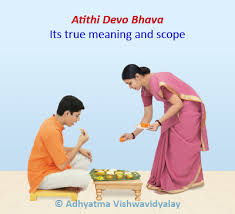
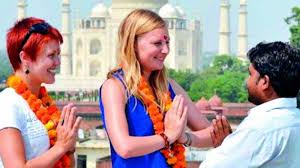
India has a rich heritage and culture of warm hospitality. In India it is believed that honouring guests equals to honouring God. A guest is welcomed into our home and hearth with cheerful gratitude. The Sanskrit adage ‘atithi devo bhava’ dictates the respect granted to guests in India. This wonderful tradition of our country has become the unique selling point of the modern tourism industry. Ministry of Tourism, Government of India has pioneered an initiative that will help tap into the full potential of tourism in India. Ministry of Tourism, Government of India has introduced “Atithi Devo Bhavah Program”- a nation wide campaign that aims at sensitizing key stakeholders towards tourists, through a process of training and orientation. The endeavour is to boost tourism in India, which in turn would act as a catalyst for India’s economic growth.
The ‘Incredible India’ Campaign has been launched to create awareness about the effects of tourism and sensitizing people about preservation of our rich heritage and culture, cleanliness and warm hospitality. It also re-instills a sense of responsibility towards tourists and reinforces the confidence of foreign tourists towards India as a preferred holiday destination.
Some points prepared by the Ministry of Tourism, Government of India, Part -1:
‘Guest Is God – Atithi Devo Bhavah’
Image Source -google.
As the old saying goes, “Treat others as you would like to be treated yourself.” That is the essence of Atithi Devo Bhavah campaign. And for that to happen, we need to change our attitude towards tourists. Some of us have lost touch with the hospitality that we were famous for. Let us bring that warmth back. Let us truly embrace the spirit of Atithi Devo Bhavah.
WHY ATITHI DEVO BHAVAH? : Last year we had 3.3 million visitors, but when you consider that Singapore gets 7 million a year, Thailand 9.6 million a year and Malaysia 11.5 million, it is a small number. There is no reason why we can’t aim to increase our numbers by 100%. And that too would be just a beginning. However to do this we need to change our attitude towards those who visit us. Often tourists are mistreated, cheated and rudely dealt with. It is simple logic: if someone in a house is rude to you, as a guest, you don’t encourage your friends and relations to go there. This is perhaps the reason why, in spite of an incredible wealth of tourist spots, cultural attractions, natural wonders and destinations for the soul, India still isn’t amongst the top 15 tourist destinations of the world. The time has definitely come to get together to change this.
INSPIRATION BEHIND ATITHI DEVO BHAVAH ? : Respect has always been an integral part of the Indian soul. From time immemorial we have always respected our teachers, our elders, our parents and our guests. Perhaps this is why a great Indian Emperor once observed-‘In Hindustan our manner is very respectful and our hearts are always open’. In many ways, at that time India was the ultimate destination for the enlightened travellers. Now, thousands of years later, we can when bring that golden age back again. This inspired us to go back to those years, when Indian hospitality set the standard for the world. And we found the keystone of what we want to do ,
Or guest is blessed, Our visitor is God. That was how we arrived at our mission called ‘Atithi Devo Bhavah’.
Growth and development are inevitable and necessary to absorb the growing needs of the economy. But the problem lies in the truth that none of this growth is monitored. Giant machines dig the earth out and transport mud to all corners of the city. Ratty trucks with the broken remains of gigantic rocks can be seen ferrying the roads primarily during dusk or night. Most of this quarrying is illegal. Contractors excavate mud and destroy rocks in remote spots often under the dark cover of night for a paltry sum.
Mass destruction of rocks has exacerbated the depletion of green cover. Precious fauna and flora has been destroyed. Loss of these rocks has meant ground water depletion which has further compounded the city’s water woes. Years ago tiny lakes dotted the entire city including the famous Jubilee and Banjara hills localities. Today lakes are found only on the city outskirts in places like Shamirpet. Lakes closer to the city are shrinking every passing year.
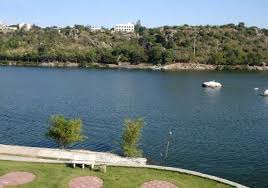
Durgam Cheruvu.
Fighting For Conservation :
Though Hyderabad has seen the gradual depletion of rock cover, ecological conservation is an issue that has not found much voice with the population. Most citizens, especially those new to the city, are too busy focusing on seeing a snazzy Hyderabad finding its spot on the global map. But even in this bleak scenario there is a ray of hope for the rocks.
Since 1996, a group of concerned citizens have come together to prevent indiscriminate destruction of the rocks and protect the rocky landscapes. Their organization ‘Society to Save Rocks’ (STSR) has since then been working hard to preserve the rocky ecosystem in the city and state.
Due to their dedicated campaigning, the Government of Andhra Pradesh has added nine rock formations in Regulation No. 13 of the Hyderabad Urban Development Authority (HUDA) for the protection of Heritage Buildings and Precincts. This act of the governments was hailed by conservationists across the country as a great step in recognising the importance of the rocks and the need to protect them. Today Hyderabad is the only city in India where rocks are protected as a natural heritage. Encouraging the government to preserve these rocks by promoting them as tourist attractions i5 an alternative that the Society is pushing for.
Image Source -google.
But despite STSR’s dedicated efforts, the city faces a challenge as much land in and around the city has already been sold off. Durgam Cheruvu, one of the designated heritage sites is the best place where the government’s attempt at conservation and apathy towards rocks, are both visible. Years ago the lake lay hidden between rocky cliffs and was inaccessible. A few years ago it was converted to a model tourist spot with boating and other leisure facilities. But entire stretches of hills on one bank of this protected area have been destroyed in the past decade to accommodate the fast-growing Hi-tech city. Durgam Cheruvu thus epitomises the ongoing conflict between development and protection in the city.
However some individuals have successfully managed to integrate rocks that abut their house into the structure of their homes. The rock forms as much a part of their home’s interior as does their sofa or any other furniture. Some builders and companies too have taken the initiative to include rocks in their building complexes. While they have included a natural rock structure within their building premise, their focus remains on decorative appeal rather than ecological consideration for the rocks.
Over the years, due to the efforts of organizations like the STSR, the rocks of Hyderabad have found a voice. But the din of the construction industry and growing needs of an expanding city are far louder than the voice of these few individuals. What the rocks require are greater public support and a deeper appreciation of their existence. Locals, tourists and governments need to take a pro-active approach to ensure that growth includes preservation of rocks and their eco-systems. After all if a booming economy overtakes billions of years nature, the consequences and blame will have to be borne by none other than the citizens themselves for the only people who stand to gain will in reality be the ones of who lose.
Look at the photograph given here. This is The Three Stooges, a bizarre rock formation that can be found in Goblin Valley. There are some exceptionally unique rock formations all over the world.
•Vanishing Rocks of Hyderabad:
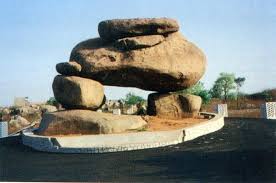
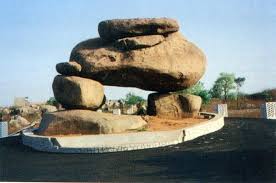
One of the most interesting facets of Hyderabad is the mammoth granite rocks in bewitching poses that capture one’s eye and imagination. Rocks large and small precariously balance on one another to form shapes that mesmerise the mind.These rocks, among the oldest in the world, are Hyderabad’s true heritage. Even the mighty Himalayas at 40-60 million years old are younger than these rocks!
Nature’s Sculptures:
The gigantic boulders inspire creativity and reverence in people, forcing them to look beyond the obvious shapes to create imaginary forms. These rocks seem to strike poses and imitate life-a puppy seated on its hind legs with its front legs raised in the air, a car-shaped formation, flying saucer resting on rocks, four chambers of the heart, and a woman standing with her face to the a woman standing with her face to the breeze; these are just a few shapes that tickle your imagination. It is no wonder then that people have taken to naming certain rocks after the shape they think they resemble or the idea they think they epitomise.
Some of these names have stuck on and the rocks have thus become landmarks in the city. And in some other places, rocks with their symbolic shapes have inspired the devout. Natural openings and cave like structures formed by the rocks have been used as temples by locals. Many people even consider them as symbols of the divine and worship these silent sentinels.
Tortoise Rock
Maintaining ecological balance:
Apart from being a visual treat for viewers, these rocks play an integral role in preserving and nurturing the ecological balance of the region. Lakes and ponds have always formed on adjoining rocky patches. This is a as rocks help natural occurrence create the natural drainage system of the area. Subterranean passages created by these rocks result in the natural flow of rain water to that area, aiding the formation of ponds and lakes and recharging ground water levels.
And where there is green, there are birds and bees. Rocky hills often act as the biodiversity hub for the area. Prickly thick shrubs and dry deciduous forests ensconce the rocks. Along the lakebeds, tall grass grows in wild abandon. Often even medicinal plants and aromatic herbs are found in the area. And hidden in this medley of plants are insects, birds and reptiles. So don’t be surprised if a Baya weaver flies by or a snake wiggles past you, when you are trekking about the rocks. Fauna and flora of varied kinds thrive in rocky eco-systems. Nature is at its best in these spots and here is where people can go to for a whiff of the wild, But today, such spots are disappearing with alarming alacrity. Rocks are being destroyed indiscriminately; the price the city is paying for growth.
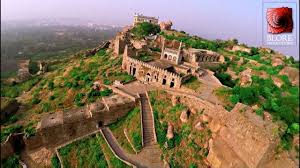
Image Source -google. Golconda fort of hyderabad.
Development at the cost of nature Part1:
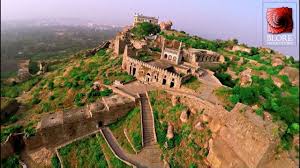
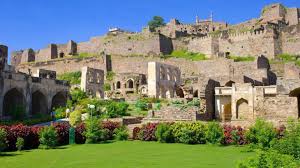
It is easy to wonder why someone would destroy rocks that are billions of old. For centuries now these rocks have been the building material for the city. Even the famous Golconda fort of Hyderabad which sits atop a granite hill is made of the very same granite rock. The problem however lies at the speed and magnitude with which these rocks are now disappearing. Just consider the following statistics. The official 2001 census stated the Hyderabad population was around 3.7 million. But today the overflowing buses, traffic jammed streets, and expanding city borders tell a very different story. Today, this natural legacy is giving way to tall residential high-rises and software parks. Hills are being replaced with malls and buildings.
As the massive inflow of population continues, rocks are being quarried round- the-clock to cater to the exponential boom in the construction industry. Large tracts of land have been approved for residential or commercial use, without taking into consideration what actually lies on the land. The rocks are blown down, land is cleared and the hard crystalline rocks are used as construction material. In the past four years itself, vast stretches of hills around the city’s fringes have been turned to rubble or have completely disappeared. If you visit the places where the development is taking place your heart will bleed at the sight of the half quarried, half-eaten mountains…..
With energy consumption being the buzzword in developing economies around the world, fears of an energy crisis looming ahead are not totally unfounded. The non-renewable nature of fossil fuels makes complete dependence on these for future energy needs a very dicey affair. Renewable energy sources are the best bet in the scenario. And what can be a better renewable resource than the sun?
In a country like India, if the abundant amount of sunlight available is harnessed properly it could mean an end to the energy crisis. It is the most abundant source of energy. The average global solar radiation is around 5 kilowatt hours (KWH) per square meter per day with the sunshine hours ranging between 2300-4300 per year. India is in the sunny belt of the world. The country receives solar energy equivalent to more than 5000 trillion KWH per year, which is far more than its total annual energy consumption.
Besides, it is a renewable and clean energy source. Taking both environmental and economic cost, solar energy works cheaper than fossil fuel resources. Once we master techniques to harness solar energy, it can be a vital source of power on all planets. Solar energy could be a viable source of power generation for the next 1000 crore years. There are many technologies available for conversion of solar energy into solar power. For instance, solar photovoltaic (SPV) technology, photo galvanic cells, solar steam generators (solar concentrating power), solar tower or solar chimney, radio micrometers and thermopile are some of them.
ELECTRIC MOTORS:
Imagining a future where clean air is no longer a dream and our cities are not smog filled concrete jungles, could well become a reality in the coming years if the world begins to increasingly adopt the use of cleaner options like alternate-fuel vehicles . The rise in economic activity and the burgeoning population have led to a tremendous demand in the transport sector, especially in urban India. By 2025, India’s urban population is expected to grow five fold to a staggering 200 million while pollution is expected to grow seven times. With this tremendous growth has emerged a very critical issue of keeping air and noise pollution in urban areas under control.
If we can have three lakh electric vehicles (EVs) on the roads by 220 including three wheelers, cars and scooters, we would have reduced pollution by 16 lakh metric tones, saved ? 3700 crores in foreign exchange earnings and substantially reduced healthcare costs. Small electric buses, three wheelers and electric scooters are ideal for city mobility in India but it could take between 5-10 years before they become viable for commercial use.
Image Source – google.
The electric vehicle uses electric energy which is stored in batteries that feed the electric motor. Driving an electric vehicle is easier and more relaxing than a traditional one because it has no speed-gear and functioning noise. It is enough to turn the key and press the acceleration pedal; you need only two driving pedals- accelerator and brake.
The need to reduce air pollution along with the availability of new advanced clean alternative to internal batteries have allowed EVs to reappear as a combustion vehicles. Electric drive systems are virtually non-polluting and extremely energy efficient. While internal combustion vehicles can convert about 20% of the chemical energy in gasoline into useful work, 75% or more of the energy from a battery has productive power in an electric vehicle.
Electric motors can also provide power at almost any engine speed. While internal combustion engines must be revved up to high rpm to achieve maximum power electric motors provide nearly peak power even at low speeds. this gives electric vehicles strong acceleration performance from a stop.
The emergence of newer batteries has driven the cost and performance EVs. There are several major types of automotive batteries available and under development, from advanced lead acid batteries like those that start our internal combustion engines to lithium polymer bateries. Although recharging could be a consideration, home recharging systems are available giving EVs an added advantage.
Apart from being environment-and -user friendly, there are several other reasons for alternate fuel cars to flourish in India. Firstly, electricity for EVs can be produced from various sources for which India has natural resources and does not need to depend on the import of oil. Although EVs will not replace LPG, CNG or petrol and diesel for intercity use, the infrastructure required for EVs in the form of electricity distribution infrastructure is already available in all our cities and minimum costs are required to install additional capacity.
EVs are zero polluting, easy to handle and have low maintenance costs. EVs will not degrade with time and they are always zero polluting unlike conventional vehicles where the pollution increases with engine degradation, poor maintenance and adulterated fuel.. India also has the maximum market potential for EVs owing to an established auto component infrastructure, low manufacturing and R&D cost, mechanical hardware availability, high urban congestion and the presence of domestic market. The industry could significantly gain from rising exports by 2010, and with appropriate government support, could transform the landscape of urban India by reducing pollution, improving public health, creating employment opportunities and impacting society.
In order to do that, a holistic approach involving the government, public and auto majors is needed to promote EVs in India. Appropriate government policies during the next five years and adequate support from business houses and institutions. for instance, purchasing a fixed percentage of vehicles for their fleets and offering subsidies and tax exemptions, will go a long in promoting the industry in India. Finally, people have to become more informed about these technologies. The media must play its role in educating the public about alternate fuel vehicles and their advantages.
The plant world is an immense store of active chemical compounds. Nearly half = the medicines we use today are herbal in origin, and a quarter contains plant extracts or active chemicals taken directly from plants. Many more are yet to be discovered, recorded and researched; only a few thousand have been studied. Across the globe, the hunt will always be on to find species that could form the bases of new medicines. Humans have always used plants to ease their pains. They imbued them with magical powers and then gradually learnt to identify their properties. We can now enjoy the benefits of herbal medicines because, over thousands of years, our ancestors discovered which plants were medicinally beneficial and which were highly toxic.
Thousands of years ago, the ancient Egyptians discovered simple ways to extract and use the active ingredients within plants. Egyptian papyrus manuscripts from 2000 B.C. record the use of perfumes and fine oils, and aromatic oils and gums in the embalming process.
In ancient Greece in the 5th and the 4th centuries BC, Hippocrates, the father of medicine, was already recommending asparagus and garlic for their diuretic qualities, poppy as a way of inducing sleep and willow leaves to relieve pain and fever. In the 1st century AD, another Greek doctor, Dioscorides, established the first collection of medicinal plants. His treatise on the subject was translated into Arabic and Persian. Centuries later, his work was also used by the Muslim scholars who influenced great universities of the period, particularly at Montpellier, Europe’s most famous centre for the study of botany.
As a result of trade with Africa and Asia, the Western world’s store of herbal medicines was enriched by the inclusion of camphor, cinnamon, ginger, ginseng, nutmeg, sandalwood, turmeric and henna. For a long time, however, the use of both local plants and those with more distant origins was based on more or less fanciful beliefs. Throughout the Middle Ages herbal medicine consisted of a mixture of magic, superstition and empirical observation. From the Renaissance onwards, scientists and their scientific studies, discoveries and inventions came to the fore, rejecting alchemists’ elixirs and other magical remedies. Local plants were carefully collected and widely used to make infusions, decoctions and ointments. These plants make up the major part of the traditional cures that we have inherited.
Chandan or sandalwood sticks.
History behind Nature’s Medicines:
In the late 1700s, Carl Wilheim Scheele, a gifted Swedish chemist, obtained tartaric acid from grapes, citric acid from lemons and malic acid from apples. The techniques that he and his contemporaries used led to the isolation of the first purified compounds from plants that could be used as drugs. First came the isolation of morphine from the opium poppy in 1803, then caffeine from coffee beans in 1819, quinine from cinchona bark and colchicines from meadow saffron both in 1820 and atropine from deadly nightshade in 1835.
Image Source -google.
One tree that generated considerable interest among scientists was the willow. In the early 1800s, chemists from Germany, Italy and France began the search for the compounds responsible for the acclaimed pain-relieving effects of its bark. In 1828, the German pharmacist, Johann Buchner, was the first to obtain salicin, the major compound in a pure form. In 1838, the Italian chemist, Raffaele Piria also obtained salicylic acid from the bark by various chemical processes. But these early compounds caused blisters in the mouth, and stomach upsets when ingested. In 1853, a French chemist, Charles Frederic Gerhardt, synthesised a modified form of salicylic acid-acetylsalicylic acid. But still it wasn’t further modified form developed for more than 40 years until a German chemist, Felix Hoffman, working for Bayer, rediscovered Gerhardt’s compound. Hoffman gave it to his father who suffered from arthritis and reported the beneficial effects.
Bayer decided to market the acetylsalicylic acid as a new drug for pain relief and patented the compound acetylsalicylic acid in 1899. At last from the willow, the first modern drug was born and, with 12000 tons of aspirin sold every year throughout the world, it has kept its number one position.
From the 1930s onwards, advances in chemistry have made it much easier to reproduce the active ingredients in plants. But plants will continue to have a medicinal importance in their own right. Their active constituents may be slightly modified to improve their efficiency or to reduce their undesirable effects, but they are still vital for the treatment of disorders such as cancers and heart diseases or as a means of combating malaria. And they remain the essence of herbal medicine-an area that has still not been fully understood and explored.
Rags- to- Riches story of Ashok kumar, who is a Professional Golfer of India.
Ashok Kumar, one of the country’s leading golfers who rose from the ranks of a caddie, remembers his very humble beginnings very distinctly. “The reason I am here in this swanky restaurant of the Oberoi, sipping coffee with you is because of golf. It has brought me name, fame and money and all that I could possibly ask for in life. Without golf, I am a zero ,” said the 27-year-old golfer with rare candour in a chat with Kalyan Ashok, a sports journalist working with Sportstar, one of India’s leading sports weeklies.
India’s No.3 golfer may not exactly be rolling in luxury at the moment, but he definitely leads a comfortable life-a far cry from the days when he used to sleep in a stable. “It’s destiny that brought me to this stage in life and I can’t sav that I deserve it, but it’s God’s gift to me through golf, sald Ashok. Not the one to forget his past, Ashok Kumar keeps reminding himself how he came up in life.
His story is stranger than fiction. Ashok was born into a poor family in Bihar that struggled to make both ends meet. (He has four brothers and two sisters.) In 1988, his parents sent him away with his elder brother to Delhi and he worked as an errand boy at the Jaipur Polo Club.
“I used to work in the day assisting my brother and sleep in the stable at night. The club also had the Air Force golf course and I wandered on to it one day and watched the players and caddies. I thought of becoming a caddie, but I was too young then. I did not get the job, but the club hired me a few years later,” recalls Ashok. It was then that he took to golf. He started practising in the club when no one was around. However, he was caught playing one day and was suspended from his job, as caddies were not allowed to practise golf.
“I was back to square one. Then I went away to help a lorry owner who was transporting sand. I remember the days when I had to pay five rupees to hire a blanket during winter and sleep in Connaught Place,” Ashok said wistfully.
Six months later, when things cooled down, he moved back to the Air Force golt course and became a caddie to Amit Luthra, who was India’s top golfer and an Asian Games gold medallist. “Luthra saab spoke to the club authorities and got me in,” Ashok said with gratitude writ large on his face.
Ashok learnt a lot from Luthra and one day he challenged his mentor to a play-of “I don’t know what got into my head and I told him that I will beat him, to which Luthraji said that if I did that he would waive a month’s caddie fee. We played on the road, but I lost,” Ashok smiled.
Luthra, however, was very impressed with the young man’s talent and got him enrolled at the Delhi Golf Club, which allowed caddies to play. Seizing this opportunity with both hands, Ashok went on to improve his game by leaps and bounds and in 1995, DGC selected him to play in the All India Junior tournament in Kolkata.
Image Source – google.
“I didn’t know where Kolkata was. I thought it was outside the country! I travelled in an unreserved compartment, spending most of the time sitting in the bathroom or just outside as there was no place elsewhere.” In Kolkata, he finished third and in the next two years he became the Junior Champion of the country. In 2000, he moved to the amateur ranks and two years later he became a pro, finishing his first season as India’s No.5 golf player. Riding a wave of success, Ashok held the No.1 spot in 2006 and 2008 and currently (2010) he is ranked No.3.
The moment he cherishes the most as a player is not the time when he won his first major title but when he finished 18th in the Hero Honda-DLF Tournament in 2002. It fetched him a cheque of Rs. 1 lakh. “I never looked back after that,”Ashok remarked.
In the early part of 2010, Ashok’s golfing career got a boost when the Bangalore- based business and software company, Kaseya India, run by golf enthusiast, Mr. Girish Krishnamurthy, decided to sponsor him. “I am a simple guy and with Kaseya around to take care of other things, I can concentrate better on my game now,” Ashok says with determination as well as gratitude. It is his ardent wish that all golf links in the country should support caddies, as he feels that many of them have a lot of inherent talent simply waiting to be tapped.
Ashok has modelled his game on his golfing idol, Tiger Woods. Incidentally, he had met Tiger when he was a caddie to Arjun Atwal in Bangkok a decade ago. “He hugged me when he was introduced by Atwal as a top amateur from India. I asked him for his advice, to which the legendary golfer simply said-‘don’t think of beating others, they should think of beating you,” Ashok’s eyes sparkled when he recalled his meeting with Tiger.
He faithfully follows that advice from the maestro and hopes to play with him one day. “For the moment, I eat, drink and sleep golf. There’s no distraction in my life. I relax with some music and watch CDs of Tiger Woods,” Ashok concluded.
You probably know the meanings of the words’ workaholic’ and ‘alcoholic’.
What do you think a ‘foodaholic’ is? Walter Hudson was one.
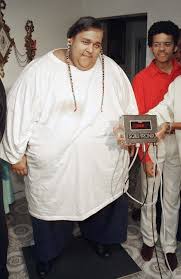
How much do you weigh? Walter Hudson weighed more, much more. This is his obituary.
WALTER HUDSON, who has died at Hempstead, New York, age 46, was once listed in The Guinness Book of World Records as the heaviest man on earth. About 183 cm tall and 274 around, with cherubic features set off by pigtails braided in the Cherokee style, he long devoted himself to the pleasures of the table. Four years ago, Hudson-then tipping the industrial scales at his top weight of 543 kg gained worldwide notoriety (as “Whopping Walter”) when he became stuck in his bedroom door. He was wedged there for some four hours. It took eight firemen to free him.
Walter Hudson was born at Brooklyn in 1945 and, as he recalled, “began gorging at the age of six.” At 15 he was so obese his legs collapsed underneath him and he was confined to bed. Indeed, except for the time when his family moved to Hempstead in 1970 and he was transported by motor-car (his then 266kg broke the seat,) he remained inside. “I’m just a foodaholic,” he once confessed, “I have no excuse.”
Hudson’s eating habits were fuelled by food brought in by members of his family. He would generally start his day with a breakfast of two pounds of bacon, 32 sausages, a dozen eggs, a loaf of bread, jam and coffee.
For lunch, Hudson favoured four enormous bowls of rice, four double cheese- burgers, eight boxes of fried potatoes, six pies, and six large bottles of coca-cola. For dinner he would eat six roasted corns, half-a-dozen yams, and another six or seven baked potatoes, ending with a whole apple pie. Between these main meals, he would eat a chicken or two, followed by noodles, string beans, six large bottles of soda, not to mention colossal sandwiches, and copious amounts of ice-cream.
“All I cared about,” he recalled, “was food, FOOD!” When not eating and sleeping he would watch television, listen to tapes and read the Bible-he had a particular penchant for the psalms and was apt to recite Psalm 121. “I will lift up mine eyes unto the hills…”
Hudson, though, was advised against sitting up for longer than five minutes because of the risk of being smothered by flab. The only exercise he engaged in 8. was when he attended to his ablutions; it took him an hour to negotiate the six yards to the bathroom from his bedroom. Then in 1987, he found himself wedged in the door-way. “The day I got stuck in that door,” he recalled, “that when the Lord got me the help I needed.” The help to which he referred was offered by Dick Gregory, a comedian who masterminded the Slim Safe Diet Scheme.
“We think what might have happened,” said Gregory about his new client, “is that in 27 years of lying around he might, because of the reading of his Bible, have taken on the same characteristics as Buddhist monks – slowed down the biological processes. But we don’t know.” Gregory placed Hudson on a1,200 calorie-a-day diet of raw fruit and orange juice. For exercise he was advised to lie in bed waving his arms about like a conductor.
Hudson soon lost some four inches off his knees, and within three months had shed 178 kg. It began to look as if he might fulfil such ambitions as visiting his mother’s grave, riding on the New York subway, driving into the country-and even flying to a clinic in the Bahamas, from which he envisaged emerging as a sylph of 13 stones. 12. But it was not to be. At the time of his death, of an apparent heart attack, Hudson reportedly weighed 508 kg. Rescue workers had to cut a large hole in the wall of his bedroom to remove the body. He was unmarried.
SO HOW CAN OVERWEIGHT AND OBESITY BE REDUCED? It is not good for human body in this pandemic era……………….
Overweight and obesity, as well as their related noncommunicable diseases, are largely preventable. Supportive environments and communities are fundamental in shaping people’s choices, by making the choice of healthier foods and regular physical activity the easiest choice (the choice that is the most accessible, available and affordable), and therefore preventing overweight and obesity.At the individual level, people can:limit energy intake from total fats and sugars;increase consumption of fruit and vegetables, as well as legumes, whole grains and nuts; andengage in regular physical activity (60 minutes a day for children and 150 minutes spread through the week for adults).
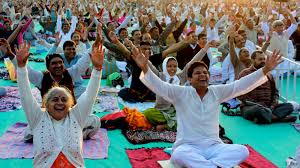
The most important principle behind Laughter Yoga or the most significant driving force behind the several Laughter Clubs is the theory that Motion Creates Emotion. Quite a few people wonder how a person can laugh when he is in no mood to laugh or when one doesn’t have any reason to laugh. However, the answer is very simple. For, there is a well established link between the body and the mind. Whatever happens to the mind happens to the body as well. This is easily understood and observed too. If a person is sad or depressed, his body also appears quite lifeless and sluggish. Such a person doesn’t walk or talk enthusiastically. But, what most people fail to understand is that the opposite is also true.
Whatever happens to the body also happens to the mind. I remember my father once telling me, “Son, if you are sad or feeling a bit low, don’t sit idle. Keep doing some physical work or go for a walk or do some jogging or go out to play some cricket or football . You’ll feel better.” And most of the times dad was proved correct. I would start feeling better quite soon. In an unhappy state of mind, if we bring ourselves to behaving or acting happy, soon enough we will start feeling light-hearted and chirpy indeed!
So, Laughter Yoga aims to use the two-way body-mind link to change the state of mind through voluntary physical gestures which include repetitive clapping, chanting, specific body movements along with laughter and breathing exercises. The result is so positive and its effects are so powerful that the modern world today has witnessed Laughter Yoga overcome severe and chronic depression in thousands of people right across the globe. In fact, several Laughter Clubs have adopted the motto, “If your Mind can’t laugh, bring your Body to our club.”
Laughter is all about playfulness. Have you ever wondered why children laugh 300 to 400 times a day whereas adults would consider themselves very fortunate if they manage laughter 10 to 15 times in a day? This is because of that seriously wicked and interfering tool called the brain! Adult use their brains or minds first to comprehend humour and then decide if they have to laugh. Very often, they suffer from what is said in Hindi the LKK Syndrome, that is “Log Kya Kahenge” or “What will people say?” This is called the “Mind-to-Body Model of Humour”.
On the other hand, children, who do not allow themselves to be too affected by the LKK Syndrome and don’t use their brain to seriously do the comprehension first, laugh the most while playing. Even if they fall into mud and slime while playing, they laugh heartily together without bothering about the consequences of soiling their spotlessly white school dress in case of a traditionally strict class teacher or headmistress in school or mother at home! Their laughter comes straight from the body and happily they don’t make use of intellectual capacity of the brain for it. Very clearly, they exhibit the “Body-to-Mind Model of Humour”, It is this childlike playfulness that Laughter Yoga aims at cultivating in people who are quite stressed these days.
Image -google.
What is sadly significant is the fact that more and more children and even women, to whom smiles and laughter and giggling should come as naturally as the turtle coming out of its shell to walk or leaves falling in autumn, are enrolling themselves as members of laughter clubs nowadays!
Laughter Yoga makes a clear distinction between Happiness and Joy. Happiness is a conditional response of the mind which is totally dependent on the fulfilment of certain desires of the mind. By its very nature, it is related to how one’s life had been in the past or how it will be in the future! It is not there at all in the present moment. The ironical and sad fact is that even if some dreams, goals or aspirations are fulfilled, happiness disappears quite quickly as the mind starts chasing new goalposts-a new, job, a new house, a bigger car, etc.
On the other hand, joyfulness is the unconditional commitment to be happy each moment, to have fun for the moment, despite the problems and challenges of life, no matter how insurmountable they seem to the mind. It is the promise that the Body makes to the mind to indulge in playfulness moment by moment and thereby give relaxation to it. During these periods of playfulness triggered by a plethora of physical activities like dancing, singing, playing and laughing, physiological and biochemical changes take place within our body that give us a sense of well-being that completely alters a negative outlook towards life and its challenges replacing it with confident positivism moment by moment.
Therefore, in Laughter Clubs, members develop positive conditioning of joy. By laughing together over a period of time, clapping in a rhythm ,chanting “Ho Ho Ha Ha” in unison and positive affirmations like ” Very Good Very Good Yay Yay”, the brain develops new neuronal connections to produce happy neuropeptides and hormones in the body that rejuvenate the members.
Finally, Laughter Yoga rectifies shallow and irregular breathing, which is the direct consequence of stress and negative mental state. According to Dr. Otto Warburg, a Nobel Laureate, one of the main reasons for falling sick is the lack of oxygen in the body cells due to incorrect breathing. So, let us laugh together and get the oxygen back into our cells!
I’m telling you about on Sleep habits among Indians?
Aviral is a Man .Aviral knew he was dead tired. Though it had been more than thirty eight hours since the forty four year old marketing executive returned to Delhi early one morning from New York, he was still recovering from jet lag. He had forced himself to remain awake the whole day as he had hoped to coerce his body into sleeping at night.
But the much needed sleep seemed to elude him completely. “I hardly managed any sleep that night,” Aviral recalled. The time change had completely disrupted his sleep pattern, and when he got out of bed at 7a.m. to head for office, he was entirely ill at ease, to say the least. At the office, he could barely concentrate on his work.
Aviral wasn’t aware simply how exhausted he was until he had driven a quarter of the twenty-four kilometre stretch on his way back home in the suburbs of Delhi. He halted at a busy signal on the way, but fell asleep suddenly at the wheel. He dazed after the motorist behind him honked. Aviral drove on, but feeling woke up he couldn’t focus any further, he decided to pull off the main road and parked the car in a quiet place. Then, he rolled down the windows a bit and managed to take a two-hour nap in his car. It was only after that that Aviral could drive home safely.
It is an undisputed fact that not getting enough sleep can lead to problems in concentrating. In fact many sleep disorder experts think that lack of sleep is the reason for many ailments. Dr. Kumar Menon and his colleagues presented a study paper on sleep disorders in Mumbai in which they stressed on the need for early detection of the problem and concluded that it was high time that all the physicians “woke up to sleep disorders and included sleep history in evaluating their patients.”
Whatever be the cause of not getting proper and enough sleep, we’ve all experienced the exhaustion caused by lack of sleep. Thus, sleep is as important to a healthy lifestyle as eating properly and exercising. Getting a good night’s sleep is one of the simplest things we can do to stay healthy.
A good night’s sleep means waking up rested and invigorated. On an average, a healthy adult requires just over eight hours of sleep a night, according to Dr. Jeffrey Lipsitz, a Canadian expert on sleep disorders. However, the amount of sleep it takes to rejuvenate an individual varies from person to person. “It’s not a fixed number,” opines Joseph De Koninck, a renowned professor of psychology, adding that if one consistently gets less sleep than one needs, then “a sleep deficit accumulates.” The time it takes for a sleep deficit to accrue depends on how consistent the problem is. “Missing a couple of hours of sleep every night for a week is probably enough,” says another psychiatrist Robert Levitan.
Swarup Chatterjee, the 28 year-old IIM graduate and assistant manager at a BPO in Hyderabad, knows very well that he doesn’t get enough sleep. “I haven’t had more than four to five hours of sleep for the last three years. There’s always so much that needs to be done in my professional as well as personal life that I am constantly thinking.” Swarup is fully aware that all that is very stressful and he admits that even though he has high energy levels, he is often tired and so he drinks several cups of coffee to counter the fatigue. “But I know that I’ll be able to concentrate better if only I got more sleep,” Chatterjee concludes.
In a study conducted by sleep-disorder experts, it was found that at least one- third of adults have significant sleep loss, i.e. they have just six and a half hours or less of sleep every night. Then a recent survey conducted in India has shown that twenty-nine percent of Indians went to sleep only after midnight and sixty-one percent slept for seven hours or less. The survey also arrived at the conclusion that Indians were among the world’s earliest risers, with sixty-four percent getting out of bed before 7a.m. Is there a need to reiterate that “Early to Rise” is good provided a person follows the “Early to Bed” principle as well?
Sleep is crucial to maintaining one’s health. Without it, we increase our susceptibility to an astonishing array of health problems, including heart disease, stroke, diabetes, obesity and depression. Not sleeping enough can compromise your immune system, says Stanley Coren, noted professor of psychology and author of the very popular book, “Sleep Thieves”. You eat well and exercise in order to keep your immune system up, Coren goes on to explain, but if you aren’t sleeping, you undo all that good work. “The immune system works best when you are sleeping,” he says. “That’s when your natural killer cells are generated.”
Image Source -google.
Natural killer cells are produced in the bone marrow and found in the blood and lymph fluid. They are part of the body’s defence mechanism against viruses, bacteria, even cancer, and they do not work properly in the persons who are sleep- deprived. A study in Turkey revealed that after 24 hours of sleep deprivation, the percentage of natural killer cells in the blood declined by 37 percent. Another study in the USA conducted on 23 boys and men found that one night of partial sleep-deprivation reduced natural-killer-cell activity to 72 percent of normal levels. Though their activity returns to normal when we begin to get proper sleep, the real problem is that a lot of damage might have been done to our bodies when we were sleep-deprived for several nights and our immune system might have left us undefended and susceptible to infection.
Sleep is important in keeping not only our waistline trim, but ensuring a balanced brain activity too. During sleep, brain neurotransmitters-the chemicals that deliver messages between nerve cells in the brain-are replenished. When we do not sleep well, our brain chemicals become depleted which leads to emotional disturbances like depression, anxiety and general feelings of sadness, anger and irritation.
Full name – Usain St Leo Bolt Nickname(s)- Lightning Bolt Nationality – Jamaican Born – 21 August 1986 (age 34),Sherwood Content, Jamaica Height – 1.95 m (6 ft 5 in) Weight – 94 kg (207 lb) Sport – Track and field Event(s) – Sprints Club – Racers Track Club Coached by – Glen Mills Retired – 2017 Awards And Honors: Olympic Games.
About Usain Bolt:
The world’s fastest man has adopted the world’s fastest animal. As part of an effort to help protect this ‘endangered species’ in Kenya, Bolt formally adopted a three-month-old cheetah cub in Nairobi. Bolt bestowed one of his own nicknames upon the cub, naming him ‘Lightning Bolt’. Symbolic indeed!
One cheetah at a Cincinnati Zoo ran the 100 metres in just over 6 seconds, about 3.5 seconds faster than Bolt’s human world record of 9.58 seconds. Some scientists are trying to apply the physics of a cheetah’s running style in order to maximize the ability of human runners. Well, do not be surprised if Bolt does land another ‘bolt from the blue’ by equalling the cheetah’s feat.
Sportsmen like Bolt are like the Halley’s Comet, they come once in 76 years, nay, a hundred years. Bolt, a three-time Olympic gold medalist, distinguished himself with a 200 metres gold medal at the 2002 World Junior Championships, making him the competition’s youngest ever gold medalist. In 2004, at the CARIFTA Games, he became the first junior sprinter to run the 200 metre in under 20 seconds with a time of 19.93 seconds, breaking Roy Martin’s world junior record by two-tenths of a second.
He turned professional in 2004, missing most of his first two seasons due to injuries. But he competed at the 2004 Summer Olympics.In his childhood, he loved to play Cricket and Football in the streets of Jamaica with his brother. In his school, he was the fastest runner in the 100-meter race. His primary coach, McNeil was sometimes got frustrated by his penchant jokes. At the 2001 IAAF World Youth Championships in Hungary, he made his first appearance at an international event. Bolt is one of only nine athletes in the world to win World Championships at the youth, junior, and senior levels.Bolt’s first sports choice was Cricket. He is a big fan of Football.
About his Life:
In 2007, he beat Don Quarrie’s 200 metres Jamaican national record with a run of 19.75 seconds. In May 2008, Bolt set his first 100 metres world record with a timing of 9.72 seconds. He set world records in both the 100 metres and 200 metres events at the Beijing Summer Olympics, recording 9.69 seconds in the former event. With a timing of 19.30 seconds in the 200 metres, he broke the previous record of 19.32 seconds by Michael Johnson at the 1996 Summer Olympics at Atlanta. A year after the Beijing Olympics, he lowered his 100 metres and 200 metres world records to 9.58 seconds and 19.19 seconds respectively at the 2009 World Championships. His record-breaking margin in the 100 metres is the highest since the start of digital time instruments. As a result of Bolt’s success in athletics, he was named the Laurens World Sportsman of the Year for 2009.
• He is an 11-time World Champion.– In Track and Field, he is considered the highest-paid athlete ever. – He has been with a number of honors and awards, including Track and Field Athlete of the Year, World Athlete of the Year, and Laureus World Sportsman of the Year (3 times). – He has collaborated with the Soul Electronics and has launched 2-types of Bolt edition in-ear headphones- Run-Free.
Bolt loves dancing and is a great admirer of Indian batsman Sachin Tendulkar, West Indian Opener Chris Gayle, and Australian opener Mathew Hayden. He is a football fan too, and supports Manchester United. What we can learn from a man like Bolt is the level to which one can reach if one works hard. Hours of hard and laborious training have gone into the making of this rare legend on the track, and countries with a billion strong population which cannot produce a single sensation on the track can do well to learn certain lessons from him.
My father’s ancestral village of Rampur, on the left bank of the Ganga at the Himalayan foothills, has a long stretch of forest which has not been afflicted by deforestation yet. Without exception, my vacations here have always been very exciting.
One cold December, my kid brother went missing. My father was at his wit’s end trying to get someone to accompany him to the forest.The village elders were divided in their opinion on the course of action. My mother was too shocked to speak. He was last seen playing near the trees at the end of the field in front of our house. Then some local boys saw him disappearing further into the area which had denser growth. It had been more than an hour since he had vanished. Nobody could have imagined such audacity from an eight year old who had been strictly instructed not to go beyond the field.
Ten of us left for the forest at three in the afternoon. My mother was most unwilling to let me go. While I managed to convince my mother, some elders were not too happy with my presence, but nothing discouraged my optimistic father. As we kept walking into the denser zones of the forest, ominous visions began to cloud our imagination. Calling out my brother’s name loudly had been futile.
The silence of the forest was punctuated by the shrill notes of various insects and distant growls. The approaching darkness was waking them up. Though we had both fire and torches along with guns, the village elders were becoming sceptical about proceeding further without more help. My father, though nervous by this time, refused to give up.
We had reached a small stream. Suddenly one of the elders asked us to stand still. The approaching dusk forced us to follow his example, and we witnessed a herd of elephants crossing the stream. The leader, to our horror, suddenly stopped and raised his trunk in the air, trying to locate us, I presumed! My father was sweating. Mahato, the shooter, was getting his gun into position almost without any obvious movement. For a moment I thought the leader of the herd was staring at me, but thankfully, they moved on and we heaved a sigh of relief.
Suddenly the shrill cry of a child pierced our ears along with the growl of some wild beast. Fearing the obvious fatal end, we rushed towards that direction. In about seven minutes, we reached an open area to find Ratan standing at a distance of barely five feet from a tigress. Handsomely built, the sinewy and powerful beast seemed to be more interested in sniffing my brother. My brother was speechless and was not even aware of our presence behind him. Before Mahato could get ready, the tigress, aware of and disturbed by our presence, snarled and disappeared into the deep forest.
My father rushed towards Ratan, who fainted at his mere touch. The tigress, perhaps a mother, had spared my brother. I hope, we men too, spare the tigresses.
So, this is my Adventurous experience in forest. Becauseyou know what , Forests are essential for life on Earth. Three hundred million people worldwide live in forests and 1.6 billion depend directly on them for their livelihoods. Forests also provide habitat for a vast array of plants and animals, many of which are still undiscovered. They inspire wonder and provide places for recreation. They supply the oxygen we need to survive. They provide the timber for products we use every day.
Photo taken in Rockerville, United States
Forest conservation act: Forests are an important resource that nature can bestow upon mankind. Therefore, it is the duty of every citizen to preserve the ecosystems of forests. But due to rapid deforestation, the cycle of nature is itself being disrupted. Therefore, the need to bring about a law to ensure the preservation of forest was needed.
One of the first legal drafts to protect forest tracts was the Indian Forest Act, 1865 replaced by a 1927 version of the same act. However, it was more geared towards protecting the commercial interests of the British Empire in India.
The act gave authority to the British to restrict tribal activities by levying taxes on timber and forest services. In other words, it mainly regulated the cutting of timber and flow of raw materials rather than protecting forests.
Upon independence, the President of India enforced the Forest (Conservation) Ordinance in 1980 which was later repealed by virtue of Section 5 of the Forest (Conservation) Act, 1980. Under the 1980 Act, the restriction was made on the use of the forests for non-forest purposes.
“Evening time” is the end of the day, And at this time we try to relax our body and mind, and every individual has a different way of relaxing oneself. Every person has a different way of greeting others. The Internet and mobile phones change our life completely. In the past few months, we have spent most of our time with friends and families more, but Today we use mobile phones all day and night. In other words, Today we can not live without a mobile phone; not only that, since social media has come, every person likes chatting in social media instead of talking to each other.
It’s impossible to even imagine how our life would be if there were no various tasty snacks. Most of us get back home, or complete our work by evening and relax with a cup of tea or coffee with something to munch on. The time where you have the deepest conversation or maybe end up overthinking. Snack is loved by people of all ages because it brings us a good taste, good mood and helps us heal from harms. Good food always brings good mood.
We face hard times! I am an optimistic and happy-go-lucky student of Class VIII who has firm faith in the good life, but my parents want me to stay ahead of everybody in this competitive world. There was a time when coming back after school meant joy to me. Four- thirty in the afternoon was good food, and seven in the evening meant time for studies. There was the beautiful period from four- thirty to seven in the evening when it was either cricket or football for me! How times have changed!
Ever since I reached high school, tuitions have been encroaching on my life like a desert encroaches upon a green pasture to destroy it. Well, it is not that tuitions are not important. Nor can I complain of a lack of dedication in my tuition teachers, but what I fail to comprehend is my parents’ obsession to ensure that this giant python called tuitions should develop a crush for me (pun intended!).
If I tell my dad that I am being made to take tuitions when I am quite comfortable with the subject, he gives a mature smile which betrays his being intrigued at my attempts to reason. He is perhaps under the impression that evolution is yet to catch with me. The final result is that he ensures that I meekly visit the concerned tutorial. up Thus my first tuition begins at 5 o’clock. From then to 6.30, I cram the concepts of organic and inorganic Chemistry. I leave this coaching sharp at 6.35 pm to reach another tutorial located 2 kilometres away before 7 pm. There begins my struggle with Shakespeare. It is not that I do not enjoy Shakespeare, but I do not have much stamina left by the time I reach the English tuition.
Image Source – google
My parents fail to recognise that the best part of a student’s waking hours is spent in school. And after that if I am sent to continuous tuition classes, when do I study myself? Moreover, we are taught to play for good health. If a boy does his schooling from ten to four and then does his tuitions from five to nine, when does he play to maintain good health? Yes, one may definitely expect destiny to play with my health. Thus, till 9 pm I struggle to stay awake in my English tuition and then I complete my projects, courtesy the Internet, for an hour after I reach home at about nine-thirty in the night!
I have dinner at ten-thirty which is when I also surf the television channels to locate some interesting entertainment. When I finally go to sleep at about eleven, I browse through some interesting book. My teachers always stress that reading builds character. I agree! But I can’t read for long! Although my school begins at ten am although I have Geography tuitions from 7.30 am to 9.00 am. Ah! So much for the sweet happiness of childhood!
Ok, i will narrate my experience you can decide whether it was paranormal or not. Sorry some of you may find it lengthy. I am a big believer of paranormal, and may be this is the reason that i have had a couple of paranormal experiences.
Who Knocks?’ ‘I who was beautiful Beyond all dreams to restore, I from the roots of the dark thorn am hither And knock on the door.’
Lines from Walter De La Mare’s The Ghost haunt my memory as I take a walk back to the past. People usually refer to the past as dead and buried. Is it really so?
It was a cold night in Deogarh, Jharkhand. I was in Class V then. We were supposed to go to a party at a friend’s house about one-and-a-half kilometres away. My mother was working in the local school. Mum and Dad were supposed to reach the house of Barry Uncle, our host while I was to be accompanied by our caretaker, Ramu.
It was a moonlit night. Deogarh is surrounded by lovely hills and trees. The silhouette of trees in the moonlight is one combination I love. Ramu had an upset stomach after eating thirty-seven pakoras the day before. So I was going alone but I did not feel lonely. The moon was travelling with me. I could see it moving across the branches as I walked. The gentle laughter of a lady suddenly pierced the charming silence of the night air.
Image Source- google.
A girl in bright red appeared suddenly, ‘Why do you keep looking up to your left while you walk?
I was looking at the moon,’ I answered, rather embarrassed at having my romance with the moon noticed.
The girl asked, You are going to the party, right?”
“How do you know?
“It is a small place. People know each other. I will give you company.”
“So kind of you.
So we talked, laughed and joked for the next twenty minutes. 1 noticed her carefully. Red blouse, red and white skirt, light make up, bright red shoes. A small red bag. The lipstick was a bit too bright. She had amazing grace in the way she walked. Her lively but gentle laughter had the freshness of a mountain spring. We were discussing hobbies. She said she liked collecting old photographs. Why old?’ I asked.
She looked at me queerly and answered, ‘Old photographs have lots of hidden and forgotten stories.
“All right, I said.
Barry Uncle’s house was decorated beautifully. Music and lights welcomed us. Suddenly, the girl stopped smiling. She turned around. ‘What is wrong?’ I asked her.
I prefer the moonlight. I will not go in,’ she said and started walking away.
At least take this jacket,’ I offered her. She was my height and I knew about chivalry. She gave me a mysterious smile, wore the jacket, and walked into the darkness.
In the party, I grooved to the music for some time. I needed to have a wash. While moving towards the washroom, I suddenly came across a photograph of Barry Uncle with the stranger I had just met. “That’s my niece, Mary. She died two years ago in a tragic accident,’ Barry Uncle said, with a note of sadness in his voice. She is buried in the graveyard behind St Michael’s Church,’ he added.
This is indeed an experience that I would not dare to forget……………….
Yoga is basically a spiritual discipline which is based on an extremely subtle science that concentrates on bringing harmony between mind and body. It is a science and an art of healthy and sound living. The word ‘Yoga’ is derived from the Sanskrit word ‘Yuj’, signifying ‘to join’ or ‘to combine’ or ‘to unite’. Both Yoga and Ayurveda are historically closely related and have developed in tandem with each other since ancient times. According to Yogic sacred writings the act of Yoga prompts the union of individual consciousness with that of the Universal Consciousness, showing an ideal congruity between the mind and body, Man and Nature. Yoga is believed to balance the three doshas i.e Vata , Pitta & kapha. As indicated by modern scientists, everything in the universe is only an appearance of a similar quantum atmosphere. One who experiences this oneness of existence is said to be in yoga, and is named as a yogi, having achieved a state of freedom alluded to as Mukti, Nirvana or Moksha. Therefore, the prime objective of Yoga is Self-realization, to overcome all types of sufferings prompting ‘the state of salvation’ (Moksha) or ‘freedom’ (Kaivalya). Living with freedom in all aspects of life, health and harmony is the primary focus of yoga practice. “Yoga” likewise alludes to an inward science including an assortment of strategies through which people can understand this union and accomplish authority over their destiny.Yoga, being generally considered as an ‘Immortal cultural outcome’ of Indus Saraswati Valley civilization – going back to 2700 B.C., has substantiated itself taking into account both material and spiritual upliftment of humanity.Basic humane values are the very Identity of Yoga Sadhana.
20 ways yoga Improves health:
1. Builds muscle strength – Strong muscles do more than look good. They also protect us from conditions like arthritis and back pain, and help prevent falls in elderly people. And when you build strength through yoga, you balance it with flexibility. If you just went to the gym and lifted weights, you might build strength at the expense of flexibility.
2. Improves your flexibility – Improved flexibility is one of the first and most obvious benefits of yoga. During your first class, you probably won’t be able to touch your toes, never mind do a backbend. But if you stick with it, you’ll notice a gradual loosening, and eventually, seemingly impossible poses will become possible. You’ll also probably notice that aches and pains start to disappear. That’s no coincidence. Tight hips can strain the knee joint due to improper alignment of the thigh and shinbones. Tight hamstrings can lead to a flattening of the lumbar spine, which can cause back pain. And inflexibility in muscles and connective tissue, such as fascia and ligaments, can cause poor posture.
3. Perfects your posture – Your head is like a bowling ball—big, round, and heavy. When it’s balanced directly over an erect spine, it takes much less work for your neck and back muscles to support it. Move it several inches forward, however, and you start to strain those muscles. Hold up that forward-leaning bowling ball for eight or 12 hours a day and it’s no wonder you’re tired. And fatigue might not be your only problem. Poor posture can cause back, neck, and other muscle and joint problems. As you slump, your body may compensate by flattening the normal inward curves in your neck and lower back. This can cause pain and degenerative arthritis of the spine.
4. Prevents cartilage and joint breakdown – Each time you practice yoga, you take your joints through their full range of motion. This can help prevent degenerative arthritis or mitigate disability by “squeezing and soaking” areas of cartilage that normally aren’t used. Joint cartilage is like a sponge; it receives fresh nutrients only when its fluid is squeezed out and a new supply can be soaked up. Without proper sustenance, neglected areas of cartilage can eventually wear out, exposing the underlying bone like worn-out brake pads.
5. Protects your spine – Spinal disks—the shock absorbers between the vertebrae that can herniate and compress nerves—crave movement. That’s the only way they get their nutrients. If you’ve got a well-balanced asana practice with plenty of backbends, forward bends, and twists, you’ll help keep your disks supple. Long term flexibility is a known benefit of yoga, but one that remains especially relevant for spinal health.
6. Betters your bone health – It’s well documented that weight-bearing exercise strengthens bones and helps ward off osteoporosis. Many postures in yoga require that you lift your own weight. And some, like Downward- and Upward-Facing Dog, help strengthen the arm bones, which are particularly vulnerable to osteoporotic fractures. In an unpublished study conducted at California State University, Los Angeles, yoga practice increased bone density in the vertebrae. Yoga’s ability to lower levels of the stress hormone cortisol may help keep calcium in the bones.
7. Increases your blood flow – Yoga gets your blood flowing. More specifically, the relaxation exercises you learn in yoga can help your circulation, especially in your hands and feet. Yoga also gets more oxygen to your cells, which function better as a result. Twisting poses are thought to wring out venous blood from internal organs and allow oxygenated blood to flow in once the twist is released. Inverted poses, such as Headstand, Handstand, and Shoulderstand, encourage venous blood from the legs and pelvis to flow back to the heart, where it can be pumped to the lungs to be freshly oxygenated. This can help if you have swelling in your legs from heart or kidney problems. Yoga also boosts levels of hemoglobin and red blood cells, which carry oxygen to the tissues. And it thins the blood by making platelets less sticky and by cutting the level of clot-promoting proteins in the blood. This can lead to a decrease in heart attacks and strokes since blood clots are often the cause of these killers.
8. Drains your lymphs and boosts immunity – When you contract and stretch muscles, move organs around, and come in and out of yoga postures, you increase the drainage of lymph (a viscous fluid rich in immune cells). This helps the lymphatic system fight infection, destroy cancerous cells, and dispose of the toxic waste products of cellular functioning.
9. Ups your heart rate – When you regularly get your heart rate into the aerobic range, you lower your risk of heart attack and can relieve depression. While not all yoga is aerobic, if you do it vigorously or take flow or Ashtanga classes, it can boost your heart rate into the aerobic range. But even yoga exercises that don’t get your heart rate up that high can improve cardiovascular conditioning. Studies have found that yoga practice lowers the resting heart rate, increases endurance, and can improve your maximum uptake of oxygen during exercise—all reflections of improved aerobic conditioning. One study found that subjects who were taught only pranayama could do more exercise with less oxygen.
10. Drops your blood pressure – If you’ve got high blood pressure, you might benefit from yoga. Two studies of people with hypertension, published in the British medical journal The Lancet, compared the effects of Savasana (Corpse Pose) with simply lying on a couch. After three months, Savasana was associated with a 26-point drop in systolic blood pressure (the top number) and a 15-point drop in diastolic blood pressure (the bottom number—and the higher the initial blood pressure, the bigger the drop.
11. Regulates your adrenal glands – Yoga lowers cortisol levels. If that doesn’t sound like much, consider this. Normally, the adrenal glands secrete cortisol in response to an acute crisis, which temporarily boosts immune function. If your cortisol levels stay high even after the crisis, they can compromise the immune system. Temporary boosts of cortisol help with long-term memory, but chronically high levels undermine memory and may lead to permanent changes in the brain. Additionally, excessive cortisol has been linked with major depression, osteoporosis (it extracts calcium and other minerals from bones and interferes with the laying down of new bone), high blood pressure, and insulin resistance. In rats, high cortisol levels lead to what researchers call “food-seeking behavior” (the kind that drives you to eat when you’re upset, angry, or stressed). The body takes those extra calories and distributes them as fat in the abdomen, contributing to weight gain and the risk of diabetes and heart attack.
12. Makes you happier – Feeling sad? Sit in Lotus. Better yet, rise up into a backbend or soar royally into King Dancer Pose. While it’s not as simple as that, one study found that a consistent yoga practice improved depression and led to a significant increase in serotonin levels and a decrease in the levels of monoamine oxidase (an enzyme that breaks down neurotransmitters) and cortisol. At the University of Wisconsin, Richard Davidson, Ph.D., found that the left prefrontal cortex showed heightened activity in meditators, a finding that has been correlated with greater levels of happiness and better immune function. More dramatic left-sided activation was found in dedicated, long-term practitioners.
13. Founds a healthy lifestyle – Move more, eat less—that’s the adage of many a dieter. Yoga can help on both fronts. A regular practice gets you moving and burns calories and the spiritual and emotional dimensions of your practice may encourage you to address any eating and weight problems on a deeper level. Yoga may also inspire you to become a more conscious eater. One of the benefits of yoga is how the practices resonate through other areas of your life.
14. Lowers blood sugar – Yoga lowers blood sugar and LDL (“bad”) cholesterol and boosts HDL (“good”) cholesterol. In people with diabetes, yogahas been found to lower blood sugar in several ways: by lowering cortisol and adrenaline levels, encouraging weight loss, and improving sensitivity to the effects of insulin. Get your blood sugar levels down, and you decrease your risk of diabetic complications such as heart attack, kidney failure, and blindness.
15. Helps you focus – An important component of yoga is focusing on the present. Studies have found that regular yoga practice improves coordination, reaction time, memory, and even IQ scores. People who practice Transcendental Meditation demonstrate the ability to solve problems and acquire and recall information better—probably because they’re less distracted by their thoughts, which can play over and over like an endless tape loop.
16. Relaxes your system – Yoga encourages you to relax, slow your breath, and focus on the present, shifting the balance from the sympathetic nervous system (or the fight-or-flight response) to the parasympathetic nervous system. The latter is calming and restorative; it lowers breathing and heart rates, decreases blood pressure, and increases blood flow to the intestines and reproductive organs—comprising what Herbert Benson, M.D., calls the relaxation response.
17. Improves your balance – Regularly practicing yoga increases proprioception (the ability to feel what your body is doing and where it is in space) and improves balance. People with bad posture or dysfunctional movement patterns usually have poor proprioception, which has been linked to knee problems and back pain. Better balance could mean fewer falls. For the elderly, this translates into more independence and delayed admission to a nursing home or never entering one at all. For the rest of us, postures like Tree Pose can make us feel less wobbly on and off the mat.
18. Maintains your nervous system – Some advanced yogis can control their bodies in extraordinary ways, many of which are mediated by the nervous system. Scientists have monitored yogis who could induce unusual heart rhythms, generate specific brain-wave patterns, and, using a meditation technique, raise the temperature of their hands by 15 degrees Fahrenheit. If they can use yoga to do that, perhaps you could learn to improve blood flow to your pelvis if you’re trying to get pregnant or induce relaxation when you’re having trouble falling asleep.
19. Releases tension in your limbs – Do you ever notice yourself holding the telephone or a steering wheel with a death grip or scrunching your face when staring at a computer screen? These unconscious habits can lead to chronic tension, muscle fatigue, and soreness in the wrists, arms, shoulders, neck, and face, which can increase stress and worsen your mood. As you practice yoga, you begin to notice where you hold tension: It might be in your tongue, your eyes, or the muscles of your face and neck. If you simply tune in, you may be able to release some tension in the tongue and eyes. With bigger muscles like the quadriceps, trapezius, and buttocks, it may take years of practice to learn how to relax them.
20. Helps you sleep deeper – Stimulation is good, but too much of it taxes the nervous system. Yoga can provide relief from the hustle and bustle of modern life. Restorative asana, yoga nidra (a form of guided relaxation), Savasana, pranayama, and meditation encourage pratyahara, a turning inward of the senses, which provides downtime for the nervous system. Another by-product of a regular yoga practice, studies suggest, is better sleep—which means you’ll be less tired and stressed and less likely to have accidents. Sleep is one of the key benefits of yoga that nearly every practitioner can experience no matter what their skill level.















































 Eduindex
You must be logged in to post a comment.