Drainage System of India

 India is the country of rivers. Here, more than 4000 big and small rivers are found, which can be divided into 23 large and 200 small river basins. On the basis of origin, Indian rivers are broadly divided into (A)Himalayan Rivers and (B) Peninsular Rivers. The differences in drainage pattern and water levels are found in these two types of river systems. In India, water mainly drains in two directions of the main water divide line of India. 90% of land water drains into the Bay of Bengal and the rest drains into Arabian Sea.

Picture Courtesy – https://in.pinterest.com/pin/87609155236646009/

(A) Himalayan Rivers

Indus System

This system includes the Indus and its tributaries, like Jhelum, Chenab, Ravi, Beas, Sultej(The Panchnad), etc. It is 2880 km long, originates from Mansarovar lake in Tibet. In India, it flows between Zaskar and Ladakh ranges. It is also one of the largest river of the world. It is also known as the Sindhu and is India’s westernmost Himalayan river. It flows from a glacier near Bokhar Chu in the Kailash Mountain range of Tibet. In Tibet, it is known as ‘Singi Khamban’; or Lion’s mouth.
Important tributaries of Indus System:
  • Jhelum – It originates from Verinag stream in J&K at 4900 m height & flows only in J&K. It passes through Wular Lake in Kashmir valley. It joins Chenab at Trimmu (Pakistan). Kishan Ganga and Lidar are important tributaries of Jhelum. Controversial Tulbul Project is located on this river.
  • Chenab – It originates from Chandra-Bhaga stream in Himachal Pradesh near Lahul & Spiti. It flows in Himachal Pradesh and J&K Jhelum and Ravi meet with Chenab in Himachal Pradesh. Controversial Baglihar Project is located across this river in Doda district of J&K. Salal, Dulhasti and Ranvir Sagar hydropower project is also located on river Chenab.
  • Ravi – It originates from Kullu hills near Rohtang pass (Himachal Pradesh). It flows in Himachal Pradesh, J&K and Punjab. Ranjit Sagar (also known as Thein Dam) is located on river Ravi.
  • Beas –  It originates from Beas kund near Rohtang pass in Himachal Pradesh and flows in Himachal Pradesh & Punjab. It joins Satluj at Harike (Punjab). Indira Gandhi Canal takes off from Harike barrage, which is the longest irrigation canal of India. It runs up to Jaisalmer district of Rajasthan. Pong reservoir is constructed across this river.
  • Satluj – It originates from Rakshastal near Mansarovar Lake in Tibet and enters into India through Shipki-la pass (Himachal Pradesh). River Spiti is its major tributary. Satluj flows in Himachal Pradesh and Punjab. It forms boundary between India and Pakistan near Ferozepur. Famous Bhakra-Nangal Projects located on the river Bhakra dam is also called Govind Sagar dam. Nathpa-Jhakri (Himachal Pradesh) is also located on this river and producing more power as compared to Bhakra-Nangal. Satluj is known as Langchen Khambab in Tibet.

Ganga System

Ganga System Ganga is the longest river of India (2510 km). It originates as Bhagirathi from Gangotri glacier in Uttarkashi district of Uttarakhand. Bhagirathi is joined by Alaknanda (originates from Badrinath) at Devprayag. Alaknanda and Bhagirathi flow in the name of Ganga below Devprayag. Major part of Ganga lies in Uttar Pradesh region Famous Tehri Dam is located on river Bhagirathi and it is considered as India’s highest dam (265 m). 
Important tributaries of Ganga System:

Left Bank Tributaries – 
  1. Ramganga: It originates near Nainital and joins Ganga near Farrukhabad (Uttar Pradesh) 
  2. Gomti: It originates near Pilibhit and joins Ganga downstream to Varanasi near Ghazipur (Uttar Pradesh).
  3.  Kali or Sarda: It joins Ghaghra which meets Ganga near Chhapra (Bihar).
  4. Gandak: It originates from Nepal-China border in Tibet and joins Ganga near Hajipur (Bihar).
  5.  Kosi: It originates from Nepal-China border and is also known as Sorrow of Bihar. 
  6.  Mahananda: it originates from Nepal – Sikkim border and joins Ganga in Bangladesh.
Right Bank Tributaries – 
    1. Yamuna: It originates from Yamunotri glacier and joins Ganga at Prayagraj. Important tributaries of Yamuna are Chambal (originates from Mhow in Madhya Pradesh), Ken, Betwa, Dhasan etc.
    2. Son – It originates from Amarkantak plateau and flows towards north and joins Ganga near Manner (Danapur Bihar) upstream of Patna. It is the only peninsular river which directly joins Ganga Rihand river is its main tributary, Govind Vallabh Pant Sagar is located on Rihand river. It lies in Renukot region (near Hindalco) of Uttar Pradesh.

    Brahmaputra System

    It originates from Tumcho Khambhat glacier in Mansarovar Lake of Tibet. It is known as Tsangpo in Tibet( meaning “purifier”), Brahmaputra in Assam and Jamuna in Bangladesh.
    Brahmaputra is volume wise largest river of India where as lengthwise Ganga is the longest river of India. It is one of the longest rivers of the world and with regard to the volume of water it is among the four largest rivers of the world Its drainage system is spread in three countries- China (Tibet), India and Bangladesh and it takes a sharp south-westerly turn along the eastern side of the Namcha Barwa Mountain and forms a 5500 m deep gorge.
    Brahmaputra forms largest number of fresh water riverine islands in the world and among this, Majuli is the largest fresh water riverine island in the world.
    Important tributaries of Brahmaputra are Subansir Lohit. Tista, Pagladia, Puthumari, Jia Bhore Dibang or Sikang. Koppali, Jal-dhaka, Tor Barak, etc. Last four of these join in Bangladesh.

    (B) Peninsular Rivers

    The peninsular rivers are distinguished by their fixed course, lack of meanders, and nonperennial flow of water.
    The drainage system is older than the Himalayan drainage system.
    The Western Ghats, which run near the western coast, serve as a water divide between the major Peninsular rivers.
    Except for the Narmada and Tapi, the majority of the Peninsular rivers flow from west to east.
    The Peninsular drainage’s other major river systems are the Mahanadi, Godavari, Krishna, and Kaveri.
    Narmada River – 
    • It is the peninsular region’s largest west-flowing river, flowing through a rift valley between the Vindhya (north) and Satpura Ranges (south). It rises in Madhya Pradesh from the Maikala range near Amarkantak. Major Tributaries of the river are Hiran, Orsang, Barna and Kolar.
    • The Narmada basin includes Madhya Pradesh, Maharashtra, and Gujarat. The Sardar Sarovar Project has been constructed on this river.
    Tapi – 
    • The Betul district of Madhya Pradesh, which is located in the Satpura ranges, is the source of another significant river that flows west. 
    • While much shorter in length than the Narmada, it too flows in a rift valley. 
    • Parts of Gujarat, Maharashtra, and Madhya Pradesh are included in its basin.
    Mahanadi – 
    • The river origins in Chhattisgarh’s Raipur area and flows through Odisha eventually discharging into the Bay of Bengal.
    • This river’s drainage basin spans 53% of Madhya Pradesh and Chhattisgarh and 47% of Odisha.
    • Seonath, Hasdeo, Mand, Ib, Jonking, and Tel rivers are among the major tributaries.
    • Its basin is bordered on the north by the Central India hills, on the south and east by the Eastern Ghats, and on the west by the Maikala range.
    Godavari
    • It is also known as the “Dakshin Ganga” and is the largest Peninsular river system.
    • It rises in the Maharashtra district of Nasik and empties into the Bay of Bengal.
    • Its tributaries drain Maharashtra, Madhya Pradesh, Chhattisgarh, Odisha, and Andhra Pradesh.
    • Its main tributaries are the Penganga, Indravati, Pranhita, and Manjra.
    Krishna –
    • Krishna river is the second largest east-flowing Peninsular river, rising in Sahyadri near Mahabaleshwar.
    • Its major tributaries include the Koyna, Tungbhadra, and Bhima rivers.
    • Before entering the Bay of Bengal, it flows through the states of Maharashtra, Karnataka, Telangana, and Andhra Pradesh.
    Kaveri –
    • The Kaveri river rises in the Brahmagiri hills of Karnataka’s Kodagu district.
    • It is a holy river in southern India.
    • Its major tributaries include the Arkavathi, Hemavathi, Bhavani, Kabini, and Amravati.
    • It flows southeast through Karnataka, Kerala, and Tamil Nadu before draining into the Bay of Bengal via Pondicherry.

    What are Agro-Climatic Regions of India?

     Geographers use the term “area” to refer to any particular portion of Earth’s surface. It may be as small as a park or a neighborhood, or as large as a continent or an ocean. Metropolitan areas, for example, help define the borders of large population centers for a census and other official purposes. The metropolitan area of Delhi, Mumbai are urban geographic areas.  Area is also an exact measure of the size of a surface with specific boundaries.

    The geographical area of India is divided into 15 agro-climatic regions. These are further divided into more homogeneous 72 sub-zones. The 15 agro-climatic zones are:

    • Zone 1 – Western Himalayan Region: Jammu and Kashmir, Uttar Pradesh
    • Zone 2 – Eastern Himalayan Region: Assam, Sikkim, West Bengal and all North-Eastern states
    • Zone 3 – Lower Gangetic Plains Region: West Bengal
    • Zone 4 – Middle Gangetic Plains Region: Uttar Pradesh, Bihar
    • Zone 5 – Upper Gangetic Plains Region: Uttar Pradesh
    • Zone 6 – Trans-Gangetic Plains Region: Punjab, Haryana, Delhi and Rajasthan
    • Zone 7 – Eastern Plateau and Hills Region: Maharashtra, Uttar Pradesh, Orissa and West Bengal
    • Zone 8 – Central Plateau and Hills Region: MP, Rajasthan, Uttar Pradesh
    • Zone 9 – Western Plateau and Hills Region: Maharashtra, Madhya Pradesh and Rajasthan
    • Zone 10 – Southern Plateau and Hills Region: Andhra Pradesh, Karnataka, Tamil Nadu
    • Zone 11 – East Coast Plains and Hills Region: Orissa, Andhra Pradesh, Tamil Nadu and Pondicherry
    • Zone 12 – West Coast Plains and Ghat Region: Tamil Nadu, Kerala, Goa, Karnataka, Maharashtra
    • Zone 13 – Gujarat Plains and Hills Region: Gujarat
    • Zone 14 – Western Dry Region: Rajasthan
    • Zone 15 – The Islands Region: Andaman and Nicobar, Lakshadweep
    Geographic Areas Examples
    Tropical Rainforest Assam and parts of the Sahyadri Mountain Range
    Tropical Savannah Sahyadri Mountain Range and parts of Maharashtra
    Tropical and subtropical steppe Parts of Punjab and Gujarat
    Tropical Desert Most parts of Rajasthan
    Moist subtropical with winter Parts of Punjab, Assam, and Rajasthan
    Mountain climate Parts of Jammu and Kashmir, Himachal Pradesh, and Uttaranchal
    Drought Rajasthan, Gujarat, and Haryana
    Tropical semi-arid steppe Tamil Nadu, Maharashtra, and other parts of South India

    International Conference on Multidisciplinary Research (ICMR) 2023


    International Conference on Multidisciplinary Research (ICMR) 2023

    • Event Type: Conference
    • Presentation: Digital
    • Website URL: https://icmr.edupub.org
    • Program URL: https://icmr.edupub.org
    • Contact URL: https://icmr.edupub.org/p/contact.html
    • Contact E-mail: icmr2023@edupub.org
    • Location: New Delhi, India
    • Venue: EDUPUB
    • Date: April 20-22, 2023
    • Final Submission: March 20, 2023
    • Notification: March 30, 2023
    • Organization: Track2Training
    • Conference Tags: multidisciplinary science; education; scientific  information ; 
    • science social science; sociology and social work; sustainability 

    Welcome all delegates to ICMR 2023. Organized by Track2Training, International Conference on Multidisciplinary Research (ICMR) 2023 aims to provide a platform for scholars, intellectuals and professionals to share and generate forum on the current local and global issues, address solutions to the problems and to provide opportunity for participants to exchange and share knowledge and information, establish business or research relationships and find global partners for future collaboration.

    All prospective participants/authors are cordially invited to submit original and unpublished works for publication and presentation at the conference. All submissions are subjected to peer review before an acceptance decision is made. Our review committee will also select potential papers that have the merits for indexed publication and inform the corresponding authors for further decision. Papers may address, but not restricted to, the main theme from any of the sub-themes as mentioned in the conference website. Unlisted but related sub-topics are also acceptable.

    The full manuscript must be submitted as an MS Word file in DOC or DOCX format (PDF format is not accepted). Please submit your full paper before the submission deadline and all manuscripts must be thoroughly checked for errors and formatted according to the Full Paper template that can be downloaded from the website. Manuscripts that are not properly prepared will be returned to the authors for revision and resubmission. Special discount will be given for group registration (3 participants or more). Please contact the Secretariat for further information.

    The topics involve all research disciplines related (but not limited) to the scopes and sub-scopes as follows:

    Medical and Life Sciences (LS)

    Focus Areas: Medical Sciences, Health Sciences, Environmental Sciences, Biosciences, Pharmacy, Biochemistry, Earth sciences, Geology, Agriculture, Veterinary, Forestry, Anatomy, Genetics, Zoology, Welfare and related areas.


    Science, Technology, Engineering and Construction (STEC)

    Focus Areas: Civil Engineering, Mechanical Engineering, Chemical Engineering, Electrical Engineering, Energy, Marine Engineering, Architecture, Information technology and Computer science, Bioinformatics, Geoinformatics, Mathematics, Physics, Chemistry and related areas.


    Social Sciences and Humanities (SSH) 

    Focused Areas: Psychology, Islamic Studies, Education, Linguistics, Civilization and Law, Anthropology, Art ,Services , Sport and related areas.

    Economics, Business And Management (EBM)

    Focus Areas: Economics, Business Management, Accounting and Finance, Management, Marketing, Technology Management, Human Resource Management, Operations Management, Tourism and related areas.

    LANGUAGES

    English

    PUBLICATION

    ALL ACCEPTED PAPERS will be published in conference e-proceeding (with ISBN) and SELECTED PAPERS will be published in one of the below international refereed journal indexed by MyJurnal (Malaysia Citation Centre), Google Scholar, Crossref (DOI).*Additional fee will be charge if required. 


    CITI Informed Consent SBE FAQ

     This page will answer the most popular questions of the CITI Informed Consent SBE.

    There is general consensus on the importance of informed consent in research for treating individuals with respect, autonomy, and the right to decide.

    Photo by Matthias Zomer on Pexels.com

    However, obtaining and documenting consent can be a complex process, with certain challenges like potential subjects not being literate in the language of the study or the need to deceive to obtain valid data.

    The federal regulations provide flexibility for cases with minimal risk of harm, allowing waivers or alterations to the requirements for consent and documentation processes.

    The Process

    Informed consent is a process that begins with recruitment and screening and continues throughout the subject’s involvement in the research. It involves providing specific information about the study in an understandable way, answering questions to ensure understanding, giving subjects time to consider their decision, and obtaining voluntary agreement to enter the study (subjects may withdraw or decline to answer at any time).

    Popular Questions

    Question 1: A therapist at a free university clinic treats elementary school children with behavior problems who are referred by a social service agency. She is also a doctoral candidate who proposes using data she has and will collect about the children for a case-based research project. Which of the following statements about parental permission is correct?

    Answer: The parents of the children might feel pressure to give permission to the therapist to use their children’s data so that she will continue to provide services to their children. [Quizzma]

    In this case, the researcher must make sure to provide additional information about the research to balance out any potential benefit of participation against any risks or harms. The parent should also be informed that there is an option for their child not to participate in the study, and all reasonable efforts should be made to ensure that the parent’s permission is voluntary.

    Question 2: A criterion for waiving informed consent is that, when appropriate, subjects are provided additional pertinent information after the study. In which of the following studies would it not be appropriate to provide subjects with information about missing elements of consent?

    Answer: A study in which subjects were assigned to study activities based on an undesirable or unflattering physical characteristic as assessed by members of the research team.

    In this case, providing additional information after the study would potentially cause greater harm than good and is likely inappropriate. The research team should ensure that subjects are fully informed of all elements of the consent process prior to the study.

    Question 3: A researcher leaves a research file in her car while she attends a concert, and her car is stolen. The file contains charts of aggregated numerical data from a research study with human subjects but no other documents. The consent form said that no identifying information would be retained, and the researcher adhered to that component. Which of the following statements best characterizes what occurred?

    Answer: There was neither a violation of privacy nor a breach of confidentiality.

    In this case, since no identifying information was retained and all data was stored in an aggregated form, there is likely no violation of privacy or breach of confidentiality. However, the researcher should still take appropriate steps to investigate the theft and file a police report if necessary.

    Question 4: When a focus group deals with a potentially sensitive topic, which of the following statements about providing confidentiality to focus group participants is correct?

    Answer: The researcher cannot control what participants repeat about others outside the group.

    In this case, the researcher should make clear to participants that confidentiality is expected and enforced within the focus group.

    The researcher should also do their best to ensure that all information shared remains confidential by setting ground rules for discussion and by limiting access to the recordings or transcripts of the group discussion. However, it is ultimately up to each participant to keep any shared information confidential outside of the focus group setting.

    Overall, informed consent is an important process in research involving human subjects and must be adhered to carefully. It involves providing relevant information about the study clearly and accurately, answering questions as needed, giving sufficient time for consideration of participation, and obtaining voluntary agreement from participants.

    In order to ensure that informed consent is obtained appropriately, researchers must be familiar with the principles of informed consent and their legal obligations.

    Question 5: A general requirement for informed consent is that no informed consent may include any exculpatory language. Exculpatory language is that which waives or appears to waive any of the subject’s legal rights or releases or appears to release those conducting the research from liability for negligence. Which of the following statements in a consent form is an example of exculpatory language?

    Answer: Participation in the research is voluntary, but if you choose to participate, you waive the right to legal redress for any research-related injuries.

    This statement is an example of exculpatory language as it releases those conducting the research from any liability for negligence. Informed consent forms should not contain any exculpatory language and must be reviewed and approved by an Institutional Review Board. In addition, informed consent forms should clearly state that participation in research activities is voluntary, without coercion or undue influence. It is important to ensure that all potential risks and safeguards associated with the study are outlined clearly in the informed consent form before a participant agrees to participate in a research study.

    The CITI Informed Consent SBE provides useful guidance on informed consent processes in research. Questions like these can help researchers understand their obligations regarding informed consent and ensure that they carry out their research ethically and humanely. Ultimately, informed consent helps protect the rights of participants while allowing for meaningful science that responds to real-world challenges.

    In conclusion, CITI offers a comprehensive FAQ section on informed consent which can help researchers understand their legal obligations when obtaining informed consent from participants in a research study. The FAQs provide detailed answers to common questions about informed consent that researchers should consider when designing their research.

    Familiarity with the principles of informed consent and understanding one’s legal obligations is critical to ensuring that research is conducted ethically and responsibly. By following best practices, researchers can ensure a responsible research process while protecting the rights of participants.

    Women Empowerment

     The concept of women empowerment has become a very significant topic of discussion in development and economies. Women empowerment is empowering women to take their own decisions for personal as well as social development. Empowering women is to make them independent in all aspects and to set them free from all social and family limitations.

    Gender equality is, first and foremost, a human right. It implies a society in which women and men enjoy the same opportunities, outcomes, rights and obligations in all spheres of life. Equality between men and women exists when both of them are able to share equal distribution of power and influence; have equal opportunities financially through work and through setting up businesses; enjoy equal access to education and opportunity to fulfill personal ambitions. Yet there is discrimination against women and girls – including gender based violence, economic discrimination, sexual coercion, reproductive health inequalities, and harmful traditional practices. Women usually have less access than men to training and employment, medical care, property ownership, etc. They are less likely than men to be politically active and more likely to be victims of domestic violence. The ability of women to control their own fertility is absolutely fundamental. And when these reproductive rights – including the right to decide the number, timing and spacing of her children are free of discrimination, coercion and violence, she would have the freedom to participate more fully and equally in the society because when she would be healthy, she would be more productive. The roles of men and women are not biologically determined – they are socially determined and changeable.

    India is a country where all the women are been honoured as goddesses since ancient times. However, when it approaches to providing them with correspondent rights the same people abandon its major importance and swallow that the main purpose of women is to take care of the family and kids firstly. Whereas, there have been various organizations and institutions advocating for women, supporting various projects that provides women basic education and health care requirements. Apart from these there are many welfare schemes for women – Beti Bachao Beti Padhao, Ujwalla, ICDS, Kishori Shakti Yojana, etc. implemented by the Indian government. According to me every women should be given equal opportunities to education and employment without any gender bias. Now, we know that women empowerment is a minute key to economic growth and social transformation. 

     Benefits of Empowering Women in India

    Women, as the majority of India’s population, represent a sizable portion of the country’s untapped economic potential. As a result, providing equal opportunities for women in India would enable them to contribute to the economy as productive citizens. Women can thrive economically and rise out of poverty with higher literacy rates and equal pay for equal work.

    Protecting women and girls from violence and abuse, as well as challenging the stigmas associated with reporting crimes, would result in a much safer society. Improving female political representation would allow more women to serve as role models for young girls and provide a platform to raise awareness about women’s issues in India. Overall, gender equality enables women to have a higher quality of life, allowing them to determine their futures beyond traditional expectations.

    As an African proverb says,

    “If you educate a man, you educate an individual but if you educate a women, you educate a nation”

    How to Use a Health Coaching Platform to Simplify Your Booking Process

     As a health coach, you know the struggle of trying to keep your client base all in check, bookings and appointments up to date. Which is why apps like https://workee.net/perfect-for/healthexperts have become the go-to for simplifying scheduling and other business operations for coaching practices. These programs provide a variety of features, such as scheduling, billing, client records, messaging, and goal tracking. Not to mention, they’re the perfect tool for teleconferencing with clients located anywhere in the world! In this article, we would be discussing 4 must have features, every health coaching tool should have. Read on.

    Photo by Alex Green on Pexels.com

    Appointment scheduling

    Appointment scheduling is an essential part of any health coach’s business. Whether you’re a free-lancer or a full-time coach, ensuring that you have a steady stream of bookings is key to staying profitable.

    A health coaching platform can help you organize all your bookings in one place. These platforms also include features like automated message reminders and links to your Zoom or meeting link to make it easier for clients to schedule their appointments on time.

    For example, Workee is a powerful scheduling tool that syncs as many calendars as you want, so you don’t have to worry about double booking your clients. It also allows you to attach notes to your scheduling process so you can collect essential client information in a single step.

    Heath coaching apps should have a robust, mobile-responsive scheduling platform for all types of health coaching sessions (free consultations, paid sessions, appointment packages and more) that can be integrated with your website or mobile app. Finally, It should be simple to set up.

    Intake forms

    An intake form on your health coaching platform helps ensure that new clients get all the information they need to start working with you. Whether they fill it out on their own or during the first appointment, this document provides crucial data about a client’s lifestyle and motivations to help you build the best program for them.

    A well-structured intake form captures basic details like a client’s name, date of birth, and contact info, as well as more nuanced information about their goals and expectations. This is invaluable for ensuring that each client is getting the right program for their needs, and it also makes it easier for you to spot potential clients who are not a good fit for your services.

    Intake forms are also important for storing patient information in your practice’s electronic health record (EHR) system, which operates at its best when it has accurate data about client health and wellness. Moreover, these documents ensure that your clients’ progress is tracked and stored automatically, allowing them to reach their goals faster.

    Payment options

    Health coaches need a specialized platform that will help them manage their business and client records. This can include tools for scheduling appointments, billing, managing calendars, and more.

    The platform should also allow health coaches to communicate with their clients from one place and offer secure messaging. It should also be able to provide read receipts for messages and documents.

    Payment options on a health coaching platform should be flexible and easy to use. This includes options for allowing clients to pay upfront or via a payment plan.

    This will make life easier on both you and your clients, as you can accept deposits and payments in multiple currencies. The portal is also linked to your Stripe or Square account for secure payment processing.

    You should be able to set up packages for your sessions, and you may want to consider adding additional services like nutrition coaching or a digital grocery list for clients to use. This can be a great way to add value to your service and make it more appealing to your target market.

    Client portal

    Client portals on health coaching platforms offer a centralized space for coaches and their clients to communicate with each other, and can include features like secure messaging, voice memos, and a shared to-do list. The client portal can also be a place for clients to access the coach’s library, submit forms, and see their personal data from assessments and intake forms.

    The client portal is an essential component of any health coaching platform, and a great way to improve the client experience. It’s important to choose a client portal that fits your unique health coaching niche and philosophy.

    Using a client portal is an excellent way to boost engagement with your coaching clients and encourage repeat bookings. It also helps to eliminate administrative tasks that can distract from your work as a coach.

    It should also offer a customer management solution for health coaches that enables you to easily track appointments and schedules. It also includes powerful tools for marketing, advertising, and tracking customer feedback.

    Renewable and Non-renewable Resources

    Renewable Resources

    The resources which cannot be exhausted even after continuous utilisation are termed renewable resources. Examples of renewable resources are the sun, wind, and tidal energy.

    Non-renewable Resources

    The resources which cannot be immediately replaced once they are depleted are called non-renewable resources. Examples of non-renewable resources include fossil fuels, such as coal, petroleum, natural gas and rare minerals typically found in meteorites.

    Now, let us look at the major differences between renewable and non-renewable resources.

    Differences between Renewable and Non-renewable Resources

    The following are the major differences between renewable and non-renewable resources.

    Renewable Resources Non-renewable Resources
    Depletion
    Renewable resources cannot be depleted over time. Non-renewable resources deplete over time.
    Sources
    Renewable resources include sunlight, water, wind and also geothermal sources such as hot springs and fumaroles. Non-renewable resources includes fossil fuels such as coal and petroleum.
    Environmental Impact
    Most renewable resources have low carbon emissions and low carbon footprint. Non-renewable energy has a comparatively higher carbon footprint and carbon emissions.
    Cost
    The upfront cost of renewable energy is high. For instance, generating electricity using technologies running on renewable energy is costlier than generating it with fossil fuels. Non-renewable energy has a comparatively lower upfront cost.
    Infrastructure Requirements
    Infrastructure for harvesting renewable energy is prohibitively expensive and not easily accessible in most countries. Cost-effective and accessible infrastructure is available for non-renewable energy across most countries.
    Area Requirements
    Requires a large land/ offshore area, especially for wind farms and solar farms. Comparatively lower area requirements.

    Interestingly, some resources, such as uranium, is touted as a renewable resource. However, it is still a subject of debate as uranium is not exactly a renewable resource, according to many statutory definitions.

    What is Hydrological cycle

     The hydrologic cycle, also known as the water cycle is a way of describing the material flow of water throughout the Earth. This series of steps describes how water moves across the Earth and changes form. These specific steps result in the circulation of water between oceans, the atmosphere, and the land. The water cycle involves natural phenomena that include precipitation such as rain and snow, drainage from rivers, and the return of water to the atmosphere through evaporation and transpiration. This natural cycling of water through a variety of different locations on the Earth means that through the history of the Earth, the amount of water has been relatively constant. Little has been added or lost over the years, and this water has been continuously in motion.

    Figure 1. A diagram showing the major components of the water cycle.

    The cycle has two primary components: storage and movement. Storage is where water in the system resides or “rests” as it moves from one water reservoir to another. For example, water enters a lake through some movement such as precipitation. After it enters the lake, it stays there for some period of time in its storage phase. Eventually, the water moves back out through some movement, such as evaporation into the atmosphere, discharge into a river, or migration into the subsurface groundwater system. This continuous movement of water among the various storage reservoirs is termed the hydrologic cycle.

    It is important to note that water requires energy to change states – from solid to liquid is called the enthalpy of fusion, and from liquid to gas is called the enthalpy of vaporization. The evaporation of water from the oceans and evapotranspiration from continents is a particularly important component of the hydrologic cycle that requires a change of state and input of energy. Since nature follows the law of conservation of energy, the energy to fuel this cycle must come from somewhere. In the hydrologic cycle, this energy comes from the Sun.

    Various initiates by the world community in safeguarding natural resources

    Montreal
    Protocol 

    It was finalized in the year 1987
    and adopted on 15 September 1987. It is a multilateral environmental agreement
    and this protocol is the only UN treaty ever up to date which was
    initially approved by only 46 countries but now it is ratified by all 197 UN
    member countries/states. This protocol regulates the production and consumption
    of man-made chemicals which can deplete the ozone layer. 


    Kyoto
    Protocol

    Second commitment of Kyoto
    Protocol (2013-2020), bridges the gap between the end of the first
    commitment and the start of the second commitment with further emission cuts.
    The Kyoto Protocol is an international agreement within the United Nations
    Framework Convention on Climate Change (UNFCCC), which commits its Annex
    B-Parties (the countries which have adopted the targets to reduce the
    greenhouse emissions) with legally binding emission reduction commitments.

    Paris
    Agreement

    It is an agreement within
    the United Nations Framework Convention on Climate Change (UNFCC) which focuses
    on reducing the greenhouse gas emissions. It is replaced by its predecessor,
    the Kyoto protocol which is also the international treaty for similar purposes
    and its second commitment expires this year i.e. 2020. The Paris Agreement came
    into force on 4th November 2016 and has been signed by 197 countries and as of
    November 2019- 187 countries have confirmed. India has also given its consent
    to this agreement. In the whole world, India stands at third after China and
    the US when it comes to the emission of the greenhouse effect according to May
    2019.

    Vienna
    Convention for the Protection of the Ozone Layer
    1985

    Initially, this convention was agreed in 1985 and it came into force on
    22 September 1988. It is a multilateral agreement. Montreal protocol comes
    under this convention. This convention was formed with a purpose to globally
    monitor and report on the ozone depletion. Under this convention, it made
    structures for the improvement of protocols and also for taking a more binding
    action.


    Convention
    on Biological Diversity, 1992 (CBD)

    This convention provides a legally binding framework which
    came into force in 1993 with a purpose to conserve the biodiversity and use
    biodiversity feasibly. The main objective of this convention is to encourage
    those actions which will lead to a sustainable or viable future. The governing
    body of this convention is the Conference of the Parties (COP).

    Convention
    on International Trade in Endangered Species of Wild Fauna and Flora (CITES)

    This convention is an international agreement between the
    countries and entered into force in 1975 which aims to protect wildlife from
    over-exploitation due to international trade. Basically under this agreement,
    the government regulates the traded wildlife and its products that it does not
    threaten the survival of the species in the wild, for example, leather goods,
    animals, food etc.

    Convention
    on Long-Range Transboundary Air Pollution (CLRTAP)

    This convention came into force on 16th March 1983. This
    convention aims that the contracting parties should make efforts to protect the
    environment against the adverse effects of the pollution, to ensure that the
    parties take several and necessary steps to fight against the release of the
    air pollutants and also to create committees for the further progress and
    imposition of the convention.

    Convention
    on the Conservation of Migratory Species of Wild Animals (CMS)

    This convention is
    an international treaty under the aegis of the United Nations Environment
    Programme. It came into force on 1st November 1983. Since 1983 India is a party
    to this convention. The primary focus of this convention is to provide for the
    conservation and sustainable use of migratory animals and their
    habitats. This convention tries to complement and co-operate the
    provisions with a number of international organisations, NGOs, corporate sector
    etc.

    Convention
    on the Conservation of Migratory Species of Wild Animals (CMS)

    This convention came
    into force on 1st January 2005 and as of February 2018, only 39 Council of
    Europe member states have ratified the Convention. 

    The motive of this convention is to
    protect and manage the landscapes and to organise the international
    co-operation on landscape issues. The parties of this convention in order to
    implement the provision should undertake the activities which are set to raise
    public awareness, defining the quality of landscapes etc.

    Ramsar
    Convention on Wetlands

    This convention is an intergovernmental treaty adopted on 2nd
    February 1971 and it entered into force on 21 December 1975. It provides a
    framework for international and national cooperation so that they can achieve
    sustainable development throughout the world by taking efforts towards the
    conservation and judicious/wise use of the wetlands. As of January 2016, 170
    nations have joined the Convention as Contracting Parties. 

    The Ramsar convention under its
    fourth strategic plan set off a period from 2016-2024 with almost the same
    objectives mentioned earlier.

    Stockholm
    Convention on Persistent Organic Pollutants

    This convention is a legally binding international treaty
    which was adopted on 22nd May 2001 in Sweden and it came into force on 17th May
    2004. Its objective is to protect human health and the environment from the
    dangerous outcomes from the organic pollutants (Pesticides, Industrial
    chemical, Aldrin etc.). POPs are the chemicals that remain intact in the
    environment for long periods and it gets widely distributed in the overall area
    which collects or gathers the fatty tissue of the living organisms which are
    toxic to the humans and wildlife. These POPs circulates globally which in
    result can cause damage wherever they travel. 

    United
    Nations Framework Convention on Climate Change (UNFCCC)

    It is an international environmental
    treaty which was adopted on 9th May 1992, and it was opened for signature at
    the United Nations Conference on Environment and Development. It is also known
    as Rio de Janeiro Earth Summit or Rio summit. It came into force on 21st
    March  1994. Almost every country on earth has ratified this convention.

    It is an agreement made on climate
    change and mainly focuses on the prevention of dangerous actions or
    interference by humans on climate change or on the environment. The parties
    also agreed towards the stabilization of the greenhouse gas emissions. Every party/country
    by signing to this convention have dedicated themselves to do the regular
    reporting regarding the level of greenhouse emissions and also their initiation
    to reduce the interference. 

    World
    Heritage Convention

    This convention was adopted by the United Nations Educational,
    Scientific and Cultural Organisation (UNESCO) in 1972 and as of 31st January
    2016- 193 state parties (including India) have ratified to this convention. The
    primary objective of this convention is to protect the world’s natural and
    cultural heritage. It also manifests an idea that few places are so important
    that their protection is not only the responsibility of a single nation, but is
    also the duty of the international community as a whole, and not only for this
    generation but for all those to come. 


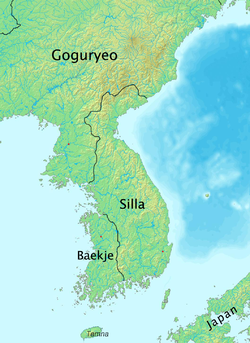
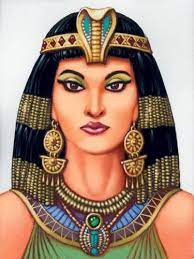
    Indian princess who married a Korean King – Heo hwang ok

    Source: BBC News

     Ayodhya is best known for being the birthplace of the Hindu god Ram. However, the city has special significance for some South Koreans, as many believe they can trace their ancestors back to it. This belief is based on several historical Korean stories about an Indian princess named, Suriratna who married a South Korean king and established a dynasty.

    According to legend, Princess Suriratna, also known as Heo Hwang-ok, travelled to Korea in 48 AD, approximately 2000 years ago, and founded the Karak dynasty by marrying a local king. According to some Chinese-language texts, the then-King of Ayodhya had a dream in which God told him to send his 16-year-old daughter to South Korea to marry King Kim Suro.

    According to Samguk Yusa (Memorabilia of the Three Kingdoms), a popular South Korean book of fables and historical stories, Queen Hwang-ok was the princess of the “Ayuta” kingdom. The royal couple was a success. They had 12 sons and lived to be more than 150 years old. While children in Korea usually take their father’s surname, the queen was disappointed that her children would not be able to use her surname. As a result, King Suro granted her name (Heo) to two of their sons, which is still used today.” Historians estimate that the couple’s descendants number more than six million, accounting for nearly 10% of the South Korean population.

    People from the Karak dynasty have also preserved the rocks that are said to have been used by the princess during her sea voyage to Korea to keep her boat stable.

    An anthropologist named Kim Byung-mo Ayuta appeared to confirm the widely held belief that Ayuta was actually Ayodhya, as the two names are phonetically similar.

    How this connection has impacted the modern ties?

    In the year 2000, an agreement was signed to develop Ayodhya and Gimhae as sister cities. 

    Then in 2001, more than 100 historians and government representatives, including the North Korea ambassador to India, unveiled Queen Hwang-ok’s memorial on the west bank of the River Saryu in Ayodhya.

    In 2016, a Korean team presented the Uttar Pradesh Government with a proposal to expand the memorial. On the eve of Diwali, South Korean first lady Kim Jung-sook lay the foundation stone for the enlargement and beautification of the current memorial on November 6, 2018. She paid her respects at the Queen Heo Memorial, attended a ground-breaking ceremony for the memorial’s upgrade and beautification, and joined the current Chief Minister of Uttar Pradesh, Yogi Adityanath, at an elaborate Diwali celebration in Ayodhya that included cultural shows and the lighting of 300,000+ lights on the banks of the Saryu River.

    As per reports, every year, hundreds of South Koreans visit Ayodhya for paying homage to their legendary queen Heo Hwang-ok.

    Prof Kim Do-young, a Korean studies expert based in Delhi, claims that this shared history began to be recognised in India “after the diplomatic and economic relationship” between the two countries developed.

    “Whether it is history or legend – based on it – mental or spiritual gap [between the people] is reduced and a common cultural ground is made,” he adds, pointing out that it’s interesting that there maybe a “ancient bond” between the two nations.

    The story of Queen Hwang-ok has been and can continue to be the “foundation for building better relations” between South Korea and India.


    FACT Devices; Statcom & its working

    FACT is an abbreviation for Flexible
    AC transmission system. It is a system composed of static equipment used for

    the alternating current (AC) transmission of electrical energy and is
    a power electronics based system.

    Series compensation – In this we connect
    the fact devices in series with power system. Here, the line impedance is
    modified, that means net impedance is decreased and increasing the
    transmittable active power.

    Shunt compensation – It is used to
    improve the power factor. In this we connect the fact devices in parallel with
    power system. It also works as a controllable for the current source. Eg-
    Statcom (Static synchronous Compensator) and SVC (Static VAR compensator). They
    are further classified into two types –

    1. Shunt capacitive compensation: This method is used to
      improve the power factor. Whenever an inductive load is connected to
      the transmission line, power factor lags because of lagging load current.
      To compensate, a shunt capacitor is connected, which draws the current
      leading to the source voltage. The net result is an improvement in
      power factor.
    2. Shunt inductive compensation: This method is used
      either when charging the transmission line, or when there is a very
      low load at the receiving end. Because of very low, or no load–very low current
      flows through the transmission line. Shunt capacitance in the transmission
      line causes voltage amplification (Ferranti effect). The receiving end
      voltage may become double the sending end voltage (generally in case of
      very long transmission lines). To compensate, shunt inductors are
      connected across the transmission line. 

    A few advantages of FACT devices
    are:
    • Helps in improving power transfer capability
    • Used for transient and dynamic stability improvement.
    • Used for damping of power system oscillations.
    • For better voltage regulation.
    • For flexible operation and control of the system.

    What
    is a Statcom?

    The STATCOM (or SSC) is a
    shunt-connected reactive-power compensation device that can generate and/ or
    absorbing reactive power and in which we can vary the output to control the
    specific parameters of an electric power system. It is a solid-state switching
    converter capable of generating or absorbing independently controllable real
    and reactive power at its output terminals when it is fed from an energy source
    or energy-storage device at its input terminals. Voltage-source converter that,
    from an input of the voltage, produces a set of 3-phase AC-output voltages,
    each in phase with and coupled to the corresponding AC system voltage through a
    relatively small reactance.

    How
    does a statcom work?

    Now suppose we have a load connected
    to the grid; the load takes the power as P + jQ, where P is active power and Q
    is reactive power. Now we have to make the Q= 0. So that the power factor is
    always unity (PF = 1). For that, we connect statcom at the load, so that the
    reactive power is supplied by the statcom and active power is given by the
    Grid. This is how a statcom works for reactive power compensation.

    The different softwares in which we
    can simulate and analyze FACT devices are:
    • MATLAB
    • PSCAD
    • ETAP

    Noise Pollution- Causes, & Preventive Measures

     Noise is usually defined as unwanted sound or a sound without value that causes discomfort to the listener. Noise is usually measured in units of decibels and is denoted by dB.

    1. On human beings:-

    Mental health

    Exposure to intense levels of noise can cause personality changes and violent reactions. Noise has also been shown to be a factor that attributed to violent reactions. 
    Psychological health effects from noise include depression and anxiety stress. Individuals who have hearing loss, including noise induced hearing loss, may have their symptoms eased with the use of hearing aids. Individuals who do not seek treatment for their loss are 50% more likely to have depression than their aided peers. These psychological effects can lead to detriments in physical care as reduced self-care, work-tolerance, and increased isolation.

    Physical health

    Exposure to loud sound or longer exposure causes threshold shift. Noise-induced threshold shifts are seen as a notch on an audiogram from 3000 to 6000 Hz, but most often at 4000 Hz.
    Exposure to loud noises, either in a single traumatic experience or over time, can damage the auditory system and result in hearing loss and sometimes tinntius as well. Noise induced hearing loss is sometimes unilateral and typically causes patients to lose hearing around the frequency of the triggering sound trauma.

    2. On animals:-

    Marine animals

    Two main reasons that make an environmental impact of noise in marine life a grave are – 1. Noise travels much more in water, covering greater distances than it would do on land while travelling though air, and secondly because the marine life is extremely sensitive to noise pollution and an absence of any mechanism to safeguard them against it, underwater noise pollution disrupts marine life in more serious ways.

    The deaths can occur because of haemorrhages, changed diving pattern, migration to newer places, and damage to internal organs and an overall panic response to the foreign sounds. There is also a disruption in normal communication between marine animals because of underwater noise pollution. This means animals prone to noise pollution cannot call their mates, look for food or even make a cry for help under such circumstances.

    Birds

    Anthropogenic noise, emitted from the oil and gas compressors, is becoming a global issue. The idea of the study was to measure the stress levels of the birds compared to the distance they were nesting with the oil and gas compressors.

    So much so that they were showing Post Traumatic Stress Disorder-like (PTSD) symptoms. In the birds, their corticosterone levels were relatively low. And that isn’t exactly what you would expect to see in a high-stress situation. This is likely to be what was happening with the birds. It triggered health defects such as stunted growth, issues with their reproduction, and fewer feathers on the birds. Their ability to hear predators also seemed to be jeopardised because of the noisy surroundings.

    Preventive measures to reduce noise pollution

    • Factories should be established away from the settlements.
    • Settlements should be located 20 kms away from the mining areas and coal areas.
    • Explosives should be not used in mountainous, forest and mining areas.
    • Use of horn in public places should be banned.
    • The sound of musical instruments should be controlled to desirable limits.
    • The use of sound amplifiers of high power should be banned in religious events.
    • The use of sound absorber tiles should be encouraged in the construction of multi-storeyed buildings.
    • In industrial, commercial and hospital buildings, adequate soundproof systems should be installed.
    • Intensive plantation should be made in the entire building complex.
    • Planting green trees along the roadside reduces the intensity of noise pollution.
    • Protective tools should be provided for workers.
    • Legal provisions should set limits on noise and control over noise pollution.

    Structure of the Earth

     The earth’s interior is divided into three layers: crust, mantle, and core. The crust is the earth’s outermost layer, and the core is the earth’s innermost layer, located at a depth of 2900 kilometers. This article provides a brief overview of the earth’s three interior layers.

    Core

    The core is the source of the Earth’s internal heat. This is due to the presence of radioactive materials, which emit heat as they degrade into more stable materials. The core is located at the center of the Earth. It has two layers –
    • Inner core
    • Outer core

    Inner Core – The inner core can reach temperatures of up to 4000°C, while the outer core can reach temperatures of up to 3600°C. The Lehmann Discontinuity is a liquid-solid boundary that exists between these two layers. This is the most intense part of the core. It’s as hot as the Sun’s surface!

    The inner core is approximately 1216 km thick. It’s made of solid iron and nickel. These heavy metals would have sunk to the centre of the young Earth. The liquid outer core rotates around the solid inner core.

    Outer Core – The outer core is approximately 2270 km thick. It’s made of liquid iron and nickel. Because it is under less pressure than the inner core, it is liquid. This layer is also electrically conductive. This produces the electrical currents that make up the Earth’s magnetic field.

    Mantle

    The mantle is located above the core. The mantle is composed of two layers of hot, dense, semi-solid rock. The mantle, like the core, has two layers – 

    • Lower Mantles
    • Upper Mantles

    These are approximately 2885 km thick. This layer is so massive that it accounts for approximately 84% of the total volume of the Earth! The mantle’s temperature is lower than the core’s. It only gets to about 3000°C. The material becomes less dense as you move from the lower to upper mantle.

    A transition zone exists between the lower and upper mantles. It is located 400-660 kilometers beneath the Earth’s surface.

    The upper mantle is located above the transition zone. This zone extends from 400 km below the Earth’s surface to the crust layer. The asthenosphere is the uppermost part of the upper mantle. The asthenosphere is composed of fluid, soft rock.

    Crust 

    The crust is our planet’s solid, rigid outer layer. The crust is not a continuous layer of rocks, but consists of large masses called plates, which are free to drift slowly on top of the asthenosphere. It ranges in thickness from 5 to 80 km. The lithosphere is made up of the upper asthenosphere and the crust. 
    The ocean floor contains the thinnest parts of the crust. It contributes to the formation of the oceanic crust. This section of the crust may be as thin as 5 km.
    The continents contain the thickest parts of the Earth’s crust. It contributes to the formation of the continental crust. This layer of the crust can be up to 80 kilometers thick.
    The crust closest to the mantle has a temperature of about 500°C. The temperature of the crust near the Earth’s surface is roughly the same as the temperature of the air.