

Author: Admin
Track2Training for students. Learn more on https://track2training.com
What are the steps to the research writing process?
Empower Your Insights with Julius: AI-Driven Analysis and Visualization Support


In today’s data-driven world, making sense of vast amounts of information is both a necessity and a challenge. Whether you’re a researcher, educator, business strategist, or data enthusiast, effective analysis and visualization can unlock new perspectives and drive impactful decisions. Meet Julius, your AI-powered assistant, designed to transform complex data into clear insights and visually compelling narratives.

Why Choose Julius?
Julius bridges the gap between raw data and actionable insights with cutting-edge AI capabilities. Here’s how Julius stands out:
- Comprehensive Data Analysis:
Julius processes structured and unstructured datasets to uncover patterns, trends, and anomalies. From statistical summaries to advanced modeling, it caters to diverse analytical needs. - Dynamic Visualization:
Presenting data effectively is as crucial as analyzing it. Julius generates visually appealing and interactive charts, graphs, and infographics that are customizable and tailored to your objectives. - User-Friendly Interface:
No technical expertise? No problem. Julius simplifies complex analysis with intuitive commands, making it accessible for beginners while robust enough for experts. - Domain-Specific Insights:
Whether you’re analyzing educational trends, financial performance, healthcare data, or market research, Julius offers tailored insights based on the context of your dataset. - Real-Time Collaboration:
Work collaboratively with your team by sharing live insights, visualizations, and reports. Julius integrates seamlessly with popular tools to ensure a smooth workflow.
How Julius Can Help
- For Educators and Researchers: Analyze enrollment trends, publication data, or institutional performance. Julius can turn raw academic data into insights that influence policy and teaching practices.
- For Businesses: Optimize marketing campaigns, sales strategies, and operational efficiency with data-backed recommendations.
- For NGOs and Social Impact Projects: Use Julius to visualize the impact of initiatives, track progress, and make data-driven funding proposals.
- For Individuals: Simplify personal finance tracking, investment planning, or academic projects with Julius’s user-friendly tools.
Example in Action:
Imagine you’re working with education data to measure the impact of a policy like the National Education Policy (NEP). Julius can:
- Analyze enrollment growth before and after NEP implementation.
- Visualize growth trends in universities, colleges, and GER over time.
- Generate interactive dashboards that allow policymakers to explore data by region, gender, or discipline.
Get Started with Julius
Unleash the power of AI in your analysis and visualizations with Julius. Whether you’re dealing with complex datasets or just need a clear visual representation of your findings, Julius is here to assist.
What is Public Participation
How to Write Title of Research Paper
POPULATION GROWTH HAS BEEN BLAMED FOR ENVIRONMENTAL DEGRADATION
INTRODUCTION
Population growth, though a source of development is commonly regarded as one of the most dreadful cause of environmental degradation. Population can be defined in terms of a particular section, group, or type of people or animals living in an area or country. Population growth has been defined in diverse ways by various authors and institutions (Wikipedia1). In this context, population growth refers to the growth of human population in the world in terms of how the number of individuals in a population increases over time.
According to The United International Strategy of disaster reduction, environmental degradation is the reduction of the capacity of the environment to meet social and ecological objectives and needs. (UNISDR, 2009)
A report by the United Nations population Division 1998, records that the world population has doubled since 1950. About 90 million babies are born each year. At this rate, by the year 2050, global population will reach 10 billion. The current world population is on average very young and has many years of reproductive life ahead. Because of this the population will grow even if the fertility rates seem to decrease. The population growth takes mostly place in developing countries. These countries are in charge of 90 percent of current population growth. It has been estimated that by the year 2025 even 84 percent of the world’s people will live in developing regions.
Most estimates for the carrying capacity of the earth is between 4 billion and 16 billion. Depending on which estimate is used human population may or may not have already occurred. The main concern therefore is the rising population and its auspicated effects on the environment especially in the developing Nations where we have a high population growth rates and poor modes of food production.
The environment and key natural resources in most African countries have been increasingly threatened by escalating and unsustainable pressures from fast-growing populations (UNEP, 1999). Nations with high population growth are often not able to produce enough goods to meet their basic needs of their inhabitants.
An expansion of the production of various goods seems necessary in order to sustain the population. However an increase the amount of goods produced may aggregate environmental problems; in particular if the less developed countries follow the pattern of Development of Western Industrialized countries.
The demand placed on the environment to provide resources for increased human activities such as industrialization, exploitation of water and land resources and Urbanization, and absorption of wastes steadily increases and long term effects is the simultaneous degradation of the environment.
The aim of this paper is to examine how increased world population through human beings change of life degrades the environment. Man degrades the environment through his direct or indirect acts that include:-
Ø Altering and disturbing the natural resources
Ø Through intensive Agriculture practices
Ø Development of cities (Urbanization)
Ø Rapid growth and expanding off industries
URBANIZATION
Urbanization refers to the general increase in population and the amount of industrialization of a settlement. It includes increase in the number and extents of cities. It symbolizes the movement of people from rural areas to urban areas.
Urbanization happens because of the increase in the extent and density of urban areas. The density of population in urban areas increase because of the migration of people from less industrialized regions to more industrialized areas
Causes of urbanization
Urbanization usually occurs when people move from villages to cities to settle, in hope of a higher standard of living. This normally takes place in developing countries
In rural areas, people become victims of unpredictable weather condition such as drought and floods, which can adversely affect their livelihood. Consequently these people move to cities in search of better life. This can be seen in areas like Budalangi, Kano plains, Tana Delta where these people move to Kisumu, Nairobi, and Mombasa etc to escape poverty.
Cities in contrast, offer opportunities of high living and are known to be places where wealth and money are centralized
Most industries and educational institutions are located in cities whereas there are limited opportunities within rural areas. Thus further contribute to migration to cities
Environmental impacts of urbanization
Temperature
Due to factors such as paving over formerly vegetated land, increasing number of residences, and high-rise apartments and industries temperatures increases drastically.
Air pollution
Factories and automobiles are symbols of urbanization. Due to harmful emission of gases and smoke from factories and vehicles, air pollution occurs.
Most of the ambient air –pollution in urban areas comes from the fossils fuel industry, motor vehicles, heating and electricity generation. In some cities the main air polluter is the domestic heating which results into indoor air pollution. Indoor air pollution may pose an even greater hazard for human health. Cooking and heating with wood, crop residues, animal dung and low quality coal produces smoke that contain dangerous particles and gases which may include various toxic and carcinogenic chemicals, heavy metals, trace organic chemicals and fibres, photochemical pollutants, lead,carbon monoxide, which are much more harmful to human health (HABITAT 1996). When fuels such as these are burned indoors, using inefficient stoves and poor ventilation, they can cause tuberculosis, other respiratory diseases and blindness (Mishra, Rether ford and Smith,1999). In fact, indoor air pollution from cooking and heating with unsafe fuels has been designated by the World Bank as one of the four main environmental problems in developing countries.
Traffic: almost all cities have changed to motorized road vehicles, which has increased the use of fossil fuels and increase in green house- gas emissions. The explosive growth in the number of road vehicles is a big problem in many cities. Many city centers have major difficulties trying to cope with the chaotic automobile traffic. The traffic jam is extremely bad in many cities and transport traffic in the city area at least during rush hours is very slow. The pollution is high due to constant traffic and cause respiratory diseases to city habitants (HABITAT 1996)
Water and drainage systems
When urbanization takes place, water cycles changes and cities have more precipitation than surrounding areas. Due to damping of sewage from factories in water bodies, water pollution occur which can lead to outbreak of epidemics.
The lack of sanitation and sewage treatment is the biggest factor regarding water pollution. Local water bodies are used as dumping ground for untreated water from urban areas and industries. For example in Bangkok 90 percent of industrial wastes including hazardous chemicals are discharged without treatment (UNEP 1999).
Many rivers in developing countries are more like open sewers than rivers. Most of the centers in these regions do not have drains or even services to collect the garbage. The cities that are close to the coast often dump untreated sewage to the sea. Most of the coastal cities have serious problems with dirty, contaminated beaches and water which is a serious health risk to the bathers and for the whole city (HABITAT 1996)
Habitat destruction and loss of biodiversity
To make an area urbanized, a lot of forested areas are destroyed. Usually these areas would have been habitats to many birds and animals
Population growth leads to expanding human settlements and increasing demand for food, fuel and building materials. Modernization of agriculture also threatens potentially valuable local crops.
Such development programmes such as creating reservoirs, mining, forest clearing, lying of communication and transport networks etc. I t is estimated that in the worldwide perspective slightly over1000 animal species and sub-species are threatened with extinction rate of one per year, while 20000 flowering plants are thought to be at risk (Compendium of Environment Statistics 2000)
POPULATION GROWTH AND SETTLEMENT
Rapid population growth has outstripped the ability to deliver adequate services such as education, health care, safe water, sanitation, and waste removal. The increased population exerts pressure on existing facilities and even the ecosystem since it’s beyond the carrying capacity of these facilities hence calling for expansion or creation of new facilities to cater for increased population. Growing population is one of the main forces driving a country’s overwhelming environmental challenges.
One of the major problems brought about by increase in population is settlement. Population growth affects migration and settlement patterns and their relationships to the physical environment. As population increases, settlements sprawl, and take over forested and agricultural land, fragmenting and degrading remaining natural areas. The clearing of forested to pave way for settlement impacts the environment negatively causing degradation. The cleared environment paves way for soil erosion as there are no trees to hold the soil together; this in turn causes pollution of the air when windy and pollution of water bodies during rainy season hence affecting aquatic life and human health. Clearing of the trees also causes loss of biodiversity. Some plant and species are lost hence affecting the ecosystem balance.
Trees act as windbreakers and clearing the forest will mean no windbreakers. It will also lead to destruction of water catchment areas. The medicinal value of the tress will be lost by destruction and there will be increased of carbon dioxide in the atmosphere as there will be no carbon sink, this will lead to global warming causing forest fires, skin cancers and rise in sea levels causing flooding resulting to displacement of people and coastal erosion.
Taking up of agricultural land to put up settlements will reduce arable land hence reduce food production and therefore leading to food insecurity.
Increase in population makes it difficult for a nation to plan; it leads to increased poverty levels, low life expectancy and high infant mortality. The pressure from increasing population is a major hindrance to sustainable development hence a country remains under developed.
Ongoing rural to urban migration, high natural birth rates, and poor or Inappropriate country’s planning conspires to continue degrading the environment and this has impacts on human health and the economy. For the country to achieve the MDGs progress must be made, an important target is stabilizing the fertility rate as recommended by the Population Policy for Sustainable
Development (CBS 2004). The country can achieve more sustainable land use if it combines planning and development with environmental management.
INCREASED POPULATION AND ITS IMPACT THROUGH AGRICULTURE TO ENVIRONMENT DEGRADATION
Agricultural impact is such direct on the environment because it involves man manipulating the environment to gather for his needs/food. Since time in memorial man has been dealing with farming. With the increased population man has been force to clear more land to gather for the increased needs of his family.
The era of Agricultural revolution cleared fast lands to pave way for the green revolution. Agricultural revolution cleared 10% of the earth’s land surface of either grass or trees so that it could be ploughed planted to crops.
Agriculture has changed dramatically, especially since the end of World War II. The world population has shot from 370million after the Great Famine and the Black Death in Britain in 1350 to 7 Billion in 2012 March. The sharp increase in worlds population demands that more land should be brought under Agricultural use or use intensified farming methods to increase food production this in turn causes harm to the environment either directly or indirectly.
Today the 7 Billion people cultivate over 40% of the worlds land and .Total farmland has been increasing drastically since 1992 to 2002 the Agricultural land increased by 5 Million Hectares
Of the total 13 Billion hectares of land area on Earth, Cropland accounts for 11% ,pastureland 27%, Forerstland 32%, urban land 9%the rest 21% unsuitable for crop farming.(World watch Institute http://t.co/uOQdMqrp )
Increased population through Agriculture impacts on Environmental degradation in the following ways;
i. Burning of forests to create new lands for Agriculture
ii. Use of pesticides and herbicides.
iii. Soil degradation and pollution
iv. Increased pressure on Arable land
Burning of forests to create new lands for Agriculture
Man is constantly colonizing new lands to get food for the increasing population. Burning includes human-initiated burning of vegetation for land clearing and land-use change as well as natural, lightning-induced fires. Scientists estimate that humans are responsible for about 90% of biomass burning with only a small percentage of natural fires contributing to the total amount of vegetation burned. Man is forced to clear new lands by burning the vegetation down to get more land burning vegetation releases large amounts of particulates (solid carbon combustion particles) and gases, including greenhouse gases that help warm the Earth. Greenhouse gases may lead to an increased warming of the Earth or human-initiated global climate change. In the long run the cleared forests which used to Act a carbon sinks are no more and this leads to increased levels of carbon in the atmosphere.
Use of pesticides and Herbicides for Agriculture
The increased population is always forced to use pesticides herbicides and fungicides to reduce the number of competitors in the tropical level so that food production is maximized.during their application they also affect non-target plants and animals. Repeated application leads to loss of biodiversity. Many pesticides are not easily degradable, they persist in soil, leach to groundwater and surface water and contaminate wide environment. Depending on their chemical properties they can enter the organism, bioaccumulation in food chains and consequently influence also human health.
The French incident in two French Caribbean islands, Martinique and Guadeloupe, which were heavily contaminated by pesticide chlordecone after several decades of its spraying on bananas plantations. Initially, the use led to higher crop yields but each season more chlordecone was required to achieve the same results. As a consequence, this tropical paradise with about 800,000 inhabitants now faces an environmental disaster with far-reaching ecological, economical and social impacts.
Water contamination is one of the most affected component of the ecosystem when it comes to use of Pesticides.
Pesticides can get into water via drift during pesticide spraying, by runoff from treated area, leaching through the soil. In some cases pesticides can be applied directly onto water surface e.g. for control of mosquitoes. Water contamination depends mainly on nature of pesticides (water solubility, hydrophobicity), soil properties, weather conditions, landscape and also on the distance from an application site to a water source. Rapid transport to groundwater may be caused by heavy rainfall shortly after application of the pesticide to wet soils. (pesticide action Network Europe 2008)
Soil micro-organisms play a key role in soil. They are essential for maintenance of soil structure, transformation and mineralization of organic matter, making nutrients available for plants when we are using pesticides we harm and kill this micro-organism by either deforming them or completely whipping them out of the ecosystem
Soil degradation and Pollution
All the actions that man venture into revolve around the crust. Man got direct impact on the soil and he causes stress to it by application of fertilizers, fungicides, overgrazing and contact cultivation. All this activities man venture into so that he can get food for the increased population not knowing that he/she is harming the environment greatly
Pesticides enter the soil via spray drift during foliage treatment, wash-off from treated foliage, release from granulates or from treated seeds in soil. Some pesticides such as soil fumigants and nematocides are applied directly into soil to control pests and plant diseases presented in soil. Fertilizers are also applied direct to the soil.
Increased pressure on Arable land
The geometric rise in human population levels during the twentieth century is the fundamental cause of the loss of biodiversity. It exacerbates every other factor having an impact on both Terrestrial (Grassland, mountain, Forest and Desert ecosystems) and Aquatic ecosystems, It has led to an unceasing search for more arable land for food production, livestock grazing, for wood for fuel, construction, and energy.
Balmford, et al., (2001) have demonstrated that human population size in a given tropical area correlates with the number of endangered species, and that this pattern holds for every taxonomic group. Most of the other effects mentioned below are either consequent to the human population expansion or related to it.
EFFECTS OF OVERPOPULATION ON NATURAL RESOURCES
o Inadequate fresh water for drinking as well as sewage treatment and effluent discharge.
o Depletion of natural resources especially fossil fuels.
o Increased levels of air pollution , water pollution, Soil pollution, noise pollution,
o Deforestation and loss of ecosystem that sustain global atmospheric oxygen and carbon dioxide balance. About 8 million hectares of forest are lost every year.
o Changes in atmospheric composition and consequent global warming.
o Irreversible loss of arable land and increase in desertification.
Mass species extinction from reduced habitats in tropical forests due to slash –and- burn techniques that are practiced by shifting cultivators; especially in countries with rapidly expanding rural population present extinction rates may be as high as 140,000 species lost per year. As of February 2011 IUCN Red List, a total of 801 animal species having gone in recorded history.
Stealing of natural resources to survive conflict over scarce resource. The resources to be considered when evaluating whether an ecological niche is over populated include clean water, clean air food shelter and warmth.
The demands placed on the environment to provide resources for human activities and to absorb wastes have grown steadily with rising population and increasing per capita consumption. Currently the highest fertility rates are found in countries suffering from poverty ,food insecurity and natural resource degradation.
Given that many natural resources such as many natural resources( such as water, soil, forests and fish stocks) are already being exploited to or beyond their limits in at least some regions. The efforts required to meet the needs of additional 300million people will be immense.
Globalization of population movements is needed like movement of capital and free trade in goods and services through WTO, for people to live and work wherever they like. This is the one change that allow optimization of the population to environmental carrying capacity and a rapid reduction in economic and solid disparities between countries.
HOW POPULATION GROWTH DEGRADES ENVIRONMENT TROUGH INDUSTRIALIZATION
Industrialization was a key component that man discovered in the mid 18th Century. The advent of Industrial revolution tremendously reformed most sectors in the world and it made work efficient, created employment and also made life comfortable. The second phase of industrialization begun in the 1860-1914. The second phase of industrialization was characterized by a rapid expansion of industries that developed because of new sources of energy hydroelectricity and oil.
The change in industrialization system was prompted by the increased demands of the public due to the growing population. The world population had been increasing steadily from the onset of Industrial revolution and there was need to seek for improved of production and acquiring of goods and services. During the onset of industrial revolution there was an increase in population due to increased food and diet.
During the Agricultural and Industrial Revolutions, the life expectancy of children increased dramatically. The percentage of the children born in London who died before the age of five decreased from 74.5% in 1730–1749 to 31.8% in 1810–1829. Between 1700 and 1900, Europe’s population increased from about 100 million to over 400 million. (Wikipedia2)
The shift from the 1st phase (coal and steam era) to the 2nd phase (electricity era) coincides with the British colonization of foreign lands where they acquired many raw materials that needs to be processed in large numbers.
However, industrialization has got a serious effect on the environment while it strives to meet the needs of the growing population. Man through its agent (Industries) contribute to more than 50% of the Environmental degradation when he/she is trying to fetch raw materials, build industries and dispose waste products. The final effect on the environment will include:-
Rapid Industrialization versus Air Pollution
Air pollution involves the release of chemicals and particulates into the air, and it can cause problems varying from difficulty breathing to contamination of crops. The increased rate of industrialization poses a major threat to the air quality. Most the industries use environmentally unfriendly sources of energy like fossil fuels, coal, wood fuel and others that releases high levels of Oxides to the environment. Considering their sources of energy the industries that use wood fuel contribute so much in logging. The indirect impacts will be the releases of carbon to the atmosphere causing a significant increase in the Green houses gases which causes global warming. In extreme cases, these gases may cause river, lakes and sea levels to rise. This means that, as the globe continues to experience global warming, chances of flooding increases. The worst pollutant in low lying areas is Smog. Where smog is produced abundantly, air quality deteriorates especially during hot weather, and it is during this period that asthma cases rise. Industries associated with massive smog emissions are those that operate in manufacturing sectors. Example of the Donora Valley in Pennsylvania 1948.
The highest probable Top emitters of green house gases into the atmosphere include; Power generation industries are major causes of global warming. According to the year 2000 estimates, these industries emit more than 8000teragrams of carbon dioxide, and 3teragrams of methane. In total, this industry alone accounts for 31% of greenhouse gases emitted annually. Second on the list of industries causing global warming is the refineries. This industrial sub sector emits more than 5000teragrams of carbon dioxide and 8teragrams of methane. Refineries alone accounts for 15% of greenhouses gases emitted per year. Third on the list is the road sector. As countries continue to develop, automobiles no longer become luxuries, but necessities. By the year 2005, the vehicles emissions accounted for almost the same percentage as the refineries (15%) other contributing sectors are; coal mining and processing, oil extraction and refining, international shipping, rail and non road transportation and bio fuel production sectors (socyberty.com)
Industrialization and Land Pollution
The industrial revolution brought with it some lucrative and convenient ways of handling the Land. The Agricultural revolution intensified farming through use of inorganic fertilizers and mechanization. Modern agriculture has embrace the idea of going “green”, and has instead opted for inorganic means, has opposed to the ancient organic ways of growing crops. The key issue why the world is headed to an inorganic direction is to satisfy the growing population in terms of food supply.
Industries are the key players in production of Inorganic substances; fertilizers, pesticides and fungicides. The industries are also linked with polluting the crust through releasing of poisonous substances whether by accident or as a way of disposing them. These industries produce on a large scale chemical fertilizers, and commercial feeds that have short run benefits on both the farmers and land. In the long run, all stakeholders stand to lose to due to the distressing effects caused by agricultural and related industries. Prolonged use of chemical fertilizers, pesticides and herbicides lead to massive land pollution and reducing fertility of the same. Most of these chemicals are highly leeched and others are non-biodegradable and constant use of it causes accumulation in plant tissues.
Dumping of industrial waste also contributes to land pollution. In 2007 alone, Environment Protection Agency of the United Sates noted that there were more than 10 million pounds of harmful pollutants dumped. Major pollutants identified by this survey were heavy metals that comprise mainly of mercury, lead and arsenic compounds.
Water Pollution versus Industrialization
Ground water is mainly polluted through leaching processes. Surface water on the other hand gets polluted through a number of ways. One of the ways that rivers, lakes and seas, get polluted is when sulfur oxides combine with moisture to form acid rain then these flows into the water sources. Runoffs from polluted agricultural land, also leads to water pollution. Other ways that surface water gets polluted is through oil spills, water runoff from dumping sites and through deliberate disposal of industrial waste into water bodies.
Conclusion
Although modern man is justified to apply the current means of production and develop the current technology to use in industries and in food production to increase his food production, man is ignoring the fact that he plays a key role in the environment and he has the mandate to take care of the environment.
Human beings by his means through intensified means production due to rapidly growing population and the nature of demands dictates that man must engage in activities that expose the environment to a total risk of degradation.
In summary increased population or over population causes environmental degradation not by direct impact but through the activities that man undertake over the earth’s surface both in marine and terrestrial lands that includes; Intensive Agricultural activities, rapid growth of urban centers with unplanned settlements and industrialization
Recommendation
Since mans action on the environment is justified due to the fact that man needs to derive source of livelihood, we are therefore left with no option as human beings and especially as environmentalists to device environmentally friendly ways that does not necessarily stop mans harm on the environment but means that reduce the effect and foster sustainable development.
Some of the ways might be; change in the means of Transport. This can be done by encouraging man to use public means that uses less fuel does less emissions of Oxides into the Atmosphere. The use of commercial means of Transport saves both the non-renewable sources of Energy and also reduces the combustion of fossil fuels to produce petroleum products.
Secondly, we can adopt a culture of using renewable sources of Energy like solar energy and wind energy. Less has been done to harness wind energy which is eco-friendly type of energy.
Finally, we should encourage the use recycling of wastes and plan for companies in such a way that the waste products of one company becomes a raw material of another company.
According to the Population Policy for National Development(Kenya) Launched on 30th October 2012 proposes that average Kenyan women gives birth to 2.6 Children over the reproductive age of 15 to 49 years currently the woman gives birth to an average of 4.6 children. The policy further warns that the population will hit the 77Million mark by 2030 when the Kenya’s Economic blueprint, Vision 2030, expires-Daily Nation 31St October 2012.
Therefore, national family planning campaigns should be intensified so as to attain the 2.6. Children per woman between the ages of 15-45 years.
Awareness creation should be also intensified in rural and urban areas/informal settlements to curb the increasing population.
REFERENCES
1. Balmford. A et al, Measuring the changing state of nature TRENDS in Ecology and Evolution Vol.18 No.7 July 2003
2. Central Statistical Organization, (2000), “Compendium of Environment Statistics,” Ministry of Statistics and Programme Implementation, Government of India, New Delhi.
3. Cropper M., C. Griffiths (1999), “The Interaction of Population Growth and Environmental Quality” American Economic Review, 84:250-254
6. The United Nations International Strategy for Disaaster Reduction (UNISDR) (2009) Terminology on Disaster Risk
7. UNEP, 1999, “Unequal Impacts of Environment Damage, “Human Development Report 1999, Oxford University Press, New York.
8. U.N HABITAT (1996), “An Urbanization World. Global report on Human Settlement. Instanbul.
9. UNEP,Global Environmental outlook (1999/2000)
AGRICULTURE AND ITS EFFECT ON THE ENVIRONMENT
Introduction
Agricultural development is aimed at achieving self- sufficiency in food production to the ever increasing human population. However, this has resulted in continuous environmental degradation, particularly of soil, vegetation and water resources. Soil organic matter levels are declining at an alarming rate because the use of chemical inputs is intensifying. Newly introduced crops and the chemicals .This has been accelerated both by increased fertiliser application and use of irrigation resulting in water contamination by nitrate and phosphate and changes in the ground water table. With over 80% of the geographic area already under cultivation, the scope for increased productivity lies in further intensification which is crucially dependent on more energy-intensive inputs. Declining nutrient-use efficiency, physical and chemical degradation of soil, and inefficient water use have been limiting crop productivity, whilst the use of monocultures, mechanisation and an excessive reliance on chemical plant protection have reduced crop, plant and animal diversity in recent years. About 60% of the geographical area faces soil degradation (waterlogging, salinity and alkalinity) which threatens the region’s food security in the future. Since 1985, the water table has risen more than 1 m annually, and patches of salinity have started to appear at the farm level. The situation is worse in higher rainfall areas where waterlogging follows shortly after the rains. Apart from affecting agricultural crops, a high water table causes floods even following slight rains due to the reduced storage capacity of the soil. Such ecological impacts are motivating farmers to reduce fertiliser and pesticides use. This has led to an increased investment in alternative technology and products including an interest in Integrated Pest Management. The paper discusses major physical, hydrological, chemical and biological constraints relating to soil and water caused by agricultural development and recommends on environmental sustainability.

Environmental effects of agricultural development
1.Deforestation
Agriculture is a major land use. Statistics show that around 50% of the world’s habitable land has already been converted to farming land. The overall farmland is estimated to cover about 38% of the world’s land area.
One of the causes of deforestation is to clear land for pasture or crops. In 2000 the United Nations Food and Agriculture Organization (FAO) found that “the role of population dynamics in a local setting may vary from decisive to negligible,” and that deforestation can result from “a combination of population pressure and stagnating economic, social and technologic climate change.
One of the causes of deforestation is to clear land for pasture or crops. In 2000 the United Nations Food and Agriculture Organization (FAO) found that “the role of population dynamics in a local setting may vary from decisive to negligible,” and that deforestation can result from “a combination of population pressure and stagnating economic, social and technologic climate change.
It is predicted that in developing countries, a further 120 million hectares of natural habitats will be converted to farmland to meet demand for food by 2050. This will include land with high biodiversity value.
Agricultural ecosystems provide important habitats for many wild plant and animal species. This is especially the case for traditional farming areas that cultivate diverse species. Recent examples include the conversion of lowland rainforests in Indonesia to oil palm plantations, and of large areas of the Amazon rainforest and Brazilian savanna to soybean and cattle farms.
This ongoing habitat loss threatens entire ecosystems as well as many species.Due to the habitat loss, many species have become extinct and more are expected to if nothing is done. Expanding oil palm plantations in Indonesia and Malaysia, for example, pose the most significant threats to endangered species like megafauna including Asian elephant, Sumatran rhinoceros, and tigers.
This ongoing habitat loss threatens entire ecosystems as well as many species.Due to the habitat loss, many species have become extinct and more are expected to if nothing is done. Expanding oil palm plantations in Indonesia and Malaysia, for example, pose the most significant threats to endangered species like megafauna including Asian elephant, Sumatran rhinoceros, and tigers.
In addition to the loss of biodiversity,deforestation which is as a result of agricultural development has also led to desertification of so ecological zones.This is because trees play a key role in the hydrological cycle.Once the trees are eliminated from the system,the rain patterns are going to decrease or even diminish bringing about desertification.
Most of the cleared natural habitats for agricultural purposes are always meant to be for large intensive monocultures.This type of practice leads to decline in soil fertility since land is not given time as opposed to the traditional farming methods that allowed land to rest.Therfore this results in loss of soil fertility and therefore biodiversity is decreased
2. Climate change.
Climate change cannot be isolated from agricultural processes; both are greatly interrelated and take place on a global scale.
Development in agriculture has been shown to produce significant effects on climate change. This has happened primarily through the production and emission of gases. Farming practices in agriculture are significant contributors to the build-up of green house gases such as carbon dioxide, methane, and oxides. Most industries which pollute the environment are related to agricultural development. These industries include fertilizer factories, sugar factories, oil and pulp mills, textile mills and tanneries.
© WWF-Canon / Mauri RAUTKARI
Emissions and effluents from these industrial complexes are already causing some harm to man, animals and environment in general. Land clearance to give room for more agricultural land has adversely affected the environment. This has led to the alteration of the Earth’s land cover, which can change its ability to absorb or reflect heat and light, thus contributing to forcing. In addition deforestation has brought about imbalances in the levels of concentration of carbon dioxide which among other gases such as methane and nitrous oxides brings about global warming. Global warming therefore is projected to have significant impacts on conditions affecting agriculture, including temperature, precipitation and glacial run-off. These conditions determine the carrying capacity of the biosphere to produce enough food for the human population and domesticated animals. Rising carbon dioxide levels would also have effects, both detrimental and beneficial, on crop yields. The overall effect of climate change on agriculture will depend on the balance of these effects. Assessment of the effects of global climate changes on agriculture might help to properly anticipate and adapt farming to maximize agricultural production.
3. Genetic engineering
Traditional biotechnology has been abandoned and replaced by genetic engineering. In genetic engineering, biotechnology in agricultural production is the order of the day. This is the application of scientific techniques to modify and improve plants animals and microorganisms to enhance their value.
Advances in the field of molecular biology were achieved in 1970s.This has provided scientists with the ability to manipulate DNA-the chemical building blocks that specify the characteristics of living organisms at molecular level. It also allows the transfer of DNA between more distantly related organisms than was possible with traditional breeding technology. Today this technology has reached a stage where scientist can take on one or more specific genes from nearly any organisms including plants, animals, bacteria and viruses and introduce those genes into another organism. This technology is referred to as genetic engineering and the organisms are known as genetically modified or transgenic organisms. Everything in life has its benefits and risks, and genetic engineering is no exception. Much has been said about potential risks of genetic engineering technology, but so far there is little evidence from scientific studies that these risks are real. Transgenic organisms can offer a range of benefits above and beyond those that emerged from innovations in traditional agricultural biotechnology. Following are a few examples of benefits resulting from applying currently available genetic engineering techniques to agricultural biotechnology
When genetic engineering results in reduced pesticide dependence, we have less pesticide residues on foods, we reduce pesticide leaching into groundwater, and we minimize farm worker exposure to hazardous products. With Bt cotton’s resistance to three major pests, the transgenic variety now represents half of the U.S. cotton crop and has thereby reduced total world insecticide use by 15 percent! Also, according to the U.S. Food and Drug Administration (FDA), “increases in adoption of herbicide-tolerant soybeans were associated with small increases in yields and variable profits but significant decreases in herbicide use”
Biotechnology has helped to increase crop productivity by introducing such qualities as disease resistance and increased drought tolerance to the crops. Farmers use crop-protection technologies because they provide cost-effective solutions to pest problems which, if left uncontrolled, would severely lower yields. As mentioned above, crops such as corn, cotton, and potato have been successfully transformed through genetic engineering to make a protein that kills certain insects when they feed on the plants. The protein is from the soil bacterium Bacillus thuringiensis, which has been used for decades as the active ingredient of some “natural” insecticides.
However as mentioned earlier,there are possible environmental risk associated with this type of technology. Some consumers and environmentalists feel that inadequate effort has been made to understand the dangers in the use of transgenic crops, including their potential long-term impacts. Some consumer-advocate and environmental groups have demanded the abandonment of genetic engineering research and development. There is a belief among some opponents of genetic engineering technology that transgenic crops might crosspollinate with related weeds, possibly resulting in “superweeds” that become more difficult to control. One concern is that pollen transfer from glyphosate-resistant crops to related weeds can confer resistance to glyphosate. While the chance of this happening, although extremely small, is not inconceivable, resistance to a specific herbicide does not mean that the plant is resistant to other herbicides, so affected weeds could still be controlled with other products.
Some people are worried that genetic engineering could conceivably improve a plant’s ability to “escape” into the wild and produce ecological imbalances or disasters. Most crop plants have significant limitations in their growth and seed dispersal habits that prevent them from surviving long without constant nurture by humans, and they are thus unlikely to thrive in the wild as weeds.
Some environmentalists maintain that once transgenic crops have been released into the environment, they could have unforeseen and undesirable effects. Although transgenic crops are rigorously tested before being made commercially available, not every potential impact can be foreseen. Bt corn, for instance, produces a very specific pesticide intended to kill only pests that feed on the corn. In 1999, however, researchers at Cornell University found that pollen from Bt corn could kill caterpillars of the harmless Monarch butterfly. When they fed Monarch caterpillars milkweed dusted with Bt corn pollen in the laboratory, half of the larvae died. But follow-up field studies showed that under real-life conditions Monarch butterfly caterpillars are highly unlikely to come into contact with pollen from Bt corn that has drifted onto milkweed leaves—or to eat enough of it to harm them.
Another concern related to the potential impact of agricultural biotechnology on the environment involves the question of whether insect pests could develop resistance to crop-protection features of transgenic crops.
4. Irrigation Farming:
Agriculture is the greatest user of water globally, the agricultural sector consumes about 70% of the planet’s accessible freshwater more than twice that of industry which is esimated at23% and dwarfing municipal use 8%. Excessive water use for agriculture is leaving rivers, lakes and underground water sources dry. Many big food producing countries like the US, China, India, Pakistan, Australia and Spain have reached, or are close to reaching, their renewable water resource limits.Agriculture wastes about 60% or 1,500 trillion of the2,500 trillion litres of water it uses every year. The major causes of improper water utilization in irrigation farming include the following;
Ø Poorly maintained irrigation pipes that allows water to leak hence wasteges during application.
Ø Irrigation system employed.
Ø Poor choice of crops.
Irrigation can lead to a nmumber of environmental problems if it is not done in a proper and sustainable way.such problems include:
v Underirrigation gives poor soil salinity control which leads to increased soil salinity with consequent build up of toxic salts on soil surface in areas with high evaporation. This requires either leaching to remove these salts and a method of drainage to carry the salts away.
v Overirrigation because of poor distribution uniformity or management wastes water, chemicals, and may lead to water pollution.
v Deep drainage (from over-irrigation) may result in rising water tables which in some instances will lead to problems of irrigation salinity requiring watertable control by some form of subsurface land drainage.
v The problem is made worse by misdirected subsidies, low public and political awareness of the crisis, and weak environmental legislation.
v Excessive irrigation can also increase soil salinity and wash pollutants and sediment into rivers – causing damage to freshwater ecosystems and species as well as those further downstream, including coral reefs and coastal fish breeding grounds.
5. Pollutants.
Modern agriculture require intensive use of agricultural chemicals geared towards maximum production. Most dangerous chemicals that are used in large quantities today are mostly for agriculture. These chemicals include fertilizers, insecticides, fungicides, herbicides and other pesticides.
In modern agricultultural practices,fertilizers are added to the soil because they help plants to grow and produce maximum yields. However the environmental problems associated with fertilizers application come about if they are washed out of the soil by the rain and leached into the ground water, into lakes or streams, or into the lagoon where they contribute to pollution. The fertilizers in the water encourage algae(algal bloom) and other plants to grow, and these may become so thick that they start to rot and smell. They may also crowd out or shade out other valuable forms of life like corals. Nitrate fertilizers are also dangerous if they get into drinking water, because they may be turned into nitrites which can cause cancer.
Pesticides are by their very nature poisons for at least some kinds of life, often including people.
Agriculture is the leading source of pollution in many countries.
© Michel Gunther / WWF-Canon
Pesticides can hurt the environment or poison people in many ways. They may be used without following the instructions very carefully, so that too much is used, or at the wrong time. They may be absorbed by the people who apply the pesticides, especially in the tropics where people do not know much about pesticides and do not like or even have protective clothing. They may be washed off the crop or field by the rain, or blown into villages or into the forest by the wind. They may be applied too close to harvest time and thus still be on the food when it is harvested and eaten. They may not be used the way they were intended (such as for poisoning fish), or be washed into water supplies when users wash their equipment carelessly. They may be eaten accidentally by children thinking they are something good, or by people who use pesticide containers for food or drink. They may be taken intentionally by people who want to commit suicide (if it is a poison with no known cure, even if they change their mind they still die a horrible death). They may spill or leak while they are being transported or while they are in storage.
Once they get into the environment where they are not wanted, they can be a great danger to people and to many useful forms of life. Pesticides should thus only be used when absolutely necessary, and with the greatest care. The increasing use of dangerous chemicals for agricultural development projects can thus have serious impacts on the island environment either directly through the project or indirectly through the risks associated with simply having such chemicals on the island.
6.Soil degradation
The soil is an essential agricultural resource and it should be used sustainably. The kinds of agricultural development proposed must be adapted to the requirements for soil conservation at the site to be developed. The risk of soil loss is often greater with large development projects, which attempt to achieve economies of scale through large cleared areas and the use of machines.
Farming operations that are done on large scale basis usually involve mechanisation.Large machines are used in these operations and they destroy the soil structure making them vulnerable to soil degradation.
© Michel Gunther / WWF-Canon
While these technologies are highly successful in the more temperate conditions of the developed countries, they are not always as appropriate to tropical conditions with fragile soils and frequent problems of erosion. In some cases, the use of poorly chosen machinery or techniques has badly damaged the soil structure.
The economic requirement for a continuing return on investments may not permit the periods of fallow which allowed island soils to regenerate. While a decline in fertility can be made up with chemical fertilizers, the rapid loss of humus in the tropics is more difficult to replace, and the soil structure and its ability to hold water may deteriorate. Techniques like composting and mulching which restore organic matter to the soil are seldom practised on a large scale.
Agricultural development projects need to be adapted to these constraints. Crop rotations and the use of legume crops can help to maintain the soil. It may be necessary to use mixed plantings of more than one crop, to use cover plants to protect the soil from heavy rain, or to use windbreaks and other protective plantings around the crop. The new techniques of agro-forestry in which trees and food or crop plants are mixed are showing promise in tropical areas and may well be appropriate.
7. Waste
Agricultural waste is any substance or object from premises used for agriculture or horticulture, which the holder discards, intends to discard or is required to discard. It is waste specifically generated by agricultural activities.
For example, waste which came from a farm shop or a vegetable packing plant would not be agricultural waste.
Some examples of agricultural waste are:
Ø empty pesticide containers;
Ø old silage wrap;
Ø out of date medicines and wormers;
Ø used tyres;
Ø Surplus milk.
Since 2006, agricultural waste has been subject to the same controls that have applied to other sectors for many years. On 15 May 2006, uncontrolled burning or tipping of waste on farms became illegal.
PLASTICULTURE, THE USE OF PLASTIC MATERIALS IN AGRICULTURE, RAISES PROBLEMS AROUND HOW TO CARRY OUT THE RECYCLING OF AGRICULTURAL PLASTICS.
8.LAND LOST TO DESERTIFICATION
Desertification is the process of making or becoming a desert-a drybarren often sand- covered area of land,characteristically desolate,waterless and without vegetation.
Increasing human pressure on the land can lead to desertification through such activities as over-cultivation ,overgrazing, deforestation and poor water management
On top of habitat loss due to clearing, unsustainable agricultural practices are seeing 12 million hectares of land lost each year to desertification.
9.Other effects
Agricultural development can bring with it other risks to the environment. The large quantities of seeds imported for some projects may contain a few weed seeds. Even one or two unwanted seeds can introduce a noxious weed that may become a serious problem when released in the ecosystem with few competitors or enemies.
Seeds or planting stock that are not carefully inspected and subject to strict quarantine requirements may also introduce pests or diseases previously unknown to the area and which can ruin its agriculture.
Even some supposedly useful animals and plants introduced for agricultural purposes have turned into pests in the given area with serious effects on native species and even on agriculture itself. Guava, myna birds, cane toads and mongooses are obvious examples.
Conclusion
Our environment is very precious, and many natural resources are non-renewable. In the process of achieving higher levels of growth and income particularly in agriculture, man has played havoc with Nature’s balance. Sustainable growth and sustainable development, based on protection and conservation of the environment, are the need of the hour.
The very existence of the human race will be threatened by natural disasters, if environmental damage crosses a critical limit. This is a clear warning to all of us to pay attention to these environmental threats and adopt appropriate agricultural measures to prevent further disasters.
Our environment is very precious, and many natural resources are non-renewable. In the process of achieving higher levels of growth and income particularly in agriculture, man has played havoc with Nature’s balance. Sustainable growth and sustainable development, based on protection and conservation of the environment, are the need of the hour.
The very existence of the human race will be threatened by natural disasters, if environmental damage crosses a critical limit. This is a clear warning to all of us to pay attention to these environmental threats and adopt appropriate agricultural measures to prevent further disasters.
It should be clear from all of the above that agricultural development projects require extremely careful planning if they are not to have unexpected and often serious effects on people and the environment.
Recommendations
The governments need to formulate a careful policies on their agricultural practices. While making advances in agricultural technologies, sustainability should not be overlooked and while ensuring reasonable agricultural prosperity at present, we should not presume to preside over the future.
The governments need to formulate a careful policies on their agricultural practices. While making advances in agricultural technologies, sustainability should not be overlooked and while ensuring reasonable agricultural prosperity at present, we should not presume to preside over the future.
- Water Resource Management: Community wells may be dug instead of individual wells so that water will be granted on a need-based . Rainwater harvesting is another viable option that must be explored, as it is virtually a free resource.
- Afforestation: In order to upgrade the environment, plants have to be grown on a top priority basis. These plants must be selected not only on the consideration of quick growth, but also in terms of their effects on agricultural development and environment. Strict measures have to be taken to check further deforestation.
- Suitable Input Mix: Seeds, fertilizers, pesticides and agricultural implements have to be combined in such a way so as to meet the present challenges, and yet also ensure future stability.
- Suitable Cropping Pattern: By adopting appropriate policy measures, policy makers should give the desired direction to efforts to maintain environmental balance.
According to EMCA 1999 section 58, all development projects, must udergo Environmental Impact Assessments.
REFERECE :
1. .Mille Tyler 1990-2007.Living in the Environment
2. .Botkin and Keller.1994-2008.Environmental science
3. EMCA 1999
6. David Reid .Sustainable development: an introductory guide.
7. Our common Future:WCED Report 1987
8. W.M Adams.1990 Green Development; Environment and sustainability in 3rd World
RATIONAL COMPREHENSIVE THEORY OF PLANNING
1.0 INTRODUCTION:
Theory -of- planning is concerned with the process by which decisions are taken. Focus of planning process began in several fields after the Second World War and has involved contributions mainly from the social and economic sciences. Planning can be referred to as a set of methods designed to prepare information in such a way that decisions can be made more rationally.(Friedmann and Hudson,1974:8 in Marios,1979). Rational comprehensive theory is one of the major streams in planning theory that has since been developed . It is based on a normative model which values higher rationality in the face of multiple organisational and political pressures. (Grant,1985)
Development of Rational Comprehensive(Synoptic) theory can be traced back to Auguste Comte(1798-1857).Comte applied the methods of observation and experimentation to the field of sociology and believed that persistent social problems might be solved by the application of certain hierarchical rules and that with the aid of science of sociology mankind would progress towards a superior state of civilization.(Raine,2005) .These key ideas introduced by Comte were adopted by Max Webber and Talcott Parsons, the main proponents of rational comprehensive theory that gained ground in the 1950s and 1960s.
Max Webber argued that the process of rationalization, once unleashed upon the world, transformed social life forever and for the better and that rationalization led to new practices that were chosen based on their efficiency. (Lippman.S and Aldric.H,2002 )
Parsons believed that all lasting social systems strive for stability with a strong sense of social order and institutional interdependence. His early theorizing on social action, influenced by Weber, focused on active, creative mental processes that have an important subjective component (Ritzer 2000)in Lippmman.S 2002. For Parsons, the basic unit of study is the unit act, which involves the following criteria: an actor/agent motivated to action; an end toward which action is oriented and means to reach this end; a situation where the action takes place; and norms and values that shape the choice of means to ends. Actions consist of the structures and processes from which humans are motivated to form meaningful intentions (through available goal-attaining means) that are put into practice within the social system.
Early 1970s Andrea Faludi came into play. He provided important contributions towards clarifying the procedural aspects of planning. Faludi viewed planning as a decision making process aimed at solving some of the varied problems which planners face. He argued that planning should be rational by evaluating comprehensively all possible action in the light of their consequences; and ensuring that these considerations include alternative goals and that planning should also respond flexibly to new situations. In planning efforts also need to made to relate operational decision to each other. (Faludi, 1986 ) .
1.1 DISCUSSION
The concept of rationality greatly influenced policy analysis on planning. Techniques and entire methodologies were dependent upon assumptions that clear objectives could be defined to guide the emergence and evolution of policy, that the full costing of alternative strategies could be identified, that the alternative strategies could be implemented, and that detailed monitoring of selected strategies was possible.(Lawless,P 1986). This systems approach was to have a profound influence on methodological thinking in planning and on the legal framework within which it operated.
It can therefore be concluded that rational comprehensive theory has two main characteristics.The first is the aspect of rationality, having specific cognitive skills which can be mastered, coupled with administrative expertise and appropriate aesthetic understanding for the planner to study options and present worked solutions to decision makers for choice.(Dror1968 in Grant,1985).The second characteristic of the rational approach is comprehensiveness ,the desire to analyse all rational alternatives available. According to Marios 1979, comprehensiveness implies the following; an attempt to satisfy all goals of various interest groups present in a pluralistic –democratic society that is to attain the general goals of the public interest (planning solutions that are of common benefit), and having a comprehensive view of a future desired state of affairs ,that is a view of a total utopian system for the future. It also refers to the idea of giving equal importance to all elements of the area of concern and the examination of these elements. Proponents of rational comprehensive planning thought that the more comprehensive the analyses of the problem were the better the plan would be. The planner-analyst regarded as the neutral observer of the problem would formulate and undertake analyses and provide valid knowledge of problems out there and that through profound analyses, one may predict the long term master plan with great accuracy to steer development.
These two main characteristics of rational comprehensive planning makes it to be perceived as a necessary rational tool to safe guard public interest and guide communities into the desired long range future. To effect rational comprehensive planning, the proponents outlined a procedural framework of operation (Hobbs and Doling 1981) outlined them as follows:
1. Formulation of goals and objectives.
2. Generation and examination of all possible alternatives open to a decision maker for achieving the set goals and objectives.
3. The prediction of all consequences that would follow from adoption of each alternative.
4. The comparison of the consequences in relation to the agreed set of goals and objectives.
5. The selection of the alternative whose consequences correspond to a greater degree with the goals and objectives.
6. Implement the preferred alternative.
7. Monitor and evaluate outcomes and results.
It is important to verify, define, and detail the problem in order to come up with common goals and objectives. This process ensures that every group member with conflicting opinions gain understanding to have the same definition and as Hobbs &Doling(1981) records, the process is important as it ensures that action is not without purpose.
Having generated all possible solutions planners encloses on a few final solutions to the problem. Generation of alternative ways of achieving the desired goals is important in order to ensure that potentially useful plans are not overlooked.
Objective assessment is undertaken to determine success and failures of each alternative. This process contains secondary analysis and evaluation of the information and possible options to anticipate the consequences of each and every possible alternative that is thought of. This process ensures that the best option is identified and chosen.
The best solution having been chosen for implementation, different strategies of how to apply the solutions to the site are developed based on criteria assessment and analysis and finally implementation of the preferred alternative. After implementation monitoring and evaluation of outcomes and results is undertaken to ensure that the plan is working successfully.
One important aspect of rational planning is its cyclic nature (Hobbs et al.1981) The planning process is considered to be on going as a result of the dynamic and changing nature of society. Though an action may be seen to be working successfully, there is no guarantee that it will continue to work. Goals identified may also change with time, further more once goals have been achieved; new goals may have to be identified necessitating further planning. Another important aspect of this process is that at any stage it may be necessary to re-examine previous stages for example when at evaluation stage, it is found that the alternatives chosen do not meet the set goals. At this point it would be necessary to go back to the formulation of goals or the generation of alternatives stage. The monitoring of the process may also indicate it is not working well calling for a review of the entire process.
Rational model has also been likened to the approach of systems analysis (Hobbs et al. 1981).Systems consist of individual parts which interact with one another and with the outside world to make a complete whole. Thus the rational planning process can be described as a system where individual issues cannot be resolved in isolation from others but rather issues are dealt with in a comprehensive manner considering all the alternatives available.
1.2 ASSUMPTIONS
Various assumptions are taken into consideration such as; the decision maker having adequate information on all the alternatives and the consequences of the alternatives chosen, and that the decision maker can rank the alternatives and choose the most desired and preferred choice.
1.3 STRENGTHS
Comprehensive rationality holds great appeal as a model of choice over other models. The approach lays out a logical and deliberative framework for planning practice marking one of its core strengths.(Hudson,1979). These include identifying a particular problem, setting goals, articulating aims and objectives, predicting and projecting outcomes, testing and implementing plans of action. (Alexander, 1986, Branch 1975) in Raine 2005. The model also considers a wide range of alternatives and ensures that only the best plan of action is chosen and implemented.
1.4 CRITISISM
Even though rational comprehensive was for a long time the predominant planning model, a number of accusations of its failures were made by its opponents. They relied on a number of reasons in support of their arguments.
The opponents argue that it is naive to assume a stable and widely accepted values to structure goal setting. (Berry, D 1974). It is difficult to have each person agree on common goals as each and every person perceives issues differently and have different interests. Incorporating all this differences would pose a big challenge to the planners. More over not everyone can, and should, accept and adopt one form of universal values and beliefs.
The assumption of comprehensive intellectual human abilities is also in question. Human beings cannot comprehend everything nor can they even fully comprehend one planning aspect. (Lindblom, 1959). No matter how rational we would hope to be there is no way anyone can gather all the facts and take into account every consideration.
Concerning the need to develop alternative approaches, critics censor comprehensive rationality. The nature of the problems and the complexity of the environment would generate an unmanageable number of alternatives to consider.
The uncertainty and ambiguity of the environment would also undermine any confidence in determining consequences if a particular alternative is chosen. Critics argue that all decisions are taken in ignorance of the future but rather based on assumptions. The planners cannot predict abrupt changes and new expectations which arise between decision making and implementations. Only a short term future can be predicted with confidence (Grant, 1985).
Rational comprehensive planning also requires a great deal of time .Time, more often than not is limited. Not all relevant information required for a decision can be acquired within a limited time period and therefore most decisions can only be satisfactory solutions ;in March and Simons(1957) terminology ‘Satisficing occurs’.(Grant, 1985). Achieving the optimum balance therefore becomes elusive.
It is important to note that all activities directed towards allocation and reallocation of the scarce resources is essentially political. Rational decision making model tend to ignore this dimension of social planning. Decisions in the political arena are influenced far more by the perception of the situation than by any rational concept of objective reality (Raine, 2005). Critics argue that the lack of political interest and commitment to implement policies challenges the planner’s agenda of rationality in planning.
Another charge levelled against rational comprehensive approach is that it is ‘a costly and protracted exercise in futility’ (Wenocur, 1976).The argument is that while social and economic costs are well considered by rational planners, they ignore the enormous impact their planning has on budget allocations.
Critics also censure rational comprehensive planning for solidifying new forms of authority and power. The process places power and trust in the hands of the planner who is seen as an expert bearing all the information required to solve problems. This ignores public consultation which is paramount in the decision -making process.
1.5 CONCLUSION
Despite the criticism levelled against rational comprehensive approach to planning, the approach has taken root in most countries as the paradigm of choice and is the most utilised approach in decision –making. For it has the goal of maximising efficiency by picking the best alternative based on specific criteria and also provides a structured way to address a problem and arrive at a solution.
However in order to realise total success it is important to incorporate political interactions and public participation in the planning and decision-making process.
REFERENCES
- Raine. M Approaches to participation in Urban Planning Theories ,2005
Retrieved on 25th oct 2012 from http://0125.myteran.ir/portals/0102/documents/App
- Marios,Camhis Planning Theory and Philosopy 1979
Tavistock Publications Ltd,USA
- Barclay.M.Hudson Comparison of Current Planning Theories; Counterparts and Contradictions 1979 Retrieved on 24th oct 2012 from http://classweb.gmu.edu/erodger1/prls531/Hudson.pdf
- Stanly Wenour ‘A pluralistic planning model for united way organisations’.,Social Service Review,50(4); 586-600 (1976) P.586.
- Lawless P,(1986).The evolution of spatial policy. A case study of inner urban policy in the United Kingdom (1968-1981).Pion Limited London.
- Berry E D, (1974). ‘The transfer of planning theories to health planning practice’ Policy sciences.
- Grant L, (1985).Urban innovation, The transformation of London’s Docklands(1968-1984).Gower Publishing Company, Brookfield Vermont USA.
- Lippmann s and Aldric H (2002).The Rationalisation of everything? Using Ritzers Mc Donald Thesis to teach Weber.Published in Teaching sociology,31,2(April2003):134145.Retrieved on 26th oct 2012 from http://www.unc.edu/.healric
- Hobbs F.D and Doling J.F(1981) Planning for Engineers and Surveyors.Pergamon Press, London
Critical Rationalism and Planning Methodology
Research in Planning and DesignAuthorAndreas FaludiPublisherRoutledge, 1986ISBN0850861179, 9780850861174Length144 pagesSubjects
Research in Planning and DesignAuthorAndreas FaludiPublisherRoutledge, 1986ISBN0850861179, 9780850861174Length144 pagesSubjects
What is neighborhood planning concept?
What is neighborhood planning concept?
How do you write references in APA style?
Contribution of women in STEM & biodiversity conservation highlighted at the 10th Women Science Congress
The contribution of women in all walks of life, including STEM, as well as conservation of biodiversity, was highlighted at the 10th Women Science Congress (WSC), organised as a part of the 108th Indian Science Congress at Rashtrasant Tukadoji Maharaj Nagpur University during 5-6 January 2023.
Padmashri Smt. Rahibai Soma Popere, a farmer and conservationist, highlighted the crucial role women have played in biodiversity conservation and also elaborated about her campaign to help farmers return to native varieties of crops while Chief Guest Mrs. Kanchan Gadkari, Head, Seva Sadan Sanstha, spoke about self-reliance among women. Several eminent women scientists shared their research and professional experiences with the audience.
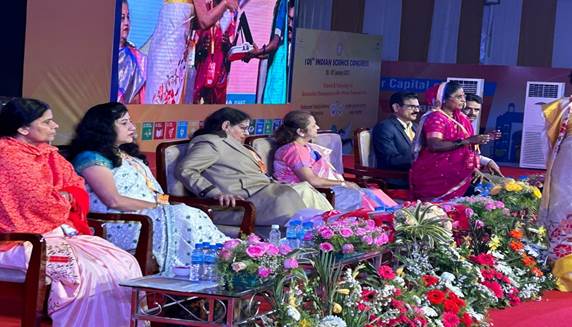
Dr. Nisha Mendiratta, Advisor & Head, WISE-KIRAN Division, Department of Science & Technology (DST), emphasized on the need for interventions to promote women in STEM. She highlighted that in tertiary education, the percentage of girls is more than 55, but after that, there are high numbers of dropouts – an issue that needs to be addressed. Dr. Mendiratta underlined the efforts of DST in plugging the gap areas and promoting women’s participation in Science & Technology, benefiting more than 35000 girls and women in the last 8 years under various women-centric programs.
The experts discussed about the role of S&T in Women Empowerment; Opportunities in Food Science & Technology; Sustainable Development Goals; Science Communication, Role of Digitalization, etc.
A panel discussion was also organized wherein Dr. Indu Bala Puri, Scientist, DST, pointed out the importance of S&T-led development in rural areas. Dr. Suphiya Khan, Banasthali Vidyapith, asserted that innovation in research can excel in the output. Dr. Sangeeta Nagar, TIFAC, DST, briefed about the opportunities for women in the area of Intellectual Property Rights.
Dr. Zareena Qureshi, Principal, JNV Nagpur, shared the significance of the Vigyan Jyoti program for school girls to pursue a career in STEM fields. Dr. Sonal Dhabekar, beneficiary of the WOS-B program, highlighted how this program helped to reshape her scientific career after a long break.
Dr. Vijaylaxmi Saxena, General President of ISCA, appreciated the various initiatives of Govt. of India for empowering women. Dr. Kalpana Pande, Convener WSC, talked about the scientific temperament among women since ancient times. Around 5000 participants attended the 2-day event.
SNC/RR
Protein found in Zebrafish can regenerate aged discs in human vertebrae
A protein found in the backbone of zebrafish that plays a positive role in disc maintenance and promotes regeneration in aged discs between vertebrae can have potential therapeutic implications to promote regeneration in degenerated human discs.
In humans, discs degenerate naturally, leading to many related health concerns, including low back, neck, and appendage pain. Currently, only symptomatic treatments for disc degeneration are available, including pain relievers or anti-inflammatories. In severe cases, disc replacement or disc fusion surgery is performed. Thus, there is an urgent need to develop a treatment either to suppress disc degeneration or to promote disc regeneration in humans. Medical examinations have given insights into the stages of degenerating human discs, but limited information is available about the cellular and molecular processes playing a role in the maintenance of the discs. Most importantly, no medical procedures or treatments have been known to suppress disc degeneration or induce disc regeneration.
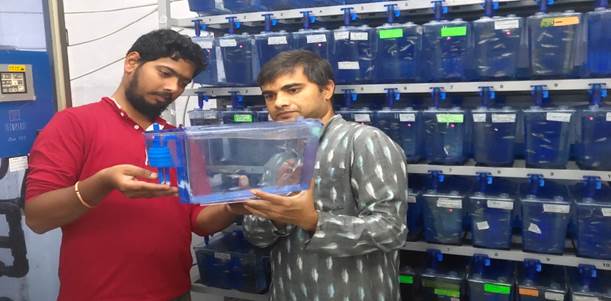
A study by Agharkar Research Institute (ARI), Pune, an autonomous institute of the Department of Science and Technology, discovered that a protein called Cellular communication network factor 2a (Ccn2a) secreted from intervertebral disc cells induces disc regeneration in aged degenerated discs by promoting cell proliferation and cell survival by modulating the pathway called the FGFR1-SHH (Fibroblast growth factor receptor-Sonic Hedgehog) pathway.
The study which used Zebrafish as a model organism is the first in vivo study showing that it is possible to induce disc regeneration in a degenerated disc by activating an endogenous signaling cascade. The scientists also found that the Ccn2a-FGFR1-SHH signaling cascade takes a positive role in disc maintenance and augmenting disc regeneration. The study published in the journal Development used genetic and biochemical approaches and is likely to help design a novel strategy to suppress disc degeneration or induce disc regeneration in degenerated human discs.
Publication
AIIMS, Bhubaneswar on the 4th Convocation Ceremony
“AIIMS Bhubaneswar has won the trust of people in the field of quality health care within a decade not only in Odisha but also in adjoining states by fulfilling the mandate of equalizing the regional imbalance in tertiary health care delivery. This is a manifestation of the commitment of Govt of India under the leadership of Hon’ble Prime Minister where quality tertiary healthcare and medical education have been prioritised as part of the National Health Agenda”. This was stated by Dr. Mansukh Mandaviya, Union Minister of Health and Family Welfare as he addressed the students of AIIMS Bhubaneswar on their 4th Convocation ceremony, here today. Shri Dharmendra Pradhan, Union Minister for Education and Skill Development & Entrepreneurship and Dr Bharati Pravin Pawar, Union Minister of State for Health and Family Welfare were present on the occasion. Smt. Aparajita Sarangi, Member of Parliament was also present. The dignitaries remembered former Prime Minister Bharat Ratna Shri Atal Bihari Vajpayee who laid the foundation of the institute in 2003 and paid floral tributes to him.
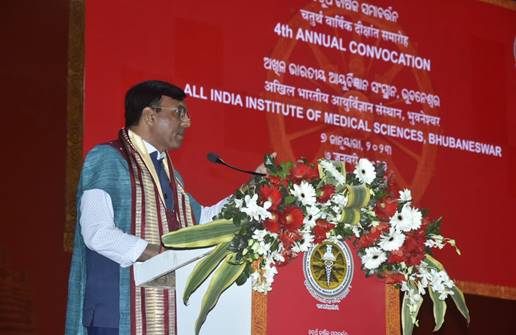
Speaking on the occasion, Dr Mandaviya said, “Whether in teaching, research or health care, AIIMS Bhubaneswar has earned laurels in every sector”.
Congratulating students on the convocation, the Union Health Minister urged them to wholeheartedly take the opportunity of service and responsibility that medical science brings. He said, “our sense of responsibility should align with our service to humanity”. He highlighted that the new initiatives of “Heal in India” and “Heal by India” will give an impetus to medical value travel in the country and also fulfil the demand for skilled and qualified medical and para-medical human resource across the globe.
Reiterating the commitment of the Union govt towards improving healthcare services, Dr Mandaviya said, “The number of AIIMS in the country have increased from 8 before 2014 to 23 at present”. He further said that “50 Crore families have been given health security under the Ayushman Bharat – PMJAY scheme while affordable and quality medicines are being provided by more than 9000 Jan Aushadhi Kendras across the country”. While mentioning the AB-PMJAY, he urged the State Govt to implement the scheme in the state so that the eligible beneficiaries of Odisha can avail of the benefits of the scheme not only in the state but other states too.
Dr Mansukh Mandaviya along with Shri Dharmendra Pradhan and Dr Bharati Pravin Pawar inaugurated the much-awaited state-of-the-art NTPC Burn Centre for the public. The Union Health Minister also laid the foundation stone of Critical Care Hospital Building. The dignitaries also released a handbook of millets in commemoration of the International Year of Millets (IOYM) 2023.

Dr Mandaviya and Shri Pradhan awarded 40 Gold medals to meritorious students of AIIMS Bhubaneswar from different disciplines like DM/MCh (4 scholars), MD/MS (10), MBBS (17), BSc Nursing (6) and BSc Paramedical (3).
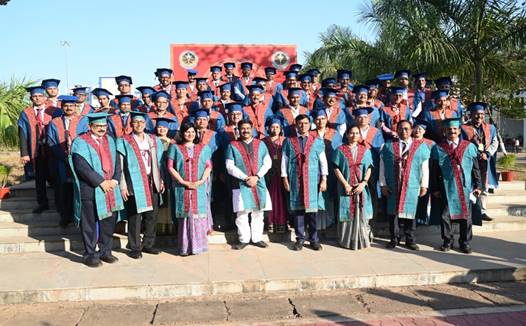
Shri Dharmendra Pradhan congratulated students of AIIMS Bhubaneswar on their achievements and motivated them to take more responsibility ahead. Appreciating the rapid strides made by the institute, Shri Pradhan said, “It is a matter of pride that within ten years, AIIMS Bhubaneshwar has emerged as the second-best AIIMS in the country and the 26th best medical institution in the country, as per the NIRF rankings.”
Highlighting India’s contribution towards managing the COVID pandemic, Shri Pradhan said “India provided Made-in-India vaccines to 140 countries”. He also informed that under the administration of Prime Minister Shri Narendra Modi, the Govt is committed to have medical books in local languages to enhance the understanding of students. He urged the students to keep the campus clean and support the Hon’ble Prime Minister’s “Swacch Bharat” mission.
Dr Bharati Pravin Power noted that AIIMS Bhubaneswar has made a mark in kidney transplantation operations and is making rapid strides in other surgeries as well. She stated that “AIIMS Bhubaneswar always comes to mind when one thinks of the top medical institutions in the country today”. She emphasized that investment in health enhances a country’s progress. She also encouraged the young doctors to take more responsibility in the spirit of humanity.
Shri Manohar Agnani, Addl. Secretary, Health Ministry, Prof. (Dr.) Ashutosh Biswas, Director, AIIMS Bhubaneswar, Prof. (Dr.) Subrata Kumar Acharya, President, AIIMS Bhubaneswar, Prof. (Dr.) Prasanta Ranjan Mohapatra, Dean, AIIMS Bhubaneswar, and senior officials of the Health Ministry were present during the occasion.
****
Digital India Awards 2022
The President of India, Smt. Droupadi Murmu presented the seventh edition of the Digital India Awards 2022, here today. The Minister for Communications, Electronics & Information Technology and Railways, Shri Ashwini Vaishnaw, the Secretary, Ministry of Electronics and Information Technology (MeitY), Shri Alkesh Kumar Sharma, the Director General National Informatics Centre (NIC), Shri Rajesh Gera and other dignitaries were present on the occasion.
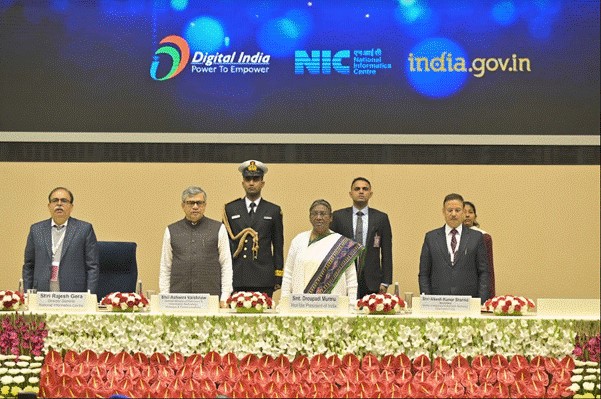
The President, Smt. Droupadi Murmu at the presentation of seventh edition of the Digital India Awards
Speaking at the Awards ceremony, the Minister for Communications, Electronics & Information Technology and Railways, Shri Ashwini Vaishnaw recalled how the Prime Minister had initiated the Digital India program eight years ago. Since then, India has set an example for the world by harnessing technology to deliver services to people at the grassroot level. How Digital India is transforming the life of common people of India has become a case study for the whole of the world.
Shri Ashwini Vaishnaw addressing at the Digital India Awards ceremony
The Minister further elaborated on the comprehensive 10-dimensional vision of the Government towards the goal of transforming India. He concluded his speech by extending his compliments to the winners and participants and also thanking the President for attending the ceremony.
The Secretary, Ministry of Electronics and Information Technology (MeitY), Shri Alkesh Kumar Sharma in his welcome address, said that Digitization provides perfect tools to deliver seamless benefits to the target groups and reinforces our resolve to transform India into a digitally empowered society and a knowledge economy. Our shared goal is to enable every individual to fully participate in social, economic, cultural and development activities.
Shri Alkesh Kumar Sharma addressing at the Digital India Awards ceremony
Shri Alkesh Kumar Sharma also mentioned that “As India assumes Presidency of G20 this year, there’s an opportunity to inspire the world with our deeply rooted belief in a human centric approach to technology and facilitate greater knowledge sharing in areas like digital, public goods, financial inclusion and technology enabled development.”
The Minister for Communications, Electronics & Information Technology and Railways, Shri Ashwini Vaishnaw released the Digital India Awards 2022 Compendium and presented the first copy to the President, Smt. Droupadi Murmu. The Compendium is available at:
https://digitalindiaawards.india.gov.in/assets/compendium2022/index.html
Shri Ashwini Vaishnaw presenting the Digital India Awards 2022 Compendium to the President, Smt. Droupadi Murmu
Digital India Awards (https:/digitalindiaawards.gov.in) encourage and honour innovative digital initiatives by government entities at all levels. These awards aim to inspire and motivate not only the government entities but also start-ups and grassroot level digital initiatives in fulfilling the Digital India vision. The 7th edition of Digital India Awards was presented under the following seven categories:
- Digital Empowerment of Citizens: Recognizing universally accessible, anytime anywhere access to Digital resources and promoting collaboration in participative governance and digital literacy leading to enhanced ease of living.
|
Award |
Winners |
|
Platinum |
e-NAM |
|
Gold |
Transport Mission Mode Project (eTransport) |
|
Silver |
Judgment Search Portal |
- Digital Initiatives at Grassroots Level: Recognizing initiatives that use Digital Technology e.g., AI, Blockchain, Drones, IoT, ML, GIS, etc. in domains like agriculture, health, education, employment, labour, skilling etc. at the level of Panchayats, Local Bodies, Sub-Districts.
|
Award |
Winners |
|
Platinum |
e-Vivechna App (MP) |
|
Gold |
DeGS Computer Basic Training (Jharkhand) |
|
Silver |
Ksheerasree Portal (Kerala) |
- Digital Initiatives for Ease of Doing Business: Honouring Digital initiatives creating significant impact by reducing the time, costs and efforts in setting up, conducting and operating business activities.
|
Award |
Winners |
|
Platinum |
Mine Mitra (UP) |
|
Gold |
eAbkari (Odisha) |
|
Silver |
Invest Punjab |
- Data Sharing and Use for Socio Economic Development: Recognizing Sharing of Government Data by Ministries/ Departments/ Organizations, States, Smart Cities and ULBs to a central repository to create a vibrant data ecosystem in the country for analysis, decision making, innovation, economic development and public good
|
Award |
Winners |
|
Platinum |
Smart Cities Mission, M/o Housing and Urban Affairs |
|
Gold |
Central Board of Secondary Education (CBSE) |
|
Silver |
Center for e-governance (Karnataka) |
- Public Digital Platforms – Central Ministries, Departments and States: Honouring excellence in design and implementation of a Public Digital Platform with a wide scale coverage and having high impact in the society
|
Award |
Winners – States |
|
Platinum |
DUARE SARKAR (West Bengal) |
|
Gold |
e-Services Manipur |
|
Award |
Winners – Central Ministries, Departments |
|
Platinum |
ICEGATE Portal |
|
Gold |
eShram |
- Digital Initiatives in Collaboration with Startups: Honouring excellence by Government Entities in collaboration with Startups for enhancement and/or transformation of digital governance, improving the experience of digital services and digital empowerment of citizens
|
Award |
Winners |
|
Platinum |
Digital Workforce Management System (Kerala) |
|
Gold |
Smart Nutrient Management of the Soil (Telangana) |
|
Silver |
Digital Deposit Refund System (Uttarakhand) |
- Best Web & Mobile Initiatives Complying with GIGW & Accessibility Guidelines: recognizing Web & Mobile initiatives ensuring rich content and barrier-free access on any device.
|
Award |
Winners |
|
Platinum |
Bilaspur District Website (Chhattisgarh) |
|
Gold |
Website of Kottayam District (Kerala) |
|
Silver |
Website of Central Institute of Petrochemicals Engineering & Technology |
***


You must be logged in to post a comment.