A day without a phone.

We have become a society that is totally dependent on communication devices to make our world go round. The cell phone, has completely changed the way our world lives and is no longer a novelty. So, have we ever wondered “what would one day be like without our cell phone?”

The morning will start off pretty rough considering that we had to wake up to a traditional alarm clock blaring into our ears instead of melodious alarm. After that if we want to call someone we would not be able to call them.
Since I use my phone for music and playing games, I will have to stay one day without listening to songs and playing my favourite game. While I’ll be doing my important daily stuff I’ll not be able to focus on my work and will be kept on thinking what were the things I was missing on facebook & Instagram or important things my friends would send in text. I would also miss my favourite shows that I use to watch on Netflix, Amazon Prime, and other OTT Platform.

So at the end it opened my eyes to see how dependent our society truly is on cell phones because we can’t survive without mobile phones or our life without a cell phone would be like slow and hard, boring as it allows us to do numerous stuff, source of entertainment and even make our life easier. Living without a phone is similar to living without a hand or leg. Imagine the lives of people whose phones have stopped working, need immediate service or broke!

Feels so horrifying!!!!!!isn’t it.

The largest individual flower on Earth-Rafflesia Arnoldii

Rafflesia Arnoldii is a species of flowering plant in the parasitic genus Rafflesia. It is noted for producing the largest individual flower on Earth. It has a strong and unpleasant odor of decaying flesh. It is native to the rainforests of Sumatra and Borneo. Although there are some plants with larger flowering organs like the titan arum (Amorphophallus titanum) and talipot palm (Corypha umbraculifera), those are technically clusters of many flowers.

Rafflesia Arnoldii is one of the three national flowers in Indonesia, where it is known locally as the puspa langka or Padma paksasa. The other two being the white jasmine (Jasminum sambac) and moon orchid (Phalaenopsis amabilis). The first person to discover Rafflesia was the ill-fated French explorer Louis Auguste Deschamps in Java between 1791 and 1794, but his notes and illustrations were seized by the British in 1803 and were not available to western science until 1861.

Thailand, Rafflesia can be seen in Khao Sok National Park where the flowers are numbered and monitored by the park rangers. The regional name of Rafflesia Arnoldii is kerubut in Sumatra, cendawan biriang in the Minangkabau language in kecamatan (‘district’) of Pandam Gadang and “corpse flower” by the local people.

Antique illustration of Rafflesia Arnoldii

Although Rafflesia is a vascular plant, it lacks any observable leaves, stems or even roots, and does not have chlorophyll properties. It lives as a holoparasite on vines of the genus Tetrastigma. Similar to fungi, individuals grow as a mass of thread-like strands of tissue completely embedded within and in intimate contact with surrounding host cells from which nutrients and water are obtained. It can only be seen outside the host plant when it is ready to reproduce; the only part of Rafflesia that is identifiable as distinctly plant-like are the flowers, though even these are unusual since they attain massive proportions, have a reddish-brown colouration, and stink of rotting flesh. The flower of Rafflesia Arnoldii grows to a diameter of around one meter (3.3 feet), weighing up to 11 kilograms. These flowers emerge from very large, cabbage-like, maroon or dark brown buds typically about 30 cm (12 in) wide, but the largest flower bud ever recorded found at Mount Sago, Sumatra in May 1956 was 43 cm (17 in) in diameter. Indonesian researchers often refer to the bud as a ‘knop’ (knob).

Corpse flower, Rafflesia arnoldii, West Sumatra, Indonesia.

Rafflesia Arnoldii is found in both secondary and primary rainforests. The only host plant species of Rafflesia Arnoldii is Tetrastigma leucostaphylum in West Sumatra. Tetrastigma are themselves parasites of a sort, using the strength and upright growth of other surrounding plants to reach the light. The trees that Tetrastigma uses to climb up to light, are relatively limited in number of species, although they are generally the closest tree to the vine. The buds take many months to develop and the flower lasts for just a few days. The flowers are gonochorous – either male or female, thus both flowers are needed for successful pollination.

When Rafflesia is ready to reproduce, a tiny bud forms outside the root or stem of its host and develops over a period of a year. The cabbage-like head that develops eventually opens to reveal the flower. The stigmas or stamens are attached to a spiked disk inside the flower. A foul smell of rotting meat attracts flies and beetles. To pollinate successfully, the flies and beetles must visit both the male and female plants, in that order. The fruit produced are round berries filled with numerous minute seeds.

The flies like Drosophila colorata, Chrysomya megacephala and Sarcophaga haemorrhoidalis visit the late flowers. Black ants of the genus Euprenolepis may feed on the developing flower buds, perhaps killing them.

It’s conservation has not been assessed for the IUCN Red List. Ecotourism is thought to be a main threat to the species, at locations which are regularly visited by tourists the number of flower buds produced per year has decreased.

The Man you admire most- M.K. Gandhi

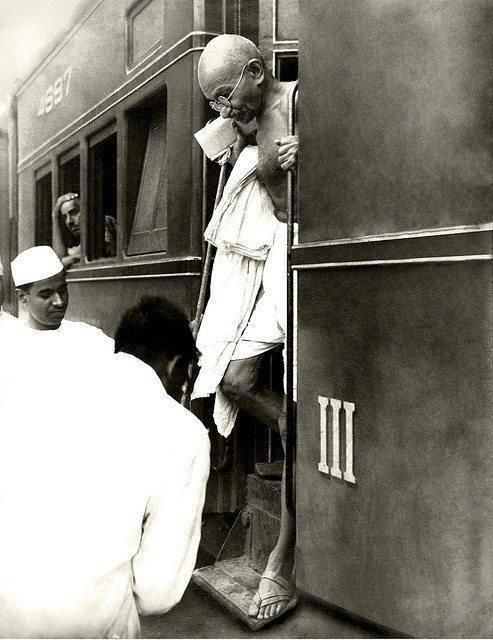
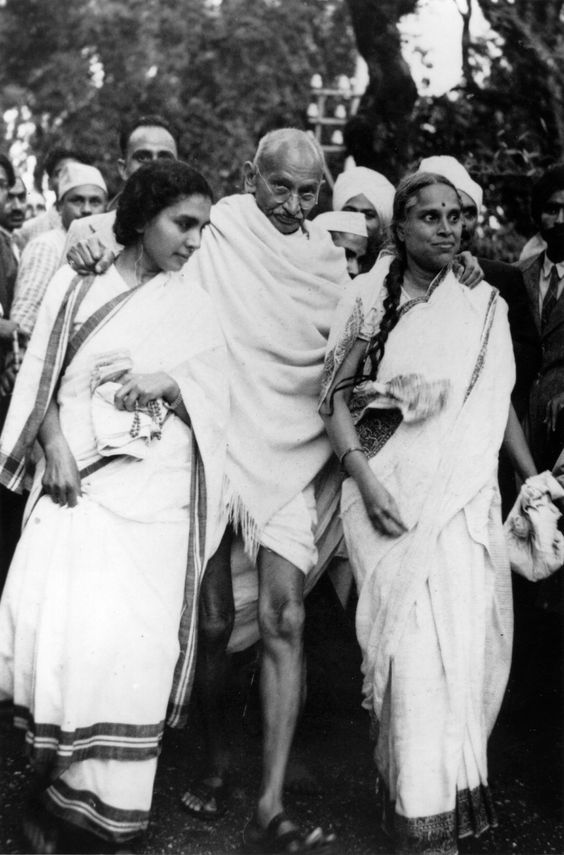
The man I admire most is M. K. Gandhi. His full name is Mohandas Karamchand Gandhi. He was attributed ‘Mahatma’ for his glorious life. He was born at Porebandar in Gujarat (India) on 2 October, 1869. His father, Karamchand Uttamchand Gandhi (1822–1885), served as the diwan of Porbandar state. Gandhi’s mother name was Putlibai. In May 1883, the 13-year-old Mohandas was married to 14-year-old Kasturbai Makhanji Kapadia (her first name was usually shortened to “Kasturba”), in an arranged marriage, according to the custom of the region at that time. His wedding was a joint event, where his brother and cousin were also married. Recalling the day of their marriage, he once said, “As we didn’t know much about marriage, for us it meant only wearing new clothes, eating sweets and playing with relatives.” As was prevailing tradition, the adolescent bride was to spend much time at her parents’ house, and away from her husband.

In an interview Gandhi said about his lustful feelings he felt for his young bride” even at school I used to think of her, and the thought of nightfall and our subsequent meeting was ever haunting me. He later recalled feeling jealous and possessive of her, such as when she would visit a temple with her girlfriends, and being sexually lustful in his feelings for her.”

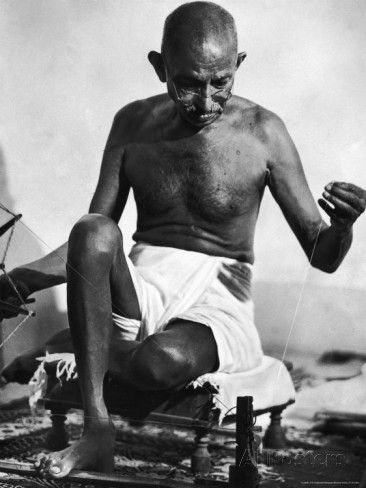
In 1921, Gandhi adopted the use of an Indian dhoti and a shawl (in the winter) and only (dhoti in the summer) woven with yarn hand-spun on a traditional Indian spinning wheel (charkha) as a sign of identification with India’s rural poor.

After completing education in India he went to England in order to study Law. He obtained the degree in Law and returned to India and began to practise in Mumbai High court at first and then in South Africa. While he was there, he started a new era of non-violence movement to reduce the oppression of the Europeans against the natives of South Africa. The movement became famous as Satyagraha and when he came to India again he used this method against the British rule. It was strengthened in Non-cooperation Movement in 1921 and Quit India Movement in 1942. He became the leader of the people giving his clarion call-“Do or die’. After a long struggle under his leadership India won her independence on 15 August in 1947.

Gandhi did many experiment like experiment with food, non-violence, and the freedom fight but the experiment which has made him a villain in everyone’s eye was “The experiment of Gandhi’s Brahmacharya” which was criticised by various senior leaders like- Jawaharlal Nehru, Sardar Vallabhbhai Patel had called it a “terrible blunder”, and had asked him to stop it.

Gandhi tried to test and prove to himself his brahmacharya. The experiments began some time after the death of his wife in February 1944. At the start of his experiment, he had women sleep in the same room but in different beds. He later slept with women in the same bed but clothed, and finally, he slept naked with women. In April 1945, Gandhi referenced being naked with several “women or girls” in a letter to Birla as part of the experiments.

According to Gandhi he asked his grandniece Manu when she was 18 years old if she wanted to help him with his experiments to test their “purity”, for which she readily accepted. Gandhi slept naked in the same bed with Manu with the bedroom doors open all night. Manu stated that the experiment had no “ill effect” on her. Gandhi also shared his bed with 18-year-old Abha, wife of his grandnephew Kanu. Gandhi would sleep with both Manu and Abha at the same time. None of the women who participated in the brahmachari experiments of Gandhi indicated that they had sex or that Gandhi behaved in any sexual way. Those who went public said they felt as though they were sleeping with their aging mother.

He was shot dead on 30 January, 1948 by a derailed young man named Nathuram Godse. But his life and message are still the source of inspiration not only in the national field, but also in the international field.

Panchakanya- The story of 5 Eternal Virgins despite being married.

अहिल्या, तारा, मंदोदरी, कुंती दृापदी स्मरणं, नित्यं, महापातक नाशनाम.

Ahalya, Tara, Mandodari, and Sita, while Draupadi and Kunti from the Mahabharata. Sita and Kunti are often replaced by each other according to people’s beliefs.

These five women were born in  Kanya Rashi or the constellation of Virgo. The word ‘Kanya’ is used to denote a woman who is a ‘Virgin’. These women were the symbol of “Purity” and were considered the Eternal Virgins group despite being married.

Virgin women were supposed to have great powers of ‘Tapa’. So, all these women, despite being married, had the power of Tapa. These panchakanya are ones who owned their virginity and could revive it. The panchakanya’s were so pure that even through the fire they could pass unharmed.

Ahalya

The Bala Kanda of the Ramayana mentions that Brahma molds Ahalya out of pure creative energy. Brahma created her out of the water as the most beautiful woman in order to break the pride of Urvashi, the foremost celestial nymph. Brahma places her in the care of Gautama rishi until she reaches puberty. When that time arrives, the sage returns Ahalya to Brahma, who, impressed by Gautama’s sexual restraint and asceticism, bestows her upon him. Indra, who believes that the best women are meant for him, resents Ahalya’s marriage to the forest-dwelling ascetic.

In another tale, it is said Ahalya is created from the ashes of the sacrificial fire by the Saptarishi (seven seers) and gifted to sage Gautama.

The king of the gods, Indra, was infatuated with her beauty and comes disguised as Gautama when the sage was away, and requests to have physical relationships with Ahalya. In some versions, Ahalya sees through his disguise but still complies out of “curiosity” and because her husband would neglect his matrimonial duties. In later versions, Ahalya falls prey to Indra’s trickery and does not recognize him. In all narratives, Ahalya and her lover Indra are cursed by Gautama. Gautama then curses Ahalya to remain invisible to all beings for thousands of years, fast by subsisting only on-air, suffer and sleep in ashes and be tormented by guilt. Nevertheless, he assures her that her sin will be expiated once she extends her hospitality to Rama, who will visit the ashram. Thereafter, Gautama abandons the ashram and goes to the Himalayas to practice asceticism. Indra was cursed to be castrated or be covered by a thousand vulvae that ultimately turn into a thousand eyes.

The Ayodhya prince Rama, with his brother Lakshmana and their guru, the sage Vishvamitra pass Gautama’s desolate ashram while travelling to King Janaka’s court in Mithila. As they near the ashram, Vishvamitra recounts the tale of Ahalya’s curse and instructs Rama to save Ahalya. Ahalya is said to have been touched by Rama’s feet and rises from her stone state to human form and goes to her abode, the Gautama’s hermitage.

Tara

Tara was the wife of the monkey king Bali who was presumed dead after a battle with a demon after which she married his twin brother Sugriva according to the custom of the time. The lack of the description of formal marriage suggests that Tara’s relationship to Sugriva is neither widow re-marriage nor polyandry, but simply appropriation by Sugriva. In the references of the coronation of Sugriva as king, Angada is also described as the heir-apparent crown prince, while Tara is mentioned as Sugriva’s wife. The Adhyatma Ramayana declares that Sugriva acquires Tara.

It turns out that Bali isn’t killed in reality. When Bali returned, he was livid and abducted Sugriva’s first wife, Ruma, as revenge. As battle lines between the brothers were drawn, wise Tara counseled her first husband to return Ruma to his brother. Tara said Sugriva had not snatched her but married her legitimately only because Bali’s death had been confirmed. Tara, the mother of Bali’s son Angad, finally managed to wrest a promise from him that he would not kill his own brother. The brothers fought a duel in which Bali was killed by Sugriva’s mentor Rama. Sugriva was crowned king of the kingdom of Kishkindha. As dowager queen, Tara diplomatically left the question of the ascension of her son to the throne for his stepfather to resolve. She knew well that the guilt-ridden uncle Sugriva would not deny her son his right to the throne.

In his dying breath, Bali reconciles with Sugriva and instructs him to follow Tara’s wise counsel in all matters.

While all was well with the king and his lustful nature got the best of him and he eventually ignored his promise to Rama to help him win Sita back. Lakshaman was livid to find Sugriva had backtracked on his words. He entered Sugriva’s personal chambers to bring upon his wrath on the king but Queen Tara very diplomatically pacified the prince.

Thus she was instrumental in saving the king from the wrath of the Lakshmana and brought coherence in the Rama camp to fight the great war to avenge Sita.

Mandodari

Mandodari is the daughter of Mayasura, the king of the Asuras, who are god-like demons. He rescued a beautiful girl child from the well. He and his, wife, Hema, adopted her and named her Mandodari. She was taught aspects of architecture by King Mayasura. He taught Mandodari about the various landforms of Bharatvarsh which were Swarga (heavenly plateaus), Bhoomi (plains) and Patala (underworld). When she turned fifteen, he started involving her in his projects and eventually met Ravana when he came to seek her counsel.

Valmiki’s Ramayana describes Mandodari as a very beautiful, pious and noblewoman whose appearance once led Hanumana to mistake her for Sita. She was known to be extremely patient with Ravana’s attitude towards women, but always questioning his actions and rebuking his choices.

Despite Ravana’s faults, Mandodari loved him and was proud of his strength. She was aware of Ravana’s weakness towards women. A righteous woman, Mandodari tried to lead Ravana to righteousness, but Ravana ignored her advice.

Draupadi

Draupadi is also referred to as Panchali (meaning one from the kingdom of Panchala), Yajnaseni (meaning one born from a Yajna or fire-sacrifice), Mahabhaaratii (great wife of the five descendants of Bharata) and Sairandhri (an expert maid, her assumed name during her second exile in which she worked as Virat kingdom’s queen Sudeshna’s hair-stylist).

Panchali is the Dharma Pathini of the Pancha Pandavas. The concept behind her marrying five people is that she is the Shakthi Roopa of the five devas, Dharma – Yudhishthira, Vayu – Bheema, Indra – Arjun, Nakul and Sahadev – Ashwini Kumaras.

No woman ever faced the trials and tribulations that Draupadi faced in her life. Even after being born out of the fire to Drupada, even if she had heroic husbands, she had to undergo Vastra harana, exile, Agnata. Post-war she was faced to watch her entire clan being killed.

Kunti

She is one true Matriarch of the Saga of Mahabharata. Kunti or Pritha was the daughter of Shurasena and the foster daughter of his cousin Kuntibhoja. She is the sister of Vasudeva. She was married to King Pandu of Hastinapur and was the mother of Karna and the first three Pandava brothers Yudhishthira, Bhima, Arjuna. She was the paternal aunt of Krishna, Balarama, and Subhadra. She was the stepmother or foster mother of Nakula and Sahadeva.

Kunti’s marital life was also unusual. Having chosen Pandu as her husband in a svayamvara ceremony, she never had a child by Pandu. Her husband had received a curse from the sage Kimdama that he would die on having intercourse with his wife because he had shot the sage with an arrow when he was copulating with his wife in the guise of a deer. Deeply hurt by the turn of events, Pandu decided to retire into the forest and live the life of renunciation. Kunti accompanied him. She invoked her boons for herself and Madri and had 3 children of her own and two for Madri. Pandu dies unable to abstain.


Facts about Yagnaseni- Draupadi

Draupadi’s birth

Draupadi was the daughter of King Drupada of Panchala. Draupadi was an unwanted child born to him. She was not born from her mother’s womb. Instead, it is said that Draupadi was born out of revenge as an adult. King Drupada was defeated by the Pandava prince Arjuna on behalf of Drona, who then took half of his kingdom. By burning the fire of revenge, king Draupada performed tapas followed by a Yajna to obtain a boy child as a means of blessing who can take revenge from Guru Drona. Draupadi appeared as a beautiful dark-skinned young woman from the sacrificial fire after her sibling Dhrishtadyumna.

Various names of Draupadi

Draupadi is one of the leading characters of Mahabharata. Draupadi is known by several names and each name defines her different qualities.

  • Drupadi – daughter of king Drupad
  • Panchali – Princess of the kingdom of Panchala
  • Parshati – Granddaughter of Prishata
  • Yagnaseni – Born from the sacrificial fire
  • Sairandhri – An expert maid
  • Nityayuvani – One who remains young forever and never becomes old.
  • Malini – One who makes garlands.
  • Krishnaa – Represent for her dark complexion and pure skin, radiating purity, honor, and principality.

Draupadi condition for Pandavas

Draupadi agreed to become the wife of five Pandavas on one condition, i.e., she would never share her household with any other women, which means the Pandavas had no right to bring their other wives to Indraprastha.

Draupadi cursed the Dogs

Draupadi mentioned a condition in front of Pandavas that only one brother was allowed to enter her chamber at a time. The Pandava who will enter her chamber will keep his shoes outside the chamber. The one who will violate this condition will be sent to long-term exile.

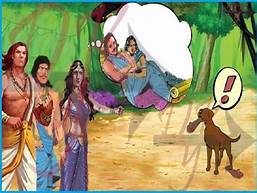
But one day, when Yudhisthar was in her chamber, the dog stole his shoes. Unaware of the fact Arjun entered the chamber of Draupadi seeing no shoes outside and saw his brother Yudhisthir with Draupadi copulating. Arjun was sent to exile as per the condition of Draupadi. Embarrassed Draupadi cursed dogs by saying: “All the world will see you copulate in public, stripped of all shame.”

Incarnation of Kali

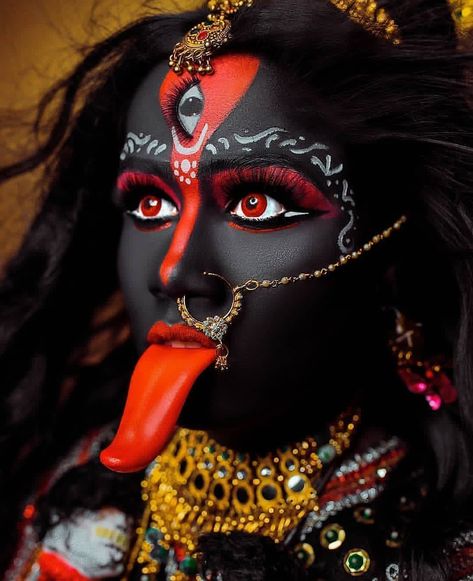
There is a common belief in South India that Draupadi was also an incarnation of Maha Kali. She was born to assist Lord Krishna to destroy all the arrogant Kings. That is why they are considered brothers and sisters although Draupadi was born from fire.

Avatars of Draupadi

As per Narada Purana and Vayu Purana, she is the combined avatar of;

Goddess Shyamala (wife of Dharma)

Bharati (wife of Vayu)

Shachi (wife of Indra)

Usha (wife of Ashwin)

Parvati (wife of Shiva)

Draupadi blessed to be a virgin

Draupadi is one of Panchakanyas including- Sita( Kunti), Ahalya, Draupadi, Tara, and Mandodari , known as five virgins. She used to walk through fire to regain her virginity and purity before she moved to the next Husband.  Such rules were never perceived before this. Pandavas have other wives, but these wives used to stay with their parents and they used to travel to them to visit their wives in four years.

Biography-Martin Luther King JR.

MONTGOMERY, AL – MARCH 25: Dr. Martin Luther King, Jr. speaking before crowd of 25,000 Selma To Montgomery, Alabama civil rights marchers, in front of Montgomery, Alabama state capital building. On March 25, 1965 in Montgomery, Alabama. (Photo by Stephen F. Somerstein

Martin Luther, King Jr. was born on 15 January, 1929 in Atlanta, Georgia in America. His father was Reverend Martin Luther King, Senior and mother Alberta Williams. His early life was spent in Atlanta. As a precocious student, he skipped both the ninth and twelfth grade and entered Morehouse college at the age of fifteen without formally graduating from high school. In 1948 he graduated from Morehouse with bachelor of arts degree in sociology, and enrolled in Crozer theological Seminary in Chester, Pennsylvania from which he graduated with bachelors of Divinity degree in 1951. He began doctoral studies in systematic theology at Boston University and obtained the degree of Doctor of Philosophy in 1955. As a Baptist minister he became a protestant and founded the southern Christian Leadership Conference in 1957. He was the prominent leader in the African- American Civil Right Movement. He is best known for being an iconic figure in the advancement of civil rights in the United States and around the world, using the non- violent methods following the teachings of Mahatma Gandhi. He believed that the non- violent resistance is the most potent weapon available to oppressed people in their struggle for justice and human dignity.

He delivered his famous speech ‘I have a dream’ in 1963 in Washington. Thereon he expanded liberal American values against the color-blind society. His notable efforts were on ending poverty from the society and stopping the Vietuam War. In 1964 he was the youngest recipient of the Nobel Peace Prize for his work to end racial segregation through civil disobedience and other nonviolent means. He was assassinated on 4th April, 1968 in Memphis, Tennessee. He was a post- humously awarded the Presidential Medal of Freedom in 1977 and congressional Gold Medal in 2004. Martin Luther King JR. day (15th January ) is observed as a US Federal Holiday since 1986.

Biography: Guru Nanak

Guru Nanak was the founder of the religion of Sikhism and the first of the ten Sikh Gurus. He was born on 15th April,1469 into a Bedi (Khastriya) family in a Muslim village of Rai Bhoi Di Talwandi, now called Nankana sahib near Lahore. His father was Mehta Kalyan Das Bedi, popularly shortened to Kalu Mehta and his mother was Tripta Devi. At the age of 5 he voiced his interest in divine subjects. At the age of 7 he was enrolled at the village school. He followed her elder sister to Sultanpur to live with her and her husband Daulat khan at the age of 16 years. He was married to Mata sulakhniat about 19 years of age. At the age of 30 he had a vision and disappeared from the village. After three days he reappeared and spoke about god’s path-“ There is neither Hindu nor musalman’ so whose path shall I follow? I shall follow god’s path.” He said that he had been taken to god’s court. There he was offered a cup filled with Amrit(nectar) and given the command- “ This is the cup of the adoration of god’s name. Drink it….I have bestowed the gift of my name upon you. Let this be your calling. “He made four major journeys-first, towards Bengal and assam, second, towards Tamil Nadu, third, towards Kashmir, Ladakh and Tibet, and the final tour towards Bagdad, mecca and medina on the Arabian peninsula. At Mecca, Guru Nanak was found sleeping with his feet towards the Kaaba Mosque. Kazi Rukan-ud-din observed this and angrily objected this and angrily objected. Guru Nanak said,” please turn my feet in a  direction where there is no house of god.” The Kazi understand the meaning that “god is everywhere” and was struck with wonder. Guru Nanak preached “god is the doer and without god there is no other.” He advised his followers to practice his teachings in three ways:

  • Naam Japna: Chanting the Holy name,
  • Kirat Karo: Earning a living honestly,
  • Vand Chakko: Helping those with less who are in need.
  • Guru Nanak expired on 22 September,1539 in Kartarpur at the age of 69.

Biography-Abraham Lincoln

” I walk slowly, but I never walk backward” -Abraham Lincoln

Abraham Lincoln, the 16th President of the United States, guided his country through the most devastating experience in its national history- Civil War. He is considered by many historians to have been the greatest American President. He was born on 12February,1809 in Hardin (now Laure) country in Kentucky. His father Thomas Lincoln was a skilled carpenter and his mother was Nancy Hanks. Lincolns left Kentucky and moved to Indiana in 1816. There little Lincoln attended some schools for less than a year altogether. Lincolns left Indiana for Illinois in 1830. In 1831 Lincoln left home for New Salem and served briefly in the black Hawk War (1831). The military interlude was uneventful except that he was elected Captain of his volunteer Company. In 1842 he married Mary Todd. He served one term (1847-49) as a member of the US House of Representatives where he opposed the Mexican War as unnecessary and unconstitutional. He had been indifferent about the annexation of Texas, already a slave territory, but he opposed any expansion that would allow slavery into new area, gained as a result of the Mexican war. He expressed his view that the nation would become “either all slave or all free”. He won the Presidential election as the 16th President of the US and his inauguration was held in March 1861. He was soon noted for taking vigorous measures in the Civil War sometimes at odds with the Constitution and often at odds with the ideas of his military commanders. He was naturally anti-slavery. He endorsed the 13th Amendment to the Constitution abolishing slavery and thus charged the racial future of the United States. But it agitated a section of the white people. John Wilkes Booth, a Negrophobe shot Lincoln while he attended a performance at Ford’s Theatre in Washington on 14th April, 1865. Lincoln’s achievements for saving the Union and freeing the slaves, and his martyrdom just at the War’s end assured his continuing fame forever.

Students and social service.

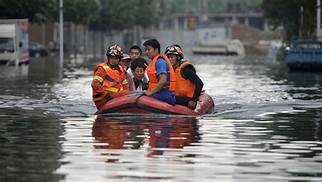
Man is a social being and social service is a must in a system of man-making education, There are so many kinds of social service and students have a lot of work to do in this field. They have some duties to remove illiteracy. They can hold night schools for the illiterate adults and give them lessons on the three R’s. They can remove bad customs and inform the people of the rights and duties. They can clean dirty ponds and maintain hygiene around their area. In times of emergency such as flood, famine and earthquake, they can take an active part in bringing relief to the sufferers like giving them food, clothes, and finding them shelter. In times of normalcy they can organise cultural functions for the poor villagers as we know that poverty is depressing but drudgery is killing but most of the time students waste their time in idle gossip, in roaming and in fruitless work. It is better to utilise the power of youth in socially productive work than to squander our precious time in loitering at the market place or before theatre hall. It is true also that the studies of students will be affected somewhat if they turn their attention to social service. But, on the whole, they will be gainer as social service will promote their fellow-feeling, increase their love for the country and develop their organising capacity.

High schools can deliver social services on campus or refer students to outside agencies for assistance like various NGO’s.

If a student utilizes his time fruitfully and in socially useful work he gets contentment. Contentment is his satisfaction with his position. Students should remember that they are born for the improvement of the society by instilling the spirit of service in them. They can help the mankind in the best possible way.

The value of social service should be taught to students to create inspiration in them. They should be enthused to pay their utmost strength and service to the society to make their existence meaningful.

Students can co-operate with people on matters of public interest such as education, sanitation, trade and commerce and be a part of that so that they can help more and more people.

Students have a spirit to work but the guardians and teacher should guide them in the right way. Social service can be safely managed if they can be guided properly. Our leaders should guide them in the right way.

Little about Jesus Christ.

The cross- symbol of God’s love to people.

Jesus Christ is the central figure of Christianity. He was born at Bethlehem; Judea in Roman empire in 4-6 B.C and his mother was Mary. The Christians traditionally believe that Jesus was born of a virgin, performed miracles and founded an independent religious movement. The majority of Christians worship Jesus as the incarnation of son of god, one of three divine persons of a trinity. A few Christian groups, however, reject trinitarianism, partly or wholly, taking it to be non- scriptural. The principal sources of information regarding Jesus are the four canonical gospels, and most critical scholars find them useful for reconstruction the life and teachings of Jesus. Some scholars believe apocryphal texts such as the gospel of Thomas and the gospel of Hebrews are also relevant.

Later on, the Bible has been divided into two parts- the Old Testament (before Christ) and the New Testament, containing the life of Jesus and principles of Christianity. In Islam, Jesus (transliterated in Arabic as Isa) is considered one of God’s prophets, and the product of a virgin birth; but do not believe that he was God incarnate.

Most of the historians agree that Jesus was a Jew regarded as a preacher and healer, and was crucified between the age of 33-36yrs in Jerusalem on the orders of the Roman Prefect of Judaea, Pontius Pilate, on charge of sedition against the Roman Empire. His date of death was 30-33 A.D.

The rivers in the rainy season.

The monsoon rain is believed to be a blessing as well as a curse. When the rain comes down in sufficient quantity, it is a blessing for us after the scorching heat of summer and also for the farmers because the crops grow in abundance. After the dry summer spell the rivers fill up. Fed by the monsoon rain the rivers become furious in size and volume in the rainy season. At that time water runs down from hills and mountains and strong currents overflow the banks of the rivers. Sometimes crops are washed away by flood water on both sides of the river. When the flood becomes more furious, some domestic animals are drowned. The roads and national highways are inundated, and people become homeless. They are bound to starve for a number of days. The whole system of economy of the rural areas as well as urban areas is miserably hampered by the floods in the rivers. The heavy rains in the highland regions cause soil erosion. The rainwater gushes down bringing with it all the top soil and plants. This makes the river water very muddy. Sometimes big trees are uprooted and they too flow down the river.

So, to control floods dams are erected on some of the rivers to check such devastating floods. When the volume of water is controlled through dams, flood is stopped, and it causes good harvest by the useful use of the river water. Thus, sometimes the rivers become a curse and sometimes a boon in the rainy season.

So we always hope for moderate but sufficient rainfall so that the rivers in the rainy season remain manageable.

Delhi- The most polluted city of the world

Among the most polluted cities of the world, Delhi enjoys the dubious distinction of topping the list.

It is not only the most polluted city in India, but the whole world. The reason are quite obvious. Delhi has developed and expanded phenomenally at the great extend. With the ever increasing population, the number of vehicles plying on the road has also multiplies manifold. Growing number of industries, and infrastructure are emitting poisonous gases is another contributory factor for air pollution and environment degradation. The discharge of chemical waste into the Yamuna has polluted the water of the river. It is now unfit even for animals.

Main causes of air pollution in Delhi:-

Pollution caused by the traffic menace in Delhi is another reason contributing to this air pollution and smog. The air quality index has reached ‘severe’ levels. Vehicular emission is increasing the hazardous effects of air pollution and smog. The Central Pollution Control Board (CPCB) and the National Environmental Engineering Research Institute (NEERI) have declared vehicular emission as a major contributor to Delhi’s increasing air pollution.

As the winter season sets in, dust particles and pollutants in the air become unable to move. Due to stagnant winds, these pollutants get locked in the air and affect weather conditions, resulting in smog.

Another reason of air-pollution is over-population in the capital. Over-population only adds up to the various types of pollution, whether it is air pollution or noise pollution.

Investing less on public infrastructure is another reason of air pollution. In India, investment in public transport and infrastructure is low which leads to congested roads, and hence air pollution.

Large scale construction in Delhi-NCR is another culprit that is increasing dust and pollution in the air. Considering the dipping air quality, a number of construction sites have stalled work, as directed by the Delhi Government.

Industrial pollution and garbage dumps are also increasing air pollution and building-up smog in the air.

Despite the ban on cracker sales, firecrackers were a common sight this Diwali. It may not be the top reason for this smog, but it definitely contributed to its build up.

So, to decline the pollution immediate steps should be taken to check carbonisation. Tree- plantation and preservation should be given top priority. Mass public awareness has to be built. Only then we can control the demon of pollution.

Drug Addiction

Drug Addiction has now become one of the major problem of our society, particularly in the urban areas. Sometimes frustration and sometimes temptation are the cause of this addiction. Many youngsters are falling victim’s of this deadly curse. As a result, possibilities of these young men and women society are being nipped in the bud. The dishonest traders operate underground, and the deadly narcotics and drug are smuggled into country. It is really surprising to note that these traders manage to thrive at the cost of precious lives and rosy possibilities to our young generation. Many of these drug addict crazy young men are tempted to continue these drugs. Once they take it, they are caught in a death trap. Slowly but surely they are led to death.

One thing that many of these dangers have in common is that they affect not only the user but also have a negative impact on those around them.

Physical dangers to the user include:

• Developing a tolerance to the drug.

• Withdrawal symptoms when trying to cut back or quit.

• Health problems, like irregular heart rate, high blood pressure, lung damage, and seizures.

• Injury, both accidental and self-inflicted.

• Overdose.

• Death.

Dangers can also have social, professional, or interpersonal consequences. These can include:

Becoming pregnant while using drugs and harming the fetus and newborn baby.

Jeopardizing relationships with friends and family.

Neglecting work and school responsibilities.

Involvement in criminal activity and a greater risk of being victimized by crime.

The exact cause of drug addiction is unknown; however, there are factors that may contribute to drug addiction:

An underlying mental disorder, like schizophrenia, post-traumatic stress syndrome (PTSD), depression or anxiety.

  • A low sense of self-worth.
  • Emotional distress due to personal, professional, or financial difficulties.
  • Exposure to an environment where drug use is accepted and drugs are readily available.
  • Peer pressure.
  • Genetics.

But we have a duty to fight against this dangerous enemy of our social life. The alarming nature of the problem must be highlighted and people must be made aware of this evil with the help of the mass media. Seminars should be organized in schools and colleges. In west Bengal an anti narcotic cell has been established in Lal bazar, Kolkata. Drug business is punishable and the highest punishment is death sentence in Bangladesh. But no government action can be fruitful unless it is backed by a strong public opinion, especially of the young generation.

“If you don’t kill it, it will kill you”!!

Sound is a symptom of life. The existence of life is felt and perceived through the presence of sound. But loud and shrill sound creates a cacophony instead of a symphony. Of late, sound pollution has reached an alarming stage in human life. It is chasing us in almost every step of life. In schools, colleges, offices, and even in hospitals we often hear an explosion of deafening sound. The quietness of our life has totally vanished. Even within our homes sound has been chasing us. Many are the causes of this problem of sound pollution. Microphones blare out day in and day out. Film songs are played on cassette recorders at top volume even from wayside betel shops! There are the aggressive bullying horns of automobiles. During social and religious festivals, crackers are burst indiscriminately and, as a result, the lives of the children and the aged persons as well as the examinees become miserable. Shouting of slogans also contributes to sound pollution. One can even hear slogans shouting in a closed rooms or silent places like hospitals! Th extent of sound pollution has already crossed the normal limits of human endurance. We must pass strict laws to take effective steps against the misuse of microphones. People must be made aware of the danger of sound pollution. It is dangerous for patient suffering from heart diseases. In many cases it is also responsible for deafness and psychologist imbalance. Of late, judicial bodies are taking steps to control the sound pollution. However, everyone must cultivate the virtues of quietness in domestic as well as in public life.  

Biography: Lord Buddha

“Your purpose in life is to find your purpose and give your whole heart soul to it”-Lord Goutam Buddha

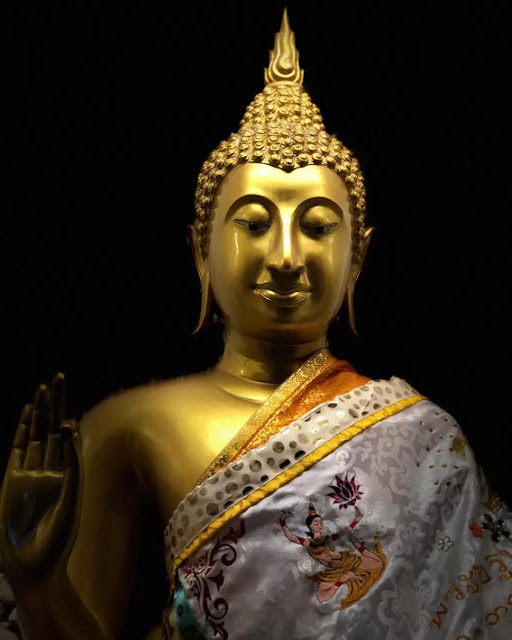
Lord Goutam Buddha was a spiritual preacher from ancient India who founded Buddhism. The time of birth and death of buddha is uncertain. However, most of the historians believe his lifetime to 563BC to 483BC. He was born at Lumbini in kapilavastu (now Nepal). His Father was king Suddhodana and queen Maha Maya (Mahadevi). His infant name was Siddhartha and family name goutama. His mother died at his birth and he was brought up by his mother’s sister Maha Prajapati. When he attained the age of 16 ,his father arranged his marriage to a cousin named yasodhara. He gave birth to a son named Rahula and spent 29 years as a prince in Kapilavastu. Although his father provided Siddhartha with everything he could want or need, he felt that material wealth was not life’s unlimited goal. At the age of 29 he left his palace for the life of a mendicant. Some days after being seated under a peepal tree Known as Bodi Tree in Bodh Gaya, India, he attained ‘Enlightment’ and there after he was known as Buddha or Awakened One to his Followers. He realised complete insight into the cause of suffering and steps necessary to eliminate it.

These discoveries became known as the ‘Four Nobel Truth’. And through these truths, a state of supreme liberation or ‘Nirvana’ is possible for any mortal being. He himself reached Parinirvana or the final deathless stage at the age of 80, according to the Buddhist Scripture.