MENTAL TOUGHNESS

The term “mental toughness” refers to the idea of being able to push for those things which you think that you can’t do. Don’t be disturbed from your past failures, by remaining positive and competitive also. It also involves training and preparing oneself to be mentally ready for whatever challenge comes our way. Ready to face any issue. Give your best, show your maximum. Mental toughness is having the psychological edge that allows one to perform to perform at peak maximum effort and efficiency during the demands that are placed on them during training, practice, or competition.

How to Develop Mental Toughness And Stay Strong

  1. Develop a Positive Mindset. If you’re going to increase your mental toughness, the first thing you have to do is focus on building a strong, positive mindset. Never thing about negative side.
  2. Connect with Your Purpose.
  3. Find Strength in Unity.
  4. Learn to Pick Yourself Back Up After Setbacks. Don’t be disappointed. Be strong at any circumstances.

A lack of mental toughness is the biggest enemy of any person. Lacking mental toughness causes to give up, give in, tank the match, and give less. The level of your daily success is in direct proportion to your level of mental toughness. Mental toughness is a developed skill that allows person to push through difficult situations without losing confidence, hope and the ability to play at peak levels during masticate-time.  Mental toughness is an acquired characteristic. Either a person  is mentally tough or they are not. Increased mental strength is the key to performing at your peak.  Mental strength helps you manage your thoughts, regulate your emotions, and behave productively, and help you to become more successful person. That means you’ll be able to focus your effort and energy on the things that matter most. Distraction is lost from your life and you become very concentrated person

 Mentally Strong Person

  1. Decide Why You Want To Be Mentally Strong.
  2. Learn How To Maintain Balance. Between your personal life and working life
  3. Remove Your Emotions From Decision Making.
  4. Learn How to Ask for Help. If you need help ask for it, ask to your parents, friends.
  5. Find Out How to Accept Things. It is success or failure accept it.
  6. Focus On Being Mentally Strong Today.
  7. Learn How To Practice Kindness. Be kind to everyone with human as well as animals also, don’t be cruel.
  8. Set Mentally Strong Goals. Set your daily goals that you are not going to react on boss grumpyness.

Mental toughness, like physical fitness, is a skill sharpen over time. And enhance as time goes. It is developed and honed through experience, just like any other important skill or technique. Same you have to improve your mental strength also. Most athletes want their bodies to perform in a specific way on race day, so they train their bodies to be able to handle a certain level of stress. Or be prepared for the Stress.

Define what mental toughness means for you.

For you, it might be…

  • going one month without missing a workout
  • going one week without eating processed or packaged food
  • Never think too much about your past, just learn from last and let it your past
  • delivering your work ahead of schedule for two days in a row
  • Never demotivated from any failure
  • meditating every morning this week
  • Give time to your family at daily basis
  • grinding out one extra rep on each set at the gym today
  • spending one hour doing something creative every evening this week
  • Never late for your workplace
  • Don’t eat fast food and junk food
  • Don’t be angry on any silly things

Mental toughness is built through small wins. Daily by your activities & actions, as you start building as a habit, your confidence automatically increase. It’s the individual choices that we make on a daily basis that build our “mental toughness muscle.” We all want mental strength, but you can’t think your way to it. It’s your physical actions that prove your mental bravery. Whatever physically you work it shows how mentally you are strong and your willpower to do the work.

Mental toughness is about your habits, not your motivation.

Motivation is changeable. Willpower comes and goes. Motivation is unstable. So you have to maintain mental toughness as a habit, means after doing anything upto 21 days it’s become your habit. Make it your habit.

Mental toughness isn’t about getting an unbelievable dose of inspiration or bravery. It’s about building the daily habits that allow you to stick to a schedule, be habitual with this habit of mental toughness and overcome challenges and distractions over and over and over again. It’s not about a single day it’s about throughout the life till death.

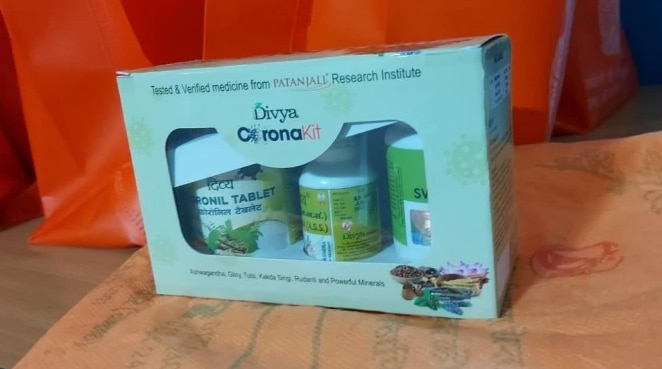
Coronil – Baba Ramdev’s Corona Cure or just a “Desi Nuska”

Yoga guru Ramdev’s company Patanjali yesterday launched the Coronil kit priced Rs 545, which he claims is a cure for coronavirus. The medicine kit will be available through the OrderMe app and in stores soon. Is it true? Here is all you need to know about this magical ‘cure’ for the respiratory disease.

Coronil: All You Need to Know About Ayurvedic Drug Which Claims to Cure Coronavirus Within a Week

Baba Ramdev’s Patanjali Ayurved on Tuesday launched ‘Coronil’, the first-ever clinically tested, evidence-based ayurvedic medicine for curing deadly coronavirus, which has killed more than 14,000 people across the country. While launching the medicine, Yoga Guru Ramdev claimed that 69 per cent of patients recovered within 3 days and 100 per cent in a week or 7 days.

Baba Ramdev’s Patanjali Ayurved on Tuesday launched ‘Coronil’, the first-ever clinically tested, evidence-based ayurvedic medicine for curing deadly coronavirus, which has killed more than 14,000 people across the country. While launching the medicine, Yoga Guru Ramdev claimed that 69 per cent of patients recovered within 3 days and 100 per cent in a week or 7 days. “The whole world has been waiting for someone to develop a medicine for coronavirus. Today, we are proud that we developed the first ayurvedic medicine for coronavirus. It has been named Coronil. We’ve prepared the first Ayurvedic-clinically controlled, research, evidence & trial based medicine for COVID19. We conducted a clinical case study and clinical controlled trial, and found 69% patients recovered in 3 days and 100% patients recovered in 7 days”, said Ramdev, while speaking to reporters about clinical trials.

WHAT IS CORONIL MADE OF?

During the launch, Ramdev said Ayurvedic elements are being used in the tablet. “There are more than 100 compounds used in the Coronil,” he said.He said that Coronil has been made from a combination of naturally occurring immunity-boosting substances such as Mulethi (liquorice), Giloy (moonseed), Tulsi (basil) and Ashwagandha (Indian ginseng).

HOW MUCH DOES IT COST?

Patanjali has said that an entire kit is being made for consumers; the kit consists of Coronil as well as other immunity-boosting Ayurvedic medicines.The medicine comes as part of a kit which consists of tablets named Coronil and Swasari Vati, and oil called Anu Oil. The entire kit comes at Rs 600

Coronil dosage?

Panajali prescribes,”2-2 tablets should be consumed with hot water half an hour after meals. The above mentioned drug intake and quantity is suitable for people between 15 to 80 years of age. Half the amount of the above mentioned medicines can be used for children between the age of 6 to 14 years.”These are the written instructions on the pack. The other two medicines to be taken along with Coronil are ‘Shwasari’ which works on strengthening the respiratory system and cures the obvious symptoms of corona including cough, cold and fever and a nasal drop named ‘Anu Tel’ which helps build immunity, the firm said.

DOES IT REALLY WORK?

While Patanjali has claimed that it has conducted clinical trials to prove the effectiveness of Coronil, the full findings of the study are yet to be released.Moreover, no independent medical body has approved the use of Coronil as of yet.Patanjali claims those administered the medicine were fully cured and none died. Ramdev even claimed that 69 per cent of them recovered within 3 days.

“We’ve prepared the first Ayurvedic-clinically controlled, research evidence and trial-based medicine for Covid-19. We conducted a clinical case study and clinical-controlled trials and found that 69 patients recovered in 3 days and 100 per cent patients recovered in 7 days,” said Ramdev as he launched Patanjali’s Coronil tablet.

DOES CORONIL HAVE GOVERNMENT APPROVAL?

While Patanjali has made tall claims about the efficacy of Coronil, the ICMR and the Ayush Ministry have distanced themselves from commenting on the medicine.While Ayush Ministry officials claimed ICMR will speak on the medicine, the ICMR has said Ayurvedic medicines come under the jurisdiction of the Ayush Ministry and hence it should comment on it.Now, the Ayush Ministry has said that the Uttarakhand government has given clearance and licensing for the production of the medicine.

According to top sources in Patanjali, Coronil has received a license to be used as a medicine.”It contains salts and herbs prescribed by the Ayush Ministry. Allopaths call these salts anti-viral, whereas Ayurved knows them as immunity boosters,” the sources said.Later, the Ayush ministry said that it has taken cognizance of the news of Ayurvedic medicines developed for the treatment of Covid-19 by Patanjali Ayurved Ltd.”Facts of the claim and details of the stated scientific study are not known to the Ministry,” it said.

List of details

Patanjali Ayurved has been asked to provide, at the earliest, details of the name and composition of the medicines being claimed as successful in COVID-19 treatment; site(s)/ hospital(s) where the research study was conducted; the protocol, sample size, Institutional Ethics Committee clearance, Clinical Trials Registry-India (CTRI) registration, and results data of the study, and to stop advertising/publicising such claims till the issue had been duly examined.

Regulated by Act

“Also, the concerned Ayurvedic drug manufacturing company has been informed that such advertisements of drugs including Ayurvedic medicines are regulated under the provisions of the Drugs and Magic Remedies (Objectionable Advertisements) Act, 1954 and Rules thereunder and the directives issued by the Central Government in the wake of COVID outbreak. The Ministry had also issued a Gazette Notification on April 21, 2020 stating the requirements and the manner in which research studies on COVID-19 with Ayush interventions/medicines should be undertaken,’’ the Ministry said.

WHAT DO DOCTORS SAY?

Medical experts, however, were not convinced by Patanjali’s claims.Dr Ravi Shekhar Jha, Head of the department and senior consultant, Pulmonology, Fortis Escorts Hospital, Faridabad, said physiologically it is quite impossible that there is any medicine which can finish the viral load from the body in 5-7 days.”These claims can be very harmful because people, instead of taking actual medical help, may start rushing to these kinds of claims which have no proven clinical trial.

In the coming days, surely we’ll know whether Coronil is the cure or its just another “Desi Nuska”.

MRI

As medical sciences is getting better everyday it is mostly focussing more and more on the specific organ or part of the body having problem rather than doing a trial and error medication. For this it is really important that the doctors have the knowledge of the specific area of problem and body scanners do serves this purpose. They scan the body and develops the image of the inner body organs. There are many scanners out there like

  1. X- rays – This is the most common method used to scan the injured bones, the rays are used as they are blocked by bones and dense tissues of the body.
  2. CT scan – Also called computed tomography this is used to get detailed view of blood vessels and  organs in the body.

Third most important scanning technique is the MRI whose full form is  magnetic resonance imaging, the technique was invented in 1972 by Felix Bloch and Edward Purcell. Although in the early years this scanning technique was not used in human body, perhaps this idea was put by Raymond Damadian as he showed the doctors a way to actually use MRI to detect tumors. After some years of developing the machine so as to use it on human, in 1977 it was the first time that MRI was used on humans.

Physics behind MRI scanning

MRI is claimed to be better than CT scanning as it gives more detailed images of the body parts. Another important difference is MRI do not use radiations as CT or X-rays, as exposure to radiations can be a bit risky and especially X-rays can be harmful for pregnant women.

As we know about 60% percent of our body is  composed of water and chemical composition of water contains 2 hydrogen atoms and one oxygen atom. The hydrogen atom has one proton and one electron, and the nuclei has a characteristic  precession  because of which the magnetic moment  is created. when the body is exposed to a magnetic field of 1.5 to 3 Tesla, these magnetic moment aligns to the direction of magnetic field as the nuclei starts precessing about the magnetic field they are exposed to, this precession is called larmor precession. The frequency of the precession is proportional to the applied magnetic field. Next a radio frequency pulse is applied  which is equal to the frequency of the larmor precession, this causes the energy exchange and as they are in resonance. This causes the direction of magnetic moment to tilt a bit in the direction of the radio frequency pulse applied and when this radio frequency pulse is removed it tends magnetic moment to again come back to its position that is to align in the direction of the magnetic field . As this happens the nuclei emits its own radio frequency pulse, and different tissues in the body gives out different Radio frequency pulse. To detect this pulse  the body is covered by a coil which detects these pulses and these are converted to an image using the computers which uses mathematical methods like fourier transformation. This results in the highly accurate image of the body parts.

Though MRI is simple and has less risks like all these years pregnant women take MRI scans and there has not been any report of  any abnormalities while the child is born, but there are some precautions to be taken as follows

  1. Make sure one does not have any magnetic objects while going into the room
  2. There are many patients who fall sick after MRI, it is really normal because of the sedative given before the scan
  3. One should never move while MRI scan is been taken.
  4.  One should avoid driving after he or she has taken  MRI scan.


“Mutations In Corona Virus-Leading Towards Second Wave?”

Current era we are living in is a time of pandemic which is  spread all over the world, infecting millions of people and thousands of people losing life. The hike is growing day by day with no proper vaccines  and cure to it. There have been various studies and ways to test this disease. But various scientists are concerned about something which is surely not good news for people around the world. They believe that the spread of Corona-virus is increasing with its increase in mutation. Mutation is a phenomenon which means the change in the DNA sequence and this mutation can be due to mistake while Copying Of DNA to another cell or due to environment factors as a source of change and adapting the surrounding. 

There have been countries where this pandemic has been eradicated and some places where it is seeing a general downfall in its rate, while there are countries on the contrary and are seeking hikes day by day. Scientists believe that corona-virus may be mutating while it replicates from one individual to another. But the interesting fact is that these viruses or bacteria do mutate every time which means they do  and can change themselves while they get transferred from one person to others we know then need a host to be alive. Virus can be thus simply explained as anything that things that infect us and thus make us sick. Scientists believe that this Covid-19 virus is made up of RNA or Ribonucleic acid which is the building block of life and carry codes which do for a living organism. So this mutation happens when the sequence changes. When these viruses make mistakes in copying their code, they can’t reverse it which man’s that once it gets changed it will be the same forever, and this change goes on happening as it grows . Scientists have come up with discoveries reflecting the mutation process in this Covid- 19 virus

  1. It is believed that the mutation changes are very small and the person would be feeling the same symptoms as present in the older cases. 
  2. But mutation could be an area of concern while testing, as it may be possible that the technique we use for testing it may not be able to catch the mutation and thus gives us a negative result while it is still being present inside the body. 
  3. Also the possibility exists to find a vaccine solving the older virus while the new mutated virus still survives . So there needs to be advancement with time for testing technique, and at least twice a person should be tested so as to get a proper report. 
  4. This change in mutations and their known symptoms could also help the doctors to prepare the vaccine more accurately and effectively. 

But there are biologists that believe that mutations of covid-19 virus are small and their change remains mostly the same. So this could be a strong  reason which could give a reason to start the “Second wave” of virus, with much improved mutated virus. “So scientists and biologists need to remain updated with any change in the characteristics of these viruses, catch their mutations, track them and thus use them to find a proper vaccine and way out other than social distancing and thus save humanity from this deadliest virus and its spread”. 

Focus

Focus: What It Is and How it Works
First things first. What is focus, really? Experts define focus as the act of concentrating your interest or activity on something. That’s a somewhat boring definition, but there is an important insight hiding inside that definition.

What is Focus?
In order to concentrate on one thing you must, by default, ignore many other things.

Here’s a better way to put it:

Focus can only occur when we have said yes to one option and no to all other options. In other words, elimination is a prerequisite for focus. As Tim Ferriss says, “What you don’t do determines what you can do.”

Of course, focus doesn’t require a permanent no, but it does require a present no. You always have the option to do something else later, but in the present moment focus requires that you only do one thing. Focus is the key to productivity because saying no to every other option unlocks your ability to accomplish the one thing that is left.

Now for the important question: What can we do to focus on the things that matter and ignore the things that don’t?

Why Can’t I Focus?
Most people don’t have trouble with focusing. They have trouble with deciding.

What I mean is that most healthy humans have a brain that is capable of focusing if we get the distractions out of the way. Have you ever had a task that you absolutely had to get done? What happened? You got it done because the deadline made the decision for you. Maybe you procrastinated beforehand, but once things became urgent and you were forced to make a decision, you took action.

Instead of doing the difficult work of choosing one thing to focus on, we often convince ourselves that multitasking is a better option. This is ineffective.

Here’s why…

The Myth of Multitasking
Technically, we are capable of doing two things at the same time. It is possible, for example, to watch TV while cooking dinner or to answer an email while talking on the phone.

What is impossible, however, is concentrating on two tasks at once. You’re either listening to the TV and the overflowing pot of pasta is background noise, or you’re tending to the pot of pasta and the TV is background noise. During any single instant, you are concentrating on one or the other.

Multitasking forces your brain to switch your focus back and forth very quickly from one task to another. This wouldn’t be a big deal if the human brain could transition seamlessly from one job to the next, but it can’t.

Have you ever been in the middle of writing an email when someone interrupts you? When the conversation is over and you get back to the message, it takes you a few minutes to get your bearings, remember what you were writing, and get back on track. Something similar happens when you multitask. Multitasking forces you to pay a mental price each time you interrupt one task and jump to another. In psychology terms, this mental price is called the switching cost.

Switching cost is the disruption in performance that we experience when we switch our focus from one area to another. One study, published in the International Journal of Information Management in 2003, found that the typical person checks email once every five minutes and that, on average, it takes 64 seconds to resume the previous task after checking your email.

In other words, because of email alone, we typically waste one out of every six minutes.

One of my favorite methods for focusing your attention on what matters and eliminating what doesn’t comes from the famous investor Warren Buffett.

Buffett uses a simple 3-step productivity strategy to help his employees determine their priorities and actions. You may find this method useful for making decisions and getting yourself to commit to doing one thing right away. Here’s how it works…

One day, Buffett asked his personal pilot to go through the 3-step exercise.

STEP 1: Buffett started by asking the pilot, named Mike Flint, to write down his top 25 career goals. So, Flint took some time and wrote them down. (Note: You could also complete this exercise with goals for a shorter timeline. For example, write down the top 25 things you want to accomplish this week.)

STEP 2: Then, Buffett asked Flint to review his list and circle his top 5 goals. Again, Flint took some time, made his way through the list, and eventually decided on his 5 most important goals.

STEP 3: At this point, Flint had two lists. The 5 items he had circled were List A, and the 20 items he had not circled were List B.

Flint confirmed that he would start working on his top 5 goals right away. And that’s when Buffett asked him about the second list, “And what about the ones you didn’t circle?”

Flint replied, “Well, the top 5 are my primary focus, but the other 20 come in a close second. They are still important so I’ll work on those intermittently as I see fit. They are not as urgent, but I still plan to give them a dedicated effort.”

To which Buffett replied, “No. You’ve got it wrong, Mike. Everything you didn’t circle just became your Avoid-At-All-Cost list. No matter what, these things get no attention from you until you’ve succeeded with your top 5.”

I love Buffett’s method because it forces you to make hard decisions and eliminate things that might be good uses of time, but aren’t great uses of time. So often the tasks that derail our focus are ones that we can easily rationalize spending time on.

This is just one way to narrow your focus and eliminate distractions. I’ve covered many other methods before like The Ivy Lee Method and The Eisenhower Box. That said, no matter what method you use and no matter how committed you are, at some point your concentration and focus begin to fade. How can you increase your attention span and remain focused?

There are two simple steps you can take.

Measure Your Results
The first thing you can do is to measure your progress.

Focus often fades because of lack of feedback. Your brain has a natural desire to know whether or not you are making progress toward your goals, and it is impossible to know that without getting feedback. From a practical standpoint, this means that we need to measure our results.

We all have areas of life that we say are important to us, but that we aren’t measuring. That’s a shame because measurement maintains focus and concentration. The things we measure are the things we improve. It is only through numbers and clear tracking that we have any idea if we are getting better or worse.

When I measured how many pushups I did, I got stronger.
When I tracked my reading habit of 20 pages per day, I read more books.
When I recorded my values, I began living with more integrity.
The tasks I measured were the ones I remained focused on.

Unfortunately, we often avoid measuring because we are fearful of what the numbers will tell us about ourselves. The trick is to realize that measuring is not a judgment about who you are, it’s just feedback on where you are.

Measure to discover, to find out, to understand. Measure to get to know yourself better. Measure to see if you’re actually spending time on the things that are important to you. Measure because it will help you focus on the things that matter and ignore the things that don’t.

Focus on the Process, Not the Event
The second thing you can do to maintain long-term focus is to concentrate on processes, not events. All too often, we see success as an event that can be achieved and completed.

Here are some common examples:

Many people see health as an event: “If I just lose 20 pounds, then I’ll be in shape.”
Many people see entrepreneurship as an event: “If we could get our business featured in the New York Times, then we’d be set.”
Many people see art as an event: “If I could just get my work featured in a bigger gallery, then I’d have the credibility I need.”
Those are just a few of the many ways that we categorize success as a single event. But if you look at the people who stay focused on their goals, you start to realize that it’s not the events or the results that make them different. It’s the commitment to the process. They fall in love with the daily practice, not the individual event.

What’s funny, of course, is that this focus on the process is what will allow you to enjoy the results anyway.

If you want to be a great writer, then having a best-selling book is wonderful. But the only way to reach that result is to fall in love with the process of writing.
If you want the world to know about your business, then it would be great to be featured in Forbes magazine. But the only way to reach that result is to fall in love with the process of marketing.
If you want to be in the best shape of your life, then losing 20 pounds might be necessary. But the only way to reach that result is to fall in love with the process of eating healthy and exercising consistently.
If you want to become significantly better at anything, you have to fall in love with the process of doing it. You have to fall in love with building the identity of someone who does the work, rather than merely dreaming about the results that you want.
Focusing on outcomes and goals is our natural tendency, but focusing on processes leads to more results over the long-run.

III. Concentration and Focus Mind-Hacks
Even after you’ve learned to love the process and know how to stay focused on your goals, the day-to-day implementation of those goals can still be messy. Let’s talk about some additional ways to improve concentration and make sure you’re giving each task your focused attention.

How to Improve Concentration
Here are few additional ways to improve your focus and get started on what matters.

Choose an anchor task. One of the major improvements I’ve made recently is to assign one (and only one) priority to each work day. Although I plan to complete other tasks during the day, my priority task is the one non-negotiable thing that must get done. I call this my “anchor task” because it is the mainstay that holds the rest of my day in place. The power of choosing one priority is that it naturally guides your behavior by forcing you to organize your life around that responsibility.

Manage your energy, not your time. If a task requires your full attention, then schedule it for a time of day when you have the energy needed to focus. For example, I have noticed that my creative energy is highest in the morning. That’s when I’m fresh. That’s when I do my best writing. That’s when I make the best strategic decisions about my business. So, what do I do? I schedule creative tasks for the morning. All other business tasks are taken care of in the afternoon. This includes doing interviews, responding to emails, phone calls and Skype chats, data analysis and number crunching. Nearly every productivity strategy obsesses over managing your time better, but time is useless if you don’t have the energy you need to complete the task you are working on.

Never check email before noon. Focus is about eliminating distractions. Email can be one of the biggest distractions of all. If I don’t check email at the beginning of the day, then I am able to spend the morning pursuing my own agenda rather than reacting to everybody else’s agenda. That’s a huge win because I’m not wasting mental energy thinking about all the messages in my inbox. I realize that waiting until the afternoon isn’t feasible for many people, but I’d like to offer a challenge. Can you wait until 10AM? What about 9AM? 8:30AM? The exact cutoff time doesn’t matter. The point is to carve out time during your morning when you can focus on what is most important to you without letting the rest of the world dictate your mental state.

Leave your phone in another room. I usually don’t see my phone for the first few hours of the day. It is much easier to do focused work when you don’t have any text messages, phone calls, or alerts interrupting your focus.

Work in full screen mode. Whenever I use an application on my computer, I use full screen mode. If I’m reading an article on the web, my browser takes up the whole screen. If I’m writing in Evernote, I’m working in full screen mode. If I’m editing a picture in Photoshop, it is the only thing I can see. I have set up my desktop so that the menu bar disappears automatically. When I am working, I can’t see the time, the icons of other applications, or any other distractions on the screen. It’s funny how big of a difference this makes for my focus and concentration. If you can see an icon on your screen, then you will be reminded to click on it occasionally. However, if you remove the visual cue, then the urge to be distracted subsides in a few minutes.

Remove all tasks that could distract from early morning focus. I love doing the most important thing first each day because the urgencies of the day have not crept in yet. I have gone a little far in this regard in that I have even pushed my first meal off until about noon each day. I have been intermittent fasting for three years now (here are some lessons learned), which means that I typically eat most of my meals between 12PM and 8PM. The result is that I get some additional time in the morning to do focused work rather than cook breakfast.

Regardless of what strategy you use, just remember that anytime you find the world distracting you, all you need to do is commit to one thing. In the beginning, you don’t even have to succeed. You just need to get started.

Habits

What Are Habits?
Let’s define habits. Habits are the small decisions you make and actions you perform every day. According to researchers at Duke University, habits account for about 40 percent of our behaviors on any given day.

Your life today is essentially the sum of your habits. How in shape or out of shape you are? A result of your habits. How happy or unhappy you are? A result of your habits. How successful or unsuccessful you are? A result of your habits.

What you repeatedly do (i.e. what you spend time thinking about and doing each day) ultimately forms the person you are, the things you believe, and the personality that you portray. Everything I write about – from procrastination and productivity to strength and nutrition – starts with better habits. When you learn to transform your habits, you can transform your life.

Healthy eating. It’s something everyone knows they should do, but few of us do as consistently as we would like. The purpose of this guide is to share practical strategies for how to eat healthy and break down the science of why we often fail to do so.

Now, I don’t claim to have a perfect diet, but my research and writing on behavioral psychology and habit formation has helped me develop a few simple strategies for building and strengthening a healthy eating habit without much effort or thought.

Steven Witherly is a food scientist who has spent the last 20 years studying what makes certain foods more addictive than others. Much of the science that follows is from his excellent report, Why Humans Like Junk Food.

According to Witherly, when you eat tasty food, there are two factors that make the experience pleasurable.

First, there is the sensation of eating the food. This includes what it tastes like (salty, sweet, umami, etc.), what it smells like, and how it feels in your mouth. This last quality — known as “orosensation” — can be particularly important. Food companies will spend millions of dollars to discover the most satisfying level of crunch in a potato chip. Food scientists will test for the perfect amount of fizzle in a soda. These elements all combine to create the sensation that your brain associates with a particular food or drink.

The second factor is the actual macronutrient makeup of the food — the blend of proteins, fats, and carbohydrates that it contains. In the case of junk food, food manufacturers are looking for a perfect combination of salt, sugar, and fat that excites your brain and gets you coming back for more.

Here’s how they do it…

How Food Scientists Create Cravings
There is a range of factors that scientists and food manufacturers use to make food more addictive.

Dynamic contrast. Dynamic contrast refers to a combination of different sensations in the same food. In the words of Witherly, foods with dynamic contrast have “an edible shell that goes crunch followed by something soft or creamy and full of taste-active compounds. This rule applies to a variety of our favorite food structures — the caramelized top of a creme brulee, a slice of pizza, or an Oreo cookie — the brain finds crunching through something like this very novel and thrilling.”

Salivary response. Salivation is part of the experience of eating food, and the more a food causes you to salivate, the more it will swim throughout your mouth and cover your taste buds. For example, emulsified foods like butter, chocolate, salad dressing, ice cream, and mayonnaise promote a salivary response that helps to lather your taste buds with goodness. This is one reason why many people enjoy foods that have sauces or glazes on them. The result is that foods that promote salivation do a happy little tap dance on your brain and taste better than ones that don’t.

Rapid food meltdown and vanishing caloric density. Foods that rapidly vanish or “melt in your mouth” signal to your brain that you’re not eating as much as you actually are. In other words, these foods literally tell your brain that you’re not full, even though you’re eating a lot of calories.

In his best-selling book, Salt Sugar Fat (audiobook), author Michael Moss describes a conversation with Witherly that explains vanishing caloric density perfectly…

He zeroed right in on the Cheetos. “This,” Witherly said, “is one of the most marvelously constructed foods on the planet, in terms of pure pleasure.”

“I brought him two shopping bags filled with a variety of chips to taste. He zeroed right in on the Cheetos. “This,” Witherly said, “is one of the most marvelously constructed foods on the planet, in terms of pure pleasure.” He ticked off a dozen attributes of the Cheetos that make the brain say more. But the one he focused on most was the puff’s uncanny ability to melt in the mouth. “It’s called vanishing caloric density,” Witherly said. “If something melts down quickly, your brain thinks that there’s no calories in it … you can just keep eating it forever.”

Sensory-specific response. Your brain likes variety. When it comes to food, if you experience the same taste over and over again, then you start to get less pleasure from it. In other words, the sensitivity of that specific sensor will decrease over time. This can happen in just minutes.

Junk foods, however, are designed to avoid this sensory specific response. They provide enough taste to be interesting (your brain doesn’t get tired of eating them), but it’s not so stimulating that your sensory response is dulled. This is why you can swallow an entire bag of potato chips and still be ready to eat another. To your brain, the crunch and sensation of eating Doritos is novel and interesting every time.

Calorie density. Junk foods are designed to convince your brain that it is getting nutrition, but to not fill you up. Receptors in your mouth and stomach tell your brain about the mixture of proteins, fats, and carbohydrates in a particular food, and how filling that food is for your body. Junk food provides just enough calories that your brain says, “Yes, this will give you some energy” but not so many calories that you think “That’s enough, I’m full.” The result is that you crave the food to begin with, but it takes quite some time to feel full from it.

Memories of past eating experiences. This is where the psychobiology of junk food really works against you. When you eat something tasty (say, a bag of potato chips), your brain registers that feeling. The next time you see that food, smell that food, or even read about that food, your brain starts to trigger the memories and responses that came when you ate it. These memories can actually cause physical responses like salivation and create the “mouth-watering” craving that you get when thinking about your favorite foods.

These factors all combine to make processed food tasty and desirable to our human brains. When you combine the science behind these foods with the incredible prevalence of food (cheap fast food everywhere), eating healthy becomes very hard to do.

II. How to Make Healthy Eating Easier
Most people think that building better habits or changing your actions is all about willpower or motivation. But the more I learn, the more I believe that the number one driver of behavior change is your environment.

Your environment has an incredible ability to shape your behavior. Nowhere is this more true than with food. What we eat on a daily basis is often a result of what we are presented.

Let me share an interesting experiment to show you exactly what I mean…

The Importance of Environment for Healthy Eating
Anne Thorndike is a primary care physician at Massachusetts General Hospital in Boston. Thorndike and her colleagues conducted a six-month study that was published in the American Journal of Public Health.

This study secretly took place in the hospital cafeteria and helped thousands of people develop healthy eating habits without changing their willpower or motivation in the slightest way. Thorndike and her team utilized a concept known as “choice architecture.” Choice architecture is just a fancy word for changing the way the food and drinks are displayed, but, as it turns out, it makes a big difference.

The researchers started by changing the choice architecture of the drinks in the cafeteria. Originally, there were three main refrigerators, all of which were filled with soda. The researchers made sure that water was added to each of those units and also placed baskets of bottled water throughout the room.

What happened? Over the next 3 months, the number of soda sales dropped by 11.4 percent. Meanwhile, bottled water sales increased by 25.8 percent. Similar adjustments and results were made with food options. Nobody said a word to the visitors who ate at the cafeteria. The researchers simply changed the environment and people naturally followed suit.

Choice architecture is even more important when you’re already stressed, tired, or distracted. If you’re already worn-down, you’re probably not going to go through a lot of effort to cook a healthy dinner or fit in a workout. You’ll grab or do whatever is easiest.

That means that if you take just a little bit of time today to organize your room, your office, your kitchen, and other areas, then that adjustment in choice architecture can guide you toward better choices even when your willpower is fading. Design for laziness.

How to Eat Healthy Without Noticing
Brian Wansink is a professor at Cornell University, and he has completed a variety of studies on how your environment shapes your eating decisions. Many of the ideas below come from his popular book, Mindless Eating (audiobook). Here are some of his best practical strategies for using choice architecture to make healthy eating easier.

  1. Use smaller plates. Bigger plates mean bigger portions. And that means you eat more. According to a study conducted by Wansink and his research team, if you made a simple change and served your dinner on 10-inch plates instead of a 12-inch plate, you would eat 22% less food over the course of the next year.

On a related note, if you’re thinking “I’ll just put less food on my plate” … it’s not that simple. The picture below explains why. When you eat a small portion off of a large plate, your mind feels unsatisfied. Meanwhile, the same portion will feel more filling when eaten off of a small plate. The circles in the image below are the same size, but your brain (and stomach) doesn’t view them that way.

As it turns out, both lines are the same length, but our brain has a tendency to overestimate vertical lines. In other words, taller drinks look bigger to our eyes than round, horizontal mugs do. And because height makes things look bigger than width, you’ll actually drink less from taller glasses. In fact, you will typically drink about 20% less from a tall, slender glass than you would from a short, fat glass. (Hat tip to Darya Pino for originally sharing this image and idea.)

  1. Use plates that have a high contrast color with your food. As I mentioned in this article, when the color of your plate matches the color of your food, you naturally serve yourself more because your brain has trouble distinguishing the portion size from the plate. Because of this, dark green and dark blue make great plate colors because they contrast with light foods like pasta and potatoes (which means you’re likely to serve less of them), but don’t contrast very much with leafy greens and vegetables (which means you’re likely to put more of them on your plate).
  2. Display healthy foods in a prominent place. For example, you could place a bowl of fruits or nuts near the front door or somewhere else that you pass by before you leave the house. When you’re hungry and in a rush, you are more likely to grab the first thing you see.
  3. Wrap unhealthy foods in tin foil. Wrap healthy foods in plastic wrap. The old saying, “out of sight, out of mind” turns out to have some truth to it. Eating isn’t just a physical event, but also an emotional one. Your mind often determines what it wants to eat based on what your eyes see. Thus, if you hide unhealthy foods by wrapping them up or tucking them away in less prominent places, then you are less likely to eat them.
  4. Keep healthy foods in larger packages and containers, and unhealthy foods in smaller ones. Big boxes and containers tend to catch your eye more, take up space in your kitchen and pantry, and otherwise get in your way. As a result, you’re more likely to notice them and eat them. Meanwhile, smaller items can hide in your kitchen for months. (Just take a look at what you have lying around right now. It’s probably small cans and containers.)

Bonus tip: if you buy a large box of something unhealthy, you can re-package it into smaller Ziploc bags or containers, which should make it less likely that you’ll binge and eat a lot at once.

What Should I Eat?
As I mentioned at the outset, this is not a guide about what to eat. It’s a guide about why we eat the way we do and how to do something about it. That said, I’ll offer two suggestions regarding what to put on your plate.

  1. Eat more greens. There isn’t a consensus on the best diet, but pretty much everyone agrees on one thing: eat more veggies. You’ll be hard-pressed to find a single diet that doesn’t think eating more plants is a good idea.
  2. Eat a variety of foods. As we covered earlier, the brain craves novelty. While you may not be able to replicate the crunchy/creamy contrast of an Oreo, you can vary your diet enough to keep things interesting. For example, you could dip a carrot (crunchy) in some hummus (creamy) and get a novel sensation. Similarly, finding ways to add new spices and flavors to your dishes can make eating healthy foods a more desirable experience.

Healthy eating doesn’t have to be bland. Mix up your foods to get different sensations and you may find it easier than eating the same foods over and over again. (At some point, however, you may have to fall in love with boredom.)

Two Simple Ways to Eat Healthy
The main idea of most good diets is the same: eat whole foods that are unprocessed and that grew or lived outdoors. Some of them have different variations — no animal products, no grains, etc. — but most of them fit the general “real food” framework.

The problem is that — if you’re anything like me — you will eat whatever is close to you, whether it came from Mother Nature or not. As a result, the best strategy is to surround yourself with healthy food.

  1. Use the “Outer Ring” Strategy. When I go to the grocery store, I only walk around the “outer ring” of the store. I don’t walk down the aisles. The outer ring is where the healthy food usually lives: fruits, vegetables, lean meats, fish, eggs, and nuts. These are items that grew or lived outdoors. That’s what I eat.

The aisles are where all of the boxed and processed stuff is placed. Don’t go down those aisles and you won’t buy those foods. Don’t buy those foods and they won’t be around for you to eat. Try this the next time you go to the store and do your best to not to make exceptions.

Sure, there will be the occasional time that you’ll need to go down an aisle to pick up spices or grab a bottle of olive oil, but this is rare. The last three times I’ve been at the grocery store, I have easily stayed on the “outer ring” and I bet you can do the same.

How to Eat Whatever You Want Without Feeling Guilty

  1. Never Miss Twice. I think life is meant to be lived joyfully. I have no desire to judge myself for eating pizza or to feel guilty for drinking a beer. But, I also know that I feel much better when I eat healthy.

In order to balance the two, I have a simple rule that I try to follow: whenever I eat an unhealthy meal, I follow it with a healthy one.

Missing once is fine, but I never want to miss a healthy meal twice. Top performers make mistakes like everyone else, but they get back on track faster than most people. That’s what I try to do with my diet. I don’t worry about having fun and I try to enjoy life, but I also use this simple rule to guide me back toward a healthy diet as quickly as possible.

III. How to Stick to a Healthy Eating Habit
Address the Root Problem of Unhealthy Eating
There’s a reason why many people eat as a way to cope with stress. Stress causes certain regions of the brain to release chemicals (specifically, opiates and neuropeptide Y). These chemicals can trigger mechanisms that are similar to the cravings you get from fat and sugar. In other words, when you get stressed, your brain feels the addictive call of fat and sugar and you’re pulled back to junk food.

We all have stressful situations that arise in our lives. Learning to deal with stress in a different way can help you overcome the addictive pull of junk food. This could include simple breathing techniques or a short guided meditation. Or something more physical like exercise or making art.

How to Say No to Temptation
Learning how to say no is one of the most useful skills you can develop, especially when it comes to living a healthy life. Research is starting to show that small changes can make it easier for you to say no, resist temptation and stick to healthy eating habits.

In a research study published in the Journal of Consumer Research, 120 students were split into two different groups.

The difference between these two groups was saying “I can’t” compared to “I don’t.”

One group was told that each time they were faced with a temptation, they would tell themselves “I can’t do X.” For example, when tempted with ice cream, they would say, “I can’t eat ice cream.”

When the second group was faced with a temptation, they were told to say “I don’t do X.” For example, when tempted with ice cream, they would say, “I don’t eat ice cream.”

After repeating these phrases, each student answered a set of questions unrelated to the study. Once they finished answering their questions, the students went to hand in their answer sheet, thinking that the study was over. In reality, it was just beginning.

As each student walked out of the room and handed in their answer sheet, they were offered a complimentary treat. The student could choose between a chocolate candy bar or a granola health bar. As the student walked away, the researcher would mark their snack choice on the answer sheet.

The students who told themselves “I can’t eat X” chose to eat the chocolate candy bar 61% of the time. Meanwhile, the students who told themselves “I don’t eat X” chose to eat the chocolate candy bars only 36% of the time. This simple change in terminology significantly improved the odds that each person would make a more healthy food choice.

Why does something so small make such a big difference?

The One Phrase That Will Help You Eat Healthy
Your words help to frame your sense of empowerment and control. Furthermore, the words that you use create a feedback loop in your brain that impacts your future behaviors.

For example, every time you tell yourself “I can’t”, you’re creating a feedback loop that is a reminder of your limitations. This terminology indicates that you’re forcing yourself to do something you don’t want to do.

In comparison, when you tell yourself “I don’t”, you’re creating a feedback loop that reminds you of your control and power over the situation. It’s a phrase that can propel you toward breaking your bad habits and following your good ones.

Heidi Grant Halvorson is the director of the Motivation Science Center at Columbia University. Here’s how she explains the difference between saying “I don’t” compared to “I can’t”…

“I don’t” is experienced as a choice, so it feels empowering. It’s an affirmation of your determination and willpower. “I can’t” isn’t a choice. It’s a restriction, it’s being imposed upon you. So thinking “I can’t” undermines your sense of power and personal agency.

“I don’t” is experienced as a choice, so it feels empowering. “I can’t” isn’t a choice. It’s a restriction, it’s being imposed upon you.

In other words, the phrase “I don’t” is a psychologically empowering way to say no, while the phrase “I can’t” is a psychologically draining way to say no.

Perhaps most importantly, a change in language leads to a change in mindset. You can now utilize your new, empowered mindset in all future situations, which is why a subtle shift can lead to very different outcomes over the long-run.


It’s okay not to be okay !

We are all here in this pandemic, most of us are staying at homes. Keeping ourselves away from others for theirs as well as our well being. But staying so long at home results in mental illness as well. 

We go around and start living in new places, sometimes may be due to work or maybe any other reason. Being in a place with completely new people brings difficulties and lessons. There are many observations and analysis you make about people. Some people might have stuck in the place of their work. Staying out means you grow and become a better version of yourself and explore more. Your life becomes quick and fast. You try new things and make memories. But sometimes you just feel that things are not going well. It’s not just about being away from home but it can happen whether you are with your parents or with family things can make you upset.

 Breaking up with people can make you sad, failure in any field you work can make you upset at the end of a month when you are broke and don’t have a single penny to do buy what you want can make you sad. 

Materialistically, emotionally, physically, atmospherically things can get against you and can make you sad. You might not find things going well and you want to isolate yourself from this entire world, you would think that things are not at their best pace, and you are not worth anything.

Accept that you are sad!!

There are times when you feel happy about various things. There are times when small surprises can make you happy and you feel blessed for what is happening around. There are days when you just wake up feeling so fresh about things and you love the day for no reason because you woke up like this. You laugh and sing inside your head all day long and smile. 

And then there are days when you don’t want yourself to be bothered by many people and lay inside your bed for no reason. You feel fine physically but mentally you don’t feel much fresh and happy. 

•It’s okay if you don’t know

Sometimes you know the reason sometimes you just don’t. It’s okay to feel this way. It’s totally fine to feel upset about things. Every time you don’t need to have that smile on your face. It’s your body that accepts that you are sad. Moreover, accept that you can be sad. It’s okay to be sad. It’s normal to feel dejected and not to feel good for yourself. Accept that things went wrong, accept that you failed and you need to work hard. Days have nights and nights have days. Time heals everything. Don’t resist it. Live it and accept it.

•Once you accept it!

You conquer half of the battle just by accepting the fact that you are not happy and you need a break. Don’t just isolate yourself from this world. Don’t resist people and their presence. Think of things you didn’t do because of your work or you just forgot what you used to do. Do them. Get back to work that’s all you need to do. When you are happy, you celebrate but you never leave your work. The same is the case when you are sad. When you are sad just don’t stop working. Start working more. Make yourself busy. Make things go as they were and don’t leave your daily routine. Things will fall into their places give it some time. Have patience and enjoy the phase of your life. Its okay things will become good. 

•Don’t confuse it with depression!

Don’t confuse things with depression. Things might go wrong. But depression is a very large term. Being sad should not be misled with being depressed. Depression is medically proved diseases which can only be assured if taken the proper test and with doctor’s concern. Depression is a disorder which affects a person’s thoughts, behavior, tendencies, feeling, and sense of well-being. Depression is more likely a mental illness and it should not be taken lightly. 

How to be assured?

Let us compare this with having dengue, until and unless your doctor assures that you are suffering from it you just don’t consider that you re affected with it. Similarly, when you are not assured properly with what you are suffering from then you should not consider being in depression. It is a medical statement that should be used when checked properly. Just because you are sad is not necessary that you are depressed. Most of the people in the society and our surrounding have this misconception of being in depression is very common. But this is not true. You must never think like these rather consult a doctor if in doubt.

Best measures to overcome depression.

Sleep. Take proper sleep. Go to bed early and wake up early. Sleep for at most 6 hours daily. Proper sleep is a part of a healthy life and a better mood. This gives new energy to the body and freshens up the mind with new thoughts. It helps in stimulating our immune system as well as our emotional balance.  

Connect to nature and feel the beauty of it, admire it, and listen to what your body tells you. Find a park nearby and go for a walk. Keeping in mind that you need to have proper social distancing. It can be a morning walk or maybe an evening walk, totally depends on you. But try some quality time alone.

Listen to music that fills your heart with joy. Things will go well. Listen to your favorite music. 

Laugh and make people laugh. Laughing is good exercise. It regulates blood circulation, this results in the growth of oxygen in the blood which will make you feel good. You will feel good as your body starts feeling good. Accept, it is life and you need to enjoy every bit and admire it whether it is dark or sunshine. The worth of good times can only be felt by bad ones. God is great. He has plans. And he does things for a good reason.

Start doing yoga. It helps to maintain focus. You will get most of your answers while doing it. It helps to think correctly and maintains positivity in one’s life. 

Connect with your old friends. Remember old times when you all used to laugh around but then don’t make yourself sad by too much remembering those times, joking!!

Tell someone that you are sad. Tell them everything. Talk about your feelings and clear your mind. Let things come out. Talking to your loved ones bring a solution to your problem. Maybe they can bring new opportunities.

If failed consider it as an attempt towards success. Get back to life and work you are the star of your life.

Start writing or reading. This will help you to express without the fear of being judged by someone and you can be yourself.

And before you finish reading this just remember

LIFE IS GOOD, NO MATTER HOW HARD THINGS HIT YOU, AND TIME WILL TAKE CARE OF IT AND THINGS WILL GO WELL.

Don’t be too hard on yourself. Try at least some of the measures to live and feel better. It’s your life, love yourself

What World would be Like Without Wars!!!

The past years saw a series of devastating natural disasters, continuing terror attacks and conflict, and the threat of virulent new diseases. These issues affect every one of us with no respect for political or geographical borders; they are perhaps an integral aspect of globalisation. But the most effective search for solutions to these global problems starts with a focus on our immediate, individual realities.

Peace is not simply the absence of war. A peaceful society is one in which everyone can maximise their potential and build fulfilling lives free from threats to their dignity. Rallying public opinion to the cause of peace and disarmament requires people from all walks of life. There needs to be a revolutionary transformation in the way people think about peace.

Humanity has now entered a new era where these assumptions require an overhaul. The major threats to our security now emanate from issues that cannot be dealt with by weaponry, namely global warming, migration, cyber attack and the rich–poor gap. Our security now depends on our ability to cooperate with nations who might previously have been our enemies. We now know enough about preventing armed violence to avoid the catastrophic consequences of recent wars. Attempts to stop war from the top down often fail because of the mindsets – fear, aggression, competition, greed – shared by most of those leaders filtered to the top by our current systems. One of the best ways to overcome the force of these attitudes and emotions is by systematically building trust through dialogue.

Globalization, paradoxically, may one day help put an end to war. In the short term, of course, the rapid expansion of global trade — unregulated and ungoverned by international institutions — has intensified ethnic and religious conflict, widened the gulf between rich and poor, and sparked “resource wars” to control oil and water.

A transformation in the inner life of a single individual can spur similar changes in others. As this extends into society, it generates a powerful vortex for peace that can steadily shape the direction of events. The collective impact of ‘ordinary citizens’, awakened and empowered, can propel humankind towards the goals of genuine disarmament and a flourishing culture of peace.

Prevention of Wars:-

  1. The keys to successful prevention of war are respect, speed of reaction, and developing an understanding of how power works.
  2. The cycle of violence starts with an atrocity, causing terror and trauma, followed by grief and then anger, which leads to the drive for retaliation and revenge, causing an escalation of atrocities. Thus the cycle of violence can continue over generations and even centuries.
  3. The cycle can be broken by tried and tested methods of conflict transformation, including consultation with religious leaders, bridge building, setting up truth and reconciliation commissions, training mediators, freeing child soldiers, trauma counselling and strengthening the rule of law.
  4. Enable women to help make peace. Women are shown to be the most effective and tenacious peace builders. However, more than 90% of negotiators and those in policymaking positions on peace and conflict are male, meaning that the suffering and trauma of women and children in war are not taken into account at the peace table.

Conclusion:-

What becomes evident in this work is that we are living through an age of profound transformation in the human condition. The human-made issues we face in this turbulent age are challenging our human capacity to evolve. We have the opportunity now, as never before, to develop our consciousness – and therefore our way of treating one another – to a new level.

Refrences:-

https://economictimes.indiatimes.com

http://www.resurgence.org

Pride Goes Before Destruction

“Pride goes before destruction and a haughty spirit before a fall.”

“For everyone who exalts himself will be humbled, and he who humbles himself will be exalted.”

This leaves you with an understanding that humility is a virtue; pride is not. Humility comes when people are secure while pride comes when they are insecure. Humility is your strength whereas pride is your weakness.

pride

More often than not the line between pride and humility is blurred. While trying to keep it in check, you get either too arrogant or too humble when the time comes. Your thoughts become conflicting while figuring out whether to be proud or humble in a certain situation and you almost always end up doing the opposite of what was intended. It seems like a never-ending maze without any particular destination.

So the question that arises now is how do you distinguish when to show what emotion and in what quantity? This can be achieved by knowing the answer to these two simple questions.

What is the difference between true pride and false pride? What is the difference between true humility and false humility?

True pride is when you acknowledge your identity and your actions without the burning need for approval from the outside sources. False pride is claiming that you are more than you believe you are and that you know more than you need to know. In this case, a person will feel empty and inadequate from inside and need approval for every tiny detail of his life from others. Now outside approval is not necessarily a bad thing but when you feel like your self-worth depends on it, know that you are in deep trouble. Another thing associated with false pride is a sense of arrogance. True pride is knowing you are better than the other person at a certain task. This is not somehow affecting your performance or hindering your progress. False pride is getting the other person to acknowledge the fact that he is behind you in that task. Often while doing this, a person loses sight of the long-term goal with his need to feel superior to others.

pride2

True humility is when you acknowledge your identity and your actions without the burning need for approval from the outside sources. False humility is claiming that you are less than you believe you are and that you can do less than you believe you can. A person with false humility is driven with a need to get everyone to accept that he is too humble as he feels himself to be inferior to them. This could be the case when he thinks being even a little proud is bad for him or when he wants to shadow his arrogance by overcompensating for it. A truly humble person will not be affected by what others think of his actions.

What this brings us to is that true pride and true humility are one and the same thing. We need to balance out these emotions in our lives, all the while working towards our goal and not caring about unnecessary opinions.

Image Courtesy: GOOGLE

References: Proverbs 16:18

How Do I Motivate Myself to Stay Motivated?

Making a decision to achieve success is not enough. Many do so, but they are doing not back their decision with action.

It is so easy and pleasant to daydream, watch programs on TV about celebrities and follow them on Instagram, Twitter or Facebook. This might be sweet, but it will not make you successful.

To achieve success you need to act. You need to do things. You need to follow through with your decisions, even if it is difficult and inconvenient and you need leave your comfort zone.

You need to motivate yourself constantly, until motivation become a habit.

Decisions and plans need to be backed by strong desire and strong ambition, steady motivation, and perseverance. You have to keep your goal constantly in your mind, and avoid negative thoughts and doubts about your ability to achieve your goal. To do so, you need a constant supply of motivation.
We read about successful and rich people and want to be like them. A weak desire is not enough. It must be burning desire that is not stopped by obstacles and by failures.

Almost every successful person experienced failure and rejection, but they found the inner strength to rise above them and continue trying.

Many try to reach far, but only the ones who do not give up win.

What do you choose, to be on the ranks of those who:

Only daydream.
Try, fail, and quit.
Go all the way, despite obstacles, fears and failures.
It is natural to be at times frustrated, exhausted, or discouraged. Sometimes, plans do not work out as expected. At other times, we feel tired and lack energy. Yet, you can awaken renewed motivation.

Here are few actions that can help you motivate yourself:

  1. If you have a certain goal that you want to achieve, you need to remind yourself often, about the importance of your goal and how much you want it accomplished.
  2. Think often, what proportion your goal means to you. Think of details, visualize it, and feel as if it is already accomplished.
  3. Repeat your decision to achieve your goal, every day, several times a day.
  4. Always try to find ways to replenish our motivation and enthusiasm.

One of the way to do so, is to do small acts that get you closer to your goal. Sometimes, it is difficult to awaken enthusiasm, especially when the goal looks too big and far away. In this case, do a few minor actions that are easy to do, and which get you closer to achieving it. This will keep the zest and enthusiasm alive.

  1. Think of the benefits of achieving your goal, and how your life will be after achieving it.
  2. Read about people who have achieved success, and let their stories inspire you. Be careful of negative thoughts that might rise up, telling you that you cannot do what they did. Reject these thoughts, no matter how many time they return.
  3. Read inspiring quotes by people who achieved success. Every quote is like a tiny sparkle of wisdom and inspiration. You can many quotes, here, at the quotes directory.
  4. When frustrated or discouraged, exercise your body, take a walk or go the gym. This will fill you with renewed energy and strength.
  5. Surround yourself with positive and happy people. A positive mental attitude is contagious, and so are feelings of happiness. Of course, if you are too negative, there might be inner resistance at first, but you should not let negativity win.

Top Athletes Who Tested Positive For Covid-19.

The global pandemic has changed the living aspects of everyone across the globe. The sporting world has unfortunately come on hold due to the covid-19 outbreak except some of the football leagues which have been given the green light to play behind closed doors and many other restrictions. The pandemic has had major impact not only on the sporting world but on all types of channels such as food, industries, education etc. The virus outbreak had spread so fast across the globe and had contained different athletes from all over the globe. Some of the famous athletes are mentioned below.

1- Paulo Dybala

Paulo Dybala is a famous football player from Argentina playing professional football in the Italian league for Juventus football club. Paulo Dybala and his girlfriend were diagnosed with the covid-19 in the month of march. The football star informed the news of them being contained with the virus on twitter in the early march. However later on Dybala had tested negative for the covid-19 twice. The player had successfully recovered from the virus and was free to play and leave isolation. After the results Dybala tweeted “Many people talked in the past weeks… but i can finally confirm that i am healed.Thank you once again for your support and my thoughts on who are still suffering from it. Take care! He tweeted.

2- Shahid Afridi

The former Pakistan cricket team captain Shahid Afridi had tested positive for covid-19 as star himself revealed about it on twitter the last week. The player had addressed that the first few days were really tough but now he is improving and there is no need to worry and panic. The former Pakistan all rounder added that he was not able to spend time with his children as he had contained the virus and misses them but it is important to take precautionary measure until the start is fit and fine he added. Afridi also addressed the nation that he knew he would be at a higher risk of catching the virus as he was traveling a lot for charity work. On the contrary it is reported that 7 more Pakistani cricket players had tested positive for covid-19.

3- Novak Djokovic


Novak Djokovic is world’s number 1 tennis player who was supposed to play in a final on sunday had reported that he and his wife had tested positive for the virus while the children had tested negative. This all took place during an exhibition event which took place in Croatia. The Adria tour had taken place in Zadar last weekend and created a lot of controversy regarding the social distancing and certain other precautionary protocols. The tennis star apologized about the tournament and said that it was too soon and also added that the organizers world share health resources among the people who have attended the event. The star added that he and his wife would stay in complete 14 days isolation and also perform the test again in a span of 5 days.

4- Paolo Maldini

The Italian football legend Maldini and his son Daniel had tested positive for covid-19 in the month of march. During the time Italy was under severe lock down and the death tally was at its peak. But soon enough it was reported that both the father and son had recovered successfully by isolating themselves at home for 2 weeks and not being in contact with anyone.

5- Kevin Durant

The Brooklyn nets star Kevin Durant had tested positive for the covid-19 late in may and wasn’t really overthinking about it as he said “I’m alive and that’s it and that’s all i can tell you that i’m good and he also added that he had a lot of support if he wanted to talk to someone. The star was not much concerned about the virus but the Achilles Tear that kept him out for a long time.

The art of happiness

William Ogdon’s column appeared on the editorial page of the New York Times on. December 30, 1945.

There was never a time when so much official effort was being expended to produce happiness, and probably never a time when so little attention was paid by the individual to creating the personal qualities that make for it. What one misses most today is the evidence of widespread personal determination to develop a character that will in itself, given any reasonable odds, make for happiness. Our whole emphasis is on the reform of living conditions, of increased wages, of controls on the economic structure- the government approach – and so little on man improving himself.

The ingredients of happiness are so simple that they can be counted on one hand. Happiness comes from within, and rests most securely on simple goodness and clear conscience. Religion may not be essential to it, but no one is known to have gained it without a philosophy resting on ethical principles. Selfishness is its enemy; to make another happy is to be happy one’s self. It is quite, seldom found for long in crowds, most easily won in moments of solitude and reflection. It cannot be bought; indeed, money has very little to do with it.

No one is happy unless he is reasonably well satisfied with himself, so that the quest for tranquillity must of necessity begin with self examination. We shall not often be content with what we discover in this scrutiny. There is so much to do, and so little done. Upon this searching self analysis, however, depends the discovery of those qualities that make each man unique, and whose development alone can bring satisfaction.

Of all those who have tried, down the ages, to outline a program for happiness, few have succeeded so well as William Henry Channing, chaplain of the House of Representatives in the middle of the last century:

“To live content with small means; to seek elegance rather than luxury, and refinement rather than fashion; to be worthy . . . to study hard, think quietly, talk gently, act frankly; to listen to the stars and birds, to babes and sages, with open heart; to bear all cheerfully, do all bravely, await occasions, hurry never ; in a word to let the spiritual, unbidden and unconscious, grow up through the common.”

It will be noted that no government can do this for you; you must do it for yourself.

Taken from Light from many Lamps by Lillian Eichler Watson.

What it takes to become a PRO?

The Difference Between Professionals and Amateurs

It doesn’t matter what you are trying to become better at, if you only do the work when you’re motivated, then you’ll never be consistent enough to become a professional.

The ability to show up everyday, stick to the schedule, and do the work — especially when you don’t feel like it — is so valuable that it is literally all you need to become better 99% of the time.

I’ve seen this in my own experiences…

When I don’t miss workouts, I get in the best shape of my life. When I write every week, I become a better writer. When I travel and take my camera out every day, I take better photos.

It’s simple and powerful. But why is it so difficult?

The Pain of Being A Pro

Approaching your goals — whatever they are — with the attitude of a professional isn’t easy. In fact, being a pro is painful.

The simple fact of the matter is that most of the time we are inconsistent. We all have goals that we would like to achieve and dreams that we would like to fulfill, but it doesn’t matter what you are trying to become better at, if you only do the work when it’s convenient or exciting, then you’ll never be consistent enough to achieve remarkable results.

I can guarantee that if you manage to start a habit and keep sticking to it, there will be days when you feel like quitting. When you start a business, there will be days when you don’t feel like showing up. When you’re at the gym, there will be sets that you don’t feel like finishing. When it’s time to write, there will be days that you don’t feel like typing. But stepping up when it’s annoying or painful or draining to do so, that’s what makes the difference between a professional and an amateur.

Professionals stick to the schedule, amateurs let life get in the way. Professionals know what is important to them and work towards it with purpose, amateurs get pulled off course by the urgencies of life.

You’ll Never Regret Starting Important Work

Some people might think I’m promoting the benefits of being a workaholic. “Professionals work harder than everyone else and that’s why they’re great.” Actually, that’s not it at all.

Being a pro is about having the discipline to commit to what is important to you instead of merely saying something is important to you. It’s about starting when you feel like stopping, not because you want to work more, but because your goal is important enough to you that you don’t simply work on it when it’s convenient. Becoming a pro is about making your priorities a reality.

There have been a lot of sets that I haven’t felt like finishing, but I’ve never regretted doing the workout. There have been a lot of articles I haven’t felt like writing, but I’ve never regretted publishing on schedule. There have been a lot of days I’ve felt like relaxing, but I’ve never regretted showing up and working on something that is important to me.

Becoming a pro doesn’t mean you’re a workaholic. It means that you’re good at making time for what matters to you — especially when you don’t feel like it — instead of playing the role of the victim and letting life happen to you.

How to Become a Pro

Going about your work like a pro isn’t easy, but it’s also not as complicated or difficult as you might think. There are three steps.

1. Decide what you want to be good at.

Purpose is everything. If you know what you want, then getting it is much easier. This sounds simple, but in my experience even people who are smart, creative, and talented rarely know exactly what they are working for and why.

2. Set a schedule for your actions.

Once you know what you want, set a schedule for actually doing it.

You want to set a schedule based on actions you can do, not results that you want.

3. Stick to your schedule for one week.

Stop thinking about how hard it will be to follow a schedule for a month or a year. Just follow it for this week. For the next 7 days, don’t let distractions get in the way.

Setting a schedule doesn’t make you a professional, following it does. Don’t be a writer, be writing. Don’t be a lifter, be lifting. For one week, do the things you want to do without letting life get in the way. Next week, start again.

Once you get at the top there is no coming or looking back because when you reach there it becomes more of habit .that you cannot leave .

­­­­­­

The real ground reality of the corona treatment

Corona virus, every day its like we are tuned to the same channel spewing the same things like a factory mill on overwork. But be as it may every day, we learn more about this disease that was thrust suddenly to the world, after initially originating from china. There are many a theory afloat that China deliberately kept the onset of this disease a secret to gain from it, and knowing the level the Chinese usually stoop to it would not be farfetched to believe so. Nearly every country is trying to cope up to this disease with drastic level of differences. On one side we have countries like new Zealand who have virtually negligible cases and still effectively trying to combat the situation and on the other end we have countries like USA where the cases have arisen to such a point that their President has announced that he will be slowing down testing to make it seem like the number of cases have dwindled. So where on this spectrum does India lie?

Photo by Anna Shvets on Pexels.com

India is home to a vast population that counts in billions, to safely combat a virus which spreads so easily is a herculean task in itself. However, the front-line workers are continuously working to be the first line of defence, but is it enough. Very often we see on the news and media how heroically our government is fighting the virus, often depicting them as gallant saviours shielding us from the evil virus. The hospitals giving their best in order to help the patients that they get, treating them and sending them back to society so that they may function like before. However,  the ground reality is anything but so, with the influx of corona positive cases of nearly 15000 each day, adding the fact that hospitals are seeing the worst mismanagement that could be done during a pandemic, it is no surprise that to many people going to the hospital seems like a walk towards the gallows. The hospitals launched apps in order to increase their efficiency and help them control the crowd gathering in hospitals, however with the traditional Indian scene of mismanagement this has just poured fuel to the increasing fires. The apps show the hospitals having free beds when there are none, mistreating patients and whatnot. Many a hospital within Delhi, India’s capital city have started to look more like morgue, without enough beds to put the dead bodies in, entire floors have been converted into makeshift morgues with bodies simply piled up unhygienically. This is just the tip of the iceberg that is the inefficiency of the hospital scene in battling corona virus. With the amount that an average corona patient is charged, coupled with the gross mismanagement it can make life a living hell for anyone going to the hospital regarding this issue. During this pandemic bed charges have inflated very much, a general ward bed in super specialty hospitals costs around 11000 a day, due to the covid-19 expenses. The overall amount depends on the time period one I admitted. Adding the mismanagement of the hospital staff into the mix it can go for unnecessarily long periods. Counting in the per day costs of a ventilator in the ICU ward for serious cases it can add an additional 50,000 per day as well. Thus, even if one miraculously survives the ordeal of corona, monetarily they are thrust back way harder than before.

What actions we further take is for everyone to see.

Growing vegetables at home

Vegetables are essential part of our food, green leafy vegetables gives us the important nutrients we require to lead a healthy life, but nowadays there is a risk buying vegetables from outside not only does it have a risk of getting exposed to the virus but also it can be filled with inorganic fertilizers and toxic stuffs like preservatives which will actually damage our health.  These harmful chemicals are introduced to increase productivity and longitivtiy of the vegetables and consuming these things causes the chemicals to accumulate inside our body and if it is not stopped it can lead to many diseases. The concept of organic  vegetables was introduced as a solution for this where no synthetic chemicals is used on the plant of the vegetables, but these vegetables costs so much that many people cannot afford it.

There is a better solution to this, if  one has space in their home they can grow vegetables in home, but as we know there are some vegetables which cannot be grown  at home nor some plants can be grown together, maybe in the future some way comes up so that these plants can also be grown. For now the vegetables you can grow are Tomatoes, Radishes, Okra,Ginger, beans  and many more. These can be grown in pots  and require some attention and care, this way of growing vegetables is economical also .

If you are a beginner you should have some tools like

  1. watering can- required to water the plants.
  2. Hand pruners – A type of scissors to cut the weeds.
  3. scoop- used to dig the soil.
  4. Small gardening fork- used for loosening the soil

These are the basic equipments required, but may be no need to buy them as you can make them by using many things in your house, like one can make the watering can by using an old water bottle and making holes on the cap or  for hand pruners one can use the ordinary scissors or can use some spoons or forks for loosening the soil.

You can plant these vegetables by seeds or buying the saplings, and put it in a pot with mud which is loosened well and it is very necessary to make holes on the pot which are also called drainage holes.  One should place the pots where the plants can receive optimum amount of sunlight. Its vey much required that you spend at least 1hour  of your day to water these plants, to cut them properly to check their growth status.

Some tips for different plants

  1. Tomatoes – The tomatoes should be grown in a pot of larger height so as to get sturdy and strong roots. These plants require more sunlight. Do add organic pesticides because insects attack tomatoes much more than other plants
  2. Okra – Do not water it very much as it may lead to fungal diseases
  3. Ginger- plant the root in a wide container and do not cover it with very much soil.

such tips will help you to grow these plants better, one should take care of the plants very much in winter seasons as this season tend to inhibit the growth of these plants, sometimes the plant become dormant. Immense amount of love and some care  required to grow these plants.


If you take care of these things and do all the things properly you would certainly get the results so

Enjoy the fresh, organic and healthy vegetables……