Social media

In little more than a decade, the impact of social media has gone from being an entertaining extra to a fully integrated part of nearly every aspect of daily life for many.

Recently in the realm of commerce, Facebook faced skepticism in its testimony to the Senate Banking Committee on Libra, its proposed cryptocurrency and alternative financial system. In politics, heartthrob Justin Bieber tweeted the President of the United States, imploring him to “let those kids out of cages.” In law enforcement, the Philadelphia police department moved to terminate more than a dozen police officers after their racist comments on social media were revealed.

And in the ultimate meshing of the digital and physical worlds, Elon Musk raised the specter of essentially removing the space between social and media through the invention — at some future time — of a brain implant that connects human tissue to computer chips.

NOTA JUDGMENT 2013

INTRODUCTION

The option to cast an election has been an idea which has been joined as a key right of a person. In the prior periods this right was just vested in people of a specific class. In certain social orders, the option to cast a ballot was just vested with people and needed to confront a long battle before they were likewise permitted to cast a survey in open decisions or appointment of some other nature.

In India during the British guideline when self-administration was acquainted the right with vote was vested uniquely with individuals who had a place with a specific class and just with time and a long battle for opportunity was the idea of grown-up testimonial for example, the right vote was given to people similarly, proficient and ignorant similarly by the selection of the Indian constitution.

Notwithstanding, another measurement came into the political circle when an inquiry was mooted that whether there will be a right not to decide in favour of any of the applicants who were challenging the races and the decision stayed a mystery. This is the measurement that was investigated by the Supreme Court of India in the moment milestone judgment.

ADR and National Election Watch (NEW) have examined the quantity of votes got by NOTA in different decisions since 2013. The total report in English and the Executive Summary in Hindi and Kannada are connected herewith.

NOTA (None of the abovementioned) was presented in India through the Supreme Court’s judgment dated 27th September 2013 in WP (C) No. 161 of 2004, (People’s Union for Civil Liberties and another Vs. the Union of India and another). The SC guided the Election Commission to make essential arrangement in the voting form papers/EVMs and give a catch to ‘Nothing unless there are other options’ (NOTA) in EVMs so the citizens who go to the surveying stall and choose not to decide in favor of any of the competitors in the quarrel, can practice their right not to cast a ballot while keeping up their right to mystery. The arrangement of NOTA button was first executed in the State Assembly Elections of Chhattisgarh, Mizoram, Rajasthan, Delhi and Madhya Pradesh in 2013. ADR and National Election Watch (NEW) have dissected the quantity of votes got by NOTA in different decisions since 2013.

FACTS

PUCL, a social freedoms NGO, archived a writ offer under Article 32 of the Constitution, testing the consecrated authenticity of Rules 41(2) and (3), Section 33B of the Representation of People Act, and 49-O of the Conduct of Election Rules, 1961 communicating that these plans abuse the mystery of casting a vote which is vital for the free and sensible races and is needed to be kept up as per Section 128 of the Representation of the Peoples Act, 1951 and Rules 39 and 49-M of the Rules.

The sacrosanct authenticity of Rules 41(2), (3) and 49-O of the Rules of 1961, was condemned. The combined effect of these standards was that individuals who didn’t project a voting form in choices were recorded (by the overseeing official) as having not cast a voting form. The candidates battled this as an encroachment to one side to secret balloting, guaranteed by Articles 19(1) (a) and 21 of the Constitution.

In the above background, the applicants thus appealed to God for pronouncing Rules 41(2) and (3) and 49O of the Rules ultra vires and illegal and furthermore petitioned God for a course to the Election Commission of India, to give fundamental arrangement in the polling form papers just as in the electronic democratic machines for the assurance of the right of not to cast a ballot to stay quiet about the activity of such right under the current RP Act/the Rules or Article 324 of the Constitution.

Issues –

  • The essential issue was that whether rule 41(2) and (3) and 49-O of the guidelines disregard the mystery of casting a ballot which is major to the free and reasonable decisions and is needed to be kept up according to Sec 128 of the Representations of the People Act1951 and rules 39 and 49-M of the standards.
  • Whether a writ can be given for a situation managing a legal right of casting a ballot?
  • Whether the choice set down in Kuldip Nayar in regards to right of a citizen should be returned to and whether the two decisions Association for majority rule changes’ and PUCL stands overruled?
  • Whether the standards 41(2) (3) and 49 O of direct political decision rules,1961 disregard the principal privileges of the citizen?

SUPREME COURT JUDGEMENT ON NOTA 2013

For the situation under investigation, the Supreme Court of India said, that they direct the Election Commission to give crucial game plan in the democratic structure papers/EVMs and another catch called “Nothing except if there are different alternatives” (NOTA) may be given in EVMs so the citizens, who go to the studying corner and decide not to rule for any of the up-and-comers in the battle, can rehearse their advantage not to project a voting form while keeping up their advantage of mystery. The Supreme Court additionally saw that it is fundamental that individuals of high good and moral qualities are picked as individuals’ agents for appropriate administration of the country, and furthermore be assigned for genuine organization of the country and accordingly, NOTA catch can urge ideological groups to designate a sound applicant.

CONCLUSION

NOTA has been depicted as the developing of India’s majority rules system. One sort of assessment is that the reason and benefit of NOTA have been crushed as the victor will be the competitor who gets the second-most elevated number of votes, regardless of whether NOTA gets the most noteworthy number of votes. Henceforth, “NOTA is a positive advance”, while “it doesn’t go far enough”. NOTA is considered a “misuse of vote”, “only restorative”, “an emblematic instrument to communicate hatred”, electors communicating their “upsetting with the current political framework” and potentially “a simple design”.

“A few groups contend that the execution of NOTA will drive up political decision costs. Be that as it may, a spoiled applicant who enjoys debasement and acts of neglect is a more noteworthy expense for the country. It is just the longing to proceed in influence and the insatiability for cash that take unmistakable quality over qualities.”



Social media is for us, social media isn’t us.

Our world has added so much to it. Changes are occurring now and then having thousands of factors contributing. Changes are a part of nature which no one can deny to accept. Changes can either be for the benefit of thousands or to destroy millions. Perception and a positive attitude are what make you chose between how you adapt to the changes. Among all the factors that have given the world a chance to change, social media has played a vital role. Social media has changed the world and the lifestyle of the people living in it.

Social media was initially introduced to the world to get in touch with their close ones. It came up as a platform to showcase your talent to the world. We live in a world where everyone couldn’t know the well-being of the world every time. Media and social media became a source of information for us. These points describe that social media was brought into practice with a positive motive to change the world. But have we appropriately used social media?

Everyone nowadays is so busy being fake on social media that they have completely forgotten our world is beyond that. The toxicity of social media has made people pretend to be someone else to fit in the so-called society standard. Social media has made people forget themselves and the people around them. People are so busy making friends online that they barely meet their real-life friends. They are busy talking to people on text, calls, and video calls that they are losing the courage to face people in real. They are so busy clicking photos for social media that they have forgotten that enjoying the moment is more precious than clicking pictures.

Why can’t we take a break from all this toxicity? Why can’t we spend our life without social media? Why can’t we use social media as a positive and encouraging platform? The answer is because we don’t want to. We have become an addict. (not only consuming drugs and alcohol regularly can be an addiction) And the only way to detox addiction is to have control over it.

How can you detox addiction to social media? (these are some of my ways to do so)

  1. Decide for how long do you want to take a break.
  2. When you’re on it, deactivate all the social media handles (at least keep yourself away from your phone)
  3. Discover what activities you enjoy and indulge yourself in those.
  4. Spend some quality time with your friends and family.
  5. If possible, go on a vacation.
  6. Spend some quality time with yourself. It will help you discover your inner self.

What is the importance of detoxing social media?

  1. It breaks the social comparison cycle.
  2. It will protect your privacy.
  3. Your mood will automatically get better.
  4. You will be able to reconnect to the real world.
  5. Once again, you will start living in the moment instead of capturing it for social media.
  6. You will get some quality time for your friends, family, and yourself.

Social media has so much to contribute to us. Social media should be everything that someone needs for refreshment and development. But, it should always be a part of our life, not our life.

IMPACT OF THE CORONAVIRUS PANDEMIC

The COVID-19 pandemic has brought fast-moving and unpredictable factors, some of which were not equipped to tackle current disaster plans and teams. Incident response strategies unique to this crisis have been successfully established by many businesses and are now looking ahead.

In this article we will be focusing on the hospitality industry which has been affected.

Novel Coronavirus has already begun to impact the hotel industry and cost about Rs. 620 crore to the Indian hospitality industry, which is a big sum in itself in the initial days of the lockdown. Various large hotel chains and small resort chains have begun with losses of over 130 to 150 crores, while the alternative provider of accommodation facilities has suffered losses of over 420-470 crore, which is enormous and bad for the Indian market when the stock is already crashing.

All companies around the world have ordered their workers to work from home. Work from home has been an unusual phenomenon or a revolution in the working community, but it works the way the employer expects. The duty of going forward at work is on the hands of both the employer and the worker. Business culture, leadership , employee experience and interactions in the digital workplace are now being put to the test. The way that many businesses operate changed overnight. Travel limitations, however, have gutted the opportunity to perform certain activities.

Since the situation we are in the government, the lockdown was forced to be lifted in order to save the economy and SOPs (Standard Operating Procedures) were offered to industries 

To have a stable environment. Hotels only hire the necessary workers required for daily operations, while the majority operate from home. Employees can be seen wearing PPE (Personal Protective Equipment) kits that help keep the customers and staff safe from this deadly virus.

Novel Coronavirus has already begun to impact the hotel industry and cost about Rs. 620 crore to the Indian hospitality industry, which is a big sum in itself in the initial days of the lockdown. Various large hotel chains and small resort chains have begun with losses of over 130 to 150 crores, while the alternative provider of accommodation facilities has suffered losses of over 420-470 crore, which is enormous and bad for the Indian market when the stock is already crashing.

All companies around the world have ordered their workers to work from home. Work from home has been an unusual phenomenon or a revolution in the working community, but it works the way the employer expects. The duty of going forward at work is on the hands of both the employer and the worker. Business culture, leadership , employee experience and interactions in the digital workplace are now being put to the test. The way that many businesses operate changed overnight. Travel limitations, however, have gutted the opportunity to perform certain activities.

Since the situation we are in the government, the lockdown was forced to be lifted in order to save the economy and SOPs (Standard Operating Procedures) were offered to industries 

To have a stable environment. Hotels only hire the necessary workers required for daily operations, while the majority operate from home. Employees can be seen wearing PPE (Personal Protective Equipment) kits that help keep the customers and staff safe from this deadly virus.

Social media is for us, social media isn’t us.

Our world has added so much to it. Changes are occurring now and then having thousands of factors contributing. Changes are a part of nature which no one can deny to accept. Changes can either be for the benefit of thousands or to destroy millions. Perception and a positive attitude are what make you chose between how you adapt to the changes. Among all the factors that have given the world a chance to change, social media has played a vital role. Social media has changed the world and the lifestyle of the people living in it.

Photo by Kaboompics .com on Pexels.com

Social media was initially introduced to the world to get in touch with their close ones. It came up as a platform to showcase your talent to the world. We live in a world where everyone couldn’t know the well-being of the world every time. Media and social media became a source of information for us. These points describe that social media was brought into practice with a positive motive to change the world. But have we appropriately used social media?
Everyone nowadays is so busy being fake on social media that they have completely forgotten our world is beyond that. The toxicity of social media has made people pretend to be someone else to fit in the so-called society standard. Social media has made people forget themselves and the people around them. People are so busy making friends online that they barely meet their real-life friends. They are busy talking to people on text, calls, and video calls that they are losing the courage to face people in real. They are so busy clicking photos for social media that they have forgotten that enjoying the moment is more precious than clicking pictures.
Why can’t we take a break from all this toxicity? Why can’t we spend our life without social media? Why can’t we use social media as a positive and encouraging platform? The answer is because we don’t want to. We have become an addict. (not only consuming drugs and alcohol regularly can be an addiction) And the only way to detox addiction is to have control over it.
How can you detox addiction to social media? (these are some of my ways to do so)

  1. Decide for how long do you want to take a break.
    2.When you’re on it, deactivate all the social media handles (at least keep yourself away from your phone)
    3.Discover what activities you enjoy and indulge yourself in those.
    4.Spend some quality time with your friends and family.
    5.If possible, go on a vacation.
    6.Spend some quality time with yourself. It will help you discover your inner self.
    What is the importance of detoxing social media?1.It breaks the social comparison cycle.2.It will protect your privacy.
  2. 3.Your mood will automatically get better.
    4.You will be able to reconnect to the real world.
    5.Once again, you will start living in the moment instead of capturing it for social media.
    6.You will get some quality time for your friends, family, and yourself.
    Social media has so much to contribute to us. Social media should be everything that someone needs for refreshment and development. But, it should always be a part of our life, not our life.

Social media is for us, social media isn’t us.

Our world has added so much to it. Changes are occurring now and then having thousands of factors contributing. Changes are a part of nature which no one can deny to accept. Changes can either be for the benefit of thousands or to destroy millions. Perception and a positive attitude are what make you chose between how you adapt to the changes. Among all the factors that have given the world a chance to change, social media has played a vital role. Social media has changed the world and the lifestyle of the people living in it.

Photo by picjumbo.com on Pexels.com

Social media was initially introduced to the world to get in touch with their close ones. It came up as a platform to showcase your talent to the world. We live in a world where everyone couldn’t know the well-being of the world every time. Media and social media became a source of information for us. These points describe that social media was brought into practice with a positive motive to change the world. But have we appropriately used social media?
Everyone nowadays is so busy being fake on social media that they have completely forgotten our world is beyond that. The toxicity of social media has made people pretend to be someone else to fit in the so-called society standard. Social media has made people forget themselves and the people around them. People are so busy making friends online that they barely meet their real-life friends. They are busy talking to people on text, calls, and video calls that they are losing the courage to face people in real. They are so busy clicking photos for social media that they have forgotten that enjoying the moment is more precious than clicking pictures.
Why can’t we take a break from all this toxicity? Why can’t we spend our life without social media? Why can’t we use social media as a positive and encouraging platform? The answer is because we don’t want to. We have become an addict. (not only consuming drugs and alcohol regularly can be an addiction) And the only way to detox addiction is to have control over it.
How can you detox addiction to social media? (these are some of my ways to do so)

  1. Decide for how long do you want to take a break.
  2. When you’re on it, deactivate all the social media handles (at least keep yourself away from your phone)
  3. Discover what activities you enjoy and indulge yourself in those.
  4. Spend some quality time with your friends and family.
  5. If possible, go on a vacation.
  6. Spend some quality time with yourself. It will help you discover your inner self.What is the importance of detoxing social media?1. It breaks the social comparison cycle.
  7. 2. It will protect your privacy.
    3. Your mood will automatically get better.
    4. You will be able to reconnect to the real world.
    5. Once again, you will start living in the moment instead of capturing it for social media.
    6. You will get some quality time for your friends, family, and yourself. Social media has so much to contribute to us. Social media should be everything that someone needs for refreshment and development. But, it should always be a part of our life, not our life.

This day in Indian history(day 1)

This article
Every day is significant in history and in future. Specifically speaking every single day has its own importance in the history of Indian Independence or in general history of India. Today’s article will be about what happened today, years ago.

Today – 23rd June in the year 1757, was the day the famous Battle of Plassey started. So, with this article we are gonna dive into Indian history day by day. We will go in detail about the Battle of Plassey.
The Battle of Plassey took place between British East India Company and The Nawab of Bengal with his French allies. The British side was spear headed by Robert Clive while the Nawab at that time was Siraj ud-Daulah. The location of this battle was from where it got its name: Palashi (Plassey) on the banks of Hoogly river. Spoiler alert: British won. It was what we call “won by a landslide” in today’s terms. This should be a surprise because, the Nawab’s force combined with his French allies was much larger compared to that of Robert Clive’s.

Why is this battle important in the history of India?
There were a lot of battles and wars in the history of India’s Independence. But our history books do not talk about all of them. Firstly because it would take years to cover all that syllabus. Secondly, because not all battles were an important turning point in Indian history. Though every soldier’s sacrifice is respected. So, why is The Battle of Plassey important? We’ll see. This victory was a huge advantage to the East India Company in many ways. It was, in other words, a pivotal battle in the control of Indian subcontinent by the colonial powers. First and foremost, It aided the British to sieze control over Bengal entirely. After or due to this war, the British had big influence and control over the Nawab which helped them cover their losses due to previous causes. This battle also aided them to expand their military power. In the span of next hundred years, they won control over Indian subcontinent, Afghanistan and Myanmar. In short, this victory was the start of nearly two centuries rule of British over India.

What did it cost for India?
So we have seen what the British have gained from this battle. Let’s delve into what it cost us. Speaking in terms of casualties the Nawab’s forces lost 500 people to death and injury. Looking at the colonizer’s side, there were 22 deaths reported and 50 injured. This vast change in proportion is obvious because of the size of the army. More the soldiers, more the casualties. Now looking at the political side, the French were no longer a strong force in Bengal. Robert Clive placed Mir Jafar – commander of Siraj ud-Daulah’s army on the throne resulting in Mir Jafar becoming the first dependent Nawab of Bengal. Siraj ud-Daulah was then sentenced to death by Mir Jafar’s son. This battle led to a lot of similar puppet governments under the control of East India Company.

Now?
Now, to commemorate the turning point in Indian history, there is a monument situated in Palashi itself which is in West Bengal, India. So if you ever want to take a historic visit, I believe this could be a good choice.


An Unnamed Relation

As we know that every person is related to each other in some way or the other. Whether it is a relationship of friendship, parents, siblings, and many more.

But there are some relations which have no name. Yet,they connected,they communicated.

He may remains anonymous throughout his life. But still they exist forever and become so important. When we are in any nameless relationship.They live every moment  with  wholeheartedly, but at the same time there is also the fear of losing . Our heart is in dilemma of the scariest thing of distance whether this diversion would erase all beautiful memories or will they be alive in the core of their hearts.

No one knows their limits in this relationship. We just keep on flowing like a stream of water. This is all life and fate so we have to breathe, belief, hold on and let go off the things with their own pace just to see what happens next.

Even though relationship is unnamed and we don’t know what we are for each other? But we still inside know the name of this unnamed relationship and know what she is for you and you are for her.

In India we call such a relationship as-

‘Rab ne banadi Jodi’ meaning ‘The God made bond’.

Where did she go?

On June 3rd, 2011 the world recorded one of the most mysterious disappearances of the 20-year-old
Lauren Spierer following a night of drinking and alleged drug use at Kilroy’s Sports Bar. The only child
of her parents, Charlene and Robert Spirier is presumably dead and the case remains a mystery.
EARLY LIFE: Lauren was born on 17th January 1991 to an accountant, Robert Spirier and Charlene Spierer, a housewife. In Scarsdale, New York in the lower Westchester County. She graduated from Edgemont High School in 2009 and enrolled in Indiana University. Spierer studied textile merchandising and was highly active in the Jewish community in Indiana.
The 20-year-old met her boyfriend Jesse Wolf and her friend Jay Rosenbaum and many others years
earlier at Camp Towanda, a summer camp in Honesdale, Pennsylvania who later comprised her
friend circle.
THE NIGHT LAUREN DISAPPEARED: Rob and Charlene had no qualms about bidding their daughter
Goodbye as they dropped her at Indiana for her freshman year. They considered it safe. But what they learned later during investigations was heart-jarring. Bloomington like other colleges has its dark sides. Many students complain of rampant alcohol abuse and a thriving drug scene of
which Lauren was a part.
She had been arrested for public intoxication nine months before her disappearance and later on
police found a small amount of cocaine in her room in 2011 after she had disappeared.
“It was a little bit of shock,” Charlene remarked about her daughter’s participation in the party scene.
On the night of 2nd June Lauren was outlined to have a wild night with Corey Rossman, Rosenbaum’s
neighbor.
Seth Parker who was into Bloomington’s drug scene around that time said Corey told him later that
Lauren and himself were partying and ‘pre-gaming’ at another apartment before heading to Kilroy’s
at 1:46 a.m. according to surveillance footage.
“They’re only about 30 minutes, but during that time, she leaves her shoes and her cellphone
in the bar”, says former FBI agent Officer Brad Garrett. “I think this gives you some indication about
how out of it she may be at this point.”
Lauren and Corey left Kilroy’s and headed towards Smallwood Plaza Apartments, where her
residence is located at 2:30 a.m. Zack Oakes, one of the four students they ran into in the hallway,
notices the former’s level of intoxication and inquired if she was okay.
“They don’t like the way Rossman is handling Lauren. And Rossman supposedly says
something smart to him and this guy decides to deck him.” Officer Garrett said. “Rossman goes
down.”
After they left Smallwood, the pair made their way to Rossman’s apartment at 2:48 a.m. Surveillance
cameras mounted on a nearby alley showed her exit the alley at 2:51 a.m. where the girl’s keys and
purse were found. After some time Corey tosses her over his shoulder in a fireman’s carry.
Once in Rossman’s apartment, he fell sick and went to bed according to his old roommate. The latter
then took Spierer next door, to the apartment of another friend, Jason Rosenbaum.

Jay sees what bad shape Lauren is in and says, ‘Lauren lay down on the couch. Go to sleep. Go
home in the morning.’ And she won’t do it, Garrett said. She says,’ I want to keep going, I want to
go.’ Jay walks her to the door and he sees her walk up 11th street.”
Reportedly he was the last person to see her alive.
INVESTIGATION: In August 2011, police conducted a nine-day search of the Sycamore Ridge Landfill
in Pimento for clues in the disappearance. Hundreds of volunteers also joined Lauren’s parents and authorities in a massive search that covered abandoned quarries, dense forests, and, in a last-ditch the effort, a local landfill. But they found nothing.
The HLN show, Real Life Nightmare, detailed the Lauren Spierer case in an hourlong episode called
“Night of No Return.” Spierer’s case has been covered in multiple podcasts, including Crime Junkie,
True Crime Garage, Going West: True Crime, True Crime All The Time Unsolved, Trace Evidence, and
Not Another True Crime Podcast.
In April 2015, the Bloomington Police tried investigating a possible link between Spierer’s disappearance and the murder of another IU student, Hannah Wilson, who went missing on April 24, 2015, after visiting Kilroy’s. Wilson was last seen getting into a taxi in front of the bar and driving
away. Her body was found the next morning in Brown County. A local man named Daniel Messel was
arrested for the murder after his cell phone was discovered near the body. In July 2015, Dietl concluded that the two cases are unrelated and any similarities between the two cases were purely coincidental.
Five years later the missing posters were all but gone around the Bloomington campus. But Rob and
Charlene has not given up and quietly, the case is very much alive as Officer Garrett and the team
of private investigators have turned up new witnesses, leads, and theories.
THEORIES: 1) “When something happens to someone, it’s usually from their circle”, says the officer
Brad. Hence, he started with those close to Lauren.
• Jesse Wolfe helped with the searches initially but later his parents took him away which
Robert thought was odd. No witnesses reported seeing Wolfe out that night and he claims
that he was occupied watching NBA finals and went to ned around 2:30 a.m. according to his
roommate.
• The police took a DNA sample from Corey Rossman and he denied further involvement. He
also claimed to have lost his memory after being slugged in Lauren’s apartment building.
Now living in New York, he declined repeated requests to talk, though his attorney says that
Rossman continues to cooperate which the police.
2) Stranger Abduction- The police have also acknowledged they have not ruled out the
possibility of an abduction by a stranger. Spierer’s parents have previously stated that they do
not believe her disappearance was a random abduction.
3)In 2017, Brown County prosecutor, Ted Adams, reported he believed Daniel Messel could
be related to Spierer’s disappearance. In 2016, Messel was convicted of killing Hannah Wilson.

  • Wilson had only been reported missing for one day when her body was found in a
    desolate field; she had been bludgeoned to death. Messel’s cell phone was discovered at her
    feet. Messel has never been charged in connection with Spierer’s case.
    Ten-year elapses since Spierer’s death Robert and Charlene Spierer, still “emotionally raw,” in the words of Charlene, continue visiting Bloomington, to keep up the search. Given the case’s high
    profile, it is unlikely police will officially move the file into the cold-case drawer anytime soon. For now, at least, “leads are coming in from several different places,” says Robert Spirier. “It’s one continuous series of leads and information that, at one point, might fall into place.

Citations:

1. The 5 Most Mysterious Unsolved Disappearances of All Time| Time https://time.com/5532711/mysterious-unsolved-disappearances/

2. Disappearance of Lauren Spierer- Wikipedia https://www.google.com/url?sa=t&source=web&rct=j&url=https://en.m.wikipedia.org/wiki/Disappearance_of_Lauren_Spierer&ved=2ahUKEwi_06z02q3xAhWxmOYKHcBmCGEQFjAAegQIBRAC&usg=AOvVaw17N3WaONWqyYIXtt1c9fzq

3. 5 Years After She Vanished, New Hope in Lauren Spierer Case-ABC News https://www.google.com/url?sa=t&source=web&rct=j&url=https://abcnews.go.com/amp/US/lauren-spierer-case-years-vanished-hope/story%3Fid%3D40084230&ved=2ahUKEwjVn_qs263xAhWL7XMBHZj8CFQQFjABegQIFRAC&usg=AOvVaw2-Z5Bs8YEWPs0NSpw4yeWd&ampcf=1

4. The Lauren Spierer Mystery, Unraveled- Indianapolis Monthly https://www.google.com/url?sa=t&source=web&rct=j&url=https://www.indianapolismonthly.com/news-and-opinion/crime/the-lauren-spierer-mystery-unraveled&ved=2ahUKEwijrpzK263xAhX7IbcAHRDODzEQFjAAegQIBRAC&usg=AOvVaw3rf3qK1HJmbbROajY0zbMW

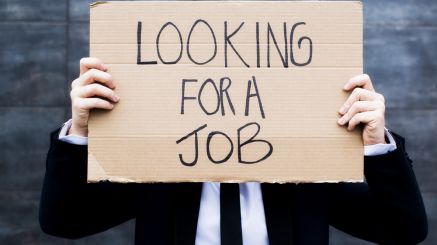
5 Things No One Will Tell You About Your First Job

1. Money doesn’t always matter. You will need almost a year before you get used to a lifestyle you can afford, hang in there things will get better. First jobs should be about experience and learning anyway. On the way your paycheck will rise in accordance with your work.

2. First impressions. Its true, first impressions matter but if you mess things up, it would not be the end of the world. You are new. You need time and it will be alright. People will come around eventually as they see what a nice and hardworking person you are.

3. Hard Work. No matter what field you work in, no matter how supportive people you have got around you, you have to work for yourself and it is not going to be easy. There are 100s of people out there who would want to be in your place but you need to try harder and maintain your position.

4. Do Not Assume. Ask if you are confused, do not shoot in the dark and do not beat around the bushes. There is no shame in asking for help and you are here to learn anyway. Assuming things and then messing it up is not what you want to do on your first job, so it is better to consult someone or make sure what you have been asked to do and then go ahead.

5. It is okay to not be okay. Not everyday is going to be glamorous as the job brochure may say. Not everyone is going to like you and you won’t be able to please everybody. Take out time for your own sake, for the sake of your mental health. You won’t come out of the office every single day and be satisfied with your work. Some time things will run smoothly and some times it might get rough. A break might not fix everything but it will atleast give you the energy to face things again.

Hang in there. You will do great, it might take time but you will eventually catch up. And in the end it will all be worth it.

GREEN MATERIALS USED IN Construction

Traditionally we are used to using adobe, concrete, and wood in construction, which has been and are used in everyday construction, which means the continuous destruction of trees for wood and the extraction of resources to make cement for agglutinated sand. Gravel and bricks For a better world, there are new processes and alternatives for sustainable and green building materials that can be used in construction today. Some of the green and innovative construction matter are listed below.

Bamboo

Bamboo is taken into consideration as one of the high-quality green constructing materials. It has a very excessive self-era rate, with a few being stated to have grown up to 3 toes inside 24 hours. It maintains spreading and developing while not having to be replanted after harvest. Bamboo is a perennial grass and now no longer wooden and grows on each continent, besides Europe and Antarctica. It additionally has an excessive energy-to-weight ratio, even more, complete energy than concrete and brick, and lasts extraordinarily long. It is, therefore, a high-quality preference for floors and cabinetry. Unfortunately, bamboo calls for a remedy to withstand bugs and rot. If left untreated, bamboo consists of starch that substantially invitations bugs, and it may swell and crack after soaking up water.

Cork

Like bamboo, cork grows very quickly. It can also be harvested from a living tree that continues to grow and reproduce more cork, or tree bark. Cork is resilient, flexible, and takes on its original shape again even after sustained pressure, its elasticity and abrasion resistance make it a common element in flooring. In addition, it is excellent at absorbing noise, which makes it perfect for insulation panels, and its excellent shock-absorbing properties make it perfect as a base. Thermal insulation is fire resistant, especially if left untreated and does not release toxic gases when burned. Cork is almost waterproof, does not absorb water, and does not rot. a bit expensive Fortunately, it’s extremely light and only requires less energy and emissions to ship.

Straw Bales

It is another environmentally friendly building material that can be used as a construction material, has good insulation properties, and can act as a soundproofing material, it can also be used as a filler material between columns and in the frame of beams / since it cannot penetrate air, it can have some properties of fire resistance exhibit. Straw can be easily harvested and replanted with minimal environmental impact. Bale straw also has very little influence. They can also be placed on walls, attics, and ceilings to keep the house cool in summer and warmer in winter.

Sheep’s Wool

Sheep wool is an excellent alternative to chemically charged insulation. It insulates the house just like conventional insulation materials and requires less energy to manufacture. It doesn’t degrade as quickly as other insulation materials like straw, and compared to some natural insulation materials like cotton, sheep’s wool is more common, easier to harvest, and regenerates quickly. Unfortunately, it’s not the cheapest insulator. It also needs treatment to protect itself from insects and prevent fungal growth. Depending on the chemicals used, such treatment could make sheep’s wool less environmentally friendly.

Mycelium

It is a natural building material. Mycelium is a natural unicellular organism that comprises the root structure of mushrooms and fungi. It can be stimulated to create a composite of other natural materials, such as It is then air-dried to create light and strong bricks or other shapes. Combined with pasteurized sawdust, the mycelium can be made into almost any shape and used as a surprisingly strong building material. There is the option of building bricks and segments of unique shapes that are strong and light.

Green Subway

Underground train system used to carry large numbers of passengers within urban and suburban areas, also known as subway, tube, or metro. Subways are normally built beneath city streets to make construction easier, but they may take detours and must occasionally cross rivers. The system’s outskirts usually emerge aboveground as conventional trains or elevated transit lines. The majority of subway trains are made up of multiple cars that operate on a multiple-unit basis.

Charles Pearson, a city solicitor, suggested the first subway system for London as part of a city improvement proposal shortly after the Thames Tunnel opened in 1843. Parliament approved the building of a 3.75-mile underground railway between Farringdon Street and Bishop’s Road, Paddington, after ten years of debate. Cut-and-cover construction on the Metropolitan Railway began in 1860, with trenches dug along the streets, brick sides added, girders or a brick arch added for the roof, and the highway restored on top.

London’s example was followed by a slew of other cities. The first subway on the European continent, a 2.5-mile (4-kilometre) electric tube, opened in Budapest in 1896, employing single trains with trolley poles. The use of a flat roof with steel beams instead of a brick arch, and thus a smaller trench, resulted in significant cost savings over prior cut-and-cover systems.

The Metro (Chemin de Fer Metropolitan de Paris) began service in 1898 in Paris, with the first 6.25 miles (ca. 10 km) opening in 1900. The speedy pace was due to the large streets above and the modification of the French engineer Fulgence Bienvenue’s cut-and-cover approach. At regular intervals throughout the route, vertical shafts were sunk, and side trenches were dug, and masonry foundations to support timber shuttering were placed immediately beneath the road surfaces. The roof arch was then built with minimal disruption to street traffic. While this technology is still employed in Paris, it has not been widely replicated in the construction of subways abroad.

Automatic trains, which use aerospace and computer technology to design, build, and run, have been developed in a few urban regions, including the Victoria Line, a component of the London subway system (completed 1971). BART (Bay Area Rapid Transit), which opened in 1976 in the San Francisco Bay Area, was the first rapid-transit system to be intended for totally automatic operation. Trains are controlled remotely, needing only one crew member in each train to be on standby in the event of a computer breakdown. The first subway line in Washington, D.C., opened in 1976, featuring an autonomous train control system and 600-foot (183-metre) long underground coffered-vault stations.

Other elements of modern subway construction include air-conditioned trains with lightweight aluminium cars, smoother, and faster rides due to advancements in track construction and car-support systems, and attention to the architectural appearance of and passenger safety in underground stations.

PREFABRICATION

What is prefabrication?

Prefabrication is the process of fabricating components of a structure in a factory or other manufacturing facility and shipping entire assemblies or sub-assemblies to the location where the structure will be installed. The term prefabrication also refers to the production of things other than construction in a fixed location. and the section is delivered assembled and ready for assembly. It generally does not refer to electrical or electronic components of a machine or mechanical parts such as pumps, gears, and compressors, which are usually supplied as separate items, but rather refers to the machine body that was used for parts in the past. . Mac premade parts This body can be called “sub-assemblies” and can be separated from other components.

Since when it is used

Prefabrication has been used since ancient times; For example, it is said to be the oldest dam in the world, Sweet Track, dating from around 3800 BC. Ancient Sri Lanka, particularly the Kingdom of Anuradhapura and the Kingdom of Polonnaruwa, used ready-made technology to erect huge structures, which are 2000 years old and some sections have been prepared separately and then assembled. In 1755 the Portuguese capital, especially the Baixa district, is popularly known as the Marqués de Pombal, the most powerful royal minister of D. The leadership of Sebastião José Von Carvalho e Melo, the most powerful royal minister of D. José IA, arose from Pombal a new architectural and urban planning style that introduced early anti-seismic design features and innovative prefabricated buildings. The buildings were manufactured entirely outside of the city, transported in pieces, and then assembled on-site, a process that lasted into the 19th century and provided city dwellers with unprecedented levels of safety before the earthquake. In the 19th century, Australia was importing large numbers of prefabricated houses from the United Kingdom. The method was widely used in prefabricated houses in the 20th century, for example in the UK as temporary living space. Space for thousands of townspeople. Families were “bombed out” during World War II. The assembly of profiles in factories saved time on site and the lightness of the panels reduced the cost of foundation and assembly on site. Gray concrete with flat roofs, prefabricated houses were uninsulated and cold, and prefabricated houses took on some stigma, but some London prefabricated houses have been occupied for much longer than the expected 10 years. The Crystal Palace, built in London in 1851, was a widely visible example of prefabricated iron and glass. Structures; Oxford Rewley Road station followed on a smaller scale.

Current uses

The most widespread form of prefabricated parts in civil engineering is the use of precast concrete parts and prefabricated steel parts in structures in which a certain part of a certain shape is repeated many times. It can be difficult to make the formwork required for pouring concrete structures on site. and delivering wet concrete to the site before it sets requires careful time management. Pouring concrete profiles in a factory brings the benefits of reusing molds and concrete can be mixed on-site without having to be transported and pumped wet into a crowded construction site. The parts reduce the cost of cutting and welding on-site, as well as the associated costs. The quality of the residential units produced had risen to such an extent that their residents could not distinguish them from traditionally built units. The technology is also used in office buildings, warehouses, and factories. Prefabricated parts made of glass and steel are widespread. Use for the exterior of large buildings: single-family houses, cottages, log houses, saunas, etc. They are also sold with prefabricated elements. Thanks to the modular prefabrication of wall panels, complex thermal insulation, window frame components, etc. can be produced on the assembly line, which tends to improve the construction quality of every wall or frame on-site prefer manual construction and the image of the prefabricated house as a “cheap” method only slows its acceptance. However, today’s practice already allows the system to be modified depending on the customer’s requirements and the choice of coating material. All clinker facades can be bricked, even if the load-bearing elements are made of wood Civil engineering work This can be decisive for the success of projects such as bridges and avalanche galleries, where the weather conditions only allow a short construction period. The systems and prefabricated bridge components offer bridge planners and construction workers considerable advantages over the construction time. e, safety, environmental sustainability, feasibility, and cost. Prefabrication can also help minimize the impact of bridge building on traffic. Small and frequently used structures such as concrete towers are also prefabricated in most cases. Radio towers for cell phones and other services often consist of several prefabricated parts. The masts are also often assembled from prefabricated parts. Prefabrication is widespread in the assembly of aircraft and spacecraft, and components such as wings and fuselage sections are often manufactured at the final assembly site in different countries or state Airbus.

Advantages

Moving sub-components out of the factory is generally cheaper than moving pre-production resources to each location.

Placing resources on the site increases costs; precast concrete components reduce costs by reducing the workload on the construction site.

The precision tools of the factory can help control the flow of heat and air in the building, reduce energy consumption and improve the health of the building.

The machine movement of the parts and the absence of wind and rain can improve the safety of the structure.

Uniform indoor factory environments eliminate most of the climate impacts on production

Advertisements

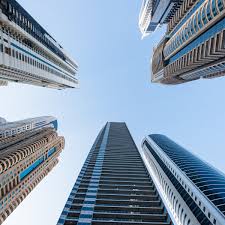
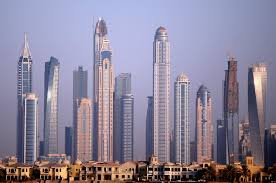
The Building Technology Behind Skyscrapers

When planning and constructing high-rise buildings, the aim is to create safe and livable rooms in very tall buildings; the buildings have to bear their weight, withstand wind and earthquakes, protect residents from fire, but also have to be easily accessible on the upper floors. Utilities and a comfortable climate for residents Most high-rise buildings have a steel frame that allows them to be built higher than typical reinforced concrete structural walls. Buildings are characterized by window areas created by the concept of a steel frame and a curtain wall; However, skyscrapers can also have curtain walls that mimic conventional walls and have a small window area. This is made possible by cheap energy from fossil fuels and industrially refined raw materials such as steel and concrete.

The construction of the skyscraper was made possible by the construction of steel structures, which increased the brick and mortar construction of the late 19th work. The usable area for ever-larger supporting pillars is reduced. Tubular skyscraper structures have been used since 1960, reducing the use of materials (cheaper: Willis Tower uses a third less steel than the Empire State Building), but allows for greater height; allows fewer interior columns and thus creates more usable space . The elevators are characteristic of skyscrapers, a safety elevator with which passengers can be transported comfortably and safely to the upper floors option was to use a steel frame instead of stone or brick; Otherwise, the walls of the lower floors of a tall building would be too thick to be practical.

Today’s leading elevator manufacturers are Otis, ThyssenKrupp, Schindler, and KONE. Advances in construction technology have caused skyscrapers to shrink in width and increase in height. Some of these new techniques include mass dampers to reduce vibration and oscillation and gaps to allow air to pass through, which reduces wind shear.

Basic design considerations

Good structural design is important for most construction projects, but especially important for high-rise buildings because, given the high price tag, the likelihood of catastrophic failure is small but unacceptable. For civil engineers, this is a paradox: the only way to ensure reliability is to test all failure modes in the laboratory and the real world, but the only way to understand all failure modes is to identify previously known failures. Thus, no engineer can be sure that a given structure will withstand all the stresses that could lead to failure, but they can only have a sufficiently large margin of safety to make failure acceptable due to some form of myopia or some unknown factor.

Loading and vibration

The stress in a skyscraper is in large part due to the strength of the building material itself. In most building designs, the weight of the structure is much greater than the weight of the material it supports beyond its weight., The load on the structure is much greater than the payload . The amount of building material in the lower levels of a skyscraper must  be larger than the Empire State Building. Thus the shape results exclusively from the load-bearing capacity. Posts can come in a variety of designs, the most common of which is for skyscrapers. can be divided into steel frames, concrete cores, pipe-in-pipe construction, and wall shear walls. 

Steel frame

By 1895, steel had replaced cast iron as a construction material for skyscrapers. Its malleability enabled a variety of shapes and rivets, which ensured firm connections. The simplicity of a steel frame eliminated the inefficient portion of a shear wall, the center portion, and load-bearing elements, which were consolidated in a much stronger way by allowing horizontal and vertical supports throughout. the distance between the support elements decreases, which in turn increases the amount of material to be supported. In buildings over 40 floors, this becomes inefficient and uneconomical because the usable area for the support column is reduced and the increased use of steel. 

The elevator conundrum

The invention of the elevator is a prerequisite for the invention of high-rise buildings because most people can (or can) only climb a few stairs at a time. Elevators in high-rise buildings are not only necessary aids such as running water and electricity but are also closely related to the design of the entire building . Taller buildings need more elevators to reach more floors, but elevator shafts consume valuable living space. 

Many high-rise buildings use non-standard elevators to reduce space requirements. Buildings like the former World Trade Center Tower and the John Hancock Center in Chicago use elevated lobbies where express elevators take passengers to higher floors and serve as a base for local elevators. Architects and engineers can stack elevator shafts on top of each other to save space; However, celestial corridors and high-speed elevators take up a lot of space and add to the time it takes to move between floors. Double-deck elevators, so that more people can take an elevator to two floors at each station. More than two floors can be used in an elevator, although this has never been the case. The main problem with double-deck elevators is that if only one person needs to reach a particular floor, then everyone in the elevator will be forced to stop. d Mall, Petronas Twin Towers, Willis Tower, Taipei 101 The Paradise lobby on the 44th floor of the John Hancock Center is also home to the first multi-level indoor pool, which is still the tallest in the United States.

SUSTAINABLE TRANSPORT

The word sustainable means able to retain at the minimum possible with best results and also helps the mother earth heal. Sustainability is a vast concept and is generally a long term process when it comes to results. Sustainable practices preached in day to day life helps one achieve long term goals. 

Such is the concept of SUSTAINABLE TRANSPORTATION.The increasing pollution in day to day life is a major example of why sustainable transport should be an important goal of the people of the 21st century. The daily consumption of petrol and diesel by various vehicles, excessive carbon monoxide emissions, contribution to global warming, noise pollution are some of the reasons among so many more that deplete the earth’s natural resources and increase health problems. 

The only option of change is to switch to a more healthier, quick, effective and also less resource consumption way; In the fast pacing life of people where every two among three people own a car in urban areas, it is important that sustainable alternatives not only add value to human’s time but are effective at the same time. 

Here are my vision of some eco-friendly, sustainable and intelligent choice :

 To start with first is TO WALK, walk for the short trip and avoid your vehicle when possible. This won’t only help nature heal but also can make one lose weight if practiced regularly, also it will make you feel closer to the greenery around and you won’t need to wait in long traffic queues or find a parking spot when you arrive. 

Next on my list would be to CYCLE, if you switch a cycle from your bus, train or bike journey, this will help to reduce the emission of around hundred kilograms of greenhouse gases. It will help lose more calories in every round of your travel and the fresh air is complimentary with every trip. 

If it’s not possible for you to travel without a vehicle, choose more eco-friendly ones. One of the best options can be CARPOOLING, it is a way of sharing a vehicle for a bunch of people destined for the same place. It helps save fuel and the hassle of parking. Additionally it adds company for your journey and lesser cars on the road. 

The next time you are planning to go for a trip, go for some EXPLORE PLACES AROUND your residence, you never know there are so many around your place. Unplanned trips are amazing and the best  when not harming nature. It helps save fuel and energy, decreases pollution and helps one feel more close to nature and experience unknown places. 

There are a lot other ways too and everyday there is a new find by so many humans.GREEN TRANSPORTATION is a choice and every being should choose it as a responsible citizen. Choosing these means to travel helps the earth heal at its maximum and makes the air pure. SUSTAINABLE TRANSPORTATION should be followed everywhere and by everyone as much as possible.

The Need of The society!