Like her previous works, this is also a saga of Indians in the states away from the motherland. This time we follow three generations of the Mitra family.
The book starts in the 1950’s Tollygunge, Calcutta. Subhash and Udayan Mitra, born fifteen months apart , true soulmates in all regards. Udayan is brave, impulsive and ‘blind to self-restraint,like an animal incapable of perceiving certain colors. But subhash strove to minimize his existence, as other animals merged with bark or blades of grass ‘
The first 20 pages are comfortable and happy. We see subhash and udayan grow up together, get their education and make habits together. The lowland i.e. the place between the the two ponds a metaphor for the two brothers Just like the lowland there are more geographical characters, like the tolly club, the mosque near their house. In 1960s, udayan is drawn towards the Naxalite movement. He is passionate about the movement and chooses to work for it abandoning his studies wheras subhash earns a scholarship to study in the states and moves to Rhode Island to study and subsequently get a job as a professor.
Years go by, udayan gets married and subhash learns to live alone.
Everything that can go wrong, goes wrong and the two brothers never see each other again. The story goes back and forth from Calcutta to states. Once again in similar jhumpa lahiri fashion we follow generations of characters while still staying true and attached to first generation. We start from Subhash and udayan, to their daughter Bela and get glimpses of their mother bijolis life. This book is no way a happy book. There are violent details of the naxalite movement in the 1960s and its repercussions on the brothers. Then the story shifts to Rhode Island, Subhash Mitra starts a new life as a husband and father. He carries secrets and lies and is burdened by it.We also get a namesake-like parent-child scene of confrontation and reconciliation.
Overall, the book is a good read and will stay with you.If you enjoy books that stretch across generations, this is definitely a must read!
Ps : There’s a NDTV interview of Jhumpa lahiri in the real tolly club, check it out!
Jane Austen’s Pride and Prejudice (Published in 1813) is considered to be a classic in literature. It has often been glossed over as a romantic novel and though it is concerned with human relationships, especially of romantic ones, Austen focuses a great deal on wealth and class. Her infamous opening quote in itself is a testament to the fact that she consciously criticized the influence of money in a society.
“It is a truth universally acknowledged, that a single man in possession of a good fortune, must be in want of a wife.”
Jane Austen (Chapter 1)
Pride and Prejudice is set in Regency England, which was a time of great political unrest and economy volatility. This was mainly due to the shift of the economy from an agrarian one to that of an industrial one. Until then, people were only mainly concerned about food and other primary needs. But the industrialization paved for more materials in the market like clothes, utensils, etc. So more the commodities, the more people wanted money to spend on such items. Thus, the need for money increased, and in the Regency England, being a gentleman was considered more important than merely being rich. And the concept of a gentleman relied highly on inheritance and people wanted to be rich without working for it.
Austen has taken care to include details of each character’s money and their economy backgrounds. The richer characters include people like Bingley who receives €500 per annum and is clearly rich enough to host balls take care of his sisters’ needs. Georgiana Darcy is said to inherit €30,000 pounds and will remain well-to-do even if she is denied legal inheritance of property. Mr. Darcy on the other hand, is a modern equivalent of a multi-millionaire who gets up to €10,000 per year and would get more from his investments. The middle-class characters include Mr. Bennet who receives approx. €2000 per year and would even be considered an upper-middle class. Mr. Wickham inherits €1000 from Darcy’s father and even more from Darcy for leaving the clergy. Although he spends it all and goes into debt, Darcy pays him again to marry Lydia. The Bennet girls on the other hand, would receive only a maximum of €40 per year until the death of their father, after which, their land would legally go to their cousin. Thus, the Bennet sisters had to marry for survival and not just to uphold class. When Elizabeth rejects both Darcy and Mr. Collins, she’s taking a huge risk by choosing happiness over financial security.
Fitzwilliam Darcy
€10,000 per year + more
Georgiana Darcy
€30,000 inheritance
Charles Bingley
€5000 per year
Rich Characters
Mr. Bennet
€2000 per year
George Wickham
€1000 inheritance
The Bennet Girls
€40 per year
Middle Class Characters
Austen also criticises material obsessions through characters like Mr. Wickham and Mrs. Bennet who obsesses despite not being rich, through Caroline Bingley who is pretentious and through characters like Catherine de Borough who exploit their wealth for status.
One of the criticisms against the novel is also that it unconsciously puts out the idea that you need to be rich and have money to be happy. Elizabeth who marries Darcy is happy, Jane who marries Bingley is happy, Charlotte who marries Mr. Collins is not too happy and Lydia is unhappy as she is doomed to pay off Wickham’s debts for the rest of her life. Nevertheless, the Pride and Prejudice’s detailed treatment of money adds to the novel’s realism.
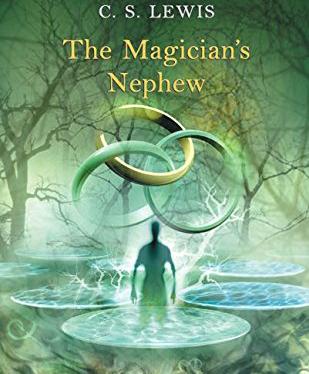
The Magician’s Nephew is the first book in The Chronicles of Narnia series. There are total seven books in the series. Three of them have been adapted into theatrical films. The Magician’s Nephew serves as the prequel to the movie ‘The lion, the witch and the wardrobe’. The Chronicles of Narnia series is set up in a fictional world known as Narnia where talking beasts walk, and magic exists. The series follow stories of various people who are associated with Narnia. Each book is has it’s own timeline and is connected with other without loosing essence of it’s own.
Being a prequel of the film, this book deals with a lot of stuff that wasn’t completely explained in the film. It explains the origins of Narnia and the wardrobe and also deals with the backstories of characters which were in the film like white witch and professor. Reading this book prior watching the film make the experience better.
“This is a very important story”, explains the author at the beginning, “because it shows how all the comings and goings between our own world and the land of Narnia first began”.
The story revolves around a boy named Digory. He befriends a girl named Polly and both agree to go on some sort of adventure for fun but things don’t go so well when they encounter Digory’s uncle Andrew. He tricks the girl into using one of his experimental rings which send her to unknown dimension. Digory goes after her in a quest to save her and find a way back home. The story then follows their journey through different worlds. The book has a total of 15 chapters. Chapter 3 and 4 in particular are very interesting. They represent the feeling of unfamiliarity very well. The sense of adventure when you try something new yet the feeling of uneasiness which comes out of fear are very well portrayed. The writing style of the author is very casual and conversational yet very cunning and ominous. It is very descriptive and makes you imagine the stuff in the novel real quick. The world building in this novel as well as the series on the whole is phenomenal. There is a lot of referencing in this book as well and lot of foreshadowing too. The book is written in such a way, it feels like distant past and gives nostalgic vibes. The narration changes from third person to first person many times throughout the series. The later chapters deal with the creation of Narnia, the origins of Jadis, the white witch, who serves as the main antagonist in the sequel. The end of this story marks the beginning of all others and it serves a perfect intro for the rest of the series.
Talking about thelessons it teaches, the first one would be learning to contain your curiosity. Throughout the story, most of the problems occur because the characters are curious to find out what’ll happen if you do a certain thing or so. Values of friendship, loyalty and commitment are also presented well. Overall, this book is a must read.
While pursuing your dream, you will come along many obstacles in your path, and they may make your moral down and you will think that you are not capable of achieving that thing, but don’t give up because god is testing you so give your best shot every time.
2. OVERCOME THE FEAR OF FAILURE
Fear of failure is worse than the failure itself and this the only thing that will hold you back from attaining your dream. So, the best way is to embrace this failures as learning and move ahead in your quest of finding your destiny.
3.TAKE ACTION
You will never learn how to do things unless you implement them , by taking actions because actions are the only ways of learning how to correctly do the things, and if you don’t take actions you will never learn.
4. ENJOY THE JOURNEY
Enjoy this journey of reaching towards your destiny, because this is the moment where you will learn many things ,you will meet many people, there will be ups and downs but these things only makes your journey memorable. So, enjoy every bit of these journey.
The Books are of knowledge oceans, from every book we learn some thing new and to improve our knowledge and build our personality
BOOK Defination
we all know that a lot of English words come from ancient Latin – that’s because the Romans occupied England for almost five hundred years from 54BC to 410 AD. … The word book comes from Old English “boc” which in its turn comes from a Germanic root “*bok-“, which means “beech” – as in the beech tree
Types of Book Reviews
Endorsements: Hand-picking Relevant Reviewers Before Your Book is Published. …
Trade Reviews: Publishing Professionals May Advocate Your Book To The Industry. …
Reader Reviews: Individuals Recommending Your Book To Each Other. …
Editorial Reviews: Third Parties Publishing Reviews About Your Book.
Why write book reviews
Book reviews give books greater visibility and a greater chance of getting found by more readers. On some websites, books that have more book reviews are more likely to be shown to prospective readers and buyers as compared to books with few or no book reviews.
How to write a book review
Start with a couple of sentences describing what the book is about. …
Discuss what you particularly liked about the book. …
Mention anything you disliked about the book. …
Round up your review. …
You can give the book a rating, for example a mark out of five or ten, if you like!
In this days most of people like to read blogs because they have simple and clear to understand content
Some of people read books by help of Book review, its give simple summary to understand that book
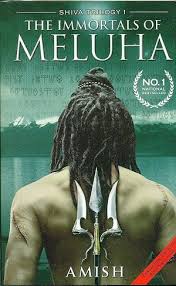
The Immortals of Meluha is the first book of the Shiva trilogy penned by Amish Tripathi. The book is a spectacular blend of history, philosophy and mythology. The simplicity of language and the intriguing narration make it a must read for everyone interested in the ancient Indian thought.
The book depicts the journey of Lord Shiva, the hero of the trilogy, from the pristine surroundings of the Mansarovar Lake at the foot of Mount Kailash to the country of Meluha, described as a Heaven on Earth. The book portrays Shiva as the chief of a tribe named the Gunas. He receives an invitation from the kingdom of Meluha to immigrate along with his entire tribe. Shiva accepts the invitation in order to safeguard his tribe from the continuous onslaught of the Prakrits, an enemy tribe. Amish portrays Shiva as a human, who is always ready to protect his people. Shiva achieved his godliness by fulfilling his destiny of working for the betterment of mankind.
The description of places like Kashmir, Meluha, Karachapa, Swadweepa and Ayodhya is so spectacular that the readers are transported to the beautiful and well-planned cities of ancient Bharat. The fast-paced writing touches upon many aspects like the reason why Shiva became the Neelkanth, how Nandi, a Meluhan Captain, became the trusted aide of Shiva, the origin of the world-renowned Om (ॐ) symbol and so on. A number of characters like Daksha, Sati, Ayurvati, Chitrangadh, Bhadra, etc., all of whom are from the Shiva Purana, are introduced into the story. Each character is well defined, thus enabling the readers to easily connect with them.
Amish carefully describes a number of warrior clans that we often read about in Indian history and mythology – the Suryavanshi clan (the Sun clan), the Chandravanshi clan (the Moon clan), the Nagas (the Snake clan), and many more, whereby each clan has its distinctive characteristics and symbols. The interpretation of the different kingdoms and the politics between them is interesting to say the least. The Suryavanshi clan expects Mahadev to fight the Chandravanshis and protect their river Sarasvati from extinction and the Chandravanshis lure him to their side in order to annihilate the Suryavanshi rulers. Mahadev is forced to look at the bigger picture and understands that both the clans have their own ways of living and the differences between two different lifestyles cannot be labelled as good or bad.
The book has good explanations of the different philosophies that collectively make up the beautiful mosaic of Indian culture. The depiction of the origin of the Saptarishis (the Seven Sages), the Varna System, the Somras and its efficiency, and the concepts of universal energy, karma and dharma are put forth in an interesting manner.
Amish uses the mythological stories and the legends of ancient India (Bharat) as the basis for his novel. The narrative technique he has used is a third-person account of the happenings. The impartial writing gives the readers enough space to study the plot and form their own opinions about the virtues and vices of Shiva’s times.
The Immortals of Meluha is a softcover book containing 410 pages. The interesting tales are broken down into 26 chapters, with a map at the beginning and a glossary at the end. Readers will find it hard to keep the book down, because of its immersive and imaginative writing.
It’s impossible not to mention Goodreads when discussing book communities: it’s the Facebook of book reviews — the ultimate social media platform for bibliophiles. If you’ve somehow managed to go this long without stumbling upon this omnipresent site, here’s the run-down: you can use Goodreads to organize, display, and discuss your virtual bookshelf with other users.
Goodreads recommendations are based on your listed interests. You can follow authors and book influencers ranging from Celeste Ng to Bill Gates. This allows you to see all their reviews, which vary from compact one-liners to critical analysis, and watch the new reviews roll in. For a quick verdict, just take a look at the star rating that they give the book.
Also if you like to browse lists, Goodreads compiles the best and most popular books for every genre. There’s also the annual Goodreads’ Choice Awards to celebrate each year’s new releases, where you can cast your vote or peruse the list of contenders to find a new book to read. It’s a site for every kind of reader, with abundant ways to comment and interact
2. LibraryThing:-
LibraryThing
Review Styles: star rating, recommendation, community reviews
This is the OG of all online book catalogues and discussion boards — take a look and you’ll see that it’s an oldie but a goodie. Of course, the basic functions of LibraryThing are rather similar to Goodreads: there are millions of books that readers can add to their lists, as well as review with star ratings.
While the interface harks back to the earlier days of the world wide web, LibraryThing has a secret weapon that’ll appeal to all readers, especially modern ones: their Zeitgeist. This page displays the crème de la crème of the whole site, from the most popular books to the hottest reviews, which is updated constantly. Just a glance shows that the readers here know how to read between the lines and wield their words!
So if you’re hoping to read or share some in-depth literary thoughts with fellow sharp-minded users , LibraryThing is the site to browse. (You can even access it without creating an account!)
3. Reedsy Discovery:-
Reedsy Discovery
Review Styles: star rating, recommendation, editorial reviews, community reviews (video option available)
Now, if you’re searching for some hidden gems to peruse, Reedsy Discovery’s got your back. While our blog features everything from classics to contemporary hits, Discovery’s specialty is indie publications, many of which are accompanied with succinct comments from experienced reviewers. There’s no better way to broaden your horizon!
Moreover, if casual and creative reviews are more your cup of tea, then rejoice: the burgeoning community of readers on Discovery can leave comments, one-line reviews, and video reviews (calling all Booktubers!) on just about any book. It’s a fun and interactive way to geek out over your favorite reads and discover all the coolest new titles you won’t find anywhere else.
4. LoveReading:-
LoveReading
Review styles: staff and guest contributor reviews
Though it’s UK-based, this prolific site caters to audiences around the world. LoveReading is strictly a reviewing site, with a base of staff writers and carefully selected contributors, so you know the reviews are top-notch. The staff often give quite personal reading experiences in their reviews, which make their recommendations very endearing, like they’re from a close friend. They even offer you presents — well, if you think of giveaways as presents!
LoveReading covers books from every genre you can think of. They also have weekly, monthly, and yearly list features to keep you up to date with the latest stellar releases, so you’ll never be in want of something to pore over.
5. The Millions:-
Review styles: professional and guest contributor reviews
In search of reviews that really dive into the themes, metaphors, and overall executions of interesting and highbrow books? The Millions has got you covered.
Written by a collection of seasoned critics, these reviews are speckled with memorable quotes, elegant analysis, and plentiful comparisons to other works — which means extra reading recommendations for you! If contemporary and literary fictions are your go-tos, then The Millions is the site for all your lit nerd needs.
6. A Promised Land:-
Nate Marshall on Barack Obama’s A Promised Land (Chicago Tribune)
A book review rarely leads to a segment on The 11th Hour with Brian Williams, but that’s what happened to Nate Marshall last month. I love how he combines a traditional review with a personal essay—a hybrid form that has become my favorite subgenre of criticism.
“The presidential memoir so often falls flat because it works against the strengths of the memoir form. Rather than take a slice of one’s life to lay bare and come to a revelation about the self or the world, the presidential memoir seeks to take the sum of a life to defend one’s actions. These sorts of memoirs are an attempt maybe not to rewrite history, but to situate history in the most rosy frame. It is by nature defensive and in this book, we see Obama’s primary defensive tool, his prodigious mind and proclivity toward over-considering every detail.”
7. Alice’s Adventures in Wonderland:-
Merve Emre on Lewis Carroll’s Alice’s Adventures in Wonderland (The Point)
I’m a huge fan of writing about books that weren’t just published in the last 10 seconds. And speaking of that hybrid form above, Merve Emre is one of its finest practitioners. This piece made me laugh out loud and changed the way I think about Lewis Carroll.
“I lie awake at night and concentrate on Alice, on why my children have fixated on this book at this particular moment. Part of it must be that I have told them it ‘takes place’ in Oxford, and now Oxford—or more specifically, the college whose grounds grow into our garden—marks the physical limits of their world. Now that we can no longer move about freely, no longer go to new places to see new things, we are trying to find ways to estrange the places and objects that are already familiar to us.”
8. Luster:-
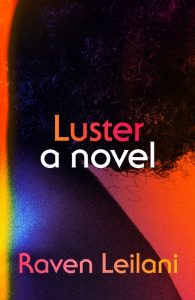
Parul Sehgal on Raven Leilani’s Luster (The New York Times Book Review)
Once again, Sehgal remains the best lede writer in the business. I challenge you to read the opening of any Sehgal review and stop there.
“You may know of the hemline theory—the idea that skirt lengths fluctuate with the stock market, rising in boom times and growing longer in recessions. Perhaps publishing has a parallel; call it the blurb theory. The more strained our circumstances, the more manic the publicity machine, the more breathless and orotund the advance praise. Blurbers (and critics) speak with a reverent quiver of this moment, anointing every other book its guide, every second writer its essential voice.”
9. The Tenant of Wildfell Hall:-
Constance Grady on Anne Brontë’s The Tenant of Wildfell Hall (Vox)
Restoring the legacies of ill-forgotten books is one of our duties as critics. Grady’s take on “the least famous sister in a family of celebrated geniuses” makes a good case for Wildfell Hall’s place alongside Wuthering Heights and Jane Eyre in the Romantic canon.
“[T]he heart of this book is a portrait of a woman surviving and flourishing after abuse, and in that, The Tenant of Wildfell Hall feels unnervingly modern. It is fresh, shocking, and wholly new today, 200 years after the birth of its author.”
10. Uncanny Valley:-
Ismail Muhammad on Anna Wiener’s Uncanny Valley (The Atlantic)
Muhammad is a philosophical critic, so it’s always fun to see him tackle a book with big ideas. Here, he makes an enlightened connection between Wiener’s Silicon Valley memoir and Michael Lewis’s 1989 Wall Street exposé, Liar’s Poker.
“Like Lewis, Wiener found ‘a way out of unhappiness’ by writing her own gimlet-eyed generational portrait that doubles as a cautionary tale of systemic dysfunction. But if her chronicle acquires anything like the must-read status that Lewis’s antic tale of a Princeton art-history major’s stint at Salomon Brothers did, it will be for a different reason. For all her caustic insight and droll portraiture, Wiener is on an earnest quest likely to resonate with a public that has been sleepwalking through tech’s gradual reshaping of society.”
“For me, growing up, I felt like there was something fatally and tragically flawed in my nature and that it was my duty to try to avoid falling for that vice”.
– Shyam Selvadurai
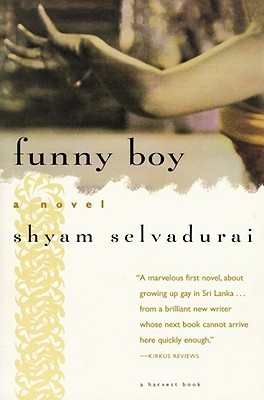
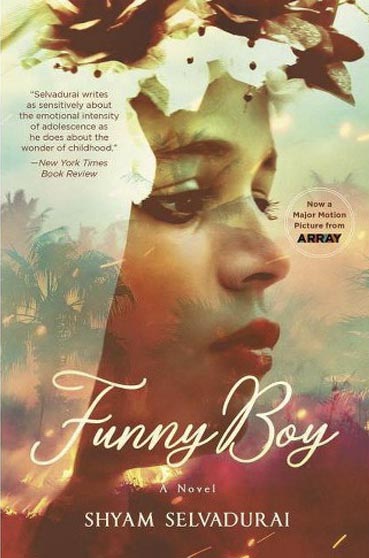
Certainly, we all as a human, face some sort of battle within ourselves, might be towards our identity or maybe our existence. The worst crisis any human can face is the crisis within him/herself. It is one of the dangerous crises any person goes through, and this is what the author Shyam Selvadurai had gone in his own life which he portrayed in the novel “Funny Boy” through the main protagonist “Arjun” aka “Arjie”.
The Funny Boy – A Background :
The novel evidently sets in the early 1980’s at the consequent of Sri Lankan civil war, which showcase us the disputes and riots of Tamil – Sinhalese Historical enmity towards each other. The novel is divided into 6 chapters, in which every chapter has its own uniqueness which makes the novel more explicit.
The 1st chapter, “Pigs can’t fly”, begins with the Naïve life of the main character Arjie and his reminiscence of his childhood days, where he presents his own baffled thoughts of his own existence of, he being “Different” from other boys of his age. He was anxious and felt that his interests in playing with dolls and girls is a taboo for society whereas playing cricket will make him an ideal boy in the society.
“Life is full of stupid things and sometimes we just have to do them”, Arjie’s Amma says this to him when he refused to play with boys and instead, he likes to wear saree and play, “bride- bride” with his female cousins.
This shows us how this chapter portray us that our society is prejudice towards the gender norms in which all of us are distributed. In one of the incidents when the relatives of Arjie saw him wearing a saree , made him a center of laughter and mocked him by saying him “ Funny”, through which the author tried to showcase us that the third Gender in our society is considered as unethical or as a clown which is irrelevant to the society, namely the title of the chapter “Pigs can’t fly’’, presents us how people in our society don’t accept the people who belongs to the third gender as according to them, pigs represents the people who are transgenders or gay like Arjie are breaking the norms of the culture.
“Any war, riots or a sense of violence happens within the human minds, and politically, language and cultures drift us apart sometimes to establish a war”, this quote is well explained in the second chapter “Radha Aunty”, where this chapter explains us how casteism becomes a hurdle, when people fall in love.
They say that “If two people love each other, the rest is unimportant.”
“No, it isn’t. Ultimately, you must live in the real world.
And without your family you are nothing.”
The Funny Boy
By this quote, the author explains us the tragic love story of Radha Aunty and Anil Uncle who wanted to get marry, but the enmity and disbelief in both the communities of Tamil and Sinhalese made them apart! Indeed, this tragedy is obvious to show us the situation of the Sri Lankan civil war and the rules in which people were abused to be in. Incidents of Radha Aunty where she was brutally attacked by 2 Sinhalese people show us how threatening Humans were demons for each other.
“See no evil, hear no evil”, is the chapter 3 where show us one more Tragic incident happened with “Daryl Uncle”, we can say that the novel has a theme of failed love relationships, casteism, hatred, war, and disputes, as this chapter encloses about the incident of how Daryl uncle died or rather got murdered. It portrays us how violent was the time in columbo when the Journalist like Daryl uncle was abused and murdered.
In chapter 4, “Small Choices”, we get to know about Arjie’s feelings for the male character Jegan, who came to work in Appa’s hotel. This is the chapter where Arjie started to know about his identity but hide from the outer world as it was against the norms, which Arjie felt his feelings for men is Immorality. This chapter also counts about Anti- Tamilians and how these community was making a life miserable for the innocent people of Columbo.
Often, we know who we are, what is our identity, but because of the taboo inflicted in the society, we escape from our originality and behave as how the society wants to picture us. This is what Arjie was doing to be a normal ideal boy, but somewhere he was an abnormal boy (according to him) because of his gay feelings for the character Shehan in chapter 5, “The Best School of All “show us. When Arjie fell in love with Shehan, his perception for life and his ideology of his identity changed when he met shehan and shehan removed all the perplexed thoughts floating in the minds of Arjie. Shehan made Arjie realized that “We should ultimately know who we are! We should not hide identity from ourselves”. This is what made Arjie realize that he should respect himself and his identity. This was the chapter where he was not afraid of who he was and his sexual desires for Shehan was totally legit. In this chapter, Arjie was proud to be himself as a gay and his love for Shehan was compatible.
In “Riot Journal: An Epilogue’’ is the last chapter where Arjie wrote a journal on the effects and incidents of riots and its impact how ruined his life and lost his parents. The books end in a dismal and with a sense of alienation of Arjie and the tragic feelings inculcated and made him hollow.
Funny Boy – A Novel to explore one’s own identity !
Still unending war a human faces within himself/ Herself when it is about recognizing one’s own identity. We Humans have a psychology of hiding our real personality infront of other humans which is basically due to the age old cliché ideology of “Acceptance in the society”, due to which people hide there real self.
As Humans, we live in society and communities in which we have an urge of desire that we need love, cherishment, respect and acceptance in return, thus when we don’t get it we realize we are different from others, which ultimately makes us feel that we are an outcast from our society. so, as a part of community we behave as the world wants us to behave.
Whereas, “The Funny Boy” is the best novel of all which provides you that particular kind of Catharsis if you not aware of yourself!
So, a personal recommendation to the Bibliophile out there , Go check this Book which is not only a homosexual novel, but a novel which is Heartening and will open your insights to understand your real self.
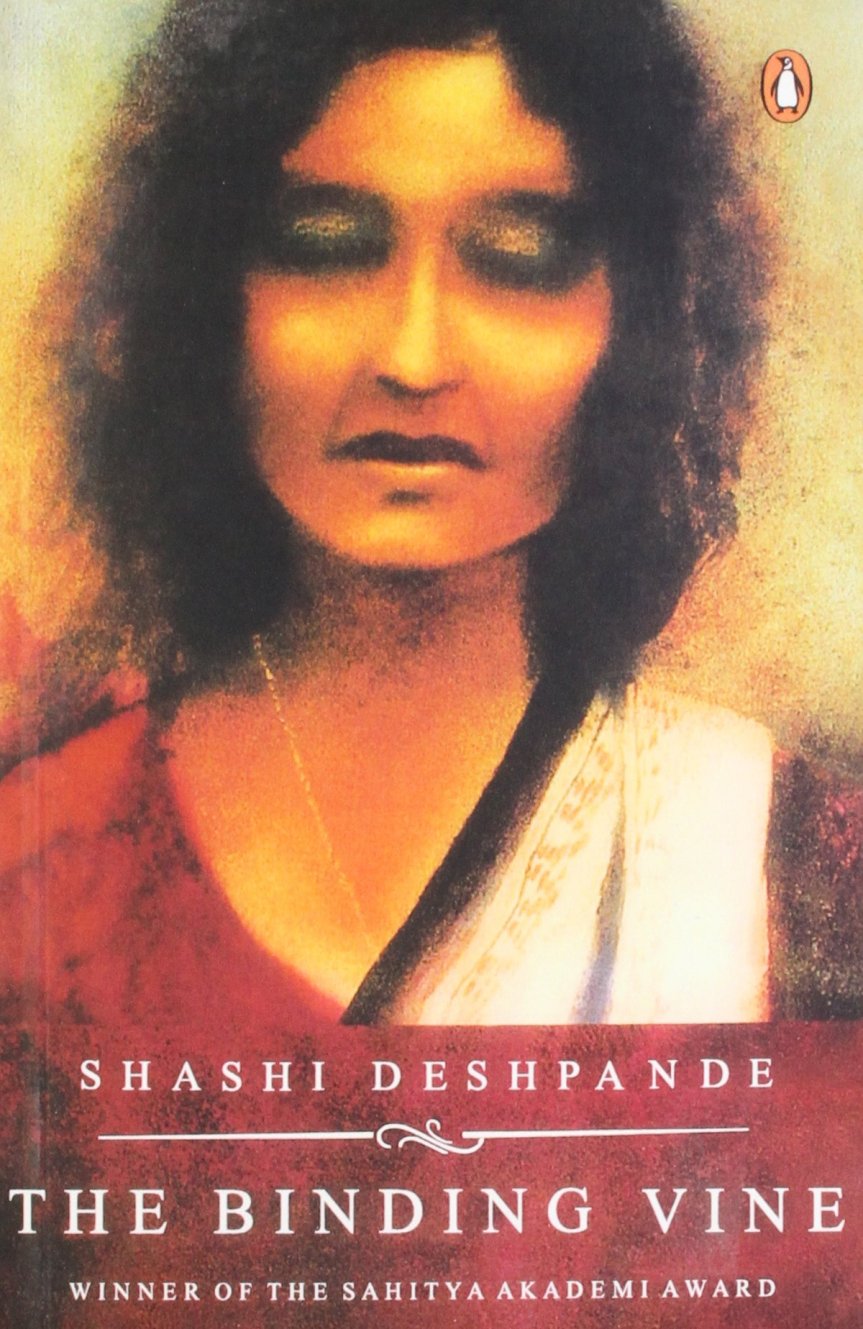
Sashi Deshpande is a Sahitya Academy winning Indian novelist best known for her works The Dark Hold No Terrors and That Long Silence. Her novels generally centre around educated middle-class urban Indian female protagonists who struggle against the oppression of an overtly patriarchal society. She is critically acclaimed for her sensitive and realistic portrayal of women who are fettered to their roles as daughters, wives and mothers. They are conscious of the social inequality and question the deliberate efforts made by men to maintain this. In The Binding Vine, Deshpande introduces women from various backgrounds who collectively question the subordinate status ordained to them by society. This essay seeks to analyse the lead female characters from the novel with reference to feminist theories by Simone De Beauvoir and Virginia Woolf.
“…thus she is called ‘the sex’, by which is meant that she appears essentially to the male as a sexual being.”
Simone De Beauvoir
“What were the use of my creation, if I were entirely contained here?” This quote from Wuthering heights by Emily Bronte in the beginning of the novel runs as a common theme throughout The Binding Vine. The novel uses stream of consciousness method as it follows the life of Urmi, a middle-class college lecturer who encounters several women in her life. With her as the anchor, Deshpande reveals the sufferings of women from different sections of the society. The novel begins by describing Urmi’s personal grief upon losing her infant child. She becomes detached from the world and struggles to get back to her normal life. She is financially independent and is confident in asserting her freedom and agency. She chooses her own husband by marrying Kishore who works in Merchant Navy and is barely ever home. He asserts himself sexually and does not provide the emotional support that she desperately craves. Urmi’s character reinforces Beauvoir’s point that “…thus she is called ‘the sex’, by which is meant that she appears essentially to the male as a sexual being.” Despite being socially and financially independent, Urmi is still scene as a sexual object by her husband.
Urmi later gets acquainted with Shakuntai and her daughter Kalpana. Shakuntai had moved to Bombay in search of her husband who has deserted her for another woman. Coming from the lower strata of the society, she is uneducated, financially unstable and struggles by toiling hard to look after her three children. Her daughter Kalpana is a strong woman who is forced to marry her uncle Prabhakar. Having been molested by Prabhakar since a young age, Kalpana turns down the offer. This enrages him and he brutally rapes her. Though Kalpana is critically injured, Shakuntai hesitates to file a case against Prabhakar and even goes as far to blame her daughter for her current condition. This is due to the internalised patriarchal ideology that the assaulter is entitled to do so as a man while the victim is responsible for ‘encouraging’ the crime. Furthermore, she herself is under constant threat of being held responsible for the downfall of her family as the society always blames women for disrupting its ‘honour’. Just like Beauvoir, Deshpande focuses on the unrealistic standards set by the society on women that expects them to be the perfect loyal caretaker who submissively accepts the will imposed on them by men. Women are always considered as the inessential and the other while the men are the subject and the absolute. Beauvoir further explains this internalisation by saying that “Thus, woman may fail to lay claim to the status of subject because she lacks definite resources, because she feels the necessary bond that ties her to man regardless of reciprocity, and because she is often very well pleased with her role as the Other.” Shakuntai blaming her own daughter for being a rape victim simply emphasises the fact that women themselves unconsciously perpetuate their role as the inessential subordinate.
Another significant character explored in the book is that of Mira, Urmi’s late mother-in-law. Kishore’s step-mother Akka hands Urmi a trunk consisting of Mira’s diaries and poems. Urmi learns how Kishore’s father saw Mira at a wedding and fell in love. “Since then he had “single-minded pursuit of an object; marrying Mira””. She is married off to him against her wishes and falls victim to a life of marital rape. Mira is forced to suppress her aspirations to be a writer, her only channel of outlet being the scribbles of words on her diary. Her writings clearly describe her revulsion and fear for the sexual acts with her husband and it is evident that she’s slowly spiralling into depression. Writing serves as her sole tether to her life on earth. After marriage, she is renamed ‘Nirmala’ by her in-laws which stands testimony to the society’s attempt to estrange women from her individuality after marriage.
"Niramala, they call, I stand statue-still.

Do you build the new without razing the old?

A tablet of rice, a pencil of gold

Can they make me a Nirmla? I am Mira."
Mira’s mental health improves as she joyously awaits the birth of her child, but she dies soon after childbirth. Kishore’s father marries Akka solely for the purpose of looking after the baby. This further reinforces the male perspective pointed out by Beauvoir that “woman has not been socially emancipated through man’s need – sexual desire and the desire for offspring – which makes the male dependent for satisfaction upon the female.”
In spite of being a skilled writer, Mira is shunned away from the literary world. Her husband and her family never encouraged her passion and she was forced to lead a domestic life. Her frustration on being stifled of her skills are evident in her works. This is further reinforced when she narrates her encounter with Venu, a renowned poet. Upon reading a few of her poems, he says “Why do you need to write poetry? It is enough for a young woman like you to give birth to children. That is your poetry; leave the other poetry to us men” . Where Venu is celebrated as a great poet of Indian literature, Mira’s voice is silenced and confined to four walls. She never had the luxury of having a room of her own that Woolf confirms is a necessity for a writer. She was forced to write late at night in secret while the men were asleep. Mira represents the generation of women writers who, despite being talented, were blatantly excluded from the literary world by men. Through Mira, Deshpande resonates the concerns raised by both Virginia Woolf and Adrienne Rich on the struggles of being a female writer in a patriarchal society.
The Binding Vine also features characters such as Urmi’s friend Vanna and Shakuntai’s sister Sulu, who perform their role as the archetypal role of ‘women as angels’. They try hard to maintain the societal pressure of being what Beauvoir explains as “‘truly feminine’ – that is, frivolous, infantile, irresponsible, the submissive woman.”
Despite the numerous struggles of women portrayed in the novel, Sashi Deshpande hints at positivity towards the end of the novel. Urmi convinces Shakuntai to disclose the identity of Kalpana’s assaulter resulting in a gathering of a mass of protestors who fight hard for her Justice. Urmi resolves to translate Mira’s poems to English and to publish them. She also encourages Vanna to stand up for herself and moves on from her personal grief to fight alongside women for a collective cause. Like Beauvoir and Woolf, Deshpande urges women to stand together like ‘binding vines’ against the oppression of patriarchy. The novel celebrates women’s solidarity as friends, companions and sharers of life.
Menakapriya, P. “Portrayal of Women in Shashi Deshpande’s the Binding Vine and Manju Kapur’s Difficult Daughter.” IOSR Journal of Humanities and Social Science (IOSR-JHSS), http://www.iosrjournals.org
English Title :- The Alchemist Original Title :- O Alquimista Author :- Paul Coehlo, Brazilian author. Genre :- Quest , Adventure , fantasy. Language:- Portuguese English translation by :- Margaret Jull Costa Publisher ( English Translation ) :- Harper Torch , 1993. Pages:- 208 pages ( 1st English translation )
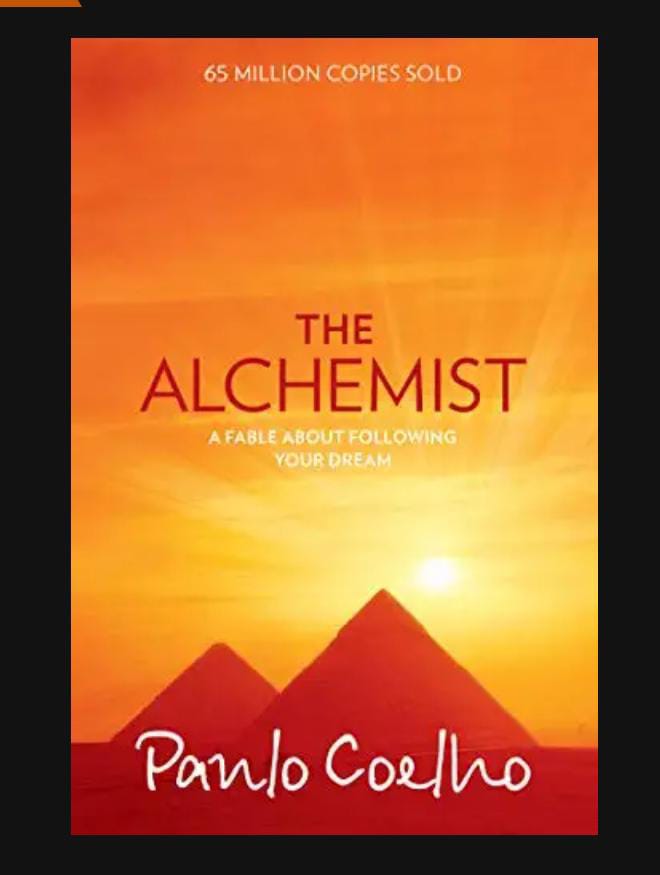
Book Cover :- The cover has a very enchanting and beautifully designed which attracts reader on the first basis.
“When you want something all the universe conspires in helping you to achieve it “
About author :-
Paul Coehlo is a Brazilian lyricist and novelist .He belongs to a middle-class family in Rio de Janeiro, Brazil.
He is best known for his novel The Alchemist, which holds the GuinnessWorld Record for most translated book by an author, and selling more than 65 millions copies in more than 150 countries as one of the best-selling books in history.
Paul Coehlo is considered as the world’s most popular spiritual writer. His books including -, The Alchemist, The Devils and Miss Prym , The fifth mountain, Manual of Warrior of light , Veronica Decides to Die , , covers various serious topic such as love , magic , dreams , spirit , suicide , real meaning of life etc.
He wrote The Alchemist only in 2 weeks . He explained that he was able to write at this pace because ” the story was already written within his soul “. He described the book as a film that takes place in the mind of the reader , an allegorical novel about a young shepherd’s journey of finding his dreams .
Summary :-
The Alchemist is about the journey of a boy Santiago of Andalusia who is a shepherd . His parents have continually struggled for basic necessities of life and have smothered their own ambition accordingly . Santiago on the other hand can read and wants to travel . One day Santiago retires for the night in an abandoned church with his flock of sheep. An enormous sycamore tree has grown in the place where the sacristy used to be. This is where Santiago falls asleep and dreams a recurring dream of a child who tells him that he will find a hidden treasure if he travels to the Egyptian pyramids.
Santiago visits the village of Tarifa. There he meets an old woman who interprets dreams, which she says are the language of God. The old woman tells Santiago that this dream is prophetic , in what she calls “the language of the world,” and that Santiago needs to travel to the pyramids, where he will find a treasure that will make him rich. Santiago is uncertain, however, since he enjoys the life of a shepherd.
Santiago meets a mysterious old man who introduces himself as Melchizedek, or the King of Salem. He tells Santiago about good and bad omens . Santiago started traveling after selling his flock and purchasing a ticket to Tangier in Northern Africa . He was unfortunately robbed which made him look for a way to make enough money to return home. He finds work in the shop of a crystal merchant.
After eleven months of working in the shop,he meets an Englishman who wants to learn the secret of alchemy, or turning any metal into gold, from a famous alchemist who lives at an oasis on the way to the pyramid.
While traveling, Santiago begins listening to the desert and discovering ” TheSoul ofthe World “. The caravan eventually reaches the oasis, and there Santiago meets an Arab girl named Fatima and falls in love with her instantly but had to leave eventually with a promise to return again , in search of his treasure
Santiago wanders from the oasis into the desert and, seeing two hawks fighting in the sky, has a vision of an army entering the oasis and gets into trouble because of the tribal wear .
He meets an Alchemist who offers to cross the desert with Santiago. Soon the two men enter into an area of intense tribal warfare. Warriors hold the two men captive, but eventually allow them to continue their journey
. The alchemist tells Santiago that he needs to return to the oasis, and that the rest of the trip is Santiago’s to make alone so that he can claim his treasure whom he referred as “Personal Legend”.
Santiago arrives at the Egyptian pyramids and begins to dig. He finds nothing buried in the ground. Thieves beat Santiago and rob him of his money. After he tells them of his dream, though, one of the thieves recounts his own dream about a buried treasure in the sacristy of an abandoned church.
Returning to Andalusia, Santiago goes back to the church where he dreamed of the treasure near the pyramids. He digs where he slept, beneath a sycamore tree, and there he finds his treasure Santiago’s treasure.
Analysis of the book :-
The Alchemist is a fable about following your dreams .
“My heart is afraid that it will have to suffer , the boy said ‘
“Tell your heart that the fear of suffering is worse than suffering itself and that no heart has ever suffered when it goes in search of its dream , because every second the search is a seconds encounter with God and with eternity .”
The Alchemist is a diversified allegorical story about a shepherd who cross boundaries just to follow his recurring dream which was entitled as “thelanguage of the heart “ by the gypsy woman and a man whose encounter made him ” follow his omens “
Paul Coehlo in his interview stated that “omens are individual languages in which God talks to you . They are this strange ,but very individual language that guides you towards your own destiny . They are not logical ,but talk to your heart directly .”
The writing style in the book is simple yet contains powerful emotions, interesting and deep characters, plots twists and inspiring wisdom.
Santiago journey is a spiritual quest ,where he travels through the desert ,speaks to the wind and ‘Soul ofthe world’ which is connected by everyone’s heart desires or as the Alchemist said ” Personal Legend “
The novel is figurative and metaphorical in style . The omens , Personal Legend , Soul of the world , the talk with the wind , holds symbolic meaning which may seem as fantasies fantasized by us somewhere some day .
The story not only aids one to follow his dream but connects it with the Soul of the world ,the universe where everyone is bonded with an invisible wire and makes us one .
The story is like living in a magical realism , getting enchanted by the omens , talking with winds being a part of the universe that we all are but tend to forget and finally following our dream despite the hurdles because following our heart desire means encountering eternity .
“when you really want something, the whole universe conspires in helping you to achieve it”
The book explains the major purpose of people living , that’s finding one’s treasure i.e Personal Legend and traveling to find it because following the personal legend is like connecting to something deeper of the universe ,to the threat that connects universe and our hearts , something that makes us follow our heart and reach our dreams which fear paralyse for us .
The fear of suffering is the mammoth hurdle one faces while taking the first step towards their dream . The Alchemist , mystically addresses the fear of suffering as worse than fear itself .
Paul Coehlo in his interview said ” the only way that you can learn the language of the soul is by making mistakes . I made my mistakes but then I started to connect with the signs that guide me “
Making mistakes is the key to finding one’s Personal Legend . But fear of taking risks only lets one suffer with regret of not trying to reach out for their dreams .
“ The world is conspiring for us ” , it symbolizes the determination one has for his dreams. Without hope and determination one can never know about the universe doing it all to make the dream come true .
Conclusion :-
Santiago struggles with what he is told versus what is real , between reality and the spiritual. He moves from hopeless to hopeful .
The book , with the magical realism genre leaves the reader with many questions. The questions are left to the reader’s imagination .
But Paul Coehlo said “there are some questions in life that we don’t know . We can’t have answers for everything . But we try to find good questions and not good answers “
Santiago represents the transforming power of our dreams, whether real or imagined and the importance of listening to our hearts.
The book is for one’s who want not only to escape reality but also to understand reality . The Alchemist can offer the best of both worlds. Each person has a destiny that exists independently of others. Only through devotion to the dream is the ‘soul of the world’ revealed to us, the knowledge that destroys fear of suffering and gives power. The Alchemist tells us that dreams have a price but, as Coelho has said in interviews, not living your dreams also has a price.
The book shares the Magic with the world , and affects so many lives. The Alchemist is an unforgettable story about the wisdom of listening to our heart and following our dreams .
” Dreams are made to be followed Life is meant to be loved Some books are meant to be read , Loved and passed on The Alchemist is one of those books “
Web development is a method of providing site structure and maintenance and this is work done in the background, intending to keep the site look good, running quickly, and performing well with consistent customer interactions. Web developers use various programming dialects to do this. The dialect used depends on the type of errand. Performance and the stage of their work. Online promotion skills are popular all over the world, and they are well paid, making them an excellent career choice.
This is one of the areas that are easier to open up, and the rewards are more generous because you need not have to struggle with a formal university degree to obtain qualifications. The field of web development is mainly divided into front-end(client-side) and back-end(worker-side).
Comparing Front-End and Back-End Development
The Front-End web developer is responsible for layout, design, and interaction with HTML, CSS, and JavaScript. He takes an idea from the drawing board and implements it. The content you see and use, such as the visual aspects of the website, drop-down menus, and text, is put together by a front-end developer who has written many programs to link and build elements, improve their appearance, and add interactivity. The program runs through the browser. It happened behind the scenes. This is where the data is stored. Without this data, there is no external interface.
The Back-End or the server side of the network consists of the server hosting the website, the application that starts the website, and the database where the website is located. Server-side developers use computer programs to ensure the smooth operation of servers, applications, and databases. Such developers need to analyze the company’s needs and propose effective software solutions. ng uses different server-side languages such as PHP, Ruby, Python and Java.
The Industrial applications
In larger organizations and companies, a Web development team can consist of hundreds of people (Web developers) and follow standard practices such as agile Web development. Small organizations may only need a permanent or contract developer, or assist in the allocation of appropriate positions. As a graphic designer or IT expert. Web development can be collaborative work between departments, rather than the domain of a specific department. Web developer professions are divided into three types: front-end developers, back-end developers, and full-stack developers. Responsible for the actions and images that run in the user’s browser, while the internal developers are responsible for the server.
All of this may seem difficult to understand at first glance, but you don’t need to understand all of them immediately. You will gradually increase your awareness and things will start to click. The good news is that learning to be a developer is easy to get and access. This applies in particular to Open Classrooms.
” Life is not a problem to be solved. Just remember to have something that keeps you busy doing what you love while being surrounded by the people who love you”- Ikigai by Hector Garcia and Francesca Miralles
IKIGAI is a Japanese concept referring to have direction or purpose in life, providing a sense of happiness and fulfillment and towards which the person may take action, giving them satisfaction and a sense of meaning.
This book touches on various elements of life that certainly we all are aware of, but always fail to implement in our daily life by giving ourselves unnecessary excuses. This book talks about how every person in this world has the ikigai ( a reason for being ), and by asking a few simple questions to yourselves, you can discover yours and live a prosperous and happy life. The authors of the book have beautifully put down all the ideas and facts which will persuade you to live your life to the fullest. The authors in the book bring the Japanese secret for the readers from the wise people of OKINAWA Island in Japan on how to live a happy and long life.
The best part of this book is, unlike many other self-help books, this does not go on and on. There are very few chapters. The idea or the message which the authors try to convey is straightforward. Read the book carefully, and it will surely teach you how you can bring meaning and joy to every day by following your IKIGAI .
Overall, a wonderful book to read if you feel stuck in your life or just want to make some changes in your life.
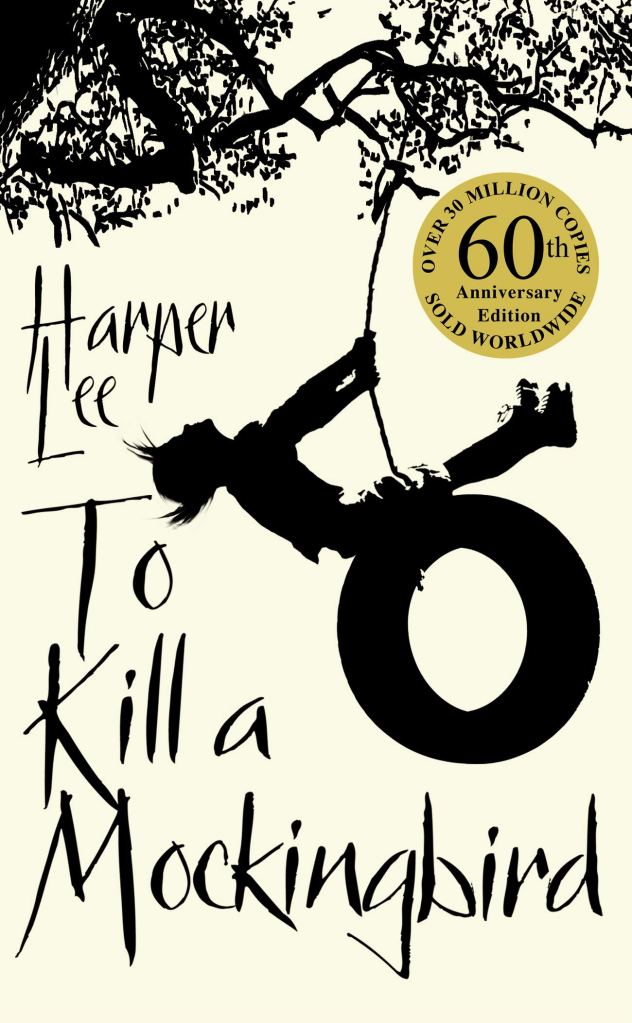
‘To Kill a Mockingbird’ is a Southern gothic bestseller written by Harper Lee. The novel is narrated by Scout Finch, a six-year-old white girl who learns about life, people and the injustices prevalent in her society. Through her, Lee cleverly portrays issues such as gender, race and class discrimination in the fictional setting of Maycomb county, Alabama. Readers have speculated that the character of Scout was based on Lee’s own childhood experiences, wherein she combines the nostalgic elements with the political situation that she witnessed around her in America. Scout’s innocence and her defiance against the social hierarchies in Maycomb cuts a deeper meaning into the futility of these societal constructs.
Race is one of the issues that is evidently portrayed in the novel. Scout’s father Atticus Finch is a lawyer who defends the less privileged. He strives hard to stand by his moral compass and wishes to set an example for his children through his actions. One of the major events in the novel takes place when Atticus chooses to defend Tom Robinson, a black man accused of raping a white woman. The racist residents of Maycomb, as well as his family members are horrified and attempt hard to dissuade him. So much so, that even Scout and her brother Jem are subjected to verbal abuse by other children for his actions. During the trial, Atticus provides clear evidence to prove Tom’s innocence. Despite the impressive evidences, the extremely racist jury sentences him to jail where he later attempts to escape, but is shot and killed. We see that even the law is corrupted when it comes to rendering justice to innocent African Americans. Tom Robinson’s trial scene is monumental in proving the racial discrimination in America.
Calpurnia, the Finch family’s black maid plays a significant role in Scout’s life. Unlike most southern black characters, she is well- educated and is highly respected within the Finch family. Having lost her mother at a young age, Scout regards Calpurnia as a mother-like figure. One of the important moments in the novel is when Calpurnia takes Jem and Scout to the Black Church. Here, the children witness a different side of characteristics in Calpurnia as she interacts with the rest of her community. W. E. B. Du Bois refers to this as “double consciousness”; a phenomenon wherein a person exhibits two different personalities with the blacks and the whites. This can be seen as a defence mechanism to gain acceptance in a white supremist society due to their own internalised racism. Furthermore, despite being a novel that is concerned with issues like racism, it only portrays a subjective version of it. The black community are not given a voice of their own against this prejudice, which marginalises them within the text. If they are given a voice, it is usually to show gratitude to the good white people instead of raising their anger and frustration against the racial injustices in Maycomb.
Social class prejudice is an important element highlighted in ‘To Kill a Mockingbird’. This can be understood clearly when Jem imagines ‘folks’ as being divided into four different kinds. “Our kind of folks don’t like the Cunninghams, the Cunninghams don’t like the Ewells, and the Ewells hate and despise the coloured folks.” (Lee, 249) Through Jem, Lee clearly explains the class hierarchical structure of Maycomb. It is a prejudice engrained in Maycomb which even dictates the relationship between children at school. But the novel also explains that the class system can eventually be dismantled. Initially, when Scout treats Walter Cunningham Jr differently, Calpurnia teaches her otherwise and makes her realise that a person’s financial background has nothing to do with their personality. When Cunningham Sr. arrives with a mob to lynch Tom Robinson, Scout’s innocence humbles him, saving Tom’s life briefly. Scout thus is able to achieve a small proportion of justice by disregarding the class system. Her reply “I think there’s just one kind of folks. Folks.” (Lee, 250) is an innocent yet powerful statement against the prevailing class structure in the society.
“You never really understand a person until you consider things from their point of view…”
Harper Lee
Aside from race and class, the novel also deals with other important issues like gender, disability, and sexuality. As Scout belongs to a middle-class white family, the primary concern that she personally deals with is sexism. She is portrayed as a tomboy, who is forced to confirm to the conventional idea of a girl. Over the years, readers have come up with multiple theories from the book pertaining to current social issues which proves that even after sixty years, it is still contemporary. Atticus’s advice that “You never really understand a person until you consider things from his point of view . . .” is a principle that could serve as a solution for all types of prejudices. And as mentioned by John Green, the “combination of nostalgia and criticism makes Mockingbird both endearing and enduring.” To Kill a Mockingbird is revolutionary in the fact that it brilliantly portrays multiple serious themes through the eyes of an innocent child.
The Things You Can See Only When You Slow Down-How to be Calm and Mindful in a Fast-Paced World. As long as the book title is, it is small book with 173 pages but an ocean of thought. Published on 13 January 2013, this book sold over 4 million copies worldwide. I came across this book recently when the second wave of corona virus hit the country and all hopes of going back to normal were lost and honestly this book helps.
Haemin Sunim began this book with a simple question, “Is the world that’s busy? Or is it just my mind? The world moves fast but sometimes it is okay to take out some time for yourself and that does not make you selfish. An advice that the author gives in the beginning og this book is to take your time and to not rush thorigh it like a novel and to be honest, that is the only right way to read this. It is simple yet powerful. It has 8 chapters addressing various aspects of human’s life- rest, mindfulness, passion, relationships, love, life, the future and spirituality. He uses his real life experiences like when he first fell in love or when his teacher taight him the real meaning of spirituality or the time when he went backpacking trip with his friend and that increases the authenticity of this book. He says, ‘life isn’t a race against your friends, it is a lifelong marathon with yourself’. You have no one but yourself to compare to.
Everyone should give this book a chance. Its a real mind opener. For me this book was definitely a 5/5 and a 100% recommendation.
Ah, Heidi, that brings light to the heart! What comfort you have brought me!
Peter’s Grandmother in ‘Heidi’ (Johanna Spyri)
Heidi is a child who warms the heart of each and everyone she meets, be it the beautiful characters she meets and interacts with or the readers who only meet her through the words of Johanna Spyri. A girl so pure and untainted that all you want is a happy ending for her.
Reading the book as a 12-year-old brought me immense joy and happiness. From the moment we first met her, a bundle of clothes being taken up the mountains to live with her gruff grandfather because her aunt couldn’t care for her, her aura shone through the pages and made you feel like you were actually accompanying her. I felt bad for her when her aunt was describing the rumors about ‘Uncle Alp’ her grandfather, felt happy for her when ‘Grandfather’ turned out to actually be the most caring and kind human being who loved Heidi with all her heart. I could almost see the beautiful sunset that lit up the mountain tops that she saw on her first trip up with the goats and her excitement dripped off the pages every time she did something new.
Reading the book again as an adult brought me the same happiness. The same sense of wonder and sympathy. I was hooked once again and dragged into the Swiss world of Heidi, the moment I opened the first page. I experienced anew the fear and confusion she felt at suddenly being sent away to Frankfurt, a city that was so much of a contrast from the mountains and nature she had gotten used to. At the same time, I laughed along with Sara, the invalid she was sent to accompany, at the ridiculous exploits she still got up to. I laughed at Miss Rottenmeier, the housekeeper’s, dismay at having to deal with a child who seemed to know nothing of the basic alphabet let alone etiquette.
As any children’s book, Heidi gets her happy ending when she is sent back to her Grandfather in the alps by Mr. Sesemann, Clara’s father, when he sees how homesick she is. She returns home a changed girl though. While still maintaining her innocence and carefree nature, she has grown into quite a capable young woman who brings a lot of change in her mountain friends, getting even Peter, who hated studying, to read a hymn a day for his poor old, blind grandmother.
‘Heidi’ is a book that I think I will enjoy reading even when I am much much older. A book that will bring back the feelings I felt as a child every time I read it. Well-written and a timeless classic, it is a book that captures the innocence of child, the confusion they face when put in an unfamiliar environment, the ease with which children adapt. It is also a book that poignantly captures the homesickness any human feels in a place they don’t belong and the beauty that is nature. It is a book filled with a lot of emotions while still remaining light-hearted. Many things made an even more profound impact on me when I read it as an adult. A lot of themes like the power of rumors and the misconceptions of people about ‘Uncle Alp’ hit me more as an adult. The helplessness Clara feels, stuck in a wheelchair all her life, and the immense happiness she experiences at being able to walk again. The resignation with which Peter’s grandmother accepted her fate and the peace she felt when her days were filled with the light that Heidi brought in with her every time she visited. While I did feel happy reading all the good things and sad at all the bad things, reading them again at a much more mature age put them in a different light.
This is a book, I feel that everyone must read at least once if not twice. A book that will bring you so much joy no matter your age. A book that reveals a lot more layers than you would expect from a children’s book. A book I am sure I will pick up once again to read the next time I come across it on my shelf. A book I will fall in love with all over again no matter how many times I have read it.

















 Eduindex
You must be logged in to post a comment.