Bachchan’s Madhushala – a gem in poetry

“Out of the grapes that are born of my emotions,

I bring forth to you this wine.

My beloved, have a taste of this cup of my emotions, From my very hands…”

Madhushala (the house of wine or the Tavern) is probably one of the most beloved pieces of poetry in Hindi literature. Harivansha Rai Bachchan has brought forth the wine to the lips of every reader and has metaphorised wine to mean every thing in life. It’s a complete book – a poem 145 stanzas long – prasing the tavern as a temple while contrasting the realities India faced in the face of the partition and freedom struggle. The tavern is like his life – the wine and the drinker complement each other just like two people in a relationship. The wine then becomes the sun, soon to become the moon and the drinker a person who is trying to find way through his life.

Call it not lava, though it flows red, like a tongue of flame.
Call it no Alas, he that with eager lips, has not kissed this wine,
Alas, he that trembling with joy, has not touched a brimming goblet,
He that has not drawn close the coy wine-maiden by her hand,
Has wasted this honey-filled tavern of Life.

Few poems could stand as high and mighty as this one. It is a poem that reflects life and India and as much a contemporary material as it was at the time of its inception. It is a story of human emotions more than just a poem and is hence, a very good read!

Life is short. How much love can I give and how much can I drink?
They say, “He departs,” at the very moment that he is born.
While he is being welcomed, I have seen his farewell being prepared.
They started closing the shutters of the tavern, as soon as they were raised.

Happy reading!!!

हरिवंश राय बच्चन की 2 प्रेरणादायक कविताएँ - HamariSafalta.com
Bachachan

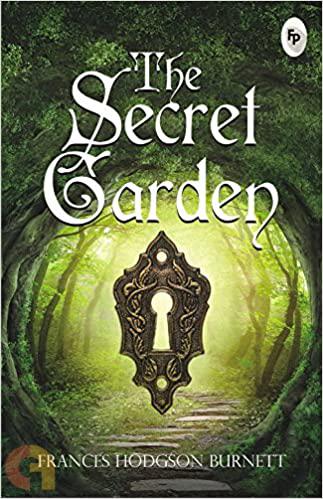
The Secret Garden: A book review

A girl is born to a rich household of a British officer in the times of the Raj. As customary to apparently the then tradition of rich households in British India, the child was raised by the local servants. The father and the mother never really bothered to spend some time with her. However, a deadly plague breaks in and everyone dies. Everyone, but the girl child who is now a bitter, unkind girl who has spent a large part of her growing time simply commanding people and repressing her emotions and has a habit of being fed, and bathed and clothed – all by others. The death of her family means she has to now live with her uncle – a lord in the British Isles.

In that cold, dead and open manor, she discovers the meaning of work, expression, friendship and love – not only nurturing back his cousin to health, but also helping her uncle rediscover happiness and let the garden where her wife passed away – the secret garden with no doors open to anyone.

The Secret Garden by Frances Hodgson Burnett - Land of Tales

The secret garden – a British children’s classic for more than a century now – is some of those books which one might not necessarily complete in one go, but would be pressed innately to return to it. The story is very much of a child but it builds up in ways that often evade even adult and contemporary literature. Imagination, revelations and most importantly the fact that the protagonist is but a child – all of it is simply touching. A movie was made on the book in 2020 starring Collin Firth and Julie Walters.

The Secret Garden (2020 film) - Wikipedia

Remember to give it a read!!!

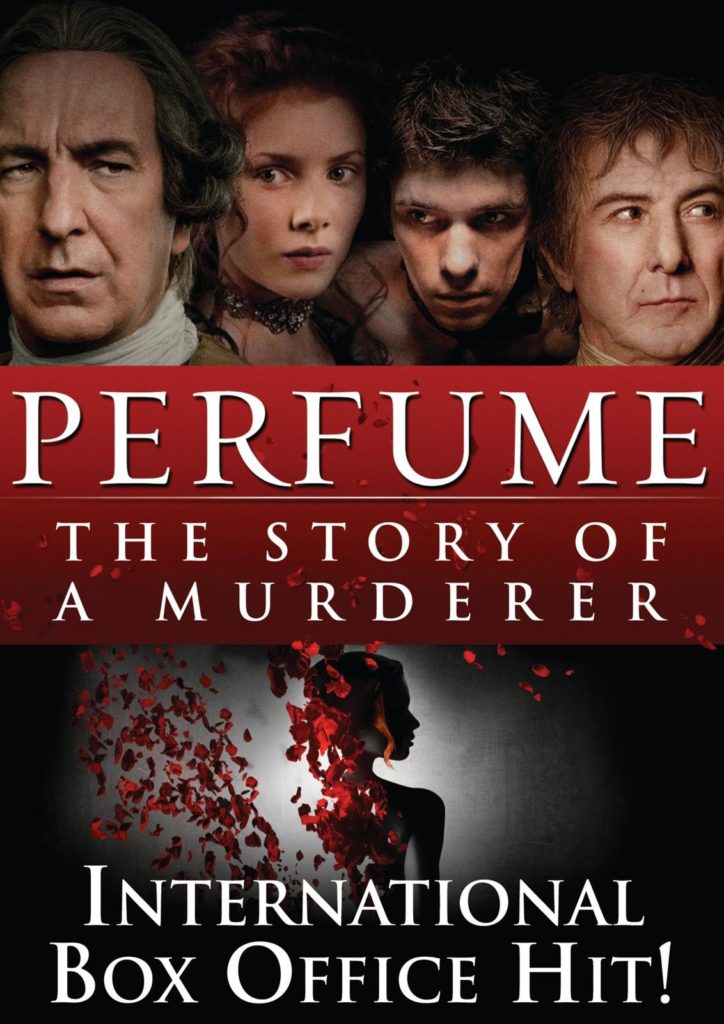
PERFUME ‘THE STORY OF A MURDERER’BY-Patrick Süskind

Awards: 15 wins & 17 nominations given to the movie made on the story of this Novel.

7.5/10 From 189,052 Users

It has been nearly one year since I have first heard of Patrick Süskind’s literary sensation, Perfume, The Story of a Murderer. I initially thought that it was a biographical work but upon learning it was a fictional work, I was quick to add it to my growing TBR list. Basically, I bought this book for my college assignment. So how do I describe the experience? Was the anticipation worth it? It was both worth it and not I guess. I was expecting so much more and it did, on many levels, lived up to them. I guess the story was a little too short, the story ended too soon. I was so engaged that when the book ended, I was filled with pangs of regret. Lastly, my major takeaway from the story was greediness for something is always injurious.

The screenplay, by Tykwer, Andrew Birkin and Bernd Eichinger, is based on Patrick Süskind’s 1985 novel Perfume. This movie was one of his best known internationally directed thriller films.


In the slums of 18th-century Paris, a baby is born. Jean-Baptiste Grenouille clings to life. The story begins with the sentencing of Jean-Baptiste Grenouille, a notorious murderer. Between the reading of the sentence and the execution, the story of his life is told in flashback, beginning with his abandonment at birth in a French fish market. Raised in an orphanage, Grenouille grows into a strangely detached boy with a superhuman sense of smell.
After growing to maturity as a tanner’s apprentice, he makes his first delivery to Paris, where he revels in all the new scents. He focuses on a redheaded girl selling yellow plums, following her and repeatedly attempting to sniff her, but startles her with his behaviour. To prevent her from crying out, he covers the girl’s mouth and unintentionally suffocates her. After realizing that she is dead, he strips her body naked and smells her all over,
becoming distraught when her scent fades. Afterwards, Grenouille is haunted by the desire to recreate the girl’s aroma. After making a delivery to a perfume shop, Grenouille amazes the Italian owner, Giuseppe Baldini, with his ability to identify and create fragrances. He revitalizes the perfumer’s career with new formulas, demanding only that Baldini teach him how to preserve scents. Baldini explains that all perfumes are harmonies of twelve individual scents, and may contain a theoretical thirteenth scent. Grenouille continues working for Baldini but is saddened when he learns that Baldini’s method of distillation will not capture the scents of all objects. Baldini informs Grenouille of another method that can be learned in Grasse and agrees to help him by providing the journeyman papers he requires in exchange for 100 new perfume formulas. Right after Grenouille departs, Baldini dies when the shaky building, along with his studio, collapses. En route to Grasse, Grenouille decides to exile himself from society, taking refuge in a cave. During this time, he discovers that he lacks any personal scent himself, and believes this is why he is perceived as strange or disturbing by others. Deciding to continue his quest, he leaves his cave and continues to Grasse. Upon arrival in Grasse, Grenouille catches the scent of Laura Richis, the beautiful, redheaded daughter of the wealthy Antoine Richis and decides that she will be his “thirteenth scent”, the linchpin of his perfume. Grenouille finds a job in Grasse under Madame Arnulfi and learns the method of enfleurage. He kills a young lavender picker and attempts to extract her scent using the method of hot enfleurage, which fails. After this, he attempts the method of cold enfleurage on a prostitute he hired, but she becomes alarmed and tries to throw him out.
He murders her and successfully preserves the scent of the woman. Grenouille embarks on a killing spree, targeting beautiful young women and capturing their scents using his perfected method. He dumps the women’s naked corpses around the city, creating panic. After preserving the first twelve scents, Grenouille plans his attack on Laura. In church, after the Bishop of Grasse declares that the murderer has been excommunicated, it is announced that a man has confessed to the murders. Richis remains unconvinced and secretly flees the city with his daughter, telling no one their destination. Grenouille tracks her scent to a roadside inn and sneaks into her room that night, murdering her. Soldiers capture Grenouille moments after he finishes preparing his perfume. On the day of his execution, he applies the perfume on himself, forcing the jailers to release him. The executioner and the crowd in attendance are speechless at the beauty of the perfume; they declare Grenouille is innocent before falling into a massive orgy. Richis, still convinced of Grenouille’s guilt, threatens him with his sword, but he is then overwhelmed by the scent and embraces Grenouille as his “son.” Walking out of Grasse unscathed,
Grenouille has enough perfume to rule the world but has discovered that it will not allow him to love or be loved like a normal person. Disenchanted by his aimless quest, he returns to the Parisian fish market where he was born and pours the remaining perfume over his head. Overcome by the scent and in the belief that Grenouille is an angel, the nearby crowd devours him. The next morning, all that is left are his clothes and the empty bottle, from which one final drop of perfume falls. In this novel, the central theme of the story was how greediness can be harmful and led you to wrong paths and sometimes it can be deadly. The rating of this novel is good with a score of 7.5 out of 10. And was very successful at the time it got released and now also people love to read this novel. The story of the novel was so fantastic that a movie was made on this novel named PERFUME ‘THE STORY OF A MURDERER’ released on [2006] recently Netflix has launched a web series on this theme. If you like thrillers, Suspense, and horror stories then you must read this novel for sure. You can watch this movie on Various OTT platforms like Netflix, Amazon Prime and even on various other sites.

Who Moved My Cheese

About  Book

Author :  spencer Johnson

Published on :  8 September 1998

Publisher :  G. P. Putnam’s sons

Genres : Fiction and self-help book

My rating : 4.3/5

PLOT

The author has illustrated the change via short story of two mice and two humans. Who moved my cheese has four characters, two mice are sniff and scurry and two humans are hem and haw. They live in a maze and find cheese frequently to survive, but their ways of searching and perception about finding cheese were different. The mice follow simple strategy. They test each path to find cheese, but humans don’t follow the same strategy.

One day they all find a ton of cheese in one place that looks like it’s enough to last them a lifetime. After this their life become more convenient because they don’t have to struggle to find cheese. Inspite of getting cheese in bulk, mice are always vigilant . They always ready to dispatch if cheese disappears. Human usually don’t want to step out of their comfort zone.

One day, cheese gets over. And their response of accepting  the reality varies . Mice quickly move on accepting the fact , but humans are not ready to move on. They believe that they were entitled to the cheese. They decide to stay in hope that cheese will appear again. But nothing happens as they expected.  Haw decides to explore the maze for more cheese and also convince hem. But he refuses to go with him. Eventually ,he meets with a tons of cheese and also with sniff and scurry.

REVIEW :

This book has emphasised on change which  is universal truth of life. Cheese is a metaphor that everyone wants in their life. It could be money, fame, reputation, happiness, success, achievements, or anything else.we can link cheese with our passion , goal , dream. Author has given deeply broad massage with this simple story. Human beings perspective towards any problems or changes differs from each other. Stories four characters react and act as per of their individual sense. We can learn from each character’s attitude and action towards changes.The sooner you accept change and move on, the sooner you will get your cheese (goal).

This book will really help you to move ahead in life if you are stuck anywhere. You can foresaw yourself if you follow the path one of those characters . In case of hem he gets used to of comfort life and easiness. He was not accepting  the change and move ahead. So at the end he did not get the cheese. There is a lot to learn from each characters . Always stay vigilant like sniff and scurry. Make yourself ready for changes that we have to encounter in life. Initially haw deny to admit the fact, but after not changing the situation for long. He decides to move on. It taught us even if we are late but decide to stand , eventually we will get success and will be proud of our decision later.

Put yourself in a different circumstances, make you strong to overcome difficulties and come out as an outstanding personality. Its human tendency he gets used to of old habits and expect different results with doing the same thing. Today each one struggle for getting  easy and convenient life.

About Author  :   Dr. Spencer Johnson is one of the most spectacular thinker and beloved author. His international bestseller books include three books: Who Moved My Cheese?, sold 25 million copies. The One Minute Manager, the most popular management method for over two decades, An A-Mazing Way to Deal with Change, the mostly read  book on change,  and his newest, The Present. Over 40 million copies of Dr. Johnson’s books are printed in 42 language.

What is a short story?

A short story may be defined as a story that can be read in a single sitting. Edgar Allan Poe considered the short story as a prose narrative ‘requiring from half an hour to one or two horse in its perusal. Thus brevity is one of the essential characteristics of a short story. However, a short story is not Merely a novel on a reduced scale. the short story has a distinct, well-marked organizational structure different from that of a novel.

Theme of a short story:

Firstly, the theme of a short story must be one that can efficiently be developed within the prescribed limits. The story should impress the reader as clear in outline and well proportioned. It should not give the impression of crowding. This does not mean that the story must necessarily be confined to a single incident. It only means that even when the story covers a wide field of time and a large sequence of events, it should give a concentration of interest. Most of the stories of Maupassant and Washington Irving’s famous story “Rip Van Winkle” illustrate this point.

Unities of short stories:

Secondly, a short story should have unity which means unity of purpose, motive, action, and impression. a short story should contain only one informing idea and it should be worked out with singleness of purpose. No scattering of attention is allowed in a short story as it may be allowed in a novel.

Opinions of various authors:

Writers and critics hold different opinions on the art of the short story. Edgar Allan Poe thought that the short story should present only a ‘slice of life’ suggestively. it should have neither a beginning nor an end. However, the modern story writer and novelist Somerset Maugham thinks that ‘a short story should be a finished product of art with the beginning, middle, and end. another critic compares the short story with the horse race in which the start and the finish count most. Such contradictory definitions are more or less reconciled in what Hugh Walpole says “a short story should be a story, a record of things happening, full of instance an accident, Swift movement, unexpected development reacting through a suspense to a climax and satisfying denouement.”

Famous works:

A short story may deal with any motive and material. Poe’s story “Gold bug” turns on a puzzle whereas Stockton’s ‘The lady and the Tiger” is contrived to give a dramatic surprise at the end. Most stories of O’ Henry are interesting because of their unexpected surprise endings. Short stories of Chekhov, Maupassant, Tolstoy, and Hemingway illustrate the wide variety of themes and motives that can be successfully employed by a short story writer. WH Hudson says “a dramatic incident or situation; a telling scene; a closely coordinated series of events; a phase of character; a bit of experience; an aspect of life; a moral problem any of these, and innumerable other motives which might be added to the list, maybe made the nucleus of a thoroughly satisfactory story.

Conclusion:

R.L Stephenson speaks of three kinds of short stories – the story of the plot, the story of character, and the story of impression. however, to most story writers, the idea of a story comes as something like an abstract thought or impression and later they work it up into the shape of a story inventing the required plot, character, and incidents.

Traits of an Epic

The social novel

Traits of an epic

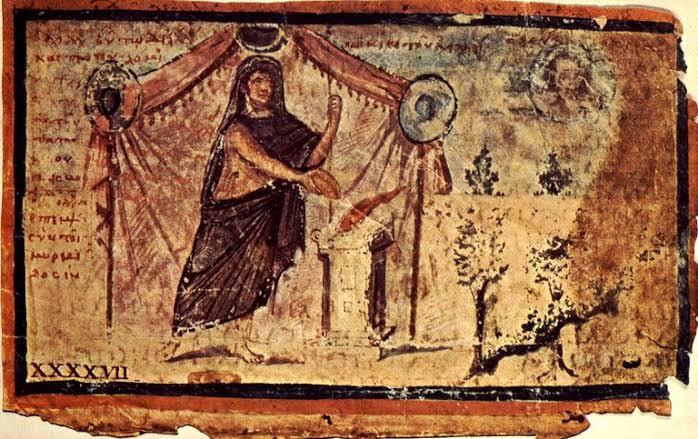
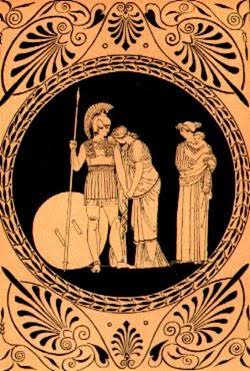
An Epic is a long narrative in verse on a great and serious subject related in an elevated style. An epic tells a generally well-known story and is centered around a heroine or semi-divine figure whose actions depend on the faith or a tribe, a nation are a human race.

types of epics

Historically, there have been two types of epics the primitive a big for the epic of growth, and epic of art all literary epic.

The main traits of an epic are the following:

  1. The subject matter of an epic is heroine ok or mythical kind full stop the hero is a figure of national or even cosmic importance as an Achilles in Homer’s Iliad, Aeneas in Virgil’s Aenid, Adam or Christ in Milton Paradise Lost and Rama in Ramayana.
  2. The setting of an epic is vast and comprises several worlds. In Odyssey, the whole known word is the scene of action of Ulysses. In Virgil’s Aeneid and Dante’s Divine comedy, Earth, heaven, and hell are the scenes of action. In paradise lost also the scene of action has cosmic dimensions embracing Earth, heaven, and hell.
  3. The action in an epic involves superhuman deeds such as the deeds of Achilles or the journey of Ulysses. Paradise Lost presents The War and heaven, Satan’s journey through chaos, and his audacious attempts to outwit God by corrupting mankind. The Ramayana presents several wars and the prolonged wanderings of the hero.
  4. The action of an epic is often controlled by supernatural agents. Gods and Goddesses mingle with the humans and fight on both sides. In Homer, the Olympian gods participate in all activities and Paradise Lost devils, Angels, and God himself are involved.
  5. The Epic contains several thrilling episodes like battles, duals, wanderings, ordeals, and the like.
  6. In most Epics, there is a moral purpose. The hero represents a cause and the victory of good over evil is ensured. Sometimes characters themselves are personifications of good or evil.
  7. In the narration of an epic, certain conventions are followed. It is narrated in an ornate, ceremonial, and grand style that is deliberately distanced from ordinary speech. Epic similes, figures of speech, classical allusions and references, and repetitions are used. The characters are given set speeches. The narration usually begins with an invocation to the muse or a guiding Spirit. Both ‘Aenid’ and Paradise Lost begin with such invocations. Usually, the narrative starts in the middle of the story as in Paradise Lost which begins with the fallen angels gathering their Forces for revenge. Only later does Milton tell tells us what happened before the Fall.
  8. The Epic is usually divided into twelve books through Iliad and Odyssey have 24 books each. Spencer’s fairy Queen was planned in 12 book’s and Milton’s Paradise Lost also has 12 books.

Some of the famous Epics:

  • Milton’s “Paradise Lost”
  • Spenser’s “Faerie Queen”
  • Arnold’s “Sohrab and Rustom”
  • “Hyperion” by Keats
  • The Epic of Gilgamesh
  • The Homeric Poems – The Odyssey
  • The Mahabharata
  • Virgil – The Aeneid The Aeneid
  • Ovid – Metamorphoses
  • Firdawsi – The Shahnameh
  • Beowulf

The Epic

The Farce

To All the Boys: P.S. I Still Love You

To All the Boys: P.S. I Still Love You is a 2020 American teen romantic comedy film directed by Michael Fimognari and written by Sofia Alvarez and J. Mills Goodloe. The film stars Lana Condor, Noah Centineo, Janel Parrish, Anna Cathcart, Trezzo Mahoro, Madeleine Arthur, Emilija Baranac, Kelcey Mawema, Jordan Fisher, Ross Butler, Julie Tao, Sarayu Blue, John Corbett, Holland Taylor. The film is based on Jenny Han’s 2015 novel P.S. I Still Love You.

The film is a sequel to To All the Boys I’ve Loved Before (2018), and the second installment in the To All the Boys film series. The film was released on February 12, 2020 exclusively on Netflix, with a third film titled To All the Boys: Always and Forever released on February 12, 2021.

Plot

Lara Jean Covey’s high school sets up a volunteer program; while her boyfriend Peter Kavinsky volunteers with his friends, Lara Jean goes to Belleview Retirement Home instead, where her older sister Margot went.

On her first day there, she meets Stormy, an eccentric old lady who Margot often mentioned and discovers that John Ambrose McClaren is also volunteering at Belleview. They talk about a love letter she had written to him many years ago, and he lets her read the letter as long as she gives it back to him afterward. Lara Jean is unable to stop thinking about their conversation and, in addition, is constantly insecure about her relationship with Peter because she can’t stop comparing herself with her ex-best friend, and Peter’s ex-girlfriend, Gen.

On Valentine’s Day, Lara Jean witnesses her classmates being serenaded by special acapella groups and is told by a friend that Peter had sent a group to serenade Gen every period, back when they were still dating. This enhances her insecurity, though she forgets about this when she meets with Peter later that day. He gives her a silver heart necklace and reads a poem, which she believes is original but turns out to be two verses of an Edgar Allan Poe poem. He later apologizes and tells her he wishes he could write something like that for her, though he means everything in the poem.

While volunteering at Belleview, Lara Jean and John Ambrose grow closer and throw a Star Ball for Belleview after discovering some old decorations; He appears to be developing feelings for her, who hasn’t told him about her relationship with Peter. Instead, they arrange to go to their old middle school hangout spot, a treehouse, to dig up the time capsule they buried years ago with their friends, including Gen, and take turns unpacking it. Gen claims that she didn’t put any in the time capsule, Peter gets jealous of John Ambrose and reveals his relationship with Lara Jean. She and Peter argue but end up making up.

The next day, Lara Jean apologizes to John Ambrose for not telling him about Peter, and then dresses up for Peter’s game. As she is waiting for Peter to come out, Chris shows her a photo of Gen and him. She confronts Peter and realizes that Peter never stopped talking to Gen and, on the ski trip, Peter was planning to get back together with Gen that night. As Peter is in a rush to get to the game, he tells Lara Jean they will have to talk about it later, but she’s too hurt and breaks up with him. She goes to the treehouse later and meets Gen, who reveals that Peter was only comforting her as her parents are separating. She went to Peter because he had undergone the same experience, that Peter is crazy about Lara Jean, and that she shouldn’t doubt him. She also reveals that she had, in fact, put a friendship bracelet identical to Lara Jean’s in the capsule, and was too embarrassed to show it. Lara Jean realizes that it was her and not Peter who always had Gen on her mind, and makes up with Gen.

On the night of the retirees’ ball, Stormy gives Lara Jean a dress and a makeover. She and John Ambrose dance before going outside in the snow. When they kiss, Lara Jean realizes that she truly loves Peter and doesn’t hold feelings for John. She apologizes to him and rushes outside, surprised to find Peter waiting outside for her. He is waiting outside because he remembers she doesn’t like driving in the snow, a fact that she told him on their first date. He says that she can break his heart if she wants, but she says that she loves him instead, and he tells her he loves her back. They kiss and make up, and in an ending voiceover Lara Jean says that she had wanted a fairytale relationship with Peter, but is now satisfied with what she has.


The Epic

Introduction:

Impersonal poetry can be divided into two groups dash the narrative and The dramatic.

Epic:

In the first group, The Epic on the heroic poem is the most important. an epic is a long narrative in verse on a great and serious subject related in an elevated style. And nothing else is generally a well-known story and is centered around the heroic or semi-divine figure whose action depends on the fate of a tribe in addition to the human race. The action in an epic is serious and there is a good deal of physical and spiritual conflict. the characters and events or boat ride in detail, elaborate descriptions of places and actions are given, figures of speech are used and usually, an elevator and ornated style are adopted. Aristotle the epic second only to tragedy. It was the norm of great poetry in sixteenth and seventeenth-century England. Dryden wrote, “A hero poem, truly such, is undoubtedly the greatest work which the soul of man is capable to perform.

Two types of epics:

Historically, there have been two types of epics:

  • The primitive epic or The epic of growth
  • The epic of art or the literary epic.

The epic of growth:

The epic of growth is not entirely the work of a single author but is evolved from pre-existing legends, folk poems, and sagas. It is the final product of a long series of accretions and synthesis shaped by the conscious intervention of some great poet. Well-known examples of this type of EPIC are Iliad and Odyssey, the English Beowulf, and the Indian epics The Ramayana and The Mahabharata. All epics of growth deal with the same subject matter – the deed of heroes. These heroes belong to the race and their exploits form the core of mythology. As such the epics of growth contain supernatural and religious elements. The style of such an epic is marked by directness and simplicity. Stylistic devices may be repeater why they are never obscure.

The epic of art:

The epic of art or the literary epic is the product of individual genius. Of this kind, the earliest was Virgil’s ‘Aenid’. It became a model for the later epic poets. In English, the supreme example of a literary epic is Milton’s Paradise Lost. Arnold’s “Sohrab and Rustom” the fragmentary epic “Hyperion” by Keats and Spencer’s “Fairy Queen” also belong to this category stop a literary epic is the result of the poet’s erudition and scholarly research through it shares several of its characteristics with the epic of growth. Most traits of the traditional epic are found in the literary epic also.

Conclusion:

The Epic is an important literary form in English literature. In the earlier period, In the English language mostly authors wrote about Historical novels and Epic novels. They described the huge events, God’s and their stories and incidents. Even now Epic is mostly used to write about mythologies and God deeds and it is popular among the readers. Nowadays, authors are writing many fictional epics also.

Book Review: 1984 by George Orwell

Two must read books by Paulo Coelho

The Sonnet

The Sonnet is the lyric in fourteen lines in iambic pentameter governed by certain prescribed rules in general and in the arrangement of The rhymes. It aims at concentrated expression, but a fairly complex development of a single theme also is possible.

Origin of sonnet:

It derives its name from the Italian “sonnetto”which means “A little song” or sound sung to the strain of music. It has only one leading thought or emotion as in Milton’s ‘On his blindness’ or Keats’s ‘On first looking into chapman’s Homer’.

Sonnets were first written in Italy in the latter half of the thirteenth century. The form of composition is associated with the name of petrarch, through the form had been used even by Dante before him.

Composition of the sonnets:

A petrarchan sonnet is composed of two parts, the octave compressing the first eight lines and the sestet compressing the last six lines. The octave two has rhymes ‘a’ and ‘b’ are arranged in the a b a b a b a b scheme. The sestet has three rhymes arranged in various forms as cde, cde or cde, dcd or cde, dce. The octave may be divided into two stanzas of four lines each called quatrains and sestet into two of three lines is called the tercets. At the end of the eight lines, there is a pause called caesura followed by a turn of thought called volta. Milton wrote some of his sonnets in this manner.

Some of the earliest writers of sonnet:

The sonnet was introduced in England by wyatt and Surrey in the 16th century. They discarded the Italian form and adapted a new rhyme sheme. Surrey wrote his sonnets in three quatrains in alternate rhymes followed by a concluding couplet.- a b a b, c d c d, e f e f, g g . This form was later used by Shakespeare with the marvelous success in his series of sonnet dedicated to Mr WH. so it came to be known as the shakespearean sonnet. romantic poets like Wordsworth and keat’s followed the shakespearean pattern. Spenser adopted a slightly altered form of the shakespearean sonnet. He used an intermixture of rhyme to connect each of the quatrains making it a b a b, b c b c, c d c d, e e.

The theme of the sonnets:

The common theme of a sonnet is love as the sonnets of Shakespeare, Philip Sidney and Elizabeth Barrett Browning. However several poets have used other themes also in their sonnets. Milton’s sonnet ‘On his blindness’, wordsworth’s sonnet addressed to Milton, Keats’s sonnet ‘On first looking into chapman’s Homer’ and Arnold’s Sonnet on Shakespeare are examples.

Some of the famous sonnets are:

  • Sir Thomas Wyatt, ‘Whoso List to Hunt’.
  • Sir Philip Sidney, Sonnet 1 from Astrophil and Stella.
  • William Shakespeare, Sonnet 29.
  • John Donne, ‘Death, Be Not Proud’.
  • William Wordsworth, ‘Composed upon Westminster Bridge’.
  • John Keats, ‘On First Looking into Chapman’s Homer’.

Conclusion:

Sonnet is one of the literary forms that used in majorly writing poems. It will contain fourteen lines and has a lot of poetical devices like, metaphor, allitration, personalification etc.

The Farce

Bookish Terms

SHAKESPEAREAN ROMANCES

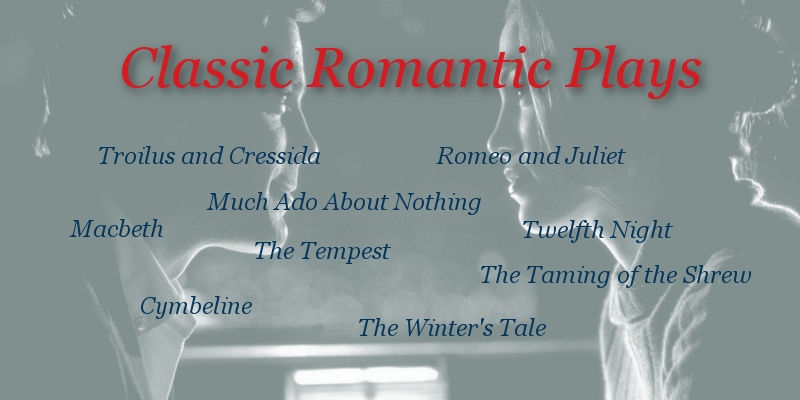
The plays of Shakespeare’s final period (1608-12) are called Romances. In Shakespeare’s own time they were simply classified as tragedies and comedies. Shakespeare must have written his tragedy and comedy plays under the influence of his younger contemporaries. Beaumont and Fletcher were very popular. The masques at the court of James I also must have influenced Shakespeare. Shakespeare’s romances are in fact, neither tragedies nor comedies but are a mixture of both.

Dowden has pointed out that the last plays of Shakespeare reveal society, serenity, and sanity as contrasted with the storm and strain of the tragedies. They supplement the tragedies with their more relaxed atmosphere and are marked by great forbearance, sense of reconciliation and forgiveness. However, Lytton Strachey thinks that these plays express a mood of boredom rather than serenity.

The romances of Shakespeare have certain common characteristics. They have motifs common in romance literature such as improbable happenings, separation, wanderings, reunion and reconciliation. They contain several elements of the tragi-comedies made popular by Beaumont and Fletcher. There are only a few memorable than heroes. In these plays Shakespeare has returned to his lyrical style of the earlier plays.

CHIEF CHARACTERISTICS:

1. The scene of these plays is unknown, remote and the setting is imagery. Cymbeline is set in early Britain and the setting of the Tempest is somewhere in the Mediterranean.

2. The happenings are fanciful. There is no logical cause and effect relationship. In the light of reason, the events appear absurd the feats of magic in The Tempest, the concealment of Hermione for sixteen years in The Winter’s tale and the abduction of two sons of Cymbeline would appear unnatural. But in Shakespeare’s world of imagination these events are delightful.

3. The romances are full of anarchronisms, long lapses of time (as in The Winter’s Tale), wizardry and fantastic voyages (as in The Tempest). These become part of the apparatus of the play.

4. Characters are types. They do not have marked personalities of the characters in the great comedies or tragedies. However, heroines are most memorable than heroes. Miranda, Perdita, and Imogen are lovely but weak. Villains like Iachimo in Cymbeline and Leontes in The Winter’s Tale are not hardened Villains. Even Ferdinand in The Tempest is no match for Benedick or Orlando.

5. Pastoral scenes are a part of the romances. In The Winter’s Tale, Florizel and Perdita are a part of pastoral life.

6. The supernatural element is predominant in the romances. The Tempest and Cymbeline are examples. The Tempest also shows Prospero’s magic and the elusive character Ariel. In The Winter’s Tale the Delphic Oracle is introduced and in Pericles the King’s Wife Thaisa becomes a priestess in the temple of Diana.

7. In the romances sea is dominant. There is shipwreck in Pericles and The Tempest. Sea voyage are mentioned in all of them. Sea is a symbol of regeneration.

8. The romances show breakdown of family relationships, separation of family members and their eventual reunion and restoration. In the opening of each play a father looses the offspring through his own folly and at the end the child is restored. This recovery of lost children is a part of the romances. In The Winter’s Tale, Perdita is restored to King Leontes; in Cymbeline the two sons of the king is restored; in The Tempest Fredinand is restored to his father and in Pericles, Marina is restored to her father, the King.

9. The romances are marked by a spirit of reconciliation and forgiveness. In The Tempest, Prospero’s forgives his wicked brother Antonio; in Cymbeline Posthumous reconciles with Imogen and in The Winter’s Tale, Leontes reconciles with Hermione.

10. In the romances there is an assumption that the events in the world of the play are subject to forces other than normal. There is a sense of magical reason of the errors of action. This assumption helps to enhance the dramatic situation and keeps the audience aware of the mystery of human personality.

A critic has called the romances ‘divine comedies’ because the divine grace imposes its beneficent will on the humans. The romances are ethical and spiritual and are the creations of an older and more sober Shakespeare. As Dowden has pointed out, the one word that interprets Shakespeare’s last plays is ‘reconciliation’, a word ‘over all, beautiful as the sky’.

Review of International Reading Literacy Study (PIRLS)

Review 

Reading literacy 

Source – Google scholar

Date – August 2004

Author 

Ina v.s, Ann M.kennedy, Miachel O Martin ,Maraian Sainsbury

(International Association for the Evaluation of Educational Achievement).

Reference 

PIRLS 2006 assessment framework and specifications

The study was conducted in 2004 under the supervision of IEA (International Association for the Evaluation of Educational Achievement).

The study is consists four parts:

  • Overview of IEA’s PIRLS Assessment.
  • PIRLS Reading Purposes and Processes of Reading Comprehension.
  • Contexts for Learning to Read.
  • Assessment Design and Specifications

Reading is the first step to being literate. Reading is a multifaceted process involving word recognition comprehension, fluency and motivation. For the development of a country it is really important to have literacy.

The PIRL also have a look over the improvement of reading and literacy achievement around the world. IEA was founded in 1959 and its main purpose was focusing on educational policies all over the world.

Reading abilities are important for the progress of one individual. Reading skill is the basis for the upcoming education. It is not about language. Reading literacy helps to grow ones personally and professionally and prepare for communication with the world. The PIRL conducts a framework which is revised every five years, to help to understand the achievement of children across the world in reading literacy.

PRIL defines reading literacy and its importance in IEA framework 2001. Readers are regarded as actively constructing meaning and as knowing effective reading strategies and how to reflect on reading.

Reading literacy also brings changes in the behavior and attitude including the construction of meaning from a variety of text and behavior which is going to support lifelong reading. It helps the children to develop a positive attitude, self-confidence and gain valuable experiences with the help of different texts. Reading literacy establishes an individual/reader as a member of a literate community.

The process of comprehension and purpose of reading are two elements which help to understand the importance of reading literacy. The process of comprehension helps the reader to examine their understanding and adjust their approach. 

The texts could vary on the basis of length, complexity, abstractness of idea and structures. Readers not only get information from the content but also focus on relevance to the question posed. It makes straightforward inference about the ideas and information. The purposes of reading are

  1. Reading for literacy experience.
  2. Reading to acquire and use information.

The context of reading literacy is also important. There are contexts which impact on the reading of children such as school, home, community, national and international. 

The study also focuses on assessing/evaluating the children on the basis of their reading literacy. They focus not to put a burden on the student so they provide a comprehension to evaluate.

Reflection 

The article had old data and its focuses on reading literacy only. But I feel the writer should focus on the other aspects too. How reading literacy influenced the other aspects of literacy? The whole study is conducted over the fourth class students. The fourth class students were literally very small to answer the questions. I think the writer can involve more people of different ages because a child is still in the learning process so they can answer the question with their cognitive ability. According to me, the writer should consider the people who have left their studies or continue their study or have interest in studying and fulfilling their desire by reading the texts. We can get better results from them too. 

The four parts are very well explained by the writers. The study consists of the appendix, research and questionnaires. The questionnaire consisted of multiple choice, short and long questions. 

In the end there is Comparison between the Progress in International Reading Literacy Study (PIRLS) and the Programme for International Student Assessment (PISA). 

The Farce

Introduction:

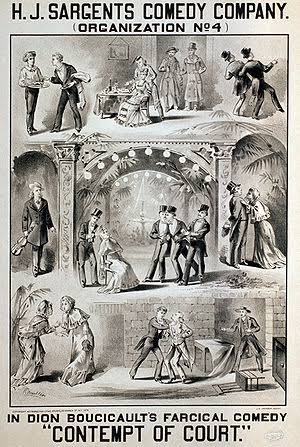
The Farce is a dramatic work designed solely to produce laughter. Originally a farce was an explanatory or additional matter introduced into the main play sometimes to increase its length. Slowly actors begin to use this as an occasion and thus it became a part of the play.

The Plot of the Farce:

In Farce no attempt is made at Fidelity to life. Its aim is merely to provide laughter. For this purpose, it employs funny incidents absurd characters, humorous situations, and witty dialogue. Farce does not aim at a realistic representation of things but provides caricature. The plot in a farce usually appears nonsensical, characters in the indulge in deception impersonations, and irrationalities. There are angry wives, helpless husbands, and funny old men indulged in the most unexpected activities. Serious and respectable people are drawn into the most undignified positions, grave and priggish persons are debunked. Most farce is centered around love affairs which themselves are caricatures. In the end, everybody comes out without any harm.

The elements of the Farce:

The elements of the farce can be seen even in the early English plays. Shakespeare’s ‘A midsummer night’s dream’ and ‘Twelfth Night’ are examples to show how farcical elements could be interspersed with comedy with great effect. Event tragedies had farcical scenes as we see in Marlowe’s Dr. Faustus.

Some Famous works of Farce:

As a separate form of entertainment, the farce came into vogue towards the close of the seventeenth century. The first popular farce was ‘The Rehearsal’ by the Duke of Buckingham. But The anti-sentimental comedy almost destroyed farce. But the anti-sentimental comedies of Sheridan and Goldsmith brought back farcical humor into English drama. Some of the scenes in Sheridan’s ‘The Rivals’ and most of the scenes in his “School for scandal” are enchantingly Farcical. Similarly in the play “She Stoops Conquer” by Goldsmith. In the Victorian period, the farce attained a sort of respectability. Farces such as ‘ The Private Secretary’ and ‘Charley’s Aunt’ were several times.

In modern times, the farce is an accepted form of dramatic entertainment. Most of the plays of Oscar Wilde and Bernard Shaw have farcical situations and dialogue. The farce requires unusual inventiveness, a craftsman, and a sense of humor on the part of the writer.

Most modern comic one-act plays tend to be farces. The purpose of such plays is only to give brief entertainment without malice and laughter without vulgarity. Modern one-act plays like ‘The Dear Departed’ are essentially farce designed to produce laughter.

Conclusion:

The Farce is a famous literary form in earlier literature. In this form, most of the scenes from the plays and characters from the novels will have some comical and entertaining content. Which boosts up the audience’s mindset. These literary forms are used to length the drama in earlier periods. But, most of the audience loved this method and they often started to use it regularly in stage dramas. Farce is used merely for the entertainment of the audience. Even now, most of the writers include some comical scenes in their works to make the plot entertaining.

Start your own business part 1

Start your own business part 2

THE HISTORICAL NOVEL

Introduction:

The Historical Novel is a work of fiction that attempts to convey the spirit manners and the social conditions of the past age with realistic details and nearly perfect fidelity to historical facts. The subject matter may compass both public and private events. The protagonist may be an actual historical figure or an invented figure. The historical novel can be The dramatic interest of plot and character with the more or less detailed picture of the varied features of the life of a particular age. The most important feature of the historical novel is its vivid reproduction of the life of a bygone age.

Even before the coming of the historical novel comer writers had used history in their novels. As a result of the impulse to word novelty during the Renaissance and after several writers made use of history. In England, Horace Walpole used a particular period in history as background to his Gothic novels.

First Historical novel:

The passing away of the feudal system created and nostalgia for the past. compared with social and economical changes caused by the French Revolution and the industrial revolution, This nostalgia created the proper climate for the emergence of the historical novel. The first great historical novel in English was Sir Walter Scott’s Waverley published in 1814. A series of novels based on Scottish history appeared. Among them, the most important is “Guy Mannering”, Kenilworth, Old Morality, and “The Heart of Midlothian”. Among the more popular of Scott’s novels are “Ivanhoe” and the Talisman dealing with the Crusades. In this novel, memory and imagination serve Scott’s creative purpose of the central narrative is supported by a strong love of humanity.

The tradition of the historical novel continued into the story and age. Charles Dicken’s “A tale of two cities” Thackeray’s “The history of Henry Esmond Esquire” George Eliot “Romola” and Charles Reade’s “The cloister and the Hearth” is important historical novels of the Victorian period. In the continent, the historical novel florist in the writings of Balzac, Dumas, and Tolstoy. It is generally agreed that Tolstoy’s “War and Peace” is the greatest among the historical novel. “Robert Grave’s I Claudius” is another historical novel of significance.

The historical novel marches on one side with the realistic novel and the other side with the national epic. Saintsbury has remarked that historical novelists give only a subordinate position to the actual historical figure and should allot a prominent position to the imaginary figure because the chief object of the novel is the interpretation of the human character.

In the Historical novel, The recreation of the spirit undertone of the bygone ages is more important than other runs to the truth. The historical novel list has to reconcile the clients of history and art.

Conclusion:

The historical novel has limitations for stop it is suffering from the weakness of both history and novel. Unless the novelist is scholarly and unprejudiced, he is likely to give you a half-digested and biased view of historical facts. It is also open to question whether the imaginative recreation of facts is preferably the fact to themselves.

The Humanitarian Movements

The Social Novel

Karakku

Caste discrimination faced by Bama

Introduction:
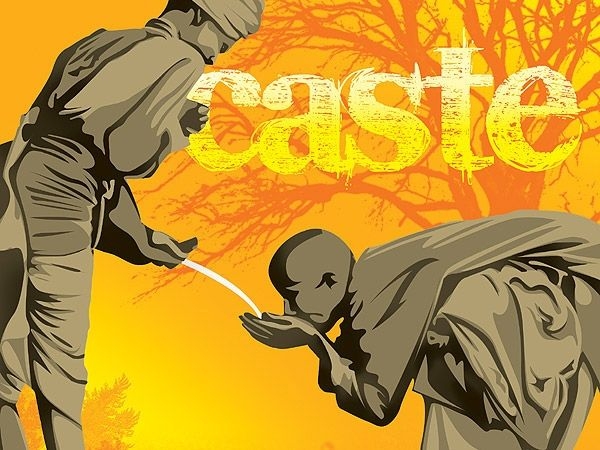
Karakku is a novel written by the Tamil Dalit writer Mary Faustina Fatima Rani. In this novel she speaks about a lot of problems faced by the Dalits and how they were discriminated and exploited. She expresses her angst and her pain through her writing. The most prominent one is the problems faced by the dalits is that of caste discrimination. Bama belongs to the untouchable class called Parayas.


• Even though her living standards were not luxurious, it was still a little better than others as her father was an army officer and because of that, whenever he came back home, there was always food at the table. She also had an older brother who made her aware of the conditions of Dalits and help to understand why it is important to overcome it.


• In the Indian society, the discrimination of people based on their caste was rampant. Every person was judged according to which caste they belong to and showed respect accordingly.


• The problem with food:
The people of the upper caste always got to eat all the tasty food like the fishes with fancy names but the lower caste people always had to settle for the cheap fishes as that is what they could afford. She tells us how the lower caste people are the ones who do all the work yet only the rich benefit from it.


• The problem of exploitation and untouchability:
Bama mentions the exploitation of the poor Dalits by the rich Naickers and tells us how that is the reason that the Dalits haven’t prospered yet. She talks about work and how the Dalits had to work all their lives just to make ends meet and they were not even be rewarded for it. An example or incident is when a lady was holding a ‘bajji’ with a string so she does not touch it while giving it to a Naicker. At first Bama found this incident funny but after she was explained about the concept of untouchability by her brother she gets a little furious.


• The problem of Education:
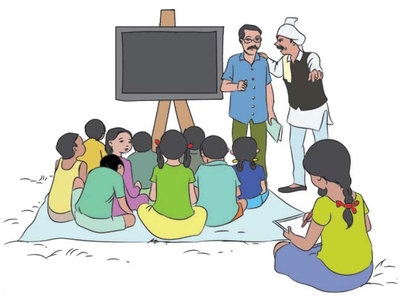
The next problem that the Dalits face is the problem of education. Not all Dalits have the luxury or opportunity to attend school and receive an education. The children or not allowed education and even if they are, they are not given equal opportunities and are always identified by their caste.
Bama also faced or experienced these during her school days but she managed to gain the trust and respect of her peers and teachers as she was a very bright student. That is when Bama realised that if every child is given this opportunity to receive education, they would be independent and would not have to struggle to make ends meet and would also be a respectable citizen of the country.


• Visible Caste discrimination:
In the future when she joined the convent and taught for 5 years, Bama also realised that the caste discrimination still exists. She realised that where there was a vow to help the Dalit children, really care about that aspect. Nobody tried to teach the children what their rights are and how they can together work to overcome their problems as a community and prosper.


Conclusion:
All of these incidents show us the plight of the dalits and how difficult their lives are on a daily basis. They need to overcome problems every day, in every field they go to. There is no leniency for the poor which shows us that the hierarchy of caste is an atrocious topic and everyone should be treated equally.

THE SOCIAL NOVEL

The Social Novel may be defined as a fictional narrative that focuses on the varieties of human behavior in society and the way in which the characters reflect or contradict the values of that society.

In this genre, the characters are seen in the background of their social milieu and culture. The inner life of the characters find the place in such novels, greater importance is given to their conflicts and collisions with classes and believes. The essence of a social novel is the conflict between the individual and the society that surrounds him based on different concepts of values.

Two Groups of Social Novel:

Social novels can be divided into two groups.

  • The novel of Manners.
  • The novel of Civilization.

The novel of Manners:

The novel of manners is concerned with social behavior and its correctness in a given society. The concept of behavior achieves some grant moral effect as we find in the novels of Jane Austen “Pride and Prejudice” and Emma are the best examples. The novelist is preoccupied with the niceties of social conduct and often, commerce by the employment of Irony and satire exposes undesirable passions like arrogance, hypocrisy, and snobbery. Henry James’ novel ‘The ambassador’ is a successful social novel of manners. It depicts with great humor and delicacy the reaction of different American types to a European environment. Evelyn Waugh’s “A handful of dust” is a social novel of manners that presents The vision of sin and guilt in the modern world. The social novel of manners has a satiric structure as we find in Jane Austen. Even modern novelists make use of the same formula. For instance, Philip Roth satirizes the self-protective attitude of the modern middle class in his novel ‘Goodbye Columbus’.

The novel of Civilization:

The social novel of Civilization takes a comprehensive view of the whole Civilization. The best examples are Charles Dickens’s “Little Dorrit” and Tolstoy’s “War and Peace” the novel Civilization aims at revealing the meanings, principles, and social styles that govern people’s lives. The action of individuals is examined in the light of the Civilization that surrounds them. In “Little Dorrit” Dickens explores the English society dominated by the corrupt business class. In the novel Civilization characters or viewed as part of the developing environment. The splendor or shame of their past is exploding. The significance of the character’s behavior becomes clear only in the background of the Civilization which he represents. In “War and Peace” Tolstoy presents the different stages in the development of each character. The novel Civilization, sometimes, depicts the different stages in the growth of the writer’s consciousness as in Marcel Proust’s ‘Remembrance of Things Past’. Sometimes it uses our family story as in Faulkner’s ‘Sartoris’ or Galsworthy’s ‘Forsyte Saga’.

The Social Novel is a technique in literature. In which the authors express and illustrate society, ethics, etiquette, and protocols. Nowadays, various authors are following this technique in their writings. Especially, to illustrate the Epic society, Dynasty, and fictional Mythologies. This literary form serves as a device to illustrate society.

The Detective Novels

The Gothic Novels