In California, Argo AI may now provide public rides in its self-driving vehicles.

Argo AI, the Ford and VW-backed autonomous vehicle technology firm, has received a permit in California that will allow it to provide free rides in its self-driving vehicles on public highways.

According to the accepted application, the California Public Utilities Commission gave the so-called Drivered AV pilot permit earlier this month. It was published on its website on Friday, a little over a week after Argo and Ford revealed plans to debut at least 1,000 self-driving cars on Lyft’s ride-hailing network in a variety of locations over the next five years, beginning with Miami and Austin.

The authorization, which is part of the state’s Autonomous Vehicle Passenger Service pilot, adds Argo to a small but increasing group of businesses looking to go beyond standard AV testing — a hint that the industry, or at least some companies, are getting ready to go commercial. Since 2019, Argo has been testing its self-driving technology in Ford cars in Palo Alto. In California, the company’s test fleet consists of around a dozen self-driving test vehicles. In addition to Miami, Austin, Washington, D.C., Pittsburgh, and Detroit, it has autonomous test cars.

Aurora, AutoX, Cruise, Deeproute, Pony.ai, Voyage, Zoox, and Waymo have all been granted licences to participate in the CPUC’s Drivered Autonomous Vehicle Passenger Service Pilot program, which necessitates the presence of a human safety operator behind the wheel. This permission does not allow companies to charge for rides.

Cruise is the only business that has obtained driverless authorization from the CPUC, allowing it to transport people in its test cars without the presence of a human safety operator.

Obtaining a Drivered authorization from the CPUC is only the first step on the road to commercialization in California. Before charging for rides in robotaxis without a human safety operator behind the wheel, the state needs firms to clear several regulatory barriers from the CPUC and the California Department of Motor Vehicles, each with its tiered system of licences.

The DMV is in charge of regulating and issuing licenses for autonomous vehicle testing on public roads. The DMW issues three types of permits, the first of which allows businesses to test autonomous vehicles on public roads with a safety driver. This basic testing authorization is held by more than 60 businesses.

The next permission allows for driverless testing, followed by a commercial deployment permit. Permits for driverless testing, in which no person is behind the wheel, have become the new benchmark and a need for firms looking to start a commercial robotaxi or delivery service in the state. The DMV has issued autonomous permits to AutoX, Baidu, Cruise, Nuro, Pony.ai, Waymo, WeRide, and Zoox.

Nuro is the only person who has gotten deployment permission from the DMV. Nuro may now deploy on a commercial basis thanks to this permission. Nuro’s trucks can only carry freight and not passengers, allowing the firm to avoid the CPUC approval procedure.

Meanwhile, in May 2018, the CPUC approved two pilot projects for autonomous vehicle passenger transportation. The Drivered Autonomous Vehicle Passenger Service Pilot program, which Argo just obtained, permits firms to run a ride-hailing service utilizing autonomous vehicles as long as they adhere to certain guidelines. Companies are not permitted to charge for rides, and a human safety driver must be present at all times. Additionally, specific data must be provided quarterly.

The second CPUC pilot will allow Cruise to launch an autonomous passenger service in June 2021.

It’s worth noting that getting to the holy grail of commercial robotaxis necessitates obtaining all of these permissions from the DMV and CPUC.

Digital Banking

Digital Banking has completely changed the way we bank in today’s times. With Digital Banking, you can transact with higher speed, ease and convenience.

What is Digital Banking? 

In simple terms, Digital Banking means availability of all banking activities online. Here, you have the luxury to freely access and perform all traditional banking activities 24*7 without having to personally go to a bank branch to get your work done. Some of the major online banking activities include-

(1) Money Deposits, Withdrawals, and Transfer
(2) Checking/Savings Account Management
(3) Applying for Financial Products
(4) Loan Management
(5) Bill Payment
(6) Account Services

Many banks also offer other integrated services like investing in Mutual Funds and other investment options online. Thus, making Digital Banking a widely used concept.

Digital Banking in India

Digital Technology has drastically changed the way banks interact with us. Similarly, it has completely changed the way we transact and interact with the bank. This is especially true in the case of a booming technological and financial economy like India, where more and more people are being connected to Digital Banking Platforms with each passing day. 

With Digital Banking you can perform every transaction, from start to end in a seamless, secure manner. You can withdraw money, deposit money, apply for loans, invest in Mutual Funds- all at a click of a button.

With the introduction of mobile banking you can perform transactions on the go. Mobile banking is a convenient and easy way to finish your transactions. For example, you can do over 125 transactions through HDFC Bank’s mobile banking app. 

The latest addition to mobile banking feature is the Mobile Banking LITE app.The HDFC Mobile Banking app can work without an internet connection, italso doesn’t take up too much space and is quick to install over slow connections. It’s a safe and secure way of making transactions on the go.

Digital Banking services are offered by all major retail banks in the country today and have, in fact, become an integral part of their services. So, one can now bank from the ease of one’s home, with the convenience of smartphone screens.

(1) Indian Financial System Code (IFSC)
The Indian Financial System Code (IFSC) is an 11-character code in alphanumeric format to uniquely identify all bank branches within the NEFT, RTGS, and the Immediate Payment Service (IMPS) network within India. This code is printed on every cheque leaf in your personal or company chequebook. To transfer funds to an account electronically, the receiver must share his IFSC code as it identifies the receiver bank and branch.Magnetic Ink Character Recognition (MICR)
Magnetic Ink Character Recognition (MICR) is a technology used to verify the legitimacy or originality of paper documents, especially cheques. A special ink sensitive to magnetic fields is used in the printing of certain characters. Every bank branch has a unique MICR code, which helps the RBI speed up the cheque clearing process, with MICR readers.

(2)Magnetic Ink Character Recognition (MICR)
Magnetic Ink Character Recognition (MICR) is a technology used to verify the legitimacy or originality of paper documents, especially cheques. A special ink sensitive to magnetic fields is used in the printing of certain characters. Every bank branch has a unique MICR code, which helps the RBI speed up the cheque clearing process, with MICR readers.

(3) Electronic Clearing Service (ECS)
Electronic Clearing Service (ECS) is another method of transferring funds from one bank account to another. It is most often used to pay regular bills (telephone, mobile, credit card, electricity, etc, to make EMI payments (Personal, Car, Home Loan), and SIP investments. This is done by invoking the auto debit facility. ECS is also used by entities for payment of salaries, pensions, distribution of dividend interest etc.

(4) Immediate Payment Service (IMPS)
Since NEFT may not be available for use on weekends and bank holidays, you could try using IMPS or Immediate Payment Service. The service is available 24X7. The minimum transfer value is Rs 1 and the maximum value is Rs 2 lakh.
But to use this service, you will need to register via your bank and provide the mobile number and MMID of the beneficiary as IMPS transfer can also be done through mobile phones. Mobile Money Identifier (MMID) is a seven-digit unique number issued by the bank.

(5) National Electronic Funds Transfer (NEFT)
The National Electronic Funds Transfer (NEFT) system allows individuals, companies, and other entities to transfer funds electronically from one bank to another within India. Normally, funds from the remitting bank will be sent to the RBI within three hours of the transaction. However, the time taken to credit the beneficiary bank’s branch account depends on how long it takes the bank to process the transaction. It should be noted that NEFT operates only during business hours on weekdays. NEFT transactions cannot be done on Sundays, bank holidays, and second and fourth Saturdays of the month. The minimum transfer value is Rs 1 and there is no upper limit.

(6)Real Time Gross Settlement (RTGS)
Another method for transferring money electronically, from bank to bank, within the Indian banking system is Real Time Gross Settlement (RTGS) scheme, where the minimum amount for each transaction is Rs 2 lakh and there is no upper limit. The beneficiary account receives the money immediately.
The RTGS system is primarily meant for large value transactions.With effect from 00:30 hours on December 14, 2020, RTGS facility is available round the clock on all days i.e. 24 hrs. India one of the few countries to operate the system 24×7. This comes within a year of the Reserve Bank of India (RBI) operationalising NEFT 24×7. NEFT is the popular mode for small-value transactions. RTGS, which started on March 26, 2004 with a soft launch involving four banks, presently handles 6.35 lakh transactions daily for a value of Rs 4.17 lakh crore across 237 participant banks. The average ticket size for RTGS in November 2020 was Rs 57.96 lakh, making it a truly large-value payment system. RTGS uses ISO 20022 format which is the best-in-class messaging standard for financial transactions. The feature of positive confirmation for credit to beneficiary accounts is also available in RTGS.
Earlier, the RBI had decided not to levy charges on transactions through NEFT and RTGS in order to promote digital transactions, and had asked banks to pass on the benefits to customers. The RBI used to levy minimum charges on banks for transactions routed through RTGS and NEFT. Banks, in turn, levied charges on their customers. RTGS is meant for large-value instantaneous fund transfers, while NEFT is used for fund transfers of up to Rs 2 lakh.
It should be noted that NEFT, RTGS and IMPS impose transaction fees in slab rates.

(7) Society for Worldwide Interbank Financial Telecommunication (SWIFT)
SWIFT is an acronym for Society for Worldwide Interbank Financial Telecommunication. It is an internationally recognised identification code forbanks worldwide, and is usually used for international wire transfers. Only those banks that are SWIFT-enabled can take part in this system. In EU nations SWIFT is also known as BIC or Bank Identification Code. When dealing with international transfers also be aware of IBAN or International Bank Account Number. IBAN (International Bank Account Number) appears in bank statements and the bank’s online systems. IBAN and BIC (Bank Identification Code ) contain your bank account number and sort code written in an internationally recognised format. All these numbers can make your wire transfers happen quickly and securely.

Internet and Mobile Association of India v. Reserve Bank of India

Statement of Facts

  1. On 5th April,2018 Reserve Bank of India issued a press release raising the concern about the consumer protection from trade of virtual currencies. They were of the view that trading in virtual currency also referred as crypto currency are prone to hacking and therefore would lead to money laundering, terrorist activities, etc. In this view RBI asked the banks to not to deal with the transactions related to the trading of virtual currency.
  2. The services which RBI directed the bank not to deal with were – maintaining the accounts, registering, trading, settling, clearing, giving loans against virtual currencies, accepting virtual currency as collateral, opening accounts of exchanges dealing with them and transfer of sale/purchase of virtual currencies.
  3. The matter was challenged by Internet and Mobile Association of India. The Supreme Court of India allowed the petition on the ground of proportionality. Earlier in 2013 the Reserve Bank of India do issued a public caution to the traders and holders of virtual currency in context with the legal and security related risks associated with it.

Issues Raised

  1. Whether the Reserve Bank of India had the jurisdiction to disallow the trade of virtual currency?
  2. Whether the Respondent had the powers to regulate virtual currency as they were not equivalent to money or legal tender?
  3. Whether the circular which was issued by the RBI was proportional?

Critical Analysis of the Case

A step in the right direction was taken by the Supreme Court of India, in the judgment of Internet and Mobile Association v. RBI. The court quashed the circular of the RBI that directed financial agencies to disocciate themselves from entities involved in virtual trading or transactions relating to VC’s. Some of the concerns that led to the issuance of circular include the anonymity of the transactions and the protection of investors when dealing in cryptocurrency. The major apprehension of the RBI was the inherent difficulty in tracking the source of money which has led to an increase in the number of cryptocurrency scams in the country. Still a very volatile technology, we have not had enough discussion around its shortcomings, leading to an adverse preference of this technology in the monetary circuit.

The Petitioner relied on the case of MS Gill v. Chief Election Commissioner, which led that there was an express prohibition of any authority to do anything which may improve its case. The contention of the petitioners rested on the premise that denial of banking services to those activities of trade recognized by law, would be extremely disproportionate, leading to the violation of extremely disproportionate, leading to a violation of Article 19(1)(g) of the Constitution. Therefore, an understanding of whether there was an infringement of this constitutional right was necessary and to this end, the court relied on the case of Md. Yasin v. Town Area Committee, which makes it amply clear that the right under article 19(1)(g) would be affecyted “In effect and in substance” when there is a complete stoppage of a particular business activity, owing to a certain measure that was undertaken. In Keshavlal Khemchand and Sons Pvt. Ltd. v. Union of India, the court pointed out that “Reserve Bank of India is an expert body to which the responsibility of monitoring the economic system of the contry is entrusted, under various enactments like the RBI Act, 1934, the Banking Regulation Act, 1949.”

The judgement of the court has started an effective discussion on lines that were never traversed before, and while that is indeed commendable, we need to look ahead and anticipate the potential risks on the economy. With that in mind, VC’s promise a more feasible future, especially in this era where people are connected through technology in ways previously unimaginable. Various stakeholders have posted many suggestions, particularly with regarding to creating a model that can monitor and regulate crypto currency, without bringing a blanket ban of the same, which ought to be considered by the government in the light of pending bill. What we need to do is find a balance and not discourage startups from adopting this technology, and if this is ignored, India could be handicapped from exploring opportunities that crypto currencies have to offer. Instead of shying away from addressing these concerns, we need to be proactive and have a structured policy in pace to assuage any potential concerns in the future.

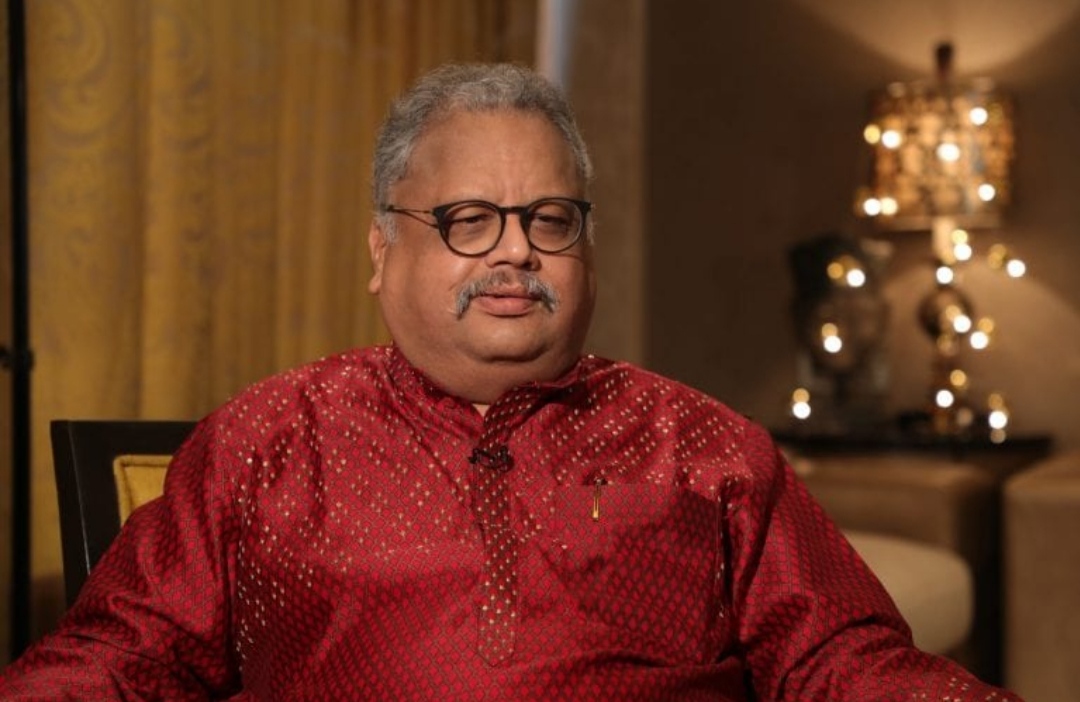
Billionaire Investor Rakesh Jhunjhunwala Plans Ultra-Low Cost Airline

Billionaire investor Rakesh Jhunjhunwala is planning on having 70 aircraft within four years for a new airline he wants to set up in India on optimism more people will travel by air.

Mr Jhunjhunwala, who is considering investing $35 million and would own 40% of the carrier, expects to get a no-objection certificate from India’s aviation ministry in the next 15 days, he said in a Bloomberg Television interview Wednesday.

The ultra-low cost airline will be called Akasa Air and the team, which includes a former senior executive of Delta Air Lines Inc., is looking at planes that can carry 180 passengers, he said.

It’s a bold bet by Mr Jhunjhunwala, who’s known locally as India’s Warren Buffett, in a market that has seen some airlines collapse in the face of intense fare wars and high costs. Still, what was once the world’s fastest-growing aviation market holds an allure and Jhunjhunwala is looking at opportunities to woo flyers with a brand new carrier offering low fares.

“For the culture of a company to be frugal you’ve to start off fresh,” Mr Jhunjhunwala said. “I’m very, very bullish on India’s aviation sector in terms of demand.”

Even before the pandemic, airlines in India were struggling. Kingfisher Airlines Ltd., once the country’s second-largest domestic carrier, ended operations in 2012, and Jet Airways India Ltd., which was recently approved to fly again, collapsed in 2019.

While demand for air travel has been hit globally, India’s aviation industry is at greater risk of delayed recovery as the threat of a third wave of infections looms. Airlines are feeling the impact.

Vistara, which Singapore Airlines Ltd. jointly owns with conglomerate Tata Group, is in discussions with Boeing Co. and Airbus SE to delay aircraft deliveries and make changes to the payment timetables. IndiGo, India’s largest airline, reported a wider-than-anticipated loss as Covid disruption crimped its revenue.

That’s not deterring Mr Jhunjhunwala, who according to Forbes has an estimated net worth of about $4.6 billion.

“I think some of the increment players may not recover,” he said. “I’ve got some of the best airline people in the world as my partners.”

The Ponzi Scheme

What is it?

The Ponzi scheme is an investment fraud and one of the most infamous white-collar crimes in history. It is named after Charles Ponzi, the historical scamster who was best known for his financial crimes in the early 1900’s. He was from Italy, but it was after he moved to America that he started his fraudulent activities. The scheme he developed involved conning investors into giving him millions of dollars, and then paying them returns with other investor’s money. Investors were promised that in consideration of their investment, they would receive large returns of up to 50% in 45 days, or up to 100% in 90 days. Instead of paying these investors out of the actual profit of his business, Ponzi paid these investors by further borrowing from new investors. The investors were inclined to accept these deals as it was investment with seemingly high returns and little to no risk. In this way, Ponzi created a chain of borrowing and repaying from various investors, in the process pocketing some of the money from each transaction for himself.

The Ponzi scheme seems to be the prefect con, with the scammer earning large amounts of money, and the unsuspecting investors also satisfied with their exponential returns. This 100-year-old scheme is so well planned that is made use of even by today’s white-collar criminals. The prime example is Bernie Madoff, who in 2008 was caught operating the largest Ponzi scheme in history. Not all the Ponzi scheme cases are big enough to make the headlines, as some white-collar offenders run this scheme to a small extent. However, it can be said without a doubt that this scheme is one of the most standard, but also effective white-collar crimes a criminal can commit. However, investors are now becoming increasingly aware of these schemes, and there are also several anti-fraud agencies monitoring investment activities. Some of the basic parameter’s investors must identify to avoid falling into a Ponzi scheme are;

  • High returns with little or no risk
  • Overly consistent returns
  • Unregistered investments
  • Unlicensed sellers
  • Issues with paperwork
  • Secretive, complex strategies

The presences of all these features means that there is almost certainly a Ponzi scheme being run. It is evident from these features that it is investors dream to have such characteristics in a business, which is the primary reason why it is so tempting for many investors to fall prey to this scheme. However, over the years, corporate investors have come to realise that if it seems too good to be true, it often is.

Bernie Madoff Case

Many people are of the view that white-collar crimes are more serious than normal crimes committed on a day-to-day basis. Normal crimes are high-risk, low-reward situations such as shoplifting or robberies, wherein the perpetrator is taking a large risk in order to secure a relatively small reward. White collar crimes, on the other hand, are low-risk, high-reward situations. Such perpetrators commit crimes which generally go unnoticed for long periods of time, until some thorough investigation takes place or some questions are raised. In this time, they can earn exponential amounts of money as a result of their offences. We can take the example of Bernie Madoff here, one of the best-known white-collar offenders of all time. He committed the largest financial fraud in the history of the US, which involved around $65 Billion. Madoff had been committing corporate fraud and it was going unnoticed, with his career continuing on for about 20 years even after he committed such serious offences. This is evidence to the nature of white-collar crimes as being low-risk, high-reward crimes. It was only in 2008 that he was apprehended by federal authorities, and pleaded guilty to 11 federal crimes. He also admitted to operating the largest private Ponzi scheme in history. Hence, he was sentences to 150 years in prison in 2009 (the maximum for a person his age), for spending 20 years of his career defrauding clients and committing other federal felonies (including securities fraud, wire fraud, mail fraud, money laundering, theft from employee benefit plan, and many more). In February of 2020, Madoff’s lawyer pleaded for compassionate release of Madoff from prison, citing health and wellness issues (kidney failure and deteriorating health). However, this bid for release failed and Madoff continues to serve his prison time.

Madoff did not sound remorseful when interviewed in the years after his crimes, but he does show some self-awareness. “It wasn’t like I was being blackmailed into doing something, or that I was afraid of getting caught doing it,” he continues. “I, sort of, you know, rationalized that what I was doing was OK, that it wasn’t going to hurt anybody.” This is a prime example of neutralization of crimes by a perpetrator.

Building a learning culture for Remote employees?

Learning is an important part in the growth of any organization, and building a culture that encourages and empowers this is essential.

Photo by fauxels on Pexels.com

Through adaptive learning an organisation can build a learning culture for remote employees. They can be given a set of problems to solve online and make observations on qualitative and quantitative financial parameters such as rating, growth and financial stress.

With the flexibility to take the test multiple times, employees are motivated to acquire relevant skills. Instructors can review, curate, and assign multiple projects for employees to solve and enhance skills.

This solution is approved by the Ministry of Education under NEAT program and was implemented with learners at Indian School of Business.

Moreover, when employees are rewarded for enhancing their skills – with better roles or pay – there is always incentive for these remote workers to keep signing up for more workshops, courses and adaptive learning.

Photo by Christina Morillo on Pexels.com

To build a future – ready remote workforce, one needs to go an extra mile to ensure learning in the virtual environment

Reference

http://www.timesofindia

http://www.badrinarayan.com

Is Social Media Marketing a good choice ?

Side Effects relating to Social Media Marketing and solution

It has become a trend to promote businesses on social media platforms since they provide a large customer base by widening the reach. It is an economical way and less time-consuming than the traditional method of advertising which used posters, banners, direct selling and other such methods. Therefore it is a good way to attract customers all across the world and communicate the brand in an interesting and unique way keeping in mind the competition on the platform.

This has led to emergence of a variety of ideas to promote businesses especially startups in an innovative and much appealing way. Social media often comes out with new tricks and techniques which are used by people as per their interests and need. However this is leading to an increase in content on media day by day and people are observed to keep scrolling through them on a higher rate.

It is good to use such platforms to promote an idea or business but it’s prolonged usage is affecting the lifestyles of the common population. Social media is gaining importance day by day, increasing the number of users and content shared across. Those unwilling to be a part of it have to use it due to impositions by their organisations. Some use it to remain updated about what’s going around while some use it for information and knowledge purpose. But it is becoming difficult to come out of the web of social media platforms once a person gets stuck in it. This directs to the problem of addiction among the users. Once they start the use, the mind automatically diverts to the less-useful content shared across which doesn’t require attention by the person.

This is a major problem among the youth, distracting them and attracting towards easier paths in life to earn money through social media which is practically not a satisfying decision for young people. They should be more inclined towards hard work and innovations. There is a need for all of us to live the reality without being immersed in the beauty of the virtual world which is actually not everyone’s cup of tea to lean on and adopt in order to earn money.

Photo by Lisa on Pexels.com

Social media marketing is bringing more attention towards them. It influences people to buy the products and services using unique ideas of selling through social media. This platform is chosen as there are a wide range of active users who are targeted as customers easily. Business gets easy this way. But it is also advocating more usage of such platforms thus leading us to a virtual reality world where contact is real but medium is virtual. These kind of practices have long term effects on physical as well as mental health of a person. A person interested in products or services of a brand will have to join the social platforms to get in touch with them and gradually he/she would get attracted to useless content and creations, thereby increasing usage (in vain) and lowering the person’s productivity.

Moving to a digital world is a step towards modernization but it must be in check with health. Alternative ways to promote growth of one’s business should be developed in order to bring notice towards physical participation as well. It would be a better idea if people are involved physically to advertise and gain customers. Techniques can be developed for fun activities and methods where the common beings are involved; in order to attract them towards the brand and communicate the necessary information. This way, we can move ahead and out of the virtual world, interacting and contacting directly.

ENGAGING CONTENT WRITING TIPS ON AFFILIATE MARKETING

People who are flourishing as an industrialist thinks of a way to grow their business. The best way is to look for an alternate income. An alternate income doesn’t mean starting a new business but, a way of finding customers and supporters.

The best way to earn money is affiliate marketing. If you don’t have an idea on affiliate marketing, have one now. With affiliate marketing, the customer buys the product, the company gets a new customer and the affiliate also gets a commission. Marketing products is an effective way to increase product sales.

So, the content you provide must be engaging that the readers can read and get clarified with their doubts. Here are some tips to write engaging content for affiliate marketing.

10 TIPS TO WRITE ENGAGING CONTENT FOR AFFILIATE MARKETING:

1. UNDERSTAND THE CONCEPT:

     Affiliate marketing is a marketing strategy that makes the product owner earn money by letting on third persons sell or promote their products. The third person is an affiliate. An affiliate promotes the products through blogs, articles, social media platforms, and other possible ways. An affiliate finds the product he likes, promoting it to others, and earns commission by selling it.

Here, this is the basic concept of affiliate marketing. Understanding the concept and using your own words to write the article. Understanding is the basic step in writing engaging content. Without understanding, you can’t write a reader-friendly article.

2. DO RESEARCH:

     For writing an article, you should do research and make notes of the key points you searched. Use advanced search options and avoid the sites with mistakes. The information you gather through research should be reliable.

     The quality of your content relies on the research make. You should do extensive research and follow the content path.

3. INVOLVE PUBLIC OPINION:

     One should know people’s feedback on a product and need to know what they feel about the product. Keep yourself in their shoes and note the pros and cons of a product. An affiliate should gain trust by making people satisfied with the product. By doing so, the people will feel the product you recommend will be trustworthy.

     A writer should include a public opinion on the product and write content based on those opinions. A reader should think the writer cleared all their doubts and queries about the product. The content you write should answer the questions which people search for.

4. ADD RELATED DATA:

     Adding data to content makes readers interested in your article and will read it. Add data and statistics related to the product. Data can be attracted more by people than a word or sentence. Data and statistics have a sight of attraction towards the people. Try to add data related to the product and make the content engaging and reader-friendly.

15 Best Affiliate Marketing Networks in India in 2021

5. USE SIMPLE KEYWORDS:

     Always remember  Search Engine Optimization (SEO) and keyword search play an important role in affiliate marketing. It is not enough just to publish your content on an affiliate website but should also increase web traffic.

You should know the basics of SEO and keyword search which help in increasing web traffic. One must know what keywords people would search for a related topic and use those keywords. Understand how the keyword you use intends the keyword search and analyze it.

For example, A person searches for “How to start a vlog” for content you want to create. A vlog means a video log or video blog where people post their short videos. What the person’s intent behind the search will induce the direction of your article. Whether the person wants to start an individual vlog? Or he wants to know the steps in the vlog? This will lead to a search accordingly.

One fine idea is to search for the keyword yourself in the search engine and get to know more about it. Use anchor phrases that are not wordy or spammy.

6. DRAFT QUALITY CONTENT:

     As we know, content marketing is one of the best ways to advertise a product. Write more simply so that people can understand your thoughts easily. The quality of the content lies in its originality. Try to use your own words to draft it. The content you provide must answer the question “how to” because people search for the sample or product review before buying it. So, your content must clear all the doubts and queries of the reader.

Focus on the main theme of the content. The content you provide must be trustworthy and should be reader-friendly. Writing the content with good English and using simple keywords can make the content engaging. The content you draft must be unique that express your company’s personality.

7. ADD PROPER AFFILIATE LINK:

     Affiliate links help in increasing the online performance of an industrialist. If you want to add some affiliate link, take some time and research it properly. Because affiliate marketing is based on the concept of sharing and publish online platforms.

The content you write must attract the target audience. Furnishing high-quality content will help you to attract the target audience which involves the adding of proper affiliate links. Provide some information about the affiliate link you provide.

For example. High ticket affiliate marketing will be the best one for a beginner affiliate. It is a program that provides commission per referral. This high ticket affiliate marketing will allow you to earn more without any effort from your side. Provide some information about the affiliate link you provide. Promoting high ticket affiliate products is one of the most profitable affiliate programs nowadays.

8. USE SIMPLE ENGLISH AND SHORT PARAGRAPH:

     The content you draft must not be too wordy.

  • Use simple English to draft the content and make it reader-friendly.
  • Avoid the use of passive voice, use active voice instead.
  • Avoid overuse of prepositions.
  • Use contradictable words or sentences.
  • Use a shorter paragraph than a longer one. Because people will like it when it’s simple and understandable. Using longer paragraphs may irritate the readers to finish it.

9. BE SINCERE:

     Be sincere while writing the content. Don’t make up a story that people will buy your product. When you are true, people will always buy the product you recommend. So, give your true research ideas and visual treat. If you find any fault in the product you recommend mention it in your article.

Give the positive as well as the negative feedback of the product. In this way, people will feel your article trustworthy. If the article only has positive views and no negative views, it will make people not trust your article. So, be true to the people and yourself.

10. PROOFREADING:

     Proofreading is a way to correct the errors in the article you drafted. The article may have grammatical errors, punctuation errors, etc. So, take proofreading seriously while writing an article. Proofreading is important because, if the article you drafted is published online and contains some errors, it will influence your career.

Proofread your content with the help of some error-checking tools such as Grammarly etc. Check your content before publishing it. It is important to produce an article without any errors in it.

These are some tips to write engaging content for affiliate marketing. However, affiliate marketing is the best way to earn money without any effort. Just follow the tips and make your content engaging. Then what are you waiting for? Start writing your content soon. Affiliate marketing is a money-making side in which its price will rise to $16 billion in 2021.

Read more;

Level Up Your Marketing – 6 Reasons!

“Content is the atomic particle of all digital marketing.”

· Rebecca Lieb

Hello, today’s article is special as it answers the need to go for Marketing.

Marketing is the process of moving towards the ocean and getting acquainted with the fishes throughout the journey! Of course, this is just an example of personification and hyperbole for a different definition of Marketing. It implies moving forward into the market area to get acquainted with your competitors throughout the journey so as to keep learning new strategies and agendas of business from them.

There are Two Types of Marketing. The First and the most common form of it which was perhaps prevalent before the digitalized era is, In Person Marketing wherein you speak to consumers in person, to sell your commodity. However, this form exists even today and can be traced as the birth of marketing. Owners with concrete structures like shops indulge into this type of marketing wherein they try convincing each and every customer in order to give them a call to action. So, Marketing basically is, appeasing the customer in a standard format.

The Second Type, as we all know today is Digital or Online Marketing. Online marketing is the most widely used today. Even shopkeepers indulge in this method as they advertise the facilities and products provided by them on the internet to attract consumers. Fortunately, today the entire world is on a single social media platform which makes us so close to people that connecting across the globe is no longer a concern.

However, why should you market your facilities, goods, and services?

· For Increased Recognition!

When you market your services out there in the society, your brand, company, or shop receives recognition and interest which eventually attracts more and more consumers towards your business.

· To Make Sales!

Of course, this is intertwined with the first reason because when you receive recognition, and when your business blooms on social media, you are likely to avail benefits in the form of sales. It’s just that the correct form of marketing is required to appeal to customers.

· An Opportunity To Learn From Other Sources!

By this I mean, you get a wider opportunity to sneak into your competitor’s social media profile without the fear of being caught and maybe learn some of the interesting ways of marketing. Don’t worry! You aren’t stealing their marketing strategies because marketing as a general concept doesn’t accentuate plagiarism since most of the strategies are practiced by all. That’s the beauty of online marketing!

· An Opportunity To Learn The Desires Of The Mob Easily!

The best way of Marketing is to learn more about the problems your customers face and to understand their desires. Through Online Marketing, it gets easier to read the reviews of people on a certain business platform and acquire knowledge on the same. You could directly message people and speak to them regarding their problems or create surveys and distribute them to your contacts to learn more about them. This is because, Marketing requires a good understanding of your target audience as to what issues they face and what solutions do they expect to them. Isn’t Online Marketing amazing?

· Availability Of The Creation Of Various Blogging Sites And Other Websites For Developing Free Content!

This is the “luring” section of Marketing which decides the future of your business. This is true marketing through your content. By creating free content, be it in any form: educational, entertaining or testimonials, you try to transform the suspicious buyers into interested customers by providing them the call to action. This is the actual step of Digital Marketing. Just like you welcome guests at home not without your house address, similarly your website is a station or address of your business as to from where exactly viewers are to learn more about you! This too, is made easy by Digital Marketing which helps create this station for you!

· An Opportunity To Analyze Your Business Performance Easily Through Certain Applications!

There are certain interesting applications like Google Analytics that help you monitor your performance. This application helps you understand the higher amount of purchases from a certain social media platform on the basis of which you could decide the acceleration of the creation of free content on that particular platform.

There are certain other Google Extensions like Keywords Surfer that help you keep track of the highest searches of a particular word which you could use as a business name or maybe for your free content. Another mind boggling application is Google Trends that helps you keep up with the trend in the market since all you’ve got to do is search for a word in the search box and voila! A complete stats on the amount of searches in particular cities appears, on the basis of which you could decide the admittance of a specific word for your free content. After all, more the searches in your city, more the possibility of content based on that word being viewed. Popularity counts, doesn’t it?

Thus, I would conclude stating that Marketing is all about selling your commodity but not before making it known to the consumer. When, it comes to online marketing however, you not only make your product known, but also the company or brand you own, in order to make purchasing a comfortable task for the customers. Another step is involved here because of the invisibility of online marketing because of which people tend to have trust issues over the genuineness of a company or brand. That is exactly why, Marketing online requires more persuasion and evidence of worth!

Difference between click wrap, shrink wrap and browse wrap contracts

Introduction:

Have you ever wondered how you could have signed a deal with a corporation as large as Amazon while sitting in your recliner? Have you ever agreed to the terms and conditions of an app before using it? Have you clicked “I accept” without understanding what the contract entails? During this time, the pandemic has spurred innovation and the development of new business models. Everything is now available with a single click, whether you want to purchase meals from Zomato, electronics from Amazon, or groceries from Grofers. Have you ever been curious about how they sign contracts with you? Contract signing is also a click away these days.

What are e-contracts?

Contracts that went overseas and returned with new electronics and a fancy name are referred to as e-contracts. Electronic contracts are contracts that exist in a digital format and are in high demand these days. E-contracts are quite similar to normal contracts; the only difference is that they take place through an online digital means of communication. E-contracts have eliminated the need for middlemen, and merchants may now reach out to buyers directly. The computer programmes that link the vendor with an electronic agent, i.e. the app, and the buyer with an electronic agent are now the middlemen. Essentially, it provides a venue for the buyer and vendor to meet.

Are e-contracts binding and valid?

In India, the Indian Contract Act, 1872, Section 10 states that “All agreements are contracts if they are made by the free consent of parties competent to contract, for a lawful consideration and with a lawful object, and are not hereby expressly declared to be void.” 

Also, Section 10(A) of The Information Technology Act 2000 states that “Where in a contract formation, the communication of proposals, the acceptance of proposals, the revocation of proposals and acceptances, as the case may be, are expressed in electronic form or by means of an electronic record, that such contract shall not be deemed to be unenforceable solely on the ground that such electronic form or means was used for that purpose.”

Electronic signatures are also considered as proof of signing under the Indian Evidence Act of 1882, and Digital Signature Certificates are created when a document is electronically signed, and this certificate is also legally valid and binding under the IT Act of 2000.

Contracts in India are governed by The Indian Contract Act, 1872, and electronic contracts must be legitimate within the law’s interpretation. The following are the fundamentals of electronic contracts:

  1. Offer,
  2. Acceptance,
  3. Lawful consideration,
  4. Lawful object,
  5. Competent parties to contract,
  6. Free consent,
  7. Certainty of terms.

E-contracts are favoured over time-consuming paper documents since they are less expensive and more efficient. Electronic contracts, on the other hand, are more efficient to utilize and have a lot faster response time than long paper works. In reality, e-signatures save a significant amount of time and work. As a result, even if they are digitally signed and executed, e-contracts are legally binding and enforceable. However, this is not the case with click-wrap contracts.

Types of e-contracts:

To mention a few, there are shrink-wrap contracts, click-wrap contracts, browse-wrap contracts, source-code escrow contracts, software development and licence agreements, and many more. The following are three distinct types of contracts:

1. Shrink wrap contracts:-

The name of this contract was inspired by the shrink wrap packaging of CD-ROMs, which were used to deliver software. The licence agreements for various software are known as shrink-wrap contracts. These contacts are the licencing agreements, boilerplate, or terms & conditions that come with the product. When a consumer utilises the goods, he has agreed to the terms of the contract. Shrink wrap is the plastic wrapping that is done on the product’s cover. IT businesses are the most likely to utilise shrink wrap. The most intriguing aspect of this contract is that acceptance may be revoked by returning the merchandise. Furthermore, these days, licencing agreements are not supplied with the product, but rather shown before installing the software.

2. Click wrap contracts:-

Have you ever seen the lengthy paragraphs with comprehensive terms and conditions for utilising an app or programme that no one reads? Those are the Click wrap contracts, to be sure. The party is only a click away from signing this contract, as the name implies. To accept the contract, they only need to click a button or check a box. Essentially, the user is compelled to sign the contract or else he would be unable to progress, and therefore they are not negotiable at all. There are certain legal problems that will be addressed later.

3. Browse wrap contract:-

Have you ever seen a sentence that says something like, “By continuing to use these services, you agree to the terms and conditions” or “By signing up, I agree to the terms of usage”?

Browse wrap contracts may be found at the bottom of the page, and acceptance is presumed if the client uses the application. These contracts are often seen on websites, as well as in various mobile apps and software programmes. They can also be accessed via a hyperlink.

Critical analysis:-

Click wrap contracts and shrink wrap contracts are unilateral and presented as fixed contracts, but browse wrap contracts are significantly different in that they do not compel the customer to accept the contract, but rather presume approval when browsing the website.

Contracts such as click wrap and browse wrap are commonly employed by websites that wish to force their customers to adhere to their terms and conditions. The only difference between the two is how they are mandated. While browse wrap does not need consent, click wrap requires customers to click the “I agree” button.

Contracts with customers can be entered into through browse wrap, click wrap, and shrink wrap. Because it was basic and included all of the necessary information, browse wrap is the earliest and typical form of agreement. Shrink wrap was only discovered in the software business, although in a different form.

The agreement is contained inside the packaging of the shrink wrap contract, and the consumer’s approval of the same is indicated by the opening of the package. The terms and conditions and privacy policy for browse wrap contracts are posted on the website and indicated with a link. By default, the customer has consented to this contract. And, in most cases, the phrase reads something like, “Your use of our site implies your acceptance of our Terms of Use and your commitment to be bound by them.” So, if you disagree with the terms and conditions, simply do not use the website.

A click wrap contract, on the other hand, has more criteria than a shrink wrap or browse wrap contract. The two main components that make a significant difference are that, first and foremost, click wrap contracts include a link, but they also include a notice that summarises all of the legal terms and conditions. Second, they request actionable consent via a pop-up window, such as a “I agree” button or a check box. If a website or app employs this contract, it implies that they demand the consumer’s affirmative consent before proceeding. The consumer can also reject the terms and conditions by clicking on a “Cancel” button.

Conclusion:

The Indian Contract Act, 1872 controls all contracts in India, whereas the Information Technology Act, 2000 governs all electronic transactions. The majority of electronic contracts are provided to customers in the form of click wrap and browse wrap. The term wrap is originated from shrink wrap contracts, in which the terms and conditions were shrunk and wrapped in the product packaging. However, click wrap and browse wrap are only employed in digital form. Shrink wrap may be utilized for both digital and physical applications.

Previously, the owner of a website could choose between click wrap and browse wrap, and both were regarded equally legally, such as privacy policies and terms and conditions, but things have changed.

Finally, I’d like to emphasise that while a browser wrap contract can be used for terms and conditions, legal documents such as privacy policies must be accompanied by a click wrap contract to ensure affirmative permission.


All about Horoscope

A horoscope (also known as a natal chart, astrological chart, astro-chart, celestial map, sky-map, star-chart, cosmogram, vitasphere, radical chart, radix, chart wheel, or simply chart) is an astrological chart or diagram that depicts the positions of the Sun, Moon, planets, astrological aspects, and sensitive angles at the time of an event, such as a birth.

Photo by RODNAE Productions on Pexels.com

Horoscope comes from the Greek words ra and scopos, which mean “time” and “observer” (horoskopos, pl. horoskopoi, or “hour marker(s)”). It is utilised as a means of divination for occurrences related to the time period it symbolises, and it is the foundation of astrology’s horoscopic traditions.

The horoscope depicts the skies as a stylised map over a certain area at a specific time. In most cases, the viewpoint is geocentric (heliocentric astrology being one exception).

The chart includes the positions of the actual planets (including the Sun and Moon), as well as entirely calculated features such the lunar nodes, house cusps (including the midheaven and ascendant), zodiac signs, fixed stars, and the lots.

Aspects are angular relationships between planets and other points that are commonly determined. 

The vernal point (the first day of spring in the northern hemisphere) is defined by the tropical zodiac as the first degree of Aries, although the sidereal zodiac permits it to process.

Many individuals are perplexed by the distinction between the sidereal and tropical zodiac signs.

t is worth pointing out that the sidereal signs and the tropical signs are both geometrical conventions of 30° each, whereas the zodiacal constellations are pictorial representations of mythological figures projected onto the celestial sphere based on patterns of visible star groupings, none of which occupy precisely 30° of the ecliptic.

So constellations and signs are not the same, although for historical reasons they might have the same names

An astrologer must first determine the exact time and location of the subject’s birth, or the start of an event, in order to generate a horoscope.

At the same time, the local standard time (adjusted for daylight saving time or wartime) is transformed into Greenwich Mean Time or Universal Time. To be able to calculate, the astrologer must translate this to the local sidereal time at birth.

Photo by RODNAE Productions on Pexels.com

The astrologer will then examine an ephemeris, a set of tables that displays the positions of the Sun, Moon, and planets for a given year, date, and sidereal time in relation to the northern hemisphere vernal equinox or fixed stars for a given year, date, and sidereal time (depending on which astrological system is being used).

The horoscope is divided into 12 sectors that circle the ecliptic, beginning with the ascendant or rising sign on the eastern horizon.

The houses are the 12 sectors, and there are several techniques for computing these divisions. Since the 19th century, tables of dwellings have been issued to make this otherwise difficult work easier.

Horoscopes and the zodiac sign have always been popular, and they continue to be so today. From celebrities to the ordinary population, there are a large number of devoted fans.

It can be tough to accept that astrology is not based on scientific facts and is a pseudoscience when there are so many believers and perhaps a personal connection to the horoscope or the zodiac.

Reference

http://www.wikipedia.com

http://www.timesofindia.com

http://www.elle.com

Jhunjhunwala plans to have 70 planes in four years of airline

Billionaire investor Rakesh Jhunjhunwala is planning on having 70 aircraft within four years for a new airline he wants to set up.

Photo by Pixabay on Pexels.com

Jhunjhunwala, who is considered to be investing 35 dollar million and would own 40% of the carrier, is expected to get a no-objection certificate from the aviation ministry in the next 15 days, he said in an interview on wednesday.

The ultra low cost airline will be called Akasa Air and the team, which includes a former senior executive of Delta Air Lines Inc is looking at planes that can carry 180 passengers, he said.

Its a bold bet by Jhunjhunwala, who’s known locally as India’s Warren Buffett, in a market that has seen some airlines collapse in the face of intense fare wars and high costs.

Still, what was once the world’s fastest -growing aviation market holds an allure and Jhunjhunwala is looking at opportunities to woo flyers with a brand new carrier offering low fares.

Photo by Alexander Mils on Pexels.com

All of these facts, however, do not prevent Jhunjhunwala from investing in the aviation industry, as he is well-versed in the reality of doing business in this area. “I believe some of the increment players will not recover,” he remarked, but he praised his partners, saying, “I have some of the best airline people in the world as my partners.”

Jhunjhunwala is investing $35 million in Akasa and expects the Aviation Ministry to provide a no-objection certificate (NOC) soon. A fleet of 70 planes is planned. The new arrival into India’s aviation sector comes at a time when the COVID-19 pandemic is having a significant influence on the industry.

Reference

http://www.moneycontrol.com

http://www.hindustantimes.com

http://www.timesofindia.com

MONOPOLY

The Sherman Antitrust Act was the first federal act that outlawed monopolistic business practices. In the US Sec 2 of Sherman act, 1890 makes it unlawful for a company to achieve monopoly power, and Sec 7 of Clayton act 1914 prevents mergers of companies that will lessen competition or lead to a monopoly. The Federal Trade Commission protects consumers from any kind of unfair practices taking place in the market places. Similarly in India, the Competition Commission of India has the responsibility to ensure fair and healthy competition in economic activities, to eliminate practices adversely affecting competition. All over the world, similar government agencies are constantly developing regulations and laws to keep the marketplace clean and just.

Big tech companies are now under the intense scrutiny of competition watchdogs around the world. In the US antitrust charges are filed against Google and are accused of protecting the monopoly, bipartisan lawsuits filed against it say Google search engine and play store is anticompetitive. French completion watchdog fined google $268 million for abusing its dominant position and asked it to pay for news to the publishers. Australia too directed google to pay for news content.

In India, big techs are at loggerheads with the government over the new IT rules. Both have different perceptions regarding certain aspects. The new IT rules make it mandatory for companies having a users base of more than 50 lakhs(5 million) to appoint a chief compliance officer, nodal officer, and grievance officer in the country all residents of India. Also in India, data protection laws are at a very nascent stage and are underdeveloped and incapable of protecting its citizens’ data from any kind of misuse.

Developed nations are now recognizing the unquestionable power big companies enjoyed so long. Recently G7 countries agreed on a 15% global minimum corporate tax which they say aims to discourage large corporates from avoiding tax by shifting bases.

So basically nations arround the world are conserned about tax evasion, unfair business practices, and lack of rules and regulations to restrict powers of monopolistic companies.While it is legal for companies to adopt strategies for reducing taxable income, tax evasion tactics by using it dominance is unacceptable.There is difference between gainging monopoly and afterwards using it for sustaining monopoly. I am of the option that if companies are providing quality products and services and gaining monopoly it’s fine but sustained hold of monopoly for long period can make them all too powerful, and that is why we need dynamic regulations in place to check their power.

IS PAPERLESS OFFICE A REALITY OR NOT?

While going completely paperless might not be a reality as of now, but the changes that comes with the modern office are encouraging companies to do so.

PAPERLESS OFFICE:

A paperless office is a work environment in which the use of paper is eliminated or greatly reduced. it is done by converting paper and other documents into digital form. It is a workplace that has minimal paper-based processes.

BENEFITS OF PAPERLESS OFFICE:

There are many perks of paperless office. Some include

  • Strengthened Document Security & Confidentiality
  • It has easy access to data.
  • Eliminating paper work helps you save money spent on printing and storing documents.
  • Less paper waste means decreased carbon footprint.
  • Adhere to Audit Guideliness.

DISADVANTAGES OF PAPERLESS OFFICE:

As the proverb goes “A coin has 2 sides” likewise paperless office also has its own disadvantages

  • Software Maintenance is a huge problem.
  • Legal and Compliance Issues arises.
  • Difficulties in Digitalizing Existing Documents.
  • Security Risks and Viruses.

WHICH IS BETTER?

In case of paper office, paper documentation simply looks more professional. Paper office is that it doesn’t cost a whole lot of money and its much cheaper. Ultimately, it’s much easier to conduct business with a paper-filled office. In paperless office the amount of clutter that can be reduced. Sending big documents and leaflets to business clients can be done at the click of a button. Documents that may have been misplaced or lost entirely can be found with a quick search of the hard drive. Therefore both has its own side of story. To conclude which one is better is still a debate and also a matter of choice.

PAPERLESS OFFICE A REALITY OR NOT?

In this pandemic, paperless seems more likely and imperative. However road to a fully paperless office seems like a long one as of now but it is definitely possible in near future.

Corporate Governance in Indian Companies

Introduction

Corporate Governance refers to the framework in a company comprising the generally accepted practices, policies and processes according to which the firm operates and is managed.

Corporate governance has become an essential component in the functioning of a company, and it has the potential of causing an improved or enhanced market performance. Corporate governance primarily focusses on creating transparency, accountability, and disclosure in the corporate environment. In other words, it promotes ethical practices in the company, allows for efficient communication of information, and proper allocation of responsibility. Another important function of corporate governance is to maintain a judicious balance between the interests of the stakeholders and board of directors. The board of directors are primarily responsible for the operational decisions and processes of the company, and it is imperative to outline their authority with respect to the stakeholders to ensure mutual cooperation and corporate success.

With regard to India, corporate governance has been on the up rise mainly due to globalization and liberalization. The SEBI had made the first ever regulations on corporate governance in 2000, based on the recommendations of the Kumar Mangalam Birla Committee Report and Narayan Murthy Committee Report. With the many national and multinational corporations coming up in India in the face of globalization, there was a need to introduce corporate governance so as to confront the competition that has arisen. Therefore, it is apparent that good corporate governance ensures mutual cooperation and protects the long-term interests of the shareholders. The question then arises whether good corporate governance is also proactively helping companies in their regular financial performance.

The Effects of Corporate Governance on Financial Performance

The financial performance of a firm indicates how successful it has been in its business, and whether it has been able to effectively use its assets in generating revenue. The role that corporate governance plays in benefiting financial performance of Indian companies has been studied extensively over the past years, and varying conclusions can be derived from these studies. The many variables and principles of corporate governance have been studied in the Indian corporate environment so as to ascertain their impact on financial performance. These can be consolidated as such:

  • Board Size: A study conducted by researchers Kathuria and Dash observed the influence of the Board size on financial performance of Indian companies. The results showed that performance improved when the size of the board increased, and that a smaller board of directors was generally not influential in financial growth. Corporate governance principles necessitate that the board of directors collaborate with the other corporate entities so as to ensure better performance.
  • Board Independence: An independent director is one who does not have any vested interest in the company, and works solely to improve the corporate position and credibility of the firm. They also play a large role in enforcing corporate governance standards. Numerous studies conducted with regard to board independence in the Indian context have showed that a larger proportion of independent board directors is associated with improved financial performance.
  • Board Meetings and Committees: As corporate governance principles require the company to maintain transparency and disclosure, conduction of regular board meetings is required. It has been found that Indian companies conducting regular board meetings has caused a better financial performance, as there is constant discussion of the company’s operations and decisions are made that positively impact the company.

Therefore, from the research conducted, it is evident that sound corporate governance and its implementation in Indian companies has the potential of positively impacting financial performance and growth. Some of the more general reasons why corporate governance is seen as a stimulant of financial growth are:

  • Increased access to financing
  • Higher firm valuation
  • Improvement in operational performance
  • Reduced risk of financial crises

Conclusion

Ultimately, it can be inferred that the impact of corporate governance on Indian companies has been known to be favourable for the most part. However, it is important to highlight an important point here. It cannot be concluded that corporate governance has a positive effect on all Indian companies, or for all companies in general. For some there may be an insignificant impact, while for others there might be no impact at all. However, for most companies in most industries, corporate governance implies support in the financial position. Factors mentioned in this paper such as board size, independency, composition, meetings and committees mostly seem to show a positive relationship with financial performance of Indian companies.

The primary goal with which corporate governance is introduced into a company is to increase transparency, disclosure and accountability, which subsequently gives way to other long-term benefits including financial stability and growth. Therefore, many Indian companies are increasingly looking to practice corporate governance. In conclusion, despite the fact that there is no consensus on whether corporate governance has an undeniable positive impact on financial and firm performance, it can be said that it helps the company in many facets regardless.