One needs to aim for the sky, to achieve as much as a mountain in the bargain Success in life comes only to those who are ready to work hard for the same. The key to success is to have an aim in life and the earlier you attain this aim, the better.
In spite of all the new options in today’s times, there are those age-old professions that are a favourite with most of the youngsters all the time. These include, the profession of a doctor, an engineer and that of a teacher or an advocate. I too, wanted to be part of one of these noble professions. If my memory proves me right, I always wanted to be a teacher. What is exciting about teaching is that this is one of the few professions where you are actually dealing with living beings. To make a difference to a child’s life or to positively influence a child in such a way as to bring about good change, is a great achievement in itself. Somewhere, along the path, we are also the product of the reinforcements made by our parents and teachers, one way or the other.
However, even our Puranas reinstate that the teacher or the guru’ comes above God. The reason being that teacher is the person who shows you the way to God, or teaches you, what God is all about. So, if the enlightenment of God and the things around you comes from one particular force, then that is the person to be revered, first.
The responsibility being immense, it’s not an easy job either. If the young minds have to look forward to you as a source of knowledge, then you need to be one. With the quantum of knowledge increasing day by day, it’s a difficult task to keep abreast of the upcoming information. Apart from all this, what is more important in this profession is whole hearted dedication and willingness to work beyond the restrictions of time and assigned duties.
With all this view in mind, I would like to pursue my ambition to be a teacher. It’s anyhow of least importance to assert which subject I would specialize in because subject is not as important, as to know, how to effectively teach it. Be it Maths. English or Science, to develop a flair and love for the subject is a teacher’ s greatest challenge. A bad teacher can always generate an aversion towards the subject in the minds of the children, just by not giving the subject a proper treatment. My ultimate aim would be to be such a teacher who would make a difference in the lives of young minds and bring about their overall development.
As an investor, entrepreneur or even as someone aiming to be financially literate, one must know about Dividends, its types and implications as it is common source of additional income for many investors. Dividends are also considered as an important reflection of the company’s value as it is used in calculating the value of the stock in many methods. One can also determine the future yield or dividends estimates from historic data. Therefore, it is essential to know about dividends, from investor’s, management and entrepreneur’s perspective.
What is a Dividend?
A dividend is a distribution of a portion of a company’s earnings, decided by the board of directors, to a class of its shareholders. A share of the after-tax profit of a company, distributed to its shareholders according to the number and class of shares held by them is called dividend.
The amount and timing of the dividend is decided by the board of directors, who also determine whether it is paid out of current earnings or the past earnings kept as reserve.
Dividend forPreference vs Equity shareholders
Holders of preference shares receive dividend at a pre-determined fixed rate and are paid first. But preference shareholders are not entitled to treat the preference dividend as debt and sue for its payment.
Holders of equity shares are entitled to receive any amount of dividend, based on the level of profit and the company’s need for cash for expansion or other purposes.
Dividend can be defined as the distribution of any sums to Members out of profits and wherever permitted out of free reserves available for the purpose. The right to claim dividend will only arise after a dividend is declared by the company in the General Meeting and until and unless it is so declared, the shareholder has no claim against the company in respect of it.
Types of Dividends
Final Dividend
Dividend is said to be a final dividend if it is declared at the annual general meeting of the company. Final dividend once declared becomes a debt enforceable against the company. Final Dividend can be declared only if it is recommended by the Board of Directors of the Company in the Directors’ Report.
Interim Dividend
Dividend is said to be an interim dividend, if it is declared by the Board of Directors between two annual general meetings of the company. All the provisions relating to the payment of dividend shall be applicable on the interim dividend also.
Dividends can tell us a lot about the company’s position. A deeper study of a company’s financial statements and dividends pay-out ratio (ratio of the dividend paid per share to earnings per share) can tell one about the company’s future plans as well.
For example, if the company chooses to retain most of its earnings and pay lesser dividends to its shareholders, it could possibly mean that it is planning to expand/grow by purchasing more machinery or opening another branch or outlet or introducing another product line. It could even mean that it is planning to invest in another company. This could increase the possibility of getting higher returns in the future. However, it is also riskier so investors with lesser risk appetite should sell their shares.
Hence, it is important to understand dividends and its implications in order to analyse the situation wisely and take decisions according to the risk appetite and wealth objectives of the investor. For the same reason, the management should also understand its implications to make sure the implications derived from company’s data and statements is in line with its future goals and objectives.
Covid-19 has effected all sectors like education, business, health care and daily wage workers In this blog, we are going to discuss the impacts on education, health care, business and daily wage workers. Due to the covid-19 pandemic.
COVID-19IMPACT ON EDUCATION
The covid-19 has impacted all countries all over the world. It has majorly impacted education the most. Due to the out spread of the covid-19 government decided to shut down the schools, which was a big decision. Due to this all teachers and students shifted to online education.
Since all schools have been shut down, all schools shifted to online mode of education. Students and teacher find it hard because it was a new environment. Now, teachers have teach there students in online also, students have to submit there assignment and projects online. Teachers found very hard to teach in online because they has to teach students using online gadgets. Students have to scan there assignments and convert it to a PDF then they have to submit there assignments. In India, many students didn’t attend online classes because they don’t have the access to internet. In an online survey, up to 50 percent of the students in India don’t have the access to internet. In all online classes, only 40 percent of the students used attend a class. Due to covid-19 all exams were conducted in online mode. Teachers has to evaluate answer sheets in online using some gadgets. Due to lack of resources like phone, laptop and internet students cannot write online exams, submit assignments. Some schools didn’t conduct online classes for there students.
COVID-19 IMPACT ON BUSINESS
Because of national wide lock down all companies were shut down. All there business and profits were collapsed. All small business companies were collapsed due Covid-19 pandemic. Only few companies could sustain but there was huge loss for them. Only IT companies survived in this covid pandemic. There was huge loss for all companies in India. Due to the shut down of many companies, many people lost there job, creating a financial crisis for many families. The share values of many companies dropped. According to a survey, nearly 60 percent of businesses were fully closed. Many people started doing work from home.
COVID-19 IMPACT ON DAILY WAGE WORKERS
Daily wage worker are the most effected people in the covid pandemic. They have to work everyday to eat. They are paid very low wage. They even didn’t get the minimum wage. Each and single rupee is important for them to survive. Due to national wide lock down, all constructions were closed making no job for them. Even though government helped them, but it was not enough. They have no shelter, no people were giving them shelter due to the wide spreading of covid-19. They are sleeping on streets and roads. There was no food for them. Many workers died due to hunger.
COVID-19 IMPACT ON HEALTH CARE SECTORS
There was also lot of impact on health care sector. There were many patients in every hospital. Daily thousand’s of people are dying due to covid-19. Doctors were working day and night to save patient’s life. Doctors are risking there life to treat a covid patient. There were lack of doctors in hospitals. Government hospitals are full of patients. There were shortage of medicines.
That’s all from my side. I hope you like it, thank you.
It may be your first real job, the pay is low, the hours long, and you are at the bottom of whichever career ladder you seek to climb.
But—
Though these points are true in most cases, there are many benefits of internships, as well. In fact, taking that internship now may just help you skip a few rungs on your way up that career ladder in the future.
Applicationofeducationandcareerexploration.
Internships are a great way to apply the knowledge from the classroom to real world experience. Learning is one thing, but taking those skills into the workforce and applying them is a great way to explore different career paths and specializations that suit individual interests.
Actual Work Experience
When you’re in college or a fresh grad, your resume probably looks as if it was printed in invisible ink—there’s not much on there, right?
The number one reason for taking an internship is for gaining actual work experience.
Sure, you may have worked as a barista or SAT tutor part-time, and you can definitely add those items to your resume. However, if your dream is to be a web developer at Facebook or practice environmental law to help fighting climate change, those high school jobs or college gigs are nothing more than filler on your job resume or cover letter.
On the other hand, internships are where you get to obtain experience in the field you’ll pursue on your career path. It’s a job, and likely the first one on your resume and cover letter that’ll make a future hiring manager sit up and take notice.
Gain experience and increase marketability
Having an internship gives you work experience in the career field you want to pursue. Not only does this give individuals an edge over other candidates when applying for jobs, it also prepares them for what to expect in their field and increases confidence in their work.
A Paycheck
For most intern programs that don’t offer college credits, and even for some that do, a regular paycheck is one of the most desired benefits of internships.
While interns’ paychecks are usually considered peanuts when compared to the “real” employees at the company, were you to compare, it’s still money in the bank. Rather than bartending to help you pay for college expenses (unless that’s where your heart lies), a paid internship in your chosen field will put some cash in your wallet while earning invaluable industry experience—a win-win, right?
Professionalism
Internships can provide students with the soft skills needed in the workplace and in leadership positions. In a (2018), 57% of people rated soft skills as being more important than technical skills. Skills, such as communication, leadership, problem-solving, and teamwork can all be learned through an internship and utilized beyond that experience.
Build your resume
Most organizations and jobs that you apply to following graduation want employees to have some sort of professional experience, even for entry level job. In the event that you are a finalist for a position and haven’t had an internship experience but the other finalist has, you may lose out on a job opportunity, so make sure you at least have one internship on your resume before leaving college to give you a leg up on the competition.
Financial education is something that everyone should know about it .Everybody should know about how to handle their expenses ,how to plan their future, how to start their start-ups .So here is 10 books that helps you in many ways and you should read this book before start your earning or startups. I hope you all find these books as interested as I liked them. Here is the list of 10 books:-
Rich Dad Poor Dad (1997) Author:-ROBERT T KIYOSAKI Genre:-Financial Investment , non-fiction Description:-Robert T Kiyosaki is an American author and business man .he is the founder of Rich Global LLC and the Rich Dad company. he wrote rich dad poor dad which is one of the best selling book of New York times .It has sold over 32 million copy . He wrote in book how people denied to accepting the truth and how the fear and greed control them through out their life. He also talks about financial strategies . It’s one of the best book on financial education.
2.Why Didn’t They Teach Me This in School? (2017) Author:-Cary Siegel Genre:- Financial education ,Business Description:-Cary Siegel is a MBA graduate from a university of Chicago. After Graduating from one of the top business school. He started his carrier in sales and marketing and lead several companies in sales and marketing. He shared his experience and finance lesson that he learned through out of his life. Why didn’t They Teach Me This in School? covered numerous topics like budgeting, spending, credit cards, investing, mortgages, insurances and much more which you will never learn in your school.
3. The Automatic Millionaire (2003)
Author:- David Bach Genre:- financial Investment, self-help Description:-David Bach is an American author, Motivational speaker ,entrepreneur and founder of Finish rich.com. He wrote many books on finance such as Finish Rich series and Automatic Millionaire series. The Automatic Millionaire is about how can you become financially stable without taking so much risk or if you are frugal then you must read this book. “The first person who deserves your money is yourself” by DAVID BACH
4. The One-Page Financial Plan (2015) Author:- Carl Richards Genre:- Financial Investment and education Description:- Carl Richards is a certified Financial planner and the author of The Behavior gap and appearing weekly on New York times since 2010. The one page financial plan is all about how can you do budgeting and make savings to be fun. Set your future goals but change your strategies according to the situation.
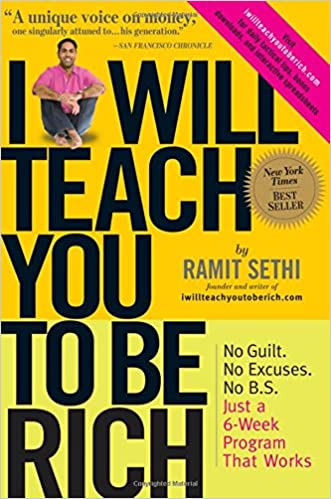
5. I Will Teach You to Be Rich (2009) Author:- Ramit Sethi Genre:-Financial education and Investment Description:-Ramit Sethi is an American personal finance advisor and entrepreneur. he is the best selling author of New York times in 2004. i Will teach you to be rich talks about how people blame others about their financial problems, smartly spending your earning and start investing from today as it will help you in future.
6. Your Money or Your Life (1992) Author:-Joseph R. Dominguez, Monique Tilford, and Vicki Robin Genre:- Financial education and Investment Description:- Author talks about the minimize spending ,excessive investing and save for Emergencies .
7. Think and Grow Rich (originally published:-1937) Author:- Napoleon Hill Genre:- Non-Fiction, Self-help, Financial education Description:-Oliver Napoleon Hill was an American author who wrote so many self-help books. Think and Grow rich is one of them and it’s one of the best self-help book of all times. Hill talks about the belief in yourself ,becoming a stubborn and never your change your decision once you decided and accompany those who are mastermind on your field.
8. The Millionaire Next Door ( originally published:-1996) Author:-Thomas J. Stanley, William D. Danko Genre:- Non-fiction Description:- Thomas J. Stanley was an American author and business theorist . He wrote The millionaire next door which was the New York times best sellers. The millionaire next door covered about the healthy spending and avoid silly mistakes that mostly people do to handle their financial expenses. It’s one of the most practical book that I had ever read till now
9. Zero to One (2014) Author:-Blake Masters and Peter Thiel Genre:- Business, Politics and Government Description:-Peter Theil is German-American billionaire entrepreneur and venture capitalized. he is the co-founder of PayPal ,Palantir technologies .he was the first outside investor in Facebook .he was ranked four on the Forbes Midas list 2004. peter write about how he thinks about his business and how an you shape the future of the world in the process.
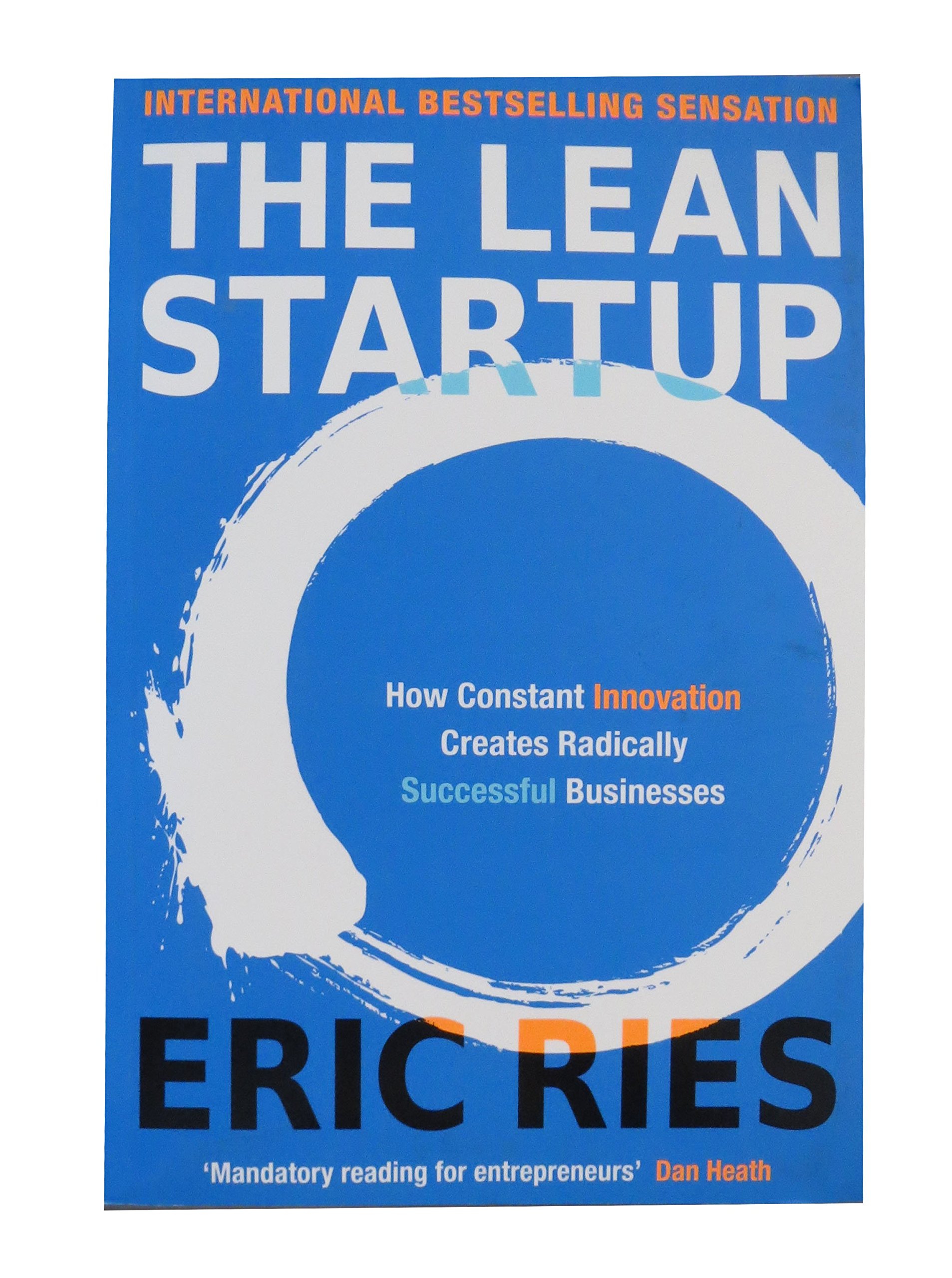
10. The Lean Startup(2011) Author:-Eric Ries Genre:-Self-help book Description:- Eric Ries is an American entrepreneur, blogger and author of The Lean Startup. the lean startup talk about the customer needs and quickly learn about it, changing the strategies according the customer needs and previous result. Eric Ries divide the book in three section:- 1. vision 2.steer 3.Accerlate
I hope you liked the article .Thank you for giving your precious time to read this article if you like the article pls tell us and comment your feedbacks . Have a Good day and Happy Reading.
Technical skills are the abilities and knowledge needed to perform specific tasks. They are practical, and often relate to mechanical, information technology, mathematical, or scientific tasks. Some examples include knowledge of programming languages, design programs, mechanical equipment, or tools.
Some of the very famous tech. Skills:
1. Project Management. Being able to effectively coordinate resources, people and budgets as a project manager is one of the best technical skills that you can have. 2. Analysis of Big Data and Business 3.Intelligence. 4. Information Security. 5. Designer. 6. Marketing Assistant. 7. Writer. And many more…
Create a dedicated Technical Skills section for the resume.
If they’re heavily emphasized in the job description, then your Technical Skills section should be at the top of your resume, just below your introduction, and above your professional experience. A bulleted list will make it easy to read.
These are some of the basic tech. Skills:
* Word Processing Skills. * Spreadsheets Skills. * Database Skills. * Electronic Presentation Skills. * Web Navigation Skills. * Web Site Design Skills. * E-Mail Management Skills. * Digital Cameras
How can you improve your technical skills? So, here are the steps to improves ones technical skill.
1. Enroll in Technical Classes or Workshops. 2. Get Technical Books. 3. Volunteer for Technical Projects. 4. Subscribe to Technical Sites and Magazines. 5. Develop Knowledge of a Second Language. 6. Practice What You Learned.
i) Business Unit, also referred to as a department, division, or functional area is a part of a company or an organization that represents a specific business function and is a part of firm’s value chain of activities like accounting, human resources, marketing, sales, purchasing and manufacturing.
ii) Establishment is a business location of a company that is engaged in a single activity. It’s a place where the business is conducted with the objective of getting paid for selling goods or services
iii) Plant Location refers to the choice of the region where men, materials, money, machinery and equipment are brought together for setting up a business or factory. A plant is a place where the cost of the product is kept to low in order to maximize gains.
iv) Plant Layout is a plan for effective utilization of facilities for the purpose of manufacturing of products, involving most efficient and economical arrangement of machines, materials, personnel, storage space and all supporting services, within available floor space.
v) Feasibility studies are the researches and studies that determine whether to go ahead with the business plan or any other idea and plan should be adopted.
Business risk is defined as the possibility of occurrence of any unfavorable event that has the potential to minimize gains and maximize loss of a business. In simple words, business risks are those factors that increase the chances of losses in a business and reduce opportunities of profit.
Characteristics of Business Risk
1. Business risk arises due to uncertainties. Uncertainty is when it is not known what is going to happen in future. Examples of uncertainties that affect a business are change in government policy, change in demand, change in technology, etc.
2. Risk is an essential part of the business. Risk involved plays a crucial role in business operations. The risk involved in can be reduced to some extent but it cannot be completely eliminated.
3. Every business has risk which varies in severity based on the type of business. For example a large Corporation or business will carry more risk as compared to small scale businesses.
4. Businesses take risk with the motive or expectation of earning profit because it is considered more the risk higher is the amount of profits from operations.
Causes of Business Risk
1. Natural Causes:- Natural causes are the causes those which arise due to interference of nature. Humans and businesses do not have a control over the natural causes. These include natural calamities like earthquake, tsunami, tornado, famine, floods and drought, etc. Humans and businesses do not have a control over the natural causes
2. Human Causes:- The human causes of business risk arise due to the loss of business that arises from changes in customer preferences, employee mindset, agitation by workers, negligence by employees, strikes and lockouts.
3. Economic Causes:- Economic causes of business risk arise from changes in the different economic factors such as increasing competition, changing market conditions, increase in price of raw materials, production cost.
Since its founding in 1949, Public Administration and Development (PAD) has been reviewing and assessing the practice of public administration at the local, regional, national and international levels where it is directed to managing development processes in low and medium income countries.
The role of public administration in bringing about development?
On the role of public administration, it will address such areas as sustained economic growth, the promotion of social development, facilitating infrastructure development and protecting the environment, promoting public- private partnerships, managing development programmes and maintaining a legal framework for
ROLE OF PUBLIC ADMINISTRATION IN DEVELOPMENT TO BE CONSIDERED AT RESUMED GENERAL ASSEMBLY SESSION 15-19 APRIL
19960412 Background Release The crucial role of public administration in development, particularly in developing countries and economies in transition, will be the subject of a one-week resumed session of the General Assembly, beginning on Monday, 15 April. The resumed session represents the first time the Assembly will meet specifically to consider that issue.
The aim of the resumed session of the General Assembly is to explore themes contained in two distinct categories: the role of public administration, and capacity-building for effective administration. Thirteen specific topics were identified within those categories.
On the role of public administration, it will address such areas as sustained economic growth, the promotion of social development, facilitating infrastructure development and protecting the environment, promoting public- private partnerships, managing development programmes and maintaining a legal framework for development.
With respect to capacity-building, the Assembly will discuss improving civil service systems, organizational strengthening, the enhancement of policy-development capacity, strengthening financial management for development, human resource development for the public sector and the development of administrative capacities for post-conflict and crisis conditions.
In deciding to hold the resumed session, the Assembly recognized the important role that governments and public administrations can play in promoting sustained economic growth and sustainable development (resolution 49/136). It also recognized the need for strengthened public administrative and financial management capacities in order to ensure a civil service that is responsive to the needs of the people.
As a stimulant to its discussion, the Assembly will have before it a report of the Secretary-General containing a series of recommendations on strengthening the role of the United Nations in public administration and development, including recommendations for national governments (document A/50/847-E/1996/7).
Recommendations in Secretary-General’s Report
The report of the Secretary-General contains recommendations on the role of policy-making for public administration and development, the focus of the United Nations programme on that subject, the coordination of relevant activities within the United Nations system and support of donors. It also includes recommendations for national governments and United Nations responses.
On the role of policy-making, the Secretary-General recommends that the issue of public administration and development be included as a regular item on the agenda of the General Assembly and the Economic and Social Council and that the Group of Experts on Public Administration and Finance be redesignated the Committee on Public Administration and Development, which would report to the Council. Likewise, the United Nations programme in public administration and finance should be renamed the United Nations programme in public administration and development.
The United Nations programme in public administration and development should enhance its role as the central depository for materials, reports and non-print media on public administration and development worldwide, the report recommends. Using the latest technology, it should become the clearing-house for all materials on the subject, to serve as a catalyst for a network of international, regional and national institutions and organizations involved in those issues. The programme’s focus should be on action-oriented, practical research on effective systems and procedures in public adminstration.
Tied to its research and clearing-house functions is the assistance the United Nations can provide to individual governments, at their request, in helping them improve their governmental machinery and public management systems for development. To that end, the United Nations programme should be strengthened in the areas of advisory services, needs assessment, diagnostics and substantive support to projects. It is recommended that the United Nations assist governments, when requested, in translating the recommendations of global conferences into detailed programmes for implementation.
The report recommends that the United Nations programme assist in all the phases of the restoration of public administration institutions in countries recovering from conflict and crises, and that it actively assist developing countries and countries with economies in transition.
On coordination of public administration and development activities within the United Nations system, the Secretary-General recommends that a consultative group on the matter will meet once a year, under the auspices of the Department for Development Support and Management Services. It will focus on closer collaboration in the planning and implementation of global
– 3 – Press Release GA/9056 12 April 1996
programmes of information exchange, research, preparation of guidelines, and organizations of seminars and workshops. It will also provide a forum for mobilizing international assistance.
With regard to donor issues, the report recommends that the donor community recognize the significance of public administration in development and provide adequate resources to improve such structures in developing countries and those with economies in transition. Particular consideration should be given to the loan of expertise to carry out practical research and advisory missions. To that end, the Secretary-General recommends the establishment of a trust fund for United Nations activities in public administration and development.
The Secretary-General highlights a number of recommendations for governments made by the Group of Experts on Public Administration and Finance, which held its twelfth meeting from 31 July to 11 August 1995. Following each recommendation is a projected United Nations response (document A/50/525- E/1995/122, annex).
The Group states that national governments should strengthen the policy, advisory and administrative capacity in critical areas, while the United Nations programme can organize professional exchanges, arrange professional training programmes and prepare case studies on policy matters for dissemination.
According to the Group, in the process of restructuring public administration, government institutions should be encouraged to develop strategic plans and monitor their performance, while the United Nations would continue to undertake comparative studies on restructuring and disseminate them on a regular basis.
Leaders should invest in people, upgrading the capacity of national training institutions to develop a core group of professional trainers, the report states. The United Nations would seek to create and sustain momentum for a global exchange of information on human resource development.
Governments are asked to establish clear goals, encourage operational flexibility, measure results impartially and develop appropriate incentives, while the United Nations would continue offering advisory services in areas including the management of change, performance management and measurement, and information technology.
Public administration services should be provided to reflect ever- changing needs of the citizens they serve, the Group states. The United Nations can assist in developing state-of-the-art technological communication networks.
– 4 – Press Release GA/9056 12 April 1996
Furthermore, governments should encourage financial management at the grass-roots level, the Group states. For its part, the United Nations would assist governments in creating and strengthening national capacities in fiscal policy analysis and economic management, and in promoting a proper environment for capital flows for investment, private sector development, transparency and accountability.
According to the Group, governments should seek objective evaluations of their privatization programmes to establish the appropriate place and timing of privatization in structural adjustment programmes; they should also pay greater attention to performance improvement in parastatals. For its part, the United Nations shall, at the request of the government, arrange for such evaluations, assisting governments in defining the role and scope of their public, private and combined sectors.
While governments should provide an encouraging environment for small and medium-sized enterprises, the report states, the United Nations would assist countries by operating an information clearing-house, developing case studies of successes and failures and providing technical support.
National governments should assume the responsibility for establishing environmental standards for all infrastructure policies, the Group states. The United Nations would assist governments in administrative capacity- building and infrastructure management. Codification of laws must be undertaken to facilitate access to legal guarantees, with the United Nations assisting governments to organize a legal framework of public administration and strengthen judicial supervision of public administration.
For countries recovering from crisis and conflict, the development of both immediate and transitional or long-term strategies is recommended. The United Nations would provide special assistance to countries in post-conflict situations and to collapsed States, to help restore effective public administration.
Governments should promote the use of aid as a stimulant for development and economic growth in civil society, the Group states. The United Nations would provide technical assistance to strengthen institutional machinery capable of evaluating the consistency between development project outcomes and such macro-objectives as growth, employment and income distribution.
Related Meetings, Activities
A number of activities are also being carried out in connection with the resumed session. Among these, Cabinet ministers and other high-ranking officials from each of the major regions will hold an executive session to discuss their experiences in restructuring governments. An International Technical Forum was held on 11 and 12 April at Headquarters, the site of a
– 5 – Press Release GA/9056 12 April 1996
related Internet Exposition until 19 April. (For more information, see Note to Correspondents No. 5329, of 10 April.)
In the lead-up to the resumed session, regional meetings were held in Africa, Asia, Latin America and the Caribbean, and Central and Eastern Europe. The impetus for the session arose from the June 1994 Tangier Declaration of the Pan-African Conference of Ministers of the Civil Service, which called for the convening of a global conference on public administration and development.
Reality shows have now become the latest end. Their initial popularity with the masses, helped in the number of such shows produced today. Reality shows take the form of various competitions and challenges where celebrities or the common man participate. There is or essentially no script involved and the interest of the show lies inherently in the personality of the audiences and the tasks. Many of these competitions are judged by eminent personalities within the field. There was a need for a change in the television industry from the onslaught of the various soaps that were telecasted.
However, the question that emerges today is…how real are these reality shows? May critics believe that there isn’t even a modicum of reality in any of these shows. They are often scripted and only aim at high TRP’s. The shows have a planned course and the masses are simply captivated. Though they provide raw drama and an undisputable display of anger, love, guilt and jealousy, these are often tactics used to keep the audiences fastened rather than a genuine display of emotion. There are many others, who are loyal supporters of reality shows and believe that they have indeed provided a platform for the common man to exhibit his talent and gain success. Various dance and singing reality shows as well as quiz shows for children and adults provide them with a means through which provide, they can showcase their talent and intelligence Through these shows they often gain various opportunities to prove their courage. But sadly, one cannot deny that the USP of many of these shows is emotion and melodrama and as a result the purpose of the show is often side-lined. The recent crop of reality shows have come up with themes that tends to belittle important social institutions. In spite of the fact that it has its own pros and cons various channels and producers are misusing the originality of these shows by introducing new themes and shows to keep the masses entertained. Some of the most popular Indian reality shows include ‘Kaun Banega Crorepati’, ‘Big Boss’ and ‘Indian Idol’. Many movie icons are also willingly accepting the task of anchoring these shows so as to connect with people and exploit the scope of T.V as a medium of maintaining one’s popularity.
However, there is a need to ensure that this genre does not deteriorate like the previous trends. The shows must always be well researched and fresh in its approach rather than look at reality T.V as a formula and launching shows that have little creativity and uniqueness.
Ritesh agarwal was the founder and ceo oyo rooms. And he is from odisha. He got the idea when he was 17 yrs old. He is dropout from college. And started business. At first he was hesitant and later he took tough choices and implemented. And it is started on May in year 2013.now it is leading chains of hotels, homes and spaces
Ritesh Agarwal has been travelled across the country before launching OYO and during such travels he discovered the problem with budget hotels. Thus at the mere age of 17, he first launched it as oravle travels in 2011, which he modelled after Airbnb. However, it later branched out to become OYO rooms in 2013. He had discovered that the problem with budget hotels was bigger than just availability, so, to counter other issues, he launched OYO.
Oyo means on your own
In 2014; the company raised Rs. 4 Cr from Lightspeed Venture Partners (LSVP) and DSG Consumer Partners, at a pre-money valuation (valuation of a company prior to investment or financing) of Rs 14 Cr.
What motivated Ritesh even more was that, by now the company was clocking gross bookings of more than Rs.1 Cr. per month.
The awards he got received are ,
Awarded the TiE-Lumis Entrepreneurial Excellence Award (2014)
The first resident Asian to win ’20 Under 20’ Thiel Fellowship (2013)
Named one of the Top 50 Entrepreneurs by TATA First Dot Awards (2013)
Finalist of Global Student Entrepreneurship Awards-India
Named one of the ‘8 Hottest Teenage Start Up Founders in the World’ by Business Insider (2013)
One of India’s biggest sweet, snacks and restaurants, Haldiram’s is easily one of the most recognizable food brands in the Northern part of India. The company has its humble origins dating pre-Independence in 1937 by the father of Ganga Bhishen Agarwal who used to sell Bhujia in Bikaner, Rajasthan. Agarwal later left his family due to a dispute and started selling namkeen on the street which was prepared by his wife at home.
In 1946, the first Haldiram store was opened which sold Bikaneri Bhujia. The name “Haldiram” has his origin in Agarwal’s nickname given by his mother. The Bhujia sold by Haldiram’s was reinvented by the addition of moth flour which made it thinner, this change proved to be successful and increased the income manifolds.
By the early 1930s, the price of bhujia went up from 2 paise a kilo to 25 paise, making it a successful business venture for the whole family to live off. Merchants on their way to Kolkata stopped by to purchase this bhujia for friends and family back home and the seeds of a global empire began to be sowed. When Ganga Bhishen went to Kolkata to attend a wedding ceremony, who knew that at this time his life as well as the appeal of the bhujia was to be changed forever. He had an idea to open a shop in Kolkata. This was their first branch out of Bikaner and laid the foundations of expansion of this successful bhujia business in 1970.
While the second generation did not expand the business further, it was his grandsons Manhoharlal and Shiv Kishan who took the business to Nagpur and the capital Delhi. Business in Delhi began in 1983 in Chandni Chowk but, unlike the other cities they had ventured into, bhujia was not a unique product in Delhi. The brothers faced immense competition from established players such as Ghantewala and Bikanerwala. As a strategy, they differentiated themselves by focusing on adjusting flavours and innovation to meet the needs of the market and soon began to break even. Once business picked up, they turned their apartment into a factory, where the entire family pulled long sleepless nights, trying to keep up with demand. Soon, the single Chandni Chowk location was not enough and Manohar Lal began looking for factory space to begin large-scale production. The first factory was set up in the late ’80s. After that, distribution became one of their greatest strengths, one of the secrets to their success in the capital. This was followed by restaurants in major cities in India and countries abroad including the United States, Canada and Thailand.
Currently Haldiram is producing more than 400 products. It offers all different categories of Veg frozen food, various types of Namkeen snacks and a variety of sweets. A testament of their success is that today at railway stations and stalls around the country, the ₹5 Haldiram’s bhujia packet is used as currency, as a substitute for loose change.
Ganga Bhishen Agarwal left for the heavenly abode on 23rd February 1980 but he wouldn’t have imagined that one day his products will sell globally and it would be a business with a net worth of ₹7,130 crore.
Public Enterprise is an autonomous or semi-autonomous corporation that is controlled by the State or National Government. These enterprises came into existence to help people of the state in their commercial and industrial activities and usually focuses on areas of development and areas of public interest demanding a huge amount of capital.
Objectives of Establishing a Public Enterprise
i) Development of backward Areas
ii) Employment Generation
iii) Economic Surplus
iv) Consumer Welfare
v) Public utilities
Forms of Public Enterprise
Departmental Undertaking
This is the oldest form of Public Sector Enterprises. The Departmental Undertaking is considered as one of the departments of government. It has no separate existence than the Government. It functions under the overall control of one Ministry or Department of Government.
Statutory Corporation
A Statutory Corporation is a body corporate formed by a special Act of Parliament or by the Central or State Legislature. It is fully financed by the Government. Its powers, objects, limitations etc. are also decided by the Act of the Legislature.
Government Company
The company in which a majority of Paid-up Share Capital is held by the Central or State Government or partly by Central or State Government is called Government Company. The public may or may not be allowed to invest in these companies.
Sir Richard confirmed the purchase in an interview.
E
Elon Musk has bought a ticket on one of rival billionaire Sir Richard Branson’s spaceship flights, according to a newspaper report.
As Sir Richard prepares to fly on Virgin Galactic’s first fully crewed flight to the edge of space on Sunday from New Mexico, The Sunday Times says Mr Musk – who owns rival exploration company SpaceX – has paid for a seat on a future Virgin voyage.
Mr Musk paid a 10,000-dollar (£7,000) deposit to reserve a seat. No date for his flight has been specified.
Sir Richard confirmed the purchase in an interview with The Sunday Times, saying he might reciprocate by booking a ticket on a SpaceX flight in the future.
“Elon’s a friend and maybe I’ll travel on one of his ships one day,” he said.
Amid what has been dubbed the billionaires’ space race, SpaceX has launched dozens of rockets, including manned flights, but Mr Musk himself has not yet flown on any. The company is due to launch its first fully private spaceflight in the autumn.
Sir Richard will become the first owner-astronaut to take part in a mission, beating Amazon founder Jeff Bezos who plans to reach space in his own rocket – through his Blue Origin company – in nine days’ time.
Tourists are expected to pay some 250,000 dollars (£180,000) for a spaceflight on Virgin Galactic, which includes four minutes of zero gravity.
Marketing is a broad term. It is the activity, set of instructions and processes for creating, communicating, delivering, and exchanging offerings that have value for customers, clients, partners, and society at large.
In Management, there are 2 types of Strategies that are Push Strategy and Pull Strategy. In early times, even today at some extent it is believed that a person/individual or a company that can sale anything is a good at marketing. But it is not truth.
Do you know why?
Marketing is based on the concept of Pull Strategy and not Push Strategy. Pull Strategy focuses on understanding the demand and requirements of customer, manufacturing or innovating a commodity so that customer receives a product which adds to the value of customer. This helps in creating a strong a loyal customer base. Its not that the customer is compelled to purchase a commodity, not considering whether the customer requires that product or not. (Push Strategy) in which the customer will buy the product once but will not show any demand in future.
Human Resource (HR)
Human Resources (HR) is the division of a business that is charged with finding, screening, recruiting, and training job applicants, and administering employee-benefit programs. Human resources responsibilities also include compensation and benefits, recruitment, firing, and keeping up to date with any laws that may affect the company and its employees.
Many companies have moved away from traditional in-house human resources (HR) administrative duties and outsourced tasks like payroll and benefits to outside vendors.
Finance
“Finance” is a broad term that describes activities associated with banking, leverage or debt, credit, capital markets, money, and investments.
Basically, finance represents money management and the process of acquiring needed funds. Finance also encompasses the oversight, creation, and study of money, banking, credit, investments, assets, and liabilities that make up financial systems
























.png)




 Eduindex
You must be logged in to post a comment.