The clauses of the Indian Constitution concerning freedom of trade, commerce, and intercourse were taken from the Australian Constitution. The Australian Constitution states that there should be freedom of trade, commerce, and intercourse, which can be carried out via ocean shipping or internal conveyance.
While India borrowed this clause, it also ensured that the free flow of products is allowed not only between states, but also within a single state. As a result, both inter-state and intra-state trade is permitted in India under the Indian Constitution. Intercourse, trade, and commerce According to Article 301 of the Indian Constitution, all trade, commerce, and interaction in the country should be free. Trade involves the exchange of commodities and services between a buyer and a seller, as well as the transportation of such goods. The factor of products transmission, as well as that of men and animals, is more prominent in commerce. As a result, profit isn’t the most important consideration in business.
Article 301’s purpose Article 301 of the Constitution was added to ensure that the nation’s unity is preserved by erasing geographical boundaries that exist throughout the country. Furthermore, it ensures the free flow of commodities throughout the country by removing any limits that may be imposed.
As a result, the primary goal of this provision is to instil in all Indians a sense of belonging to a single nation, which may be difficult to do if economic operations are hindered by several barriers, as they already are owing to regionalism and language barriers.
Commerce and taxation freedom are two important aspects of freedom of trade. While Article 301’s goal is to allow for the free movement of products, this does not preclude the government from regulating some areas of trade. The state has the right to regulate trade, so if taxes are levied on goods, they do not automatically become a restriction on freedom of trade. There is a criterion that is used to determine whether or not a tax levied on goods is a violation of Article 301.
It is not possible to have complete freedom of trade, commerce, or intercourse. Despite the fact that Article 301 states that trade, commerce, and intercourse shall be free across India, this freedom is not absolute. This means that limited limitations on this right can be placed without violating Article 301’s stipulations. Part XIII of the constitution mentions these constraints, and even Article 301 states that this freedom is subject to the provisions of this section.. Article 302 of the Indian Constitution gives Parliament the ability to put some limits on the free movement of products, but this power is subject to the provisions of Article 303.
Conclusion Part XIII of the Indian Constitution contains provisions for freedom of trade, commerce, and intercourse in India. While trade freedom exists, it is not absolute in nature, and various constraints can be imposed on it. As a result of these provisions, the freedom of trade, commerce, and intercourse is granted Constitutional standing, which is important to ensure that geographical barriers and arbitrary limitations on the free flow of trade can be overcome.
Minimalism is defined as a design or style in which the simplest and fewest elements are used to create the maximum effect. Minimalism had its origins in the arts—with the artwork featuring simple lines, only a few colors, and careful placement of those lines and colors. More recently, it has become representative of a lifestyle that aims to remove clutter from all facets of life.
Minimalism is all about owning only what adds value and meaning to your life (as well as the lives of the people you care about) and removing the rest. It’s about removing the clutter and using your time and energy for the things that remain. We only have a certain amount of energy, time, and space in our lives. In order to make the most of it, we must be intentional about how we’re living each day.
There are many different approaches to minimalism, but it’s really just a tool to help you prioritize what’s important in your life.
Joshua Becker of Becoming Minimalist offers this definition: “Minimalism is the intentional promotion of the things that bring you joy and the removal of those that do not.” It might be called simple living, tiny living, intentional living, and a myriad of other things—but there is at least one common thread: the idea of curating the things we own to best reflect our priorities and vision for our lives.
If the idea of minimalism sounds intimidating to you or if you’ve seen some images and thought, “that’s a nice idea, but I’d never want to live like that,” don’t worry. You can benefit from applying minimalism in your life whether you live in a tiny home, suburban house, or a mansion. You can use minimalism as a guiding philosophy and customize based on what works best for you.
Common Misconceptions of Minimalism
Contrary to what some people think, there aren’t any actual rules to minimalism. There’s no official board of minimalism to determine whether or not you’re doing minimalism right. Minimalism truly looks different for everyone.
You don’t have to own below a certain number of items. You can still have nice things, and no, you don’t need to get rid of your favorite collection—whether it’s books, shoes, or music. Minimalism doesn’t have to look like white-walled, modern and sparse homes you’ve probably seen in magazines and videos, a common minimalism mistake. Minimalism is also not a one and done project. It is a a continual practice to ensure everything in our lives is working for us in our vision, not against us. Its used over the years to make substantial changes in our careers, home, lifestyle, buying behaviors, etc.
Everyone can benefit from applying the principles of minimalism to their lives. It’s a process of removing distractions and things that no longer add value to our lives.
Why Minimalism Is An Effective Tool For Living An Intentional Life?
In the end, minimalism is less about owning fewer items and more about actively making choices on what kind of things truly matter to you.
We exist in a society that creates false value on owning more stuff and having no time to use them much. The constant pursuit of bigger and better is an endless cycle. There will always be a nicer car to buy, a bigger boat, a larger home, and or a faster private jet. Did you know that there’s a website for billionaires to shop? Yeah. It never ends.
It may seem like an overwhelming challenge at first, but as you untangle the life you built around owning more things, you’ll find the stress disappearing and the world starting to slow down. Those choices you make will begin to build a muscle that will fundamentally change the way you live your life.
Infosys is a Indian Multinational Company and one of the top IT company in India. Infosys was started in 1981 with just 10,000 rupees. By April 2021, the net worth of Infosys is $78.32 Billion making it one the top IT company in India. In this blog we going to discuss Who started Infosys? Growth of Infosys ? Milestones of Infosys? Infosys Tagline. Competitors of Infosys. Some interesting facts about Infosys.
WHO STARTED INFOSYS?
Infosys stands for Information Systems was started in Bangalore by the employees of Patni Computer Systems. The founders of Infosys are Narayana Murthy, Nandan Nilekani, Shibulal, Kris Gopalakrishnan, Ashok Aurora, Raghavan and Dinesh. They started the company with just 10,000 Rupees and named it Infosys Consultants. The company began in a small office room infront of Murthy’s house. For the first two years of there company they didn’t have at least one computer because they don’t have enough money. After two years they bought two computers of Data General 32 bit MV8000.
GROWTH OF INFOSYS
The growth of Infosys was started from 1993. This has been possible because of the ability to increase per capita income and attract many brightest investments.
MILESTONES OF INFOSYS
>> In 1987, they opened there first international office in Boston, USA. >> In 1994, they opened a development center at Fremont. >> In 1995, they opened there first office in European continent, UK and implemented E-business practices. >> In 1996, Infosys foundation was established. >> In 1997, they opened there office in Toronto, Canada. >> In 1999, Revenue crossed $100 million USD, Company get listed in NASDAQ, Infosys Consulting Business is launched, becomes 21st company in the world to achieve CMM level 5 certification. >> In 2000, Revenue crossed $200 million USD, Opens office in France and Hong Kong. >> In 2001, Revenue crossed $400 million USD. >> In 2002, Revenue crossed $500 Million USD, Nilekani becomes CEO of Infosys. >> In 2005, Revenue crossed $1 Billion USD. >> In 2006, Revenue crossed$2 Billion USD
INFOSYS TAGLINE
The tagline of Infosys is “Powered by Intellect, Driven by Values”
WHO ARE THE COMPETITORS TO INFOSYS
The top competitors of Infosys are TCS, Wipro and HCL. 1.TCS(Tata Consultancy Service) is one the biggest competitor of Infosys. TCS it was founded in 1968 by J R D Tata, F.C Kohli, Simit Doshi, and Jahangir Tata. Its headquarter is located at Mumbai, India. 2. Wipro(Western India products) is also one the biggest competitor of Infosys. Wipro was founded in 29 December 1945, by Azim Hasham Premji. Its headquarter is located at Bangalore, India. 3. HCL(Hindustan Computers Limited) is the 3rd top competitor of Infosys. HCL was founded in 1976 by Shiv Nadar. Its headquarter is located at Noida, India.
SOME INTERESTING FACTS ABOUT INFOSYS
As of now 2021, Infosys have 222709 employees in there company.
The revenue of Infosys in 2021 is 1.027 Trillion Indian Rupees.
Infosys was almost about to sold in the year 1989.
Pune was the first headquarter of Infosys, In 1983 they shifted to Bangalore.
Infosys have 7 founders.
Infosys is the second largest IT company after TCS in India
I hope you like this Blog, if you like please like and rate it, it gives me motivation.
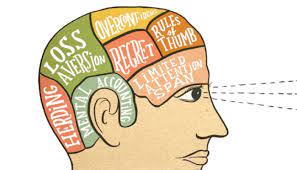
In an ideal world, people would always make optimal decisions that provide them with the greatest benefit and satisfaction. In economics, rational choice theory states that when humans are presented with various options under the conditions of scarcity , they would choose the option that maximizes their individual satisfaction. This theory assumes that people, given their preferences and constraints, are capable of making rational decisions by effectively weighing the costs and benefits of each option available to them. The final decision made will be the best choice for the individual. The rational person has self-control and is unmoved by emotions and external factors and, hence, knows what is best for himself. Alas behavioral economics explains that humans are not rational and are incapable of making good decisions.
Behavioral Economics is the study of psychology as it relates to the economic decision-making processes of individuals and institutions. Behavioral economics draws on psychology and economics to explore why people sometimes make irrational decisions, and why and how their behavior does not follow the predictions of economic models. Decisions such as how much to pay for a cup of coffee, whether to go to graduate school, whether to pursue a healthy lifestyle, how much to contribute towards retirement, etc. are the sorts of decisions that most people make at some point in their lives. Behavioral economics seeks to explain why an individual decided to go for choice A, instead of choice B.
Because humans are emotional and easily distracted beings, they make decisions that are not in their self-interest. For example, according to the rational choice theory, if Charles wants to lose weight and is equipped with information about the number of calories available in each edible product, he will opt only for the food products with minimal calories. Behavioral economics states that even if Charles wants to lose weight and sets his mind on eating healthy food going forward, his end behavior will be subject to cognitive bias, emotions, and social influences. If a commercial on TV advertises a brand of ice cream at an attractive price and quotes that all human beings need 2,000 calories a day to function effectively after all, the mouth-watering ice cream image, price, and seemingly valid statistics may lead Charles to fall into the sweet temptation and fall off of the weight loss bandwagon, showing his lack of self-control.
China and Japan India and Byzantium traveling culture and history vector geisha and samurai men and women Taj Mahal and torii gate capitol building and Great wall landmarks and heritage nationalities.
Culture and history is the main building block of our lifes
The Culture is the characteristics and knowledge of a particular group of people, encompassing language, religion, cuisine, social habits, music and arts.
The word “culture” derives from a French term, which in turn derives from the Latin “colere,” which means to tend to the earth and grow, or cultivation and nurture
History is the study of life in society in the past, in all its aspect, in relation to present developments and future hopes. It is the story of man in time, an inquiry into the past based on evidence.
As with any scholarly approach that boasts of being “new” when it bursts onto the scene, new cultural history was fairly well established as one among many ways of thinking about history by the twenty-first century. This is not to say that new cultural historians enjoyed the unanimous esteem of their more traditional colleagues, for the field still managed to draw the fire of critics from the left and the right who believed that after twenty years this approach still represented a mere “trend.” One could agree with Peter Novick that this attests to the fragmentation of the historical profession into a plethora of specializations that no longer cohered around shared principles and whose denizens had little common ground for discussion. Yet much has changed in cultural history since its heyday in the 1980s.
When new cultural history was actually “new” it provided innovations both in terms of the topics considered worthy of historical attention and in terms of the ways of theorizing such topics within their respective contexts. It is nevertheless apparent that a good portion of what was marketed in 2000 as “cultural history” reflected more of the topical rather than theoretical innovations entailed by this approach. In fact, some of these works even read more like conventional social histories with a few obligatory nods to one of many privileged theorists.
To some extent this state of affairs reflects the success of this approach in the academy and the willingness of historians to combine methodologies in a creative and eclectic manner. On the other hand, though, one might argue that cultural history lost much of its edge by becoming subsumed into a more or less nonreflective historical establishment. Some historians see less fragmentation than the cooptation of erstwhile radical approaches back into a surprisingly resilient mainstream.
“Whatever possibilities become evident,” notes Patrick Joyce, “something is needed to shake the hold of a history which continually reproduces itself, in the process sucking the erstwhile heterodox into its consensus, in much the way that ‘cultural history’ is slowly but surely becoming routinized as more methodology, yet one more subdiscipline in the house of history.” Joyce’s observation is astute, yet one wonders whether a historical approach that could successfully resist such cooptation is possible and, even if it were, whether it would still merit the name “history.” It seems evident that what makes history “history” has little to do with methodologies and innovations that are unique to it, and perhaps a more thoroughgoing interdisciplinarity would discourage the domestication of future innovations into mere additions to the mansion of conventional history.
Study finds topological materials could boost the efficiency of thermoelectric devices.
What if you could run your air conditioner not on conventional electricity, but on the sun’s heat during a warm summer’s day? With advancements in thermoelectric technology, this sustainable solution might one day become a reality.
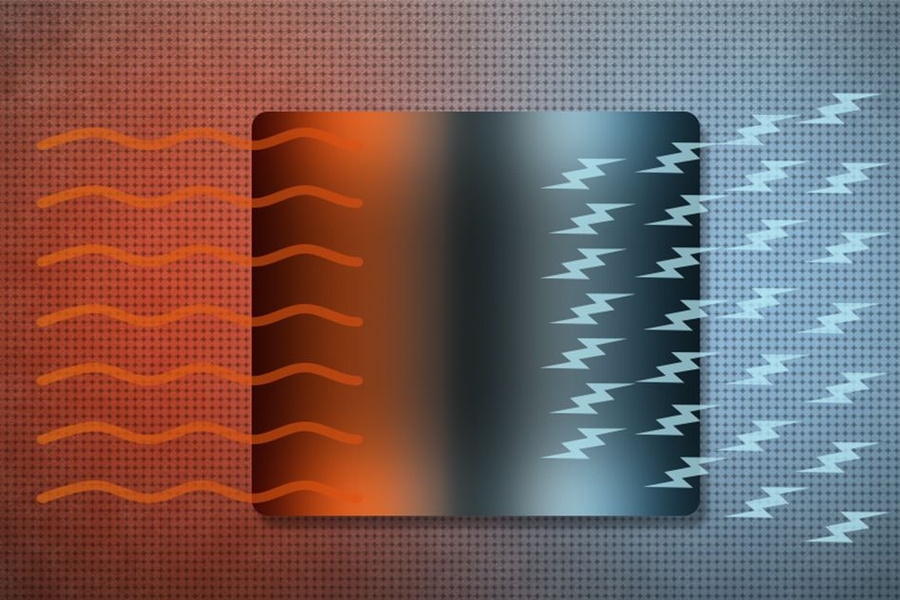
Thermoelectric devices are made from materials that can convert a temperature difference into electricity, without requiring any moving parts — a quality that makes thermoelectrics a potentially appealing source of electricity. The phenomenon is reversible: If electricity is applied to a thermoelectric device, it can produce a temperature difference. Today, thermoelectric devices are used for relatively low-power applications, such as powering small sensors along oil pipelines, backing up batteries on space probes, and cooling minifridges.
But scientists are hoping to design more powerful thermoelectric devices that will harvest heat — produced as a byproduct of industrial processes and combustion engines — and turn that otherwise wasted heat into electricity. However, the efficiency of thermoelectric devices, or the amount of energy they are able to produce, is currently limited.
Now researchers at MIT have discovered a way to increase that efficiency threefold, using “topological” materials, which have unique electronic properties. While past work has suggested that topological materials may serve as efficient thermoelectric systems, there has been little understanding as to how electrons in such topological materials would travel in response to temperature differences in order to produce a thermoelectric effect.
In a paper published this week in the Proceedings of the National Academy of Sciences, the MIT researchers identify the underlying property that makes certain topological materials a potentially more efficient thermoelectric material, compared to existing devices.
“We’ve found we can push the boundaries of this nanostructured material in a way that makes topological materials a good thermoelectric material, more so than conventional semiconductors like silicon,” says Te-Huan Liu, a postdoc in MIT’s Department of Mechanical Engineering. “In the end, this could be a clean-energy way to help us use a heat source to generate electricity, which will lessen our release of carbon dioxide.”
A path freely traveled
When a thermoelectric material is exposed to a temperature gradient — for example, one end is heated, while the other is cooled — electrons in that material start to flow from the hot end to the cold end, generating an electric current. The larger the temperature difference, the more electric current is produced, and the more power is generated. The amount of energy that can be generated depends on the particular transport properties of the electrons in a given material.
Scientists have observed that some topological materials can be made into efficient thermoelectric devices through nanostructuring, a technique scientists use to synthesize a material by patterning its features at the scale of nanometers. Scientists have thought that topological materials’ thermoelectric advantage comes from a reduced thermal conductivity in their nanostructures. But it is unclear how this enhancement in efficiency connects with the material’s inherent, topological properties.
To try and answer this question, Liu and his colleagues studied the thermoelectric performance of tin telluride, a topological material that is known to be a good thermoelectric material. The electrons in tin telluride also exhibit peculiar properties that mimic a class of topological materials known as Dirac materials.
The team aimed to understand the effect of nanostructuring on tin telluride’s thermoelectric performance, by simulating the way electrons travel through the material. To characterize electron transport, scientists often use a measurement called the “mean free path,” or the average distance an electron with a given energy would freely travel within a material before being scattered by various objects or defects in that material.
Nanostructured materials resemble a patchwork of tiny crystals, each with borders, known as grain boundaries, that separate one crystal from another. When electrons encounter these boundaries, they tend to scatter in various ways. Electrons with long mean free paths will scatter strongly, like bullets ricocheting off a wall, while electrons with shorter mean free paths are much less affected.
In their simulations, the researchers found that tin telluride’s electron characteristics have a significant impact on their mean free paths. They plotted tin telluride’s range of electron energies against the associated mean free paths, and found the resulting graph looked very different than those for most conventional semiconductors. Specifically, for tin telluride and possibly other topological materials, the results suggest that electrons with higher energy have a shorter mean free path, while lower-energy electrons usually possess a longer mean free path.
The team then looked at how these electron properties affect tin telluride’s thermoelectric performance, by essentially summing up the thermoelectric contributions from electrons with different energies and mean free paths. It turns out that the material’s ability to conduct electricity, or generate a flow of electrons, under a temperature gradient, is largely dependent on the electron energy.
Specifically, they found that lower-energy electrons tend to have a negative impact on the generation of a voltage difference, and therefore electric current. These low-energy electrons also have longer mean free paths, meaning they can be scattered by grain boundaries more intensively than higher-energy electrons.
Sizing down
Going one step further in their simulations, the team played with the size of tin telluride’s individual grains to see whether this had any effect on the flow of electrons under a temperature gradient. They found that when they decreased the diameter of an average grain to about 10 nanometers, bringing its boundaries closer together, they observed an increased contribution from higher-energy electrons.
That is, with smaller grain sizes, higher-energy electrons contribute much more to the material’s electrical conduction than lower-energy electrons, as they have shorter mean free paths and are less likely to scatter against grain boundaries. This results in a larger voltage difference that can be generated.
What’s more, the researchers found that decreasing tin telluride’s average grain size to about 10 nanometers produced three times the amount of electricity that the material would have produced with larger grains.
Liu says that while the results are based on simulations, researchers can achieve similar performance by synthesizing tin telluride and other topological materials, and adjusting their grain size using a nanostructuring technique. Other researchers have suggested that shrinking a material’s grain size might increase its thermoelectric performance, but Liu says they have mostly assumed that the ideal size would be much larger than 10 nanometers.
“In our simulations, we found we can shrink a topological material’s grain size much more than previously thought, and based on this concept, we can increase its efficiency,” Liu says.
Tin telluride is just one example of many topological materials that have yet to be explored. If researchers can determine the ideal grain size for each of these materials, Liu says topological materials may soon be a viable, more efficient alternative to producing clean energy.
“I think topological materials are very good for thermoelectric materials, and our results show this is a very promising material for future applications,” Liu says.
This research was supported in part by the Solid-State Solar Thermal Energy Conversion Center, an Energy Frontier Research Center of U.S. Department of Energy; and the Defense Advanced Research Projects Agency (DARPA).
Mithun Bhat, born in Bhopal, could buy 2 houses within a month, Bentley, Ferrari and paid all his debts. But previously, he worked with salary under the minimum wage. So, how could he earn so much money only in a month? He tells us his story.
“I worked at pizza delivery service for a year. I was prior a collage student and did a part time job in a restaurant. I did it to support my study. In the second year of study I was close to be expelled since I could not pay the tuition. At the time, I had to take a loan. I could finally paid my tuition, but I had no money to pay the monthly installments to the bank. Honestly, studying and working all at once was beyond my endurance, and eventually, I was expelled from campus a week before the end of school year. That was the beginning of the darkest days of my life. My father lost his job and my family didn’t know how to survive. Could you imagine how hopeless I felt? I had no decent work and no education, and my father lost his job. I could do nothing to help them.
One night, I was delivering a pizza to the last location. A guy opened the door. He was with his friends, and while he was paying the pizza, I heard their discussion about where would they invest Rs. 2,000,000 they earned 10 minutes ago. I just made a glance and saw a sort of graph and figures on the laptop screen. The guy opening the door gave me Rs. 1,000 but the price was only Rs. 600. He told me to keep the change.
I was absolutely surprised and after I got back home, I took my laptop and tried to recall about their discussion. After 5 minutes, I remembered that they told about online trading. On the Broker website I found the graphs and figures I saw at the guy’s laptop.
After reading all information about the broker and watching tutorial videos, I opened a demo account where I got virtual money. I quickly understood what I had to do, it was very easy. I earned some money after my very first transaction. Then I thought… I did not lose anything, so I decided to open a real account and deposited my last money there. At the morning, I woke up and saw that I earned Rs. 30,654 over that night. After 2 weeks I could paid my debts off, bought a car, and I could help my father while he was searching for a new job and pay his expenses for the next few months. 2 weeks later, I already had 2 houses in the suburb. And all I did without leaving my home and getting higher education.
That’s my luck. It would never happen if I did not meet the rich guy while delivering the pizza. I know there are a lot of people having not good times like me, that’s why I tell you: if you want to live without any problem, I can tell you how to earn money with Trading Resource. It is very easy if you would try it.
A job is something you simply do for the money. Usually, jobs have a small impact on future resumes because they aren’t typically related to what your career is or will be. Also, jobs usually offer less networking opportunities because your coworkers often won’t be continuing on to the same field as you in your future career.
Most jobs consist of hourly wages, are more short-term, and focus on getting a task done.
What is a career ?
A career is all about building up skills through various employment opportunities, giving you the ability to move on to higher paying and more prestigious ones. Careers provide a foundation of experiences that help fuel your professional life for many years.
Careers are more long-term and are about learning, gaining experience, building connections, and putting yourself in the right position for promotions and raises. Also, careers tend to be more salary based, as opposed to hourly based like jobs, and often include benefits such as paid time off and healthcare.
While more education is often required for a career, you don’t need to spend the rest of your life in school just to get ahead. South College offers many associate degree programs that can be completed in just two years, getting you started on your new career before you know it.
If you’re interested in finding out what your future career should be or in getting the right education to put you there, contact us today!
That’s not to say that jobs aren’t valuable. Jobs show your work ethic, which is important to future employers, and money pays the bills! Jobs can help prepare you for a career by providing you with valuable skills like time management and communication.
DIFFERENCE
A job is more short-term oriented and tends to focus purely on earning money. On the other hand, a career is a series of related employment in one field that provides experience for your future and helps you earn a better paycheck and living status
7 Strategies to Build A Successful Career
Identify with Your Goals. Before even considering following a career route, you must get to know yourself. …
Financing decisions are concerned with the amount of finance to be raised from various long-term sources of funds like, equity shares, preference shares, debentures, bank loans etc and its impact on the capital structure of the organisation.
It is one of the three main decisions of Financial Management – Investment decisions, Financing decisions and Dividend decisions.
Factors affecting financing decisions
While making financing decisions, one must focus on the composition of funds from various long-term sources. These decisions involve:
Decision whether or not to use a combination of ownership and borrowed funds.
Determining the ratio in which ownership and borrowed funds should be kept.
A firm should have an appropriate mix of debt as well as equity.
The disadvantage of having Debt is that it involves Financial Risk which is the risk of default on payment or interest on borrowed funds and the repayment of principle amount
However, tax benefit on interest payments of the debt reduces its cost, making it cheaper than equity.
In order to avail the benefits of debt wisely, the cost of debt should be less than the rate of return on the capital.
Shareholders’ funds have no fixed commitment in the aspects of repayment of capital or payment of returns.
Factors to be considered to make financing and capital structure decisions are listed below-
Interest/dividend pay-out: Debt involves compulsory interest payments whereas there is no compulsion to pay dividend to equity shareholders. However, the company should also keep its dividend policy in mind, in case they prefer paying dividends in order to retain their shareholders.
Tax deductibility– Interest payments are tax deductible which reduces its overall cost.
Dilution of control– In case the existing shareholders want to retain the complete control of business then finance can be raised through borrowed funds or preference shares but when they are ready for dilution of control over business, equity shares can be used for raising finance.
Risk and floatation costs: More risk is associated with borrowed funds as compared to owner’s fund as interest is paid on it and it is also repaid after a fixed period of time or on expiry of its tenure. The cost involved in issuing securities such as broker’s commission, underwriter’s fees, expenses on prospectus etc. Is called flotation cost. Higher the flotation cost, less attractive is the source of finance.
Feasibility& Cash Flow position: In case the cash flow position of a company is good enough then it can easily use borrowed funds.
Payment schedule: In case the company wants to go for debt, then the payment schedule, tenure and total costs (principal+interest) should be analysed and compared with other options. Longer the schedule, greater the interest so in case the schedule is too long, the terms should be modified or other financing options can be considered.
Different options and compositions of debt and shareholder’s fund can be analysed to find the one with the lowest weighted average cost (WACC). This way the company enjoys the tax benefit advantage of debt and non-compulsion of dividend payments advantage of equity.
However, it is important to analyse costs after factoring in the time value of money so the decision-maker gets a realistic picture of the cost of capital, on the basis of which, informed decisions can be made.
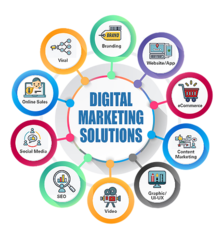
“E-commerce” and “online shopping” are often used interchangeably, but the scope of e-commerce is much broader: it embodies the concept of doing business on the Internet, for example, it includes many different services. Make online payments, book flights, etc. Buying and selling goods or services electronically via the Internet is called e-commerce.
Courierdelivery model Traditional order fulfillment model
E–commerce
Including network marketing, also known as online marketing. Internet marketing is the process of using tools that help generate potential customers and sales to promote a company or brand and its products or services on the Internet.
Content marketing Content marketing aims at Your personal brand and your target audience Keywords and research. Focus and content commitment. What will you create? How often do you post? Where will you post? You need to define these basics to create consistent and qualitycontent. Content Creation Content Promotion
SEO (Search Engine Optimization)
The process of maximizing the number of visitors to a given website by placing the websiteat the top of the search engine results list. SEO stands for search engine optimization, which means increasing the quantity and quality of website traffic through regular search results.
SEM (Search Engine Marketing)
Search Engine Marketing(SEM) is one of the most effective ways to develop business in an increasingly competitive market. Online advertising is important to millions of businesses, and search marketing is the most effective way to promote your products and grow your business.
Email marketing
Email marketing is an efficient digital marketing strategy for sending emails to potential customers and customers. Effective marketing emails turn potential customers into customers and long-termcustomers into loyal and enthusiastic followers.
Globalization is the word used to describe the growing interdependence of the world’s economies, cultures, and populations, brought about by cross-border trade in goods and services, technology, and flows of investment, people, and information.
Globalization is driven by the convergence of political, cultural and economic systems that ultimately promote — and often necessitate — increased interaction, integration and dependency amongst nations.
The more that disparate regions of the world become intertwined politically, culturally and economically, the more globalized the world becomes.
These international interactions and dependencies are enabled and accelerated by advances in technology, especially in transportation and telecommunications. In general, money, technology, materials and even people flow more swiftly across national boundaries today than they ever have in the past. The flow of knowledge, ideas and cultures is expediated through Internet communications.
There are three types of globalization:
1. Economic globalization. This type focuses on the unification and integration of international financial markets, as well as multinational corporations that have a significant influence on international markets. 2. Political globalization. This type deals mainly with policies designed to facilitate international trade and commerce. It also deals with the institutions that implement these policies, which can include national governments as well as international institutions, such as the International Monetary Fund and the World Trade Organization. 3. Cultural globalization. This type focuses on the social factors that cause cultures to converge — such as increased ease of communication and transportation, brought about by technology.
Take a risk and keep testing, because what works today won’t work tomorrow, but what worked yesterday may work again.”- Amrita Sahasrabudhe.
Digital marketing is a canopy for marketing. It is all about marketing Products and services through digital technologies, overall the Internet, digital marketing involves all marketing weapon that requires an electronic device or the internet.
When small businesses get started, their focus is often on how to get their first group of customers through the door. They may rely on traditional forms of advertising, such as print ads and coupon mailers or even big signs on the side of the road. They may trust that since they know they offer a good product or service, it’s only a matter of time until customers will find their way to them.
This decade 2021, in just a three month whole world is facing new pandemic (covid19). As per government order we have to maintain social distancing and isolation. Every social gathering is canceled. Small business or any other company can take this situation as an opportunity. As everyone will be in there houses all they gonna do there is watch TV, laptop or stick to there phone. This will be best opportunity to show cast there product or company.
Nower day people tend to believe in digital marketing then the traditional one. It’s an psychology of people if their favorite or popular celebrity do promote the particular product they will bye it then the unknown face doing the same ad. They qualities of advertisement also plays an important role on consumers mind. ” popular the celebrity is the more costumer they will attract”.
The group of potential customers that are found online is a much larger group of people than you are likely to be able to attract locally. Using digital marketing, you can reach an enormous audience in a way that is both cost-effective and measurable.
41% of U.S. buyers search and buy on Amazon while 28% search on Google then buy on Amazon, so small business SEO is still crucial . 3.2 billion people or 42% of the world population uses social media today (Emersys, 2019). Facebook, Instagram, Twitter, Reddit, and LinkedIn are the market leaders. LinkedIn offers 80% of social media B2B leads, for example. On average, these people spend 2 hours and 22 minutes on social media networks per day, 80% of the time is on mobile.
At last “It’s hard to find things that won’t sell online.” – Jeff Bezos
Karsan bhai khodidas patel is an Indian industrialist who is the founder of a Rs.42,500 crore nirma group, a company which majorly deals with detergents, cements and cosmetics. Karsan bhai patel was born in 1945 into a farmer family from Ruppur village, Mehsana, Gujarat. Karsan bhai completed his B.Sc in chemistry and he initially joined in a cotten mill as a lab technician in Ahmedabad later served for the state government.
He has an abaundant knowledge on chemicals and in 1969, he started manufacturing phosphate free detergent for domestic usage in his backyard. He named that detergent powder as “NIRMA” . He dedicated his time after the office hours to prepare and market the detergent. At initial stage this business was purely one-man-company.
Karsan bhai used to sell his handmade detergent packets door to door using his cycle. The hand made detergent packets were sold at Rs.3 per kg, which was one third of least priced compared to popular detergents at that time. This least price making strategy gave him instant success. At that time domestic detergent market was limited and mostly controlled by the top most MNC companies only but with entry of karsan bhai’s market strategy, nirma created a revolution in domestic detergent sector.
It made the best and environment friendly detergent than other brands and occupied the top most shares in the market with its innovative methods. With in a short span of time Nirma became the largest selling detergent company in India. Since, the industry was labour intensive nirma also builded a large scale of employment.
Now, the company was recognized as the 9th among the top FMCG brands in India as per the year 2002. In the year of 2010 Karshan bhai received “PADMA SRI AWARD” and in 2019 karsan bhai ranked with #30 by forbes magazine for the list of Indias richest persons.
CONCLUSION:
Finally, we can understand karsan bhai’s success story as a good source for marketing strategy because he understood the need and demand of the domestic detergents perfectly and he applied his innovative marketing formula strictly in his business and also he focused on the new technologies to develop his business as well and worked consistently to bag the success.
” SUCCESSFULL PEOPLE ARE NOT GIFTED BUT THEY DO HARD WORK TO ACHIEVE SUCCESS ON A PURPOSE “
Hello guys, today’s topic is going to be very informative.
“Start up ” have you ever heard of this Word before? Even if you have never heard of the word start up many of us actually heard about those startups which are doing fantastic .
Start ups are the newly established business,by one or more entrepreneurs.These entrepreneurs set up business by taking financial risks .
Start ups are actually initiated by its founders based on an idea which has a potential to become successful and bring profits to the company .
Even though startups gives wings to an individual’s dreams it is not easy to create an impact with an startup during this tough competition era.
And while setting up an start up the individual needs to have necessary funds so mostly the start ups are setup by taking loans,or borrowing money from families,friends.
So generally startup are built around one main idea which can change the whole picture,which can create an impact in the industry.
Startups can become successful only when the foundations that is the base on which the company is started should be rock solid,their main aim should not change even though some alterations can be done .
As the company grows the more the need of funds increases so especially the risk of setting up a startup should be taken very seriously and the decision must taken carefully.
There are many thing that you need such as impressive idea,funds and trusted partners and sacrifice your time,health for the wellbeing of the startup.
Start ups basis is believe ,the belief you have in your own self,your idea which is projected outside.
Entrepreneurs should have certain qualities that is needed for a successful startup so many institutions and universities are providing training for those who dream of starting their own company.
But in reality many startups that don’t stand a chance in the competition lack those qualities,they have the idea but cannot put into action,they cannot manage work as they have very little experience in this industry,they get swayed by others words and forget their whole main aim .
Mock startups are those programs where a student gets to experience the simulation of the real world.
Even the government entrepreneurship programs ,non profit entrepreneurship programs support many start ups They give guidance and even support them if the idea shows a potential .
Intellectual advisors ,hardworking staff ,investors who don’t mind to try risks for profits ,mentors who can guide you ,and great Teamwork makes the dream work that is it accelerates the growth rate of that start up.
Every start up has their own ups and downs but what is important is to never lose faith in yourselves and always hope for the best by putting out your best .
Startups don't have a instant success they to grow step by step and the more impact it has on the business industry the more it grows.
Some of the successful startups are
Ola
Swiggy
Zomato
Oyo
Flipkart
Every succesful company at present is a startup in the past and lessons should be learnt from those experiences
So always dream big ,work hard ,have faith,never lose hope ,never give up, and
“Learning from failures , paves the way to success.”
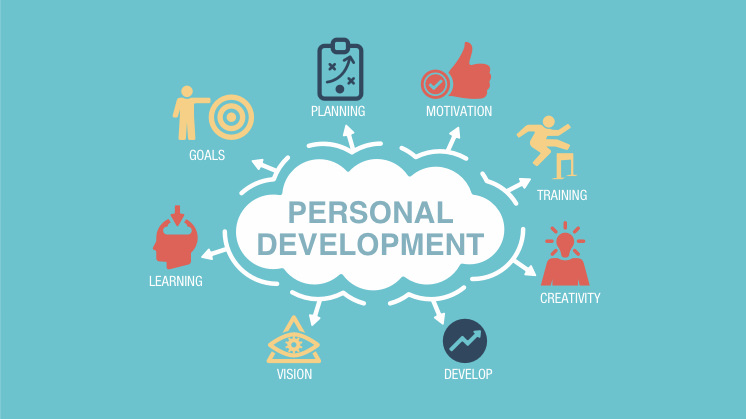
Self help and personality development is a weapon for us
The spirit of self help creates many good qualities in a person. … These people work more harder than a person who is reliable on others for their work. This leads to help them obtain strong will- power and determination.
Self-help or self-improvement is a self-guided improvement—economically, intellectually, or emotionally—often with a substantial psychological basis. … Many different self-help group programs exist, each with its own focus, techniques, associated beliefs, proponents and in some cases, leaders
The following are common examples of self-improvement.
Self-Awareness. A process of introspection to understand your own character, behavior, fears and ambitions.
Awareness. A process of extrospection to understand the world around you.
Health. …
Physical Fitness. …
Time Management. …
Productivity. …
Performance. …
Know-How
Here’s a look at some ways to build self-improvement into your daily routine and let go of negative thoughts about yourself.
Cultivate gratitude. …
Greet everyone you meet. …
Try a digital detox. …
Use positive self-talk. …
Practice random acts of kindness. …
Eat at least one meal mindfully. …
Get enough sleep. …
Breathe consciously.
Personality development refers to how the organized patterns of behavior that make up each person’s unique personality emerge over time. Many factors go into influencing personality, including genetics, environment, parenting, and societal variables.
Personality development helps you gain recognition and acceptance from the society as well as people around. Personality development plays an essential role not only in an individual’s professional but also personal lives. It makes an individual disciplined, punctual and an asset for his/her organization.
Here are great ways to improve your personality:
Be a better listener. …
Read more and expand your interests. …
Be a good conversationalist. …
Have an Opinion. …
Meet New People. …
Be yourself. …
Have a positive outlook and attitude. …
Be fun and see the humorous side of life.
The four personality types are: Driver, Expressive, Amiable, and Analytical. There are two variables to identify any personality: Are they better at facts & data or relationships? And are they introverted or extroverted. Note: Most people will have major and minor type.
















 Eduindex
You must be logged in to post a comment.