Cultural history brings to life a past time and place. In this search, cultural historians study beliefs and ideas, much as intellectual historians do. … These are reflected in the products of deliberately artistic culture, but also include the objects and experiences of everyday life, such as clothing or cuisine.
World War II was a war globally fought between many world countries that formed two military alliances – Allies and Axis Powers. This war lasted between 1939-1945. More than 30 countries had participated involving around 100 personnel. World War II was the deadliest of wars. Countries had strategically used military resources and bombing strategies to conquer. Nuclear weapons used during this war still haunts the country that was a victim of such inhuman act to destroy humanity. Millions of people had died as a result of genocides, outbreak of dangerous diseases, starvation, large massacres.
This war is said to gave generally started on 1st September 1939, when Adolf Hitler of Nazi Germany captured Poland. The United Kingdom and France had declared war on Germany. Germany had control over Europe countries and decided to join Italy and Japan, forming Axis Alliance. In mid-1940’s, France had failed and was falling, while campaigns were run in North Africa and East Africa. So, the war then continued between the Axis power and United Kingdom.
Nazi Germany went on to conquer Soviet Union opening the Eastern Front. This strategy trapped the Axis Power. Japan aimed to capture most parts of Asia and the Pacific. But it in a state of war with Republic of China in 1937. In 1941, Japan attacked America and British territories. It even tried to capture Central Pacific and Southeast Asia. US declared war on Japan after it attacked on the US fleet at Pearl Harbor. Germany and Italy were defeated. Germans were being defeated with on Eastern Front. Western allies captured and occupied Germany and France. Soviet Union reacquired it territories. Germans had occupied European countries but with Hitler’s death the Germans had surrendered. A statement called Potsdam Declaration, stated surrender of Japanese military forces was refused to sign by Japan. USA dropped nuclear bomb on Hiroshika on 6th August and Nagasaki on 9th August that was today. The fear of more nuclear bombings and Soviet Union invasion, Japan signed document of surrender. France, China, United Kingdom, United States and Soviet Union had become victorious. At the end, USA and Soviet Union had become major powers to influence countries around the world.
World War II proved to be devastating with millions of deaths around the world. Adolf Hitler was responsible for Holocaust that killed more than 6 million people. Policies of Hitler were against Jews that involved mass killing. Ukrainians and Russians were also mercilessly killed. Biological and chemical weapons were tested against innocent people and the prisoners by Germans and Japanese. Germans had captured young children and deported to Auschwitz. They forced to labor and were medically experimented. Germans occupied millions of Europeans and slaved them in German industry. Japan had camps of prisoners of wars that were mainly used as labor camp. Nuclear bombings in Japan were the worst of all. The fatality of the bombings still haunts Japanese people affecting the young generation through physical disability. Asia witnessed greater than 10 million killings. Nanking Massacre killed thousands of Chinese civilians. They were raped and murdered.
World War caused tremendous life and property destruction. Economies of various countries had failed to provide for the civilians due to enormous financial loss. This war showcased pure hatred towards innocent civilians.
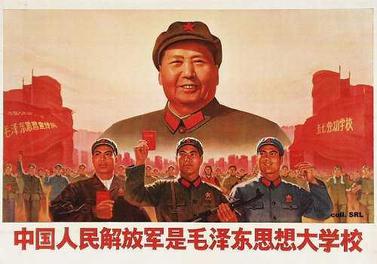
One of the most tragic instances in history would be that of the holocaust – a word that in itself is a definition of six years of European geopolitics. In Russia, Palestine and China, the expulsion of the White Army, the expulsion of the Arabs and the brutual suppression of cultures across China in the name of cultural revolution respectively bring to picture the way in which states and not just people can sometimes be the enemy of people. However, there have been several such instances in history, most of them hidden because they were carried out by the more ancestors of the ones who ended up being economically and intellectually influential communities.
A poster calling out for Chinese Cultural Revolution
Human history is a record of forced displacements both internal and external, ethnic cleaning and genocides and murders both to the dismay and sponsored by states. When Captain Cook discovered the down under, it led a massive import of British criminals on the continent. With them came officers, scientists and explorers. The businessmen and civilians searching for more opportunities came in later. The people of the continent – the Australian arboginals, the Maoris from Oceania and many more tribes were reduced to a mere holder of small patches of lands and often no land at all by the British who had a superior military.
When the first Irish and British settlers landed in the new World of America, the red Indians offered them food and shelter which soon became a situation where the Red Indians had to fight for the survival of their lives and their cultures which was systematically and quite institutionally taken away by the New World settlers. Similarly, when the Spanish invaded Latin America, it meant a complete and absolute dissolution of their traditions and a genocide that would annihilate their population to an extent where even after 400 years, they would not attain the same.
Machu Pichu stands as a testimony to the Grand Incan Empire in the Andes before the Spanish arrived.
To add to all these miseries are the tales of the Rohingya community from Myanmar, the Tamils in Sri Lanka, the Kashmiri Pandits in Indian state of Jammu and Kashmir, the now diminishing sea faring communities in Philippines and Malaysia and many more. Japanese and Italian unifications were also carried out at the cost of the local traditions, cultures and ways that the communities living there had been practicing for a millennia. In India, the use of English and Hindi have slowly gobbled up on the rich culture of local languages that the communities had. In fact, many communities from the state of Bihar and Uttar Pradesh have completely given up on their languages. Bihar – a state where only 6% people had Hindi as their mother tongue now has a minority of about 20%!!
World loses about 1 language every 15 days!!!
Wikipedia defines Indigenous people as – “Indigenous peoples, also referred to as first people, aboriginal people, native people, or autochthonous people, are culturally distinct ethnic groups who are native to a place which has been colonised and settled by another ethnic group. ” But, a broader definition is the fact that indigenous people are defined by their cultures which is at a steady loss across the globe. The most important thing is to treasure the fragments of their traditions that still remain. Because a rainbow is better a rainbow.
Happy International Day for the Indigenous communites.
A new State comprising three distinct religions of Jammu, Kashmir and Ladakh was formed with Maharaja Gulab Singh as its founder ruler. It was established on 14 May 1954.
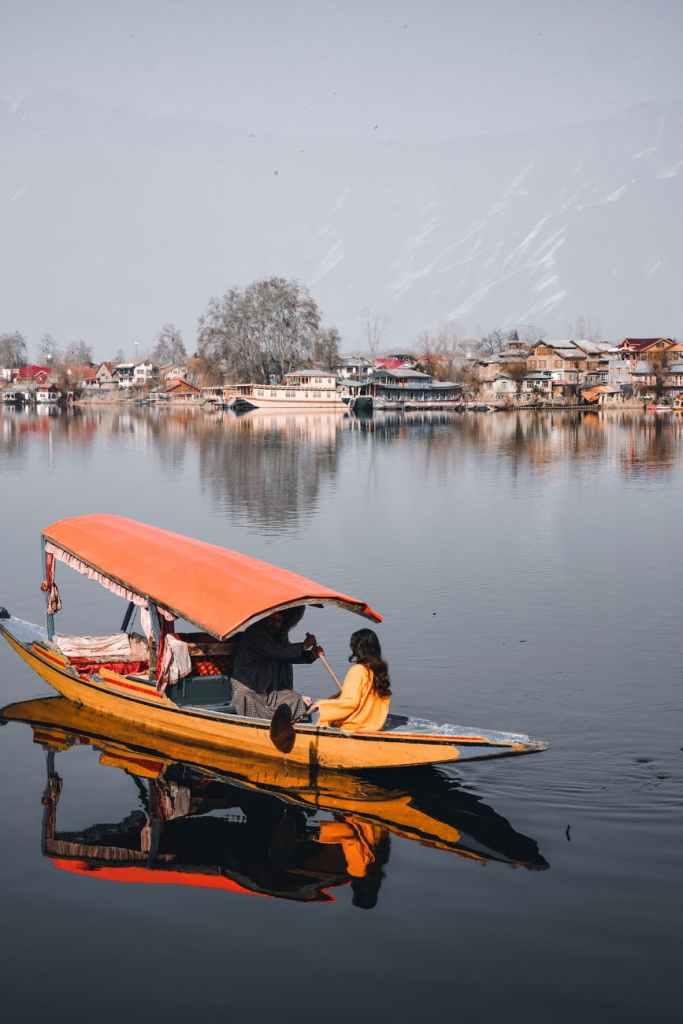
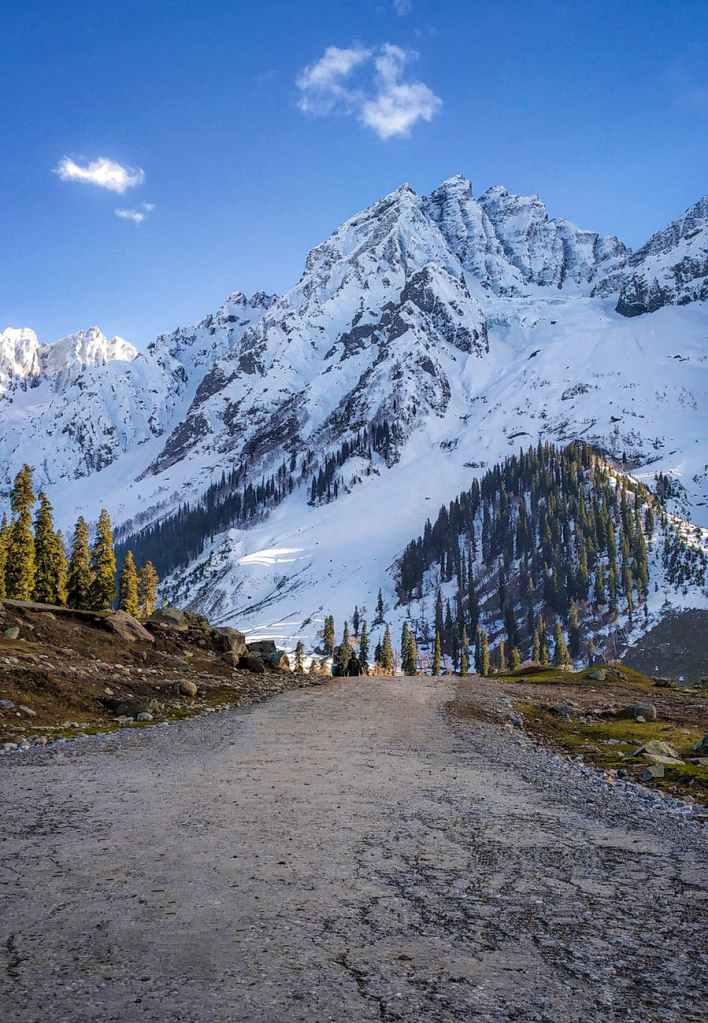
Popularly known as the “Paradise on Earth”, Jammu and Kashmir is world famous for its scenic splendour, snow-capped mountains, plentiful wildlife, exquisite monuments, hospitable people and local handicrafts.
Jammu and Kashmir is a region administered by India as a union territory and consists of the southern portion of the larger Kashmir region, which has been the subject of a dispute between India and Pakistan since 1947, and between India and China since 1962. The Line of Control separates Jammu and Kashmir from the Pakistani-administered territories of Azad Kashmir and Gilgit-Baltistan in the west and north. It lies to the north of the Indian states of Himachal Pradesh and Punjab and to the west of Ladakh, which is also subject to the dispute as a part of Kashmir, and administered by India as a union territory.
Provisions for the formation of the union territory of Jammu and Kashmir were contained within the Jammu and Kashmir Reorganisation Act, 2019, which was passed by both houses of the Parliament of India in August 2019. The act re-constituted the former state of Jammu and Kashmir into two union territories, Jammu and Kashmir and Ladakh, with effect from 31 October 2019.
The state of Jammu and Kashmir was accorded special status by Article 370 of the Constitution of India. In contrast to other states of India, Jammu and Kashmir had its own constitution, flag and administrative autonomy. Indian citizens from other states were not allowed to purchase land or property in Jammu and Kashmir.
Jammu and Kashmir had three distinct areas: Hindu-majority Jammu region, Muslim-majority Kashmir Valley and Buddhist-dominated Ladakh. Unrest and violence persisted in the Kashmiri Valley and, following a disputed state election in 1987, an insurgency persisted in protest over autonomy and rights.
The Bharatiya Janata Party (BJP) came to power in the 2014 Indian general election and five years later included in their 2019 election manifesto the revocation of Article 370 of the Constitution of India, in order to bring Jammu and Kashmir to equal status with other states.
A resolution to repeal Article 370 was passed by both the houses of the Parliament of India in August 2019. At the same time, a reorganisation act was also passed, which would reconstitute the state into two union territories, Jammu and Kashmir and Ladakh. The reorganisation took effect from 31 October 2019.
In September 2019 nearly 4,000 people, including two former Chief Ministers and hundreds of other politicians, were arrested by the Indian authorities in Kashmir; the state was put under a lockdown and communication and internet services were suspended.
Jammu and Kashmir is home to several valleys such as the Kashmir Valley, Chenab Valley, Sindh Valley and Lidder Valley. Some major tourist attractions in Jammu and Kashmir are Srinagar, the Mughal Gardens, Gulmarg, Pahalgam, Patnitop and Jammu. Every year, thousands of Hindu pilgrims visit holy shrines of Vaishno Devi and Amarnath which has had significant impact on the state’s economy.
The Kashmir valley is one of the top tourist destinations of India. Gulmarg, one of the most popular ski resort destinations in India, is also home to the world’s highest green golf course. The decrease in violence in the state has boosted the state’s economy, specifically tourism.
Jammu and Kashmir is also famous for its scenic beauty, flower gardens, apple farms and more. It attracts tourists for its unique handicrafts and the world-famous Kashmiri Shawls.
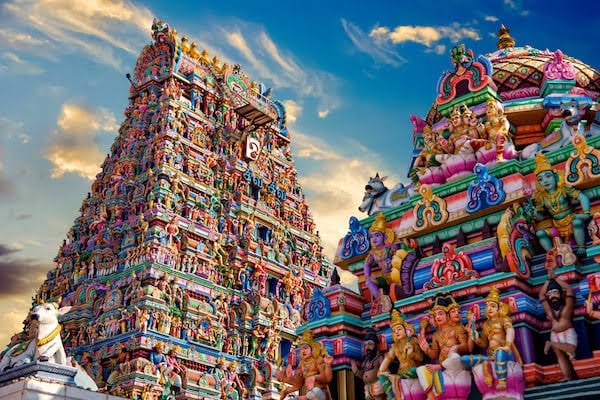
Tamil Nadu is a southern state of India which is supremely rich in culture and heritage. Known to be one of the oldest civilisations in the world, the people of Tamil Nadu belong to the prestigious Dravidian Family. Tamilians also, like other South Indians, take much pride in their rooted Tamil culture and make great efforts to protect their 2000 years old history. The state has been ruled by the Cholas, Pandyas and the Pallavas and has been flourishing since. The art and architecture have been their creations which are used and maintained even today.
Out of 74 million Tamil people in the world, around 62 million live in Tamil Nadu. Rest of the Tamilians are scattered in different parts of India and the world, mostly in the northeast of Sri Lanka. People who live in the state understand the ethnicity of their culture and how it marks their identity in the world. They are very adherent towards their rituals and traditions like following the caste system, religion and community traits, etc.
Tamil is the official language of the state. It is a derivative of Brahmi script, and the letters represent sounds, much like the Mandarin language. Not only most of the people in Tamil Nadu speak Tamil, but it is also spoken by many in Sri Lanka, Mauritius, Singapore, and Malaysia.
RELIGION – A great amount of relevance is given to a person’s religion when it comes to personal identity. Although four-fifths of the population of the state are Hindus, rest of them are divided in Islam, Christianity, and Jainism. Their rituals include deity worship and animisms like tree worship, animal worship and stars and planets worship. Many Hindus are followers of different religious institutions called ‘Matha’ which are the centres of Monastic studies.
MUSIC AND DANCE – Tamil Music has evolved over the years. The most important form of music was the Carnatic music which considered only for the elite who could understand the intricacy of music. For others, Telugu songs and a mix of traditional numbers from a source of entertainment.
Bharatnatyam is the official dance form of Tamil Nadu, recognized all over India and the world. It’s a complicated dance form with subtle moves of body parts and expressions. Some other folk dances like Parai, Villuputtu Karakaatam, and Kuthu are also performed by local people including tribal people.
TRADITION AND ARCHITECTURE – Most traditional art are religious in some form and usually centres on Hinduism, although the religious element is often only a means to represent universal—and, occasionally, humanist—themes.
The most important form of Tamil painting is Tanjore painting, which originated in Thanjavur in the 9th century. The painting’s base is made of cloth and coated with zinc oxide, over which the image is painted using dyes; it is then decorated with semi-precious stones, as well as silver or gold thread. A style which is related in origin, but which exhibits significant differences in execution, is used for painting murals on temple walls; the most notable example are the murals on the Kutal Azhakar and Meenakshi temples of Madurai, the Brihadeeswarar temple of Tanjore.
Tamilnadu sculpture ranges from elegant stone sculptures in temples, to bronze icons with exquisite details. The medieval Chola bronzes are considered to be one of India’s greatest contributions to the world art. Unlike most Western art, the material in Tamil sculpture does not influence the form taken by the sculpture; instead, the artist imposes his/her vision of the form on the material. As a result, one often sees in stone sculptures flowing forms that are usually reserved for metal.
“WHERE SHIVA EXISTS IN EVERY STONE , IS UTTRAKHAND “
And this statement gives the justification of why Uttarakhand is know as “the land of gods “. Uttarakhand was formed on 9th November 2000 as the 27th State of India, when it was carved out of northern Uttar Pradesh. Located at the foothills of the Himalayan mountain ranges, it is largely a hilly State, having international boundaries with China (Tibet) in the north and Nepal in the east. On its north-west lies Himachal Pradesh, while on the south is Uttar Pradesh. It is rich in natural resources especially water and forests with many glaciers, rivers, dense forests and snow-clad mountain peaks. Char-dhams, the four most sacred and revered Hindu temples of Badrinath, Kedarnath, Gangotri and Yamunotri are nestled in the mighty mountains.
LET ME GIVE YOU A BRIEF ABOUT THE MAJOR TEMPLES FOR WHICH UTTARAKHAND IS FAMOUS FOR :
PANCH BADRI ( 5 BADRI )
a. BARDINATH : Badrinath is the northern Dham of the four sacred Dhams called Char Dham. Though the Badrinath temple is believed to date to the Vedic period, the current structure was built in the 8th century AD by Adi Shankaracharya. The other three dhams are Rameswaram in the south, Dwarka in the west and Jagannath Puri in the east; all of these four temples are dedicated to god Vishnu. Adi Shankara’s basic intention was to unite the country under the banner of Hinduism. The temple, which had been subjected to damage due to snow avalanches and landslides, several times in the past, was last restored in the 19th century. Badrinath is also part of Chota Char Dham, four sacred temples in Uttarakhand. The others include the Shiva temple of Kedarnath and the sources of the holy rivers Ganges and Yamuna.
b. AADI BADRI : In ancient times, when approach to the main shrine of Badrinath was closed due to weather conditions, pilgrims worshipped Vishnu at this temple. Adi Badri, also known as Helisera according to revenue records, is a tiny temple complex enclosed within a space of 14 meters (46 ft.) X 30 meters (98 ft.). The height of the temples vary from 2–6 meters (6.6–19.7 ft.).
c. BHAVISHAY BADRI: According to the legend of Bhavishya Badri (literally “Badri of the future”), when evil transcends the world, the mountains of Nara and Narayana would block up the route to Badrinath and the sacred shrine would become inaccessible. The present world will be destroyed and a new one established. Then, Badrinath will appear at the Bhavishya Badri temple and be worshipped here, instead of the Badrinath shrine.
d. DHAYAN BADRI : The legend of Dhyan Badri (meditating Badri) is linked to the Urvashi, son of King Puranjaya of the Pandavas lineage who meditated in the Urgam region and established the temple for Vishnu. The image of Vishnu is four-armed, made of black stone and in a meditative posture.
e. YOGADHYAN BADRI : Yogadhyan Badri, also called Yoga Badri, is located at Pandukeshwar at the elevation of 1,829 meters , close to Govind Ghat and is as ancient as the main Badrinath shrine . Legend has it that King Pandu, father of the five Pandavas – heroes of the Hindu epic Mahabharata, meditated here to god Vishnu to cleanse him of the sin of killing of two mating deer, who were ascetics in their previous lives. The Pandavas were also born here and Pandu died and attained salvation here. Pandu is believed to have installed the bronze image of Vishnu in the Yogadhyan Badri shrine. The image is in a meditative posture and thus the image is called Yoga-Dhyan (meditative) Badri. The idol is life size and has been carved from Shaligram stone. According to legend, the Pandavas, after defeating and killing their cousins Kauravas in the Mahabharata war, came here to repent.
2. PANCH KEDAR ( 5 KEDAR )
A folk legend about Panch Kedar relates to the Pandavas, the heroes of the Hindu epic Mahabharata. The Pandavas defeated and slayed their cousins — the Kauravas in the epic Kurukshetra war. They wished to atone for the sins of committing fratricide and Brahmanahatya (killing of Brahmins — the priest class) during the war. Thus, they handed over the reins of their kingdom to their kin and left in search of lord Shiva and to seek his blessings. First, they went to the holy city of Varanasi (Kashi), believed to be Shiva’s favorite city and known for its Shiva temple. But, Shiva wanted to avoid them as he was deeply incensed by the death and dishonesty at the Kurukshetra war and was, therefore, insensitive to Pandavas’ prayers. Therefore, he assumed the form of a bull (Nandi) and hid in the Garhwal region.
Not finding Shiva in Varanasi, the Pandavas went to Garhwal Himalayas. Bhima, the second of the five Pandava brothers, then standing astride two mountains started to look for Shiva. He saw a bull grazing near Guptakashi (“hidden Kashi” — the name derived from the hiding act of Shiva). Bhima immediately recognized the bull to be Shiva. Bhima caught hold of the bull by its tail and hind legs. But the bull-formed Shiva disappeared into the ground to later reappear in parts, with the hump raising in Kedarnath, the arms appearing in Tungnath, the face showing up at Rudranath, the nabhi (navel) and stomach surfacing in Madhyamaheshwar and the hair appearing in Kalpeshwar. The Pandavas pleased with this reappearance in five different forms, built temples at the five places for venerating and worshipping Shiva.
3. PANCH PRAYAG( FIVE PRAYAG )
VISHNU PRAYAG : The Alaknanda River, which originates from Satopanth glacier is joined by the Dhauli Ganga River near Joshimath . Alaknanda flows in front of the Badrinath temple, one of the most revered Hindu shrines. Dhauli Ganga originates from the Niti Pass, after traveling a distance of 25 km (15.5 mi) from its source to the Vishnu Prayag
2. NAND PRAYAG :Nand Prayag is the second Prayag in the cascade sequence of the confluences where the Nandakini River joins the main Alaknanda River. According to one tale, a noble King Nanda performed Yagnya (fire-sacrifice) and sought blessings of God. Hence, the confluence is named after him.
3. KARNA PRAYAG : KARN Prayag is the location where Alaknanda River is joined by the Pindar River that originates from the Pindar glacier, below the Nanda Devi Mountain range. The epic Mahabharata legend narrates that Karna did penance here and earned the protective gear of Kavacha (armour) and Kundala (ear rings) from his father, the Sun god, which gave him indestructible powers. The name of the confluence is thus derived from the name of Karna.
4. RUDRA PRAYAG : At Rudra Prayag the Alaknanda meets the Mandakini River. The confluence is named after god Shiva, who is also known as Rudra. According to a widely narrated legend, Shiva performed the Tandava here, Tandava is a vigorous dance that is the source of the cycle of creation, preservation and dissolution. Shiva also played his favourite musical instrument the Rudra veena here. By playing the Veena, he enticed god Vishnu to his presence and converted him to water.
5. DEV PRAYAG : Dev Prayag is the confluence of the two holy rivers, the Bhagirathi – the chief stream of the Ganges and the Alaknanda. It is the first prayag on the way to Badrinath. Beyond this confluence, the river is known as Ganges. The holiness of this place is considered equal to the famous Triveni sangam confluence at Allahabad where the Ganges, Yamuna and Saraswati rivers merge.
A part from temples , there are many other famous place to pay a visit for . some of them are , Dehradun , Nainital , Mussoorie , Rishikesh, Haridwar , Almora , Kausani , Pithoragarh , Chopta , Ranikhet , valley of flowers , etc. One in his life time should make a visit to this state , to see nature from you soul , from your eyes . It is a heaven on earth .
Term ‘Feminism’ was initially brought up as a Label for women to fight against the discriminations happening towards them under it’s name. The purpose of the concept was to retrieve back the rights of women, breaking all the Stereotypes and putting an end to the prejudice beared by females since the earliest times. The beginners fought for women rights but never had a mission to demean males’ in any form or lower their status or rights so as to provide a higher position to women. Feminism was never invented to disregard men’s existence but all it was meant for is making the society aware of the fact that women deserve to have the same standard and respect EQUAL to that of Men. Majority of each and every person who has come across the notion, considered it worthy of all the attention and a very important agenda for empowerment. Feminism raised several issues and even unveiled injustices occurrings taking place against women in tremendous ways worldwide. For example, To receive an equal pay – as of the Male worker in the company while working on the same position, To get the freedom of working, dressing and living with their own choice, To ensure safety, To fight against domestic violence, sexual harassment and the superstitious harmful practices such as Female genital mutilation / cutting.
Likewise every law has a loophole, there are always Some people in a crowd who just couldn’t think Right! So Here’s where came a wave of demolishing the concept of Feminism. While, the movement was bringing a good change in the social norms and actually convincing the people about the shortcomings on the grounds of Building Equality, the fake flag bearers of Morality amd virtue started exaggerating the agenda. They created a state of Gender Bias all around. Some women would try to take unfair benefits in the name of feminism namely, a practice called PSEUDO FEMINISM. This includes examples such as; women’s income tax slab is higher than men’s. A woman who earns till 3,00,000-3,50,000 is exempt from tax payment. If both men and women earn the same account, why should it only be the men who pay tax. Another example is As of 2009, 175 men had been kidnapped and abducted for the purpose of illicit intercourse, according to the 2012 NCRB data. As per a reliable source the cases were registered under the Indian Penal Code (IPC) Sec 363 to 369, 371 to 373. Such cases are not dealt with in the same way as the abuse committed on women, even under regulation.
A Dilemma…
But Why can’t we just accept, respect and treat both the genders equally at the same time? We are already living in a culture where both Women and Men face so many challenges everyday due to Orthodox mindsets of people. Upon that, these Psuedo feminists suggest that women deserve more respect, priority, benefits than any other genders everywhere. They believe that the world should be governed/ controlled by females and they also potray all men as nemesis, responsible for all crimes against women. Little do they know, The most brutal crimes against women are conducted by another women themselves at many places. You get enough proofs of this on daily basis especially, when you are an Indian citizen. As here, there’s no place to be where you won’t find an elder Lady or even young girls judging others for one’s clothes or casual behaviour. The biggest example to this (in India) is when “A women is proclaimed as responsible for her own rape. She is ashamed for wearing certain clothes and provoking Men herself to do this injustice to them”. Now this is why Not only the “Men” But every single person irrespective of their gender or age having that narrow mindset with preconceived representations in their head of how a Women is a weaker gender, supposed to be kept and treated like slaves, etc. are responsible. And an even bigger mistake that Pseudo feminists do here is to blame and hurt those who are innocent considering it their right. Such incidents not only could hurt the image as well as emotions of the ones who are actually decent but also can pave a way for their thoughts to turn in a wrong direction. It creates an unjust impression of the actual concept of Feminism in everyone’s mind specially, in today’s era where every news is spread on social media at an incredible pace amd affects millions of brains which could even change the supporters and drive their views to become Feminism’s antagonists.
LATEST NEWS.
Is it true?
We all are familiar with case of Priyadarshani yadav from lucknow, taking advantage of her gender to prove herself as the victim for hiding the cruel deed of her’s. A video that is now quite viral on social media shows a woman in Uttar Pradesh’s Lucknow getting into a fight with a cab driver and during this, the woman slapped this driver not once or twice but more than 20 times. The girl could be seen crossing the road when the traffic light was green. She claimed that the driver was coming with a high speed and ran into her, while the cab driver (Saadat ali) said that the girl suddenly came in front of the car but he immediately stopped it. However, whatever the case might be no person haves a right to take law in his/ her hands and hit a person in midst of the road in front of a wholesome crowd. This incident has left the netizens in rage and a hashtag called #arrestlucknowgirl is trending on Twitter. All the support on social media is with cab driver who is clearly be seen calmly handling the situation. He further ranted in his statement in an interview that, being a guy if he had done such cruelty thousands of amendments would have been cast on him, he would be criticised by the whole country and his image and self respect would have been damaged by herher which is indeed a true scenario fabricated by pseudo feminists.
On the contrary, the actual lesson what our country need to get is to stop favouring citizens according to their gender. Rather, everyone should be influenced to treat each other with Equality and Respect no matter the sex. And mainly, acquire the knowledge of deciding Right and wrong after learning all the facts and figures instead of judging and building conclusions and defaming anyone while being exposed to only one side of the story, just because some fake feminists motivate us to do so.
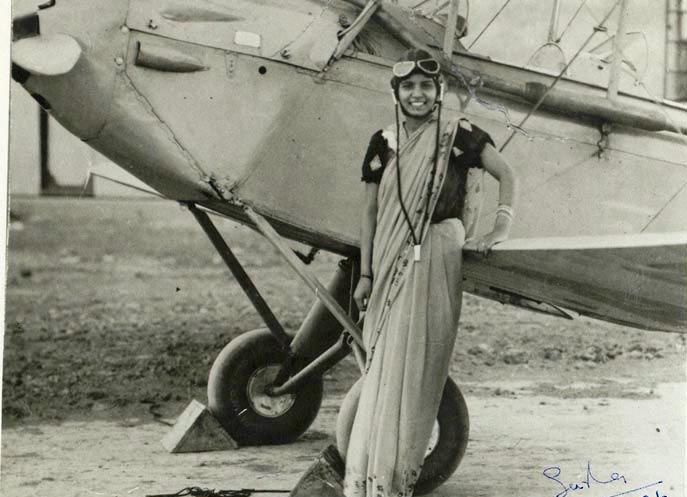
The first Indian woman to fly an aircraft was Sarla Thukral. She was born on 8th August, 1914. She was only 21 when she earned her aviation pilot license in 1936. After earning aviation pilot license, she worked hard and completed 1000 hours of flying owned by Lahore Flying Club. She married at the age of 16 to P.D. Sharma. Her husband came from a family which had nine pilots. He encouraged her to pursue her flying dream. She was also the first woman to receive ‘A’ license. Her husband was the first Indian to get airmail pilot’s license. She flew between Lahore and Karachi. He constantly supported, including her father-in-law who enrolled her in flying club She had a four-year-old daughter and in spite of that she went on to become an incredible pilot. When she completed her required 1000 flying hours and even more; her instructor made her fly solo.
One of the interesting facts of Sarla Thukral is that she flew aircrafts in a saree. She entered the cockpit of a Gypsy Moth in a saree in aviation that was mainly dominated by men. She made history by becoming India’s first pilot. She was working to get ‘B’ license to get authorization to fly a commercial flight. But unfortunately, World War 11 had started and training was suspended. She had gone through immense pain of losing a husband at the age of 24. In 1939, her husband passed away in a plane crash in Jodhpur, after which she decided to give up on her dream of becoming a commercial pilot. After giving up, she had to stay strong and work for a livelihood as she had daughters to raise. She returned to Lahore and started attending Mayo School of Art. She trained in Bengal school of painting, where she earned diploma in fine arts. She succeeded in painting as well and established as an incredible painter. She
She was devoted follower of Arya Samaj. In this community, Vedas were spiritually followed. This Samaj allowed remarriage. She moved back to Delhi with her two daughters. She met R.P. Thukral and married him in 1948. She created her own life by becoming a successful entrepreneur. She made jewelries and designed sarees. She even made paintings and designed costume jewelry for National School of Drama. Vijaya Laxmi Pandit was one of her clients. Her jewelries were not only worn by great figures, but was supplied to Cottage Emporium for 15 years. After that, she started creating designs for the drama school. She once said in an interview that she plans out her day as soon as she wakes up in the morning. She feels happy to work rather than wasting a precious day. She believes that you should be happy and cheerful. This mantra has helped her through various crisis in life. She died on 15th March, 2008.
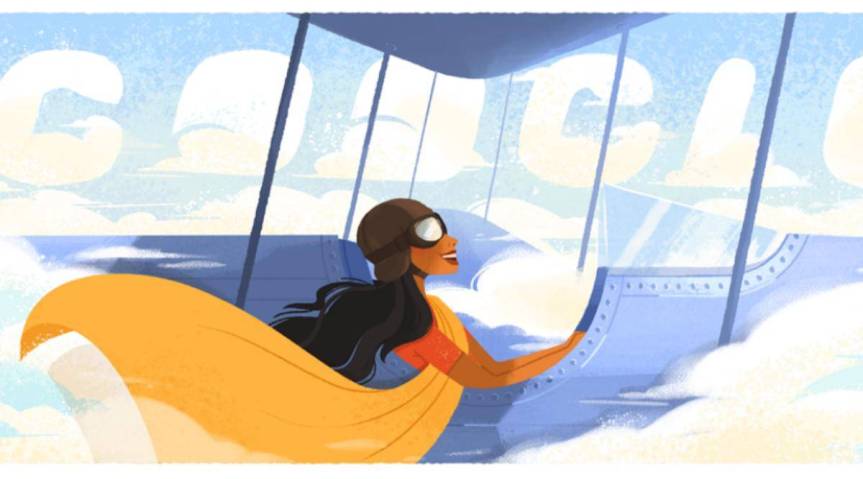
She was an inspiring woman to all those who once dreamt of flying above the clouds. She embraced her ethnicity and achieved what most feared to achieve during that time. Today, Google honors her pilots on her birth anniversary for the courage and determination she showed that paved a way for future women pilots.
The motivational genre is concentrated on motivating the readers to achieve their goals. It focuses on problems and helps to solve the puzzle. It also helps to improve the character and the personality of the readers.
Motivation:
The term motivation is derived from the Latin word, ‘Movere’ meaning ‘To Move’. Motivation can be referred to as a combination of motive and action. Motivation is an action word that influences every aspect of our daily lives. Motivation is fundamental in the level of success and individual attains.
Characteristic of motivational literature:
In Literature, “Motivation” is defined as a reason behind a character-specific action or behavior. This type of behavior is characterized by the characters on consent and willingness to do something. Characters have some motivation for every action, as do people in real life. Therefore, The implicit or explicit reference to a motivation of a character makes the piece of literature seems closer to life and reality.
Indian motivational literature:
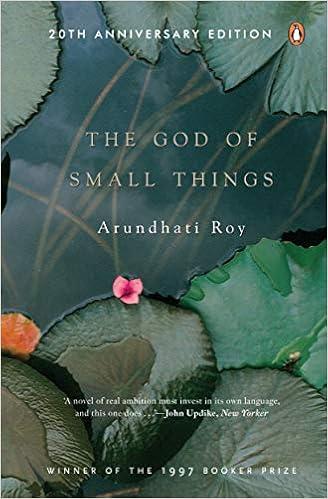
The God of Small Things by Arundhati Roy
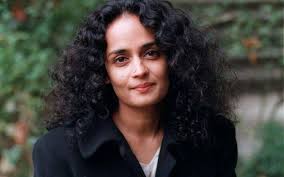
Arundhati Roy is one of the prominent writers in India. Her famous works are “The God of Small Things” and “The mystery of utmost happiness”. The God of Small Things is an inspirational encounter with two twin sisters who go through a series of unfortunate events in life. This work is a big booster of inspiration that helps us to boost up our self moral self-esteem and inspiration to embark upon a new beginning full stop the book will make you realize that need for change on the futility to become rigid in life.
If you are happy in a dream, does that count?
African literature:
I know why the caged bird sings by Maya Angelou
I know why the caged bird sings is a 1969 autobiography describing the early years of American writer and poet Maya Angelou. It shows how the strength of character and the love of literature can help overcome racism and trauma. This autobiography touches on themes such as race, sexuality, love, and identity. Struggles to separate sexuality and love in two separate category due to the lack of love from her family and on account of being sexually abused.
Hoping for the best, prepared for the worst, and unsurprised by anything in between.
Austrian literature:
Man’s search for meaning by Viktor E Frankl
Viktor E Frankl is an Austrian doctor, a writer, and a Holocaust from the Nazi concentration camp. This book is about how he lived inside the camp and how he managed to survive. And to stand for the title he talks about logotherapy that is a person needs a reason to survive. This book is full of meaning and hope.
Those who have a “why” to live, can bear with almost any “how”.
Lebanese literature:
The Prophet by Kahlil Gibran
The Prophet is a short book with enormous wisdom within the pages. The Prophet provides timeless spiritual wisdom on a range of subjects including giving, eating and drinking, clothes, buying and selling, crime and punishment, laws, teaching, time, pleasure, religion, death, beauty, and friendship. It is not a religious book but it is spiritual. In this book every word is like a poem, it has its rhythm and rhyme schemes.
“Your children are not your children you may give them your love but not your thoughts for they have their own thoughts.”
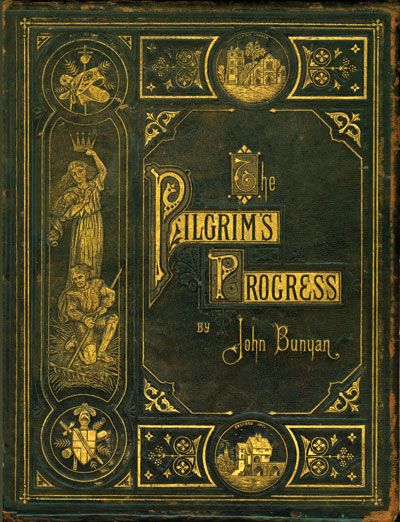
The novel proper in English literature began in the 18th century. But the rudiments of the novel could be seen even in Chaucer’s conception of the gallery of characters in The Canterbury Tales. Several Elizabethan writers wrote prose fiction which laid the foundations of the English novel. Among them the most important were John Lyly who wrote ‘Euphues’ and Nash, the author of ‘The unfortunate Traveller’. The first work was a didactic prose fiction in the picarseque tradition and the second was a realistic story of action. In 1678 John Bunyan’s ‘The Pilgrim’s Progress’ was published. In many respects this ranks as a novel. Then came Defoe’s ‘Robinson Crusoe’ and Swift’s ‘Gulliver’s Travels’. Several critics thinking that Robinson Crusoe was the first great novel in English literature thought it was up your fantasy. Swift’s work is considered to be the first great satiric expression.
HOW IT EVOLVED:
It was in the 18th century that the novel acquired its modern form. Samuel Richardson, the author of ‘Pamela’ is regarded as the originator of this form. His great novel was told in the form of letters. Richardson was concerned with moral themes in all his novels he was an adept in expressing human feelings and motives through character. Henry Fielding parodied Richardson’s Pamela in his novel ‘Joseph Andrews’. His ‘Tom Jones’ is a great novel in the picarseque tradition. He anticipated Dickens in his social criticism and satire. Two other important points in the field of the novel were Smollet who wrote ‘Roderick Random’, ‘Peregrine Pickle’ and three other novels and Sterne, the author of ‘Tristram Shandy’. Among the later novelist of the eighteenth century Goldsmith deserves mention as the author of ‘The vicar of wakefield’ the earlist domestic novel in English. The first great women novelists first Fanny Burney who published her ‘Evelina’ in 1778.
VARIOUS DEVELOPMENT:
The 19th century saw the development of the novel in various directions. The novel discarded the sensationalism of the 18th century Gothic writers like Horace Walpole and Picarseque tradition of Fielding and smollet. It entered a new era of artistic refinement, thematic liberalism and stylistic innovations. Jane austen’s domestic novels reached unprecedented artistic perfection. Her novels such as ‘Pride and Prejudice’ and ‘Emma’ dealt with a respectable country society and the presented a miniature world dominated by graceful social conventions and manners. Scott inaugurated the historical novel in which picarseque details were combined with romantic feelings for the past. Some of his famous novels are Waverley, Ivanhoe, The Talisman and Kenilworth. The tradition of the historical novel was carried on by a few others including Charles Reade, the author of ‘The Cloister’ and the ‘Hearth’. The two women novelist Charlotte Bronte and Emily Bronte were a striking contrast to Jane Austen. In the novels Jane Eyre and wuthering Heights respectively they made use of the elements of horror and soul-suffering to heighten a human story of violent passion.
CHARLES DICKENS’S CONTRIBUTION:
The most outstanding name in the Victorian novel is Charles Dickens. He developed more complex plots than his predecessors and introduced greater human interest, pathos and humour. Some of his novels contain autobiographical elements. He was supreme in depicting the life of London and he used in novel as a platform for social reform. His most famous novels are there with David Copperfield, Great Exceptions, Nicholas Nickleby and A Tale of two cities. Thackeray excelled in the novel of ideas. Vanity Fair is his masterpiece. He moralizers and his weapons for social criticism and reforms are irony and satire.
OTHER NOVELISTS:
George Eliot novels contains philosophical observations on religion, politics and morals. Her famous novels are Adam Bede, Middlemarch and Silas Marner. Another novelist who stands out as a satirist and was George Meredith. His novel such as ‘The Egoist’ and ‘The ordeal of Richard Feveral’ anticipate the psycho-analytical method that become so popular with the 20th century novelists. Pain and tragedy found their most artistic expression in the novels of Thomas Hardy. He took his characters from the peasantry of his native Wessex and portrayed the innermost soul of his characters with great insight, affection and even humour. some of his important novels are ‘Tess of the D’Urbervilles’, ‘The Return of the Native’ and ‘The Mayor of Casterbridge’.
STREAM OF CONSCIOUSNESS:
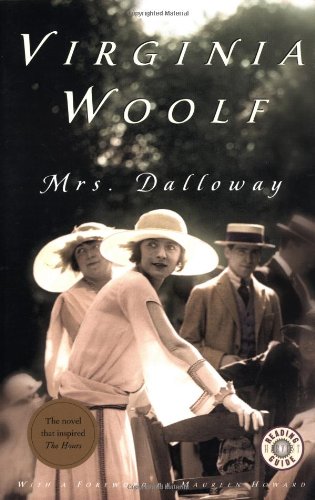
Stream of consciousness novel found its exponents in Virginia woolf and James Joyce. Novels like Virginia Woolf’s ‘Mrs dalloway’, ‘To the Lighthouse’ and James Joyce ‘ulysses’ inaugurated the trend of exploring the subconscious recesses of the human mind. Novelist such as D.H. Lawrence and Aldous Huxley introduced several innovations in theme and style. The most significant novels of D.H. Lawrence are ‘Sons and Lovers’, ‘Woman in Love’ and those of Huxley are ‘Brave New World’ and ‘Crome yellow’.
During the last fifty years the scope of the novel has widened to include almost every subject. It has become the most popular medium through which an author can reach the public. There have been as a host of good novelist during the last fifty years – E.M. Forster, Somerset Maugham, Charles Morgan, Graham Greene, Kingsly Amis, Iris Murdoch and William Golding.
The English novel is no more a drawing room entertainment address to the ladies as novelist George Moore once said.
The Ode may be defined as a ‘rhymed lyric often in the form of an address, generally dignified or exalted in the subject, feeling and style’. It is also defined as any ‘strain of enthusiastic or exalted lyrical verse directed to fixed purpose and dealing progressively with a dignified theme’. An ode is noted for its logical evolution of thoughts and it has a certain amount of complexity and elaboration, unlike a simple lyric.
An ode usually begins with an address to somebody or something. Sometimes the opening line or lines may contain an apostrophe as in the case of Shelley’s ‘Ode to the west wind’ or Tennyson’s ‘To Virgil’s. An ode may be written on an important public event or the death of a distinguished person. Marvell’s ‘Ode upon Cromwell’s Return from Ireland’ belongs to the first category and Tennyson’s ‘Ode on the Death of Duke of Wellington’ belongs to the second category.
Origin of Ode:
The ode is of Greek origin. There were two traditions of odes in Greece. The first type of the Dorian mode was so called from the district and dialect in which it arose. It is also called the Pindaric ode because Pindar, the ancient Greek poet, was its greatest exponent. The second type of ode is the lesbian old so-called because it flourished at first on the island of lesbos. It is also called the horatian ode because the great Latin poet Horace was its best practitioner. Thomas Gray’s odes ‘The progress of Poesy” and “The Bard” belong to the Dorian or Pindaric school. Marvell’s ‘Ode upon Cromwell’s Return from Ireland’ is the best example of a Horatian ode in English.
A pindaric or Dorian ade consists of three parts:
The strophe, the anti-strophe, and the epode. they correspond to the three stages of the recital of an ode during a dance. The Horatian ode consists of several short stanzas similar in length and arrangement.
In the early stages, the English ode was influenced by the two Greek models. But gradually the English ode begins to pursue a course of its own. There are two types of odes in English, the regular and the regular.
Regular odes:
The regular odes have a series of exactly similar stanzas as in the odes of Keats. Other examples of regular verbs are Collin’s ‘ode to evening’ and Shelley’s ‘ode to the west wind’.
Irregular odes:
Irregular odes have tons of different lengths and arrangements. There are sudden changes in versification, meter, and mood. Wordsworth’s Ode on Intimations of Immortality from recollections of early childhood and Coleridge’s ‘Dejection: An Ode’ are good examples of irregular odes.
Some famous odes:
Ode To A Nightingale John Keats. My heart aches, and a drowsy numbness pains.
Ode On A Grecian Urn John Keats.
Ode To Autumn John Keats.
Ode To The West Wind Percy Bysshe Shelley.
Ode To Wine Pablo Neruda.
Ode To Sadness Pablo Neruda.
Ode On Solitude Alexander Pope.
Ode To The Book Pablo Neruda.
Conclusion:
In English Ben Jonson, Milton and Gray wrote Pindaric Odes. Marvell road Horatian odes. Other important poets who wrote odes were Spenser, Collins, Keats, Shelley, and Tennyson. Perhaps the ode is the most popular lyrics form except the Sonnet.
India is the land various cultures, traditions. It is a cluster of various people who follow different lifestyles. With each different lifestyle there comes different dance tradition which goes back to their ancestors. Following are various dance forms of different states of the country.
Bharatanatyam
Earlier known as Sadir or Dasi Attam it is a dance form of Tamil Nadu widely popular in southern India. It has grown out of the art of dancers dedicated to temples. Bharatanatyam rests on principles of performance and an aesthetics set down in classics such as Bharata’s Natyashastra. It has a rich repertoire of songs in Telugu, Tamil and Sanskrit.
Kathak
It is the principal dance of northern India, and is widely practised in Uttar Pradesh, Rajasthan, Delhi, Madhya Pradesh, and even parts of western and eastern India today. It is believed to be connected with the narrative art of Kathakaras or story-tellers who have expounded the scriptures, the epics Ramayana and Mahabharata, and puranic literature to the lay masses since ancient times.
Odissi
This dance form originated in Orissa, performed as part of temple service by ‘maharis’ or female temple servants.The traditional dance was remoulded as a theatre art towards the middle of the twentieth century with reference not only to the existing dance art, but representation of dance in Orissa’s medieval sculpture, painting, and literature. In its remodelled form, Odissi dance has spread quickly across the country.
Kathakali
It is the dance form of Kerela, originated in the seventeenth century under the patronage of the prince of Karnataka, who wrote plays for performance drawn from the epic Ramayana in Malayalam, the language of the region. Stories from the Ramayana and Mahabharata provide the content of most Kathakali plays, which have come down to us in a steady stream over three centuries.
Manipuri
Manipuri dance, evolved in Manipur in north-eastern India, is anchored in the Vaishnava faith of the Meiteis, or people of the Manipur valley. The temples of Manipur are still among the principal staging venues of the dance
Ghoomer
The Ghoomar dance is primarily performed by the female folk of Jaisalmer on special festive occasions.
Bhangra
It is a traditional dance form of Punjab with the accompaniment of short songs called boliyan and, most significantly, to the beat of a dhol(double-headed drum).
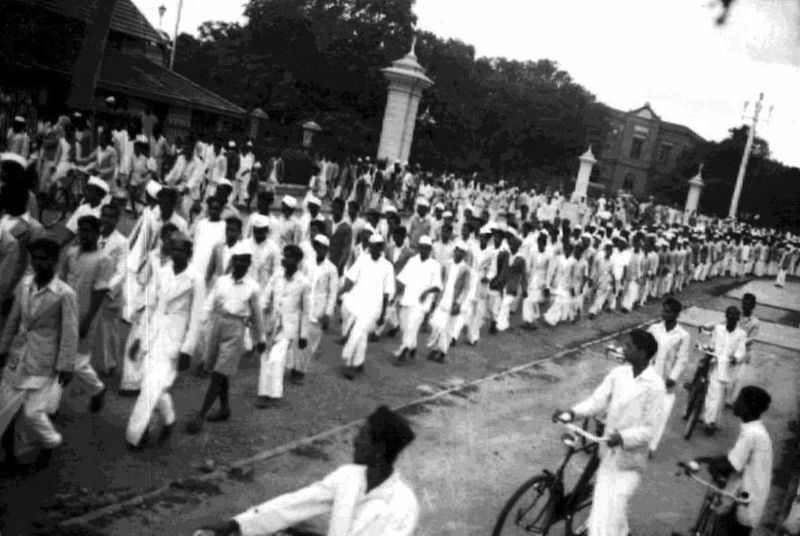
August 8th marks a very iconic day in Indian history. The Indian National Congress declared its ultimatum for the British to leave India. This movement in itself had contested set of consequences – the strengthening of the Muslim League, the rise of freedom struggle motivated Subash Chandra Bose to invade the British camps in Noth East and Gandhi, for the fist time in his career was willing to go agressive even if he had his own definitions of the word – when he announced, “karo ya maro” (Do or Die).
The Quit India movement came up at the heels of the failure of the Cripps Mission that was sent by the Raj to secure Indian cooperation towards the British war efforts in the second world war. The leader of the mission, Sir S. Cripps was left wing British statesman who was sympathetic to the cause of Indian self rule but was also a member of the war cabinet of 1942.
The proposals of the mission were refused by the Congress which had seen similar proposals in the first world war where the Raj had promised more autonomy but ended up imposing harsher taxes that resulted in the Non-Cooperation movement, the Rowlatt and Jalia Walah Bagh massacres. The Indian National Congress resigned from its positions in all provincial governments and announced the Quit India Resolution that led a national movement that was difficult for the British to look after in the face of the then ongoing second world war. Virtually all of the INC leaders were jailed for the next three years and the Muslim league got enough time to build itself a support that shook the years Gandhi had spent projecting himself and his colleagues as leaders of a secular, united state of India. To add to it was the vehement opposition Hindu nationalists showed to the movement where many, including the Hindu Mahasabha and Veer Savarakar denounced the movement pointing out to the power vacuum it might cause and quite correctly predicitng the Muslim League partially filling the same.
The British soon left the subcontinent – too weak due to the war to control a population that was showing both civil disobedience and had an army of its own – a reference to the insurgency and attacks the INA had started in the Raj’s territories.
The Quit India movement – with all its pros and cons and consequences formed a very important phase in the history of modern India.
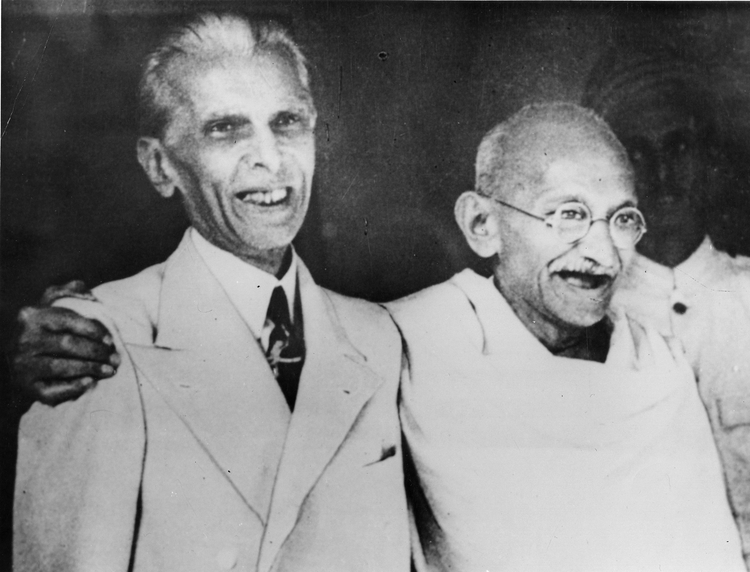
Jinnah and Gandhi had quite different outlook and faced different consequences due to the Quit India Movement – one failed in his projection of a secular and inclusive India, the other successfully used it to campaign for Pakistan
A broken marriage can mean a lot of things to a family. Marriages can be broken by a lot of things including laws defined by societies about whom to love, whom to marry and whom not to.
The god of small things is a caricature of human pain and life built on the layers of political leanings, the realities of Indian conservative societies, casteism and of course on how other people exploit it just to feel away and free from their own realities.
A multi-generational family lives in a small village in the state of Kerala – a communist stronghold. A woman from the family falls in love with an Irish priest, despite the opposition of her father, but failing to get any near him, is left bitter and becomes the antagonist of the narrative. Two twins witness a rape and murder wherein this lady, their aunt, the one who once loved an Irish priest is almost implicated for lying about the criminal and she tricks the poor children into blaming their servant. All this happens in the backdrop of a violent and turbid communist politics of which the servant who dies due to police beating turns out to be a member of. The aunt hates the communists because they once forced her to weave the red flag while forcible stopping her car on the road. To save herself of any implications, the lady gets rid of the children – blaming them of the death of the raped girl and the servant, breaks down their family – the mother dying at 31 and the father never really bothered. The twins grow broken, traumatized and never really heard or cared for. And the climax of the story just leaves one crying when the two twins finally meet at 31 – the age their mother died. The girl twin no longer speaks and the boy is just a lost one. They, for the first time realize the meaning of love and warmth and that it is them alone who share it with each other.
This review will and any review will, as a matter of fact, fail to capture the perfection Roy has achieved in this book. The 1997 Booker’s Prize winner is a masterpiece of storytelling and narrative. And it is a wonderful critique on politics, religion and casteism.
Happy reading!
Arundhati Roy, who might be in news due to her remarks in the present day has penned a beauty.
One of the most ancient games in the world — a crude form of the sport was played in Egypt some 4,000 years ago — the history of hockey can be traced back to 1527 in Scotland. Back then, it was called ‘hokie’ – where players hit around a small ball with sticks.However, the first version of modern-day field hockey was developed by the British sometime between the late 18th and early 19th century. It was introduced as a popular school game then and made its way to the Indian army during British rule in the 1850s.In the next few decades, national competitions like the Beighton Cup in Calcutta and Aga Khan tournament in Bombay (now Mumbai) popularised the sport further, especially in erstwhile provinces of Bombay and Punjab.
Ask any sportsperson, the pinnacle of sporting success for them is to stand on the Olympic podium and see their country’s national flag rise in that hallowed arena. It is that dream that pushes them into making sacrifices as they chase Olympic glory.The London Olympics saw India finally take steps towards realising its true potential at the Olympics. Abhinav Bindra had raised the bar in Beijing with a first ever individual Gold medal.Just one individual Gold in a country of a billion plus people. Even the six medals at London 2012 were nowhere close to the tally India should be aspiring for. But at least it was a start.
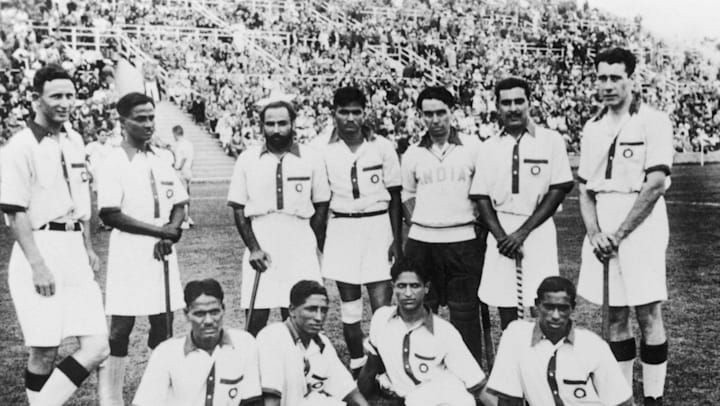
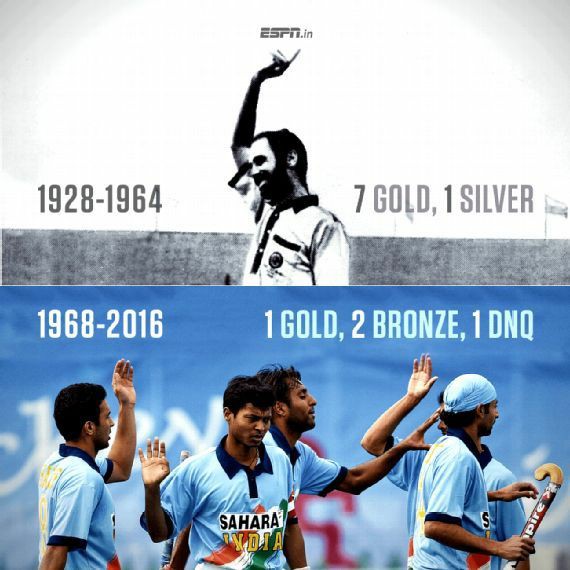
However no story of Indian sport is complete without a look back at a rich legacy. The Champions of today are inspired by past generations who have coveted Olympic glory. Only a handful have managed to attain the ultimate glory in world sport, an Olympic medal.Yet the story of India at the Olympics begins with Hockey. Very rarely has a sport been as synonymous with a country than India and Hockey. It is a rich legacy, 8 gold medals, six of those consecutive wins across four decades.
Dominance in the world of hockey
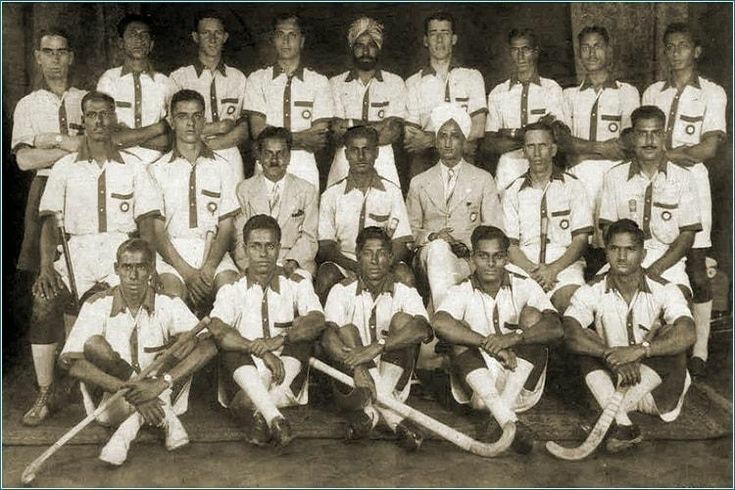
After a rocky relationship with the Olympic Games until 1924 — hockey was only played in 1908 and 1920 and dropped for the other editions — the presence of a global sports body (FIH) ensured that hockey gained permanent Olympic status starting Amsterdam 1928. The Indian Hockey Federation applied and earned an FIH membership in 1927, thus ensuring that the Indian hockey team would play its first Olympics in 1928.It was the beginning of a legacy – decorated with eight gold medals – a record till today.
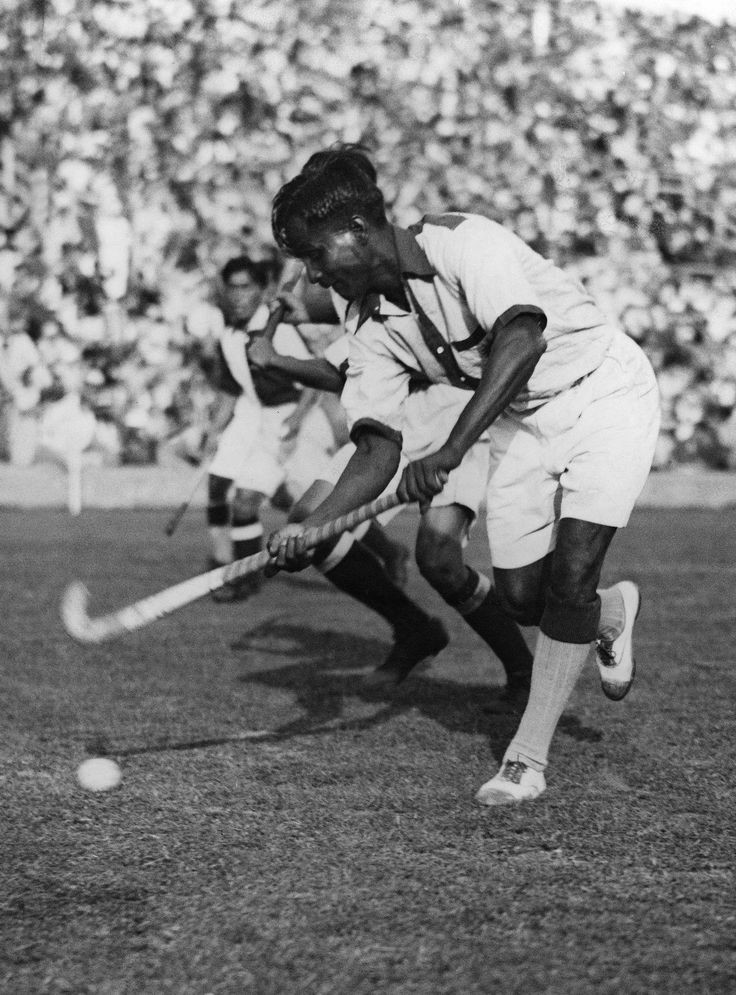
The Indian hockey team clinched the Olympic gold medal in its first attempt in 1928. India played five matches, scoring 29 goals and conceding none, with Dhyan Chand scoring 14 of them.The hockey wizard became the cornerstone of the Indian hockey team as it won two more gold medals in 1932 and 1936, completing a hat-trick of Olympic hockey golds. Dhyan Chand was made captain in 1936 in what would prove to be his final Olympic Games.
Unfortunately there were no Olympics in 1940 and 1944 due to the Second World War and that was the last the Olympics saw of Dhyan Chand. In 1948 a newly independent India had to battle not just strong teams but also cope with the exodus of players to Pakistan.When the Olympics returned after World War II in 1948, India found a new genius in the legendary Balbir Singh Sr. as he steered them to a second hat-trick of Olympic gold medals in 1948, 1952, and 1956, this time as an independent nation. The period was one of the most significant in the history of hockey in India. While Pakistan halted the gold run in the final at the 1960 Rome Olympics, India would ascend to the top step at Tokyo 1964. However, it was apparent that India’s domination of the sport was weakening. The Indian hockey team had won silver at the 1958 and 1962 Asian Games, before finally winning gold in the 1966 edition. However, India only managed a bronze at Mexico 1968, in what was then their lowest finish in the Olympics.
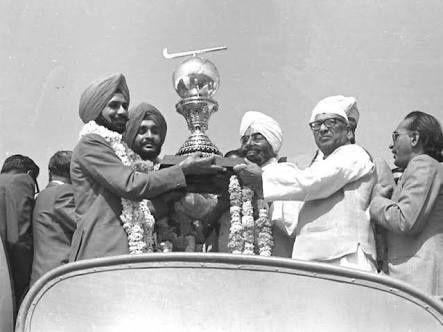
In 1968 and 1972 the team returned with a Bronze medal while Montreal saw the team draw a blank, unable to adjust to a change from grass to artificial turf. The pain of those campaigns is expressed by 3-time medallist Harbinder Singh, Ashok Kumar, Aslam Sher Khan and Dr Vece Paes. Hockey expanded its reach beyond the Olympics with the first Hockey World Cup held in 1971 in Spain. Though Pakistan beat Spain to win the title and India finished third, the sport was steadily gaining popularity in Europe, and innovations were underway.
While India’s representation in global hockey was largely restricted to the men, the women’s team made its first appearance in international competition at the inaugural women’s Hockey World Cup in 1974, finishing a creditable fourth.There seemed to be an upturn when the men’s team won its only World Cup title in 1975.
1980s-2008: A period of declination of performance
The 1980s actually began well for the Indian hockey teams.The men’s team took advantage of a depleted field to win their eighth Olympic gold at Moscow 1980 while the women’s team finished fourth in what was the first edition of women’s hockey at the Olympics.At the 1982 Asian Games in New Delhi, where women’s hockey was played for the first time, the women’s Indian hockey team clinched a historic gold at home while the men’s team won silver.
The introduction of hockey at the Commonwealth Games in 1998 provided another platform for global hockey. The Indian men’s and women’s teams finished fourth in the inaugural edition.The decline of Indian hockey hit rock bottom in 2008 when the men’s team, for the first time since 1928, failed to qualify for the Beijing Olympics.
Revival of Indian hockey
After the disappointment of 2008, the men’s Indian hockey team responded by returning to the podium at the 2010 Commonwealth Games, winning silver and the 2010 Asian Games, where they won bronze.The men’s Indian hockey team qualified for the 2012 London Olympics. Though India ended last, it represented a small bit of progress.
In the years since, Indian hockey seems to have found its feet again.The women’s team, led by Rani Rampal, won silver at the 2018 Asian Games, achieving their best ranking of ninth in the world the same year and qualified for a second-consecutive Olympics in Tokyo the following year.The men’s Indian hockey team has imbibed an attacking philosophy under new head coach Graham Reid and young captain Manpreet Singh.India played their first FIH Pro League campaign in 2020, winning games against the best in the world like Belgium, Australia and the Netherlands and rising to fourth in the world rankings, their best in history.
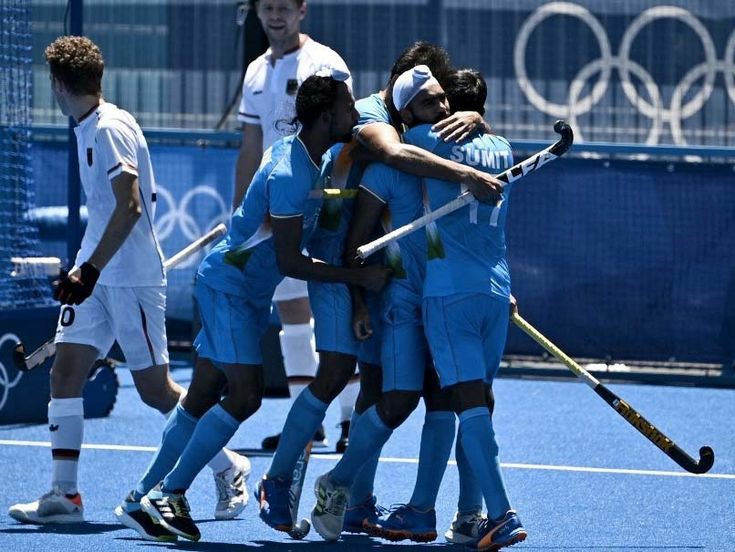
Indian men’s hockey team today displayed a great game of counter-attacking play as it won defeated Germany 5-4 in the bronze medal play-offs at the Tokyo Olympics today. Indian men’s hockey team won an Olympic medal after a gap of 41 years. India’s last of the eight Olympic golds came way back in the 1980 Moscow Games.The eight-time former gold-winners, who battled a heartbreaking slump in the last four decades, made the resurgence of the last couple of years count in the best way possible with an Olympic medal.
Even after living or residing in a city, a person can start his or her business in agriculture industry and it is sustainable also. The business will provide food into the busy and populated areas and cities. Urban Farming.
WHAT IS URBAN FARMING?
In simple terms Urban farming is the process of producing or cultivating food inside the city limits. This business has both pros and cons. This business faces challenges but it also offers many benefits to the city, like increased food security, decreased waste, community involvement and many more. Urban Farming is also known as Urban Gardening or Urban Agriculture and it means the practice of cultivating, processing and distributing food in and around cities or towns or urban areas. It involves animal husbandry. bee keeping, horticulture, aquaculture etc.
NEED OF URBAN FARMING:
Provide Food to the growing population
Reduce pressure on the traditional methods of cultivation
Help improve Quality of Life
Reduce Food Security
Reduce Environmental Impact
Help improve the landscape of the city
TYPES OF URBAN FARMING
Urban Farming is of many types, like: Street Landscaping, Tactical Gardening, Backyard Gardens etc.
VERTICAL FARMING
Backyard Gardens: It generally means growing food in the property of a home and sharing it with family, friends or neighbors.
Street Landscaping: Improving the landscape of the streets with the help of living street design or community gardens etc.
Tactical Gardens: Utilizing small spaces available in a practical way (that doesn’t involve much expenses). Ex: Keyhole Garden which replace parking spot in streets.
Forest Gardening: Gardens in urban forests including crops, fruits or herbs or nuts and even vegetables.
ROOFTOP GARDENS: Using spaces of roof for growing food. This method helps in reducing Urban Heat Island effect and help in improving the quality of air.
Green Walls : Using the space on internal and external walls to grow food.
Vertical Farms: Planting or cultivating vertically for reducing the usage of land and land footprint of agriculture.
Animal Husbandry: Raising animals for food and cities also allow residents to raise a limited number of such animals.
Urban Beekeeping: It is a very common hobby and has many benefits for the local environment.
Aquaponics: Raising aquatic animals such as fish etc. and in urban areas this can be done by capturing storm water and creating self sustaining system.
ROOFTOP FARMING
IMPORTANCE OF URBAN FARMING:
Urban Farming is an essential part of urban ecological and urban ecosystem and helps in improving the sustainability of the area. It plays an important role in Urban management system . A growing city will produce large number and amount of waste and urban agriculture acts like a solution for solving this issues by turning urban wastes into productive resource system. It helps in bringing original and nurtitious food to the local communities which has many direct health benefits. It reduces the risk of harmful conditions and vulnerability to get exposed to different chemicals used for increasing the longevity of the food and fruits.












 Eduindex News
You must be logged in to post a comment.