PSYCHOLOGICAL ASPECTS OF WOMEN ATHLETE

Lesson 6 women and sports

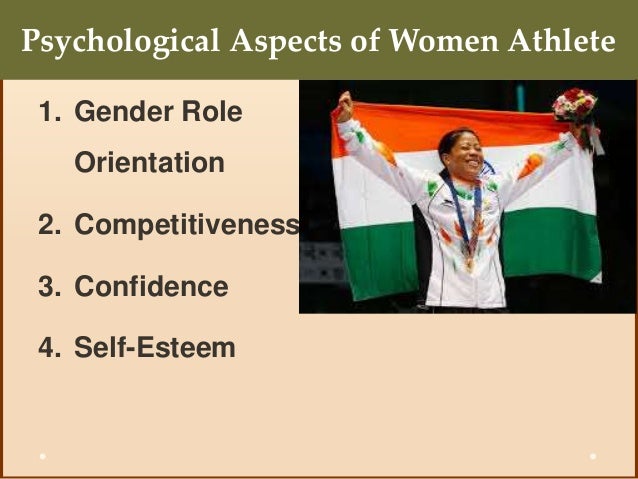
Over the past several decades , the role of women has changed drastically .However , gender beliefs and stereotypes still do exist across the world especially in sports . Most of the people in our society consider that sports are not meant for females but only for males .Social tradition , customs and cultures have great influence upon the psychology of women . In a male dominating society , males are expected to be aggressive , independent , dominating , robust and confident , whereas females are expected as well as considered to be emotional , sensitive , cooperative , sympathetic , loyal , etc. It is a well – known fact that participation of women in sports is increasing year after year .With this enhancement in female participation in sports , there is also renewed interest in the psychological characteristics of the female athletes and the effects of athletics on women . The various psychological traits of women athletes are stated below .

  1. Gender Role Orientation : It is an established fact that there has been an increase in the level of women’s participation in the types of sports that have been traditionally limited to only males , e.g., wrestling , weightlifting , kick boxing , body building , etc . However , many sports have been still considered inappropriate for women . For a long time it was considered that women should not take part in athletics because of the potentially harmful masculinising effects of sports .
  2. Competitiveness : It is evident that in the field of sports , both men and women are competitive in their own fields . In fact , women are more goal oriented and perform magnificently in artistic activities such as gymnastics . However , a number of research studies indicate that females who take part in sports are more competitive in comparison to the females who do not participate in sports .
  3. Confidence : As mentioned earlier , due to social pressures , women tend to have less confidence than men . Participation in sports , competitive environment , awards and recognitions increase confidence levels of sportspersons . However , a significant difference may exist between sportswomen and non- sportswomen .
  4. Self-esteem : Most of the research studies indicate that training plays a vital role in performance . Self -esteem improves with good performance . In the field of sports , intensive training helps in enhancing self-esteem . Research studies also show that those people who engage in sports have high self-esteem in comparison to non-participants .
  5. Aggression : Aggression is a forceful , goal- directed action that maybe verbal or physical . Participation in sports has many positive aspects which usually involve aggressive behavior . Various studies of aggression show that athletes who participate in contact sports , i.e., football players , judos or wrestlers are more aggressive than the athletes who participate in less contact sports . However , females who participate in contact sports show more aggression in comparison to females who do not participate in sports at all.
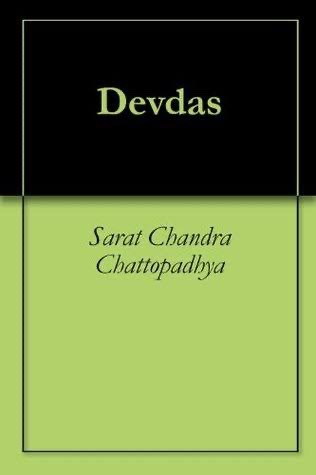
Unpopular Opinion: Devdas was toxic, not a lover. (Book Review)

Book Cover of Novel, Devdas. (Photo Credits: Goodreads)

There’s a certain notion among Indians that every sad lover in the country is a real life Devdas. But deep down, let’s analyse, was Devdas really a lover or yet another male chauvinist?

Plot:

The story starts with two childhood family friends Devdas and Paro, both belonging to rich households and immediate neighbours. Both of their families are well connected to the each other as well. The story revolves around Indian state of Bengal.


Slowly, Devdas and Paro grow up and start developing love for each other. However, Devdas was a spoilt rich brat and this is the reason his father sends him to London for higher studies. Paro becomes sad on knowing this and waits for his return. Devdas returns home after 10 years of studies and is now a well grown up. Paro, on the other hand, exceptionally beautiful, fantasises about her childhood love Devdas.

On his return to Bengal, Devdas and Paro meet and resume their fairy tale love story. However, Dev’s family isn’t happy with their relationship as Paro was from a lower caste background. Things go worse when Devdas’s mother insults Paro’s mother for offering her daughter as a bride to Devdas’s family. This was followed my Paro getting insulted by Devdas’s father who calls her “characterless” as she went on to meet Dev at late night. Devdas seeing all this, refused to accept Paro as his family was against the relationship.

Paro’s mother, unable to bear the insult, vows to get Paro married in a family which would be lot more rich and influential than Devdas. And she does so! A week later Paro marries a rich old man from a nearby village. However, just before her marriage, Devdas suddenly arrives and offers his hand to Devdas to which Paro refuses. Devdas gets angry at the refusal and hurts Paro with a gold necklace and thus Paro suffers from an injury.

Months later Paro’s marriage to the old man, Paro pays a visit to Devdas where it’s revealed he’s completely alcoholic and lonely. Paro requests him to come with him but Devdas doesn’t agree but promises her that he would come to Paro once before his death. Devdas also meets a courtesan, Chandramukhi with whom he develops loves but leaves her yet again.

Finally, the story ends with Devdas fulfilling his promise of coming to Paro but Paro’s husband refuses to let her meet Devdas. At the end, an alcoholic Devdas passes away leaving Paro sobbing.

Character of Devdas.

1) Devdas was never a lover.

I wonder, how people have beautifully whitewashed the ignorant and abusive nature of Devdas. When Paro went to meet Devdas late at night putting her dignity at stake, Devdas refused to go with her fearing about his own family honour. If this is the case, how can he be called a lover? If family and society was more important to him, it shows he never actually loved Paro.

2) Devdas was a male chauvinist.

Devdas suddenly offered his hands to Paro when Paro was just about to marry. Paro taking into consideration her self respect questioned Devdas that why is he so late and why didn’t he come when Paro went out to meet him at his home the week before. She also asked Devdas about the reasons why her parents and she were insulted by Dev’s family. Devdas couldn’t tolerate a woman questioning him and instead of apologising to her, he shouted at her for being “too arrogant”. Devdas cared about his family honour but didn’t care about Paro’s family honour: This shows his ingrained patriarchy.

3) Devdas tries to justifies abuse!

Perhaps one of the most problematic chapters of the book was when Paro refuses Dev’s offer of running away with him on her wedding night with the old man. On getting a rejection from Paro, Dev goes intolerant and beats Paro with a gold necklace. Paro suffers from an injury and her head starts bleeding. Devdas asks Paro to keep this injury with her for life as it would always remind her of Devdas. Paro agrees to this and throughout the book she is shown to love that injury. This also shows how much the book has normalised and romanticised a brutal abuse and also definitely brutal abusers!

Anime movies to watch


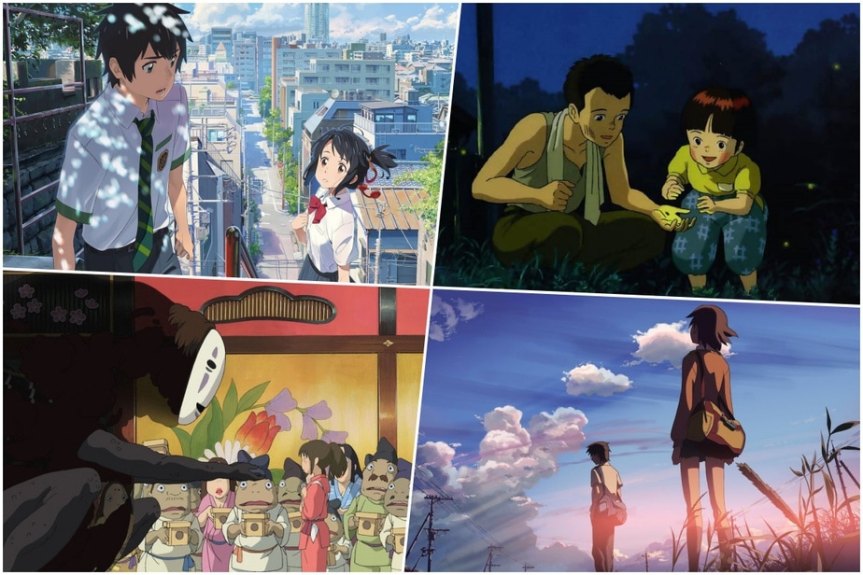
Anime refers to the animation works produced in Japan. There are many famous anime series like death note, dragon ball z, Naruto, one piece etc. which have successfully captured the hearts of people all around the globe. Similarly, there are a many anime films which are very good to watch.
Here are some of the greatest anime films which are worth checking out:


• Your Name ( 2016):

The first thing that comes to mind about this film is it’s extraordinarily breath taking animation. It is directed by Makoto Shinkai and has a 98% Rotten tomatoes rating. It is a one of a kind romantic fantasy film. It is a timeless tale of love of two teenagers who share a magical connection of switching bodies but things get very complicated when they decide to meet in person. This film has a very different take on love. It also depicts the power time has on us and how it changes everything. The music in this film is very stunning and makes the experience even better.

• The Garden of Words (2013) :

This is another Makoto Shinkai’s film. It is rather a mini movie with a runtime of 45 minutes. The animation in this film is very realistic. This film is very soothing to watch. The music and the scenes of rain are very relaxing. T story revolves around a teenager who skips school and meets a mysterious older women who shares his feelings of alienation. This film depicts loneliness and the need of companionship very well. It shows how insecurities can be both cause and result of loneliness. It showcases very relatable thoughts and feelings. Not being able to let go of past, inability to move forward in life, fear of failure, fear of being judged etc. are very aptly portrayed.

• A Silent Voice (2016) :

This is a very emotional film. It is directed by Naoko Yamada. This film depicts the effects bullying has both on the victim and the bully. The story revolves around a boy who bullied a deaf girl to the point where she has to transfer to another school. Years later, he sets out to make amends. It is a very powerful story of redemption of a sinful past. It deals with issues like sucide, self loathe, guilt, bullying, disability etc. This film depicts how self acceptance leads towards healing and how strong karma is. Self love, self forgiveness etc. are portrayed very well. Over all , this film is a roller coaster of emotions.

• Spirited Away (2001) :

This is an all time classic. It has a 97% Rotten tomatoes rating and is the winner of 2003 Best Animated Feature in Academy Awards. It is a Studio Ghibli film and is directed by Hayao Miyazaki. It is one of the best film studio Ghibli has produced. The story revolves around a girl whose parents get cursed when they go to a strange amusement park. Then then meets a boy who tells her about that park and how he has to work there to free her self and her parents. Just like any other ghibli film, it is very detailed when it comes to animation, the pacing is not fast which makes it very relaxing to watch and world exploration is done neatly. There are a lot of mythological referencing in the film and is perfect for both children and adults.

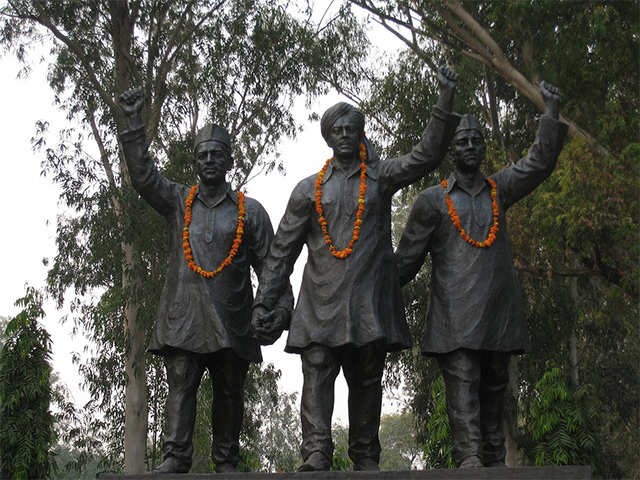
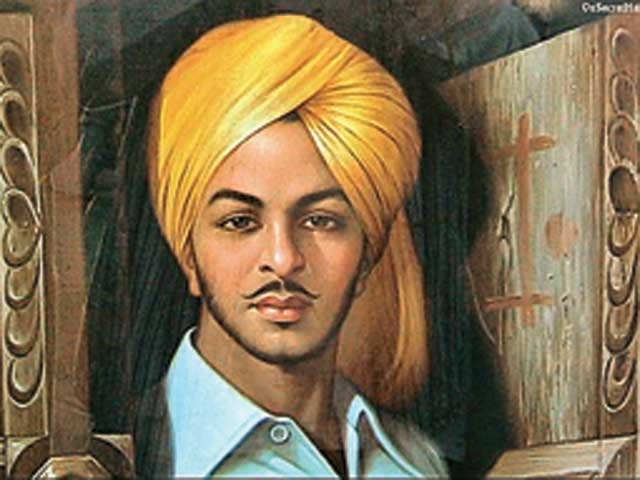
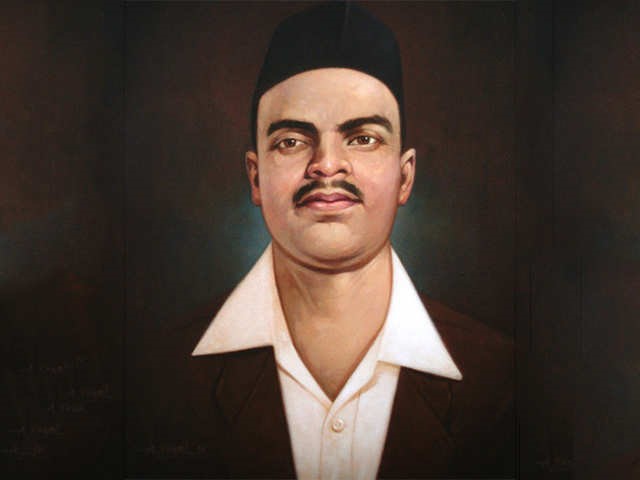
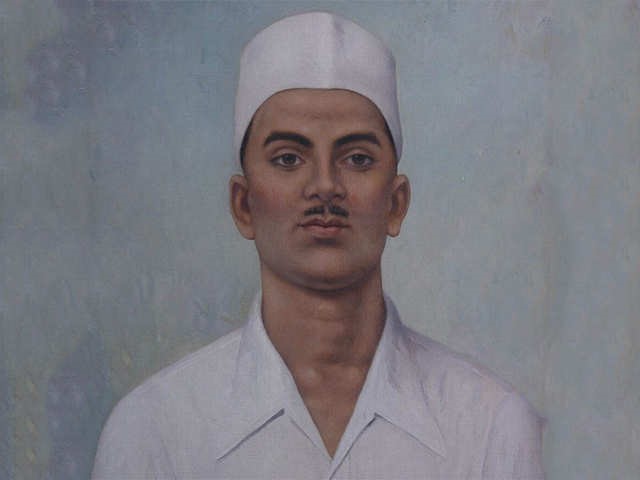
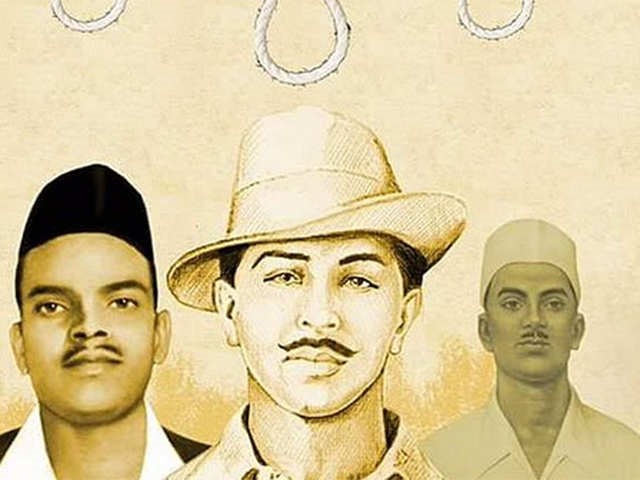
Martyrs’ Day: The Day Bhagat Singh, Sukhdev and Rajguru Lay Down Their Lives For Freedom

Martyrs’ Day it is

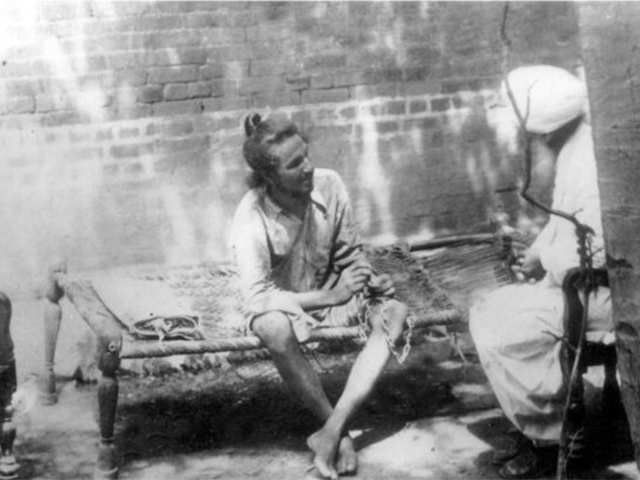
Bhagat Singh, Sukhdev Thapar, and Shivaram Rajguru – some of the most revered figures of the Indian freedom struggle – were hanged on March 23, 1931 in Punjab’s Hussainwala (now in Pakistan). Their execution spurred many youth to take up the revolutionary path, playing a vital role in energizing the fight against the British empire.

On Martyrs’ Day, also knowns as Shaheed Diwas or Sarvodaya Day, Indians pay homage to the martyrs who infused fresh blood in the fight for India’s independence.

Childhood of Bhagat Singh

At the age of 23, if anyone was smiling just before he was being hanged, he was Bhagat Singh.

Born on September 27, 1907 in Punjab’s Banga village near Jaranwala (now in Pakistan), Bhagat Singh grew up in a freedom fighters family. His uncle, Sardar Ajit Singh, as well as his father- Kishan Singh, were great freedom fighters. At an early age, Bhagat Singh started dreaming of growing guns in the fields so that he could fight against the colonial rule.

The Ghadar Movement left a deep imprint on his mind. Kartar Sing Sarabha, hanged at the age of 19, became his hero. The massacre at Jallianwala Bagh on April 13, 1919 drove him to go to Amritsar. He was preparing fof his B.A. examination when his parents planned to have him married.

He vehemently rejected the suggestion and said that, if his marriage was to take place in Slave-India, my bride shall be only death.

Shivaram Rajguru

Shivaram Rajguru, born on August 24, 1908, had witnessed British’s atrocities on India and its people.

This instilled within him a strong urge to join hands with the revolutionaries in a bid for India’s freedom struggle. He joined HSRA with a motive to strike fear into the heart of the British empire.

​Rajguru made British to take notice of the growing domestic uprising when they dealt crucial blows with attacks like in the Lahore Conspiracy Case and the bombing of the Central Assembly Hall in New Delhi.

Sukhdev Thapar

Born on May 15, 1907, Sukhdev Thapar had witnessed the brutal atrocities that the Imperial British Raj had inflicted on India, which then led him to join the revolutionaries, vowing to set India free from the shackles of British dominion. As a member of the Hindustan Socialist Republican Association (HSRA), Sukhdev Thapar organised revolutionary cells in Punjab and other areas of North India.

He even went on to educate the youth at the National College in Lahore, greatly inspiring them about India’s glorious past. He along with other renowned revolutionaries started the ‘Naujawan Bharat Sabha’ at Lahore that was an organisation involved in various activities, mainly gearing the youth for the freedom struggle and putting an end to communalism.

He also took active part in several revolutionary activities like the ‘Prison hunger strike’ in 1929; however, he is best remembered for his courageous attack in the Lahore Conspiracy Case.

Assembly Incident Trial

The dramatic protest was met with widespread criticisms from the political arena.

Bhagat Singh responded – “Force when aggressively applied is ‘violence’ and is, therefore, morally unjustifiable, but when it is used in the furtherance of a legitimate cause, it has its moral justification.”

Trial proceedings commenced in May where Bhagat Singh sought to defend himself, while Batukeshwar Dutt was represented by Afsar Ali.

The court ruled in favour of a life sentence citing malicious and unlawful intent of the explosions.

Lahore Conspiracy Case

Soon after the sentencing, the police raided the Hindustan Socialist Republican Association (HSRA) bomb factories in Lahore and arrested several prominent revolutionaries.

Three individuals, Hans Raj Vohra, Jai Gopal and Phanindra Nath Ghosh turned approver for the Government which led to a total of 21 arrests including those of Sukhdev Thapar, Jatindra Nath Das and Shivaram Rajguru. Bhagat Singh was re-arrested for the Lahore Conspiracy case, murder of Assistant Superintendent Saunders and bomb manufacturing.

Trial started against 28 accused in a special session court presided over by Judge Rai Sahib Pandit Sri Kishen, on July 10, 1929.

Prison Hunger Strike

In jail, Bhagat Singh and his fellow inmates declared an indefinite hunger strike in protest of the prejudiced difference in treatment of the white versus native prisoners and demanded to be recognised as ‘political prisoners’.

The hunger strike received tremendous attention from the press and gathered major public support in favour of their demands. Death of Jatindra Nath Das, after 63 days long fast, led to the negative public opinions intensifying towards the authorities.

Bhagat Singh finally broke his 116-day fast, on request of his father and Congress leadership, on October 5, 1929.

Saunders’ murder

On December 17, 1927, Bhagat Singh and Shivaram Rajguru shot and killed assistant superintendent of police John Saunders.

They were supported in this act by their compatriots Sukhdev Thapar and Chandrashekhar Azad. However, their original target was not Saunders but superintendent of police James Scott who had ordered his men to lathi-charge protesters leading to the death of the nationalist leader Lala Lajpat Rai.

Owing to the slow pace of the legal proceedings, a special tribunal consisting of Justice J Coldstream, Justice Agha Hyder and Justice GC Hilton was set up on the directives of the Viceroy, Lord Irwin on May 1, 1930. The tribunal was empowered to proceed without the presence of the accused and was a one-sided trial that hardly adhered to the normal legal rights guidelines.

The tribunal delivered its 300-page judgement on October 7, 1930. It declared that irrefutable proof has been presented confirming the involvement of Bhagat Singh, Sukhdev Thapar and Shivaram Rajguru in the Saunders murder. Bhagat Singh admitted to the murder and made statements against the British rule during the trial. They were sentenced to be hanged till death.

Shaheed Diwas

On March 23, 1931, 7:30 am, Bhagat Singh along with his comrades Rajguru and Sukhdev were hanged in Lahore Jail.

It is said that the trio proceeded quite cheerfully towards the gallows while chanting their favourite slogans like “Inquilab Zindabad” and “Down with British Imperialism”.

India’s beloved sons were cremated at Hussainiwala on the banks of Sutlej River.

At the time of their execution, Bhagat Singh and Sukhdev Thapar were just 23 years old. And Shivaram Rajguru was only 22 when he was hanged on March 23.

ENVIRONMENTAL PROTECTION LAWS – Wildlife Act

Environment protection is practice of protecting the environment, on individual, organizational or governmental & (or) humans. Protection of the environment is needed due to various human activities.

Why laws are implemented?

  • Protect and preserve the environment.
  • The law  prescribes Responsibilities of the State for protecting the national environment.
  • Determine who can use natural resources and on what terms.
  • Create rules for how people can use natural resources.
  • Governments have determined to strengthen their judicial capacity to enforce environmental laws.

Wildlife Act (1972)

The wild life protection Act, 1972 is an Act of the Parliament of India enacted on 9 Sept 1972. It provides for protection of wild animals, birds, plants and for matters connected therewith. It extends to whole India, except Jammu and Kashmir. It has six schedules which give varying degrees of protection.

Definitions

  1. Animal- Amphibians, birds, mammals
  2. Animal Article- Articles made from wild animal
  3. Hunting- Capturing, Killing, poisoning, trapping, injuring animals etc
  4. Trophy- Whole or part of animal which been preserved.
  5. Wildlife- Any animal, bees, butterflies, crustacean, fish & moths;

Authorities appointed

Central government may appoint A Director of wild life preservation, Assistant Directors of wild life preservation, Other officers & employees as may be necessary.

State government may appoint A chief wild life warden, Wild life wardens, One Honorary wild life warden in each district, Other officers & employees as may be necessary.

Wild life Advisory Board

  • The Act enforces & enables the state governments & the administrators of the union Territories to constitute a wildlife Advisory Board in each state & Union Territory.
  • Areas to be declared as sanctuaries, national parks, or closed areas & their administration.
  • Formulation of policy for protection & conservation of wildlife.
  • Amendment of any schedule.
  • Any other matter referred by State government.

Hunting of wildlife animals

Hunting of wild animals is permitted in certain cases – If the animal has become dangerous to human life or beyond recovery. Killing or wounding in good faith in defense of oneself or any other person.

Grant of permit for special purpose like Education, Scientific research, Scientific management, Collection of specimen for zoos, museums & similar institute, Derivation, collection or preparation of snake- venom for manufacture of life saving drugs.

Protection of specified plants

No person shall Willfully pick, uproot, damage, destroy, acquire, or collect any specified plant from any land & any specified area by Central government. Possess, sell, offer for sale, or transfer by way to gift or otherwise, or transport any specified plant whether alive or dead.

Penalties

Imprisonment varying from six months up to seven years and/ or ranging from rs. 500 upto not less than rs. 10000 depending upon on the nature or seriousness of the offence committed regarding the specified wildlife.

Math 2.0 day

Today is math 2.0 day, but what exactly does that even mean?.With or without knowing we all use math several times every single day. The subject is also important for the advancement of technology. And thus, to celebrate the combination of maths and technology, Math 2.0 Day is celebrated on July 8. Read on to know other details.

Imagine the way the world used to be viewed! Math as known to be important but not thought to be something you could make a living at and the rising tide of technology was considered a fad! Math 2.0 Day reminds us that technology is here to stay!

Every year, Math 2.0 Day is celebrated on July 8. The day is observed to highlight the importance of the combination of maths and technology. The day was formed to celebrate the achievement made through the combination of maths and technology. Math 2.0 Day also helps to educate the masses about the benefits of maths and technology. Without maths and technology, it would have been impossible for us to achieve the various entertainment mediums we have now.

History of Math 2.0 Day

In 2009, the Math Interest Group formed Math 2.0 Day. Math is extremely important for the advancement of science, technology and education.Math 2.0 Day is a celebration of the blending of technology and mathematics. For a lot of us, math wasn’t a favorite subject, we’d spend the entire period staring at the equations and wondering what sort of livid madman designed these torture chambers on paper. Ultimately, however, we realized that math is utterly indispensable in our modern world. If you’ve ever wondered who uses math in their day to day careers, you aren’t alone and we have some answers for you.

Programmers deal with mathematics every day, as it’s the framework upon which all computer operations are formed. Everything from the order of operations to quadratic equations is necessary to make even the simplest program. Scientists are one of the biggest users of mathematics, whether they’re calculating the statistical variance of their data or figuring out how much to add to their chemistry experiment, it’s involved at every step.

One presumes you live in a house, drive a car, or operate a computer? The engineers responsible for designing those things so that they work, and especially in the case of the house, use math to ensure it doesn’t come crumbling down on your head. Math 2.0 day celebrates all these mathematical heroes and more.

How to celebrate Math 2.0 Day

If you’re like me, you probably have your old math books from college laying around. I suggest busting them open and studying them again. Who knows, in the intervening years you may have secretly developed a love for those dancing numbers. If not, make sure that you stop by those people who use math every day and thank them for doing the work so you don’ thave to.Mathematics is one of the most important fields in the world today, and just about everything we know and love is built on its back.

Astronomers Detect a Lurking Cosmic Cloud, Bigger Than The Entire Milky Way.

In the yawning vacuum of intergalactic space, something large is lurking.

Not a galaxy, although it’s of a comparable size: A vast cloud of hot, faintly glowing gas, bigger than the Milky Way, in the space between galaxies congregating in a huge cluster.

Scientists believe this cloud may have been unceremoniously stripped from a galaxy in the cluster, the first gas cloud of this kind we’ve ever seen. Even more surprisingly, it hasn’t dissipated, but has remained clumped together for hundreds of millions of years.

This not only tells us something new about the environments inside galaxy clusters, it suggests a new way to explore and understand these colossal structures.

“This is an exciting and also a surprising discovery. It demonstrates that new surprises are always out there in astronomy, as the oldest of the natural sciences,” said physicist Ming Sun of the University of Alabama in Huntsville.

Galaxy clusters are, as the name suggests, groups of galaxies that are bound together gravitationally. The galaxy cluster where our ‘orphan’ gas cloud was found is called Abell 1367, or the Leo Cluster, around 300 million light-years away. It contains at least 72 major galaxies, and makes up part of a larger, supercluster complex.

Such environments often have a lot going on, and astronomers like to peer into them to try and figure out how our Universe is connected. In 2017, astronomers using Japan’s Subaru Telescope spotted what appeared to be a small, warm cloud in Abell 1367; since its origin was unclear, they went back with more instruments to take a closer look.

A team led by astronomer Chong Ge of the University of Alabama in Huntsville used the ESA’s XMM-Newton X-ray telescope and the Multi Unit Spectroscopic Explorer (MUSE) on the Very Large Telescope, in addition to Subaru – and, to their surprise, they found X-ray emission showing the cloud was larger than they first thought.

Much larger, in fact – bigger than the Milky Way galaxy, with a mass around 10 billion times that of the Sun. And it didn’t seem to be associated with any known galaxy in the cluster. It was just drifting there. But the wealth of data allowed the researchers to take the the temperature of the gas, in turn providing clues as to its provenance.

The cloud’s temperature ranges between 10,000 and 10,000,000 Kelvin – consistent with gas that can be found within galaxies, the interstellar medium. The much more tenuous hot gas of the intracluster medium (the space between galaxies in the cluster) is hotter still, at around 100 million Kelvin.

This suggests that the cloud of gas was stripped from a galaxy as it moved through space.

“The gas in the cloud is removed by ram pressure of the hot gas in the cluster, when the host galaxy is soaring in the hot gas with a velocity of 1,000 to 2,000 kilometers [620 to 1,240 miles] per second,” Sun said.

“It is like when your hair and clothes are flying backward when you are running forward against a strong headwind. Once removed from the host galaxy, the cloud is initially cold and is evaporating in the host intracluster medium, like ice melting in the summer.”

This is fascinating, but kind of weird – because the researchers couldn’t find any nearby galaxies that could account for this occurring recently. Yet, if the gas had been ripped from its galaxy hundreds of millions of years prior, as this lack of proximity suggested, how had it not been diffused into the intracluster medium?

To work this out, the team performed calculations, and found that a magnetic field could hold the gas cloud together against the instabilities that ought to otherwise tear it apart, for long periods of time.

Given the high mass of the cloud, the team has inferred that the parent galaxy from which it was torn was a large and massive one. This could help them track down which galaxy it was; another clue could be traces of gas that extend from the cloud, which might point in the right direction.

In addition, now that one lonely cloud has been identified, scientists have a set of data that will help to identify other such clouds in the future. This will provide valuable information about intracluster dynamics, and the distribution of matter in galaxy clusters.

Plus, we now have observational evidence that the intracluster medium can divest galaxies of their gas.

“As the first isolated cloud glowing in both the H-alpha spectral line and X-rays in a cluster of galaxies, it shows that the gas removed from galaxies can create clumps in the intracluster medium, and these clumps can be discovered with wide-field optical survey data in the future,” Sun said.

Neerja-the fearless and eternal girl!

Inside a Hijack: The Story Of Neerja Bhanot
Neerja Bhanot

Neerja Bhanot, the braveheart flight attendant was never one to run away from a crisis

Flight attendant Neerja Bhanot, an ardent Rajesh Khanna fan, often found herself dreaming up scenarios in which she played a role. For one such hypothetical situation, she asked her mother to suggest a plan of action in case of a hijack.

Her mother told her, “Agar aisa kuch hua toh bhaag jaana (If something like this ever happens, escape).”

To which a confident Neerja replied, “Mummy, tumhari jaisi maa hongi toh desh ka kya hogaMar jayungi lekin bhagungi nahin” (If all mothers think like you, then what will happen to the country? I’d rather die than run away).”

Those words came true on 5 September 1986 when Bhanot died while saving passengers on Pan Am Flight 73, which had been hijacked during a stopover in Karachi.

But, the ‘Heroine of the Hijack’ had seen her share of troubles already.

Born to Harish and Rama Bhanot on 7 September 1963 in Chandigarh, she was the darling of her family, which included two brothers, all of whom called her their ‘lado’. She studied in Chandigarh and later in Mumbai, which was where she became a model, endorsing brands like Binaca toothpaste, Forhans and Godrej. 

At the age of 19, she was married to a marine engineer and moved to Sharjah, UAE. After two months of abuse, including starvation, verbal taunts and threats, Bhanot left her husband, returned to Mumbai and decided to become a flight attendant. 

Bhanot was appointed the senior flight purser on Pan Am Flight 73 flying from Mumbai to the United States on that fateful September day. 

During its stopover in Karachi, four armed Palestinian men belonging to the Abu Nidal Organisation hijacked the aircraft, which was carrying around 380 passengers and 13 crew members. Bhanot quickly alerted the cockpit crew by using the hijack code, which allowed the American pilots to escape and thus, ground the plane.

The enraged hijackers ordered her to collect the passengers’ passports. Sensing that the hijacker’s key targets were Americans, Bhanot and her crew hid those passports under the seats and in the trash chute.

Her calming presence also, it is said, kept the passengers’ and crew members’ anxieties in control for 17 hours as she served sandwiches and beverages and tried to boost their morale, even as the terrorists killed a passenger and threw him out of the plane.

When the hijackers eventually decided they had had enough and opened fire, Bhanot worked fast to evacuate as many passengers as she could via the emergency exit. She was shot dead as she shielded three American children from the terrorists.

Out of the 44 Americans on board, 42 were saved owing to Bhanot’s presence of mind. The survivors of the attack conferred the monicker ‘Heroine of the Hijack’ upon her.

Bhanot’s legacy

Bhanot’s calm courage and quick instincts led to a slew of posthumous awards, including the Ashoka Chakra — India’s highest peacetime gallantry award. She was the first woman and youngest recipient of the award. Her citation states: “Her loyalties to the passengers of the aircraft in distress will forever be a lasting tribute to the finest qualities of the human spirit.”

Her story continues to inspire young women, and in order to commemorate her courage, Bhanot’s family used the funds from Pan Am to set up the Neerja Bhanot Pan Am Trust. The trust recognises Indian women who overcome social injustice and airline crew members who go beyond the call of duty in a crisis.

Among other honours, Bhanot was conferred with the Tamgha-e-Insaniyat award by Pakistan, and in 2004, the Indian Postal Service released a stamp in her memory.  

In 2016, Ram Madhvani directed a biopic starring Sonam Kapoor as Neerja. The biopic is a stylised thriller with a few lovely glimpses into Bhanot’s personal life, especially her relationship with her mother (played by Shabana Azmi). The film, too, won a number of awards, including the National Award for the Best Feature Film in Hindi.

reference-https://www.bbc.com/news/world-asia-35800683

Peaky blinders!

Tommy Shelby

Peaky Blinders is a British period crime drama television series created by Steven Knight. Set in Birmingham, England, the series follows the exploits of the Shelby crime family in the direct aftermath of the First World War. The fictional family is loosely based on a real urban youth gang of the same name, who were active in the city from the 1890s to the early 20th century.

Peaky Blinders features an ensemble cast, led by Cillian Murphy, Helen McCrory and Paul Anderson starring as Tommy Shelby, Elizabeth “Polly” Gray and Arthur Shelby respectively, the gang’s senior members. Sam Neill, Tom Hardy, Paddy Considine, Adrien Brody, Aidan Gillen, Charlotte Riley, Sam Claflin and Anya Taylor-Joy also have recurring roles at various junctures of the series. The show premiered on 12 September 2013, telecast on BBC Two until the fourth series, and then shifted to BBC One for the fifth and upcoming sixth series.

In 2018, after the show’s Drama Series win at the BAFTA TV Awards, Knight confirmed his “ambition of making it a story of a family between two wars, and by ending it with the first air raid siren in Birmingham”, which was 25 June 1940. The fifth series premiered on BBC One on 25 August 2019 and finished on 22 September 2019. Netflix, under the deal with Weinstein Company and Endemol, had acquired the rights to release Peaky Blinders in the United States and around the world. In January 2021, it was announced that the sixth season would be the final season of the series.

The Story of the Best Selling Video Game of all time: Tetris

Tetris has its origin in the Dorodnitsyn Computing Centre (Research Lab). It was one of the foremost research institutes of the Russian Academy of Sciences, located in St Petersburg, Soviet Union (Now Russia). Created by software researcher Alexey Pajitnov in 1984, Tetris is a simple tile-matching game that took the world by storm upon it’s release.

It was developed for Electronika 60, which was a computer, made in the Soviet Union. This period was the final stage of the Cold war Era and computers were becoming more popular as well.

The game wasn’t intended as a commercial product just like the creation of the music record. But it was to be distributed freely among academic institutions around the Soviet Union and the economic bloc of countries aligned with the USSR in Eurasia, Africa, and the Americas that demonstrated use cases for the software.

As USSR was a communist state, so Pajitnov did not technically own the program as the game was under the ownership of the state. Pajitnov along with the help of a colleague, Dmitry Pavlovsky, and a teen computer programmer, Vadim Gerasimov continued to work on the game project even though commercializing it would have been a risky move under the Soviet government. Gerasimov further ported the game from the old and bulky Elektronika 60 to the more widely used (IBM) compatible PCs.

As Elektronika 60 had no graphics output, the individual blocks in the game were made of different text, but with the port in PC, they were able to support color graphics. This brought the game to life.

Pajitnov and Gerasimov had started distributing Tetris for (PC) in 1985 among their friends and colleagues in various math or computer conventions. Soon the sharing spread and the game was smuggled outside USSR to Hungary. During mid-80s U.S and Japan had a more prevalent console market whereas, in Europe, gaming was primarily done on computers. There was a non-existent software market in Russia and most software was usually copied in floppy disks.

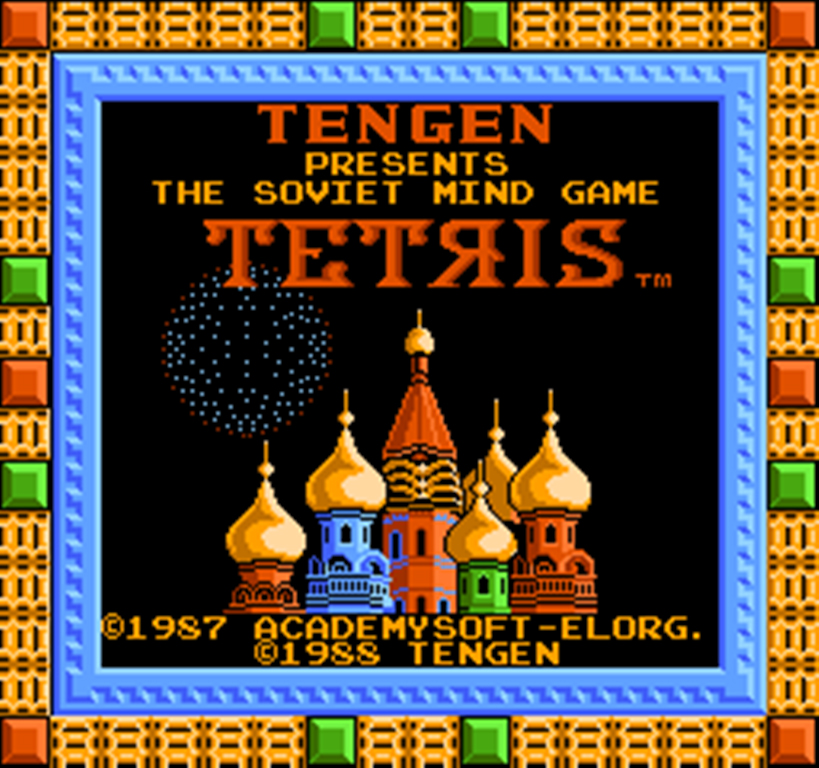
Welcome screen of 1987 version of Tetris

In 1986 Robert Stein, a salesman from the UK-based software company Andromeda spotted Tetris at Hungary’s Institute of Computer Science. He was convinced by the potential of the software and he struck an agreement with Pajitnov to sell the games internationally. But legally Tetris was still under the ownership of the Soviet government.  There was one problem, the agreement was only for the PC and not for any other platform and Stein has struck a deal with Sega to launch the game on their platform. Later Henk Rogers, another salesman from the Netherlands wanted to find a good launch game for the Nintendo’s new Game Boy handheld. The Soviet government was not happy with the Stein deal. But Rogers convinced the Soviet government and they agreed and he also formed a good relationship with Pajitnov. Later Andromeda’s license of Tetris was deemed illegal. Nintendo was given the right to launch the game on its console. The GameBoy was a platform to showcase one of the first video games exported from Russia. The game was a commercial hit and it has been ported to the most number platforms to date. The game also holds the record as the best-selling game of all time. In 1996, Pajitnov was able to reclaim the ownership of the rights and formed the Tetris Company, along with Henk Rogers. Even though he missed collecting the potential royalties for Tetris which were over hundreds of millions, he was still able to secure the future royalties.

References:

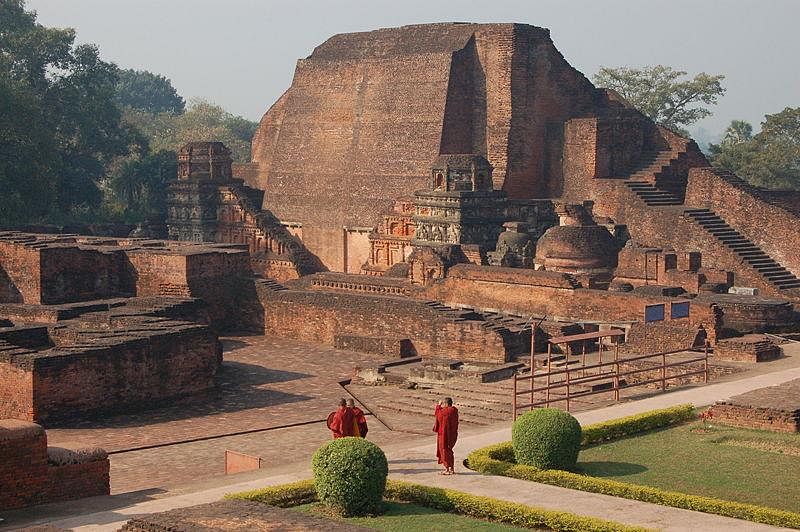
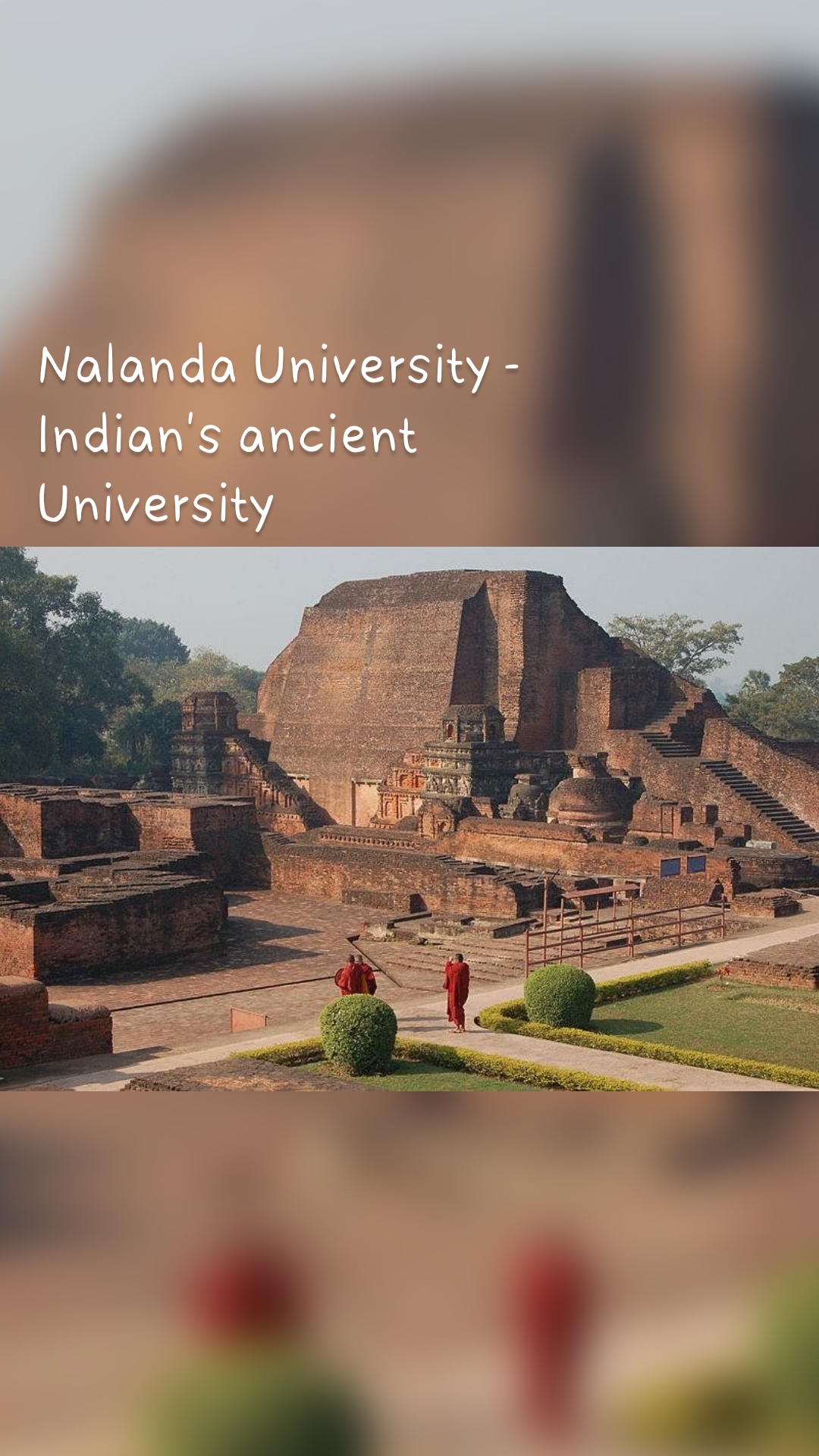
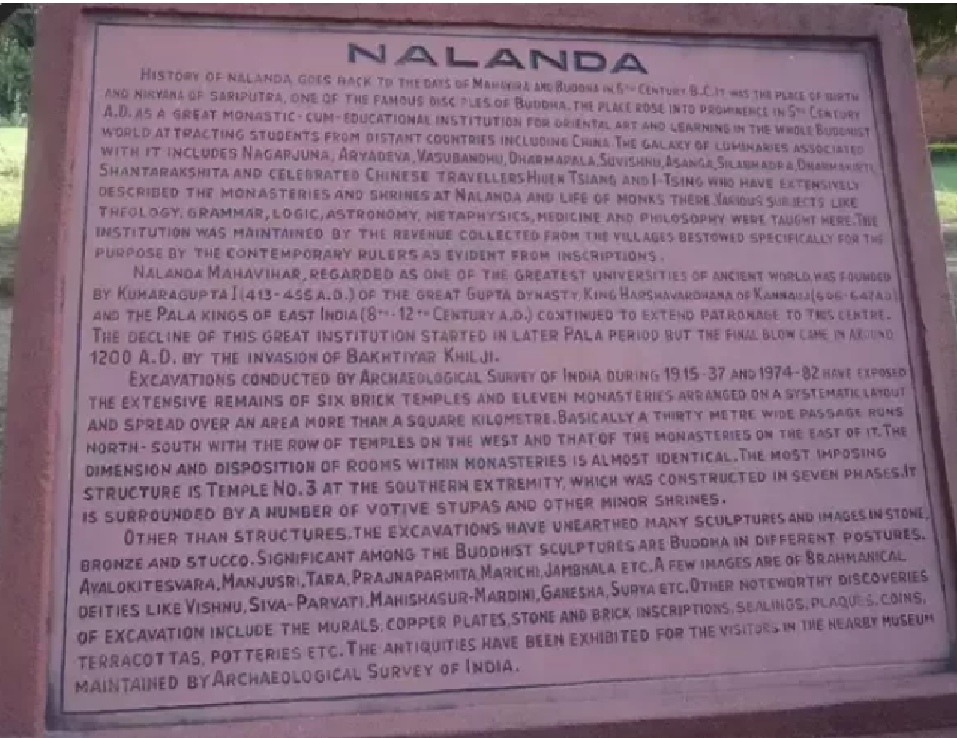
Nalanda University – An Ancient Seat of Learning

Nalanda was one of the earliest and finest universities in India.

It is located in Nalanda District, Bihar, India.

ORIGIN OF NALANDA

The origins of this scholastic institution in 5th century CE. It served for an uninterrupted duration of 800 years

The university thrived under the patronage of the rulers of the Gupta dynasty during the 5th and 6th centuries.

 It continued to flourish under Emperor Harshavardhan of Kannauj in the 7th century as well. 

The growth and the popularity of the university continued until the 9th century.

The declination of Nalanda University was primarily due to the establishment of four other seats of Buddhist learning in the same region under the Pala Empire from the 9th century to the 12th century

FACTS

  • Oldest university with hostel facilities in India.
  • The massive library of Nalanda was called Dharma Gunj, meaning the Treasury of Truth or the Mountain of Truth.
    • It contained hundreds of thousands of books.
  • The subjects taught at Nalanda covered in every field of learning, and it attracted pupils and scholars from Korea, Japan, China, Tibet, Indonesia, Persia and Turkey
  • It is believed that the library of Nalanda was so huge that it burned for months after the university was ransacked by Bakhtiyar Khilji and the library was set on fire.
  • Nalanda was attacked three times by the invaders –
    1. The Huns
    2. The Gaudas
    3. Bhaktiyar Khilji – who brought about its complete destruction.
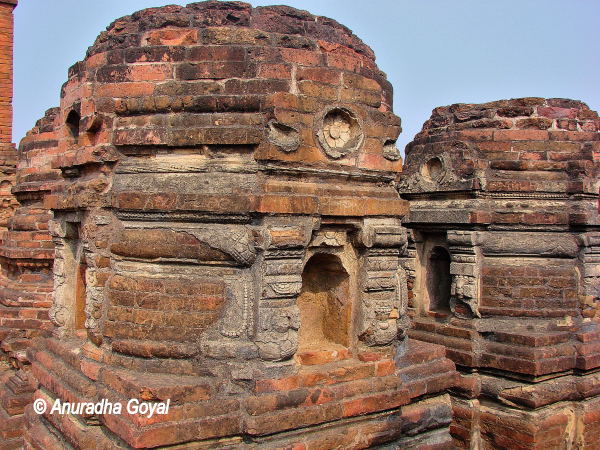
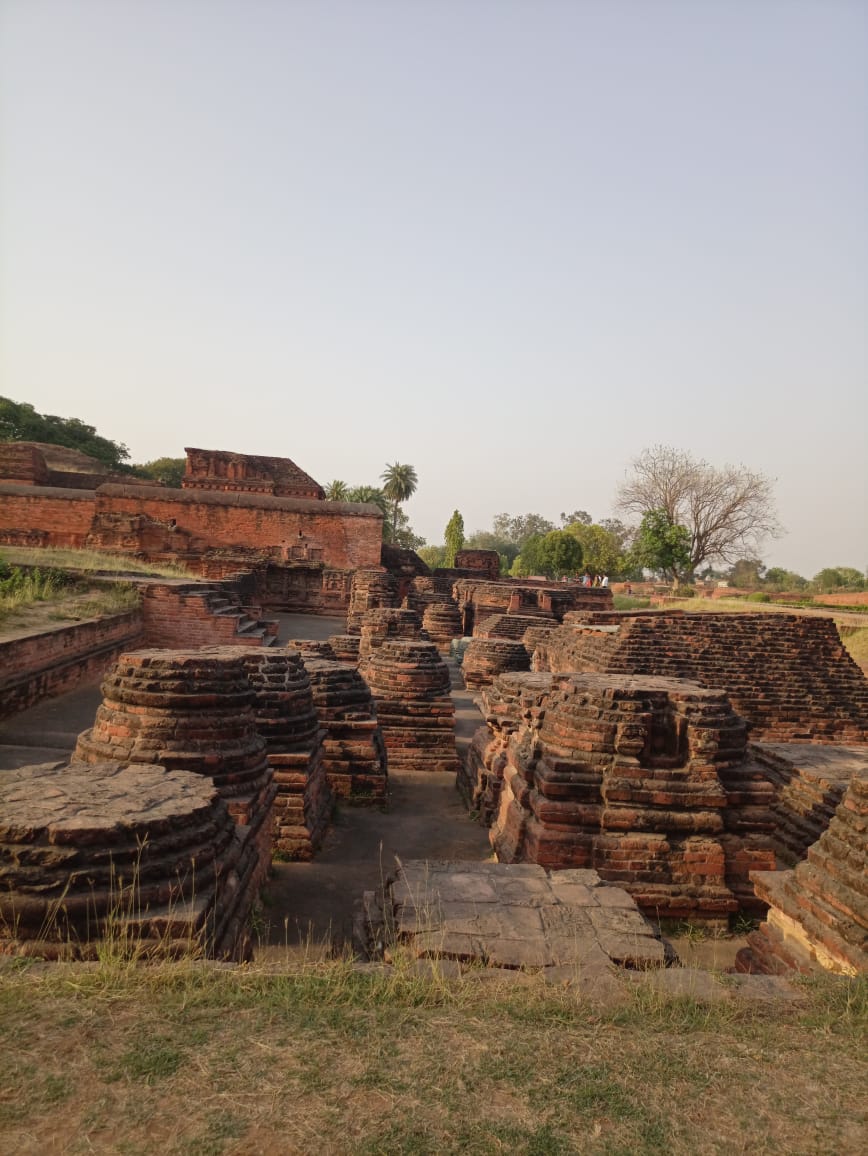
  • Archeologists and historians are of the opinion that just 10% of the Nalanda campus has been excavated till date. Around 90% remain to be excavated.
  • The ruins of Nalanda were the location for the shooting of the popular song “O Mere Raja” from the Bollywood movie Johny Mera Naam starring Hema Malini and Dev Anand.
By Kirti kumari

DECLINATION

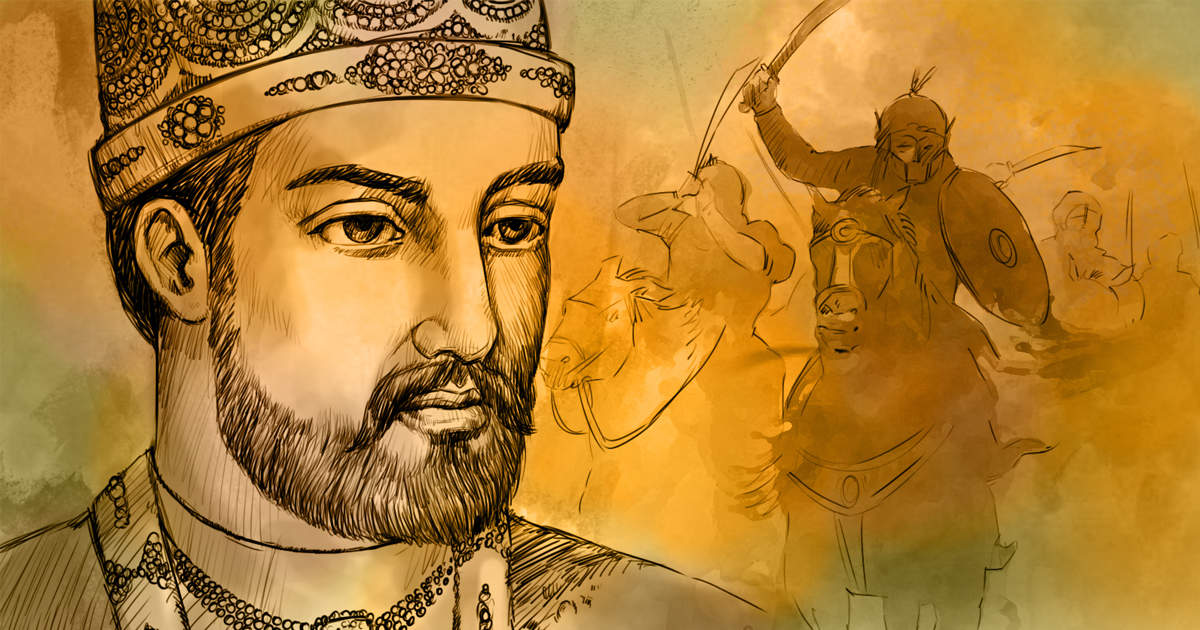
  Muḥammad Bakhtiyar Khalji, a Turkic invader destroyed the Nalanda University in 1202 AD.

At that time Bakhtiyar Khilji had captured some areas ruled by Buddhists in North India and once he became quite ill. He got enough treatment from his princes but he could not recover and reached a moribund condition.

Then someone advised him to take the treatment from Acharya Rahul Sribhadra, who was head of Ayurveda department of Nalanda University. But Khilji was not ready for this. He had more faith in his princes. He was not willing to believe that Indian physicians have more knowledge than his wife and their masters.

But to save his life he had to call Acharya Rahul Sribhadra, head of Ayurveda department of Nalanda University. Then Bakhtiar Khilji put a strange condition in front of Vaidyaraj that I will not eat any kind of medicine given by him. They had to fix it without medication. After thinking of this, Vaidyaraj accepted his condition and after a few days, he came to Khilji with a Quran and said that he had to read the page of the Quran. And after reading these pages you will free from illness.

Bakhtiar Khilji read the Quran as Vaidyaraj said he was cured.

“It is said that Rahul Shribhadra applied for medicine on some pages of the Quran. and as he started reading those pages of the Quran he kept on recovering.”

After recovering khilji was shocked by the fact that an Indian scholar and teacher had more knowledge than his princes and countryman.

After this, he decided to destroy the roots of Buddhism and Ayurveda. As a result, Khilji set fire to the great library of Nalanda and burned around 9 million manuscripts.

May Malala Come in Every Lap!

Let’s peep in the alleys of the most promising international icon with exceptional zeal:

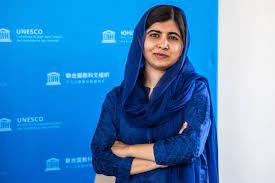
Malala Yousafzai (Pic Source: Google)

We Human beings are succumbing every minute to fear & bigotry since the mysterious accident by which life sprang on Earth .And also every era-produced Malala pick up the flag of humanity with the brave philanthropic hymns. The world which is now somehow livable, is about to celebrate the 24th birthday of an exceptional mental strength as well as of such a magnificent lens and throw a glance on the pager of her life:

The journey of an ordinary human to an extraordinary one started on July 12 , 1997 at Mingora in Pakistan. Since childhood, with the touch of her father. Ziauddin Yousafzai, a school owner and an educational activist himself (whom Malala termed as the ‘Falcon’) Malala got herself involved in human rights advocacy, especially education of women in her native swat valley in Khyber Pakhtunkhwa where the local  Taliban had banned girls from attending schools . Then the little mind rarely couldn’t take so much time to realize the bluffing of terror patriarchy and resolved to eradicate it for a harmonious life of every girl with a backbone.

When she was only 11 years old, She gave a speech in Peshawar on “How dare the Taliban take away our Basic Right to Education” In 2009 , She started blogging as a short step towards the zenith of her life. In 2011 , She was awarded ‘Pakistan’s  National youth peace prize’ In that year, Archbishop Desmond Tutu, a south African activist, nominated her for the International Children’s Peace Prize of the Dutch International children‘s advocacy group kids Rights Foundation.

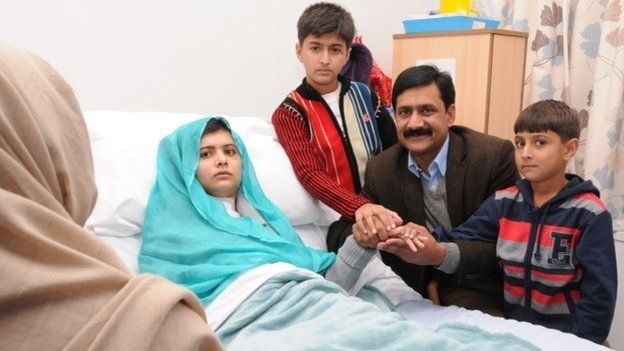
With Malala’s growing popularity, dangers too stealthily came along her way. On October 09, 2012, the Taliban ascended to the peak of inhumanity by shooting this 15-year old child  returning from school by bus. One bullet went through her head, neck and ended in her shoulder. Though her health was critical, her fighting spirit made her recover from the malign wounds and after almost 1 year restarted attending school.

Malala with her lovely Family, during her hospitalization (Pic Source: Google)

Eventually, Malala got a massive outpouring of support in the limelight. On July 12, 2013 on her 16th birthday Yousafzai delivered a speech at the United Nations. There she sad:

“The terrorists thought that they would change our aims and stop our ambitions but nothing changed in my life except this weakness, Fear and hopelessness died ; Strength, power and courage were born.”

–Malala

There Malala challenged orthodoxy, illiteracy & terrorisms:

“The extremists were and they are, afraid of books and pens… They are afraid of women… Let’s speak of our books and pens — our most powerful weapons.”

–Malala

On that very auspicious day, Ban Ki-moon, Secretary General of the UN, pronounced “Malala Day” in honor of The young leader’s activism. He assured that no child should have to die for learning and nowhere should teachers to teach.

When the second voyage of Malala’s life had just started to roll out the wheels, European parliament awarded her the ‘Sakharov Prize’ in 2013.

In the next year, conches of ‘Satyam’ blew when Malala became the youngest ever Nobel Prize Laureate. She received the award along with Kailash  Satyarthi, Indian children’s rights activist. This unparalleled and unequal ‘Global Teacher‘ became a gentle advocate of Peace.

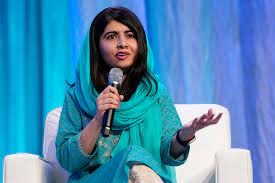
Malala Yousafzai (Source: Google)

In April 2017, United Nations secretary general Antonio Guterres appointed Yousafzai as a UN messenger of peace to promote girls’ education. She was also given Honorary Canadian Citizenship in 2017.

In the meanwhile, Yousafzai family launched the Malala fund in 2014 to ensure girls around the world have access to 12 years of free, safe & quality education, though later she revealed her extreme grief:

“The shocking truth is that world leaders have the money to fully fund primary AND secondary education around the world – but they are choosing to spend it on other things, like their military budgets. In fact, if the whole world stopped spending money on the military for just 8 days, we could have the $39 billion still needed to provide 12 years of free, quality education to every child on the planet.”

Malala wrote in her Website (https://malala.org/)

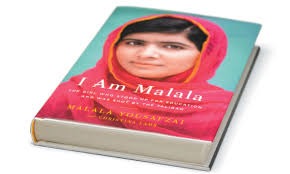
This torch bearer of Pakistan as well as of the enter world have offered the opportunity to go through the reviews by publishing books:

However Malala has taught all the Homo sapiens sapiens what education is, what consciousness is, what backbone is and what fearlessness is. We all are hopeful — this gene of Brave is/will be straight at the nook and corner of this world — every mother will stealthily smile, seeing her fearless child crying in its subconscious mind.

COMMUNALISM: A CURSE

The Christian is not to become a Hindu or a Buddhist, nor a Hindu or a Buddhist to become a Christian. But each must assimilate the spirit of the others and yet preserve his individuality and grow according to his own law of growth.…SWAMI VIVEKANANDA

HOW DIABOLICAL!

The most glorious tradition of the Indian civilization is the basic unity among the people in spite of the various diversities that exist in our life. There are different religions in India and in matters of food, dress, language and manners and custom, we are distinctly different. But in spite of all these, we are Indians from the very beginning, birth to death and we are proud of this unity.

OUR COUNTRY HAS TRACKED ITS PASSAGE

But such divisive forces as communalism, linguism and religious feeling often plague our country. Communalism is the greatest evil. It is responsible for the division of India. The British fanned the communal feelings of the Muslims and the latter wanted a separate State for themselves. Thus, Pakistan was created. Now we suffer the consequences of the partition of India. Had we lived together, many problems such as population, food and shelter could not have been so acute. Moreover, our long- standing disputes over the borders would not have poisoned our relationship.

SOCIETY AND ITS PEACE ARE ON TARGET

Communal feelings are often whipped up in India by interested people and parties. There are often quarrels between two communities in States like Bihar and Uttar Pradesh and they often culminate in murders. Different religious sects or linguistic minorities raise their voice for separate States. Such fanaticism will lead to the division of India into many parts. India will be weakened and foreign powers will take advantage of the weakness of India. India to-day has to deal with the Punjab problem, Gorkha problem in Darjeeling, Jharkhand problem, the problem of tribals in Tripura, Boro problem in Assam and many other communal problems. Some politicians are responsible for whipping up casteism for their self-interest. This is very unfortunate. There are people of different regions and languages, casts and creeds but there is basic unity in India’s culture and religion.

MAKE PEACE…..NO WAR

So, it is necessary to combat the evils of communalism. India is one and indivisible. United India can hold its own and play a significant part in the international world. Communal harmony is the need of the time. Fanaticism must be checked so that India’s unity is not damaged.

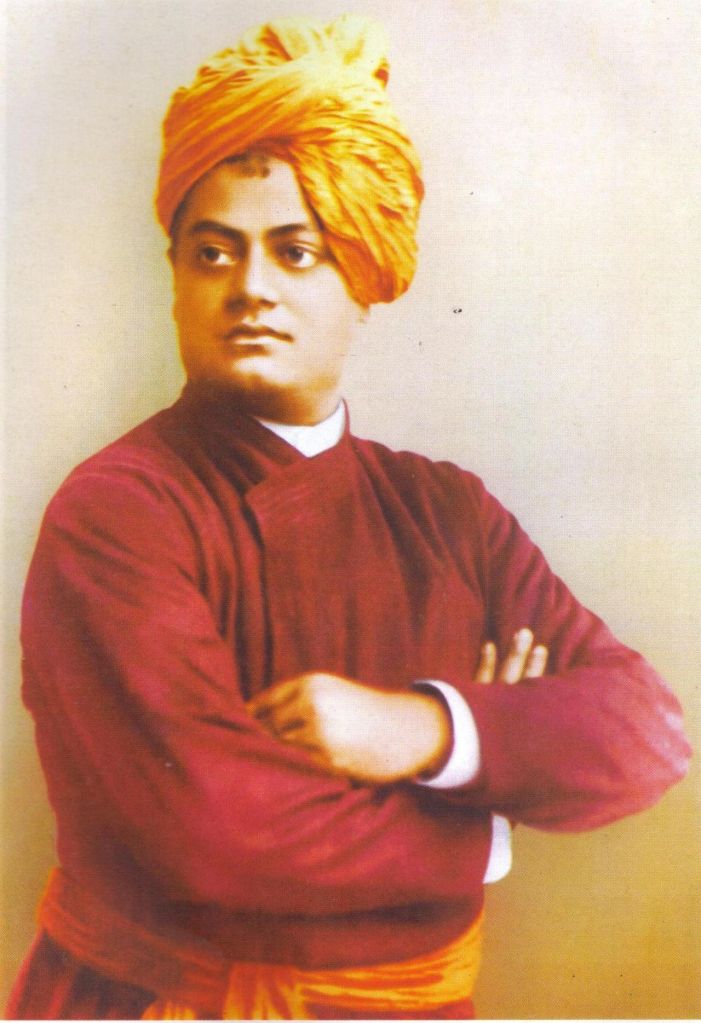
Swami Vivekanand

Early life

Vivekananda was born Narendranath Datta (shortened to Narendra or Naren) in a bengali family at his ancestral home at 3 Gourmohan Mukherjee street in Calcutta, the capital of British india, on 12 January 1863 during the Makar sanskrati festival. He belonged to a traditional family and was one of nine siblings. His father, Vishwanath Datta , was an attorney at the Calcutta high Court. Durgacharan Datta, Narendra’s grandfather was a sanskrti  and Persian  scholar who left his family and became a monk at age twenty-five. His mother, Bhubaneswari Devi, was a devout housewife. The progressive, rational attitude of Narendra’s father and the religious temperament of his mother helped shape his thinking and personality.

Narendranath was interested in spirituality from a young age and used to meditate before the images of deities such as Shiva, rama, sita, and mahavir hanuman. He was fascinated by wandering ascetics and monks. Narendra was naughty and restless as a child, and his parents often had difficulty controlling him. His mother said, “I prayed to Shiva for a son and he has sent me one of his demons”.

Education

1871, at the age of eight, Narendranath enrolled at Ishwar Chandra Vidhyasagar’s Metropolitan institutions, where he went to school until his family moved to Raipur in 1877. In 1879, after his family’s return to Calcutta, he was the only student to receive first-division mark entrance examination.  He was an avid reader in a wide range of subjects, including philosophy, religion, history, social science, art and literature was also interested in Hindu scriptures, including the vedas, the upanishads, the Bhagvad gita, the Ramayana, Mahabharata and the puranas. Narendra was trained in Indian classical music and regularly participated in physical exercise, sports and organised activities.

Narendra studied Western logic, Western philosophy  and European history General assemblyinstitutions (now known as the Scottish Church College). In 1881, he passed the fine arts examination, and completed a Bachelor of Arts degree in 1884. Narendra studied the works He became fascinated with the evolution  of herbert Spencer and corresponded with him, translating Herbert’s Spencer book Education (1861) into Bengali. While studying Western philosophers, he also learned Sanskrit scriptures and Bengali literature.

William hestie (principal of Christian College, Calcutta, from where Narendra graduated) wrote, “Narendra is really a genius. I have travelled far and wide but I have never come across a lad of his talents and possibilities, even in German universities, among philosophical students. He is bound to make his mark in life”.

Narendra was known for his prodigious memory and the ability at speed reading. Several incidents have been given as examples. In a talk, he once quoted verbatim, two or three pages from Pickwick papers. Another incident that is given is his argument with a Swedish national where he gave reference to some details on Swedish history that the Swede originally disagreed with but later conceded.

In another incident with Dr. Paul Deussen’s at kiel in Germany, Vivekananda was going over some poetical work and did not reply when the professor spoke to him. Later, he apologised to Dr. Deussen explaining that he was too absorbed in reading and hence did not hear him. The professor was not satisfied with this explanation, but Vivekananda quoted and interpreted verses from the text, leaving the professor dumbfounded about his feat of memory. Once, he requested some books written by Sir John Lubbock from a library and returned them the very next day, claiming that he had read them. The librarian refused to believe him until cross-examination about the contents convinced him that Vivekananda was being truthful.

Global research on coronavirus disease (COVID-19)

WHO is bringing the world’s scientists and global health professionals together to accelerate the research and development process, and develop new norms and standards to contain the spread of the coronavirus pandemic and help care for those affected.

The R&D Blueprint has been activated to accelerate diagnostics, vaccines and therapeutics for this novel coronavirus.

The solidarity of all countries will be essential to ensure equitable access to COVID-19 health products.

Global research database

WHO is gathering the latest international multilingual scientific findings and knowledge on COVID-19. The global literature cited in the WHO COVID-19 database is updated daily (Monday through Friday) from searches of bibliographic databases, hand searching, and the addition of other expert-referred scientific articles. This database represents a comprehensive multilingual source of current literature on the topic. While it may not be exhaustive, new research is added regularly.

The WHO evidence retrieval sub-group has begun collaboration with key partners to enrich the citations and build a more comprehensive database with inclusion of other content. The database is built by BIREME, the Specialized Center of PAHO/AMRO and part of the Regional Office’s Department of Evidence and Intelligence for Action in Health.

For further information or questions, please contact the WHO Library via email.

Disclaimer: the designations employed and the presentation of the material in publications listed in this database does not imply the expression of any opinion whatsoever on the part of WHO concerning the legal status of any country, territory, city or area or of its authorities, or concerning the delimitation of its frontiers or boundaries. Dotted and dashed lines on maps represent approximate border lines for which there may not yet be full agreement.

The mention of specific companies or of certain manufacturers’ products in publications listed in the database does not imply that they are endorsed or recommended by WHO in preference to others of a similar nature that are not mentioned. Errors and omissions excepted, the names of proprietary products are distinguished by initial capital letters.

By listing publications in this database and providing links to external sites does not mean that WHO endorses or recommends those publications or sites, or has verified the content contained within them. The database has been compiled without warranty of any kind, either expressed or implied. The responsibility for the interpretation and use of publications included in this database lies with the reader. In no event shall WHO be liable for damages arising from its use.