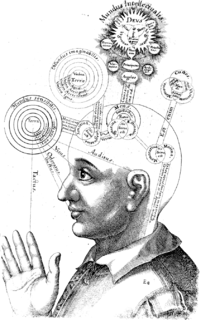
Consciousness, at its simplest, is sentience or awareness of internal and external existence. Despite millennia of analyses, definitions, explanations and debates by philosophers and scientists, consciousness remains puzzling and controversial, being “at once the most familiar and most mysterious aspect of our lives”. Perhaps the only widely agreed notion about the topic is the intuition that it exists. Opinions differ about what exactly needs to be studied and explained as consciousness. Sometimes, it is synonymous with the mind, and at other times, an aspect of it. In the past, it was one’s “inner life”, the world of introspection, of private thought, imagination and volition. Today, it often includes some kind of experience, cognition, feeling or perception. It may be awareness, awareness of awareness, or self-awareness. There might be different levels or orders of consciousness, or different kinds of consciousness, or just one kind with different features. Other questions include whether only humans are conscious, all animals, or even the whole universe. The disparate range of research, notions and speculations raises doubts about whether the right questions are being asked.
Examples of the range of descriptions, definitions or explanations are: simple wakefulness, one’s sense of selfhood or soul explored by “looking within”; being a metaphorical “stream” of contents, or being a mental state, mental event or mental process of the brain; having phanera or qualia and subjectivity; being the ‘something that it is like’ to ‘have’ or ‘be’ it; being the “inner theatre” or the executive control system of the mind.
And that’s why to be health conscious is better than being careless.
Lets start with knowing what is communalism ? Communalism is described as an ideology stating the division between states (people, groups of people or communities) on the basis of ethnicity, religion, beliefs, values, etc . The idea of creating community is to make this world a better place to live but what happened really ?
It has became a significant social issue in countries like India, Bangladesh, Pakistan and Sri-Lanka. Communal conflicts between religious communities in India, especially Hindus and Muslims, have occurred since the period of British colonial rule, occasionally leading to serious inter-communal violence. From 2005 to 2009, an average of 130 people died every year from communal violence, or about 0.01 deaths per 100,000 population.
We live in 21st century but we still hung up on communalism. we still hear news about people brutally murdered due to inter caste marriages will this barbarism come to an end. We cannot blame anyone for this we have to blame ourselves because its us who has been holding om to our community. We require our community to get admission in schools , colleges etc .
How can we end it ? We can end communalism by Interacting and befriending people of different religions.Understanding the political and historical reasons behind fights between people of different religions. understanding the economic and social problem through logic rather than prejudice . However we can come up with many remedies and solutions as i said the can should be brought between us before enforcing into our society. communalism can be only ended by building trust between people of different religious without trust, rumors and fights to develop that trust just remember they are also a human being and think how will you feel when someone treats you like this just because you born in a different mother…
Tourist spots are places of uncommon attractiveness. West Bengal stretches from the Himalayas to the Bay of Bengal. On the north there are beautiful mountain ranges in Darjeeling the queen of hill towns.
Darjeeling gives beautiful view of sunrise on Kanchenjunga. From Darjeeling one can come to Kalimpong. One can take a short trip to Mirik, to see a sweet water lake. There is a forest at Jaldapara where wild animals move freely. Next, Kolkata is the chief tourist spot in West Bengal.
There are the museum, zoo, Jain Temple, Kalighat Temple, Metro Railway, planetarium, Science City, etc. Outside Kolkata there are the temple of Dakshineswar and Belur which are associated with Ramakrishna and Vivekananda.
Further down there is the Sundarban inhabited by the Royal Bengal Tiger the national animal of India. Out in the district, the religious places like Tarapith and Kamarpukur attract à large number of tourists every day.
Next there is Santiniketan an abode of peace where Visva Bharati University was set up by Rabindranath. Those interested in historical places will find Gaur and Murshidabad interesting.
To see the ancient art of Bengal, tourists are to come to Bankura and Bishnupur.The sea beach Digha attracts many tourists every day.
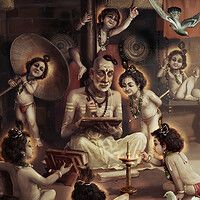
Jnanapana is a devotional Malayalam poem which directly translates to ‘song of wisdom’ or ‘the fountain of divine wisdom’. It is written by Poonthanam, a 16th century bhakti poet who lived in keezhattur in Kerala. He was an ardent devotee of Lord Vishnu, who is considered to be the preserver of life from the Hindu pantheon of gods. Poonthanam was particularly devoted to Vishnu in the form of ‘Guruvayurappa’ (the lord and the presiding deity of the Guruvayur Temple in Thrissur, Kerala.)
According to the legends, Poonthanam and his wife were devoid of any children even after years of trying. The couple was desperate for a child and prayed to the deity in Guruvayur to bless them with an offspring. The couple was elated when they were soon able to bear a boy child. But it so happened that on the day of the celebration of the child’s first birthday, an unfortunate accident occurred. The child had been accidentally buried under a pile of clothes put up by the guests who came to attend the child’s birthday celebrations. Tormented by grief upon the loss of their only child, Poonthanam sought refuge in the Guruvayur Temple to seek penance.
As the legend goes, it is said that Lord Vishnu himself appeared in front of the ardently praying devotee in the form of a young child and blessed the poet-saint with his divine godly graces. Since then, Poonthanam spent his life meditating in the halls of Guruvayur and was devoted to the god like a father to a son. Later, when he wrote Jnanapana, poonthanam says “When Lord Krishna himself dances in my heart, why do I need any other children…” That’s the intensity with which poonthanam adored Krishna and it’s a very powerful and touching statement.
Unlike the other contemporary poet-saints of his time who were well-versed in Sanskrit, Poonthanam wrote most of his poems in very simple verses of Malayalam. This is the reason why ‘Jnanapana’ became popular, as it was easily understandable to the common folks. In fact, when a fellow poet named Melpattur (Who is the author of the reputed devotional song ‘Narayaneeyam’) criticised him for the same, it is said that Krishna himself appeared before him and said “I prefer Poonthanam’s ‘bhakthi’ (devotion) over Melpattur’s ‘vibhakthi’ (scholarly knowledge/input).
Jnanappana is Poonthanam’s magnum opus with over 360 verses of lines. The poet, deeply touched by human beings’ sorry plight in this age of Kali (Kali Yuga), extols the virtues of Jnana (wisdom) and urges them to follow the path of Jnana and to forsake the transient and ephemeral aspects of worldly life through his poem. It is highly philosophical and inquires about the deeper meaning of life and human existence in this world. Yet, the localized language helped the common folks to sing and celebrate this ‘song of wisdom’ for generations to come.
Some of the most philosophical and thought-evoking lines from the poem is as follows:
If God wishes, the people we see now or are with us now, may disappear or be dead in the next moment. Or if HE wishes, in few days a healthy man may be paraded to his funeral pyre.
-Poonthanam
If God wishes, the king living in a palace (malika) today may lose everything and end up carrying a dirty bag on his shoulders and walk around homeless.
A café is sometimes called a coffeehouse or a coffee shop or tea shop in English, a café in French and a bar in Italian. But a café is a type of restaurant which typically serves coffee and tea, in addition to light refreshments such as baked goods or snacks. The term “café” comes from the French word meaning “coffee”.
A café setting is known as a casual social environment where you can find people reading newspapers and magazines, playing board games, studying or chatting with others about current events. It is known also regarded as a place where information can be exchanged.In some countries, cafés are designed to more closely resemble restaurants whereby offering a range of hot meals and possibly licensed to serve alcohol.
What is ‘Internet Cafe’?
A new type of café, known as the Internet café, was introduced in the 1990s and went hand in hand with the rising prevalence of computers in society. Computers and Internet access in a contemporary atmosphere created a youthful, modern public space compared to existing locales including traditional bars and old-fashioned diners.More recently alongside the growing popularity of geek and gaming culture, gaming cafés have also begun to open in cities worldwide. Nowadays, many cafés offer public wireless Internet or even have computers, telephones, and newspapers for customer use.
Why Are Café Chains Performing So Well in India?
Rising middle class, growing brand awareness, and the availability of international experiences at home are fuelling the coffee culture in India. Luxury, comfort, and status symbol are significant factors driving the café chain boom in Indian cities. Clean washrooms, conducive sitting spaces, Wi-Fi, and electricity sockets are active ingredients contributing to the phenomenal growth saga of café chains in the country.While today’s cafés are popular with youngsters and college goers too, these people are decidedly more ‘hip’ and ‘cool’ compared to their older generations. They are looking for more variety in their coffee and an Instagram worthy ambience and décor. For instance, decades ago, Kolkata’s iconic Indian Coffee House was a hot-spot for students from nearby schools and colleges, academicians, and intellectuals. It was more about the ‘addas’ and debates one could have with their friends, peers, or seniors on topics ranging from cinema, football, literature, and art to politics and global issues.
Entry of the Game Changer
The entry of Café Coffee Day in 1996 transformed the beverage experienced in posh, 5-star setting into a people’s drink, observes Cafespaces —a blog run by the research team at Centre for Business in Society at Coventry University. One of their posts mentions Café Coffee Day or CCD (as it’s better known as) as the market leader with 46 percent of the market share in India, vending over 100 million cups every day through 1,538 outlets and 31,500 coffee machines across 219 Indian cities. CCD is without a doubt the game-changer, a pioneer of coffee culture in India.
What Has World’s Biggest Coffee Chain “Starbucks” in Store for India?
Coffee consumption in India has grown by 40 percent over the past decade, a golden opportunity that Seattle-based global coffeehouse chain Starbucks aims to leverage. The joint venture kick-started with the launch of India’s first Starbucks outlet in October 2012, at Mumbai’s Horniman Circle.Now, Starbucks serves seven Indian cities — Mumbai, Pune, Hyderabad, Chennai, Delhi, Bengaluru, and Kolkata — with over 100 coffee stores. Starbucks outlets in the city of joy, Kolkata, reflect the iconic coffee heritage of the multinational brand. Besides these popular metro cities, the global café chain intends to expand its presence in fresh markets to introduce more Indians to the world famous Starbucks experience.
3 famous theme based cafe in kolkata :-
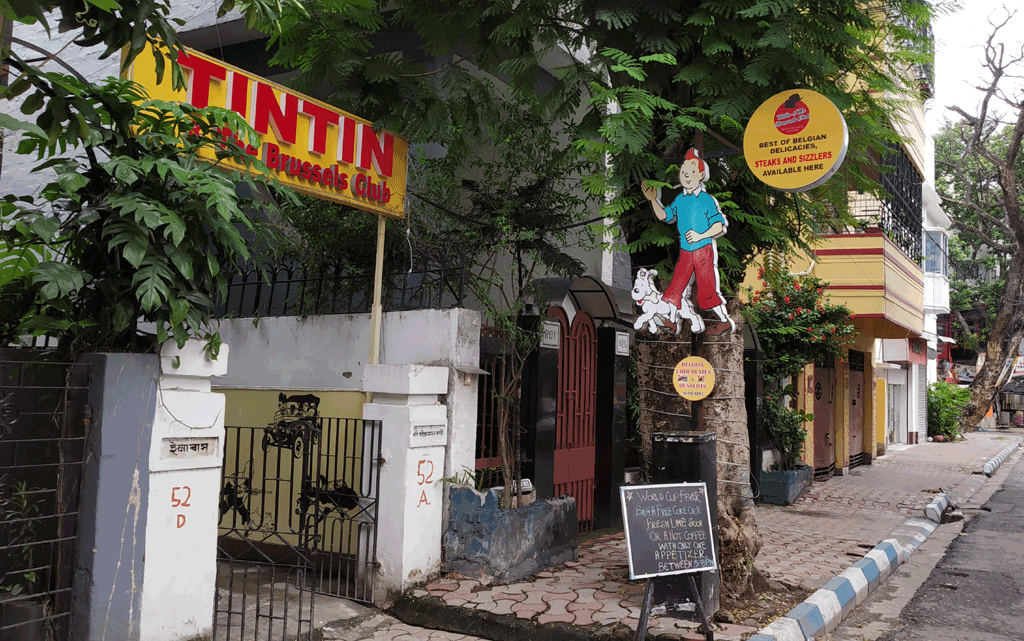
1.Tintin & The Brussels Club :- Hindustan Park, off the busy Gariahat junction, is such a typical old south Kolkata street, that you are bound to pull short as your eyes fall on a cut-out of Tintin and his dog Snowy standing against a tree. Almost immediately you notice the signboard, Tintin & The Brussels Club.Take the narrow lane that leads inside. On one side is a long poster with line drawings from the famous Adventures of Tintin comic series.
Timing: Open every day, noon to 11pm. Advance booking recommended. They also have piano recitals on Saturdays.
Contact: 9038766666
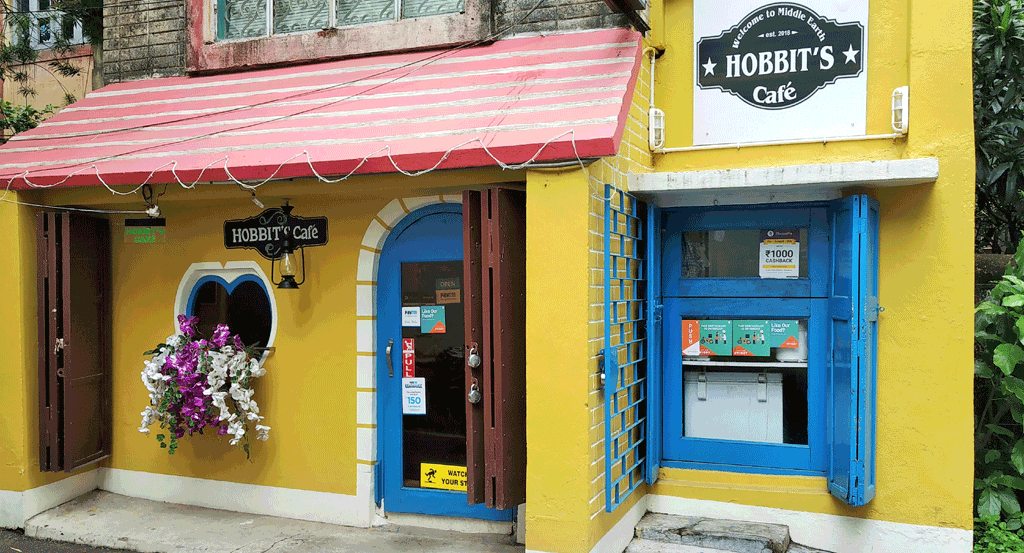
2. Hobbits Cafe :- Located in a narrow lane not far from the Golpark roundabout in south Kolkata, the place was easy to reach yet far from the noise of traffic. The brightly painted exterior of Hobbit’s Café is a sharp contrast to the mute shades of residential buildings around it. A bunch of orchids hang from the heart-shaped window. Inside, it is low-roofed and small but not stuffy. Décor is minimal but enough to make a hobbit feel at home – framed quotes from Tolkien, a map of the Middle Kingdom painted on the wee door that leads to the kitchen, a bunch of creepers in a corner, the hint of an exposed wall (paper) in an alcove. A long sofa with bright cushions.
Timing: Open daily, except Sunday; from 12.30pm to 9pm. Expect a queue during weekends and holidays.
Contact: 9073643939
3. Seven Kingdom Café and Grill :- The moment you walk into the Seven Kingdom Café and Grill, tucked inside a relatively quiet neighbourhood in Salt Lake, on the eastern fringe in Kolkata, you immediately know that it has been set up by a die-hard Game of Thrones fan.There are seven tables, each named after a house – Arryn, Baratheon, Greyjoy, Lannister, Stark, Targaryen and Tyrell. Dragons, maps and symbols adorning the walls. Flags. Portraits of the major characters. GoT theme music playing in the background. And there is the Throne, made of sharp swords with golden hilts and the bejewelled crown. A GoT fan is bound to feel at home here.
Where: BH- 40, Sector 2, Salt Lake (Bidhannagar), Kolkata 700091; not far from the Karunamoyee bus depot or ask for the Kathgola roundabout. Wi-fi available.
Timing: Open all days, 11am to 10pm.
Contact: 9831178085/9064734123
There is many more theme based cafe all around Kolkata. And those are the most excellence reflection of kolkata’s cafe culture. May you are from kolkata Or not but those cafes are must visit for you all.
Wireless Power Transfer holds the promise of freeing us from the tyranny of power cords. This technology is being incorporated into all kinds of devices and systems.
Wireless Power Transfer holds the promise of freeing us from the tyranny of power cords. This technology is being incorporated into all kinds of devices and systems. Let’s take a look! The Wired Way The majority of today’s residences and commercial buildings are powered by alternating current (AC) from the power grid. Electrical stations generate AC electricity that is delivered to homes and businesses via high-voltage transmission lines and step-down transformers. Electricity enters at the breaker box, and then electrical wiring delivers current to the AC equipment and devices that we use every day—lights, kitchen appliances, chargers, and so forth. All components are standardized and in agreement with the electrical code. Any device rated for standard current and voltage will work in any of the millions of outlets throughout the country. While standards differ between countries and continents, within a given electrical system, any appropriately rated device will work. Here a cord, there a cord. . . . Most of our electrical devices have AC power cords.
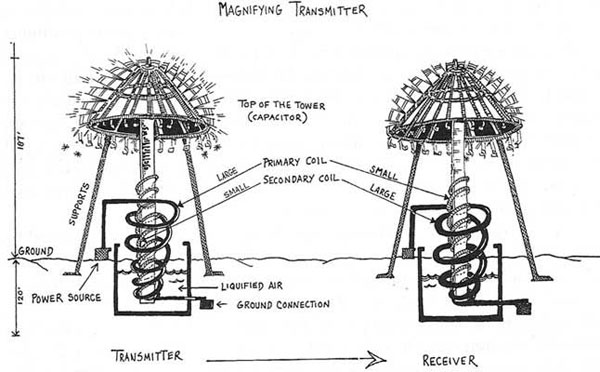
Wireless Power Technology Wireless Power Transfer (WPT) makes it possible to supply power through an air gap, without the need for current-carrying wires. WPT can provide power from an AC source to compatible batteries or devices without physical connectors or wires. WPT can recharge mobile phones and tablets, drones, cars, even transportation equipment. It may even be possible to wirelessly transmit power gathered by solar-panel arrays in space. WPT has been an exciting development in consumer electronics, replacing wired chargers. The 2017 Consumer Electronics Show will have many devices offering WPT. The concept of transferring power without wires, however, has been around since the late 1890s. Nikola Tesla was able to light electric bulbs wirelessly at his Colorado Springs Lab using electrodynamic induction (aka resonant inductive coupling).
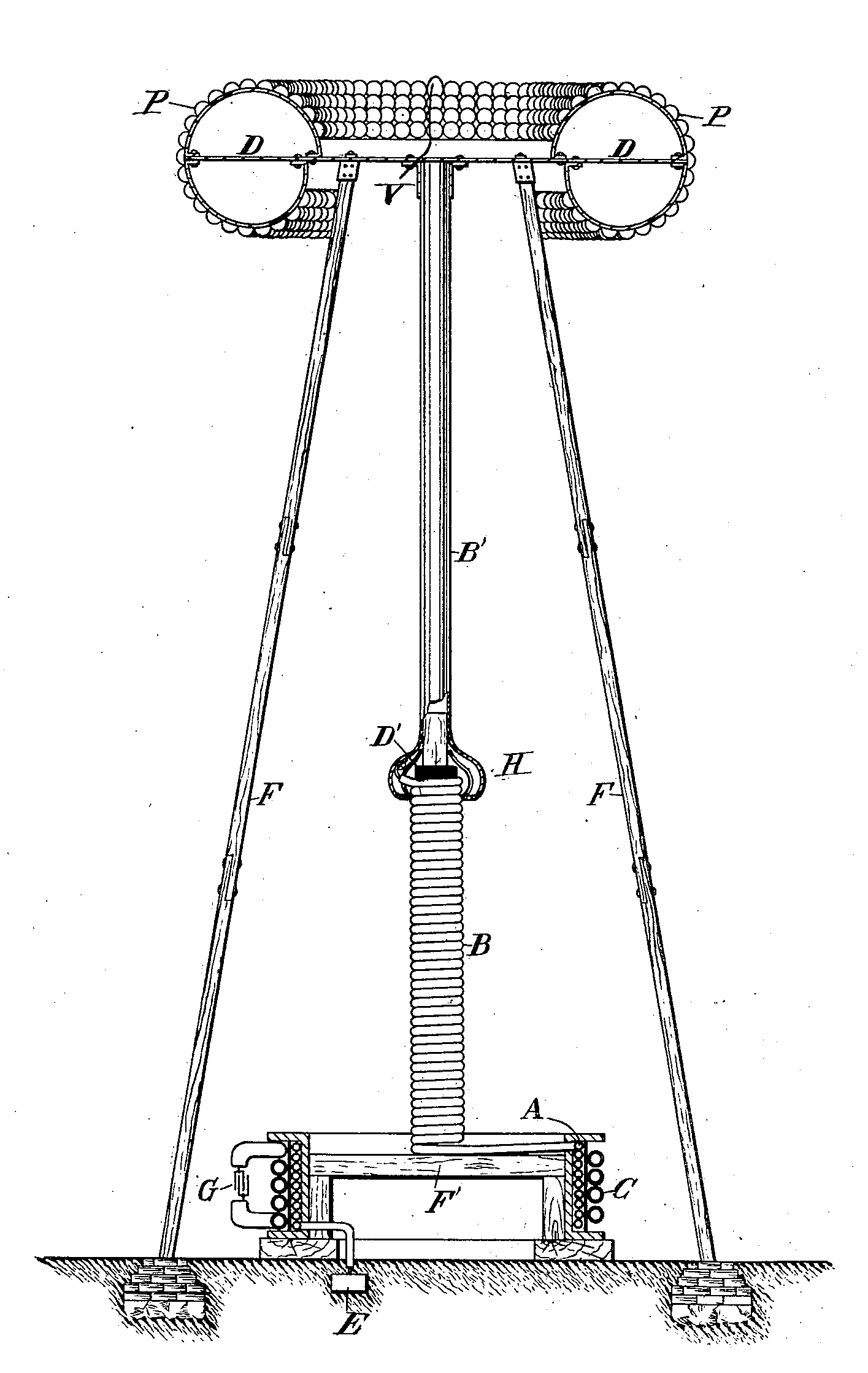
An image from Tesla’s patent for an “apparatus for transmitting electrical energy,” 1907.
Three light bulbs placed 60 feet (18m) from the power source were lit, and the demonstration was documented. Tesla had big plans and hoped that his Long Island-based Wardenclyffe Tower would transmit electrical energy wirelessly across the Atlantic Ocean. That never happened owing to various difficulties, including funding and timing. WPT uses fields created by charged particles to carry energy between transmitters and receivers over an air gap. The air gap is bridged by converting the energy into a form that can travel through the air. The energy is converted to an oscillating field, transmitted over the air, and then converted into usable electrical current by a receiver. Depending on the power and distance, energy can be effectively transferred via an electric field, a magnetic field, or electromagnetic (EM) waves such as radio waves, microwaves, or even light.
Qi Charging, an Open Standard for Wireless Charging While some of the companies promising WPT are still working to deliver products, Qi (pronounced “chee”) charging is standardized, and devices are currently available. The Wireless Power Consortium (WPC), established in 2008, developed the Qi standard for battery charging. The standard supports both inductive and resonant charging technologies. Inductive charging has the energy passing between a transmitter and receiver coil at close range. Inductive systems require the coils to be in close proximity and in alignment with each other; usually the devices are in direct contact with the charging pad. Resonant charging does not require careful alignment, and chargers can detect and charge a device at distances up to 45mm; thus, resonant chargers can be embedded in furniture or mounted in shelving.
The Qi logo displayed on the Qimini wireless charging plate. Image courtesy of Tektos.
The presence of a Qi logo means the device is registered and certified by the Wireless Power Consortium. When first introduced, Qi charging was low power, about 5W. The first smartphones using Qi charging were introduced in 2011. In 2015, Qi was expanded to include 15W, which allows for quick charging.Only devices listed in the Qi Registration Database are guaranteed to provide Qi compatibility. There are currently over 700 products listed. It is important to recognize that products with the Qi logo have been tested and certified; the magnetic fields they use will not cause problems for sensitive devices such as mobile phones or electronic passports. Registered devices are guaranteed to work with all registered chargers. For more information on Qi wireless charging, check out this article, and for an introduction to and technical evaluation of Qi-compatible transmitter/receiver WPT evaluation boards, click here and here.
The Physics of WPT WPT for consumer devices is an emerging technology, but the underlying principles and components are not new. Maxwell’s Equations still rule wherever electricity and magnetism are involved, and transmitters send energy to receivers just as in other forms of wireless communication. WPT is different, though, in that the primary goal is transferring the energy itself, rather than information encoded in the energy.
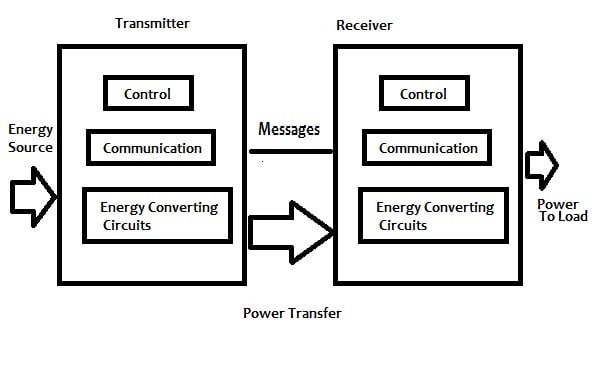
WPT transmitter/receiver block diagram. The electromagnetic fields involved in WPT can be quite strong, and human safety has to be taken into account. Exposure to electromagnetic radiation can be a concern, and there is also the possibility that the fields generated by WPT transmitters could interfere with wearable or implanted medical devices. The transmitters and receivers are embedded within WPT devices, as are the batteries to be charged. The actual conversion circuitry will depend on the technology used. In addition to the actual transfer of energy, the WPT system must allow the transmitter and receiver to communicate. This ensures that a receiver can notify the charging device when a battery is fully charged. Communication also allows a transmitter to detect and identify a receiver, to adjust the amount of power transmitted to the load, and to monitor conditions such as battery temperature. The concept of near-field vs. far-field radiation is relevant to WPT. Transmission techniques, the amount of power that can be transferred, and proximity requirements are influenced by whether the system is utilizing near-field or far-field radiation. Locations for which the distance from the antenna is much less than one wavelength are in the near field. The energy in the near field is nonradiative, and the oscillating magnetic and electric fields are independent of each other. Capacitive (electric) and inductive (magnetic) coupling can be used to transfer power to a receiver located in the transmitter’s near field. Locations for which the distance from the antenna is greater than approximately two wavelengths are in the far field. (A transition region exists between the near field and far field.) Energy in the far field is in the form of typical electromagnetic radiation. Far-field power transfer is also referred to as power beaming. Examples of far-field transfer are systems that use high-power lasers or microwave radiation to transfer energy over long distances.
Conclusion While Tesla’s dream of having power delivered wirelessly for everyone’s use is still far from feasible, many devices and systems are using some form of wireless power transfer right now. From toothbrushes to mobile phones, from cars to public transportation, there are many applications for wireless power transfer.
J.B.S Haldane in his book ” What is Race ” published by UNESCO ,wrote ” Race is a group which shares in common a certain set of innate physical characters and a geographical origin within a certain area .”
A race lives in a definite geographical origin and has some definite innate characteristics.
The term race is a controversial concept for it is understood differently by different people . Race can mean all of humanity , nationality or even group which is mixed in nearly all respects but socially designated as different.
In the past race was considered as a biological concept but Social scientists recognise that there is no such thing as a race based purely on objective biological differences . Hence , races are regarded as social concepts.
Definitions
” A race is a larger , biological human grouping with a number of distinctive , inherited czar sctri which vary within a certain range .” A.W .Green
” A race is a large group of people distinguished by inherited physical differences “ J. Biesanz and M. Biesanz
“A race is a biologically inherited group possessing a distinctive combination of physical trails that tends to breed true from generation to generation ” Hoebel
” A race is short is a group of related inter marrying individual , that is a population which differs from other population in the relative common ness of cert hereditary traits “ L.C . Dunn
“A race is a broad association of persons of similar biological heritage ,who are untied in settlement by common cultural traditions and who in time of conflict seek to claim rights to a better social position on the basis of an inherited quality “ In this definition , race has been biologically interpreted . Sutherland and Woodword
“A race is a large division of characteristics presumed to be biologically inherited and remaining relatively constant through numerous generations .” Paul A.F . Walter .
View by UNESCO
UNESCO arranged a conference of all the prominent Sociologists , anthropologists and psychologists in order to determine a single conception of race .
The judgements given during the conference :-
• Fundamentally , the entire human species has on origin and all men are homo sapiens .
• National groups , religious groups , geographical groups , cultural groups , linguistics groups etc. , are all entirely unconnected with and unrelated to race . These groups do not give indication of any race .
• Distinctions can be made between races on the basis of differences in physical characteristics but not on the basis of cultural characteristics .
• The differences found to exist between the physical characteristics of men are due both to hereditary and to the environment . Differences in heredity arise due to the process known as mutation and in breeding .
• Some races make claims of purity but this is not true . Today pure races cannot be found anywhere in the world . The process of mixing of races originated long back .
• Human races can be classified but these classifications are based solely on physical traits . They have no relation of any kind of mental or intellectual superiority or inferiority .
• The inner capacity for the development of mind and culture is found equally in every race . Hence distinctions between races cannot be based on cultural differences or levels of intelligence . Intelligent people are to be found in all races .
• It is possible that in one nation the degree of racial differences may be greater while in another nation it may be of greater or lesser degree .
• Evidence in support of the fact that the race has no important effect in the social and cultural differences between various human groups has been found in historical and sociological studies . By no stretch of imagination can one conceive of any relation between changes in racial forms and social changes .
• That from a biological viewpoint , mixing of races is deleterious , is an essential incorrect and invalid belief .
Therefore , Race is a group of intermarrying people who are born of common ancestors , possess similar physical traits and a ‘, we feeling ‘ . Inbreeding renders permanent the physical characteristics of the race and due to them one race can be distinguished from another . One major cause of inbreeding is geographical isolation . Besides geographical isolation a race originates due also to mutation , migration , selection and adaptation.
Determinants of Race
How is race determined ?
In the past , race was regarded as a biological concept and so race was determined by physical characteristics .
These physical traits are two types – • Indefinite Physical traits • Definite physical traits.
Indefinite Physical traits These traits which are amenable to any measurement are called indefinite physical traits , such as the colour of the skin . Hence they can be described . These traits included :-
• Colour of Skin :- Usually , on the basis of colour of the skin people differentiate between the white , yellow , brown and black races . But it is difficult to distinguish between the microscopic differences in the colour of the skin since the colour of the skin alters with the effect of the climate . Hence , anthropologists do not lay much emphasis on the colour of the skin in trying to discover the race . The following distinctions can be made by the colour of the skins :- Leucoderma as Caucasian Xanthoderma is Monogolian Melanoderm as Negro .
As the skin is subject to change and subtle variation it is difficult to determine race on the basis of colour .
• Texture and the colour of hair :- The texture and colour of hair is another indefinite physical trait of race . There are the three following distinctions of hair on the basis of texture * Leiotrichous ( soft straight hair ) as of the Mongols and Chinese . * Cymotrichous ( smooth curly hair ) as of the inhabitants of India , Western Europe , Australia and North East Africa * Ulotrichy ( thick curly hair ) as of Negroes .
• Structure and the colour of eyes There are three distinctions of the colour of eyes – white ,grey , brown , black and blue . The structure of the orifice of the eye is usually horizontal but at some places diagonal eyes are found as in Southern Europe and North Africa.
Definite Physical Traits Definite physical traits are those which can be measured . It includes the following :-
• Stature :- Different races are distinguished on the basis of differences in stature . Topinard has classified height in the following manner i ) Tall stature ( 170 cm ) or above ii) Above Average stature ( 165cm ) iii) Short Stature ( 160 cm) .
The average height of the Pategonian people is the greatest and of the African bushmen the shortest .
• Structure of Head :- Heads can be classified on three classes according to the ratio of length and width i) Dolichocephalic ii) Meson- cephalic iii) Brachy – cephalic
The structure of the head can be known by its length to its breath . In India the Brachy cephalic is found in Bengal , Meson-cephalic is found in Bihar and Dolichocephalic in Uttar Pradesh.
In the past much importance was attached to the structure of the head in the determination of race but since Boas proved that changes in environment changes the structure of the head ,it has lost much of its effect as a determinant of race .
Structure of Nose :- Nasal index is used to determine the structure of the nose . The nasal index can classify the structure of Nose into three classes i) Leptorrhine ( thin ) mostly found in Punjab . ii) Mesorrhine ( medium ) mostly found in Uttar Pradesh. iii) Platyrrhine ( short wide ) mostly found in Madras , Madhya Pradesh and Chota Nagpur areas of India .
• Perimeter of Chest :- Differences in the chest measurement between people of different races is to be found .
It is impossible to find all the traits of one race in the people of any country . Hence , all races of the world have been intermixed and no race is pure anywhere.
Hence , the concept of Pure Race is a Myth. All existing Sociological and biological evidences point conclude that there is no such things as a ” pure race” Different population groups have been inbreeding for years and categories of race are only the creation of observers, not of nature .
” Human groups have exchanged their genes through mating to such an extent that any attempt to identify ‘ pure races’ is bound to be fruitless “
The concept of Racial Superiority.
The concept of Racial Superiority is a psychological myth . This phenomenon is often interpreted as “racism “. Modern societies consist of people who belong to different racial and ethnic groups . Some of these racial groups are able to live together in harmony and mutual respect but others are in a state of constant antagonism and conflict . The dominant race tries to impose its will on the weaker ones . This domination of one race over another leads to suppression and exploitation .
Some examples of racism , The domination of the western world by European powers during the late 20th century . The partial extermination and subsequent segregation of native American The oppression of Black Americans first as slaves and then as exploited minorities.
“Racism or racialism is set of beliefs , ideologies and social processes that discrimination , exploitation or violent oppression is known as racism “ – Collins Dictionary of Sociology
“ Racism is a phenomenon in which a group that is seen as inferior or different is exploited and oppressed by a dominant group .” – Blauner
The root of racism is said to be the extreme ethnocentric attitudes which are found to be at the root of racism . According to most people their own norms , religion , attitudes , values and cultural practices are right and proper , while those other groups are peculiar , idiotic and sometimes immortal .
The ethnocentric attitudes that are functional for one group may prove to be highly dysfunctional for another group . Under certain conditions , ethnocentric attitudes can take an extreme and aggressive form and can be used to justify the oppression treatment of other racial or ethnic groups. This leads to racism .
Ideology of Racism
“Racism is an ideology based on the belief that an observable , supposedly inherited trait ,such as skin colour ,is a mark of inferiority that justifies the discriminatory treatment of people with that trait “
The ideology of racism supports the existing inequalities by the social process of the “self fulfilling prophecy ”
American sociologist W.I Thomas explained this idea in the form of a simple statement which is popularly known as “, Thomas Theorem ” “If men define situation as real ,they are real in consequences ”
Merton explained further using an example , ” If people wrongly believe that a bank will go bankrupt , they will rush to withdraw their money ” The self fulfilling prophecy is a false definition of a situation but the definition leads to behaviour that makes prediction come true .
Self fulfilling prophecy also causes cases of race relations . The racist ideology of the dominant group defines the minority as inferior and hence considered unfit for higher status jobs , higher education etc.
Root of Racism :-
Simpson and Yinger highlighted four roots of Racism in their classic text
• The doctrine of biologically superior and inferior races • Members of different races have different personalities • That ethical standards differ from one race to another .
J.L.Gillin criticized the theory of Racism and brought forward the objection that Racism is confused with culture and nationality . Modern scientific tests have proved that no race can be consid inferior in any respect and that the conception of racism is completely wrong and unscientific.
Keynesian Economics is a macroeconomic theory that came into existence after the fall of Classical Economics. It was given by John Maynard Keynes in order to understand the Great Depression of the 1930s. His theory focussed on aggregate demand and aggregate supply. This theory was the refutation to the classical economics. Keynes theory of employment was based on the principle of effective demand. According to this, the level of employment in a capitalist economy depends on the effective demand. Unemployment is the result of deficiency of effective demand. Keynes used the term aggregate demand price and aggregate supply price to explain effective demand. Aggregate demand price refers to the amount of money which entrepreneurs expect to get by selling the output. It is basically the expected revenue from the sale of outputs at a certain level of employment. Aggregate supply price on the other hand refers to the proceeds necessary for the sale of output at a particular level of employment. Basically each level of employment is related to a particular aggregate supply price. The determination of effective demand is done by using aggregate demand price and aggregate supply price. The level of employment is determined when aggregate demand price is equal to the aggregate supply price. This level of employment is also the point of effective demand and here entrepreneurs earn normal profits.
Keynes also criticized the idea of excessive saving, unless it was for a specific purpose such as retirement or education. He saw it as dangerous for the economy because the more money sitting stagnant, the less money in the economy stimulating growth. Instead, he focussed more on investment and highlighted it’s role in determining the level of employment in the economy. According to him, aggregate demand function depends on the consumption function and investment function. A fall in any of these two functions result in unemployment. Thus it is the aggregate demand function which is the effective element in the principle of effective demand. Keynesian economics focuses on demand-side solutions to recessionary periods. The intervention of government in economic processes is an important part of it. Keynesian theorists argue that economies do not stabilize themselves very quickly and require active intervention that boosts short-term demand in the economy.
Keynes also reformulated the Quantity Theory of Money. He criticised the classical idea of money being neutral. According to him money is the link between the present and the future. The Keynesian theory emphasises that the price level is in fact a consequence of aggregate demand or expenditure relative to aggregate supply rather than of quantity of money.
The multiplier effect was developed by Keynes’s student Richar Kahn. According to Keynes’s theory of fiscal stimulus, an injection of government spending eventually leads to added business activity and even more spending. This theory proposes that spending boosts aggregate output and generates more income. The magnitude of the Keynesian multiplier is directly related to the marginal propensity to consume. Keynes and his followers believed individuals should save less and spend more, raising their marginal propensity to consume
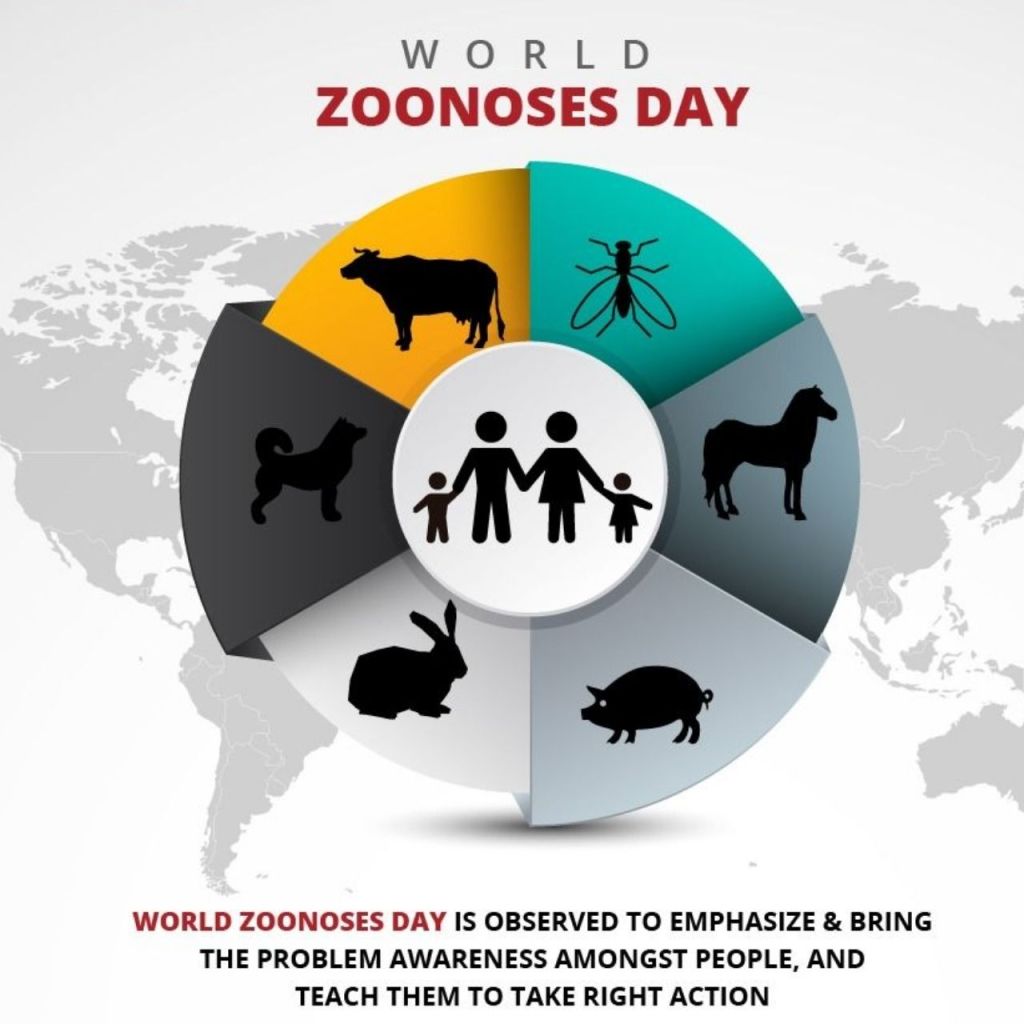
The World Health Organization (WHO) defines zoonosis as an infectious disease that has jumped from a non-human animal to humans. These zoonotic pathogens can be bacterial, viral, or parasitic and they can be spread to humans through direct contact or food, water, or the environment. World Zoonoses Day was first celebrated on July 6, 1885, in honour of the French biologist Louis Pasteur who managed to administer the first vaccination against a zoonotic disease on the very day, this vaccine was for rabies. The theme for World Zoonoses Day 2021 is “Let’s Break the Chain of Zoonotic Transmission” and it holds more importance in light of COVID-19.
About Louis Pasteur
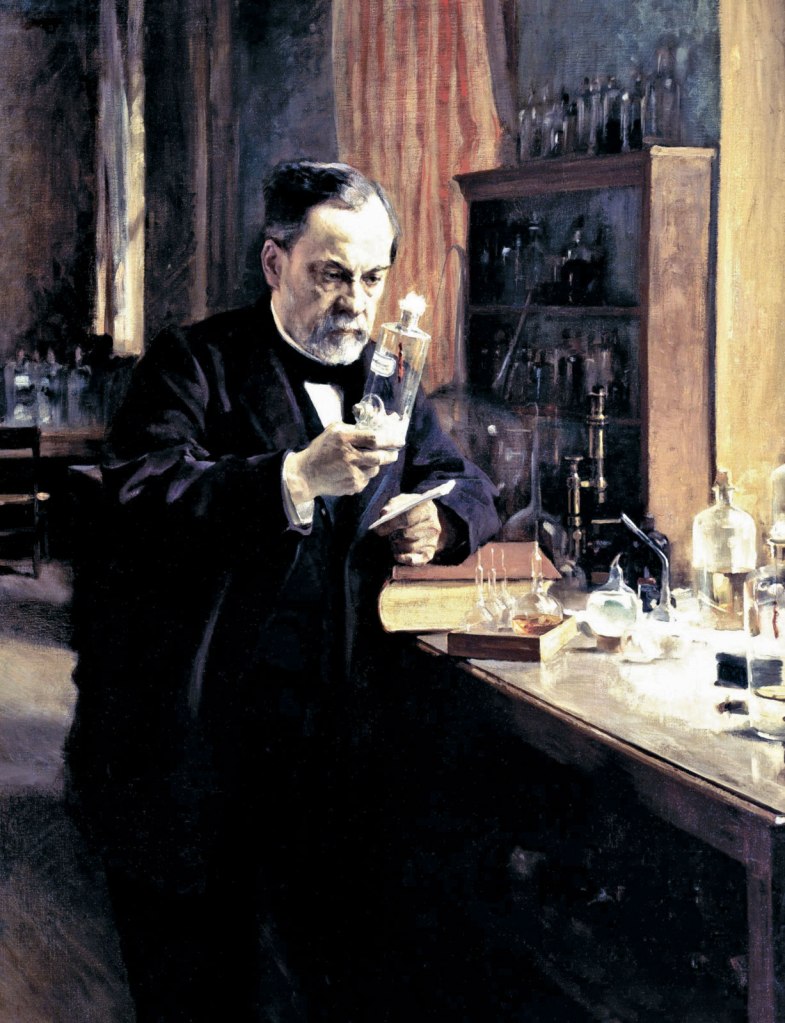
Scientific Identity, Portrait of Louis Pasteur
Louis Pasteur was born on 27th December 1822 in France and died on 28th September 1895. He was a French chemist and microbiologist who is known to be one of the most important founders of medical microbiology. He introduced the study of molecular asymmetry; originated the process of pasteurization; discovered that microorganisms cause fermentation and disease; saved the beer, wine, and silk industries in France; and developed vaccines against anthrax and rabies. He earned France’s highest award of the Legion of Honour. He was also gifted in drawing and painting. He had a bachelor in arts degree and a bachelor in science degree from the Royal College of Besancon.
Vaccine Development
Pasteur’s first discovery in the study of vaccination was in 1879 which was for the disease named chicken cholera. He then started working on anthrax in 1879 also because of the anthrax epidemic in France at that time. Pasteur had also unknowingly created a second class of vaccines known as an inactivated vaccine by accidentally creating a neutralized version of rabies. On July 6, 1885, he vaccinated a nine-year-old boy named Joseph Meister who was bit by a rabid dog and the vaccine was a huge success.
Relevance Today
This day should raise more awareness now as it is said that COVID-19 originated from the bats and then entered the human circle through the wet markets of Wuhan, China. The Center for Disease Control and Prevention (CDC) says that almost 75% of new zoonotic diseases originate from animals that can be transmitted to humans by the act of consuming meat or even by coming in contact with the animal which is affected. WHO has said that poultry farmers, meat sellers, and the people living near the forest region have a higher chance of risk of being affected by these diseases. Some of such diseases are HIV (started as zoonosis but later mutated into a human-only strain), Ebola virus, salmonellosis. Some of these zoonoses have the potential of causing recurring disease outbreaks like Ebola and as we have seen, different waves of COVID-19.
Prevention
The method of prevention for zoonotic diseases differs for different pathogens. But some general practices are seen as effective. A safe and appropriate guideline for animal care in the agricultural sector would help in reducing foodborne zoonotic disease outbreak through meat, eggs, dairy, and vegetables. There should be a set standard for drinking water and waste removal. Education campaigns should be promoted all across the world related to awareness of the diseases and handwashing after coming in contact with an animal.
Conclusion
It is important to learn the history of zoonotic diseases and learning the precautions for them and how to prevent them. With the recent developments of the COVID-19, we know more about how bad the impact of these diseases can be, and it is now more important than ever to learn more about it.
The Mauryan contribution to art and architecture was significant. Ashoka is known to have built 84,000 stupas to commemorate various events of Buddha’s life. According to Megasthenes, Pataliputra’s grandeur matched that of the cities of Persia. Ashokan edicts were inscribed on stone pillars that were made of single columns of polished sandstone and had capitals on their top. The best preserved of all Ashokan edicts stands at Lauriya Nandangarh (Bihar). This thirty-two feet tall column has an almost fifty ton seated lion capital placed on its top, an engineering feat worth admiring. The bull capital from Rampura is also another fine example of Mauryan sculpture. The most famous capital is the one at Sarnath, which shows four lions and the Dharmachakra. You must be familiar with this as this has been adopted as the national emblem of the Republic of India. Besides pillars, few Mauryan figures have also come to light. The most well known of these is the Yakshi from Didarganj. The beauty of these figures lies in the exactness of their workmanship and in the fact that they. appear to be made from one single stone. Like the pillars, these figures are polished with a unique surface gloss (now called Mauryan polish). You will be amazed to know that despite all these centuries this gloss has not lost its shine. Besides the language that has been used in nearly all the inscriptions and Prakrit which appears to have become the lingua franca of the country and in the Brahmi script the earliest known Indian script.
Another noteworthy aspect of Mauryan architecture is the rock cut caves. The Lomash Rishi (with its impressive entrance) and the Sudama caves are examples of such architecture. These caves cut from solid rock were provided by Ashoka for non-Buddhist monks. These caves marked the beginning of the rock cut architecture which was patronised by later rulers too. His rock edicts were inscribed in the local language and the local script
In his article entitled “What Way Emancipation” Ambedkar declared that “I solemnly assure you that I will not die a Hindu”, at Yeola, District of Nasik, Maharastra, on 13th October 1935 in front of ten thousand people, where he went for a depressed class conference. Ambedkar as the president of the conference reminded his audience of their failure to secure elementary rights or equal status in Hindu society through any of the movements. According to him, the concept of sympathy is absent in the Hindu religion. The Hindus have no sense of brotherhood among themselves. The Untouchables are treated worse than foreigners. The Caste Hindus have no sympathy towards the untouchables. They are not brother to each other. They are two opposite castes. Society is based on class or varna, the association of an individual to a group is considered paramount. Even the family is not treated as a unit of society. According to Hindus, though all men are created by God, they are not created equal. They believe that God created different classes of men from different parts of his divine body. There is a section in “Purusha Sukta” of the Rig Veda which says that the Brahaman varna was born from the mouth of God, Kshatriya varna from his arms, the Vaishya from his thighs, and the Shudra from his feet. This they classify as Hindu social order but the views of Ambedkar on free social order contradict the above sayings. He believed that an individual is an end in himself and the objective of the society is to support the growth of the individual, to develop his personality. The relationship between members of society is based on the principles of liberty, equality, and fraternity. According to him, Hindu social order is based on the principles of graded inequality, fixed occupations for each class, and its continuance by heredity, the fixation of people within their respective classes. According to him, the Varna-vyavastha had developed into a social order of exploitation and oppression. Society must be based on reason, and not on atrocious traditions of the caste system. He found education, inter-caste marriage, and inter-dine as methods that may eliminate caste and patriarchy.
On 14th October 1956, Dr. Ambedkar renounced Hinduism and embraced Buddhism. On 15th October 1956, he delivered his speech in Marathi relating to embraced Buddhism. He said there are so many problems after conversion to Buddhism. He hoped that he will get political rights. According to Dr. Ambedkar, religion is for man and not man for religion and that is why he choose to convert himself to a buddisht as this religion respect and gives a scope of development to people and their thoughts.
After 2,000 years under thesea, three flat, misshapen pieces of bronze at the National Archaeological Museum in Athens are all shades of green, from emerald to forest. From a distance, they look like rocks with patches of mold. Get closer, though, and the sight is stunning. Crammed inside, obscured by corrosion, are traces of technology that appear utterly modern: gears with neat triangular teeth (just like the inside of a clock) and a ring divided into degrees (like the protractor you used in school). Nothing else like this has ever been discovered from antiquity. Nothing as sophisticated, or even close, appears again for more than a thousand years.
For decades after divers retrieved these scraps from the Antikythera wreck from 1900 to 1901, scholars were unable to make sense of them. X-ray imaging in the 1970s and 1990s revealed that the device must have replicated the motions of the heavens. Holding it in your hands, you could track the paths of the Sun, Moon and planets with impressive accuracy. One investigator dubbed it “an ancient Greek computer.” But the X-ray images were difficult to interpret, so mainstream historians ignored the artifact even as it was championed by fringe writers such as Erich von Däniken, who claimed it came from an alien spaceship. It wasn’t until 2006 that the Antikythera mechanism captured broader attention. That year, Mike Edmunds of Cardiff University in Wales and his team published CT scans of the fragments, revealing more details of the inner workings, as well as hidden inscriptions—and triggering a burst of scholarly research.
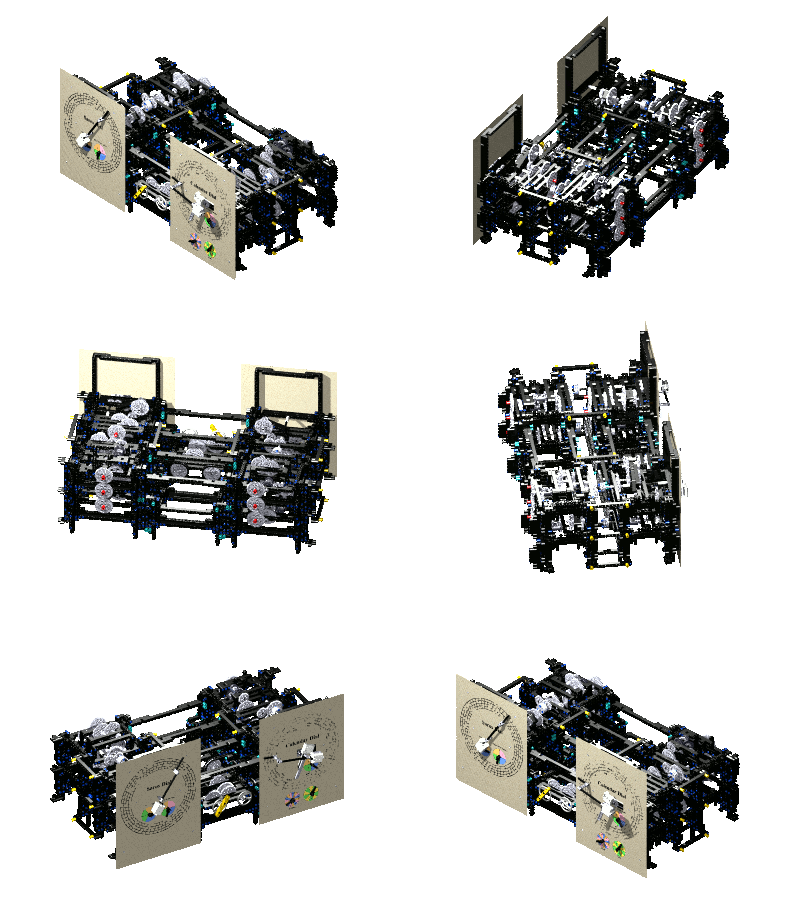
The Antikythera mechanism was similar in size to a mantel clock, and bits of wood found on the fragments suggest it was housed in a wooden case. Like a clock, the case would’ve had a large circular face with rotating hands. There was a knob or handle on the side, for winding the mechanism forward or backward. And as the knob turned, trains of interlocking gearwheels drove at least seven hands at various speeds. Instead of hours and minutes, the hands displayed celestial time: one hand for the Sun, one for the Moon and one for each of the five planets visible to the naked eye—Mercury, Venus, Mars, Jupiter and Saturn. A rotating black and silver ball showed the phase of the Moon. Inscriptions explained which stars rose and set on any particular date. There were also two dial systems on the back of the case, each with a pin that followed its own spiral groove, like the needle on a record player. One of these dials was a calendar. The other showed the timing of lunar and solar eclipses.
Experts have been working to decipher inscriptions hidden inside the mechanism, in particular to understand the mechanism’s missing pieces, some destroyed, some probably still at the bottom of the sea. Though the pointers on the front face don’t survive, Alexander Jones, a historian at the Institute for the Study of the Ancient World in New York, says an inscription reveals that they carried colored balls: fiery red for Mars, gold for the Sun.
Also missing are the parts that drove the planetary pointers, leading to debate about exactly how they moved. Because planets orbit the Sun, when viewed from Earth they appear to wander back and forth in the sky. The Greeks explained this motion with “epicycles”: small circles superimposed on a larger orbit. According to Michael Wright, a former curator at London’s Science Museum who has studied the mechanism longer than anyone, it modeled epicycles with trains of small gears riding around larger ones. Though some experts have dismissed this as beyond the Greeks’ abilities, Jones says he will publish evidence supporting the idea later this year.
Other inscriptions hint at where the mechanism was made. Paul Iversen, a classicist at Case Western Reserve University in Cleveland, reports that the calendar includes month names used in Corinth and its colonies in northwest Greece. A dial that displayed the timing of major athletic festivals, including the Olympics, lists Naa, a festival held in northwest Greece, and Halieia, held to the south on the island of Rhodes. Perhaps the mechanism hailed from Rhodes and was being shipped north. The ancient philosopher Posidonius had a workshop in Rhodes that could have been the source; according to Cicero, Posidonius made a similar model of the heavens in the first century B.C.
The tradition of making such mechanisms could be much older. Cicero wrote of a bronze device made by Archimedes in the third century B.C. And James Evans, a historian of astronomy at the University of Puget Sound in Tacoma, Washington, thinks that the eclipse cycle represented is Babylonian in origin and begins in 205 B.C. Maybe it was Hipparchus, an astronomer in Rhodes around that time, who worked out the math behind the device. He is known for having blended the arithmetic-based predictions of Babylonians with geometric theories favored by the Greeks.
Regardless, the Antikythera mechanism proves that the ancient Greeks used complex arrangements of precisely cut wheels to represent the latest in scientific understanding. It’s also a window into how the Greeks saw their universe. They came to believe that nature worked according to predefined rules, like a machine—an approach that forms the basis of our modern scientific views. Edmunds argues that this “mechanical philosophy” must have developed as a two-way process. The ancient mechanics who captured the cosmos in bronze weren’t just modeling astronomical theories but were also inspiring them.
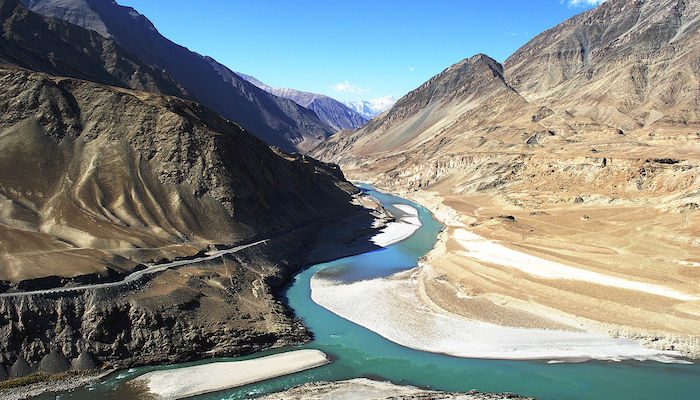
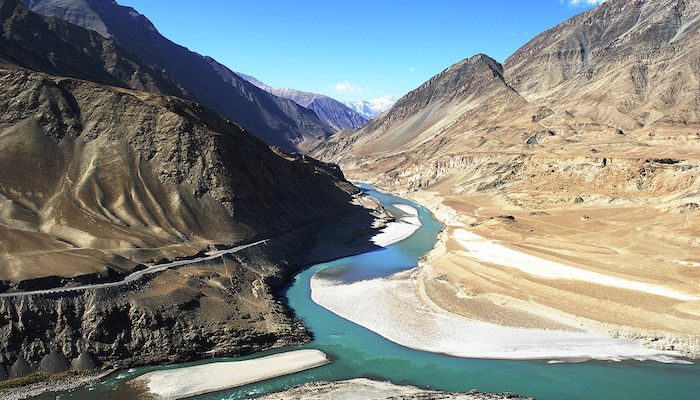
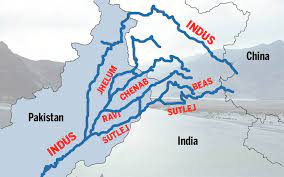
The river Indus as said about the Ganga is a transboundary river that flows Ladakh and Kashmir northwards, passes leftwards towards Nanga Parbat Massif, and Pakistan southwards and ends its journey in the Arabian sea by Karachi. The Indus is termed to be one among the world’s largest rivers in average annual flow, with an estimate of 243 cubic km, which is twice and thrice of the river Nile and the Tigris with the Euphrates combined respectively. The Indus originates from the Tibetan plateau near Lake Manasarovar and enters India in Ladakh. It cuts through the Himalayas in a deep gorge near Nanga Parbat to enter Pakistan. It has five main tributaries – the Sutlej, the Beas, the Ravi, the Chenab and the Jhelum. These rivers give Punjab its name, for the word ‘Punjab’ means ‘five rivers’. This Himalayan river is both snow-fed and rainfed, and therefore flow continuously throughout the year. The river Indus, also known as the Sindhu river, flows for 2897 km, mostly through Pakistan. Since the river moves slowly across the plain, it deposits accumulated silt on its bed. The river bed is thus higher than the sandy plain. When the river is in flood, this results in much destruction. The Indus finally branches into distributaries that join the sea at Karachi. The very river is also famous for the Indus river dolphin, a freshwater dolphin, and one of the world’s rarest mammals. It is, also the second most endangered freshwater river dolphin.
Regions through which the Indus flows
The Indus rises in southern Tibet at a height of about 5500 metres. It flows through a high plateau, then the ground falls away, and the river drops rapidly, and gathers momentum. It rushes northwest and collects the waters from innumerable glacier-fed streams. It flows between the greatest mountain ranges, the Karakoram and the Himalayas. generally, the river becomes slower and has a wider channel as it approaches its delta on the Arabian sea. Agriculture in Pakistan wouldn’t be even possible without this river. In addition, it supplies essential ingredients for human life for many urban areas. These include the Pakistani cities of Islamabad, Lahore, Peshawar and Karachi. Therefore the Sindhu is Pakistan’s longest river with a total length of 3180 km.
The Chenab
The Chenab rises in the upper Himalayas, in the district of Himachal Pradesh in India. Its waters begin from snowmelt from the Bara Lacha Pass. During the Vedic period, it was known as Chandra Bhaga, and it begins at the confluence of two rivers, the Chandra and the Bhaga in Himachal Pradesh. It flows through the Jammu, into the plains of Pakistan. It is first joined by the Jhelum, and then by the Ravi rivers. Later, it meets Sutlej, which has earlier been joined by the Beas.Altogether, these form the so-called ‘five rivers of Punjab’. After, 960 km, it flows into the Indus. The river is dear to the people of Punjab. Moreover, it forms an important part of the land’s history and culture.
Fact: The world’s highest railway bridge – the Chenab bridge – spans the Chenab. It crosses the river in Jammu and Kashmir.
map showing the path of the Indus river
The Jhelum
The Jhelum is the largest, and most western Punjab’s five rivers. It is an ancient river that has been mentioned both by the ancient Greeks as well as ancient Egyptians. It rises from a deep spring, the Verinag Spring in the southeastern part of the valley of Kashmir in India. the river wanders northwards through the valley of Kashmir to the Wular Lake. After emerging from the lake, it continues winding its way through a deep gorge into Punjab. It widens out into an alluvial plain and then goes south to join the Chenab at Trimmu after 813 km. its flow is controlled by snowmelt and the monsoon. In its lower course, the river is famous for its hydroelectric power generation. The Mangla dam and the reservoir on the Jhelum irrigate around 3 million acres of land.
The Ravi
The Ravi, one of the five rivers that create Punjab, crosses national boundaries. It rises in the majestic Himalayas in the state of Himachal Pradesh in India. It crosses Jammu and Kashmir and then flows into Pakistan. After 725 km, it empties itself into the Chenab. It is fed by glacier melt and is the smallest of all rivers of Punjab. In Vedic times, the Ravi was known as Iravati or Airavati river.It is a trans-border river of India and Pakistan. After partition, the river waters were divided between India and Pakistan.
Fact: It irrigates a large area in Punjab through a canal. This canal is known as the upper bari doab canal.
The Beas
The river Beas, one of the five rivers of Punjab, is famous in world history. It is one of the rivers that created problem’s in alexander the great’s conquest of India. His troops mutinied here in 326 BC, refusing to go any further, as they had been away from home for eight years. The Beas rises from the Rohtang Pass in the western Himalayas of Himachal Pradesh and flows south through the Kulu valley. It then enters Punjab and flows in a southerly direction. Thereafter, it finally meets the Sutlej after flowing for 470 km. the chief tributaries of the Beas are bain, Banganga, Luni and Uhal. The river was known in ancient India as the Vipasha, while the ancient Greeks called it the Hyphasis. In the 20th century, it was developed for irrigation and hydroelectric power generation.
The Sutlej
The Sutlej, the longest Punjab’s five rivers, has its source in the Rakshastal lake in Tibet. Sometimes called the red river, it is the easternmost of the Indus river’s tributaries. Further next, it rushes through the Himalayan gorges, and crosses Himachal Pradesh, before entering Punjab. It then joins the Chenab and they empty into the Indus. There are many irrigation projects along its 1400 km long course. They include the Bhakra- Nangal project, and the Sirhind canal. In addition, there is also the Sutlej valley project which benefits both India and Pakistan.
Fact: In the villages of the Sutlej valley you will find descendants of the yak traders of the olden times. These traders were known as Zhang Zhung.
The Indus: the cradle of civilization
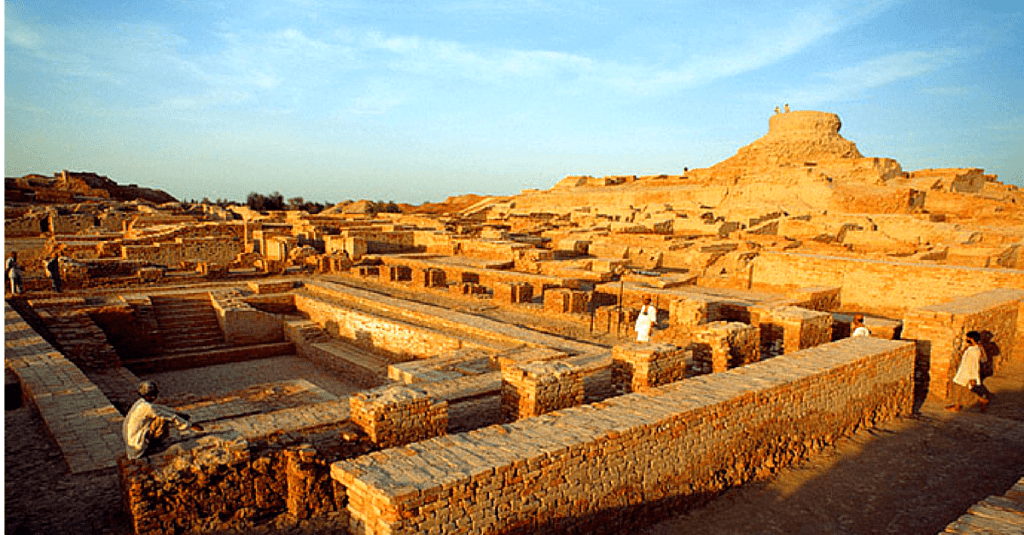
One of the greatest civilizations of ancient times flourished on the banks of the river Indus. Around 3300 BC, there were two great cities in the Indus valley, Harappa and Mohenjo Daro. They were very planned and had houses built with bricks, and even a proper drainage system. The town planning, water supply, sewage and drainage system were of very high quality – there were bathhouses and granaries in plenty, too. These cities prove to the world that the most sophisticated urban civilization of its time flourished in India, more than 5000 years ago! The wonders of engineering and architecture, the richness of the culture, and the quality of the life enjoyed by the people all prove that the valley stood to be the cradle of civilization.
The river basin covers an area of around one million square kilometres and extends to four countries. They are China, India, Afghanistan and Pakistan. Snow and glacier meltwater is the main source of water for this river system, as rainfall is low in the region. It ends in a delta, which includes numerous mangroves. The Indus basin stretches to the Karakoram and Haramosh ranges in the north, the Arabian Sea in the south, the Sulaiman and Kirthar ranges in the west, the Himalayas in the east. In India, the basin spreads over the states of Jammu and Kashmir, Himachal Pradesh, Punjab Rajasthan, Haryana and the union territory of Chandigarh.
Indus Water Treaty
India and Pakistan are two of the four countries through which the Indus river flows. The waters of the same and its tributaries support life in vast areas in these two countries. The Indus river system consists of three western tributaries of the Indus and three eastern rivers. The treaty was a result of Pakistani fears that since the sources of the rivers of the Indus basin were in India, India would have total control of the water. So, the world bank drew up a water-sharing treaty called the Indus water treaty. According to this treaty, the Ravi, the Beas and the Sutlej, which constitute the eastern rivers, are allocated for exclusive use by India, before they enter Pakistan. Similarly, Pakistan has exclusive use of the western rivers the Jhelum, the Chenab, and the Indus. The treaty was signed in Karachi on September 19th, 1960.
Major cities in the Indus basin
Industries in the Indus river basin are mainly based on agriculture and allied products. These include the textile, woollen, sugar, oil and paper Industries, as well as Industries manufacturing agricultural equipment. Other Industries in the region are cement, automobiles, machine and machine parts. These Industries have led to the growth of many towns and cities in the river basin. Important urban centres and towns in the basin are Chandigarh, Srinagar, Shimla, Ambala, Bikaner, Bathinda and Patiala. Chandigarh serves as the capital of Punjab and Haryana while Srinagar is the capital of Jammu and Kashmir. Shimla, a beautiful city on the forested hillside of the Himalayas, is the capital of Himachal Pradesh.
Problems faced by Indus rivers
Rapid population growth
As the Indus is one of the longest rivers in Asia, and many civilizations shaped near it, the rapid population growth has a serious hand on the pollution caused. As the number of people around it increases so does the manipulation and excessive use of river water. Thus it could be concluded that the human actions that affect the river pollution counter affect them.
Increased cultivation rate
As the population increases, so does the need for food. Thus for achieving this the cultivations as a whole should be raised to a certain level covering the need. Added to this the Indus basin highly supports cropping. The exploitation caused by chemical fertilizers and pesticides used had serious effects on the river. The
Issues related to reservoir
The inefficiency of the reservoir had been in great discussions among authorities over the years. the increased freshwater need has come to a greater problem. Added to the low capacity of reservoirs, is the issue of inefficient management of the same.
Sewage management
The untreated sewage disposal to the rivers had adversely affected their condition for too long. The urban sewage added to the industrial waste is strengthening the damage caused. Proper treatment of the sewage is the only possible way to counterattack this issue.
Excessive industrialization
The Indus is a cradle of civilization, many industries grew near it, making it a great industrial site from time immemorial. So is the industrial waste disposal to the water bodies. The extensive water manipulation on the industrial need and discharge of the harmful by-products to the rivers marks the need for sustainability over the industrial sector. It is said that it is one of the top rivers that end up polluting the oceans.
Regional climate change
The fast-paced climatic changes such as the overheated summers causing glacier melts in a higher level are the representations of unstable weather conditions. This then leads to a decrease in river water flow. Well, it isn’t a new fact that global warming the main enemy. When fossil fuels are burned which then increases the greenhouse effect leading towards glacier melts. The minute changes in water flow can even cause not so smaller but undesirable changes in crop production and the organisms.
Kashmir is located on the Jhelum River in north India. It is always cold here. It is very beautiful. It is called Paradise on Earth. Its beauty seems very captivating in every season. In summer there is greenery everywhere and in winter everything is covered with snow. The red apples hanging on the apples look very beautiful. There are many tourist places to see in Kashmir like Gulmarg, Sonmarg etc. Gulmarg is called the life of Kashmir. Sarovars like Vullar add to the beauty of Kashmir.
The people of Kashmir are called Kashmiri Pandits and they are very beautiful. They are also non-vegetarians and consume kebabs etc. After eating here, it is rotated in sweets. Saffron is cultivated here. Whoever goes to this place makes sure to buy show pieces made of walnut wood, apple, Pashmina shawl and saffron. Kashmir is a matter of great dispute between India and Pakistan. Kashmir has its own flag and it has its own constitution under Section 370 of the Constitution of India. No person outside Kashmir can buy land in Kashmir.
The poet has rightly said about Kashmir that “if there is heaven on earth, it is here, it is here”. We have been fortunate enough to spend some of our holidays in Kashmir, but this happened a few years before the disturbances started in the valley. We usually visited Kashmir during our summer holidays. We took a train to Pathankot. Steal the bus from Srinagar. The last time we were there, we went to Chandan Van. A trip in the Kashmir valley is a beautiful experience. Green plains, long There are trees, lakes, springs, snow-capped mountains. Both sides of the streets are lined with Apple and Peer Orchard.
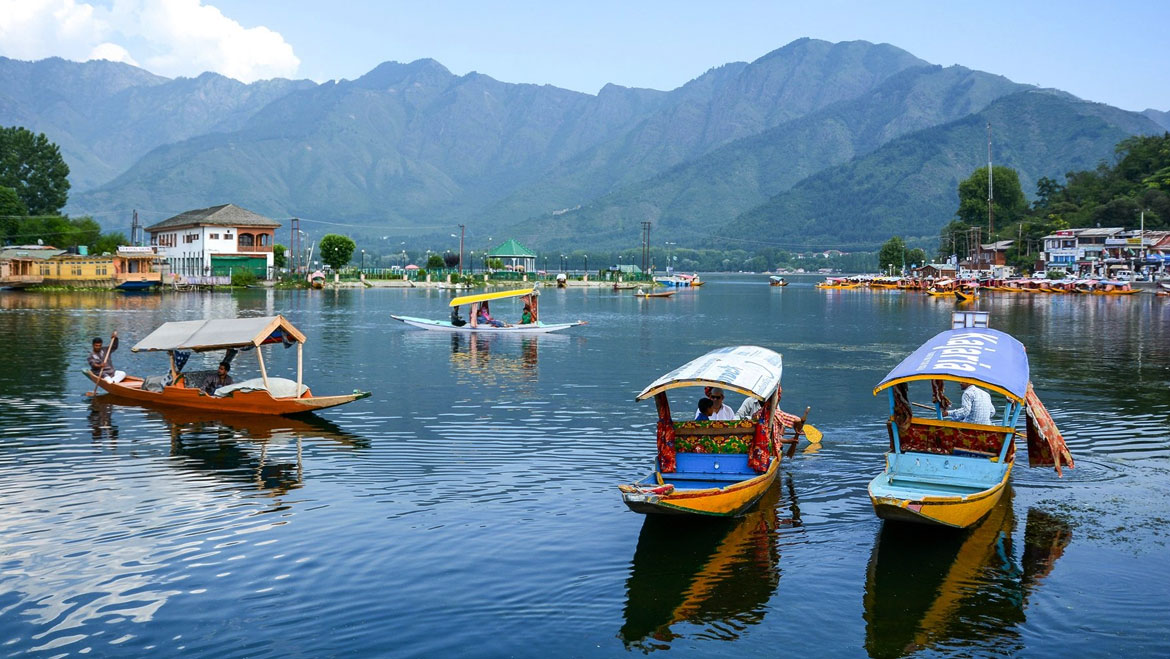
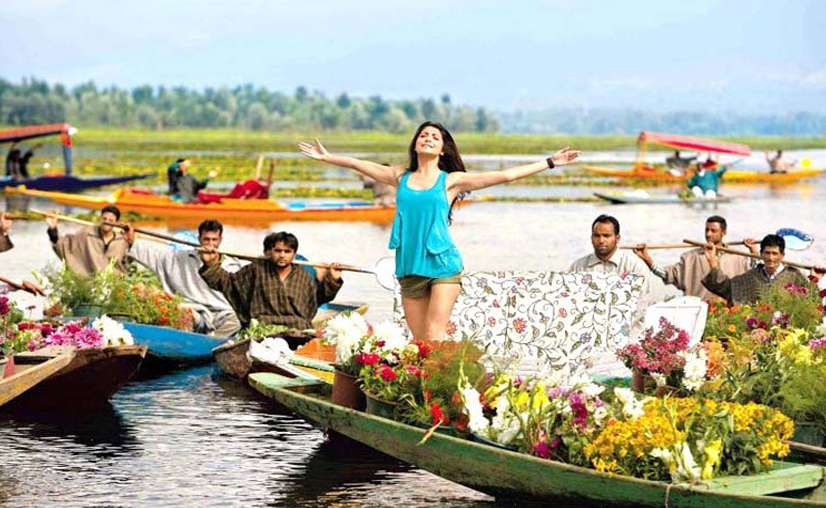
Wild strawberry grows in abundance everywhere, flowers and fragrant saffron are cultivated here. Kashmir relies on its image of being a paradise on Earth. A visit to the Shalimar and Nishat Gardens is a lake dating back to the Mughal era, when Nur Jahan’s favorite queen of Emperor Jahangir visited these gardens. There are beautiful poplar trees, flowers and fountains all over the place. Many Hindi films have been shot here. We often visited the lakes of Kashmir. Dal Lake, which is a major tourist attraction, has many home boats. Many foreigners come here and stay during their holidays. Many boats called the gazelle between these house boats and the shores of this lake. Likewise, there is the famous Wular lake, which is a large fresh water lake.
shooting of jab tak hai jaan movie, song jiya re
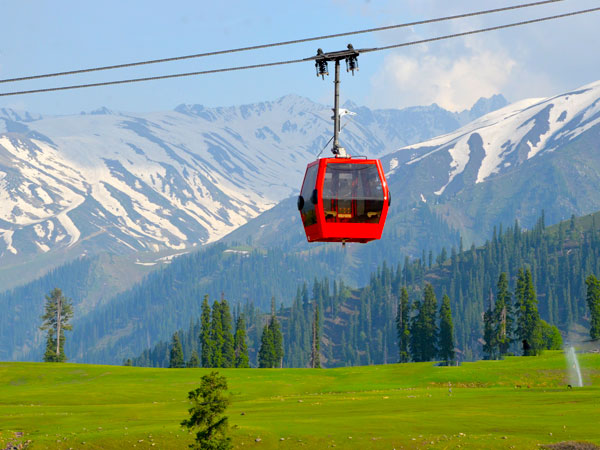
However, among all the lakes of Kashmir, my favorites were Evanabal and Gangarbil lakes. Mansabal Lake is situated between the mountains and the Indus River. While the Gangarbal Lake is considered the source of the Ganges. It is closed in the rocky center of Harmok, Kashmir also has many springs for their healing powers. The most famous among all is Chashma – Shahi, or Shahi Vasant. It is known for its medicinal values. There is also a sulfur lake called ‘Tatta Pani’ in Kashmir. It is believed that if all take a bath in these springs, then all types of skin diseases can be cured. Kashmir is a trekker’s paradise. There are several trails scattered all over the valley which are ideally suited for trekking. They are variously known as Gulmarg or path of flowers, Sonamarg or path of gold etc. In fact the beauty of Kashmir binds a person and does not allow him to leave the place.



















/https://public-media.si-cdn.com/filer/1d/94/1d94a50d-2cad-4307-8c01-c337ead1fef9/feb15_j03_antikythera.jpg)
 Eduindex
You must be logged in to post a comment.