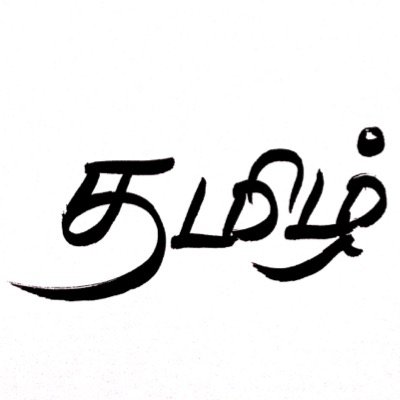
Tamil at Harvard University

Inauguration of Tamil Club and Kavidhai Club - Sevalaya

What is Tamil Chair?

Tamil Chair Inc. is a non-profit organization registered in the state of Maryland (USA) that is currently working on fund raising for Harvard Tamil Chair

6m $ is required to establish it

Tamil is one of the very few languages of the world with a classical past and a robust literary tradition that has continued to this day. Despite many foreign occupations of the Tamil country and other outside influences, this noble language has always shined, producing vibrant literature for over 2 thousand years.

In addition to the literature, there have been numerous grammar books, commentaries, religious works, didactic books, secular literature and works from many other genres.

This is what the Tamil chair of Harvard university states about tamil

What is the need for a Tamil Chair?

  1. Tamil language has one of the oldest written traditions in all of Asia and boasts a rich body of literary work dating back 2,500 years. Tamil has been accorded with a prestigious recognition as one of the seven classic languages (Greek, Sanskrit, Latin, Hebrew, Persian, Tamil and Chinese), and it is one of the very few that has survived all the way through to the modern world since its beginning.
  2. Currently, Tamil is the 20th most commonly-spoken language (by 80 million people) in the world, with vibrant literatures for over 2 thousand years. Literature represents the culture and tradition of a language or people, and it provides a kind of blueprint of human civilization.
  3. Thus far the global reach of Tamil literature is so limited, and for its ancient and Classic standing, Tamil literature deserves to be critically looked from new and diverse perspectives and the resulting knowledge needs to be shared across other cultures for mutual benefits.
  4. So the purpose of this chair is multifold. First, it is a matter of great prestige for Tamils to have our language taught at the world’s most prestigious university which attracts brilliant students from all over the world.
  5. There is also a need for research in ancient classical Tamil literature. Harvard will produce Tamil scholars who will be trained in research methodologies.

IMPORTANCE OF TAMIL CHAIR IN HARVARD UNIVERSITY AND THE WAY IT ENRICHES THE LANGUAGE

  1. Helps building History

History can be written on the basis of outputs from researching a language.

Research about a language is a step to build a history.

Ex: In recent, historians of India use vedic texts of sanskrit to build the own history.

They build Indian history with vedas as base.

If more outputs from researching tamil comes out it will help build Indian History which may be seen from view of tamil literature.

2. Helps developing the language

In India Hindi and sanskrit are given importance by central government for promoting and developing them. These types of actions from Indian government limits Tamil as a regional language and major funding is deprieved.

Promoting through a reputed university will ensure good amount of funding for research.

It will help explore the Tamil studies on a much deeper level through a rigorous approach executing formal academic research processes to bring out the traditions, the cultural, intellectual, and social practices of the Sangam period that are barely explored as of now. This will elicit Tamil’s long tenured literary tradition to the peer academic communities and establish it’s much deserved recognition as a Classic language.

3. Competition with Sanskrit and other classical languages

Indian goverment in name of Hindu Nationalism promotes only sanskrit.

For all other Classic and widely spoken languages like Sanskrit, Greek etc , there is so much research and progressive work that is done at various international academic centers. It is quite urgent and highly imperative that the same world class effort is put forth for Tamil to expand its stature and reach. It will enhance not only the chances for continual use but also the newly embraced recognition from the global populace.

4. Intensive Research and development

Any developments on language of Tamil is stopped by Indian government . Without funds researchers are suffering. Even if someone come out with good research it is deemed valued by Hindutuvas/Hindi Nationalist Indian government

Independent research in a foreign country will only enrich it for good without influence by Indian Government.

5. Gets world wide interest and new learners

Developing the language in a well known University will gather world wide interest for the language and gather new learners.

May revoke intersets in researchers to resume archaelogical excavations a, Keezhadi, Poombukar, Adhichanallur which were currently banned by Indian government for excavating. Because they provide excessive proofs to Independent tamil culture in Sangam period, so that it will affect sanskrit’s claim on Tamil.

Assures Tamil language’s legacy to survive and grow.

This endeavour will cerainly increase the horizon of Tamil
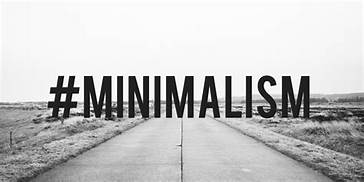
Minimalism

What is Minimalism?

Minimalism is defined as a design or style in which the simplest and fewest elements are used to create the maximum effect. Minimalism had its origins in the arts—with the artwork featuring simple lines, only a few colors, and careful placement of those lines and colors. More recently, it has become representative of a lifestyle that aims to remove clutter from all facets of life. 

Minimalism is all about owning only what adds value and meaning to your life (as well as the lives of the people you care about) and removing the rest. It’s about removing the clutter and using your time and energy for the things that remain. We only have a certain amount of energy, time, and space in our lives. In order to make the most of it, we must be intentional about how we’re living each day.

There are many different approaches to minimalism, but it’s really just a tool to help you prioritize what’s important in your life.

Joshua Becker of Becoming Minimalist offers this definition: “Minimalism is the intentional promotion of the things that bring you joy and the removal of those that do not.” It might be called simple living, tiny living, intentional living, and a myriad of other things—but there is at least one common thread: the idea of curating the things we own to best reflect our priorities and vision for our lives.

If the idea of minimalism sounds intimidating to you or if you’ve seen some images and thought, “that’s a nice idea, but I’d never want to live like that,” don’t worry. You can benefit from applying minimalism in your life whether you live in a tiny home, suburban house, or a mansion. You can use minimalism as a guiding philosophy and customize based on what works best for you.

Common Misconceptions of Minimalism

Contrary to what some people think, there aren’t any actual rules to minimalism. There’s no official board of minimalism to determine whether or not you’re doing minimalism right. Minimalism truly looks different for everyone.

You don’t have to own below a certain number of items. You can still have nice things, and no, you don’t need to get rid of your favorite collection—whether it’s books, shoes, or music. Minimalism doesn’t have to look like white-walled, modern and sparse homes you’ve probably seen in magazines and videos, a common minimalism mistake. Minimalism is also not a one and done project. It is a a continual practice to ensure everything in our lives is working for us in our vision, not against us. Its used over the years to make substantial changes in our careers, home, lifestyle, buying behaviors, etc.

Everyone can benefit from applying the principles of minimalism to their lives. It’s a process of removing distractions and things that no longer add value to our lives.

Why Minimalism Is An Effective Tool For Living An Intentional Life?

In the end, minimalism is less about owning fewer items and more about actively making choices on what kind of things truly matter to you.

We exist in a society that creates false value on owning more stuff and having no time to use them much. The constant pursuit of bigger and better is an endless cycle. There will always be a nicer car to buy, a bigger boat, a larger home, and or a faster private jet. Did you know that there’s a website for billionaires to shop? Yeah. It never ends.

It may seem like an overwhelming challenge at first, but as you untangle the life you built around owning more things, you’ll find the stress disappearing and the world starting to slow down. Those choices you make will begin to build a muscle that will fundamentally change the way you live your life.

Why do Indians eat with hands?

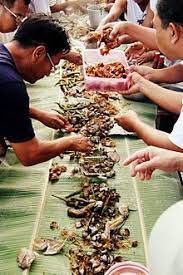
Eating with bare hand is a traditional Indian culture, which people still follow. Eating is a mindful process since the sensory organs like touch and taste are involved. Fingertips are used to feel the temperature and texture of our food. Nerves at our fingertips send a signal to our brain, and the brain activates the human body’s digestive system and further improves the digestion process. In practice, Indians sit down on the floor in comfortable clothes and eat in a big banana leaf or Saili leaf. This process activates your senses and makes you enjoy your meal.

Eating with hand is a mindful eating…

But, is it good or bad to use hands?

Stay till the end…

Imagine eating roti with a spoon and dosa with a fork. Sounds weird right? Oh well, it is!

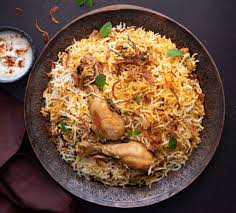
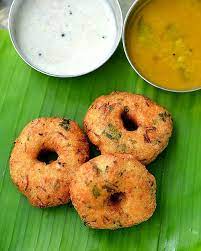
Traditional Indian foods are made to eat with hand. We use hands to eat foods like rice, chappati, vada, dosa, chicken, fish, papad, Pongal, and many more. While eating, curry is mixed with rice or stuffed in a roti that gives a flavor of multiple spices added while preparing the dish.

Here raises a question…

Is eating with your hand “unhygienic”?

Washing hands before eating is a habit of everybody. Indian tradition follows hygiene and cleanliness during dining. The hand once used by a person to consume their food is not used to serve or to share because that is treated as ‘jootha’ meaning contamination and treated as an unhygienic way of eating. People are supposed to wash their own dishes after eating which reduces the intermixing of saliva of two individuals as a concern of one’s health.

Significance of eating with hands:

According to the ancient theory, all five fingers of our hand has its own spiritual significance and it symbolizes the 5 elements of nature. 

  1. Thumb finger- Fire
  2. Index finger- Air
  3. Middle finger- Space
  4. Ring finger- Earth
  5. Little finger- Water

Apart from those theories, it was proved that using hand while eating improves the healthy digestion of food. Our palms and fingers are protected by a bacteria called Normal Flora. Normal Flora protects our skin from harmful microbes. Hence your hand is safe to use.

Is India the only country where people eat with their hands? 

Obviously Not!! 

India is not the only country where people follow the tradition of eating with hands. People from large swaths like the Middle East, Africa, South Asia, South America follow the norm of using their hands to eat. Tribes in Nigeria, Amazighs (Berbers) in North Africa, Black Africa, the Arabs of the Middle East also follow this tradition.

‘Kamayan‘ meaning “with hands.” Kamayan is an ancient tradition traditional Filipino practice of eating with the hands. They believe that eating with hands has its own significance than eating with fork and knife. It is also referred to specific type of Filipino feast known as the “boodle fight”.

Ethopian eating culture

Conclusion

Remember, it’s your culture and there is nothing to be ashamed of using your hand. Every culture in this world deserves respect. This article is all about bringing out the importance of Indian culture and not to dishonor western dining etiquette. Nowadays, restaurants and cafes are all westernized. As the customs and lifestyle changes it is our responsibility to hold and accept our own culture first. 

Creating an awareness among the people about the science behind our culture is the main motive of this article!!

References:

https://en.wikipedia.org/wiki/Customs_and_etiquette_in_Indian_dining

https://www.indiatoday.in/fyi/story/eat-hands-indians-357398-2016-12-14

http://www.timotis.com/news-1/eat-with-your-hands

credits to the right owner of the images used.

World Photography Day

What’s a photograph?


It’s a memory, an idea, an experience, a feeling, an expression. In simple words, photographs are the medium that allows us to see the world from another person’s point of view. Isn’t it magical, I believe photography is one of the greatest inventions of mankind. That’s why it has been said; a photograph is worth a thousand words.

Every year World Photography Day is celebrated on the 19th of August to inspire all the shutterbugs to share a single photo and share their world with the world. Let’s have a look at photography over the years.

It originates from the invention of the photographic process called Daguerreotype developed by Frenchmen Louis Daguerre and Joseph Nicephore Niepce in 1837. Later, on the 9th of January 1839, the Daguerrotype process has been announced by the French Academy of Sciences. And on the 19th of August, the French government purchased the patent and declared the invention as a gift “free to the world”. 

But Daguerrotype was not the first photographic process. In 1826, Nicéphore Niépce invented a process called heliography, which he used to create the earliest known surviving photograph from nature; View from the Window at Le Gras.

On the 19th of August 2010, World Photography day hosted its first online gallery globally. In which approximately 300 shutterbugs shared their pictures and people from more than 100 countries visited the website. This marked the first official, globally reaching World Photography Day.

Some interesting photography facts:

★ In 1861, the first durable colored photograph was taken by Thomas Sutton. It was a combination of three black and white pictures taken through red, blue, and green filters.

★ The first selfie was taken in 1839 by an amateur chemist and photography enthusiast from Philadelphia named Robert Cornelius.

★ The first digital photograph was taken in 1957, almost 20 years before Kodak invented the first digital camera.

Don’t forget to share your world with the world on the coming World Photography Day.

“For me, the camera is a sketchbook, an instrument of intuition and spontaneity.”
– Henri Cartier-Bresson

The Adivasis of India

India is a largely populated country with many different kinds of people. There are variations in culture, traditions, language, food, etc. But more importantly, there are people with different origins and roots. Some such people are the ‘Adivasis’ who we more commonly refer to as the ‘Tribes’ or ‘Tribal People’ of India. The word Adivasi comes from the Sanskrit term meaning ‘original inhabitants’ (Adi= original/from the beginning, Vasi= inhabitant/resident). Therefore, when we use the term Adivasi or categorize a group as Adivasis, it is generally understood to mean that they are the inhabitants of that area from the very beginning. It is a blanket term used to refer to the indigenous people and groups of India, and helps forge a sense of identity for them. Sometimes you may hear the term ‘Scheduled Tribes’ being used in a legal or constitutional sense, but this differs from State to State and may exclude some groups which may be considered indigenous.

Background

Adivasis make up a substantial minority of the Indian population, comprising about 8% of the total population. They are of great numbers especially in the states like Maharashtra, Madhya Pradesh, Jharkhand, Odisha and Andhra Pradesh. They are said to have arrived in India during the great human migration from Africa, and are believed to have been living in India from as early as 2000 BCE.  As the name suggest, their presence pre-dates even the Dravidians and Aryans in our country, and they were the original hunter-gatherer, foragers and agriculturists of these lands. But today, they hold little to no political power and most of them are below the poverty line. They have seen a relegation of their status in the country, with a loss of land, wealth and political presence and representation. The Adivasis have been conferred a classification of tribes or tribal communities under Article 366 (25) of the Indian constitution, the criteria for this being ‘geographical isolation, backwardness, and having a distinct culture, religion and ‘shyness of contact’.

Examples of Adivasis or tribes in India are communities like the Bhil, Chenchu, Korwa, Lodha, and Bonda. Perhaps the most well-known tribes are those of the Andaman and Nicobar Islands, like the Jarawa, Onge and Sentinels, who have remained mostly untouched by modern civilization and continue to live like primitive tribes.

Modern Day Situation

Most of us today when we hear the word ‘Adivasi’ do not think of the people who first populated Indian territories and who possess ancient cultures and traditions tied to these lands. Instead, we think of those people living in rural and underdeveloped areas, living in poverty and struggling to make ends meet. While larger and more prominent tribal groups may survive as result of numbers, the destruction of their environmental and economic base will not allow them to continue their traditional way of life and may result in their cultural extinction. The primary reason for the Adivasis socioeconomic problems is that they have gradually been displaced from all their land and are constantly being denied land ownership. Today they are in a constant battle just to retain their economic and social identity. Today’s India is all about modernization and progress, and even government schemes only aim at integrating these tribes into normal society rather than allowing them to continue living by their distinctive way of life. Attempt are constantly being made to bring these tribes into mainstream Indian culture and integrate them into the national identity, disregarding their own unique and age-old cultures. Although they have been given schemes for reservation, the impact of the quota system upon Adivasis has remained negligible up until now. Also, many smaller tribal groups are quite sensitive to ecological degradation caused by modernization, and so government policies on forest reservation have also affected Adivasis profoundly. The 2006 Forest Rights Act (FRA) was enacted to secure the rights of Adivasis to their customary lands and forests, but they are still subject to encroachments on forest area.

Conclusion

It can be concluded that the Adivasis or tribal people of India represent an important cultural group of our country, but their modern-day situation is not good and not respected. The tribes in India are now under the impact of ‘mobility and change’. They have been subject to things like the caste system, and religions like Christianity and Hinduism which have transformed them completely. They have basically joined the ranks of peasantry in modern times, and have become wage-laborer’s in industries, plantations and mining. Hence, they are at the lowest point of the socioeconomic indicator, and are also subject to prejudice and oppression in mainstream Indian society. Furthermore, their issues are generally under reported, neglected or trivialized. We must try to change this situation for their betterment, and we as citizens must educate ourselves on who these people are and what they represent. 

Culture and history

China and Japan India and Byzantium traveling culture and history vector geisha and samurai men and women Taj Mahal and torii gate capitol building and Great wall landmarks and heritage nationalities.

Culture and history is the main building block of our lifes

The Culture is the characteristics and knowledge of a particular group of people, encompassing language, religion, cuisine, social habits, music and arts.

The word “culture” derives from a French term, which in turn derives from the Latin “colere,” which means to tend to the earth and grow, or cultivation and nurture

History is the study of life in society in the past, in all its aspect, in relation to present developments and future hopes. It is the story of man in time, an inquiry into the past based on evidence.

As with any scholarly approach that boasts of being “new” when it bursts onto the scene, new cultural history was fairly well established as one among many ways of thinking about history by the twenty-first century. This is not to say that new cultural historians enjoyed the unanimous esteem of their more traditional colleagues, for the field still managed to draw the fire of critics from the left and the right who believed that after twenty years this approach still represented a mere “trend.” One could agree with Peter Novick that this attests to the fragmentation of the historical profession into a plethora of specializations that no longer cohered around shared principles and whose denizens had little common ground for discussion. Yet much has changed in cultural history since its heyday in the 1980s.

 When new cultural history was actually “new” it provided innovations both in terms of the topics considered worthy of historical attention and in terms of the ways of theorizing such topics within their respective contexts. It is nevertheless apparent that a good portion of what was marketed in 2000 as “cultural history” reflected more of the topical rather than theoretical innovations entailed by this approach. In fact, some of these works even read more like conventional social histories with a few obligatory nods to one of many privileged theorists.

To some extent this state of affairs reflects the success of this approach in the academy and the willingness of historians to combine methodologies in a creative and eclectic manner. On the other hand, though, one might argue that cultural history lost much of its edge by becoming subsumed into a more or less nonreflective historical establishment. Some historians see less fragmentation than the cooptation of erstwhile radical approaches back into a surprisingly resilient mainstream.

“Whatever possibilities become evident,” notes Patrick Joyce, “something is needed to shake the hold of a history which continually reproduces itself, in the process sucking the erstwhile heterodox into its consensus, in much the way that ‘cultural history’ is slowly but surely becoming routinized as more methodology, yet one more subdiscipline in the house of history.” Joyce’s observation is astute, yet one wonders whether a historical approach that could successfully resist such cooptation is possible and, even if it were, whether it would still merit the name “history.” It seems evident that what makes history “history” has little to do with methodologies and innovations that are unique to it, and perhaps a more thoroughgoing interdisciplinarity would discourage the domestication of future innovations into mere additions to the mansion of conventional history.

Bhangarh-The haunted fort

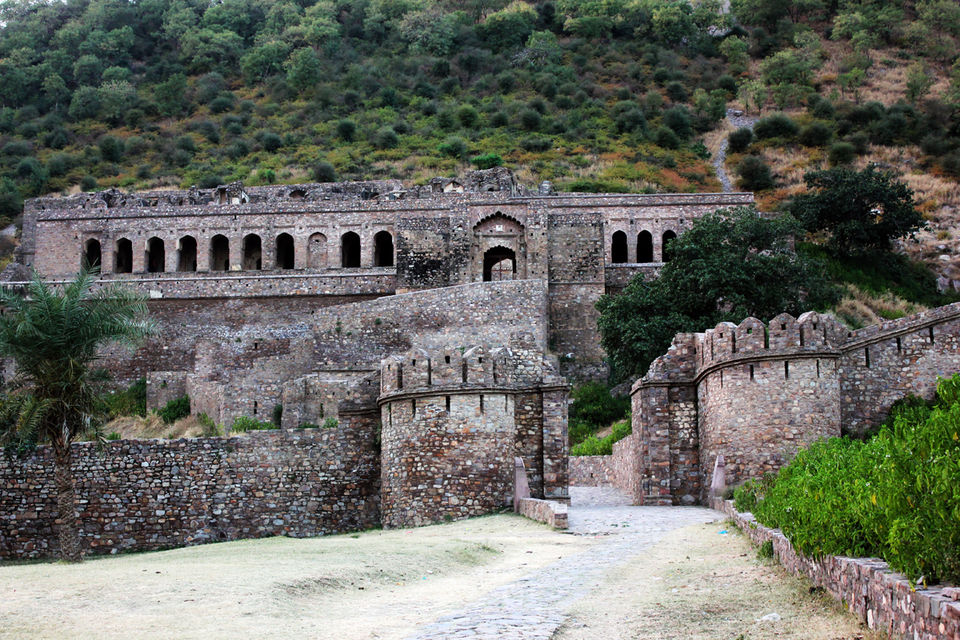
Bhangarh Fort is known as the most haunted place in India, and perhaps the greatest unsolved mystery. There is no doubting the fact that anything associated with the supernatural attracts a huge amount of attention and the deserted city of Bhangarh cashes in on that very idea. The many haunted stories of Bhangarh Fort have transformed it into a bucket list destination of sorts.

Curious travellers come in order to experience cheap thrills and while some go back disappointed, others simply cannot have enough of the suspense associated with the story of the Bhangarh Fort. If you happen to be one of those inquisitive travellers, it is imperative for you to visit this place and find out for yourself.

Is the Bhangarh Fort haunted? Here is the story of Bhangarh:

Most people are of the belief that Bhangarh Fort is haunted and there is no dearth of tales that help in amplifying the mystery that is Bhangarh. Venturing into the fort after sunset is nothing short of an act of bravery as it is supposed to be a centre for paranormal activity and the Archaelogical Survey of India therefore has prohibited people from visiting the Bhangarh Fort at night.

Of the many Bhangarh stories that the locals like to indulge in, the most popular is that of Emperor Madho Singh who built the city after attaining the approval of Guru Balu Nath, an ascetic who used to meditate there. The saint gave his approval on the condition that the shadow of the Emperor’s palace should never fall on his retreat.

If in case it did, the city would crumble into ruins. Once the construction was completed, the retreat of Guru Balu was unfortunately shadowed by the palace. Having incurred the saint’s wrath, Bhangarh immediately transformed into a cursed city and could never be rebuilt as no structures ever managed to survive in it. It is interesting to note that the tomb of Guru Balu Nath can still be found among the ruins.

Photo of Bhangarh Fort: Hauntings and Incidents 6/10 by Vishakha Srivastava
mysterious!

Another Legend of Haunted Bhangarh Fort:

Another Bhangarh Fort story pertains to Princess Ratnavati. According to legends, her beauty was nonpareil and stories of her surpassing physical attractiveness even transcended kingdoms and borders. When she turned eighteen, suitors from several states asked for her hand in marriage. Of all these suitors was a sorcerer named Singhia who was aware of the fact that he was no match for the princess. However, he decided to entice her with the magical powers he possessed.

He was lucky enough to see Princess Ratnavati’s mistress in the market and enchanted the oil she was purchasing with black magic. He was of the hope that the princess would surrender herself to him upon touching the oil. However, his attempt was futile as Ratnavati witnessed his trick and poured the oil on the ground which then morphed into a rock, rolled towards the magician and crushed him.

Photo of Bhangarh Fort: Hauntings and Incidents By Vishakha Srivastava
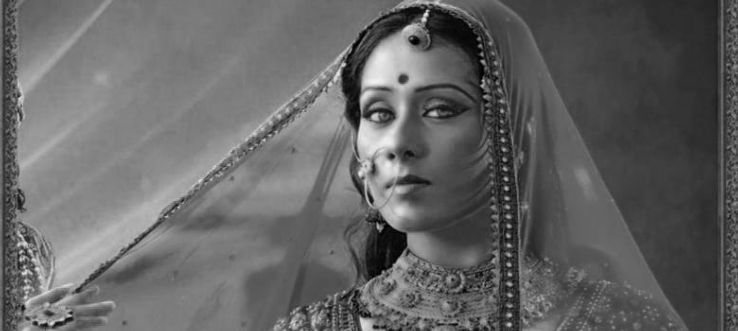
Rani Ratnavati 

Before dying, Singhia cursed the city of Bhangarh to death and as a result, it never witnessed any rebirths. Moreover, in the battle between Ajabgarh and Bhangarh, princess Ratnavati was killed, thus adding more weight to his malediction. Hopes, however, never die as several locals are of the belief that she has returned in a different form and will ultimately come back to end the unfortunate spell on Bhangarh.

While Bhangarh fort story has been rubbished by scientists, nothing stops the villagers from believing that it is a sanctuary for ghosts. People have supposedly often heard noises that are unaccounted for. The locals claim to have heard women screaming and crying, bangles breaking and strange music emerging from the fort. There have been instances where a special perfume was emanating from the Bhangarh Fort along with ghostly shadows and inexplicable lights. Some people have felt the strange sensation of being followed and even slapped by an invisible entity. It is believed that if a person enters the fort after sunset, he/she will never ever come out of it. The doors are therefore always locked after dusk and entry into the Bhangarh Fort at night is absolutely forbidden. Are all of the Bhangarh Fort stories factual or just strange pieces of fiction? Is the Bhangarh Fort really haunted? Nobody can say. Ghost hunters perhaps can.

REFERENCE-https://www.tripoto.com/rajasthan/trips/bhangarh-fort-haunted-incidents-and-stories

Old Becomes Richest Man In India Making Money Online!

Mithun Bhat, born in Bhopal, could buy 2 houses within a month, Bentley, Ferrari and paid all his debts. But previously, he worked with salary under the minimum wage. So, how could he earn so much money only in a month? He tells us his story.

“I worked at pizza delivery service for a year. I was prior a collage student and did a part time job in a restaurant. I did it to support my study. In the second year of study I was close to be expelled since I could not pay the tuition. At the time, I had to take a loan. I could finally paid my tuition, but I had no money to pay the monthly installments to the bank. Honestly, studying and working all at once was beyond my endurance, and eventually, I was expelled from campus a week before the end of school year. That was the beginning of the darkest days of my life. My father lost his job and my family didn’t know how to survive. Could you imagine how hopeless I felt? I had no decent work and no education, and my father lost his job. I could do nothing to help them.

One night, I was delivering a pizza to the last location. A guy opened the door. He was with his friends, and while he was paying the pizza, I heard their discussion about where would they invest Rs. 2,000,000 they earned 10 minutes ago. I just made a glance and saw a sort of graph and figures on the laptop screen. The guy opening the door gave me Rs. 1,000 but the price was only Rs. 600. He told me to keep the change.

I was absolutely surprised and after I got back home, I took my laptop and tried to recall about their discussion. After 5 minutes, I remembered that they told about online trading. On the Broker website I found the graphs and figures I saw at the guy’s laptop.

After reading all information about the broker and watching tutorial videos, I opened a demo account where I got virtual money. I quickly understood what I had to do, it was very easy. I earned some money after my very first transaction. Then I thought… I did not lose anything, so I decided to open a real account and deposited my last money there. At the morning, I woke up and saw that I earned Rs. 30,654 over that night. After 2 weeks I could paid my debts off, bought a car, and I could help my father while he was searching for a new job and pay his expenses for the next few months. 2 weeks later, I already had 2 houses in the suburb. And all I did without leaving my home and getting higher education.

That’s my luck. It would never happen if I did not meet the rich guy while delivering the pizza. I know there are a lot of people having not good times like me, that’s why I tell you: if you want to live without any problem, I can tell you how to earn money with Trading Resource. It is very easy if you would try it.

Need Of Having More Women In The Police Force

women strengthening and cooperation has seen a radical change within the later few decades. Ladies are now not kept to their homes and have come forward to exceed expectations in nearly all areas, at standard with men. But it has been watched that the number of ladies within the police drive appears deficiently particularly when we compare their increasing number in psychological militant exercises. Ladies are beyond any doubt to demonstrate their worth within the police drive as they are more committed to the cause they work for and less degenerate, two qualities that are missing in policemen.

The government ought to increment the saved quota for enrollment of ladies within the police drive. Ladies got to be given motivations to connect the police drive and this can be beyond any doubt to demonstrate ideal as they bring with them a particularly distinctive and profitable set of abilities that’s bound to change the way the police is perceived in our community. As the work depiction of the police grows past crime-fighting into community benefit the nearness of more ladies within the police constrain is beyond any doubt to assist to burnish the discolored picture of the police officers, make strides community relations and cultivate a more adaptable and less savage approach to keeping up law and arrange.

The number of ladies within the police constrain appears inadequately, particularly when one sees the expanding association of ladies in psychological militant activities. That being said, there’s an urgent require for more ladies officers within the police force. Universally, ladies are considered the weaker sex. Ought to police constrain being overwhelmingly a male environment select ladies officers? Women are more touchy to the requirements of the public and so female officers are more trusted than their male partners. Joining the police drive is additionally an perfect choice for ladies who are enthusiastic and wish to serve the nation and its citizens. But over all, the police benefit gives a proficient stage to the ladies, where they can demonstrate that ladies are no less than men.

Sex imbalance is one of the most reasons why there are as it were a handful ladies officers within the police constrain. In this manner, to pull in increasingly more and moreincreasinglywomen towards police benefit, the government has got to take a few impressive steps amid the determination and enrollment process. Women must be energized to connect the drive particularly by their family and companions. Typically conceivable as it were in case she is given with superior compensation and motivating forces ideally break even with to what the male officers are accepting. Ladies ought to feel enabled amid enrollment; choice ought to be absolutely based on justify. In expansion, a conducive environment in police drive will make the female officers feel cheerful, secure and satisfied. Government, in affiliation with the police benefit, must make mindfulness through campaigns so that more ladies consider joining the police administrations.

Jobs and career

What is a JOB ?

A job is something you simply do for the money. Usually, jobs have a small impact on future resumes because they aren’t typically related to what your career is or will be. Also, jobs usually offer less networking opportunities because your coworkers often won’t be continuing on to the same field as you in your future career.

Most jobs consist of hourly wages, are more short-term, and focus on getting a task done.

What is a career ?

A career is all about building up skills through various employment opportunities, giving you the ability to move on to higher paying and more prestigious ones. Careers provide a foundation of experiences that help fuel your professional life for many years.

Careers are more long-term and are about learning, gaining experience, building connections, and putting yourself in the right position for promotions and raises. Also, careers tend to be more salary based, as opposed to hourly based like jobs, and often include benefits such as paid time off and healthcare.

While more education is often required for a career, you don’t need to spend the rest of your life in school just to get ahead. South College offers many associate degree programs that can be completed in just two years, getting you started on your new career before you know it.

If you’re interested in finding out what your future career should be or in getting the right education to put you there, contact us today!

That’s not to say that jobs aren’t valuable. Jobs show your work ethic, which is important to future employers, and money pays the bills! Jobs can help prepare you for a career by providing you with valuable skills like time management and communication.

DIFFERENCE

A job is more short-term oriented and tends to focus purely on earning money. On the other hand, a career is a series of related employment in one field that provides experience for your future and helps you earn a better paycheck and living status

7 Strategies to Build A Successful Career

  • Identify with Your Goals. Before even considering following a career route, you must get to know yourself. …
  • Build a Professional Resume. …
  • Become Aware of Your Strengths. …
  • Assume Full Responsibility for Your Life. …
  • Always Raise Your Standards. …
  • Brand Yourself. …
  • Network — A LOT. …
  • Conclusion

What do you want to do before you die?

Thinking about dying could be a scary topic to talk about but there are so many things to accomplish before death. A lot of people are on their death beds regretting what they did with their lives and have no way of going back and changing it. You have got to live a life you won’t regret 60 years from now, when your dying. You only get one life so take advantage of it, and do something great! What do I want to be by the time I die? I want to live an exciting life and achieve as much as I can. I want to be able to create, accomplish, and find so many things.

Before I die, I want to be able to create good relationships with everyone I’m close to. When I became a teen mom I lost most of my relationships with friends and family. One person that I’ve lost, that used to be really close me, was my dad. My dad is someone I can’t live without. Before I die I want to create that bond I used to have with him again. Since my dad and I don’t live in the same house, it makes it hard for us to see each other. I’d like to make a habit to go out for a walk together and talk about how I feel and how he feels about our relationship. Creating a bond with my dad is the most important to me because I used to be close to my dad and he has always been someone I truly trusted. Even though that changed over the past year, I still want my dad to know that I need him no matter what. I don’t want to die knowing I didn’t have the one special person by my side.

Before I die, I want to accomplish something that will make a change in our world. Martin Luther King Jr., for example, made a change in the world and he is still known for his greatness 49 years later. I want to be that person; 50 years from now, I want people to remember me for something great that I did. In our generation we have all these teens using drugs and drinking alcohol on a regular basis, so by the time they are 25-30 years old, they’ve become alcoholics. I want to be that person that helps them stop using drugs and drinking. Making that change in our world would be something greatly appreciated, and I can be that person who every parent thanks for helping and saving the lives of their teens. I want to be remembered so people can see me as a inspiration and do something great with their lives.

In order for me to know who I am as a person, I need to find myself. Only then will I be able to love myself and others. I’ve always been a girl to keep emotion to myself and never let anyone know how I feel. There were even times when I wouldn’t know what I felt. I’ve grown up not knowing how to handle myself or to control my feelings. I don’t know the real me because if I did, I would be able to control myself and what I feel. I need to love myself and get to know myself. I’ve put everyone first for so long, that I forgot to think about myself. I want to know myself before I die so that I know what I want to do with my life. Like I said before, we only get one life. I want to take this one life and get to know myself so I’m not lost in everything. I also want to find love, first from myself. Loving myself can make a big impact in my life. It could give me the strength to keep going in my life without hesitation. Loving myself will also help me love the people around me.

Death scares me a lot but I can’t let that fear prevent me from doing the things I want to do before I die. Thinking about all these accomplishments and goals makes me realize that death can be soon and it can happen to anyone at any time. We make all these plans and all our goals but there is only so much time we have. I plan to live my life to the fullest rather than wasting it and ending up with regrets.

Reference-https://www.lifehack.org/articles/communication/50-things-you-should-before-you-die.html

Bathukamma festival

Hello guys !!!

Iam going to write about bathukamma festival today.

This festival takes place in Telangana,and some parts of Andhra Pradesh.

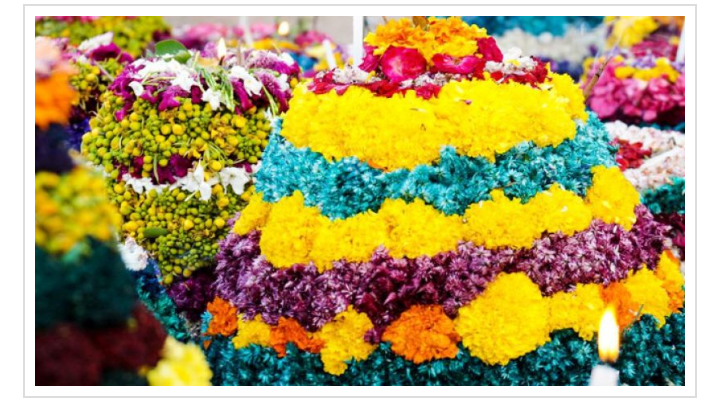
Bathukamma is a floral festival celebrated every year.It is gloriously celebrated for nine days starting from bhadrapada pournami.

The 9-day festivities will wind up on “Saddula Bathukamma” or “Pedda Bathukamma” festival on Ashwayuja Navami, popularly known as Durgashtami which is two days before Dussehra.

Bathukamma festival is also called the festival of life ,celebrated to thank Goddess Parvati for her blessings for the crop harvest and income she helped generate this current year and again ask her blessing for the next year also.

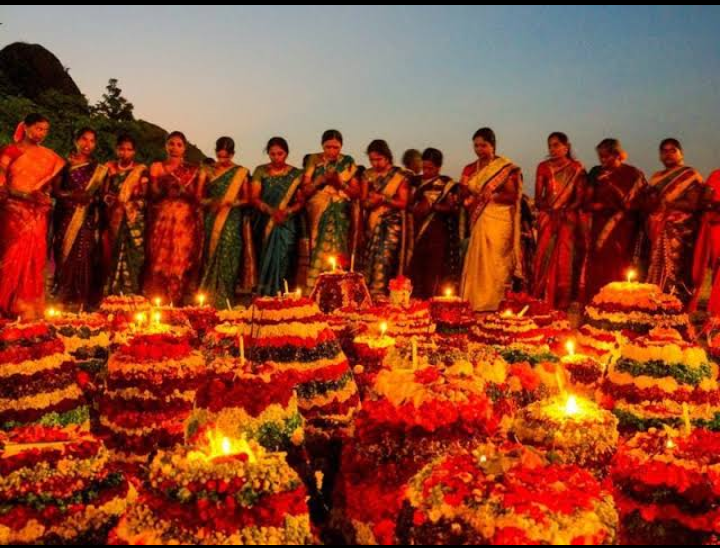
Women dress up in sarees and girls dress up in lehanga,half saree .They wear various types of accessories and jewelry .

People of all ages come together and enjoy this festival merrily.They make various prashads(sweet)daily during this 9 day period and attain puja.

Flowers from each region are used in making the floral stack and the women gather around these stacks and sing songs and dance happily.

The folk songs sung here are very special and the graceful and cheerful dances uplifts the whole atmosphere and participating in this festival will always leave you with beautiful memories.

They enjoy this festival together with everyone which brings people closer to each other and brightens the mood and vibe of the whole place.

From telanganatourism.gov.in

Each day has a special and unique bathukamma which are listed below:

  • Day 1: Angili pula Bhathukamma
  • Day 2: Attukula Bhathukamma
  • Day 3: Muddappappu Bhathukamma
  • Day 4: Nanbiyyam Bhathukamma
  • Day 5: Atla Bhathukamma
  • Day 6: Aligina Bhathukamma (alaka Bhathukamma)
  • Day 7: Vepakayala Bhathukamma
  • Day 8: Venna muddala Bhathukamma
  • Day 9: Saddula Bhathukamma brothers bring flowers to mother and sisters to do bathukamma. – wikipedia

This festival depicts our culture and tradition.This festival reminds to us that we should never forget our roots ,our culture, our traditions and reminds us of the beauty of our culture.

Thankyou^^

Featured pic taken from:
https://bhoopalapally.telangana.gov.in/festival/bathukamma/

Demonetisation- Pros & Cons

Demonetisation is a condition where in the Central Bank of a country withdraws the previous currency notes of certain denomination as the official mode of payment. It occurs when there is a change in national currency. The current form of money is removed from circulation and new notes are introduced in the market.

History of Demonetisation in India

The first wave of demonetisation in India occurred back in the year 1946 on the notes of Rs 1000 and Rs 10,000 which was done to stop unaccounted money. Out of 143 crores of money being circulated in the market only 134 crores were collected by the government and rest 9 crores were not exchanged hence demonetized. The government didn’t receive much profit and it turned out to be more like a currency conversion drive.

The second wave of demonetisation was seen during the year 1978 when the government decided to recall the reintroduced notes of Rs. 1000, Rs. 5000 and Rs. 10,000 from the market since the country was going through a rough time.

The third wave of demonetisation was in 2016.

2016 DEMONETISATION:

On 8th November 2016, the Prime Minister of India, Narendra Modi announced the demonetisation of existing higher denomination currency that is Rs. 500 and Rs. 1000 within four hours of time. It was also declared that new Rs. 500 and Rs. 2000 notes will be issued soon.

Aim: The main agenda of this act was to cut down the shadow economy and diminish the use of illicit and counterfeit cash used to fund illegal activities and terrorism.

India wanted to curb corruption, promote cashless transactions, promote digitalisation and increase transparency in all the legal transactions occurring within the country.

Implementation: 50 days of time was given to people to exchange their demonetized notes for the new notes at banks i.e. until 30th December 2016. But new notes couldn’t be printed fast enough and caused millions of Indians cashless or standing in queues for hours each day to receive only small sums of money.

The imposition of daily limits on cash withdrawals from ATMs, weekly limits on withdrawals from bank accounts and checking the source of cash deposits in the banks helped the government to carry out the process. Demonetisation caused prolonged shortage of cash in the weeks that followed and also caused a large disruption in the economy.

PROS

Majority of Indians would deny that there were no benefits derived from demonetisation. Only, the problem for general public increased. But this is not the complete truth.

  • Eradication of black money– It helped the government to track people who were having large sums of unaccounted cash. After demonetisation, they had only two options- either reduce it to zero or to deposit it in their bank accounts and pay taxes on them. It was the main motive and biggest advantage behind this step that it is going to affect the corrupt practices. The government claimed that large sums of black money were kept hidden by tax evaders and demonetisation has helped it uncover the huge amount of unaccounted cash. According to estimates made by RBI during the demonetisation drive, people had deposited more than rupees 3 lakh crores worth of black money in the bank accounts.
  • Reduction in illegal activities– Huge sum of money especially in 500 and 1000 denominations were used in several illegal activities like terrorism, money laundering, Naxalites, gambling and also inflating the prices of major assets of the economy. But, after this step there was shortage of funds for these organisations to run. So, this reduced the illegal activities occurring within India or outside, that was occurring with help of Indian currency.
  • Cashless economy– This step had made possible in transforming India into a cashless economy. The proportion of hard cash had reduced and with help of digital payment modes like- Paytm, credit cards, debit cards, etc made the transformation possible. It even increased the transparency in the financial sector.
  • Reduction in government liability– For those people, who choose not to disclose the money, now that money was worthless. Thus, it reduced the governments liability to that extent. It reduced the risk and liability of handling liquid cash as compared to soft money and was much easier than hard cash. As every currency is government’s liability to pay and with fall in hard currency circulation, it reduced the liability.
  • Closure of shell companies– After the ban, approximately 2.24 lakh companies were closed which did not do any work for 2 years. Also, 3 lakh directors were disqualified. The purpose of these firms was to evade taxes.
  • Rise in tax revenue– When people started depositing their unaccounted cash into their accounts, they had to pay a significant amount of tax penalties on that money and even other taxes had increased considerably. Different taxes had increased the tax revenue of government. And, this revenue was used towards the betterment of the society.

CONS

  • Fall in GDP– This action of the government has directly affected the growth of the cash driven economy of India. The GDP of India fell from 8.01% of 2015-16 to 7.11% of 2016-17. This was because of the less availability of cash. It effected the primary working of every industry like production and manufacturing, even the banking department as they could not lend loans to the citizens.
  • Daily wagers– A large part of Indian economy includes people working on the daily wage purpose. They lost their jobs and couldn’t meet their daily expenses.
  • Agriculture Industry– It has affected the agriculture industry as the farmers are not able to purchase fertilizers and seeds to harvest. Most of the Indian population is indulged in the agriculture sector. In the agriculture sector the transactions are on cash basis and due to demonetisation they faced a lot of problem.
  • It impacted all sectors– All sectors came to a halt temporarily. Even the stock market, the investors and started withdrawing money from it, by selling the temporarily slump in the market. The real estate business had a massive loss as it mostly worked on black money.

Conclusion

As mentioned above, the primary aim of demonetisation was to a) weed out black money and b) introduce and promote the concept of digitalisation as a preventive measure against corruption.

The government had estimated that a sum of 3 lakh crore or 20% of demonetised banknotes would be removed from circulation in the market. 

However, according to the 2018 report from the Reserve bank of India approximately 99.3% of the demonetised banknotes that is ₹15.30 lakh crore of the ₹15.41 lakh crore that had been demonetised, were deposited to the banking system. This implies that banknotes of worth ₹10,720 crore were not deposited.

Hence, analysists concluded that the government had failed to achieve the motive of eradicating black money from the market. However, it succeeded in promoting digital transactions and electronic payments. The shortage of cash led to a sudden increase in electronic payments, usage of m-wallets etc. By April 2018, it was observed that the number of digital transactions had doubled. Apps like Paytm, BHIM, GPay gained a lot of new users during this period. 

Moreover, an increase in the tax revenue was also observed but studies show that there hasn’t been any substantial rise in the number of tax payers or direct tax collection due to demonetisation.

In addition to this, the GDP fell from 7.5 to 5.7 by June 2017 as it was extremely difficult for all sectors of the economy to recover from the losses and hardships that resulted from the flawed implementation process.

Due to the unavailability of cash, all the manufacturing and service industries experienced an unforeseeable halt which led to a decrease in the industrial output. The agricultural sector took a huge hit as it was heavily dependent on cash for purchase of seeds and other resources which inevitably led to an increase in the prices of crops. Henceforth, the workers employed in these sectors also suffered. According to a report from Centre for Monitoring Indian Economy, 406.5 million were employed in September-December 2016. Post demonetisation, the number fell to 405 million in January-April 2017.

To conclude, Demonetisation was a bold move, although sudden and could have been a revolutionary move to combat corruption if implemented properly. The long-term aim of the government was to curb corruption and promote cashless transactions.

However, reports say that it failed to remove black money from the market. As a result of unavailability of cash, it succeeded in promoting cashless transactions but only for a short period of time.

Due to the flawed implementation process, the major contributors of the economy took a huge hit which some of the sectors still haven’t recovered from. Hence, we can say that the cons outweigh the pros and demonetisation failed not only as a measure taken to eradicate illegal practices in India but also caused major inconvenience to the general public and different sectors of the economy.

It could have been a huge success if a practical plan that dealt with all possible consequences was made beforehand as it affected all aspects and participants of the economy and hence, a back-up plan for all contingencies was a must. Also, the involvement of bankers and government officials in corrupted acts during the implementation of demonetisation slowed down the movement. Hence, diligent participation could have boosted the process.

“Boys don’t cry”

Ever heard a mom telling their young boy to “stop crying like a girl”. The mother would just be trying to make the boy stop crying. But, don’t you think a better approach to making the child stop crying would be listening to the problem and saying it will be fine.

Practices like these in our society have made men think that they have to act strong. Masculinity is considered strong and being feminine is weak.

What we forget in all this is that men just like women have emotions. but, they are forced to hide these feelings because then they won’t be considered “man enough”. Showing emotions is not a sign of weakness but that is how our society sees it.

“men are strong”

“women are weak”

A lot of the time guys feel pressured to act a certain way because of our society. They feel if they don’t act man enough they will be bullied. A lot of guys say things like, “why are you acting like a girl” or, “Stop acting gay” to the sensitive guys.

 So, to avoid that a lot of men act bad to “fit in” even if they aren’t like that in real life. It is considered “cool” to make sexist, racist, anti-feminist jokes because that is how their friends are going to accept them.

Is being called a girl or gay something to take offense for?

 Acknowledging emotions does not make people “weak”.

 Men who make fun of other men for being sensitive are the men who follow toxic masculinity. They are the ones that need to change their mentality.

Did you know that suicide rates in men are higher than in women?

 This mainly happens because men are forced to act strong even when they are struggling. Whereas, women tend to communicate their problems with their friends, family or even take help from a therapist.  But, when it comes to men they think they have to be strong and masculine. So, when they struggle they tend to think that there is no way out of their situation. 

If you are a man reading this. You don’t have to pretend to be strong. It is fine to struggle. Every human being has ups and downs in their life.

Something that will help you deal with those ups and downs is talking to people. Admit you have an issue, sometimes talking to people about problems is the only solution needed.

We as a society need to encourage men to open up. Parents need to start talking to their sons as much as they talk to their daughters. If you have a brother, make sure you talk to him and let him know you are there for him. Getting boys to open up from an early age is really important.

We need to change the very idea of being strong. Being strong means accepting who you are, accepting your vulnerability, not being afraid to show your emotions, and standing up for what you believe in.

The Industrial Revolution

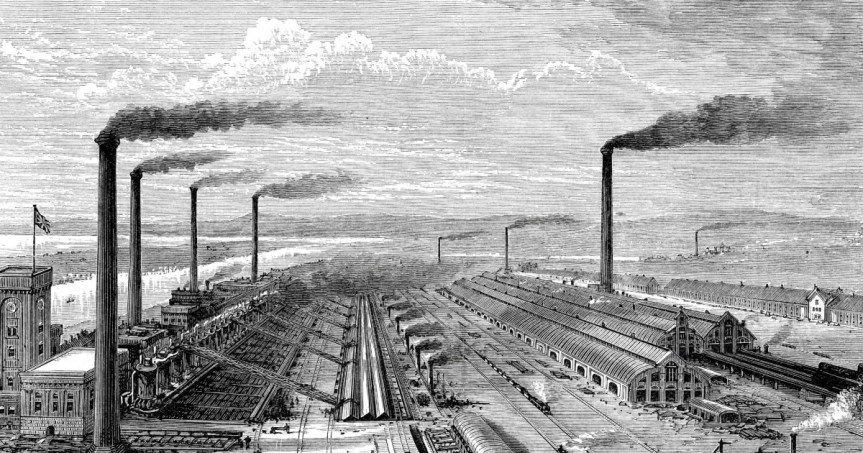
The Industrial Revolution began in the 18th century, when agricultural societies became more industrialized and urban. The transcontinental railroad, the cotton gin, electricity and other inventions permanently changed society. The revolution marked a period of development in the latter half of the 18th century that transformed large rural societies in Europe and America into industrialized, urban ones.

Goods that had once been painstakingly crafted by hand started to be produced in mass quantities by machines in factories, thanks to the introduction of new machines and techniques in textiles, iron making and other industries.

England : Birthplace of the Industrial Revolution

100 Textiles- Vintage Photos ideas | vintage photos, textiles, cotton mill
Cotton factory

Britain had a long history of producing textiles like wool, linen and cotton. The big gamechanger prior to the industrial revolution was in “cotton industry” with the work performed in small workshops or even homes by individual spinners, weavers and dyers. Producing cloth became faster and required less time and far less human labour. The mechanical production of cloth could meet the growind demand at home and abroad. Apart from textiles, the iron industry also adopted new innovations.

Steam Power

An icon of the Industrial Revolution broke onto the scene in the early 1700s, when Thomas Newcomen designed the prototype for the first modern steam engine . Called the “atmospheric steam engine,” Newcomen’s invention was originally applied to power the machines used to pump water out of mine shafts. 

In the 1760s, Scottish engineer James Watt began tinkering with one of Newcomen’s models, adding a separate water condenser that made it far more efficient. Watt later collaborated with Matthew Boulton to invent a steam engine with a rotary motion, a key innovation that would allow steam power to spread across British industries, including flour, paper, and cotton mills, iron works, distilleries, waterworks and canals. 

Just as steam engines needed coal, steam power allowed miners to go deeper and extract more of this relatively cheap energy source. The demand for coal skyrocketed throughout the Industrial Revolution and beyond, as it would be needed to run not only the factories used to produce manufactured goods, but also the railroads and steamships used for transporting them.

Transportation

Britain’s road network, which had been relatively primitive prior to industrialization, soon saw substantial improvements, and more than 2,000 miles of canals were in use across Britain by 1815.

SCIplanet - Steam Power and the Industrial Revolution: 1760-1840
Train powered by steam engine

In the early 1800s, Richard Trevithick debuted a steam-powered locomotive, and in 1830 similar locomotives started transporting freight and passengers between the industrial hubs of Manchester and Liverpool. By that time, steam-powered boats and ships were already in wide use, carrying goods along Britain’s rivers and canals as well as across the Atlantic.

Communication and Banking

In 1837, British inventors William Cooke and Charles Wheatstone patented the first commercial telegraphy system. Cooke and Wheatstone’s system would be used for railroad signalling, as the speed of the new trains had created a need for more sophisticated means of communication.

Banks and industrial financiers rose to new prominent during the period, as well as a factory system dependent on owners and managers. A stock exchange was established in London in the 1770s; the New York Stock Exchange was founded in the early 1790s. 

In 1776, Scottish social philosopher Adam Smith (1723-1790), who is regarded as the founder of modern economics, published The Wealth of Nations. In it, Smith promoted an economic system based on free enterprise, the private ownership of means of production, and lack of government interference.

Working Conditions

Working Conditions - Industrial Revolution

Rapid urbanization brought significant challenges, as overcrowded cities suffered from pollution, inadequate sanitation and a lack of clean drinking water. Industrialization increased economic output overall and improved the standard of living for the middle and upper classes, poor and working class people continued to struggle. The mechanization of labor created by technological innovation had made working in factories increasingly tedious and sometimes dangerous, and many workers were forced to work long hours for pitifully low wages. 

In the decades to come, outrage over substandard working and living conditions would fuel the formation of labour unions, as well as the passage of new child labour laws and public health regulations in both Britain and the United States, all aimed at improving life for working class and poor citizens who had been negatively impacted by industrialization.