To start with, like everything, romantic movies too affect in both positive and negative ways. Talking about positive effects of romantic movies that shows the love relationships between two individuals, irrespective of their age, sex, caste, country and religion affects and in a way broadens the concept of love between two. If we see the earlier and even today’s version of a country like India, we are very well known by the fact that the only love that was considered dignified and pure was that of between two individuals of different sex, same caste, same religion and same age group that also needed to happen between two after marriage only. Love before marriage, love between same sexes, love between individuals of different caste and religion was not at all accepted in earlier India. But now, as we see India is changing bit by bit. There are many who accepts and encourages love that has no boundaries of sex, marriage, caste etc. And for this change, two things are responsible : 1- Education and 2- Romantic movies. Its film industry and the films that younger generations learn from and try to follow. And when these younger generations become older, they allow their next generations to love before marriage and all sort of things. In some cases, old generations also try not to enforce the laws and boundations that were earlier enforced on them in their young ages that didn’t allowed them to love freely and in a way forced them to suppress their desires. That’s how films normalised and even today trying to normalize the love of different kinds that knows no boundaries at all. Films taught people that its nothing wrong in it if they are falling for someone of the same sex or different age group. Off course, only if the other person is also into it equally. Also, romantic movies presents the feelings and situations of both individuals equally and that helps people to understand their partner better. We cannot deny the fact that every person is different in nature and might have different feelings and circumstances that made her/him but anyhow, by presenting love relationships, it gives a sight into other person’s psyche. Or we can say, romantic movies makes us to think beyond ourselves.
Now coming to the negative effects of romantic movies we may say that such movies also develops a particular image of love, what our partner should behave like, or what many times we address it like “Sapno ka Rajkumar” / “Sapno ki Rani”. Its not the dreams that we see about our would be partner but the effect of these romantic movies that we start imagining our partner to be identical to this or that character, which is not at all good. We know every person is different from the other and different circumstances and experiences are the things that makes up the individual into who they are today. So it would be wrong to expect someone to act in a way you want, or a character of a romantic movie you like. On one hand people keep saying that they want a real person who doesn’t act fake to look perfect and on the other its the same people who fancy about a character in a movie and rejects a real person saying that they are not the person they’re looking for. People imagine to have a movie like relation in real life and if things don’t go that way, they simply want to come out of it. That is actually the effect of romantic movies people see and they don’t even realise that their relation can’t work like the cooked up ones in those ENTIRE WORKS OF FICTION.
As I’m going to start this blog I would love to say everyone is perfect in their own personality, in their own perspective, in their own decisions. So it’s been a long time I had passed my school and now persuing my passion (not a course) ‘my passion’ so let me tell what is the main topic I’m talking about but firstly I’ll tell you a story which is real, so I was studying in 10th and one of my closest friend I can’t revel his name but his intrest was in painting and then he was confused that ‘bro what should I take as a stream in 11th’ so I told him what you love or in which you have your interest, but he said my father is telling me to take PCM (science, math) and he wants to take humanity but he was confused because his dad said if you’ll took humanity then there’s no future! And his dad told him take science-maths and then you cout prepare for IIT and he took science-math and just because he want to become a engineer and want to earn money! And he wasn’t happy as he wasn’t able to paint because of his studies and he wasn’t that good in studies so he was trying very hard but I said why I mean if you love to paint and you wanted to take humanity as your stream then did you took science and math just for the sake of money and even you don’t have intrest in science maths then why and he said because of my father. And this is my experience ladies and gentlemen he took science and maths he studied very hard and gave the exam for jee and he failed because he wasn’t having that intrest in PCM. And on the other hand he haven’t painted for more than a year and when he gave his exam and came back home he took his brush and painted and I’ll that art was one of the best of my friend as he hasn’t painted for a while which is more than a year but,
As i said ‘IF YOU HAVE INTREST IN A PARTICULAR FIELD, YOU’LL DEFINITELY WIN’ but if you don’t have intrest in that particular field you’ll definitely lose doesn’t matter who much you work upon it ‘HAVING INTREST IS THE TOP FACTOR’
For example, if you don’t love to cook and your mom said son just cook tonight’s dinner and you know how to cook but you hate it than Tonight’s dinner would be for the dustbin. I’m damn sure! I don’t love to paint and if you’ll say please make my sketch. Then I don’t know what I’ll make but after making that Sketch you’ll disown me I know.
But why you guys just want yurselves to put yur souls, your hard-work, your precious time and obviously money, in those things where you don’t have any Intrest in. My today’s generation just want to become a engineer, doctor, or a IAS.
Okay so, let’s take an assumption, if my friend was passed in that jee exam and he was selected in a college and becomes an engineer and was doing his job properly but what do you think he used to be happy and prosperous okay if you was at his place were you used to feel good and happy. Guys invest yourselves in those materials where you’re good at and where you’ll love your thing. Its not about that we should not listen to our parents but sometimes we should listen to ourselves too.
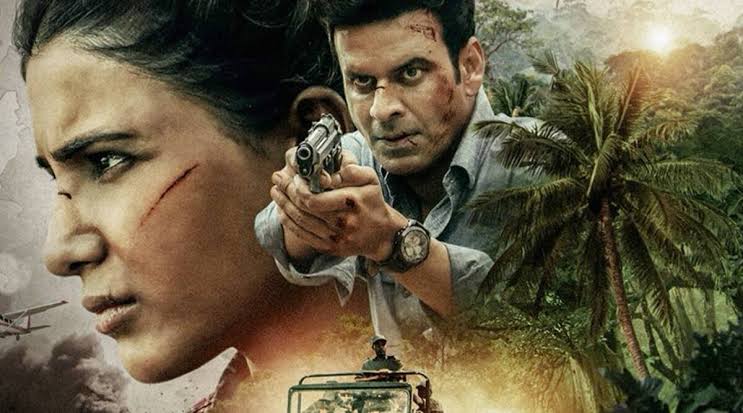
The Family Man is an Indian ‘espionage action thriller streaming television series’ on Amazon Prime Video created, directed, and produced by Raj Nidimoru and Krishna D.K. who also co-wrote the story and screenplay with Suman Kumar, with dialogue penned by Sumit Arora and Suman Kumar. The series features Manoj Bajpayee as Srikant Tiwari, a middle-class man secretly working as an intelligence officer for the Threat Analysis and Surveillance Cell (TASC), a fictitious branch of the National Investigation Agency. It also stars Priyamani, Sharad Kelkar, Neeraj Madhav, Sharib Hashmi, Dalip Tahil, Sunny Hinduja and Shreya Dhanwanthary. Samantha Akkineni was hired for the second season of the series making her foray into the digital medium.
And to be honest it’s one of the best series I’ve had ever watched. Manoj Bajpayee is one of the finest actor of all the time. His acting gives a example to our new generation actors and he’s the god of acting for those who wants to become a actor.
From his struggle to his success, he implied all those thing he was willing to. And he has many awards and was nominated for best acting award (national award) for Gangs of Wasseypur. Rather than this all the actors/actresses in TFM1 and TFM2 contributes a huge part to make a series a super hit series of all the time. As in, Manoj Bajpayee Priyamani Samantha Akkineni Sharib Hashmi Neeraj Madhav Pawan Chopra Kishore Kumar G. Sharad Kelkar Devadarshini Gul Panag Shreya Dhanwanthary Sundeep Kishan Sanyukta Timsina Sunny Hinduja Abhay Verma Shahab Ali Ashlesha Thakur Vedant Sinha Aritro Rudraneil Banerjee.
All these actors/actresses had different roles and they had persued that particular Roel very well with pure perfection. And if you ask who is My favourite among these so I’ll obviously say Manoj Bajpayee. But rather than him I love the role and character of Sharib Hashmi. He had done his job very well and the way he acted was truly unconditional.
And one main point It is only and only streaming of Amazon prime. And if you ask me that ‘it’s a boring day’ what should we do then I’ll recommend you this series to watch both season one and two.
Bathukamma is Telangana’s floral festival celebrated by the Hindu women of Telangana and neighbouring states in India. Every year this festival is celebrated as per Telugu version of Hindu calendar in the Bhadrapada Amavasya, also known as Mahalaya Amavasya, usually in September–October of Gregorian calendar. Bathukamma is celebrated for nine days during Durga Navratri. It starts on the day of Mahalaya Amavasya and the 9-day festivities will culminate on “Saddula Bathukamma” or “Pedda Bathukamma” festival on Ashwayuja Ashtami, popularly known as Durgashtami which is two days before Dussehra. Bathukamma is followed by Boddemma, which is a 7-day festival. Boddemma festival that marks the ending of rainy season whereas Bathukamma festival indicates the beginning of winter season. Bathukamma represents cultural spirit of Telangana. Bathukamma is a beautiful flower stack, arranged with different unique seasonal flowers most of them with medicinal values, in seven concentric layers in the shape of temple gopuram. In Telugu, ‘Bathukamma’ means ‘Mother Goddess come Alive’ and Goddess Maha Gauri-‘Life Giver’ is worshipped in the form of Bathukamma – the patron goddess of womanhood, Maha Gauri Devi It is the festival for feminine felicitation. On this special occasion women dress up in the traditional sari combining it with jewels and other accessories. Preparation on first five days women will clean their courtyard, cow dung mixed with water is spread in the courtyard as a ground-base, decorate the ground-base with rangoli made of rice flour. For the first five days Batukamma is prepared with cow dung. Five small lumps in cone shape are arranged in the courtyard. Men in the house gather flowers from the wild plains like Celosia, Senna, Marigold, Chrysanthemum, Indian Lotus, Cucurbita leaves & flowers, Cucumis Sativus leaves & flowers, Memecylon edule, Tridax procumbens, Trachyspermum ammi, Katla, Teku Flowers, etc., which bloom in this season in various vibrant colors all across the uncultivated and barren plains of the region. Preparing a Bathukamma is a folk art. Women start preparing Bathukamma from the afternoon. They cut the flowers leaving the little length base, some dip Gunugu (Celosia) flowers in various vibrant colours, some scented and arrange them on a wide plate called Thambalam spread with big leaves, and stack them up in a conical mound, filling the cone with leaves and stems of the flower stalks, decorated with a Lotus or Pumpkin Flower on top of the stack along with Gouramma (a symbolic idol of Gowri made of turmeric). One interesting aspect of the preparation of the flower arrangement is that the arrangement usually floats in water for sometime, and the arrangement is not disassembled until it drowns in water.
We are living in the Golden era of television. Since the year 2000, television has evolved dramatically. The rise of cable networks resulted in a period of more innovation, quality and quantity, which has since been surpassed by the arrival of streaming services. TV has become the primary source of entertainment for the majority of the population since the introduction of streaming services such as Netflix, Hulu, Amazon Prime, HBO Max and Disney Plus. Previously the thought of a network airing a complete season on a single day was unthinkable. Episodes aired week after week, sometimes back to back, and so on – until streaming services showed their willingness to take a different path. With the knowledge that television is undergoing yet another revolution, and that the medium’s limits and definitions may alter yet again, it seems appropriate to reflect on the past.
With that said, let’s directly jump into the very best chapters of television the medium had to offer.
Note: I’ve considered only one episode per a TV show to make the list more diverse.
The Winds of Winter, Game of Thrones (Season 6, Episode 10)
IMDb Rating: 9.9
Written by: David Benioff, D. B. Weiss
Directed by: Miguel Sapochnik
Air date: June 26, 2016
This is an all-timer. This episode is Game of Thrones at its very best. It offers everything a fan wished for, a shocking yet satisfying end to one of the best seasons of the show.
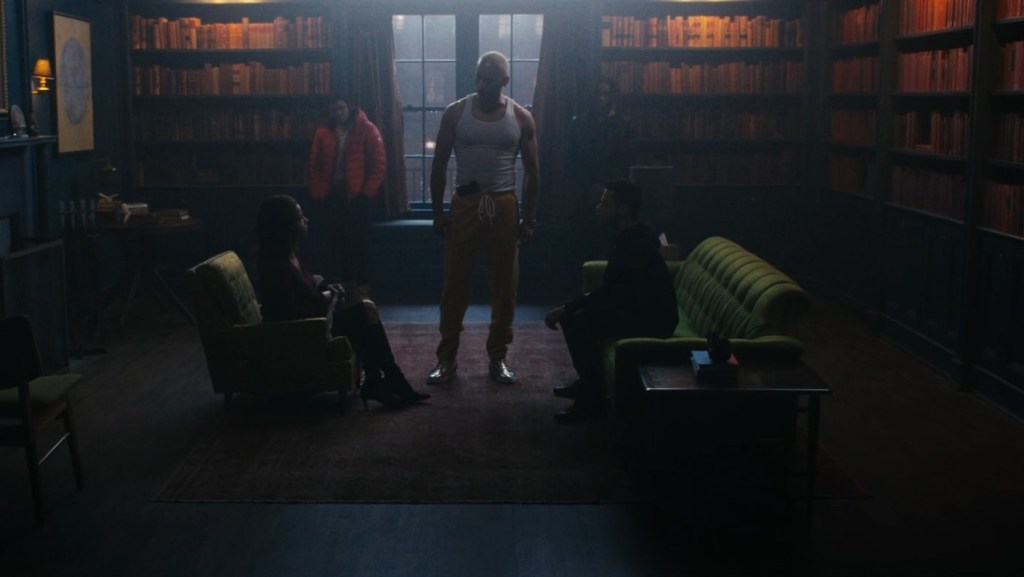
International Assassin, The Leftovers (Season 2, Episode 8)
IMDb Rating: 9.6
Written by: Damon Lindelof, Nick Cuse
Directed by: Craig Zobel
Air date: November 22, 2015
International Assassin is the most polarizing episode of the most polarizing show, a stress test of an episode that pushes the show’s concept and expands its universe in ways that not everyone will appreciate and that makes it so special and unique.
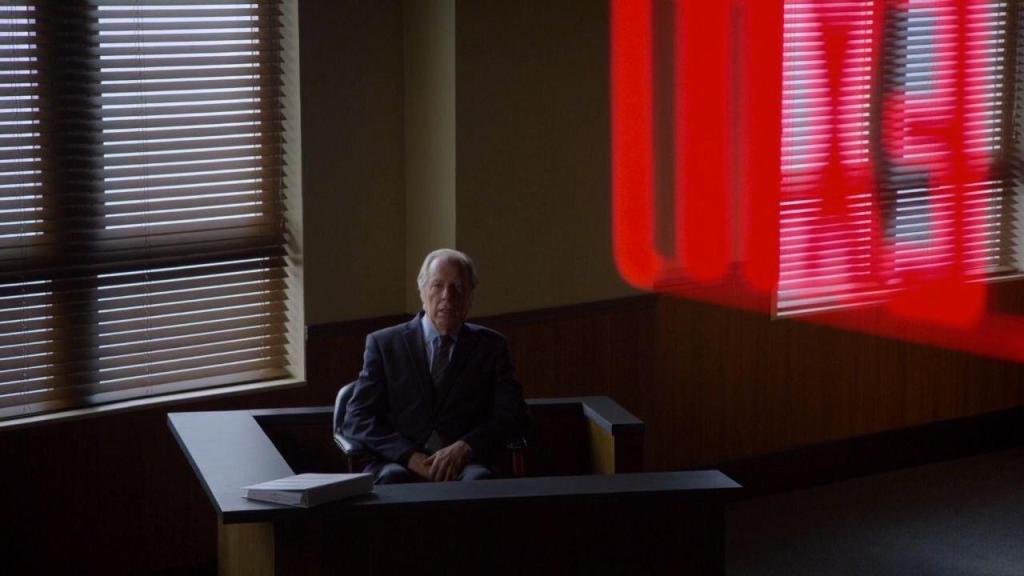
Chicanery, Better Call Saul (Season 3, Episode 5)
IMDb Rating: 9.7
Written by: Gordon Smith
Directed by: Daniel Sackheim
Air date: May 8, 2017
A standout episode of the show as it stages a bittersweet showdown. This episode marks the climax of a seasons-long power play between Chuck and Jimmy. This episode is a relatively simple installment on a plot level. But it’s the character interactions, as well as the show’s willingness to bring out the worst in these characters and pit them against each other, that have us hooked. This is one of the defining TV episodes you’ll come across on television today.
407 Proxy Authentication Required, Mr. Robot (Season 4, Episode 7)
IMDb Rating: 9.9
Written by and Directed by: Sam Esmail
Air date: November 17, 2019
If there was ever an episode that defined a series, then this is the one. The episode that finally revealed the origin of the titular character. A riveting hour of television, you feel like the characters when you complete the episode, but you embrace every second of it because this is how good television should feel: thrilling, horrifying, and a little bit nauseating.
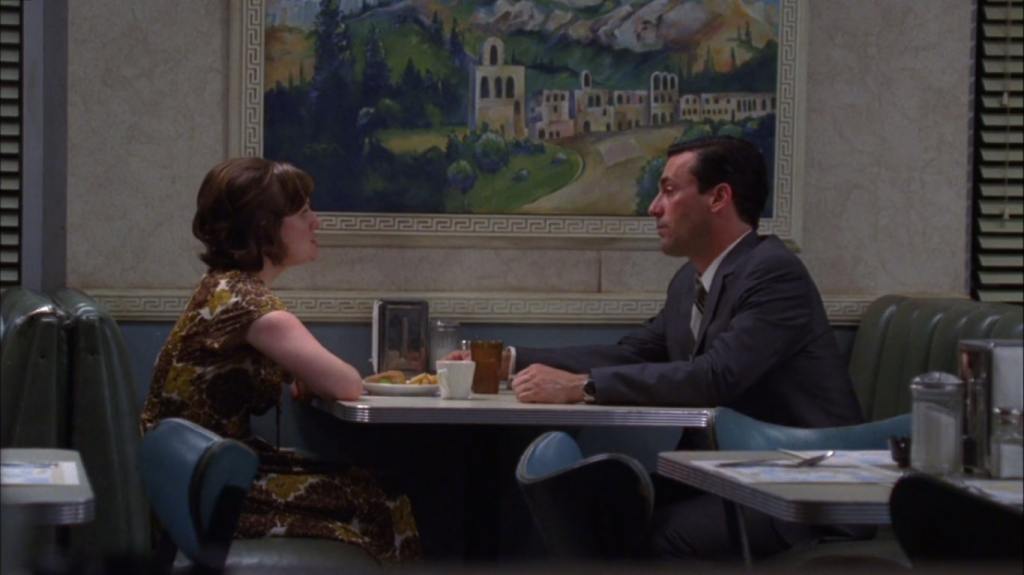
The Suitcase, Mad Men (Season 4, Episode 7)
IMDb Rating: 9.7
Written by: Matthew Weiner
Directed by: Jennifer Getzinger
Air date: September 5, 2010
The Suitcase says so much with so little, without a visual or narrative trick in sight. And in doing so, it defines a show and sets a high bar for the next decade of television, and most likely the next decade after that. The Suitcase is the one of the best episodes because it tells the show’s story in miniature: flawed, difficult, and damaged characters finding salvation in their job, though not enough to save them from themselves.
Start, The Americans (Season 6, Episode 10)
IMDb Rating: 9.8
Written by: Joe Weisberg, Joel Fields
Directed by: Chris Long
Air date: May 30, 2018
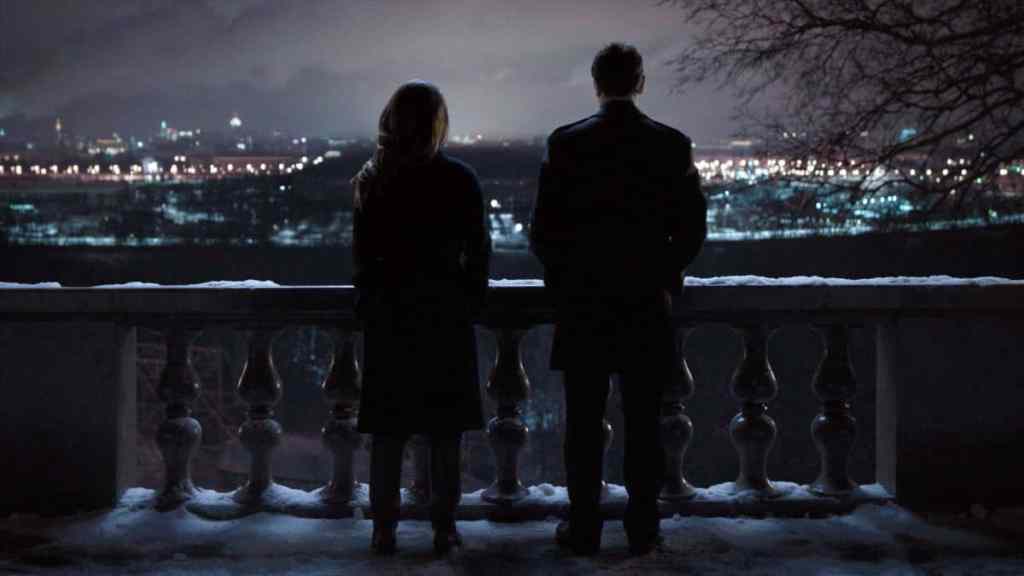
Perhaps the most overlooked episode in the list. The series finale of The Americans is a subdued, sublime, and utterly tragic send-off to one of television’s best shows. It delivered a wondrous wallop that crackled with sadness and urgency. The episode is a fascinating flight full of heartbreaking decisions and unexpected swerves.
If-Then-Else, Person of Interest (Season 4, Episode 11)
IMDb Rating: 9.9
Written by: Denise Thé
Directed by: Chris Fisher
Air date: January 6, 2015
Person of Interest’s never-ending ability to deliver mind-blowing episodes is what makes it one of the best tv shows. And the episode If-Then-Else does exactly the same. Smart, action-filled chapter with a powerfully sad and meaningful conclusion. As the main plot of the show is about the relationship between humans and machine, this episode in particular dig deeper in to that. This episode is about what it means to be a machine, but it’s also about what it means to be human.
Final Grades, The Wire (Season 4, Episode 13)
IMDb Rating: 9.5
Written by: David Simon, Ed Burns
Directed by: Ernest Dickerson
Air date: December 10, 2006
The Wire’s fourth season came to a close with a mega-episode that alternated between periods of crushing despair and sparks of hope and optimism. Watching this episode was like putting down a fantastic book, one that had provided knowledge, excitement, a view into another world, and consistent brilliance with character development throughout the season.
ronny/lily, Barry (Season 2, Episode 5)
IMDb Rating: 9.8
Written by: Alec Berg, Bill Hader, Taofik Kolade
Directed by: Bill Hader
Air date: April 28, 2019
Perhaps the most recent episode on the list. It was released during the same weekend when Game of Thrones most awaited episode The Long Night and Marvel’s Avengers: Endgame came. But somehow this episode of Barry impressed me the most when it comes to action sequences and storytelling. The episode is an absolute knockout it’s suspenseful, surreal, and darkly hilarious.
Pine Barrens, The Sopranos (Season 3, Episode 11)
IMDb Rating: 9.7
Written by: Tim Van Patten, Terence Winter
Directed by: Steve Buscemi
Air date: May 6, 2001
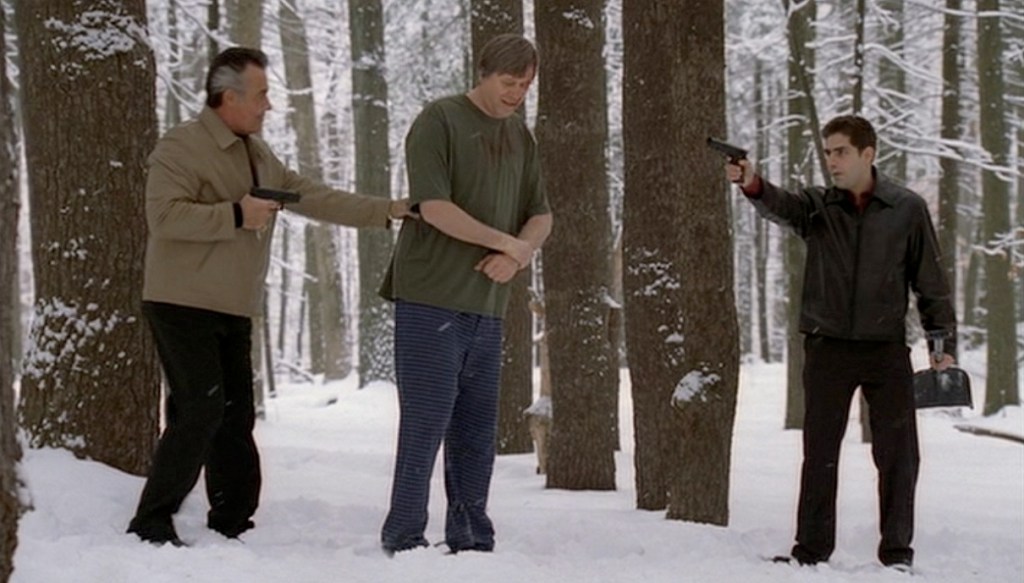
The oldest episode on the list but the one that defined television forever. A distinctly self-contained short story. The episode is a classic example of the show’s unpredictability and surprisingly humorous tone. It’s basically a cross between an anti-buddy comedy and a nightmare; it’s funny, absurd, and horrifying all at the same time.
The View From Halfway Down, BoJack Horseman (Season 6, Episode 15)
IMDb Rating: 9.9
Written by: Alison Tafel
Directed by: Amy Winfrey
Air date: January 31, 2020
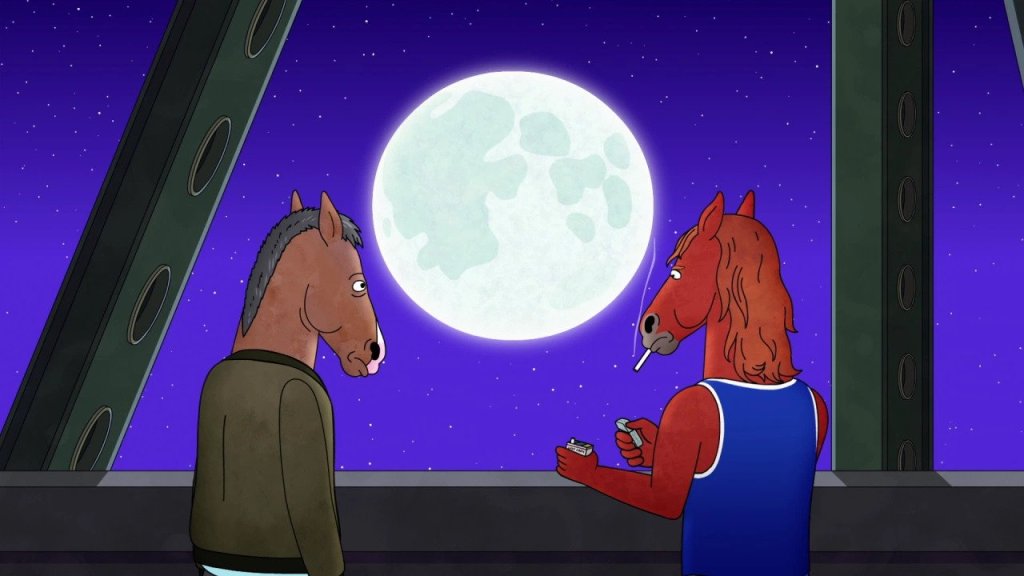
The only animated episode in the list. The episode is a depressing perspective on the inevitability of death. Although this is an adult cartoon, one of the things that make it wonderful is that the writers put a lot of effort into crafting strong writing and a great tale that does credit to all of the characters and the result can be seen in this episode.
Ozymandias, Breaking Bad (Season 5, Episode 14)
IMDb Rating: 10
Written by: Moira Walley-Beckett
Directed by: Rian Johnson
Air date: September 15, 2013
Do you ever watch something where you are so emotionally invested by the characters, setting and story that when it’s over, you can’t help but sit and contemplate what you just watched? Exactly felt the same after watching this episode. Ozymandias is perhaps the most gut-wrenching, twisted, horrific, well-planned episode ever made. This episode is Breaking Bad storytelling at its finest. It’s completely flawless. Not surprising that it is the highest-rated episode in the history of television.
Some experts are also with the opinion that it could become the dominant strain in most of the parts of the world.
Okay, let’s keep this aside but do you think that this unlock would give us the better results, I’m neutral here as, the economy of the India is important I know it’s important but the lives of our Indians is the most important thing. Giving it a basic trail if you’ve have heard about those individuals and who were so happily living their lives who used to sing, dance, cook and etc etc. But after a few days they were no more you might heard it from your parents from your relatives from your friends that, that particular guy isn’t here with us he/she died due to covid and even when they were treated with the best medicines, from our best doctors but we all know from where does it started so let me tell you being careless about this pandemic would make you sit on the bed, so let me tell you my experience around 5-6 days ago me and my friend we were going for a morning walk and he removed his mask saying that he’s strong he won’t be having covid. I mean guys we have to be honest with ourselves that are we giving our best ladies and gentlemen please take care of yourselves:
Make sure you are wearing a proper mask.
Make sure you are washing your hands.
Make sure you are done with your doses (vaccination)
Make sure you are not going outside without any need.
Make sure you and your family are safe. And our nation is your family too.
Human is a social animal. He cannot survive without a society. Society gives birth to culture. The ideas, customs, practices, beliefs of a society forms it’s culture. This culture incorporates with the lives of the people belonging to a society. Cultural transmission starts from right when we are born and continues till we live. Our culture is given to us as our legacy which must be practiced and preserved. Therefore it is a given that different societies have different culture and cultural practices, some more different than others.
Generally, it has been seen that there is this notion among people that our culture is superior or that a particular culture is inferior to our culture. An “Us vs them” mentality is created which leads to perception bias in our favour. This leads to cultural misinterpretations and generalisations about other cultures. Sometimes these beliefs are so strong that they take forms of prejudices, disparity, bullying, intolerance, wars, genocide etc. A well-known instance of this is the Nazi Germany and the holocaust of Jews.
It’s not our differences that divide us, but our own inability to accept those differences.
This is where ‘Cultural Relativism’ comes into light. Cultural relativism refers to the ability of a person to understand a culture on it’s own terms and not being judgemental towards it. It simply means that we should try to understand cultural practices of other groups in their own cultural context. This term was first used philosopher Alain Locke. It lays emphasis on the fact that people from different cultures can have relationships with respect and acknowledgement of each other’s diverse lives.
The basic goal of cultural relativism is to promote a sense of unity and to demolish the views pertaining to superiority of a particular culture over others. It also argues that there is no particular standard of judging what is good or evil and every decision is individually decided in each society. The bottom-line is that there no right or wrong in an ethical system and it is our own perception which tints our sense of morality.
Cultural relativism has two broad categories, absolute and critical. The former argues that whatever happens within a culture has nothing to do with outsiders and therefore should not be questioned. The later forms questions about the practices in terms of who is accepting them and why.
We need to understand that there exists absolutely no culture that can be called Perfect. Cultural relativism has it’s flaws of course. Sometimes in the name of culture, we violate Human Rights but inspite of that, it is very important because it gives us objective insight, cross cultural empathy and makes us realise similarity among human cultures. It enables us to leave behind our biased mind sets and to see things in new light. It can also help to put a check on discriminatory practices and prejudiced behaviour which originates as a by-product of cultural misinterpretation. Cultural relativism important in studying and understanding other and different cultures because first and foremost we have to realise that our perception can be prejudiced while we are studying another culture. In a nutshell, cultural relativism is what we need to create a world which is equally hospitable and welcoming for everyone irrespective to their culture.
Advocates of cultural nationalism keep emphasising that India has an ancient civilisation, which straight away makes our indian souls distend with pride. India, we contend confidently, was a civilisation while the rest of the world was still barbaric. Paying no attention that the knowledge of most Indians about our civilisation and culture is limited to buzzwords like Sanskrit, Ramayana, Mahabharata, Bhagavadagita, Vedas, Yoga, Ayurveda, etc. This is enough for us to indicate without the any doubt that India has been a store houseof knowledge, wisdom, high values and greatness . Last 25 years,brought new wings to the militant belief in our ancient culture and civilisational heritage, magnifying it in our minds to near- mythical proportions. In the process, we have started glorifying everything Indian and, by association, everything Hindu, without showing the least capacity to introspect why we still lag far behind in transitioning from an ancient civilisation to a modern society. For we never ask ourselves that if our 5,000-year-old civilisational values and culture were so formidable and fantastic, why have we still remained a poor, backward and primitive country in many ways? Right from millions of people who still defecate in the open to mob-lynching in the name of religion or caste or gau-raksha, why are primitive practices and impulses, rampant in our country even in 2017? Why are we no where close to being among the most socially, economically and politically advanced nations of the world? Generally, most of us immediately point fingers at 400 years of oppression-Mughal rule, followed by the British – as being responsible for exploiting our country and resources, quelling our culture and civilisation, thus leaving India destituted, backward and illeterate. Much evidence has emerged that colonial rule certainly dealt a body blow to India’s growth, handicapping us from taking independent advantage of the industrial revolution that helped Western countries take a quantum leap forward. Mughal rule, however, doesn’t really seem to have caused lasting damage, either materially or culturally. Indeed, with its remarkable ability to tame, embrace and assimilate other influences into its own, India was probably far more vibrant and stable, than much of the world during those centuries. Looking deeper, as to what elements of our 5,000-year-old civilisation hold us back from becoming a progressive society in today’s world. Could some of the aspects be as religion, idealism deficiency, contempt culture. Almost all the restraints of India is in some way related to our unhealthy obsession with religion ,never-ending rituals, traditions and customs, superstitions and dogmas, fatalistic outlook, caste divisions, gender discrimination, undue importance to worship and piety- all have kept us latently tethered to medieval ideas and practices. It also causes a tremendous resistance to change. As a people, we seem to have no use for idealism, values, principles, in daily life. We think of these as abstract concepts that have to be striven for by mankind, nations, society or the world as a whole. We just don’t think it is our job to actively practise any of these individually. Whether its personal honesty, civic sense, work-ethic, courage to stand up against even small wrongdoing, social responsibility, understanding our rights and duties vis-à-vis others, we are a nation of shirkers or people who generally do what’s easy or expedient, not what is right. Perhaps this is the coping mechanism of the powerless, given that we were ruled for centuries but this trait has become so ingrained in our DNA, that our entire system rewards and supports the bent, the crooked, the mediocre, the mightier – a primitive paradigm that’s antithetical to modernity. This is at the root of so many of our failings -rampant corruption, lackadaisical attitude and lack of pride, professionalism, integrity, commitment and sincerity towards one’s work, which explains why mediocrity, not excellence. Instead, we hide our apathy or complicity behind easy, empty, jingoistic displays of love for our country, as if chest-thumping and slogan-shouting are going to help India achieve greatness. Our subcontinent is infected by terrible contempt for other people and their rights. We want total freedom only for ourselves. The concept that our personal freedom does not mean impinging on the liberty, dignity and legal, human and social rights of others is almost alien to our thought process. We follow only those laws that suit us or don’t cause too much inconvenience. Democracy, in our limited, crude understanding, is the rule of the majority (not just religious, but any group with superior numbers) and those in the minority simply have to accept this, swallow their dignity and live at the mercy of the majority. This lack of sophistication and nuanced understanding of democracy stunts our metamorphosis into a mature, liberal society based on the rule of law and mutual respect, because the culture of contempt provides fertile grounds for injustice, inequality, intolerance to rear their head and go unpunished. Indeed, it’s time we stopped gloating over the glory of our ancient civilisation and fast-forward our evolution into a modern society by dumping regressive legacies.
Makar Sankranti is a festival in the Hindu calendar dedicated to the Sun God- Surya. Makar Sankranti is one of the few ancient Indian festivals that has been observed according to solar cycles. Makar Sankranti is set by the solar cycle of the Hindu lunisolar calendar, and is observed on a day which usually falls on 14 January of the Gregorian calendar, but sometimes on 15 January. This festival signifies the arrival of longer days. As per a legend, Lord Surya forgave his son Shani and his son visited him on Sankranti. And that’s why people distribute everyone sweets and urge them to let go of any negative or angry feelings
Every twelve years, Hindus organize the kumbh mela on makar sankranti which is one of the world’s largest pilgrimages, with about 40 to 100 million people attending it(too crowded right? Do not get lost!). At this event, they pray to the sun god and bathe in the ganga river.
The festivities associated with Makar Sankranti are known by various names such as Magh Bihu in Assam, Maghi in Punjab, Haryana and Himachal Pradesh, popular amongst both the Hindus and Sikhs, Sukarat in central India, Pongal in Tamil Nadu, Uttarayan in Gujarat, Uttarakhand and Uttar Pradesh, Ghughuti in Uttarakhand, Makar Sankranti in Odisha, Karnataka, Maharashtra, Goa, West Bengal, Uttarakhand and Uttar Pradesh or as Sankranthi in Andhra Pradesh and Telangana.
Celebrations:
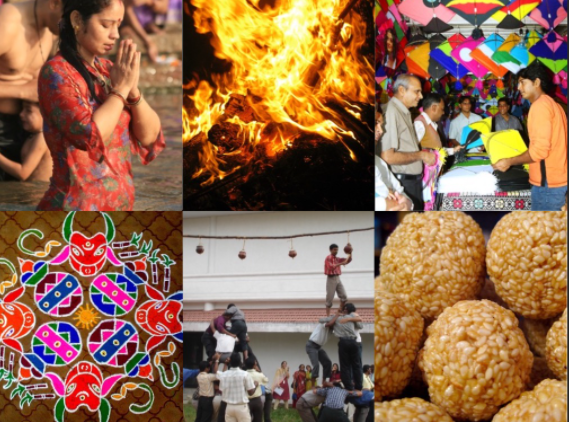
On makar sankranti people conduct various social festivities such as decorating houses, singing songs in rural areas, organizing fairs(melas), performing dances, kite flying(my favourite) and feasts. Children go house to house distributing sweets.
In Maharashtra on Makar Sankranti, people exchange multicoloured halwa (those yummy sugar granules coated in sugar syrup) and til-gul laddoos. Puran poli with pure ghee is also cooked . While exchanging til-gul as tokens of goodwill people greet each other. Married women invite friends and neighbours and celebrate Haldi-Kunku. Guests are given til-gul and some small gifts, as a part of the ritual. While distributing sweets, the famous line “til gul ghya aani god god bola” (which means eat sweet and speak sweet words) is used in Maharashtra.
My experience:
I remember dressing up in new clothes and then going to each and every house asking for sweets, receiving chocolates and laddoos. My friends and I would wish everyone with “tilgul ghya aani gol gol bola” and it worked, just for a few days, after which the same old bitter quarrels began. Anyways, flying kites was certainly the best part. You can cut others’ kites and avenge yourself(or just have some good fun). You can compete with your neighbours to see who can fly the kite better. However, be careful with those deadly strings. They are truly fatal if you mess with them. Once my friends and I competed to see who could get the most candies, and whoever won would get the candies collected by others. It definitely did not go that well for us except my clever friend who won(she was kind and did not take our candies so phew). Makar sankranti is all about fun!
I would love to know your experiences in the comments below!
How similar to us can a dystopian novel be — very.
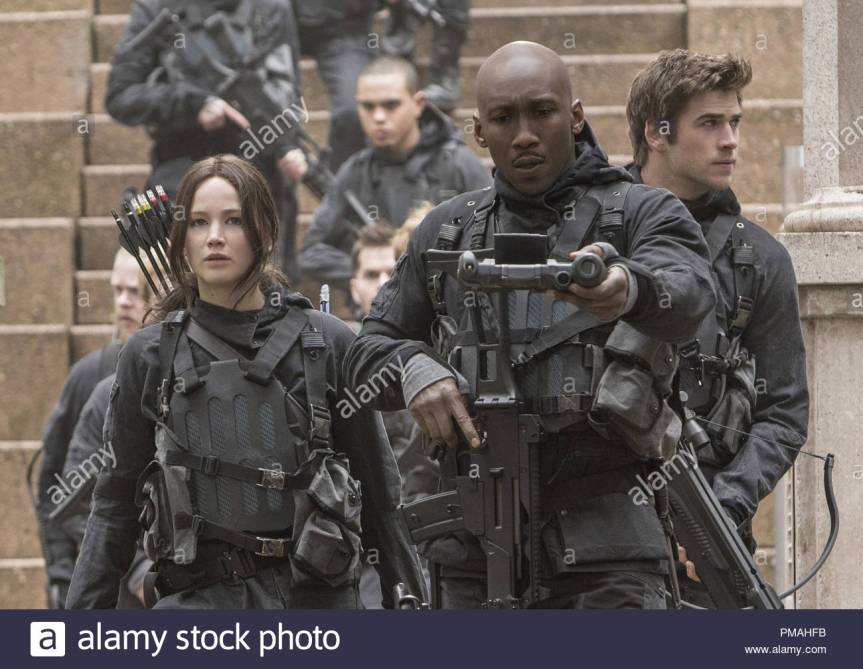
It’s not difficult to figure out that Panem of ‘The hunger games’ is an exaggeration of our society. Suzanne Collins,the writer of the franchise,highlights the wealth-inequality,our love for reality TV, addiction problems, police brutality, body modifications with hyperbole.
The hunger games is a dystopian novel about a country named Panem. Panem is divided into 13 districts and one Capitol. The story is about a girl named Katniss,from the poorest district and how she becomes a symbol of rebellion against the oppressive government of Capitol led by President Snow.
Collins doesn’t tell us much about the citizens of Capitol,other than the fact that they live a life so privileged that they drink concoctions so that they can eat more food. Maybe it wasn’t important to the story. In hindsight if she had elaborated more about the people of Capitol we wouldn’t have liked it. Because we are the people of Capitol.
(up)People from the districts,(down)People from the capitol
In the story,the Capitol organizes a event called ‘The hunger games’ ,where 24 children from the districts are chosen and brought to a place called arena and must fight to death until the last one remains.
Hunger games was supposedly a distraction for the people of Panem,from their woes for the people of the districts,from the reality for the people of capitol. It was also a threat from the government — to not mess with them.
This is a very popular method among governments,keep the poor so poor that they aren’t able to talk about injustice and give the privileged sensational stories to engage with.
The rebellion is the most important part of the hunger games. The scene,where the people march towards the dam singing ‘The hanging tree’ is a powerful one. There is a growing deficit of trust between the people and political establishments. Protests have soared across the world. The people are demanding a world with more equality and justice.
When I read the hunger games a few years ago , I felt that the events were too exaggerated. President Snow’s rule in Panem was an absolute case of despotism. In reality no government could be that oppressive. But the more I read about politics,the more I come to know about the cruel ways of our world. In our world too, the government dissenters have a fate similar to the avoxes in Panem.
Collins idea of people from the capitol enjoying the hunger games is inspired from the Roman Gladiator,where a person, often a slave or captive was compelled to fight to the death in a public arena against another person or a wild animal, for the entertainment of the spectators. Although this might seem too extreme to happen in this ages,variations of it exist. For example-the makeup Industry.
The star of the make-up industry is the chemical mica. Mica is obtained by people,especially children scrapping it with their bare hands from mines. Often they have to go deep into the mines where oxygen levels are low causing 10–20 deaths every month.
There is blood on our hands and most people are oblivious to it.
In Panem,people are numb to violence not just due to the hunger games but also because of the unsubtle ways of the peacekeepers(police),who whip people for petty crimes.
In our world too,children play with toy weapons. You’re wrong if you think that weapon toys have always existed. The widespread idea of toys came into being in 20 century. Before that there were other toys like kites and yo-yos but kids spent most of their time in school or helping out at home. So what what happened? World war 2 happened. Since we had more ways of communicating than we during world war 1,the images and sentiments of world war 2 spread more. Not just games,even in the movies ,war is always showed in a patriotic light. The futility of war is ignored.
If the Panem is our future, the only thing to look forward is how gender is discussed. In Panem gender is invisible. There is no mention of gender roles in the entire series whatsoever. The women aren’t treated like gods either,there is equality in every sense.
The hunger games series will always remain one of my favorite book series.
I hope the next generation also enjoys it as a book series and nothing else.
“He remembers those vanished years. As though looking through a dusty window pane, the past is something he could see, but not touch. And everything he sees is blurred and indistinct.”
In the Mood for Love
If you are familiar with Wong Kar Wai’s work you know by now from the above dialogue what I’m talking about. And the reason I started this article with a dialogue from this movie because it symbolizes something and that is the style of Wong Kar Wai’s cinema whose prominent theme are often about time and inevitability. Often capturing a distinct separation or a missed opportunity.
Being a perfectionist, Wong Kar-wai has only directed a few films in his long career. But it is safe to say that he is one of the few filmmakers who have never made a bad film.
Here is the list of Wong Kar Wai’s movies that you must watch. Let’s start off the list with his magnum opus:
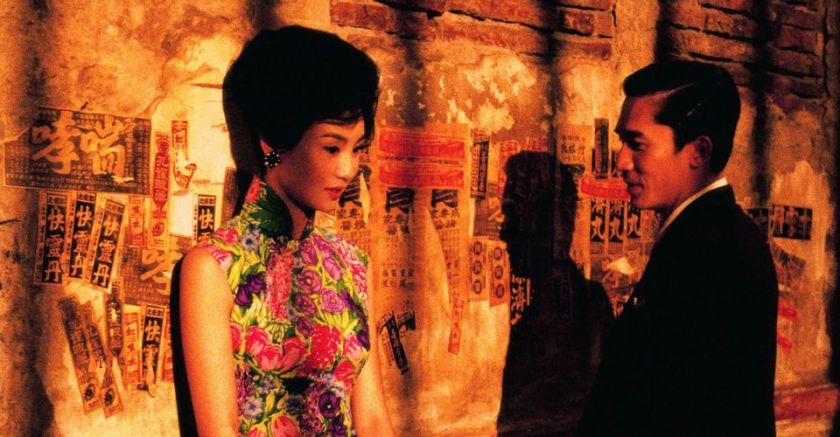
In the Mood for Love (2000)
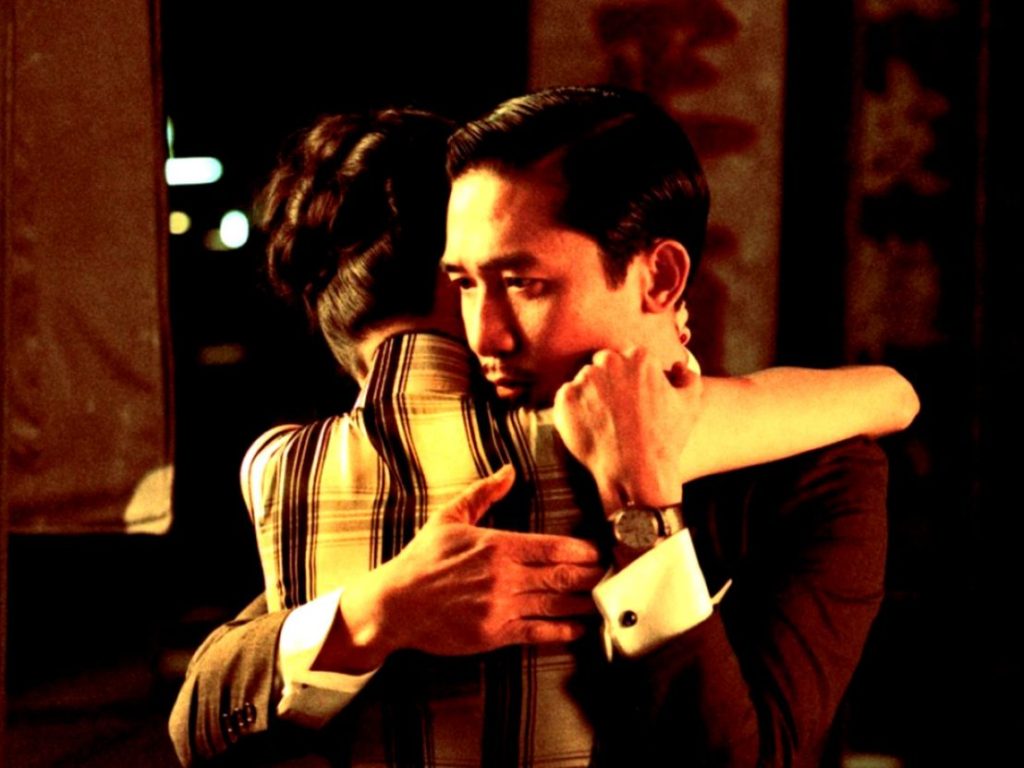
Set in Hong Kong in 1962, “In the Mood for Love” stars Tony Leung as Chow Mo-Wan and Maggie Cheung as Su Li-Zhen. This is a film about a possible affair between two neighbors who discover their spouses are sleeping together. But it’s also, and perhaps more importantly, a film about the aftereffects of an affair that’s already occurred and is still occurring off-screen. In the Mood for Love is a complete work of art that is both dreamy and grounded in every sense.
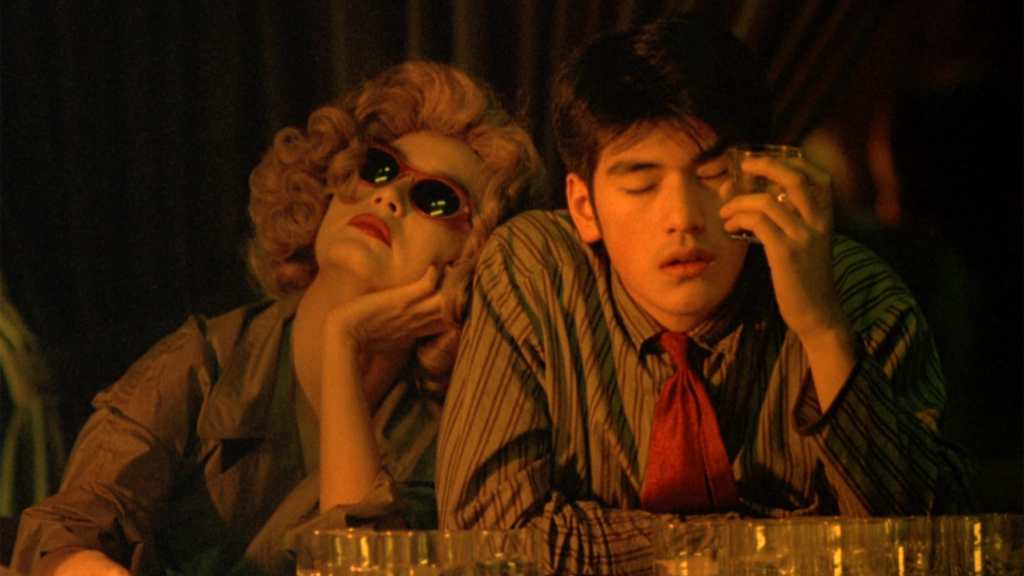
Chungking Express (1994)
This 1994 masterpiece, a two-sided view of life in Hong Kong in the 1990s that would become one of the defining works of its era, was Wong Kar Wai’s international breakthrough. Chungking Express is more of a love letter to Hong Kong than a traditional romance which is told in two parts. Takeshi Kaneshiro and Tony Leung play Hong Kong cops looking for love and connection in one of the world’s busiest cities. Even though for some reason people prefer the second part of the movie, but it’s safe to say that neither halves would be so good without the other. Both halves of “Chungking Express” are required to provide a complete vision of a city in which people can be close enough to feel at home but too far away to touch. Chungking Express is one of those films that you can watch again and again, but still can’t get enough of it.
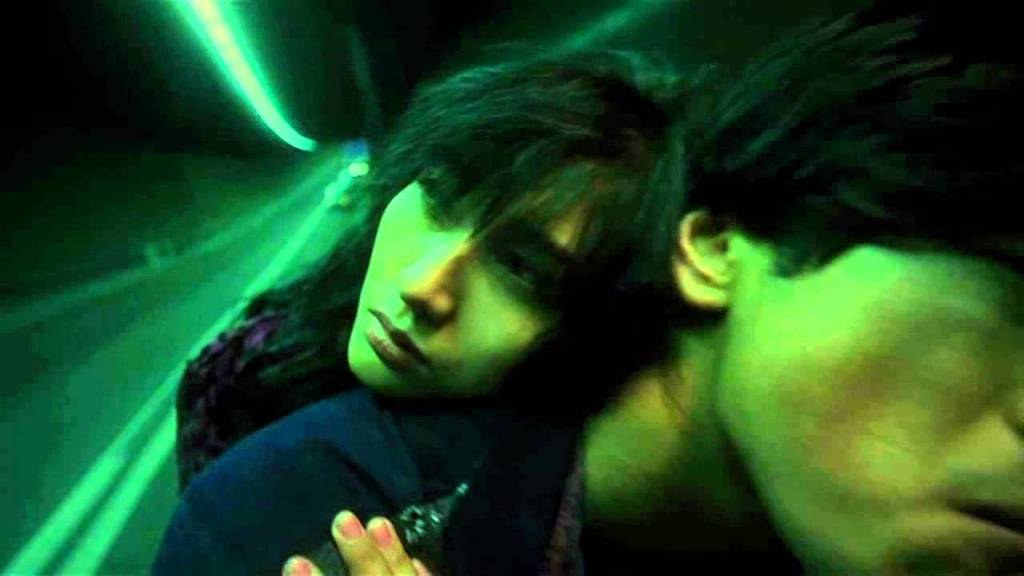
Fallen Angels (1995)
Fallen Angels is sort of a spiritual sequel to his 1994 masterpiece ‘Chungking Express’. Even he suggested the mentioned movies can watched as a double feature and experience will remain the same. In this movie, Wong Kar Wai explores with overlapping storytelling once more, but this film is renowned more for its visuals flair, a frenzied, wide-lensed experience that drew analogies to 1990s music video culture. In the end, “Fallen Angels’” messiness is what makes it most satisfying; the film’s tangled turmoil allows its survivors to discover a sense of hope in one another.
Happy Together (1997)
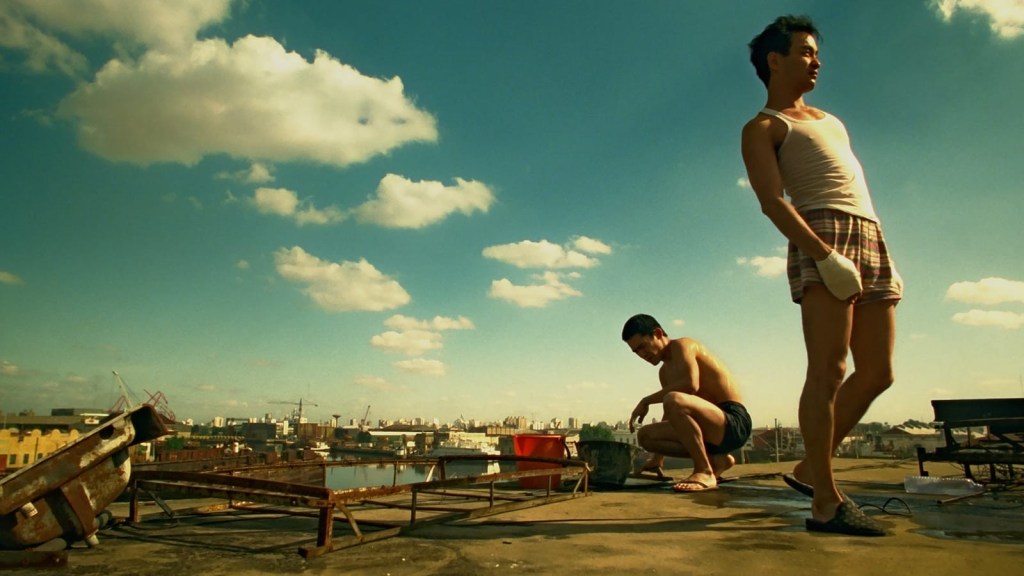
If some audiences found Wong Kar Wai’s “Fallen Angels” a touch too detached, he followed it up in 1997 with one of his most emotionally powerful films, a romance starring Tony Leung and Leslie Cheung as a couple travelling across Argentina. A relationship between the sensible, calm Lai and the disruptive, non-monogamous Ho, on the other hand, is doomed to fail. Wong Kar Wai brings beauty to a tragic story of a troubled relationship between dissimilar personalities in a way only he can, using a non-linear, disconnected storyline combined with his unique styling. Everything about Happy Together is familiar to fans of Wong’s earlier films, and yet everything is also different.
2046 (2004)
A lonely author writes novels about a train departing for 2046, a destination where people go to relive their lost experiences. Except for the writer, no one has ever returned from the location. “Love is all a matter of timing,” says a film in which time is deceptive, elliptical, and continuously calls back and forth. Nothing is more beautiful than something that has never been fully realized. Every time you see this film, it just makes you feel that you are a part of it, you feel the nostalgia, the pain and the unrequited love.
The world is moving at a fast pace. And adults try their best to match the pace, but often they cannot because such is the development consuming the world. While 25 year olds are still trying to earn a place in this highly competitive salary race, what about 5 year olds? You would have seen many advertisements endorsed by popular celebrities saying that kids should start coding right from age 5. The tender age where they should be chasing a butterfly, they are to sit before computers. And not just learn coding, but also aim to be the stalwart that companies should be hounding after.
The biggest scam
Coding is an integral part of the digital world and of course, everything is done with the help of it. But that alone is not enough to incentivize parents into signing up their 5 and 6 year olds to coding classes. These ‘education’ platforms supposedly charge a hefty amount from parents just by some flashy marketing and advertising. You would’ve come across ads where a company allegedly claims that a 2nd grader bagged a 1.2-150 crore job from Google. It is definitely hard to believe(it has been proved that the claims are bogus) and at the same time, saddening that kids are now forced to enter the salary race.
Why coding isn’t the only thing in picture
The deeper unsettling fact is that parents are put up in such a situation where they feel bad for not signing up their kids. Think about what any parent would do if they hear that any child has the capability to design an app and can bag a place in top firms. They will readily sign up their kids, thinking they are going to secure their child’s life. But, what they don’t know is that, there is time. 1st grade or even 8th grade is not the age for children to learn the fundamentals of a for loop construct. It is the age where they are to learn the world, the surroundings, and their presence.
It is when languages should be given importance to. No, not programming languages, but the languages which lets them express their opinion to the world and which lets them explore the richness of their culture. It is when social and democratic sciences should be learnt, letting them know about their ancestral world.
It is also when values and ethics should be imparted into them, not by texts, but by making them experience it in a situation where it is put into test. While there is so much to learn about, forcing them to create a video game application not only burdens them with unnecessary information, but it also limits their creativity by directing it into one field only.
A note to parents
One thing parents must hardwire into their mind is that, coding alone cannot land you a job in Google or Microsoft. It is just another tool to put an idea into implementation. By introducing kids to coding at an early age, the ‘idea’ part gets subdued. There is no particular age to start coding. It is a gradual process.
We may not be aware, but every individual is already coding, no matter their knowledge in computer science. The literal meaning of coding is: to use a particular system for identifying things. As kids, as adults we already incorporate it in daily life when a kid arranges his play blocks in a certain manner or when adults have a particular system of doing their chores.
Let children explore their creativity. Source: Deposit Photos
Hence everyone can code if they have the interest to do so. The reason kids shouldn’t be obliged to learn coding at an early age is to allow them to have the time to identify their interests. So as parents, the least you can do is by providing them that right. The right to choose things that delight them. The right to choose it for themselves instead of pushing it down their throats at an age where they don’t even recognize it. Do not let falsified ads ruin childhood. Let them decide for themselves who they want to be. Until then, enjoy their transition. Because they are going to be kids only once.
You have a lifetime to work. But children are only young once.
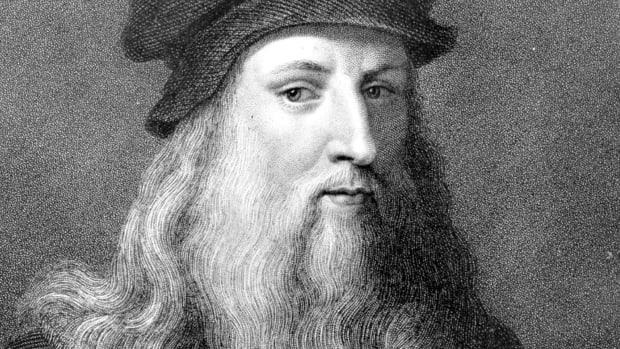
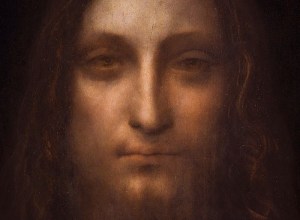
Leonardo da Vinci, the artist of the famous Mona Lisa and Salvator Mundi painting, is a man of mysteries. He was more than a painter. He was an avid engineer, scientist, sculptor and an architect with deep knowledge about science and astronomy. The alien theories, the striking symbolism theories and more out-of-the world speculations about his work are being debated up till now. One such puzzle is the Salvator Mundi painting
The Salvator Mundi Painting
The Salvator Mundi painting
The Salvator Mundi painting was created by da Vinci somewhere between 1490-1500. It is the world’s most expensive painting, priced at 450 million US dollars. No, Mona Lisa isn’t the most expensive one. Deep search can tell you that. The image depicts a man, presumably Jesus Christ, holding in his hand a spherical ball like structure. Nothing mysterious about the painting as of now. Okay. So what was solved?
To understand how scientists solved the puzzle, we have to look up the problem. As I had already stated, da Vinci was a man of science and had genuine knowledge about it. It can be proved by looking at his works which deceivingly represent scientific facts. Salvator Mundi means ‘savior of the earth’. So it can be interpreted that the glass orb that Jesus is holding symbolizes the earth.
The problem behind
What is wrong about this painting is that, any 10th grader would know that a convex lens would provide an inverted, magnified, reversed image of an object placed behind it. The glass orb must act like a convex lens and thus do the same. But if you observe carefully, you can see that it appears as if those properties are defied and a clear, non-reversed image of Jesus’ hand and clothing is visible behind the glass orb.
You may argue that any painter would be ignorant of the science behind a convex lens. But Leonardo da Vinci was not ‘any painter’. He was a polymath of the High Renaissance! He has portrayed much more complex scientific principles in his work than that of a convex lens. There is no plausible way that da Vinci couldn’t have known the laws of optical physics. So why did he do that?
Solved
The puzzle was solved by computer scientists from the University of California, Irvine. The painting was 3d virtualized to study about how the various material orbs would appear under different refractive conditions. Many materials with which orbs could be designed were taken into consideration. At last it was concluded that the spherical orb was not a solid mass, instead a hollow orb. Hollow orb does not behave like a convex lens. It displays the image as it is, thus adhering with the painting. They predicted that the glass of the orb in Salvator Mundi was a fraction of an inch thick thus accounting for the quality.
Did Leonardo da Vinci actually paint it?
Many critics claim that the painting is not actually da Vinci’s. They point that da Vinci is more of a scientist to commit such trivial errors and thus proving that he did not paint it at all and that it was painted by a ‘lesser’ painter. But many say that, such a clever installation of the orb itself is a proof of authenticity. In order to think about hollow orbs and paint it during the 1500s would take immense intellect, which can only be done by the polymath himself.
Leo constellation?
The three dots in the glass orb
The orange iris of Jesus in the painting
As if the Salvator Mundi has not enough controversies, one more intriguing detail is the three dots painted in the glass orb giving it a mystical appearance. The three dots are said to represent the constellation of the sign Leo. What does it have to do anything with this painting? Well, if you observe the iris of Jesus, a faint orange glow emanates from within. The orange iris imitates Lion’s eyes. And thus the constellation, many say. Some also relate to the fact that his name Leonardo is the reason behind. However there is no concrete explanation behind.
Hope I kindled some curiosity within you today. I leave you with one of my favorite da Vinci’s quote:
To develop a complete mind:
Study the science of art;
Study the art of science.
Learn how to see. Realize that everything connects to everything else.
The Harlem Renaissance was an intellectual movement from c. 1918-37 centered in Harlem, Manhattan. It brought the cultural revival of African American music, dance, art, fashion, literature, theater, and politics. The movement heralded African-American cultural expressions alongside the struggle for civil rights, during a segregated America. Using art, music, and literature, the African-Americans sought to break free from prevailing stereotypes and define a new identity for themselves.
They also sought to break from the Victorian moral code which had labeled several parts of their culture as shameful. This movement helped popularise African-American authors and their works. Francophone writers brought aspects of the movement to Paris and the Caribbean islands.
One of the phenomena which served as the foundation for this movement was the migration of African-Americans to Northern parts of the United States and from rural areas to urban areas. This led to a rise in literacy levels and the creation of organizations that fought for civil rights.
Magazines such as The Crisis by NAACP, Opportunity by the National Urban League, and The Messenger were crucial to the movement.
With the Great Migration, the Black Pride movement also began. This movement sought to ensure that the African-American community got the credit they deserved for cultural contributions.
This movement,in some ways, paved the way for the civil rights movement of the late 40s and 50s.
We all have a hectic life. We work 24×7 to earn money, to work on our skills, to keep up with our family responsibilities, and many more. Due to this, our mind goes into a state where we face frustration, stress, anxiety and this can further cause depression. What our mind needs is a little deviation from real life. So that we can regain our mental strength to work further. To do something other than work for our pleasure in our leisure time is known as a hobby. It has been observed that the most common hobby of the majority of people is Music.
Music is the integration of vocal and instrumental sounds that are combined to produce a kind of soothing and relaxing sound which is known as melody.
What are Musical Instruments?
There are two types of people
Music listeners
Music makers
Music listeners are those who only listen and feel the music. These people relate their life to the type of music they are listening to. On the other hand, come Music makers. These are people who use some equipment and devices to generate music. They relate music to their life. The equipment and devices they use to generate music are known as Musical instruments. These instruments act as an interface between a person’s mind and the music he wants. If a person wants to make happy music, he will play happy tones on the instrument and then that instrument will give the output as per requirements. There is a wide range of musical instruments in the world. We will discuss the most popular in all-region.
Types of musical instruments
In general, music instruments are categorized into 3 types:
String instruments
Wind instruments
Percussion instruments
String Instruments
These are also known as chordophones; they produce sound through the vibrating strings when the musician plays the string in a particular manner. These instruments make a sound when the strings are plucked by a ‘plectrum’ or my fingers, others are played by hitting the strings with a light wooden hammer or by rubbing the strings with a bow.
The most common example of these is guitar, piano, string sections (violin, viola, cello, and double bass), harp and much more. In primitive times, strings have been made out of the animal gut. But early in the 20th century, string began to make up of steel at first solid and then roped.
Wind instruments
Wind instruments are those which produce sound by blowing air in them. These are the instruments that contain a resonator tube in which a column of air is set into vibration by the player blowing into it. The performer blows into a mouthpiece set near the resonator some examples of wind instruments are flute, accordion, harmonica, clarinet, trumpet, and many more. In primitive days piece of hollow cane or dried fruit was used as a wind instrument
Percussion instruments
Percussion instruments are those which produce sound when struck by a beater. Also, they produce sound when scraped or rubbed by hand or struck against another similar instrument. Examples are Djembe, snare, Drums, Cymbal, etc.
The first type of percussion instrument was simply anything hit together to produce sound. Drums evolved from this and are known to have existed from around 6000 BC. They were used by all major civilizations throughout the world.
These are all types of musical instruments that are played in the modern era and were played in ancient times also. These instruments when played together in order create a beautiful fusion of chords and harmonies which are so pleased that a person can feel the message that musicians trying to convey to their audience.



















 The movement heralded African-American cultural expressions alongside the struggle for civil rights, during a segregated America. Using art, music, and literature, the African-Americans sought to break free from prevailing stereotypes and define a new identity for themselves.
 Eduindex
You must be logged in to post a comment.