Mental Health

We human beings often tend to pay less attention to our mental health than our physical one, but we all should understand its heavy importance and admit the fact that they can be equally or even more dangerous than the physical issues so one should take immediate help of doctor or councilor in case some abnormalities or issues arises.

Importance of mental health :

Mental and physical health are equally important components of overall health. Mental illness, especially depression, increases the risk for many types of physical health problems, particularly long lasting conditions like stroke, type 2 diabetes and heart disease. Similarly, the presence of chronic conditions can increase the risk for mental illness.

Some mental illnesses :
Mental illnesses are among the most common health conditions in the united states.

* More than 50% will be diagnosed with a mental illness or disorder at some point in their lifetime.

* 1 in 5 children,either currently or at some point during their life, have had a seriously debilitating mental illness.

Causes of mental illness :
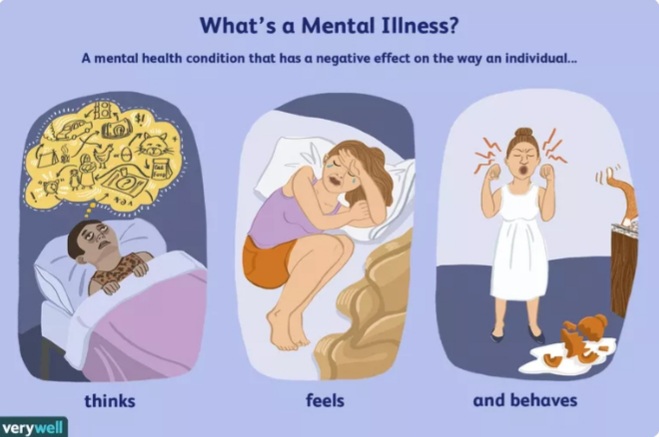
There is no single cause for mental illness. A number of factors can contribute to risk for mental illness, such as

* Early adverse life experiences such as trauma or a history of abuse.

* Experiences related to other ongoing medical condition, such as cancer or diabetes

* Biological factors, such as genes or chemical imbalances in the brain.

* use of alcohol or recreational drugs.

Types of mental illness :
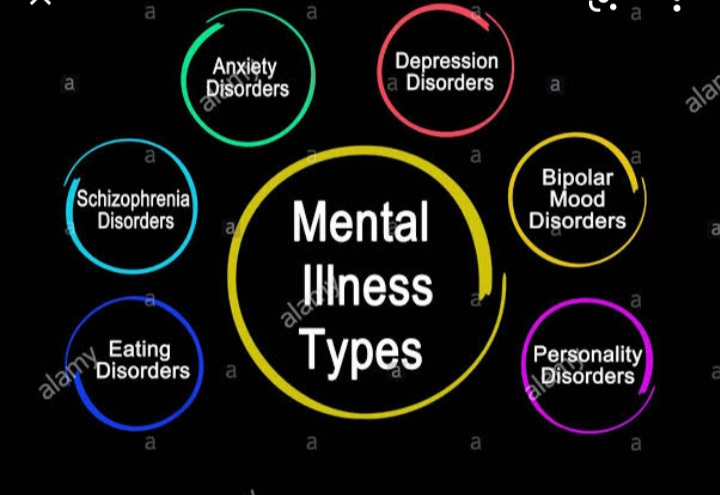
People can experience different types of mental illnesses or disorder and they can often occur at the same time.Mental illness can occur over a short period of time or be episodic. This means that the mental illness comes and goes with discrete beginnings and ends. Mental illness can also ongoing or long term.

There are more than 200 classified types of mental illness. Some of the main types of mental illness and disorders are listed below; however; this list is not exhaustive.

Anxiety Disorders :

People with anxiety disorders respond to certain objects or situations with fear and dread or terror. Anxiety disorders include generalized anxiety disorder, social anxiety, panic disorders and phobias.

Hyperactivity Disorder :

It is one of the most common childhood mental disorders. It can continue through adolescence and adulthood. People diagnosed with ADHD may have trouble paying attention, controlling impulsive behaviors or be overly active.

Disruptive Behavioral Disorders :

It involves a pattern of disruptive behaviors in children that last for atleast 6 months can cause problems in school, at home and in social sitauations.Behavioral symptoms can also continue into adulthood.

Depression and other mood disorders :

While bad moods are common and usually pass in a short period, people suffering from mood disorders live with more constant and severe symptoms. People living with this mental illness find that their mood impacts both mental and psychological well- being, nearly evry day and often for much of the day.

Eating Disorders :

Eating disorders involve obsessive and sometimes distressing thoughts and behaviors including

* Reduction of food intake

* overeating

* Feelings of depression or distress

* concern about weight, body shape, poor self image

Personality Disorders :

People with personality disorders have extreme and inflexible personality traits that cause problems in work, school or social realtionships. Personality disorders include antisocial personality disorder and borederline personality disorder

Substance use Disorders :

Substance use disorders occur when frequent or repeated use of alochol and or drugs causes significant impairment, such as health problems, disability, and failure to meet major responsibilities at work, school, or home. Substance use problems can be fatal to the user or others. Exsmples include drunk driving fatalities and drug overdoses.

In this busy world our brain gets a lot stressed and its very important that we should take due care of it, some of the practices which will help us to do better with our mental health are:
  1. Yoga plays a great role in keeping our mind calm and also helps us to focus and concentrate on things. It also helps us deal with tough situations and gives us the strength to stay away from negativity.
  2. Exercising regularly is a key to healthy body and we all know that a healthy body and a healthy mind goes hand in hand, so we must ensure that we exercise daily to keep ourselves fit.
  3. The environment that we stay in also the company with which we spend time also plays a major role we should be extremely aware while selecting our company and in case we are not able to adjust we should walk away.
  4. Food is the fuel and is of immense importance we should ensure that we are not nutrient deficient also we should ensure that we intake enough amount of water daily.

UNDERSTANDING GOOD GOVERNANCE

GOOD GOVERNANCE SHOULD BE LIKE AIR. IT’S EXISTENCE NEED NOT BE DISCUSSED BUT IT’S ABSENCE WOULD MAKE A HUGE DIFFERENCE”

Nowadays the terms “Governance” and “Good Governance” are being used widely. Major reforms, actions, changes and even donations and institutional activities are basing all their rules and regulations which will help achieve “good governance”.

WHAT IS GOVERNANCE ?

Governance is the process or system by which entities are administered or directed and controlled. It is the process of decision making and the process of deciding the actors who will be involved in the decision making process and implementation of decisions.

The concept of “governance” has been used from past many years and can be used in several contexts such as international or national governance, corporate governance, local governance etc. One of the major actor of governance is “government” and other actors involved in the process of governance are NGOs, private bodies, landlords, research institutes, religious leaders, political parties, military etc.

GOOD GOVERNANCE

The term “Good Governance” originated from the report entitled ” Governance and Development” which was published by World Bank in year 1992. The World Bank defined Good Governance as “the manner in which power is exercised in the management of a country’s economic and social resources for development”.

Thus, good governance is an approach which aims in creating a system which finds justice and peace and ensures the protection of individual’s human rights and liberties. Good Governance is measured by 8 characteristics : Participation, Rule of Law, Transparency, Responsiveness, Consensus Oriented, Equity and Inclusiveness, Effectiveness and Efficiency, and Accountability.

Good Governance is a process of governance that considers the views of minorities and vulnerable groups of society and minimizes corruption while taking decisions thereby boosting the economy.

REFERENCES OF GOOD GOVERNANCE

  1. The importance of Governance is clearly highlighted and explained in Indian Constitution which is based on – Sovereign, Socialist, Secular and Democratic Republic for attaining democracy, rule of law and welfare of people.
  2. The Sustainable Development Goal q6 also describes the linkage between improvement of governance, inclusivity, participation, rights and security.
  3. The Bhagavad Gita also provides numerous indications of good governance, leadership, dutifulness and self realization.
  4. According to former United Nations Secretary-General Kofi Annan, “Good governance is ensuring respect for human rights and the rule of law; strengthening democracy; promoting transparency and capacity in public administration.” He also said that “Good Governance is perhaps the single most important factor in eradicating poverty and promoting development”.

PRINCIPLES OF GOOD GOVERNANCE

Principles of Good Governance
  1. Participation: Participation by each section of the society irrespective of their gender, social class, caste, income etc. The participation of the individuals can be through direct or indirect (through other institutions or representatives) mediums. Participation is an crucial part of governance because it brings forward the major concerns of the society, the issues as well as in identification of potentials of the area.
  2. Rule of Law: It ensures fair and legal frameworks and methods being used in the governance and enforces impartially. This requires full protection of human rights, especially of the weaker sections and vulnerable groups of the society. For this the law needs to be impartial, uncorrupted and judicial.
  3. Transparency : Transparency in a process or system or governance ensures that all the decisions, actions and enforcements are taken only after considering the governing rules or laws or regulations. It signifies the availability of information’s to all the stakeholders and the people who will be affected by the actions or enforcements.
  4. Responsiveness: Good Governance requires timely actions and processes and tries to serve all the stakeholders within a reasonable time frame or specified time frame.
  5. Consensus Oriented: Good Governance requires different interests to sum up into a broad consensus to show the best interest for the community and society. It is necessary for developing sustainable human development and the only way by which cultural, social and historical diversity can be preserved.
  6. Equity and Inclusiveness: Equity and Inclusivity ensures that all the members of the community or society are feeling free to put forward their concern and idea. Nobody should feel excluded. Equity and Inclusivity is highly important for minor or vulnerable groups because it is very important to give them the opportunities to express their issues and ideas for improving and maintaining their well being.
  7. Effectiveness and Efficiency: The results or outcomes of the processes should satisfy the needs of the society and should make the best use of available resources, without exploiting them. It is necessary to identify the potentials and weaknesses of the society or community or area before coming up or implementing any solution. All the outcomes and results should within desirable time frame and should be the best decisions for the welfare of the society.
  8. Accountability: It is one of the most vital requirements of good governance as it ensures that all the stakeholders (government bodies or private institutions or civil organizations or NGOs etc) are accountable to the public. Who is accountable to whom depends on the actions or decisions which are taken in the organization.
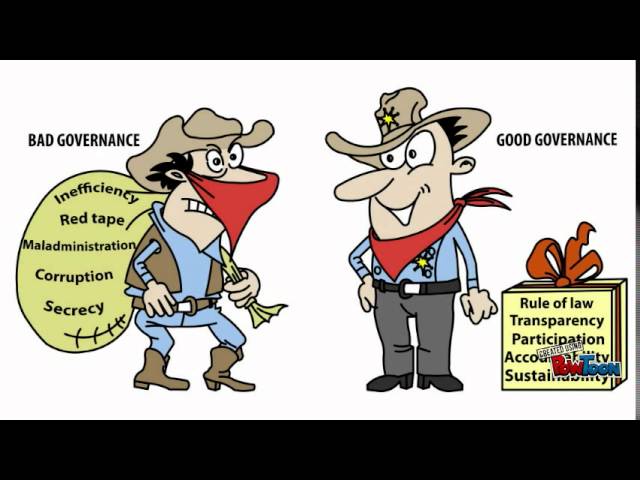
What makes Good Governance different from Bad Governance

CONCLUSION

From the above discussion it is clear that “Good Governance” is the most ideal form of governance but it requires transperancy, accountability and intelligent form of governance which makes it more difficult to achieve. For achieving good governance, a system much be uncorrupted, bias free and free from prejudices.

Thus, there is a need to reform and reformulate strategies for restoring good governance. The government should focus on the principle of : “Sabka Saath, Sabka Vikas and Sabka Vishwas” which will guide the way to achieve inclusive and sustainable development.

Self – confidence

Self- confidence is a feelung of trust in one’s abilities, qualities, and judgment.children with a healthy sennsr of self-confidence are able to feel good about themselves and knoe that they deserve respect from others.
Confidence can be a tough thing to build up. We’ve put together some handy tips to help you put.


TIPS FOR BUILDING SELF – CONFIDENCE :


There are number of things you can do to build your confidence. Some of them arejust small changes to your frame of mind; others you’ ll have to work on fora big longer to make them familiar habits.


1.LOOK AT WHAT YOU’VE ALEADY ACHIEVED:


It is easy to lose confidence if you believe you haven’t achieved anythkng. Make a list of all the things you’ re proud of in your life, whegger it’s getting a good mark on an exam or learning to surf. Keep the list close by and add to it whenever you do something you’ re proud of. When you’re low in confidence,pull out the list a use it to remind yourself if all the awesome stuff you’ ve done.


2.SET SOME GOALS :


Set some goals and set out the steps you need to take to achieve them. They don’t have to be big goals; they can even be things like baking a cake or planning a nighy out with friends. Just aim for some achievements that you can tick off a list to hrlp you again confidence in your ability to get stuff done.


3.THINK OF THINGS YOU’RE GOOD AT :


Everyone has strengths and talents. What are yours? Recoginising what you’re good at,and trying to build on those things,will help you to build confidence in your own abilities.


4.TALK YOURSELF UP :


You’re never going to feel confident if you have negative commentary running through your mind telling you that you’re no good. Think about your self- talk and how that might be affecting your self- confidence. Treat yourself like would your bestfriend and cheer yourself on.


5.GET A HOBBY :


Try to find something that you’re really passionate about. It could be photography, sport, knitting or anything else! When you’ve workef out your passion, commit yourself to giving it a go.chances are, if you’re intetested or passionate about a certain activity, you’re more likely to be motivated and you’ll build skills more quickly.


Confidence helps us feel ready for life’s experiences. When we’re confident, we’re more likely to move forward with people and opportunities no back away from them. And if things don’t work out at fisrt , confidence helps us try again. It is the opposite when confidence is low.

Self- confidence is a feeling of trust in one’s abilities, qualities, and judgement. Some of the many causes of low self- esteem may include. Unhappy childhood where parents were extremly critical. Poor academic performance in school resulting in a lack of confidence.

To Grow Mentally and physically

Growing mentally and growing physically are two completely different things. Growing mentally refers to a person’s psychological growth the way we think and deal with different situations, and by what methods we develop and disseminate information. Growing up physically refers to a person’s physical growth like increased height, strength, and health. It can also refer to the development of your brain.
” The key to success is to keep growing in all areas of life mental emotional, spiritual as well as physical.” A healthy body can help your mind stay strong.when your body isn’t fit, it’s tougher to make challenging decisions.
Some of the tips will help you to improve both simultaneously.


ENRICH YOUR MIND :


keep challenging yourself to learn new things. By doing this, will gain more knowledge about things around you, and you will learn how to utilize things in a better way. Don’t let yourself get stuck in one place, either mentally or physically. Be proactive, curious, conscious and informed about the world.


Use your brain more often by doing brain exercises:


Exercising your brain means using it more. Generally the brain takes part in everything we do, but there are some types of activities which are specifically exercise our brains. Activities like doing puzzles, playing games like chess or scrabble, solving numerical problems, studying difficult topics and changing your dexterity, spatial reasoning and logic. Doing these mental exercises daily can sharpen your mind , and it can be an excellent way to strengthens neural links in your brain.


CONSUME NUTRIENTS THAT ARE GOOD FOR BRAIN:


Take in nutrients which are good for your brain. Foods that have antioxidants like vitamin c,e,b etc are good for the brain.consuming almonds and apple juice is also good for sharpening the brain.

THINK CRITICALLY :


when we hear, read or work on something, It is very important than we question everything and pay attention to details.such an approach can improve our thinking ability because it requires more brain work than mere observations.


DO PHYSICAL EXERCISES :


A healthy body means a healthy mind; regular exercise has a positive influence our brains function. The brain takes in nutrients from the blood, which makes the brain healthier. Physical exercise is essential for enhancing mental power .


EAT HEALTHY FOODS :


spend some time to examine which kinds of food bring you up and which foods bring down. Creating a diet plan can make you feel good, and gives you a sense of self-development. This will boost your sense of success.


GET BETTER SLEEP AND TAKE NAPS:


Get as much sleep as you need, around Seven or eight hours, every night. While sleeping well does not guarantee good health, it does help you to maintain many vital functions. Perhaps most importantly sleep helps you recover from the wear and tear of daily life. Major healing functions in the body such as tissue repair, music and mental growth occur almost exclusively during sleep.


SPEED TIME WITH PEOPLE :


Build a good support system with the people around you. Whether it’s your family, friends, or something else, find a group of people who are willing to support you in any circumstances. This increases flexibility and helps to provide perspective in the midst of stress and discomfort.


STAY AWAY FROM DRUGS AND ALCOHOL :
using cigarettes, alcohol, and illegal drugs damage your mental and physical health. Decreasing mental and physical stability produces” false” emotions.


FIND A GOOD LISTENER :


Find someone who is eager to listen to you, who you can talk to openly and freely. This can help you in relieving stress and anger and can heal you mentally, which ultimately has an impact on your physical health.


LAUGH MORE :


Laughter is the best medicine for human health. Human increases dopamine, and it improves memory and health.


GET RID OF BAD HABITS THAT HURT YOUR CONFIDENCE :


If you have a habit of smoking too much, drinking alcohol too much, spending too much time online, or a different habit that’s hurting your confidence, take steps to eradicate them. Study books, watch good films, play games, watch dances, and listen to songs; do the things that make you feel relaxed. Many studies suggest that watching TV and using a computer late at night is bad for your health.


STAR YOUR DAY BY THINKING ABOUT ONE GOOD THING YOU CAN DO :


Generally, it’s just a matter of deciding to do something good. Develop the habit of finding a good deed to do each day. Set aims and goals and follow through with them to attain them. By setting goals and gradually working to attain them , you will grow mentally.

HOW TO MAKE MONEY? – FINANCING ENTREPRENEURSHIP

Securing the needed amount of financing is one of the most important functions for starting a business. It highlights what sources of financing exists at various stages of venture development. So, depending on the industry and aspirations of the entrepreneur(s) has a need to attract money to fully commercialize their concepts. Thus they must find investors – such as their friends and family, a bank (or) an angel investors (or) a venture capitalist funds (or) through a public stock offering (or) some other source of financing.

When dealing with most classic sources of funding, entrepreneurs face numerous challenges like disagreeing to the business and financial plans, requests for large equity stakes, tight control and managerial influence and limited understanding of the characteristic of growth process that start-ups experience.At the initial stage , Bootstrapping is an effective way of start up financing but in order to stabilize the start up entrepreneurs should follow various fund raising methods to raise money.

MOST FORMAL SOURCES OF FUNDING :

SEED CAPITAL FINANCING: Seed capital financing is the earliest source of investment for a startup. The sources of this funding will from your family, friends, crowd funding or from your savings. Usually these amounts in this type of investing are not too high and are typically repaid through the loan (with or even without interest) or are invested in exchange for a small equity share in the company.

ANGEL INVESTOR FUNDING: When your startup needs to grow and it requires funds towards product development, marketing (or) just to expand your team to keep up the momentum then the angel investors comes into the picture as a solution for raising money.

VENTURE CAPITAL FINANCING: VC funding can provide resourcing for scaling the business to new business channels, customer segments or to increase marketing efforts for additional customer acquisition. At this stage of financing the startup either may run with profits or may get out of negative cash flows.

BRIDGE LOANS: At this stage of financing your startup may be with constant growth and looking to scale significantly with a commercially available product. The funds during this stage will be raised due to merge and acquisitions. At this stage the investors want to see the clear route map towards profits of the firm.

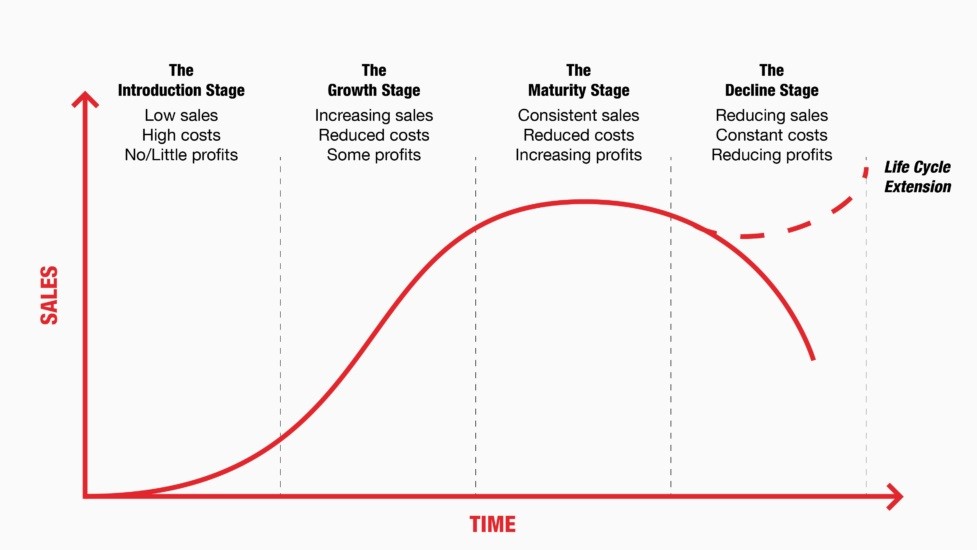
THE GRAPHICAL REPRESENTATION ON GROWTH OF A FIRM

IPO( INITIAL PUBLIC OFFER): IPO is not the end goal for all the startup’s. However, in order to expand the firm further for raising money. At this stage the firm will be listed out in the stock market for going into public as an option of making money.

EQUITY FINANCING: In equity financing, from an entrepreneur perspective the cost of equity is considered as the loss of control over the venture as the founders must share the ownership of business now.

DEBT FINANCING: At this stage the version of an entrepreneur will be as, the cost of debt financing is the interest that they pay for the use of money that they barrowed, where as the perception from the investor side is obtaining the interest as a reward in addition to money that they have lend to an entrepreneur or borrower.

Finally, Capital raising challenge really begins once the MVP(Minimum Viable Product) phase is reached. This is the point where capital is required for product development , sales and market ,patent preparation etc… So, Every start up founder has a need to understand that MVP’s  are not only for raising money but also helps to get data about potential customer of the start up. So, the founders of start up can raise money with a prototype GTM(Go-To-Market Strategy) plan.

Advertising is also one of the best way for start ups to make money because advertising increases the name of the firm within your industry and helps to attract partners to expand business which in turn increases profitability. So, these are some money making or financing methods which are followed by most of the firms to make money efficiently .

SCIENCE AND TECHNOLOGY

Science and technology play a huge role in our society as well as in our lives. Nowadays we all are surrounded by technology and are dependent on it for everything we do. Especially after this pandemic everything is in virtual mode and is completely based on technology. We live in the technological era where gadgets are of outmost importance to us. A gadget is simply a human made device which is programmed to reduce human effort and does a piece of job easily without any hassle.

In this fast-growing world we human beings are always surrounded by machines and gadgets for every need of ours starting from the time we get up in the morning till we again go to bed we even use gadgets while we are asleep such as air conditioner, insect repellent and many more. Science is a boon for us, but in the other hand as everything has its own merits and demerits there are also people who do use science for a bad cause. Technology is good but it is advisable to keep this technology out of the reach of children as otherwise they will not tend to learn things and will prefer to take the help of science to solve a particular existing problem this may affect their growth.

IMPORTANCE OF SCIENCE AND TECHNOLOGY :


Technology, science and knowledge are important in modern contemporary society. Essential questions include the following : How does science and technology produce new products, new ways of living and new nutritious? Why is new technology and knowledge so fundamental to us in the ways through which we imagine the future?


Technology, knowledge and science are fundamental in modern contemporary society. The understanding of how social, cultural and material elements influence the production of new practices, new ways of under of contemporary postmodern society. Studies of technology and science provides students with insight into how different processes of knowledge are initiated and progressed, and how innovative technological processes are developed employed and increase in importance.
In this manner, students will be provided with the academic basis for working with detailed analyses of different forms of technologies and process of knowledge within business life or industry and commerce, research work , political development, management of knowledge and innovation.


THE RELATIONSHIP BETWEEN SCIENCE AND TECHNOLOGY :


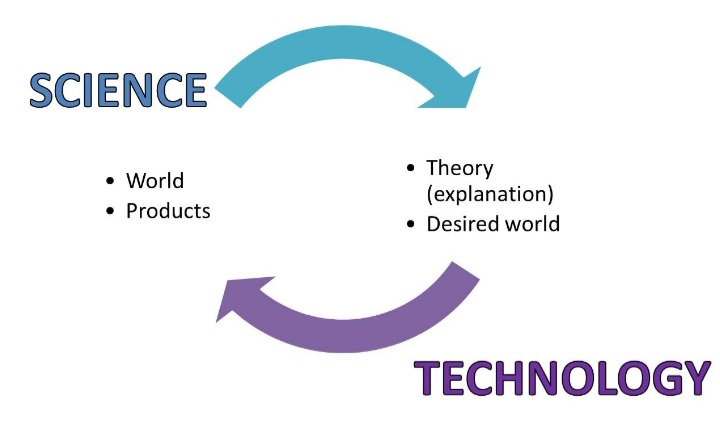
Science , technology and innovation each represent a successively larger category of activities which are highly interdependent but distinct. Science contributes to technology in at least six ways.

  1. New knowledge which serves as a direct source of ideas of new technological possibilities.
  2. Source from tools and techniques for more efficient engineering design and a knowledge based for evaluation of feasibility of designs
  3. Research instrumentation, laboratory techniques and analytical methods used in research that eventually find their way into design or industrial practices, often through intermediate disciplines.
  4. Practice of research as a source for development and assimilation of new human skill and capabilities eventually useful for technology.
  5. Creation of a knowledge base that becomes increasingly important in the assessment of technology in terms of its wider social and environmental impacts
  6. Knowledge base that enables more efficient strategies of applied research, development, and refinement of new technologies.

THe ROLE OF SCIENCE AND TECHNOLOGY


Teaching technological literacy, critical thinking and problem- solving through science education gives students the skills and knowledge they need to succeed in school and beyond.

SCIENCE AND TECHNOLOGY USED IN SOCIETY :


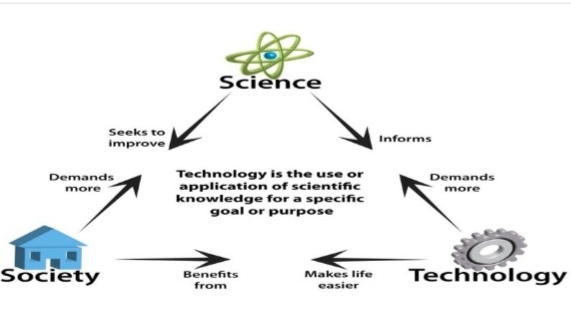
Science and technology have had a major impact on society, and their impact is growing. By making life easier, science has given an the chance to pursue societal concerns such as ethics, aesthetics, education and justice to create cultures, and to improve human conditions.

INSPIRATIONAL STORY OF J.K ROWLING

J.K Rowling’s story is one of the most famous insipirational failures to the success story of our time. She had failed in almost everything she attempted to do in her life and at one point she considers herself a major failure.


Most of the people only know her as a woman writer who created Harry Potter, but what people don’t know about the struggle she faces before reaching the stardom.


BIRTH AND CHILDHOOD :


Joanne Rowling was born on 31st July 1965 in yate, Gloucestershire, England to Peter James Rowling and Anne Rowling. Her father was a Rolls- Royce aircraft engineer and mother was a science technician
She had one little sister, Dianne, as a child Rowling loves to write fantasy stories and read them to her younger sister. When she was a teenager she got a chance to read Jessica Mitford ‘s autobiography, from then on Mitford become her heroine and after that, she read all her books.


BOOK INSPIRATION AND MOTHER ‘S DEATH :


After working for Amnesty International as a researcher and bilingual secretary in London, Rowling moved to Manchester with her then- boyfriend where she worked at chamber of commerce. In1990, Rowling first had the idea for Harry Potter, a story of a young boy who attends a school of wizards, while she was on a 4 hour delayed train trip from Manchester to London.
While travelling the idea fully formed in her mind and when she reached her flat she began writing furiously. However, in December 1990 her mother died after 10 years of complications from Mutiplr sclerosis Mother’s death heavily affects Rowling and leave her extremely distraught and upset. Later she channelled her own feelings of her loss by writing about Harry’s feelings in her first book.


MARRIAGE, DIVORCE AND SINGLE MOTHER:


After a few months of her mother’s death, she moved to Portugal to teach the English language. There she met a man, fall in love with him, got married and gave birth to her daughter. In 1993 her marriage ended in Divorce and she with her infant daughter moved to Edinburgh Scotland to be closer to her sister.
This is the most struggling time for Rowling and she saw herself as a complete failure. She was divorced, jobless, no money and a dependent child. Because of all this, she suffered bouts of depression and contemplated suicide. Eventually, she signed for Government-assisted welfare describing her economic status as poor. It was a really difficult time in her life but she kept going on and put all her energy on completing her novel.


HARRY POTTER :


In 1995 Rowling completes her manuscript for Harry Potter and the philosopher’s stone on an old manual type writer. She was so poor at that time she could not afford a computer or even the cost of photocopying the novel, so she manually typed each copy and submitted to twelve publishing house in London.
The manuscript was rejected almost dozens time until she was finally given chance with £1,500 advance by a small London publisher, Bloomsbury after the company’s CEO little 8 years old daughter fell in love with it after reading the first chapter of the book.


In July 1997 Bloomsbury published first 1000 copies of Harry Potter series out of which 500 copies were distributed to libraries. Just five months later the book won Nestlé smarties Book prize it’s first award . In early 1998 an auction was held in America for the printing rights to publish the novel.
Scholastic INC won the auction for USB 105, 000, later Rowling said in a interview that she nearly died when she heard the news of this amount for printing her novel. Today Harry Potter is a global brand worth an estimated 15 billion dollars.
The last four Harry Potter books have set the records for the fastest selling books in history. The Harry Potter series to talking 4, 195 pages have been translated either in whole or in part into 65 languages. The Harry Potter books series have also gained recognition for creating an interest in reading among the children’s at a time when they were more inclined towards the Internet, computers and television.


FINANCIAL SUCCESS :


In 2001 J.K ROWLING purchased a 19th century killiechassie House, an estate house on the banks of the river tay in Perth. She also owns a £ 4.5 million Georgian house in West London. In 2004 , Forbes named Rowling as the first person to become a us dollar billionaire by only writing books.In 2017, according to Sunday times, Richard list Rowling net worth was approx. £ 650 million.


PERSONAL LIFE :


Rowling and her second husband Neil Murray were married on 26th December 2001. They live in Edinburgh with their 3 children. Rowling was a runner up in 2007. Time’s annual person of the year issue after Russia’s president Vladimir putin.


JK ROWLING’S RULES OF SUCCESS :

  • Failure helps you discovers yourself.
  • Take action on your ideas.
  • You will be criticised
  • Remember where you started
  • Truly Believe in yourself
  • learn from adversity.
    *Visualise to achieve
  • Persevere
  • Dreams can happen.
  • use your creativity.

Depression

Depression and anxiety are very common problem these days starting from teenager to elderly adults anyone and everyone can face this at any point in life and they equally affect us as any physical disease does, many people don’t take mental health seriously but it is outmost necessary to do so. Here are a few simple daily habits which will help you to deal with depression:

  1. Stay away from negative thoughts, and always try to focus on the filled part of the glass and try not to worry about the empty.
  2. Practice meditation regularly it helps to calm one’s mind and helps in relaxing the brain.
  3. Try to stay out from field where you feel irritated and also do try ignoring unnecessary mess.
  4. Physical exercising is a must for a healthy mind as it keeps the body fit and also helps keeping negativity away.
  5. The physical environment where one spends time and the company of people with which one spend time also plays a key role in determining the and dealing with depression issues.
  6. One must also take care of the diet, consuming fresh fruits and vegetables are highly recommended and one must take care that proper diet is consumed.

Depression symptoms :

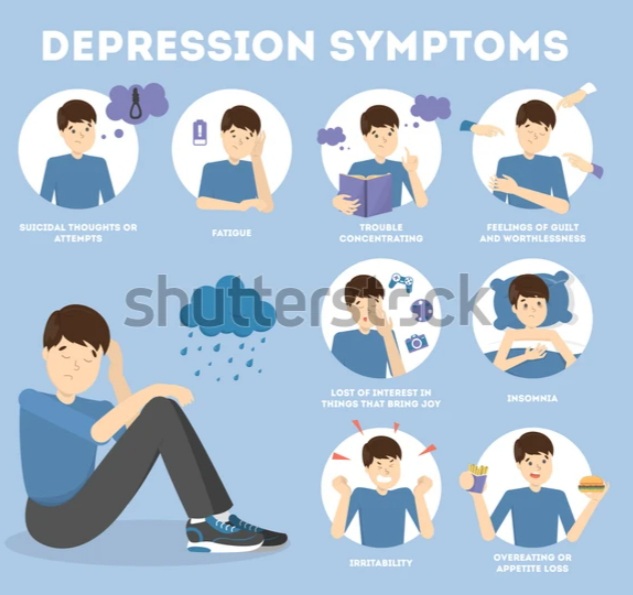
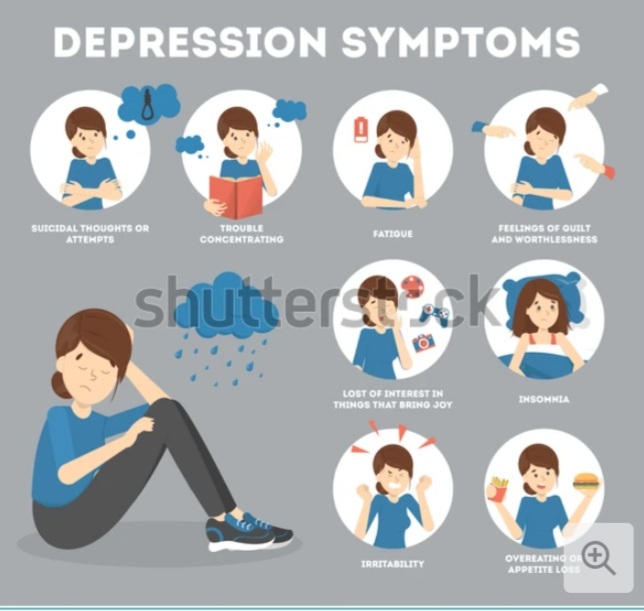
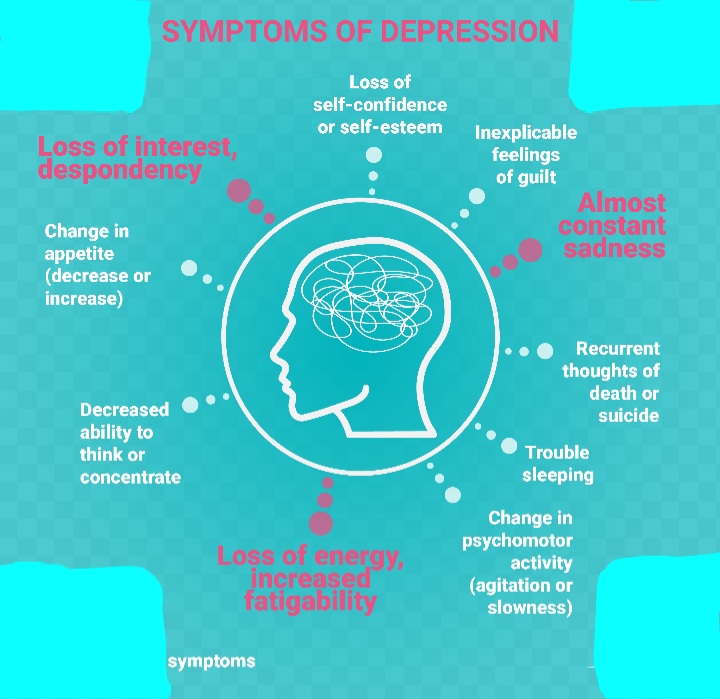
Depression can be more than a constant state of sadness or feeling ” blue”. Major depression cane cause a variety of symptoms. Some affect your mood, and others afect your body. Symptoms may also be onging or come and go. The symptoms of depression can be experienced differently among men, women and children differently.

Men may experience symptoms related to their:

* Mood, such as anger, aggressive, irritability, anxiousness, restlessness.

* Emotional well- being such as feeling empty, sad, hopeless.

* Behavior, such as loss of interest, no longer finding pleasure in favorite activites feeling tired easily , thiughts of suicide, drinking- execessively , using drugs, engaging in high- risk activities.

* sexual interest, such as reduced sexual desire, lack of sexual performance

* cognitive abilities , such as inability to concentrate, difficulty completeing tasks, delayed responses during- conversations.

* sleep patterns, such as insomina, restless slepp, excessive sleepiness, not sleeping through the night.

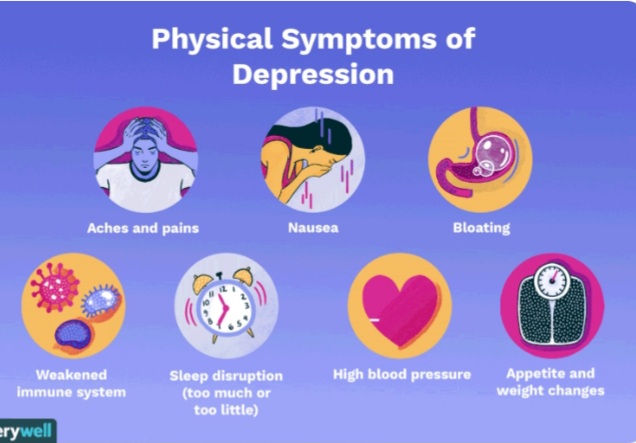
* physical well- being, such as fatigue, pains, headache, digestive problems.

Women may experience symptoms related to their:

* mood, such as irritability

* emotional well- being, such as feeling sad or empty, anxious or hopless.

* congnitive abilities,such asthinking or talking more slowly

* behavior, such as loss of interest in activities, withdrawing from social engagements, thoughts of suicide

* sleep patterns, such as difficultu sleeping through the night, waling early, sleeping too much.

* physical well- being, such as decreases energy, greater fatigue, changes in appetite, weight changes, aches,pain, headaches, increased cramps.

Children may dxperiences symptoms related to their :

* mood such as irritability, anger, mood swings, crying.

* emotional well- being, such as feelings of incompetence or despair, crying, intense sadness

* behavior, such as gettkng into trouble at school or refusing to go to school, avoiding friends or siblings thoughts of death or suicide.

* cognitive abilities, such as difficulty concentrating, decline in school performance, changes in grades.

* sleep patterns, such as difficulty sleeping or sleeping too much

*physical well- being, such as loss of energy digestive problems, changes in appetite, weight loss or gain.

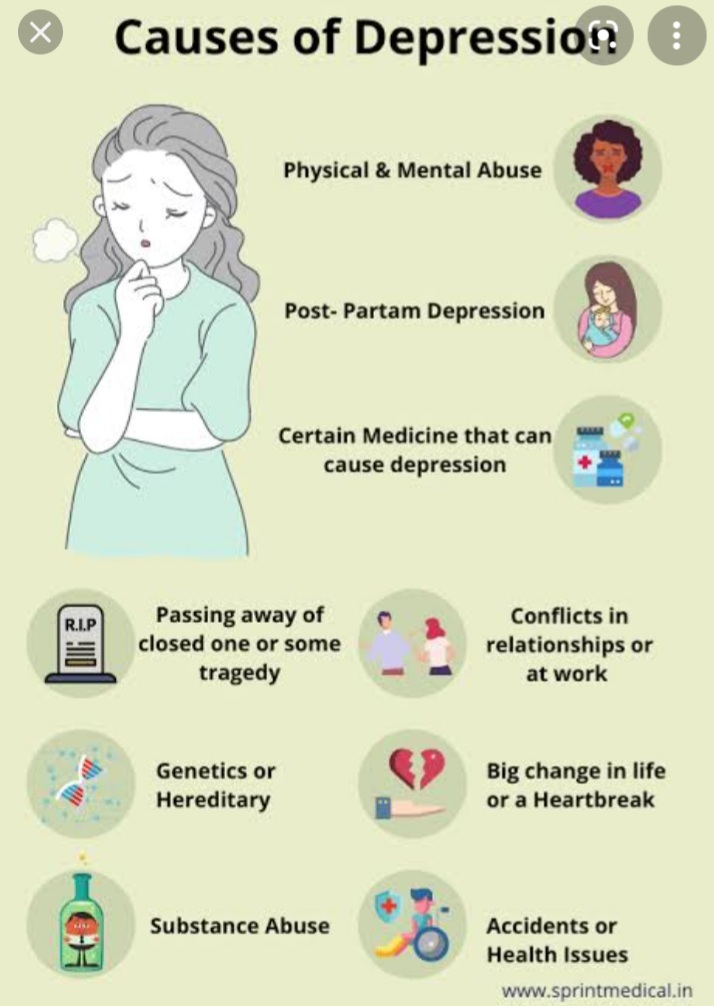
Depression causes :

There are several possible causes of depression. They can range from biological to circumstantial.

Common causes include ;

* Family history :

You’re at a higher risk for developing depression if you hace a family history of depression or another mood disorder.

* Early childhood trauma :

Some events affect the way your body reacts to fear and stressful situations

* Brain structure :

There’s a greater risk for depression if her frontal lobe of your brain is less active.

* Medical conditions :

Certain conditions may put you at higher risk, such as chronic illness, insomia, chroinc pain or attention- deficit hyperactivity disorder

* Drug use :

A history of drug or alcohol misuse can affect your risk.

Many factors can influence feelings of depression, as well as who develops the condition . The causes of depression are often tied to other elements of your health. Depression can be linked with to other health problems, your healthcare provider may also conduct a physical examination and order blood work.

Types of depression :

Depression can be broken into categories depending on the severity of symptoms. Some people experience mild and temporary episodes, whike other experience severs and ongoing depressive episodes.

There are two main types. Major depressive disorder and persistent depressive disorder .

Major depressive disorder :

Major depressive disorder is the more severe form of depression. It’s characterized by persistant feelings of sadness, hoplessness and worthlessness that dont’t go away on their own.

Persistent depressive disorder :

Persistent depressive disorder ( pDD) used to be called dysthymia. It is a milder, but chronic, form of depression.

It’s common for people with PDD to

* lose interest in normal daily activites.

* feel hopless

* lack productivity

* haveclow self- esteem

Depression can be treated successfully, but it’s important to stick your treatment plan.

Treatment for depression :

Living with depression can be difficult, but treatment can help improve your quality of life. Talk to your health care provider about possible options. You may successfully manage symptoms with one form of treatment ,or may find that a combinations of treatment works best.

E-Commerce and it’s Impacts on Market and Retailers in India…

The internet is quite crucial in our everyday lives. We utilise the internet practically every day for almost every task. Before e-commerce, purchase and sale were done physically in marketplaces, but with the introduction of e-commerce in India, our lives have become more comfortable due to a variety of benefits. Online shopping is a subset of ecommerce that is primarily done by users thanks to e-commerce websites in India that allow us to purchase and sell items of our choosing at reasonable prices. E-commerce websites have a wide range of effects on various marketplaces and merchants. In this article, we will explore the various marketplaces and merchants, as well as the effects of ecommerce on them.

INTRODUCTION:-

E-commerce is the purchase and sale of products and services through the internet.  Earlier e-commerce, buying and selling were done physically in marketplaces, but with the introduction of e-commerce in India, our lives have become more comfortable due to a variety of benefits. The benefits of e-commerce include online purchasing of anything at any time and from any location; buyers may find items on e-commerce websites that are not accessible in physical marketplaces; it saves money and time; and we can obtain our product without leaving our homes. Along with e-commerce, there is also a common word known as e-business, which refers to how businesses have expanded electronically with the assistance of the internet, allowing them to reach a larger number of consumers and so improve their sales. The phrases E-commerce and E-business are used interchangeably and have no precise definition. In reality, E-commerce is a subset of E-business that focuses on external operations, whereas E-business focuses on a company’s internal and external activities. Ecommerce has a variety of positive and negative effects in many sectors. The key to establishing a successful e-commerce is to limit the negative consequences while increasing the advantages.

DIFFERENT MARKETS AND RETAILERS IN INDIA:-

[A] Markets

  1. Physical Markets:- A physical market is one in which clients come to the market and engage with the vendor face to face before purchasing a product or service in return for money. Shopping malls, department stores, and other physical markets are examples.
  2. Non-Physical Markets/Virtual Markets:- Non-Physical Market is a market in which clients do not go to the vendor physically and do not engage face-to-face. The customer purchases the merchandise via the internet and exchanges money electronically. These markets include Flipkart, Amazon, and eBay, among others.
  3. Knowledge Market:- In this market Information and knowledge based products are sold.
  4. Market for Intermediate Goods:- In these markets, raw materials are offered, while final products are created by combining them.
  5. Auction Market:- The auction market is one in which items are auctioned to the highest bidder while lower bids are disregarded.
  6. Black Market:- Unauthorized items like as narcotics, guns, and alcohol are sold at these markets, which are controlled by illegal vendors.
  7. Financial Market:- This market exchanges liquid assets or money. Financial markets are classified into three types: Stock exchange, where equities are traded; Bond market, in which debt securities in the form of bonds are exchanged; The foreign exchange market, often known as the currency market, is where currencies are exchanged.

[B] Retailer

  1. Department Store–A department business is a store that combines several small stores under one corporation and offers a large range of items. It offers value for clients by providing a diverse range of items at one location.
  2. Supermarkets–Supermarkets traditionally sell food and drinks, but owing to client demand, they increasingly now sell fashion and electronic products. It has strong purchasing power, which explains why it sells at low prices.
  3. Warehouse Retailers–Warehouse retailers are located in areas where the premises rent is relatively inexpensive, allowing them to store, display, and sell a huge number of items.
  4. Convenience Store–These stores can be found in residential areas. sells a restricted number of items at a premium price because they bring value in the form of convenience
  5. Discount Retailer–Discount retailers are those that give discounts on less trendy goods by purchasing them from suppliers, reselling them till the end of the line, and then returning the remaining products at the discounted price to the source.
  6. Specialty Retailers–Specialty retailers provide a unique service or product and give consumers with professional expertise and excellent service. They offer value by selling accessories and related items at the same location.
  7. E-tailer–E-tailers are vendors who allow clients to buy products via the internet and offer home delivery, allowing them to reach customers in a large geographic region and supply items to them. Because they have little rent and overhead, they can provide reasonable pricing.

IMPACT OF E-COMMERCE ON MARKETS AND RETAILERS:-

Impact on Markets

  1. Product Promotion-Through Ecommerce, products can be promoted in an interesting way and with lots of information directly to customers, lowering the cost of offline promotion because the internet can interact with a large number of customers and save money on advertisements that can be used in other areas of business.
  2. Customer Service-Customer service may be improved since customers can look for specific information about a product or marketplace that sells the product and compare pricing from other market places.
  3. Brand Image– New business owners may develop their brands on the internet by employing beautiful pictures at a low cost.
  4. Advertisement– Traditionally, advertisements were one-way to attract customers and inform them about a new product or market place; however, with the advent of e-commerce, advertisements are now two-way, allowing customers to browse the market place and products, compare prices, and ask questions to online retailers.
  5. Customization-Customized items can be made accessible to consumers based on their specific requirements. It will be an excellent site to do business in the market, and new consumers will be drawn in.
  6. Ordering Process-Traditionally, intermediaries are employed to take orders from consumers, which takes a lot of time and money, but with ecommerce, order taking is so simple that it saves a lot of time and money, and they can generate more sales.
  7. Customer Value-Traditionally, obtaining a high value from consumers was the primary goal. Consumers were the only ones who were drawn, and they were the most important goal, but now sellers cultivate long-term connections with customers in order to achieve long-term value by providing them with unique discounts.

Impact on Retailers

  1. Customer Service– Offline businesses provide a variety of services that internet stores do not. Repair and items of services, home delivery, and after sales services, as well as online stores, are examples of such services.
  2. Window Shopping– Due to the low costs given by internet retailers, people visit physical locations to window shop before purchasing a product online. As a result, they have more prospective consumers than actual customers.
  3. Advertisement– Offline shops concentrate only on ads in order to attract customers and improve sales. They don’t miss a single opportunity to market.
  4. Discount– Offline merchants sell their items at reduced prices since online stores provide substantial discounts to customers, and in order to remain competitive and attract customers, they must sell their products at reduced prices.
  5. Variety of Stocks– Online stores provide a wide range of items that offline merchants cannot compete with since excess stock at the end of the year might result in a significant loss for the retailer.
  6. Turnover– As a result of e-commerce, the turnover of offline shops has decreased, which is a warning indicator for the business.
  7. Profit Margin– With the introduction of internet stores into the market, traditional businesses have suffered from price issues. To stay in business, businesses must offer their products at legal rates that cover only their operating expenses, with no profit margin.

CONCLUSION:-

This paper concludes that e-commerce is highly beneficial to us since it offers us with a broad range of items and services, as well as a wealth of information and appealing images, at a cheap price, right at our doorstep. It is convenient for clients and helps businesses to extend their operations over the internet. Ecommerce has a positive impact on markets because it reduces the cost of advertising because many customers can be attracted through the internet, it allows for the development of new brands, it allows for the maintenance of good relationships with customers, and it allows for the creation of customized products based on the needs of the customers. However, e-commerce has a negative influence on offline retailers since people buy at low prices from online shops, forcing them to cut their prices as well, resulting in no profit. Retailers cannot maintain a vast stock like online shops have stores because it would cost them a tremendous loss. To entice customers, they must spend more money on offline marketing. Along with the benefits, e-commerce has some limitations in terms of markets and retailers. These limitations include website cost, which is required to create and maintain a website; infrastructure cost, which is required to fulfil orders online retailers must maintain a large stock in a large warehouse, which is costly; security and fraud, which is due to the popularity of online shops. Criminal elements are also drawn to them, since they may hack personal information and exploit it; consumer trust, it is difficult for customers to trust a new brand without viewing, touching, and face-to-face connection.

What is Open Market Operations ( OMO ) ?

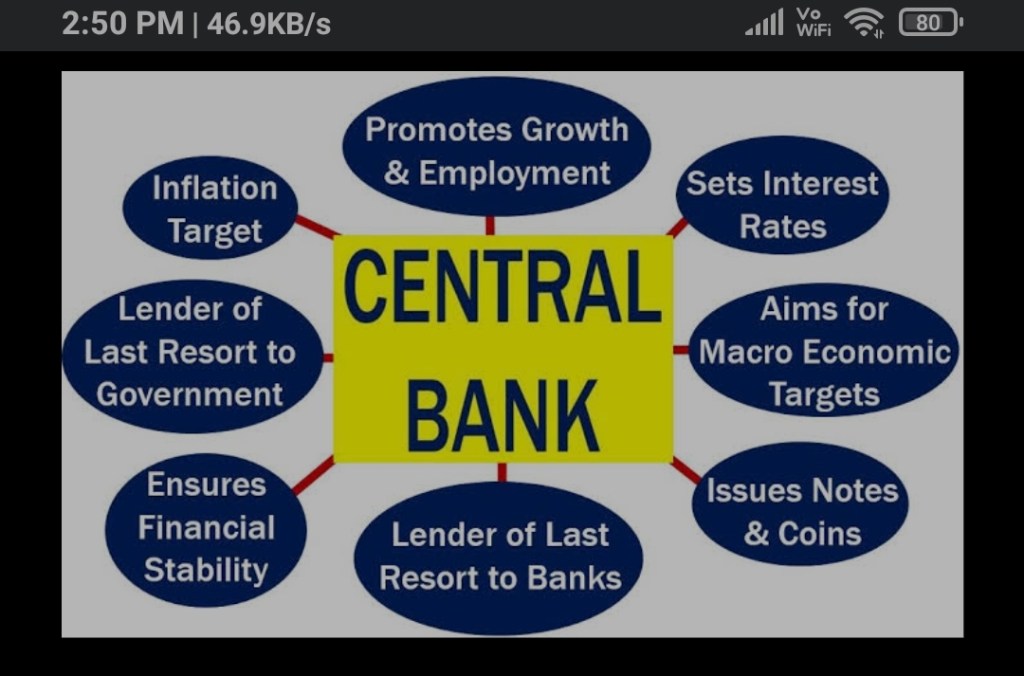
A central bank is the apex institution of the monetary and banking structure of the country.

It performs several important monetary  functions in the banking system.

According to A.C.L. Day a central bank ” helps and controls and stabilizes the monetary and banking system .

Along with several other essential functions, the central bank ‘s most important function is to control the credit creation power of commercial banks .

“Central Bank also known as Controller of Credit “

Credit control is the means to control the lending policy of commercial banks by the Central Bank .

The central bank controls credits in accordance with the needs of business and with a view to carrying out the broad monetary policy adopted by the state.

It adopted two methods of credit control :-

Quantitative Credit Control Methods

Qualitative Credit Control Methods

Open market is one of the methods of quantitative credit control used by the central bank .

What is open market Operations ( OMO ) ?

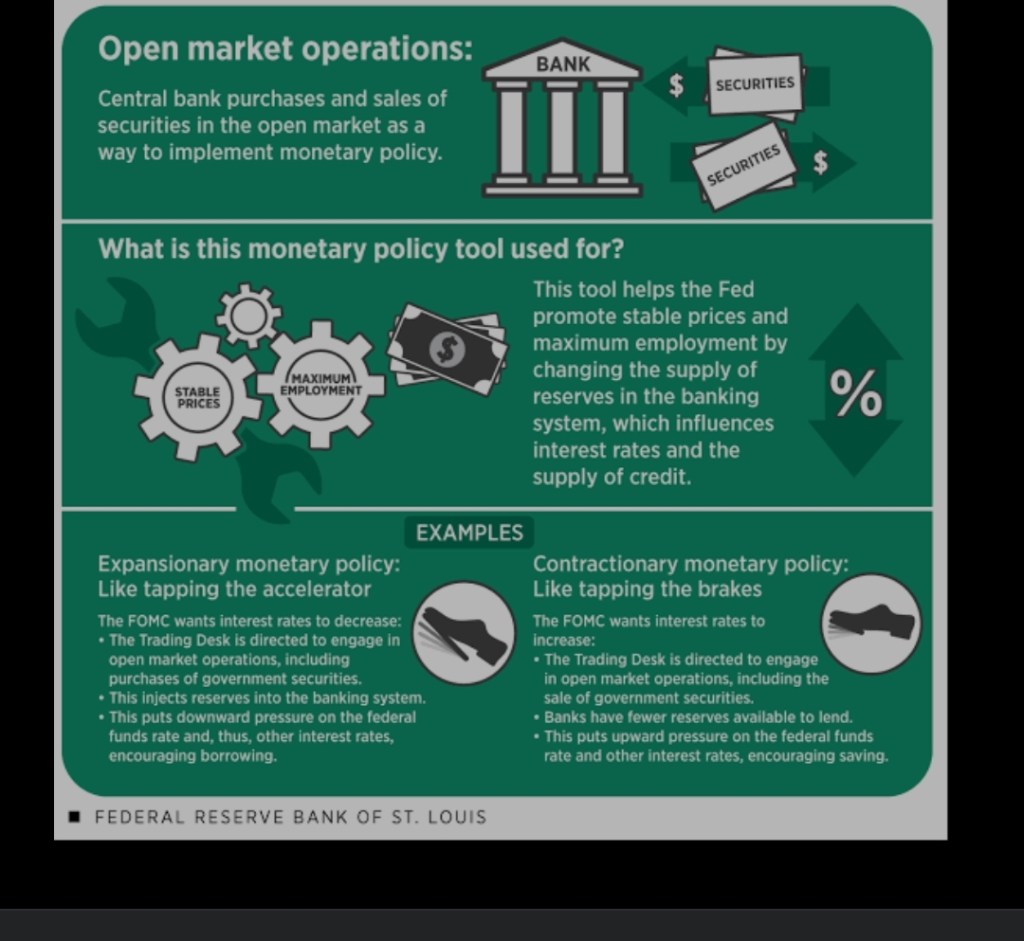
Open market Operations in general terms means dealing with government securities and bonds.

To elaborate more, Open Market Operations  refers to the sale and purchase of securities , bills and bonds of government as well as private financial institutions by the Central Bank . 

OMO is an activity by a central bank to give or take  liquidity in its currency to or from a bank or a group of banks.

There are two principle motives of open market Operations

• to influence the reserves of commercial bank in order to control power of credit creation 

• to affect the market rates of interest and supply of base money

In order to manipulate the short-term interest rate and the supply of base money in an economy, i.e to  indirectly control the total money supply, the central bank  buys and sells government securities, or other financial instruments.

 Monetary targets, such as inflation, interest rates, or exchange rates, are used to guide this implementation.

In the given figure , S is the supply curve of bank money which shifts to the left as S¹ showing a decrease in the supply of bank money from B to A , given the level of interest rate r .

When the central bank aims at an expansionary policy during a recessionary period , it purchases government securities from the commercial banks and institutions dealing with such securities .

The supply curve of bank money shifts from S¹ to S², showing an increase in the supply of bank money from B to C .

The bank will now lend more at the given rate of interest r.

As the result of change in supply of bank money in market through the open market operations

The market rates of interest also change .

A decrease in the supply of bank money through sale of securities will raise the interest market  rates and an increase in supply of bank money will reduce the market rate interest. ___________________________________________

Open Market Operation policy in India 

The  fact that India  is a developing country its  capital flows are very different from those in developed countries which influence   the Open Market Operation policy .

 India’s central bank, the Reserve Bank of India (RBI), has to make policies and use instruments accordingly.  RBI’s major source of funding and control over credit and interest rates was the cash reserve ratio (CRR) and the SLR (Statutory Liquidity Ratio). But after the reforms, the use of CRR as an effective tool was deemphasized and the use of open market operations increased. OMOs are more effective in adjusting. 

RBI use two types of OMOs :- 

Outright purchase (PEMO):

 It is  outright buying or selling of government securities. 

Repurchase agreement (REPO):

It  is short term, and is subject to repurchase.

OMOs are the most effective credit control instrument with the central bank and are preferred over other methods.

__________________________________________

Limitations of Open Market Operations

Although being an effective method OMO has certain limitations such as :-

Lack of Securities Market :-. It is important to have an organised security market system for central banks to buy or purchase securities on a large scale.

Unstable Cash Reserve Ratio:-  The buying and selling of securities and bonds by central banks highly influence the cash reserve ratio which is to be maintained at a fixed rate .

Penal Bank Rate  : – According to Profs Aschheim penal rate is one the necessary conditions for success of open market operations. If the penal bank Rate of discount is higher than the market rates of interest , the commercial bank can not increase their borrowings.

Pessimistic and Optimistic Attitude :- The pessimistic and optimistic attitude of the business community also limits the operations of open market policy. A business may be unwilling to take the risk of taking out a loan during a depression . 

Velocity of Credit and Money not Constant :- The velocity of credit increases during periods of brisk business activities and decreases in periods of falling prices. Hence ,the unstableness of velocity of credit and money constantly affects open market operations. 

Despite the given limitations , the central banks find the Open Market Operations instrument the most successful for controlling credit in developed as well as developing countries.

NEW QUAD GROUP

The United States, Pakistan, Afghanistan and Uzbekistan have agreed to establish a new quadrilateral diplomatic platform to enhance regional connectivity. The US State Department announced the setting up of the new diplomatic platform on July 16, 2021 to help strengthen economic connectivity across the region. The department announced that representatives from Washington, Kabul, Islamabad, and Tashkent had agreed, in principle, to establish a new quadrilateral diplomatic platform focused on enhancing regional connectivity.

“The parties consider long-term peace and stability in Afghanistan critical to regional connectivity and agree that peace and regional connectivity are mutually reinforcing,” the State Department said. Afghanistan’s strategic location has for a long time been touted as a competitive advantage for the country.

This development comes as the security situation in Afghanistan has been deteriorating following the withdrawal of US military forces from the country. The drawdown is set to be complete by the end of August.
As the Taliban continues to seize new territory, US officials have been engaged in talks with countries neighboring Afghanistan to support the Afghan defense forces. Other south and central Asian countries are also engaged in talks to advance peace talks.

The new quad group’s formation is significant as it comes amid China’s efforts to extend its Belt Road Initiative (BRI) to Afghanistan. The Belt Road Initiative was launched by Chinese President Xi Jinping when he came to power in 2013. The Belt Road Initiative aims to link Southeast Asia, Central Asia, the Gulf region, Africa and Europe with a network of land and sea routes. Afghanistan due to its strategic location can provide China with a strategic base to spread its influence across the world. Pakistan Prime Minister Imran Khan had visited Uzbekistan in the past week for an official two-day visit during which he highlighted the benefits of regional connectivity and invited the nation to become party to China’s Belt and Road Initiative. 

Pradhan Mantri Shram Yogi Maan-dhan (PM-SYM)

The Pradhan Mantri Shram Yogi Maan-dhan (PM-SYM) announced in the interim
budget 2019 has been notified by the Ministry of Labour and Employment. Features
of the PM-SYM PM-SYM is a voluntary and contributory pension scheme on a 50:50
basis where prescribed age-specific contribution shall be made by the beneficiary and
the matching contribution by the Central Government. The salient features of the
PM-SYM are:

Each subscriber under the PM-SYM, shall receive minimum assured pension of
₹ 3000/- per month after attaining the age of 60 years, If the subscriber dies during the period of receipt of the pension, the spouse of the beneficiary shall be entitled to receive 50% of the pension received by the beneficiary
as a family pension, If the beneficiary had died due to any cause (before age of 60 years), his/her spouse
will be entitled to join and continue the scheme subsequently by payment of regular
contribution or exit the scheme as per provisions of exit and withdrawal, The subscriber must not be a taxpayer.
The scheme is expected to benefit as many as 42 crore workers are estimated to be engaged in the unorganized sector of the country whose monthly income is ₹ 15,000/per month or less and belong to the entry age group of 18-40 years who are not be coveredunder New Pension Scheme (NPS ), Employees ’ State Insurance Corporation (ESIC )
scheme or Employees’ Provident Fund Organisation (EPFO).

Enrollment process- The Unorganised Worker will be required to visit the nearest Common service centre (CSC) and get enrolled for PM-SYM using Aadaar card and Savings bank/Jan-Dhan account number on self-certification basis. First subscription to be paid in cash and auto debit from next month onwards. Later, facility will be provided where the UW can also visit the PM-SYM web portal or can download the mobile app and self-register using Aadhar number/savings bank account/Jan-Dhan account number on self-certification basis.The enrolment will be carried out by all the CSC in the country. Customer Care number 1800-2676-888 (available 24*7).Web portal/app will also have the facility for registering the complaints.In case of any doubt on the scheme, clarification provided by the Joint Secretary & Director General (Labour Welfare) will be final.

Agriculture Distress in India

Agrarian distress in India, built-up over time, has further deteriorated recently. … The underlying reasons for agrarian distress in India are: a) unviable agriculture; b) ineffective Minimum Support Prices (MSP) system; c) adverse terms of trade; d) rural indebtedness; and e) inefficient value chain in agriculture.

Agriculture has been a key contributor to India’s growth story, where 650 million people or 58 per cent of Indian households are directly or indirectly dependent on agriculture. In recent years, crop failures, indebtedness, non-remunerative prices, and low returns have resulted in agrarian distress in most parts of the country. Despite the government introducing several reforms in the sector, challenges continue to exist.

The Indian agriculture sector is confronted with high price volatility, climate risk, and indebtedness. It is currently suffering from a period of crisis that has not only affected the overall productivity but also led to a massive reduction in farmers’ income. Since the majority of farmers are small and marginal with declining and fragmenting landholding, these uncertainties make it even more risk-prone.Some of the key initiatives rolled out by the government to mitigate agriculture distress and safeguard the interest of farmers in 2019 were:

Fasal Bima Yojana

It was a scheme introduced in 2016, keeping in mind that farmers are vulnerable to the vagaries of nature and need insurance support for crop loss. Under this scheme, farmers are provided financial support in the event of crop failure. They are required to pay a uniform premium of 2 per cent for kharif crops, 1.5 per cent for rabi crops, and 5 per cent for commercial and horticultural produce, with the balance being incurred by the government.

A close assessment of the scheme and its implementation shows that though the scheme provides much-needed relief as it protects the farmer from loss of income due to unavoidable risk, it does not guarantee any assured income for the produce. Being only a yield protection insurance, this scheme is not holistic and fails to provide revenue protection. Incorporation of technology through remote-sensing, drones, satellite imagery, and digitisation of land records should be promoted for effective implementation of the PMFBY.

Additionally, a regulatory framework that unifies the insurance system covering yield and price risk will ensure increased participation. The Government has taken steps to make the scheme effective, but hurdles remain in its effective implementation.

Krishi Sinchayee Yojana

Though the scheme focuses on assured irrigation through reduced water wastage and improving efficiency, it has so far failed to deliver on its promises. The target was to create irrigation potential for additional 4,293 thousand hectares by December19, but only 67 percent of the target has been completed.

Overall, PMKSY has set the target to achieve 99 irrigation projects by December19 to improve the irrigation coverage in the country. Land acquisition and delay in tendering process are the main reasons cited for the delay in the completion of the projects.

Kisan Samman Nidhi

The scheme promises direct payment of ₹6,000 per year in three equal instalments of ₹2,000 each to small and marginal landholding families. The scheme is geared towards inducing behaviour change through a nudge effect, as mentioned in the Economic Survey 2019 to make government schemes more effective. E-NAM aims to facilitate better price discovery, a nationwide electronic trading portal that links all APMCs (Agricultural Produce Marketing Committees) was developed under the name of E-Nam. The farmers are given the freedom to sell their produce without the intervention of any middlemen and with more options to sell, thus helping them get a more competitive return for their produce. A closer assessment of this initiative shows that e-NAM is facing significant challenges. Most of the e-NAM transactions are settled outside the system payment gateway; the farmers are not paid in full and on time. The account integration is the key to ensure the online platform succeeds. Moreover, it should also ensure that the entire ecosystem, including assaying and grading of produce works in tandem to ensure all India participation works. There is a need to strengthen the platform through significant investment in infrastructure, the up-gradation of mandis, and driving awareness among farmers’ welfare.

India has multiple hurdles in the path of equitable growth of its primary sector. But there are avenues through which productivity can be increased, and the growth of farmers’ income is attainable, even with the existing constraints. The development of the agriculture sector should be the focus area.

The government bodies, private players and agri start-ups working with the farmers can together transform the sector’s outlook. Along with this, we need a framework that is timely, consistent and improves the farmer’s income and hence quality of life.

Horticulture

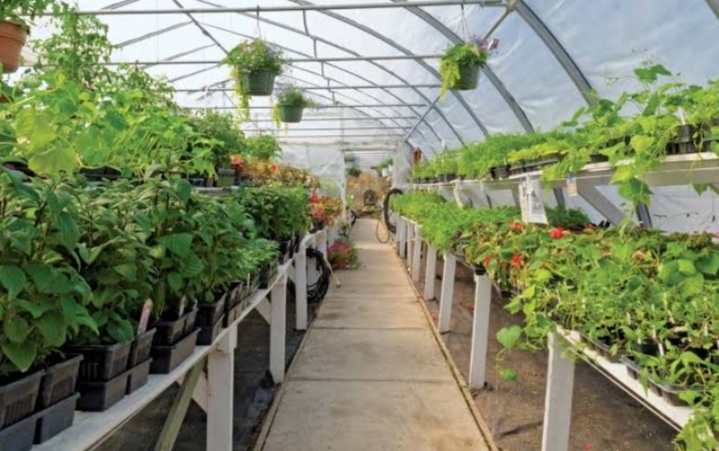
Horticulture, the branch of plant agriculture dealing with garden crops, generally fruits,vegetables, and ornamental plants. The Horticulture falls between domestic gardening and field agriculture, through all forms of cultivation naturally have close links.


It is divided into the cultivation of plants for food and plants for ornament. Pomology deals with fruit and nut crops. Oliericuture deals with herbaceous plants for the kitchen, including, for example carrots, cauliflower. Floriculture deals with the production of flowers and ornamental plants; generally, cut flowers, pot plants, and greenery. Landscape Horticulture is a broad category that includes plants for the landscape, including lawn turf but particularly nursery crops such as shrubs, trees, and vines.
The specialisation of the horticulture and the success of the crop are influenced by many factors. Among these are climate, terrain, and other regional variations.


HORTICULTURAL REGIONS :

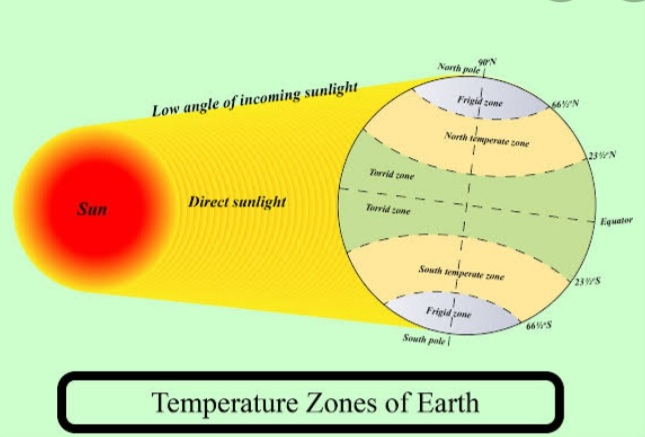
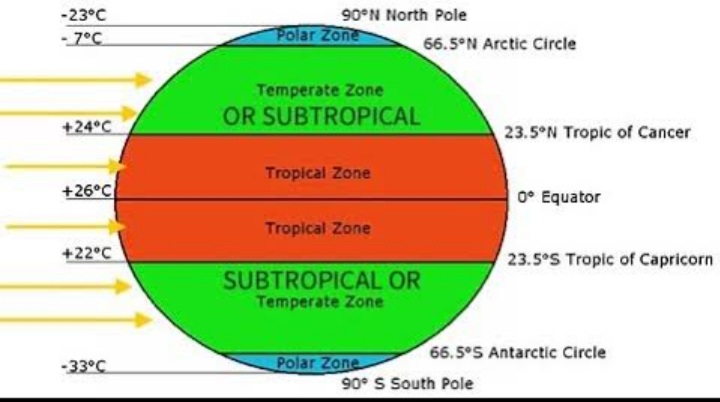
TEMPERATURE ZONES :


Temperature zones for horticulture cannot be defined exactly by lines of latitude or longitude but are usually regarded as including those areas where frost in winter occurs, even though rarely. Thus, most parts of Europe, North America and Northern Asia
are included, though some parts of the United States, such as southern Florida, are considered subtropical.
The temperature zones are also the areas of the grasses – the finest lawns particularly are in the regions of moderate or high rainfall- and of the great cereal crops. Rice is excluded as being tropical, but wheat, barley, corn and Rye grow well in the temperature zones.
Plants in the temperature zones benefit from a winter resting season, which clearly differentiates them from tropical plants which tend to grow continuously. Most of the great gardens of the world have been developed in temperature zones. Particular features such as rose gardens, herbaceous borders, annual borders, woodland gardens, and rock gardens are also those of temperature zone gardens. Nearly all depends for their success on the winter resting period.


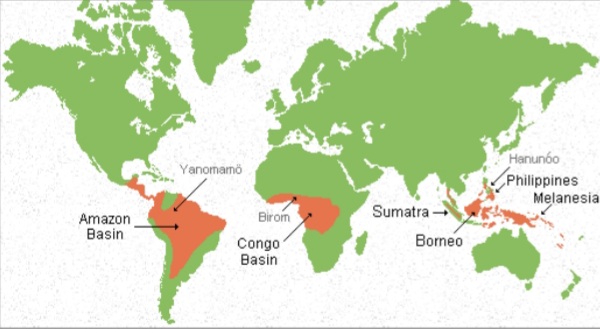
TROPICAL ZONES :


There is no sharp line of demarcation between the topics and the subtropics. Just as many tropical plants can be cultivated in the subtropics, so also many subtropical and even temperature plants can be grown satisfactorily in the tropics. Elevation is a determining factor. In addition to Elevation, another determinant is the annual distribution of rainfall. Plants that grow and flower in the monsoon areas, as in India, will not succeed where the climate is uniformly wet. Another factor is the length of day, the number of hours the sun is above the horizon;some plants flower only if the day is long, but others make their growth during the long days and flower when the day is short.
In the tropics of Asia and parts of central and south America, the dominant features of the gardens are flowering trees, shrubs, and climbers. Herbaceous plants are relatively few, but many kinds of orchids can be grown.


PROPAGATION :


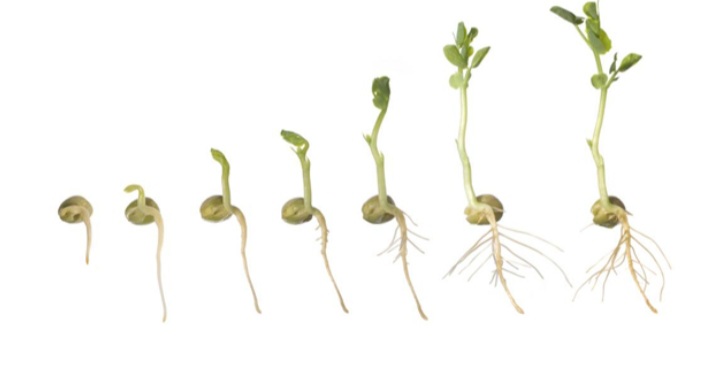
propagation is the controlled perpetuation of plants,is the most basic of Horticulture practices . It’s two objectives are to achieve an increase in numbers and to preserve the essential characteristics of the plant. Propagation can be achieved sexually by seed or asexually by utilising specialised vegetative structures of the plant or by employing such techniques are cutting, layering, grafting and tissue culture

SEED PROPAGATION :


The most common method of propagation for self- pollinated plants is by seed. In self-pollinated plants,the sperm nuclei in pollen produced by a flower fertilize egg cells of a flower on the same plant. Propagation by seed is also used widely for many cross- pollinated plants pollen is carried from one plant to another.
The practice of saving seed to plant the following year has developed into a specialized part of horticulture. Seed technology involves all of the steps necessary ensure production of seed with high viability, freedom from disease, purity, and trueness to type. These processes may include specialized growing and harvesting techniques, cleaning, and distribution. Germination in such seed may be accomplished by treatment to remove these inhibitors. This may involve cold stratification, storing seed at high relative humidity and low temperatures, usually slightly above freezing. Cold stratification is a prerequisite to the uniform germination of many temperature-zone species such as apple, bear, and redbud.


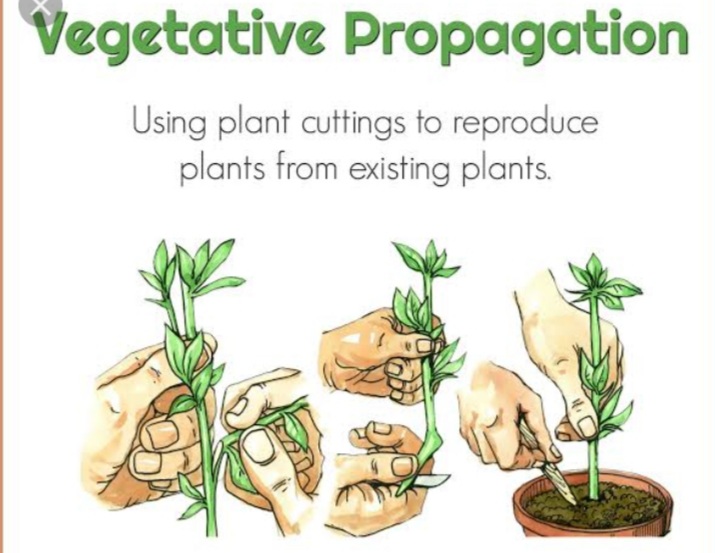
VEGETATIVE PROPAGATION :


Asexual or vegetative reproduction is based on the ability of plants to regenerate tissues and parts. In many plants vegetative propagation is a completely natural process; in others it is an artificial one. It has may advantages. These include the unchanged prepetuation of naturally cross pollimated palnts and the possibility of propagation seedless progeny.
Vegetative propagation is accomplished be use of

  1. Apomictic seed
    1. Specialized vegetatice structres such as runners, bulbs, corms, rhizomes, offshoot, tubers, stems and roots.
  2. Layers and cuttimgs
  3. Grafting and budding
    1. tissue culture.

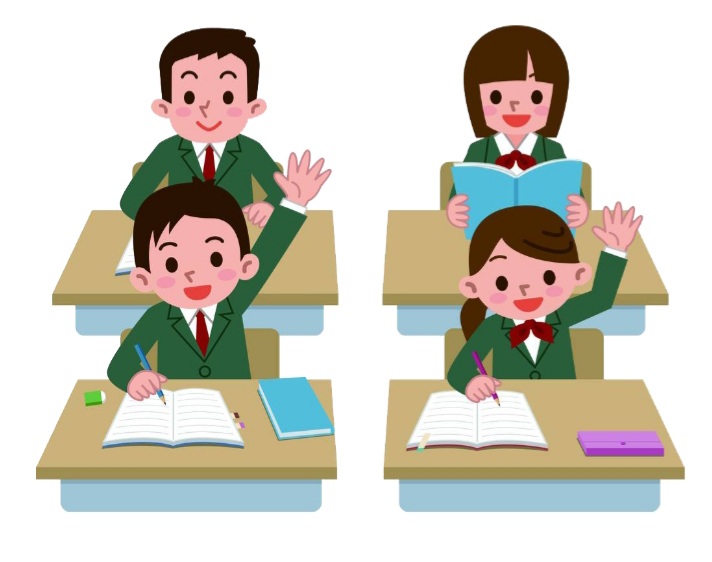
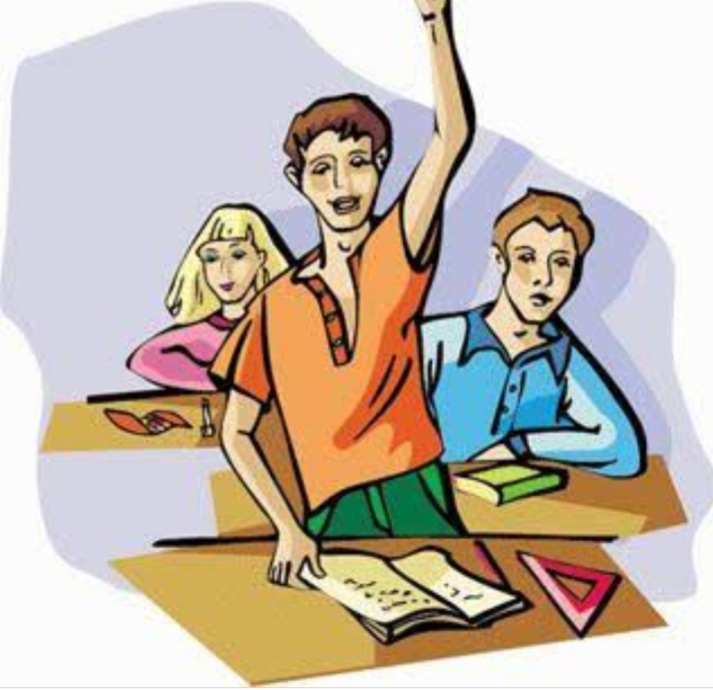
Ideal student

An ideal student is one who is good at skills and an motivation to everyone in the class. Schooling is one of the best blessings that a child can have. It is one of the best feelings which no others can have.

The ideal student is the one who respects others feelings and who will be obedient in many of the situations.

The student’s relation with the teacher is a great one. A student must maintain a healthy relationship with the teachers. Teachers play a very important role in making the student perfect and make them to understand the need of the situation. Teachers help the students to reach their desired goals and in any situation teacher motivates a student to get up and stand in all the ups and downs. Like that of the mother and the father, the teacher also feels equally happy when their student acheives high in their life and when they reach their desired goals.

An ideal student will never feel low at the failures. Instead, they will take their mistakes as an experience and will continue the hard work.

Some of the qualities that make an ideal student are :

  1. Hard work
  2. Discipline
  3. Taking responsibility
  4. Maintaining friendly relationships
  5. Respecting everyone
  6. Raising diubts without features.

SOME QUALITIES THAT MAKE AN IDEAL STUDENT FOR KIDS :

  1. • Ideal student traits make him uniqu, anong others.
    • It is believed that an ideal student will never waste his time and energy on non- productive things.
    • The ideal student has inborn winning qualities.
    • Ideal students will always goal- oriented. Thys, they play according to actions to reach their goals.
    • It is proven that ideal students will punctual in school and always on time regularly.
    • He respects everyone. He also obeys their instructions and others.
    • Ideal students are not bookwarms. They keenly observe and read wisely.
    • Ideal students take his studies with all seriousness. They dont’t allow any other activites to disturb them
    • Ideal students always seek the teacher’s guidance. Also, they believe in the knowledge of their teachers.
  2. SOME QUALITIES THAT MAKE AN IDEAL STUDENT FOR SCHOOL STUDENTS :
  1. • Ideal students are always thirsty to gain knowledge.
  2. • They always strive to reach their goals
    • Ideal students always dedicated to their education and work.
    • Ideal students behave well and very attentive in classes. They always listen to their teachers while classes are going on
    • They never hesitate to raise their doubts about studies if they feel some difficulty in understanding.
    • one of the best things about ideal students is that they are very friendly. Also, they help yo his friends regarding studies.
    • Ideal students are creative and think out of the box for any completion of tasks.
    • He always inspire eveyone and attracts the teachers and elders easily.

    • Ideal students are very responsible and underdtand the value of every wird from their elders.
  3. SOME QUALITIES THAT MAKE IDEAL STUDENT FO HIGHER CLASS STUDENTS :

• Ideal students are always fit both physically and mentally.

• Ideal students can differentiate between what is right and what is wrong .
• Ideal students always keep friendly relations with othet students even though he has many competitors
• He always maintains his promise and never feels proud of his awards and achievements.
• Ideal students will nevet trust in superstitions, but believe beliefs. It is because they think very logically abd ratinally.

• An ideal students tries to improvr in all aspects of his life and to reach goals.

• Ideal students show affection and respect towards their elders and parents.
• Ideal students read a lot of books.
• The ideal students will take responsibility for their society and country.
• An ideal student will never look fir shortcuts. They believe that hard work is the only way to succeed in life.


In simple terms, an ideal students is science towards academics and maintains friendly relations with teachers and elders. Aldo, an ideal student will have leadership and communication skills.
The role of an ideal student is both attentibe and punctual in duties. He goes to his school, college or university in time. He attends the classes on regular basis .