NDHM to unleash digital health tech revolution with innovations & various services for citizens: PM Modi

Prime Minister Narendra Modi today directed that steps be expedited to expand operations under the National Digital Health Mission (NDHM).

Mr Modi said that the NDHM will bring ease of living for citizens to avail a large number of health services.

Chairing a high level meeting to review progress of NDHM, he said, it will unleash a digital health tech revolution with innovations and various services for citizens.

Last year during his Independence Day address, Prime Minister had announced the launch of NDHM.

Since then, the digital modules and registries have been developed and the mission has been rolled out in six Union Territories.

So far, nearly 11.9 lakh Health IDs have been generated and 3106 doctors and 1490 facilities have registered on the platform.

It has been envisaged that Unified Health Interface (UHI) – an open and interoperable IT network for digital health should soon be rolled out.

This interface shall enable public and private solutions and apps to plug in and be a part of National Digital Health Ecosystem.

It will allow users to search, book and avail necessary healthcare services such as tele-consultations or laboratory tests.

The system will ensure that only verified healthcare providers join the ecosystem.

In such a manner, healthcare infrastructure and human resources can also be utilised in a more efficient manner across the nation.

The concept of UPI e-Voucher developed by National Payment Corporation of India (NPCI) was also discussed.

The Prime minister observed that the utility of the platform to the citizens will be visible only by way of enabling citizens across the country to avail of services like tele consultation with a Doctor and availing services of a lab.

PM Modi reaches Odisha to review impact of Cyclone Yaas

Prime Minister Narendra Modi arrived at the airport in capital Bhubaneswar in Odisha a short while ago to review the impact of Cyclone Yaas.

He was received at the airport by Chief Minister Naveen Patnaik, Union Minister of State Pratap Chandra Sarangi and other senior level officers.

He will also undertake an aerial survey of the cyclone affected areas of the state.

Prime Minister Modi will also take part in a review meeting over the cyclone-led devastation at Kalaikunda in Paschim Medinipur district in West Bengal today in which the Chief Minister Mamata Banerjee will also take part.

AIR Kolkatta correspondent reports, Prime Minister Narendra Modi will hold a meeting with Chief Minister Mamata Banerjee at Kalaikunda Airport in West Medinipore district before returning to Delhi.

The chief minister said the Prime Minister had called her for a meeting on Friday to discuss the damage caused by the cyclone in the state.

She will be present there.

Note that the Chief Minister herself is going to visit the district today to review the damage caused by the cyclone Yaas.

According to a preliminary review by the state government, damage of at least Rs 15,000 crore is expected to have happened in the disaster caused by the cyclone.

The central government has already announced more than Rs 400 crore in advance compensation for the damage caused by the storm.

Besides, on behalf of the state government, the Chief Minister said that another Rs 1,000 crore would be allocated for relief and compensation.

It is expected that the Center will be asked to allocate the necessary funds on behalf of the state by raising the issue of loss in a meeting with the Prime Minister today.

An orb and Leonardo da Vinci: The Salvator Mundi Painting Solved

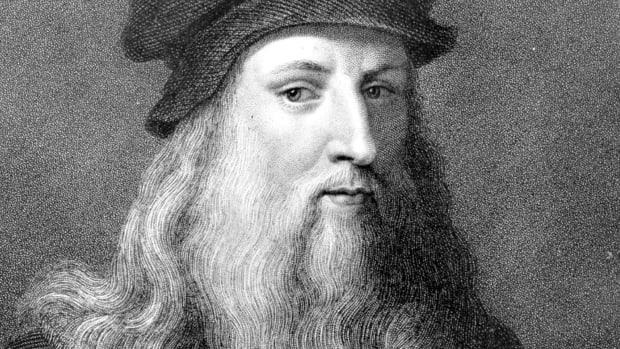
Leonardo da Vinci, the artist of the famous Mona Lisa and Salvator Mundi painting, is a man of mysteries. He was more than a painter. He was an avid engineer, scientist, sculptor and an architect with deep knowledge about science and astronomy. The alien theories, the striking symbolism theories and more out-of-the world speculations about his work are being debated up till now. One such puzzle is the Salvator Mundi painting

The Salvator Mundi Painting
Salvator Mundi
The Salvator Mundi painting

The Salvator Mundi painting was created by da Vinci somewhere between 1490-1500. It is the world’s most expensive painting, priced at 450 million US dollars. No, Mona Lisa isn’t the most expensive one. Deep search can tell you that. The image depicts a man, presumably Jesus Christ, holding in his hand a spherical ball like structure. Nothing mysterious about the painting as of now. Okay. So what was solved?

To understand how scientists solved the puzzle, we have to look up the problem. As I had already stated, da Vinci was a man of science and had genuine knowledge about it. It can be proved by looking at his works which deceivingly represent scientific facts. Salvator Mundi means ‘savior of the earth’. So it can be interpreted that the glass orb that Jesus is holding symbolizes the earth.

The problem behind

What is wrong about this painting is that, any 10th grader would know that a convex lens would provide an inverted, magnified, reversed image of an object placed behind it. The glass orb must act like a convex lens and thus do the same. But if you observe carefully, you can see that it appears as if those properties are defied and a clear, non-reversed image of Jesus’ hand and clothing is visible behind the glass orb.

You may argue that any painter would be ignorant of the science behind a convex lens. But Leonardo da Vinci was not ‘any painter’. He was a polymath of the High Renaissance! He has portrayed much more complex scientific principles in his work than that of a convex lens. There is no plausible way that da Vinci couldn’t have known the laws of optical physics. So why did he do that?

Solved

The puzzle was solved by computer scientists from the University of California, Irvine. The painting was 3d virtualized to study about how the various material orbs would appear under different refractive conditions. Many materials with which orbs could be designed were taken into consideration. At last it was concluded that the spherical orb was not a solid mass, instead a hollow orb. Hollow orb does not behave like a convex lens. It displays the image as it is, thus adhering with the painting. They predicted that the glass of the orb in Salvator Mundi was a fraction of an inch thick thus accounting for the quality.

Did Leonardo da Vinci actually paint it?

Many critics claim that the painting is not actually da Vinci’s. They point that da Vinci is more of a scientist to commit such trivial errors and thus proving that he did not paint it at all and that it was painted by a ‘lesser’ painter. But many say that, such a clever installation of the orb itself is a proof of authenticity. In order to think about hollow orbs and paint it during the 1500s would take immense intellect, which can only be done by the polymath himself.

Leo constellation?


three dots
The three dots in the glass orb
Orange iris
The orange iris of Jesus in the painting

As if the Salvator Mundi has not enough controversies, one more intriguing detail is the three dots painted in the glass orb giving it a mystical appearance. The three dots are said to represent the constellation of the sign Leo. What does it have to do anything with this painting? Well, if you observe the iris of Jesus, a faint orange glow emanates from within. The orange iris imitates Lion’s eyes. And thus the constellation, many say. Some also relate to the fact that his name Leonardo is the reason behind. However there is no concrete explanation behind.

Hope I kindled some curiosity within you today. I leave you with one of my favorite da Vinci’s quote:

To develop a complete mind:

Study the science of art;

Study the art of science.

Learn how to see. Realize that everything connects to everything else.

-Leonardo da Vinci


India-US a major relation in the world today, says Jaishankar

External Affairs minister Jaishankar on his first visit to U.S. after Biden said the importance of India-US relation: On his first visit to the United States after the end of Trump administration and beginning of the Biden administration, External Affairs Minister S Jaishankar called the relationship of India and US as one of the most important relationships in the world.

On wednesday S Jaishankar told H R McMaster the former national security advisor (during administration of Trump) that “I think our relationship has come a long way. It is, today, one of the major relationships in the world,” during a webcast discussion.

“My own sense is that I Washington today there is a real appreciation of the potential of this relationship … and it’s true of New Delhi as well,” he said. He also added that the challenge today is for the other countries to  learn to work with each other more effectively in this multipolar world.

He further added that “I see a big change in the American mindset in that regard, The United States has not only an enormous ability to reinvent itself, it also has a great ability to assess its situation and re-strategize, in a way. And I do think today that when it comes to the big issues of our day …we have fundamental convergences. Convergences which are societal convergences, which are geopolitical . And I think the challenge before us is how to translate those convergences into actionable policies” .

In July Mr. S Jaishankar gave an statement saying that America need to go “beyond alliance” and should learn how to work in a multipolar world with plurilateral arrangements. But since Biden administration came into power after Trump administration, the country has again started to recommit itself to the multilateralism as a pillar of its foreign policy. During Trump administration major policies were based on the idea of America First.

S Jaishankar also said that “I think there needs to be that realization that this could easily happen to us. In many cases, it has happened to us and the right response, therefore is to help each other out and I am glad to say we’ve [ India] seen a tremendous outpouring of international support and solidarity at this time,”. Mr. Jaishankar emphasised on the changing world after epidemic. Jaishankar also said to world that when you have a big problem the only way out is global cooperation.

Mr. Jaishankar also shared his views on increasing strategic anatomy. He said “I think …the conversations are beginning to change towards more resilience …how do you de-risk the world,“. He also said that world is going to change a lot due to pandemic. He said “We can’t have a world which is part vaccinated and part neglected, because that world is not going to be safe. ‘How do we get through the global challenges in a global way?’ I think that’s the big question,“. He also said regarding the countries pursuing their national interest at the cost of everything else and he said that it is going to cause problems for everyone.


Plant tissue culture and related opportunities

Introduction


Plant tissue culture (PTC) is a bunch of procedures for the aseptic culture of cells, tissues, organs and their parts under characterized physical and chemical conditions in-vitro and controlled climate. It likewise investigates conditions that advance cell division and hereditary re-programming in-vitro conditions and it is viewed as a significant instrument in both fundamental and applied examinations, just as in business application. It is a territory of applied science that gives a wide stage to the aseptic culture of cells, tissues, organs, and their segments under characterized substance and physical in-vitro conditions. This science follows an essential idea where the plant body or organ or any tissue can be dismembered into more modest parts called “explants” and any explants can be additionally formed into an entire plant. Plant recovery shapes the premise of in-vitro engendering. There are different ideas and strategies that are as often as possible rehearsed in plant tissue culture science. In current biotechnology, the greater part of the ideas and procedures manage the hereditary investigation of plants. In present day plant biotechnology, the quality of interest is removed from the genome with the assistance of a limitation catalyst. The quantity of plants developing wild increasingly more decreases, as a result of the aimless assortment, in this manner numerous species are vanishing quick and those current are frequently unusable because of unequivocally dirtied regions. In such circumstance the presentation of types specifically compelling in development and training, can be entirely beneficial and the mechanical control on their spread can ensure a consistent biomass accessibility. These cycles incorporate different fundamental ideas and procedures that lead to the progressive improvement of callus lastly foundation of the ideal full cell line of the plant, which could be probed again for different exploration purposes.


General steps of plant tissue culture


1. Micropropagation


Micropropagation begins with the choice of plant tissues from a solid, vivacious mother plant. Any piece of the plant can be utilized as explant.


2. Preparation of donor plant


Any plant tissue can be presented in-vitro. To improve the likelihood of achievement, the mother plant should be ex-vitro developed under ideal conditions to limit defilement in the in vitro culture.


3. Initiation stage


In this stage an explant is surface sanitized and moved into supplement medium. For the most part, the joined utilization of bactericide and fungicide items is recommended. The determination of items relies upon the kind of explant to be presented. The surface cleansing of explant in synthetic arrangements is a significant advance to eliminate foreign substances with insignificant harm to plant cells. The most regularly utilized disinfectants are sodium hypochlorite, calcium hypochlorite, ethanol and mercuric chloride (HgCl2). The way of life is hatched in development chamber either under light or dim conditions as per the technique for spread.


4. Duplication stage


The point of this stage is to build the quantity of propagules. The quantity of propagules is duplicated by rehashed subcultures until the ideal number of plants is achieved.


5. Rooting stage


The establishing stage may happen at the same time in a similar culture media utilized for increase of the explants. Nonetheless, now and again it is important to change media, including dietary adjustment and development controller arrangement to incite establishing and the improvement of solid root development.


6. Acclimatization Stage


At this stage, the in-vitro plants are weaned and solidified. Solidifying is done step by step from high to low dampness and from low light power to high light force. The plants are then moved to a suitable substrate and continuously solidified under nursery. .


General requirements for plant tissue culture


Instruments.

Filter sterilization units.

Osmometer.

Transfer and Culture

Laminar flow cabinet, for all controls requiring sterility.

Culture room or incubator.

Orbital shaker, for cell suspension.

Low-speed bench centrifuge, for example, the Hettich Universal. 38-, 50-, and 280~pm mesh hardened steel strainers.

Media

Numerous media details have been concocted to help the development of refined plant cells. The most generally utilized media, MS, was created by Murashige and Skoog, other media incorporate B5


Ultrafiltration

Media containing heat labile parts e.g., indole acidic corrosive, gibberellic corrosive, zeatin, glutamine or complex combination of sugars e.g., KMSP should be channel cleaned by pull of the medium through a 0.2~pm breadth pore size channel. On the off chance that agar media are required, they can be channel sanitized at double the last fixation, and blended in with an equivalent volume of autoclaved twofold quality agar that has been permitted to cool to about 60°C.


Growth Regulators

Water-solvent: ABA (abscisic acid), GA, (gibberellic acid).

Dil. HCl-solvent: BAP (benzyl amino purine), kinetin, zeatin.

Ethanol solvent: 2,4-D (2,4-dichlorophenoxy acidic corrosive), IAA (indole3-yl-acetic acid), NAA (a-naphthalene acetic acid).

Types of technique for culturing plant tissue culture


Callus culture: Callus culture might be characterized as creation and upkeep of a chaotic mass of proliferative cell from disconnected plant cell, by developing them on counterfeit supplement medium in glass vials under controlled aseptic conditions.

Single cell culture: Single cell culture is a technique for developing disengaged single cell aseptically on supplement medium under controlled condition.

Suspension culture: Suspension culture is a kind of culture where single cell or little totals of cell duplicate while suspended in fomented fluid medium. Suspension culture are utilized in enlistment of shoots, creation of optional metabolites, in vitro mutagenesis, choice of freaks and hereditary change considers.

Embryo culture: Embryo culture might be characterized as aseptic detachment of undeveloped organism from the greater part of maternal tissue of develop seed and in vitro culture under aseptic and controlled state of being in glass vials containing supplement semisolid or fluid medium to develop straightforwardly into plantlet

Anther culture: Androgenesis is the in vitro advancement of haploid plants starting from strong dust grains through a progression of cell division and separation.

Pollen culture: Pollen culture is the in vitro method by which the dust grains are crushed from the unblemished anther and afterward refined on supplement medium where the microspores without delivering male gametes.

Somatic Embryogenesis: Somatic embryogenesis is the cycle of a solitary or gathering of cells starting the improvement pathway that prompts reproducible recovery of non-zygotic incipient organisms fit for developing to shape total plants.

Protoplast Culture: It is the way of life of disengaged protoplasts which are exposed plant cells encompassed by plasma layer which is possibly equipped for cell divider recovery, cell division, development and plant recovery on reasonable medium under aseptic condition

Shoot tip and Meristem culture: The tips of shoot can be refined in vitro creating bunches of shoots from either axillary or unusual buds. This strategy can, be utilized for clonal spread.

Explant Culture: There are assortment of types of seed plants viz., trees, spices, grasses, which show the essential morphological units i.e., root, stem and leaves. Parenchyma is the most adaptable of a wide range of tissues. They are equipped for division and development

Application


In a generally brief timeframe and space, countless plantlets can be delivered beginning from the single explants.

In the living plant the conduct of each piece of tissue is unequivocally impacted by correlative controls forced by the remainder of the plant by disengaging it in vitro, the idea of a portion of these correlative controls can be resolved.

The creation of precise of plants that produce especially great blossoms, organic products, or have other alluring attributes.

To rapidly deliver develop plants.

The creation of products of plants without seeds or fundamental pollinators to deliver seeds.

The recovery of entire plants from plant cells that have been hereditarily altered.

The creation of plants in sterile compartments that permits them to be moved with extraordinarily decreased odds of sending infections, irritations, and microorganisms.

The creation of plants from seeds that in any case have extremely low odds of developing and growing, i.e.: orchids and nepenthes.

Used to preserve uncommon or imperiled plant species.

A plant reproducer may utilize tissue culture to screen cells instead of plants for worthwhile characters, e.g., herbicide opposition/resistance.

Enormous scope development of plant cells in fluid culture inside bioreactors as a wellspring of auxiliary items, similar to recombinant proteins utilized as bio-drugs.

To cross indirectly related species by protoplast combination and recovery of the novel half and half.

To cross-fertilize indirectly related species and afterward tissue culture the subsequent undeveloped organism this would somehow typically pass on .

Opportunities.


Plant cell cultures have become a significant device to plant researchers, cell cultures have stayed a significant tool in the investigation of plant science, and today in vitro culture methods are standard methodology in the vast majority of the plant science’s labs. Cell cultures will stay as a significant device in the investigation of morphogenesis. Sub-atomic, physiological, and biochemical examinations on physical embryogenesis and plant recovery cycles will keep helping the manner in which cells pick any morphogenetic pathway. Notwithstanding Arabidopsis model, the disconnection of new mutants from PTC will help in this assignment. Cell cultures have remained, and will proceed, a critical tool in the investigation of primary metabolism, e.g., the utilization of protoplasts and vacuoles for the investigation of the components of poisonousness of hefty metals, just as the creation of safe plants situated in PTC innovation. The advancement of restorative plant cell culture procedures has prompted the ID of complete pathways of alkaloid biosynthesis. Comparative data emerging from the utilization of cell cultures for atomic and biochemical examinations is creating research action on metabolic designing of plant secondary metabolite production. The support of this information goes past essential examination. Huge spread of plants speaks to now a financially compensating undertaking and this will increment in the next years by consolidating new plants into the market, basically intriguing plants with new bloom tones and scents. On account of the improvement of genomics, proteomics, and metabolomics, plant. biotechnology is testing new and energizing advances. These “omics” approaches, with no uncertainty, will quicken the disclosure, disconnection and portrayal of qualities giving new agronomic characteristics to crops. Effective hereditary designing projects will be centered in the improvement of new plant assortments with attributes that expansion the nature of the harvests to battle undernourishment and in this manner the increment in the yields without the utilization of synthetic compounds in the field will stay a significant assignment. The new plant assortments should likewise give an expansion access the utilization of the land for horticultural point by beating issues, for example, saltiness, dry season and desertification. PTC strategy will likewise permit the creation of roots for food in bioreactors, under controlled conditions. Innovations for cell culture in enormous volumes for the creation of fine synthetic substances in hereditarily changed cells refined ought to be set up. This method presents points of interest over their creation in field developed plants that ordinarily possess significant expansions of land. The utilization of in vitro strategies in undeveloped organism salvage during plant reproducing, to spare hazardous annihilation plants, and the development of germplasm banks to safeguard plants with important attributes will help the consistent need of hereditary improvement programs


Conclusion


Plant tissue culture have caused critical commitments to the development of agrarian sciences as of late and today. They comprise a basic device in current horticulture. The admittance to innovation is not, at this point the selective of developed nations thus it is fundamental that we as a whole perceive the possibilities and that we use the innovation in the entirety of its measurements. The advantages as of now have moved from being viewed as simply part of the farming creation. The plants and the beneficial frameworks dependent on current horticulture are rapidly turning out to be significant income workers, and yet: ensuring food security worldwide and giving a superior way of life for every last one of the occupants of the planet. The innovation has exhibited its value and is accessible, presently it’s our chance to utilize it on a large however responsibly.


Disrupt, Divide, and Develop

The Effects of Covid-19 on Education

The pervasive nature of the Covid-19 pandemic has created one of the largest disruptions of education in human history, countervailing all efforts to provide education for all children. It caused unprecedented changes and continues to change numerous aspects of education that we took for granted. In March 2020, schools around India began closing to avoid the spread of Covid-19. These sudden closures led to confusion and uncertainty amongst students, especially those who were appearing for their board exams. For other students, these abrupt closures brought about a perplexing break from school. These ostensibly temporary closures were made permanent once the nationwide lockdown was effectuated and students were separated from their schools.

According to data by UNICEF and UNESCO, more than 1 billion children were at risk of falling behind due to school closures during the pandemic. Schools for more than 168 million children globally have been completely closed for almost an entire year. Around 214 million children globally, which is equivalent to 1 in 7 children, have missed more than three-quarters of their in-person learning. Furthermore, more than 888 million children worldwide continue to face disruptions to their education due to full and partial school closures.

In India, the closure of 1.5 million schools in 2020 impacted 247 million children enrolled in elementary and secondary schools. In early March 2021, only eight States and Union Territories had reopened classes 1 to 12; 11 had reopened classes 6-12 and 15 had reopened classes 9-12. However, the ongoing second wave has caused the complete closure of schools yet again, as well as either the cancellation or postponement of board exams, competitive exams, and entrance exams.

We began a new academic year like never before – from our homes. To continue the process of education, schools were compelled to adapt, adopt, and evolve. The biggest change has been the abandonment of traditional notions of schooling and the shift to online learning and teaching. Teachers have had to adapt to teaching online, a complete shift for those who’ve had many years of traditional classroom teaching experience. The fun and exciting trip to school has been diminished to clicking a link to join our classes. Interactive classes have become eerily similar to videos on our laptop or phone screen with a tincture of interaction arising when teachers ask us whether we’re present. The extreme sport of completing notes just before the teacher calls out our names has become the tedious process of scanning our notes and sending them as a pdf. Eating with our friends in the school canteen has been replaced with us eating alone during classes. Our classmates have become little rectangles on our screens. Outdoor sports have disappeared from the list of extracurriculars that we did in school. The end of school or college life is marked by video calls instead of grand graduation ceremonies. A lot has changed.

These changes have led to some pernicious problems. The blurring of lines between school and home has led to students feeling overworked. This holds true for teachers too as they answer questions, clear doubts, and create lesson plans at all hours of the day. Students often have to study and sleep in the same rooms now. According to scientific studies, this often leads to a decrease in productivity and concentration. Students, especially younger ones, are easily distracted during online classes, despite attempts to marshal concentration and focus, as a classroom atmosphere is non-existent. Teachers are unable to pick up cues such as body language and facial expressions, making it challenging to connect with and understand their students. Problems such as eye strain and headaches are more common now due to the drastic and unavoidable increase in screen time for students. Online classes are often disrupted by copious internet problems, power cuts, background noise, and vexing software problems. All forms of practical education have been eliminated. A lack of clarity on important events such as board exam and entrance exam dates has led to the upheaval of students’ plans that were formulated before the pandemic began, fueling a rise in students’ anxiety and uncertainty.

Covid-19 has also been a catalyst to the widening of socio-economic gaps in society on numerous fronts. While the virus cossets no one, the fact that it has disproportionately affected students belonging to less affluent households, especially those in rural India, is indubitable. Undoubtedly, access to the internet and an appropriate device are the lifelines of online education.

A UNICEF report from August 2020 highlighted that only 24% of Indian households have access to the internet. While television and radio were purported as an alternative, there is no substitute for an actual teacher. A more recent survey conducted by Learning Spiral in February 2021 revealed that more than 50% of Indian students in rural and urban areas don’t have access to the internet. Moreover, only 47% of the households that have access to the internet own a device that can access the internet. It also revealed that, while 27% of all Indian households have access to the internet, only 28% of those are in rural India, even though rural India comprises of nearly 71% of India’s households.

Families in rural India are plagued with other impediments to online education –  insufficient or no smartphones, having to borrow smartphones (and therefore may not get them at the time needed), not having enough money to buy an appropriate internet package, and patchy connectivity even if they have internet access. The severity of these problems is incalculable and more prevalent than in urban households.

Assuming that the problems stop here would be specious. The closure of schools has obstructed the “Mid Day Meal Scheme”. India has about 120 million children enrolled in the scheme in over 1.26 million schools across the country. However, due to the disruptions caused by Covid-19, many States and Union Territories have been forced to stop this initiative, depriving children of their basic nutritional needs. This scheme also serves as a huge incentive for children to attend school. Therefore, its removal may negatively impact both their health and their education. Furthermore, incidents of domestic abuse and child labour have drastically increased as students can no longer be protected by going to school.

The Covid-19 pandemic has been atrocious but there has been a silver lining. The pandemic has led to an “academic revolution” that, unfortunately worsened certain differences in our society, but has also alleviated certain differences.

Even before Covid-19, there was high growth in and adoption of education technology. Projections have shown that the overall market for online education may be valued at $350 Billion by 2025. There has been a significant surge in the usage of language apps, virtual tutoring, video conferencing tools, online learning software, etc. This is not only providing alternative paths for education but it is also future-proofing education. Through programs such as Coursera and edX, students can attend classes that they normally wouldn’t have had access to. India is considered the largest marketplace for Massive Open Online Courses (MOOCs) after the USA.

In certain aspects, online learning has made school more inclusive and obviated numerous hindrances to education. The use of videos in class greatly benefits visual learners. The use of tools such as online polling and chats have improved the class participation of those who otherwise may have hesitated to speak up. Notes, videos, and other study material that are sent to students can be reviewed anytime so the pressure on students to complete their work “before the bell” has been reduced. Furthermore, differently-abled students who found it difficult to attend school in-person can now attend classes with their friends from their homes.

As students are attending classes from their homes, commuting to school no longer blocks their schedules. This gives them more time for extracurriculars such as internships, online courses, and online competitions. It also allows them more time to do the things they enjoy such as singing, cooking, writing, and painting. Students are also honing their online collaborative skills and improving their digital literacy, this will immensely benefit them in the future as the entire world shifts online.

Hopefully, the move to online learning creates a new, permanent, and more effective method of educating students. While this “new normal” has had certain benefits, we must remember the value of education for all and prudentially strive to shrink the divide caused by this unavoidable transition to online learning.

Bioweapons

War have been a part of human history since the beginning of time. However, the agents used to carry out warfare have changed and evolved just like humans did over time. First people use to hurt each other with their bare hands and sharp nails or throw stones or sticks at each other. Then someone thought, lets join the stone and stick, which led to the development of spheres and other things specially designed to kill. With the discovery of fire came a new way to cause mass destruction over a large scale. As science evolved, so did the weapons used in wars. From swords, crossbows and canons to guns, bombs, and tanks. But then came the era of nuclear warfare, things so powerful that it could destroy the entire world as we know it. However, an agent of war many people don’t know about and whose use has increased with the advancements of biotechnology and microbiology are bioweapons. Bioterrorism technically is defined as the violent use (by a person or group of individuals) of biological substance or toxins to injure. For example, this covid-19 pandemic which could be a form of bioterrorism, killing millions. But lets start from the first advent of the use of bioweapons.


Throughout human history, bioterrorism has been an issue. The Assyrians poisoned their enemies’ wells with ergot, a toxin-producing fungus typically found in Rye. This is one of the first stories of the use of bioterrorism and goes back to the 600 BC. In a more recently published account, Pizarro delivered the native Indians clothing tainted with smallpox in the 1500s when he conquered South America. Another similar report claims that Britain may have utilised diseases to undermine its adversaries during North American colonisation. The country could intentionally have sent Native Americans blankets tainted with pox. Bioweapons spread fast and cause mass destruction. The Convention against biologic weapons, which forbids the manufacturing, development, stockpiling and use of biological weapons was signed by 103 states under the guidance of the United Nations in 1972. Its however, well established that even superpowers of this world are not ready for an attack or outbreak of a bioweapon like smallpox and ebola. The high fatality rate among infected people is attributed to the possibility of aerosol transmission and the relative simplicity of large-scale manufacturing. Anthrax and especially smallpox are regarded the most significant threats of bioterrorism.


During world war 2 extensive research was carried out and many bioweapons were stockpiled by various countries from both the allied and axis powers. In an attack performed by religious-cult Aum Shinrikyo in a Tokyo metro station in 1995 using sarin, a chemical affecting the nervous system, resulted in the revelation of the risk of bioterrorism. Pathogens can also be engineered in the lab to give antibiotic resistance and higher virulence factor for the use of bioweapons. But science can also be used to create defences against these pathogens. Vaccination therapies, genome sequencing of the organism and drug designing are just among the wide biodefense’s science has to offer.


Some of common bioweapons used are:


Anthrax: Highly infectious and deadly, caused by bacterium bacillus anthrax. Having an incubation period of 7 days it can affect animals, humans, and children. It can be clinical diagnosed as either cutaneous, gastrointestinal, or inhaled. Its however, difficult to diagnose as it mimics the symptoms of a common cold.

Smallpox: Highly contagious and deadly, smallpox has been eradicated from the world thanks to vaccines, however smallpox vials had been stored in US and Russia in the name of research and these vials have been reportedly stolen, leaving the entire world population which is mostly not vaccinated against smallpox due to its eradication, at a high risk. If there is a smallpox attack, there aren’t enough vaccines for most of the people.

Cholera: Bacterium caused disease which was endemic in many parts of the world a few decades ago, cholera is transmitted through water ways and can be used as a bioweapon.

Salmonella: It’s a species of bacterium which infects the food you eat. Mixed with any food, it could cause gastrointestinal problems. However, it’s not considered that dangerous as food can be removed from the market.

Botulism: Produced by clostridium botulism its one of the most fatal toxins in the world. It can be inhaled or be present in your food, mostly canned food. Causing paralysis, vision problems suffocation within days or hours depending on the amount consumed, this bioweapon is highly dangerous and just need a few micrograms to kill millions. Once a person inhales it, its most certain death because an antidote does not exist for the toxin.

Ebola: Causing death in 90% of the people infected, Ebola is a much-feared virus that can be used as a bioweapon.

Ricin: Another toxin which is famous for being the bioweapon in the “umbrella murder case” its found in castor beans.

Although diseases are genetically modifiable, there is no evidence of virulence increase and the ability to promote an epidemic. This is no guarantee, however, that this risk is gone from the world. Because bioterrorism is a problem of global security, intelligence agencies have the responsibility to verify their actual potential and expansion. Some military specialists think Iraq still has an active bio war programme. A few years ago, a rare disease triggered an epidemic in Iraqi wheat fields, suspected of escaping a pathogenic infection from bioterrorism investigative facilities. Intelligence, constant monitoring, early warning systems, information sharing between agencies and cooperation should be part of any preventive programme in bioterrorism. Legislation should be in place that allows the government to apply quarantines to suspected people or items infected with infection, confiscate property and use hospitals for the benefit of the public. Finally, nobody should presume that biology and biotechnology science are always used for good. Biotechnology could be used in states that sponsor terrorism in the development of mass destruction pathogens and pests. Recent events have made us conscious of the worldwide community, and local events often have an impact around the world. It is crucial that one must be aware that science with all its benefit can also cause bioterrorism.

Govt Asks Social Media

Intermediaries for Compliance

Details Over New Information

Technology Rules:-

Electronics and IT Ministry has asked social media intermediaries for compliance details over the new Information Technology (Intermediary Guidelines and Digital Ethics Code) Rules, 2021. The new rules were notified on 25th of February and came into effect yesterday.


The Ministry has also sought details of Chief Compliance Officer and Resident Grievance Officer appointed by digital platforms under the new IT rules. The Centre had given Significant Social Media Intermediaries, SSMI three months to comply with the request. Any social media platform with more than 50 lakh users will be designated as a Significant Social Media Intermediary.


Morning motivation

As your well-wisher!
I need you to know that it gets better!
I need you to know that the way you flay your heart open for the world is brave ,that the way in which you refuse to be anything but soft ,even when you feel like you may just break under the weight of feeling , is why you’re needed here. I need you to know that beautiful things are vanishing each day and I’m proud of you for fighting to ensure that your soul is not one of them, you need to keep fighting.
I need you to know that you’ll find the places that leave every tender part of you feeling calm and at peace with who you’re. You’ll find the places that inspire everything inside of you to surge and ache with the hope and the beauty of being alive. These places,they’re not where you were born,but they ll be where you’re reborn. You’ll know when you’ve found them.

I need you to know that there are others like you in this world, others who’re messy hearted, others who feel things intensely and without hesitation,others who cannot contain all that they hold within the words of their mind because they’ve only ever known how to pour,how to shatter and how to give. I need you to know that you’ll find these people and they’ll become your family-taking care of each other. You’ll grow together in the moments between breaths, in the stunning silence that blankets your souls when you connect with the fact that in a world of billions, in the middle of all the noise, you found each other.

But most of all, I need you to know that we’re all here together ,dealing with what is dark and light within us. I need you to know that you aren’t alone, that one day you’re going to be sitting in a place you love, surrounded by people who inspire you and you’re gonna think back to the storms and hurricanes that rattled through your bones and you gonna smile. The clarity will wash over you!
One day or the other,
You’ll be free!
Everything will be alright!!

Hidden in Ads

                Advertisements possess a special power to influence the minds of people and the continuous presentation of the same is capable to register the idea which conveyed through it. But the audience not only perceive the upper layer of meaning but also the hidden elements in it. Why do the ads of kitchen related things are presented by women? These minor elements have a huge impact on the budding minds of children which unintentionally spread the same wrong ideas that are part of so called tradition. This again fix the idea that these responsibilities are exclusively of woman.


               For example the advertisement of vim, in which the women in the ad is a home maker and the son is asking about her job after filling his Father’s job as bank manager to fill a form. the ad clearly underlines the fact that she is talented enough to be a Baker but the loaded works in the house, keep her away from her dreams.Husband expressed his helplessness towards her by saying that don’t you have a dream to open a bakery? And continued to looking at her working hands without helping her.At that time the miracle happens!!! ‘Vim’ is equal to the time saver and helped her to complete her task quickly and started her bakery!!! “Prove your identity” is the tag line of the ad which is positive and a motivation to the womanhood to follow her dreams without spare her time inside the four walls of her house.But still the advertisement never brings a revolutionary movement instead it only shows their product as a helper for her.If the husband is ready to help her and her turning point would be a positive note,but these presentation of fixed notions only helps to create the same idea among people …But not a change.

Space – The Final Frontier And The Future Of Humankind

The future of humankind lies in the stars above. Humankind was born 3 million years ago. So 3 million years evolve from wood tools to stone and then to iron and then to the age we live in right now. Technology, however, is progressing at a breakneck pace. The technological developments we are making now are comparable to thousands of years of evolution across the eons.
In 1969, humankind first lay its feet on another extraterrestrial object, the Moon. It was the single greatest achievement of humankind across the ages, and that day will forever revolutionize humankind and technology. Now, we have a thousand times the technology we had when we went to the moon. And in another 10 years, the scientific development will exponentially shoot up so that we would soon be able to travel to the nearby planets in our solar system like its neighboring city.
So, what can we see in the future in our generation? In the next 100 years, we could expect a city on Mars, on the moon, and factories all across the solar system. Asteroids are a big source of precious metals which are rare on Earth. This will mean there would be many mining companies that would employ people to travel to the asteroid belts to mine for these minerals. Engineers, manual laborers, and scientists would be hired by the masses at a very young age to feed minerals into these companies.
A new career altogether in itself will arise. They will be the Astro-charters who will design the course for the spaceships to travel throughout the solar system. Traveling in space requires a lot of hard calculations, which not everyone is sought out for. This will be like the sailors in the sea. There will also be a boom in space tourism where tourism companies will pop up like weeds which will offer people to the deepest reaches of the solar system to show them the beauty of the universe. There will also be many colonies on the moons of various gas giants like Jupiter and Neptune. These will be the centers of research and outposts for refueling for further deep space missions.
Scientists who specialize in physics and chemistry will be in the utmost demand by most of these companies. They will hire them because they will be able to chart courses for the spaceships and know where to mine what. They will have a deep understanding of space and where asteroids are to be found. They will also be used to develop better materials and faster engines to travel safer and faster. Material scientists will also be employed in the masses to develop safer equipment for the people who travel in deep space. There will be a lot of cosmic radiation in space. This will means that the human body will be exposed to cancer-causing radiation. It is, thus, necessary to protect against these harmful radiations.
Space laborers will also be a common thing in the future. Laborers will be needed to control the spaceships and manage equipment and minerals’ movement from one place to another. In addition, they will be educated on the basics of physics, electronics, and the physical sciences.
Science will get a huge boost because of the plentiful funding which many companies will provide to venture even deeper into space. Astrobiology and astrochemistry will also gain more importance than it has now. In addition, they will be needed to develop better farms that can function in deep space to provide food for the travelers.
Astronomy would be a prevalent subject that even small children will know about as that would be the most important part of the future. No job would function without astronomy in the future.
A bright and adventurous future is expected for humankind. Humankind will then venture off into other extrasolar systems to make colonies and further the reaches on humanity’s touch.

Second home!

Do u know which is your second home? Of course we all do,our school life,our priceless moments! Everyone is longing to get back to their childhood,even when you’re reading this at the moment ,you got an instant click in your mind,a slideshow of your wonderful memories feels the same…..am I right?


School days are the best where there is no work pressure,no worrying of earning money but full time of learning happily through playing & enjoying life according to our wish. It’s a boon.


School days are the happiestttt,countless memories are tangled with those days,can never ever be replaced by anything! We can see the purest form of us,the real us during our childhood, sometimes we need to think and get cherished ourselves to keep the innocence in the experienced ,dark society!


Friends-one of the best relations,they were the one who made our school life unforgettable,without them…nothing would have happened! Though we fight,have gossips,angry for a while,we still love each other, still feel like we are the one -united always. We can’t find true friends like school friends and they remain the same forever,that was the place where we’re all connected and bonded with true love & care !

Listed out some of those amazing moments,

Sleeping with books

Act like being silent when principal passes by

Grabbing & sharing lunch boxes

Bunking class by making excuses for pee and drinking water

Crazy talks, kiddings,sightings,being enough naughty

Excitement of entering into a new class year

Borrowing bits, asking for answers during exams

Hiding behind friends while teacher asks a question

Getting kicked out from maths class for forgetting homework at home(lies)

Making cute excuses to the teacher

Used to fight for silly things with our friends like window seat/pen/food etc

Wanting to become the in charge of class

That moment of feeling proud when gets an appreciation from teacher

Plans to do a group study but ends up having fun and food

Playing xo,pen fight passionately as if it’s an Olympic event and many more……etc

We learned,we played,

We cried,we laughed,

We won,we lost,

We fought,we thought…..


Years went over, when I returned back to school

Found our names were still scribbled on walls,benches,canteen tables….

Wishing to become a child again,

Still missing and longing for those unforgettable moments!

With love,

Neharika!

1 INGREDIENT FOR SUCCESS RECIPIE: PASSION


 “PASSION WITHOUT PURPOSE LEADS TO FRUSTATION, PURPOSE WITHOUT PASSION LEADS TO PROCRASTINATION AND PASSION WITH PURPOSE LEADS TO SUCCESS”

1 INGREDIENT FOR SUCCESS RECIPIE: PASSION, the force that always pushes us to come out from our comfort zone. A burning passion coupled with absolute detachment is the key of for all success in life because nothing great in the world has ever been accomplished without passion. Passion is the uncontrollable force that infuse our life completely with happiness and joy by bringing stubborn commitment and determination. Passion is our inner flame that drives you and lets the reason to hold reins.

A great leader’s courage to fulfill his vision comes from their passion as people with great passion can break the boundaries and make the impossible happen. There are only 3 things you need to change the world “Vision, Passion and Action”. Passion gives us the strength to overcome fears, to ignore what other people think of us, to be disciplined and to promotes us to make sacrifices in pursuit of our dreams.

If you can’t figure out your true purpose, figure out your passion which will in turn lead you to right into your purpose and thus if you have strong purpose in life you don’t have to be pushed to achieve it as your passion will drive you there. Passionate people never make excuses and never look for shortcuts as it is the single fastest way to speed yourself to massive success.

do check out the habits of passionate people : http://liveboldandbloom.com/12/passion-in-life/passionate-people. https://www.pickthebrain.com/the-ten-habits-of-passionate-people

        BEST ILLUSTRATION FOR “1 INGREDIENT FOR SUCCESS RECIPIE: PASSION “

The best illustration to check whether we are truly passionate or not is in mountaineering. It is easy to spot those who are not passionate about the process. People who want to stand on the tip of the mountain but are not extremely interested in enjoying the journey towards the top. For such people success without the true hard work and passion is completely not the work which they are loving to do. Their passion gives them the energy to work the hardest, fight the longest and never ever gives up in life.

1 INGRIEDIENT FOR SUCCESS RECIPIE

do check out how to find your passion effectively https://www.wikihow.com/Find-Your-Passion

1 INGREDIENT FOR SUCCESS RECIPIE: PASSION IN BUSINESS

The best feeling in this world is when you are getting paid to do what you are passionate about. The crucial difference between a successful businessman and a poor one is that the successful businessman loves the work of business management on the other hand the poor business man looks his work as a job and does not enjoy and love doing it. The value of passion for business is highly recognized. Many innovating centers, companies success stories is purely based on this ingredient, their company employees are been taught to be passionate about their work.


The yellow fungus: 2021 has one more fatal disease to offer

Looks like the torments are going to take up new dimensions this 2021. While 2020 introduced us to the new normal, 2021 superseded its predecessor and comes bearing a variety of diseases to offer. We faced the mutated Covid-19, the wave of black fungus originating from Rajasthan, a few days ago we came across white fungus and its implications. As a ‘cherry’ on top of it all, today, India reported the first case of yellow fungus in Uttar Pradesh.

What is yellow fungus?

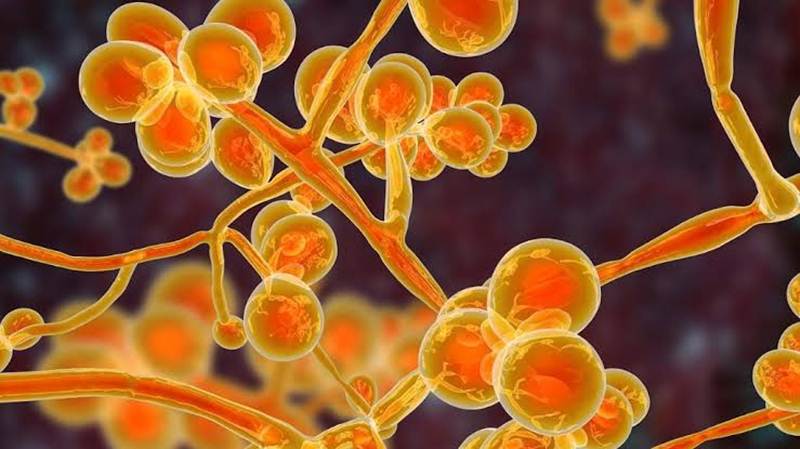
Yellow fungus otherwise known as mucor septicus, is a fungal infection just like black fungus and white fungus. It is said to often occur in lizards rather than human beings and has been classified deadly when compared to black and white fungus. The reason for its fatality is that it is harder to detect it, thus reducing the time to treat it at its earlier stages. In the worst case, it can also lead to organ failure and thus is not to be taken carelessly. The cause of fungal infections, be it black white or yellow, is said to arise due to poor hygiene. Fungal infections grow rapidly in atmospheres with higher humidity(30-40%).

Symptoms

Initial symptoms of yellow fungus are lack of appetite, lethargy and weight loss. The generality of early stage symptoms is the reason for its difficult detection. As the infection spreads, it can lead to sunken eyes, more time to heal wounds, development of pus and ultimately, it can induce necrosis(death of body cells and tissues), affecting organs leading to organ failure and in the worst case, death.

Out of the blue, why are fungal infections surfacing now?

Fungal infections are more likely to attack people with reduced immunity much than people with enriched immunity. Due the backlash faced by people due to Covid-19, the immunity system of people affected remained vulnerable. This vulnerability along with poor hygiene was taken advantage of, leading to rising cases of fungal infections. The director of the New Delhi’s All India Institute of Medical Sciences (AIIMS) Randeep Guleria, stated that another reason for the spread is due to the irrational use of steroids for the treatment of Covid-19 contributing to compromised immunity. Find what Randeep Guleria said regarding this here.

Preventive methods

What can be done on our part to fight fungal infections? The obvious answer to it is clean environment. Some methods to follow:

  • Keep your residing place dry and clean as humidity is a growth factor for fungus.
  • Avoid using damp towels, shoes etc as they can become breeding grounds.
  • Do not wear tight clothing which can lead to absorption of sweat causing humid patches
  • Dispose stale food as soon as possible
  • Covid-19 patients should be careful and should report to hospital immediately on encountering symptoms

Be on the look out during these crazy times. Stay indoors and come out only if it is absolutely necessary. Be safe and take care.