Demise of Indian Football and Cricket Icon Chuni Goswami

On 30 April 2020 within few hours, two famous Indian personalities who entertained us – one through football and cricket and another one through film passed away.  Since I have already paid my tribute through my publication to Rishi Kapoor so in this article few lines about great footballer, who was one of the architects to take Indian football at the zenith, is presented. He was also a well-known cricketer and popularly known as ‘Chuni’ Goswami. Although his birth name was Subimal Goswami (15 January 1938 – 30 April 2020), but commonly Indians know him as ‘Chuni’ Goswami. As a footballer he played in the forward position as we know goalkeeper, defence and forward are normally three positions played in football and all are having equal importance in the game.  Chuni captained both the Mohun Bagan Football club and the Indian National Team. He was an Olympian, representing India national team at the 1960 Summer Olympics. He also led Indian team to attain gold medal in 1962 Asian Games and in 1964 Indian team was the runners-up at AFC Asian Cup. It is worthy to mention that great football icons P.K. Banerjee, Chuni Goswami and Tulsidas Balaram were part of famous Indian forward line which scored nine out of 11 goals in the Asian Games that fetched gold medal to us. Anyway, it is sad to mention that P.K. Banerjee passed away one month before Goswami’s death.

Cricket Icon Chuni Goswami

A Brief History of Cricket Icon Chuni Goswami

Chuni Goswami as footballer joined the Mohun Bagan Junior Team in 1946 at the age of 8 years. He was a part of the junior squad up to 1954 and then graduated to the Mohun Bagan senior team.

According to frontline.thehindu.com, Chuni made his debut in the national side “at the age of 19, when he was selected for India’s tour to the Far East. In 1958, he played in the Tokyo Asian Games, and in 1959, in the Merdeka Tournament”. He was last seen for the national team in 1984 at the age of only 27 years.  He was brilliant cricketer also. In 1971-72, Goswami led Bengal team to the Ranji Trophy (in Ranji cricket, Bengal is mentioned not West Bengal) and reached in the final but lost against Bombay.

Chuni Goswami was awarded with many laurels, inter alia of which are – 1962 Best Striker of Asia Award, 1963 Arjuna award, 1983 Padma Shri and in 2005 Mohun Bagan Ratna. He enthralled spectators through his football skill. Indian football expert and commentator Novy Kapadia wrote in his book “Barefoot to Boots: The Many Lives of Indian Football”, “Goswami belonged to a golden period for the Mariners (a fond nickname for the club given by the fans) in the 1960s, where he was part of a squad that also included the likes of Jarnail Singh and T.A Rahman in defence, centre-forward Ashok Chatterjee and goalkeeper Peter Thangaraj”. But what made Goswami different? As a player he was renowned for his entertaining football. “His superb speed with the ball, excellent trapping and shrewd passing had made him a household name, but it was his dazzling dribbling and body swerves that ultimately set him apart from the other greats of his era,” as mentioned by Kapadia (www.livemint.com).

Chuni Goswami was popular among all sections of people because of his amicable nature. Plethora of condolences was poured after his death. The Chief Minister of West Bengal Mamata Banerjee expressed her condolences; State Sports Minister Arup Biswas visited the hospital and paid his last respect to the departed soul.  The many leading personalities sent condolence messages and few are –    the Indian football icons Sunil Chhetri and Bhaichung, Bhutia, boxer Vijender Singh,   Indian news anchor Rajdeep Sardesai, cine personality Boney Kapoor, cine artiste Rituparna Sengupta and many others. BCCI in their condolence message, mentioned “Subimal ‘Chuni’ Goswami, an all-rounder in the truest sense. He captained the Indian national football team & led to them to gold in the 1962 Asian Games. He later played first-class cricket for Bengal & guided them to the final of Ranji Trophy in 1971-72”

Chuni Goswami is survived by his wife Basanti and son Sudipto. And millions of sports lover will remember him for his splendid performance in football and cricket.

I am as a sportsperson is deeply saddened for his death and pray almighty May His Soul of Rest in Peace

Dr. Shankar Chatterjee

Former Professor& Head (CPME)

NIRD &PR (Govt. of India),

Hyderabad-500 030

Telangana, India

Email <shankarjagu@gmail.com>


The following websites were consulted for writing the article.

Good Impact of Lockdown

by: Janvi Joshi

The nationwide lockdown that brought 1.35 billion people to a stop has apparently caused positive impact on the environment, we can say at least temporarily. From cleaner air to liberated wildlife, corona virus lockdowns across the world appear to have had a number of positive effects on the environment.

Below, we take a look at some of the notable impacts of corona virus lockdowns our surroundings.

Cleaner air has perhaps been the single greatest positive effect of the lockdowns on the environment.

ganga river
ganga river

The lockdown has also led to better air quality. According to the World Air Quality, the average concentration of PM 2.5 in New Delhi came down by 71 per cent for a week last month. Nitrogen Dioxide, a pollutant, has also witnessed a decline of 71 per cent.

Visuals of a cleaner River Ganga have emerged from Uttar Pradesh’s Kanpur as well as Varanasi. The clear water is a result of the shutdown of most industries.

In a rare sighting, fishes can be seen near the Varanasi ghaat steps. This seems to have happened because of absence or crowds and clean water.

One of Aam Aadmi Party MLA and Delhi Jal Board Vice-Chairman Raghav Chadha said absence of people has made the Yamuna cleaner.

Many industries and offices are closed due to the lockdown these days and therefore the Yamuna is looking cleaner. The stoppage of industrial pollutants and industrial waste has definitely had a positive effect on water quality.


Textiles Ministry Sets up Emergency Control Room to Monitor Production and Supply of Medical Textiles

The Ministry of Textiles has set up an Emergency Control Room to monitor production and supply of medical textiles (N-95 mask, Body Coveralls and meltblown fabric) which are required in connection with Covid-19.

textile
textile

Emergency control office will work under the supervision of Shri. P K Kataria, Special Secretary (Mobile No. 9818149844). Following officers of the Textiles Ministry are part of the control room:

Sr. No. Name Designation Mobile No.
1 NiharRanjan Dash Joint Secretary 9910911396
2 H K Nanda Director 9437567873
3 Balram Kumar Director 9458911913
4 Pankaj Kumar Singh Dy. Secretary 9555758381
5 Padmapani Bora Dy. Secretary 9871070834

Following field level officers have also been appointed to take stock of the situation from ground level:

Sr. No. Name Designation Mobile No.
1 MolayChandanChakravarthy Textile Commissioner, Mumbai 8910267467
2 RanjitRanjanOkhandiar Member Secretary,

Central Silk Board, Bangalore

7987331656
3 Ajit B Chavan Secretary, Textile Committee, Mumbai 9958457403

Anyone having any problem relating to supply of medical textiles (N-95 mask and Body Coveralls) may contact these officers.

***

“Work from Home (WFH)”popular in India after Coronavirus/COVID-19

Before discussing impact of coronavirus (COVID-19) to implement the concept of  ‘Work from Home” in India few lines about the virus may be highlighted from the website of WHO, (www.who.int/health-topics/coronavirus),  “Coronavirus disease (COVID-19) is an infectious disease caused by a newly discovered coronavirus. Most people infected with the COVID-19 virus will experience mild to moderate respiratory illness and recover without requiring special treatment.  Older people and those with underlying medical problems like cardiovascular disease, diabetes, chronic respiratory disease, and cancer are more likely to develop serious illness. The best way to prevent and slow down transmission is be well informed about the COVID-19 virus, the disease it causes and how it spreads. Protect yourself and others from infection by washing your hands or using an alcohol based rub frequently and not touching your face”.

The COVID-19 which has created human devastation in the world has popularised a theory in secondary and tertiary sectors (in case of wage-employment) known as “Work from Home (WFH)” now a popular concept in India also. It was at low ebb in India, albeit, from ancient age handloom and  handicrafts works,  earthen utensils making, etc. were carrying out from home for business purpose indicating “Work from Home”, but these were self –employment. In case of wage employment, the concept is comparatively new and getting popularity. For example, according to US census data, 5.7 percent of workers in the US were working from home in 2017 which was around 8 million persons. The same was 5 percent in 2016 and 3.3 percent in 2000.  In USA, apart from some industries, viz., construction, primary health care and transportation, working from home has been able to flourish. This is mainly due to the advent and rise of increasingly efficient technology.  Anyway, in India, to reduce the spread  COVID-19, first schools and malls were closed and then many establishments asked employees to “Work from Home” wherever possible. Few data and facts to substantiate the statement are presented here collected from different websites.

Volvo Car, India and Tata Motors have announced work from home as a safety measure for its employees due to the rising number of coronavirus infections in India. In wake of the coronavirus pandemic, U.S. auto Ford has asked 10,000 employees in India, except those in business-critical roles, to work from home, a step which has also been taken up by Swedish luxury car maker Volvo.

Also the Economic Times, March 23, 2020 reported that “about half of India’s technology workers – estimated at 3 million – have already begun to work from home as social distancing becomes key to contain the spread of the outbreak. If employees continue to work from home for a few more months, IT companies are likely to conclude that 20-30% of their workforce can operate remotely”.  Also it was reported that Tata Consultancy Services “has asked more than 40 percent of its employees to work from home. Accenture has moved over 60 percent of its employees to work from home in India and the Philippines”. Another case “Work from Home” is from a prestigious academic organisation located in Hyderabad known as the National Institute of Rural Development and Panchayati Raj (NIRD&PR), which is an autonomous organisation under the Union Ministry of Rural Development, is a premier national centre of excellence in rural development and Panchayati Raj. Recognized internationally as one of the UN-ESCAP Centres of Excellence, it builds capacities of rural development functionaries, elected representatives of PRIs, bankers, NGOs and other stakeholders through inter-related activities of training, research and consultancy. The NIRD&PR celebrated its Golden Jubilee Year of establishment in 2008. In addition to the main campus at Hyderabad, the Institute has North-Eastern Regional Centre at Guwahati, Assam to meet the NE-regional needs. This Organisation for the safety of its employees in view of outbreak of COVlD-19 has implemented “Work from Home” for the staffs, including consultants, contract, and outsourced employees up to, 31 March, 2020. However, the essential staffs viz., CMU (includes Electrical section, House Keeping, Water Supply, Sanitary Section etc), Health Centre, Garden section, Vehicle section, Security etc. are obligated to work on daily roster basis. “The Heads of each of the support units (Executive Engineer, Lady Medical Officer, Garden Superintendent, Multi-Tasking Staff, and Security Officer) will design a roster for the essential services”. It was reported that first time in the history of NIRDPR the “Work from Home” has been introduced.

Thus, in India in many sectors “Work from Home” has been implemented which is the outcome of COVlD-19. Eduindex News is also giving opportunity to writers and other experts Work from Home https://eduindexnews.com/tag/work-with-eduindex-news/ 

Relevant information collected from the websites:

https://qz.com/work/1392302/more-than-5-of-americans-now-work-from-home-new-statistics-show/

https://www.fastcompany.com/90330393/the-surprising-history-of-working-from-home

https://www.paymoapp.com/blog/working-from-home/

https://www.thehindu.com/business/Industry/coronavirus-ford-asks-10000-employees-in-india-to-work-from-home/article31089427.ece

https://economictimes.indiatimes.com/wealth/earn/coronavirus-and-worklife-tips-to-make-working-from-home-easy/articleshow/74745322.cms?from=mdr


Dr. Shankar Chatterjee

Former Professor& Head (CPME)

NIRD &PR (Govt. of India),

Hyderabad-500 030

Telangana, India

Email <shankarjagu@gmail.com>

RTP Mela of NIRD & PR (Government of India) Promotes National Integration

Hyderabad is an important city of India as it is endowed with many historical places, mouth-watering dishes including veg and non-veg biryani, different types of fruits and vegetables, ornamental items (pearl and related items), famous for medical tourism, etc. Hyderabad is also a city of national integration and above caste, creed, and religion all live amicably. As an example, a legendary figure may be mentioned here as known to all that Sarojini Naidu being a Bengali lady was born in Chattopadhyay/Chatterjee family in 1879 in Hyderabad and married to a Telugu man, Dr. Govindarajulu Naidu and finally settled down in Hyderabad. Her parental home was in undivided Bengal.

RTP Mela of NIRD
RTP Mela of NIRD

In this section, a case of national integration promoted by the National Institute of Rural Development and Panchayati Raj (popularly known as NIRD&PR), an autonomous organization of the Ministry of Rural Development, Government of India is presented. The NIRD&PR, apart from its academic activities, has been organizing Mela every year from 2003 where across India, rural artisans mainly self-help group (SHG) members participate with their products for scaling up of selling.

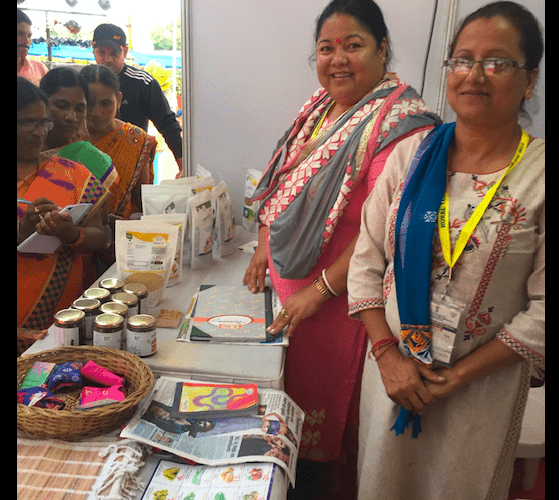
In 2019, 17th Mela held from 29 November to 3 December 2019 was inaugurated by the Governor of Telangana, Dr. Tamilisai Soundararajan on 29 November 2019.  As reported by Mr Md. Khan, Sr. Consultant of RTP-NIRD&PR, in the Mela mainly women members of Self Help Groups (SHG) from 24 states across the country including Arunachal Pradesh, Meghalaya, Mizoram, Manipur, Tripura, Sikkim, J&K participated. The participation of so many states from north-east in other years of the Mela was seldom. Further, around 200 stalls were set up covering various items like veg and non-veg foods, dress materials for ladies, gents and children, different types of ornamental items, etc.

RTP Mela of NIRD
RTP Mela of NIRD

The author interacted during the time of Mela with few members who came with their products from different parts of the country. And all in unison appreciated stay, food, etc. which were provided free of cost to the guests by the NIRD&PR. Of course, travel costs had to be borne by the respective state or organisation or by the SHG may be from their corpus fund.

While interacting, Mrs Ronita, a member of Laxmi SHG, from Imphal East district of Manipur observed she (also her woman friend) was absolutely happy as for the Mela both of them could visit Hyderabad. She informed that albeit their SHG was established in January 2018 but earlier did not visit Hyderabad. Their travel cost was borne by the district officials. They brought a special variety of black rice, different types of pickles, fruit candies, etc. Both have enjoyed Hyderabad as a huge city with peaceful environment. Mrs Kamal Kumari Jamatia of Tripura, a member of Golap SHG (10 women members in SHG and all ST) also expressed her happiness as first time she attended the Mela. She brought different types of ladies dresses made by tribal women, craft and bamboo products etc. From Sikkim, two women came first time came in Hyderabad with local products such as ginger powder,   raw turmeric, and other local food products. Also from Haryana two women participated as well as their first visit in Hyderabad. They brought and made in the stall different types of food items and I tasted their delicious ‘laddus’. From West Bengal of Birbhum district, two women with different types of Sarees first time attended the Mela.  Also near Darjeeling area of West Bengal few Lepcha women members came who were well versed with ‘Momo’ preparation. On the spot, they prepared tasty ‘Momo’ and such taste may not be found in other restaurants.  Mrs. Shalini of Kerala also expressed her happiness after participating first time in the Mela. She along with her husband participated Mela with a different types of clay items used in cooking. Although the SHG was established in 2003 with 16 women members this was their first visit.

It is evident that Mela is an important place of marketing of SHGs’ products.  It acts as an important forward linkage as sellers can bring their products from far-flung areas and buyers can get within their area with reasonable price and thus both are benefitted. Further, Mela has been promoting national integration. In view of this, it is suggested that such Mela should be organised across the country more in numbers. NIRD&PR can organise two times in a year.

Dr Shankar Chatterjee
Former Professor & Head (CPME),NIRD & PR ( Govt. of India), Hyderabad,  India
Former Associate Professor, Eritrea

Former Assistant Prof, Govt. Degree College, Tripura, India
Former Senior Planning Officer, Govt of Assam, India 

Government is providing higher education to tribal students through Central Tribal Universities

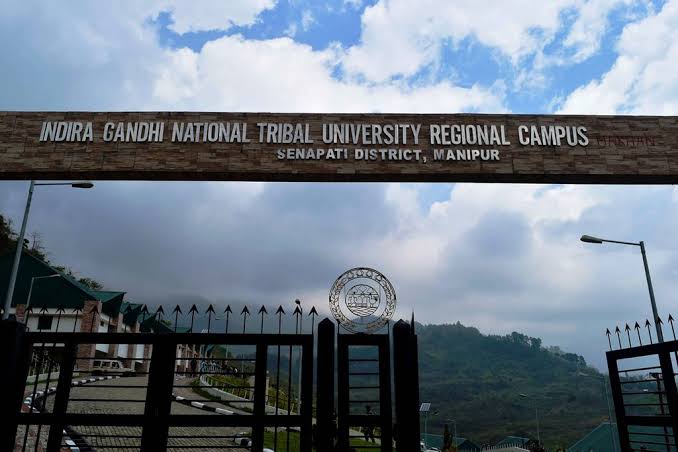
The Central Government has already established two Central Tribal Universities namely the Indira Gandhi National Tribal University, Amarkantak and Central Tribal University of Andhra Pradesh, Vizianagram with a view to provide avenues of higher education and research facilities primarily for the tribal population of the country. Besides, the Andhra Pradesh reorganization Act, 2014 inter-alia mandates for establishment of a new Central Tribal University in Telangana. Further, there are several Central Universities in different States which also fulfil the aspirations of higher education of tribal youth of the region.

Further, the UGC is implementing a scheme for the benefit of Scheduled Tribe (ST) students i.e. National Fellowship for Higher Education of Scheduled Tribe Students. In addition to this, UGC is implementing the following schemes for the benefit of weaker sections of the society including ST students:

  1. Residential Coaching Academies of Minorities /SC/ST and Women
  2. Establishment of Centres in Universities for study of Social exclusion and inclusive Policy
  3. Establishment of Equal Opportunities Cells (EOCs)
  4. Establishment of Scheduled Caste and Scheduled Tribe Cells in Universities
  5. Coaching Schemes for Scheduled Castes/ Scheduled Tribes/OBC (non-creamy layer)/ Minorities: (i) Remedial Coaching at UG & PG level (ii)  Coaching for entry into services (iii) Coaching for NET.


This information was given by the Union Minister for Human Resource Development, Dr. Ramesh Pokhriyal ‘Nishank’ in a written reply in the Rajya Sabha today.


*****

Dr. Harsh Vardhan calls for developing innovative cooling solutions

Union Minister for Science & Technology, Earth Sciences and Health & Family Welfare, Dr. Harsh Vardhan addressed an Award Ceremony here today to announce the finalists of the ‘Global Cooling Prize’. He called for developing innovative cooling solutions which are energy efficient.  During the ceremony, he said energy efficient and climate friendly cooling solutions are the Government’s priority.
“We recognise the power of innovation to catalyse climate friendly development and growth.  Accordingly, we have bolstered our research, development and innovation efforts to further global climate agenda and strengthened our commitment to accelerate clean energy innovation so that it plays a key role in Mission Innovation.
Dr. Harsh Vardhan said India has been leading from the front in the global campaign to tackle Global Warming and Climate Change. The Prime Minister Shri Narendra Modi had spelled out India’s agenda during the 2015 United Nations Climate Change Conference in Paris, He said. “In fact, the Mission Innovation programme was coined by Shri Narendra Modi,” he added.


Dr. Harsh Vardhan said the world today needs an extremely efficient cooling technology, a solution that can sustainably meet the comfort-cooling needs of our growing population without contributing to runaway climate change or costly stresses on already burdened electricity systems.
“It becomes even more relevant for a country like India which is on the path of economic growth and has relatively low penetration of air conditioning.  .  The Government recognises this need and is fully committed to provide “Thermal comfort for all” which has been articulated so well in the India Cooling Action Plan,” he said.
Dr. Harsh Vardhan hoped the finalists of the ‘Global Cooling Prize’ will deliver the prototypes having capability to deliver climate friendly solutions within the broad parameters of energy efficiency and costs.
Speaking on the occasion, Professor Ashutosh Sharma, Secretary Department of Science and Technology (DST), said our goal is to cut carbon footprint by as much as 80 percent and reduce energy consumption by half. The High Commissioner of the United Kingdom to India, Mr. Dominic Asquith also addressed the gathering.
During the ceremony, Dr. Harsh Vardhan presented Awards to the eight finalists of the GCP. The finalists are Daikin Air Conditioning India Pvt. Ltd., Godrej and Boyce Mfg. Co. Ltd., and S&S Design Startup Solution Pvt. Ltd. – all three from India; M2 (Square) Thermal Solutions, Transaera Inc. and Kraton Corporation (in collaboration with IIT Bombay, Infosys and Porus Labs)- all three from the US; Gree Electric Appliances Inc. of Zhuhai, China; and Barocal Ltd of UK.
The eight selected teams showcased a wide range of technology ideas, from smart, hybrid designs of vapour compression technology to smart, hybrid designs of evaporative cooling to solid-state cooling technologies with application of low or no global warming potential refrigerants.
A global coalition led by the Department of Science and Technology, Government of India; Rocky Mountain Institute (RMI)— a leading global research institute; and Mission Innovation — a global initiative of 24 countries and the European Union to accelerate global clean energy innovation — launched the Global Cooling Prize in November, 2018 with the aim of spurring the development of a radically more efficient, climate-friendly residential cooling solution.
Innovation and new technologies in the cooling industry are especially crucial for India, Studies suggest that the cost to the Indian economy due to lost productivity from extreme heat could exceed $450 billion by 2030. While the household ownership of ACs in India today is a mere 7%, the demand for comfort cooling is expected to drive the total stock of room ACs in India to over 1 billion by 2050 — a 40-fold growth from 2016. Growth in the demand for cooling will be dramatic, particularly in urban areas, due to the underlying need for a solution to the problem of heat stress. 
Since its launch, the Prize has received overwhelming international participation — over 2,100 participant registrations were received from innovators, start-ups, research institute, universities, and key Air Conditioning industry manufacturers in over 95 countries. Of these registered entities, 445 teams submitted their preliminary ideas and 139 teams from 31 countries around the globe followed through with their submission of the full Detailed Technical Application. The teams selected to go forth to the next round are being awarded US$ 200,000 each to develop their prototypes, which will then be tested in India in the summer of 2020.
The winner of the Global Cooling Prize will be announced in November, 2020 and awarded more than US$1 million in prize money.
*****

SC Issues Slew Of Directions To Curb Air Pollution

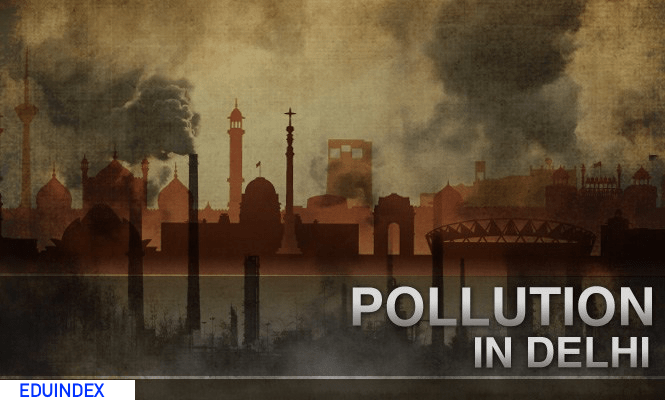
We all know fully well that air pollution in Delhi and even adjoining regions like several districts of West UP are crossing all limits and this year even in districts adjoining Delhi like Meerut where air pollution was never felt so much as is now being felt. Delhi is obviously the worst affected and this is most concerning for our nation as it is the national capital of India. India’s reputation in containing air pollution right in the capital itself is at stake and it is high time that a host of strong steps are taken in the right direction to ensure that it is checked immediately.

It must be mentioned here that the Apex Court Bench of Justices Arun Mishra and Deepak Gupta on November 4, 2019 took up the issue of air pollution in Delhi-NCR in the wake of the Environment Pollution Control Authority (EPCA) declaring a public health emergency taking note of the severely deteriorated air quality. First and foremost, it is pointed out by the Bench that, “We have heard Mr Bhrelal who has pointed out about irrigation. We have also heard some experts from the Ministry and the IIT and learned senior counsel for the parties and Amicus Curiae.” 
Without wasting any time, the ball is then set rolling by pointing out that, “Today everyone is concerned about level of pollution in Delhi and NCR region. This is not something new, every year this kind of piquant situation arises for a substantial period. It is compounded by the fact that year to year in spite of various directions issued by High Court, other authorities including this Court, the State Governments, Government of NCT of Delhi and the corporations of Delhi and nearby States are not performing their duties as enjoined upon them. This is a shocking state of affairs in which we are put as on today. This is blatant and grave violation of right to life of the sizable population by all these actions and the scientific data which has been pointed out indicates that life span of the people is being reduced by this kind of pollution which is being created and that people are being advised not to come back to Delhi or to leave the Delhi due to severe pollution condition which has been created. There cannot be large scale exodus. People have to perform their duty in Delhi also and people cannot be evacuated from Delhi being a capital city. We are at a loss to understand why we are not able to create a situation in which this kind of pollution does not take place, that too in a routine manner every year. Obviously, it is writ large that the State Governments, Government of NCT of Delhi and civic bodies have miserably failed to discharge their liability as per the Directive Principles of State Policy which have found statutory expression, they are being made statutory mockery and also the directions of this Court and High Courts in this regard are being violated with impunity.”
Why should heavy fine not be imposed on the respective State Governments and those civic bodies who have failed utterly to discharge their liability as enshrined in the Directive Principles of State Policy? Why should they be allowed to get away freely or lightly? Why should they not be taken to task forthwith?
Without mincing any words, the Bench then goes forth to very rightly point out in simple and straight language that, “Time has come when we have to fix the accountability for this kind of situation which has arisen and is destroying right to life itself in gross violation of Article 21 of the Constitution of India. No farmer can be said to be having a right under the guise that he is not having sufficient time to use the stubble for the purpose of manure, since they have less time between two crops, cutting and sowing of next crop. As such, they cannot by burning it in their fields, put life of sizeable population in jeopardy.” Farmers too must understand their responsibility which they owe to the nation! Centre and respective State Governments too must do all that they can to ensure that the farmers are helped in every possible manner to help dispose of the remains without polluting the atmosphere! They have so far not done enough adequately in this direction!
Furthermore, it is then pointed out in the next para that, “It is apparent from the satellite images which has been produced before us for the period 30.10.2019 to 04.11.2019. The satellite image clearly indicates that in Punjab there is widespread stubble burning which has taken place as compared to Haryana, in which only in four districts it has taken place. There is some burning in Western U.P. also. It could not have taken place even in a singular district or gram panchayat area as we live in a civilized country in which such kind of activities which create such menacing pollution not only in the area concerned but to the neighbouring States also, by ill-effects of that people cannot be left to die or to suffer various ailments.”
While apportioning liability on all, it is then held by the Bench in the next para that, “Everybody has to be answerable including the top state machinery percolating down to the level of gram panchayat. The very purpose of giving administration power up to the panchayat level is that there has to be proper administration and there is no room for such activities. The action is clearly tortuous one and is clearly punishable under statutory provisions, besides the violation of the Court’s order. In the circumstances, as widespread stubble burning has taken place, we direct the States of Punjab and Haryana and adjoining State of Uttar Pradesh where there is blatant violation which has taken place, to halt it. We direct the Chief Secretaries of the States of Punjab, Haryana and Uttar Pradesh to be present in this Court on 06.11.2019 and Chief Secretary of Government of NCT of Delhi.” 
Not stopping here, it is then further added very rightly in the next para while issuing strict directions that, “We direct the Chief Secretaries of the State Governments, District Collectors, Tehsildars, Director General, IG/SP and other police officers of the area of concerned police station and the entire police machinery to ensure that not even a single incident takes place of stubble farming henceforth. If it is found that any stubble burning has been made not only that person doing it will be hauled up for the violation of the order passed by this Court but the entire administration, right from the Chief Secretary, Commissioner, Collector and all other concerned functionaries and Panchayats. Gram Pradhan/Sarpanch Panchayat are also directed to ensure that no such stubble burning takes place.” 
What’s more, it is then further strongly observed in the next para that, “Let the State Governments of Punjab, Haryana and Uttar Pradesh and officials also explain that why they should not be asked to pay the compensation for tortuous liability as they have acquiesced and due to their failure in preventing stubble burning which is in utter violation of the Public Trust doctrine, why they should not be held liable to compensate, and also the incumbents who are burning the stubble in spite of clear restrictions imposed by this Court and statutory prohibition.” In other words, the Apex Court has made it abundantly clear that it is not just the farmers who indulge in stubble burning who will be held accountable but also the State Governments of Punjab, Haryana and Uttar Pradesh will have to be held accountable for not doing enough to check air pollution in their respective states and allowing stubble burning with impunity by not taking any strict action against those indulging in it!
As if this is not enough, it is then also further added in the next para while fixing accountability that, “We also direct the Sarpanch of each and every Panchayat and SHO of the concerned area to prepare inventory of the incumbents who have burnt the stubbles in their fields. We also direct the Sarpanch, Gram Panchayat as well as the concerned police of the area and local administration including the Collector and all subordinate authorities to ensure that no further stubble burning takes place. In case, any stubble burning takes place responsible machinery from top to bottom and Sarpanch, Gram Panchayat shall be liable for tortuous act and for not complying with the order passed by this Court and let the Gram Panchayat also advise forthwith the villagers not to involve in stubble burning anymore and take appropriate action.” Very rightly so! Unless accountability is fixed and very strict action is taken against all those violating the rules, we cannot control air pollution under any circumstances no matter how much day dreaming we continue to indulge in! This was exactly what eminent and senior Supreme Court lawyer and former Solicitor General of India – Harish Salve also very rightly pointed out while talking in a news channel! 
Be it noted, the Bench then very rightly directs and underscores in the next para that, “We also direct the State Governments, Central Government as well as the Government of NCT of Delhi to take immediate steps to take care of the emergent situation due to air pollution which has taken place. No doubt about it that everybody knows the situation, let the steps be taken forthwith with the help of the experts. We direct the Government of NCT of Delhi as well as various corporations to work in tandem and to see that waste and garbage which is contributing to air pollution is tackled at war level. The efforts should be made right from today without any loss of time.”
Each and every one of us who stay in India must adhere to what the top court has said so rightly, elegantly and commendably! If we abide by what the top court has said, we would only be improving not just our own lives but also other lives and the lives of the coming generations! No time should be wasted on this score as the Apex Court has rightly emphasised!
While elaborating further, it is then pointed out by the Bench that, “Let the EPCA consider as it was suggested by Ms. Aprajita Singh, learned senior counsel and the learned Amicus Curiae that diesel vehicle should not enter the Delhi. Let the EPCA immediately take the steps in this regard as may be considered appropriate as it has the power to do the needful taking care of the emergent situation.”
Going forward, it is then envisaged that, “With respect to demolition and construction activities we direct that no demolition and construction activities take place in Delhi and NCR region. In case it is found that such activity is done, the local administration as well as the municipal authorities including the Zonal Commissioners, Deputy Zonal Commissioners shall be personally held responsible for all such activities. They have to act in furtherance of the Court’s order and to ensure that no such activity takes place.”
It must be brought out here that the Bench then adds that, “We are informed that use of coal based industries have been stopped. In case any violation of this is found the concerned person including Zonal Deputy Commissioner would be liable for violation of the order of this Court and liable to be punished for contempt of Court.”
Coming to odd/even scheme, the Bench then notes that, “It was also pointed out by Mr. Sanjiv Sen, learned senior counsel, that during odd/even scheme in Delhi more use of two wheelers has taken place and they are being plied more causing equal pollution, as such no useful purpose is being served by stopping the use of certain vehicles only on the basis of odd and even numbers. He has also pointed out that it would be appropriate to stop the use of diesel vehicle, in case it is necessitated as the diesel vehicles cause more pollution as compared to petrol and CNG vehicles. Let the Government of NCT of Delhi explain this aspect and file the data in this regard in the Court on the basis of the previous experience and whether if three wheelers and taxies are plying more on road during such restriction and relevant data be placed.” Definitely, if this is done carefully and correctly, we would come know the real picture on air pollution! 
Briefly stated, while questioning the Odd/Even Scheme sponsored by the Delhi state government, it is then mentioned in the next para that, “During Odd/Even Scheme what is the difference being caused by stopping use of four wheelers when various other contributing factors are not taken care of by Government of NCT of Delhi.”
To put things in perspective, the Bench rightly points out the reasons for air pollution that, “As per the Air Quality Inspection Construction and Demolition Activities in Delhi/NCR region causing damage in Noida, Faridabad, Gurugram, Ghaziabad as well as instances of Delhi have also been mentioned.
1. Construction and demolition.
2. There is open dumping of waste/garbage.
3. Unpaved road/pit.
4. Road dust.
5. Garbage burning.
6. Traffic congestion.
As it turned out, the Bench then holds that, “We direct that construction, demolition and activities be stopped forthwith as well as garbage burning. In case, any person is found in construction and demolition activity and garbage burning in Delhi and NCR region, he/she shall be penalized. Any person doing construction and demolition activity in violation of this order, shall be penalized with Rs. 1 Lac for such activity. For garbage burning he/she shall be penalized with Rs. 5,000/- and besides liable for violation of the order passed by this Court to be dealt with in accordance with law.”
Moving on, the Bench then further holds that, “With respect to open dumping of waste and garbage, we direct the Government of NCT of Delhi as well as the concerned Municipal Corporation to chalk out immediate plan and to ensure that waste and garbage to be removed to safe places forthwith and also to ensure that no open dumping takes place. We direct Zonal Deputy Commissioner to be responsible with other officers in this respect. Let road-maps be prepared so as to provide proper amenities in order to prevent open dumping of waste and garbage, and be placed before this Court within four weeks.” 
Now come to think of roads, the Bench on this score lays down that, “For taking care of the road dust let water sprinklers/dust suppressors be used on the roads. An IIT expert suggested about the appropriate water pressure for the sprinklers. At what pressure water should be sprinkled so as to reduce the pollution and dust so that it does not add to the pollution. Let the Corporations act on advice of the expert of the IIT. Such roads where traffic congestion is more, let traffic plan be also prepared in such a manner so that there is no extra burden on a particular road so that traffic congestion is taken care of. It is for the concerned traffic authorities to take immediate steps in this regard.”
More importantly, it is then observed in the next para that, “Since we are fixing the liability on the person responsible for inaction at the village level as well as three States in the NCR regions as well as Delhi, let the widest publicity by all means of publication i.e. Television, Media, newspapers, Radio be made. In Gram Panchayats by beat of drums also and other modes to ensure that villagers are made aware of their responsibility and liability towards the other humans so that they do not involve in such acts. Let the Gram Panchayat, police station, district and taluk levels by the concerned administration take steps in this regard. Let the State Governments also take the requisite steps to extinguish the stubbles which are burning and for that let State Level High Level Committee meet forthwith and take appropriate decision and implement it. Steps taken be informed to this Court on 06.11.2019 by the concerned Chief Secretaries of the three States and Government of NCT of Delhi.”
No less important is what is then stated in next para that, “Let the concerned authorities of EPCA meet forthwith and take a call in this regard with respect to industrial activities which are causing pollution on how to control it. We also direct all pollution control Boards of three States and Government of NCT of Delhi that polluting industries/activities against norms are put to halt forthwith.”
In addition, it is also then directed that, “It was also submitted by M/s. Sanjiv Sen and Gopal Sankaranarayanan, learned senior counsel that in certain States generators are also being used which increase pollution mainly due to cut off in the electricity supply. Generators in Delhi also add to pollution in Delhi as well as in NCR region. Let the State Governments and Government of NCT of Delhi ensure that electricity is not cut so that generators are not used and let no generators be used till next day of hearing except in emergency/healthcare services.”
Last but not the least, it is then held that, “Let the State Governments, NCT of Delhi and also the Government of India prepare a road map for preventing this kind of situation in future and be placed before this Court, within three weeks. Let the Action Taken Report be submitted within four weeks. Directions/order to be effective unless otherwise ordered.”
In conclusion, it is high time and there is no reason why Centre, Delhi government and governments of neighbouring states of Delhi like Punjab, UP and Haryana among others should not obey strictly the directions laid down by this top court in this latest, landmark and extremely laudable judgment. There is no reason why pollution of air can’t be controlled if the commendable directions laid down by the Apex Court in this noteworthy case are followed in letter and spirit. We all also must as good citizens do our best to contribute as much as possible to control air pollution as it is we ourselves who are worst affected by it! 
Sanjeev Sirohi, Advocate,
s/o Col BPS Sirohi,
A 82, Defence Enclave,
Sardhana Road, Kankerkhera,
Meerut – 250001, Uttar Pradesh.


Journalism

Journalism alludes to the generation
and circulation of reports on late occasions. The word news-casting
applies to the occupation, just as native writers utilizing strategies
for social affair data and utilizing abstract methods. Journalistic
media incorporate print, TV, radio, Internet, and, previously,
newsreels.
Ideas of the suitable
role for journalism shift between nations. In certain countries, the
news media are constrained by government mediation and are not
completely independent. In others, the news media are free of the
legislature yet rather work as private industry propelled by benefit.
Notwithstanding the changing idea of how media associations are run and
financed, nations may have varying executions of laws taking care of the
right to speak freely and criticism cases.
The coming of the Internet and cell phones has conveyed critical
changes to the media scene as of late. This has made a move in the
utilization of print media stations, as individuals progressively devour
news through tablets, cell phones, and other individual electronic
gadgets, instead of the more customary arrangements of papers,
magazines, or TV news channels.

Mass Media

Mass media are apparatuses for the exchange of data, ideas, and thoughts
to both general and explicit groups of onlookers. They are critical
instruments in propelling general wellbeing objectives. Conveying about
wellbeing through broad communications is unpredictable, in any case,
and difficulties experts in assorted orders. Utilizing mass media can be
counterproductive if the channels utilized are not gathering of people
fitting, or if the message being conveyed is excessively enthusiastic,
dread exciting, or disputable.
 Bothersome reactions more often than not
can be kept away from through appropriate developmental research,
information of the gathering of people, involvement in connecting media
channels to groups of onlookers, and message testing. Each mass medium
has its own substance types, innovative specialists, professionals, and
plans of action. For instance, the Internet incorporates web journals,
digital recordings, sites, and different advances worked on the general
conveyance arrange. Some contend that computer games have formed into an
unmistakable mass type of media.

Journalism and Mass Communication

Mass communication is the investigation
of spreading data to a substantial gathering of people through the
different methods for communication. Journalism is the action of
expounding on ongoing advancements for papers, magazines and so forth.
It has encompassed detailing done through radio and TV.
Along these lines, there is a contrast between the two projects. Mass
Communication is a more extensive field while Journalism is a restricted
field. Mass Communication manages the technique of passing on or
transmitting a message to the all-inclusive community through media like
radio, papers, magazines, TV, web, etc.
 

Digital Journalism

Digital Journalism is a contemporary type of journalism where article
content is disseminated by means of the Internet, instead of
distributing by means of print or communicates. Digital journalism is
debated by researchers; in any case, the essential result of
news-casting, which is news and highlights on flow issues, is displayed
exclusively or in blend as content, sound, video, or some intuitive
structures like news games, and spread through computerized media
technology. Less boundaries to passage, brought down dissemination
costs, and assorted PC organizing advances have prompted the across the
board routine with regards to computerized journalism. It has
democratized the progression of data that was recently constrained by
customary media including papers, magazines, radio, and television. 

The
digital viewpoint might be fundamental to the journalistic message and
stays, to some degree, inside the innovative control of the essayist,
manager, as well as publisher. The desires for society for moment data
was critical for the development of digital journalism.

Device that make you wise (part-1)

Mobile Phone

There are many discoveries in the world that has  made our life super easy and comfortable. We have come a long
way in technological advancement with time that has affected our life and has
changed it in many ways.  World has become
a global village where many things seems to be just a click away. Life has
become more convenient and easy with it and undoubtedly one of the major being
invention of mobile phone.  

Anytime-any place, is
what defines a cell phone as it is one of the portable and fast medium of
communication. Or in other words it can be said as, one of the major invention
that has become the lifeline of the masses. It has brought communication
revolution around the world and changed the way people connect to each other. 
Earlier people had to
wait to send and receive a message where was a chance of losing the cognitive
and emotional connect, which has now reduced to zero with the invention of
mobile phone.
  Apart from enhancing
social connection, mobile phones are widely used in industry work that saves
time and money as well.  
Previously it was just
a device used to receive and send a message but with the evolution of internet
it has become a multitasking device used for various purposes making it more
impact in both good and bad sense.

Be it information,
entertainment, education, mobile phones have now become a portable computer
that can perform many task in one go. It is best device to boost up knowledge
on any particular topic be it a subject-related or any issues and happening
around the world. Nothing can be a better choice for social gathering than mobile
phone these days as its makes people more approachable amid friends and
relatives. It’s a best device to socialize anytime soon. Life seems little less
complex with the invention of mobile phone.

But as the coins have
the other side- mobile phone too has its demerits. Easy access on internet has
also made it a device for isolation. Teenagers and adults can be witnessed
frequently messaging gaming,posting updates, clicking pictures, or watching videos. According to a survey on the most popular smart phone activities in India in 2017 almost 50% of the respondent accessed social media via mobileIndia recorded the world’s highest number of
selfie death, accounting more than any other countries in the world. high use of mobile phone is leading to many health issues. people who tend to use mobile phone on bed seem to have interrupted sleep and health disorder. Children are becoming more dependent on search engine rather than being creative. It is affecting their creative skill making them dependent on internet. Mobile phone has its impact on people life style and living as people are becoming more fake and cunning.
 Like any other technology,mobile phones too can be choice to lead a good life but as said excess of everything is bad. It can also lead to destruction of personal and social relation, so ot is important to use it wisely. 

Preparing for the Interview (part 3)

In last articles of this series, we gave you
glimpses of the interview process. By now, we have discussed why interview
process is important for the interviewer and for the candidate. We have
discussed what the interviewer is looking for in the interview process. We have
also discussed how to mentally prepare and present yourself at the interview
venue. In one phrase-
“Be professional and mean Business.”
In an
earlier article we had also talked about the two types of interview and gave
you a brief idea on how to prepare for the technical round of the interview. If
you are preparing for technical roles and not very high in the organization
chart roles, then the two-three articles will take care of you perfectly fine.
But everybody progresses and sooner or later (we will pray sooner) you will be
dealing with the most grueling parts of the interview.

The Interview

In the previous article we discussed what
preparations you need to do before reaching the interview venue or rather
interview room. Once you are called for interview, gather your things from the
lobby, follow the person who called you. Unless you are showed inside, it is
always better to knock and ask for permission before you enter the room. Firmly
shake hands if the interviewers are offering, or a polite hello would suffice.
Take chair when you are offered. Try not to
drag the chair a lot, but do not be uncomfortable. Appropriately distance the
chair from the table. You may place the file on the table. Pass it to
interviewer when they ask for it. They probably already have your resume, but
it is always better to carry an extra copy at the top of your file. If you want
water, you may ask for it politely. But it is better to do so at the beginning
of the interview process itself.
Now, we are ready to face the interviewer.

Introduce Yourself

Invariably, 95% of the interviews begin with
customary “Tell me about yourself.” This may seem mundane, even unnecessary.
After all they have your full CV and your file. There is everything that you
ever did or achieved! Why they cannot just go through that. Why this stupid
question! But remember, there are no unnecessary questions. This first
open-ended question is your opportunity to give direction to the interview
process.
Since this is such a common question, it is better
to practice answering such questions. Self-introduction reveals lot many more
things about you than you can imagine. Practice short crisp answers. Something
between 1-2 minutes is a decent length introduction. Do not rush, go
chronologically. Leave no important details out, but do not drag the answer.
And most importantly, personalise the answer. Do not sound like machine. Speak
clearly and calmly. Add personal details such as hobbies, your city etc
wherever suitable.
We will be discussing few more of such common
questions in the latter articles.
Good Luck!

Preparing for the Interview (part 2)

In last article of this series, we gave you
some advice on the first type of interviews that is technical round. To recap
in a couple of short lines-
1.      
Be
calm.
2.      
Be
systematic and organized in your thought process.
3.      
Showcase
this clearly to your interviewers.
4.      
State
the assumptions clearly to your interviewer if any.
In this part, we will look into the other type
of interviews- that is the behavioral interviews. One thing that we would like
to mention here is that even when there is no apparent behavior based
question, you are continuously being monitored. You definitely need to be ready
for this.


Homework for the interview
process

The process starts way before you enter the
room. You have to dress properly, groom properly, no loud makeup- unless your
job demands it. Look professional, sharp and attentive. There is no need to be
someone that you are not but looking professional and meaning business does no
harm. After all that’s what you are going for.
The next thing is the documents you have to
carry with you. If there was a list given to you before the interview date or
at any stage of the selection process- normally colleges and Government jobs
share the list of documents that candidates are required to bring with them at
the prospectus stage itself. Prepare according to list, double check to be
sure. Arrange them in reverse chronological order- i.e. the latest documents go
first. Make sure that the documents are arranged neatly and do not fall our
when someone opens the file.
Once you are done with the preparations at your
home. The next thing to do is to reach the interview venue. Be punctual, better
be early and wait for a while than be late and give a bad impression. If God
forbid, you are running late because of any reason, or you cannot make it to
interview venue; please inform your interview coordinator as early as
possible. Be apologetic and communicate clearly that you understand the
importance of the interview process, but because of such reasons you will not
be able to make it today, or you will be late. If you are comfortable, give
them gist of the situation but do not drag them into details.
When you arrive at the interview venue, you may
be asked to wait for a while. There may also be many other candidates who may
be interviewing for your job or some other jobs. Whatever the case maybe, be
patient, do not get nervous. Avoid any chit chat with other candidates. If you
are talking, keep the talks professional. Talk softly, maintain the decorum of
the place. And as far as possible, do not run after the candidates leaving the
interview room to bombard them with questions. If they are your friend it maybe
alright, but if they are strangers- it does not say anything nice about you.
We will be continuing this series in later
articles.
Good Luck!