Chartered Accountant

Chartered Accountants were the first Accountants to form a professional accounting body initially established in Scotland in 1854.

An Accountant is a person who specialises in the field of accounting. Chartered Accountants are Accountants for hire. They work in various sectors of the economy,managing the finance of an entity, providing financial advice and helping out with money management.

Chartered Accountancy has been one of the most popular career choices in India. There is no fixed time to complete chartered Accountancy. In this career your hard work decides your destination. There is no colleges for Chartered Accountancy. CA aspirants can approach any Institutes and work as per the instruction given by the Institutes.

Exam structure:

The Institute of Chartered Accountancy of India divided CA courses into four levels: CA foundation/CPT, CA intermediate/IPCC, 3 years of Article ship training and CA final. Each level tests students on different paper pattern based on their level and maturity.

Eligibility:

The one who passed class 12 can appeal for CPT(Common Proficiency Test) /foundation level in CA.

The degree holder can directly appeal for IPCC(Integrated Professional Competence Course) /intermediate level.

Roles of chartered Accountant:

Cost Accountant:

Collecting cost information and maintaining an expenses database. Constructing data accumulating systems

Financial controller:

Financial controller is a company’s lead Accountant. They oversee accounting activities and ensure that ledger accurately reflect money coming on and out of the company.

Auditor:

An Auditor is an authorized person who reviews and verifies the accuracy of financial records and ensures that companies comply with tax norms.

Accounts Clerk:

The responsibility of accounts clerk is to keep financial records updated, preparing reports and reconciliation statement.

Chief Financial Officer:

Chief Financial Officer is the senior executive responsible for managing the financial actions of a company. The CFO’s duties include tracking cash flow and financial planning as well as analysing the company’s financial strengths and weaknesses.
The doctrine of Separation of Powers:

Introduction: – 

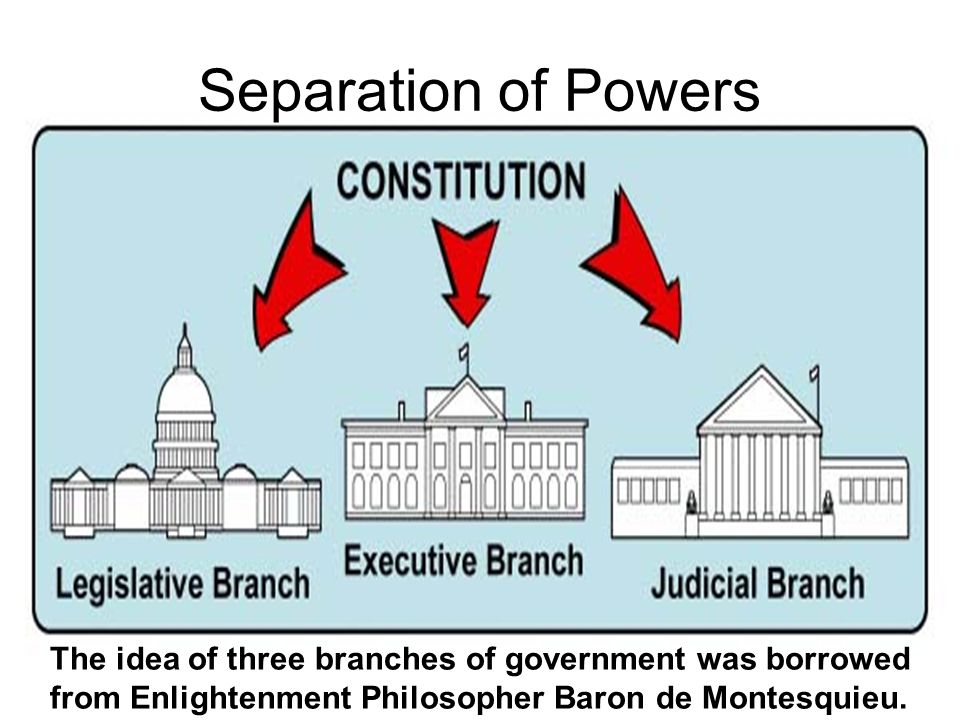
The concept of separation of powers is that the basic element for the governance of a democratic country. This principle endorses fairness, impartiality, and uprightness within the working of a government. Although it’s not followed within the strict sense yet, most of the democratic countries have adopted its diluted version in their respective constitution. 

Meaning: – The term “trias politica” or ‘separation of powers’ was first coined by Montesquieu in 18th century French social and political philosopher. Under his model, the political authority of the state is split into Legislature, Executive, and Judiciary powers. 

Generally, all the powers of the govt. will be categories into these three classes: 

(1) Enactment of law created

(2) Interpretation of the enacted laws 

(3) Enforcement of the enacted laws Separation of power, therefore, refers to the division of presidency responsibilities into distinct branches to limit anybody branch from exercising the core function of another. 

Historical origin and Evolution: – 

The doctrine of separation of powers is of ancient origin. The separation of powers concept was 1st originated in Greek and has become widespread within the Roman Republic as a part of the initial constitution of the Roman Republic. The history of the origin of the doctrine traceable to Aristotle in the 16th and 17th centuries, French philosopher John Bodin and British politician Locke respectively had expounded on the doctrine of separation of powers. 

But it was Montesquieu ( a French jurist) who initially conveyed scientific evidence of separation of powers in his book “Espirit des Lois ” (The spirit of laws). Montesquieu’s view: – Montesquieu said that – ‘The accumulation of all power’s legislature, executive, and judicial within the same hand’s weather of 1, a few, or many and whether hereditary, self-appointed or elective, may justly be pronounced the very definition of tyranny. 

Aristotle(384-322BC) in his book “The politics” stated that “These are three elements in each Constitution in respect of which each serious lawgiver must explore for what’s advantageous to it; of those are well arranged, the constitution is beyond to be arranged and also the differences in constitutions are sure to correspond to the difference between each of those elements. 

The three are first the deliberative (which discuss everything of common importance), second the officials; and third the judicial element.

Objectives of separation of powers: – 

(1) It aims to eliminate arbitrariness, totalitarianism, and tyranny and promote an accountable and democratic variety of government. 

(2) It prevents the misuse of powers within the various organs of the govt.. 

(3) It keeps a check on all the branches of the govt by making them in control of themselves. 

(4) This principle allows all the branches to specialize themselves in their respective field to boost and improve the efficiency of the govt. 

Elements of Separation of powers: – 

(1) Legislative: – Legislative means involving or regarding the method of creating laws. the first function of the legislature is to form laws for the governance of the state. it’s the authority of amending the present rules and regulations furthermore. Generally, in India, the parliament holds the facility of creating rules and laws. 

(2) Executive: – The executive is that the part of the govt. exercising authority and holding responsibilities of the governance of the state. the chief executes and enforces laws made by the legislature. The president and therefore the Bureaucrats from the manager branch of the presidency. 

(3) Judiciary: – The judiciary is that the branch of authority during a state which is anxious with the law and also the system or is that the system of courts that interprets defends and applies the law within the name of the state and safeguards the rights of the individuals. It can even be thought of because of the mechanism for the resolution of disputes within the state or internationally. 

Should Plastic be Banned?

A truly wonderful and magical material, plastic was invented in the year 1907 by Leo Hendrick Bakeman in New York, United States of America. This wondrous material was made from phenol and formaldehyde in a cheap and easy method. Ever since this revolutionary invention, the world as we knew it changed. Plastic replaced many materials in industries. Plastic is so widely used around the world because of its following properties:

  • Plastic is a hard material
  • Plastics are a highly dense material
  • Its tensile strength is high
  • It is resistant to heat and high temperatures
  • It is a non-conductor of electricity and heat
  • It is light in weight
  • The production of plastic is cheap and simple

All these properties make plastic the most popular material for factories as well as consumers. With the invention of plastic bags, things started to take nosedive in terms of the per capita plastic produced in the world. Everything was hunky-dory until people started to realise that plastic can’t be degraded by natural causes. Its a non-degradable material and will stay in the environment for more than 500 years to come. It is estimated that more than 6 billion metric tons of plastic waste are lying on our earth with no place to go.

Enzymes and bacterias cannot degrade plastic because plastic is not made up of naturally occurring materials. It is a purely man-made material. Most of the plastic is dumped in open lands and far away in oceans. While this seemed like a logical idea until people released that they were polluting the environment, air, water and land. The hazardous chemical in the plastics started to be seen in fishes and crops we eat which ultimately meant that plastic waste that we assumed was gone, was slowly making its way back to our bodies through our food chain. It is said that human beings have already started consuming plastics in small portions and a plastic worth the weight of a debit card in consumed every year by a person.

While plastics can’t be banned completely, because it has made our lives better. Plastic is used in advanced medical equipment to save lives. They are used in the pharma industry, the travel industry and clothing industry and the truth is, human beings cannot live without plastic. But we can surely reduce the consumption of plastic. Banning plastics completely is not a sensible idea.

Why plastic bags should be banned?

There are various alternatives to plastic bags. Jute bags, paper bags and gunny bags are some of them. Plastics bags are not so much necessary that man cannot live without it. And certain kind of plastic bags can not be recycled as well. But they surely can be reused. The habit of reusing the same plastic bags comes into effect only when the manufacture of new plastic bags are banned.

More than 20 million metric tonnes of plastic waste is dumped in the ocean and open lands. More than 50% of these are plastic bags. They are creating enormous pressure on our environment and causing irreversible pollution. It will take a herculean task to get rid of all the plastic that is produced in the world as of now. If it is not banned, then it will be impossible to get rid of it ever and the existence of the human race will be in question.

There are areas in several parts of our ocean which is covered with plastic as big as the size of India. The aquatic life is consuming these plastics and we are consuming them which disturbs the whole food cycle in our ecosystem. Banning plastic bags will at least, if not totally eliminate plastic from our earth, reduce this disturbance to our environment.

Parliamentary Privileges

Introduction

India is called the world’s largest democratic country. The power to make law exists with the Indian Parliament. The members of lower house of Parliament are elected from the direct election while the members of upper house are elected from the Legislative Assembly of States and Union territories by means of single transferable vote through proportional representation. The concept of parliamentary privilege in the Constitution of India has been taken from British Constitution. Parliamentary privileges are special rights, immunities, exceptions enjoyed by the members of the two houses of Parliament and their committees. The main motive of these privileges is to uphold the supremacy of the offence of the office of the Parliament and its members.

Who Enjoys Parliamentary Privileges

These rights are mainly for the members of both houses of Parliament. Apart from this, these rights are also given to those individuals who speak and participate in any committee of the Parliament, which includes the Attorney General of India and the Union Ministers. President, even if he is a part of Parliament, does not have parliamentary privileges.

Breach of Parliamentary Privileges

If any person or officer violates the individual or collective privileges of a Member of Parliament, such as, disrespect, abuse, attack, etc., such acts are comsidered as breach of Parliamentary Privileges which is punishable by the house.

Thus, the above facts make it clear that Parliamentary Privileges in India have been enforced so that the respect of the Parliament and its members can be ensured.

But it is observed that after winning the elections, these representatives do not respect the public while on the other hand they expect that the public should give them due respect. Apart from this, you may have noticed that the Parliamentarians are often seen misbehaving with the officials and the general public. This is called the misuse of parliamentary privileges.

Therefore, it is the need of the hour that if the government wants to maintain the dignity of the democracy then it should make appropriate changes in the parliamentary privileges because nobody can be superior to the general public.

Conclusion

The privileges are conferred on the members for smooth functioning of the Parliament. But, these rights should always be in conformity with the fundamental rights because they are our representatives and work for our welfare. If the privileges are not in accordance with the fundamental rights then the essence of democracy for the protection of the rights of the citizen will be lost. It is the duty of the Parliament not to violate any other rights which are guaranteed by constitution. The members should also use their privileges wisely and not misuse them. They should always keep in mind that the powers do not make them corrupt. The Parliament cannot adopt every privilege that is present in the house of commons but should adopt only those privileges that accordingly suits our Indian democracy.

CORONAVIRUS AND ITS IMPACT ON EDUCATION

The COVID-19 was first identified in Wuhan, China in December 2019. The global outbreak of COVID-19 is still ongoing.

The current coronavirus pandemic is having a perplexing impact, not only on people’s health, but also on how they learn and work. The pandemic has introduced uncertainty into major aspects of society, including the education sector. Thousands of schools, colleges and other educational institutions are closed nationwide. This situation challenged the education system across the globe and forced institutions to shift to an online mode of teaching.

Photo by Ann Nekr on Pexels.com

Challenges of Online education

Schools and colleges have been impacted significantly by the rapid spread of the COVID-19 outbreak. Closures have pushed countries towards a modernized, digital style of teaching. However, this solution comes with its own unique set of challenges. Among the most important challenges created by the coronavirus is how to adapt to a system of online education.

There are various technological devices available for online education but sometimes they create a lot of problems. These difficulties and problems associated with modern technology range from downloading errors, installation issues , login problems, poor connectivity, etc. Sometimes student also finds online teaching to be boring. Students want face to face interaction which is not possible with online mode of learning

Universities across the globe have adjusted their courses in response to the spread of the coronavirus. Moving all the educational programs online may prove very challenging. While some universities or schools may already have strong online systems, smaller universities may struggle with the technology. Some students also don’t have reliable internet access or technology and they struggle to participate in online learning. This gap is seen across countries and between income brackets within countries.

Photo by Ann Nekr on Pexels.com

Advantages of Online Learning

  • More flexible than offline classes.

  • Saves time by avoiding transportation.

Disadvantages of Online Learning

  • Loss of interest
  • Small children have low concentration power, and they don’t want to sit for a longer time in front of the blue screen.
  • The availability of internet to students living in rural areas.
  • Speed and cost of internet.
  • Spending long time in online learning makes the students lose their motivation to participate.
  • Lots of poor students do not have access to laptops, computers, tablets, cell phones, etc.
  • Less interactive.

Conclusion

The COVID-19 pandemic lockdown has affected the academic performance of most of the students with varying degrees. Online education helps the students with an opportunity for self-study. However many subjects need practical classes; therefore, it is not easy to understand all the subjects online. The learning process cannot reach its full potential until students practice what they learn. This may impact their career in the future.

HUMAN ANATOMY

Introduction to Human Anatomy and Physiology

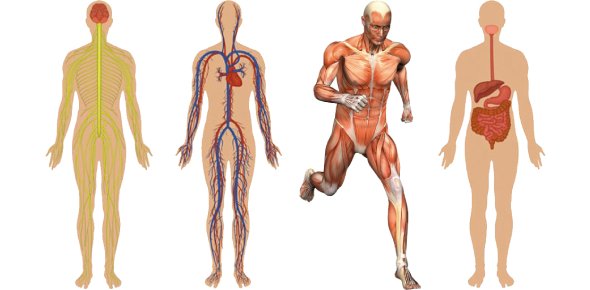
Anatomy is the study of the shape and structure of the body of organisms or living beings. The word anatomy is derived from the Greek words ‘ ana ‘ and ‘ tomy ‘ where ‘ ana ‘ means ‘apart’ and ‘tomy ‘ means ‘to cut’. In physiology, the functions of various system such as respiratory system, digestive system, nervous system, skeleton system and muscular system of organisms are studied. It can be said that physiology is the study of how the body and all its part function. It consists of two word, namely, ‘physio’ and ‘ ology’ where ‘physio’ means ‘nature ‘ and ‘ ology ‘ means ‘ study’. Here ,we will study human anatomy and human physiology.

Definition of Human Anatomy

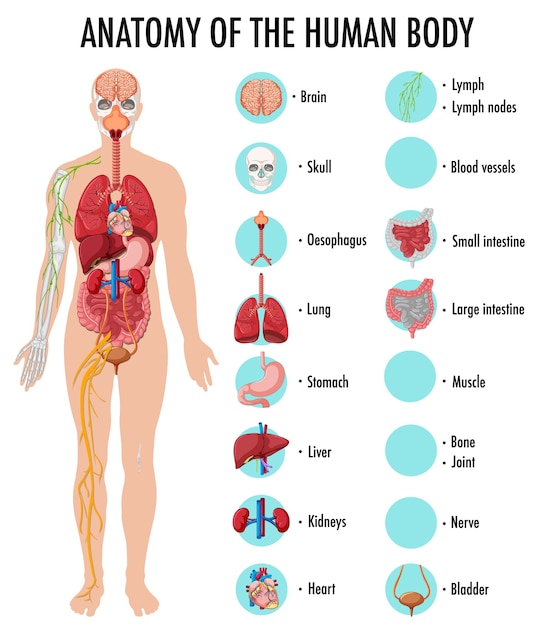
Free Vector | Anatomy of the human body information infographic

Human Anatomy is the study of structure ,shape, size , weight and location of all the organs of human body. A detailed knowledge of the structure of various system of human body is provided in human anatomy . For example , the shape, size, weight, structure and location of all the organs of the excretory system such as lungs, kidneys, large intestine, liver, skin, etc. are studied in human anatomy. Human anatomy can be defined as the science dealing with human body structure and relationships among structures.

Importance of Anatomy

The importance of anatomy and physiology is mentioned below.

  • Anatomy Provides the Knowledge of Structures of Various Organs : Human anatomy provides the detailed knowledge of the structure of various organ body . We get the knowledge of structure, shape, size, location and weight of organs of all the systems of our body. We come to know about the length of various organs such as the length, size and shape of the bones. With the help of anatomy , we get the knowledge of the percentage of white fibres and red fibres present in an individual. As a result of such knowledge , the teacher and coaches working in the field of physical education and sports may easily select the suitable sports according to the traits of students. For example, weightlifting is more appropriate for short statured students, who have more percentage of white fibres i.e., fast twitch fibres in comparison to red fibers i.e., slow twitch fibres can perform better in sprinting events instead of endurance events.

Behind The Scenes!

“We all make mistakes, have struggles, and even regret things in our past. But you are not your mistakes, you are not your struggles and you are here now with the power to shape your day and the future.”

  • Steve Maraboli

Today’s article highlights, ‘Behind the Scenes of Article Writing’. Yes! It is similar to the Behind The Scenes shown during shoots for sitcoms and TV serials.

However, there is a difference. There is no shooting here. I shall be discussing the ‘Off screen tasks’ I perform when framing the articles. So, Lights. Camera. Action! Let’s begin.

Thinking Over The Topic!

Greatest struggle everrrrr! Thinking over a relevant topic for my amazing audience out there is a complex task. There have been times when I just sat at the laptop, staring at the blank word document, wondering what to write and then after realizing that I am out of the ‘mood’ factor, I shut the laptop and decide to work over it maybe later! But still, I manage to come up with some interesting topics for all of my enthusiastic readers who show so much love and appreciation towards my work. Thank you for that! 🙂

Making Word Errors!

Another one of my struggles. While writing the articles, there are many such word errors which I make, while typing with excess speed on the keyboard. I know, I know, the solution is to type with a relaxed pace but I just can’t help it. For me, Writing without speed is like writing without passion.

Working On ‘Perfection’!

Perfection is the key to efficient work. So, that’s exactly my motto. I look forward to adding friendly and interactive connotations in order to make reading an easier task for you!

Thinking Over Framing Of Sentences!

Framing of sentences in an accurate manner is so essential. English is rather a complex language and one needs to be careful in choosing proper set of words that don’t sound impertinent. So, yes! Working over it is a task but that doesn’t actually freak me out!

Sitting Alone In Peace While Writing!

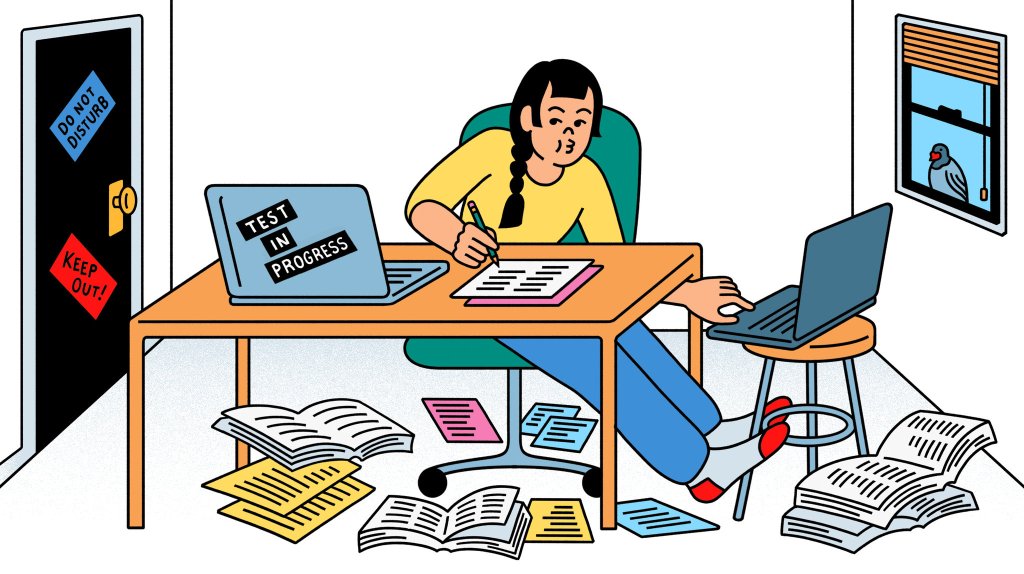
That is so important for me. When writing, I shut the door to my room and just breathe, letting fresh air stroke my mind calmly. Then come the topics which pass my mind like a slideshow and I select the appropriate ones for you!

Thinking Over The Topics And Jotting Them Down For Future Reference!

In that slideshow of thoughts, there occur two or more ‘apposite’ topics which I feel the need to jot down and use them later without forgetting the ‘creativity’ factor in them of course.

Pondering Over The Birth Of Various Fictitious Characters!

Since our company recently incorporated Fiction in the publishing options, I felt the need to make some of the writing medium speak ranging from the inkpot to the laptop! It may sound crazy but that is what makes fiction such an amazing genre. This genre allows you to be crazy and senseless!

Famous Fictional Characters Everyone Knows

These were some of the steps I take, in order to ensure that good content turns out (specifically for the articles). Thank you for tuning in! You are free to contemplate over the message if you want to! 😉

Happy Writing! 🙂

Thank You For Reading!

ONLINE EXAMS

A Critical Evaluation!

The Coronavirus pandemic has disrupted the working of all the sections of the society. Tourism sector, consumer sector, IT sector, Pharma sector, you name it and the reports will show you how adversely are they all affected. One of the most crucial sectors which is brutally affected is the education sector. The sector that is responsible for building future leaders have become merely a formality. Students give exams but not for value addition but just for the sake of giving them. If you ask what a student has learned in the last year and a half, more than half of them would be completely clueless.

Since the beginning of 2020, we have seen a new way of conducting exams but is this way better than the offline exams? Let us ponder upon that. There is no question that online exams are economical and does save a lot of time and the environment but the real question is “Is it worth it”? A lot of students have been welcoming to the concept of conducting exams online but a lot of them have also opposed it on various grounds.
To begin with, not all students have access to a computer or a laptop or a stable internet connection which makes it difficult for them to attempt their exams and buying a new devise puts a lot of financial pressure on the families. Students living in technologically backward areas are suffering the most.
In addition to this, students who reside in areas where there is unstable electricity or internet connection have difficulty connecting with their teachers in case there is a problem with their class or exam. This creates additional pressure on the child. Institutions must understand that problems like having unstable electricity and internet connection are out of their control and thus ensure all students are well prepared before the exams are conducted.
Furthermore, there is the biggest barrier while conducting online exams and that is Cheating. There is no way of knowing if the student has written the exam himself or did he take the assistance of external resources. If the exam has been completely cheated then what is the point! Children are the future of this nation and if they rely solely on cheating to pass their exams then what kind of future are we building here? Not only the university students but the students who are still in school are inclined towards cheating to pass their exam rather than studying before hand. The mentality that has been going around is “If everyone is cheating then why can’t I”. Students cheat using their cell phones, laptops and even books. Online exams have completely turned into open book exams with zero value addition. Everyone is so dependent on cheating that now they are worried as to how they will attempt the offline exams as and when the institutions open.
Lastly, students are not the only ones who have been suffering in one way or the other, the teachers are also facing difficulties while teaching as well as while grading the exams. Professors who have been teaching for a long period of time found it very difficult to shift to online mode of teaching. Not only this, the teachers are unable to complete the syllabus on time which ultimately affects the students.

While online exams have proved to be a blessing during these testing times, they should not be used to judge a candidate as a whole. People who are scoring good could be naturally intelligent or could just be relying on cheating. Thus colleges and universities need to work a little harder to design a question paper that is intellectualy challenging and that would judge the aptitude level of the student rather than asking questions on what is given directly in the book or on the internet. Teachers can shift their focus on putting case study based questions to examine the cognitive abilities as well as subject understanding of the student. Now that the students are well versed with how exams are to be downloaded and submitted, the time limit could be reduced so as to reduce the time for copying from here and there. Lastly, students must be asked to keep their cameras on during the examination and teachers could keep a close eye on how they progress with their exam. Also, the teacher must award marks to a student on the basis of his/her performance rather than awarding more marks just to maintain the reputation of the institutions.

Thus, there is a dire need to put this cheating culture to an end before the students lose their capabilities to remember their own syllabus. Conduct pop quizzes, give assignments from time to time, just keep the students up to date about the syllabus in an interesting way so that they don’t resolve to cheating during the final examination. The students must also make an effort to be better. Cheating only helps you to obtain marks but knowledge goes a long way and helps you in various competitive exams that your might appear for in the future. Online exams are the best option in these times of the pandemic. Students should prepare well for their own better future. Determination and Hard work are the keys to your success.

What are Causes of Lightening Strikes?

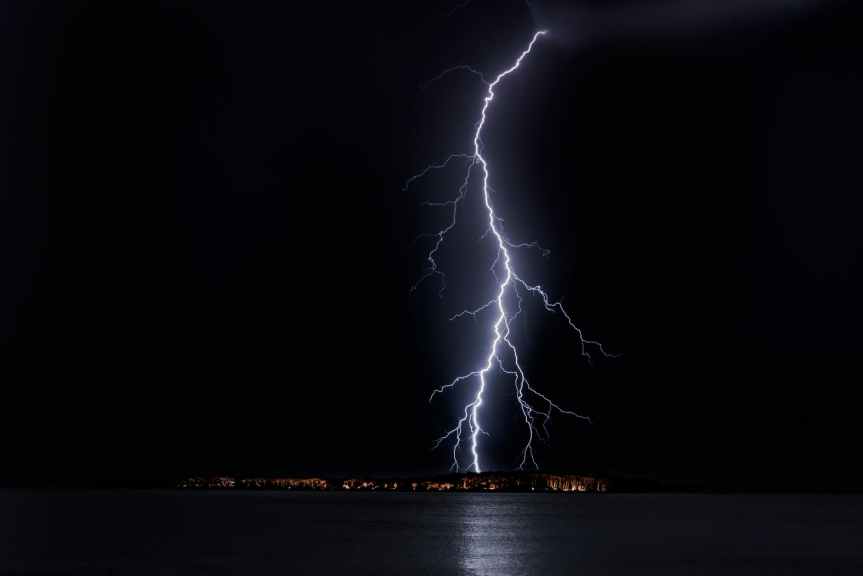
According to wikipedia, “A lightning strike or lightning bolt is an electric discharge between the atmosphere and the ground. ” It mostly occurs within the cloud but when it does strike the earth, it can cause serious damage to life and property. About 240,000 lightning strike incidents happen each year globally and according to National geographic, about 2000 annual deaths occur due to lightning strikes. About 41 people died in Uttar Pradesh (India) and 23 in Rajasthan (India) and about 21 were injured due to lightning strikes on Sunday (11 July, 2021).

How does lightning occur?

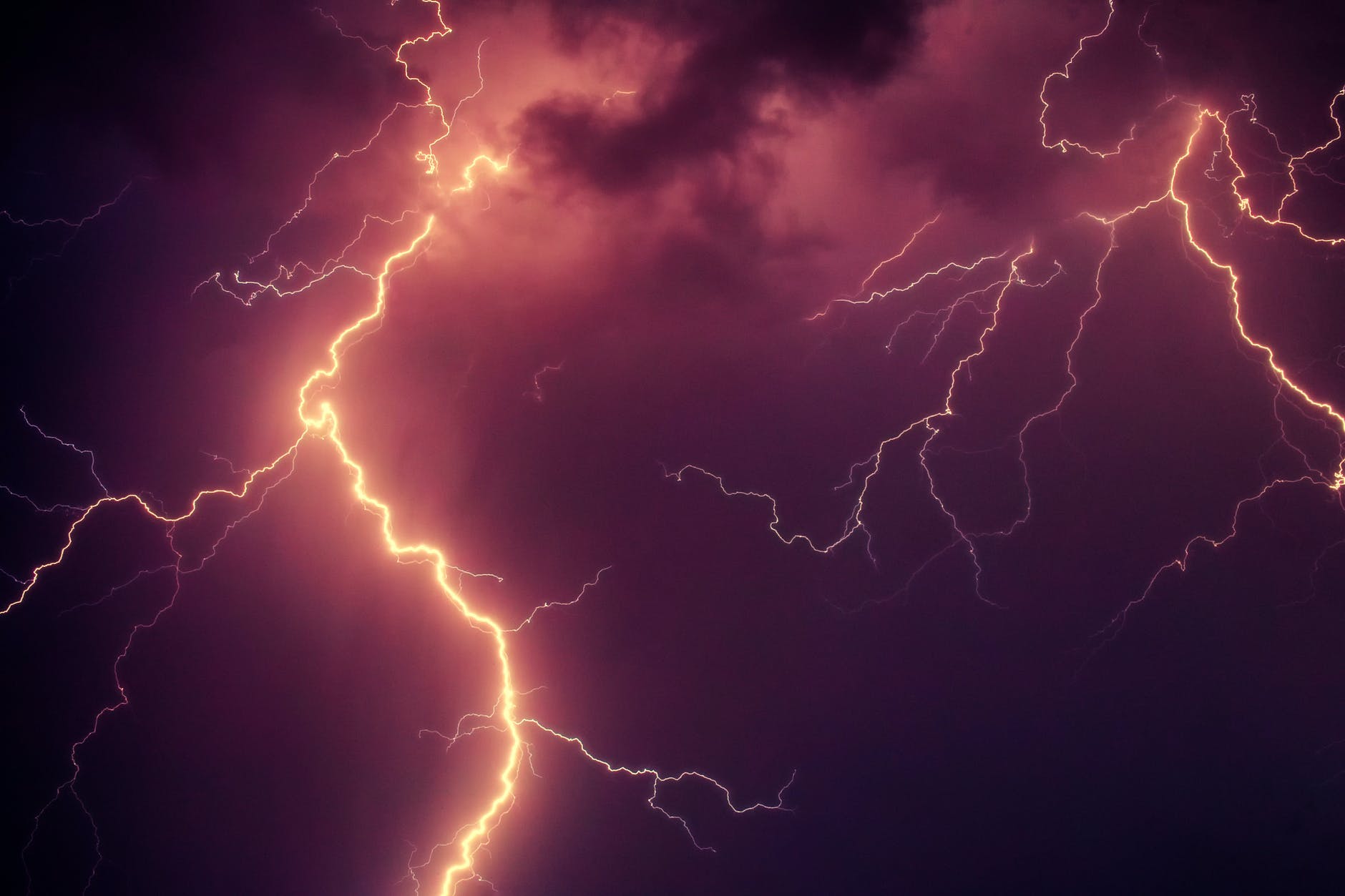
Clouds consist of electric charges (positive and negative) that are usually balanced but the winds of a storm result in a separation of charges within the clouds. Positively charged particles occupy the top of the cloud and the negatively charged particles concentrate on the bottom. This separation of charges result in the flow of electricity.

Types of lightning bolts-

There are 3 main types of lightning bolts-

  1. Cloud-to-cloud: When charged particles of one cloud are attracted to the oppositely charged particles of another cloud, it is known as cloud-to-cloud lightning. It is the most common form of lightning in the sky.
  2. Cloud-to-air: When the discharge moves from the cloud to the sky and is attracted to the charged particles of air, it is referred to as cloud-to-air lightning.
  3. Cloud-to-ground: Negative charge- In this type of flow of lightning, the negatively charged particles begin to move towards the ground in a zig-zag path( also known as stepped leader) . They move with such high speed that they reach the ground in about a millisecond. When they reach the ground, they attract positive charges(also known as an upward leader or streamer) that begin to move towards them (usually through tall buildings, trees, etc.). When the stepped leader and streamer meet, it leads to a flow of powerful current from the ground to the cloud. Positive charge- When the positive charge of cloud overcome the negative charge and travel towards the earth meeting negative stream of charges coming from the earth , it is referred to as CG lightning-positive charge. It, though uncommon, is more dangerous.

5 ways lightning strikes people

  1. Direct strikes- The most deadly, it usually occurs to people who are in open areas. When lightning strikes the body,, some of the current moves through the body and some moves along and over the body( which produces heat that can cause skin burns).
  2. Side flash- It occurs when the victim is standing next to a taller object and some of the current from the taller object is transferred to the body of the victim, which is why you should avoid taking shelter under a tree when lightning strikes.
  3. Ground Current- When lightning strikes a tall body, much of the energy leaves the body and is either side flashed or transferred to the ground. The current transferred to the ground affects a larger area as it can transfer through conducting materials, which is why you should avoid being outside during lightning flashes.
  4. Conduction- Lightning can travel through potentially conducting surfaces like barbed wires who provide a pathway for lightning to travel very large distances.
  5. Streamers- People caught in streamers formed during cloud-to-ground transition of lightning will find it very difficult to come out of it and it can result in death.

How to protect yourself from lightning?

  1. Avoid going outdoors during lightning strikes and even if you do end up being in the outdoors, immediately find an enclosed shelter.
  2. Do not, under any circumstance, take shade under a tree or be near one.
  3. If you are inside your car, do not get out. But ensure that your car is parked in an open space away from potential charge attracters or conductors.
  4. Avoid being near water. Do not bathe (even inside your house) and stay away from rivers, lakes or any other water body.
  5. Try to minimize your surface area, when outside. Do not lie flat and crouch into a ball-like-position.

Genghis Khan: The Universal Ruler

Genghis Khan, originally known as Temujin, is known today as the man who established the largest land empire known in history. He had united the various nomadic tribes in Mongolia, and then went on to conquer huge parts of central Asia and China. Even after his death, his descendants expanded the empire to much greater lengths up to places like Poland, Vietnam, Syria and Korea. At their peak, the Mongols controlled around 12 million square miles of land. This is an area around the size of Africa, all controlled by a single empire. In contrast, the Roman empire was only about half the size of the USA. Hence, it is evident that Genghis Khan was a legendary ruler and is remembered well by history, but he is also regarded as the very avatar of savagery and barbarism. 

The Rise of Genghis Khan

Temujin, later Genghis Khan, was born around 1162 near the border of Mongolia and Siberia. At that time, many nomadic tribes in the central Asian steppes were constantly fighting and killing each other, and life for Temujin was violent and unpredictable. Before turning even 10 years of age, his father was poisoned to death by an enemy clan and his own clan had deserted him and his family. Following this, Temujin killed his older half-brother and took over the reins as the head of his abandoned and poverty-stricken family. He soon began making alliances, building a reputation as a warrior and attracting a growing number of followers. Most of what we know about Genghis Khan’s childhood comes from “The Secret History of the Mongols,” the oldest known work of Mongolian history and literature. Going against custom, Temujin preferred to put competent allies rather than relatives in important positions in his tribe. He also executed the leaders of enemy tribes, and incorporated the remaining members into his clan. By 1205, Temujin had vanquished all his rivals.

The Establishment of an Empire

Temujin thereby became the leader of a Mongol confederation consisting of all the tribes and territories that he had united. He established a nation similar in size to modern Mongolia, and was also proclaimed Chinggis Khan, which roughly translates to ‘Universal Ruler,’ a name that has now become bastardized to be known as Genghis Khan. After this, he started his conquests outside of Mongolia and garnered his brutal reputation through continuous invasions. Genghis Khan’s first campaign outside of Mongolia took place against the Xi Xia kingdom of north-western China, after which went to war against the Khwarazm Empire in present-day Turkmenistan, Uzbekistan, Afghanistan and Iran. He gradually expanded the borders of the Mongol Empire over the years of his reign, and many surrounding empires had started becoming wary of the Mongol threat. Genghis Khan also had an extensive network of spies which used to detect his enemy’s weaknesses, and made use of advanced military equipment like catapults and mangonels while attacking large cities. By 1227, the Khan had conquered much of Central Asia and made incursions into Eastern Europe, Persia, and India.

It is important to highlight here that it was not only because of his aggressive invasions and warfare that he was successful, but also because of his administrative capabilities. For example, he forbade the selling and kidnapping of women, banned enslavement and torture, and made livestock theft punishable by death. Moreover, he ordered the adoption of a writing system, conducted a regular census, granted diplomatic immunity to foreign ambassadors and allowed freedom of religion and protection within his empire.

The Fall of Genghis Khan

Genghis Khan eventually died in 1227, at the age of 65. But there is a lot of mystery and uncertainty surrounding his death. Some stories suggest that he died from injuries sustained after falling from his horse, while others suggest it was while he was trying to put down a rebellion in China. Furthermore, the final resting place of the Khan is unknown, as he wanted his death to be a secret.

Regardless, Genghis Khan conquered more than twice as much land as any other person in history, bringing Eastern and Western civilizations into contact in the process. Though he has a unfavourable reputation because of all the killing, plunder and rape he had caused, one cannot deny that he is among the greatest, if not the greatest conqueror in history.

What is Software Testing ? Types of testing – Alpha, Beta, Acceptance

“Testing is the process of executing a program with the intent of finding faults.”

Testing is an important aspect of the software development life cycle. It is basically the process of testing the newly developed software, prior to its actual use. The program is executed with desired input(s) and the output(s) is/are observed accordingly. The observed output(s) is/are compared with expected output(s). If both are same, then the
program is said to be correct as per specifications, otherwise there is something wrong somewhere in the program. Testing is a very expensive process and consumes one-third to one-half of the cost of a typical development project. It is largely a systematic process but partly intuitive too. Hence, good testing process entails much more than just executing a program a few times to see its correctness.

Testing is the process of demonstrating that errors are not present.

The purpose of testing is to show that a program performs its intended functions correctly.

Testing is the process of establishing confidence that a program does what it is supposed to do.

Customers may use the software in different and strange ways. Their involvement in testing may help to understand their minds and may force developers to make necessary changes in the software. These three terms are related to the customer’s involvement in testing with different meanings.

Alpha Testing

These terms are used when the software is developed as a product for anonymous customers. Therefore, acceptance testing is not possible. The alpha tests are conducted at the developer’s site by the customer. These tests are conducted in a controlled environment and may start when the formal testing process is near completion.

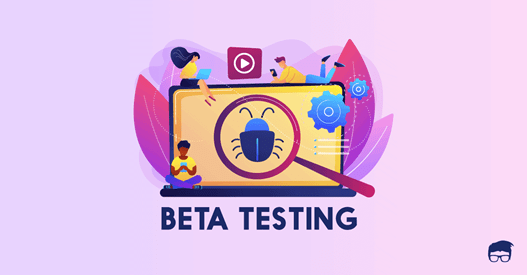
Beta Testing

The beta tests are conducted by potential customers at their sites. Unlike alpha testing, the developer is not present here. It is carried out in an uncontrolled real life environment by many potential customers. Customers are expected to report failures, if any, to the company. These failure reports are studied by the developers and appropriate changes
are made in the software. Beta tests have shown their advantages in the past and releasing a beta version of the software to the potential customer has become a common practice. The company gets the feedback of many potential customers without making any payment.

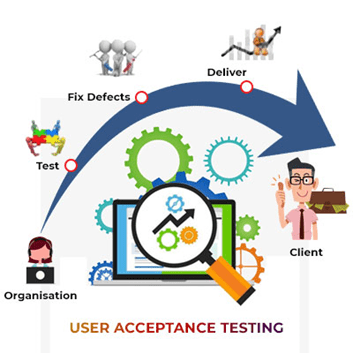
Acceptance Testing

This term is used when the software is developed for a specific customer. The customer is involved during acceptance testing. He/she may design adhoc test cases or well planned test cases and execute them to see the correctness of the software. This type of testing is called acceptance testing and may be carried out for a few weeks or months. The discovered errors are fixed and modified and then the software is delivered to the customer.

NCC Experience

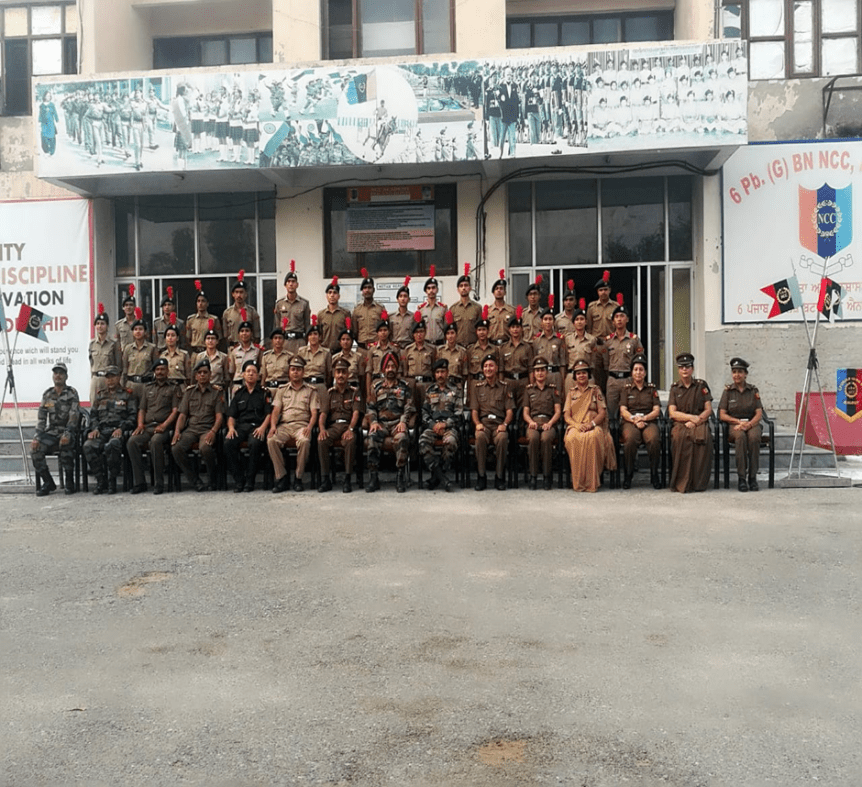
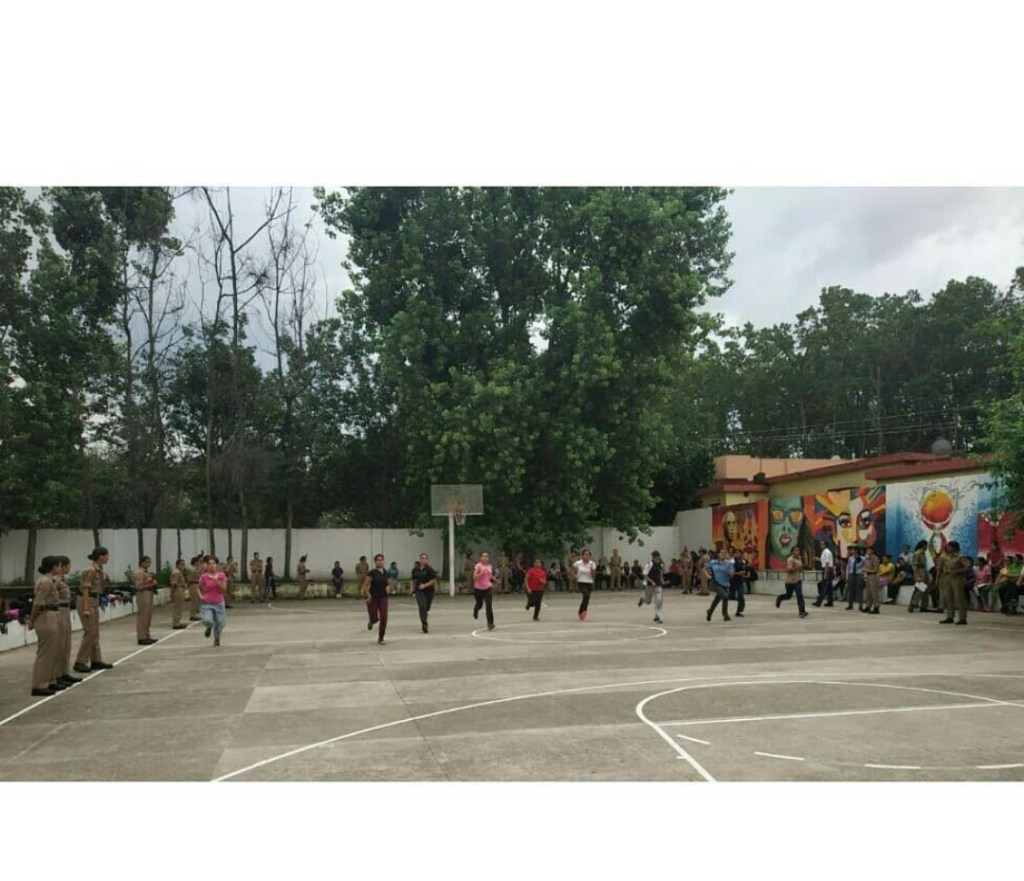
NCC- National Cadet Corps had been my acquaintance for 3 years and I have gained so much from that organisation which I don’t think could have been achieved from any other institution. My journey started when I took admission in Graphic Era Hill University. I have always been inclined towards sports and extra curriculum from my school so when I joined college, I opted NCC for taking my first step towards joining the defence forces.

NCC has given so much which has prepared me for my life. During my first year I felt totally different as I got introduced to different things like Drill, Ragda (Punishment), a uniform which only a few were able to dawn. I had never come across to these things before in my life. When I wore that uniform, I used to get a feeling of pride and fulfilment.  The most important values that I learned in NCC are Discipline, Punctuality and Unity. In my first year I attended CATC camp where several competitions were held like Public speaking, Dance competition, Group song, Drill selection test and many more, this camp made me realize that NCC is not just about being physically active rather it’s about the overall development of a person. Those 10 days of CATC can never be forgotten.

After completing my 1st year, I was promoted to the rank of corporal in my 2nd year which was my 1st step towards knowing what leadership is all about. Various rallies and walkathon were organized by us to make mass aware of various concerned issues like cancer, blood donation, Drugs, cleanliness and “Beti bachao beti padhao” initiative. Cadets used to walk long distances to spread the awareness. The 2nd year was a two-sided opportunity where I got trained as well as trained my juniors.

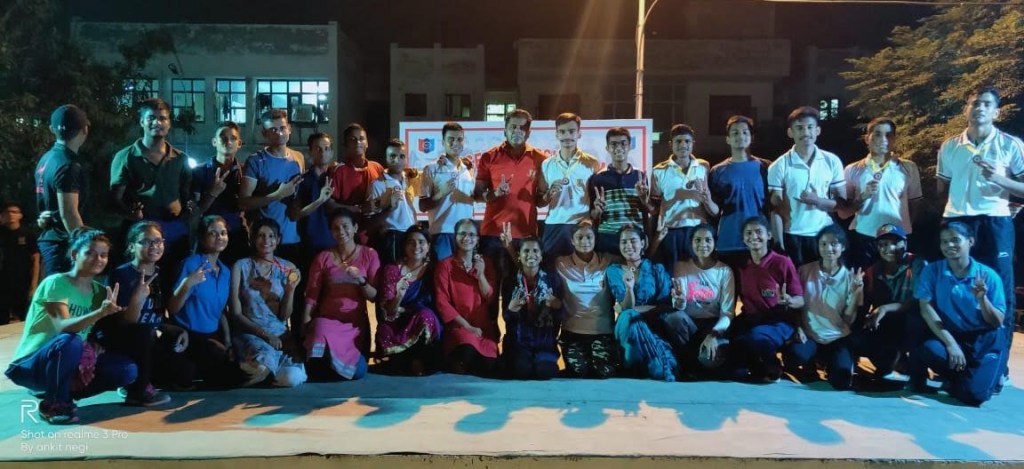
When I got into my 3rd year I was promoted to the rank of sergeant. My mates and I did selection of new cadets and it gave us a sense of responsibility. In the CATC camp I was the Master of Ceremony. After that I attended Advance Leadership Camp which was held at Malout, Punjab by 6 (Pb.) girls battalion for 12 days, 5 cadets from Dehradun were selected and I got the opportunity to be in that group of 5. Cadets from different states of India participated in the camp and we all made a great bond with one another. There were training sessions on leadership as well as SSB. Activities like lecturette and Group Discussions were organized in groups. Cultural competition was also held in which Uttarakhand directorate won 1st and 2nd prize in dance and singing competition respectively. In Tug of war Uttarakhand Directorate stood 2nd. It was overall a worldliness camp where I represented my State, my unit and my college and it was so overwhelming for me to leave that camp with so much of experience, it gave me a sense of pride.

This was all about my journey in NCC. I passed out with Alpha grading in my ‘C’ certificate examination and most importantly I became a self-confident, an outspoken and a learned person who aspires to touch the sky with glory.

Genetically Modified Rice For more Vitamin A intake

Rice is one of the most consumed food across the globe, mostly because it is one of the cheapest food. Yearly consumption of it is more than 400 million tons. The human body requires all the nutrients in the proper amount to remain healthy. . In an era with more than 700 million people living below the poverty line, it was very difficult for them to get proper nutrients. One of the nutrients is vitamin a Despite containing a lot of carbohydrates rice grain lacks Carotene which is transformed to Vitamin A by our body which is one of the major concerns.

The Need

Vitamin A deficiency approximately affects one-third of children around the world. Its deficiency leads to skin diseases blindness and growth retardation in children. It can also lead to infertility. In underdeveloped and developing countries where rice is the staple food the lack of vitamin A consumption by people is a point of great concern. Other food supplements that contain vitamin A like milk butterfish are usually expensive and for poor people. Thus it was very vital to improve the quality of rice grain for proper nourishment of our body.

Research

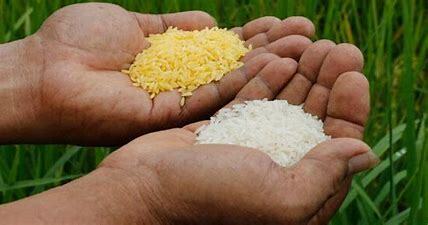
Peter Bramley was the first to discover the phytoene desaturase gene could produce lycopene, which then can be converted to b carotene. These details were published in 2000 by Ingo Potrykus and Peter Beyer The rice formed was termed golden rice. In 2005 Syngenta researchers produced Golden Rice 2 by fusing phytoene synthase gene from maize with crt1 from the previously developed golden rice, which produced over 20 times more carotenoids than previous rice. US Food and Drug Administration approved for use of golden rice for human consumption in 2018.

One of the reasons why rice grain lacks vitamin a is that it does not contain carotene but only contains a precursor molecule for it. Organisms like the bacterium Erwina and plants like daffodil contain enzymes that convert this precursor into carotene. Scientists isolated the 2 types of genes for the pathway of carotene from bacterium and daffodil and then added each gene to rice with the help of Ti plasmid vector. Not only Vitamin A a lot of research is going on and has been done to enrich rice grain with other nutrients like iron

The need for the improvement in the nutritional factors of rice was very crucial for human beings to sustain Improvement especially in rice grain was very important as it is one of the most consumed commodities. Golden Rice 2 contains enough vitamin A to sustain the daily requirement of around 75g. The research found that the b-carotene present in golden rice is equivalent to that in oil and better than that in spinach at providing vitamin A to children.

Antibiotics and microbes

Antibiotics produced by microbes are regarded as one of the most significant discoveries of the twentieth century and have greatly contributed towards the welfare of the human society.

“Anti is a Greek word that means ‘against’ , and bio means ‘life’, together they mean ‘against life'( in the context of disease causing organisms).”

Antibiotics are chemical substances, which are produced by some microbes and van kill or retard the growth of other disease casing microbes.

“Penicillin was the first antibiotic to be discovered by Alexander Fleming while working on Staphylococcus bacteria”

He observed a mould growing in one of his unwashed culture plates around which Staphylococcus could not grow. He found out that it was due to chemical produced by the mould and he named it Penicillin after the mould Penicillium notatum.

However, it’s full potential as an effective antibiotic was established much later by Ernest Chain and Howard Florey. This antibiotic was extensively used to treat American soldiers wounded in World War II.

Antibiotics have greatly improved our capacity to treat deadly diseases such as plague, whooping cough( Kali khansi) , diptheria(gal ghotu) and leprosy (kusht rog), which used to kill millions all over the globe.

“Vaccines and antibiotics have made many infectious diseases a thing of the past; we’ve come to expect that public health and modern science can conquer all microbes. But nature is a formidable adversary.”

“When antibiotics became industrially produced following World War II, our quality of life and our longevity improved enormously. No one thought bacteria were going to become resistant.”

https://www.brainyquote.com/quotes/bonnie_bassler_547883?src=t_antibiotics

https://medlineplus.gov/antibiotics.html

HUMAN INSULIN FOR TREATING DIABETES

BACKGROUND

Insulin is a type of protein hormone produced by pancreatic cells islets of Langerhans. It controls the glucose level in the blood for the body to function properly. Glucose is absorbed from the blood with help of insulin into the liver, fat and skeletal muscle cells and converted into glycogen Without insulin glucose forms in the blood due to which there is a lack of glucose in the cells. This may result in fatigue numbness increased thirst etc. Therefore insulin is very important for our body. A lot of researchers worked on making insulin as a drug for the treatment of diabetes and to treat high blood potassium levels.

Image result for humAN INSULIN FOR DIABETES

THE NEED

In 1921, Frederick G. Banting and Charles H. Best were able to purify insulin from a dog’s pancreas Latter it was extracted from porcine or bovine pancreases, But this insulin had its problems. Although the structure of this insulin was similar to human insulin due to minute differences it leads to coagulation and inflammation in patients. Thus it was very vital to produce human insulin for curing diabetes which was later resolved with the advent of DNA technology.

RESEARCH

In 1955, Sanger determined the pattern of insulin concluding that proteins are made up of specific amino acids which are attached in a peptide chain. The research in the production of human insulin began in the 1980s using genetic engineering. Recombinant DNA (rDNA) is DNA which particularly encodes a protein. Human insulin is developed in the lab in bacteria like Escherichia coli which is the most widely used type of bacterium and yeast can be used too. These bacteria are grown and replicate so that the insulin gene replicates millions of times.

Bacteria produce the protein, and insulin which was named Humulin was similar to that of humans can be produced. This can be used to treat people suffering from diabetes without any inflammation. In the 1990s improvement in insulin began by modifying its amino acid sequence creating insulin which leads to fewer clumps and diffuses rapidly into the blood. Later even faster-acting insulin was developed named Ultrapid insulin which was first approved by FD as first in 2017 which was more than five times faster. A lot of research is still going on to modify it for better results like correcting its gene’s mutation so that diabetics would be able to produce insulin on their own.

The advent of recombinant DNA technology proved to be very beneficial for developing and modifying insulin. Had it not been developed people would have been suffering from diabetes and various other diseases. The application of DNA technology is so vast that every research in it opens new possibilities and new fields.