

Fear is one of the seven universal emotions experience by humans all over the world. Any fear arises with the threat of harm, physical, emotional, or psychological – from a real or imaginary situation.
Usually perceived as a negative emotion, fear can also be positive and healthy. Fear serves as a survival instinct helping humans in recognizing situations that can be harmful or dangerous.Fear makes one foggy and makes it impossible to think clearly or make the correct decision. However, some people enjoy fear and gain pleasure due to the adrenaline rush experienced in some situations.
Fear will hold one back from achieving victories and significant accomplishments. Everything that one does in life will strike a little bit of fear in their hearts; however, overcoming the fear and giving one’s best is the most satisfying feeling. Don’t let your fears stop you from fulfilling your dreams.
Category: Education
Virgin Galactic’s SpaceShipTwo Unity 22 launch with Richard Branson: Here’s when to watch and what to know.
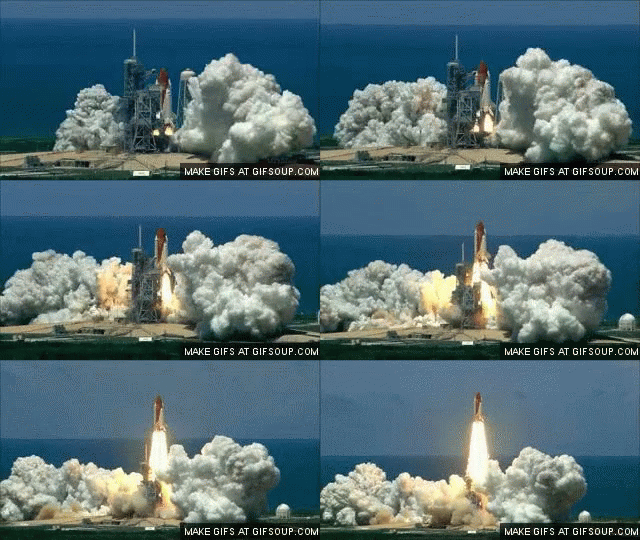
On July 11, Virgin Galactic will make a giant leap toward commercial suborbital spaceflight. The company will launch its first fully crewed flight of its SpaceShipTwo space plane Unity with a special passenger on board: the company’s billionaire founder Richard Branson.
Branson, three crewmates and two pilots will launch on the historic flight after being carried into launch position by Virgin Galactic’s carrier plane VMS Eve. They will take off from the company’s homeport of Spaceport America in New Mexico, with a live webcast chronicling the flight. Here’s everything you need to know about the mission, which Virgin Galactic has dubbed Unity 22.
Related: How to watch Virgin Galactic launch Richard Branson to space
More: How Virgin Galactic’s SpaceShipTwo works (infographic)
WHAT TIME IS VIRGIN’S GALACTIC LAUNCH & AND CAN I WATCH?
Virgin Galactic has not released a specific time for the actual Unity 22 launch, but the company has announced it will begin webcasting the mission at 9 a.m. EDT (1300 GMT). And it looks like it’s going to be fun. The crew will walk out to the ship about an hour earlier.
Stephen Colbert, host of The Late Show on CBS, will host the webcast along with singer Khalid (who will debut a new single during the launch), former Canadian Space Agency astronaut Chris Hadfield and future Virgin Galactic astronaut Kellie Gerardi, who will launch on a research flight in 2022.
The webcast will begin with the Unity spacecraft and its carrier plane taking off from its runway at Spaceport America, which is located 55 miles (88 kilometers) north of Las Cruces, New Mexico.
Branson has stated that the entire flight will take about 90 minutes, including the ascent up to launch position, release, flight to space and glide back to Earth for a runway landing at Spaceport America.
Virgin Galactic will launch six people on the Unity 22 flight, although the spacecraft is designed to carry up to eight people (two pilots and six passengers).
Unity 22’s crew includes four mission specialists:
- Sirisha Bandla, Vice President of Government Affairs and Research Operations at Virgin Galactic. She will evaluate the human-tended research experience via an experiment from the University of Florida that requires several handheld fixation tubes to be activated at various points in the flight profile.
- Colin Bennett, Lead Operations Engineer at Virgin Galactic. He will evaluate cabin equipment, procedures and the experience during the boost phase and weightless environment inside Unity.
- Sir Richard Branson, founder of Virgin Galactic. Branson will evaluate the private astronaut experience. He will receive the same training, preparation and flight as Virgin Galactic’s future ticket-buying astronauts and use the flight to fine ways to enhance the experience for customers.
- Beth Moses, Chief Astronaut Instructor at Virgin Galactic. She will serve as cabin lead and test director in space. Her tasks include overseeing the safe execution of the test flight objectives. Moses has launched on Unity before.
Two veteran Virgin Galactic pilots will be at the helm of Unity during the launch. They have both launched to space on Unity before and are:
- Dave Mackay: Mackay is Virgin Galactic’s chief pilot and grew up in the highlands of Scotland. He is a former Royal Air Force pilot and flew for Branson’s airline company Virgin Atlantic before joining Virgin Galactic.
- Michael Masucci: Michael “Sooch” Masucci is a retired U.S. Air Force colonel who joined Virgin Galactic in 2013 who racked up over 9,000 flying hours in 70 different types of airplanes and gliders during more than 30 years of civilian and military flight.
Two other pilots will fly the VMS EVE carrier plane that will carry SpaceShipTwo into launch altitude. They are:
- Frederick “CJ” Sturckow: A former NASA space shuttle commander who joined Virgin Galactic in 2013 with Masucci. A retired Marine Corps colonel, he was the first NASA astronaut to join the company and flew four space shuttle missions.
- Kelly Latimer: Latimer is a test pilot and retired lieutenant colonel in the U.S. Air Force who joined Virgin Galactic’s pilot corps in 2015. She was the first female research test pilot to join what is now NASA’s Armstrong Flight Research Centre.
The primary objective for Unity 22 is to serve as a test flight for future passenger flights by Virgin Galactic. As its number suggests, this will be the 22nd flight of Unity, but only its fourth launch to space.
The four mission specialists will each evaluate different experiences that Virgin Galactic has promised its future customers, many of whom have already reserved trips to space with the company at $250,000 a seat.
Bandla, for example, will test the experience of performing experiments aboard Unity during different phases of the flight, including the weightless period. Branson will take note of the flight as a paying passenger to look for ways to enhance the trip for ticket holders looking for the experience of a lifetime.
Related: The long road to spaceflight for Virgin Galactic and Blue Origin
Moses is Virgin Galactic’s Chief Astronaut Trainer and will ensure everyone is safe in their tests while Bennet will examine Unity’s cabin performance to look for potential enhancements.
This mission is a critical flight or Virgin Galactic, which Branson founded in 2004. VSS Unity is the company’s second SpaceShipTwo after the first, VSS Enterprise, broke apart during a 2014 test flight, killing one pilot and seriously injuring another. Virgin Galactic has made numerous safety upgrades to prevent such an accident from happening again.
The mission will begin with takeoff from Spaceport America, where Virgin Galactic has built its “Gateway to Space” terminal to serve its future customers. The crews of Unity and Eve will walk out to their vehicles at about 8 a.m. EDT (6 a.m. local time, 1200 GMT). They’ll be wearing custom Under Armour flight suits made for Virgin Galactic.
After takeoff, the carrier plane VMS EVE will haul the SpaceShipTwo VSS Unity (short for Virgin Space Ship) to an altitude of about 50,000 feet (15,000 meters), when it will drop the the spacecraft.
In Photos: Virgin Galactic’s Sleek Under Armour Spacesuits for Space TouristsAdvertisement

After separation, Unity will ignite its hybrid rocket motor, which uses a mixture of solid and liquid propellant, to begin the boost phase. This will carry Unity to its target altitude above 50 miles (80 kilometers), where the pilots and crew can expect up to 4 minutes of weightlessness. They will exist their seats and enjoy sweeping views of the Earth below through the many round windows that dot the space plane’s fuselage.
After that short encounter with weightlessness, the crew will climb back into their seats as Unity prepares to return to Earth. Pilots Mackay and Masucci will have “feathered” the spacectraft’s twin tail booms to provide stability during atmospheric reentry.
The feathered tail will then be locked back into place for the glide back to Earth, which will end with a runway landing at Spaceport America. The entire flight, from takeoff to landing, should last about 90 minutes, Branson has said.
WILL VIRGIN GALACTIC REALLY REACH SPACE WITH UNITY 22?
Virgin Galactic will launch Unity to an altitude above 50 miles (80 km), which NASA, the Federal Aviation Administration and the U.S. military classify as space. They will earn astronaut wings for reaching that height.
Another widely recognized boundary of space, the Kármán line, is at an altitude at 62 miles (100 km) above Earth. The SpaceShipTwo VSS Unity won’t reach this milestone, which has led Virgin Galactic’s competitor Blue Origin (which does fly higher than 62 miles) to call out Virgin Galactic for missing that mark.
Richard Branson has downplayed that criticism and saying that “the actual difference in experience is going to be almost non-existent,” in an interview with NPR’s Leila Fadel.
WHERE DOES VIRGIN GALACTIC LAUNCH SPACESHIPTWO FROM?
Click here for more Space.com videos…Sorry, the video player failed to load.(Error Code: 101102)Advertisementhttps://e42edf55977935dba9fbedb9fb4dde49.safeframe.googlesyndication.com/safeframe/1-0-38/html/container.html
Virgin Galactic initially launched SpaceShipTwo test flights from the company’s facilities at Mojave Air and Space Port in California. However, in 2020 the company moved Unity and its carrier craft to its permanent home at Spaceport America, where it plans to fly regular passenger flights beginning in 2022.
Spaceport America is located near Las Cruces, New Mexico and is home to Virgin Galactic’s “Gateway to Space” terminal, a welcome center and waiting room for ticketed passengers preparing for trips to space. It also sports a large hangar designed to fit multiple SpaceShipTwo spaceplanes and the VMS Eve. Virgin Galactic has also built a new vehicle, the SpaceShip III VSS Imagine.
WHEN COULD I LAUNCH TO SPACE WITH VIRGIN GALACTIC?
Click here for more Space.com videos…Sorry, the video player failed to load.(Error Code: 101102)
If you booked a trip with Virgin Galactic early and have one of the first reservations, you may get your chance to fly in space as early as 2022. If not, there’s a long wait ahead. And that’s assuming you can afford the $250,000 ticket price.
Virgin Galactic has said it plans to begin passenger launches in 2022 after a series of final test flights in 2021. The company does have hundreds of reservations for customer flights in backlog from eager would-be astronauts that have been waiting for over 17 years (since Richard Branson first announced Virgin Galactic in 2004) for the SpaceShipTwo to finally fly. The company paused taking new reservations after the 2014 accident.
Virgin Galactic is expected to resume taking reservations for “a limited number of tickets for future spaceflights” sometime this year, according to its website.
Indian navy
The Indian Navy is the naval branch of the armed forces of India. With 55,000 men and women, including 5,000 naval aviation personnel and 2,000 Marine Commandos (MARCOS), it is the world’s fifth largest navy. The Indian Navy currently operates more than 155 vessels, including the aircraft carrier INS Viraat.
India uses its navy to enhance its international relations through joint exercises, port visits, and humanitarian missions, including disaster relief. The Indian Navy is increasing its capabilities as a true blue-water navy; the Indian Navy’s doctrine states that this is for the collective good of nations.
The Indian Navy sees several principal roles for itself:In conjunction with other armed forces of the union, act to deter or defeat any threats or aggression against the territory, people or maritime interests of India, both in war and peace;
· Project influence in India’s maritime area of interest, to further the nation’s political, economic and security objectives;
· In cooperation with the Indian Coast Guard, ensure good order and stability in India’s maritime zones of responsibility.
· Provide maritime assistance (including disaster relief) in India’s maritime neighborhood.· To play a key role as part of ‘a pluralistic security order’ for a better world.
The Indian Navy is well known to provide emergency relief to the marooned due to natural cause or conflicts in and around the Indian Ocean.
Each of the three Naval Commands has an active Flag Officer Commanding in Chief. The commander of the Navy is the Chief of Naval staff (CNS).
The Indian Navy is divided into the following broad Categories:• Administration
• Logistics and Material
• Training
• The Fleets• The Naval Aviation
• The Submarine Arm
The Marine Commando Force (MCF) known as MARCOS is a Special Forces unit that was raised by the Indian Navy in 1987. Modeled after the US Navy SEAL and the Royal Marines it was created to handle reconnaissance, raids and counter-terrorism in a maritime environment. The Indian Navy conducts naval exercises with friendly navies strengthening bilateral relationships with other navies and nations.
Some such exercises take place annually like the Exercise VARUNA with the French Navy, KONKAN with the British Royal Navy, INDRA with Russian Navy, MALABAR with the U.S. Navy, and SIMBEX with Republic of Singapore Navy. The Indian Navy also conducted exercise with the Chinese PLAN in 2003 and with various other navies.India conducted TROPEX (Theatre-level Readiness Operational Exercises) 2007 in which, the new doctrine of influencing the land and air battle in support of Indian Army and the Indian Air Force was validated . Indian Navy conducted naval exercise with JMSDF and U.S Navy in the Pacific and also exercised with Chinese Navy.
The Indian Navy regularly conducts adventure expeditions, the most remarkable among the various adventures being the sailing ship and training vessel INS Tarangini circumnavigating of all the different ports belonging to different countries this was done intending to foster good relations with various other nations, she returned to India after visiting 36 ports in 18 nations. This helps to bridge gaps between nations and develop strong political and military relations.
The men in white are the ones responsible to safeguard coastal boundaries around India and are the very reason we sleep peacefully. Their never ending determination will always ensure a safe and bright future for India. No wonder there are a million Indians waiting to join the Indian Navy.
Indian army
Indian armed forces are divided into three parts – Indian army, Indian Airforce and the Indian Navy. Indian army is the land-based unit, while Indian Airforce deals in air defence and Indian Navy is the naval unit. Our Indian army is the second largest in the world with about 1.23 million personnel on active rolls and another 9.6 lakhs in reserves.
Indian army is mainly responsible to protect the country against land based attacks. It also lends a helping hand to other agencies in dealing with terrorism, tackling emergency situations in the country and also rescuing people in case of natural calamities like flood, earthquake etc.
The current chief of army staff (COAS) is General Bipin Rawat (as of 2018). As Indian army is very huge, it is divided into regiments. Some important regiments are Punjab regiment, Madras regiment, Rajputana rifles, Sikh regiment etc. It also has its own intelligence unit, known as “Military Intelligence” or “MI” in short.
Indian army before independence (under British rule) had participated in World War I and II. After independence it has also fought many full-fledged wars like the Kargil war (1999), Bangladesh liberation war (1971), India -Pakistan war (1965), India-China war (1962) and first Kashmir war (1947). Besides these, Indian army has also handled some smaller conflicts like Siachen conflict (1984), Operation Polo (1948), India-China conflict (1967) etc.
There is no doubt that our Indian army is one of the best armies in the world.
Future of Indian agriculture
Agriculture in India is livelihood for a majority of the population and can never be underestimated.
Although its contribution in the gross domestic product (GDP) has reduced to less than 20 per cent and contribution of other sectors increased at a faster rate, agricultural production has grown. This has made us self-sufficient and taken us from being a begging bowl for food after independence to a net exporter of agriculture and allied products.
Total foodgrain production in the country is estimated to be a record 291.95 million tonnes, according to the second advance estimates for 2019-20. This is news to be happy about but as per the estimates of Indian Council for Agricultural Research (ICAR), demand for foodgrain would increase to 345 million tonnes by 2030.
Increasing population, increasing average income and globalisation effects in India will increase demand for quantity, quality and nutritious food, and variety of food. Therefore, pressure on decreasing available cultivable land to produce more quantity, variety and quality of food will keep on increasing.
India is blessed with large arable land with 15 agro-climatic zones as defined by ICAR, having almost all types of weather conditions, soil types and capable of growing a variety of crops. India is the top producer of milk, spices, pulses, tea, cashew and jute, and the second-largest producer of rice, wheat, oilseeds, fruits and vegetables, sugarcane and cotton.
In spite of all these facts, the average productivity of many crops in India is quite low. The country’s population in the next decade is expected to become the largest in the world and providing food for them will be a very prime issue. Farmers are still not able to earn respectable earnings.
Even after over seven decades of planning since the independence, majority of the farmers are still facing problems of poor production and/or poor returns. Major constraints in Indian agriculture are:
According to 2010-11 Agriculture Census, the total number of operational holdings was 138.35 million with average size of 1.15 hectares (ha). Of the total holdings, 85 per cent are in marginal and small farm categories of less than 2 ha (GOI, 2014).
Farming for subsistence which makes scale of economy in question with majority of small holdings.
Low-access of credit and prominent role of unorganised creditors affecting decisions of farmers in purchasing of inputs and selling of outputs
Less use of technology, mechanisation and poor productivity for which first two points are of major concern
Very less value addition as compared to developed countries and negligible primary-level processing at farmers level.
Poor infrastructure for farming making more dependence on weather, marketing and supply chain suitable for high value crops.
Future of agriculture is a very important question for the planners and all other stakeholders. Government and other organisations are trying to address the key challenges of agriculture in India, including small holdings of farmers, primary and secondary processing, supply chain, infrastructure supporting the efficient use of resources and marketing, reducing intermediaries in the market. There is a need for work on cost-effective technologies with environmental protection and on conserving our natural resources.
The reforms towards privatisation, liberalisation and globalisation affected inputs market at a faster pace. Agricultural marketing reforms after 2003 made changes in marketing of agricultural outputs by permitting private investment in developing markets, contract farming and futures trading, etc. These amendments in marketing acts have brought about some changes but the rate is less.
Along with this, the information technology revolution in India, new technologies in agriculture, private investments especially on research and development, government efforts to rejuvenate the cooperative movement to address the problems of small holdings and small produce etc are changing face of agriculture in India.
Many startups in agriculture by highly educated young ones show that they are able to understand the high potential of putting money and efforts in this sector. Cumulative effects of technology over the next decade will change the face of agriculture.
All the constraints in agriculture make the productivity and returns complex but still a high untapped potential is there in India’s agriculture sector.
Advantageous weather and soil conditions, high demand for food, untapped opportunities, various fiscal incentives given by the government for inputs, production infrastructure, availability of cheap credit facilities and for marketing and export promotion are attracting many individuals, big companies, startups and entrepreneurial ventures to do a lot of investments on innovations, inventions, research and development and on other aspects of business.
The efforts are being done to convert all the challenges in agriculture into opportunities and this process is the future of agriculture.
Key trends expected
1. Changing demand due to increase in incomes, globalisation and health consciousness is affecting and going to affect more the production in future. Demand for fruits and vegetables, dairy products, fish and meat is going to increase in future.
2. Researches, technology improvements, protected cultivation of high value greens and other vegetables will be more. There will be more demand of processed and affordable quality products.
3. More competition will be there among private companies giving innovative products, better seeds, fertilisers, plant protection chemicals, customised farm machinery and feed for animals etc in cost effective ways at competitive prices giving more returns on investment by farmers. Use of biotechnology and breeding will be very important in developing eco-friendly and disease resistant, climate resilient, more nutritious and tastier crop varieties.
4. Some technologies will be frequently and widely used in future and some will become common in a short time while some will take time to mature. For producing the same products in other way so as to use resources judiciously and using new resources also like hydroponics, use of plastics and bio-plastics in production. There will be more of vertical and urban farming and there will also be efforts in long term to find new areas for production like barren deserts and seawater.
5. Precision farming with soil testing-based decisions, automation using artificial intelligence will be focused for precise application inputs in agriculture. Sensors and drones will be used for precision, quality, environment in cost effective manner.
Small and marginal farmers will also be using these technologies with the help of private players, government or farmer producer organisations (FPO). Use of GPS technology, drones, robots etc controlled by smart phones etc can make life of farmers easy and exciting with good results. These advanced devices will make agriculture be more profitable, easy and environmentally friendly.
6. Use nano-technology for enhancement of food quality and safety, efficient use of inputs will be in near future. Nano-materials in agriculture will reduce the wastage in use of chemicals, minimise nutrient losses in fertilisation and will be used to increase yield through pest and nutrient management. IFFCO has already done successful tests in nano-fertilisers.
7. India has improved remarkably in its digital connectivity and market access has become very easy. The number of internet users is projected to reach 666.4 million in 2025. Farmers will be behaving more smartly with mobiles in hands and would be able to be more aware and connected with different stake holders. Government will be making wide use of digital technology for generating awareness among farmers, information sharing, government schemes using digital technology for direct transfers of money.
8. There will certainly be more work by government, village communities, agri startups and private players in conserving sharply depleting water resource. Use of digital technology can make revolution in this direction. There will be use of satellites, IoT, drones for better collection of data regarding soil health, crop area and yield which will make cost for insurers less with better estimations and system will be more exact and effective.
9. There will be more of niche marketers in operations, area, and crop specific small equipments which will make operations even at small farms easier and efficient.
Food wastage will be less and better use of waste materials in agriculture will be more. Number of warehouses in private sector will be more and linkages between government and private warehouses will be increasing. This will help in balancing supply with demand and stabilisation of prices of agri-outputs in the market.
10. Retailing in agriculture will largely be digitalised. A study estimates that over 90 per cent of kirana stores across the country will be digitalised by 2025 with modern traceable logistics and transparent supply chain. Many players have already taking kiranastores to the door steps of consumers like Amazon and Jio Mart.
Question arises whether farmers will be able to make use of modern technologies in a country where education, holding size, infrastructure, low level of technology adoption and many other constraints are there.
Daily Yoga
Yoga is an art that connects our body, mind and soul together and makes us strong and peaceful. Yoga is essential because it keeps us fit, helps in reducing stress and maintains overall health and a healthy mind can help in concentrating well.
Yoga is important because by practicing yoga, you can gain benefits at the following points:
Internal peace – Yoga helps in achieving inner peace and fighting against stress and other problems. Yoga enhances the level of peace in one person and helps to increase his self-confidence and make him happy.
Health – A healthy person can work more than an unhealthy person. Life is very tense nowadays and there is a lot of pollution around us. This is the reason for many health problems. Just 10-20 minutes of yoga can help your health to be good every day. Better health means better life.
Activism – People now feel lazy, tired or sleepy due to which they lose most of their life in fun and are not able to fulfill their work correctly. Being actively, you are more aware of things happening around you and can accomplish your work more efficiently and quickly. One way to do all this is to practice yoga on a regular basis.
Flexibility – People are suffering from various types of pain nowadays. They face difficulties during touching the toes or bending downwards. Regular practice of yoga helps relieve all these types of pain. By doing yoga, the effects of these things can be seen in a few days.
Increase blood flow – Yoga helps make your heart healthy and it works more efficiently by increasing blood flow in your body and veins. It helps keep your body oxygen rich.
Focusing power – Yoga helps calm and relax your body which means stress is low and you can concentrate on your work. This is the reason that children and teenagers are encouraged to do yoga as it helps in better concentration in their studies.
Conclusion
Thus, it can be said that yoga is a miracle and if it is done then it will guide you throughout your life. 20-30 minutes per day Yoga can change your life forever by promoting the balance between your physical, mental and spiritual health.
Alpha Centauri, Star System Closest To Our Sun


Science of the Alpha Centauri system. The two stars that make up Alpha Centauri, Rigil Kentaurus and Toliman, are quite similar to our sun. Rigil Kentaurus, also known as Alpha Centauri A, is a yellowish star, slightly more massive than the sun and about 1.5 times brighter. Toliman, or Alpha Centauri B, has an orangish hue; it’s a bit less massive and half as bright as the sun. Studies of their mass and spectroscopic features indicate that both these stars are about 5 to 6 billion years old, slightly older than our sun.
Alpha Centauri A and B are gravitationally bound together, orbiting about a common center of mass every 79.9 years at a relatively close proximity, between 40 to 47 astronomical units (that is, 40 to 47 times the distance between the Earth and our sun).Must Watch Sky Events in 2021
In comparison, Proxima Centauri is a bit of an outlier. This dim reddish star, weighing in at just 12 percent of the sun’s mass, is currently about 13,000 astronomical units from Alpha Centauri A and B. Recent analysis of ground- and space-based data, published in 2017, has shown that Proxima is gravitationally bound to its bright companions, with a 550,000-year-long orbital period.
Proxima Centauri belongs to a class of low mass stars with cooler surface temperatures, known as red dwarfs. It’s also what’s know as a flare star, where it randomly displays sudden bursts of brightness due to strong magnetic activity.
In the past decade, astronomers have been searching for planets around the Alpha Centauri stars; they are, after all, the closest stars to us so the odds of detecting planets, if any existed, would be higher. So far, two planets have been found orbiting Proxima Centauri, one in 2016 and another in 2019. A paper published in February 2021 reported tantalizing evidence of a Neptune-sized planet around Alpha Centauri A, but so far, it has not been definitively confirmed.


How to see Alpha Centauri. Unluckily for many of us in the Northern Hemisphere, Alpha Centauri is located too far to the south on the sky’s dome. Most North Americans never see it; the cut-off latitude is about 29° north, and anyone north of that is out of luck. In the U.S. that latitudinal line passes near Houston and Orlando, but even from the Florida Keys, the star never rises more than a few degrees above the southern horizon. Things are a little better in Hawaii and Puerto Rico, where it can get 10° or 11° high.
But for observers located far enough south in the Northern Hemisphere, Alpha Centauri may be visible at roughly 1 a.m. (local daylight saving time) in early May. That is when the star is highest above the southern horizon. By early July, it reaches its highest point to the south at nightfall. Even so, from these vantage points, there are no good pointer stars to Alpha Centauri. For those south of 29° N. latitude, when the bright star Arcturus is high overhead, look to the extreme south for a glimpse of Alpha Centauri.

Observers in the tropical and subtropical regions of the Northern Hemisphere can find Alpha Centauri by first identifying the distinctive Southern Cross. A short line drawn through the crossbar (Delta and Beta Crucis) eastward first comes to Hadar (Beta Centauri), then Alpha Centauri. Meanwhile, in Australia and much of the Southern Hemisphere, Alpha Centauri is circumpolar, meaning that it never sets.

Alpha Centauri in mythology. Alpha Centauri has played a prominent role in the mythology of cultures across the Southern Hemisphere. For the Ngarrindjeri indigenous people of South Australia, Alpha and Beta Centauri were two sharks pursuing a sting ray represented by stars of the Southern Cross. Some Australian aboriginal cultures also associated stars with family relationships and marriage traditions; for instance, two stars of the Southern Cross were through to be the parents of Alpha Centauri.
Astronomy and navigation were deeply intertwined in the lives of ancient seafaring Polynesians as they sailed between islands in the vast expanse of the South Pacific. These ancient mariners navigated using the stars, with cues from nature such as bird movements, waves, and wind direction. Alpha Centauri and nearby Beta Centauri, known as Kamailehope and Kamailemua, respectively, were important signposts used for orientation in the open ocean.
For ancient Incas, a llama graced the sky, traced out by stars and dark dust lanes in the Milky Way from Scorpius to the Southern Cross, with Alpha Centauri and Beta Centauri representing its eyes.

Ancient Egyptians revered Alpha Centauri, and may have built temples aligned to its rising point. In southern China, it was part of a star group known as the South Gate.
Alpha Centauri is the brightest star in the constellation Centaurus, named after the mythical half human, half horse creature. It was thought to represent an uncharacteristically wise centaur that figured in the mythology of Heracles and Jason. The centaur was accidentally wounded by Heracles, and placed into the sky after death by Zeus. Alpha Centauri marked the right front hoof of the centaur, although little is known of its mythological significance, if any.

Alpha Centauri’s position is RA: 14h 39m 36s, Dec: -60° 50′ 02″
Bottom line: Alpha Centauri is actually two binary stars that are quite similar to our sun. A third star that’s gravitationally bound to them is Proxima Centauri, the closest star to our sun.
NASA’s Kepler Mission Discovers Bigger, Older Cousin to Earth


NASA’s Kepler mission has confirmed the first near-Earth-size planet in the “habitable zone” around a sun-like star. This discovery and the introduction of 11 other new small habitable zone candidate planets mark another milestone in the journey to finding another “Earth.”
The newly discovered Kepler-452b is the smallest planet to date discovered orbiting in the habitable zone — the area around a star where liquid water could pool on the surface of an orbiting planet — of a G2-type star, like our sun. The confirmation of Kepler-452b brings the total number of confirmed planets to 1,030.
“On the 20th anniversary year of the discovery that proved other suns host planets, the Kepler exoplanet explorer has discovered a planet and star which most closely resemble the Earth and our Sun,” said John Grunsfeld, associate administrator of NASA’s Science Mission Directorate at the agency’s headquarters in Washington. “This exciting result brings us one step closer to finding an Earth 2.0.”
Kepler-452b is 60 percent larger in diameter than Earth and is considered a super-Earth-size planet. While its mass and composition are not yet determined, previous research suggests that planets the size of Kepler-452b have a good chance of being rocky.

Highlighted are 12 new planet candidates from the seventh Kepler planet candidate catalog that are less than twice the size of Earth and orbit in the stars’ habitable zoneCredits: NASA Ames/W. StenzelTwelve New Small Kepler Habitable Zone Candidates

There are 4,696 planet candidates now known with the release of the seventh Kepler planet candidate catalog – an increase of 521 since the release of the previous catalog in January 2015.Credits: NASA/W. StenzelRead more…
While Kepler-452b is larger than Earth, its 385-day orbit is only 5 percent longer. The planet is 5 percent farther from its parent star Kepler-452 than Earth is from the Sun. Kepler-452 is 6 billion years old, 1.5 billion years older than our sun, has the same temperature, and is 20 percent brighter and has a diameter 10 percent larger.
“We can think of Kepler-452b as an older, bigger cousin to Earth, providing an opportunity to understand and reflect upon Earth’s evolving environment,” said Jon Jenkins, Kepler data analysis lead at NASA’s Ames Research Center in Moffett Field, California, who led the team that discovered Kepler-452b. “It’s awe-inspiring to consider that this planet has spent 6 billion years in the habitable zone of its star; longer than Earth. That’s substantial opportunity for life to arise, should all the necessary ingredients and conditions for life exist on this planet.”
To help confirm the finding and better determine the properties of the Kepler-452 system, the team conducted ground-based observations at the University of Texas at Austin’s McDonald Observatory, the Fred Lawrence Whipple Observatory on Mt. Hopkins, Arizona, and the W. M. Keck Observatory atop Mauna Kea in Hawaii. These measurements were key for the researchers to confirm the planetary nature of Kepler-452b, to refine the size and brightness of its host star and to better pin down the size of the planet and its orbit.
The Kepler-452 system is located 1,400 light-years away in the constellation Cygnus. The research paper reporting this finding has been accepted for publication in The Astronomical Journal.
In addition to confirming Kepler-452b, the Kepler team has increased the number of new exoplanet candidates by 521 from their analysis of observations conducted from May 2009 to May 2013, raising the number of planet candidates detected by the Kepler mission to 4,696. Candidates require follow-up observations and analysis to verify they are actual planets.
Twelve of the new planet candidates have diameters between one to two times that of Earth, and orbit in their star’s habitable zone. Of these, nine orbit stars that are similar to our sun in size and temperature.
“We’ve been able to fully automate our process of identifying planet candidates, which means we can finally assess every transit signal in the entire Kepler dataset quickly and uniformly,” said Jeff Coughlin, Kepler scientist at the SETI Institute in Mountain View, California, who led the analysis of a new candidate catalog. “This gives astronomers a statistically sound population of planet candidates to accurately determine the number of small, possibly rocky planets like Earth in our Milky Way galaxy.”
These findings, presented in the seventh Kepler Candidate Catalog, will be submitted for publication in the Astrophysical Journal. These findings are derived from data publicly available on the NASA Exoplanet Archive.
Scientists now are producing the last catalog based on the original Kepler mission’s four-year data set. The final analysis will be conducted using sophisticated software that is increasingly sensitive to the tiny telltale signatures of Earth-size planets.
Ames manages the Kepler and K2 missions for NASA’s Science Mission Directorate. NASA’s Jet Propulsion Laboratory in Pasadena, California, managed Kepler mission development. Ball Aerospace & Technologies Corporation operates the flight system with support from the Laboratory for Atmospheric and Space Physics at the University of Colorado in Boulder.
For more information about the Kepler mission, visit:
Yes, our connection with “Memes” is significant.
“If you got exceptional humor be my friend”
In a wide variety of contexts, we employ memes nowadays.
They help us connect and feel we are part of, can be the beginning of a conversation, and even assist you to manage a problem or make an observation.
Memes also allow us to relax while we surf and dwell in distressing news. They are free entertainment, a choice always even if you don’t have time to spend more time. It’s even easier to have them penetrate a large variety of specialist circles, being so great mixing cultures and touches of humor, to generate viral content.
The introduction of Meme Studies, an actual academic course on memes, at Northwestern University in the US state of Illinois in 2011 has long been cited as a barometer of the internet’s impact on society, from language to culture to beliefs.

Memes have a variety of goals and functions, but at their most basic level, they serve as a means of expressing people’s thoughts and feelings. Memes are created by appropriating sequences of words from television shows and films, which are then taken out of context, remixed with other content, and given new meanings in a humorous and relevant way. Meme content might range from whining about the difficulties of being a college student to expressing shame experienced during a daily encounter – something that everyone can relate to.
Memes, on the other hand, can have an impact on how we connect with others. Some aspects of meme culture have caused ripples in our social fields outside of the internet. After all, every meme has a creator who created it intending to spread a viral message, whether for enjoyment or to persuade others.
What exactly are memes? And how does it matter to our society?
Memes are statements that are clear, brief, and explicit, and this cultural paradigm reflects current society’s mentality – one that loves entertainment, celebrates materialism, and reinforces people’s need to stay relevant.
Memes can be used as propaganda tactics because of their accessibility and capacity to reach a large audience in minutes (and become part of the online vernacular in days), which means they can readily instill and cement opinions that fast become popular among cybernauts (a habitual user of the internet).
The working of memes that make them interestingly catchy to the readers allows them to further cultivate their humor and let them become a new mark or a strong speaker of the society. As we know memes are not only for entertainment but also imprint a deep message for society.
Memes allow people to communicate with one another. Knowing the correct memes can assist you in joining a group. They give a sensation of belonging to a group.
Memes are an excellent approach to get influence online because they are based on social media today. People can gain more followers by creating and reblogging popular memes, and these social ties can be used in both positive and negative ways.
Memes don’t merely bridge languages; their relatability fosters a sense of community among specific internet users of a certain age range. Memes are a simple and amusing way for youngsters to communicate with their pals, whether they’re used to express their opinions about certain socio-political concerns or to reinforce their fascination with famous people. Indeed, the process of spreading memes, sharing them on social media platforms, and tagging their friends within specific meme pages has improved global communication and made a significant contribution to globalization’s success.

But memes, just like many other parts of online culture, are easily misrepresented by those who aren’t familiar with them. Some people believe they are unimportant. Others believe memes are destructive and damaging to our communication, others in some sectors believe that memes, which have become the vernacular language of many a teen, have had a detrimental influence.
They suggest that memes obstruct communication in more ways than just reducing things to one-liners and visuals. They can be utilized to exacerbate hostile and discriminatory sentiments against various races, genders, religions, and sexualities, therefore expanding rather than closing the gap between people.
Memes, on the other hand, are a medium of communication that may be utilized for a variety of objectives. They can help to bring about constructive societal changes, but they can also be exploited to cause harm to others. It’s critical to establish a realistic understanding of memes’ potency as a communication medium, both today and in the future.
FEAR OF MISSING OUT (FOMO)
How FOMO can be turned into JOMO?

Are you one of those people who have to attend every social gathering they are invited to?
Do you feel that you will miss out on something great every time you say ‘no’ to a plan?
Do you have this uncontrollable urge to be around people all the time?
If the answers to the above questions is ‘yes’, then you my friend might be experiencing FOMO i.e. the Fear Of Missing Out. FOMO is the feeling of anxiety you get when you believe that other people are having more fun than you are. It is obviously not a good feeling and as a result of that you keep checking your phone to see what other people are doing. The fear actually overcomes your mind and often renders you unable to enjoy your own day.
One thing that has really pushed the concept of FOMO is social media. Since the advent of social media, everyone knows everything about everyone. There are people who are having fun and then there are people who feel anxious because they were left out. This is because research suggests that people are affected more by what they lose rather than being happy about what they have gained. Looking at pictures of people having fun can trigger FOMO but what hurts more is coming to know about a plan from a friend that you weren’t invited to. And this is the reason people value social media over their relationships.
CONSEQUENCES OF EXPERIENCING FOMO:
- A person experiencing such feelings is more likely to value social media over everything else.
- These people are lesser satisfied in life and might experience frequent changes in mood.
- You are constantly unhappy and there is chance that you might not enjoy things you once loved anymore.
- One of the major consequences of experiencing FOMO is deteriorating mental health. We repeatedly compare our lives with those of others and are dissatisfied with ours all the time.
- Some other effects of FOMO include- loneliness, anxiety, depression and increased levels of negativity.
HOW TO TURN FOMO INTO JOMO?

Hypothetically speaking, if there are 60% of the people who experience FOMO, there are 40% of the people who don’t. Such people know the feeling of JOMO i.e. Joy of Missing Out. If you think you can achieve this joy just by maintaining a distance from social media then you might be wrong. It does help but not entirely. In order to achieve JOMO you must first accept the feeling of the fear of missing out. The more you let the feeling in, the more you will realize how futile such feelings are and you will start moving away from that fear. It is easier said then done and it does take a lot of time but attaining that joy will make your life so much better and you will be at content.
In order to do so you must begin with saying ‘no’. Don’t be available all the time. Be mindful of the situations you want to associate yourself with. So, instead of crying over what you have lost, be grateful for the good things that are happening. Instead of checking your social media to see what people are doing, focus on yourself and what’s going on with you. Distract yourself from all kinds of negativity that push you towards the fear of missing out.
If you still feel the same after having tried out everything, you must reach out to a friend or a confidant and talk it out. Communication is the key to all your problems. It is finally time to declare a winner in this battle of FOMO against JOMO. Do your mental health a favor and choose joy over the fear.
Environment Protection Act -1986
The constitution of India clearly states that it is the duty of the state to “protect & improve the environment and to safeguard the forests & wildlife of the country”. The department of environment was established in India in 1980. this later became the Ministry of environment & forests in 1985. The EPA (Environment Protection Act), 1986 came into force soon after the Bhopal gas tragedy & is considered an umbrella legislation as it fills many gaps in the existing laws. Thereafter a large number of laws came into existence as the problems began arising, or example, handling and management of hazardous waste rule in 1989.
An Act to provide for the protection and improvement of Environment. Whereas the decisions were taken at the United Nations Conference on the Human Environment held at Stockholm in June, 1972, in which India participated, to take appropriate steps for the protection & improvement of human environment.
Objective
- Providing for the protection & improvement of the environment.
- Preventing environmental pollution in all its forms.
- To tackle specific environmental problems that are peculiar to different parts of the country.
- To co- ordinate the activities of the various regulatory agencies already in existence.
- To appoint environment officers to check environmental pollution.
- To improve the quality of life by protection of environment.
- Establishing environmental laboratories. To protect the forests & wildlife in the country.
SCHEME OF THE ACT
The Environment (Protection) Act, 1986 has 26 Sections & it has been divided into four chapters relating to, 1.Preliminary 2.General Powers of the central Government. 3.Prevention, Control, & Abatement of Environmental Pollution. 4.Miscellaneous.
PRELIMINARY : •Short Title, Extended & Commencement. •Definitions
Short Title, Extended & Commencement
The environmental protection act (1986) enacted under article 253 of the Indian constitution. To protect & improve environmental quality, control & reduce pollution from all sources. 1.This act may be called the Environmental (Protection) Act, 1986. 2.It extends to the whole of India.
IMPORTATNT DEFINATIONS
- Environment
- Environmental Pollutant
- Environmental Pollution
- Handling
- Hazardous Substance
- Occupier
GENERAL POWERS OF THE CENTRAL GOVERNMENT
- Planning and execution of a nation-wide program for the prevention, control and abatement of environmental pollution.
- Restriction of areas in which any industries, operations or processes or class of industries, operations or processes shall not be carried out or shall be carried out subject to certain safeguards.
- Laying down procedures and safeguards for the handling of hazardous substances
- Examination of such manufacturing processes, materials and substances as are likely to cause environmental pollution.
- Carrying out and sponsoring investigations and research relating to problems of environmental pollution.
- Establishment or recognition of environmental laboratories and institutes to carry out the functions entrusted to such environmental laboratories and institutes under this Act.
RULES TO REGULATE ENVIRONMENTAL POLLUTION
- The standards of quality of air, water or soil for various areas and purposes
- The maximum allowable limits of concentration of various environmental pollutants (including noise) for different areas
- The procedures and safeguards for the handling of hazardous substances
- The prohibition and restrictions on the handling of hazardous substances in different areas
- The prohibition and restriction on the location of industries and the carrying on process and operations in different areas
- The procedures and safeguards for the prevention of accidents which may •cause environmental pollution and for providing for remedial measures for •such accidents.
PREVENTION, CONTROL, AND ABATEMENT OF ENVIRONMENTAL POLLUTION
- Persons carrying on industry operation, etc., not to allow emission or discharge of environmental pollutants in excess of the standards.
- Persons handling hazardous substances to comply with procedural safeguards
- Furnishing of information to authorities and agencies in certain cases
- Powers of entry and inspection
- Power to take sample and procedure
PUNISHMENTS
One of the objective of EPA is provide for deterrent punishment to those who endanger human environment safety & health. Section 15 of EPA provides that any person who fails to comply or contrivance any provision or rule or act he shall be punishable. With a fine of 1 lakh. with imprisonment for term for 5 years. or both
ICT and Education During Covid-19 in India
When the whole world is facing a pandemic situation and it affected every single sector of the world. And it has impacted the educational sector tremendously. Every single educational institutions is closed and we don’t have a choice. As a result globally, over 1.2 billion children were out of the classroom. In India, according to a UNICEF report, “School closures have impacted 247 million children enrolled in elementary and secondary education and 28 million children enrolled in pre-schools and Anganwadi centers. This is in addition to the more than 6 million girls and boys who were already out of school before the COVID-19 crisis”, the report mentioned. ICT appears as a bridge to break the distance and survive the learning i.e, the gap which was created by lockdown between teachers and learners has been filled with the help of ICT.
Due to this Covid-19, every educational institution and pandemic forced the sector to shift to a virtual and blended mode of learning. Because this was the only way to continue the education. Initially some problems were faced by students as well as teachers. Because suddenly they have to shift in a totally different situation than earlier and many teachers and institutions were not trained and equipped adequately to shift to online teaching. Hence, they give their best and learn new skills in such difficult times. And gradually they adopted and teaching-learning process continued.
ICT initiatives for continuing the Learning Process
In the era of digitalization ICT is necessary in every aspects of life. It stands for Information, Communication and Technology. These three words have different meaning but collectively ICT becomes a part and parcel of human being. With the help of ICT Educational Institutions have been using various platforms like Google Classrooms, Microsoft Team, Zoom, Google Meeting and many more to continue the process of learning for students amid pandemics. Techers also provide e-content to students for better learning.
National level ICT initiatives
To address the challenges of learning, the Ministry of Education has undertaken several initiatives to assist students and educators. Some initiatives used which already exists digital platform like DIKSHA(Digital Infrastructure for Knowledge Sharing), e-Pathshala, NROER(National Repository of Open Educational Resources). These were used extensively for supporting the learners and teachers across the country with educational resources and relevant trainings. ICT tools like T.V( Swayam Prabha TV channels), Radio(All India Radio) helped the government to reach a larger number of target audiences. Various states also adapted initiatives to provide the necessary resources. For example
Chhattisgarh’ Education at Your Doorstep(Padhai Tuhar Duar) Initiative:– It is a portal to tackle the impact of the Covid-19 crisis in the education sector. It aimed to provide the platform to connect the teachers and learners by providing access to good quality educational content from comfort of their homes. It has a mix resources like Live classes, Offline Video Lectures, Animations, Podcasts etc.
Kerala- KITE Initiatives:- The state government launched virtual classes through Kerala Infrastructure and Technology for Education which was launched in 2005. During the difficult times of Covid-19, the state has been effectively using technology to ensure continuous learning and embodied their slogans “Physical Distance and Social Utility into Practice.” and many more initiatives by central and state government.
Individual Initiatives
Initiatives by various profit, non-profit organizations, and individuals have been incredible force behind the effort to use technology to make learning possible to many learners. Some initiatives in India like Smarter ED Platform(it is an initiative by Lenevo in collaboration with Vidayalaya(a non-profit organization) that connects volunteer teachers and learners.) and Digital Daan. Individual efforts of teacher to reach every student to continue their learning has been also incredible during this pandemic situation. One such teacher is Ritika Tomar from Sonbhadra ,UP has come up with the solution to provide necessary information to her students. she divides her students into two groups one having smartphones and other having simple cell phones. she used WhatsApp and message services to reach out tob both groups respectively. Her efforts helped the available ICT iniciatives to reach her students in the best possible way. Few teachers in rural areas teaches their students following the protocols of social distancing using Loudspeakers. In this way lot of teachers have explored and used ICT tools to teach their students in the pandemic.
Thus it can be said that ICT has proved itself as a boon to education in the pandemic situation . Education sector has been impacted tremendously especially in India. technological innovation in the sector have made it possible to overcome the situation due to the crisis. The importance of e-learning has been realized and it has been acknowledged by educational communities. We can say that the era of e-learning has been started due to this pandemic. In post pandemic world to this ICT can be used in blended mode of learning.
Internship : is it really important?
Internship is compulsory in about every colleges out there. But the most important question is why it is so important that our teachers keep telling us to do an internship and also what we will learn from this? During the college years, students are extremely busy with their academical activities and doing an internship after all that is like a headache. But trust me, there are so many benefits of doing an internship like you can increase your communication skills, interactive skills, leadership skills, and many more. Some students will say why waste time, money and energy on this, one should just focus on academics but I would like to tell them that a successful paid or unpaid internship is similar to earning good grades in college. The experience that they gained during their internship will genuinely help them to get a good job. It will help you to boost your confidence, your creative thinking and most important is your team work because after your studies you will look for a full time jobs where these thinks are really vital.
Its not really important that students are bound to do internships in the respective field, you can choose any field of your interest and just focus on learning new things.
Digital Marketing
Digital marketing is the use of the Internet, mobile devices, social media, search engines, and other channels to reach consumers. Some marketing experts consider digital marketing to be an entirely new endeavor that requires a new way of approaching customers and new ways of understanding how customers behave compared to traditional marketing.
Understanding Digital Marketing
Digital marketing targets a specific segment of the customer base and is interactive. Digital marketing is on the rise and includes search result ads, email ads, and promoted tweets – anything that incorporates marketing with customer feedback or a two-way interaction between the company and customer.
In the parlance of digital marketing, advertisers are commonly referred to as sources, while members of the targeted ads are commonly called receivers. Sources frequently target highly specific, well-defined receivers.
Digital Marketing Channels
- Website Marketing
A website is the centerpiece of all digital marketing activities. Alone, it is a very powerful channel, but it’s also the medium needed to execute a variety of online marketing campaigns. A website should represent a brand, product, and service in a clear and memorable way. It should be fast, mobile-friendly, and easy to use.
- Pay-Per-Click (PPC) Advertising
PPC advertising enables marketers to reach Internet users on a number of digital platforms through paid ads. Marketers can set up PPC campaigns on Google, Bing, LinkedIn, Twitter, Pinterest, or Facebook and show their ads to people searching for terms related to the products or services. PPC campaigns can segment users based on their demographic characteristics (such as by age or gender), or even target their particular interests or location. The most popular PPC platforms are Google Ads and Facebook Ads.
- Content Marketing
The goal of content marketing is to reach potential customers through the use of content. Content is usually published on a website and then promoted through social media, email marketing, SEO, or even PPC campaigns. The tools of content marketing include blogs, ebooks, online courses, infographics, podcasts, and webinars.
- Email Marketing
Email marketing is still one of the most effective digital marketing channels. Many people confuse email marketing with spam email messages, but that’s not what email marketing is all about. Email marketing is the medium to get in touch with your potential customers or the people interested in your brand. Many digital marketers use all other digital marketing channels to add leads to their email lists and then, through email marketing, they create customer acquisition funnels to turn those leads into customers.
- Social Media Marketing
The primary goal of a social media marketing campaign is brand awareness and establishing social trust. As you go deeper into social media marketing, you can use it to get leads or even as a direct sales channel.
- Affiliate Marketing
Affiliate marketing is one of the oldest forms of marketing, and the Internet has brought new life to this old standby. With affiliate marketing, influencers promote other people’s products and get a commission every time a sale is made or a lead is introduced. Many well-known companies like Amazon have affiliate programs that pay out millions of dollars per month to websites that sell their products.
- Video Marketing
YouTube has become the second most popular search engine and a lot of users are turning to YouTube before they make a buying decision, to learn something, read a review, or just to relax. There are several video marketing platforms, including Facebook Videos, Instagram, or even TikTok to use to run a video marketing campaign. Companies find the most success with video by integrating it with SEO, content marketing, and broader social media marketing campaigns.
- SMS Messaging
Companies and nonprofit organizations also use SMS or text messages to send information about their latest promotions or giving opportunities to willing customers. Political candidates running for office also use SMS message campaigns to spread positive information about their own platforms. As technology has advanced, many text-to-give campaigns also allow customers to directly pay or give via a simple text message.
Digital marketing challenges
1. Not getting lost in the volume
The digital world is booming, and almost every business out there has taken its products/services online to reach out to the masses. According to a report by Experian, most marketers are now facing the challenge of making their brand stand out in the volumes available on the internet. This eventually leads to the difficulty of running a brand awareness campaign or acquiring new customers.
What can you do?
While it is a fact that at least some of your products/services might be similar to what another business has to offer, there is a minor aspect that is unique to you. Discover the USP of your product/service and find ways to convey the same. Conduct surveys on your existing customers and your target audience to better understand what they are looking for and identify which needs your brand can fulfill.
2. Driving relevant traffic to the website
Continuing on the point above, marketers today are consistently facing a challenge in spreading brand awareness in the right target market. This also makes it harder for them to drive the ideal traffic to their business websites. Therefore, understanding which channel to tap into and driving the relevant audience to your website to turn them into customers is becoming an ongoing challenge for marketers.
What can you do?
Conduct an audit of your online activity. Identify what tactics you are opting to reach out to your audience. Consider the content you’re producing, the channels you’re presenting it on, your social presence, and the paid/unpaid campaigns you are running. Use robust analytics to know which of them work the best for you and optimize your efforts simultaneously. But it is essential to measure your analytics at modest intervals of time to give each of your efforts enough span to work over.
3. Targeting the right audience effectively
The first and foremost thing that an effective marketer would do is identify their target audience in the market. With the number of internet users increasing by the day and their needs changing almost every second, targeting the right audience has become one of the biggest challenges for marketers.
Keeping in mind what your business has to offer and what kind of problems it would solve when put to use, create your value proposition. This will help you identify who or what demographics would resonate with it the most when targeted.
What can you do?
Look at the general demographics of the market that you want to reach out to. Identify their needs and create customer personas taking into consideration their online behavior and possible future needs. In this case, companies like Wigzo equip you with machine learning and predictive analytics tools to enable better persona creation.
4. Lead generation using social media
When it comes to the various social channels, most businesses and marketers don’t know how to remain consistent. Most of them feel that it is all about the paid campaigns they are supposed to run for brand awareness and lead generation. Although, both of them is a constant challenge with the ever-increasing market competition.
Even though considerable marketing budgets are set aside by businesses, most marketers cannot run their engagement into revenue. But you mustn’t just build your social following – you need to get conversions that add up to the overall business goal.
What can you do?
The most effective way to leverage social media is to integrate your marketing and sales efforts. Sharing behavioral data and interaction levels with leads on social media can help the sales team define a custom, personalized customer journey for them – which they are more likely to convert on.
5. Optimizing marketing budgets and ROI
With the increase of digital channels and advanced analytics tools, marketers are now expected to optimize the marketing budgets and the ROI to best suit the business’s needs. He is expected to measure each effort and its value to achieve the end goal – the number of leads generated or the revenue raised.
What can you do?
Tap into the power of machine learning and robust analytics regularly. An effective marketer can gauge the value of every single lead generated from a marketing effort. Understand the impact of each digital campaign on lead generation, test different variants and approaches of reaching out to your target audience to optimize your campaigns for much better results.
While you measure the digital inbound results, ensure that you consider the outbound efforts being made by your business and what kind of results it is yielding.
6. Keeping up with the changing trends
The digital market and marketing techniques have changed drastically over the last few years. And it continues to change even today to cater to the modern-day addressable market needs. Hence, marketers need to stay up-to-date with all these changes.
Be it the launch of a new social media platform or a technology that would make a marketing effort more robust, marketers need to remain on top of things to ensure their business does not lose out on possible conversions.
What can you do?
Consistently engage with your target audience on platforms that they are most active on. The most effective way of doing so is to leverage social listening using tools like Hootsuite. They help you understand what people are saying about you and your product/service, what they expect – allowing you to become a part of their conversation.
7. A Check on Increased Security Risks
We have come across cases wherein online security has been compromised. The news and media keep it afresh. Since more information is shared online, hackers get more incentives to find ways to get through security. Shopping, bill payment, application submission, order copies, certificates, and other essential documents, and so much more are stored online for easy access – making these spaces a treasure trove for hackers and thieves. Venturing into digital marketing sure comes with its cost of security getting compromised as most of the work remains online. Security comes as a challenge.
What can you do?
You may already have a good firewall, HTTPS encryption, and maybe a good antivirus program. But that’s not enough. You will need more. Sit out and work with an authentic security team and identify your website’s weak spots and apps to create measures to reduce risk.
8. Lesser Focus on Keywords
Keywords were the bread and butter of SEO sometime in the immediate past. You just needed to find the right keywords and use them right, and your site could shoot up to the top in the search results—helping you with more exposure and traffic.
Now Google has changed algorithms making the keywords less critical. However, they are still to be used but are not the focus. Instead, it has become a topical approach rather than seeking and finding one, meaning that Google first gets an overall scope of your website.
What can you do?
First, you need to use search phrases instead of keywords and build content around topics rather than coming up with content for each keyword you want to target. Make your website a resource for the phase or question you need to target and see the changes.
Current trends of serverless computing.

Developers spend countless hours solving business problems with code. Then comes a never ending part where ops team’s turn to spend countless hours figuring out how to get the code that developers write up and running on whatever computers are available and making sure those computers operate smoothly. Serverless computing represents an enhancement of cloud programe models, abstraction, and platforms, and is a command to the attainment and wide acceptance of cloud technologies.
What is serverless computing?
Serverless computing is a cloud computing implementation model in which the cloud provider deals with machine resources on demand, taking care of the servers on behalf of their customers. It does not hold resources in volatile memory; computing is rather done in short bursts with the results persisted to storage. When an app is not in use, there are no computing resources allocated to the app. It is an execution model for the cloud in which Some of the Common languages supported by serverless runtimes are Java, Python and PHP. Amazon’s AWS Lambda was the first serverless platform and it defined several key dimensions including cost, programming model, deployment, resource limits,security, and monitoring. Supported languages include Node.js, Java, Python, and C programming. Initial versions had limited composability but this has been addressed recently.

Current trend
1.Google Cloud Functions : It provides basic FaaS functionality to run serverless functions written in Node. The functionality is currently limited but expected to grow in future versions.

2.Microsoft Azure Functions : It provides HTTP webhooks and integration with Azure services to run user provided functions. The platform supports C , Node.js, Python, PHP, bash, or any executable. The runtime code is open-source and available on GitHub under an MIT License. To ease debugging, the Azure Func-tions CLI provides a local development experience for creating, developing, testing,running, and debugging Azure Functions.
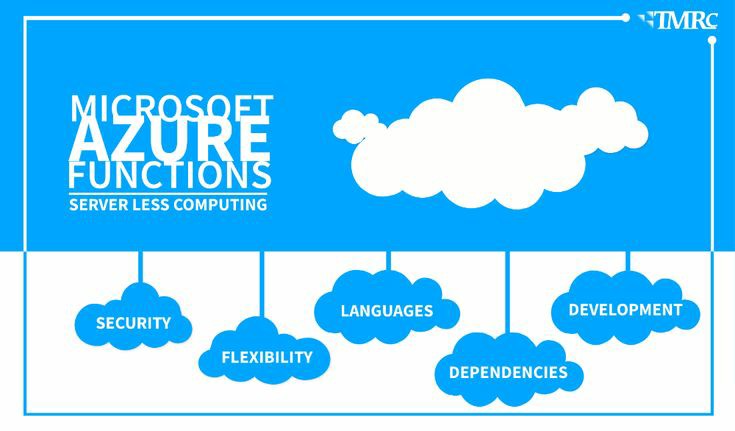
3.IBM OpenWhisk provides event-based serverless programming with the ability to chain serverless functions to create composite functions. It supportsNode.js, Java, Swift, Python, as well as arbitrary binaries embedded in a Docker Container. OpenWhisk is available on GitHub under an Apache open source license.Besides There are several serverless projects ranging from open source projects to vendors that find serverless a natural fit for their business. OpenLambda is an open source serverless computing platform. The source code is available in GitHub Lunder an Apache License. It’s paper outlines a number of challenges around performance such as supporting faster function startup time for heterogeneous language runtimes and across a load balanced pool of servers, deployment of large amounts of code, supporting stateful interactions (such as HTTP sessions), etc
4.AWS Lambda: It is a serverless compute service that lets you run code without provisioning or managing servers, creating workload-aware cluster scaling logic, maintaining event integrations, or managing runtimes. With Lambda, you can run code for virtually any type of application or backend service – all with zero administration. Just upload your code as a ZIP file or container image, and Lambda automatically and precisely allocates compute execution power and runs your code based on the incoming request or event, for any scale of traffic. You can set up your code to automatically trigger from over 200 AWS services and SaaS applications or call it directly from any web or mobile app. You can write Lambda functions in your favorite language (Node.js, Python, Go, Java, and more) and use both serverless and container tools, such as AWS SAM or Docker CLI, to build, test, and deploy your functions.

Advantages
1.No infrastructure to maintain :Serverless computer services, which are small snippets of code meant to execute a single function are executed on pre-existing servers that run functions for countless other customers as well. Since you’re literally using someone else’s computer to execute your serverless functions, there’s no infrastructure to maintain it.
2.No costs : when functions aren’t running As Hacker Noon points out, the costs associated with serverless computing are minimal compared to other cloud services. Access authorization, presence detection, security, image processing, and other costs associated with operating a server, whether physical or virtual, are eliminated under a serverless model. In short, serverless functions can be dirt cheap, and if they aren’t being spun up for use, you aren’t paying anything.
3.Infinitely scalable : Automatic scaling capability of any serverless platform worth investing in is designed to scale based on need. That’s another advantage to serverless computing as there’s never a need to partition a new cloud server or purchase additional computing power for an existing instance. All of that is handled by the serverless computing platform, leaving you with no complication outside of a slightly larger bill for additional computing time.
4.Reduced latency : Cloud flare points out that using serverless functions can greatly reduce the latency experienced by end users. Serverless functions don’t operate from an origin server, so there’s no single location that an end user’s traffic has to be directed to.
5.Reduced software complexity : Serverless computing functions don’t need to take any of that into account–the code just has to be supported by the cloud platform being used. On top of being easier to build, serverless functions require a lot less coding knowledge to build, which opens up development to those at lower skill levels. As cloud native systems inherently scale down as well as up, these systems are known as elastic rather than scalable. Small teams of developers are able to run code themselves without the dependence upon teams of infrastructure and support engineers; more developers are becoming DevOps skilled and distinctions between being a software developer or hardware engineers are blurring.
Disadvantages
1.Security issues : server that runs serverless functions runs them for myriad customers, which opens up a lot of security concerns.
2.Vendor lock-in : Building serverless functions on one platform can mean that migrating to another is difficult. Code might need to be re-written, APIs that exist on one platform may not exist. you’re going to invest in a serverless platform, be sure the vendor you’re considering has everything you need because becoming unhappy with your serverless computing provider a few months or years into your service can be a major problem.
3.Debugging is more difficult : Every time a serverless instance spins up it creates a new version of itself, and that means it’s difficult to collect data necessary to debug and fix a serverless function. Debugging serverless functions is possible, but it’s not a simple task, and it can eat up lots of time and resources.
Conclusion
Evolution of the trend towards higher levels of abstractions in cloud programming models, and currently exemplified by the Function as a Service (FaaS) model where developers write small stateless code snippets and allow the platform to man-age the complexities of scalably executing the function in a fault tolerant manner.This seemingly restrictive model nevertheless lends itself well to a number of common distributed application patterns, including compute intensive event processing pipelines. Most of the large cloud computing vendors have released their own serverless platforms.
for more information go to the link below 👇
 Eduindex
You must be logged in to post a comment.