Star Clusters- The family of stars

Many Stars in the milky way spend at least part of their lives in clusters.  Clusters are scientifically interesting because all their stars formed around the same time and generally have similar characteristics. For example, if the cloud in which they formed was rich in certain kinds of elements, then the stars from that cloud will contain higher amounts of those materials. If the cloud was metal-poor (that is, it had a lot of hydrogen and helium but very little of other elements), then the stars that form will reflect that metallicity. Their similarity makes cluster stars good targets for the study of stellar evolution (how stars age and die). Very young clusters interact with the remains of the gas and dust cloud from which they formed. Understanding how all types of clusters form in our galaxy gives astronomers good insights into how the process happens in other galaxies as well.  There are two types—open and globular.  

Open Clusters

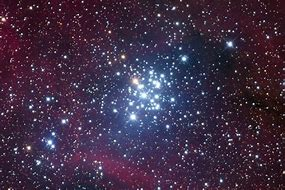
Open clusters usually have up to a thousand or so stars gathered into an irregularly shaped collection. They are often found in the plane of the galaxy, which is where they form. Most of the stars in these clusters are less than 10 billion years old, and some still lie embedded in what’s left of their birth clouds. Our Sun was created in an open cluster that formed about 4.5 billion years ago. It has since moved away from its stellar siblings and now travels the galaxy alone.  Open clusters are generally found in spiral galaxies such as the Milky Way and irregular-type galaxies such as the Large and Small Magellanic Clouds, which are two of our galaxy’s closest neighbors.  Example of Open Clusters:

Pleiades in Taurus constellation

Jewel Box in Crux constellation
Globular Clusters

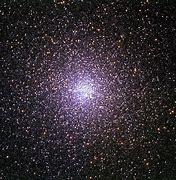
Globular clusters are collections of hundreds of thousands of old stars. The gravitational influence of all those stars binds the cluster together into a spherical, globular shape. Globulars swarm around the central region of the galaxy, called the halo. The Milky Way Galaxy has about 160 of these tightly packed clusters, but other galaxies have many more. Globulars roam around the halo and probably formed about the same time as the galaxy did.  Example of Globular Cluster: Tucanae
Cluster Formation

A cluster begins to form when some event triggers motion and turbulence in the birth cloud. For an open cluster, it could be a supernova explosion or a fast-moving wind ejecting material from an aging star in the near neighborhood. For a globular cluster, a galaxy collision could be one kind of trigger event. Whatever happens, it sends fast-moving material and shock waves through the birth cloud and starts the process of star birth. Once formation is complete, the cluster stars continue to evolve. If they are not strongly bound together by gravity, after about 100 million years they start to go their separate ways. Even though members of the cluster may get separated by large distances, they all tend to move through space in the same direction and at about the same speed. Sometimes interactions in the cluster will “kick” some stars out into space, sending them on radically different trajectories into the galaxy. Eventually, these stellar associations dissipate into what’s called a moving group, before they finally scatter to become part of the larger stellar population in the galaxy.

http://en.wikipedia.org/wiki/Star_cluster
https://en.wikipedia.org/wiki/Open_cluster

Are “They” Out There?

These days, the possibility of finding life “out there” is an integral part of astronomy. The exploration of mars has been spurred in large part by  the search for life or at least conditions that could support it. Extraterrestrial life is hypothetical life that may occur outside Earth and which did not originate on Earth. Such life might range from simple prokaryotes (or comparable life forms) to intelligent beings and even sapient beings, possibly bringing forth civilizations that might be far more advanced than humanity. Given the size of the universe – there are at least 100 billion stars in our home galaxy alone and perhaps 100 billion galaxies of much the same size scattered throughout deep space – few scientists believe that the Earth is the only home of life. But until quite recently, the field of exobiology – the study of extraterrestrial life also known as astrobiology – was almost moribund. It could come up with some interesting speculations but that was about all. The Drake equation speculates about the existence of sapient life elsewhere in the universe.

See the source image

The Drake Equation:

Astronomer Frank Drake (1930–), who was doing radio astronomy searches for signals from alien civilizations in the early 1960s, came up with an equation that can help estimate how many civilizations could be in the galaxy. His equation looks like this:

N = R* • fp • ne • fL • fi • fc • L

where N is the number of civilizations in our galaxy that have the ability to communicate with us. To get to N, you have to multiply the following factors: 

R*—the average star formation in our galaxy each year

fp —the number of those stars that have planets

ne —the number of planets that could potentially support life (for each star that has planets) 

fL —the number of those planets that actually go on to develop some kind of life

fi—the number of planets that actually do develop intelligent life 

fc—the number of civilizations that are technologically advanced enough to advertise their existence (through radio signals, etc.) 

L—the length of time it takes for those civilizations to start releasing their “I’m here” signals

Necessities for life

The most vital ‘exobiology’ discoveries, though, were made right here on Earth. Biologists have learned that life is much more robust than most scientists believed 30 years ago. Earth microorganisms have been found thriving in astonishingly hostile environments. Deep beneath the oceans, for example, near the volcanic vents known as black smokers, some microbes grow and multiply at temperatures above 110 degrees – according to some scientists, perhaps as high as 170 degrees. 

Others thrive in acid conditions that would strip the skin from a human, while others still make a comfortable living in hot rocks kilometres below the ground. Some even prefer cold to heat: Antarctic life-forms can manage very well in what amounts to a permanent deep-freeze.

The existence of these so-called extremophile organisms radically changed our view of what might be called “the necessities of life”. Extremophiles live happily without sunshine, without moderate warmth, without organic molecules to feed off and with no need for photosynthesis – many digest raw minerals and fuel themselves with basic chemical reactions.

The Kepler Mission

The Kepler mission is on the hunt for Earth-like planets around other stars, called exoplanets, and has found many planet candidates, not all of them suitable for life as we know it. Astronomers using the European Southern Observatory in Chile have even found an Earth-sized planet circling around Alpha Centauri B, which lies 4.37 light-years from Earth. While the newly discovered planet is too hot and close to its star to be hospitable to life, the discovery is another step towards finding life elsewhere.

I am sure that in the distant future we will find life elsewhere. The chances of ET being highly advanced or dangerous human eaters, is very very low. Most probably they will be some microscopic organisms(sorry to disappoint you). But, do not let this stop you from imagining.

https://en.wikipedia.org/wiki/Extraterrestrial_life https://www.esa.int/Science_Exploration/Human_and_Robotic_Exploration/Exploration/Extraterrestrial_life

Martyrs’ Day: The Day Bhagat Singh, Sukhdev and Rajguru Lay Down Their Lives For Freedom

Martyrs’ Day it is

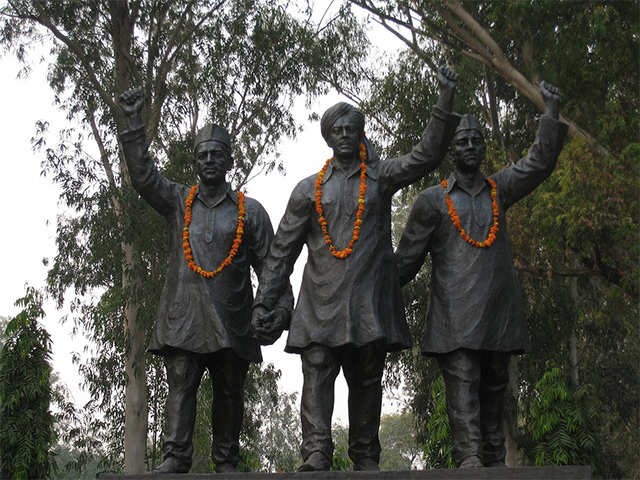
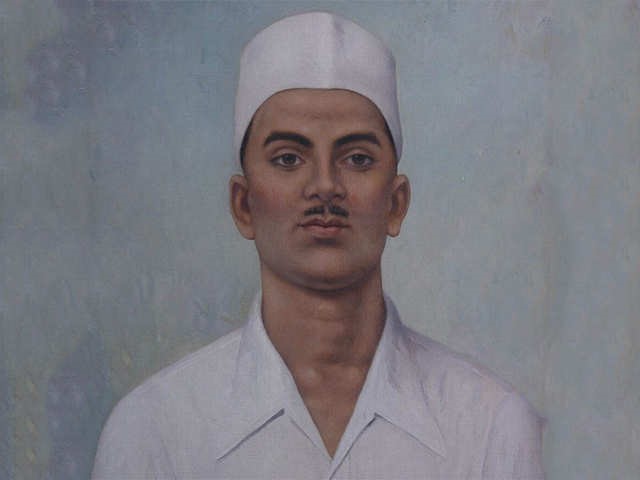
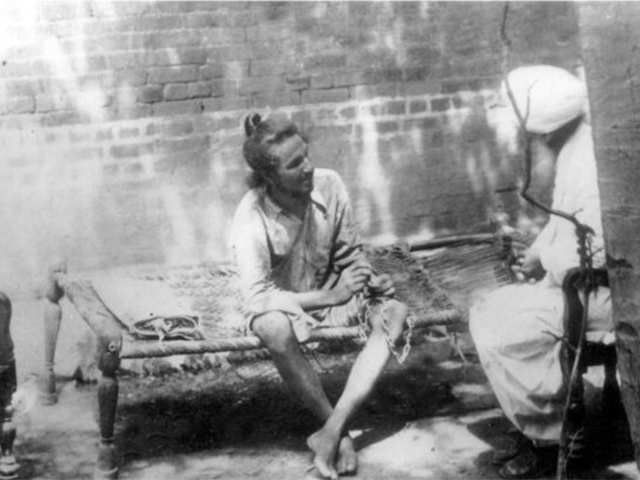
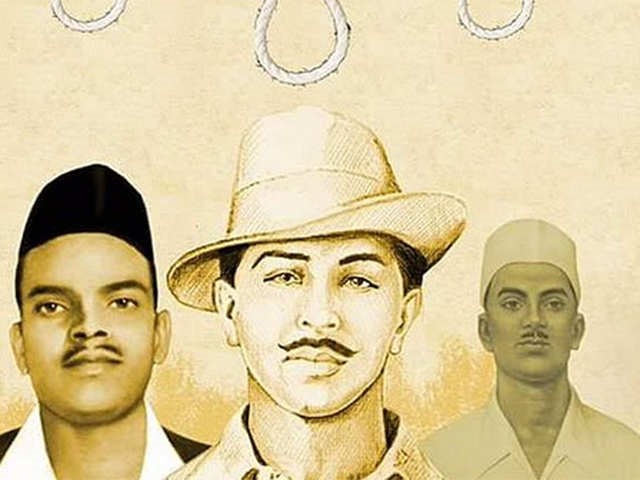
Bhagat Singh, Sukhdev Thapar, and Shivaram Rajguru – some of the most revered figures of the Indian freedom struggle – were hanged on March 23, 1931 in Punjab’s Hussainwala (now in Pakistan). Their execution spurred many youth to take up the revolutionary path, playing a vital role in energizing the fight against the British empire.

On Martyrs’ Day, also knowns as Shaheed Diwas or Sarvodaya Day, Indians pay homage to the martyrs who infused fresh blood in the fight for India’s independence.

Childhood of Bhagat Singh

At the age of 23, if anyone was smiling just before he was being hanged, he was Bhagat Singh.

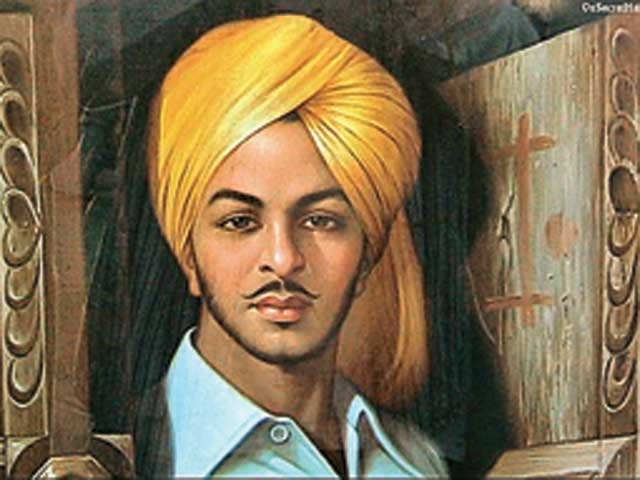
Born on September 27, 1907 in Punjab’s Banga village near Jaranwala (now in Pakistan), Bhagat Singh grew up in a freedom fighters family. His uncle, Sardar Ajit Singh, as well as his father- Kishan Singh, were great freedom fighters. At an early age, Bhagat Singh started dreaming of growing guns in the fields so that he could fight against the colonial rule.

The Ghadar Movement left a deep imprint on his mind. Kartar Sing Sarabha, hanged at the age of 19, became his hero. The massacre at Jallianwala Bagh on April 13, 1919 drove him to go to Amritsar. He was preparing fof his B.A. examination when his parents planned to have him married.

He vehemently rejected the suggestion and said that, if his marriage was to take place in Slave-India, my bride shall be only death.

Shivaram Rajguru

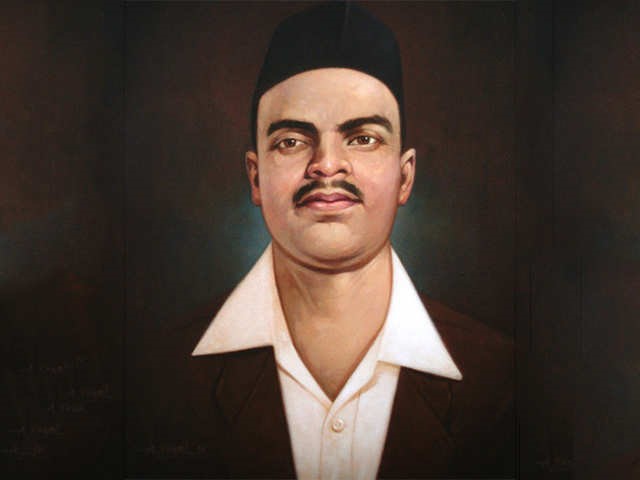
Shivaram Rajguru, born on August 24, 1908, had witnessed British’s atrocities on India and its people.

This instilled within him a strong urge to join hands with the revolutionaries in a bid for India’s freedom struggle. He joined HSRA with a motive to strike fear into the heart of the British empire.

​Rajguru made British to take notice of the growing domestic uprising when they dealt crucial blows with attacks like in the Lahore Conspiracy Case and the bombing of the Central Assembly Hall in New Delhi.

Sukhdev Thapar

Born on May 15, 1907, Sukhdev Thapar had witnessed the brutal atrocities that the Imperial British Raj had inflicted on India, which then led him to join the revolutionaries, vowing to set India free from the shackles of British dominion. As a member of the Hindustan Socialist Republican Association (HSRA), Sukhdev Thapar organised revolutionary cells in Punjab and other areas of North India.

He even went on to educate the youth at the National College in Lahore, greatly inspiring them about India’s glorious past. He along with other renowned revolutionaries started the ‘Naujawan Bharat Sabha’ at Lahore that was an organisation involved in various activities, mainly gearing the youth for the freedom struggle and putting an end to communalism.

He also took active part in several revolutionary activities like the ‘Prison hunger strike’ in 1929; however, he is best remembered for his courageous attack in the Lahore Conspiracy Case.

Assembly Incident Trial

The dramatic protest was met with widespread criticisms from the political arena.

Bhagat Singh responded – “Force when aggressively applied is ‘violence’ and is, therefore, morally unjustifiable, but when it is used in the furtherance of a legitimate cause, it has its moral justification.”

Trial proceedings commenced in May where Bhagat Singh sought to defend himself, while Batukeshwar Dutt was represented by Afsar Ali.

The court ruled in favour of a life sentence citing malicious and unlawful intent of the explosions.

Lahore Conspiracy Case

Soon after the sentencing, the police raided the Hindustan Socialist Republican Association (HSRA) bomb factories in Lahore and arrested several prominent revolutionaries.

Three individuals, Hans Raj Vohra, Jai Gopal and Phanindra Nath Ghosh turned approver for the Government which led to a total of 21 arrests including those of Sukhdev Thapar, Jatindra Nath Das and Shivaram Rajguru. Bhagat Singh was re-arrested for the Lahore Conspiracy case, murder of Assistant Superintendent Saunders and bomb manufacturing.

Trial started against 28 accused in a special session court presided over by Judge Rai Sahib Pandit Sri Kishen, on July 10, 1929.

Prison Hunger Strike

In jail, Bhagat Singh and his fellow inmates declared an indefinite hunger strike in protest of the prejudiced difference in treatment of the white versus native prisoners and demanded to be recognised as ‘political prisoners’.

The hunger strike received tremendous attention from the press and gathered major public support in favour of their demands. Death of Jatindra Nath Das, after 63 days long fast, led to the negative public opinions intensifying towards the authorities.

Bhagat Singh finally broke his 116-day fast, on request of his father and Congress leadership, on October 5, 1929.

Saunders’ murder

On December 17, 1927, Bhagat Singh and Shivaram Rajguru shot and killed assistant superintendent of police John Saunders.

They were supported in this act by their compatriots Sukhdev Thapar and Chandrashekhar Azad. However, their original target was not Saunders but superintendent of police James Scott who had ordered his men to lathi-charge protesters leading to the death of the nationalist leader Lala Lajpat Rai.

Owing to the slow pace of the legal proceedings, a special tribunal consisting of Justice J Coldstream, Justice Agha Hyder and Justice GC Hilton was set up on the directives of the Viceroy, Lord Irwin on May 1, 1930. The tribunal was empowered to proceed without the presence of the accused and was a one-sided trial that hardly adhered to the normal legal rights guidelines.

The tribunal delivered its 300-page judgement on October 7, 1930. It declared that irrefutable proof has been presented confirming the involvement of Bhagat Singh, Sukhdev Thapar and Shivaram Rajguru in the Saunders murder. Bhagat Singh admitted to the murder and made statements against the British rule during the trial. They were sentenced to be hanged till death.

Shaheed Diwas

On March 23, 1931, 7:30 am, Bhagat Singh along with his comrades Rajguru and Sukhdev were hanged in Lahore Jail.

It is said that the trio proceeded quite cheerfully towards the gallows while chanting their favourite slogans like “Inquilab Zindabad” and “Down with British Imperialism”.

India’s beloved sons were cremated at Hussainiwala on the banks of Sutlej River.

At the time of their execution, Bhagat Singh and Sukhdev Thapar were just 23 years old. And Shivaram Rajguru was only 22 when he was hanged on March 23.

ENVIRONMENTAL PROTECTION LAWS – Wildlife Act

Environment protection is practice of protecting the environment, on individual, organizational or governmental & (or) humans. Protection of the environment is needed due to various human activities.

Why laws are implemented?

  • Protect and preserve the environment.
  • The law  prescribes Responsibilities of the State for protecting the national environment.
  • Determine who can use natural resources and on what terms.
  • Create rules for how people can use natural resources.
  • Governments have determined to strengthen their judicial capacity to enforce environmental laws.

Wildlife Act (1972)

The wild life protection Act, 1972 is an Act of the Parliament of India enacted on 9 Sept 1972. It provides for protection of wild animals, birds, plants and for matters connected therewith. It extends to whole India, except Jammu and Kashmir. It has six schedules which give varying degrees of protection.

Definitions

  1. Animal- Amphibians, birds, mammals
  2. Animal Article- Articles made from wild animal
  3. Hunting- Capturing, Killing, poisoning, trapping, injuring animals etc
  4. Trophy- Whole or part of animal which been preserved.
  5. Wildlife- Any animal, bees, butterflies, crustacean, fish & moths;

Authorities appointed

Central government may appoint A Director of wild life preservation, Assistant Directors of wild life preservation, Other officers & employees as may be necessary.

State government may appoint A chief wild life warden, Wild life wardens, One Honorary wild life warden in each district, Other officers & employees as may be necessary.

Wild life Advisory Board

  • The Act enforces & enables the state governments & the administrators of the union Territories to constitute a wildlife Advisory Board in each state & Union Territory.
  • Areas to be declared as sanctuaries, national parks, or closed areas & their administration.
  • Formulation of policy for protection & conservation of wildlife.
  • Amendment of any schedule.
  • Any other matter referred by State government.

Hunting of wildlife animals

Hunting of wild animals is permitted in certain cases – If the animal has become dangerous to human life or beyond recovery. Killing or wounding in good faith in defense of oneself or any other person.

Grant of permit for special purpose like Education, Scientific research, Scientific management, Collection of specimen for zoos, museums & similar institute, Derivation, collection or preparation of snake- venom for manufacture of life saving drugs.

Protection of specified plants

No person shall Willfully pick, uproot, damage, destroy, acquire, or collect any specified plant from any land & any specified area by Central government. Possess, sell, offer for sale, or transfer by way to gift or otherwise, or transport any specified plant whether alive or dead.

Penalties

Imprisonment varying from six months up to seven years and/ or ranging from rs. 500 upto not less than rs. 10000 depending upon on the nature or seriousness of the offence committed regarding the specified wildlife.

Monsoon: An Upstanding and Suitable season to start gardening

Monsoon is on our doorsteps. Soon the great showers will come pouring down & within no time, the entire complexion of our surroundings will magically transform into an epic green stage. Our new gardening season also begins in the month of June, at the onset of monsoon. No matter how small or big your garden is, here are some key steps to make the best of this nature’s glory, & make your garden ‘monsoon ready’.

How Monsoon is suitable to start gardening?

The monsoon season in India is the best time to sit back and enjoy. The fresh smell of petrichor along with drizzling water gives a soothing effect to your mind and body after the hot summer days. The plants look greener than ever, the rainwater using its superpowers yield advantages to a plant that tap water cannot. As there is a significant fall in temperature, the sun is less hot and the rains add to the faster growth of plants. There are a variety of vegetables that loves the rainy season and grow magically during this time of the year. So it becomes really important to pick the right kind of vegetables also.

How to start Gardening in Monsoon?

  • Allow for good drainage: Water logging is a frequent problem in rainy season and restricts plant growth. When the problem is severe, roots do not have enough oxygen to respire and may eventually die. Therefore, prepare your garden with good drainage before the monsoon onsets. Some steps you can take to allow good drainage are use of grow bags, cocopeat or other potting mix that does not hold water.
  • Provide support to the plants: Plants often break or fall off during the strong monsoon winds. Provide support to your plants to withstand the monsoon winds.
  • Pruning and mulching: The first monsoon showers shoot up plant growth. Pruning, trimming and removing dead branches before the first showers arrive helps the plant to grow in the right direction. Mulching the garden before monsoon will help soil retain nutrients.
  • Vermicompost: It is well known that earth worms are farmer’s best friends. Take their aid during monsoon to improve soil fertility, texture and aeration.
  • Timely Weeding: Just like your veggies or flowering plants, weeds also thrive during monsoons. Weeding before the monsoon arrives will prevent weeds from absorbing vital nutrients from soil. Moreover, removing weeds when they are young is easier. However, weeding needs to be done regularly during monsoon season to protect your garden.
  • Harvest the rain-water: If you have the space and time to do so, rainwater harvesting is fun and beautifies your landscape. There are no complex mechanisms required for harvesting rainwater. Simply direct the rainwater to a spot in your garden or collect the rainwater in barrels. If you have enough space on your terrace, you can make a pond in one corner and plant flowers around it. This not only creates a lovely spot on your terrace but also attracts birds and improves bio-diversity.
  • Plant the right crops: Not all plants thrive in monsoons. Some plants require hot weather, some require cool weather and some require moist soil. Plants that thrive well in monsoons are typically cucumbers and gourds like ridge gourd and bottle gourd. Get your vegetable calendar ready before each season and become a pro at gardening. Also, eating seasonally grown fruits and veggies is best for your health. If you need guidance, check out our recommendations for Monsoon vegetables here.
  • Cover the plants: Sometimes plants get damaged beyond repaid when there are thunderstorms or hailstorms. Cover your plants appropriately to prevent that.
  • Fertilizers: Soil erosion is common during rainy seasons. The top layers of fertile soil gets washed away with rains. This more often happens if you do not use pots or grow bags in your garden. So apply necessary fertilizers like NPK, cow dung, neem extracts, compost etc to keep the soil fertilized.
  • Routinely check on the plants: Last but not the least, monsoons bring ample work for gardeners. Regularly check on your plants to identify broken branches, pests, infections, and water logging. Sometimes getting your hands dirty is worth it! Re-pot your plants, start new seeds and watch them grow!

Math 2.0 day

Today is math 2.0 day, but what exactly does that even mean?.With or without knowing we all use math several times every single day. The subject is also important for the advancement of technology. And thus, to celebrate the combination of maths and technology, Math 2.0 Day is celebrated on July 8. Read on to know other details.

Imagine the way the world used to be viewed! Math as known to be important but not thought to be something you could make a living at and the rising tide of technology was considered a fad! Math 2.0 Day reminds us that technology is here to stay!

Every year, Math 2.0 Day is celebrated on July 8. The day is observed to highlight the importance of the combination of maths and technology. The day was formed to celebrate the achievement made through the combination of maths and technology. Math 2.0 Day also helps to educate the masses about the benefits of maths and technology. Without maths and technology, it would have been impossible for us to achieve the various entertainment mediums we have now.

History of Math 2.0 Day

In 2009, the Math Interest Group formed Math 2.0 Day. Math is extremely important for the advancement of science, technology and education.Math 2.0 Day is a celebration of the blending of technology and mathematics. For a lot of us, math wasn’t a favorite subject, we’d spend the entire period staring at the equations and wondering what sort of livid madman designed these torture chambers on paper. Ultimately, however, we realized that math is utterly indispensable in our modern world. If you’ve ever wondered who uses math in their day to day careers, you aren’t alone and we have some answers for you.

Programmers deal with mathematics every day, as it’s the framework upon which all computer operations are formed. Everything from the order of operations to quadratic equations is necessary to make even the simplest program. Scientists are one of the biggest users of mathematics, whether they’re calculating the statistical variance of their data or figuring out how much to add to their chemistry experiment, it’s involved at every step.

One presumes you live in a house, drive a car, or operate a computer? The engineers responsible for designing those things so that they work, and especially in the case of the house, use math to ensure it doesn’t come crumbling down on your head. Math 2.0 day celebrates all these mathematical heroes and more.

How to celebrate Math 2.0 Day

If you’re like me, you probably have your old math books from college laying around. I suggest busting them open and studying them again. Who knows, in the intervening years you may have secretly developed a love for those dancing numbers. If not, make sure that you stop by those people who use math every day and thank them for doing the work so you don’ thave to.Mathematics is one of the most important fields in the world today, and just about everything we know and love is built on its back.

Homelessness

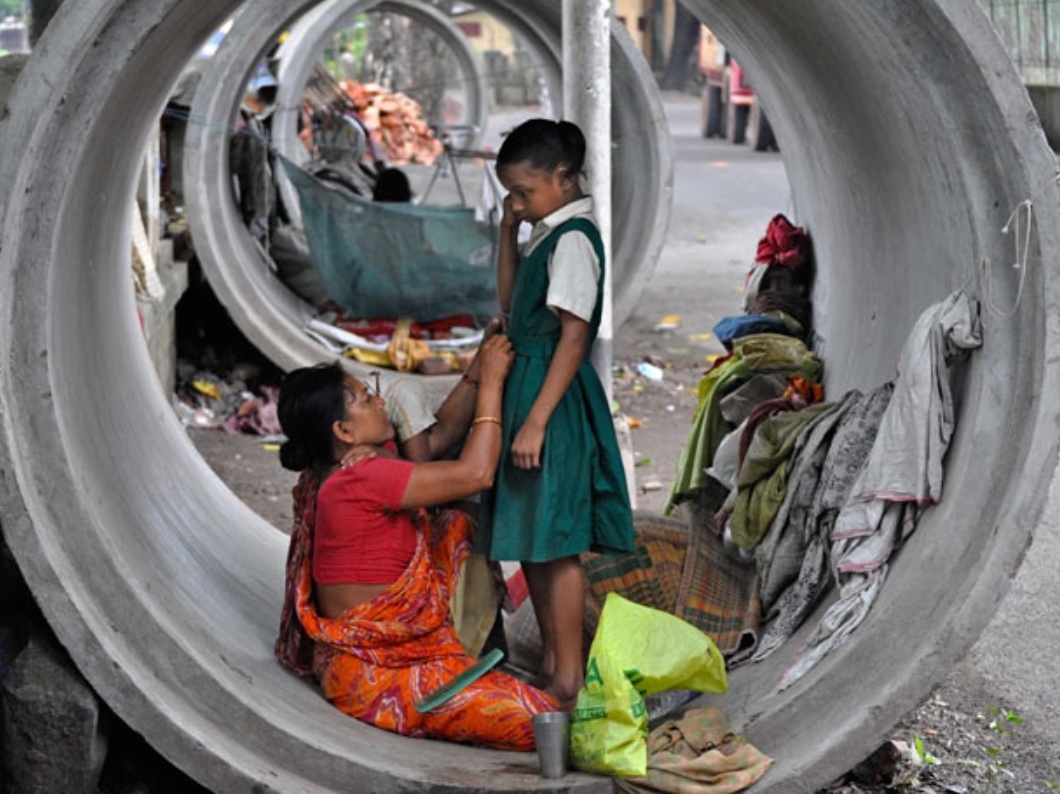
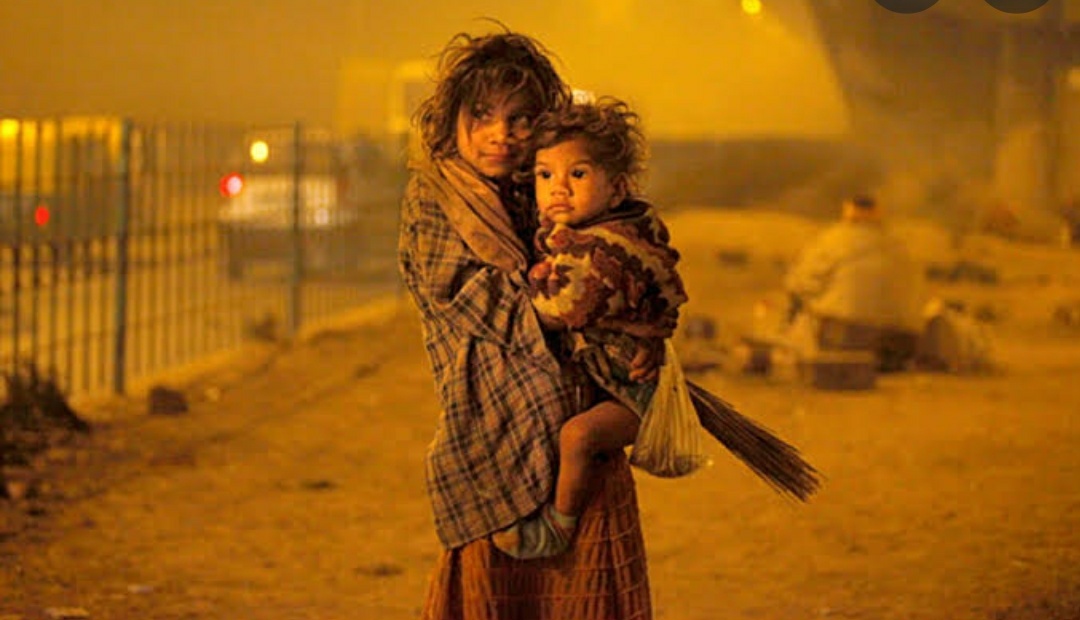
Can you sleep without a bed, pillow and a blanket? or Can you cook and eat on the streets while passersby stare at you? It’ll be so uncomfortable for you and for everyone of us.
Just take a break and imagine the lives of people who live on streets.
The amount of struggle they go through for the tiniest thing is nothing compared to our lives.

Sleeping on the benches of bustops or under a truck just to save themselves from cold breezes during winter ,to tie tarpaulin sheets in order to avoid getting wet during monsoons and to sleep without electricity during summers.

They earn little money by doing various jobs such as selling small items home to home. As their income is not fixed, the availability of food is not fixed too. Sometimes they might have to spend the night without having food. Due to income insecurity it is very difficult for them to save money.

Healthcare is very difficult for them to obtain due to irregular income and as they are living and eating on the streets, it is more likely for them to catch germs and fall sick frequently. Hygiene is the least thing that matters to them due to non availability of proper food, water, clothes, etc.

Life becomes hard for them each day and have to face new challenges everyday. It’ll be great job if you can offer them a little help by donating some clothes or giving them healthy food and water. Help them in every way you can because every tiny good deed matters.

Asset Bubble

What Is a Bubble?

A bubble is an economic cycle that is characterized by the rapid escalation of market value, particularly in the price of assets. This fast inflation is followed by a quick decrease in value, or a contraction, that is sometimes referred to as a “crash” or a “bubble burst. Typically, a bubble is created by a surge in asset prices that is driven by exuberant market behavior. During a bubble, assets typically trade at a price, or within a price range, that greatly exceeds the asset’s intrinsic value (the price does not align with the fundamentals of the asset).The cause of bubbles is disputed by economists; some economists even disagree that bubbles occur at all (on the basis that asset prices frequently deviate from their intrinsic value). However, bubbles are usually only identified and studied in retrospect, after a massive drop in prices occurs.

How a Bubble Works

An economic bubble occurs any time that the price of a good rises far above the item’s real value. Bubbles are typically attributed to a change in investor behavior, although what causes this change in behavior is debated. Bubbles in equities markets and economies cause resources to be transferred to areas of rapid growth. At the end of a bubble, resources are moved again, causing prices to deflate.

The Japanese economy experienced a bubble in the 1980s after the country’s banks were partially deregulated. This caused a huge surge in the prices of real estate and stock prices. The dot-com boom, also called the dot-com bubble, was a stock market bubble in the late 1990s. It was characterized by excessive speculation in Internet-related companies. During the dot-com boom, people bought technology stocks at high prices—believing they could sell them at a higher price—until confidence was lost and a large market correction occurred.

The research of American economist Hyman P. Minsky helps to explain the development of financial instability and provides one explanation of the characteristics of financial crises. Through his research, Minsky identified five stages in a typical credit cycle. While his theories went largely under-the-radar for many decades, the subprime mortgage crisis of 2008 renewed interest in his formulations, which also help to explain some of the patterns of a bubble.

Displacement

This stage takes place when investors start to notice a new paradigm, like a new product or technology, or historically low interest rates. This can be basically anything that gets their attention. 

Boom

Prices start to rise. Then, they get even more momentum as more investors enter the market. This sets up the stage for the boom. There is an overall sense of failing to jump in, causing even more people to start buying assets. 

Euphoria

When euphoria hits and asset prices skyrocket, it could be said that caution on the part of investors is mostly thrown out the window. 

Profit-Taking

Figuring out when the bubble will burst isn’t easy; once a bubble has burst, it will not inflate again. But anyone who can identify the early warning signs will make money by selling off positions. 

Panic

Asset prices change course and drop (sometimes as rapidly as they rose). Investors want to liquidate them at any price. Asset prices decline as supply outshines demand. 

Astronomers Detect a Lurking Cosmic Cloud, Bigger Than The Entire Milky Way.

In the yawning vacuum of intergalactic space, something large is lurking.

Not a galaxy, although it’s of a comparable size: A vast cloud of hot, faintly glowing gas, bigger than the Milky Way, in the space between galaxies congregating in a huge cluster.

Scientists believe this cloud may have been unceremoniously stripped from a galaxy in the cluster, the first gas cloud of this kind we’ve ever seen. Even more surprisingly, it hasn’t dissipated, but has remained clumped together for hundreds of millions of years.

This not only tells us something new about the environments inside galaxy clusters, it suggests a new way to explore and understand these colossal structures.

“This is an exciting and also a surprising discovery. It demonstrates that new surprises are always out there in astronomy, as the oldest of the natural sciences,” said physicist Ming Sun of the University of Alabama in Huntsville.

Galaxy clusters are, as the name suggests, groups of galaxies that are bound together gravitationally. The galaxy cluster where our ‘orphan’ gas cloud was found is called Abell 1367, or the Leo Cluster, around 300 million light-years away. It contains at least 72 major galaxies, and makes up part of a larger, supercluster complex.


Such environments often have a lot going on, and astronomers like to peer into them to try and figure out how our Universe is connected. In 2017, astronomers using Japan’s Subaru Telescope spotted what appeared to be a small, warm cloud in Abell 1367; since its origin was unclear, they went back with more instruments to take a closer look.

A team led by astronomer Chong Ge of the University of Alabama in Huntsville used the ESA’s XMM-Newton X-ray telescope and the Multi Unit Spectroscopic Explorer (MUSE) on the Very Large Telescope, in addition to Subaru – and, to their surprise, they found X-ray emission showing the cloud was larger than they first thought.

Much larger, in fact – bigger than the Milky Way galaxy, with a mass around 10 billion times that of the Sun. And it didn’t seem to be associated with any known galaxy in the cluster. It was just drifting there. But the wealth of data allowed the researchers to take the the temperature of the gas, in turn providing clues as to its provenance.

The cloud’s temperature ranges between 10,000 and 10,000,000 Kelvin – consistent with gas that can be found within galaxies, the interstellar medium. The much more tenuous hot gas of the intracluster medium (the space between galaxies in the cluster) is hotter still, at around 100 million Kelvin.
This suggests that the cloud of gas was stripped from a galaxy as it moved through space.

“The gas in the cloud is removed by ram pressure of the hot gas in the cluster, when the host galaxy is soaring in the hot gas with a velocity of 1,000 to 2,000 kilometers [620 to 1,240 miles] per second,” Sun said.

“It is like when your hair and clothes are flying backward when you are running forward against a strong headwind. Once removed from the host galaxy, the cloud is initially cold and is evaporating in the host intracluster medium, like ice melting in the summer.”

This is fascinating, but kind of weird – because the researchers couldn’t find any nearby galaxies that could account for this occurring recently. Yet, if the gas had been ripped from its galaxy hundreds of millions of years prior, as this lack of proximity suggested, how had it not been diffused into the intracluster medium?
To work this out, the team performed calculations, and found that a magnetic field could hold the gas cloud together against the instabilities that ought to otherwise tear it apart, for long periods of time.
Given the high mass of the cloud, the team has inferred that the parent galaxy from which it was torn was a large and massive one. This could help them track down which galaxy it was; another clue could be traces of gas that extend from the cloud, which might point in the right direction.

In addition, now that one lonely cloud has been identified, scientists have a set of data that will help to identify other such clouds in the future. This will provide valuable information about intracluster dynamics, and the distribution of matter in galaxy clusters.

Plus, we now have observational evidence that the intracluster medium can divest galaxies of their gas.

“As the first isolated cloud glowing in both the H-alpha spectral line and X-rays in a cluster of galaxies, it shows that the gas removed from galaxies can create clumps in the intracluster medium, and these clumps can be discovered with wide-field optical survey data in the future,” Sun said.

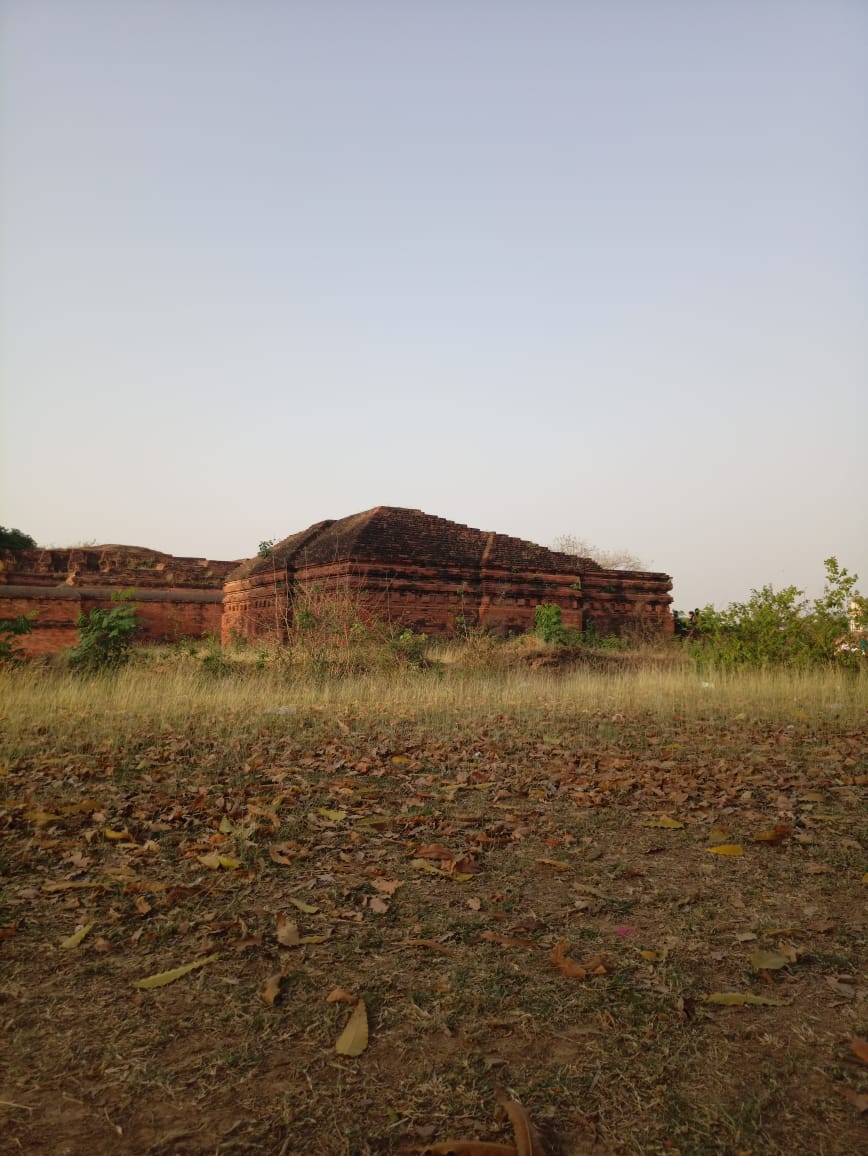
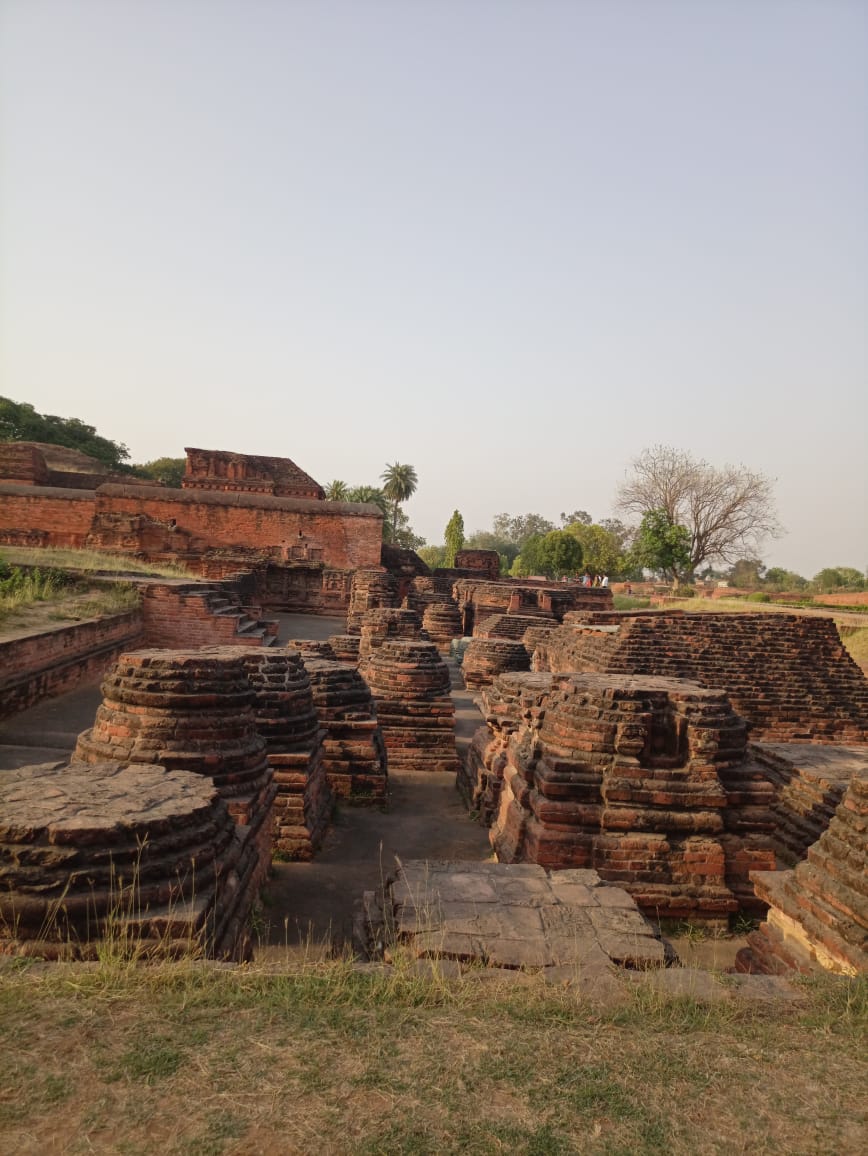
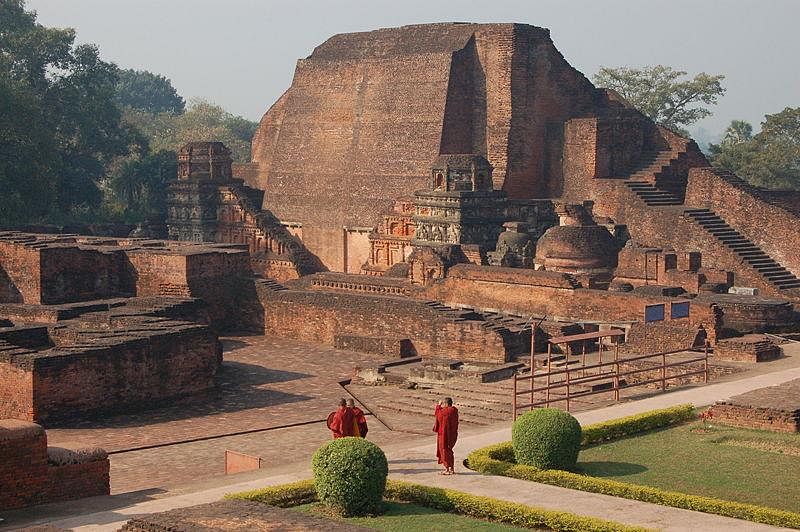
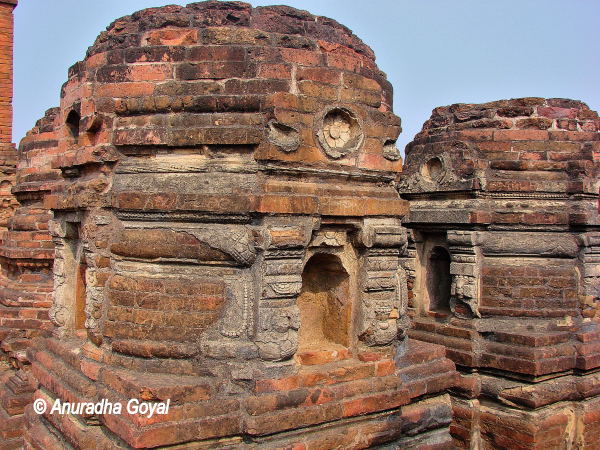
Nalanda University – An Ancient Seat of Learning

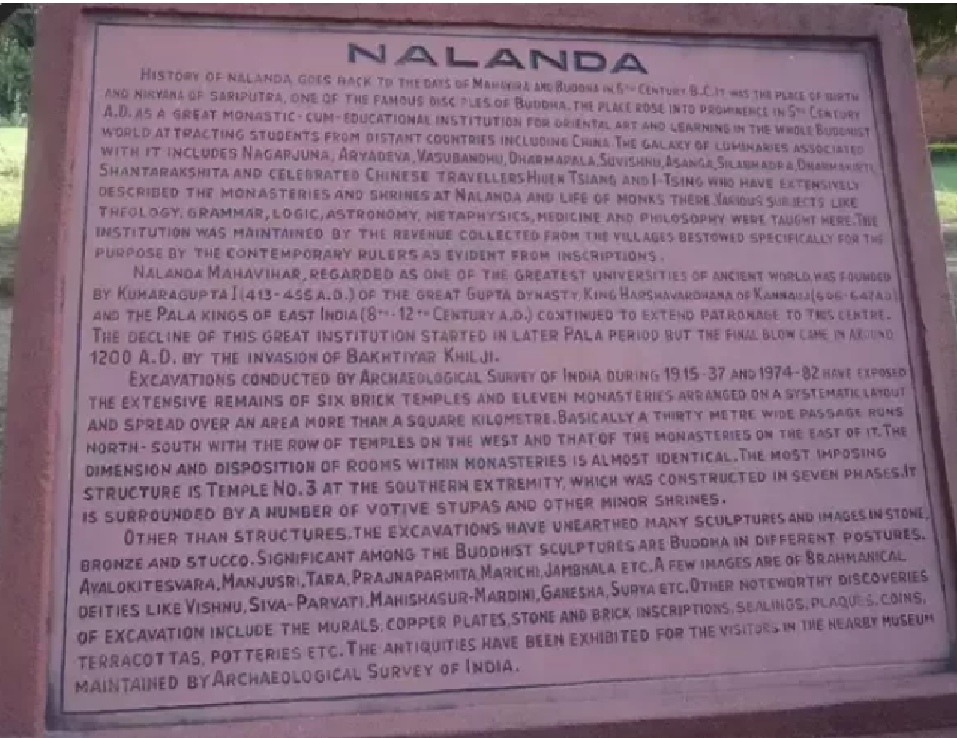
Nalanda was one of the earliest and finest universities in India.

It is located in Nalanda District, Bihar, India.

ORIGIN OF NALANDA

The origins of this scholastic institution in 5th century CE. It served for an uninterrupted duration of 800 years

The university thrived under the patronage of the rulers of the Gupta dynasty during the 5th and 6th centuries.

 It continued to flourish under Emperor Harshavardhan of Kannauj in the 7th century as well. 

The growth and the popularity of the university continued until the 9th century.

The declination of Nalanda University was primarily due to the establishment of four other seats of Buddhist learning in the same region under the Pala Empire from the 9th century to the 12th century

FACTS

  • Oldest university with hostel facilities in India.
  • The massive library of Nalanda was called Dharma Gunj, meaning the Treasury of Truth or the Mountain of Truth.
    • It contained hundreds of thousands of books.
  • The subjects taught at Nalanda covered in every field of learning, and it attracted pupils and scholars from Korea, Japan, China, Tibet, Indonesia, Persia and Turkey
  • It is believed that the library of Nalanda was so huge that it burned for months after the university was ransacked by Bakhtiyar Khilji and the library was set on fire.
  • Nalanda was attacked three times by the invaders –
    1. The Huns
    2. The Gaudas
    3. Bhaktiyar Khilji – who brought about its complete destruction.
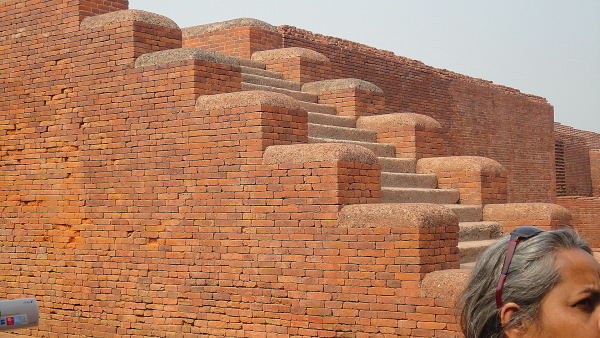
  • Archeologists and historians are of the opinion that just 10% of the Nalanda campus has been excavated till date. Around 90% remain to be excavated.
  • The ruins of Nalanda were the location for the shooting of the popular song “O Mere Raja” from the Bollywood movie Johny Mera Naam starring Hema Malini and Dev Anand.
By Kirti kumari

DECLINATION

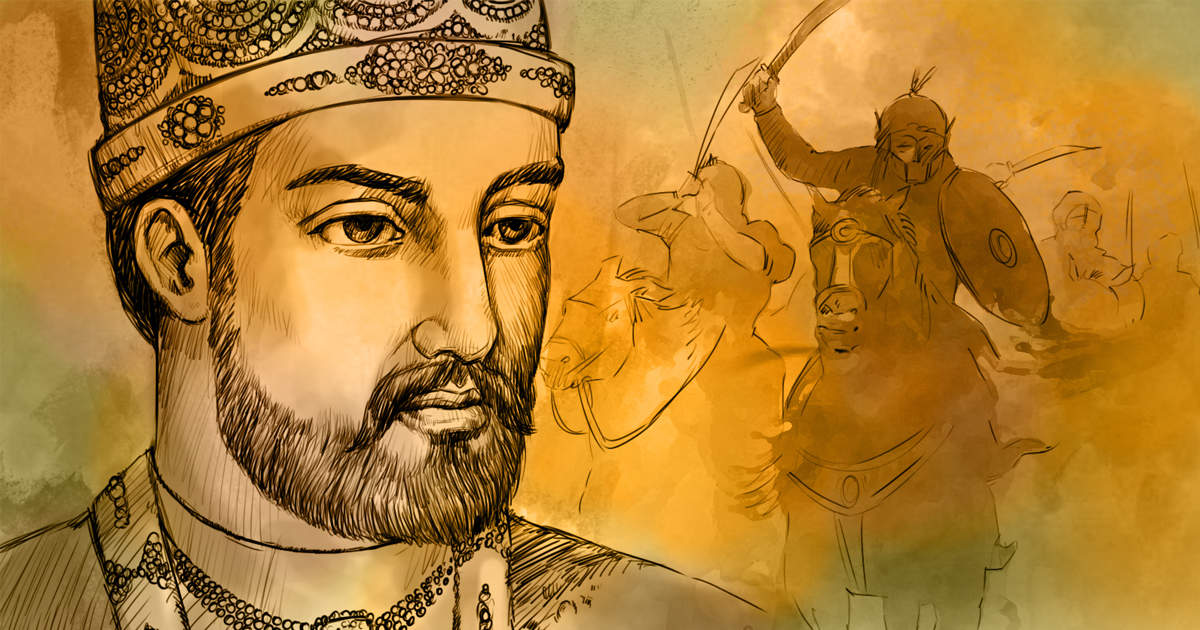
  Muḥammad Bakhtiyar Khalji, a Turkic invader destroyed the Nalanda University in 1202 AD.

At that time Bakhtiyar Khilji had captured some areas ruled by Buddhists in North India and once he became quite ill. He got enough treatment from his princes but he could not recover and reached a moribund condition.

Then someone advised him to take the treatment from Acharya Rahul Sribhadra, who was head of Ayurveda department of Nalanda University. But Khilji was not ready for this. He had more faith in his princes. He was not willing to believe that Indian physicians have more knowledge than his wife and their masters.

But to save his life he had to call Acharya Rahul Sribhadra, head of Ayurveda department of Nalanda University. Then Bakhtiar Khilji put a strange condition in front of Vaidyaraj that I will not eat any kind of medicine given by him. They had to fix it without medication. After thinking of this, Vaidyaraj accepted his condition and after a few days, he came to Khilji with a Quran and said that he had to read the page of the Quran. And after reading these pages you will free from illness.

Bakhtiar Khilji read the Quran as Vaidyaraj said he was cured.

“It is said that Rahul Shribhadra applied for medicine on some pages of the Quran. and as he started reading those pages of the Quran he kept on recovering.”

After recovering khilji was shocked by the fact that an Indian scholar and teacher had more knowledge than his princes and countryman.

After this, he decided to destroy the roots of Buddhism and Ayurveda. As a result, Khilji set fire to the great library of Nalanda and burned around 9 million manuscripts.

May Malala Come in Every Lap!

Let’s peep in the alleys of the most promising international icon with exceptional zeal:

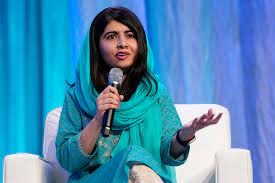
Malala Yousafzai (Pic Source: Google)

We Human beings are succumbing every minute to fear & bigotry since the mysterious accident by which life sprang on Earth .And also every era-produced Malala pick up the flag of humanity with the brave philanthropic hymns. The world which is now somehow livable, is about to celebrate the 24th birthday of an exceptional mental strength as well as of such a magnificent lens and throw a glance on the pager of her life:

The journey of an ordinary human to an extraordinary one started on July 12 , 1997 at Mingora in Pakistan. Since childhood, with the touch of her father. Ziauddin Yousafzai, a school owner and an educational activist himself (whom Malala termed as the ‘Falcon’) Malala got herself involved in human rights advocacy, especially education of women in her native swat valley in Khyber Pakhtunkhwa where the local  Taliban had banned girls from attending schools . Then the little mind rarely couldn’t take so much time to realize the bluffing of terror patriarchy and resolved to eradicate it for a harmonious life of every girl with a backbone.

When she was only 11 years old, She gave a speech in Peshawar on “How dare the Taliban take away our Basic Right to Education” In 2009 , She started blogging as a short step towards the zenith of her life. In 2011 , She was awarded ‘Pakistan’s  National youth peace prize’ In that year, Archbishop Desmond Tutu, a south African activist, nominated her for the International Children’s Peace Prize of the Dutch International children‘s advocacy group kids Rights Foundation.

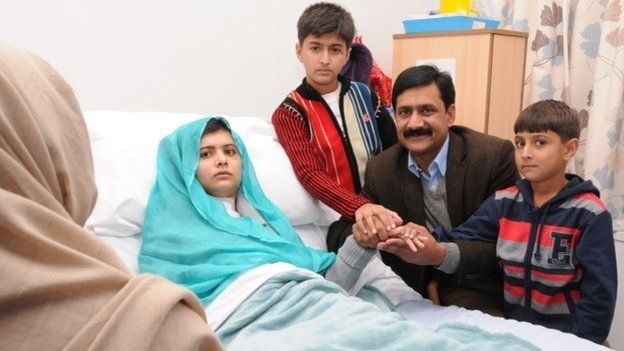
With Malala’s growing popularity, dangers too stealthily came along her way. On October 09, 2012, the Taliban ascended to the peak of inhumanity by shooting this 15-year old child  returning from school by bus. One bullet went through her head, neck and ended in her shoulder. Though her health was critical, her fighting spirit made her recover from the malign wounds and after almost 1 year restarted attending school.

Malala with her lovely Family, during her hospitalization (Pic Source: Google)

Eventually, Malala got a massive outpouring of support in the limelight. On July 12, 2013 on her 16th birthday Yousafzai delivered a speech at the United Nations. There she sad:

“The terrorists thought that they would change our aims and stop our ambitions but nothing changed in my life except this weakness, Fear and hopelessness died ; Strength, power and courage were born.”

–Malala

There Malala challenged orthodoxy, illiteracy & terrorisms:

“The extremists were and they are, afraid of books and pens… They are afraid of women… Let’s speak of our books and pens — our most powerful weapons.”

–Malala

On that very auspicious day, Ban Ki-moon, Secretary General of the UN, pronounced “Malala Day” in honor of The young leader’s activism. He assured that no child should have to die for learning and nowhere should teachers to teach.

When the second voyage of Malala’s life had just started to roll out the wheels, European parliament awarded her the ‘Sakharov Prize’ in 2013.

In the next year, conches of ‘Satyam’ blew when Malala became the youngest ever Nobel Prize Laureate. She received the award along with Kailash  Satyarthi, Indian children’s rights activist. This unparalleled and unequal ‘Global Teacher‘ became a gentle advocate of Peace.

Malala Yousafzai (Source: Google)

In April 2017, United Nations secretary general Antonio Guterres appointed Yousafzai as a UN messenger of peace to promote girls’ education. She was also given Honorary Canadian Citizenship in 2017.

In the meanwhile, Yousafzai family launched the Malala fund in 2014 to ensure girls around the world have access to 12 years of free, safe & quality education, though later she revealed her extreme grief:

“The shocking truth is that world leaders have the money to fully fund primary AND secondary education around the world – but they are choosing to spend it on other things, like their military budgets. In fact, if the whole world stopped spending money on the military for just 8 days, we could have the $39 billion still needed to provide 12 years of free, quality education to every child on the planet.”

Malala wrote in her Website (https://malala.org/)

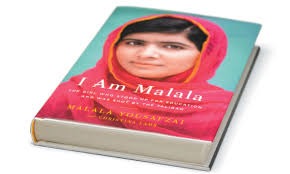
This torch bearer of Pakistan as well as of the enter world have offered the opportunity to go through the reviews by publishing books:

However Malala has taught all the Homo sapiens sapiens what education is, what consciousness is, what backbone is and what fearlessness is. We all are hopeful — this gene of Brave is/will be straight at the nook and corner of this world — every mother will stealthily smile, seeing her fearless child crying in its subconscious mind.

Has education became a status

India has been one of the top most countries producing skill full labors and day by day India’s literacy rate has been increasing at a reasonable rate . But the question is everyone is learning with their own interest. if yes , why do we still hear news about suicides because of stress. if no , what would be the reason lets find out .

Even though India is one of the country which produces large number of skillfull labors students are being forced to study engineering or medical even though he/her has no interest in studying that its because their parents think that it will be suitable . We never ask for opinion of our children i am not saying about everyone there are still some parents exist who always asks for their kids opinion but majority dont and we have to accept it .

The reason parents wants their kids to take engineering thinking that they will have a better future but the thing is a guy could find a future anywhere but where could he be really happy besides parents caring for the future of their children now its have became a matter of status . Everyone will be thinking now what does education has to do with status??

Our society has poisoned people mind with fake thoughts . We people still wait for hours and hours just to get admission for our children when even government schools have same portion and same level of education. But its is not about studies its about name of the school its about status of the school its about fees its like the higher the fees structure higher will be the status .

Now a days we hear lots of things going on in famous schools students their are harassed by the teachers who is older than their parents but even though people see this daily soon after the schools starts its admission they are wait in long lines for hours and hours in same school and gonna send their son/daughter to learn under the teachers who kept quite without reporting these things even when they knew what was going on

what will bring an end to this ????

who actually sets these standards comment your opinion

COMMUNALISM: A CURSE

The Christian is not to become a Hindu or a Buddhist, nor a Hindu or a Buddhist to become a Christian. But each must assimilate the spirit of the others and yet preserve his individuality and grow according to his own law of growth.…SWAMI VIVEKANANDA

HOW DIABOLICAL!

The most glorious tradition of the Indian civilization is the basic unity among the people in spite of the various diversities that exist in our life. There are different religions in India and in matters of food, dress, language and manners and custom, we are distinctly different. But in spite of all these, we are Indians from the very beginning, birth to death and we are proud of this unity.

OUR COUNTRY HAS TRACKED ITS PASSAGE

But such divisive forces as communalism, linguism and religious feeling often plague our country. Communalism is the greatest evil. It is responsible for the division of India. The British fanned the communal feelings of the Muslims and the latter wanted a separate State for themselves. Thus, Pakistan was created. Now we suffer the consequences of the partition of India. Had we lived together, many problems such as population, food and shelter could not have been so acute. Moreover, our long- standing disputes over the borders would not have poisoned our relationship.

SOCIETY AND ITS PEACE ARE ON TARGET

Communal feelings are often whipped up in India by interested people and parties. There are often quarrels between two communities in States like Bihar and Uttar Pradesh and they often culminate in murders. Different religious sects or linguistic minorities raise their voice for separate States. Such fanaticism will lead to the division of India into many parts. India will be weakened and foreign powers will take advantage of the weakness of India. India to-day has to deal with the Punjab problem, Gorkha problem in Darjeeling, Jharkhand problem, the problem of tribals in Tripura, Boro problem in Assam and many other communal problems. Some politicians are responsible for whipping up casteism for their self-interest. This is very unfortunate. There are people of different regions and languages, casts and creeds but there is basic unity in India’s culture and religion.

MAKE PEACE…..NO WAR

So, it is necessary to combat the evils of communalism. India is one and indivisible. United India can hold its own and play a significant part in the international world. Communal harmony is the need of the time. Fanaticism must be checked so that India’s unity is not damaged.

Global research on coronavirus disease (COVID-19)

WHO is bringing the world’s scientists and global health professionals together to accelerate the research and development process, and develop new norms and standards to contain the spread of the coronavirus pandemic and help care for those affected.

The R&D Blueprint has been activated to accelerate diagnostics, vaccines and therapeutics for this novel coronavirus.

The solidarity of all countries will be essential to ensure equitable access to COVID-19 health products.

Global research database

WHO is gathering the latest international multilingual scientific findings and knowledge on COVID-19. The global literature cited in the WHO COVID-19 database is updated daily (Monday through Friday) from searches of bibliographic databases, hand searching, and the addition of other expert-referred scientific articles. This database represents a comprehensive multilingual source of current literature on the topic. While it may not be exhaustive, new research is added regularly.

The WHO evidence retrieval sub-group has begun collaboration with key partners to enrich the citations and build a more comprehensive database with inclusion of other content. The database is built by BIREME, the Specialized Center of PAHO/AMRO and part of the Regional Office’s Department of Evidence and Intelligence for Action in Health.

For further information or questions, please contact the WHO Library via email.

Disclaimer: the designations employed and the presentation of the material in publications listed in this database does not imply the expression of any opinion whatsoever on the part of WHO concerning the legal status of any country, territory, city or area or of its authorities, or concerning the delimitation of its frontiers or boundaries. Dotted and dashed lines on maps represent approximate border lines for which there may not yet be full agreement.

The mention of specific companies or of certain manufacturers’ products in publications listed in the database does not imply that they are endorsed or recommended by WHO in preference to others of a similar nature that are not mentioned. Errors and omissions excepted, the names of proprietary products are distinguished by initial capital letters.

By listing publications in this database and providing links to external sites does not mean that WHO endorses or recommends those publications or sites, or has verified the content contained within them. The database has been compiled without warranty of any kind, either expressed or implied. The responsibility for the interpretation and use of publications included in this database lies with the reader. In no event shall WHO be liable for damages arising from its use.

Sugarcane- a resource for food, industries, culture and history

For a majority of Indians their first love is “doodh waali chai” with a large amount of sugar. It is also a well known fact about the love that exists between the Indians and the sweets. The basic ingredients of all these eatables which are a source of happiness for us is SUGAR. When the different forms of sugar goes in our system they not only boost our immune system , maintains over all health but also boost up our energy levels.

Ever wondered how this crystalline dose of happiness was first created? Sugar comes from the crop of Sugarcane of which India is the second largest producer. Today India has 732 sugar mills both private and government runned with Uttar Pradesh leading in the sugar production in India. The crop of sugarcane provides employment to nearly 50 million farmers and over 5 lakh workers directly employed in the sugar mills in the country. Further, sugar is not the only product extracted from sugarcane, sugarcane juice is a very popular summer drink in India and jaggery a sweet brown mass is like a national sweet for winters which is also said to maintain the immune system in the chilly winters of the North.

A product of such vast food value has a great industrial value as well as provides 7.5 % of employment in the Indian economy and has over 1% contribution in the GDP value. Read the blog further to know about the history of the production of this big stick of juice which has a great cultural and monetary significance .

Although sugar was being used in India from time immemorial , there was no sugar industry in India before 1904 which was set up in Saran, Bihar. Prior to that the juice from sugar cane was extracted and the crystals formed on boiling the juice were used as sugar . Though the crystals were not as refines as the sugar we get today , it served the purpose. These crystals were called SARKARA in the ancient times which mean sgravel in Sanskrit. The word sugar is a derivative from Sarkara.

BY-Products of Sugarcane and its industrial value

Bagasse and Molasses are the two major by products of sugarcane which holds a great industrial value.

Bagasse is the heterogeneous fibrous residue that remains after sugarcane stalks are crushed for sugar extraction. Typically, from processing 100 tons of sugarcane in a factory, 30–34 tons of bagasse is obtained . Bagasse is mainly used in cellulose based industries such as pulp, paper, particle boards and as a cattle fodder. In order to conserve the forests, initiatives are being taken to replace the wooden products by equally sustainable material. Bagasse based particle board and fibre based board plants are set up to produce wooden boards which are used as a wood replacement in making table tops, office racks, partition ceilings etc.

Molasses is the final mother liquor leftover after the crystallization of sugar which is sent out of the factory. However, the total sugar content of molasses is 45–55 per cent. It is by virtue of this total content that molasses is a valuable raw material for the production of many value-added products. The main products that can be produced from it on commercial scale are ethyl alcohol, citric acid, lactic acid, cattle feed, oxalic acid, bakers yeast, mono sodium glutamate, torula yeast, lysine etc which are some of great industrial value being used in one or the other industries. In addition to this, many alcohol-based chemicals like acetic acid, acetic anhydride, acetone, ethyl acetate, ethyl benzene, styrene, poly-styrene, poly-ethylene and synthetic rubber are also produced using cane molasses.

The historical and cultural value of sugarcane

There are references of sugarcane cultivation, its crushing and preparation of Gur ( jaggery) in Atharva Veda as well as Kautaliya’s Arthasastra. Also, the scribes of Alexander the Great, who happens to visit India in 327 BC recorded that the inhabitants chewed a marvelous reed which produced a kind of honey without the help of bees,which was a reference to none other than the famous jaggery. Also, the Indian religious offerings contain five ‘Amrits’ (elixirs) like milk, curd, ghee (clarified butter), honey and sugar — which indicates how important sugar is not only as an item of consumption but as an item which influences the Indian way of life.

It is fascinating to know how a crop which is hardly 3 to 4 m in height is of such value and importance in the Indian sub continent.