Every hour one student commits suicide in India, with about 28 such suicides reported every day, according to data compiled by the National Crime Records Bureau ( NCRB ). The NCRB data shows that 10,159 students died by suicide in 2018, an increase from 9,905 in 2017, and 9,478 in 2016 . As per reports from the National Crime Records Bureau(NCRB) between 2014 and 2016; 26,476 students committed suicide in India. Of these around 7,500 committed suicide due to failure in various examinations .
This is shocking right ? no one ever thought about this while everyone is talking about cancelling NEET a student is committing suicide, a family is loosing their daughter or son . Do we ever taught what would be the reason behind a suicide. No , we just frame a story ourselves But reality is kept unknown. Most of the students commit suicide because of stress of getting good marks , getting into a good college . We still live in a society where marks are important than knowledge even though time as proved it wrong
Now – a – days students enter into a examination hall like they are entering into a life or death situation there is nothing wrong with a teenager going with such a mindset but it is responsibility to make them realize its just a assessment parents , teachers and school management .
But the reality between each and every suicide is there parents who refuse to see there is a better future for their son/daughter beyond this marks and teacher who just wants to give 100 % just to get an increment and management who wants to provide 100% results to get more admission but is it really worth a young life ???
There are many organisations really working hard to avoid this kind of situation and they saved many lives but we all are seeing this situation from a wrong perspective its not student who need to be educated or motivated its their parents and educational institution .
Once Dr.A.P.J abdul kalam said “If you fail, never give up because FAIL means “First Attempt In Learning”. “Failure will never overtake me if my determination to succeed is strong enough.” “All of us do not have equal talent. But , all of us have an equal opportunity to develop our talents.”
I still strongly believe in his words that this nation lies in the hands of youth . So , I am not trying to say that education is not important all i am trying to say is we a life is more important.
In his article entitled “What Way Emancipation” Ambedkar declared that “I solemnly assure you that I will not die a Hindu”, at Yeola, District of Nasik, Maharastra, on 13th October 1935 in front of ten thousand people, where he went for a depressed class conference. Ambedkar as the president of the conference reminded his audience of their failure to secure elementary rights or equal status in Hindu society through any of the movements. According to him, the concept of sympathy is absent in the Hindu religion. The Hindus have no sense of brotherhood among themselves. The Untouchables are treated worse than foreigners. The Caste Hindus have no sympathy towards the untouchables. They are not brother to each other. They are two opposite castes. Society is based on class or varna, the association of an individual to a group is considered paramount. Even the family is not treated as a unit of society. According to Hindus, though all men are created by God, they are not created equal. They believe that God created different classes of men from different parts of his divine body. There is a section in “Purusha Sukta” of the Rig Veda which says that the Brahaman varna was born from the mouth of God, Kshatriya varna from his arms, the Vaishya from his thighs, and the Shudra from his feet. This they classify as Hindu social order but the views of Ambedkar on free social order contradict the above sayings. He believed that an individual is an end in himself and the objective of the society is to support the growth of the individual, to develop his personality. The relationship between members of society is based on the principles of liberty, equality, and fraternity. According to him, Hindu social order is based on the principles of graded inequality, fixed occupations for each class, and its continuance by heredity, the fixation of people within their respective classes. According to him, the Varna-vyavastha had developed into a social order of exploitation and oppression. Society must be based on reason, and not on atrocious traditions of the caste system. He found education, inter-caste marriage, and inter-dine as methods that may eliminate caste and patriarchy.
On 14th October 1956, Dr. Ambedkar renounced Hinduism and embraced Buddhism. On 15th October 1956, he delivered his speech in Marathi relating to embraced Buddhism. He said there are so many problems after conversion to Buddhism. He hoped that he will get political rights. According to Dr. Ambedkar, religion is for man and not man for religion and that is why he choose to convert himself to a buddisht as this religion respect and gives a scope of development to people and their thoughts.
After 2,000 years under thesea, three flat, misshapen pieces of bronze at the National Archaeological Museum in Athens are all shades of green, from emerald to forest. From a distance, they look like rocks with patches of mold. Get closer, though, and the sight is stunning. Crammed inside, obscured by corrosion, are traces of technology that appear utterly modern: gears with neat triangular teeth (just like the inside of a clock) and a ring divided into degrees (like the protractor you used in school). Nothing else like this has ever been discovered from antiquity. Nothing as sophisticated, or even close, appears again for more than a thousand years.
For decades after divers retrieved these scraps from the Antikythera wreck from 1900 to 1901, scholars were unable to make sense of them. X-ray imaging in the 1970s and 1990s revealed that the device must have replicated the motions of the heavens. Holding it in your hands, you could track the paths of the Sun, Moon and planets with impressive accuracy. One investigator dubbed it “an ancient Greek computer.” But the X-ray images were difficult to interpret, so mainstream historians ignored the artifact even as it was championed by fringe writers such as Erich von Däniken, who claimed it came from an alien spaceship. It wasn’t until 2006 that the Antikythera mechanism captured broader attention. That year, Mike Edmunds of Cardiff University in Wales and his team published CT scans of the fragments, revealing more details of the inner workings, as well as hidden inscriptions—and triggering a burst of scholarly research.
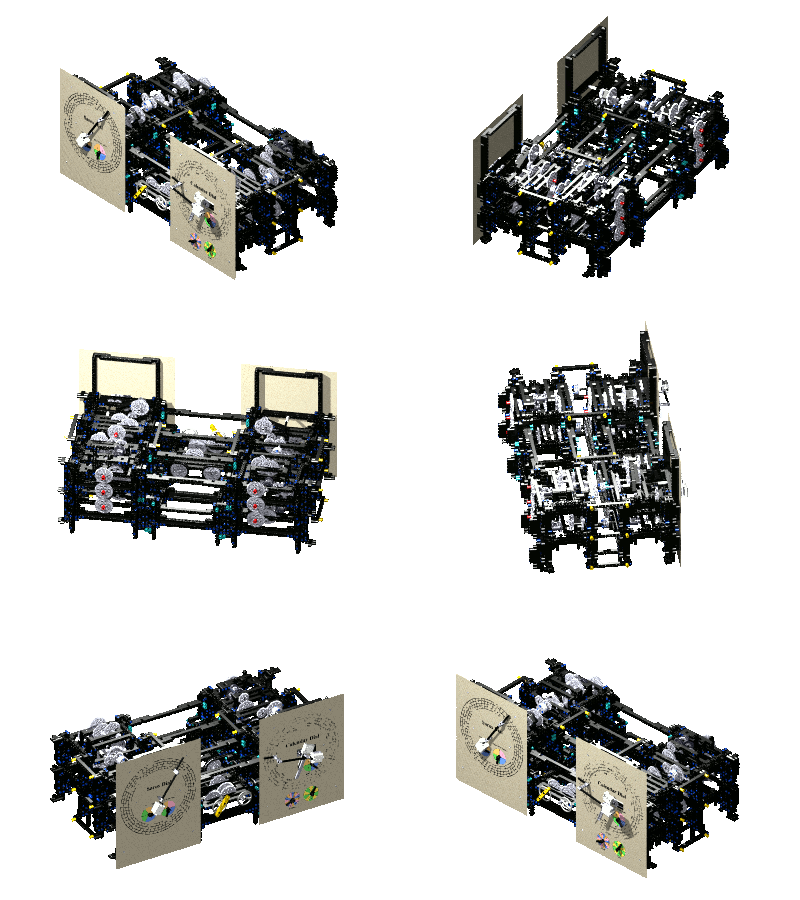
The Antikythera mechanism was similar in size to a mantel clock, and bits of wood found on the fragments suggest it was housed in a wooden case. Like a clock, the case would’ve had a large circular face with rotating hands. There was a knob or handle on the side, for winding the mechanism forward or backward. And as the knob turned, trains of interlocking gearwheels drove at least seven hands at various speeds. Instead of hours and minutes, the hands displayed celestial time: one hand for the Sun, one for the Moon and one for each of the five planets visible to the naked eye—Mercury, Venus, Mars, Jupiter and Saturn. A rotating black and silver ball showed the phase of the Moon. Inscriptions explained which stars rose and set on any particular date. There were also two dial systems on the back of the case, each with a pin that followed its own spiral groove, like the needle on a record player. One of these dials was a calendar. The other showed the timing of lunar and solar eclipses.
Experts have been working to decipher inscriptions hidden inside the mechanism, in particular to understand the mechanism’s missing pieces, some destroyed, some probably still at the bottom of the sea. Though the pointers on the front face don’t survive, Alexander Jones, a historian at the Institute for the Study of the Ancient World in New York, says an inscription reveals that they carried colored balls: fiery red for Mars, gold for the Sun.
Also missing are the parts that drove the planetary pointers, leading to debate about exactly how they moved. Because planets orbit the Sun, when viewed from Earth they appear to wander back and forth in the sky. The Greeks explained this motion with “epicycles”: small circles superimposed on a larger orbit. According to Michael Wright, a former curator at London’s Science Museum who has studied the mechanism longer than anyone, it modeled epicycles with trains of small gears riding around larger ones. Though some experts have dismissed this as beyond the Greeks’ abilities, Jones says he will publish evidence supporting the idea later this year.
Other inscriptions hint at where the mechanism was made. Paul Iversen, a classicist at Case Western Reserve University in Cleveland, reports that the calendar includes month names used in Corinth and its colonies in northwest Greece. A dial that displayed the timing of major athletic festivals, including the Olympics, lists Naa, a festival held in northwest Greece, and Halieia, held to the south on the island of Rhodes. Perhaps the mechanism hailed from Rhodes and was being shipped north. The ancient philosopher Posidonius had a workshop in Rhodes that could have been the source; according to Cicero, Posidonius made a similar model of the heavens in the first century B.C.
The tradition of making such mechanisms could be much older. Cicero wrote of a bronze device made by Archimedes in the third century B.C. And James Evans, a historian of astronomy at the University of Puget Sound in Tacoma, Washington, thinks that the eclipse cycle represented is Babylonian in origin and begins in 205 B.C. Maybe it was Hipparchus, an astronomer in Rhodes around that time, who worked out the math behind the device. He is known for having blended the arithmetic-based predictions of Babylonians with geometric theories favored by the Greeks.
Regardless, the Antikythera mechanism proves that the ancient Greeks used complex arrangements of precisely cut wheels to represent the latest in scientific understanding. It’s also a window into how the Greeks saw their universe. They came to believe that nature worked according to predefined rules, like a machine—an approach that forms the basis of our modern scientific views. Edmunds argues that this “mechanical philosophy” must have developed as a two-way process. The ancient mechanics who captured the cosmos in bronze weren’t just modeling astronomical theories but were also inspiring them.
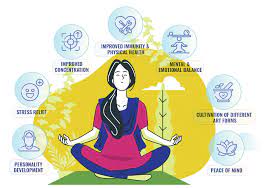
Arthritis is joint inflammation ,which is most common in older adults .There are 2 types of Arthritis which are most common in adults (1) Osteoarthritis (2) rheumatoid arthritis. Osteoarthritis (OA) is the most frequent cause of disability among older adults. According to UN ,by 2050 around 130 million people around the world will suffer from OA and around 40 million will be severely disabled by this disease. Osteoarthritis is related to ageing but there are other factors like obesity ,lack of exercise ,gender etc which effect the condition.The best way to trackle with such diesease is by taking care of yourself take health diet,do yoga , meditation ,and avoid stress .
Stress is unavoidable in the current scenario, where the entire world is facing the Corona virus pandemic. With the toll of deaths and positive cases of Corona virus on rise, every person in this world is under stress and anxiety. Higher levels of stress adversely affect the physical as well as psychological health of the individuals concerned. Therefore, it becomes highly essential to manage stress at initial stages, so as to avoid severe consequences of high stress on health. The present article focuses on the management of stress through a unique form of meditation, i.e, ‘Sahaja Yoga’. Sahaja Yoga is a scientifically proven technique of meditation which involves the awakening of the dormant primordial energy- the Kundalini, and integrating it with the all-pervading cosmic energy. Regular practice of Sahaja Yoga meditation leads to the inner transformation of an individual, whereby one becomes more moral, integrated, balanced and healthy.
What is Stress?
Stress refers both to the circumstances that place physical or psychological demands on an individual and to the emotional reactions experienced in these situations. It leads to severe effects on the physical as well as psychological health of the individuals concerned such as frequent headaches, heart disease, myocardial infarction, cardiovascular disease, musculoskeletal disorders, diabetes, high anxiety, depression, post-traumatic stress disorder and so on. Since, stress is a psychological phenomenon, its management can be best realised by treatment focused at the mental level. Thus, the present article aims at spreading awareness about the stress management technique called ‘Sahaja Yoga’ and highlighting its significance in the improvement of overall health, especially, psychological health. Sahaja Yoga Meditation
What is Sahaja Yoga?
The word ‘Sahaja’ means ‘spontaneous’ and ‘Yoga’ means ‘union with the self’ Sahaja Yoga was founded in 1970 by Mrs. Nirmala Srivastava, more widely known as ‘Shri Mataji Nirmala Devi’. Shri Mataji was spiritually enlightened since birth and granted en-masse realisation to people free of any materialistic consideration. For 40 years since 1970, she travelled tirelessly across the globe to teach Sahaja Yoga meditation world-wide at her own expenses
Human Subtle System
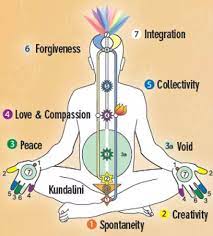
The process of Sahaja Yoga meditation works through the subtle system which comprises of three energy channels (nadis) and seven energy centres (chakras). At the root of this system lies a protective power – Kundalini. Amongst the three channels (Nadis), the left channel called Ida Nadi represents our desires (Ichha shakti); the right channel called Pingla Nadi represents our working ability (Kriya shakti); and the central channel called Sushumna Nadi represents our assent. The seven energy centres in the body correspond to the seven nerve plexuses: the pelvic plexus (Mooladhara Chakra), the aortic plexus (Swadhistana Chakra), the solar plexus (Nabhi Chakra), the cardiac plexus (Heart Chakra), the cervical plexus (Vishuddhi Chakra), the optic chiasma (Agnya Chakra) and the limbic area of the brain (Sahasrara Chakra). These energy centres are responsible for maintaining their surrounding physical organs in the body. When Kundalini rises it crosses all the six energy centres and emits from the seventh centre (Sahasrara Chakra) and unites the individual consciousness with universal consciousness. An individual rise above the three channels of the subtle system and reaches a timeless state beyond the past, present and future – a state of thoughtless awareness. This process is referred to as Self-realisation. As an evidence of self-realisation, an individual feels cool breeze of vibrations on the head and palms of hands .
How Sahaja Yoga Meditation Helps in Stress Management?
It is imperative to understand how stress arises and how is it managed through Sahaja Yoga meditation. The central channel (Sushumna Nadi) is the path of rising Kundalini and a channel of balance. An individual having too many desires and always thinking about the past deviates from the central channel and puts his left channel under pressure. On the other hand a workaholic person, always working and planning for the future puts his right channel under pressure. The left-sided individuals become highly emotional, conditioned and day dreamers while right-sided people become highly egoistic and harsh on others. Stress is the result of such an imbalance between the two energy channels and deviation from the central channel. Therefore, one should always keep his attention on the central channel and remain in the balanced state in order to be stress-free. Thus, Sahaja Yoga helps in managing stress effectively by attaining and maintaining the balanced state through regular meditation, since by focussing on the central channel one remains in present rather than thinking about past or future events.
Sahaja Yoga in the present Coronavirus Scenario
As many as 200,000 people across 60 countries have attended online meditation sessions since 16 March 2020 with the commencement of lockdown, according to the information published nation-wide from H.H. Shri Mataji Nirmala Devi Sahaja Yoga Trust (National Trust). The Youtube channel – Pratisthan, Pune of the Trust has seen around 2 million views with 7.31 lakh watch hours and over 13.2 million impressions in the lockdown period. Each viewer attended an average of 8.6 session and spent average of 23 minutes per visit, which is substantial as people look towards meditation to overcome anxiety during COVID19 lockdown.
Conclusion
Sahaja Yoga meditation activates and nourishes the parasympathetic nervous system which relaxes both body functions and the brain by reducing thinking functions Thus, regular meditation everyday cleanses the subtle system, relaxes body and mind, and gradually one starts experiencing physical, mental and emotional benefits also, apart from gaining stress relief Thus, the Indian government should focus on building resilient citizens which can adjust with the pressures of the present stressful scenario.
You may have heard about the eruptions of volcanoes like Mount Vesuvius and Mount Tambora that devastated the land surrounding them and killed thousands of people living in their vicinity. However, not many of us stop to question why or how a volcano erupts in the first place. It is indeed not only an interesting, but also a useful bit of knowledge to have about one of the most fascinating natural phenomena that occur in our world.
What is the process?
We know that deep within the earth, the temperatures are extremely high. In fact, it is so hot that some rocks gradually start melting and become a thick flowing substance called magma. This melting takes place in the layer of the earth’s interior called the ‘mantle’. The mantle is the layer between the dense, superheated core and thin outer crust of the earth. The immense heat from the core melts the earth’s mantle and this melted rock (magma) begins its journey to the surface. The melting may happen where tectonic plates are pulling apart or when one plate is pushed down under another.
Magma being a lighter and more viscous substance than the rock surrounding it, starts rising to the top and collecting in areas known as magma chambers. As the magma rises, bubbles of gas also form inside it. Eventually, some of the runnier magma charges through any vents or fissures in the earth’s crust and gets released onto the surface as lava. Hence, magma that is released through volcanoes are then called lava, which flow in every direction away from the volcano to surrounding areas.
For the magma that is thicker in nature, the gas bubbles are not able to escape easily and the pressure starts building as the magma rises. When the pressure that is building reaches a point where it is too high for the earth’s surface to handle, an explosive eruption happens from the volcano. Such eruptions may also occur suddenly if the rocky surface above the magma has eroded over time, allowing the pressurized magma to easily burst through. Explosive eruptions are what often cause mass death and destruction, as the lava flows with much greater force and heat intensity. It can melt anything in its path, and most human creations will succumb to its natural power. The aforementioned bubbles, which are of undissolved water and sulphur, then burst with the intensity of a gunshot and release plumes of ash into the atmosphere. This ash can suffocate plants, animals and humans.
Another way eruptions happen is when water underneath the earth’s surface happens to come in contact with hot magma and creates steam. This may happen when ocean water is able to slip into the earth’s mantle and mingle with the magma. Over time, the rock strength of earth’s surface decreases as the pressure builds, and the steam can gradually build enough pressure to cause an explosion through the volcano.
It is important to highlight that some volcanic eruptions are explosive while others are not. As explained, it depends on the composition of the magma. If it is runny and gas is able to escape easily, lava will simply flow out. This is easy for people to avoid as it flows slowly and gives them time to move away. However, if magma is thick and gas cannot escape easily, pressure builds up until there is a violent explosion for it to escape. Magma blasts into the air, and lava flows at a greater speed for a greater distance. This is often unexpected and harder to escape from.
What is the role of Climate Change?
Geological studies have shown that human-induced climate change will most likely cause an increase in volcanic activity around the world. This is primarily because climate change has caused melting of glaciers in the earth’s crust. These glaciers have an impact on the flow of magma to the surface, and so melting glaciers may cause more magma eruptions. Basically, after glaciers are removed, the surface pressure decreases and the magma can more easily propagate to the surface and thereby erupt.
A team of researchers in the UK found that with the advancement of glaciers over time, there was diminishing volcanic activity. In turn, the team found that as the climate warmed up due to global warming and glaciers melted, there were more frequent and bigger eruptions. It has been found that even relatively minor climate changes may have an influence on this. Hence, it can be concluded that today’s global warming could mean more frequent, and even greater volcanic eruptions.
Want to write formal letter but don’t know how to write formal letter then this article is only for you and the learners who wants to learn letter writing. In today’s article we are sharing the steps, Tips or samples for writing formal letter.
Writing Formal letters are business like and get quickly to the point. Formal letters are different to personal letters. You do not write in a chatty manner or use slang. For example, you would write a different letter to your Principal inviting him to your class JCSP graduation as you would to your friend.
How to Write Formal Letter?
Formal letter writing is undoubtedly one of the most challenging types of letter format. When putting it together, often you are addressing a person or organization with whom you are not familiar and the quality of your content, including spelling and grammar will be strongly scrutinized.
Types of Formal Letter:
There are many types of latter :
Formal Request Letter
Formal Letter of Interest
Formal Apology Letter
Formal Complaint Letter
Formal Appeal Letter
Formal Reference Letter
Steps to Write All Formal Letter
Introducing oneself if it is the first time you are writing.
Referring to an earlier letter if you are responding to it.
Stating the purpose of the letter.
Stating action/information required from the addressee.
Explaining action taken/supplying information.
Urging action to be taken.
Offering assistance in future.
This is the basic structure of formal letter. It will have to be modified according to the purpose for which it is written and the person to whom it is addressed.
Typical Format of Formal letter
Business correspondence should get across the message in a direct, clear and natural way. In contrast to informal letter writing, one should avoid using slang and casual language, clichés, short forms and abbreviations.
The writer should avoid overly formal and rigid language too. The letter should be logically structured and organized. The layout of a formal letter follows basically the same order:
Sender’sAddress: The sender’s address usually is included in letterhead. If you are not using letterhead, include the sender’s address at the top of the letter one line above the date. Do not write the sender’s name or title, as it is included in the letter’s closing. Include only the street address, city, and zip code.
Date: The date line is used to indicate the date the letter was written. However, if your letter is completed over a number of days, use the date it was finished in the date line. Write out the month, day and year two inches from the top of the page. Depending which format you are using for your letter, either left justify the date or tab to the center point and type the date.
InsideAddress: The inside address is the recipient’s address. It is always best to write to a specific individual at the firm to which you are writing. If you do not have the person’s name, do some research by calling the company or speaking with employees from the company. Include a personal title such as Ms., Mrs., Mr., or Dr. Follow a woman’s preference in being addressed as Miss, Mrs., or Ms. If you are unsure of a woman’s preference in being addressed, use Ms.
Mr. – for a male
Mrs. – for a married female
Miss – for an unmarried female
Ms. – for a female whose status is unknown or would prefer to remain anonymous
Dr. – for a person with the status of a doctor
If there is a possibility that the person to whom you are writing is a Dr. or has some other title, use that title. Usually, people will not mind being addressed by a higher title than they actually possess. For international addresses, type the name of the country in all-capital letters on the last line. The inside address begins one line below the sender’s address or one inch below the date. It should be left justified, no matter which format you are using.
Salutation: “Use the same name as the inside address, including the personal title. If you know the person and typically address them by their first name, it is acceptable to use only the first name in the salutation (for example: Dear Tejas:). In all other cases, however, use the personal title and last/family name followed by a colon.
Leave one line blank after the salutation. If you don’t know a reader’s gender, use a nonsexist salutation, such as their job title followed by the receiver’s name. It is also acceptable to use the full name in a salutation if you cannot determine gender. For example, you might write Dear Chris Harmon: if you were unsure of Chris’s gender.
Body of Formal letter: For block and modified block formats, single space and left justify each paragraph within the body of the letter. Leave a blank line between each paragraph. When writing a business letter, be careful to remember that conciseness is very important. In the first paragraph, consider a friendly opening and then a statement of the main point. The next paragraph should begin justifying the importance of the main point. In the next few paragraphs, continue justification with background information and supporting details. The closing paragraph should restate the purpose of the letter and, in some cases, request some type of action.
Closing: The closing begins at the same vertical point as your date and one line after the last body paragraph. Capitalize the first word only (for example: Thank you) and leave four lines between the closing and the sender’s name for a signature. If a colon follows the salutation, a comma should follow the closing; otherwise, there is no punctuation after the closing.
Enclosures: If you have enclosed any documents along with the letter, such as a resume, you indicate this simply by typing Enclosures one line below the closing. As an option, you may list the name of each document you are including in the envelope. For instance, if you have included many documents and need to ensure that the recipient is aware of each document, it may be a good idea to list the names.
A Note about Format and Font of Formal Letter
BlockFormat: When writing business letters, you must pay special attention to the format and font used. The most common layout of a business letter is known as block format. Using this format, the entire letter is left justified and single spaced except for a double space between paragraphs.
Font : Another important factor in the readability of a letter is the font. The generally accepted font is Times New Roman, size 12, although other fonts such as Arial may be used. When choosing a font, always consider your audience. If you are writing to a conservative company, you may want to use Times New Roman. However, if you are writing to a more liberal company, you have a little more freedom when choosing fonts.
Punctuation: Punctuation after the salutation and closing – use a colon (:) after the salutation (never a comma) and a comma (,) after the closing. In some circumstances, you may also use a less common format, known as open punctuation. For this gyanlog style, punctuation is excluded after the salutation and the closing.
Important Points About Formal Letter Writing :
The date and signature are very important in letters.
Do not use commas after every line in the address.
Do not begin your letters with hackneyed expressions like, ‘With reference to your letter dated 10 January’. Instead, use personalised variations like, ‘I was glad to receive your letter of 10 January…’ or ‘We were happy to note from your letter that the goods have reached you safely…’
Never end your letters with hanging participles like ‘Thanking you’ or ‘Awaiting your reply’. Instead write, ‘Thank you’ or ‘We/I await/look forward to your reply’.
There are many circumstances of children around the world who experience a lack of education, resulting in them having a below average level of knowledge. Lack of education is a significant barrier for underprivileged children around the world.
Today, education remains an inaccessible right for millions of children around the world. More than 72 million children of primary education age are not in school and 759 million adults are illiterate and do not have the awareness necessary to improve both their living conditions and those of their children.
What Is Lack of Education?
A lack of education can be described by a state where people have lower than average common knowledge and basic skills to support them in their daily life.
This includes the ability to read, write, spell, speak, and do simple math.
What Causes Lack of Education?
A lack of education is a significant concern due to lack of funding for education, having untrained teachers, limited or no classroom space, limited resources (e.g., paper, pencil, etc.), living far away from school, and living in countries of conflict.
This concern is a leading issue in underdeveloped countries as an education system is highly dependent on region’s economic status.
People Who Are Less Likely To Receive Education
Females
Girls are commonly left uneducated because many countries believe there is more value in educating boys in comparison to girls.
Additionally, girls are forced to marry as early as eighteen years old which prevent them for continuing their education.
Children With Disabilities
Children with disabilities most regularly do not regularly receive education because teachers do not receive adequate training to work with these kids.
In addition, these children face a lot of discrimination in terms of accessibility to a safe learning environment, as well as communication with their surroundings.
Outcomes From a Lack of Education
Lack of education can prevent a person from having a sound voice in society, as they face communication barriers and are looked down upon
Not having enough education is a leading cause of unemployment, as many industries require well informed and educated individuals to step into an employment position
Being uneducated puts people at a higher risk of falling into the poverty trap, which is defined by being unable to escape poverty due to a lack of resources. This is because education provides people with the means to make a sustainable living; however, without it, the chances of having a sufficient income is low
Lacking education promotes exploitation, as many people without a proper education take on unsafe positions. Some of these positions include becoming a prostitute, sweatshop laborer, and can even result in child marriages.
Prevalence Rates
34.3 million girls around the world do not attend primary school.
97.4 million girls around the world do not attend secondary school.
In countries of conflict, girls are twice as likely to receive education in comparison to countries without conflict.
In developing countries, up to 95% of disabled children are not enrolled in school.
51% of the uneducated population comes from South Asia.
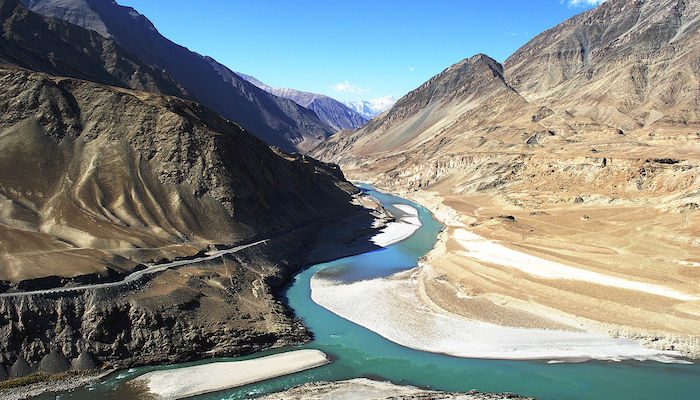
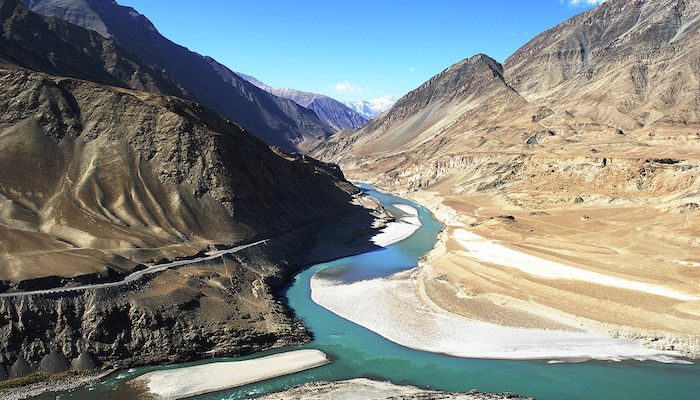
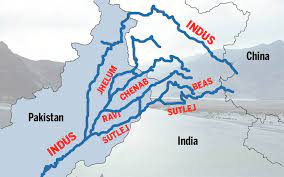
The river Indus as said about the Ganga is a transboundary river that flows Ladakh and Kashmir northwards, passes leftwards towards Nanga Parbat Massif, and Pakistan southwards and ends its journey in the Arabian sea by Karachi. The Indus is termed to be one among the world’s largest rivers in average annual flow, with an estimate of 243 cubic km, which is twice and thrice of the river Nile and the Tigris with the Euphrates combined respectively. The Indus originates from the Tibetan plateau near Lake Manasarovar and enters India in Ladakh. It cuts through the Himalayas in a deep gorge near Nanga Parbat to enter Pakistan. It has five main tributaries – the Sutlej, the Beas, the Ravi, the Chenab and the Jhelum. These rivers give Punjab its name, for the word ‘Punjab’ means ‘five rivers’. This Himalayan river is both snow-fed and rainfed, and therefore flow continuously throughout the year. The river Indus, also known as the Sindhu river, flows for 2897 km, mostly through Pakistan. Since the river moves slowly across the plain, it deposits accumulated silt on its bed. The river bed is thus higher than the sandy plain. When the river is in flood, this results in much destruction. The Indus finally branches into distributaries that join the sea at Karachi. The very river is also famous for the Indus river dolphin, a freshwater dolphin, and one of the world’s rarest mammals. It is, also the second most endangered freshwater river dolphin.
Regions through which the Indus flows
The Indus rises in southern Tibet at a height of about 5500 metres. It flows through a high plateau, then the ground falls away, and the river drops rapidly, and gathers momentum. It rushes northwest and collects the waters from innumerable glacier-fed streams. It flows between the greatest mountain ranges, the Karakoram and the Himalayas. generally, the river becomes slower and has a wider channel as it approaches its delta on the Arabian sea. Agriculture in Pakistan wouldn’t be even possible without this river. In addition, it supplies essential ingredients for human life for many urban areas. These include the Pakistani cities of Islamabad, Lahore, Peshawar and Karachi. Therefore the Sindhu is Pakistan’s longest river with a total length of 3180 km.
The Chenab
The Chenab rises in the upper Himalayas, in the district of Himachal Pradesh in India. Its waters begin from snowmelt from the Bara Lacha Pass. During the Vedic period, it was known as Chandra Bhaga, and it begins at the confluence of two rivers, the Chandra and the Bhaga in Himachal Pradesh. It flows through the Jammu, into the plains of Pakistan. It is first joined by the Jhelum, and then by the Ravi rivers. Later, it meets Sutlej, which has earlier been joined by the Beas.Altogether, these form the so-called ‘five rivers of Punjab’. After, 960 km, it flows into the Indus. The river is dear to the people of Punjab. Moreover, it forms an important part of the land’s history and culture.
Fact: The world’s highest railway bridge – the Chenab bridge – spans the Chenab. It crosses the river in Jammu and Kashmir.
map showing the path of the Indus river
The Jhelum
The Jhelum is the largest, and most western Punjab’s five rivers. It is an ancient river that has been mentioned both by the ancient Greeks as well as ancient Egyptians. It rises from a deep spring, the Verinag Spring in the southeastern part of the valley of Kashmir in India. the river wanders northwards through the valley of Kashmir to the Wular Lake. After emerging from the lake, it continues winding its way through a deep gorge into Punjab. It widens out into an alluvial plain and then goes south to join the Chenab at Trimmu after 813 km. its flow is controlled by snowmelt and the monsoon. In its lower course, the river is famous for its hydroelectric power generation. The Mangla dam and the reservoir on the Jhelum irrigate around 3 million acres of land.
The Ravi
The Ravi, one of the five rivers that create Punjab, crosses national boundaries. It rises in the majestic Himalayas in the state of Himachal Pradesh in India. It crosses Jammu and Kashmir and then flows into Pakistan. After 725 km, it empties itself into the Chenab. It is fed by glacier melt and is the smallest of all rivers of Punjab. In Vedic times, the Ravi was known as Iravati or Airavati river.It is a trans-border river of India and Pakistan. After partition, the river waters were divided between India and Pakistan.
Fact: It irrigates a large area in Punjab through a canal. This canal is known as the upper bari doab canal.
The Beas
The river Beas, one of the five rivers of Punjab, is famous in world history. It is one of the rivers that created problem’s in alexander the great’s conquest of India. His troops mutinied here in 326 BC, refusing to go any further, as they had been away from home for eight years. The Beas rises from the Rohtang Pass in the western Himalayas of Himachal Pradesh and flows south through the Kulu valley. It then enters Punjab and flows in a southerly direction. Thereafter, it finally meets the Sutlej after flowing for 470 km. the chief tributaries of the Beas are bain, Banganga, Luni and Uhal. The river was known in ancient India as the Vipasha, while the ancient Greeks called it the Hyphasis. In the 20th century, it was developed for irrigation and hydroelectric power generation.
The Sutlej
The Sutlej, the longest Punjab’s five rivers, has its source in the Rakshastal lake in Tibet. Sometimes called the red river, it is the easternmost of the Indus river’s tributaries. Further next, it rushes through the Himalayan gorges, and crosses Himachal Pradesh, before entering Punjab. It then joins the Chenab and they empty into the Indus. There are many irrigation projects along its 1400 km long course. They include the Bhakra- Nangal project, and the Sirhind canal. In addition, there is also the Sutlej valley project which benefits both India and Pakistan.
Fact: In the villages of the Sutlej valley you will find descendants of the yak traders of the olden times. These traders were known as Zhang Zhung.
The Indus: the cradle of civilization
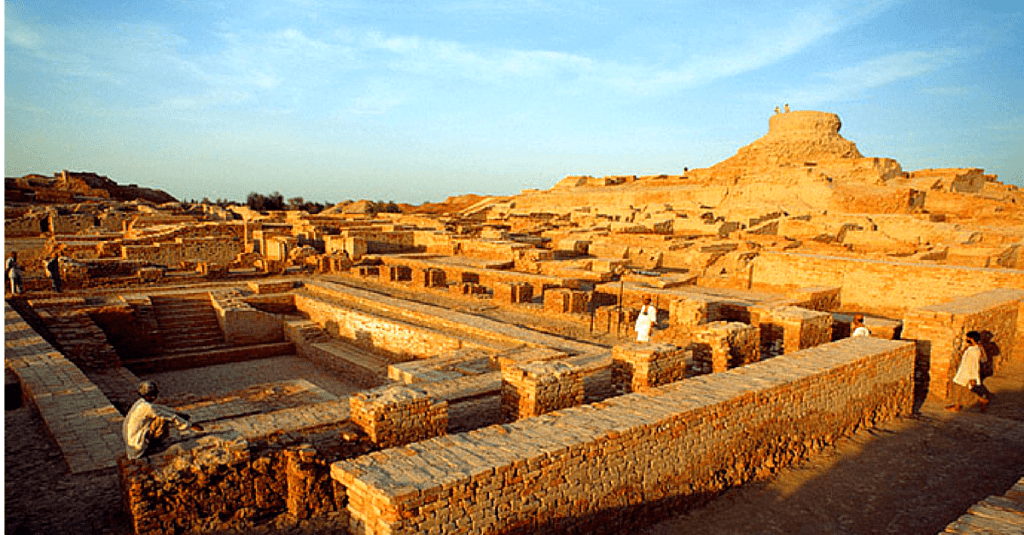
One of the greatest civilizations of ancient times flourished on the banks of the river Indus. Around 3300 BC, there were two great cities in the Indus valley, Harappa and Mohenjo Daro. They were very planned and had houses built with bricks, and even a proper drainage system. The town planning, water supply, sewage and drainage system were of very high quality – there were bathhouses and granaries in plenty, too. These cities prove to the world that the most sophisticated urban civilization of its time flourished in India, more than 5000 years ago! The wonders of engineering and architecture, the richness of the culture, and the quality of the life enjoyed by the people all prove that the valley stood to be the cradle of civilization.
The river basin covers an area of around one million square kilometres and extends to four countries. They are China, India, Afghanistan and Pakistan. Snow and glacier meltwater is the main source of water for this river system, as rainfall is low in the region. It ends in a delta, which includes numerous mangroves. The Indus basin stretches to the Karakoram and Haramosh ranges in the north, the Arabian Sea in the south, the Sulaiman and Kirthar ranges in the west, the Himalayas in the east. In India, the basin spreads over the states of Jammu and Kashmir, Himachal Pradesh, Punjab Rajasthan, Haryana and the union territory of Chandigarh.
Indus Water Treaty
India and Pakistan are two of the four countries through which the Indus river flows. The waters of the same and its tributaries support life in vast areas in these two countries. The Indus river system consists of three western tributaries of the Indus and three eastern rivers. The treaty was a result of Pakistani fears that since the sources of the rivers of the Indus basin were in India, India would have total control of the water. So, the world bank drew up a water-sharing treaty called the Indus water treaty. According to this treaty, the Ravi, the Beas and the Sutlej, which constitute the eastern rivers, are allocated for exclusive use by India, before they enter Pakistan. Similarly, Pakistan has exclusive use of the western rivers the Jhelum, the Chenab, and the Indus. The treaty was signed in Karachi on September 19th, 1960.
Major cities in the Indus basin
Industries in the Indus river basin are mainly based on agriculture and allied products. These include the textile, woollen, sugar, oil and paper Industries, as well as Industries manufacturing agricultural equipment. Other Industries in the region are cement, automobiles, machine and machine parts. These Industries have led to the growth of many towns and cities in the river basin. Important urban centres and towns in the basin are Chandigarh, Srinagar, Shimla, Ambala, Bikaner, Bathinda and Patiala. Chandigarh serves as the capital of Punjab and Haryana while Srinagar is the capital of Jammu and Kashmir. Shimla, a beautiful city on the forested hillside of the Himalayas, is the capital of Himachal Pradesh.
Problems faced by Indus rivers
Rapid population growth
As the Indus is one of the longest rivers in Asia, and many civilizations shaped near it, the rapid population growth has a serious hand on the pollution caused. As the number of people around it increases so does the manipulation and excessive use of river water. Thus it could be concluded that the human actions that affect the river pollution counter affect them.
Increased cultivation rate
As the population increases, so does the need for food. Thus for achieving this the cultivations as a whole should be raised to a certain level covering the need. Added to this the Indus basin highly supports cropping. The exploitation caused by chemical fertilizers and pesticides used had serious effects on the river. The
Issues related to reservoir
The inefficiency of the reservoir had been in great discussions among authorities over the years. the increased freshwater need has come to a greater problem. Added to the low capacity of reservoirs, is the issue of inefficient management of the same.
Sewage management
The untreated sewage disposal to the rivers had adversely affected their condition for too long. The urban sewage added to the industrial waste is strengthening the damage caused. Proper treatment of the sewage is the only possible way to counterattack this issue.
Excessive industrialization
The Indus is a cradle of civilization, many industries grew near it, making it a great industrial site from time immemorial. So is the industrial waste disposal to the water bodies. The extensive water manipulation on the industrial need and discharge of the harmful by-products to the rivers marks the need for sustainability over the industrial sector. It is said that it is one of the top rivers that end up polluting the oceans.
Regional climate change
The fast-paced climatic changes such as the overheated summers causing glacier melts in a higher level are the representations of unstable weather conditions. This then leads to a decrease in river water flow. Well, it isn’t a new fact that global warming the main enemy. When fossil fuels are burned which then increases the greenhouse effect leading towards glacier melts. The minute changes in water flow can even cause not so smaller but undesirable changes in crop production and the organisms.
Web hosting is an online service that enables you to publish your website or web application on the Internet. When you sign up for a web hosting service, you basically rent some space on a physical server where you can store all the files and data necessary for your website to work properly.
A server is a physical computer that runs without any interruption so that your website is available all the time for anyone who wants to see it. Your web host is responsible for keeping that server up and running, protecting it from malicious attacks, and transferring your content — such as text, images, files, etc. — from the server to your visitors’ browsers.
Types of Web Hosting Packages
Shared Hosting
This type of hosting is the most common answer for most web hosting needs and it’s an excellent solution for most small businesses and personal blogs. With this type of hosting, you’re sharing one server with other clients. Websites hosted on the same server share all its resources, such as memory, computing power, disk space, and others.
Pros :
Low cost, excellent for small online business websites
No need for specific technical knowledge
Pre-configured server options
User-friendly control panel — hPanel
Maintenance and server administration is taken cared for you
Cons :
Little or no control over server configuration
Traffic surges on other websites can slow down your website
2. VPS Hosting
When you’re using a Virtual Private Server — or VPS for short — you’re still sharing a server with other users. However, your web host allocates an entirely separate partition for you on that server. This means you get a dedicated server space and a reserved amount of resources and memory. In fact, VPS hosting can be great for medium-sized businesses with a rapidly growing number of websites and traffic.
Pros :
Dedicated server space
Traffic surges on other websites have no effect on your performance
Root access to the server
Easy scalability and high customizability
Cons :
More expensive than other types of hosting
Technical and server management knowledge is a must
3. Cloud Hosting
Cloud hosting is currently the most reliable solution on the market. With cloud hosting, your host provides you with a cluster of servers — your files and resources are replicated on each server. When one of the cloud servers is busy or encounters a problem, your traffic is automatically routed to another server in the cluster. This results in little to no downtime, which is excellent if you own a very busy website.
Pros :
Little to no downtime
Server failures have no effect on your website
Allocates resources on demand
Pay-as-you-pricing strategy — you only pay for what you use
More scalable than other web hosting types
Cons :
Hard to estimate the actual costs
Root access is not always provided.
4. WordPress Hosting
WordPress hosting is a particular form of shared hosting, created for WordPress site owners. Your server is configured specifically for WordPress and your site comes with pre-installed plugins for crucial tasks, such as caching and security.
Pros :
Low cost and beginner-friendly
One-click WordPress installation
Good performance for WordPress sites
Customer support team trained in WordPress issues
Pre-installed WordPress plugins and themes
Cons :
Recommended only for WordPress sites, which can be a problem if you want to host more than one website on your server
5. Dedicated Hosting
Dedicated hosting means that you have your own physical server that’s dedicated solely to your website. Therefore, you’re given incredible flexibility over how you want to manage your website. You can configure your server as you wish, choose the operating system and software you want to use, and set up the whole hosting environment according to your own needs.
Pros :
Full control over server configuration
High reliability and security options
Root access to your server
Cons :
High cost, more oriented towards larger businesses
Technical and server management knowledge is a must
Excel is typically used to organize data and perform financial analysis. It is used across all business functions and at companies from small to large. The main uses of Excel include: Data entry.
Excel is a software program created by Microsoft that uses spreadsheets to organize numbers and data with formulas and functions. Excel analysis is ubiquitous around the world and used by businesses of all sizes to perform financial analysis.
The main uses of Excel include:
1 Data entry 2 Data management 3 Accounting 4 Financial analysis 5 Charting and graphing 6 Programming 7 Time management 8 Task management 9 Financial modeling 10 Customer relationship management (CRM) ** Almost anything that needs to be organized!
Excel is used extensively in finance and accounting functions. In fact, many organizations run their entire budgeting, forecasting, and accounting functions entirely out of Excel spreadsheets.
While Excel is defined as a “data” management tool, the data that is most commonly managed is financial. At CFI, we would define Excel as the ultimate financial software. While there are other pieces of financial software that are tailored toward performing specific tasks, the strongest point about Excel is its robustness and openness. Excel models are as powerful as the analyst wishes them to be.
Accountants, investment bankers, analysts, and people in all types of financial career paths rely on excel to perform their daily job functions.
And one should know how to use MS Excel. Its on of the most important skill in today’s corporate world.
The “Broken Windows” policing strategy, which has been used in New York and other large American cities since the early 1990s, has been credited with lowering crime in some areas. According to the hypothesis, stopping, warning, and even prosecuting perpetrators of low-impact crimes such as vandalism and disruptive behavior adds to a more cohesive neighborhood and a setting less likely to attract serious crime. In 1982, James Q. Wilson and George Kelling developed the broken window theory, which used the window as a metaphor for a crime. Their idea focuses on preventing crimes in the first place so that they do not escalate into more serious crimes. According to James Q. Wilson, the degree to which a society governs itself has a profound impact on crime and disorder. The “broken windows” referenced in the theory’s name refers to the belief that where one broken window is left un-replaced, there will be many more. A broken window is a tangible manifestation of the fact that the residents of a specific neighborhood do not care about their surroundings and that low-level criminality is permitted. The hypothesis had considerable impact on policymakers on most notably in New York in the 1990s.
According to this theory, there are several stages of a crime but most importantly:
Disorder
Crime
It is claimed that disorder is nothing more than little visual evidence of a crime, and that the authorities must regulate those obvious signs in order to minimize the crime rate. Their approach was zero – tolerance policy, in which the criminal justice system took low-level crime and anti-social behavior far more strictly than it had previously. This included “three strikes and you’re out” regulations, under which people may face substantial jail time for repeating minor offenses like unsolicited windshield washing, prostitution, drunk and disorderly behavior, and so on.
The concept was that low-level crime should not be accepted and strong punishments for anti-social behavior and minor infractions should be imposed in order to prevent more serious crime and assure that collective consciousness and social cohesion are maintained through clear boundary enforcement.
As we all know, India has yet to put this idea into practice. One of the most populous countries on the planet, as well as one of the hardest impacted by crime, but if India needs anything like this? Stopping the minor visible disorder, in my opinion, is one method to stop the larger crime. It takes a lot of effort to execute something like this in India, and not just the police, but also societal awareness among the general public, is required to reduce India’s crime rate. We can reach the conclusion that the broken window theory is the best tool for reducing crime rates, but we must keep in mind that instead of a zero-tolerance government policy, we can try to accomplish the financial needs of the country.
The integrity of the criminal justice system is primarily determined by its competence and fairness. Its competence is measured by its ability to investigate and detect crime, identify criminals, and impose appropriate punishments on those convicted of crimes. Wrongful convictions jeopardize the integrity of the criminal justice system. If a person is wrongfully convicted, he or she is punished for an offense that he or she did not commit, but the true perpetrator of the crime is not punished. So wrongful convictions also harm the public since imprisoning an innocent person allows the true perpetrator to go free. In addition, when unjust convictions are discovered, public trust in the system decreases. Condemning the innocent defies justice, depriving men and women of dignity, relationships, time, opportunity, and freedom.
The criminal justice system is founded on the fundamental legal principle that an accused person is deemed innocent until conviction following a trial. This runs counter to the public’s belief that the vast majorities of people accused with criminal offenses are, and will be found to be, guilty. Wrongful convictions undercut both this fundamental legal principle and this public expectation because they demonstrate that the presumption of innocence can be maintained even when it is violated and that the justice system does not simply deal with the guilty. The tragedy of wrongful convictions is caused by a number of circumstances. The great majority of cases involve eyewitness mis-identifications as a result of inadequate crime scene visibility and poor police conduct. Every wrongful conviction exemplifies a unique set of flaws in the criminal justice system that has stopped it from functioning properly and fairly. Because wrongful conviction results reflect a fundamental undermining of the integrity of the criminal justice system, the mechanisms designed for reviewing such cases are exceptional in nature and are hardly found useful. To do differently would be to call the criminal justice system’s legitimacy into doubt and, by drawing attention to its flaws, to destroy public trust.
Immediate action should be made to ensure that no more men and women are wrongfully imprisoned. To improve the accuracy of witness identifications, police personnel conducting lineups should be knowledgeable of the suspect’s identity so as not to impact witnesses’ decisions, should ask witnesses to evaluate their confidence in their identifications, and should film the entire procedure. Confessions from defendants should also be filmed. This safeguard against coercion by authorities attempting to show guilt. Only the most advanced forensic science procedures should be employed to determine guilt. Prosecutors should be trained in ethical principles as well as the grounds of wrongful convictions. States should keep teams of skilled defense lawyers on hand who can dedicate the necessary time to each accused. Furthermore, all states should pass compensation statutes that offer adequate money for defendants to rebuild their lives. No matter what changes are implemented, the reconsideration of convictions will always be an exceptional event; an effective method of carrying out this duty will increase the effectiveness and integrity of the criminal justice system. It has the potential to lessen the likelihood of wrongful convictions while also improving the integrity of our justice system.
Law has an important place as a representative for social evolution. In this democratic system of governance, there are many intersections between legal order and social evolution. The source of the law in legislation is called statute law. It is made very fast, definite and does not have to wait for identification by the courts. The courts acknowledge a statute because it is law; it is merely not law because the courts recognize it. The cause for uncertainty of legislation is the basic nature of language. It is not always likely to perfectly turn the real intend of the legislation into written words. The ability to adopt the language inevitably means that there will be equally good or unconvincing arguments for both competing interpretation. Many of times the provisions are having more than one meaning or the uncertainty in the language. The legislature becomes functus officio when after enacting the statues. The interpreters cannot revert back to the legislature and ask the exact meaning of the statute because the legislators would not have take up such a wide variety of conditions while making any particular statute. Thus it is totally depend on the Judges to interpret such provisions to make both effective. To avoid further uncertainty, the legislation has provided us with some of the primary rules of interpretations. Harmonious Construction is one of the most significant rules where it is said that if the two or more or more than two provisions of the same act are conflicting with each other then it must be interpreted in such a manner that effect should be given to both, and the provision which has a wider concept will always prevail.
When there is a conflict or inconsistent between two or more provisions or two or more parts of a statute then the rule of harmonious construction is implemented. This rule follows a very simple theory that each and every statute has a purpose and intent as per the law and should be read as a whole. The interpretation should be adopted when all of the provisions are consistent. In the case in which it is totally impossible to harmonize both the provisions, the court’s decision regarding the provision shall prevail. Harmonious rule brings harmony among the various lists referred to in Schedule 7 of Constitution of India. (The 3 Lists of Legislation – Union list, State list, and Concurrent List). This doctrine follows a settled rule that an interpretation that results in hardship, injustice, inconvenience and anomaly should be avoided. The interpretation with the nearest compliance to justice must be picked.
Harmonious Construction has helped Judges to interpret between two conflicting laws easily and has proved easily in providing the justice to society at large. This does not mean that judicial interpretations always thought to be the true and as per the intention of the legislation. More but not the less their interpretation power has given a space for their own ideas to flourish. Although they in most of the cases they gave their best to bring sense out of miserably worded statute. The legislative inability to anticipate all conceivable future scenarios is understandable, and hence it is the task of the judiciary to make existing laws practical by rational interpretations. Judges must control themselves from their own thoughts and philosophy which affects the judgment and many a times they end up in making of new laws. Filling up of such space will ensure that the interpretation by judiciary in the future will produce fruit bearing results for all.
The Word archive is derived from the Greek word ‘Arkheion’. The word was further referred from ‘Archon’, which meant a magistrate who oversaw the town hall where all the official public documents were stored. The Word Archive came to use for the first time in the 17th century.
Archives are also known as ‘memory institutions’ because they record and preserve memories and form a significant part of culture, community, official and unofficial history of any place or region or state, or any institution. Their function is to collect, store and preserve artefacts and documents of historical, cultural, and legal importance from the yesteryears and the present so that they remain accessible, informative, and useful to future generations. In general, any organization, government institution or individual can build archives. The National Archives, UK has described archives as “collections of records or documents, selected for lasting preservation due to their historical value, significance as evidence, or as a source for research studies”. International Council on Archives (ICA) has defined archives as “documentary result of various human activities conserved for its long-term value”. They further described archives as contemporary accounts created to can provide a true and verified version of past events.
The significance of the archives lies in the orderly collection of crucial source documents accumulated over an individual’s or organizations’ lifespan and preserved, which can serve as evidence or reference for future work. As archives are the repositories housing various historical documents and records of value, archival research is facilitative for scholars and researchers looking for data to assess and facts to study from the original documents. However, owing to the vastness and diversity of ample archival documents and records, archival analysis is a hectic and tedious job. Access to the artefacts and documents stored in an archive is not an easy task and requires permission from the respected authority. In addition, most of the information stored in traditional achieves is paper-based and thus, is susceptible to decay with time. The aforementioned limitation of traditional archives can be overcome by archiving documents and artefacts in various digital formats, which can ensure that the information is preserved for a substantially longer period.
With the advent of newer digital technologies, it became easier and more convenient to store and preserve the information in the digital space. With the assistance of new digital tools and methods, the process of transcending information from the physical world to the digital world became much efficient and easier.
Digital archiving is an area where the relationship between digital tools/methods and information preservation can be witnessed. It is a blend of the former and current storage of information. Their function is similar to traditional archives, as repositories of elaborated collection of information in various digital formats at a virtual location. This also makes digital archives more accessible and democratic as the physical constraints are eliminated.
Advantages of Digital Archives:
The the digital archive allows “anywhere-anytime” accessibility to users ensuring a reduction of time, cost, and money.
The redundancy of information stored in digital archives can be reduced, which can promote ease of access.
No geographical site is required to build a digital archive, which is cost-effective.
The simultaneous requests of access from multiple users can be addressed by creating multiple copies of information stored, which can overcome the issue of bottlenecks encountered in traditional archives.
Managing and navigating objects or records stored digitally are easier in digital archives, which allow developing capacity to preserves terabytes of information.
Digital archives are less subjected to bureaucracy like traditional archives, which can ensure data accessibility to the general public.
Digital archives are not perfect. Many times due to the digital divide and other constraints, researchers are not able to access the information. Sometimes the information challenges the authority and due to this, the information can be unavailable in the digital archives because of censorship. But there is no denying that digital archives have transformed the way information is stored and processed.






/https://public-media.si-cdn.com/filer/1d/94/1d94a50d-2cad-4307-8c01-c337ead1fef9/feb15_j03_antikythera.jpg)















 Eduindex
You must be logged in to post a comment.