Karst Topography

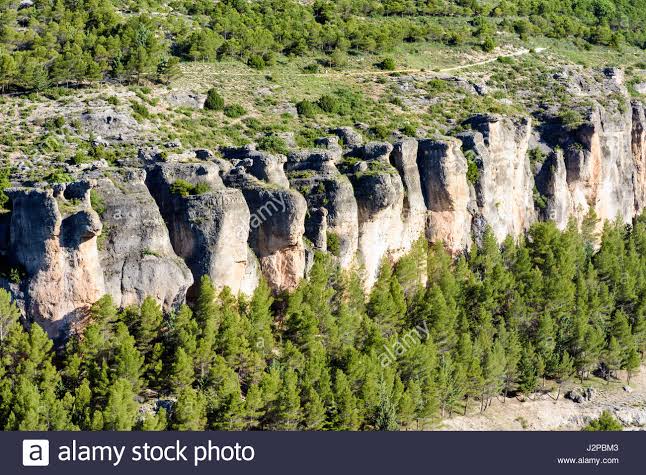
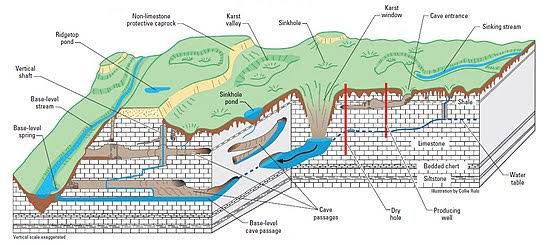
Karst is a type of landscape where the dissolving of the bedrock has created sinkholes, sinking streams, caves, springs, and other characteristic features. Karst is associated with soluble rock types such as limestone, marble, and gypsum. In general, a typical karst landscape forms when much of the water falling on the surface interacts with and enters the subsurface through cracks, fractures, and holes that have been dissolved into the bedrock. After traveling underground, sometimes for long distances, this water is then discharged from springs, many of which are cave entrances.

Chemical Reaction:-

Limestone is a type of carbonate rock — that is, a rock made up primarily of a carbonate mineral which, in the case of limestone, is usually calcite or aragonite. These are both forms of calcium carbonate (CaCO3). Over time, limestone may be dissolved by carbonic acid (i.e., carbon dioxide dissolved in water). Carbonic acid is formed when rain picks up CO2 as it falls through the atmosphere. Once it hits the ground, it may pick up more CO2 in the soil, turning into a weak carbonic acid solution. When this solution seeps into limestone bedrock via cracks and fissures, larger openings are created. Over the course of thousands of years, this erosive process creates underground drainage systems and caves.

Mammoth Cave,USA is the longest Cave system in the world.

Xiaozhai Tiankeng,China Largest Sinkhole.

Other examples,Yutacan peninsula,Mexico

Cockpit Country,Jamaica etc.

In India karst topography is present in the Vindhya region (mainly southwestern Bihar), the Himalayas (parts of Jammu & Kashmir, Robert Cave, Sahasradhara, the eastern Himalayas, areas near Dehradun), Pachmarhi in Madhya Pradesh, the surrounding coast near Vishakhapatnam, and Bastar in Chhattisgarh.

Landforms :-

Situation of Transgender in India


The Indian Supreme Court’s determination that transgender people constitute a Third Gender under the constitution, as well as recent laws, has considerably increased transgender people’s recognition and rights.”


Who is a transgender person?

Simply put, transgender people are individuals whose gender does not correspond to the gender assigned at birth. It encompasses transmen and transwomen, as well as those who identify as eunuchs because of their social culture.


In the Ancient Period, there were transgender people.Since the dawn of civilization, the eunuch has been a part of this subcontinent. Between 400 BCE and 400 CE, a treatise on human sexual behaviour was written. Hijras play a significant role in Hinduism, particularly during the Mahabharata and Ramayana periods.

By merging his bride into himself, Lord Shiva became half-woman, which is known as ardhanareshwar. In the eunuchs’ community, this storey is extremely important. Arjun took on the forms of eunuch as Viharnala and Shiikhandi during the Mahabharata and Ramayana periods, and they played major roles in the Mahabharata and Ramayana. When Lord Shri Ram returned from Vanvas, he bestowed a blessing to the Hijras. They are also said to be lucky for blessings.


In India, what is the status of transgender people?

Although transgender people have many rights, they are having trouble extending those basic civil rights. They are also human beings with the right to exist in a society rather than be ridiculed by their family and society. Their parents would disgrace them, and society would mock them. Our society restricts them to study, schools, health services, and access to parks and gardens, and retailers engage in unfair commercial practises with them, depriving them of respect and employment opportunities.
If a eunuch is born in a person’s home, they must immediately hand over to the eunuchs’ community. If a family retains their eunuch child in the house and attempts to educate them, the entire society begins to boycott their family, and people do not keep their eunuch in their family and shame them for the same reason.

One of those stories about movement among the people is that they are considered highly auspicious for a blessing since it is stated that when Shri Ram came from Vanvas, he granted a boon to the hijras, and it also appears that evil eyes of the eunuch are also considered very unfortunate.
Instructions to both the federal and state governments.


The court has issued the following directives to the federal and state governments:

1. In order to protect their fundamental rights, hijras and eunuchs should be recognised as third gender.
2. Recognizes the need for a person to recognise his or her own gender.
3. As a socially and educationally inferior class of citizens, reservations are made in public education and employment.
4. Making particular measures for transgender people in terms of HIV sero-surveillance and providing suitable health services.
5. Face their fears, gender dysporia, humiliation, sadness, suicidal impulses, and other issues.
6. Measures should be taken to give transgender persons with health treatment in hospitals, such as creating separate wards and providing them with separate public restrooms.
7. To increase public awareness so that transgender people feel that they are a part of society and are not considered as outcasts, implement social welfare programmes for their overall development.


Conclusion
These new regulations will not eliminate the discrimination that many transgender individuals (also known as hijra in India) face: many are shut out of mainstream jobs and society – to the point that certain hospitals have refused to treat them – and are frequently harassed by police. It is, nonetheless, a significant step forward, as legal recognition can help to foster better social acceptance and communal integration. The Supreme Court is also considering quotas to improve transgender people’s representation in work and education. As a result, we must adjust our attitude toward this community and show them respect and space.

Relevancy and Admissibility of E-Records

Technology has advanced rapidly over a period. This century saw a technological revolution which enthralled not only India but the whole world. In today’s world electronic devices used everywhere. And it is not only limited to established organizations or institutions but available to every individual at swipe of a finger. It helps people to communicate locally and globally with ease. Due to which the reliance on electronic means of communication, e-commerce and storage of information in e-form increasing rapidly. This growth of reliance on electronic means of communications, e-commerce and storage of information in e-form has most certainly caused a need to modify the law relating to information technology and rules of admissibility of electronic records both in civil and criminal matters in India. Electronic evidence is defined as information and data of asset to an investigation that is stored on, received or transferred by an electronic device. It is any probatory information stored or transferred in electronic form that a party to a court case may use at trial. As courts continue to wrestle with this new electronic frontier it is crucial to stress that electronic evidence is subject to the same rules of evidence as paper documents. It can be obtained in mails, digitized photos, transaction logins, instant messages, documents from accounting programs, spread sheets, browser history data, backups, printouts, GPS tracks, videos or audio files. E-records inclines to be more abundant, more difficult to annihilate, not difficult to modified, easily duplicated, potentially more expressive and more readily available, and such unique nature of e-evidence, as well as the ease with which it can be exploited or falsified, creates obstacle to admissibility not faced with other evidence. Electronic evidence challenge evidentiary rules grounded in a more tangible way. Certification of such record is perhaps the most difficult test as courts seek to determine its admissibility.

During trials, judges are often asked to order on the admissibility of electronic records. How the court orders on questions of admissibility could eventually impact the outcome of a civil lawsuit or determine the difference between conviction and acquittal of a defendant. These gadgets, the result of technology can be used for legal and illegal acts. For example, when data recorded or stored in the memory of a computer is printed out in paper if it is not easy to say that the version in the memory is a document. Nor is it easy to determine that the print out is an original or a duplicate. Also, even if such things (audio, tape recording, a video tape recording, electronic mail on computer screen) when submitted as evidence and such things as electronically transmitted directs in commercial transactions can be regarded as document.

The growth of computers, the social impact of information technology and the ability to store information in digital form have all required Indian law to be amended to include provisions on the appreciation of e-records.

In 2000 Parliament enacted the Information Technology (IT) Act 2000, that amended the existing Indian statutes to allow for the admissibility of electronic evidence. The IT Act is based on the United Nations Commission on International Trade Law Model Law on Electronic Commerce and, at the side of providing amendments to the Indian Evidence Act 1872, the Indian Penal Code 1860 and also the Banker’s Book Evidence Act 1891, it recognizes transactions that are administered through electronic information interchange and different means of electronic communication.

Going to hit a century : Diesel price!

Diesel fuel, in general is any liquid fuel specifically designed for use in diesel engines, whose fuel ignition takes place, without any spark, as a result of compression of the inlet air mixture and then injection of fuel. Therefore, diesel fuel needs good compression ignition characteristics.

The most common type of diesel fuel is a specific fractional distillate of petroleum fuel oil, but alternatives that are not derived from petroleum, such as biodiesel, biomass to liquid (BTL) or gas to liquid (GTL) diesel are increasingly being developed and adopted. To distinguish these types, petroleum-derived diesel is increasingly called petrodiesel in some academic circles.

In many countries, diesel fuel is standardised. For example, in the European Union, the standard for diesel fuel is EN 590. Diesel fuel has many colloquial names, most commonly, it is simply referred to as Diesel. In the UK, diesel fuel for on-road use is commonly abbreviated DERV, standing for diesel-engined road vehicle, which carries a tax premium over equivalent fuel for non-road use. In Australia, diesel fuel is also known as distillate, and in Indonesia, it is known as Solar, a trademarked name by the local oil company Pertamina.

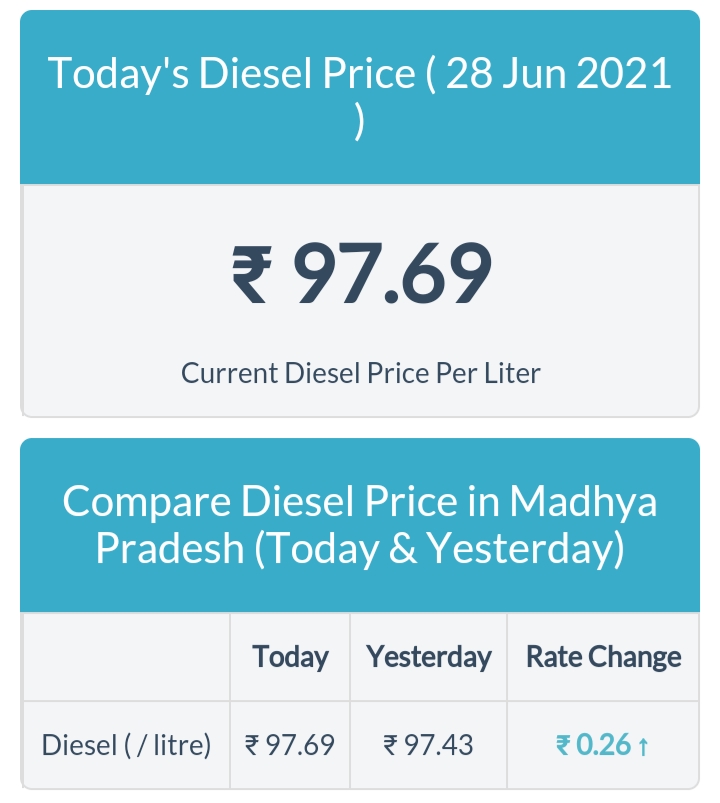
Diesel price in Madhya Pradesh today is fixed by state-run oil marketing companies based the daily ‘Dynamic Fuel Pricing’ mechanism. Here, you can check the current diesel price in Madhya Pradesh, find todays diesel price as well as the quarterly price trend in Madhya Pradesh. New diesel prices in Madhya Pradesh are updated by oil firms daily at 6:00 am IST.

You can also find out how diesel prices in Madhya Pradesh are calculated and how prices are compared to other states. Additionally, find the current Madhya Pradesh diesel price and primary factors impacting diesel prices in India as well as the highest and lowest price recorded during a month.

First Indian to earn ‘A’ standard Olympic quota

Sajan Prakash created history by becoming the first Indian ever to clear the ‘A’ standard of international swimming, clocking 1:56.38 minutes in the 200m butterfly. Eventually, heads to the Tokyo Olympics as the first Indian to make it to successive Games.

It wasn’t the fastest of races, which meant Sajan had to push himself to set the pace, with Israeli Marc Hinawi as a marker. The Indian was right behind Czech swimmer Lunak Sebastien in Lane 4 at the first turn, which he completed in 25.99s. Sajan would take the lead at 100m, clocking 29.57s on the return, and finish with identical, consistent splits of 30.41s in the second half.


27-year-old, Sajan Prakash from Kerala won gold which is his second in two weeks. After coming agonisingly close to slashing ‘A’ at Belgrade, Serbia, last week. Coach Pradeep Kumar said, “He was spending 19 seconds and 52 metres underwater over four laps, and we focussed on speeding his pace and gaining 80 centimetres in all to breach the ‘A’ Cut.”

Born in Idukki in the shadow of the tallest peak in the Western Ghats – the Anamudi mountains – Sajan swam under coach Saju Sebastien at Neyveli (Tamil Nadu) before heading off to his friend Pradeep Kumar. He would also work in a training stint in Thailand on a FINA scholarship, and was seen as the most consistent performer since his Rio Games outing. The pandemic saw him head to Dubai where he worked in an indoor pool, silently chipping away the seconds.


Former Asiad medallist Virdhawal Khade explained Butterfly is considered the hardest strokes. While Khade reckons said the Butterfly relies on strong shoulders, it is all in the kick that Sajan scores. He further contunied “Even now, he’s not the most dominant guys. But he works hardest and helps young swimmers and is generous with his help. It’s his time now to become the alpha of Indian swimming and lead the others. If youngsters ever needed someone to look up to, there’s none better than this nice guy. Sajan’s put a smile on everyone’s face in Indian swimming,”.

Earthquakes

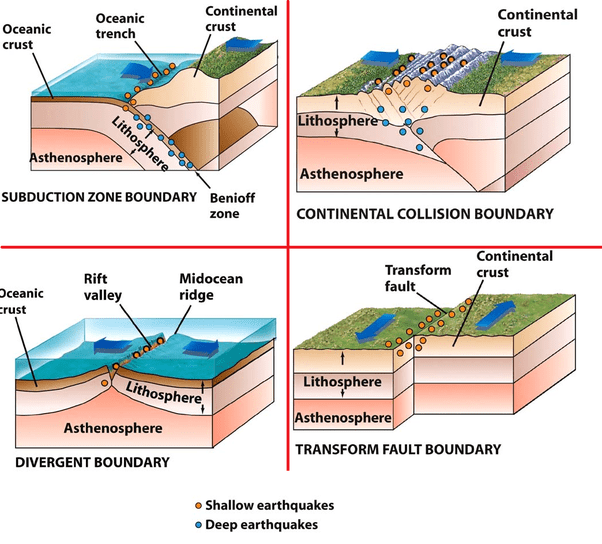
Earthquake, any sudden shaking of the ground caused by the passage of seismic waves through Earths’s rocks. Seismic waves are produce when some form of energy stored in Earth’s crust is suddenly released, usually when masses of rock straining against one another suddenly fracture and “slip.” Earthquakes occur most often along geologic faults, narrow zones where rock masses move in relation to one another

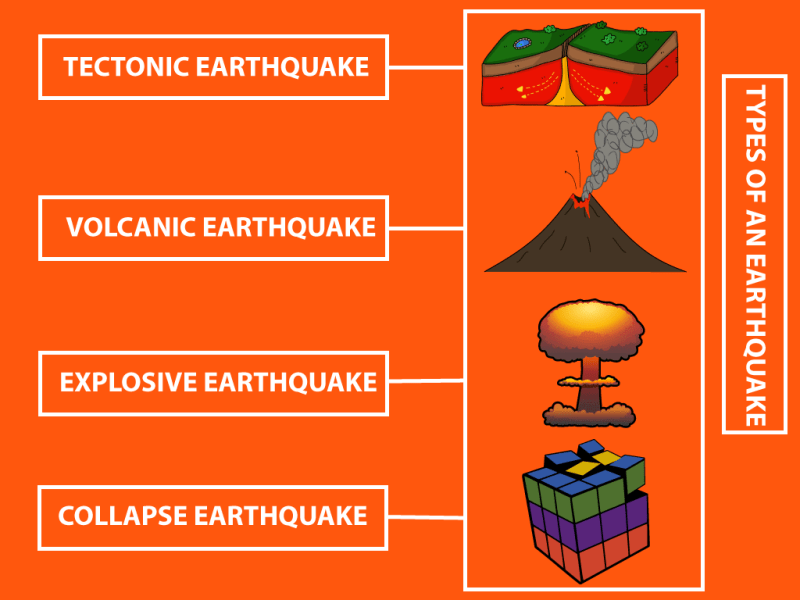
  • tectonic earthquake is one that occurs when the earth’s crust breaks due to geological forces on rocks and adjoining plates that cause physical and chemical changes.
  • volcanic earthquake is any earthquake that results from tectonic forces which occur in conjunction with volcanic activity.
  • collapse earthquake are small earthquakes in underground caverns and mines that are caused by seismic waves produced from the explosion of rock on the surface.
  • An explosion earthquake is an earthquake that is the result of the detonation of a nuclear and/or chemical device.

Seismic waves is of three types-primary waves,secondary waves and surface wave.

Of the body waves, the primary waves has the higher speed of propagation and so reaches a seismic recording station faster than the secondary, or S, wave. P waves, also called compressional or longitudinal waves, give the transmitting medium whether liquid, solid, or gas a back-and-forth motion in the direction of the path of propagation, thus stretching or compressing the medium as the wave passes any one point in a manner similar to that of sound waves in air.

P waves can travel in all three medius.S waves can only travel in solid medium.

Two common surface waves are Love waves (L wave) and Rayleigh waves (R wave). The L-waves are the slowest among the earthquake waves and are recorded last on the seismograph.
Of the four seismic waves, most of the shaking and damage from an earthquake is due to the Rayleigh
wave (R-wave).

Earthquakes can occur due to human activity or natural reason like volcano,tsunami etc.

5 HINDU GODS AND YOGA POSTURES YOU NEED TO KNOW

BRAHMA

The first deity of the Hindu trinity, Lord Brahma, is that the god of creation. The trinity being, Brahma, Vishnu, and Shiva. Brahma contains the whole cosmos and every one of its creatures.

Brahma-Hindu god – Hinduism says that point is cyclical. this is often because all creation within the Universe exists a few times then dies. In short, Brahma reminds us of the cycle of birth and death.

The cycle of creation and death is constant and ceaseless. We are born from Brahma then return to Brahma.

One of the prayers to mention before your meal is:

“This food came from Brahma.I am about to eat Brahma.I will return to Brahma”

Indeed, these prayers help to remind us of the impermanence of life. As the god of Creation, Brahma also symbolizes the mind and intellect. This is often because he’s the source of all knowledge necessary for the Universe.

You’ll find Brahma depicted with four faces. The four faces symbolize the completeness of his knowledge. Brahma also has four hands that every represent a facet of the human personality. this often minds, intellect, ego, and consciousness.

Brahma is the god of:

  • Creation
  • Intellect
  • Mind

YOGA POSTURE: BRAHMA MUDRA
Although Brahma Mudra may be a sitting posture that’s practiced before pranayama. So it also helps improve focus and releases negative energies. In yoga, Mudras (hand and body gestures) affect the flow of vital force energy (prana) throughout the body. they assist calm the mind and energize the body.

Brahma mudraBrahma is that the name of the Hindu creator god. the interpretation in Sanskrit is “divine,” “sacred,” or “Supreme Spirit”. Place both hands into fists with the fingers wrapped around the thumbs. The palms face skyward, and both hands pressed together at the knuckles. The hands then rest against the pubis.

VISHNU

The second deity of the Hindu trinity, Vishnu is that the Preserver (of life). He sustains life through his adherence to principle, order, righteousness, and truth. Vishnu’s responsibility is order and balance. He encourages his devotees to point out kindness and compassion to all or any creatures.

Vishnu is depicted with four arms, which represent his omnipotence and omnipresence.

This Hindu deity may be a more esoteric god as compared to those that rule over the wildlife since. he’s liable for the divine essence that pervades the Universe.

It is common to ascertain Vishnu seated upon a coiled snake. This symbolizes the power to stay asleep within the face of fear or worry.

Vishnu is that the god of:

  • Support
  • Order
  • Balance

YOGA POSTURE: VRIKSHASANA
Vrikshasana (tree pose) requires a pointy mental focus. This focus directs and concentrates the mind. And who doesn’t need a mind that has the facility of concentration?

Balancing on one foot requires keeping your eyes on one specific spot.

Vrikshasana || Tree Pose

Balancing yoga postures assists you to direct your energy inward. Keep your eyes focused on a focus – your Drishti. Your Drishti enables you to specialize in staying even keel. Vishnu can maintain peacefulness and steadfastness within the face of fear. When practicing Vrikshasana, you build self-trust by overcoming the fear of falling. Rather than that specialize in tipping over, this posture requires you to only specialize in maintaining balance.

SHIVA

The final deity of the Hindu trinity is Shiva, also referred to as The Destroyer – the destroyer of all our “bad” habits. As you travel throughout India, you’ll see many lingams that represent Shiva. Shiva protects his followers from greed, lust, and anger. He guards them against illusion and ignorance. These are the forces that substitute the way of divine enlightenment.

He is also considered to be liable for death, destroying to bring rebirth and new life. Hindus often call upon Shiva before a ritual with this mantra.

“Om Namah Shivaya”

So this invocation destroys bad energy in physical and energetic space. Shiva is usually depicted with a serpent around his neck, which represents Kundalini, or life energy.

Shiva is that the god of:

  • Destruction
  • Renewal
  • Death

YOGA POSTURE: NATARAJASANA
Natarajasana may be a pose representing the deity in one of his most beloved forms. The word Natarajasana comes from two words: nata, meaning acrobat, and raja, meaning king.

Shiva, depicted as Nataraj, is usually shown dancing to represent this meaning.

Natarajasana || Dancer pose

This dance is ever fluctuating and changing. This expression symbolizes the dynamic cultural expression of life. As in life, the external posture could also be filled with movement and far wobbling once we practice, it requires a still, calm mind to remain balanced. Evoke the cyclical nature of Shiva by adding Natarajasana into your practice.

GANESH (OR GANESHA)

Recognized for his elephant head, Ganesh of the foremost prevalent and best-known deities. (Also referred to as Ganesha.) Ganesh is Shiva’s firstborn son. His large, elephantine head symbolizes the wisdom and knowledge that he bestows upon his seekers. He grants luck to those that offer him, delicious sweets. He is the ruler of astrology, mantra (sound), and yoga and is related to the humanities and sciences.

It is especially common to wish to Ganesha before any significant venture like a marriage or a replacement project because he removes obstacles to success and luck.

Some myths and stories explain how Ganesha came to possess an elephant head. Still, it’s thought that the humorous image stills the rational mind and its doubts. Therefore, in meditation, we practice looking beyond outer appearances and forms.

Ganesh is that the god of:

  • Removing obstacles
  • Wisdom
  • Good Fortune

YOGA POSTURE: VIRABHADRASANA II
Warrior two on the mountain there are a couple of yoga poses that embody Ganesha’s resilient strength and fearlessness. one among these postures is Virabhadrasana or Warrior II.

A yoga posture like Warrior II emphasizes a connection to the basis chakra.

The expansive, stable qualities of Warrior 2 make it the right posture to represent Ganesha’s immense strength. Before embarking on your day or an adventure, you’ll want to practice this pose inspired by one of the foremost well-known Hindu gods.

HANUMAN

Another easily distinguishable Hindu god is Hanuman, the deity depicted as a monkey. Hanuman represents the perfect devotee of the gods. Meditate on Hanuman as a logo of strength, perseverance, and devotion. To embody Hanuman is to embody absolute love and dedication. Yoga is usually considered the practice of having the ability to regulate one’s mind. Since the five senses are the gateway to the mind, Hanuman is that the god of sensory control.

His attributes are often related to extraordinary strength, as long as he believes within the cause!

Hanuman is usually called upon in times of trouble. He teaches us about the unlimited power that lies within the human heart. When we direct our energies to god, as shown within the epic tale Ramayana, anything is feasible.

Hanuman is that the god of:

  • Perseverance
  • Dedication
  • Commitment

YOGA POSTURE: HANUMANASANA
Known as ‘the splits’ Hanumanasana is one posture that needs tons of dedication and therefore the patience of a saint to master.

The monkey god Hanuman represents devotion, selfless service, dedication, and indomitable willpower. The physical posture, Hanumanasana, represents his ability to leap great distances. During the battle between Rama and Ravana within the Ramayana, Hanuman jumped from India to Lanka to comfort Sita.

In the story, he brought Sita a hoop from Rama to remind her of the love that they had for her. Hanuman was so loyal towards Rama, that when offered a gift for his bravery and dedication to Rama and Sita. He asked only to be ready to still serve them. As you practice Hanumanasana, visualize yourself, closing the space between yourself and your goals.


the kirlian photography

Hellooo guys ,

Today’s topic is going to be refreshing and entrancing.

I am sure you guys know about photography as skill of capturing the world that we see with our eyes in a photo. Photography is a very broad topic, based on how the photo is taken the feelings ,the emotions that the photo shows also changes.

But have you guys ever heard about Kirlian photography?

Never heard about it, no problem cause I am going to brief you guys on this topic.

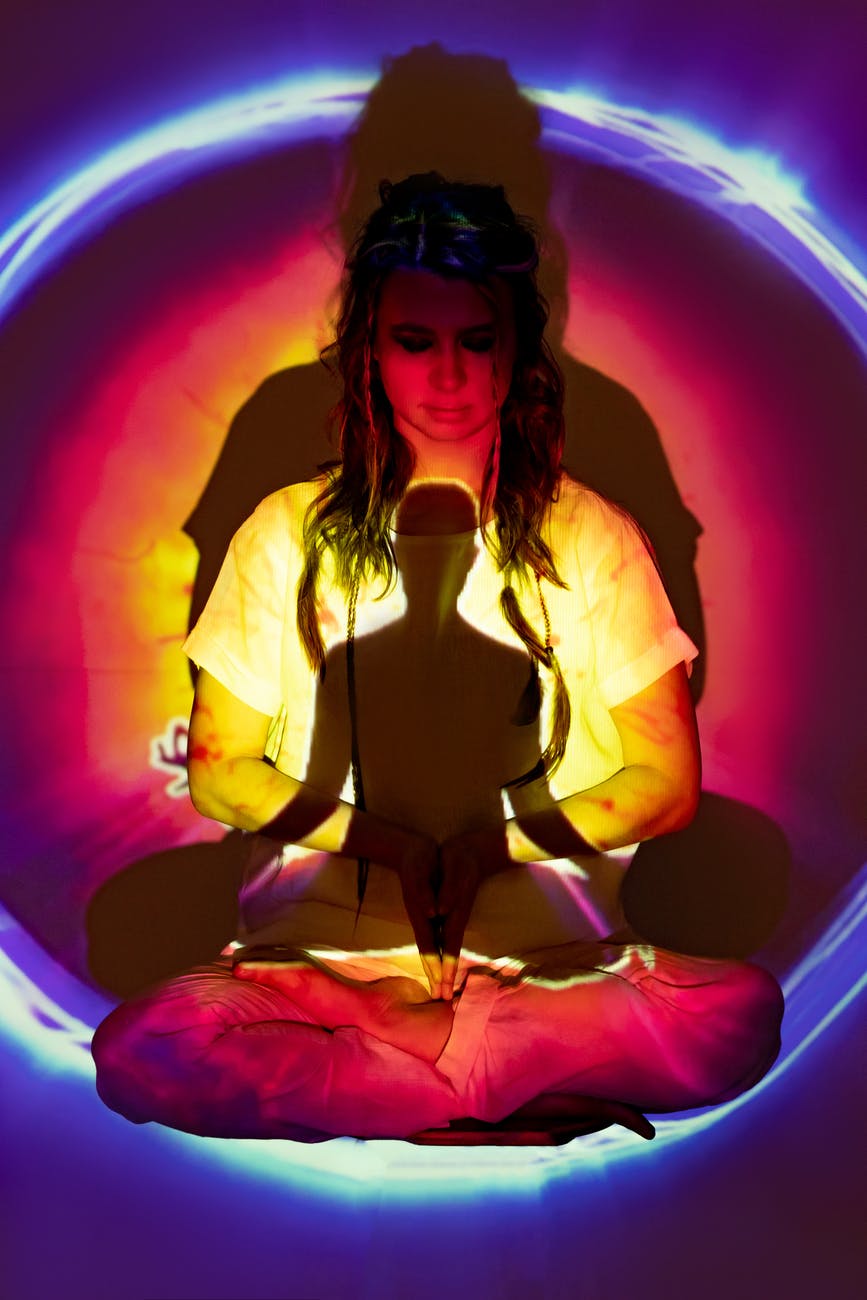
Kirlian photography is also known as AURA photography.

Although the kirlian photography is not so well known among beginners or non photographers it is definitely popular quirk and that is its believed by people that through the technique of kirlian photography “aura “of the objects can be captured.

Kirlian photography is possible through only by following a certain techniques and due to that technique the possible result is believed to be the aura of the thing that is captured.

The other name aura photography also came due to many myths formed around Kirlian photography .

It is believed that the soul of the body and aura which cannot be seen with our naked eye can be captured through Kirlian photography

Even the Kirlian couple Semyon and Valentina who discovered Kirlian photography in 1939 , also believed it to be that the Kirlian photography is capturing the objects aura, which intrigued many scientists curiosity into this field and many researches started taking place.

Photo by Mikhail Nilov on Pexels.com

But sadly the truth is Kirlian photography only appears to capture aura and the crux lies in the technique the photography uses, the mechanism of the photos is the high voltage corona effect. In this effect when the photographic films encounters changes in the chemical composition which in turn alters due to the light producing the aura effect.

Although there is no particular Kirlian camera you can still produce this effect using a transparent electrode in modern cameras

Its believed that every object in this universe has distinct energies and the mental, emotional states of that person can effect those auras.

So the Kirlian photography is used in many therapies and is used to detect various diseases, they also used in treating psychiatric patients

Photo by Sergey Katyshkin on Pexels.com

Kirlian photography unlocked a new page for the subject called photography ,it showed the effects of light can totally change the result, and stills there are many mysteries to unravel.

Recently many applications were also developed , so that we can also enjoy the Kirlian photography .

Some people believe the aura photography is true and some people only believe in facts ,whatever it maybe for me its just fun to enjoy these unique things rather than contemplate ,at last my opinion is that

“Kirlian photography is fascinating”

THANKYOU^^

Please visit the below websites for more information^^

https://www.lightstalking.com/what-is-kirlian-photography-the-science-and-the-myth-revealed/

http://www.mindoverimage.com/treatment/aura-kirlian-photography-mumbai/

https://www.pixsy.com/kirlian-photography-image-protection/

Not Just A Cool New Thing :How Technology Improves Education

Today, the internet dominates many aspects of our life. We’re so used to it that we don’t even think about all the areas it touches. It helps us communicate with our friends and family. It’s an invaluable tool in the kitchen as we look up recipes and ingredients. If we’re attempting DIY repairs on our car, we might look up a tutorial on YouTube. We access our entertainment online. Whenever we have any question, from the most mundane to the most complicated, we ask the internet.
There’s one facet of our life, however, where we might not often think about the effects of technology, and that’s the realm of education. Today, we want to spend some time examining how technology has found its way into the halls of schools across the country and around the globe, and all the ways technology has changed education.
Technology has improved education by using advanced techniques and tools for research and development. Technology has improved the speed of the learning process through the internet.
Technology helped to create new and updated educational material and syllabus. Data analysis and visualizations Technologies have improved the quality of education. Technology improved the student’s security and provided low cost, real-time platforms for communication.
Now there are thousands of fonts support different emotions and facts in the text. Now notes, eBooks, blogs, videos, apps, charts, smart arts, data visualizations, infographics are the part of educational materials. Today Corel Draw, Microsoft Word, Excel, PowerPoint, smart class apps, Adobe Photoshop, stock images and many other IT sources helping to create, design, and various types of educational materials and class syllabus.
This is a big change in education through technology. And I think the goal should be to store data/information/knowledge systematically in the brain of students. And this helps them to memorize it faster during the class and competitive exams. Even when they will in the jobs they can execute that knowledge to produce creativity in their works. Technology has changed, improved the quality of education. And I think we need to think on long-term problems and results while we plan and integrate the change in education by using Technologies.
Technology has improved the Teachers and students communication channels and methods. There was a time when students fear to ask a question from teachers. There was a time when student hesitates to communicate with the teacher about what they are feeling. If someone wants to learn more about the class topic from the same teacher then there were not the ways. There were no ways to keep connected with the teachers for years.
But technology has changed teachers and students communication methods and types. It is now much stronger, easy, high tech and possible to builds long-term connection with teachers and students with the help of technologies.
Now today’s teachers understand that technology is a part of our life. So they are trying to learn the use and methods of advanced technological tools that help them to explain the class topic.
Use of social media by teachers not only helps students to learn but also help society. If Physics teachers/lectures/professor have social media pages and groups then they can invite and target students especially college students to like and join the group. After that, they can create, post, like content that is related to physics (class wise/chapter wise). It builds a great connection and generates student’s interest to learn physics not only in the class but after class. And I think it’s the biggest and greatest use of social media in education.
Technology removed the communication gaps and it is above then political boundaries. And when we matter education and development of students above then politics then I am sure that we will become not only developed but wise citizens.
Now if students have the option to learn from teachers on their blog, they can follow them on twitter, they can join the communities and overall it helps to study the subject and it helps to create a positive environment.
This way, I think technologies speed up the learning process. Technologies created the platform for students to post questions and answers. Students from different cultures are connected with each other for the class topic.
The better use of technology in the classroom and education mostly depends on our teachers, professors, and management. When they adopt a positive attitude to enhance the capacity of students then it will improve and align the education in the right direction.
But we also need to careful that our students are not motivated to follow the wrong direction directed by trolls, politicians, companies for personal benefits.
To stop the negative impact of technology on students, teachers and professors have to lead students. And it will happen if the government, school, college, university, and management boards work on teacher’s development. So that they can feel safe, secure and inspired to lead students for a better future by developing expertise in students through technologies.
Technology has improved the transparency in the educational process and in the organization, improved the staff management methods, streamlined career development programs, faster and easier methods to conduct exams and test, students’ performance reporting, real-world problem-solving assignments, and projects.
But whatever the ways you choose to integrate technologies in the classroom, school or in the colleges. But always remember that don’t ignore the happiest and joyful environment and projects. If students not happy, everything you do will not be beneficial. So that it’s important to integrate technology around the happiness, interests, and motivations of students.

“Technology will not replace great teachers but technology in the hands of great teachers can be transformational”

Read This If You Worry A Lot

The day that I decided to quit my last job and the day that I handed in my notice were almost 90 days apart. In those three months, I worried — a lot. I decided to pursue my desire to become a full-time writer. But shit was getting scary.

Things like “what if I can’t pay my bills?” and “what if I fail?” went through my head. I freaked out, but as it turned out, the solution to my excessive worries was easier than I expected.

Many of us worry about all kinds of things: Work, relationships, money, health. Some concerns are real, but many are unnecessary.

No matter what kind of worry you have, the response in your body is always the same: It increases your cortisol levels.

And an increased cortisol level is something you definitely do not want. Cortisol compromises your immune system. As a result, you will become more susceptible to disease.

Researchers have also found a relationship between cortisol and diabetes, osteoporosis, and heart disease. Also, stress and fear can cause depression, bipolar disorder, panic disorder, and burn-out.

Let’s face it: If you don’t stop worrying, you will die. That’s not me talking. That’s your body talking.

In the past year and a half, I’ve studied worry, stress, fear and anxiety almost every day. I even wrote a book about how you can live a stress-free life. My findings? Don’t try to relieve stress and worry, but eradicate it. Address it — head on.

“Fear defeats more people than any other one thing in the world.”  — Ralph Waldo Emerson

Relief Doesn’t Work

This is what most people do when they experience stress and worry:

  • Take it out on your partner of family
  • Drink alcohol, take drugs, or both
  • Binge-watch Netflix
  • Play video games
  • Go on a holiday
  • Party all night
  • Have sex

Be honest, how long do these things make you forget about your worries? 10 minutes, half hour, a day? It doesn’t last. As soon as you get back to the reality of your life — worry and stress smack you in the face.

Distracting yourself from your life doesn’t work — and yet, many of us keep doing it. I’ve read many books and scientific papers on this behavior. Some say it’s because we have too much free time, some say it’s because of culture, some say it’s because how we are wired.

To be frank, it’s not important to understand the why. We just have to look at the facts: People worry too much, and that can destroy your life. It’s more important to focus your attention on addressing worry.

“Never let the future disturb you. You will meet it, if you have to, with the same weapons of reason which today arm you against the present.” ― Marcus Aurelius

Turn Worry Into Constructive Process

Worry is often about the future. It goes something like this: What if…

“She doesn’t like me anymore?”
“I lose my job?”
“I can’t pay my bills?”
“I fail this exam?”
“I don’t get this promotion?”
“My business doesn’t take off.”

And then we make up consequences. It goes something like this: I have to…

“Be single.”
“Find a new job.”
“Borrow money from my parents.”
“Quit school because I failed.”
“Stay at this job another year.”
“Be ashamed because everyone thinks I’m a failure.”

Then we think: “I can’t handle that.” And finally, we think: “The world is going to end.”

If your thought process is the way described above, worry controls you.

The good news is there is a simple solution: Self-monitoring, which turns worry into a constructive process. In a 2002 study, done by Szabo & Lovibond, students were asked to record their worries.

The results of that study demonstrated that you can turn worrying into a constructive process by focusing on finding a solution to your concerns.

“You have to learn the rules of the game. And then you have to play better than anyone else.” — Albert Einstein

How I Use Self-monitoring To Address Worry

I’m a pragmatic person. I do think that things like meditation and mindfulness help with worry — but not for me. It’s too intangible. Instead, I prefer to take a practical approach like self-monitoring. Here’s how I do it.

  1. Use a note-taking app and create a new note.
    I call my note “Things that I worry about.”
  2. List everything you worry about — and keep adding things to the list.
    Everything that you worry about goes on this list, no matter how small.
  3. Think of a solution for all your perceived problems.
    For example, if your financial situation makes you anxious, you need to create a plan to earn more or spend less.
  4. Then, start executing. 
    Do one thing every day that brings you closer to solving your perceived problem.
  5. Finally, don’t worry about things you have zero control over — those things you have to accept. 
    If you know more about how you can do this; read Meditations by Marcus Aurelius.

This process focuses on action. It forces you to learn the skills you need to overcome your perceived problems. Because problems don’t disappear out of themselves.

Nowadays, I don’t worry anymore because I trust my ability to handle everything that life throws at me.

Because knowledge, skills and character are the only things that no one can take from you—every minute you spend on learning something is well spent.

No matter what happens, trust in your ability to address it. So start now.

NATIONAL ELIGIBILITY TEST PREPARATION: TIPS AND TRICKS

National Eligibility Test also known as UGC-NET, is an exam conducted by National Testing Agency (NTA) to determine the eligibility of a candidate for the post of assistant professor and/or Junior Research Fellowship awards in universities and colleges. It is a national level exam, conducted twice a year (June and December) and over 5,00,000 students appear in the exam per attempt. A total of Eighty-one subjects are offered and applicants choose the subject they have a masters degree in for the exam.

UGC-NET is one of the toughest exams to clear and requires a lot of planning and dedication on the part of the applicant. Not only the applicant is expected to have knowledge of the topics in the syllabus but should also be familiar with related topics.

There are two papers:

Paper-1 General Paper (50 questions for 2 marks each, Time given: 1 hour) : This paper is common to all. The syllabus entails topics such as Teaching aptitude, research aptitude, Information and communication technology, logical reasoning, higher education, etc. Many students have a hard time cramming the concepts. Here are some tips and tricks:

  • Students normally take the route of coaching centers which is very helpful given the faculty is reputed.
  • For everyone who is preparing through self study needs to have a proper timetable according to their sitting capacity.
  • Next, you need to start with the topic that looks the most interesting so as to get you to begin your preparations.
  • Once you choose the topic, you must first read the chapter thoroughly from the book you chose to begin your preparation. Mark every important date, the name of an author, etc.
  • Next, go to YouTube (you will find a gazillion videos on a singe topic), find a lecture on the topic selected and listen to it carefully while taking notes. Online tutors always have something extra to offer. They have an interesting way of teaching which helps to learn things faster while keeping the learners engaged.
  • Now you have all the information related to a particular topic. Revise it at regular intervals to keep it fresh in your mind.
  • You can now move on to the next topic. Repeat the cycle and don’t forget to make detailed notes.
  • Once all the topics are thoroughly covered, you must attempt a few mock tests to put your knowledge to test.

Paper-2 Specific Subject Paper (100 questions for 2 marks each, Time given: 2 hours) : This subject is chosen on the basis of the subjects a candidate has during their post-graduation. There are total 81 subjects to choose from. Since you have already mastered in the subject, there is not a lot of cramming involved. Some additional tips you could follow are:

  • Paper-2 demands you to have vast knowledge of each and every unit involved. There are a hundred questions which can be asked from any topic directly or indirectly.
  • You must first study the syllabus properly and since you have already studied those topics in you masters, it would be easier for you to find out the easy and the difficult ones. For this, I would suggest you prepare a schedule that involves studying for the easy unit and the difficult unit on alternate basis. This will ensure that you are not left with only the difficult topics in the end.
  • YouTube classes are a must in this case also. There is no book that would fully cover the syllabus for this paper and thus you need you follow a reputed online tutor. Again, their tricks will make the subject easier and will enable you to reach at the depths of each unit.
  • Detailed notes will come in handy before the exam, thus make sure that all your notes are up to date and arranged perfectly.
  • When all the units are covered make sure you attempt regular mock tests and keep a track of your scores.

An aspirant must start their preparation ideally 3-6 months before the exam since the syllabus is vast and every topic is important and should not be skipped. If you stick to your schedule and revise everyday, nothing can stop you from clearing the exam. However, it is necessary that the applicant takes regular 3 hour mock tests (or solves previous year papers) and diagnose them later to find out the mistakes. The more mock tests you give, the more you will be sure of your success. However it is important to keep in mind that checking the tests is as important as giving it. You must know where you lack and go through that unit again.

Lakhs of students appear in this exam every year and only a handful manage to clear it and with proper time management, planning and scheduling you could be one of those handful aspirants.

ALL THE BEST!

TEACHERS DAY

Introduction

In India, every year Teacher’s day is celebrated on 5 September. On this day all the students decorate the schools and organise special programs in honour of the teachers all over the country. Along with students, teachers also participate in these programs with full enthusiasm. On this day we are discharged from our school activities so that we can participate in other programs.

Why is Teacher’s Day celebrated on 5 September ?


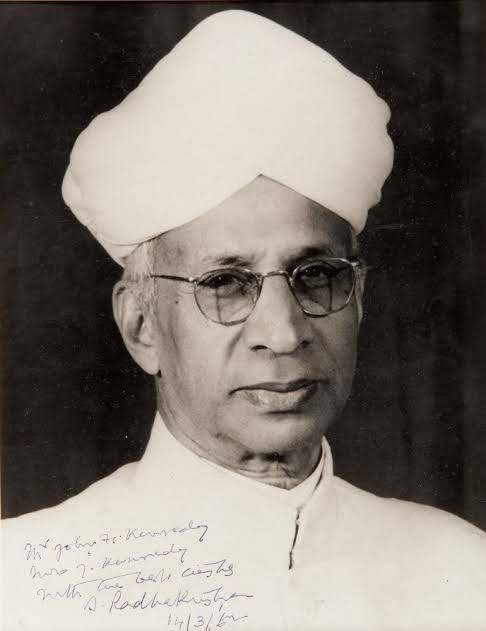
Dr. Sarvepalli Radhakrishnan was born on 5th September. He was the first Vice-President of independent India. He served the country as Vice-President from 1952 to 1962. He served as Second President of the country from 1962 to 1967. Worked as well.

Dr. Radhakrishnan greatly respected the teachers. Before joining politics, he taught in many institutes like Calcutta University, University of Mysore and Oxford University. He was highly appreciated for his work and was also loved by all his students. He believed in the fact that the teacher is the person who prepares the youth as the future of the country. This was the reason that he fulfilled this responsibility of the professor so diligently and always tried to give good values to his students.

When he became the President of our country, his students expressed their wish to celebrate his birthday every year. In response to this, Dr. Radhakrishnan said that he would be more happy if his students celebrated his birthday as Teachers ‘Day. From that day 5th September, his birthday is celebrated as Teachers’ Day.

Importance of teachers day

Teacher’s day is a very important day for both the students as well as the teacher’s life. On this day we celebrate the honour of all the teachers as a tribute to their efforts and works of theirs. Teaching is one of the most difficult tasks in the world because they have the responsibility of educating the youth. There are children in the whole class and because each student is different from the other and has his own ability, this task becomes even more difficult, some students are good in sports and some in mathematics. Some are interested in English. A good teacher always keeps the interest of his students in mind and recognizes their abilities. The teacher teaches them to hone their subject or work skills and also takes care so that their other activities or subjects are not affected.

That is why this day has been dedicated to show respect and gratitude to the teachers.

Teachers’ Day celebration in schools

Teacher’s day programs are celebrated with great enthusiasm in schools across India. On this day, the students wear the costumes of their favorite teachers and go to lower classes than themselves. On this day, senior students go to different junior classes and teach them. It is a very fun day for all of the students. During this, senior students take care that the discipline of the school is maintained and for this junior students support them.

In many schools, junior students also play their role as teachers. On this days students organise various programs for the teachers. They organise programs like singing show, dancing show, quiz competition, dance-drama, ramp walk etc. These programs are normally organized after break time i.e., in the second half of the day. In the first half the senior students take the classes till the lunch break . The teachers relax in the classes and enjoy all these activities.

On this special day, students bring greeting cards, flowers and all sorts of gifts for their teachers. Teachers also feel very happy after receiving all such gifts from their students and they also give treats to their students.

Conclusion

In India, Teachers’ Day is celebrated in honor of teachers, as they work hard throughout the year and want their students to do well in school and other activities. On this day different types of programs are organized in schools across the country. These types of programs strengthen the attitudes of students and teachers. In fact, it is a special day for both students and teachers.

https://en.m.wikipedia.org/wiki/Sarvepalli_Radhakrishnan

https://www.britannica.com/biography/Sarvepalli-Radhakrishnan

@track2traininginstitute @track2trainingseminar @edunewsnetwork @track2trainingservice

Mahatma Gandhi’s philosophy of Sarvodaya

Mahatma Gandhi’s philosophy of Sarvodaya aimed at rural reconstruction and uplifting the people of rural India by peaceful and cooperative means.

Sarvodaya, in simple terms, means welfare and upliftment of people and of all living beings . It means the welfare of not only oneself but of others as well. Sarvodaya stresses coexistence and love.

Ideals of Sarvodaya:

  • Economic implications-Under this philosophy, one should be given the opportunity to contribute to national production. The surplus should be distributed equally and inequalities of wealth should be reduced. Sarvodaya also emphasizes that industries should be decentralized and land should be redistributed.
  • Based on Trusteeship-This philosophy involves that everyone must utilize only that part of his wealth that enables him to lead an honorable livelihood and the rest of the wealth belongs to the community and must be used for its welfare. So all industrialists must act as trustees of wealth and not its owners.
  • Social implications- In the social aspect, this philosophy believes in individual freedom, opposes untouchability, and promotes widow remarriage. It believes in the promotion of brotherhood and human dignity Sarvodaya believes in functional education and decentralized society.
  • Political implications- In Sarvodaya philosophy, political power is not an end in itself but it is only means to an end, the end is human welfare. It believes in the universal adult franchise and favors decentralized democracy. Sarvodaya condemns the majority rule and centralization of power and majorly believes in self-sufficiency. 

Hence, the philosophy of Sarvodaya is an example of the Gandhian philosophy of ‘Simple living and high thinking. It envisages a new pattern of life-based on the decentralization of economic and social power, ensuring the moral freedom of man.

ORIGIN OF THE BUSINESS MANAGEMENT-A HISTORICAL OUT LOOK

In todays world , management is the base of any organization or administration to accomplish the desired goals . It is not a new term or a new skill because it has always been a part and parcel of all the ancient civilizations in the world.

Ancient texts and scriptures of many countries like India, china, America throws the important light on management. We can find the fundamentals of management in the ancient scripture of Bhagwat Gita. Bhagwat Gita contains rich of managerial techniques which was written a thousands of years ago.

During the first pre world war phase (1870-1974) there is a rapid change in economies in terms of trade, transportation and communication which indeed led to globalization. Globalization made management as one of the important aspect of development where the classical management theories were developed.

Classical Theories Of Management :

SCIENTIFIC MANAGEMENT THEORY :

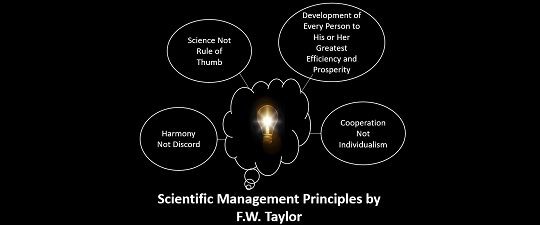
Scientific management theory was developed by “FREDRICK WINSLOW TAYLOR”. This theory got popularity in the period of 1880s and 1890s in U.S manufacturing industries with its analyzing techniques of work flow .

The Principles Of Scientific Management Theory are:

Taylor theory was mostly concentrated on shop floor level and suggested functional foremanship to the industries.

1:Science not a rule of thumb, this principle specifies that organizations should constantly develop new methodologies which makes work easier, faster and quicker rather than sticking to the old methods.

2:Harmony,not discord, this principle specifies that maintaining a positive atmosphere in the organization improves the productivity.

3:Cooperation, not individualism, all the activities of the organization must carried with mutual coordination in order to get improved results.

4:Development of each and every person to his (or) her greatest efficiency, this principle specify that organization should ensure the growth of every individual according to their performance.

ADMINISTRATIVE THEORY:

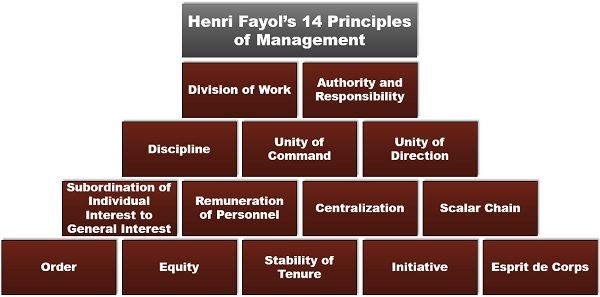
Administrative theory was developed by “HENRY FAYOL (1841-1925)” .Fayol mainly focused on the administrative management of the organization and structure of work tasks.

Fayol concentrated on top level management and he suggested unit of command. Administrative theory is quite opposite to the scientific theory.

Fayol’s generalized principles of management:

Fayol developed 14 principles for the organizational development. Fayol consider that effective management of an organization would lead to efficient results.

Fayol’s five functions of management:

Fayol considered that categorizing the functions of management helps the organization in day to day progress of work. The five management functions are:

Planning: This function is used to classify the needs of an organization and arranging them into tasks to develop strategies in order reach the desired goals.

Organizing: This function is used to determine the appropriate process to complete a task.

Commanding: This function is used to supervise the subordinates in completion of day to day tasks.

Coordinating: This function helps in integrating with different kind of groups and making things get done efficiently.

Controlling: This function ensures in evaluating the overall tasks according to the plan set and making changes if needed.

BUREAUCRATIC THEORY:

Bureaucracy theory was developed by “MAX WEBER(1864-1920)” .This theory was generated during the industrial revolution of Germany to manage it’s growing industrial enterprises.

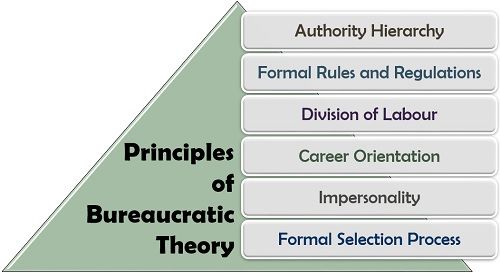
Weber mainly concentrated on the top level management of an organization. According to weber the bureaucratic organization is more rational and can get control over every individual employ. He developed six ideal principles of bureaucracy.

Six principles of bureaucratic theory:

Authority Hierarchy: It is a chain of command to promote individual’s effort to accomplish the organizational goal.

Formal rules and Regulations: These are rules and procedures that are to be followed by the employ’s of entire organization .

Division of Labour: The whole work flow is divided into tasks and distributed among the employees according to their ability.

Career Orientation: Promotion of loyalty among the employs and making the long term relations with the organization.

Impersonality: Making decisions according to the facts rather than personal interests.

Formal selection process: Hiring employ’s according to their skills, qualification , experience etc…

CONCLUSION:

As management & leadership are closely related to each other which has been provided since ages. With globalization management studies has undergone changes in formal study of management which needs a constant experimenting. These classical theories enhance the management abilities and predicts the control behavior of an organization.

The Restoration Period: Verse (Part 2)

Please ensure to read the part 1 of the Restoration Literature.

  1. Restoration Tragedy  – Heroic Tragedy – combination of Epic and tragedy; Tragedy – a tragic flaw but Heroic Tragedy, not because of tragic flaw but by Failure, hero failing by his failure may be in a duel/battle, in Restoration Tragedy – hero’s failure isn’t something inherent from the beginning of the play, but when he tries something –an act, he fails – Nicholas Rowe, John Dryden, Thomas Otway.
  2. Epic – a lengthy poem – often poets never able to completely write it, due to its extreme length – a stylised life off a person, dictated in a formal manner, not a person existing alone but connected to society – it begins in media rest – not a liner progression of events but could begin anywhere. Alexander Pope wrote a Mock Epic, written using the style of the Epic, making fun of it.
  1. Restoration Comedy – Comedies in Elizabethan Period – love and its tribulations – romances written in the Elizabethan Period is congratulatory praises the Monarch – Elizabeth mainly. With restoration, comedy comes back, but a different set; a class bound comedy – to deal with the upper classes, Shakespearean plays enacted by Shakespearean Company, which in Jacobean period the company was renamed under Jing James – ‘Kings Men’ – which catered to the needs on general people and not aristocracy, but was later seen to align to the needs of Aristocracy, therefore the comedies written during Restoration was class bound, and lot of upper class people were represented in that way. Metropolis – London, urbanised metropolitan – filled with stereotypes – innocent with faulty characters; ‘predatory widows’ looking for men with money, as well as men looking for women with good estates – money. Restoration Comedy emphasis on love triangle and rivalries, among parallel plots. Restoration Comedy – marriages are regarded as a boring restrictive system, ‘looking for estates’ as well as a boring restrictive system. Both narratives existed the latter was unique, where women had a voice of their own and men objecting towards the institution of marriage. Adultery/Carnality/Folly and Vices/ Proviso Scene – ‘Way of the World’ by William Congreve  – a prenup – a marriage bargaining scene. William Congreve, George Etherege, William Wycherley, George Fraquhar, John Vanburgh – Big five of Restoration Comedy – portraying the upper class yet critiquing – subverting them.  London – the urban side is a setting for all of them and there would be a juxtaposition between the urban and rural side of London.Attacks on Immorality – genre of drama is declining, Theatre Licensing Act of 1737, granting license to any play or refuse on any grounds – the initial half of 18th Century; revival of this particular form of writing – 1770’s Restoration Comedies – Oliver goldsmith – 1773, ‘She stoops to Conquer’ and Sheridan in 1775 and 1777 ‘Rivals’ ways in which the RC is revived in the 1770’s. And Oscar Wilde in ‘the Importance of Being Ernest’.