Best low-risk Investments in 2020

Due to the Corona Virus Global Pandemic 2020, our economy has faced unprecedented challenges. With businesses shutting down and stocks facing a fall, INVESTORS are looking for stability in their returns by opting for low-risk investment options. Low-risk investments earn only modest or meager returns; and inflation can erode the purchasing power of money stashed in low-risk investments. But it all depends on what your economic requirement is and how much risk you are willing to accept.

Photo by Pixabay on Pexels.com

Lets dive into the top low-risk Investments in the year 2020.

  • High YEILD Savings Accounts.

Savings accounts offer a modest return on your money. A savings account is completely safe in the sense that you’ll never lose money. Most accounts are Government insured up to certain limits, so you’ll be compensated even if the financial institution fails.

  • Saving Bonds

Scrictly speaking rather than investments these bonds are more like saving instruments. Bond is a good choice for protection against inflation because you get a fixed rate and an inflation rate added to that every six months.

  • Certificate of Deposits

With a CD, the bank promises to pay you a set rate of interest over a specified term if you leave the Certificate of deposits intact until the term ends. Some savings accounts pay higher rates of interest than some CDs, but those so-called high-yield accounts may require a large deposit.

  • Money Market Funds

Unlike a CD, a Money market fund is liquid, which means you typically can take out your funds at any time without being penalized. Money market funds usually are pretty safe. The bank tells you what rate you’ll get, and its goal is that the value per share won’t be less than $1.

  • Corporate Bonds

Companies also issue bonds, which can come in relatively low-risk varieties (issued by large profitable companies) down to very risky ones. The lowest of the low are known as “junk bonds.” When you buy a corporate bond, you’re loaning money to the company. In return, you receive periodic interest payments until the bond matures and your principal investment is returned.

  • Dividend paying stocks

A dividend is a portion of a company’s profits paid out to the company’s shareholders. When a company makes a profit, it can choose to reinvest that profit back into the business, but sometimes it pays a percentage of it back out to shareholders. Not every company pays dividends, but those that do often have slow, reliable growth.

  • Preferred Stocks

Preferred stock is more like a lower-grade bond than it is a stock. Still, it may fluctuate substantially if the market falls. Like a bond, preferred stock makes a regular cash payout. But, unusually, preferred stock may be able to suspend this dividend in some circumstances, though often it has to make up any missed payments.

Building an investment portfolio that has at least some less-risky assets can be useful in helping you ride out the volatility in the market, and there’s been no shortage of that this year.
Abortion – The Debate on the Sole Choice of the Mother

Abortion is the term used to identify the act of intentionally interrupting pregnancy and not allowing the embryo or foetus to continue its normal process. The definition clearly recognizes only women reproductive parts giving a clear message that it only affects the women. But the question is whether it is actually true and justified from a general point of view. 

Up to some extent, we find the world comfortable with the debate being a sole decision of the mother because there is no proper legislation regarding it yet. Our Legislation gives special Right to Women in order to encourage them to be at par to men in day to day life but no where does it mention that Men should compromise for the same. What is fair should remain fair according to law. If it is a “women’s choice” whether or not she wants to become a mother then it is also a man’s choice whether or not he wants to become a father.

When a father doesn’t have an opportunity to express his opinion it only disapproves that he as a human, can have feelings. It is totally unjust that he doesn’t have a preference in the birth of his own child. In the support of my argument, there are provisions that I feel can be enforced. Like, if both parents choose to have an abortion then the child is aborted where both of them have an equal share in costs of the procedure. But if the mother chooses to have an abortion and the father wants to keep the child then she shall not be required to fund any part of procedure or any costs that may arise from it. Similarly, if the mother chooses to keep the child but the father wanted the abortion, then the father shall have zero legal or financial obligations from the day forward. In each case, the father shall likewise be recognized, and his choice duly recorded as a matter of legal record.

Another point to give light to is, when we claim that it is only about the mother’s choice, we tend to deny the whole of father’s responsibility in the scenario. Perpetually like that men need to stay out of the discussion about abortion because it is a woman’s body is not only untrue, it is catastrophic for generations to come. It is a sort of hindrance to the society we need for its utmost development. What we need is a generation of young men who honour ladies by helping them protect the precious gift of their sexuality as it was intended to be. We need a generation of young men who will not treat women like objects but honour them with dignity and respect. A generation who will not run away when they get a woman pregnant or pressure a woman to end their life. We need a generation of men who will love their unborn child and go to utmost lengths to encourage the mother to have their baby. They must be willing to help raise the child or place the child for adoption. In addition to that, we also need a generation of women who will encourage men to take responsibility and show the sacrificial love and empathy that ought to mark men, not push them out of the conversation of abortion.

Though abortion uniquely affects women, it is not only about women. It is also about the child in her womb, and the child’s father. Because in the end, it is her body but it is THEIR baby.

Boon of the Mid-Day Meal

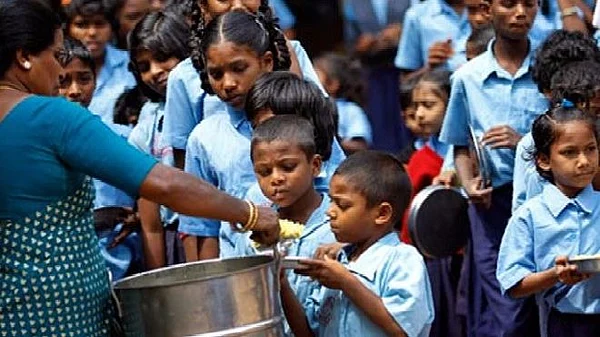
The very concept of Mid-Day Meal scheme was introduced on the year of 2000 by Akshaya Patra Foundation and was later passed as a mandate by Supreme Court of India on the year 2001. The sole purpose of the scheme is to provide wholesome freshly cooked hot lunch to all the students in the government and government aided schools in India. Usually the meal should be a whole mix of carbohydrates, proteins and various vegetables as per the bodily requirements of the children. The goal of such a scheme was to encourage the parents to send their wards to schools, to increase the school attendance and to do away with the norm of child labour, to prevent the child from being hungry at the time of attending the classes and thus to avoid malnutrition, and finally to improve the socialisation among the castes and last but not the least, to promote women empowerment.

The ultimate goal – to provide at least one of the three daily meals required for the proper growth of the children.

The scheme was institutionalized by the designated states and the schools and things were going fine until the pandemic hit the world. During the month of March, the lockdown was declared by the nation and there rose comprehensions among the low wage workers. They were worried about one of the most important thing on earth – what will happen to our mid-day meal and how can we arrange food for our children? The reason being the mid-day meal was one of the main reason as to why their parents sent their wards to school and they were worried about how to relinquish their daily requirements. But, like a godsend, the Government of India declared that even though the schools will be closed owing to the social distancing, the schools will still have to arrange the benefit of mid-day meal or any other substitute of equal value to the children and their families. Not only that, the Government also passed that if and when necessary, required assistance will be rolled out for the underprivileged.

Mid Day Meal: Latest news updates on Mid Day Meal - The Quint
Mid-Day Meal Scheme

The Government of India rolled out various schemes under which various states had to provide the mid-day meal scheme to the students. Some of such initiative are:

  • West Bengal – Ensured the distribution of the meals to their wards’ home amidst the curfew.
  • Odisha – Facilitation of Public Distribution System (PDS).
  • Chhattisgarh – Provision of mid-day meal to the parents of the children for about 40 days, with the difference in quantity by the primary and higher secondary school.
  • Kerala – Delivery of meal supplies to homes of their children.
  • Bihar – Transfer of the monetary amount of the mid-day meal, as a substitute of the food, to the accounts of their parents.
  • Maharashtra – Provision of the meals only to rural children.
  • Assam – Provision of mid-day meals to about 40 lakhs students.

Each and every state has taken the initiative to make sure that the meal reaches their students at times of distress. There also exists an underlying fear among the administration that if the meal is stooped, then it will automatically lead to the un-enrolment of the students whose attendance is already irregular and this will definitely push up the levels of illiteracy and unemployment.

States are putting in continuous efforts to make this journey smooth for the students. For instance, West Bengal has announced the decision to provide masks, sanitizer, as well as basic protein items such as pulses, soya bean which will be handed to the parents. They are going an extra length by providing stationery items to those students affected by Amphan.

It is very responsible on the part of Government of India to ensure the provision of mid-day meal and this help will definitely go a long way to build the future of India.

Source: https://timesofindia.indiatimes.com/india/bengal-government-to-add-mask-soap-to-mid-day-meal-items-in-covid-19-time/articleshow/76328492.cms

https://www.biharedpolcenter.org/post/covid-19-how-are-states-ensuring-midday-meals

Knowing about the Government schemes launched during COVID-19

June 2020 has seen two important government initiatives for the every-day earners for food in news. They are the Garib Kalyan Rojgar Yojana and the PM Street Vendor’s Atmanirbhar Nidhi.

First on the list is the Garib Kalyan Rojgar Yojana.  It is a central government initiative taken amidst the pandemic circumstances. The Abhiyaan was launched by the Prime Minister in June from Telihar in Bihar. As so the title suggests, the objective of the Abhiyaan is to secure, empower lives by providing livelihood opportunities. The scheme is specifically launched for that population of the country whose areas or villages have witnessed the return of a large number of migrant workers after the citizens were no longer employed following the lockdown announced for the devastating Covid-19.

This campaign is sought to be one of the components of Rs 1.70 lakh crore package under Pradhan Mantri Garib Kalyan Yojana which was set to help the poor fight against Corona Virus Pandemic.

The Campaign is nothing but a massive employment -cum- rural public works in which the public works are to be undertaken with an aim of generating a resource envelope of minimum Rs 50,000 crores. The campaign would involve 125 days of work. The public works will supposedly include rural housing for the poor along with the provision of providing drinking water through the already established Jal Jeevan mission. The infrastructure of Panchayat Bhavans, rural mandis, community toilets, rural roads, etc. are sought to be developed.

The initiative is hoped to cover 116 districts in 6 states – Uttar Pradesh, Bihar, Rajasthan, Madhya Pradesh, Odisha and Jharkhand. There are 27 aspirational districts hoped to be covered under this initiative. The mentioned are estimated to hopefully cover about 2/3 of the unemployed migrant workers. A major emphasis has also been put to the rural infrastructure. The initiative will have 25 different types of public works which is specifically to create infrastructure and importantly boost livelihood opportunities in the areas.

High speed and cheap internet are also part of the maintenances to be provided in every rural household. Thus, there shall be laying of fibre cable.

The campaign however would require a Multi-Ministerial Effort between different Departments of the Government with Ministry of Rural Development as the nodal Ministry along with the other ministries such as Panchayati Raj, Mines, Road and transport etc.

Second on the news was the PM Svanidhi. The initiative PM Street Vendor’s Atmanirbhar Nidhi was launched by the Ministry of Housing and Urban Affairs. It is launched with the aim of introducing a special micro-credit facility Scheme which would provide affordable loans to the street vendors, who recently went on losses or no business at all since the wake of the COVID-19 crisis. This scheme will thus enable the street vendors to resume work and earn their livelihoods.

The beneficiaries will include over 50 lakh people which would include the vendors, hawkers, etc. who work to supply fruits, vegetables, ready-to-eat street foods etc in the markets. It would also include the business of service providers like barber shops, laundry services etc.

The scheme shall be available for beneficiaries belonging to only those States and Union Territories which have notified been under the Rules and Scheme provided under Street Vendors Protection of Livelihood and Regulation of Street Vending Act in 2014.

The vendors or the hawkers can avail a loan (working capital) of up to Rs. 10,000 which is subject to be repayable in monthly instalments within the tenure of one year. On timely and the early repayment of the loan, credit limit was claimed to be raised and interest subsidy to be given at the rate of 7% per annum which ultimately shall be credited through Direct Benefit Transfer on a quarterly basis. 108 cities were selected, and the loan disbursement was planned to commence in July, 2020.  The eligible lenders were rated as the bank such as Regional Rural Banks, Small Finance Banks, Non-Banking Finance Companies, Micro Finance Institutions established in some States and Union territories.

The Small Industries Development Bank of India (SIDBI) is an implementation agency. It was developed to manage the credit guarantee approved to the lending institutions through Credit Guarantee Fund Trust for Micro and Small Enterprises.The SIDBI was developed through an Integrated PM SVANidhi portal. The Portal was developed to integrate  credit management and PAiSA portal of MoHUA to administer the interest subsidies automatically.

MOST LOW-PRICE & AFFORDABLE INTERNET IN THE WORLD

Internet has become the most essential virtual commodity due to the Global Pandemic 2020. Its demand has reached a peak now more than ever. It has been declared as the basic necessity along with Food, Clothing, Shelter and Education.

In most Countries, schools and colleges are functioning through digitalized classrooms which require high speed data. 75% of office goers are working from home and the servers that connects the employers to the employees is kept alive on internet connections.

How can everybody afford the Internet? A recent report by Visual Capitalist reveals how much 1GB of mobile data costs in every country. Let’s have a look at what it costs to stay virtually connected in many Countries of the World:


1) India:

The Visual Capitalist report states that India has the most-affordable mobile data plans worldwide. India offers 1GB mobile data for just under Rs. 7, which is the cheapest in the world.

 Why is data so cheap in India? A significant factor is the country’s intense market competition, driven by Reliance Jio—a telecom company owned by Reliance Industries, one of the largest conglomerates in India. Reliance Jio launched in 2016, offering customers free trial periods and plans for less than a $1 a month. This forced other providers to drop their pricing, driving down the overall cost of data in the region.


2)  Sri Lanka:

Mobile internet in India’s southern neighbouring country, Sri Lanka, costs roughly Rs 38 per 1GB data. Some of the biggest Telcos in the country are Dialog, Airtel Lanka, SLT Mobitel, etc.


3)  Russian Federation:

1GB of mobile data plan in Russia costs roughly Rs 39. This makes Russia the ninth most-affordable country for cheap mobile data plans. Some of the biggest telecoms in the country, which is the fourth biggest smartphone market, are Mobile TeleSystems (MTS), Beeline, MegaFon, etc.


4)  Vietnam:

Mobile Internet in Vietnam costs roughly Rs 43, which according to the latest data, ranks 10th in the list of countries that offer the most affordable 1GB data plan. The biggest telecom operators in the Asian country are Viettel, MobiFone, Vinaphone.


5)  Italy:

Italy ranks fourth in the list of countries that offer the most affordable data plans worldwide. In Italy, 1GB of mobile data Rs.32.


6)  Israel:

 1GB of mobile data in Israel costs roughly Rs 8, making it the second most-affordable nation for internet usage.


7)  Ukraine:

Ukraine shares a similar per GB mobile data tariff cost as Kazakhstan, where 1GB mobile data costs Rs 34.


8)  Somalia:

1GB mobile data in Somalia costs roughly Rs 38, slightly cheaper than Sri Lanka’s per GB cost. The biggest telecom operators in the African country are Hormuud, Telecom Somalia, etc.


There has been a significant surge in the number of internet users over the last few years, which has led to telecom service providers competing against each other and lure consumers with the most value-for-money packs. the internet in India is quite affordable if you compare it with the rest of the world. 

‘Aryabhata’- Father Of Indian Mathematics

Aryabhata was one of the first Indian mathematicians and astronomers belonging to the classical age. He was born in 476 BC in Tarenaga, a town in Bihar, India. His major work, Aryabhatiya, a compendium of mathematics and astronomy, was extensively referred to in the Indian mathematical literature and has survived to modern times. The mathematical part of the Aryabhatiya covers arithmetic, algebra, plane trigonometry, and spherical trigonometry. It also contains continued fractions, quadratic equations, sums-of-power series, and a table of sines. It is however definite that he travelled to Kusumapara for studies and even resided there for some time. It is mentioned in a few places that Aryabhata was the head of the educational institute in Kusumapara. The University of Nalanda had an observatory in its premises so it is hypothesized that Aryabhata was the principal of the university as well. On the other hand some other commentaries mention that he belonged to Kerala.

Mathematical Work

Aryabhata wrote many mathematical and astronomical treatises. His major work, Aryabhatiya, a compendium of mathematics and astronomy, was extensively referred to in the Indian mathematical literature and has survived to modern times. The mathematical part of the Aryabhatiya covers arithmetic, algebra, plane trigonometry, and spherical trigonometry. It also contains continued fractions, quadratic equations, sums-of-power series, and a table of sines. His chief work was the ‘Aryabhatiya’ which was a compilation of mathematics and astronomy. The name of this treatise was not given to it by Aryabhata but by later commentators. A disciple by him called the ‘Bhaskara’ names it ‘Ashmakatanra’ meaning ‘treatise from the Ashmaka’. This treatise is also referred to as ‘Arya-shatas-ashta’ which translates to ‘Aryabhata’s 108’. This is a very literal name because the treatise did in fact consist of 108 verses.

Aryabhata worked on the place value system using letters to signify numbers and stating qualities. He also came up with an approximation of pi and area of a triangle. He introduced the concept of sine in his work called ‘Ardha-jya’ which is translated as ‘half-chord’.

Astronomical Work

Aryabhata also did a considerable amount of work in astronomy. He knew that the Earth is rotating on an axis around the sun and the moon rotated around it. He also discovered the position of nine planets and stated that these also revolved around the sun. He pointed out the eclipses, both lunar and solar. Aryabhata stated the correct number of days in a year that is 365 days. He was the first person to mention that the earth was not flat but in fact a spherical shape. He also gave the circumference and diameter of the earth and the radius of the orbits of 9 planets.

More about Aryabhata

Aryabhata was a very intelligent man. The theories that he came up with at that time present a wonder to the scientific world today. His works were used by the Greeks and the Arabs to develop further. A commentary by Bhaskara I, a century later on Aryabhatiya says:

‘Aryabhata is the master who, after reaching the furthest shores and plumbing the inmost depths of the sea of ultimate knowledge of mathematics, kinematics and spherics, handed over the three sciences to the learned world.’

Aryabhata’s Legacy

Aryabhata was an immense influence to mathematics and astronomy. Many of his works inspired Arabs more particularly. His astronomical calculations helped form the ‘Jalali calendar’. He has been honored in many ways. The first Indian satellite is named after him as ‘Aryabhata’, so is the lunar crater. An Indian research center is called ‘Aryabhata Research Institute of Observational Sciences’.

Who is Aryabhatta? What is he known for? - Quora

TIPS TO FIND YOUR PASSION

Some people are born understanding their passions, but others have to work to find them— and it is overwhelming to consider how to begin. The first step is to start. Below are five tips to help you on your journey to finding work and hobbies you are truly passionate about:

1. WHAT DO YOU DO WELL?

This question helps you uncover that unique talent that sets you apart from others. Perhaps you’re good at public speaking or motivating others. Or maybe you’re good at finding computer bugs or supporting your friends through tough times. Whether you have a hard or soft skill, knowing what you do well will put you on your way to using your talent in your purpose.

2.   WHAT DO THE PEOPLE AROUND YOU SAY ABOUT YOUR SKILLS?

Unfortunately, it can be hard to recognize your own talent. When something comes naturally, it doesn’t always seem special. To get some help, ask your family or friends what they think you’re good at doing. This question gets to the heart of recognition “Most of us are not self-aware,” says Maxwell. “We all have blind spots, but you can ask others to help you identify your talents. “Ask several people, suggests Maxwell. When you start to hear certain talents over again, you’ve identified an area of strength.

3.   IF YOU COULD DO OR BE ANYTHING, WHAT WOULD YOU DO OR BE?

This question taps into your internal desires, and can help you identify your purpose. A good way to answer this question is to consider those things you like to do in your free time or the projects at work you volunteer for or seek out. You can also think about the spots in the day when time seems to fly—what are you doing when you get lost or immersed in a project?

These things should also align with your talent, and it’s important to not confuse purpose with passion, says Maxwell. “Sometimes your passion is something you’re not any good at,” he says. “If you’re passionate about something you’re not good at, you can make it a hobby, not a career.”

4.  WHAT GIVES YOU RESULTS WHEN YOU DO SOMETHING?

Your purpose will give you a return, and this question helps you identify the things you do that generate results. For example, if your talent is sales, you likely hit your goals every month. Or if you are good at innovative thinking, you might share ideas at work that prompt new projects. Pay attention to the tasks you do that get you accolades and awards.

Strengths and purpose are more than knowledge, says Maxwell. “Knowledge is overrated,” he says. “I can ask Siri, and she’ll tell me what I need to know. But what value is something if you know it but don’t use it? The result of knowing or learning is action application.”

5.   HOW CAN YOU GET BETTER?

Once you identify your uniqueness, you need to fine-tune and work harder at it to set yourself apart. While having talent helps make you special, developing it further can make you strong. “Your growth potential is connected to your strengths,” says Maxwell. “In your weak areas, your growth potential is low, but when you’re working to improve your strength, you have a higher capacity.”

Mark Twain once said the two greatest days in a person’s life are the day they’re born and the day they discover why. Deep? Definitely. But let’s be honest: the first day is a somewhat passive experience. The second day, however, can feel like a lot of pressure. While some of us can quickly identify our purpose (in our careers, or otherwise), others may struggle to answer the question “Why am I here?”

No one has ever been successful doing something that they didn’t like, and no one has ever been successful doing something they can’t do well, says Maxwell. “I see millions of people every day doing something they don’t like doing and wondering why they’re not a success,” he says. “Success is knowing your purpose in life and having a growth plan to help you reach your maximum potential.”


The New Consumer Protection Act,2019 in India is an upper hand and an added advantage for the consumers in manifold ways

The Consumers can now cheer as the Consumer Protection Act, 2019 has recently replaced the three decade old Consumer Protection Act, 1986. The Consumer Protection Act, 2019 which came into effect on Monday (July 20) has replaced the earlier Consumer Protection Act, 1986.

The new Act as per the Experts say that “it gives more power to the consumers”. It seeks to revamp the process of administration and settlement of consumer disputes, with strict penalties, including jail term for adulteration and misleading ads by firms.

On July 20, 2020 certain provisions of the Consumer Protection Act, 2019 came into force as notified by the Central Government. Following the the key features of the relevant provisions:-

Key features of the Consumer Protection Act, 2019 which came into effect on July 20, 2020:-

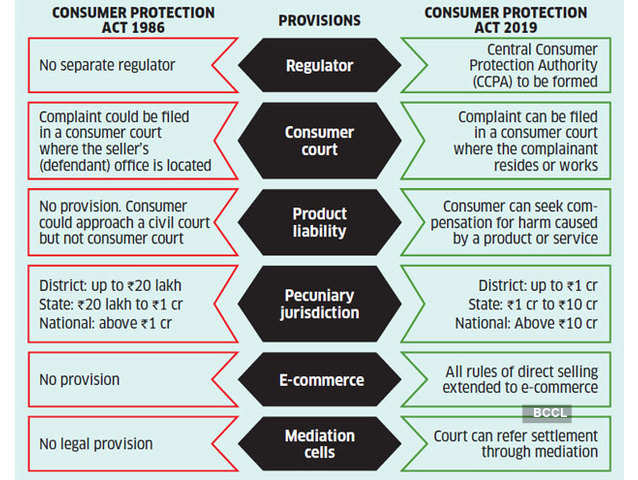
1) Consumers can now institute a complaint from where they reside or work for gain.

2) The original pecuniary jurisdiction of the District Commissions has increased upto ₹1 crore from ₹20 lakh earlier.

3) The Pecuniary jurisdiction of State Commissions has been increased from ₹1 crore to Rs. 10 crore.

4) The National Commission can hear cases above ₹10 crore when compared to above ₹1 crore earlier.

5) While the provisions relating to e-commerce are not yet notified, a section relating to electronic service provider (covering software services, electronic payments) is notified.

6) The opposite party needs to deposit 50% of the amount ordered by the District Commission before filing an appeal before the State Commission. Earlier, the ceiling was a maximum of ₹25,000, which has been removed.

7) The limitation period for filing of appeals to the State Commission has been increased from 30 days to 45 days.

8) The Parties can be allowed to settle the disputes through mediation.

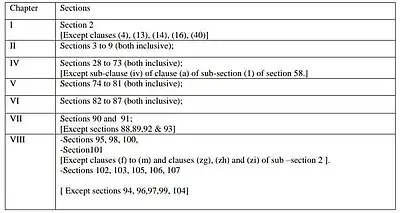
Following are the Sections which came into force:

Consumer Protection Act 2019- Sections to come into force from July 20,2020

Above mentioned provisions pertain to the Consumer Protection Councils, Consumer Disputes Redressal Forum, Mediation, Product Liability, punishment for manufacturing, selling, distributing etc spurious good or products which contain adulterant.

As per the rules, the e-commerce players will have to display the total ‘price’ of goods and services offered for sale along with break-up of other charges. Only a few certain miscellaneous provisions with regards and respect to the powers of the Central and State Government to make the rules and regulations have also been enforced.

On misleading advertisements there is provision for jail term and fine for manufacturers. There is no provision for jail for celebrities but they could be banned for endorsing products if it is found to be misleading.

For the first time there will be an exclusive law dealing with Product Liability. A manufacturer or product service provider or product seller will now be responsible to compensate for an injury or damage caused by the defective product or deficiency in services.

The Act has also defined an “e-commerce” as the buying or selling of goods or services including the digital products over digital or electronic networks. The existing definition of e-commerce has been adopted from India’s FDI Guidelines on e-commerce.

The definition of ‘e-commerce Entity’ as provided under the FDI Guidelines includes inventory and market place models.

There is also a provision for class action law suit for ensuring that rights of consumers are not infringed upon. The authority will have power to impose a penalty on a manufacturer or an endorser of up to 10 lakh rupees and imprisonment for up to two years for a false or misleading advertisement.

WEBSITES REFERRED

1)https://consumeraffairs.nic.in/acts-and-rules/consumer-protection

2)https://www.barandbench.com/news/law-policy/provisions-under-consumer-protection-act-2019-to-come-into-force-on-july-20-2020-centre-notifies

3)https://www.google.com/amp/s/www.thehindu.com/news/national/tamil-nadu/new-consumer-protection-act-gives-more-power-to-consumers-experts-say/article32135908.ece/amp/

4)https://www.google.com/amp/s/www.livemint.com/news/india/consumer-protection-act-rules-for-e-retailers-to-be-effective-by-this-weekend/amp-11595291549084.html

5)https://www.google.com/amp/s/zeenews.india.com/economy/new-consumer-protection-act-2019-comes-into-force-today-know-how-it-will-benefit-you-2297012.html/amp

6)https://www.google.com/amp/s/m.economictimes.com/wealth/spend/heres-how-consumers-will-benefit-under-the-new-consumer-protection-act/amp_articleshow/70711304.cms

7)https://www.google.com/search?q=consumer+protection+act%2C2019&tbm=isch&ved=2ahUKEwjOhv7-sN7qAhVIH3IKHTOCBfMQ2-cCegQIABAC&oq=Consumer&gs_lcp=ChJtb2JpbGUtZ3dzLXdpei1pbWcQARgAMgQIIxAnMgUIABCxAzIFCAAQsQMyBQgAELEDMgUIABCxAzoHCCMQ6gIQJzoCCAA6BwgAELEDEEM6BAgAEENQ0xRYzipg1jBoAnAAeACAAZABiAGHCJIBAzAuOJgBAKABAbABBcABAQ&sclient=mobile-gws-wiz-img&ei=e-QWX47dJsi-yAOzhJaYDw&bih=682&biw=393&prmd=ivn#imgrc=eILduqMFjleJaM

8)https://www.vecteezy.com/free-vector/consumer

9)https://www.google.com/amp/s/www.livelaw.in/amp/news-updates/most-provisions-of-consumer-protection-act-to-come-into-force-160003

How to identify a ‘Convent’ educated person?

A Convent educated person means someone who has studied among a community of nuns or sisters, and who are devoted and have a religious bend towards life. Most of the convent schools are divided into two basic categories – Methodists and Catholics. Methodists are the one devout follower of Jesus Christ and they believe that faith in Jesus Christ is necessary for salvation. In contrast, Catholics are the ones who believe that men can be ordained and they firmly believe that the Catholic Church was founded by Jesus Christ which is necessary for salvation.

Not delving further into the history of the origin of such schools, I would like to diversify towards some practices and behaviour which can provide an insight about the nature of a ‘Convent’ raised person. Most of these quirks are those which I have acquired over the years through experiences, considering the fact that I am a convent educated too. Below are some of the most notable illustrations:

  • Morning Prayer in Church. Convent schools cannot think of starting a day without a short, about 15 minutes prayer in the Church. Usually the prayer consists of a student or a teacher reading a verse or gospels, followed by singing from the hymnal and then saying the prayer and then taking a pledge. Such schools have a strong fascination for church and every celebration starts from within a church.
  • Nuns roaming on the campus. It is very normal for the students to see white-robbed nuns, with rosary beads either in their hands or wrapped around the neck, strolling on the campus. Usually they tend to be very strict, but at the same time they are the most helpful person on the earth.
  • Wearing short skirts, preferably at or above the knee level. Any convent educated person feel very comfortable wearing such western culture dress because they have spent almost one-third of their life wearing such kind of dresses. So the norm is that most convent educated students have to wear such knee length skirts as per the rules mentioned in the diary, shoes should be polished without any signs of shabbiness.
  • Extremely disciplined and punctual. Convent schools follow this idea of being present without any delay. In fact if you have any such friend and you ask them to meet at 6 PM, you will see them standing there, maybe at 5:59 PM. In fact, convent schools did not allow any student to leave the campus even during the lunch break and one more thing, it was mandatory for the students to bring their School Diary every day, otherwise they will be punished.
  • Moral Science class. It was one of the most exciting classes because usually the teachers used to say some fantastic stories and then used to illustrate the moral of the story. And another perspective is that, it was a scoring class and also a break from the monotony of all the other heavy classes.
  • School Fests. One very big attraction of convent schools is the mandatory organisation of fests and conclaves, both inter-school and intra-school. And it is fun because we get to meet the students of other schools which is a very big thing considering the nuns always used to be on us.
  • Grammar Nazi. One word of advice – Do not ever mispronounce or say a grammatically incorrect statement. Convent educated person tends to be a very big Grammar Nazi throughout one’s life.
  • Mandatory English. It’s very frightening for a student if he or she is being overheard of speaking in any language other than English, by any teacher or nun. Yes, it is mandatory for us to speak in English to survive a day in school.
  • Music. A day in a Convent School is not complete without a musical lesson, of any form. Most important thing is the Christmas Carol, which usually comprised of musical carols and singing songs from our beloved hymn books.

So these are some, but not exhaustive lists of quirks which one can easily be observed in a Convent educated person. The thing is we are not weird, but we seem to have a different take and perspective on this world.

Amen…

Source:

https://www.indiatoday.in/education-today/featurephilia/story/convent-school-education-322890-2016-05-11

Self

Key to being Financially Independent in India

We all work right from graduating till retirement for five days a week -sometimes six days – only to spend what we have earned. In the midst of this daily hustle, how much time do we actually devote to plan for financial independence? Hardly any! Is financial independence a plan only for retirement? The answer is NO.

Photo by RODNAE Productions on Pexels.com

The first step towards financial independence is to not procrastinate it. A single drop of penny today will contribute to an ocean of financial resource. Then comes the below mentioned road map to a start of a great solo journey of life.

  • Financial planning – First, define clear and realistic financial goals like child’s education or a comfortable retired life. It is critical to factor in inflation while drawing up your financial plan. If you are planning your child’s education, you should be aware that a professional degree that costs Rs.4 lakhs today, is likely to cost around Rs.20 lakhs, 10 years from now.
  • Personal research – While a qualified financial planner can give you investment advice, the importance of doing your own research cannot be undermined. You can rely on credible websites to understand the pros and cons of each financial instrument.
  • Personalized financial plan – A common mistake is to opt for a particular plan simply because others are doing so. An investment plan must be customized according to personal factors such as your risk appetite, financial goals and life-stage needs.
  • Adequate time horizon – It is necessary to align the investment plan and the expected time frame for getting returns out of it. It is irrational to expect immediate returns from long term products like insurance, PPF etc.
  • Risk diversification – A smart investor would always ensure that the risk is distributed over a variety of instruments. A high risk instrument such as, an equity should ideally be balanced with a stable one such as bonds. Your investment portfolio should be a judicious mix of equity, debt, life insurance, real estate etc.
  • Planning for unforeseen events – Along with the current assessment of your future needs, risk of unexpected events must also be factored in. As a woman, it is crucial to be financially prepared to deal with unfortunate events like death, divorce etc.
  • Regularly track your investment – It is common to become complacent and expect the returns to flow in, once the investments are done. However, it is every investor`s responsibility to keep a tab on the performance of their portfolio.
  • Proper paperwork – There have been several instances where an investor is unable to claim returns from a bona fide investment simply because of misplaced or wrongly-filled documents. Proper documentation is a must to safeguard your investments. Also, ensure that someone other than yourself is fully aware of all your investments.
  • Securing your future: As a working member of the family, it is crucial for you to have adequate insurance to ensure that in your absence, your family does not go through any financial stress. Investing in a simple term insurance plan will ensure financial continuity.
  • Plan and execute – Last, but most important is to begin planning for all your financial needs from an early stage. The cost of postponement will weigh heavily on you in the later years when investing will become a compulsion rather than a choice.

In this world of instant gratification, have patience and watch as your pot fills with money one sweat and hard work at a time. Kudos to being financially independent!

Covid-19:India adds 24,879 new cases, total cases 7,67,296.

India had a record single-day surge of 24,879 Corona cases taking the cases to 7,67,296 on Thursday, with Maharashtra, Tamil Nadu, Karnataka, Delhi, Telangana, UP and Andhra Pradesh contributing to around 75 per cent of the new cases, according to the Union Health Ministry data.

The death toll climbed to 21,129 with 487 new deaths, the updated data at 8 am showed.

There have been 4,76,377 recovered cases, while there are 2,69,789 active cases of coronavirus infection in the country.

“Around 62.08 per cent of patients have recovered so far,” an official said.

The total number of confirmed cases included foreigners.

Of the 487 deaths reported in the last 24 hours, 198 are from Maharashtra, 64 from Tamil Nadu, 54 from Karnataka, 48 from Delhi, 23 from West Bengal, 18 from Uttar Pradesh, 16 from Gujarat, 12 from Andhra Pradesh, 11 from Telangana, 10 from Rajasthan, seven from Madhya Pradesh, six each from Jammu and Kashmir and Odisha, three each from Bihar, Uttarakhand, Punjab and Haryana and two from Assam.

India is seeing huge surge in cases with almost 20,000 to 25,000 new cases every day. The positive fact is that recovery rate is very good around 61 % and death rate is also nearly 4-5% .India is facing many tensions amid such pandemic ie border disputes with China, terrorist attacks from Pakistan as well as internal attacks from gangsters. But India would soon sort out things and pave way for world to recover from this crisis.

What doesn’t kill you, makes you stronger!

What is Deliberate Practice?

Deliberate practice refers to a special type of practice that is purposeful and systematic. While regular practice might include mindless repetitions, deliberate practice requires focused attention and is conducted with the specific goal of improving performance.

The greatest challenge of deliberate practice is to remain focused. In the beginning, showing up and putting in your reps is the most important thing. But after a while we begin to carelessly overlook small errors and miss daily opportunities for improvement.

This is because the natural tendency of the human brain is to transform repeated behaviors into automatic habits. For example, when you first learned to tie your shoes you had to think carefully about each step of the process. Today, after many repetitions, your brain can perform this sequence automatically. The more we repeat a task the more mindless it becomes.

Mindless activity is the enemy of deliberate practice. The danger of practicing the same thing again and again is that progress becomes assumed. Too often, we assume we are getting better simply because we are gaining experience. In reality, we are merely reinforcing our current habits—not improving them.

Claiming that improvement requires attention and effort sounds logical enough. But what does deliberate practice actually look like in the real world

Deliberate practice always follows the same pattern: break the overall process down into parts, identify your weaknesses, test new strategies for each section, and then integrate your learning into the overall process.

Consider the following example:

Basketball: Consider the following example from Aubrey Daniels, “Player A shoots 200 practice shots, Player B shoots 50. The Player B retrieves his own shots, dribbles leisurely and takes several breaks to talk to friends. Player A has a colleague who retrieves the ball after each attempt. The colleague keeps a record of shots made. If the shot is missed the colleague records whether the miss was short, long, left or right and the shooter reviews the results after every 10 minutes of practice. To characterize their hour of practice as equal would hardly be accurate. Assuming this is typical of their practice routine and they are equally skilled at the start, which would you predict would be the better shooter after only 100 hours of practice?

The Unsung Hero of Deliberate Practice

Perhaps the greatest difference between deliberate practice and simple repetition is this: feedback. Anyone who has mastered the art of deliberate practice has developed methods for receiving continual feedback on their performance.

The Promise of Deliberate Practice

Humans have a remarkable capacity to improve their performance in nearly any area of life if they train in the correct way. This is easier said than done.

Deliberate practice is not a comfortable activity. It requires sustained effort and concentration. The people who master the art of deliberate practice are committed to being lifelong learners—always exploring and experimenting and refining.

Deliberate practice is not a magic pill, but if you can manage to maintain your focus and commitment, then the promise of deliberate practice is quite alluring: to get the most out of what you’ve got.

 A thing to remember always is that if you don’t climb the cliff you won’t ever be able to see the view from top up there all you can see would be a view from the ground and the key to climb that tree is only through practise, the longer you persist it the more you would grow in terms of success.

Instagram reels: good alternative to Tiktok. Check here how to use it.

Instagram’s new feature Reels were in testing for some time now and now as the TikTok took an exit from India, Facebook-owned Instagram has rolled out their new Reels feature which allows user to shoot 15-second videos. The feature now arrives in India. This is good opportunity for reels to attract short video lovers as its demand has grown in the country.

many short video apps such as Roposo, Mitron, Chingari, Sharechat, and others are becoming more popular among users and seeing millions of downloads every day.Facebook is also all set to use this opportunity to attract 200 million TikTok users to Reels.

Reels is just a new feature on Instagram and users in India are loving this new feature which is just like TikTok.

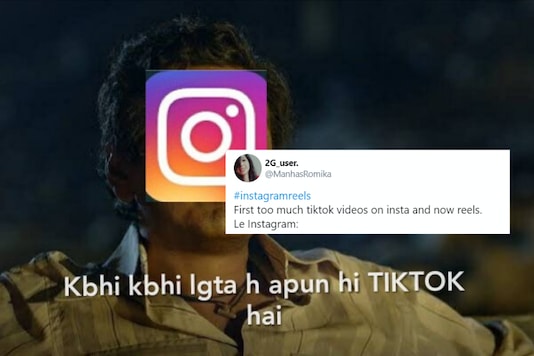
Image credits: Twitter.
Memers doing memes on instagram reels against tiktok

How to use Instagram Reels?

Step 1: Update your Instagram on Google Play

Step 2: Open the Instagram Camera

Step 3: Reels option is available next to boomerang, Superzoom, hands-free, and layout.

Step 4: Click on Reels and select audio from the Instagram Music library.

Step 5: Reels also come with an option to record original voice besides lip-syncing.

Step 6: Reels also let users add AR effects and provide options like Timer, Speed to edit videos as required before sharing. Reels also let users re-record a video and even delete it if needed.

Step 7: After creating their Reel, users can choose to share it with either their followers or everyone on Instagram. Reels can be shared to Feed as well as Explore so everyone on Instagram can view it.

Instagram Reels Is Now Available in India, but Can It Replace TikTok?

Reels also feature several AR effects allowing users to add a custom touch to their videos. To put AR effects in their videos, users can open Reels camera and go to effects and then AR effects.

Users will also be able to record multiple 15 seconds Reels – it can also be recorded at once and the different effects can be added to each clip post the shoot. The Reels can also be reviewed, deleted, and re-recorded.

The world’s first author

Authors, in todays world authors are considered as minor celebrities. Most of the best seller authors are usually in fame for a short period of time after which they are lost to obscurity. Yet there are some with writings of such epic proportions that they are still celebrated as influential authors by many. One such author was the world’s first author, and despite such a feat not much is known about her by the general populace. 4,300 years ago, in ancient Sumer, the most powerful person in the city of Ur was banished to wander the vast desert. Her name was Enheduanna, a high priestess and the world’s first author. And by the time of her exile, she had written forty-two hymns and three epic poems— and Sumer hadn’t heard the last of her. Who was this woman, and why was she exiled?

Enheduanna lived 1700 years before Sappho, 1500 years before Homer and about 500 years before the biblical patriarch Abraham. Born in Mesopotamia, her birthplace was one of the first cities and cultures to have emerged in the world. Her father was King Sargon the Great, history’s first empire builder who conquered the independent city states and was often seen as somewhat of a foreign invader by the Sumerian cities of the south. Thus, to bridge the gap between the cultures, Sargon appointed his only daughter, Enheduanna, as high priestess. Female royalty was traditionally given religious roles, and she was educated to read and write in both Sumerian and Akkadian and make mathematical calculations. The worlds first writing started in Sumer as a system of accounting, allowing merchants to communicate over long distances with traders abroad. This pictogram system of record keeping developed into a script about 300 years before Enheduanna’s birth. But until Enheduanna, this writing mostly took the form of record keeping and transcription, rather than original works attributable to individual writers. As high priestess, she oversaw hundreds of temple workers, interpreted their dreams and set about unifying the older Sumerian culture with the new Akkadian civilisation. To accomplish this feat, she wrote 42 religious hymns that combined both mythologies. Since each Mesopotamian city was thought to be ruled by a patron deity, her hymns were dedicated to the ruling of each major city. In her writing she humanized the once aloof gods- now they suffered, fought, loved and responded to human pleading. Enheduanna’s most valuable literary contribution is said to her poetry dedicated to Inanna, the goddess of war and desire. Her odes to Inanna, mark the first time an author used the pronoun “I” and the first-time writing was used to explore deep, private emotions. After the death of king Sargon, a power-hungry general took advantage to the power vacuum to stage a coup. As a powerful member of the ruling family, naturally Enheduanna was targeted, thus the general exiled her from Ur. Her nephew, the legendary Sumerian king Naram- Sin, ultimately crushed the rebellion and restored his aunt as the high priestess. She died after serving as high priestess for 40 years. After her death she was regarded as a minor deity and her poetry was copied, studied and performed throughout the empire. Her poems influenced the Hebrew Old Testament, the epics of Homer and Christian Hymns.

Today, Enheduanna’s legacy still exists on clay tablets that have stood the testaments of time. To end lets celebrate a quote of Enheduanna herself “With your strength, my lady teeth can crush flint”.

Why are numbers banned?

Bans, they are measures taken by the government to control whatever they feel is threatening to their rule or to the general populace. They say the pen is mightier than the sword, and authorities have often agreed. From outlawed religious tracts and revolutionary manifestos to censored and burned books, we know the potential power of words to overturn the social order. But as strange as it may seem, some numbers have also been considered dangerous enough to ban. Our distant ancestors long counted objects using simple tally marks. But as they developed agriculture and began living together in larger groups this was no longer enough. As numbers grew more complex, people began not just using them, but thinking about what they are and how they work.

By 600 B.C.E ancient Greece, the study of numbers was well developed. Pythagoras, one of the most famous mathematicians and his school of followers found numerical patterns in shapes, music and stars. For them math held the deepest secrets of the universe. But one Pythagorean named Hippasus discovered something disturbing. Some quantities like the diagonal of a square with sides of length one each couldn’t be expressed by any combination of whole numbers or fractions, no matter how small. These numbers which we call irrational numbers, were seen as a threat to the Pythagorean notion of a perfect universe. They imagined a reality that could be described with rational, numerical patterns. Historians write that Hippasus was exiled for publicizing his findings while legends of the Pythagorean era claim he was drowned by the god themselves as punishment for his blasphemous findings. While irrational numbers upset philosophers, later mathematical inventions would draw attention from political and religious authorities as well. In the middle ages, while Europe was still using roman numerals other cultures had developed positional systems that included a symbol for zero. When Arab merchants brought this system to Italy, its advantages for merchants and traders was clear. However, the authorities were wary as Hindu- Arabic numerals were quite easy to forge or alter, especially since they were less familiar to customers than to merchants. And since the concept of zero opened the path to negative numbers and the recording of debt at a time when money-lending was regarded with suspicion. In 13th century, Florence totally banned the usage of Hindu- Arabic numerals for record keeping. Even though they were immensely useful, controversies regarding zero and negative numbers continued for a long time. Negative numbers were dismissed as absurd and prominent mathematicians like Gerolamo Cardano avoided using zero despite the easier route it provided to solve cubic and quartic equations. Even today it is illegal to use various numbers for a plethora of reasons. Governments usually ban the usage f numbers which have symbolic meanings or connections to opposing political figures and parties. Some numbers are banned because of the sensitive information they carry. These days any image, file, video or executable program can be translated into a string of numbers. So, this means protected materials such as copyrights and state secrets can also be represented as numbers, so possessing or publishing these are considered a criminal offense.

Thus, in a world where calculations and algorithms, shape more and more of our lives, the mathematicians pen grows stronger each passing day.