The Third Gender: The Everyday Struggle as “Other”

Before the case of National Legal Services Authority v. Union of India affirmed the term ‘The third gender’, India had different expressions for people who tick on the ‘other’ checkboxes. The gender is defined as people who do not conform to the organic sex’s identification or conduct. After this ostracised gender went through derogatory behaviours and name calling, our society has finally changed a lot to accept their existence. But the acceptance is still bound by “what they are” and “how they are”. This estimated one million community has never got a ‘first class’ lifestyle. The disparities are not restricted to the societal stigma on their existence but also every day discrimination and denial of human rights.

The Constitution of India guarantees rights and protections to all humans in general. The only distinction in this regard are the reasonable restrictions except which no discrimination on the grounds of sex, religion, caste or creed is not tolerated. Even after the constitutionally guaranteed political and other benefits, the third gender community still finds itself in the same position. The issue that these laws are not implemented, that the gender finds itself more often than not without a job in the respectable positions is an unavoidable truth in which inequality is an everyday affair.

This particular issue took the light when Air India was brought to the court for refusing an airhostess job claiming she was a transgender and that the post was only reserved for women. The denial is an act which is banned by law. The question on how the gender forms a reasonable nexus with the description of job calibre is arbitrary and undoubtedly, is an infringement of equality under Article 14. The denial also violates Article 15 for infringing the prohibited discrimination on the basis of sex. Article 21 fnds as the personal dignity of the gender stands into question. The struggle as ‘other’ is not merely the name calling but also the opportunities since that lies as the only one through which the gender would be respected and could also afford to grow in their lives. Most of this gender related issues are not only connected to the societal issue but also because of their lifestyle due to the lack of resources and opportunities limiting them to only begging, which more often than not, is a bad business with no security.

When the Constitution sought to remove the untouchability issues, along with the guaranteed rights under Article 17, there were also reservations and job opportunities that the issue has almost been demolished and seen in only backward areas.

But a major issue that crosses between the blinking of an eye is the fact that the reservations bring lifelong recognition under the same society. The passing of Transgender Protection Act, 2019 starts on the wrong foot. The various instances where the Act does not take in the consideration of trans-activists puts the first question on the upliftment.

The most serious flaw that remains is the process of trans-people changing their documents to reflect the identity. The new law sets up a two-step process. Firstly, it requires the person to apply for a “transgender certificate” from the District Magistrate of the particular location. This specific part can be done on the basis of the person’s self-declared identity. Only for this step does the certificate holder gets eligible to apply for a “change in gender certificate,” which is to change the legally declared gender to a male or female. However, this second step requires the person to provide different documents such as surgery proof, issued by a hospital official, which is again sent to the District Magistrate for a second evaluation. It also requires the officials to be “satisfied with the correctness of such certificate.”

One important factor to notice here is that it sets an extraordinary amount of power with one government officer who might have the only power to abuse the position or arbitrarily “qualify” to the gender as required to be recognized as who they are. It also pressurizes people into medical procedures they might not want or might be comfortable with. Such a forceful act is in itself a fundamental rights violation made by the government officials.

Repetitively the Indian courts have long held that trans people deserve the government’s recognition on their own terms and with actions which are assimilated from their demands, without mandatory intervention or discrimination but the same has been dismissed.

Improvement in the status of the transgender community needs to be a collective effort in order to empower the discussed community in the workplace and to reduce the social stigmas which could also end up improving their economic position. Although the Act only puts an onus and does not place legal requirements on the people concerned, in view of the changing the dynamic status. However, preparing such an Indian workspace for an inclusive approach towards transgender individuals is going to be a continuing uphill task and accommodating such societal change of this magnitude is definitely going to be a slow process in India.

You are here not to live average

I thought of doing hardwork but I don’t untill it’s required. I know that work will done before it had to be done. But if we work to gain something then it’s worth. Completing the work at the last moment for the ske of finishing it doesn’t make it done. We shoukd self analyse the things that are going to be done and introspect us while doing. Intrest isn’t something that comes suddenly. It is something that gets builded over a period of time. Doing a thing repeatedly creates Intrest once we feel intrested.

Don’t work to work. Work for something big. Dream big, think big and do big. Small things are done anyways by anyone. Focus more to become big. Push yourself atleast a bit. Have a good time to live. The only thing that you can’t control is your life because we can die whenever since it’s in our hands. Let your life be lived the way you feel. Have a nice life because it’s you who can make it happen. Thinking big isn’t bad but doing it requires something more than that. Thinking is easy because it just happens the moment you think. Making it happen is something you should think.

Achieve your aim, believe in becoming, care your curiosity, dare to be in danger, enlight the enthusiasm, forget the fear, goal to gain, hope to have, Impress your inside, add Joy to your journey and be the king of your kingdom. I thought of completing all the necessities of the adjectives of our personalities over there, but in order to make you think I am letting you think the rest and hope you start your thinking and stop it by finishing the task.

Everyone will have a goal because it’s easy to have it. But few will achieve it because it’s hard to reach there. To be someone from everyone, you have to do something that everybody will not do. Have a spirit to gain atleast something that you wished. Have guts to get what you felt. Be brave enough to face it because you are here to live only once. Don’t be shy to feel shy. Believe in yourself and behave accordingly. You are no one’s puppet. You can choose your life, but before that have a clarity. Choosing is easy but choosing correct option isn’t that easy. Life is full of choices and it’s easy to be wrong. But leading a life to realise that thing is waste of life. Don’t search for the life. Live the life that you search in your dreams. You are not here to fetch your dollars to your future kids. They can earn their money. You are here to spend your money on you. You is more important than we. Atlast it’s you who will be you and remain with you.

Don’t lead a good life when you have a chance to live best. Do what all you could and don’t make your dream to be the dream if your kids. Your dream should make them dream about their dream. Have a great relaity and live the fullest life. Let us celebrate the life.

FIRING THE BLAME BULLET

The popular game PUBG has weapon attachments that reduces weapon recoil. It makes life easier for the players. Recoil is the backward movement of a gun when a bullet is discharged. It is helpful to know which attachments help players to shoot better and more effectively without hurting themselves in the process due to the tremendous force at which the shots are fired.

In real life when we point the gun at someone, how badly are we affected?

Well fortunately for us, in India, there exists some tight Gun laws except for the water guns’ kids play with during Holi and Gangsters. Hence here I talk about the abstract gun which fires the Bullets of Blame on others. Pointing finger at anybody who is in sight, was my favorite thing to do in any situation.

The blaming gun can also point upwards or inwards. When it points upwards, we blame the Creator for being unintelligent or uncaring or even non-existent. When it points inwards, we beat ourselves down with self-recrimination, “I am good-for-nothing,” ending up unnecessarily with inferiority complex.

How many of you, like me; are blamers? How many of you, when something goes wrong, the first thing you want to know is whose fault it is? Well Hello there, I’m the former winner of the Miss Blamer Pageant and the magnitude to which I blamed others with respect to everything that went wrong in my life was comical.

I’m in my house. I have on white slacks and a pink sweater. I’m drinking a full cup of coffee in my kitchen. I drop it on the tiled floor. It goes into a million pieces and splashes up all over me. And a millisecond after it hit the floor, right out of my mouth comes this: “DAMN YOU CHINA!” For purposefully making these cups so shiny and slippery. Now my entire kitchen is infected by the tiny pieces of ceramic (China clay). The kitchen has to be quarantined until I clean it up…or somebody else cleans it up, never mind.

Now as I have aged, I realized- I’d rather it be my fault than no one’s fault. BUT WHY? Cause it gives me some semblance of control. Blame is simply the discharging of discomfort and pain. It has an inverse relation with accountability. What is the difference? Well accountability by definition is a vulnerable process wherein I confide to you, “Hey my feelings were really hurt by the things you said/did.” Blaming is simply a way to express anger.

People who blame a lot seldom have the tenacity and grit to actually hold people accountable because we spend all of our energy raging for 15 seconds and figuring out whose fault something is. Blaming’s very corrosive in relationships and it’s one of the reasons we miss our opportunities for empathy. Because when something happens and we hear the story, we’re not really listening, we’re in the place where I was – making the connections as quickly as we can about whose fault it was.

SO, DO I START BLAMING MYSELF FOR EVERYTHING?!

In the spiritual path, self-blame is the most dangerous thing. Firstly, stop blaming yourself and others. We don’t have to point the gun at others or our own heads. Let us drop the gun and never pick it up, ever again.

Secondly, we need to come out of the Destiny’s Illusion. Never focus on what you can’t do, focus on what you can do. If we keep on focusing on what we can do- Then even if you believe in destiny, it will be a good one for you. Blaming your destiny will close doors to all the wonderful opportunities waiting for you.

A child runs a race with his full speed & energy and yet comes last in it. Losing the race was not his fault but taking part in the wrong race is definitely a mistake worth correcting. To simplify- Making a mistake is not your fault but doing it without your interest in it, is a mistake that can be rectified.

To solve the problem, we need; not a blaming bullet, but a helping hatchet. Not a blaming finger but a helping hand. Making mistake is in our nature. Acceptance of mistake shows our culture and correcting the mistake is progress. I do accept that spilling that damn coffee was my fault, however damn you CHINA for making the cup which broke and spread on the entire floor leaving my kitchen dangerous to walk on freely. * Gun drop * I meant MIC DROP…..phew!

Human Physiology

Human physiology is the study of how the human body functions. This includes the mechanical, physical, bioelectrical, and biochemical functions of humans in good health, from organs to the cells of which they are composed. It serves as the foundation of modern medicine. The human body consists of many interacting systems of organs. These interact to maintain homeostasis, keeping the body in a stable state with safe levels of substances such as sugar and oxygen in the blood. Each system contributes to homeostasis, of itself, other systems, and the entire body. Some combined systems are referred to by joint names. For example, the nervous system and the endocrine system operate together as the neuroendocrine system

As a discipline, it connects science, medicine, and health, and creates a framework for understanding how the human body adapts to stresses, physical activity, and disease. Human physiology is closely related to anatomy, in that anatomy is the study of form, physiology is the study of function, and there is an intrinsic link between form and function. The study of human physiology integrates knowledge across many levels, including biochemistry, cell physiology, organ systems, and the body as a whole.

History of Human Physiology

The study of human physiology began with Hippocrates in Ancient Greece, around 420 BCE, and with Aristotle (384–322 BCE) who applied critical thinking and emphasis on the relationship between structure and function. Galen (ca. 126–199) was the first to use experiments to probe the body’s functions. The term physiology was introduced by the French physician Jean Fernel (1497–1558).In the 17th century, William Harvey (1578–1657) described the circulatory system, pioneering the combination of close observation with careful experiment. In the 19th century, physiological knowledge began to accumulate at a rapid rate with the cell theory of Matthias Schleiden and Theodor Schwann in 1838, that organisms are made up of cells. Claude Bernard (1813–1878) created the concept of the milieu interieur (internal environment), which Walter Cannon (1871–1945) later said was regulated to a steady state in homeostasis.

Study of human physiology

The major systems covered in the study of human physiology are as follows:

  • Circulatory system – including the heart, the blood vessels, properties of the blood, and how circulation works in sickness and health.
  • Digestive/excretory system – charting the movement of solids from the mouth to the anus; this includes study of the spleen, liver, and pancreas, the conversion of food into fuel and its final exit from the body.
  • Endocrine system – the study of endocrine hormones that carry signals throughout the organism, helping it to respond in concert. The principal endocrine glands – the pituitary, thyroid, adrenals, pancreas, parathyroids, and gonads – are a major focus, but nearly all organs release endocrine hormones.
  • Immune system – the body’s natural defense system is comprised of white blood cells, the thymus, and lymph systems. A complex array of receptors and molecules combine to protect the host from attacks by pathogens. Molecules such as antibodies and cytokines feature heavily.
  • Integumentary system – the skin, hair, nails, sweat glands, and sebaceous glands (secreting an oily or waxy substance).
  • Musculoskeletal system – the skeleton and muscles, tendons, ligaments, and cartilage. Bone marrow – where red blood cells are made – and how bones store calcium and phosphate are included.
  • Nervous system – the central nervous system (brain and spinal cord) and the peripheral nervous system. Study of the nervous system includes research into the senses, memory, emotion, movement, and thought.
  • Renal/urinary system – including the kidneys, ureters, bladder, and urethra, this system removes water from the blood, produces urine, and carries away waste.
  • Reproductive system – consisting of the gonads and the sex organs. Study of this system also includes investigating the way a fetus is created and nurtured for 9 months.
  • Respiratory system – consisting of the nose, nasopharynx, trachea, and lungs. This system brings in oxygen and expels carbon dioxide and water.

Changing towards change

I am about to quit from one of the online course but something made me stick to it. May be its due to the pressure I feel by doing nothing or may be its due to influence of some other mates who quitted from the course. I never had a courage neither to quit nor to admit the fact of dropping. I do nothing and thing of everything. The only thing I last is feeling pressurised by doing nothing.

My scores are low and I stand in last position . Only thing I undergo is scoldings from mentor. Intially I submitted my code by pasting from some other external source and had been in safe zone. One thing my mentor made me realise is that I gain nothing by doing so. So I stopped copying and started nothing which makes me stand in again same position. One of the thing that hit me hard on my face is by seeing the confidence and courage of other mates who are doing problems on their own. I know that confidence is more than enough to live under any circumstances. I was one of them long back and now I feel ashamed of myself to think in a position where I stand.

Some gut feeling inside me is trying to eat me from inside. I want to change but that change is constant. I have to work because I can work. I must work because there is no other alternative. One of the review meeting made me to introspect me. I should work hard for myself. I keep on escaping from everything else. I can withstand in it once I get out of this feeling. I am one of the kind who tries to motivate others but lacking behind in self motivation. I can and I will.

The greatest battle that I am having right now is fighting with myself. I should come out it and face it. I will start working from now because I should never regret for doing so. I never had a feel of feeling regret in future but now the only time my gut feeling is making me so something. If I fail doing so I will definitely regret it later. Something inside me is trying to warn me. Hope I could make it possible because it’s possible.

The good and The bad

We often judge or categorise people on the basis of there caste, colour, creed, gender and nowadays even on the basis of their region. Since the ancient times people have categorised the society into multiple categories and worked according to it, it’s 2020 and people are still not able to identify who are the good and the bad people. Let me be specific with this thing, I am talking about religion or caste, for instance: These days half of the society is against Muslims, because of some facts that I cannot mention, but why can’t they understand that a coin has two faces, and war always takes place between two people so this means that you cannot blame only one group, you can also be wrong, at least look at yourself before blaming someone else. Let me tell you some unknown facts in which Muslims have also set an example of humanity.

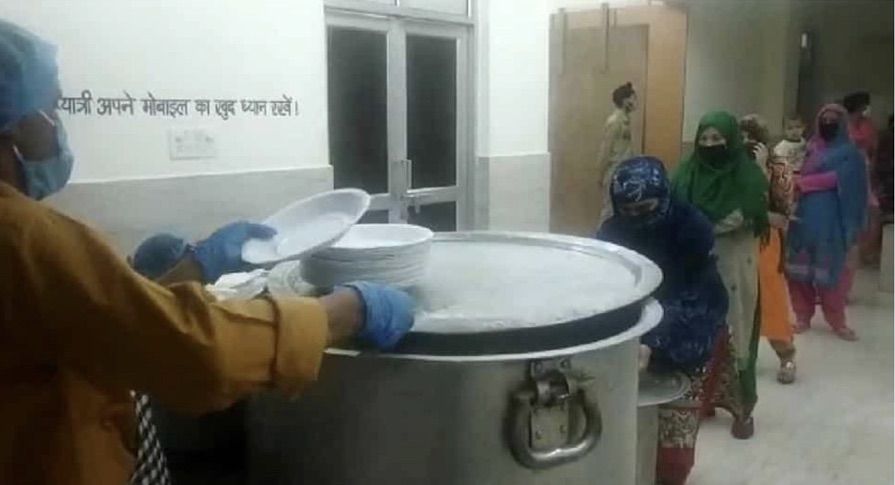
In Mumbai “Food- ek choti si asha” is a community led by Nikhat Mohamedy, who took an initiative to help the needy people in this pandemic and several others from different religion joined hands and came forward to help each other. Today the kitchen is serving 15,000 meals per day.

“This is about recognising the fact that we are all children of Adam and Eve, and feeding those brothers and sisters who are hungry and deprived is fundamental to expressing our humanity”, says Mohamedy.

Facebook.com

Another example of this is when Vaishno Devi Shrine Board served recipes to Muslims housed in quarantine centres on the occasion of Eid, March 25th. The Shrine Board said that they have been providing Sehri and Iftari meals to the Muslims after changing their schedule to meet the requirement of food for those fasting early morning and in the evening.

Hindustan times

Instances like these help me to understand that we should never judge people specially on the basis of religion or caste, we should always look upon them either as a good person or a bad person. If the world is good with you, be good to the world, if it is bad just turn your back, learn a lesson and focus on yourself, just don’t be like them. It is 2020 stop judging people, stop discriminating them, stop calling them with unwanted names, God has created people but it us who have separated ourselves into various divisions and factors. Just treat everyone equally and respect everyone. Smile and greet them be it a sweeper or a rich man. Play your part and leave the rest upon them. Change your sight of looking at the world, world will change itself automatically.

Global Diplomacy: The United Nations.

  • The name “United Nations” appears true only in books but in reality it seems like a contest for nations to prove their dominance and power individually. The diplomacy comes off to be biased. The World today is owned by corporate and the UN follows through. The actual role of united nations should be to rise above the competition and work as ONE UNITED PLANET towards climate change, global pandemic, poverty and financial slavery.

Though it is non-arguable that UN has helped bring forward issues like Women Empowerment, Poverty, Health, Education, etc. on a global platform. The real question is, are these issues solved or they have been piled upon by newer issues day by day.

But on a positive note, the UN has made progress in its peace making strategies and providing financial and healthcare aids to the countries in need. If not for this organisation then there would have not been a diplomatic relationship between nations and war would be the ultimate solution to all inter-nation problems.

Just because a medicine has side-effects does not mean it cannot be used for treating the illness in hand. Similarly, it is easy for anybody to make war but only the united front can make peace and prosperity!

  • The UN came from the minds of some of the renowned politicians of the western countries. When the super power nations felt their security and peace was under threat they collaborated with like-minded ones against the equally powerful nations. Powerful only in military and vengeance and the greed to conquer. According to human psychology (basic), a man desires power more than water for thirst.

From all the glorifications I read about this organisation, UN rose from the ashes of the war like a phoenix bird. Very beautiful and powerful bird- a phoenix-their tears have healing powers. One can say that United Nations came into existence to act as the panacea to diseases like violence, death and fading humanity.

But is the origin really important to determine its worth in the present scenario is something to ponder upon. Today UN works for a cause which it was originally built upon; irrespective of its results, – promotion of peace with its symbol the white dove soaring high, its wings flapping, freeing itself from the shackles of slavery of power, money, greed and hate.

Born in times of desperate times it can be regarded as an invention by man in the time of dire need. As we all know – “NECESSITY IS THE MOTHER OF ALL INVENTIONS!”

  • The UN Security Council consists of 5 permanent members and 10 temporary members all with a right to vote however only the permanent five have the right to veto. The word itself suggests that the council was made to resolve the security concerns of nations and to make peace among them.

 Today, the Council responds to three types of situations:

  • (1) chemical, biological, radiological and nuclear weapons proliferation; (2) international conflict; and (3) intra-state conflict. More recently, the Council has also developed a (4) cross-cutting and (5) quasi-legislative agenda.

The above decisions and powers in the hands of the council sounds safe however it is not the situation in reality. There has to be an expansion of the members instead of giving all the authority in the hands of the few. This will help in avoidance of partiality or constant disagreement that has been happening since the council has been formed. Though it has never successfully managed to make any notable reforms , it is one of our best option to resolve the security threats and war like situations in many countries and their estranged borders.

  • Human rights are the rights we are all entitled to irrespective of the place of birth or the time of birth. The core of United Nations is built upon the protection and service towards human rights and its associated freedoms. However due to international politics and superpower nations greed to stay on top of others and world domination has endangered the human rights of developing and under developed nations. Human rights have become a selective freedom provided to only those who can afford it without any restrictions. In my country citizens think that they are not worthy of having human rights as they think only the rich and developed nations are fortunate enough to have human rights that too the basic one’s. In recent events of racism ad discrimination on the basis of colour and financial status, what is the united nations enforcing laws to stop the fights  to avail basic human rights. People have to come on streets and protest later developing into riots in order to practise their rights and enjoy the freedom of being born as a human on this planet.
  • The united nations in the past has failed in crisis management because of the disagreement between it’s member nations and security councils. Due to the interference of the security council the  situation was aggravated rather than being put out or quite down. Rather than focusing on the crisis at hand it focuses on the political relations of that country with the members of the united nations and then it takes the necessary actions that too not quick or decisive but slow and of poor quality. However by putting the past back the united nations can improve on its crisis management skills by being in constant touch with the country and states local administration and education people on a personal and more localised manner rather than representing it as a political agenda or foreign policy which puts the civilians in a mind-set of confusion and feeling of unsafe and non trustable environment.
  • Today a question arises on the future of the United Nations and will it still prevail in the modern world where people are becoming rather too aware and will want a more secular council, one which works one which provides solutions, one which is actually true to its purpose of being formed.
  • During the 2020 Global Pandemic the true face of UN is being put to test and how it acts now to maintain peace among nations will say a lot about its existence in the future or will it be left to be just pages in history textbooks.

Just wishing for once if we had leaders who cared about the upliftment of the entire nation and not just the name of their political agenda and parties. The world needs educated and selfless leaders and hopefully in the future with my generation in the front we will represent a better council than these old ways and barbaric wars.

ANALYSIS OF INTER- COUNTRY ADOPTION

INTRODUCTION

Adoption signifies a socio- legal practice of taking another child into own family. More specifically, in adoption child belonging to one family acquire ties with a new family i.e. adoptive parents, leading to the termination of relationship with biological or natural parents.

International adoption or transnational adoption or Inter-country adoption is a form of adoption in which an individual or couple becomes the lawful and perpetual parents of a child who is a domestic citizen of another nation. In general, potential adoptive parents must fulfil the essential requirements for legal adoption of their country of residence and of the country of nationality of the child. The laws of countries differ in their inclination to permit international adoptions. Some countries, such as China and South Korea, have comparatively well-settled rules and procedures for international adoptions, while some other countries explicitly prohibit it. African nations, have prolonged residency requirements for adoptive parents that in result rule out most international adoptions.

BIRTH OF INTER- COUNTRY ADOPTION

The statutory process of inter-country adoption gained momentum around the mid-1940s and came into force as a human response to the dilemma of war orphans and the abandoned kids and off- springs of servicemen in World War II, the Korean War and the Vietnam War. However, in the countries who give their children for adoption; lack of contraception, society’s attitudes to birth of illegitimate children and extreme poverty are the key elements leading to the dereliction of children to organisations. The concept of “male” child which is an unfortunate reality in our own country also leads to the abandonment of the girl child.

In the case of Lakshmi Kant Pandey v. UOI[1]

The Supreme Court in its judgement, pronounced that, “every child has a right to love and be loved. Only if a child is brought up in a family will he grow in an atmosphere of love, and secure ethical and material security. But if it is not potential of the biological parents or anyone about looking after the child, or if the child is abandoned by his/her family, then adoption of the child will be best for the security of the child.”

The rise in the number of children adopted by families from other nations has also resulted in a significant rise in public policy issues, leading to The Hague Convention and the International Adoption Treaty, with a range of nations changing their internal legislation, guidelines and policies to govern inter-country adoption practices. This has also contributed to a significant reduction in the prospects for hundreds and thousands of kids who need families to have this opportunity or to take advantage of this opportunity early enough in their lives to avoid the depredations, institutionalization, poverty and lack of educational opportunities.

THE LEGAL FRAMEWORK

On the international level, the Convention on the Rights of the Child (CRC) deals with inter-country adoption issues. This is also governed by the Hague Convention on the Protection of Children and Cooperation in the area of Inter-Country Adoption, 1993 (HC) and has been ratified by around 90 countries.

CRC Article 21 includes the obligation to “ensure that the child concerned in inter-country adoption enjoys safeguards and standards equivalent to those existing in the case of national adoption.”

As regards violation of the inter-country adoption criteria, in several countries the Committee on Children’s Rights, which ensures that CRC is complied with, expressed concern and recommended to certain countries that the Hague Convention should be ratified by them as means of addressing the matters.

The Hague Convention on the Protection of Children and Cooperation in Respect of Inter-Country Adoption, 1993 proposes two core principles, both specifically aimed at protecting the child from unethical activities related to inter-country adoption and not at encouraging the practice as such:

  • Establishing of safeguards to ensure that transnational adoption is in the best interest of the child.
  • To establish a system of cooperation between the contacting states to ensure that the safeguards are respected.[2]

ADOPTION LAWS IN INDIA

India is a signatory of both the CRC and the Hague Conventions. The Hindu Adoption and Maintenance Act, 1956 (HAMA) is the primary law which concerns the issue of adoption under the Hindu system.

The Juvenile Justice (Care and Protection of Children) Act, 2000 and all Amending Acts guarantee the rights of an adopted child recognized in the Hague Convention. However, the 2000 Act did not describe adoption and the concept was applied to the 2006 amendment. It has been a significant development, as the Guardians and the Wards Act of 1890 directed the introduction of a non-Hindu.

Central Adoption Resource Authority (CARA) is an autonomous body established under the Ministry of Women and Child Development and is responsible for intra-country and inter-country adoption. The CARA Guidelines state that any foreign couple wishing to adopt an Indian child must be funded by a child welfare organization, or by a social institution, approved for its residence by the government. According to the CARA Guidelines and the Juvenile Justice (Care and Protection) Amendment Act 2006, only three kinds of children are eligible for adoption:

Those children who were given up.

Those abandoned.  

Those orphaned and cared for by a professional adoption agency.

CASE LAWS

In the case of Re Rasiklal Chhaganlal Mehta[3]

 The court ruled that inter-country adoptions under Section 9(4) of the Hindu Adoptions and Maintenance Act, 1956 should be legally enforceable under the laws of both states. Adoptive family must comply with the requirements of the law on adoptions in their country and must have the requisite authorisation to be adopted by the appropriate authority, thereby ensuring that the child does not suffer from immigration and obtain nationality in the country of the adoptive parent.

In the case of Mr. Craig Allen Coates v. State [4]

Through the Indian Council for Child Welfare and Welfare Home for Children, the court ruled that, in the event that the adoptive parents fail to provide clear reasons for the adoption of a child from another country, the adoption process would be prohibited and declared to be unfaithful and that CARA should provide for stricter guidance in this regard.

ISSUES ARISING DUE TO INTER-COUNTRY ADOPTION

Child trafficking: child being sold, once taken out of the native state.

Post adoption negligence in taking care of the child.

Post adoption identity problem: child is not found with the actual adoptive guardians rather with some other person(s).

CONCLUSION

Inter-country adoption or international adoption means the adoption by parents of some other nation of the Child of one nation, also referred to as cross-border adoption. Inter-country adoption is an alternative for those children who do not have or cannot have a parent in between countries, so that these children can be chosen to give under inter- country adoption.

Agencies may be complicit in abuse if they systematically refuse to function within the framework of systems, which clearly violate international rules. In order to address transnational adoption, India also needs better guidance and legislation. It is important that child safety is ensured not only within the country but when he or she is taken out of the country.


[1]1984 AIR 469, 1984 SCR (2) 795

[2] Hague Convention, Preamble and Article 1

[3] AIR 1982 Gujrat. 193

[4] 162(2009) DLT 605

10 best places to visit in Mcleodganj

If you are planning to have a plan on visiting Mcleodganj then we are ready to be your guide and help you choose the best way to have a pleasant spend. There are many places you could definitely miss beside visiting many. You should be clever enough to make a wise choice among the tough calls.

Start your day by visiting Triund hill. Starting your day with a hill station gives you a kick start. Spending at the cool place never make you leave too early. So starting a day in a cool place makes your day cool and you can have a great start. The have a visit to Bhagsu waterfall and have a bath. Spend a pleasant time and have a fresh day by refreshing yourself in waterfall. After becoming wet it’s time to go and enjoy the view point and become warm. In Naddi view point you can have hot tea and breakfast and can view the entire place in a glance. In the mid afternoon you can have a visit to museums and temples. You can start with Tibetan Museum where you could know more about their culture and ancient history. Kalachakra temple has its own importance in its existence. I don’t reveal it, it’s your job to find out its importance in the history. Guna devi temple and Bhagsunath temple will take you to peace island. You can have a pleasant and calm time there. Tsechokling Gompa will make you stay there for a while. Don’t be hurry because it’s a place you never feel to leave. Spend some additional time there and you can have a short nap if you wish or you can meditate for a while. Dal lake is a place where you can spend your late afternoons by having lunch. Small tides and music of waves take you to trauma. But it’s better to start from there before sunset. Quick is too late there. No one feels to leave the lake. But missing sunset point will not complete your trip.

Have a great trip and never plan to have a plan to miss something. Everything is something there. But IIf you plan your visit 3-4 days, you can have a complete visit. But don’t forget to visit the mentioned. Visit the best places to make your trip the very best.

Paternity Benefit Bill: The Gender We Talk About, The Benefit We Don’t

Amidst all the expectations around the male gender since his birth, there is secretly an expectation which every spouse hopes for. Time has developed since the only job of the male co-partner remained until the “sperm fertilised the egg”. The couples grow in love as they call themselves ‘pregnant’ and not just the technical one. The change in the ideologies was very well understood by the law presenters of the country. The idea to give chances to the father to be able to be completely devote to the upbringing of his junior. The benefits to be able to not lose work, not to miss deadlines but to be able to absorb the presence of a new member in the family.

‘Paternity Benefit Bill’ made rounds in the corner of the Parliament in 2017 with a view to benefit the fathers to oblige to their parental duties. It stated to give all workers, including men in the unorganised and private sector, to be benefitted with a paternity leave of fifteen days which could be extended up to three months.

The bill introduced stated for the employees to receive payment at the same rate as the average daily wage or even so, on a minimum rate of wage as revised. The same could be availed from an organisation if he had already served not less than eighty days in the last twelve months immediately preceding the delivery date of the child. However, the clauses require fathers with only less than two surviving children to opt for the same.

The gender benefits do not end here as the bill further stated to introduce proper guidelines in order to provide benefits to every man. A crucial affair that the bill brought was the Parental Scheme Benefit Fund. Under this, the government would create a fund specifically for purposes of paternity benefits where employers irrespective of genders would contribute. It was to meet the costs which would be induced through the availing of the particular benefit and the loss of work. Not to forget to mention on how the bill boldly announces that on death of the man during the following tenure, the nominee has rights of receiving payments till the end of it.

The beauty of the bill is not restricted to the birth fathers. The Bill allows the adoptive father of a child below three months of age or the legal husband of a mother in the cause, to be given the same benefits.

The objective of the bill is to ensure to the mother gets constant support in the process. It is not only through looking after the child together but when the father gets time with the child, the mother gets a chance to resume her work. Usually during the commissioning period, the mother develops a distant connection with her work until her child grows to handle himself. Such an act of love unfortunately also throws the woman out of the race of the market. Her positions degrade after she resumes and the restoration is more often than not, impossible. The option of choosing between the newborn and the profession is unjust and the bill certainly helps the attain the goal.

Through the bill, the perception of gender roles gets on hold. It creates an aura of gender equality at home. The shifts of looking after the child when divided among the two parents can lead to none of them having major deviations from their works to only allow the emotions of seeing their child grow into a form of their own reflection.  

Despite the benefits kept in front, a lot of issues persisted to not allow the bill to go further. The Maternity Benefit Act shifts the entire financial burden on the employers and through an introduction of system which would allow funds, the work place might discourage the driving force of the other objectives of women employment. Furthermore, the Paternity Bill necessitates to be extended to all sectors whereas the Maternity Act has only limited applications. It creates inequality, not only with the Maternity Benefit Act but also with the fact that the objective of the Paternity Bill is not merely paternal benefits but also equal opportunities to both the genders.

However, this creation of inequality is amendable.There can be similar benefits to both the parents and if it requires anything urgently, it is the mindset to evolve that both of it can co-exist.

SUICIDE NOTE: FROM THE PAVEMENT OF ABETMENT TO THREAT

Suicide note is a document, not a mere goodbye or a mode of remembering, but one which has the potential to give access to the person’s inner thoughts and feelings even after they are long gone.  From people who want their story to be told, often the person lives behind mentioning different people who might have affected their lives. Though the reasons can never be brought into a particular set but it can bring two sorts of people into the picture. One in a positive light and the other completely opposite. Most of the lost hopes varies from reacting to the feeling of burden on the relatives or close ones to giving up on repetitive trauma from a set of people or any one person specifically. Both the scenarios, however, bring in questions. The controversies regarding discourse on suicides in India is huge. The judicial system scrutinizes the action and grasps every loophole that could have had led the suicide. As suppose, could have abetted the suicide.

Abetment to suicide is a crime. Not namesake but one of the legal provisions as well. Section 306 of the Indian Penal Code criminalizes the offence. A person is considered guilty of abetment upon three instances. If he instigates the person, if he has been a part of the conspiracy behind it or if he has intentionally helped the victim to commit the act. And importantly, direct evidence is required against the accused to show the alleged crime. It definitely looks a two-way pavement until here but what lies beneath the surface are the eyes of the world around the suspect. The one in the middle of a mere mentioned name and a criminal- the one in middle of the trial.

A name mentioned in a suicide note includes the person as an accused under a non bailable offence where the person receives a summon or notice from the local police station. The investigation goes on and a charge sheet gets filed against the mentioned name. Post all of these, a trial stands before the court. This is a tedious and defaming process for any prudent person. And thus, gets abused more often than not. The process gets tamed every hour in India when a person uses different phrases as to ‘cut nerves’, ‘kill themselves’, ‘the police will take you’, ‘it will be your fault’, ‘you will be guilty forever’, in order to get something to which the other silently agrees because what lies on the other hand is unknown.

However, one does not need to worry about the process at any point of time if they are not guilty. Truth has prevailed for the entire history of manhood and if put forth in the investigation process shall as well help gain way out from the difficult times as such.

It is important to notice that most threats usually come to partners who look to end a relationship to which the co-partner cannot come to terms with. There stands no-win situation in a case like this. The level of uncertainty is huge and the loss could be unbearable.

The thin line between the law for actual abetment to the abuse of the law is not foreseeable. A person at the edge for the same should not misjudge the actual cry for help to the attention seekers. However, for a person who knew about the suicide and decided to not help the cause or did not make attempts to stop or discontinued the cause could become more than just regretful. They are probable criminals in the eyes of law.

 It is true that once the threat turns the other way, there’s no turning back. However, one should always keep a few points in mind. First of all, a compassionate behavior with a person who we are no longer in terms with can go a long way. Next, professional advice should always be taken. One as it could save the person in question and also give you the green card of innocence even if mentioned in the note for any cause. It also gets very important to understand the habitual offenders and to take them seriously. The ridiculing of it being an everyday affair is not a healthy mentality. The repeated threats often bring in personal derangement which increases the risks. While one might consider obliging to all the demands put forward during such a crisis, it gets very important to involve very close and dear ones and let them to know about the threat.

The above-mentioned points are not just mere suggestions but also points out as “duty” in the law. The principle is evidentially prevalent in both civil and criminal matters. However, duty differs in different cases. From the perspective of duty in threatened suicide, if a help is promised in the form of care or companionship, it gets binding since there is an established duty of care. But the duty of care also depends on the type of relationship with the person at stake.

Summing up, the best way to get out of a situation is truth and actions which would leave no room for regret in the future. It is worth keeping in mind that, ‘to save another life, you must safeguard yours first’.

Marital Rape:Culture or Consent?

Patriarchy, often perceived as a “culture” by the Indian society, strives to be protected at all costs, even if that means to strip off the “vulnerable”, of their basic human rights. All concepts that threaten this so-called culture, are categorised as “western concepts”, and are further refused to be acknowledged. Living in denial and refusing to acknowledge the problems, does not mean that they don’t prevail in the Indian Society. In fact, this means that a significant chunk of the society is not ready for the particular problem, but, that does not in any way, give them the right to disregard other people’s safety and security, just because their’s is intact.
One such controversial concept is ‘Marital rape’, often perceived as an oxymoron. Although, ‘rape’ has been clearly defined by most of the criminal codes of almost every country recognised by the United Nations, yet the understanding is rather subjective varying on the culture and relationship of the accused and the victim.  As Estelle B. Freedman points out in Redefining Rape,”At its core, rape a legal term that encompasses a malleable and culturally determined perception of the act…The meaning of rape is thus fluid”. One such factor is ‘marriage’, which supposedly rules out the possibility of forceful sexual conduct upon a wife, since a wedlock provides  immunity to the husband, sociologically as well as on legal grounds in 10 nations of the world.
Well, one of the most difficult challenge faced by people opposing marital rape, is the lack of acknowledgment of this sin. The surprising fact is that this is probably the only crime , where the victim does not recognise her violation of the rights, because control of a woman’s body is foundational to patriarchy. As British jurist, Lord Mathew Hale, states that,”The husband cannot be guilty of rape committed by himself upon his lawful wife, for by their mutual consent and contract the wife hath given up herself in this kind unto her husband, which she cannot retract.” This orthodox thinking is deep rooted in our society and is a shame to our so-called judicial progress, because if we see the section 375 of the Indian Penal Code,1872, although it defines rape, yet there is an exception in the statute which states, that, ’Sexual intercourse by a man with his own wife, the wife not being under fifteen years of age, is not rape.’

Arguments generally used to justify the non existence of this crime in the IPC, are that there are other sections like domestic violence and cruelty that protect the wives from the oppression and dominance.“there are other provisions that safeguards the rights of a wife, like domestic violence which covers cruelty, so why do we need another law? So greedy, these ‘feminists’ have become!”. This shows us the biggest problem in not recognising marital rape as a form of rape ,that is, the society is ready to accept the husband as an offender of  domestic violence, since the ‘anger issues’ are just unstoppable and ‘he is a man’, but are not ready to accuse the husband of rape of his own wife.Such beliefs are imbedded in notions such as the idea that a woman’s sexuality is a commodity that can be owned by her father or husband, the belief that what happens between husband and wife in the bedroom is a private matter, that a man is entitled to sexual relations with his wife, and that a wife should consensually engage in sex with her husband, thus making rape “unnecessary.” 

The ways in which marital rape is condoned varies cross-culturally. In India, Supreme court ruled in February 2015, that marital rape is not a crime.A government minister then told the parliament, that it could not be criminalised in India, since “marriages are sacrosanct”.(BBC News,2015). Like, in United States of America, although it is a criminal offence, yet a significant amount of attitudinal surveys show that Americans regard the rape of a wife far less than a similar assault by an acquaintance or a stranger. “Marital rape is a western concept, it is not possible in the Indian Society”, as stated by Maneka Gandhi, minister of women and child development, Ironical? It’s a crying shame, that people still have to be convinced, that there is ‘no difference’ between rape and marital rape. A wedlock, does not take away the bodily rights of a woman, she is still an individual and her rights must be protected. This mindset cannot be changed solely by judicial activism, but by educating men and women, and making them sensitive towards each others sentiments.

One of the ignored reason of the exclusion of this crime, is the anthropological aspect of research. As Gabriella Torres points out in her book, ’Marital Rape: Consent, Marriage, and Social Change in Global Context’, that first and foremost, this issue is not been given the level of public importance that it deserves. The  arguments for keeping the exemption have included, first,  keeping the marital relationship private,  second,  protecting husbands from vindictive wives, third, because it is nearly impossible to prove, and fourthly because a charge of rape would discourage reconciliation between husband and wife.

The reason for the less public attention given by the people to this inhuman and heinous act is that, the society is so blinded with culture and customs, that now the customs are not according to the behaviour of the people, but the behaviour is according to the culture and customs. This is where anthropologists come into power, since the society has nicely, adapted the crime to the custom, it’s important to understand what the culture or customary practice originally stated.There can be two possible scenarios, that is, one, culture does not state to violate any right, then society’s mindset can be changed with the right information regarding their culture  and second possible scenario is, if the culture succumbs to the violent and dominant ideology and even after reading the accounts of the victim, the dominance of the culture has a possibility, then it is high time we make a choice between ‘Culture or Consent’.

SHOR IN THE CEREBRAL CORTEX

The Krakatoa volcanic eruption in Indonesia created the loudest sound ever reported at 180 dB in the year 1883. Do you know what’s louder than that? My mind thinking, producing thoughts faster than the blink of an eye. ‘Writer must be some mad scientist solving scientific equations in her brain’, one might think. On the contrary, the equations my brain analyses are the thousand possibilities of one single situation.

Everyone is looking at me. They are talking about me. Is it my hair? Is it the shirt I’m wearing? I think the world knows about that one time when I mispronounced the word ‘laminate’ as ‘lemonade’ in 6th grade. This is it. Life gave me lemons and the lemonade I made is SOUR.

An organ made of soft tissues and approximately two clenched fists in size has the power to make and break one’s life is a big accusation on our Brains. But who is to be blamed then?

I would like to someday adopt a Fish and a Cat and a Dog. But what if the cat eats the fish and the dog chases the cat and then they all flee my house and I’m left alone with my thoughts again. You would call it unnecessary paranoia and you would be right. I don’t really reside in my body; I’m simply paying rent to it. This rented house of mine has two windows, I call them my eyes. I guess my mind is the prison and I’m never going to get out of it.

I’m a visitor inside my brain and now my thoughts have chained me to my bed and I’m stuck. Hello, is anybody there, you got keys to my cell?

Wait a minute there is nobody here miles and miles away then who really locked the cell from outside? I give it one small push and it opens with a creak. The door to my prison was never locked? I was staying there voluntarily!

The Brain is powerful. How many doors in your life, you think are locked but aren’t? How many times have you been stuck in the mental prison of overthinking? Something that really had a simple solution. There is an old African line that says, ‘When there is no enemy within, the enemy outside can do us no harm.’ Cerebral Cortex is that part of the brain which produces thoughts, the capability of imagining things beyond reality. It is the strongest force in your life. It will force its opinions on you – ‘you are not good enough’, ‘you cannot do it’, ‘what will they say about you?’,’ stop, you are not made for this.’

Dear Mind of mine, thank you for your opinions but every overthinking thought you produce is equivalent to nothing. We bring it to life with the attention we give it. Stressful thoughts knock on our doors and we tell them ‘STAY OUT’. But that makes them knock louder.

BUT HOW DO I CONTROL AND DESTROY THOSE THOUGHTS?

The secret is – don’t mind the mind. This is the natural state of existence. This is the law of universe. In Science, the first law of Thermodynamics states that, ‘You cannot create or destroy energy but you can transfer it from one thing to another.’ Thoughts will arise and yes you will fill them but you don’t have to fight, control or defeat you mind. Just stay neutral in between those thoughts and it will dissolve into silence. A peaceful state of mind.

Or we can order a pizza and transfer the energy we spend on overthinking into the process of eating this slice of cheesy heaven. But why does the circle pizza come in a square box? And why is a slice of pizza triangle? Did mathematicians invent the pizza? Is pizza the SYMBOL OF ILLUMINATI?! WHAT IF…..and just like that the writer fell into her rabbit hole of overthinking and the Shor (noise) in her Cerebral Cortex was louder than the Shor in her city.

Ragging – A punishable offence

Ragging is a disturbing reality in the higher education system of our country. Despite the fact that over the years ragging has claimed hundreds of innocent lives and has ruined careers of thousands of bright students, the practice is still perceived by many as a way of ‘familiarization’ and an ‘initiation into the real world’ for young college-going students.

Meaning and definition of ragging
The Supreme Court defined ragging in the Vishwa Jagriti matter (1999) as, “Any disorderly conduct whether by words spoken or written or by an act which has the effect of teasing, treating or handling with rudeness any other student, indulging in rowdy or undisciplined activities which causes or is likely to cause annoyance, hardship or psychological harm or to raise fear or apprehension thereof in a fresher or a junior student or asking the students to do any act or per form something which such student will not in the ordinary course and which has the effect of causing or generating a sense of shame or embarrassment so as to adversely affect the physique or psyche of a fresher or a junior student.” ( Raghavan Committee Report, 2007)
Other organisations/bodies working in this field have also attempted to define ragging, the variety of definitions being reflective of differences in perspective and interpretation. In 2007, the Committee of Consultants to Raghavan Committee considered ragging “neither a means of familiarization nor an introduction with freshers, but a form of psychopathic behaviour and a reflection of deviant personalities. Further, ragging reproduces the entrenched power configurations prevalent in civil society.”
According to the UGC Regulation on Curbing the Menace of Ragging in Higher Institutions, 2009, ragging constitutes one or more of any of the following acts:


• Any conduct by any student or students whether by words spoken or written or by an act which has the effect of teasing, treating or handling with rudeness a fresher or any other student.
• Indulging in rowdy or undisciplined activities by any student or students which causes or is likely to cause annoyance, hardship, physical or psychological harm or to raise fear or apprehension thereof in any fresher or any other student.
• Asking any student to do any act which such student will not in the ordinary course do and which has the effect of causing or generating a sense of shame, or torment or embarrassment so as to adversely affect the physique or psyche of such fresher or any other student.
• Any act by a senior student that prevents, disrupts or disturbs the regular academic activity of any other student or a fresher.
• Exploiting the services of a fresher or any other student for completing the academic tasks assigned to an individual or a group of students.
• Any act of financial extortion or forceful expenditure burden put on a fresher or any other student by students
• Any act of physical abuse including all variants of it: sexual abuse, homosexual assaults, stripping, forcing obscene and lewd acts, gestures, causing bodily harm or any other danger to health or person;
• Any act or abuse by spoken words, emails, post, public insults which would also include deriving perverted pleasure, vicarious or sadistic thrill from actively or passively participating in the discomfiture to fresher or any other student.
• Any act of physical or mental abuse (including bullying and exclusion) targeted at another student (fresher or otherwise) on the ground of colour, race, religion, caste, ethnicity, gender (including transgender), sexual orientation, appearance, nationality, regional origins, linguistic identity, place of birth, place of residence or economic background.
Government steps against ragging

The anti-ragging campaign got an impetus in 1999 when the Hon’ble Supreme Court, in response to a PIL filed by the Vishwa Jagriti Mission, asked the University Grants Commission (UGC) to issue guidelines to universities to curb ragging. The UGC formed a four member committee under Prof K.P.S. Unny, Registrar of Jawaharlal Nehru University, New Delhi, to examine and submit a report on ragging. In their recommendations, the Unny Committee put forward a Prohibition, Prevention and Punishment proposal i.e. prohibition by law, prevention by guidelines and punishment if the prohibition and punishment do not work. They recommended that central and state governments should enact laws against ragging. They suggested punishments ranging from cancellation of admission to a monetary fine of up to Rs. 25,000 and rigorous imprisonment of up to three years. The Committee also recommended various measures to be undertaken for sensitisation against ragging and highlighted the need for incentivizing wardens and students for their good conduct and anti-ragging activities. It was also suggested that institutions failing to curb ragging should be disaffiliated.


In 2006, the issue of ragging was once again brought to the forefront when the Supreme Court expressed its disappointment in the implementation of its previous guidelines and constituted another committee under Dr. R K Raghavan, Director CBI, to suggest means and methods to prevent ragging; to suggest possible action that can be taken against persons indulging in ragging; and to suggest possible action against institutions that fail to curb ragging. The committee made several important observations. It noted that ragging has many aspects, including psychological, social, political, economic and cultural, and that it adversely impacts the standards of higher education. It considered ragging as our failure to inculcate human values from the schooling stage. The Committee made some strong recommendations to curb ragging.

UGC Regulation on Curbing the Menace of Ragging in Higher Educational Institutions, 2009
In order to address the issue of increase in ragging cases in campuses, the University Grants Commission (UGC) has brought out the UGC Regulations on Curbing the Menace of Ragging in Higher Educational Institutions, 2009. These regulations are to be followed mandatorily by all Higher Educational Institutions. UGC has established an Anti-Ragging toll free “helpline” 1800-180-5522 in 12 languages for helping victims of ragging. The UGC has developed an Anti-Ragging Website – http://www.antiragging.in. The Portal contains the record of registered complaints received and the status of the action taken thereon.

Punishments accorded


According to the UGC Regulation on Curbing the Menace of Ragging in Higher Educational Institutions, 2009, depending on the nature and gravity of the guilt established by the Anti-Ragging Squad, those found guilty may be awarded one or more of the following punishments, namely;
• Suspension from attending classes and academic privileges.
• Withholding/ withdrawing scholarship/ fellowship and other benefits.
• Debarring from appearing in any test/ examination or other evaluation process.
• Withholding results.
• Debarring from representing the institution in any regional, national or international meet, tournament, youth festival, etc.
• Suspension/ expulsion from the hostel.
• Cancellation of admission.
• Rustication from the institution for period ranging from one to four semesters.
• Expulsion from the institution and consequent debarring from admission to any other institution for a specified period

D. Punishments under Indian Penal Code against acts of Ragging
• Every single incident of ragging or abetting in ragging puts an obligation on the institution to get the FIR registered. There are provisions in the IPC, which can be used by a student to register an FIR in the nearest Police Station. These provisions are:
• 294 – Obscene acts and songs
323 – punishment for voluntarily causing hurt
324 – voluntarily causing hurt by dangerous weapon or means
325 – punishment for voluntarily causing grievous hurt
326 – voluntarily causing grievous hurt by dangerous weapon
339 – Wrongful Restraint
340 – Wrongful Confinement
341 – Punishment for Wrongful Restraint
342 – Punishment for Wrongful Confinement
506 – Punishment for culpable homicide not amounting to murder

Publishing ragging is banned : The institutions are required to publish that the ragging is totally banned in the institution and anyone found doing/abetting ragging would be suitably punished.
Brochures/Application Form/Enrollment Form :The college brochures are required to mention these guidelines in full. The prospectus would include all directions of Supreme Court/Central and State Government as applicable. The application/enrollment form for admission will have an undertaking in English and Hindi and preferably one in regional language to be signed by parent/guardian. The school-leaving certificate should reflect the behavioral pattern of the student.
Affidavit of Student : A student during the admission process has to file an affidavit along with his parents/guardian’s signature, stating that he will not be ragging other students directly or indirectly.
Anti-Ragging Committee : Every institution shall constitute a committee to be known as the Anti-Ragging Committee. To be nominated and headed by the Head of the institution, and consisting of representatives of civil and police administration, local media, Non-Government Organizations involved in youth activities, representatives of faculty members, representatives of parents, representatives of students belonging to the freshers category as well as senior students, non-teaching staff; and shall have a diverse mix of membership in terms of levels as well as gender.


Contact detail of Anti Ragging Helpline/Anti Ragging Committee/Anti Ragging Squad : Every fresh student admitted to the institution shall be given a printed leaflet detailing to whom he/she has to turn to for help and guidance for various purposes including addresses and telephone numbers, so as to enable the student to contact the concerned person at any time. Identity of informants of ragging incidents is fully protected.
Anti ragging squad : Anti ragging committee would also monitor and oversee the performance of the Anti-Ragging Squad. It shall be the duty of the Anti-Ragging Squad to make surprise raids on hostels, and other places vulnerable to incidents of, and having the potential of, ragging.

Ragging is a problem of the students and by the students; and therefore, the solution to it also lies with the students. With ragging becoming rampant in colleges, it is about time that the the student community awakens its conscience to this inhuman practice before more and more innocent students become victims of it and before more and more educational institutes are degraded by it.

“CANCELLING EXAMS”; PROBLEMATIC SOLUTION/REALITY

In the beginning of this pandemic, we didn’t have even the slightest idea of its severity. But as days turned to weeks and weeks to months we came to realise how life-threatening and brutal it has been since. Lockdown after lockdown, so much confusion, the world economy changing dramatically, countries blaming each other, war threats and many more, we saw it all.

But what is bothering the student community is how they can move forward from this situation and work towards their career and education without losing out on much. Schools and colleges took to online platforms to continue the syllabus. They tried their best to switch over from the traditional classroom method. Online classes and assignments were one thing. But online exams are completely unconventional, especially to the Indian education system.


Practically right from class 10th  board exams to the various competitive exam like (JEE /NEET /CLAT) everything came to a standstill.

 Soon the college sector started thinking of ways to conduct exams online. The main focus was on the final year students who had to be taken care of first and sent into the ‘real world’.

The Indian government along with the respective authority bodies like the CBSE Board, the UGC, BCI, etc. took decisions on the various sects of students, i.e., middle school, high school, college, etc.

For college students, except the final years, were considered to be promoted to the next semester based on their internal marks. Authority bodies like the UGC and BCI issued guidelines to the colleges on the same. For final year students online exams were conducted by outsourcing resources for optimum results.

The issue however lies in the fact that this scheme of promoting students based on their previous records is not favourable and fair to all students. Also there is confusion on whether the online exams will take place or not, because every day contradicting statements and ideas come out. This takes a toll on students as well as the parents who are anxious about the course of their future. Even if the previous records are considered and taken as a base to promote students to the next semester, will it have repercussions in the future is also a serious aspect that is bothering the students and parents likewise.

The pattern for online exams is mostly MCQ (multiple choice questions), which not exactly helps in assessing the in depth knowledge of the students.However, promoting students without a proper examination can prove to be dangerous especially for professional courses like medicine, law, engineering etc. Even majorly qualifying exams like NEET, CLAT, GATE, JEE etc. have been postponed.

In these trying times, essentials like education should not take a back seat as it is something that will shape the future of the country. The uncertainty linked with the current situation and delayed exams are terrifying as it hinders the progress of millions of students who are pursuing their higher education. This not only affects the student community, but also impacts on the growth of our economy. Recently the state governments of Karnataka and Delhi decided to cancel exams. Even the CBSE board decided on reducing 30% syllabus for classes 9 to 12 for the academic year 2020-2021 only. The Council for the Indian Certificate Examinations CISCE reduced 25% for classes 10 and 12 for the year 2021 because of the disruption caused by the Covid-19 pandemic. Are these good decisions or not, we can’t exactly say now. We can just hope for the best.