Mid Day Meal: A Game-Changer in Eradicating Hunger and Promoting Education
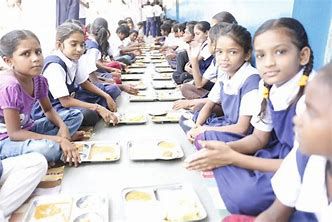
The Mid Day Meal (MDM) scheme is a flagship program of the Indian government aimed at providing free lunches to school-going children, with the dual objective of eradicating hunger and promoting education. Launched in 1995, MDM has grown to become one of the largest school meal programs in the world, benefiting over 120 million children across the country.
Objectives:
Eradicate hunger and malnutrition: Provide nutritious meals to school-going children, particularly from disadvantaged backgrounds.
Promote education: Encourage enrollment, attendance, and retention in schools, especially among marginalized communities.
Improve socialization and inclusivity: Foster a sense of community and social equality among children from diverse backgrounds.
Key Features:
Free meals: Provided to all students, regardless of their background or financial status.
Nutritious menu: Meals are designed to meet nutritional standards, with a focus on local and seasonal ingredients.
Decentralized implementation: Meals are prepared and served at the school level, involving local communities and Self-Help Groups (SHGs).
Monitoring and evaluation: Regular monitoring and evaluation to ensure quality and effectiveness.
Benefits:
Improved attendance and enrollment: MDM has led to increased attendance and enrollment rates, especially among girls and marginalized communities.
Enhanced nutrition and health: Nutritious meals have improved children’s health, reducing malnutrition and related health issues.
Increased socialization and inclusivity: MDM has fostered a sense of community and social equality among children from diverse backgrounds.
Supports poverty alleviation: MDM helps reduce the economic burden on families, enabling them to invest in their children’s education.
Challenges and Future Directions:
Quality and consistency: Ensuring consistent quality of meals across the country remains a challenge.
Infrastructure and logistics: Upgrading infrastructure and streamlining logistics to support MDM’s expansion.
Community involvement: Encouraging greater community participation and ownership to sustain the program.
In conclusion, the Mid Day Meal scheme has been a groundbreaking initiative in addressing hunger and promoting education in India. As the program continues to evolve, it is essential to address the challenges and build on its successes to ensure a brighter future for India’s children.
Every year, September 5th is celebrated as Teachers’ Day in India, a day dedicated to honoring the individuals who shape young minds and play a crucial role in the development of society. This date was chosen to commemorate the birth anniversary of Dr. Sarvepalli Radhakrishnan, a revered philosopher, scholar, and the second President of India. When his students and friends wished to celebrate his birthday, Dr. Radhakrishnan humbly requested that the day be observed as Teachers’ Day to honor all educators. Since then, the day has been marked by students paying tribute to their teachers in a variety of ways.
Why Teachers’ Day Matters
Teachers’ Day is a reminder of the profound impact educators have on society. It is more than just a day of celebration—it is an acknowledgment of their role as nation-builders. Teachers do more than impart knowledge; they cultivate the values, ethics, and character that shape the future citizens of the world.
Education is not just the transfer of information from teacher to student. It is a transformative experience that shapes the way individuals think, act, and contribute to the world. Behind every great scientist, artist, engineer, or writer, there is a teacher who ignited their passion, nurtured their talent, and guided them toward success. Thus, Teachers’ Day is a moment to express gratitude for their tireless dedication to this cause.
The Role of a Teacher: More Than Just a Job
The role of a teacher extends far beyond the classroom. Teachers are mentors, role models, and often, second parents. They guide students through their academic journey, yes, but also through the personal trials that come with growing up. From instilling discipline to fostering creativity, teachers help shape not just academic minds but well-rounded individuals.
In today’s world, teachers are also tasked with preparing students for a rapidly changing future. The digital age has transformed education, and the role of a teacher has evolved with it. Today’s educators must equip students not just with facts and figures, but with the critical thinking, problem-solving, and digital literacy skills needed to navigate the modern world.
The Challenges Faced by Educators
While Teachers’ Day is a celebration, it is also a time to reflect on the challenges faced by educators. Many teachers, particularly in under-resourced areas, work in difficult conditions. They are expected to educate students with limited supplies, outdated materials, and overcrowded classrooms. Despite these hardships, teachers continue to show up every day, driven by their commitment to their students’ futures.
Moreover, the profession is often underappreciated and undervalued. Teachers are expected to wear many hats—educator, mentor, counselor, and sometimes, social worker—often without adequate pay or professional support. These challenges were further exacerbated by the COVID-19 pandemic, which forced teachers to adapt to online learning almost overnight, showing incredible resilience in the face of adversity.
How Teachers’ Day is Celebrated
On Teachers’ Day, students across the country express their gratitude in creative ways. School assemblies are filled with cultural performances, speeches, and special events where students pay tribute to their teachers. Some institutions organize award ceremonies to recognize outstanding educators, while others have students take on the role of teachers for a day, allowing them to experience the challenges and responsibilities of the profession.
For teachers, the joy of Teachers’ Day lies not in the festivities, but in the acknowledgment of their hard work. It is a day when students reflect on the lessons they have learned, not just academically but also in life, and express their appreciation.
Teachers’ Day Around the World
Teachers’ Day is celebrated on various dates worldwide, reflecting the universal respect for the teaching profession. Internationally, World Teachers’ Day is observed on October 5th, as designated by UNESCO in 1994. This global celebration highlights the importance of teachers in society and underscores the need to support their professional development and well-being.
Countries like China, the United States, and Australia also honor their teachers with their own dedicated days, each celebrating the unique role that educators play in the development of their respective societies.
The Future of Teaching
As the world continues to evolve, so too must the teaching profession. The role of teachers will be even more critical in the coming decades as the challenges facing humanity grow more complex. Teachers will need to equip students not only with knowledge but with the skills to think critically, adapt to new situations, and approach problems creatively.
In a world driven by technological advances, teachers must also prepare students to thrive in a digital landscape. This will require new teaching methods, tools, and resources, as well as a commitment to continuous learning on the part of educators.
Despite the challenges that lie ahead, the fundamental role of the teacher remains unchanged. They are the architects of the future, building a foundation of knowledge and values that will guide the next generation.
Conclusion
Teachers’ Day is more than just a yearly celebration. It is a recognition of the vital role educators play in shaping individuals, communities, and entire nations. Teachers not only impart knowledge but also mold the character, discipline, and values that define future generations.
As we celebrate Teachers’ Day, let us not only honor their contribution but also acknowledge the need to support them in their work. By ensuring that teachers are valued, well-supported, and adequately equipped, we are investing in a brighter, more educated future for all. Teachers are the unsung heroes of society, and their impact will be felt for generations to come.
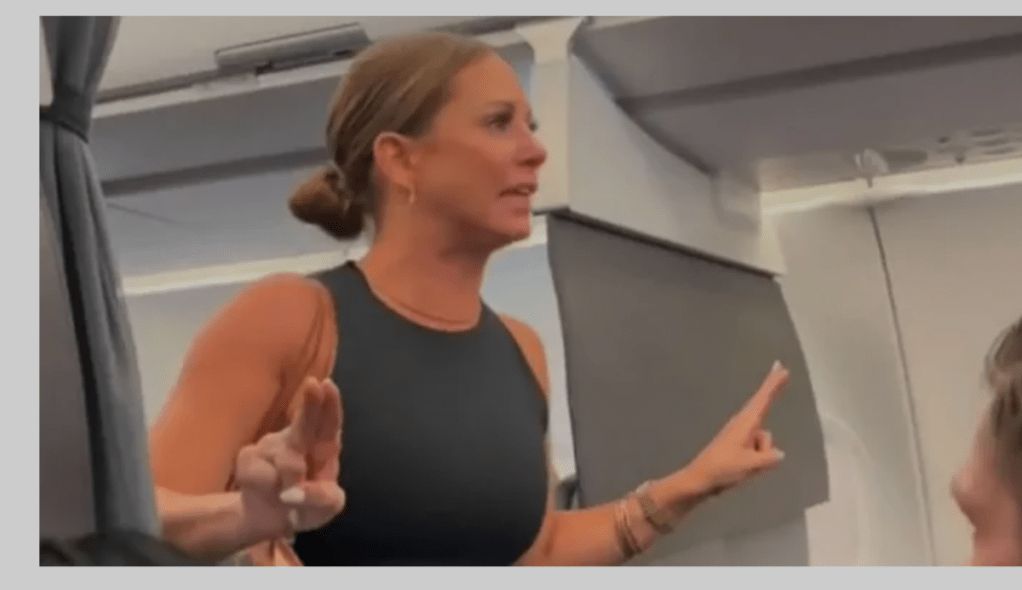
A Dallas lady started off an American Carriers departure from Texas to Orlando in the wake of going ballistic on video had the option to get back to the solid side of the air terminal after various endeavors to go through a Transportation Security Organization designated spot, police records uncover.
Tiffany Gomas, a 38-year-old promoting leader, was accused of intruding after the viral implosion before departure from Dallas-Post Worth Worldwide Air terminal July 2.
She deliberately got off the plane and left the terminal, however at that point supposedly attempted on numerous occasions to help back through air terminal security.
In spite of the fact that her ticket had been repudiated, evidently it was as yet dynamic in the TSA framework, as per a police report.
Under the provision of section 40 of RPwD Act 2016, the Central Government in consultation with the Chief Commissioner formulate rules for persons with disabilities laying down the standards of accessibility for the physical environment, transportation, information and communication, including appropriate technologies and systems and other facilities and services provided to the public in urban and rural areas.
Harmonised Guidelines and Space Standards for Universal Accessibility in India-2021 prepared by Ministry of Housing and Urban Affairs has been amended in RPwD (Amendment) Rules, 2023 vide notification G.S. R. 413 (E) dated 05.06.2023.
The detailed status of these guidelines/standards is as follows:
Standards/Guidelines notified in RPwD Rules under Rule 15
1.
Accessibility for the ICT products and services (Part I and II)
2.
Harmonised Guidelines and Space Standard for Universal Accessibility in India-2021
3.
Standard for Bus Body Code for Transportation system,
Guidelines under Draft notification in RPwD Rules and inviting public and other stakeholder comments
4.
Accessibility standards for Health Care by 02.07.2023
5.
Accessibility Standards and Guidelines for Civil Aviation by 10.06.2023
6.
Accessibility standards and guidelines for the Culture sector (monuments/sites/museums/libraries by 10.06.2023
7.
Accessible Sport complex and residential facilities for sports person with disabilities by 10.06.2023
Guidelines awaited for notification in Gazette of India by concerned Ministry/Department
8.
Ministry of Home Affairs
9.
Guidelines on accessibility of Indian Railways stations and facilities at stations for differently abled persons and passengers with reduced mobility
10.
Accessibility Guidelines and Standards for Higher Education Institutions and Universities
11.
Accessibility Guidelines for Bus Terminals and Bus Stops
12.
Department of Drinking Water and Sanitation
Guidelines at various stages in the concerned Departments
13.
Ministry of Rural Development
14.
Ministry of Port, Shipping and Waterways
15.
Ministry of Tourism
16.
Department of Financial Service
17.
Ministry of Information and Broadcasting
18.
Department of School Education and Literacy
All the information is regarding the harmonized guidelines is available in the website of DEPwD department disabilityaffairs.gov.in
During the last few years, the world saw a crisis that shook every aspect of human life. A crisis that comes once in many decades. Almost every country experienced a complete lockdown at some point in time. Many countries with previously thought-to-be world-class health-care systems have also been tried, pushed to the limit, and in some respects found wanting. The pandemic took all countries by surprise and the discussion on appropriate national and global strategies is very diverse. The COVID-19 epidemic has demonstrated what is at risk, upending the lives of families worldwide. Millions of people have died, and a generation of kids has experienced a learning catastrophe.
The two years of the pandemic highlighted the current inadequacies of our healthcare delivery system and the need for urgent improvisation. The two years have seen us go through harrowing times—patients died for want of hospital beds and oxygen; the ventilator supply ran dry; high infections led to a severe manpower crunch at hospitals; there were not enough vaccines available then. Our healthcare system had crumbled under pressure, and our frontline workers, both in public and private hospitals, had burned themselves out. And now with cases rising, there is fear of a return to the past among healthcare workers.
Although the pandemic has eased, the virus is still alive and mutating and more pandemics are expected to follow. In the wake of this scenario, it is important for the world community to better equip ourselves to tackle such situations in the future. It is the moment that we realise the importance and need to strengthen healthcare infrastructure globally. It is time to work on making a pandemic-proof healthcare system for the future. Below are the areas that need to be focused on:
· Curative services – there is a need for the expansion of telemedicine from triage, diagnosis, and follow-up services covering all conditions (acute to chronic). Making institutions adapt and become centres of knowledge dissemination- telemedicine and all possibilities of e- and m-health and provide knowledge to people at home, on what symptoms to look out for, where to test, how to self-care, etc for not only Covid-19 but for other conditions too.
· Improve primary health care – Better primary health care will help us protect against future pandemics. Improving primary health care includes recruiting, training, and prioritising healthcare workers, and establishing effective surveillance and response systems, building confidence in health services through community outreach.
· Improve logistics and supply – There are a lot of logistics that are needed in a healthcare system. Some examples include masks, gloves, PPEs, disinfectants, etc. Apart from there’s also the supply of syringes and the cold chain storage that’s been necessary to make sure that the vaccines are stored at the proper temperature and don’t go to waste. Increased investments in this type of infrastructure will assist to guarantee that communities obtain the immunizations they require while also protecting them from future outbreaks.
· Promotive and preventive healthcare services – The pandemic has demonstrated that having an underlying condition like diabetes, hypertension or obesity predisposes one to complications, long hospital stays, and mortality. Because of all these reasons, COVID-19 has been categorised as a syndemic rather than a pandemic. It is necessary to provide preventive and promotive health services like boosting one’s immune system through diet, exercise, and supplements, in different formats, online, face-to-face, or through home visits.
· Mental health services – Mental health issues during the pandemic are threatening to become the next pandemic. Stress and mental health issues related to lockdowns affect everyone but tend to affect the weaker segments of society more severely. It is necessary to create awareness about mental health and make mental health services available, accessible, and affordable to all.
It is true that we need to build pandemic-proof health infrastructure. But does Covid-19 expose our health sector only or show us the reality of other aspects also? Working only on health will not be sufficient. We also need to improve our social, educational and political infrastructure. The world saw a huge dropout of students because of online classes during pandemic. Some of the major reasons given for dropping are fairly obvious: technology problems, lack of support, poorly designed courses, and technologically inexperienced educators. This demands due consideration and commitment. The epidemic has impacted numerous nations’ governmental and political systems, resulting in declarations of emergency, suspensions of legislative activity, isolation or death of multiple lawmakers, and postponing of elections owing to worries of viral transmission.Furthermore, in certain areas, the epidemic has posed various problems to democracy, causing it to be weakened and harmed. Hence, building a pandemic-proof political infrastructure will not only ensure an efficient response to tackle the crisis but also provide basic institutional support to the nation and to the world as a whole.
This is a unique moment where we have an opportunity to learn from this pandemic and prevent others in the future. The legacy of COVID-19 mustn’t be one of disruption and disparity, but instead a moment of monumental change.
On December 10,2020 when PM Narendra Modi laid the foundation stone of the new parliament building, the deadline for the completion of the project was October 2022 which was shifted to March, 2023. The March deadline was also not met, but everybody knows that the project is near completion, and the inauguration date could be announced any time and as per expectations 28 May is decided as the date for the inauguration of the new Parliament.
It was not surprising that as soon as the announcement was made, many opposition parties started firing allegation towards government. What came as a surprise for many of us was the pacing of ‘Sengol’ in the new parliament building. Many questions hits in mind one by one. What is Sengol? Where was it all the time? Who made it? What does it signify? Where will it be placed? Don’t worry. Your mind will be free from question related to Sengol after reading this write up as it contains answers to all your question.
The historic ‘Sengol’ that is going to be installed in the new parliament building was received by the first PM of India Jawaharlal Nehru from the then Viceroy of India Lord Mountbatten on 14 August 1947 at around 10:45 PM at his residence in the presence of many other prominent leaders of the time. PM Nehru received this as the symbol of the transfer of power from British at his residence. When the decision of the independence of India was final, Lord Mountbatten was sent as the viceroy to complete the process of independence without hinderance. Mountbatten being unaware of rituals and customs of Indian culture he asked PM Nehru about the special ceremony to be organized for the transfer of power. Nehru discussed this with C. Rajagopalachari fondly known as Rajaji, and after extensive research of Indian culture Rajaji told Pandit Nehru about the tradition of transfer of power during Chola dynasty and how ‘Sengol’ was used to mark this.
The Sengol gets its name from the Tamil word ‘semmai’, meaning righteousness. The sceptre is a historical symbol of Independence as it signifies the transfer of power from the British to the Indians. “The Sengol signifies justice, integrity and unfailing good governance of the king who holds it,” said Mani Maran, a Tamil Pandit at Saraswathi Mahal Library in Thanjavur in an interview given to Times of India on Wednesday. “Tamil emperors like Cholas were usually holding a sceptre in their hands. After crowning the new king, his predecessor or the rajaguru handed over the sceptre during the ceremonial occasion. Thiruvalluvar mentions the sceptre while referring to the rule of law. Sangam works like the Silapathikaram mentions the superiority and importance of the sceptre,” he added. Union Home Minister Amit Shah addressing a press conference on Wednesday said, “The ‘sengol’ represents values of fair and equitable governance.”
The responsibility of arranging a sceptre was handed to Rajaji by Pandit Nehru. Rajaji reached out to Thiruvaduthurai Atheenam, a well-known mutt in Tamil Nadu’s Tanjore district for assistance and its leader commissioned the manufacturing of the Sengol to Chennai-based “Vummidi Bangaru Chetty” jewelers, as per the official document. It was crafted by two men namely, Vummidi Ethirajulu and Vummidi Sudhakar. It is made of silver with a coat of gold. The sceptre is five feet tall and has a ‘Nandi’ bull on top, symbolizing justice and goddess Laxmi is inscribed on it. It was made in 30 days. According to the official documents, the sceptre was handed to Lord Mountbatten by the Deputy high priest of the Adheenam and was taken back. It was then taken to Pandit Nehru’s house in procession and handed over to him. A special song was rendered, as specified by the high priest. The ceremonial sceptre was kept at the Allahabad Museum, along with several other historical objects associated with Jawaharlal Nehru, as part of the Nehru Gallery of the museum.
Now the Sengol has been moved to Delhi and would be placed near the Lok Sabha speaker’s chair in the new parliament building. Citing resources India Today reported that the Sengol will be ceremoniously transported to the House in a grand procession. The occasion is likely to be steeped in Tamil tradition. The Nadaswaram, would lead the procession with a group of musicians will be playing Tamil Nadu’s traditional instrument. Modi is expected to walk along with the procession. “Adheenams,” or priests from Shaivite mutts in Tamil Nadu, will be present in the Lok Sabha’s Well. The priests will sanctify the Sengol with holy water after Modi greets them at the well, India Today added. The “Oduvars,” or Tamil temple singers, will lyrically recite the “Kolaru Padhigam” in the background as the Nadaswaram musicians enchant with their soulful music. The Sengol will be presented to the prime minister after this revered ceremony and placed in a glass case next to the Speaker’s seat in the House.
After decades of anonymity, this holy sceptre will quadruple the magnificence of new parliament building. and always remind us of the hardship that our forefathers had while fighting for independence and will motivate us to defend this independence.
General science is a field of study that encompasses a wide range of scientific disciplines, including biology, chemistry, physics, and earth sciences. It is the foundation upon which many scientific discoveries and advancements are made. In this article, we will explore some of the key concepts and branches of general science.
Biology: Biology is the study of living organisms and their interactions with each other and the environment. It covers a wide range of topics, from the structure and function of cells to the behavior and ecology of entire ecosystems. Biology plays a crucial role in many areas of our lives, including medicine, agriculture, and environmental management.
Chemistry: Chemistry is the study of matter and its properties. It covers topics such as the structure of atoms and molecules, chemical reactions, and the properties of different elements and compounds. Chemistry is a key discipline in many fields, including materials science, medicine, and engineering.
Physics: Physics is the study of matter and energy and their interactions with each other. It covers topics such as mechanics, thermodynamics, electromagnetism, and quantum mechanics. Physics is essential to many areas of modern technology, including telecommunications, electronics, and aerospace.
Earth Sciences: Earth sciences cover a wide range of topics related to the planet we live on, including geology, meteorology, and oceanography. These fields of study help us understand the physical processes that shape the earth’s surface and climate. They are also important in managing natural resources, predicting and mitigating natural disasters, and understanding the impact of human activity on the environment.
Scientific Method: The scientific method is a systematic approach to scientific inquiry. It involves observing phenomena, formulating hypotheses, testing those hypotheses through experiments, and drawing conclusions based on the results. The scientific method is a key tool for scientists in all fields, allowing them to gather reliable data and draw meaningful conclusions.
Scientific Discoveries: Science has led to many important discoveries throughout history. Some of the most notable include the discovery of penicillin, the development of the theory of evolution, and the discovery of the structure of DNA. These discoveries have had far-reaching impacts on our understanding of the world and have led to many important advancements in medicine, agriculture, and technology.
Science Education: Science education is crucial in developing scientific literacy and promoting scientific thinking. It helps individuals understand the natural world and the scientific principles that govern it. Science education is also essential in preparing individuals for careers in science, technology, engineering, and mathematics (STEM) fields.
Conclusion: In conclusion, general science is a vast field that encompasses many different scientific disciplines. It is the foundation upon which many scientific advancements are made, and it plays a crucial role in our lives. Through the scientific method, scientists are able to make important discoveries and advancements that help us understand the world around us. Science education is also critical in developing scientific literacy and promoting scientific thinking, which is essential in preparing individuals for careers in STEM fields.
An online learning platform is a webspace or portal for educational content and resources that offers a student everything they need in one place: lectures, resources, opportunities to meet and chat with other students, and more. It is also an excellent way for the student and the teacher to monitor student progress. Whether you want to learn a new language or obtain career-advancing certifications, signing up for an online course could be just the perfect solution. The online class is typically provided through online learning platforms.
Online learning has numerous advantages over traditional learning methods. Some of these include the possibility for students to make use of self-paced learning and to choose their own learning environments through chinese enrichment class. Additionally, e-learning is both cost-effective and cost-efficient, as it removes the geographical obstacles often associated with traditional classrooms and education. The benefits of an online course platform are that both students and teachers can track the students’ progress through the course material, and everything is neatly organized in one place. Additionally, students may also have an option of interacting with each other on the platform.
Some of the popular Online learning (e-learning) platforms.
Coursera isn’t just a place to take classes that are like college courses—it actually offers real academic courses from real professors and universities at a fraction of the cost of getting an online degree. The platform partners with over 200 universities and companies to provide real learning experiences that can connect to real-world benefits. In some cases, you can even earn certifications or degrees entirely through Coursera, which can then potentially lead to professional benefits like raises, promotions, and more.
Course Hero.
Course Hero is home to study resources, 24/7 homework help and textbook guides to provide students across top institutions with tailored reinforcement of the courses in which they are enrolled. The library of materials uploaded to Course Hero’s platform can be searched by either school or textbook to find the exact resource a student needs, with tutors available to provide total support.
Edx.
Generally, this online learning platform has a high-end pedigree. edX was established by graduates from both MIT and Harvard University. Real college courses that are generated and taught by real college tutors are available in a vast array of topics and fields. They have a slight leaning toward the Science, Technology, Mathematics, and Engineering fields. Nonetheless, there are plenty of topics in the humanities, arts, and languages as well. By partnering with the universities, this course provides professional degree certificates as well as the “micro” degree programs at both the bachelor’s and the master’s levels. In this sense, they largely serve as tools for professional development.
Skill Share.
Whereas many online class platforms do confer college-style classes, Skillshare is not formal and is mainly targeted at boosting creative skills. Some business and marketing classes exist on this online education platform. Most of the courses though tend to have a focus on the creative fields and are administered by practicing experts in various fields. Common examples of these fields are interior design, visual arts, animations, films, and photography.
LinkedIn Learning.
Formerly called Lynda.com, LinkedIn Learning is an educational platform that confers professional course training in the fields of technology, business, creative fields, and technology-related areas mainly in the form of videos. The online learning marketplace is largely available as a premium service for the users of LinkedIn and has so far provided well over 16,000 courses in a whopping 7 languages. Its focus is mainly to aid individuals in investing in their professional development.
Udemy.
If you want to learn something, it’s probably on Udemy. The site is less of a unified platform and more of a portal or repository where students can access well over 100,000 courses on every topic imaginable. There’s not one standard format for a Udemy course—the platform allows instructors to design multimedia lectures with audio, video, and text elements, plus readings, quizzes, and other activities. Udemy allows students to preview classes they’re interested in and does offer a 30-day refund if you’re dissatisfied.
FutureLearn.
FutureLearn lets you learn online from universities and companies all over the world, including Anglia Ruskin University, King’s College London, Monash University, and the University of Wollongong. On top of their university partnerships, they also partner with specialist organizations such as Accenture, Amnesty International, the British Library, and UNESCO. From personal development video lessons to employment-related course content, FutureLearn definitely deserves its place near the top of our best online learning platforms list.
Adapting material from some origin is not something new that the film industry invented. Classical Greek playwrights adapted myths that had been passed in through oral tradition. And as soon as the cinematographers recognized that presenting a story in moving picture required “good story”, so they started adapting story from novels, plays, short stories. Robert Stam discusses different sources of hostility towards the practice of adaptation. According to him, many have long viewed literature as being superior to film. He goes on to analyze the process of adaptation and the ways in which tie and space are used differently in the two mediums. As per his view, “fidelity in adaptation is literally impossible. A filmic adaptation is automatically different and original due to the change of medium.”
(Downloaded from Google.com)
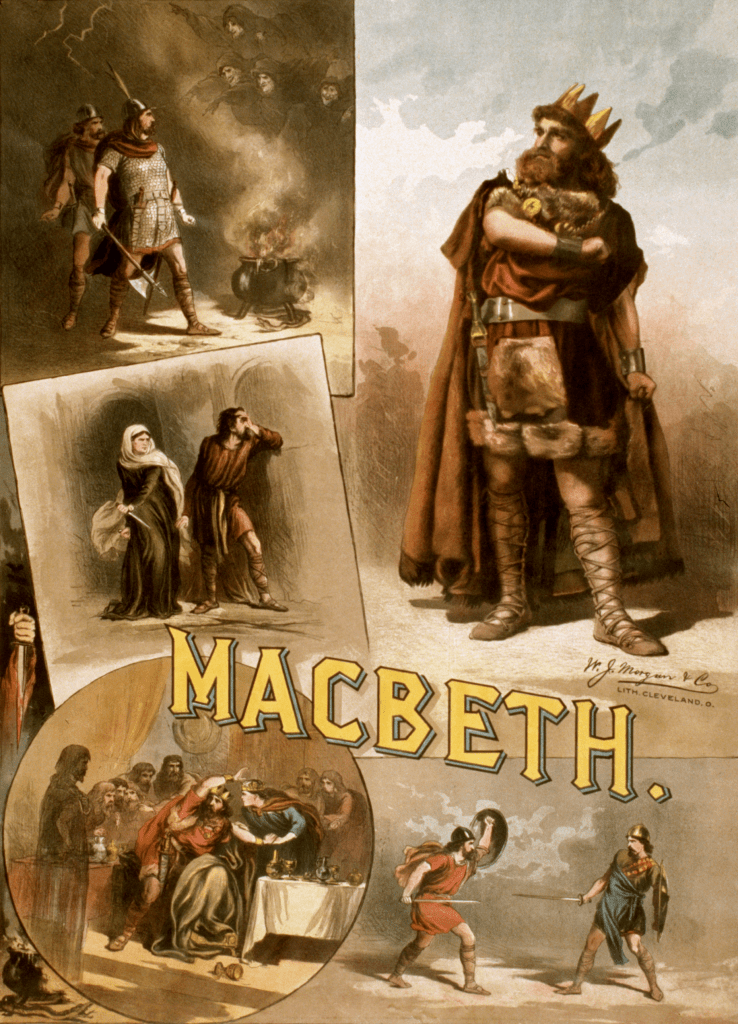
‘Macbeth’ is one of the finest and acclaimed works by Shakespeare. The play also has an easy to understand plot line which has lent itself to numerous adaptations.
(Downloaded from Google.com)
And one of those notable adaptations is the ‘Throne of Blood’by Akira Kurosawa set in feudal Japan. Needless to mention that the central themes of the movie consist of tragedy, treachery, credulity and fallacy. However, to commence with the dissimilarities between the play Macbeth and Kurosawa’s movie, one among the other possible differences is their depictions of the battle at the opening stages of the plot.
(Downloaded from Google.com)
The play Macbeth opens with grotesque imagery of the revolt, and the weather all muddles up, as informed by the witches seen in medias res (amidst) of their conversation. The captain reporting about the battle even describes Macbeth as unseeming one of his opponents. This type of gory imagery, however, is nowhere to be found at the start of Kurosawa’s film ‘Throne of Blood’,
(Downloaded from Google.com)
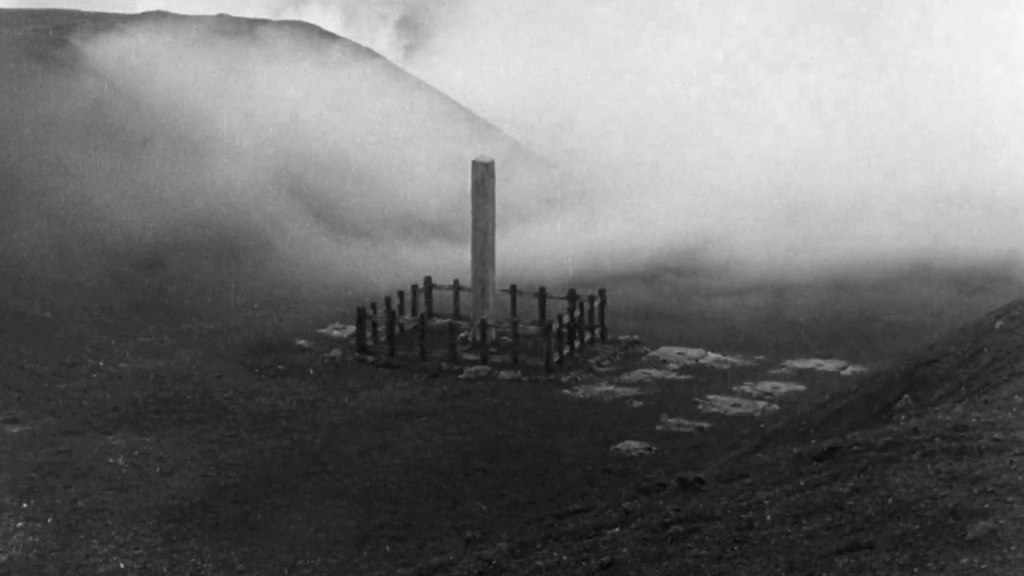
instead it opens with the vast fog with a seemingly deserted and peaceful castle depicted behind the fog with a lamenting song, “Look upon the ruins of the castle of delusion haunted…”. It also features various captains reporting about the battle, but there are no depictions about the battle. The use of fog and the lack of violence, in the opening scene, set an uncertain tone for the rest of the film, and Washizu is not seen killing anyone that makes his future actions even more shocking. In fact, we witness Washizu’s innocence when he strongly resists the prophecy. As wherein Macbeth, the brutal portrayal of the battle in the beginning set a violent and dark tone right away, and thus, it makes Macbeth’s future killings somewhat less surprising. The shock factor of Washizu’s actions is also due o the fact that there are no witches at the start of the movie.
(Downloaded from Google.com)
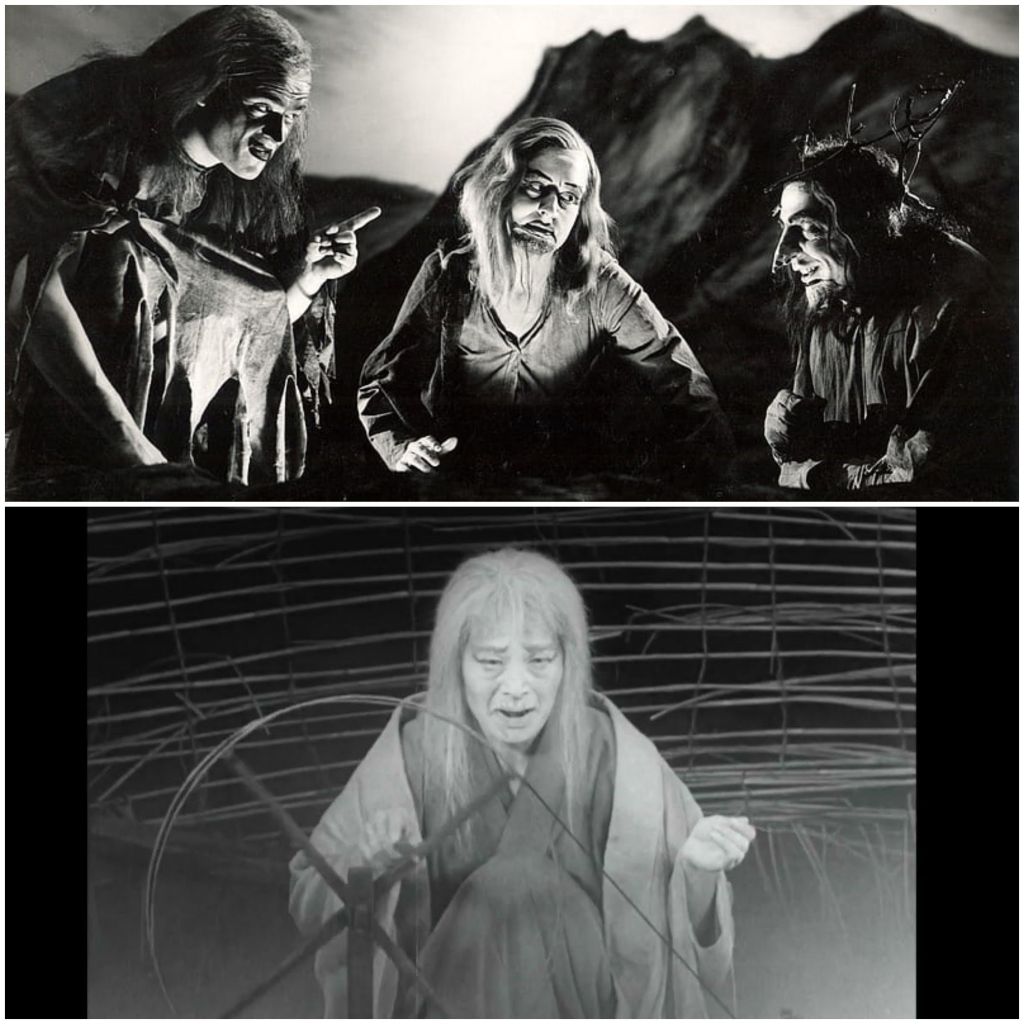
On the other hand, we encounter that the witches start the play by invoking the name of Macbeth, leaving a sense of suspicion in the mind of the reader that Macbeth may not be who he appears. In the movie, three witches are replaced with a single-spirit who is seen chanting a song that introduces Japanese traditions, Buddhism and feelings of humanity. The song mentioning karma and reincarnation comes straight from the Buddhist beliefs.
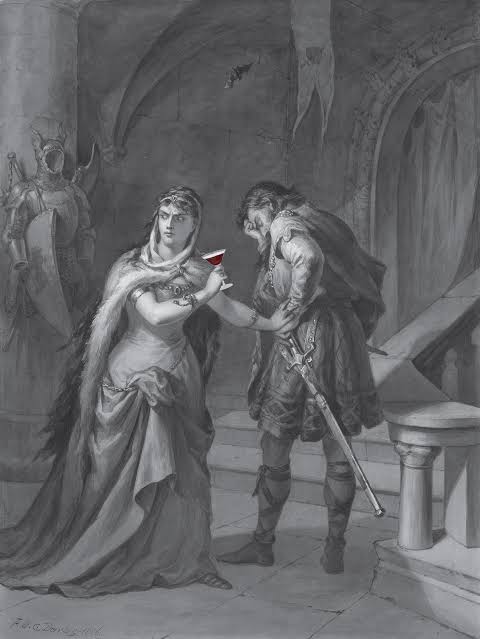
Kurosawa’s Throne of Blood and Shakespeare’s Macbeth also differ greatly in their portrayals of Lady Macbeth and Lady Asaji respectively.
(Downloaded from Google.com)
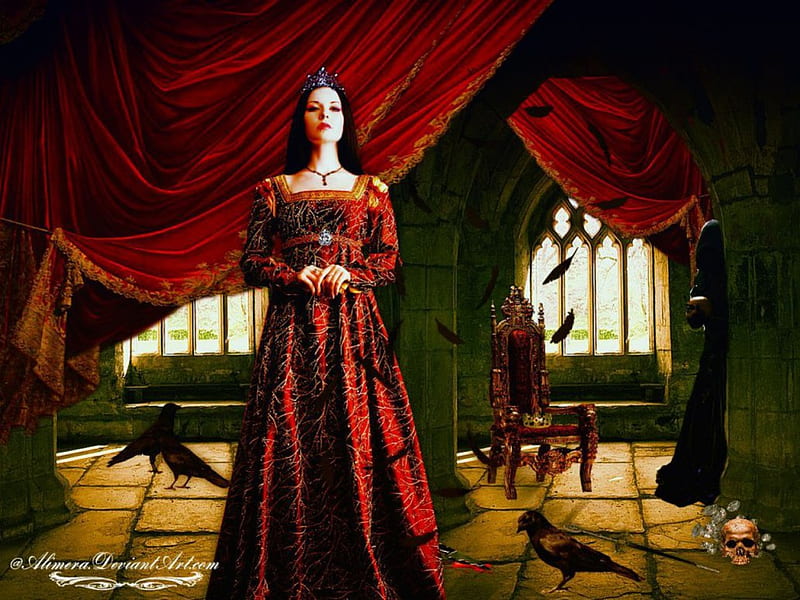
In the play, Lady Macbeth makes her presence and intentions felt in her very first moments. She states, “Fill me from the crown to the toe topful of direst cruelty. Me thick my blood. Stop up the access and passage to remorse.” This quotation by her immediately warns the reader of her growing plans of evil.
(Downloaded from Google.com)
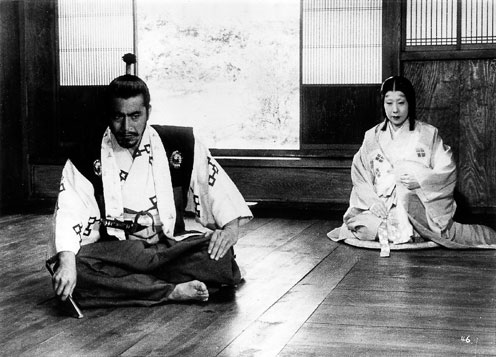
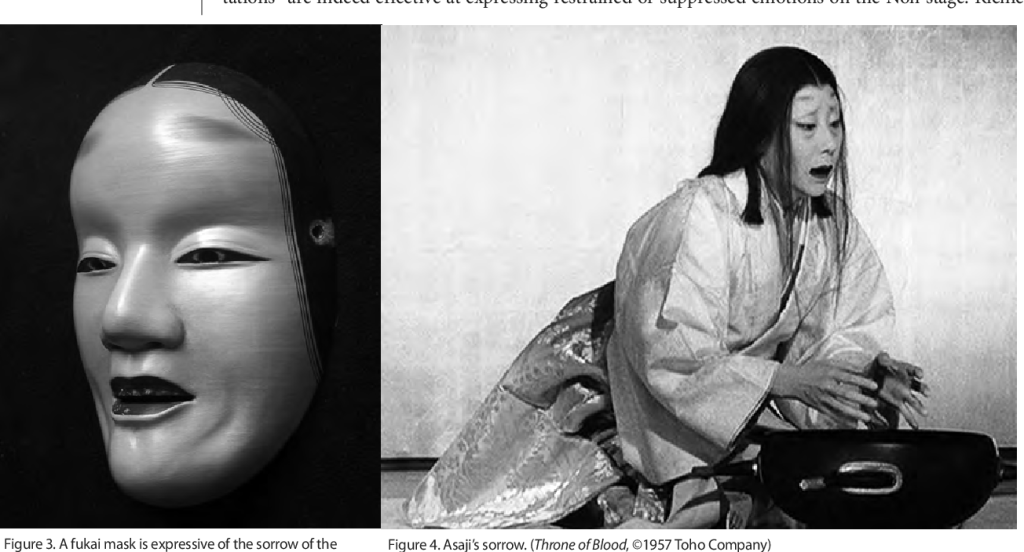
Contrarily, in the movie, Lady Asaji (the equivalent to Lady Macbeth) makes it much more subtle entrance. She is first seen sitting peacefully in Washizu’s castle appearing as submerged in deep contemplation. Throughout her attempts to convince Washizu to kill Tshuzuki, she remains completely sedentary and shows no sign of any emotion, unlike Lady Macbeth who passionately uses strong imagery and vehement speech to ty to persuade Macbeth. And Asaji’s fixed expressions portray the use of Noh mask. As far as the movie is concerned, predominantly the character of Asaji, Kurosawa has adopted the aesthetic of the Noh elements.
(Downloaded from Google.com)
It’s a cultural asset of Japanese theatre. It’s a classical form of dance-drama originated in Japan, and is popular since 14th century. There are several types of these masks used in Japanese theatre. And surprisingly, they are used by Kurosawa commendably through dramatis personae of Asaji. Director Kurosawa was overwhelmingly magnetized by Noh, “I like [Noh] because it is the real heart, the core of all Japanese drama. Its degree of compression is extreme, and it is full of symbols, full of subtlety. It is as though the actors andthe audience are engaged in a kind of contest and as though this contest involves the entire Japanese cultural heritage . . . I wanted to use the way that Noh actors have of moving their bodies, the way they have of walking, and the general composition which the Noh stage provides.” (Extracted from an article by Minae Yamamoto Savas)
Lady Macbeth does not give Macbeth much of a reason to kill Duncan other than to solely attain power. Lady Asaji, on the other side, presents Washizu with the idea that Miki will inform about the prophecy to Tsuzuki that Washizu will ascend to the throne which in turn will lead to Washizu’s death at the hands of Tsuzuki. Despite her reserved nature, she is very deceptive and possesses contriving persona as she uses the prophecy of the witch to implant fear in the mind of Washizu. She also tries to justify the killing of Tsuzuki because Tsuzuki himself attained his throne by murdering someone, and also attempts to convince him that deep down Washizu himself carrying and watering the ambition to attain power, which is also the first time that she looks directly at him in the film. Lady Asaji like Lady Macbeth is a strong evil presence although she is portrayed in a much different manner.
Another difference between the movie and the play is existence of the lack of recognition of eternal ramification for Washizu’s actions in the movie, whereass, in the play, apprehension regarding the afterlife plays a prominent role in Macbeth’s psychological struggles with respect to his decision to kill Duncan.
(Downloaded from Google.com)
In Act 2, scene 1, Macbeth states, “I go, and it is done. The bell invites me. Hear it not Duncan, for it is a knell that summons thee to heaven or to hell.” He knowingly chooses temporal power on earth rather than eternal glory in heaven, a decision that he later realizes that he cannot undo which leads to his supposedly eternal damnation in hell. And in Kurosawa’s Throne of Blood, however, heaven and hell are never referred to. This is ofcourse largely because of the film’s Japanese origin. Instead, it’s Washizu’s contemplation of the goodness of his friend Miki that drives his inner conflict perpetrated by his wife.
The adaptation of literary works into films do distorts the original text. But we should not forget that these adaptations, like what Kurosawa did, are filmed establishing the text on different period of time, background, and geo-political settings. Although film was initially regarded by some as sucking the life out of a literary text, a view forcefully articulated by Theodore Dreiser in 1932, “Film adaptation of novels is not so much a belittling as a debauching process, which works harm to the mind of the entire world. For the debauching of any good piece of literature is – well, what? Criminal? Ignorant? Or both? I leave it to the reader.”
On Monday, 19 December, the Centre informed the Lok Sabha that the National Council of Education Research and Training (NCERT) should include Shlokas from Shrimad Bhagavad Gita and knowledge from Vedas in textbooks in Sanskrit from classes 11th to 12th. Besides, references from Bhagavadgita should be incorporated in NCERT textbooks of classes 6th to 7th.
Annapurna Devi, Minister of State for Education, stated in a written response that the ministry formed the Indian Knowledge System (IKS) Division in the All India Council for Technical Education (AICTE) in 2020 with the goal of promoting interdisciplinary and trans-disciplinary research on all facets of Indian Knowledge Systems (IKS), preserving and disseminating IKS knowledge for further research and societal applications.
Minister Devi stated that NCERT has begun the development of National Curriculum Frameworks (NCF) where inputs from various ministries, departments, states, and union territories are invited from grass root levels.
She added that the National Education Policy (NEP) 2022, paragraph 4.27, refers to Indian traditional knowledge that is both sustainable and strives for the welfare of all. She also laid emphasis on teaching the world the “Indian way of doing things.”
Students looking to earn an honours degree in undergraduate courses will have to pursue four-year programmes under new regulations likely to be announced by the University Grants Commission this week, PTI reported.
“Students will be able to get a UG [undergraduate] degree in three years on completion of 120 credits (measured through the number of academic hours) and a UG honours degree in four years on completion of 160 credits,” the news agency quoted from the draft Curriculum and Credit Framework of the University Grants Commission.
At present, students get an honours degree after completing three years of undergraduate programmes. Under the National Education Policy (NEP) 2020, universities and colleges will offer four-year undergraduate degrees with multiple exit and entry options. Several universities, including DU, and Jawaharlal Nehru University (JNU), have already adopted the programme.
A senior UGC official, requesting anonymity, said, “There will be only one honours degree, that is four-year UG with honours or honours with research. The regulations will be applicable for students who will be enrolled under the new norms from this year onwards.”
A very simple family of Modern era living with their life old fashioned limitations like not allowing the phone to their children even if they jumped in higher class, they do not have permitted to attend any party with their friends,Not allowed to go out in late night.Their mother a housewife made these rules But we all know that there is always reasons of restrictions, the same are here with those two siblings of this exciting family.Both are studying in a same school and everyday their father use to receive and drop them,eating foodings made by dad bakery, play video games and sometimes spend times in sleepover.Cavin the little boy has sharp mind and he enjoy the imaginary world more than real.
One day a neighbour’s parents come with his child to leave him for the night. That boy also has some list by his mother about what to do or what to don’t.But as he is in another house with another rule and restrictions nothing from the list could be done right from his list.In loan area Cavin’s dad fixed a tent for their sleepover and left them to sleep. And in the same night her daughter tries to escape from home with her friend for one night to attend the party invited by her senior.
At late night tiem to sleep ,Ninjas enter in the house and attack on her housewife mother to take her with themselves for a mission.They took up both husband and wife with them for a robbery. After knowing their mother’s real identification that her mother was the head robber many years before her marriage in the bachelors age;their children decided to find their parents and went out for an overnight adventure.
Their mother was a witness protection lady who was caught by the police but allowed to be free with a new identification by letting no one know her real identity.
Following the signs Including their dog’s neck belt left by her mother at every steps they followed and in not finally but at end of getting signs they met her mother’s younger sister who is also a robber; she gave them the direction to reach their mother and they followed.Finally they reached the destination and saw their simple housewife mother extraordinary actions and looks that were never been seen before.And also they saw her mother’s fiance who was a robber man,charm and dashing.
But there and then her mother become with a new identification and living her life as a normal person with family this mission was not her choice.They escape brilliantly from this leaving behind all this stuff if past and came back to home safely creating this adventurous night.And the boy who has very quite talent to make stories of imagination,he does the same in front of police too,reached all back to home safely.
Next morning, the neighbour came to take their child who was left for a sleepover and found the child safe and that child went home too.
Everything happened, the restrictions,the limitations came across with a very valid reason why kids of this family faced too many rules and regulations other than others.Now they understand and respect the situations and their family especially her mother.
So,The conclusion comes here with a brief mentality of parents and children.
Parents never want to grab or tie their own children with restrictions. If they do there must be the reason for their safety that’s important more than anything for any parents.
Children like that boy who live in his imagination are brilliant so to make success and happiness in their life it’s necessary to promote and support your child according to their way of interests.
And the last but not least ,the priority matter a lot for a family person no matter who you are,mother or father or sister or you are a brother,if you are in a family you must put your priorities first for them other than anyone no matter how complications has started ,how it is difficult to deal or to resolve it but things will become smoother as soon as one put family on prior.Stay tied to the family is one of the best weapon to fight against any circumstances, situations,or any difficulty.
Basically everyone expects the normal student lifestyle with proper and regular routine or schedule to follow for a student even that student too.But Eventually mine is bit different.Different lifestyle is not a decision of mine but the wise decision is something that to accept this difference. Like all other students I’m also a student of a regular class of academic course at a high named Central University.But the thing is I’m not capable of interacting with people or Hodge podge anymore,The reason behind is something I’m not blaming but before Corona pandemic i was not that what I’m now.I feel anxious and low from deep down to be in gathering,it’s became tough to hear more than one sound hitting my ears,even sunrays and a close conference room makes me uncomfortable. But taking these all wisely i chose to work from my room ,even class work , activities, projects and all doing individually that makes me feel really good.My elders and professors are understandable enough.I order food or cook sometimes,i ate,i do work like personal stuffs too,I enjoy myself ,watch movies,series etcetera it’s also appreciable for me to write about my lifestyle cause I’m living my own way with no glitches or now atleast and it’s working literally,every well wishers hoping to see me out or be social like before i was,but here I’m not only hoping but working on it too. What do you think,does it sound like a normal lifestyle?If I’m the only one who is facing this? The answer is Big Noo… As of now things are getting recovered after the pandemic, One after one has faced different phases but the outcome is the same It is Anxiety, depression or phobea and many health issues as well as mental issues. They try to be social,to be active and involved like they were before Pandemic.But there and then remember one thing that things will get worse when we push it to show surroundings that we are okay and internally we continuously go deep down by doing this.
So just let it be, If you don’t want to be in gather just make a space where you can feel atleast not bad than to be in gathering. If you don’t wanna hear something/someone just listen to you for yourself to make Comfortable atleast. Don’t wanna go out or see something just feel for yourself and work yourself to do productice that can be seen for a single time atleast. Atleast eat a bite and drink a drop to immune your brain that is continuously running without break. Don’t wanna describe yourself to anyone,just don’t do but focus on yourself to make your personality and let it describe your victory. Not feeling okay is too short to say,just don’t say… but i have one oath to say that is;It’s totally okay to not be Okay. Okayy?
Rishi Sunak born on May 12, 1980, is a British politician who has served as Prime minister designated the United Kingdom and Leader of the conservative party since 24 October 2022. He previously served as Chancellor of the Exchequer from 2020 to 2022 and chief secretary to the treasure from 2019 to 2020. He has been a member of Parliament and MP for Richmond York since 2015.
Rishi Sunak was born in Southampton to parents of Punjabi-Indian descent who migrated to Britain from East Africa in the 1960s. He was educated at Winchester College read philosophy politics and economics PP at Lincoln College Oxford and gained an MBA from Stanford University in California. As a Fulbright scholar while studying at Stanford, he met his future wife shitamorti, the daughter of Inar Narayana Morty the Indian Billionaire businessman who founded Infosys. Sunak and Morty are the 2022 richest people in Britain with a combined fortune of 730 metres as of 2022. After graduating Sunak worked for Goldman Sachs and later as a partner at the huge fund firms the Children’s investment fund management and Saleem Partner. Sonic was elected to the House of Commons for Richmond in North Yorkshire. Its the 2015 general election succeeding William Hague sonic supported Brexit in the 2016 reference on EU membership he was appointed to Thresha Mays’s second government as the parliamentary government in the 2018 reshuffle he voted three times in favor of Mays’s Brexit withdrawal agreement after May resigned, Sonak supported Boris Johnson campaign to become a conservative leader. After Johnson was elected and appointed prime minister he appointed Sunak as Chief secretary to the treasury Sonak replaced Saja David as Chancellor of ex check after his resignation in February 2020 Cabinetry shuffle as Chancellor sunak was prominent in the government’s financial response to the Covid 19 pandemic and it’s economic impact including the coronavirus job retention and reaches to help out schemes. He resigned as Chancellor on July 2022 followed by Johnson’s resignation amid a government crisis. Sunak stood in the Conservative party leadership election to replace Johnson and last the members vote for Liz Dress following Truss’s resignation amid another government crisis. Sunak was elected unopposed as a leader of the conservative party and is set to become the next British prime minister.
He is the eldest of three siblings. His father was born and raised in the colony and protectorate of Kenya present-day Kenya while his mother was born in Tanganyika which later became part of Tanzania. His grandfather was born in Punjab province British India and migrated from East Africa with their families to the UK in the 1960s. His paternal grandfather Ramdas Sunak was from Gujranwala in presence Pakistan and moved to Nairobi in 1936 to work as a clerk where he was joined by his wife Suhagwani sunk from Delhi
Sunak’s maternal grandfather rub reason berry MBE worked in Tanganyika as a tax officer and had arranged a marriage with 16-year-old Tanganyika born srksha with whom he had three children the family moved to the UK in 1966 funded by Srksha sold her wedding jewelry Sunk attended school in Romsey Hampshire and Winchester college a boy’s independent boarding school where he was head boy.









 Eduindex
You must be logged in to post a comment.