Are electric cars the future? The success story of Tesla

In 1834, Robert Anderson of Scotland created the first electric car carriage. The following year, a small electric car was built by the team of professor Stratingh of Groningen, Holland and his assistant, Christopher Becker. More practical electric vehicles were brought onto the road by both American Thomas davenport and Scotsman Robert Davidson in 1842. Both of these inventors introduced non rechargeable electric cells in the electric car. The Parisian engineer Charles Jentaud fitted a carriage with an electric motor in 1881. William Edward Ayrton and John Perry, professors at the London’s city and guilds institute, began road trails with an electrical tricycle in 1882; Three years later a battery-driven electric cab serviced Brighton.
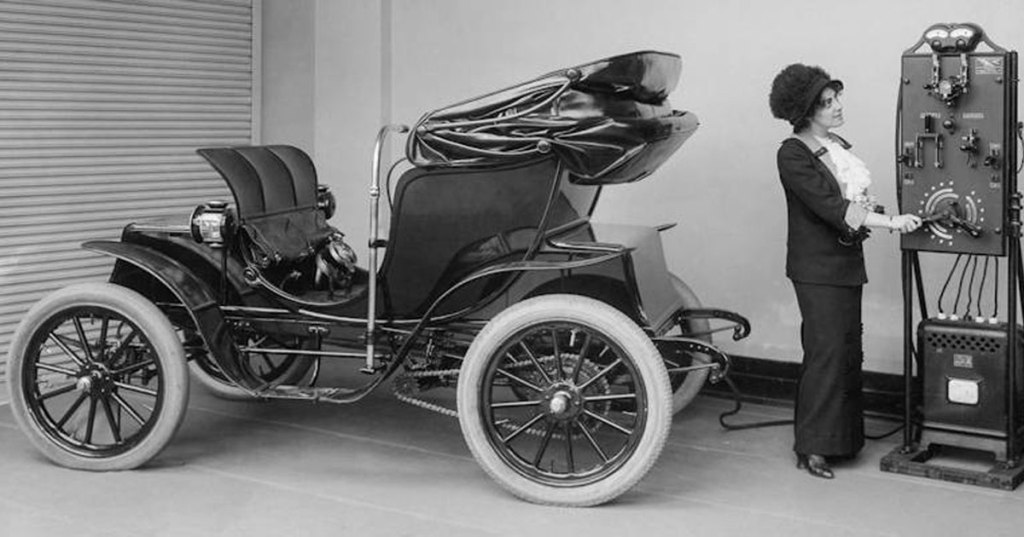
Electric cars during 1890s in the United States

Around 1900, internal combustion engines were only one of three competing technologies for propelling cars. Steam engines were used, while electric vehicles were clean, quiet, and did not smell. In the United States, electric cabs dominated in major cities for several years. The electric vehicle did not fail because of the limited range of batteries or their weight. Historian Michel Schiffer and others maintain, rather, that failed business strategies were more important. Thus, most moor cars in the twentieth century relied on internal combustion, except for niche applications such as urban deliveries. At the end of the century, after several efforts from small manufactures, general motors’ made available on all electric vehicle called EV1 from 1996 to 2003. In the late 1990s, Toyota and Honda introduced hybrid vehicles combining internal combustion engines and batteries.

How Tesla was created?

Entrepreneur Elon Musk is the man behind many modern innovations. It includes the digital payment service PayPal, the independent space travel company SpaceX, and the electric car company Tesla motors. Tesla motors is named after Nikola Tesla, a Serbian American inventor who contributed to the development f alternating current electricity. In 2003 two Silicon Valley engineers, Martin Eberhard and Marc Tarpenning sold their eBook business for 187 million dollars and started Tesla to build a greener car. Elon musk joined as an early investor leading the series finance and taking on several other roles as well. Tesla’s plan was simple but potentially genius. They focused on lithium-ion batteries which they expected to get cheaper and more powerful for many years. They planned to start their journey with a high margin, high performance sports car. Tesla also planned to integrate energy generation and storage in the home and develop other emerging technologies like autonomous vehicles.


Tesla Gigafactory in Tilburg, Netherlands

With this plan set, the company was ready to build a high performance low volume sports car, the roadster. Finally in 2008 Tesla motors released its first car, the completely electric roadster. In 2008, Martin and Marc left the company, and eventually Elon Musk took over as CEO. He made drastic changes, raising 40 million of debt financing and borrowed 465 million from the US government. In 2012 Tesla started focusing on two new cars, model S and model X. beginning in 2012, Tesla built stations called supercharges in the United States and Europe, designed for charging batteries quickly and at no extra cost to Tesla owners. These two models were poised for success but the high cost of lithium ion batteries made it a luxury item. To compensate this, in 2013, Tesla began building large factories called Gigafactories to produce lithium ion batteries and cars n large scale. It made Tesla cars ultimately cheaper than gas powered vehicles. Then Tesla gave autopilot system for its model S which gives semi autonomous capacities. By the end of 2017 Tesla passed ford in market value. Tesla released another crossover he model Y, in 2020. The model Y was smaller and less expensive than the model X and shared many parts with the model 3. Tesla announced several models to be released in the future, including a second version of the Roadster, a Semi trailer truck, a Pick-up truck and the Cybertruck.
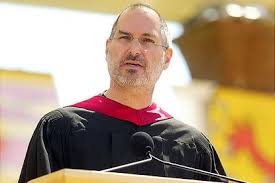

Death as a lesson

Most would agree with me when I say, Steve Jobs was one of the most brilliant people, who went on to become an innovator and entrepreneur and a co-founder of Apple then worked for Pixar too.

Today, for the first time, I watched a motivating speech given by him.

What he said, and how he said is no doubt invaluable. But the points he made is what makes it so great, making it an inspiring array of words aimed for people from all walks of life.

Perhaps that is the reason, this video on YouTube had more than 1.3 crore views. And this was not even the original one, it had been edited to create a story. But the lessons he has learnt and the three stories he told made all the difference.

We all know the successful reviews of Apple company from their over priced gadgets which no doubt never fail to deliver what they promise. But the penance behind it’s creation is perhaps more interesting to know and yet many are not aware of it.

From what I understood, Jobs talked of circumstances that lead you to a place. The dots that you can connect months, years or sometimes even decades. He also talked of failure as a teacher, and the lessons it teaches.

Now all of these were a good expressions of wisdom, because most of would have heard of it or have been told about while growing up. In some cases, you must have felt them to be true as well.

But the last one, the quote that he read at the age of 17, which impacted him for the next 33 years when he gave the speech and probably till his death 5 years later.

If you live each day as if it were your last, someday you’ll most certainly be right.”

-unknown

He questioned himself every morning, if he was going to do the things he would be doing if it were his last?

And facing yourself in the mirror when you answer. Because everything we do daily has an impact for the rest of our lives.

Living our life as a boon, living each moment as if it is the last will no doubt make us more happy if not more successful. Because then you are free of all the chains that bind your potential. The fears and thoughts that hinder your growth.

You are not only less self conscious (as you have few hours left to live) but you become an outgoing individual. You grab the chances, even the unseen opportunities that come your way.

You live the day to its fullest.

Carpe Diem becomes your mantra. Keeps you going through the ups and downs.

Just look at what Jobs managed to do all by himself. There are countless other people who have managed to become great personalities despite the troubles they had to live through.

And that my friend is how you can unlock your true potential. Wishing you all the very best all of your life’s endeavours.

Image source : Google

The Journey of rocket science from 900 A.D till Now

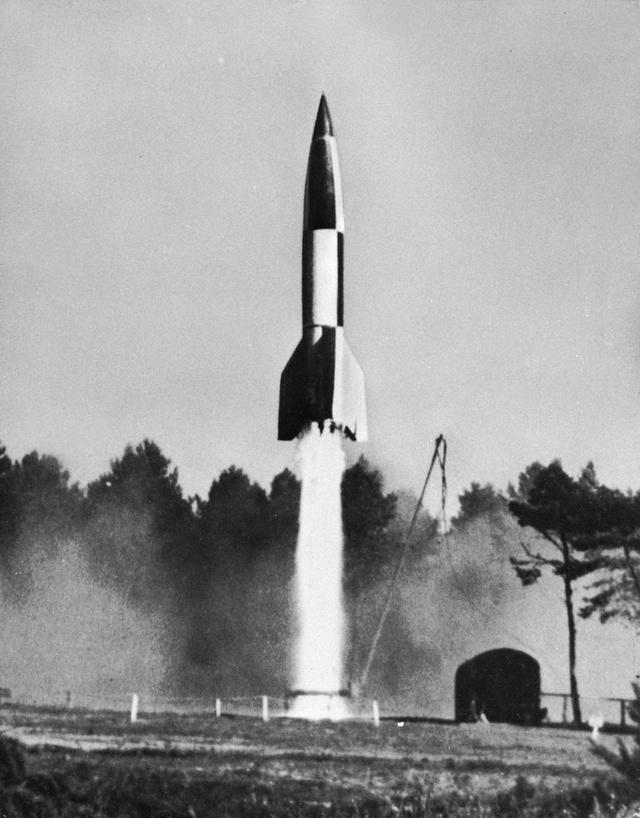
The history of rocketry dates back to around 900 C.E., but the use of rockets as highly destructive missiles able to carry large payloads of explosives was not feasible until the late 1930s. War has been the catalyst for many inventions, both benevolent and destructive. The ballistic missile is intriguing because it can be both of these things. It has made possible some of the greatest deeds mankind has ever achieved, and also some of the worst. German Walter Dornberger and his team began developing rockets in 1938, but it was not until 1944 that the first ballistic missile, the aggregate-4 or V-2 rocket, was ready for use. V-2 was used extensively by the Nazis at the end of World War II, primarily as an error weapon against civilian targets. They were powerful and imposing: 46 feet (14m) long, able to reach speeds of around 3,500 miles per hour (5600 kph) and deliver a warhead of around 2,200 pounds (1000 kg) at a range of 200 miles (320 km).

The German V-1 of World War II was the world’s first guided missile.

Ballistic missiles follow a ballistic flight path, determined by the brief initial powered phase of the missile’s flight. This is unlike guided missiles, such as cruise missiles, which are essentially unmanned airplanes packed with explosives. This meant that the early V-2 flew inaccurately, so they were of most use in attacking large, city sized targets such as London, Paris, and Antwerp. The Nazi ballistic missile program has had both a great and a terrible legacy. Ballistic missiles such as the V-2 were scaled up to produce intercontinental ballistic missiles with a variety of warheads, but also the craft that have carried people into space. Ballistic missiles may have led us to the point of self destruction, but to venture beyond our atmosphere.

The intercontinental ballistic missiles (ICBM)

 Intercontinental ballistic missiles (ICBM) were first developed by the United States in 1959. It is a guided ballistic missile with a minimum range of 5500 kilometres primarily designed for nuclear weapon. United States, China, France, India, United Kingdom and North Korea are the only countries that have operational ICBMs. The ICBMs has a three stage booster, during the boost phase the rocket get the missile airborne, this phase last around 2 to 5 minutes until the ICBM has reached space. ICBMs have up to three rocket phases with each one ejected or discarded after it burns out.

The DF-41 is currently the most powerful Intercontinental Ballistic Missile (ICBM), developed in China

They use either liquid or solid propellant. The Liquid fuel rockets tend to burn longer in the boost phase than the solid propellant. The second phase of the ICBMs is the point where the rocket has reached space, here it continues along is ballistic trajectory. At this point the rocket will be travelling anywhere from 24,140 and 27,360 kilometres an hour. The final phase is the ICBM’s final separation and re- entry into earth’s atmosphere. The nose cone section carrying the warhead separates from the final rocket booster and drops back to earth. If the ICBM has rocket thrusters, those will be used at this point to orient itself towards the target. It is important that ICBMs have adequate heat shields to survive reentry, if not they burn up and fall apart. It’s important to note that although countries have ICBMs, none have ever been fired in anger against another country.

“This third day of October, 1942, is the first of a new era in transportation that of space travel.” –  Walter Dornberger

Sustainable Development Goals

Times are not just difficult but also alarming for every sphere of our existence. At first glance, it might appear that the raging pandemic has temporarily paused climate action and initiatives related to other environmental issues. Sustainability, it appears, may have taken a back-seat too. However, with a decade left for the end of ‘Agenda 2030’, achieving sustainable development has become even more important.


A significant feature of the raging pandemic is that it has disrupted the hyper-interconnected world characterized by globalization. Supply chains are badly affected and global markets are under severe stress. Evidently, the virus has laid bare the vulnerabilities and risks of a globalized world order. In fact, it has put under scanner not just globalization but also the Sustainable Development Goals. Nevertheless, this could be a turning point for the international community to unlearn and revamp its basic conduct on global governance and make it more inclusive in nature. Besides, the pandemic has also thrown open an opportunity to give impetus to a glocalized framework of global governance to protect the ‘global commons’ in the light of the broader debate on sustainability.

This is where glocalization can fill the gap. Simply put, glocalization refers to the interpretation, representation and replication of the global elements at the local level.

The term, glocalization, is used quite frequently in business parlance but it has begun to gain momentum in cultural, social and political arenas too. Utilizing it appropriately in the environmental domain is the need of the hour.

The term, glocalization, is used quite frequently in business parlance but it has begun to gain momentum in cultural, social and political arenas too. Utilizing it appropriately in the environmental domain is the need of the hour.


Covid-19 has brought about the necessity of refining and revising globalization. This can be done by integrating glocal elements to achieve global good, be it sustainable development or climate action, by roping in local actors, such as subnational agencies, grassroots bodies, non-governmental organizations and other relevant non-State actors in the discussion on sustainability. Localizing economies would provide leverage to the development targets of those like India. This can help attain the much-needed balance between ecological equity and economic growth. Additionally, it is hard to overlook the expertise and knowledge offered by local populations that are located at ground zero and are in tune with ground realities. This kind of resource efficiency could prove to be useful in operationalizing the potential glocal elements of global governance. Factors like accountability, transparency and trust-building among the State and non-State actors are also vital in this context.


Considering the changes in modern living, starting from working remotely to radically cutting down on carbon footprints, glocalization could turn out to be a viable alternative to globalization, thereby creating innovative pathways for sustainable development in the near future.

Written by : Ananya Kaushal

The James Webb Space Telescope- World’s most powerful telescope

The James Webb space telescope or JWST will replace the Hubble space telescope. It will help us to see the universe as it was shortly after the big bang. It was named after the second head of NAS James Webb. James Webb headed the office of space affairs from 1961 to 1968. This new telescope was first planned for launch into orbit in 2007 but has since been delayed more than once, now it’s been scheduled for 18 December 2012. After 2030 the Hubble will go on a well deserved rest since its launch in 1990 its provided more than a million images of thousands of stars, nebulae, planets and galaxies. The Hubble captured images of stars that are show about 380 million years after the big bang which supposedly happened 13.7 billion years ago. These objects may no longer exist, we still see their light. Now we expect James Webb to show us the universe as it was only 100 to 250 million years after its birth. It can transform our current understanding of the structure of the universe. The Spitzer space telescope and Hubble telescopes have collected data of gas shells of about a hundred planets. According to experts, the James Webb is capable of exploring the atmospheres of more than 300 different exoplanets.

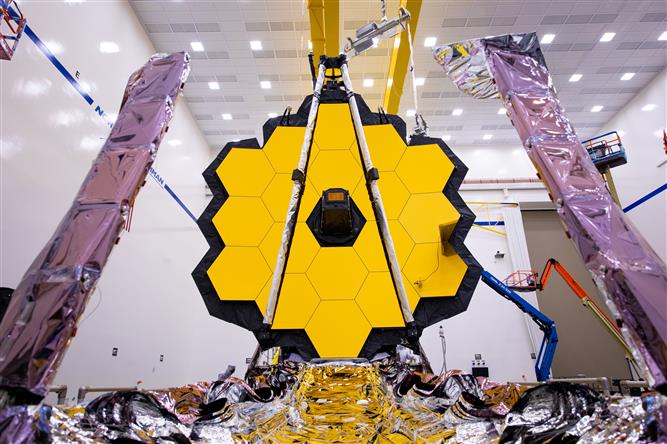
The main mirror- A giant honeycomb consisting of 18 sections.

The working of James Webb space telescope

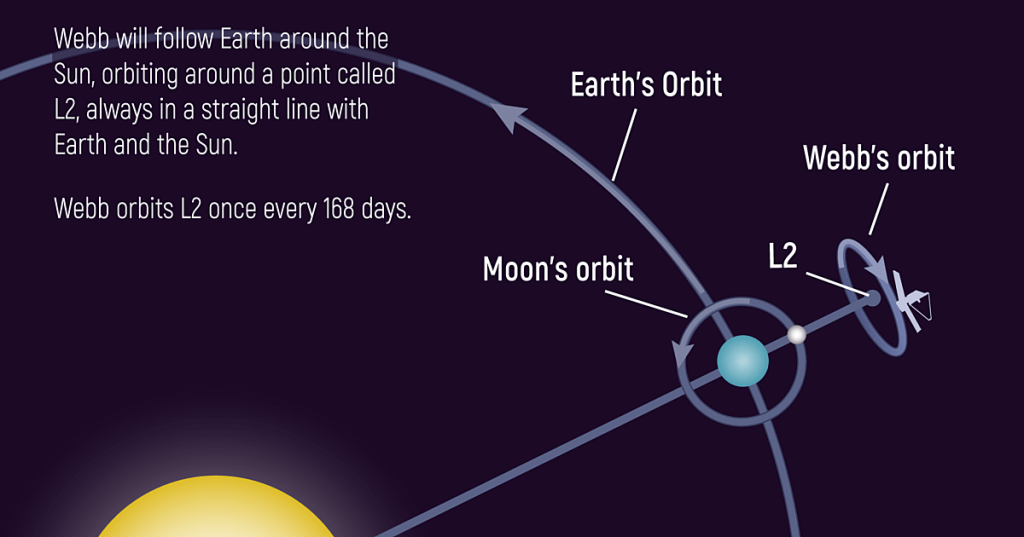
The James Webb is an orbiting infrared observatory that will investigate the thermal radiation of space objects. When heated to a certain temperature, all solids and liquids emit energy in the infrared spectrum; here there is a relationship between wavelength and temperature. The higher the temperature, there will shorter the wavelength and higher the radiation intensity. James Webb sensitive equipment will be able to study the cold exoplanets with surface temperatures of up to 27° Celsius. An important quality of this new telescope is that it will revolve around the sun and not the earth unlike Hubble which is located at an altitude of about 570 kilometers in low earth orbit. With the James Webb orbiting the sun, it will be impossible for the earth to interfere with it, however he James Webb will move in sync with the earth to maintain strong communication yet the distance from the James Webb to the earth will be between about 374,000 to 1.5 million kilometers in the direction opposite of the sun. So its design must be extremely reliable.

The James Webb telescope weighs 6.2 tones. The main mirror of the telescope is with a diameter of 6.5 meters and a colleting area of 25 square meters, it resembles a giant honeycomb consisting of 18 sections. Due to its impressive size, the main has to be folded for start up; this giant mirror will capture light from the most distant galaxies. The mirror can create a clear picture and eliminate distortion. A special type of beryllium was used in the mirror which retains its shape at low cryogenics temperature. The front of the mirror is covered with a layer of 48.25 grams of gold, 100 nanometers thick; such a coating best reflects infrared radiation. A small secondary mirror opposite the main mirror, it receives light from the main mirror and directs it to instruments at the rear of the telescope. The sunshield is with a length of 20 meters and width of 7 meters. It composed of very thin layers of kapton polyimide film which protects the mirror and tools from sunlight and cools the telescope’s ultra sensitive matrices to 220° Celsius.

The NIRCam- Near Infrared Camera is the main set of eyes of the telescope, with the NIRCam we expect to be able to view the oldest stars in the universe and he planets around them. The nurse back near infrared spectrograph will collect information on both physical and chemical properties of an object. And the MIRI mid-infrared instrument will allow you to see stars being born many unknown objects of the Kepler belt. Then the near infrared imager and sliteless spectrograph or NIRIIS camera is aimed at finding exoplanets and the first light of distant objects. Finally the FGS- Fine Guidance Sensor helps accurately point the telescope for higher quality images updates its position in space sixteen times per second and controls the operation the steering and main mirrors. They are planning to launch the telescope with the help of the European launch vehicle Ariana 5 from the kourou Cosmodrome in French Guiana space center. The device is designed for between 5 to 10 years of operation but, it may serve longer. If everything goes well, $10 billion worth of construction and one year of preparation will have finally started in orbit.

About that author- Edgar Allan Poe

Edgar Allan Poe established his name in literature majorly as a short story writer and poems with his great command in writing. He is also considered as the architect of the modern short story. Edgar Allan Poe, often discussed through his writing which was usually in the horror genre.

Early Life 

Edgar Allan Poe was born in 1809 in Boston, Massachusetts, U.S. his parents were both actors. He was very young when he lost both his parents and was then taken care of by John Allan and his wife. In 1824 Poe got into the University of Virginia and was doing well academically but had to leave due to financial stress. 

Early career 

After living with Allan for sometime Poe went to Boston and published a collection of poems Tamerlane, and Other Poems in 1827. He also was forced to join the army, because of his poverty. 

He published his next collection of poetry Al Aaraaf, Tamerlane, and Minor Poems in 1829. Both of the collections that were published did not receive much attention. The same year Poe’s father helped him secure him an appointment at the U.S. Military Academy at West Point.

About 2 years later Poe moved to New York  , where he published another collection of his works, Poems.

He later went back to Baltimore to his aunt and began writing stories. His stories were getting published in newsletters, he also won a 50 USD cash prize for one of his short stories MS. Found in a Bottle involving an unnamed narrator who sails a ship and encounters a bunch of terrifying situations along his journey.

Poe was offered the position of an editor at Southern Literary Messenger in Richmond where he married his 13 year old cousin, which is bizarre but it was 1836. 

Poe established himself as a fine literary critic over the years although his writing did not grab people’s eyes until the late 1930s. 

Later Years 

His career was going well but he was still not earning enough, his jobs were not getting him enough money so he went to New York again, where he was often seen drinking. In 1838, he published The Narrative of Arthur Gordon Pym, the only complete novel by him.

A year later, he was the editor of Burton’s Gentleman’s Magazine in Philadelphia and after that he was the editor of Broadway Journal in New York City. While editing in Philadelphia and New York he published several stories like Broadway Journal in New York City. which was published in Burton’s Gentleman’s Magazine while he was editing there, Burton’s Gentleman’s Magazine, his first detective story published in 1842 in Graham’s magazine.

Poe’s work grabbed national attention after the publishing of his poem The Raven which led him to become an editor of the Broadway Journal. Virginia, Poe’s wife passed away due to tuberculosis in 1847 after which he was involved romantically with multiple women. 

Poe moved to Baltimore in 1849, where one morning Poe was discovered lying, almost unconscious and a few days later, he died. The cause of his death is still not known  

Sigmund Freud

One day, in retrospect, the years of struggle will strike you as the most beautiful– Sigmund Freud.

Sigmund freud one of the most influential neurologists known to us

An Austrian neurologist and founder of psychoanalysis. He conducted a lot of research throughout his life, and was wrong about a lot of his studies but he still managed to leave a mark in the science textbooks

Made a profound impact on psychology even though he faced a lot of criticism for a lot of his studies. He had a lot of unconventional ideas, he was filled with them. It is known that he studied and pushed the use of cocaine, this also led to one of his close friends getting addicted to the drug.

Sigmund Freud was born in 1856, Freiberg, Moravia, Austrian Empire

At the age of 17, he went to study medicine in the University of Vienna where he studied physiology under Ernst von Brücke. He spent about 6 years in Brücke’s lab where he compared brains of different animals. 

In 1882 After graduating from The University of Vienna, he started working in the General Hospital in Vienna as a clinical assistant under the psychiatrist Theodor Meynert and Hermann Nothnagel.

In 1885, went to Paris to study neuropathology at a clinic where he also worked under  Jean-Martin Charcot, charot used to work with patients with hysteria which exposed him to psychological disorders and the possibility that psychological disorders might be linked with the mind and not the brain. Charot’s technique of hypnosis left freud quite impressed and was intrigued by the idea of hypnosis 

After his return from Paris he established a clinic for neuropsychology for his clinical practice and this could also be termed as the beginning of his psychoanalytic theories. Freud was partners with the physician Josef Breuer for a long time and also published their work together in 1895 Studien über Hysterie (Studies in Hysteria) which was a result of some previous research conducted and their clinical experience.

The next year in 1886 he married  Martha Bernays with whom he had 6 children, one of being Anna Freud who followed her father and studied psychoanalysis just like him.

Freud’s psychoanalytic theories further  gave birth to multiple concepts. Psychoanalysis is a collection of theories associated with psychology and a group of techniques that deal with the unconscious mind with an attempt to cure mental disorders. It basically involved trying to make the unconscious thoughts of the patient conscious by various methods and when these thoughts were made conscious, they showed improvement. The development of these concepts and techniques were a result of Freud’s working with people and his own clinical experiences.

Now, psychoanalytics is a vast subject and everything mentioned in the article about his contributions was just the tip of the iceberg. It is impossible to cover the whole subject here,it is almost impossible to study and understand all of his work, that is the quality and quantity of work he has done for science and this article doesn’t  justice to his work, so I hope it is at least encouraging enough to get you to read more about his studies.

Mcaffeine Neem Face Wash

Mcaffeine Neem Face Wash Cleanser With Argan Oil & Vitamin E For Men And Women – 150 ml https://www.amazon.in/dp/B071X49GR9/ref=cm_sw_r_apan_glt_fabc_9B6RQWH965EW0W12D2T2

Factors used in this face wash are Caffeine, Neem, Argan Painting and Vitamin E. These all factor are skin-friendly. They not only clean your skin but also secure your skin. It’s extremely delicate to the skin, makes the skin smoother and vigour.

Greenberry Organics Detox activated Charcoal Face Wash

Greenberry Organics Detox activated Charcoal face wash for anti-pollution Oil control and anti-acne with the goodness of Tea tree, Mulberry and Grapefruit combo with Bio active Intense Night cream Unisex (100ml + 50ml) https://www.amazon.in/dp/B076PG55CF/ref=cm_sw_r_apan_glt_fabc_SFDCQPP9A8T30JCWP80Q

 Factors used in this face wash are Tea trees & fruits, charcoal and Vitamin c helps in keeping the skin healthy and soft. Makes the skin acne-prone and keeps it hydrated. Suitable for all types of skin.

Lotus Herbal Tea & Tree Anti Acne Face Wash

Lotus Herbals Tea Tree And Cinnamon Anti Acne Oil Control Face Wash, 80g https://www.amazon.in/dp/B0079Z7N3G/ref=cm_sw_r_apan_glt_fabc_D8N53Y620HHW1X1KDEBG

Lotus Herbals Tea Tree And CinnamonAnti-Acne Oil-control face Wash controls skin break out and lessens plenitude canvas without deserting any cleft- clogging buildup. It further controls sebum creation, lessens dry patches, and hydrates your skin. The cinnamon in it goes about as a natural constituent that evacuates dead skin cells and enhances blood income to make you look replenished and immature.

Clean & Clear Foaming Face Wash

Clean & Clear Foaming Face Wash For Oily Skin, 150ml https://www.amazon.in/dp/B00CI3HDMU/ref=cm_sw_r_apan_glt_fabc_HKAP31DH2V0G6FYKDJP1

A pomade-free facial cleanser that removes extra slick to help heal and avert boils. Formulated specially for gushy and combination skin types, this detergent flushes supererogatory canvas and contaminations. It helps combat papules and prevents them from returning. The detergent has a gentle formula suitable for everyday use.

Mama Earth Charcoal Face Wash

Mamaearth Charcoal Face Wash with Activated Charcoal & Coffee for Oil Control (100) https://www.amazon.in/dp/B07FPNW916/ref=cm_sw_r_apan_glt_fabc_dl_YSBZ7WZ30HTZNWR5C6K8?_encoding=UTF8&psc=1

Tired of the day-to-day struggle with gushing skin, choked pores, and dull skin? Bring back immaculate skin that looks immature and canvas-free with the power of Cranked Charcoal &Coffee.Crafted with the integrity of nature, Mamaearth Charcoal Face Wash pulls out poisons and contaminants from deep within the pores. The integrity of Coffee tightens skin pores and promotes yea skin tone to give you an canvas-free glowing complexion.

Neutrogena Deep Clean face wash

Neutrogena Deep Clean Facial Cleanser For Normal To Oily Skin, 200ml https://www.amazon.in/dp/B006LXDQRY/ref=cm_sw_r_apan_glt_fabc_dl_0F1YKXWWE1NGE0KQYS20

 Neutrogena is notable for making face fens for fulsome, acne-prone skin. This is your most solid option in the event that you have fulsome, and acne-prone skin. Delicate on your skin yet extreme on skin inflammation, the specific canvas-free equation tenderly purifies your skin from deep out. This face fen for fulsome skin contains Salicylic acid which is known to dispose of skin break out and reduces coming bunks.

Himalaya Neem Face Wash

Himalaya Herbals Purifying Neem Face Wash, 100ml https://www.amazon.in/dp/B002Q5JE2C/ref=cm_sw_r_apan_glt_fabc_1D670NAQADQ4RFK07F0X

Himalaya Herbals Purifying Neem Face Wash reduces skin inflammation and hickeys for all skin types. It has the combination of neem and turmeric for deep purification the skin from out without drying it out. It battles bacterial complications and forestalls there-occurrence of facial irregularities and calms your skin. It likewise improves the adaptability of the skin and positions out its tone.

Oily Skin

Soapy skin is more prone to acne, whelks, and pustules and hence you need an painting-free face swampland to remove supernumerary sebum and painting. So, to get relieve of the towering painting on your skin, you need to start using an painting- control face swampland.

Hagiographic skin is the main reason behind theover-creation of sebum in your skin. It makes your skin inclined to skin break out, pocks and operatives. It effectively catches other skin pollution which will in general obstruct pores and do your skin to appear dull and glutinous. But fret not as canvas control face mire is there for your deliverance. Use a face mire that suits your skin and mitigates you from your over the top creation of sebum. The worst part is soapy skin looks slippy and sticky which in turn results in occasion of whelks, pustules, and warts.