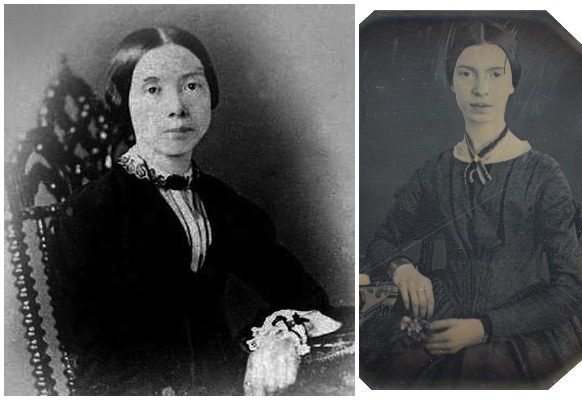
About Emily Dickinson, her writing style, favorite works and Amazing facts about her. Dickinson Series- Apple TV
Emily DIckinson
Birth, inspirations, and how her works were saved.
Emily Dickinson was born on December 10, 1830, in Amherst, Massachusetts. She attended Mount Holyoke Female Seminary in South Hadley for one year. Dickinson’s poetry was influenced by the Metaphysical poets of seventeenth-century England. She also read Book of Revelation, admired the poetry of Robert and Elizabeth Barrett Browning, and John Keats. She was dissuaded from reading the verses of Walt Whitman (Due to his daring writeups). Yet Walt Whitman and Emily Dickinson ending up being two of the most famous poets from the time period who revolutionized both the subject and style of American poetry. The first volume of her work was published posthumously in 1890 and the last in 1955. She died in Amherst in 1886. Dickinson’s family found forty volumes of nearly 1,800 poems (or “fascicles”).
Dickinson assembled these booklets by folding and sewing five or six sheets of stationery paper, what seem to be final versions of poems. The original order of the poems was not restored until 1981, when Ralph W. Franklin used the physical evidence of the paper itself to restore her intended order. He relied on smudge marks, needle punctures, and other clues to reassemble the packets.
The Manuscript Books of Emily Dickinson (Belknap Press, 1981) is the only volume that keeps the order intact.
Her Writing Style:
Her features were of verse forms suggesting hymns and ballads, with lines of three or four stresses. Her unusual off-rhymes have been seen as influenced by the 18th-century hymnist Isaac Watts. The intellectual content of her work amazed many and her writings were exceptionally and beautifully bold and original. Her verses has distinct quality by their epigrammatic compression, haunting personal voice, enigmatic brilliance, and lack of high polish.
Her major themes include nature, law, music, commerce, medicine, fashion, finding oneself, death and immortality, and love. She had a unique usage of Capitalization. She is best known for her use of slant rhyme.
Facts:
Unconventional approach to poetry, she interspersed her writing with many dashes of varying lengths and orientations (horizontal and vertical)
She could play piano.
She called herself a pagan.
She had an older brother named William Austin and a younger sister called Lavinia.
She wrote about the benefits of science over religion.
She lived with her family throughout her life. She shared her poems via letters to Susan, her alleged love interest. Who became her sister-in-law later.
She sent 250 poems.
Dickinson was a fan of the book ‘Jane Eyre’.
Her sister and Mabel Loomis Todd (An alleged mistress) published her works after Dickinson’s death.
Her second Tombstone reads “Called Back”, reference to an 1880 novel by Hugh Conway called “Called Back” that Dickinson enjoyed loved. This was the idea of Martha Dickinson Bianchi, her niece. The reason could be that she wrote a letter to her cousins before her death to her cousins which had only “Called Back” written.
Emily Dickinson’s well-known must-reads!!
I’m Nobody! Who are you?
Because I could not stop for Death
Success is Counted sweetest
Wild nights – Wild nights!
I taste a liquor never brewed
I Felt a Funeral, in my Brain
Hope” is the thing with feather
Tell all the truth but tell it slant
My Life had stood – a Loaded Gun
‘Hope’ is the thing with feathers
Emily Dickinson and Susan Gilbert
Ps… Dickinson is believed to have a lifelong love affair with her childhood friend Susan Gilbert, who agonizingly became her sister-in-law. Emily had written many letters to Susan till the end. The letters are believed to be indirect confession and expression of love. Austin’s mistress Mabel Loomis Todd -Editor and publisher- erased references to Susan from Emily’s letter, but the fact that the Mysterious “Master” poem – letters (Alleged love interest of Emily) were sent to Susan, doesn’t hide much. But, well historians will still call them “Best Friends”, right?
There’s a book called “Emily Dickinson’s Intimate Letters to Susan Huntington Dickinson”
Summary: For the first time, selections from Emily Dickinson’s thirty-six year correspondence to her neighbor and sister-in-law, Susan Huntington Dickinson, are compiled in a single volume. Open Me Carefully invites a dramatic new understanding of Emily Dickinson’s life and work, overcoming a century of censorship and misinterpretation.
MY FOREVER FAVOURITE FAVOURITE POTRAYAL OF EMILY DICKINSON.
Dickinson (2019) : SEASON 1 AND 2!!
An American comedy streaming television series about Emily Dickinson, created by Alena Smith and produced for Apple TV+.
Hailee Steinfeld as Emily Dickinson and Ella Hunt as Susan and many more !! Their acting is top-notch and the series will hold you till the end and leave you wanting for more.
Arunachal Pradesh is an Indian state in Northeast India. It was formed from the erstwhile North-East Frontier Agency (NEFA) region, and became a state on 20 February 1987. It borders the states of Assam and Nagaland to the south. It shares international borders with Bhutan in the west, Myanmar in the east, and a disputed border with China in the north at the McMahon Line. Itanagar is the state capital of Arunachal Pradesh. Arunachal Pradesh is the largest of the Seven Sister States of Northeast India by area. Arunachal Pradesh shares a 1,129 km border with China’s Tibet Autonomous Region.
Arunachal Pradesh, meaning ‘the land of the rising sun’ is a state comprising of 24 districts with 26 major tribes including various sub tribes. It is equally rich and diverse in both cultural and ecological aspects, however for a long time much of the world remained elusive to this richness because of the state’s remote location. An exploration of the cultural roots of Arunachal Pradesh therefore, takes us on a fascinating anthropological journey.
PEOPLE – A place brimming with tremendous anthropological richness, Arunachal Pradesh is home to several groups of indigenous people. Broadly speaking there are three cultural groups; first being Monpas and Sherdukpen of Tawang and West Kameng districts who are followers of the tradition of Mahayana Buddhism. The second group comprising of Apatanis, Adis, Galos, Mishmis, Nyishis, Tagins, Akas etc worship the Sun and Moon God while the third group including Noctes, Wanchos and Khampti (tribal communities of TLCN – Tirap, Longding, Changlang, Namsai) follow basic Vaishnavism and Buddhism respectively and are ruled by a hereditary chief. Additionally there are the Galo, Nyishi, Tagin, Apatani and Adi communities who are commonly known as Tani clans due to their connection with Abotani (abu/abo-father, tani-tribes) – from whom the mythical heritage of mankind’s origin is associated.
LANGUAGE – The people’s languages are mostly derived from Tibeto-Burman language with more than 50 dialects spoken by specific tribes. The Tani clans have similarities within each other’s social languages. Assamese is spoken by most people since prolonged influence of the Ahom dynasty era. Hindi and English are currently the most widely spoken languages for people across the state, besides their own tribe’s language.
CULTURE AND TRADITION – living in close proximity with nature since centuries, people were depended on Mother Nature for everything. From traditional handicrafts, fishing and hunting tools etc – the people developed many unique skills over the years and even today many of these skills are passed down. Apong (rice/millet wine) is the prominent drink induced by the people, especially in festivals. People used to drink it to honor the spirit guardians. Dance is an important element of the people’s heritage and traditional dancing along with priest/priestess chants, war dance and ritual dance with Buddhist connection etc are mostly performed by men. Ponu is performed in groups by both men and women for the celebration of joyous and fortunate events in the future. A rich oral collection of folklores and chants, usually in a ballad tone, have been passed down from centuries about the historical events, myths, power of spirits and calling of deities.
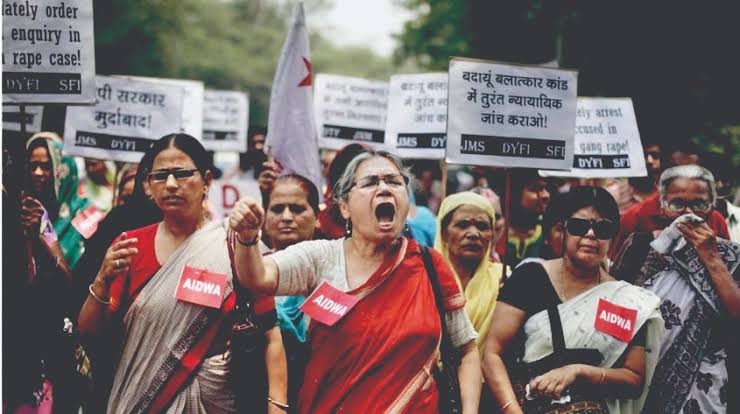
The task at hand is twofold : first, to present a schematic account of feminism in India ; second to bring up some theoretical and methodological issues entailed in representing it. This decision to problematize the process of narrating has been prompted by the fact that writing in the second decade of the 21st century implies that we take into cognizance some of the developments in the preceding decades that impinge in a very fundamental way on both the practice and theory of feminism. In other words, I seek to flag some of the changing features of the contemporary context within which I as a resident Indian scholar write about feminism for Western academia. (i) A rich and complex body of feminist writings has emerged over the last forty years which in many ways have become institutionalized within academia as well as within policy making, whether of various states or of international agencies ; (ii) the rise of multiculturalism and postmodernism in the West since the 1980s gave way not just recognition but celebration of diversity and plurality including that of divergent feminisms ; (iii) the rise of postcolonial studies, articulated in the writing of non-Western scholars located in the West on one hand and a predilection towards poststructuralist theory on the other ; (v) finally the greater visibility of India and Indian scholarship in the recent decades of globalization. My central contention is that these developments are not extraneous but constitutive of Indian feminism.
As a resident Indian feminist scholar I feel an acute sense of disquiet when what I have to say is readily slotted as yet another instance of burgeoning postcolonial writings, one more voice of diverse feminism. My discomfort is that postcolonial theory principally addresses the needs of Western academia. “What post-colonialism fails to recognize is that what counts as ‘marginal’ in relation to the West has often been central and foundational in the non-West” . Thus when I privilege British colonialism and Indian nationalism this is not a belated deference to postcolonial theory but a historical fact which Indians have lived and battled with and one within which the story of Indian feminism emerged and grew. Further, the theoretical shift to textual analysis that accompanied postmodernism and post structuralism led to a gross neglect of a historical and concrete analysis of the constraints of social institutions and the possibilities of human agency therein.
I start on this note to make a conscious break with concepts in circulation and a current academic propensity, which invokes ‘difference’ and ‘plurality’, celebrates ‘fragments’ in a manner of politically correct mantras without even being fully aware of the complex and concrete historical processes, which produce and perpetuate these differences and inequalities. Social institutions, production relations, individual and group actions (and reactions), retreat from such analysis while attention is focused on discerning ‘ruptures’ and ‘gaps’ in either textual representations or oral narratives. These ruptures appear like autonomous ‘marks’ awaiting discovery from the analyst rather than real, historically existing social contradictions.
In privileging India’s colonial past, I am not averring to a simple colonial social constructionist position, nor waving the wand of colonial cartography. I begin with the material and ideological dynamics of colonialism within which Indian feminism emerged and developed – a past that makes its presence felt in some expected and many unexpected, unintended ways as this paper would show. I therefore choose to understand the emergence of feminism in India in the following contexts :
history of colonialism and emergent Indian nationalism ; its subsequent advance within the trajectory of independent India’s state initiated development ; more recently within the transformed context of globalization and India’s own success story in it ; and growing assertion of marginalized castes and communities which has led to a complex deepening of the democratization process in India. While I have often been asked to tell the story of Indian feminism, I have in each instance been acutely aware of the convolution involved. The academic context of knowledge practices within which I write today about Indian feminism for a Western audience is only a part of the complexity. Though Western hegemony is not quite what it used to be, it is not easy to rid ourselves of our ‘captive imagination’ – a point that was driven home to me almost a decade ago as I struggled to write a conceptual story of feminism in India. I realized :
“the obvious but often overlooked fact that while, for western feminists whether or not to engage with non-western feminism is an option they may choose to exercise, no such clear choice is available to non-western feminists or anti-feminists. (…) our very entry to modernity has been mediated through colonialism, as was the entire package of ideas and institutions such as nationalism or democracy, free market or socialism, Marxism or feminism. Any question therefore, had to confront the question of western feminism as well…” What then is different today ? I would argue that while we had a great deal of interaction with the colonial West, we did not have the kind of increasingly institutionalized global academic interaction which we have today, a world where too often we all appear to speak alike, even when we seek to mark our difference. The earlier Western ideological influence and the opposition to it were both more powerful and explicitly political. The native was speaking but her voice was outside the deemed legitimate intellectual discourse. It was in the political sphere of colonial India that social reformers and nationalists sought to make history, sought to articulate a distinct nationalist and feminist identity (though informed of and often inspired by Western visions). Often this expressed itself as a denial. “I am not a feminist” was a statement heard more often than not from major women public figures. My argument has been that “the sheer persistence of this theme has a story to tell”. And the story is that ambivalence/evasion can be fruitfully read “both as a claim for difference as well as political strategies of the nationalist and women’s movement” (Chaudhuri, 2011b, p. xix). Readers will appreciate that those rough and turbulent struggles of feminist doings in colonial times within which feminism was being theorized were very different from the current, sanitized academic spaces where professionals seek to speak and write, no matter how many times the word ‘political’ is invoked. No wonder I had found it impossible to separate the history of action from the history of ideas, and in an intellectual world so completely subjugated by Western academic norms it took a while to recognize :
“that feminism was being debated, but differently, (…) such attempts at articulating difference were taking place in a context uninformed either by the language of difference or the more recent political legitimacy accorded to it… concepts which have ‘local habitation and name’ today and which slide spontaneously to the tip of the tongue and pen (‘gender construction, ’ ‘patriarchy’, ‘empowerment’, ‘complicity’, ‘co-option’) were couched in different labels a century ago.” My location as a resident Indian is important even in such times of times of globalization. Not only do I have to engage with the West, but a West with an increasing presence of the non-West and a Western academia, where the ‘native’ has already spoken. Postcolonial scholars of South Asian origin are leading intellectual voices of the non-West in the West, particularly North America. This compounds the matter more, for ‘national’ contexts do still matter in social sciences and humanities. At another level, many of the issues that at one time appeared to be issues of the non-West are now eminently visible in the West, home to increasing and strident cultural diversity. At one time ‘Western-located Indian’ feminists decried the fact that Indian feminism was “self effacing”, that Indian women see their personal desires as unnecessary and were engrossed with larger questions such as questions of community identity, democratic citizenship, religious beliefs, workers’ rights, cultural distinctions, and rural poverty. The question that Western feminisms would ask and we would echo : “Where amidst this din of large issues were the women ?”.
A decade into the 21st century, the terms of the debate seem to have changed entirely in the West. It seems overtly obsessed with questions of cultural identity, of alien cultures and a realization that choices and selfhoods need not be expressed in the language of the Western individual woman. In a world politically more intolerant than ever, in a Western academia more multicultural than ever, the histories of non-Western feminisms no longer appear extraneous, beside the point, or even lacking the ‘authentic’ feminist impulse. Almost lurching to the other extreme, voices of non-Western women are now validated in the West. Alternative modes of agencies are being increasingly imagined. I am a trifle wary of the representation of the third world woman either as “victim subject” or as an “alternate agential self” – catch-all terms that reign in postcolonial Western academia. It is in such a context that it may be productive to shift focus to the ground reality of Indian feminist deliberations such as that of the Thirteenth National Conference of the Indian Association of Women’s Studies (IAWS) 2011, the largest national-level body of Indian feminists. Here we find a context that is far more complex and manifold, and concepts that are far more varied. In contemporary Indian feminism we thus have issues ranging from :
developmental induced displacements to questions of alternative sexuality ; agrarian crisis to the need to challenge hierarchies of victimhood versus pleasure ; reproductive health to the question of controlling resources – land, forest and water ; global capitalism and the localized and diverse articulations of culture to military conflict ; language, voices representations to new markets and interlocking inequalities ; rural labour to women in religions ; starvation to female spectatorship. The above issues are not exhaustive. They are simply indicative of the unequal and diverse voices WITHIN contemporary Indian feminism .
Inequalities and diversities define Indian society. Various precolonial social reformer movements, the British state, the nationalist and feminist movement have always had to negotiate with this. Thus British colonialism impacted different regions differently both because of the stage of colonialism as well because of the nature of different regions. Thus there were periods of reluctance on the part of colonial rulers’ meddling with India’s social customs such as those related to women, for fear of reprisal, and periods of active involvement to intervene such as the abolition of sati in 1829 or raising the Age of Consent for Women in 1863 which brought forth a furiously hostile reaction, leading again to a phase where the British preferred to rely more on their conservative allies. What one can however infer is that colonial rule, the humiliation of the subject population, the impact of Western education, the role of Christian missionaries, growth of an English speaking Indian middle class all led to an intense and contested debate of the women’s question in the public sphere. This debate itself has been scrutinized carefully from different perspectives. We thus have a question on whether the debate on sati was about women or about reconfiguring tradition and culture ; we have questions on why Dalit women’s public initiatives and intervention went unwritten; we have arguments that suggest social reforms were more about efforts to introduce new patriarchies than about women’s rights and gender justice. Such rethinking emerges from the challenges posed by social movements and new theorizing emanating from structural transformations within the country.
The Indian feminist is debating in part within the ‘national’ context on ‘local’ issues, even as she is part of the contemporary globalization of academia and of feminist scholarship. That there is such a strong presence of scholars of Indian origin within Western academia who speak for India but within an intellectual world quite distinctively Western, with its own set of empirical and conceptual imperatives, compounds the matter further. Concepts travel thick and fast and are often picked up without any serious engagement with either their contexts or with the theoretical frameworks from which concepts emerge.
Readers will excuse this digression. For I think that, at this present historical juncture where intellectual international exchanges are both intensive and far reaching, one needs to problematize the contexts of production, circulation and reception of intellectual representations. It is necessary therefore to draw attention to the fact that “texts circulate without their context…. and… the recipients, who are themselves in a different field of production, re-interpret the texts in accordance with the structure of the field of reception.” The concepts with which I seek to tell the tale of Indian feminisms needs historicizing. Further, the theoretical frameworks that have sought to analyze the history of Indian feminisms are themselves products of social movements such as the anti-colonial, the nationalist, the feminist, the left and anti-caste. Simply put, much before the theoretical shift to a language of difference, Indian social movements – whether nationalist or feminist – have had to negotiate with both the questions of difference and inequality.
The 20th Century Movement
Prior to the 1990s, the Indian state visualized a state-led development in alliance with national capital (Chaudhuri, 1996). The 1990s altered this paradigm. Transnational capital and the market acquired ascendancy. This shift reconfigured both class and gender in the developmental priority, and therefore necessarily in the national imaginary. Readers will recall how the Indian working class and peasant women were seen as the face of the nation.
This ideological frame changed. The national iconic representation of the working class and peasant women gave way to the new icons of Brand India – the super rich, the beautiful people of the now growing Beauty Business. The buzzword was ‘growth’ and the way towards it an ‘unbridled market’. Structurally, deregulation was the way forwards. One of the corollaries of this pattern of development was an unprecedented expansion of the informal sector wherein a large section of women worked on wretchedly low wages with no security of tenure. Feminists like Mary John and U Kalpagam (1994) have observed how this model has been legitimized by international institutions like the World Bank who have drawn upon feminist scholarship about “the incredible range of tasks poor women perform, their often greater contribution to household income despite lower wage earnings, their ability to make scarce resources stretch further under deteriorating conditions”, but through a crucial shift in signification displayed the findings as no longer arguments about “exploitation so much as proofs of efficiency” (John, 2004, pp. 247-248). Not surprisingly, a great deal of development gender discourse is now exclusively addressed within the micro credit framework, premised upon the idea that women are efficient managers and can be trusted to repay.
Significantly, while most feminists were critical of the state relegating its commitment to the poor and vulnerable, there were contrary views. Gail Omvedt for instance contends that “being anti-globalisation” has become the correct standard of political correctness and argues that “the only meaningful question is, for a Marxist (or dalit, or feminist) activist, what advances the revolution, that is, the movement towards a non-caste, non-patriarchal, equalitarian and sustainable socialist society ?” (Omvedt, 2005, p. 4881) Sections within the Dalit movement itself have aggressively projected the need for dalit capitalism and globalization as the way forward (Chaudhuri, 2010).
I have already alluded to the rise of the Beauty Business which was closely tied to an unprecedented expansion of the advertising and consumer goods sector, which together recast the Indian woman from the frugal to the profligate spender – in keeping with the changing image of India (Chaudhuri, 2000, 2001). It is impossible to capture the finer contours of the feminist debates in this context. A quick reference to the diverse takes on a major Beauty Contest that was organized in Bangalore in 1997 may capture the key points. The contest was marked by protests by the women’s movement against beauty contests on the grounds that “these contests both glorify the objectification of women and serve to obscure the links between consumerism and liberalization in a post-globalization economy”. Processions were held in Bangalore with mock ‘queens’ crowned as ‘Miss Disease’, ‘Miss Starvation’, ‘Miss Poverty’, ‘Miss Malnourished’, ‘Miss Dowry Victim’, etc. in order to highlight the issues of poverty, and lack of nutrition and health care in the country (Phadke, 2003, p. 4573). Shilpa Phadke, a younger generation feminist, argues in this context that “the focus on women as ‘victims’ could well serve to erase images of women as subjects with agency, sometimes suggesting that feminism is a movement devoid of joy”. She further argues that the market rather than the state is better as “a potential turf for negotiation”. For “unlike the state, where the citizen is largely a client, for the market the individual is first and foremost an actor-consumer. Can the women’s movement use the strategies of the market to re-sell itself to a larger audience and reclaim its right to speak on behalf of a larger constituency of women ?” (ibid., p. 4575) It is important to reiterate here that many continue to perceive the state and political parties rather than the market or NGOs as responsible for their “basic needs”, and they approached either the government agency concerned or political parties when they needed resolution of any problem (Chandhoke, 2005). The great Indian middle class may not need the government, but the vast majority of the poor do. The idea of citizenship as both hegemonic and potentially liberating has been very central to Indian feminism (Roy, 2005). Into the second decade of the 21st century, Indian feminism is engaged with a whole host of issues – some global, some not.
The conclusion
The central contention that has informed this paper is that while boundaries (including academic) are increasingly breaking down, there still exist considerable distinctions between the global and local, the West and non West. And here, I am not alluding to any idea of an essential culture, or to notions of pure indigenous concepts, but only to the specificities of history. Western concepts of the state and market, citizen and consumer hold here as much as anywhere else. This paper bears witness to this. What differ are the details that make the stuff of human action and human conceptualization. The context, within which concepts emerge and the contexts where they travel to, needs enunciation. Its significance in an increasingly globalized academia cannot be overstated. Hence the focus here is on both the tale and the telling of Indian feminism. No ready conceptual frame of the postcolonial, even less no seductive binary oppositions, no amount of sophisticated readings of textual representations will suffice. Endless invocation of ‘voices’ and ‘agency’ will not set free the elusive feminist subject. Careful historical analysis may offer a better understanding of the many achievements and failings of Indian feminism.
“What soul is to body, the same is sustainability is to the progress of a nation” The United Nations Environment Program (UNEP) describes a green economy as “one that results in improved human well-being and social equity while significantly reducing environmental risks and ecological scarcities” (2010). The concept was first coined in 1989 by the London Environmental Economics Centre (LEEC) in a publication called the “Blueprint for a Sustainable Economy”, authored by David Pearce, Anil Markandya, and Ed Barbier. A green economy aims at converging the environment, society, and economy. However, several encumbrances have obstructed the transition towards a green economy. The foremost being the inefficacy of businesses to invest in the environment. It is mainly due to a myth that it would not yield economic benefits. The investment would generate additional jobs, increase trade and output. A well-framed strategy would facilitate poverty eradication, equity, and growth.
THE COGNITION BEHIND GREEN ECONOMY
A Green Intelligence Report estimated that by 2030, energy-related CO2 emissions in the United States increase to 6.9 billion metric tonnes (MT) under a “business as usual scenario’’. It has been projected that by 2050, the emissions would rise to 42.3 billion MT. According to “Environment Outlook to 2050 “, air pollution has been projected as a major environmental cause of mortality by 2050, ahead of the lack of clean drinking water and sanitation. As cited by The Global Alliance on Health and Pollution, almost 8.3 million premature deaths each year due to air pollution. India and China have the highest number of pollution deaths per year -2,326,711 and 1,865,566 deaths. The reasons for this seem to be their high population and ever-growing industrialization. According to Greenpeace, Centre for Research on Energy and Clean Air, as a share of GDP, these countries incurred 5.4% and 6.6% of the economic cost of air pollution in 2018. The estimated cost of air pollution was $ 2.9 trillion, equating to 3.3% of the global GDP. These projections indicate the urgent need for action as the cost of damages is exponential and will worsen if not addressed through a strategic framework.
Sweden has been ranked First by The Global Green Index, 2018. At the same time, it was one of the richest countries with the highest GDP per capita, amounting to around 51,615 USD (World Bank). Thus the concept of a green economy provides a potential solution to these problems. According to the study by Brookings Institution Metropolitan Policy Program called “Sizing the Clean Economy, a National and Regional Green Jobs Assessment”, investment in clean energy projects generates 3 times as many jobs as generated by fossil fuel projects. As cited by the report called “Towards a Green Economy: Pathways to Sustainable Development and Poverty Eradication”, governments should spend $1.3 trillion a year to facilitate the shift to a green economy.
GREEN ECONOMY-THE PROSPECTIVE SOLUTION
A green economy recognizes the interdependence between the environment, society, and economy. It tries to reduce pollution and uses resources efficiently while generating employment, reducing poverty, encouraging equity. It seeks systematic, accountable, and transparent governance as a prerequisite for framing and implementing effective policies. A circular economy is a potential sustainable economic model, a solution to the problems associated with a linear economy. In a Circular Economy, materials are reused, recycled, or recovered. It avoids or minimizes waste and prevents greenhouse emissions as well. Sustainable Development Goal (SDG) 12 on sustainable consumption and production (SCP) and UNEP’s circular economy approach complement each other. SCP is all about producing goods and services responding to basic needs while providing a better quality of life by minimizing toxic materials.
CONCLUSION
We need to understand that the concept of a green economy is not simply about renewable energy or sustainable utilization of resources. On the contrary, it is much deeper than that. Its ambit extends to factors like societal inclusion in terms of Social Equity, Gender Equity, and other factors like quality of life where everyone has access to basic requirements like sanitation or nutrition. It focuses not only on increasing growth in terms of GDP but aims to achieve inclusive growth wherein no section of the society is deprived of development or is left. Due to these reasons, the Green Growth Index gives significance to factors like social inclusion as well. We need a combined effort involving the active participation of civil society. Since the civilians are well acquainted with the needs and priorities of the local people, it would facilitate the initiative. It would also promote equity and poverty reduction, the underlying motives of a green economy. We ought to understand that environment, society and economy are complementary to each other. Hence we need integrated policy-making and effective methodology to move towards a green economy.
“If we teach today’s students as we taught yesterday’s then we rob them of tomorrow.” During the pandemic, technology facilitated education in the best way. Therefore the intertwining of blockchain and education #EdChain will certainly be really. Blockchain is an immutable, decentralised form of database that stores information. As the name suggests, it is a chain or a series of blocks that store data like the date, time and amount of transactions.
The most important feature associated with blockchains is security. Each block within a blockchain contains a hash of the previous block. Hashing makes it difficult to alter the blocks. Thus it ensures immutability. Incentivising miners ensures integrity as they disapprove malicious transactions. These mechanisms ensure the high security of data.
The intertwining of blockchain and education would help improve teaching and learning in various dimensions.
Decentralized control over data
Blockchain can store data related to students’ credentials. It can also store details like the skills or courses that students have learnt. Consequently, a centralized authority will not control this data. It would also enable the students to share this data with their prospective employers. Furthermore, students can store data related to both classroom learning and skill enhancement. It would ensure accuracy in the resumes. The security mechanisms of blockchain ensure the safety of the data. Students cannot alter past educational certificates stored on the blockchain so it would ensure accuracy. Blockchain also takes care of privacy. This is because blockchain would store the hash of the data rather than the data itself. Students can also encrypt data before storage at the option of the student. We already have many blockchain-powered applications that facilitate the record-keeping of digital credentials and intellectual property.
Ensuring accuracy
Students cannot alter their past educational certifications. Therefore, employers would get the most accurate information about their skills. This would also help find the perfect matches between employers and job seekers. A distributed ledger system like blockchain supports safe chronological academic records. By integrating transparency and accuracy blockchain can create a strong relationship between employers and job seekers.
Make learning engaging
Blockchain can also make learning more engaging. This would help us to move forward from the conventional tools of teaching and learning. Blockchain’s OpenSource framework is a tool that can enhance online teaching and learning. It would also facilitate the personal development of students. New technologies combined with blockchain can provide personalized learning. Consequently, we can customize the content to suit the needs of different students. We can also have gamified online education to make learning interesting.
Smart Contracts
Students can also enter into various Smart Contracts with the university through blockchain. These contracts can be related to various payments like tuition fees or examination fees. The contracts will provide convenience and safety of transactions at the same time. Smart Contracts in Blockchain can help automate administrative tasks. Additionally, this would also reduce overhead costs related to administrative tasks.
Efficacy in Selection
Blockchain would certainly reduce CV fraud by streamlining the data provided by the students. It can also make appropriate matches between employers and job seekers by suiting their requirements. Blockchain-based university diplomas would certainly be a good leap forward in the selection of job seekers
SUCCESSFUL INITIATIVES
Digital Credentials Consortium is an initiative that aims to enhance the record-keeping of digital academic credentials. The initiative started in 2018, intending to create a safe mechanism for storing digital academic credentials. It will enable the students to hold a lifelong record of their academic achievements. Students can easily share this data with the employer as well. The students will also get other benefits like safety, security and privacy. Moreover, they will not be required to pay fees to get copies of their credentials from the university. It would also benefit the educational institutions by managing records securely, eliminating the risk of identity fraud. Thence they can save the cost and time required in admin work. Subsequently, the employers would get the benefit of easy access to accurate records.
MIT is one of the leading institutions that has developed blockchain applications to streamline academic accreditation. It believes that the intertwining of blockchain in education can be used for various purposes.MIT Media Lab and Learning Machine’s Blockcerts is a platform. It allows educational institutions to incorporate blockchain accreditation in their programs. The University of Nicosia offers accredited courses through verified certificates on the blockchain. Southern New Hampshire University issues bachelor and diploma degrees in a digital format on the blockchain besides in a traditional paper format.
CONCLUSION
Educational technology has made good progress over the last 20 years but, there is a long way to go. Modern technologies like blockchain can facilitate progress effectively. According to the Gartner, 2019 CIO Survey around 2% of higher education respondents has already incorporated blockchain. On the other hand, 18% are planning to do so. However, 47% are not interested in incorporating blockchain in education. The possible reason behind this seems to be a wait and watch approach. Keeping in mind the hype and potential risks of blockchain respondents probably aim at playing safe. Record keeping is the most promising use of blockchain besides security and privacy. Overall we have numerous universities and enterprises aiming at enhancing education by intertwining blockchain with it. These universities use blockchain not only for record-keeping but also for teaching and learning purposes.
We need to have an accepting attitude towards change. Amalgamating technology in education may seem difficult. But it is the need of the hour. New technology can improve the existing methods by saving time and cost at the same time. Many universities have already explored this walk still we need more efforts in this regard. As they say, change is the only constant, so we need to be more receptive to this change.
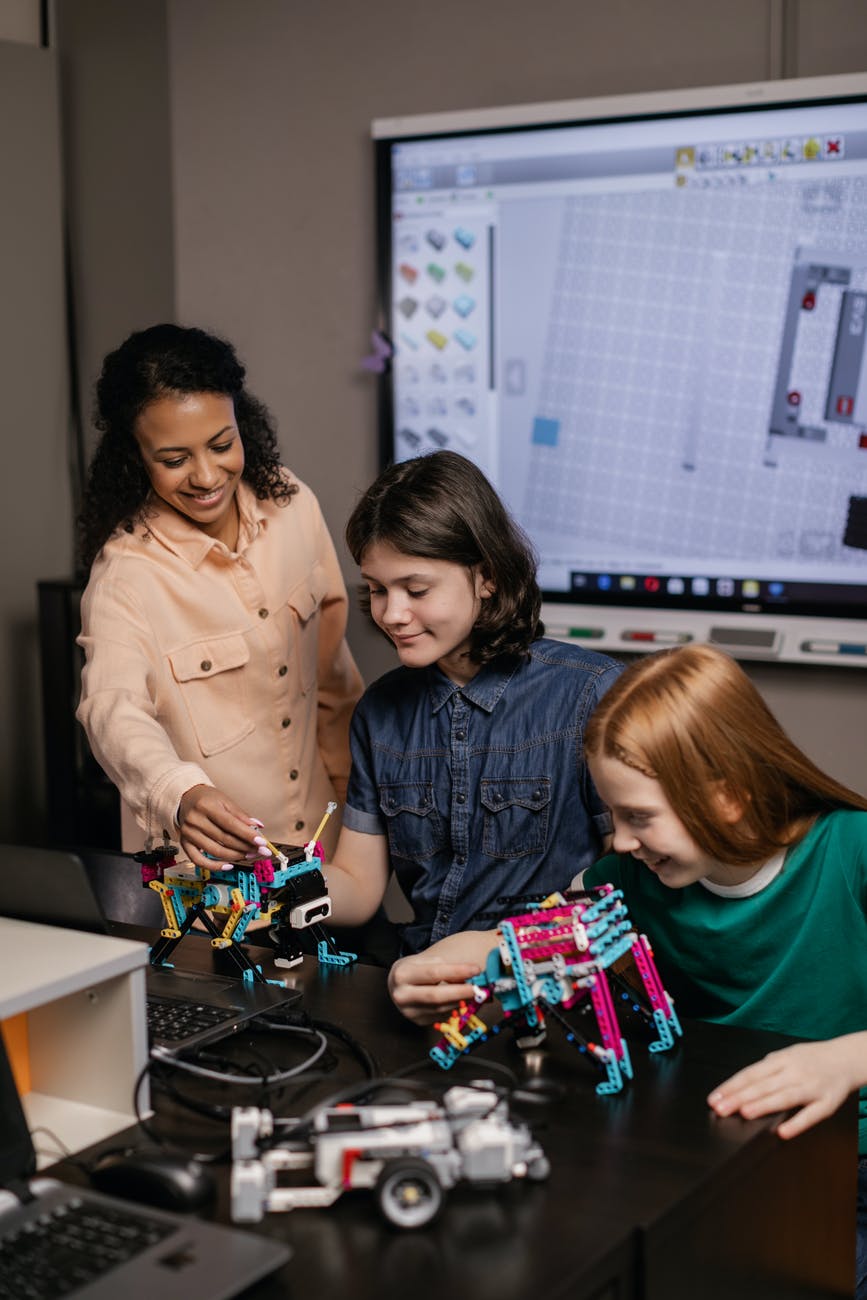
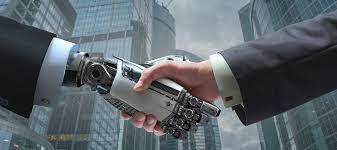
“Our future success is directly proportional to our ability to understand, adopt and integrate new technology into our work.” During the pandemic, technology facilitated both work and learning. Keeping this in mind, the idea of intertwining Robotics in Education #EduRob seems convincing. According to the research by Global Market Insights, Artificial Intelligence in the education market will surpass USD 6 billion by 2024.
A PEEP INTO THE EFFICACY OF ROBOTICS IN EDUCATION
Technology in education, popularly called edtech is the need of the hour.
Audio Visual Media
Robotics can use audiovisual media to impart quality learning. Online learning requires a lot of attention from students and a proper system to deliver on the part of teachers. Therefore, Robotics can also make use of Virtual Facilitators like gesture recognition, 3-D gaming and computer animation to create interactions with students, making learning engaging. Subsequently, gamification tools can make the subject more engaging. Also, Chatbots can address queries by providing tailor-made answers.
Combat the Paradox in Employment
India has witnessed a paradox in employment. Indian recruitment is going through a peculiar phase. Surprisingly, almost 8 million youngsters enter the job market every year; still, companies find it tough to fill vacancies for crucial roles. The main reason for this is the enlarging skill gap. Many times students do not possess the skill set required by companies for crucial roles. Artificial Intelligence (AI) in Robots can help re-skill and up-skill students. Subsequently, Robotics can use AI and predictive analysis to map high demanded skills to boost career prospects.
Streamline admin work and universal access
Teachers have to spend their precious time and energy on admin tasks and paper checking. They can use this time to impart knowledge. Here Robotics comes into play as it can streamline these tasks. Robotics in Education gifts us universal access wherein students belonging to different linguistic communities can learn freely.
Customized Learning
The most fundamental efficacy of Robotics in Education is customized learning. Different students have different problems. Therefore, we require different methodologies to address them. Some students have good grasping power while some learn at a slower pace. Subsequently, AI in Robots can smartly customize learning by giving challenging tasks to fast learners and going at a slower speed for slow learners. It can also communicate with learners, simulating human experiences by voice or hologram.
Catering to differently abled students
Today, we have a plethora of online courses for upgrading skills available. But unfortunately, these courses are unable to cater to the needs of differently-abled students. In such a scenario, Robotics attains prime importance. AI in Robots can create customized lessons to suit the learning needs of differently-abled students as well. During the video conference for Smart India Hackathon, 2019, an engineering student from Dehradun presented her program that could help dyslexic students by utilizing the benefits of AI. Hence, Robotics can unclip the wings of specially-abled children by enabling them to learn the latest skill sets.
A GLANCE AT SOME SUCCESS STORIES
Some counties have already very well amalgamated technology with education. Columbia is running full-time online schools as a substitute for bricks and mortar schools. The schools use digital resources like digital grade books, digital portfolios, learning games and real-time feedback of students. Finland has goodwill as an educational powerhouse, imparting quality learning. It is also known for making the most advanced application of digital technology in formal and extracurricular activities. Finland has successfully used Robotics through humanoid robots and mobile apps. The robots can understand and speak up to 23 languages. The robots can also give feedback to teachers about the problems that students face. Robotics enhances the overall interest in STEM (Science, Technology, Engineering and Mathematics) by developing critical thinking skills.
Robotics in E-Learning is not an unexplored arena. Air Force technicians use Intelligent Tutoring Systems like SHERLOCK to detect electrical system problems in aircraft. We can use a similar system in education as well. Another pertinent instance is Duolingo which is one of the most famous apps used for learning foreign languages. Carnegie Learning’s MATHia was awarded the “Best Use of AI in Education”. It is a learning engine that adjusts itself according to the capacity of students.
THE FINAL THOUGHT
Robotics can certainly pave a new path for Education. It provides adaptive learning to help students ace subjects. It would help impart quality education through an engaging methodology.Skill upliftment through a digital medium can provide a flexible approach besides adding shimmer to one’s resume. Today various fields are making optimum use of Robotics. Hence we need to deal with the challenges associated with it. The primary challenge before us is preparing students for this change. We need to instill an understanding that AI would simply complex things while eliminating boundaries in learning. At the same time, one also needs to understand that there are roles requiring creativity, emotional intelligence. Only humans can play these roles well. We ought to bust the myth that utilizing Robotics in various fields would not lead to unemployment.
The purpose of using Robotics in Education is not to replace the existing people but to enhance the quality of Education. Thus the need of the hour is striking a balance and combining both AI and human abilities. Another challenge is that there is a vast need for Research & Development in this field as we are just in the initial phase of usage. Extensive Research and further innovation would ensure successful implementation.
Adapting to changes always seems difficult. But we need to understand that change is the only constant. Therefore, we must be more receptive to it.“Robotics in Education is not meant to eliminate humans but to facilitate them”.
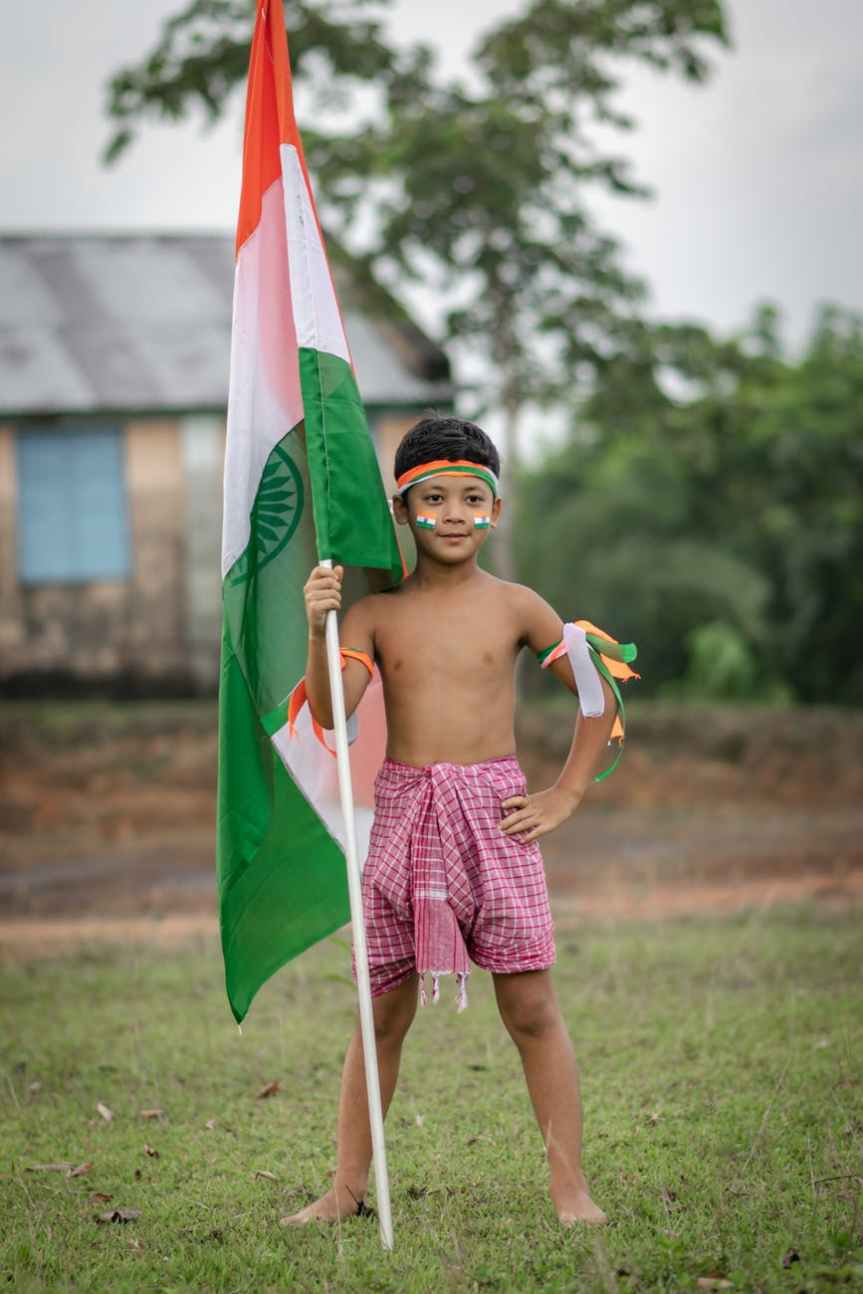
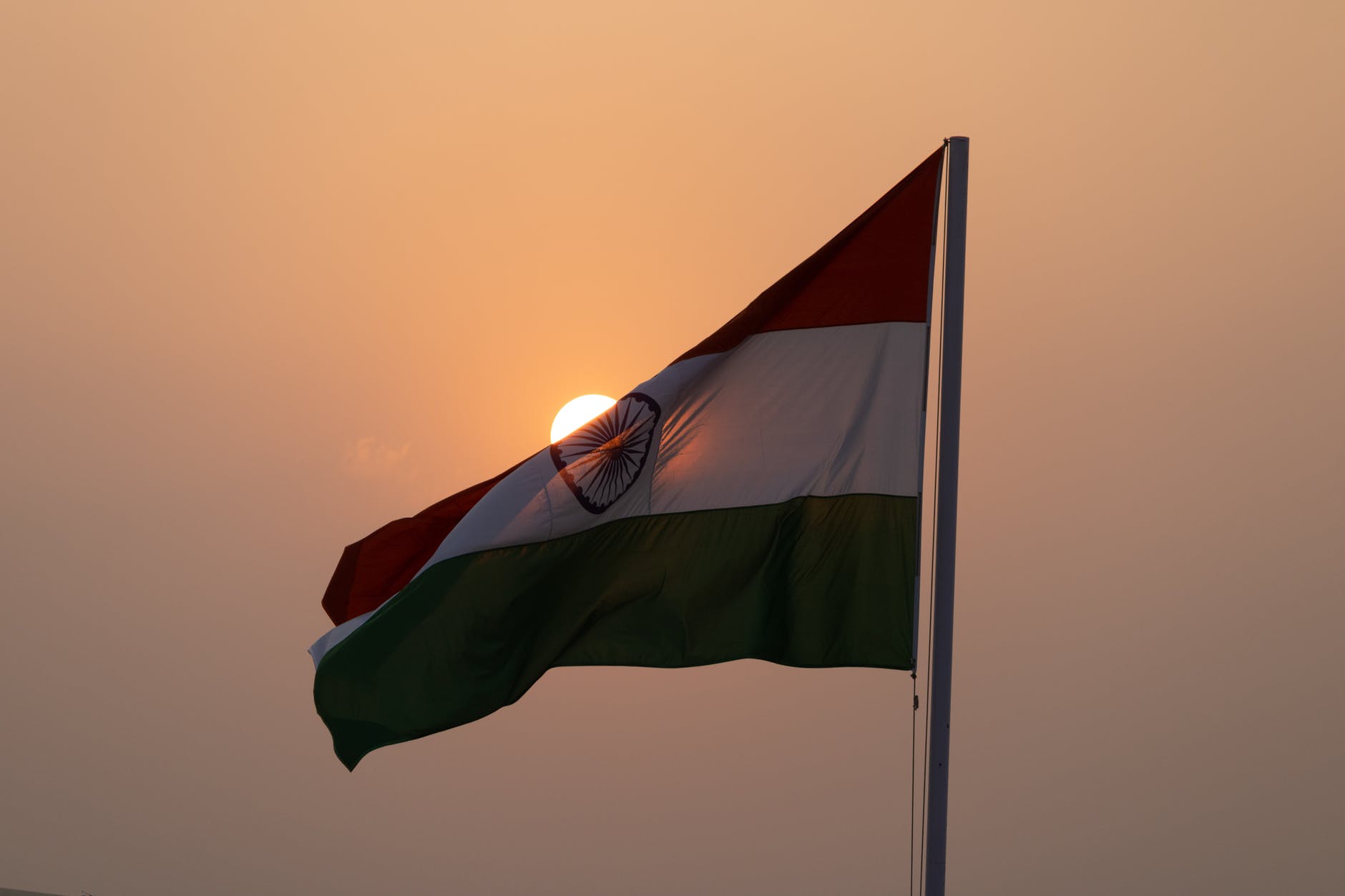
India is in her 75th year of independence and about to enter the 76th year. India- the 7th largest country by size, the 2nd most populous country and the world’s largest democracy. Celebrating our 75th Independence day, let us have a brief look on some interesting facts about India.
India has, in the last 100000 years, not once invaded any country. She truly imbibes the spirit of ‘ Vasudhav Kutumbakam’ (‘The whole world is a family’).
Algebra, Trigonometry and Calculus – prominent fields of study in mathematics finding their uses even in physics and all related fields, originated in India.
The Baily Bridge- the highest bridge in the world, located in the Ladakh valley between the Dras and Suru rivers in the Himalayan mountains, was built by the the Indian Army in August 1982.
Hinduism, Buddhism, Jainism, and Sikhism, followed by 25 percent of the world’s population, find their roots of origin in India.
Jews and Christians have lived in India since 200 B.C. and 52 A.D. respectively. “Unity in diversity” forms the very foundation of India.
The value of “pi” was first calculated by the Indian Mathematician Budhayana. He gave the concept of the Pythagorean Theorem in the 6th century, long before the European mathematicians.
Quadratic Equations were used by Sridharacharya( 11th century). The largest numbers the Greeks and the Romans used were 106 whereas Hindus used numbers as big as 10*53 (i.e. 10 to the power of 53) (as early as 5000 BC- Vedic period)
Ayurveda is the oldest school of medicine known to the whole world (founded by the father of medicine, Charaka, 2500 years ago.) , chess originated in India about 1500 years ago and yoga about 5,000 years ago.
Bhaskaracharya had calculated the time taken by the earth to orbit the Sun hundreds of years before the astronomer Smart. (predicting it to be around 365.258756484 days.)
India has the third highest number of billionaires (140 billionaires), after USA and China.
India has the oldest cuisine in human history and the Indian tea dates back to 750 BCE.
Shampooing is an Indian concept. (earlier herbs were used as shampoo)
After 29 years from now we will sore new heights in technology and medical science. Try not to get befuddled on the off chance that you see robots and distinctive A.I machines at your work place. Possibly we could go to Mars and different planets. 4G and 5G will turn out to be exceptionally normal and think about what perhaps it would not be being used around then.
Yet, not to fail to remember that now our mother earth is confronting such a lot of a global warming, contamination, deforestation, ozone layer depletion and the list goes on. A few specialists accept that a large number of the cities or nation will get vanished in next 10 to 20 years. These generally incorporates cities close to seaside area on the grounds that the degree of ocean water is rising step by step. Because of global warming polar caps are melting and colder areas are becoming hotter.
We may likewise confront water shortage in 2050 in light of the fact that fresh water is just 2.5% on earth and we are not conserving our natural resources. Not notice that oxygen that we inhale will likewise be exceptionally less in 2050 in light of the fact that now additionally because of contamination air we inhale is becoming poisonous step by step which can influence our lungs gravely. The measure of harmful gases like Sulfur dioxide, nitrogen dioxide and carbon monoxide are influencing air quality index(AQI) gravely. A few specialists say that we may have to convey our own oxygen cylinder in 2050.
Regardless of the amount we dominate in our innovation however we will require these regular assets to live healthy. What will be the reason behind living in such developed society in the event that we can’t be healthy. So we need to save our natural resources and limit contamination assuming we need to live heathy in 2050.
FACT is an abbreviation for Flexible AC transmission system. A system composed of static equipment used forthe alternating current (AC) transmission of electrical energy. It is generally a power electronics based system.
Series compensation – In this we connect the fact devices in series with power system. Here, the line impedance is modified, that means net impedance is decreased and increasing the transmittable active power.
Shunt compensation – It is used to improve the power factor. In this we connect the fact devices in parallel with power system. It also works as a controllable for the current source. Eg- Statcom (Static synchronous Compensator) and SVC (Static VAR compensator). They are further classified into two types –
Shunt capacitive compensation: This method is used to improve the power factor. Whenever an inductive load is connected to the transmission line, power factor lags because of lagging load current. To compensate, a shunt capacitor is connected, which draws the current leading to the source voltage. The net result is an improvement in power factor.
Shunt inductive compensation: This method is used either when charging the transmission line, or when there is a very low load at the receiving end. Because of very low, or no load–very low current flows through the transmission line. Shunt capacitance in the transmission line causes voltage amplification (Ferranti effect). The receiving end voltage may become double the sending end voltage (generally in case of very long transmission lines). To compensate, shunt inductors are connected across the transmission line.
A few advantages of FACT devices are: • Helps in improving power transfer capability • Used for transient and dynamic stability improvement. • Used for damping of power system oscillations. • For better voltage regulation. • For flexible operation and control of the system.
What is a Statcom?
The STATCOM (or SSC) is a shunt-connected reactive-power compensation device that can generate and/ or absorbing reactive power and in which we can vary the output to control the specific parameters of an electric power system. It is a solid-state switching converter capable of generating or absorbing independently controllable real and reactive power at its output terminals when it is fed from an energy source or energy-storage device at its input terminals.Voltage-source converter that, from an input of the voltage, produces a set of 3-phase AC-output voltages, each in phase with and coupled to the corresponding AC system voltage through a relatively small reactance.
How does a statcom work?
Now suppose we have a load connected to the grid; the load takes the power as P + jQ, where P is active power and Q is reactive power. Now we have to make the Q= 0. So that the power factor is always unity (PF = 1). For that, we connect statcom at the load, so that the reactive power is supplied by the statcom and active power is given by the Grid. This is how a statcom works for reactive power compensation.
The different softwares in which we can simulate and analyze FACT devices are: • MATLAB • PSCAD • ETAP
Custody is included within the notion of Guardianship, and it happens as a result of the parents’ divorce. Divorce may be harmful to both parents and children, and children are often subjected to significant emotional trauma as a result of their parents’ divorce. The question of custody comes after the divorce is finalised, and it is a pertinent subject that must be resolved by the court. Custody refers to the privilege granted by the court to either of the parents in favour of the kid who is under the age of eighteen. The parent who is given the custodial right has to look after the financial, emotional, medical, and all other necessary needs of the child.
Types of Custody in India
Physical Custody-
The kid will be under the guardianship of one of the parents in this custody, and the other parent will have the ability to visit the child from time to time. This is the most common type of custody, and it ensures that the kid receives all of the advantages of the family as well as the finest possible upbringing. Both parents’ love and devotion are intended for the kid.
Joint Custody-
In this custody, both parents are allowed the right to keep their kid with them, but only in turn. Joint custody is one of the greatest alternatives to the post-divorce custody struggle. No parent feels deprived under this custody arrangement since both parents have the opportunity to be with the kid and have a major role in their upbringing. The major advantage of this custody arrangement is that the kid receives the love, care, and attention of both parents equally, and both parents have the right to make decisions about the child’s future.
Third-Party Custody-
In this custody, neither of the parents gets the custodial right. This is because the court believes that both parents are incapable of parenting a child and that granting the child’s rights to any of them would be detrimental to the child. In such cases, a third party is appointed and the custody of the child is given in his favor for the benefit of the child. This is mainly done in cases when both the parents re-marry after divorce then the custody of the child is given to grandparents.
Sole Custody-
In this case, the custody of the child is given to either mother or father and the other parent has no right over the child. This is usually done because of the abusive or immoral nature of the non-custodial parent. Under such cases, the court passes an order that non-custodian parents will not be granted the right to visit or meet the child once in a while.
Custody of Children to Grandparents
In some circumstances, the court may give grandparents custody of the kid. When giving custody of a child, the court takes various factors into account. The minor’s well-being takes precedence over a specific party’s legal rights. If the youngster is mature enough to choose who he wants to live with, the court will take it into account while deciding on final custody. The court must consider the following Acid test while determining custodial rights:
Education, health, and maintenance of the child are the relevant factors while determining the custody of the child.
The priority of the custody of the child is given to their biological parents. However, if they do not promote the welfare of the child, custody can be granted to the grandparents.
Financial stability cannot be the sole ground for deciding the custody of the child, the welfare of the child is of paramount consideration.
The child’s moral and ethical well-being, as well as its bodily well-being, must be considered by the Court.
Love of the parents towards their children cannot be a ground for deciding the custody in their favor.
The physical and mental conditions of the parents along with their professional life are taken into consideration while deciding the custody. In such cases in which both the parents are professionally working and are not able to look after the child properly, custody will be granted to the grandparents.
The wish of the child with whom he/she wants to stay is of utmost importance while deciding the custody.
The ‘character’ of the proposed guardian is one of the issues that must be examined by a court of law.
When dealing with custody disputes, a court is not bound by legislation, rigorous standards of evidence or process, or precedents. When choosing a competent guardian for a minor, the most important factor should be the child’s welfare and well-being.
Custody disputes cannot be determined only based on papers, oral evidence, or precedents; the human touch is the most important factor for the minor’s wellbeing, since the other materials may be generated by the parties themselves or on the advice of counsel to fit their needs.
In Jai Prakash Khadria v. Shyan Sunder Agarwalla and Anr, the appellant was the child’s maternal grandfather, while the respondent was the child’s paternal grandparents. Because the kid’s school was close to their house, the court gave paternal grandparents custody of the youngster. The paternal grandpa became overly close to the youngster and gave all of his property to him. The court also argued that because the maternal grandfather was living alone and there was no one at his house to care for the kid, custody would be given to the paternal grandparents.
Conclusion
Child custody is one of the most sensitive and difficult problems that arises following a parent’s divorce. Custody of the kid is always granted to the person considered by the court to be the best alternative for the child. The welfare of the children is the most important consideration when determining custody. Courts will award custody of the kid to the party who can demonstrate that the child’s best interests are served by them. In some instances, if the court deems it appropriate, custody of the children might be assigned to grandparents.
Look at all the rocks around you. They are a very important part of your existence, they form soils, are used in construction, for manufacturing substances, making medicines, cosmetics and soo much more. So you kinda get an idea, right?
Come, let us all today see the various kinds of rocks surrounding us and how they are formed.
There are 3 kinds of rocks-
Igneous rocks- These are the most primary form of rocks and are formed when the molten lava cools and solidifies. They can be formed both inside the earth as well as the earth’s surface. When formed inside the surface of earth, they are known as intrusive igneous rocks (having a course structure with large mineral gains indicating they spent a large amount of time inside the earth’s crust) . Examples are granite and diorite. And when igneous rocks are formed on the earths crust they are known as extrusive igneous rocks. They have relatively small grains and very fine structure. Examples are rocks like basalt and obsidian.
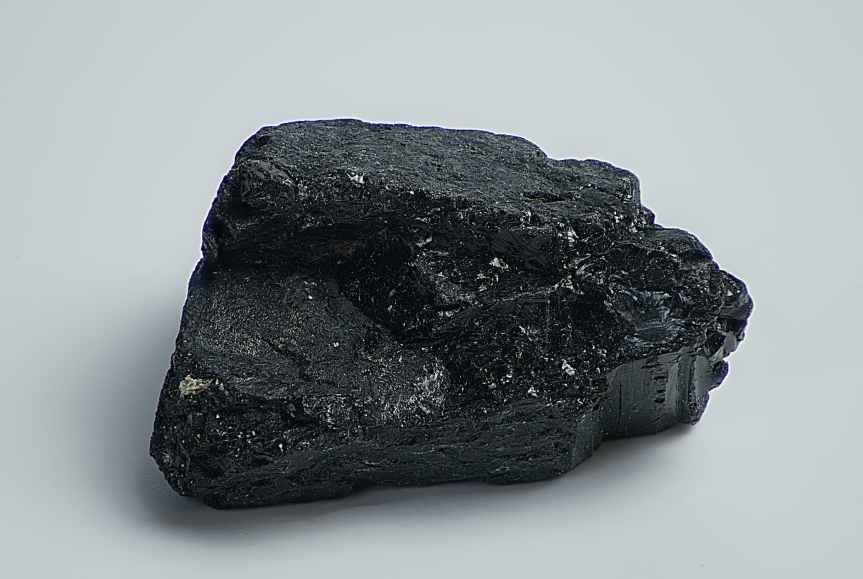
Sedimentary rocks- These rocks are formed from pieces of existing igneous or metamorphic rocks or biological material that undergo weathering and erosion and get deposited in the form of strata or layers. These are further sub-divided into three types- clastic, organic, and chemical . Clastic(eg.- sandstone) and organic rocks(eg.- coal) are formed due to weathering of rock into small fragments which are later transported to new places, or the biological materials like plants, shells, and bones that are compressed into rock. Chemical sedimentary rocks(eg- limestone) are the result of chemical precipitation. A chemical precipitate forms when the solution (usually water) evaporates and leaves the compound behind.
Metamorphic rocks- When either the igneous or the sedimentary rocks are subjected to immense heat or pressure, metamorphic rocks are formed. They are of two types- foliated and non-foliated. When the minerals line up in layers, they form foliated rock. (eg.- gneiss- made from granite). Non- foliated rocks follow the same procedure but they do not have the layered appearance of foliated rocks. Sedimentary rocks ( bituminous coal, for example) when provided enough heat and pressure, can turn into non-foliated metamorphic rocks (anthracite coal).
ROCK CYCLE
All the three types of rocks are inter-changeable into one another.
The igneous rock can be subjected to intense heat and pressure and form metamorphic rock or be weathered and eroded to give rise to sedimentary rocks or it can even be subducted and melt to give way to magma and again form igneous rock .
The sedimentary rocks can either be subjected to extreme conditions of temperature or pressure to form metamorphic rocks or subduct to form magma or even weather and erode to again from sedimentary rock.
The metamorphic rocks can either erode to give rise to sedimentary rocks or subduct to form magma that can later form igneous rocks.
This is how the rock cycle in our surroundings work. Rocks are continuously weathered and eroded and subducted and exposed to high heat and pressure. Some of the forces that drive the rock cycle are-
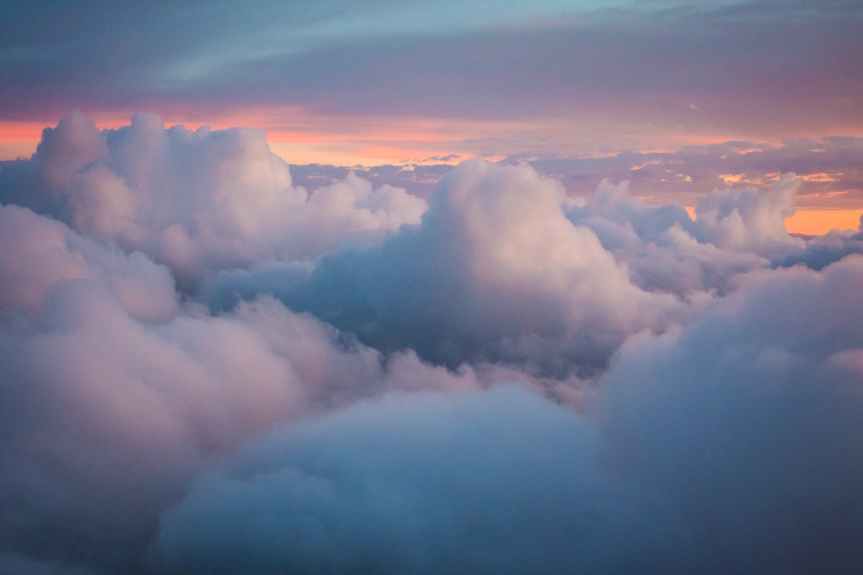
All of us have looked at the clouds. Many of them appear white, sometimes fluffy, sometimes as thin as a wisp, sometimes black. Based on the color of clouds, we predict the weather for the day. But have you ever looked at all the clouds and wondered just how many different types of clouds we encounter everyday and we just categorize them as black and white.
So, today let us look at the categorization of various kinds of clouds that exist and see what they predict about our day.
Clouds are at the basic level subdivided into 3 categories-
High clouds- They occur between 20,000-40,000 feet above the sea level. They mainly occur in a feathery form. (very high above the ground. Air has less molecules of water vapor as well as possible nuclei for cloud formation. Air molecules are scattered ). These clouds do not bring rainfall.
Medium clouds- They occur in the range of 10,000-20,000 feet above the sea level. They occur as clusters of clouds and can bring rainfall and snow.
Low clouds- Occur in the range of 6,500-10,000 feet. These clouds mainly block sunlight ans can cause light drizzle/mist. Ever seen clouds appear beneath you from a mountain top?
The high clouds have 3 kinds of cloud varieties-
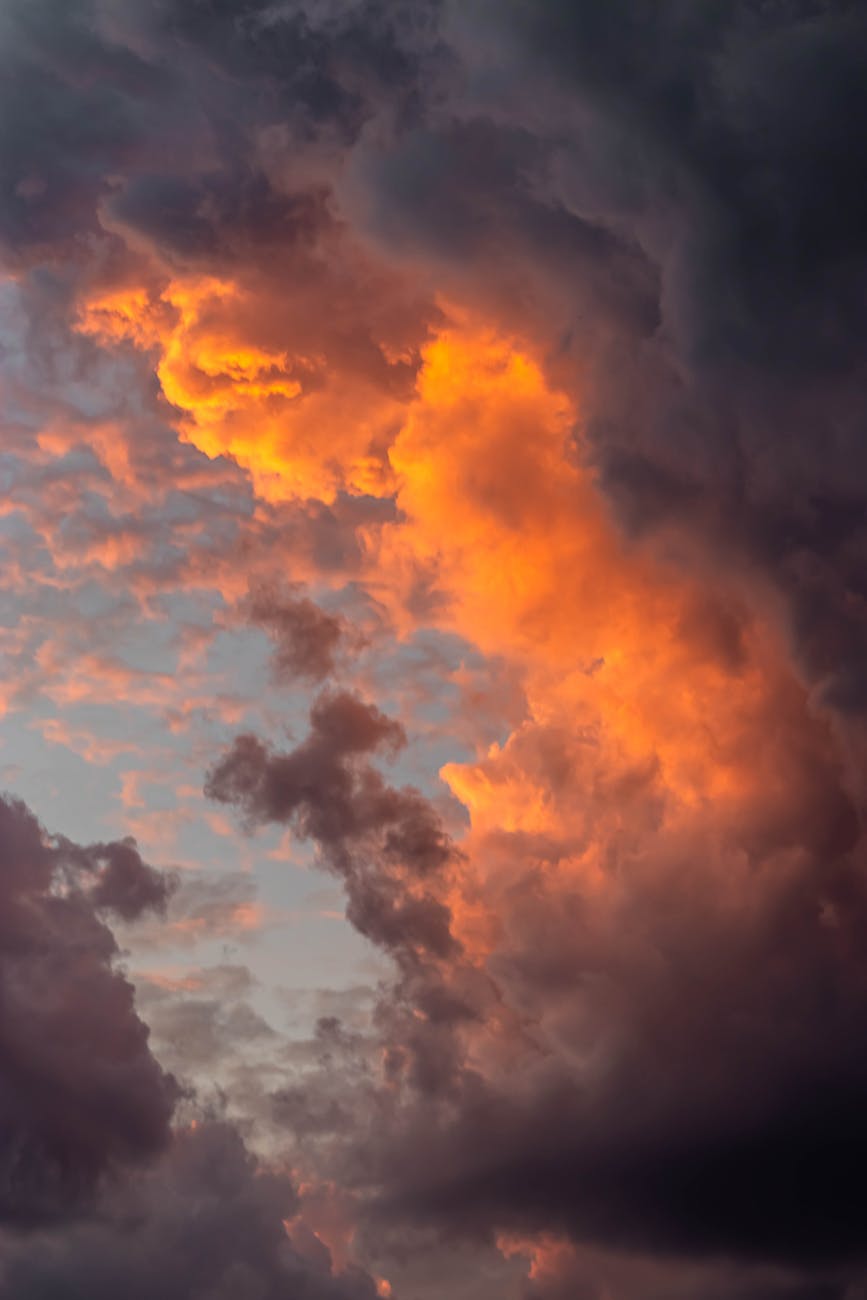
Cirrus- Thin, wispy, fibrous clouds that appear in bright blue sky are cirrus. They barely dim the sunlight though. They are made of tiny ice crystals that scatter the sunlight , thereby making the clouds appear orange or yellow, making for a beautiful sunrise or sunset.
3. Cirrostratus- A stratus cloud (horizontal layering with uniform base), it occurs in the from of a thin white sheet or veil and provides the sky a milky texture, making the sun/moon shine with a characteristic ‘halo’.
The ‘mid-level clouds have 3 varieties-
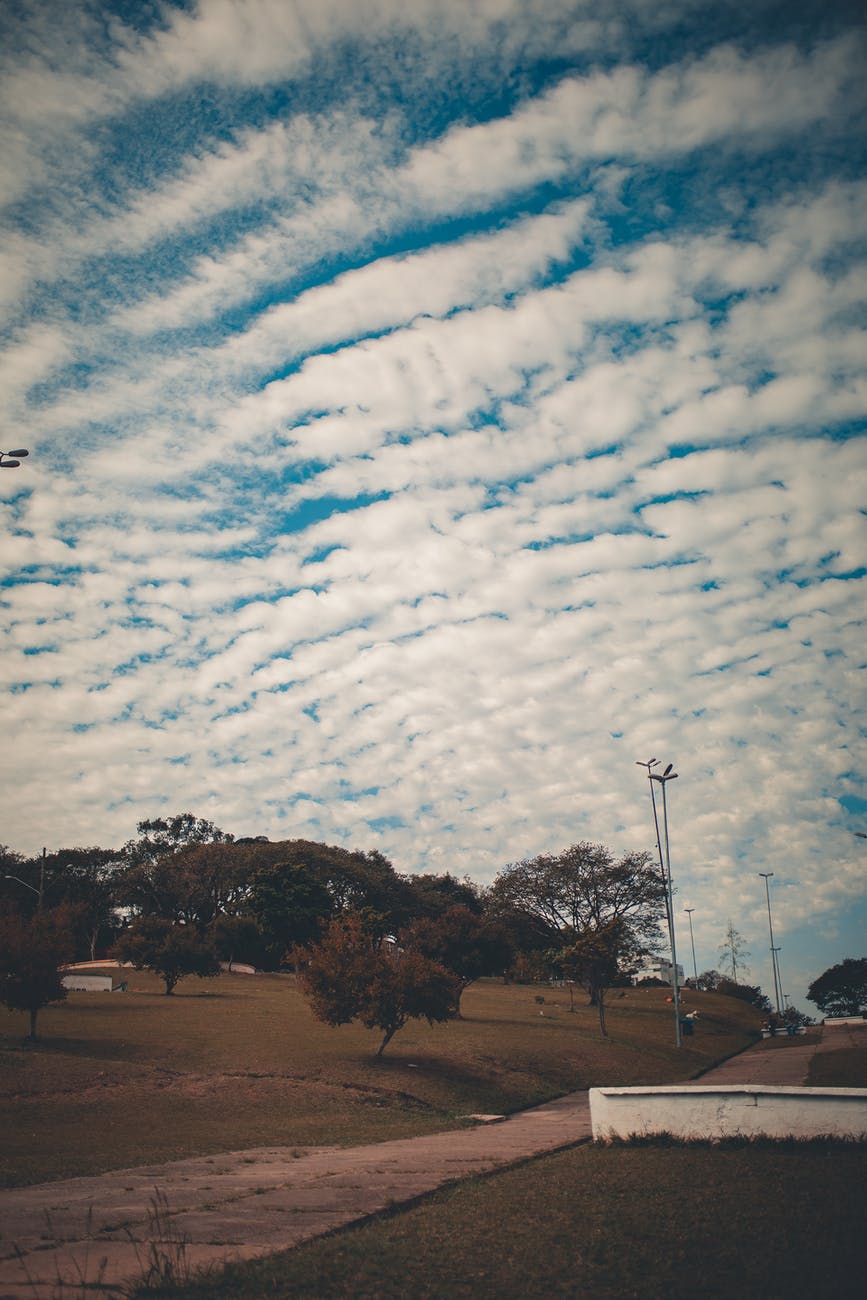
Altocumulus- These are the wooly bumpy clouds that occur in layers. They look like waves in blue sky. Can cover the sky occasionally.
Stratus- These are very low clouds. Uniformly grey, thick clouds, they cause light drizzle an dull weather. They also reduce aircraft visibility and are the cause of highland fog.
2. Cumulus-These are vertical clouds with rounded top and horizontal base and occur in humid tropical regions. Formed due to up-rising conventional currents. It ight appear grey against the sun but it is a fair weather cloud.
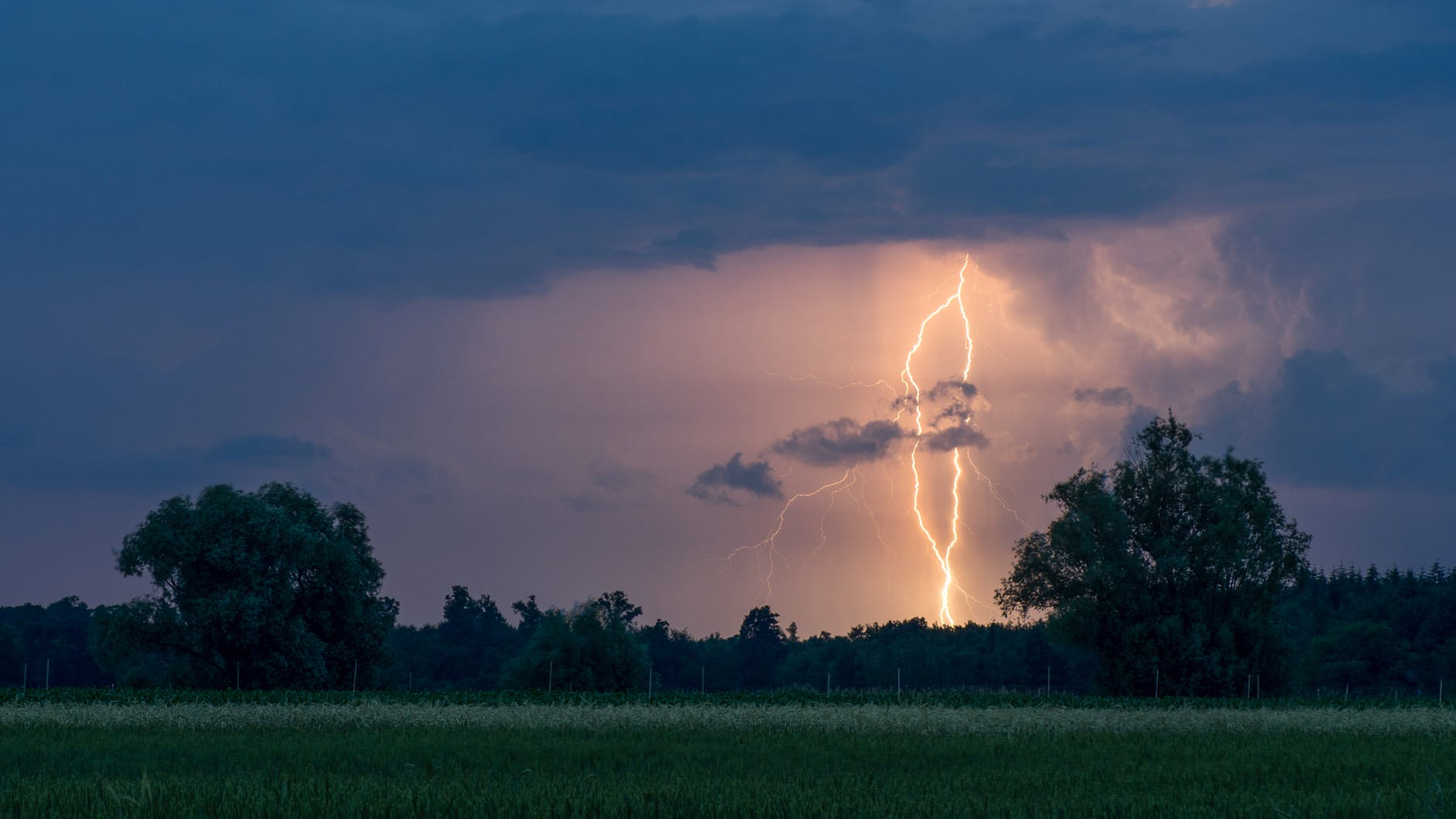
There is one another type of cloud associated with cyclonic conditions, lightening and thunderstorm, known as cumulonimbus cloud. These are overgrown cumulus clouds that are formed between 2,000-30,000 feet high. Formed in tropical afternoons, these are black in color and usually seen in equators and in sub-tropical regions(during summers).
This is all about clouds. The next time you are on your rooftop, you have something to keep you busy and you can’t disagree, looking at clouds is interesting.
Blood is a red coloured fluid flowing through the heart and blood vessels.it is also sometimes called as river of life because it circulates all the essential nutrients and oxygen to our body.it is made up of liquid part plasma( water and salts) and solid part( RBC and platelets).blood is pumped by heart to our whole body. Blood is a component of circulatory system of our body.
Structure of blood
Blood is formed mainly of two components that are Plasma and blood cells .plasma is a pale yellow fluid part of our blood .it is about 55 % of our blood composition. Blood cells is also called blood corpuscles. they constitutes about 45% of blood. it is of 3 types that is RBC ( Red blood cells) or erythrocytes , WBC(White blood cells) or leucocytes and blood platelets or thrombocytes.
Some Characteristics of blood
Blood is heavier and thicker than water
its pH lies between 7.3 to 7.4.
Blood’s volume in our body is about 5 to 6 litres.
It is saltish in tastes
Functions of blood:-
Transportation of gases : The blood carries oxygen from the lungs to the tissues and carbon dioxide from tissues to the lungs.
Transport of food :- It carries digested food like amino acid , glucose and many other s from our intestine to different organs of the body.
Temperature regulation :-It absorbs heat produced by respiration in internal tissues and transport it in to the skin and lungs for dissipation.
Distribution of hormones :- The endocrine glands secrete hormones directly into the blood . Blood helps to transport them in required organs.
Defence against diseases :- It produces certain antibodies which fights against bacteria. white blood cell (WBC) covers the disease causing bacteria and protect the body.
Bloodgroups in humans
Karl Landsteiner discovered that human beings have glycoproteins on the surface of RBC called antigens. and globulin proteins in the blood plasma called antibodies. therefore, there is 2 types of antigens A and B and two types of antibodies antibody a and antibody b in our body. Based on this concept , there are 4 types of blood groups found in human body.
ABO blood groups
person with antigen A are said to be having blood group A.
person with antigen B are said to be having blood group B.
persons having both antigen A and antigen B are said to be having blood group AB.
Person with no antigen is said to be having blood group O.
during blood transfusion , we cannot mix two different types of blood group in a body. when blood groups of 2 different types of groups A and B is mixed , clumping reaction occurs. because either the antibodies of recipient ‘s blood destroys the RBC of donor blood or vice versa.
Person with blood group A are called universal donor , because they can donate blood to any of the blood group. while person with blood group AB are called universal recipients because they have no antibodies and can receive blood from any of the blood group.
2.Rh factor ( Rhesus antigen system) : – Human blood also have Rh antigen . it is of two types Rh positive and Rh negative. Transfusion of Rh negative with Rh negative can be done with no problem and same goes for Rh positive to R h positive transfusion.( Source : Veer Bala Rastogi , 96).
Andhra Pradesh is a state in the south-eastern coastal region of India. It is the seventh-largest state by area covering an area of 162,975 km^2 and tenth-most populous state with 49,386,799 inhabitants. It is bordered by Telangana to the north-west, Chhattisgarh to the north, Odisha to the north-east, Tamil Nadu to the south, Karnataka to the west and the Bay of Bengal to the east. It has the second longest coastline in India after Gujarat, of about 974 km. Andhra Pradesh is the first state to be formed on a linguistic basis in India on 1 October 1953. The state was once a major Buddhist pilgrimage site in the country and a Buddhist learning center which can be seen in many sites in the state in the form of ruins, chaityas and stupas. It is also known as the land of the world-famous diamond Koh-i-Noor and many other globally known diamonds due to their source in its Kollur Mine. It is also known as the “rice bowl of India” for being a major producer of rice in India. Its official language is Telugu; one of the classical languages of India, the fourth most spoken language in India and the 11th-most spoken language in the world.
CULTURE –
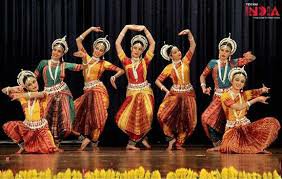
Kuchipudi, the cultural dance recognized as the official dance form of the state of Andhra Pradesh, originated in the village of Kuchipudi in Krishna district. It entered the Guinness World Records for performing Mahabrinda Natyam with a total of 6,117 dancers in Vijayawada.
Andhra Pradesh has thirteen geographical indications in categories of agricultural handicrafts, foodstuff and textiles as per Geographical Indications of Goods (Registration and Protection) Act, 1999. It increased to fifteen with the addition of Banaganapalle Mangoes and Bandar laddu. The other GI tagged goods are, Bobbili Veena, Budithi Bell and Brass Craft, Dharmavaram Handloom Pattu Sarees and Paavadas, Guntur Sannam, Kondapalli Toys, Machilipatnam Kalamkari, Mangalagiri Sarees and Fabrics, Srikalahasti Kalamkari, Tirupati Laddu, Uppada Jamdani Sari and Venkatagiri Sari.
ARTS AND CRAFTS – Kondapalli Toys at a house in Vijayawada Machilipatnam and Srikalahasti Kalamkari are the two unique textile art forms practised in India. There are also other notable handicrafts present in the state, like the soft limestone idol carvings of Durgi. Etikoppaka in Visakhapatnam district is notable for its lac industry, producing lacquered wooden.
The state has many museums, which features a varied collection of ancient sculptures, paintings, idols, weapons, cutlery, and inscriptions, and religious artifacts such as the Amaravati Archaeological Museum, Visakha Museum and Telugu Cultural Museum in Visakhapatnam displays the history of the pre-independence and the Victoria Jubilee Museum in Vijayawada with a large collection of artifacts.
CUISINE – Telugu people’s traditional sweet Pootharekulu originated from Atreyapuram village of East Godavari district.
TOURISM – Undavalli Caves, is a monolithic example of Indian rock-cut architecture and one of the finest testimonials to ancient viswakarma sthapathis. The state has several beaches in its coastal districts such as Rushikonda, Mypadu, Suryalanka etc.; caves such as, Borra Caves, Indian rock-cut architecture depicting Undavalli Caves and the country’s second longest caves- the Belum Caves. The valleys and hills include, Araku Valley, Horsley Hills, Papi Hills etc. Arma Konda peak located in Visakhapatnam district is the highest peak in Eastern Ghats.
The state is home to various religious pilgrim destinations such as, Tirumala Temple, Simhachalam Temple, Annavaram temple, Srisailam temple, Kanaka Durga Temple, Amaravati, Srikalahasti, Shahi Jamia Masjid in Adoni, Gunadala Church in Vijayawada, Buddhist centres at Amaravati, and Nagarjuna Konda.
Kerala is a state on the Malabar Coast of India. It was formed on 1 November 1956, following the passage of the States Reorganisation Act, by combining Malayalam-speaking regions of the erstwhile regions of Cochin, Malabar, South Canara, and Travancore. Spread over 38,863 km ^2, Kerala is the twenty-first largest Indian state by area. It is bordered by Karnataka to the north and northeast, Tamil Nadu to the east and south, and the Lakshadweep Sea[16] to the west. With 33 million inhabitants as per the 2011 census, Kerala is the thirteenth-largest Indian state by population. It is divided into 14 districts with the capital being Thiruvananthapuram. Malayalam is the most widely spoken language and is also the official language of the state.
CULTURE –
The culture of Kerala is composite and cosmopolitan in nature and it is an integral part of Indian culture. It is a synthesis of Aryan, Dravidian, Arab, and European cultures, developed over millennia, under influences from other parts of India and abroad. It is defined by its antiquity and the organic continuity sustained by the Malayali people. It was elaborated through centuries of contact with neighbouring and overseas cultures. However, the geographical insularity of Kerala from the rest of the country has resulted in the development of a distinctive lifestyle, art, architecture, language, literature and social institutions. Over 10,000 festivals are celebrated in the state every year. The Malayalam calendar, a solar sidereal calendar started from 825 CE in Kerala, finds common usage in planning agricultural and religious activities. Malayalam, one of the classical languages in India, is Kerala’s official language. Over a dozen other scheduled and unscheduled languages are also spoken. Kerala has the greatest consumption of alcohol in India.
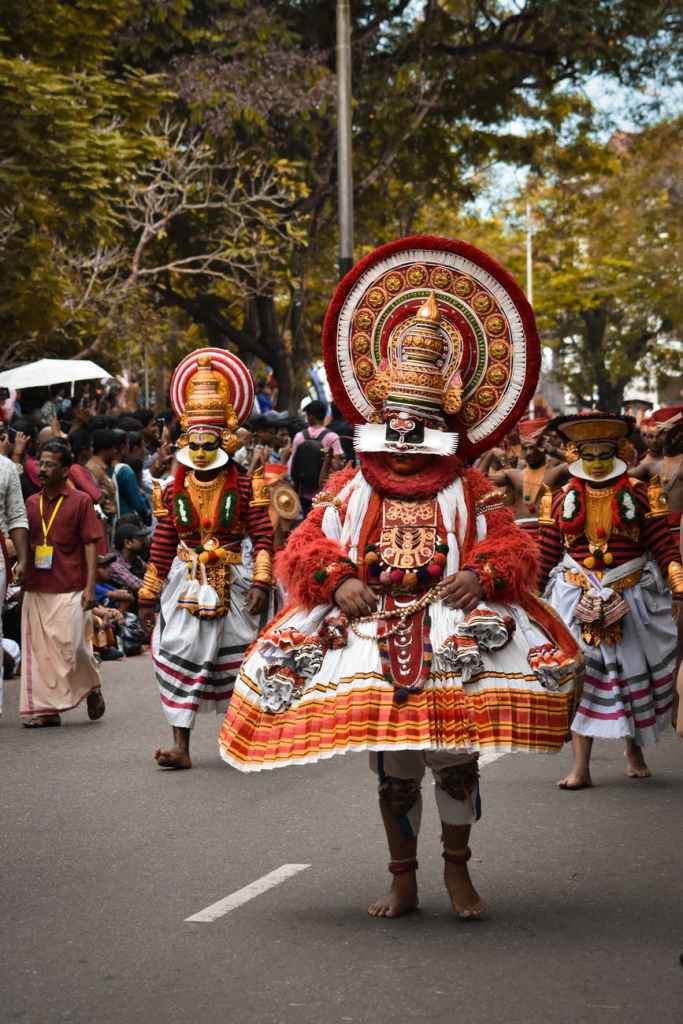
MUSIC – The development of classical music in Kerala is attributed to the contributions it received from the traditional performance arts associated with the temple culture of Kerala. The development of the indigenous classical music form, Sopana Sangeetham, illustrates the rich contribution that temple culture has made to the arts of Kerala. Carnatic music dominates Keralite traditional music. This was the result of Swathi Thirunal Rama Varma’s popularisation of the genre in the 19th century. Raga-based renditions known as sopanam accompany kathakali performances. Melam; including the paandi and panchari variants, is a more percussive style of music: it is performed at Kshetram-centered festivals using the chenda. Panchavadyam is a form of percussion ensemble, in which artists use five types of percussion instrument. Kerala’s visual arts range from traditional murals to the works of Raja Ravi Varma, the state’s most renowned painter. Most of the castes and communities in Kerala have rich collections of folk songs and ballads associated with a variety of themes; Vadakkan Pattukal (Northern Ballads), Thekkan pattukal (Southern Ballads), Vanchi pattukal (Boat Songs), Mappila Pattukal (Muslim songs) and Pallipattukal (Church songs) are a few of them.
DANCE – Kerala is home to a number of performance arts. These include five classical dance forms: Kathakali, Mohiniyattam, Koodiyattom, Thullal and Krishnanattam, which originated and developed in the temple theatres during the classical period under the patronage of royal houses. Kerala natanam, Thirayattam, Kaliyattam, Theyyam, Koothu and Padayani are other dance forms associated with the temple culture of the region. Some traditional dance forms such as Oppana and Duffmuttu were popular among the Muslims of the state, while Margamkali and Parichamuttukali are popular among the Syrian Christians and Chavittu nadakom is popular among the Latin Christians.
TOURISM – Kerala’s culture and traditions, coupled with its varied demographics, have made the state one of the most popular tourist destinations in India. In 2012, National Geographic’s Traveller magazine named Kerala as one of the “ten paradises of the world” and “50 must see destinations of a lifetime”. Travel and Leisure also described Kerala as “One of the 100 great trips for the 21st century”. In 2012, it overtook the Taj Mahal to be the number one travel destination in Google’s search trends for India. CNN Travel listed Kerala amongst its ’19 best places to visit in 2019′.
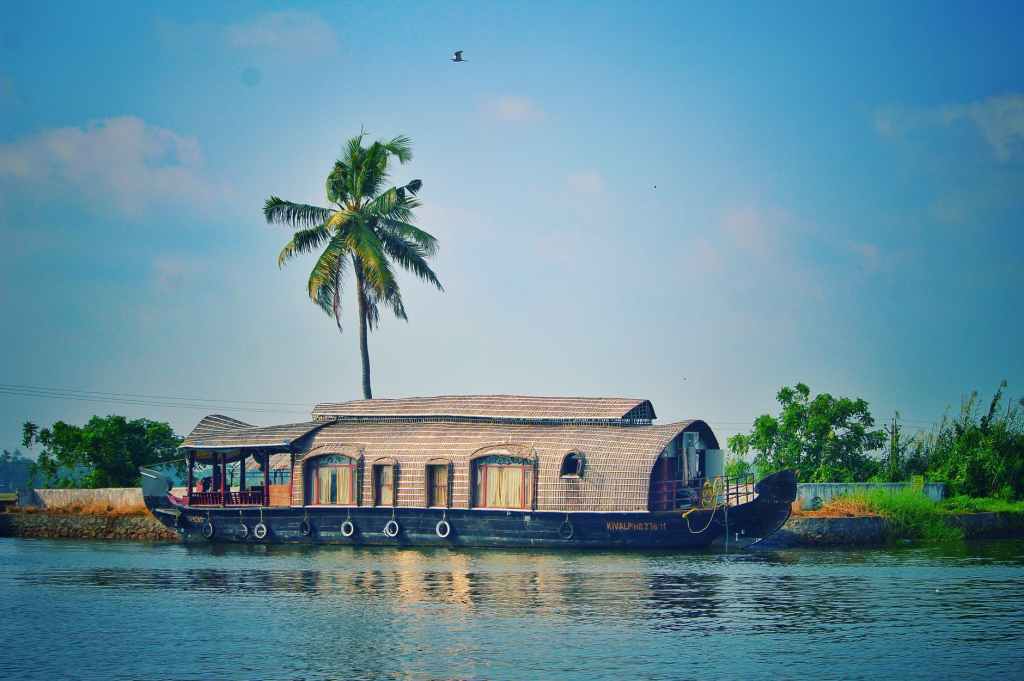
Kerala’s beaches, backwaters, lakes, mountain ranges, waterfalls, ancient ports, palaces, religious institutions and wildlife sanctuaries are major attractions for both domestic and international tourists. The city of Kochi ranks first in the total number of international and domestic tourists in Kerala. Until the early 1980s, Kerala was a relatively unknown destination compared to other states in the country. In 1986 the government of Kerala declared tourism an important industry and it was the first state in India to do so. Marketing campaigns launched by the Kerala Tourism Development Corporation, the government agency that oversees the tourism prospects of the state, resulted in the growth of the tourism industry.

















 Eduindex
You must be logged in to post a comment.