What Should Parents Know About COVID-19-Related Anxiety in Kids?

The coronavirus pandemic has disrupted the lives of everyone, including children. Vermont’s mental health professionals have seen higher-than-normal numbers of kids experiencing anxiety brought on by the “Stay Home, Stay Safe” order, school closures, canceled extracurricular activities, and curtailed visits with family and friends.

Thankfully, parents can play an active role in reducing their kids’ anxiety, beginning by reassuring them that they live in a very safe place. According to the Vermont Department of Health, the number of youth under the age of 20 who have contracted COVID-19 remains low, and no Vermont children or teens have died from the virus.

Still, if children seem unusually anxious for a prolonged period, there are things parents can do to help. Dr. Lewis First, chief of pediatrics at the University of Vermont Children’s Hospital, shares his expert advice for managing anxiety in kids.

KIDS VT: What is anxiety?

DR. LEWIS FIRST: Anxiety is a normal emotion we all experience at one point or another as part of our natural fight-or-flight response. Having a little stress or anxiety about something new, different or challenging is normal and prepares us to be sharper and more alert to respond. For a child, it may be a big test or athletic competition. But anxiety can become a problem when a child faces a sudden, prolonged crisis — which makes COVID-19 the perfect scenario for causing stress and anxiety. While their stress may not indicate a classic anxiety disorder, it can reach the upper limits of what a child is emotionally able to handle.

KVT: What signs should parents watch for?

LF: Anxiety becomes a concern when a child experiences a persistence of symptoms associated with this condition. Kids may have physiological complaints such as headaches, stomachaches or loss of appetite. Some kids become irritable or agitated. They may become restless, easily fatigued, have trouble concentrating or difficulty sleeping. Some become disruptive or even withdraw from their parents as a way to cope.

KVT: Does anxiety look different depending upon the child’s age?

LF: Kids of all ages, even babies, can show signs of stress or anxiety, which they can sense from their parents’ unease or experience when they’re around people they don’t know. Babies, toddlers and preschoolers may seem clingier, cry more, get upset easily and not want to do things that they previously enjoyed. Older schoolchildren and early adolescents may exhibit more negativity. They may complain of shortness of breath, shakiness, clamminess, a racing heart and feelings of doom, which are all classic signs of a panic attack.

KVT: When should parents be concerned about a child’s anxiety?

LF: First, parents should realize that the vast majority of children who are showing signs of stress right now are not having classic anxiety disorders. To make such a diagnosis, we need to see at least one sign of excessive anxiety occurring more days than not for at least six months, and we haven’t been dealing with COVID-19 for that long yet.

KVT: What can parents do to help?

LF: Kids tend to stress when they sense that their parents are worried. I know it’s hard right now, but parents need to remain calm and manage their own stress as best they can. This is a great opportunity for families to recognize that, even while isolated or as we slowly get out in public more often, this is a special time together. Parents should build in time to be with their child where it’s not about talking at them but really listening to them. With an older child or teenager, sometimes a parent expressing their own concerns will open the door to them feeling it’s OK to vent their own feelings. Parents can ask a child if there’s something they saw or heard about the coronavirus that worries them, then educate them about what is fact versus fiction. Parents can also reassure their children that scientists and medical professionals around the world are working every day to find new medicines and vaccines that will make this virus go away.

KVT: What can kids do themselves?

LF: Children can be made to feel like they’re part of the solution by practicing physical distancing, good handwashing hygiene and staying home when necessary. Parents should focus on all the positive things their kids are doing. Limit children’s exposure to the news or, with an older child, watch it together as a family so that you can discuss what’s going on. One of the most important things you can do to reduce anxiety is create predictability. Uncertainty breeds anxiety and fear, so parents should create a schedule that is predictable yet flexible and includes plenty of group playtime. Communicate with family, friends, teachers and coaches by phone or videoconference. And parents should not loosen the rules too much on healthy behaviors such as consistent bedtimes, good diet and daily exercise.

KVT: What if kids are still struggling with daily anxiety?

LF: If children just aren’t sleeping well most or all nights, are anxious most of the time, or continue to show the signs and symptoms we’ve discussed, then it’s time to talk to a health care professional. They can recommend treatments such as cognitive-behavioral therapy and even medication. A counselor or therapist can be very helpful in teaching a child coping mechanisms such as taking slow, deep breaths; counting backward from 100; and having a safe space to go to in their minds and/or in their homes. Increased anxiety in adults can lead to physical or emotional abuse, so parents need to manage their own stress levels, too.

© 2020 Kids VT
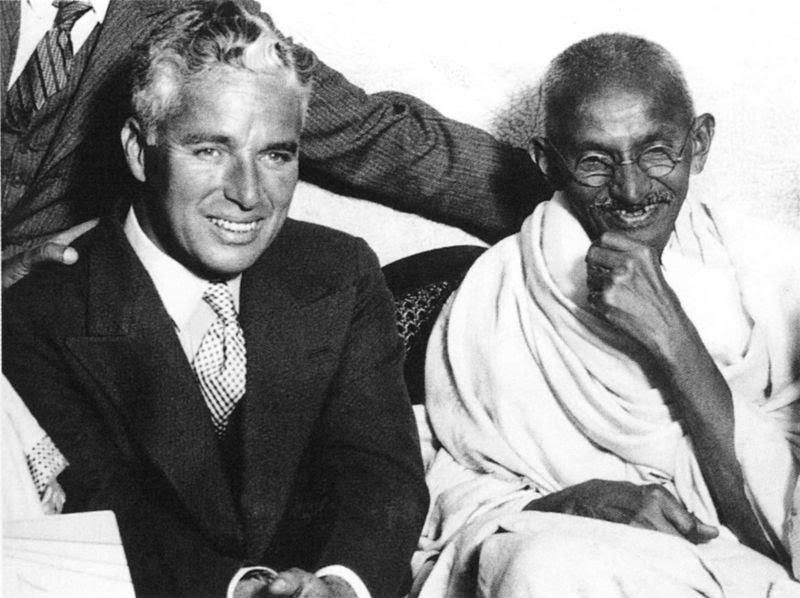
CHARLIE CHAPLIN- The silent master and less known facts.

Chaplin with Gandhi Ji.

Popularly known as the English comedy King. His parents Hannah and Charles Sr. we’re both hall actors though they just had a penny of income. Chaplin didn’t have decent relations with his father and that’s why he and his half- brother Sydney had to face poverty in childhood. People usually had a misconception about his eye color, they were blue but they looked like Brown due to black and white screen.

Charles Spencer Chaplin

Born on 16 April 1889{England} – and died on 25 December 1977{Switzerland}). He was a perfectionist and a multi-tasker (composer, actor, director, screenwriter, producer, and editor). In 1898 Hannah was sent to an asylum and during this tenure, Chaplin and Sydney were sent to live with their father whom they barely knew. He was an alcoholic and later died due to liver disease. Chaplin had his mother’s encouragement which always pointed out that Chaplin always had a spark and talent. When he was 13 he withdrew education while he was a part of the dance troupe. He later turned his career from a dancer to a comedic performer and drama. He got recognition in the theater after he acted in “Inebriate Swell”. A contract was finalized with Mutual amounting $670,000 a year ($15.7 million today), which Robinson says made Chaplin – at 26 of age and was one of the highest-paid actors. This huge amount of salary was everywhere in the press and on news headlines. John R. Freuler, the studio president, illustrated: “We can afford to pay Mr. Chaplin this large sum annually because the public wants Chaplin and will pay for him.” Later in life, Chaplin referred to his Mutual years as the happiest period of his career. Chaplin passed away in 1977 at the age of eighty-eight years old.

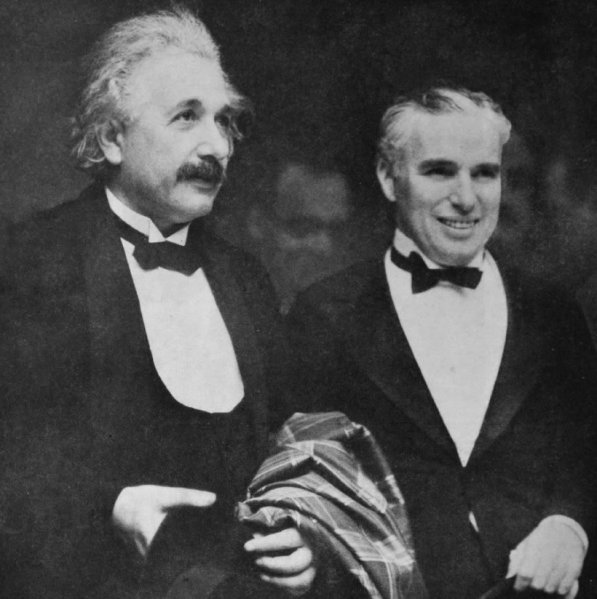
Charlie with Einstein.

“An American Obsession”– British media once attacked him as he didn’t participate in the First World War. Though he upheld himself fighting for Britain, he wasn’t summoned by either country. The most appreciated character of Tramp was everywhere including the costume parties.

Less known facts.

  • He was banned from the US because of his alleged Communist politics.
  • The Academy of Motion Picture Arts and Sciences honored the 82-year-old Chaplin with an honorary Oscar. He attended the ceremony and obtained an energetic standing ovation. When he finally spoke, he said, “Thank you for the honor of inviting me here. You’re all wonderful, sweet people.” He returned to the US after 20 years.
  • After Chaplin died, some thieves asked his widow Oona Chaplin for ransom. Even after his death, he created controversy. The thieves demanded $600,000 to return the body. Oona tapped the phone lines, which led authorities to the two men, Roman Wardas and Gantscho Ganev.
  • He married thrice. He had an interest in teenagers. When Chaplin was 54 years old he married for the last time with 18-year-old Oona O’Neill and gave birth to 8 kids.
  • He was the first actor to appear in Time Magazine and at that time he was paid much more than the President of the US.

He was so dedicated to his work and got so much applause. Also, he received a 12-minute standing ovation in the Oscars of 1972 which is historic.

Monsoon

Last Sunday morning my father entered from balcony for lifting up his call he was looking annoyed after attending the call, when I enquired what was the reason he told me that he was dreaming and this telephone woke him up from the dream and brought him back to the reality.

As he told he was dreaming about his lost childhood…….

On a lazy Sunday morning, sitting in balcony, sipping hot tea and enjoying rain is an unparalleled experience. Vivid memories of past passes through the mind like sequence of a movie. People from hinterlands of the country migrate in search of job and choose to stay in busy cities like Mumbai always bear a nostalgic feeling about their “lost villages”. Rain always help memories to take shape and take back us to the “good old days”.

During Late 60s and 70s, each Kerala village use to have one or two primary schools and one high school.  Study after seventh standard involve some extra walking through paddy fields or palm groves along with rocky areas. To reach nearest High school, some students used to take bus for a short distance. My village was blessed with a high school with reasonable educational facilities and excellent set of teachers.

Education starts from home, enjoying walk through paddy fields crossing a canal and then the most difficult balancing act of crossing a narrow path way over slippery rock and flowing water during monsoon. After reaching school there will be a foot ball session till the school bell rang. Playground used to be uneven and filled with stones and hard rock pieces. Some areas were slippery and hard. These challenging conditions never affect the zeal of players. Injuries were order of the day due to hard condition of ground as well as aggressive nature of few individual players.

Way back home after school was also equally interesting. People discuss about the day’s events and express their views. Some interactions used to end up in fight between two groups. Walking back home in heavy rain used to be a normal affair during monsoon. Summer evening used to be hot and sticky. People used to prefer shady routes to reach home.

On Sundays and school holiday we used to go to the nearest forest for grazing cows. The forest was not dense, but it used to be the source for fresh grass for cattle and timber for households. Women folk used to go to the forest during early hours of the day and collects logs. They used to pack their days collection and carry by head and exit the forest area before the forest guards become active.

Villages in Kerala were always blessed with its natural water bodies and amazing greenery. Area close to Sahya mountains receive heavy rain from June to October. Due to this the nature used to be fresh and clean during most part of the year but hot and humid during the summer. From February to mid of May, weather used to be very hot and humid during the day. Summer is the time of heat and humidity as well as the temple festivals. Evening Summer rain used to give respite from scorching heat often. Smell of the soil after the first rain fall was a refreshing experience.

April and may were mid-summer vacation days for schools. Day start with busy playing session in harvested paddy fields along with friends and an hour-long bath and swimming session in village pond by noon. After noon was the time for relishing summer delicacies such as mangos and jackfruits. Visiting temple on special days to witness annual temple fest was in the card on few days of the month. During this period, porticoes of temple used to witness various temple art forms like ‘Kalmezhuthu Pattu’ (Color full Rangoli display of portraits of goddess on floor and a musical concert), Chenda  melam (a drum concert). Some temples used to organize Kathakali during late evening. Annual festival used to prolong from twelve to fifteen day for each temple with final day as “Vela” or “Uthsavam’. A procession of elephants along with plots depicting men dressed in various Hindu gods and legendary heroes used to be a common mix in these processions. The tallest among the tuskers   will carry the deity on its back with ceremonial outfits and other elephants will position either side during the procession. The culmination of the fortnight long festival will be marked with heavy fireworks which will tremble the whole village.

The ringing phone caught my attention and I was brought back to reality. As expected that my boss’ s call. Working from Home gives him a privilege to call me even on holiday morning when I was trying to go back to my golden days in my lost village.

Electrified Fabric Could Zap the Coronavirus on Masks and Clothing

Prototype mask made from a fabric that can inactivate pathogens. Credit: Vomaris Innovations, Inc.

Wearing masks and other personal protective equipment (PPE) can slow the spread of COVID-19. The U.S. Centers for Disease Control and Prevention recommends everyone wear some kind of face covering in public places, especially where social distancing is difficult to maintain. And health workers are donning additional coverings, such as gowns. Yet all such protective gear shares one significant problem: people still risk becoming infected with the novel coronavirus if they accidentally touch areas of the fabric that are contaminated with viral particles. So researchers are working to develop cloth that could inactivate or repel coronaviruses—ideally including the one that causes COVID-19—and other pathogens.

People transfer infectious particles to their hands if they touch the front of a mask during use or when they remove gowns or other PPE, according to Chandan Sen, director of the Indiana Center for Regenerative Medicine and Engineering at Indiana University. He and his colleagues have been developing a way to render those particles and other infectious agents harmless. The team researches “electroceutical” materials that wirelessly “generate electric fields across the surface of the fabric,” Sen says. Those fields can disrupt the behavior of bacteria or viruses on the cloth.

“The beauty of this [technology] is the inherently simple design,” he says. The polyester material is printed with alternating spots of silver and zinc resembling polka dots. They are one to two millimeters wide and spaced one millimeter apart. When the electroceutical material is dry, it functions as an ordinary fabric. But if it gets dampened—say, with saliva, vapor from a coughed up droplet or other bodily fluids—ions in the liquid trigger an electrochemical reaction. The silver and zinc then generate a weak electric field that zaps pathogens on the surface.

The researchers co-developed the material with the biotechnology company Vomaris Innovations in 2012. Last year they showed that the technology could be used to treat bacterial biofilms in wounds. A clinical trial is underway to further evaluate the fabric’s effectiveness as a Food and Drug Administration–cleared dressing for wound care, Sen says.

In response to the COVID-19 pandemic, Sen’s team tested its existing material on a different coronavirus strain that causes a respiratory illness in pigs and on an unrelated type of pathogen called a lentivirus. “We wanted to know how broadly this principle could be applicable,” he says. In a study posted on the preprint server ChemRxiv in May, Sen’s team reported that its electroceutical fabric destabilized both viruses, leaving them unable to infect cells. The researchers plan to submit the results to a peer-reviewed journal as well.

To study the fabric’s action, they placed a liquid solution containing viral particles onto the electroceutical fabric and a polyester control fabric without the metal dots. After the droplets were fully absorbed, and the samples had rested for one to five minutes, the researchers recovered viral particles from both fabrics and tested whether they could still infect the types of cells they typically target.

“The data presented here show that, of the total virus that was recovered, a significant percentage was inactivated,” says Jeff Karp, a professor of medicine at Brigham and Women’s Hospital in Boston and co-leader of an N95 respirator working group at the Massachusetts General Brigham Center for COVID Innovation. Karp, who was not involved with the study, adds that the researchers did not test all of the virus that they had placed on the cloth. “In fact, the majority of virus was not recovered from the textiles examined in this study,” he says. Sen responds that his team focused on sampling only enough viral particles to show that the fabric had rendered them unable to infect cells. The researchers recovered roughly 44 percent of the particles from the electroceutical fabric samples that had rested for one minute. And they retrieved 24 percent of them from the samples that had rested for five minutes.

The material’s virus-fighting abilities have not been tested specifically on SARS-CoV-2, the coronavirus that causes COVID-19. The researchers’ findings with the two viruses they studied, however, gave them “hope that this could apply more widely,” Sen says. He adds that large-scale manufacturing of the electroceutical fabric is already possible and that the costs of producing it are relatively low. The metal dots could be printed directly onto the front surfaces of masks, he suggests. Or an electroceutical fabric could be inserted between the front of a mask and the wearer’s face.

If a virus-stopping PPE material were widely available, it could limit the novel coronavirus’s ability to spread. “There is a huge unmet need to better understand modes of viral transfer that lead to virus transmission,” Karp says. “As we develop a better understanding of this, there is a huge immediate need to develop and quickly apply solutions that can reduce transmission.”

Metal dots are not the only potential approach. Paul Leu, director of an advanced materials laboratory at the University of Pittsburgh, and his colleagues are developing a textile coating that repels bodily fluids, proteins and bacteria. It also repels one strain of adenovirus that causes respiratory illness and another that causes conjunctivitis, as reported in ACS Applied Materials & Interfaces in April. Leu’s team has also not tested the material with the novel coronavirus itself, however. “The main thing with testing [the coating on] SARS-CoV-2 is the biosafety level you need to test it, because it’s very hazardous,” he says. Still, his team plans to see how well textiles with this coating repel a different coronavirus.

Leu says the coating, which remains repellent even after ultrasonic washing and scraping with a razor blade, could make PPE safer for wearers to take off. It could also be used on hospital bed linens, drapes and waiting room chairs, the researchers note in the study. But Leu points out that the coating is intended for use with medical textiles that are already considered reusable. His team has not tested it on single-use masks or N95s, but he thinks it could potentially damage them. Still, he says, the coating could work well for cloth masks such as those now being worn by many among the general public.

By developing materials that kill or repel viruses, researchers hope to make masks and other protective gear safer to remove and more effective against all viruses. “If the common person were to have PPE that wouldn’t spread infection,” Sen says, “I think that’s a big, big deal.”


INTERVIEW ADVICE Self Introduction for Job Interview

Self-introduction actually matters a lot across every industry- from politics, medical, education, real estate, to the healthcare industry. There is an endless number of studies and researches that prove this fact to be true. Whenever you meet a new person, you just have few seconds to either impress him or let him go!

Let’s take an example!

Joseph has come up for his very first interview after completing his graduation. He is well dressed in a carefully chosen formal suit, fully prepared with all the questions he’s expecting in the interview and waiting in the reception area to get a call for his turn.

Well, let me ask you a question here.

Is that all it takes to crack an interview? Are you prepared for the first question the interviewer is going to ask?

Yes, I am talking about the self-introduction part.

The misconception about self-introduction is that job seekers find this question as the easiest one, but actually it’s not. The majority of the candidates never prepare for this part, and during this question, they just say- Hi, My name is Nick….and then hope for the interviewer to take over.

Let’s be honest here!

This is not the approach that can help you get the job you have been dreaming of.

In this blog, we’ll discuss the basic things about the ‘Self Introduction’ part that every job seeker must know to grab the desirable job. Let’s get started!

What to include in the self-introduction

Self-introduction seems to be an obvious question, and nobody makes efforts on this part. But don’t forget that this part will either make or break the hiring decision. You need to invest good time and effort while planning this part. You must understand the interviewer’s intention behind this question and answer accordingly. Here I am listing a few things you need to include in the self-introduction for interview.

Who You Are? Start by greeting the interviewer with a smile on your face, introduce yourself by telling your name.

Where Are You From? You need to specify your native place and make sure you don’t drag it long. Explain in a brief one line only

Education Qualification: Once done with the formal introduction, now you need to mention your qualification details while telling the school and university’s name and location. Begin with the highest qualification, followed by under graduation, and then schooling.

Work Experience (freshers can skip this part): First of all, you need to tell the total experience you have, mention the current job and your role, briefly describe your responsibilities and things you are expert at.

Tips for improving the self-introduction part

Apart from adding the above things in your self-introduction part, you need to know a few tips that can make your self-introduction part an effective one. So, here you go!

Head held high with a smile on the face: No matter you are feeling nervous or not, you must have a smiling face. This signifies a good start of the interview. You must give a firm handshake and say ‘Hello’ to the interviewer.

Be prepared to give family details: Most of the recruiters ask the candidates about their family background and you need to be prepared for the answer in advance. Don’t hesitate, be comfortable and speak up freely.

Stay positive during the past experience part: While describing your past job experience, remember no matter how bad your experience was, you can’t negatively talk about the past employer. Because this will leave a negative impact on the interviewer and indicates unprofessional behavior.

Sharing hobbies and goals: Unlike in the past years, interviews have become interactive and comfortable than ever before. Candidates can freely mention their hobbies, aspirations, and goals to the interviewer. This will reflect your personality clearly.

Mistakes you can’t afford to make during a self-introduction

Keep the self-introduction part brief and concise, don’t make it lengthy. So, try avoiding irrelevant things that have nothing to do with the job role you have applied for.

Many job seekers even rehearse before giving an interview but still panic once they enter the interview cabin. You need to stay calm and have a smile on your face.

Stop being nervous, it’s just an interview. Talk openly with confidence.

If you aren’t confident enough about anything, don’t wander your eyes here and there. Maintain eye contact with the interviewer, it helps in making the conversation interactive.

Never badmouth your past employer or share any negative experience with any past co-workers.

Never interrupt in-between when the interviewer is speaking, start once he’s done.

Samples for Introducing Yourself in an Interview

Before you feel clueless when the interviewer asks you- ‘Tell me about yourself’, it’s high time that you have a few samples in your mind. So, I have listed a few effective samples of self-introduction for experienced candidates as well as freshers.


Self-Introduction Sample for a Fresher:

Of course, a fresher doesn’t have much to showcase in his resume, and the same goes for the self-introduction part. But you can do a lot more to make the self-introduction an effective thing. Here’s one such sample:

Good morning Sir/Madam, It’s a pleasure to introduce myself. My name is Jonas Smith born and brought up in Michigan. I have completed my schooling from Rochester Adams High School with 84% and presently pursuing my final year bachelor’s degree from Michigan State University. Coming to my strengths, I love taking challenges and turn them into opportunities. During failures, I learn a lot out in the future. My goal is to become a part of an organization that enables me to reach my true potential and develop in that field. That’s a brief about me, and thanks for this opportunity.

Let’s have a look at another self-introduction sample in which a fresher is aspiring to begin his career in teaching:

I am Robin, a graduate with no work experience yet. I completed my schooling from Brooklyn City School and now I am in the final year of B.ED. From my school time, I always dreamt of becoming a teacher. At times, I have even given home tuitions to school going kids and really had a great experience throughout. As of now, I am looking for an opportunity to join an institute or an educational center where I can polish my teaching skills.

Self-Introduction Sample for Experienced Job Seekers:

Experienced job seekers are from various industry segments, so I have listed a few industry-specific samples:

1) Self-Introduction sample for IT Professional

Good evening Sir/Madam

I am glad to be here for the interview.

I am Joseph, an engineering graduate from Hong Kong University. I graduated in the year 2013, and since then I have been working as a system administrator. I have worked upon various operating systems, troubleshooting, managing in-house servers, and so on. I always had an interest in exploring operating systems, and during my graduation, I had a good hold over managing PCs and windows of the college. As of now, I am looking forward to expanding my portfolio and enhance my technical skills as a senior system administrator.That’s a brief about me, and thanks for this opportunity.


2) Self-Introduction sample for Software Tester

Good evening Sir/Madam

I am Rihaan, an engineering graduate from Italy University. I graduated in 2012 and completed my internship program at HCL. Since then, I have been working as a Senior Software Tester. I have worked upon numerous software testing projects and have a stronghold over various software testing tools like Selenium, Cucumber, and so on. Presently, I am looking forward to joining a company where I get better opportunities in the software testing industry.


3) Self-Introduction sample for Sales Manager

Good evening Sir/Madam My name is Genelia. I am a graduate from Delhi University in the year 2011. I have worked in sales with Infosys for the last five years. At Infosys, I achieved notable growth over the past years and have successfully achieved challenging targets. My strong networking and relationship management skills have helped me achieve my goals on time. As of now, I am passionate to become a part of an organization where I can experience more growth opportunities.


4) Self-Introduction sample for a Medical Practitioner Morning Sir/Madam

I am Albert. I graduated from Carrington College, my major is clinical medicine. I live in San Jose and have been working as a Medical Practitioner since 2016. Being in the healthcare segment, I spend most of my time with the patients, understanding the ailments, symptoms and assisting them to get out of that ailment. I have carried out deep researches about many pharmaceutical products during my past internship programs. As of now, I am looking for a better growth opportunity where I can broaden my past experience and get better exposure.


5) Self-Introduction sample for a Business Analyst

Good Morning Sir/Madam


My name is Mathew. I have been a Business Analyst for the past five years and my domain expertise is in the retail banking and insurance segment, I have good exposure in numerous end-to-end development solutions and hold proficiency in diverse business phases. I have worked with enterprises with strategic development approach and also with ones that work upon other development methodologies like Waterfall, Agile, SDLC, and so on. I am comfortable working with the team and even complete the target single-handedly. As of now, I am seeking better growth opportunities as a Senior Business Analyst in your company.

Wrapping Up

Every job seeker is looking for something extraordinary in you. If you succeed in presenting that zeal to the interviewer, good for you; otherwise it’s time to put more focus on your resume and interview part. So, whenever you go for the next interview, keep the above points in mind, and rock the interview. This will definitely help to impress the recruiter, and you will get hired!Spread the love

Author: Arjun Singh


Second Film on Sushant Singh Rajput’s Life to be Titled ‘Sushant’, by Sanoj Mishra

Sushant Singh Rajput’s Life Story Inspires a Second Film ‘Sushant’ by Sanoj Mishra

Actor Sushant Singh Rajput’s death has led to debates and discussions around the existence of nepotism, favouritism, lobbying, camps in Bollywood. It’s been more than a week and two films are already in the plan related to Sushant. Earlier, director Shamik Maulik shared his idea of making a film on Sushant’s life titled Suicide or Murder: A Star Was Lost. It is based on how actors with no film background are treated by the industry when they try to make their career in the movie world. Also Read – Sushant Singh Rajput’s Demise: Ranvir Shorey Speaks on Nepotism, Godfathers And Award Shows in Bollywood

After Shamik Maulik, Sanoj Mishra has announced his film and titled it Sushant. The director wants to frame the late actor’s journey in a film. Also Read – OPINION | Fans’ Cringeworthy Reactions to 16-Year-Old TikTok Star Siya Kakkar’s Death by Suicide Brings us to Square One of Mental Health discussion.

Sanoj Mishra, who is known for films such as Srinagar, Nawab, Lafange, Gandhigiri, revealed in a statement made to a news publication that film Sushant will tell the story of people pushed to take drastic measures due to the struggle and the harassments in the industry. Also Read – Dil Bechara: Mukesh Chhabra Misses Sushant Singh Rajput, Says ‘Can Visualise You With Your Beautiful Smile’

According to reports, the film is being bankrolled by Road Production and Sanoj’s own production. The location of the film will be Bihar and Mumbai.

Meanwhile, Sushant’s close friend and producer Sandip Ssingh shared a poster for his directorial debut Vande Bharatam, which had Sushant in the lead. In an Instagram post, Sandip wrote, “You made me a promise. We, the Bihari brothers, will one day rule this industry and be the inspiration/support system for all young dreamers like you and me bhai. You promised me that my directorial debut will be with you. Raaj Shaandilyaa wrote this and we were to produce this together. I need your belief, that faith you showed, that was my strength. Now, with you gone…I’m lost…but I promise you this my brother. Now tell me how do I fulfil this dream? Who will hold my hand like you did? Who will give me the power of SSR, my brother?”

Pros of mobile phones for students !

The device which you are holding right now in your hand for reading this article has changed the world. It is not only providing us with a calling facility but also something much more. Mobile phones have changed the pattern of study for students. The time when we found knowledge between the pages of books has gone now. The mobile phone has diversified the area of knowledge. In this article, we have enlisted some of the advantages of mobile phone for students.

Now let us discuss how the mobile phone has changed the lives of students. What are the advantages of the same.

  • Great source of knowledge

Whenever you got confused and you don’t get a clear idea of some topic, then at that time the mobile phone will be of great use for you. You can search for that particular topic and can get a mirror image of the topic. It also provides knowledge regarding similar topics.

  • Helps to be prompt and punctual 

The mobile phone helps in managing the data. You can manage and make notes regarding important things. Then you will not going to miss something really important. You can also set alarms with a title so that on time you get reminders for the things, that will help you to be punctual and be available on time for your things.

  • Helps in Navigation and Finding Place

Mobile phones now come with a feature known as GPS  which helps to track your location. It is very helpful for navigation purposes too. If sometimes student got stuck anywhere, at that time having a mobile phone in their hand will be bliss. They can use google map to know their exact location. Then they can inform their parents about their location and can easily reach to their places. You can also share your location with your parents so that they can know where you are.

  • Help in learning left topics

Sometimes the situation arises when students are not able to attend the classes. So if at that time teacher has taught something really important then what to do? There is nothing to worry about this. You can simply google out the topic and can get a full explanation for the same. And Yes one more thing there is not only one option or site for the topic, but there are many sites you can access according to your requirement for the same topic written by various experts.

  • Great source of entertainment

Whenever students feel bored or get tired of studying for hours and hours, at that time they can listen to their favourite music, or watch movies sitting at home itself in their mobile phone. This will help them to get rid of boredom and feel fresh. Students can also read novels or even listen to audible stories whenever they get the time or they need some relaxation. There are various apps available such as Kindle, Wattpad, Novel cat, Aldiko, etc. They can access to these apps easily. This will not only help them to overcome boredom but also help them in learning something new.

  • Introduce you to the various social media platform

Facebook, Tweeter, Instagram and many more social media platforms are available now on play store where students can make their account and get connected to more number of peoples, friends, family members which are far away. They can post their activities and can see other activities too. They can also get the latest news of Hollywood, Bollywood, and their favourite celebrities.

  • Helps in Collecting proofs

Whenever students find something black lentils or they feel some types of exploitation done to them by a teacher such as when they think teacher do favouritism to students who are taking coachings from them, and not giving deserving marks to other students. Then, they can record this and show it to a higher authority and save themselves from favouritism. Or if they feel exploitation or being bullying from other students then they can record the incident and collect evidence regarding the matter in their mobile phones and can help in catching the culprit red-handed.

  • Provides Various Apps for learning

Nowadays, there are hundreds of learning apps available on mobile phones for every standard students. They can use them in free for learning, various courses are available which helps in their skill development. They can also use a mobile phone in time when they are not having books with them. So, they can use these apps to get their course-related topics cleared. This will also save their time to wait for the books.

  • Capture the moment

Students can capture their significant and sizzling moments in their mobile phones. Students who have an interest in photography, and purchasing any professional camera is not possible for them at that time they can use their mobile phones for their passion.

  • Helps in building a bright future

Mobile phones can be used in various ways and for various purposes by the students. But everything is useless until we use it for some useful purpose. There are various apps available such as LinkedIn, Internshala, freelancer, etc. Nowadays, world is on the way of digitalization. There are various types of jobs and internships available for students on these apps. They can grab them and add something useful to their CV and to their life as well.

  • Dictionary: Improve your Vocabulary

Carrying Huge dictionary everywhere with you is really a tough task. So, now they need of lifting it is over. The mobile phone provides you with various types of offline and online dictionary such as Oxford online and offline dictionary, V-Dictionary, Color Dict dictionary, Concise Oxford Dictionary by, where you can find the meaning of each and every word you are stuck at.

  • Storage of Data

The best use of the mobile phone is that you can store huge amount of data in it. Students who want to learn something new, they can download the matter and various pdfs, documents, about the same topic and they can even take notes from their friends and teacher through WhatsApp. This will prevent making any hard copies of the topic. You can even store data for a long time and even can keep it till you don’t want to erase it.

  • Easy Money Transfer

Mobile phones are primarily used for online transactions nowadays. People sitting at home can easily transfer and receive money to someone else in just some quick steps. Students who are living away from home can use these applications such as google pay, phone pay, pay pal, Paytm and many more to receive money from their parents to submit free or for their basic expenses.

  • Online Shopping

Students can use various online shopping apps such as Amazon, Flipkart, Myntra, Nykaa, etc to get their desired and essential products at their doorsteps. This will save their time and they don’t have to roam here and there to grab things.Advertisements

The cat families… part 2

this is the continuation article of part 1

26.Maine Coon cat:

undefined
Maine coon cat, North America’s only native breed of the longhaired house cat . Though its origins are unknown, it had been first shown in Boston in 1878. Maines is large, muscular, and heavy-boned; they’ll are named for his or her raccoon-like tail. Excellent mousers, they’re known for his or her gentleness, intelligence, and type disposition, and are especially good with children and dogs. Most are brown tabbies.

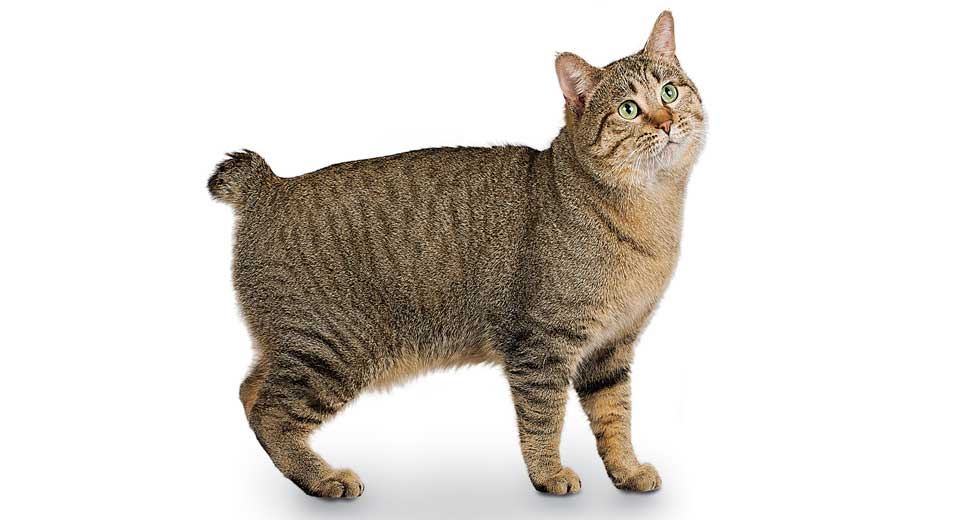
27.Manx:

undefined
Manx, breed of the tailless house cat of unknown origin but presumed by tradition to possess come from the Isle of Man. Noted for being affectionate, loyal, and courageous, the Manx is distinguished both by its taillessness and by its characteristic hopping gait. it’s compactly built, with a rounded head; large, round eyes; and little , wide-set ears. The rump is additionally rounded and, because the hind legs are considerably longer than the forelegs, is distinctly above the shoulders. The Manx could also be born with a tail but ideally should be totally tailless with a hollow at the top of the backbone where the basis of the tail should be. The double coat could also be any solid, variegated, or tabby color.

28.marbled cat:

undefined
Marbled cat rare Southeast Asian cat, Felidae , often mentioned as a miniature version of the unrelated clouded leopard. The marbled cat is about the dimensions of a domestic cat; it measures roughly 45–60 cm long, excluding a tail of roughly an equivalent length. The coat is long, soft, and pale brown to brownish-gray, with large, dark-edged blotches on the body and smaller dark spots on the legs and tail. The marbled cat is nocturnal and lives in jungles, and should prey on small animals and birds.

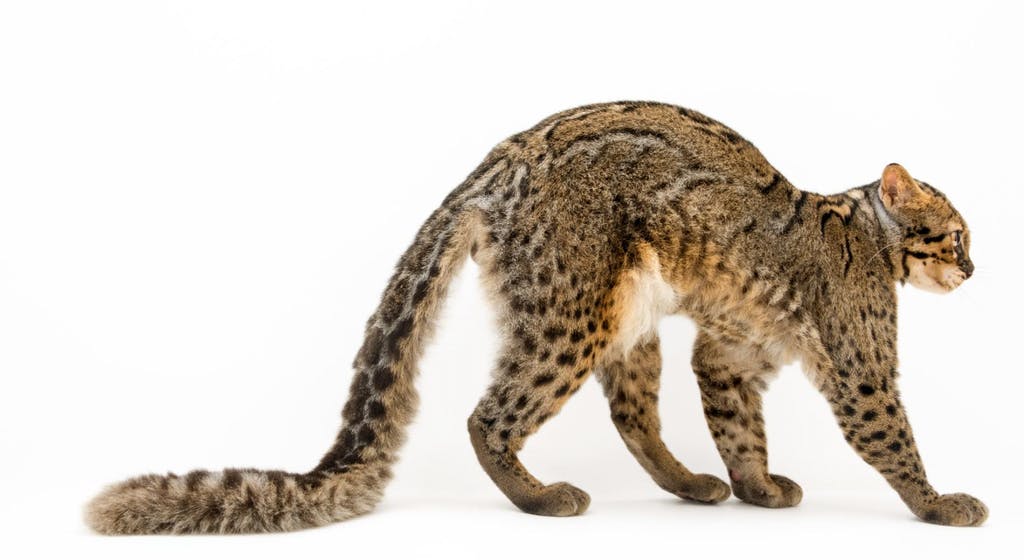
29.margay:

undefined
Margay also called tiger cat or tigrillo, alittle cat that ranges from South through Central America and, rarely, into the acute southern us . Little is understood about the habits of the margay. It lives in forests and presumably is nocturnal, feeding on small prey like birds, frogs, and insects. it’s largely arboreal and has specially adapted claws and feet that enable it to scamper up tree trunks and along branches with ease. The margay resembles the related ocelot but features a longer tail and fuller face, emphasized by large, dark eyes and rounded ears. The male attains a maximum length of about 1.1 meters, including a tail about 46 cm long, and weighs up to about 16 kg. the feminine is usually smaller and features a relatively long tail. Coloration varies from pale gray to chocolate with dark markings like spots, stripes, bands, and black-edged blotches. When hand-reared from a kitten, the margay reportedly is definitely tamed; as an adult, however, it’s going to become unpredictable.

30.ocelot:

undefined
the spotted cat of the New World found in lowland areas from Texas southward to northern Argentina. The short, smooth fur is patterned with elongated, black-edged spots that are arranged in chainlike bands. The cat’s upper parts vary in color from light or tawny yellow to gray. There are small black spots on the top , two black stripes on each cheek, and 4 or five black stripes along the neck. The ocelot’s underparts are whitish, spotted with black, and therefore the tail is marked on the side with dark bars or blotches.

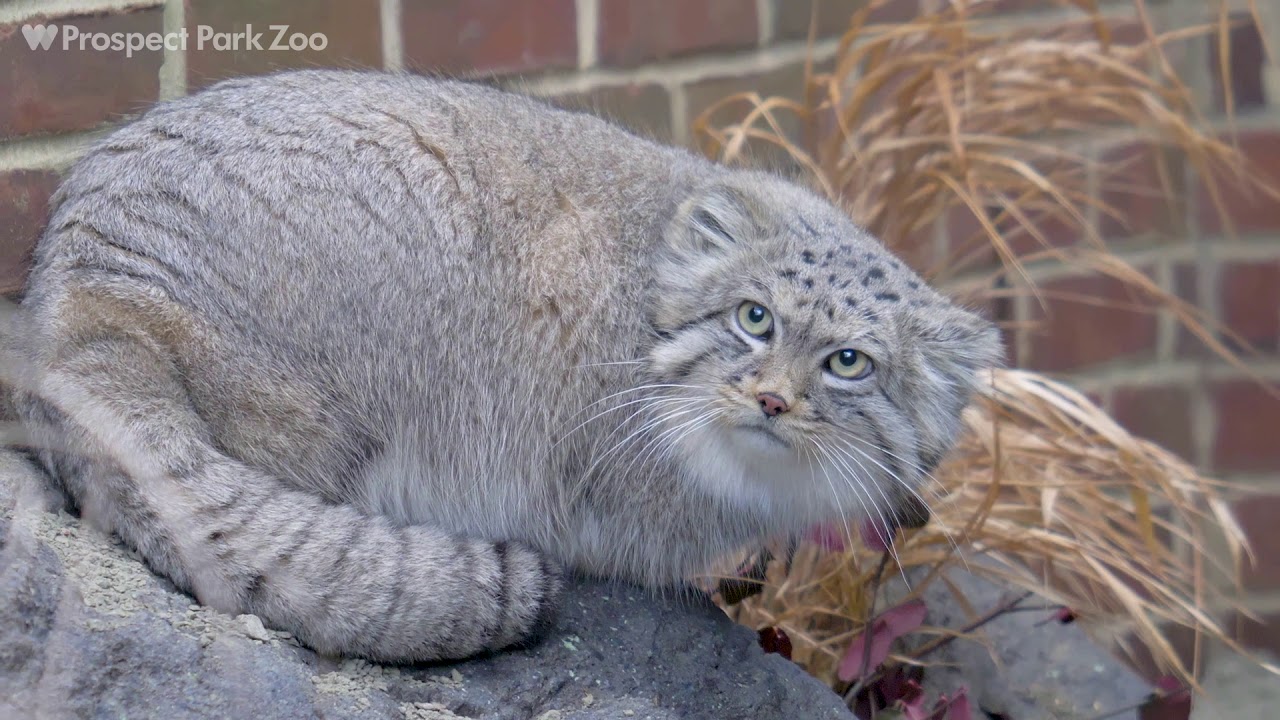
31.Pallas’s cat:

undefined
Pallas’s cat also called Steppe Cat, or Manul, small, long-haired cat native to deserts and rocky, mountainous regions from Tibet to Siberia. it had been named for the naturalist Peter Simon Pallas. The Pallas’s cat may be a soft-furred animal about the dimensions of a domestic cat and is pale silvery gray or brown in color. the top of its tail is ringed and tipped with black, and a few individuals have vague, dark markings on the body. The fur of the underparts is about twice as long as that of the upperparts and possibly represents an adaptation to the cat’s habitual lying and crouching on the cold ground.

32.pampas cat:

undefined
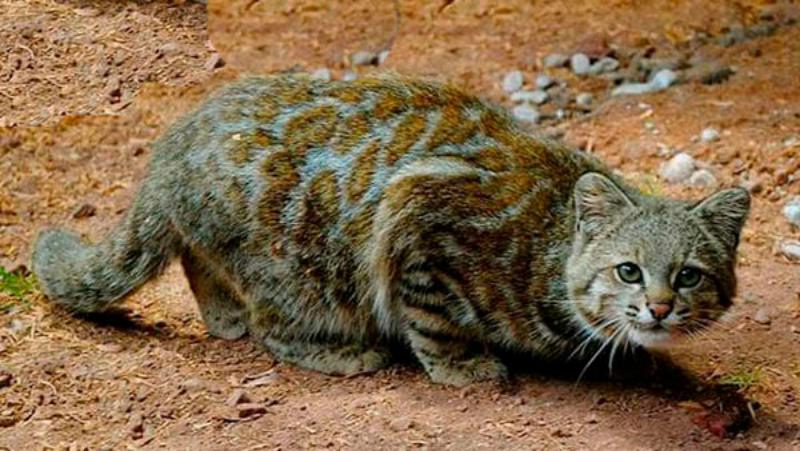
Pampas cat small cat, Felidae , native to South America. it’s about 60 cm long, including the 30-centimeter tail. The coat is long-haired and grayish with brown markings which in some individuals could also be indistinct. Little is understood about the habits of the pampas cat. it’s reported to measure in thick shrubbery and to hunt birds and little animals in the dark .

33.puma:

undefined
Puma also called cougar , cougar, panther, or catamount, large brownish New World cat comparable in size to the jaguar—the only other large cat of the occident . The puma, a member of the Felidae , has the widest distribution of any New World mammal, with a variety extending from southeastern Alaska to southern Argentina and Chile. Pumas sleep in a spread of habitats, including desert scrub, chaparral, swamps, and forests, but they avoid agricultural areas, flatlands, and other habitats lacking a canopy . Six subspecies of Puma concolor are recognized by most classifications.

34.Rex cat:

undefined
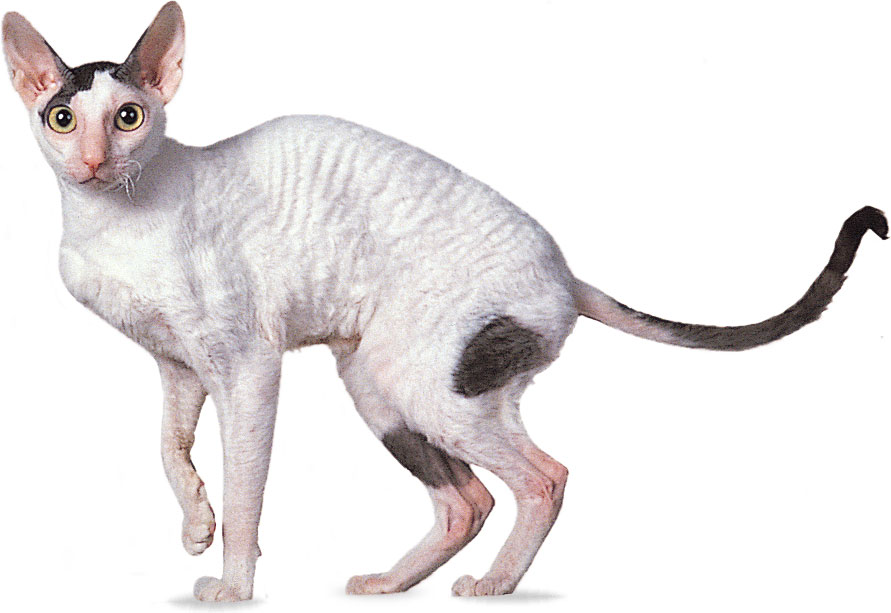
Rex cat, curly-coated breed of house cat that features a dense, soft coat lacking any projecting guard hairs, or outer coat. Except on the top , legs, and paws, the coat forms fairly deep waves, or crimps. The eyebrows and whiskers of the Rex cat are crinkled, the eyes are almond-shaped, and therefore the ears are large and high set. The adult Rex cat is slender and typically has long legs, an extended neck and head, and an extended , tapering tail. Show cats could also be any of the colours or patterns that are accepted for domestic cats.

35.tiger:

undefined
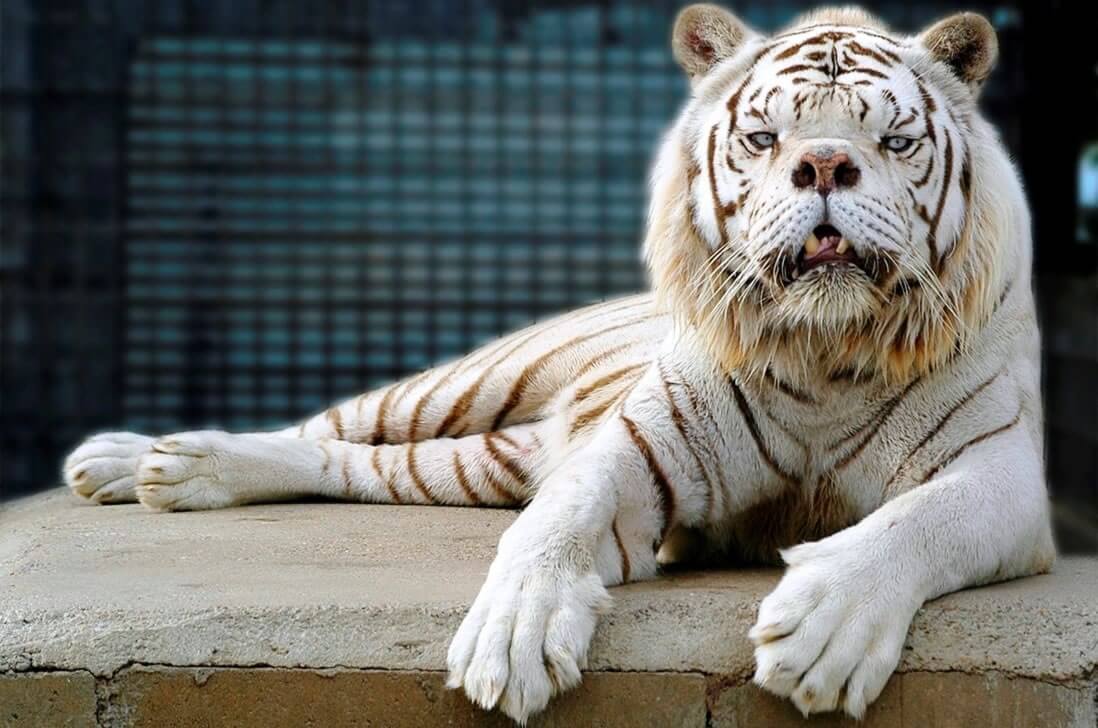
Tiger’s largest member of the cat family, rivaled only by the lion in strength and ferocity. The tiger is endangered throughout its range, which stretches from the Russian Far East through parts of North Korea , China, India, and Southeast Asia to the Indonesian island of Sumatra. The Siberian, or Amur, the tiger is that the largest, measuring up to 4 meters in total length and weighing up to 300 kg. The Indian, or Bengal, the tiger is that the most numerous and accounts for about half the entire tiger population. Males are larger than females and should attain a shoulder height of about 1 meter and a length of about 2.2 meters, excluding a tail of about 1 metre; weight is 160–230 kg, and tigers from the south are smaller than those of the north.

36.tigon:

undefined
Tigon, offspring of a tiger and a lioness. The tigon, or tiglon, may be a zoo-bred hybrid, as is that the liger, the merchandise of the reverse mating of a lion with a tigress.

Inspiring story of Google’s CEO: Sundar Pichai – Must read!!!

Growing up in India, like many of you, Sundar Pichai got my first telephone when he was 12. In case it turned out be a rotary phone, so it wasn’t that great for selfies. But he still loved to call my friends, play with it and sometimes take it apart. That telephone cemented my fascination with technology. Sundar Pichai remember in his parents’ house in Chennai, reading about the invention of the transistor at Bell labs. Of course, that initial invention helped found what became referred to as Silicon Valley and out of that came companies like fairchild semiconductor and Intel and every one the computers and software, that we all use today. You can draw an immediate line from that invention to the technology, that powers your Twitter feed or your WeChat messages today.

Google's Sundar Pichai travelled in buses, had no television while ...

Image source : GadegtsNow

When he was younger, people would say, this person didn’t get into this college or something and that is the end of the road. Sundar Pichai thought life is so different from that, and so he think it is important to you know, keep your hopes, keep your dreams and try to follow them and you recognize he think, most of how life plays out is up to you, not up to what happens outside of you. It’s important to keep that in mind and take the long-term view. As a teenager, jumping on to a crowded train. At Chennai and traveling for 24 hours, to attend my school at IIT Kharagpur and that opportunity changed the course of my life. You want to aim high enough that you fail, you know few times thought it is the natural part of the process. In fact, Larry accustomed say if you’re employed on really difficult things, you’re more happy because you’ve got no competition, others aren’t performing on that difficult a drag . And although you fail, you finish up doing something great within the process.

Sundar Pichai Biography - Childhood, Life Achievements & Timeline

Image source: Thefamousperson

You know, working the real world, it is important to be well rounded, it is important to try different things, or you know take some risks, he would encourage people to follow their passions a little bit more. To follow set lanes throughout your career. Getting into an elite institution doesn’t guarantee success, it matters plenty but it doesn’t guarantee success. It is important to stay that perspective in life and life may be a long road, and you know, you would like to require it at the proper pace and luxuriate in what you are doing. Sundar Pichai knew how much hard work it takes to pursue your dream of building a business. The long hours, time faraway from family, the ideas you recognize are brilliant, that just don’t seem to catch on. Reading that and thinking, it is the concept matters. It didn’t matter where you come from or what your background is.
One revolutionary idea, one brilliant invention can unleash other entrepreneurs to revolutionize, industries and ways you could never predict.

black samsung tablet display google browser on screen
Photo by PhotoMIX Company on Pexels.com

Rasputin: The death that changed history

Mystics and holy men, some call them the voices of gods while some refer to them as shams and con-men who try to trick the gullible people of society. Whatever be the truth, the fact is that they have been influential in shaping history throughout the world since time immemorial. These kinds of people often gain a large popularity, are hailed as having the power of gods and yet like every other person, have skeletons on their closets. One such man who changed the course for the Russian monarchy is Grigori Yefimovich Rasputin, a Russian mystic and self-proclaimed holy man who befriended the family of Emperor Nicholas II, the last monarch of Russia, and gained considerable influence in late imperial Russia.

Photo by Mitja Juraja on Pexels.com

Born to a peasant family in rural Siberia, Rasputin lived an obscure life till adolescence and might have continued to do so had he not converted himself to the Russian Orthodox church. After being inspired by many of the wandering humble monks of his generation, Rasputin moved aimlessly from one holy site to another. He spent years of his life on pilgrimages across Russia, and along his travels he amassed a large following due to his charismatic and magnetic presence. He was even believed to have had the power of divination and healing. And despite his repetitive acts of petty theft, heavy drinking and over promiscuous nature with the ladies, he was hailed as a holy monk across Siberia, and he gained the attention of both the powerful orthodox clergymen and common people.  Once he finally reached St. Petersberg, he used his innate charisma and gained popularity and connections to win the favour of the imperial family’s spiritual advisor and soon wormed his way up and was introduced to the Tsar Nicholas II. He like all other “holy men” before and after him had the ability and know-how to milk every opportunity to the fullest. Like every opportunist mystic in the world, he researched about his targets and found out that the Tsar and his wife were devout believers of the supernatural and mysticism.  Rasputin cemented his control in the Tsar’s court by performing a “miracle”. The young heir to the throne had a disease known as hemophilia, a life-threatening blood disease. He refused to let the doctors administer anything to the heir and when Alexie’s health got better, he was hailed as a mystic with supernatural powers. What actually happened was that the doctors had prescribed him aspirin which worsens the hemophilia’s effect in the body, thus it seemed that the young heir got better. Thus, to cement his place of power, he proclaimed that should he die or be deserted the royal crown and their son would also disappear. Due to his increasing popularity in court and his ill habits of theft and skirt-chasing, the orthodox had begun to hate him and decided to have him killed prevent his further acts of corruption to the royal family and to stabilize the kingdom, not taking into account that to the public Rasputin was hailed as the public’s hero. In 1916, a group of nobles led by Felix Yusupov, tried to kill Rasputin by lacing his pastries with cyanide or so they thought as one of their co-conspirators had changed the poison with something harmless out of pity for Rasputin. As that plan failed, Yusupov shot Rasputin at point blank range, which again Rasputin miraculously survived and punched away his assailant and ran away. However, the group of noblemen gave chase and shot Rasputin dead and dumped his body in the Malaya Nevka river. However rather than stabilizing the kingdom, his death enraged the peasantry who were already on a boil from decades long political tensions within the area, saw this as the tipping point and took down the Tsar’s regime. As Rasputin prophesised his death was soon followed by the royal families. Thus, ended the tale of a monk who reshaped the Russian history.

“Stop Worrying and Start Living” – Dale Carnegie – Book review

Dale Carnegie’s how to stop worrying and start living so the first big idea is ask yourself what’s the worst thing that can happen I remember the first year in college constantly worrying about my grades what was I getting to do if I got a B+ rather than an a well surely my life would be over and that i would never amount to anything in life like that was seriously the thought process browsing my 17 year old head now fast-forward five years.

How to Stop Worrying & Start Living
Carnegie tells a story of this guy in World War 2 who’s stuck in a submarine and basically knows that he’ll be dying in the next few hours and he sits there thinking about all the stuff he used to worry about at home and how absurd it was and makes a promise to never waste his life again like that if he survives now that might be hard to resonate with so let me give you a more contemporary example people are having their heads chopped off every single day every single day the only reason it’s not you is because you are born in a certain place. They weren’t that’s it now going back to my friend I told him look here’s what I want you to do every day you will start your morning by watching somebody’s head being chopped off and then you’ll go about the rest of the day.
He started freaking out about how he can’t do that and how he doesn’t like blood and whatever now here’s the thing. I know that’s really crass and morbid but I don’t care if you don’t worry about stuff great you don’t have to watch anything but if you’re worried about stupid all the time you have a disease so you either treat yourself or you never ask about how you can stop worrying again ever. Here’s what I will guarantee you if you start your day by watching someone else have their head chopped off nothing and I mean absolutely nothing could possibly happen to you for the rest of the day that you could get pissed off about and not feel like a complete retard yes when you’ve seen someone’s head chopped off you will have a weird feeling inside you as soon as you start to complain about how you deserve to be paid more at your job or what you’re going to do now since you bought a B+ rather than an A or how your washer is broken you’ll realize that.

automatic weapon bullet camouflage close up
Photo by Pixabay on Pexels.com

If the guy had been given the chance to live and wear that same dirty shirt for the rest of his life without ever being able to wash it he would have been the happiest man alive realize the absurdity of it all the third big idea staying busy now I don’t mean the average busy person actually those are the people that worry the foremost the guy who works 12-hour days then comes home and watches Fox all night worrying about whether some guy can marry another guy or about all the foreigners who will come and take his job you know because he’s the only one entitled to that job I’m not talking about that kind of busy here’s how I like to stay busy read a book that I like go to the gym with my girlfriend play around on the piano and compose cook amazing food work on a project. I’m passionate about now here’s what happens when you do that your brain can’t think of two things at one time it just doesn’t have that capability you can try right now if you want you can’t think of your broken washing machine and at the same time think of how much you love playing soccer it’s not how your brain works so the best way to get rid of the negative thoughts in your head is to actually start putting positive thoughts in there get busy with what you love and your brain simply won’t even have the power to stress . Finally, a question that really resonated with me here’s what you’re going to do in your life you’re going to work and worry your entire life so you can gather a bunch of stuff like your house and all the stupid.

woman working girl sitting
Photo by Alexander Dummer on Pexels.com

If you’re lucky after 50 years of all that worry and stress all of your stuff could be worth 1,000,000 dollars here’s the question would you sell your legs for a million dollars let me ask you this would you sell your legs for a billion dollars I wouldn’t and you probably wouldn’t either would you sell your arms for another billion dollars no there you go you have already got something that you simply value at two billion dollars actually hopefully more but you do not need to be all Zen you could be a greedy capitalist like me and understand this now here’s what you’re going to do you’re going to ignore and not utilize something worth two billion dollars because you’re too busy worrying and stressing about the things that might amount to 1 million dollars at the end of your life oh and you’ll be considered really lucky if that happens by the way all right.

cheerful barista in apron and hat with portafilter
Photo by Ketut Subiyanto on Pexels.com

So, I don’t know if you’re seeing how crazy that is but that’s kind of like having a huge mansion a personal jet every single car you ever wished for and not using and enjoying those things because you’re too worried about at some point having the ability to shop for a Corolla that’s crazy and sad you have already got everything that you value at billions and billions of dollars so stop ignoring wasting and treating it like for hours and days so you can worry and bitch about how your phone bill went up from a hundred dollars to a hundred and twenty.

You can buy this amazing book from here ( click here )

CHEESE- introduction and production

Cheese is a most commonly used dairy product which is a product derived from milk. Cheese is available in the market in various textures, forms and flavors. It is basically the product of coagulation of milk protein, casein. Cheese is said to be a concentrated form of two major products i.e. Milk protein (casein) and Milk fat. Combination of these two results in the production of cheese which is very much liked by everyone nowadays.
The other ingredients of cheese besides milk are a particular, selective strain of a bacterium, a milk clotting agent and some amount of sodium chloride (to give a salty flavor).
Various types of cheese are present in the market which is basically due to the variation in its basic constituents. No new ingredient is actually added in forming the new type of cheese. Just a basic variation in the already present ingredients can help. Sometimes there is a need to add new additional ingredients which give rise to completely different variety of cheese. It has also been observed and noted that the change in any environmental conditions surrounding the manufacture and subsequent ripening of cheese also affects its manufacturing and thus type.
BASIC CHEESE MANUFACTURING PROCESS –
The basic cheese manufacturing process consists of 3 main stages – Curdling, Curd processing and ripening. All different varieties of cheese can be manufactured at different levels of manufacturing means some cheese can be made in the first step while some needs all the 3 steps to completely occur.

  1. CURDLING –
    It is the first and the most important step in the production of cheese. In this step, there is a separation of milk into solid curds and liquid whey. Usually, this step is achieved by the addition of acidifying (souring) agent in milk and adding the enzyme RENNET. The acidification can also be achieved by directly adding some acidic agent such as vinegar. But most commonly for this acidification purpose, a starter bacteria is used which converts milk sugars into lactic acid and without even the addition of any acidic substance, the acidification is achieved. The common starter bacteria which are used are from Lactococcus, Lactobacillus, or Streptococcus families. Swiss cheese requires the addition of Propionibacter Sherman, which is used to produce Carbon dioxide bubbles during ageing resulting in the hole like structure of Swiss cheese.
    Some fresh cheeses are curdled only the acidification process, but most cheeses require the addition of enzyme, rennet which sets the cheese as strong and rubbery. It also allows the curdling step at low acidity.
  2. CURD PROCESSING
    Till this step, the cheese has now set into a very moist gel. Some soft types of cheeses are essentially complete in the first step. They are just drained, salted and packaged. But from other cheeses, which are not been prepared in the single step, the curd is cut into small cubes which allows the remaining water to drain off from the individual pieces of curd itself.
    Some harder cheeses are then heated at a normal temperature which deliberately forces out the whey from the cut curds. This step changes the taste and flavor of the cheese. Apart from providing a salty flavor to cheese, salting has some other benefits also like it prevents cheese from spoiling, it drains out moisture and also it is used in firming he cheese’s texture in an interaction with its proteins. Different cheeses have different processes of getting texture.
  3. RIPENING
    Most of the cheeses are already prepared in the last step, some of which are not prepared yet are of harder varieties and more rubbery in texture which is completely attained in this step. In this step, the cheeses are left to rest under controlled conditions. This step is also known as AGING. This step may take several years to complete. As a cheese ages, the microbes and the enzymes secreted by them transform its texture and also intensify the flavor. This transformation is more of a result of the breakdown of casein proteins and milk fat into a complex mixture of amino acids, amines and fatty acids.

Xiaomi’s Laptop Launch in India

Xiaomi is a very young tech company in the mobile business compared to most other players of the industry. Mobile phones themselves are not very old technology. Commercial Mobile telephony started in mid-90s. So, it was only natural that the first companies came from other background. The first companies like Nokia, Motorola, Sony, Panasonic and even the Samsung, Apple were already a tech company. Mobile telephony was not their first business. So, when Xiaomi jumped straight into mobile phone manufacturing in 2010 it was one of the first companies to do so.

Launched in 2010 in Beijing, China; Xiaomi made roads to India after just 4 years. In 2014, Xiaomi launched in India and its India journey that we are going to focus today. Xiaomi launched in India on 100% online platform. Armed with cheap Chinese manufacturing and policies, the phones appealed the consumers instantly. So much that the websites crashed on the first day itself. They made it to number one selling smartphone brand in 2017, within just 3-years. They were one of the factors pushing 4G penetration in India. The Ecosystem on the consumer side was a big factor which delayed launch of 4G services in India for many years despite licenses being sold. Xiaomi was a leader in supplying cheap 4G phones. Which lead to faster 4G penetration in India. Xiaomi has built offline sales capacity as well since then. Even today more than half of Xiaomi’s sale comes from online platform.

Xiaomi has not been beyond controversy. In 2014, they faced temporary ban by High Court of Delhi due to a complaint filed by Ericsson. Xiaomi has also faced concerns regarding privacy and data thefts. Based out of China, the lack of transparency brings such concerns naturally. But cheap products with reasonable quality has been warding off the privacy and security concerns of price conscious Indian customers.

Since 2014, Xiaomi has launched several mobile phones. Slowly they have ventured into other home appliances also. They are selling Air Purifiers, Water Filters, Smart Televisions, Fitness bands to count a few. They have been expanding their categories continuously. So, it was only a matter of time before Xiaomi started selling laptops.

Xiaomi is set to launch their first laptops next week in India. Powered by Intel i5 and i7, they are priced between 40,000 and 55,000. They come with Solid State Drives, Great graphics cards and fast charging. The sale will start on online platforms- Amazon and Mi website. With the current ongoing lockdown and the Corona pandemic, the Work-From-Home culture is on the rise. And WFH requires personal laptops so the demand of the laptops is going to rise. So, a quality laptop reasonably priced should sale like hot cakes.

However, there has been an increase in tension at India China border. China is being the aggressive oppressive bully. They have destroyed Tiber, they are destroying Hongkong and not to say anything about the human rights issues within their country, and now they want to grab Indian territories. And all this is happening when the world is facing a life-threatening pandemic which incidentally has been gifted by China. Naturally, Indian consumers want to boycott Chinese products. But unfortunately, Indian consumers do not have much money and/or options to be choosy. We will have to see how much Indian consumers are able to resist something they know they want to avoid.

Wise Device: Cellphone

Earlier people had to wait to send and receive a message where was a chance of losing the cognitive and emotional connect, which has now reduced to zero with the invention of mobile phone.  Apart from enhancing social connection, mobile phones are widely used in industry work that saves time and money as well.  But today, Men have come a long way in technological advancement with time that has affected our life and has changed it in many ways.  World has become a global village where many things seems to be just a click away. Life has become more convenient and easy with it and undoubtedly one of the major being invention of mobile phone.  Anytime-any place, is what defines a cell phone as it is one of the portable and fast medium of communication. Or in other words it can be said as, one of the major invention that has become the lifeline of the masses. It has brought communication revolution around the world and changed the way people connect to each other. Previously it was just a device used to receive and send a message but with the evolution of internet it has become a multitasking device used for various purposes making it more impactful in both good and bad sense. Earlier people had to wait to send and receive a message where was a chance of losing the cognitive and emotional connect, which has now reduced to zero with the invention of mobile phone.  Apart from enhancing social connection, mobile phones are widely used in industry work that saves time and money as well.

Previously it was just a device used to receive and send a message but with the evolution of internet it has become a multitasking device used for various purposes making it more impactful in both good and bad sense.

Be it information, entertainment, education, mobile phones have now become a portable computer that can perform many task in one go. It is best device to boost up knowledge on any particular topic be it a subject-related or any issues and happening around the world. Nothing can be a better choice for social gathering than mobile phone these days as its makes people more approachable amid friends and relatives. It’s a best device to socialize anytime soon. Life seems little less complex with the invention of mobile phone.

But as the coins have the other side- mobile phone too has its demerits. Easy access on internet has also made it a device for isolation. Teenagers and adults can be witnessed frequently messaging, gaming, posting updates, clicking pictures or else watching videos and listening music.  According to a survey on the most popular smart phone activities in India 2017 almost 50 percent of the respondent accessed social media via mobile. India recorded the world’s highest number of selfie death, accounting more than any other countries in the world.

High use of mobile phone is leading to health issues as well.  People who tend to use mobile phone on bed seem to have interrupted health and sleep disorders.  Children are becoming more dependent on search engines rather than being creative. It is affecting their creative skill making them dependent on internet. Frequent use of mobile phone is killing absorption as frequent notification, messaging is emerging as a disturbing agent and is killing concentration of the people. Mobile has its impact of people life style and living habit as people have become more fake and cunning.  Like any other technology, mobile phones too can be a choice to lead a good life but as said excess of everything is bad.

TALENT vs ROOTS

Over the past few months a lot has been said about Bollywood and, sadly, none of it has been positive. The film industry has been labelled corrupt, misogynistic, incestuous, corrosive and operating like the mafia.

Some may argue that trashing Bollywood is not new and has been going on since the first movies hit the screens, but the recent controversy is a low point for all of us and completely unwarranted.

 Bollywood no doubt in the last few years has taken itself to a totally different level. The craze for a Bollywood movie all across the globe is insane and as Indians we are really proud. The status bollywood industry has today is unparalleled, but there is a downside to it, something which has crippled it and grown its roots in the last 20 years and has been a hot topic of debate. This is the topic of nepotism.

It is indeed the bitter truth of Bollywood that the seeds of nepotism have now really grown into big trees.

The very famous movie Om Shanti om starring Shah Rukh Khan stated that the fact outsider Om Prakash was a struggling actor and had to die and take birth in the family of superstar to make it big says a lot about nepotism in bollywood.We cant deny the fact that there’s nepotism and favoritism existing in Bollywood.

Nepotism or not, star kids have always been a part of Bollywood. Some of those who made an entry riding on family names made a quick exit, while others like Alia, Ranbir Kapoor, Kareena Kapoor, Kajol, Hritik Roshan, have carved a niche for themselves without depending on their star parents.

The question is, should those using their lineage for a foothold in the industry stop pursuing acting as a career? Or should the ‘outsiders’ give up so easily, despite having oodles of talent?

It would be wrong to say and put all actors in the same plate and target them with bullets of nepotism and say that they don’t deserve their status as an actor. There are certain actors despite coming from privileged families of Bollywood  who have proved themselves worthy with their acting skills.

But yes they definitely had an upper hand over the people not coming from so called star families and they already got a kick start due to their connections.

credits- First Post

The debate of talent Vs privilege has been a contentious one

 If countless outsiders spend years slogging it out in small films, is it fair that star kids in their early twenties get to start their careers with lead roles in plum projects irrespective of their skills?The difference between star kids getting a movie as compared to an outsider is that they have to constantly struggle to prove themselves again and again to survive in this industry and these people literally have to thrive hard to be casted by good directors.

We cannot deny the fact that there are a lot of leading actor and actresses who doesn’t really have a Bollywood background but have still managed to make their way and have foot hold in this industry.

But the thing which has outraged a lot of people right now is why has privilege surpassed talent these days in b-town? Why actors who are really deserving doesn’t get those bright chances and on the contrary there is an entire PR machinery planning and executing  tricks and crores are been spent on an average star kid’s launch. Post launch, if the kid fails, there are the options of relaunch and re-relaunch. There are industry kids who are yet to score a single major hit even after over half a decade, but they still bag projects thanks to familial contacts, one such example is Arjun Kapoor. They always have something on their plate only because they belong to a privileged btown families.

The late Sridevi’s daughter Janhvi Kapoor and Shahid Kapoor’s half-brother Ishan Khatter in Dhadak, and Salman Khan’s brother-in-law Ayush Sharma in LoveYatri, were other blue-blood launches last year besides Sara. Although these films were forgettable, each debutant saw ample publicity boost.

last year Karan Johar, big daddy of B-Town nepotism, geared to introduce Chunky Pandey’s daughter Ananya in Student Of The Year 2 and is all set Sanjay Kapoor’s daughter Shanaya in an untitled project. Sunny Deol directs son Karan’s debut flick Pal Pal Dil Ke Paas. Sajid Nadiadwala shoulders responsibility of launching Suniel Shetty’s son Ahaan.

Be it when actor Kangana Ranaut called director-producer Karan Johar the ‘flag bearer of nepotism’ on his own show Koffee With Karan or the time when young Ananya Pandey ‘complained’ about it and debutant Siddhant Chaturvedi ‘silenced’ her, nepotism has and will always be one of the burning topics in the Hindi film industry. 

Being an outsider we really don’t know the reality going inside this industry but for sure this industry does have a dark side that directly or indirectly affects a lot of people who are struggling to be a part of this concept of pure art form and not a money making business scheme.