MINISO: The Japanese Lifestyle Brand That’s Taking Over India’s Retail Scene

Miniso is a Chinese retailer and designer brand specializes in house goods and cosmetics founded in 2011 by a young Chinese entrepreneur Ye Guofu and co-founded by Japanese Designer Mr. Miyake Junya. It holds a wide range of product categories including cosmetics, home goods, digital accessories, stationery kitchenware and much more under a single hood and it follows the philosophy of “simplicity, nature and good quality”. 

WHY IS MINISO ( A 100% CHINESE COMPANY ) PRETENDING AS JAPANESE COMPANY ?

Initially claiming to be a famous Japanese brand, despite operating in Mainland China have no outlets in Japan. Yes this company is pretending. It does not exists in Japan & Korea but openly advertise their flag stores in Japan. There’s another one called Mumuso which I believed it’s same kind of Dollar store claiming to be Korean origin, but not single business address was found from Korea, and you know the irony is Miniso stores plays Japanese pop music.

Miniso has since expanded outside of China and opened over a thousand stores worldwide.

OPERATION IN INDIA

Since throwing its doors open for business with the launch of its very first store in China back in 2013, Miniso may have subtly wriggled its way into the sub-conscious of the average lifestyle shopper in various world countries as the go-to store for all things chic and cheap.

The Indian economy was one of the fastest growing economies in the world. Many American and European brands have dominated the lifestyle industry here and have thrived. Noticing the opportunity and gauging a huge growth potential that the market had to offer Miniso started its operations in India in August 2017, with a total of 26 stores, out of which 21 in Delhi region and 3 in Mumbai, 2 in Lucknow and 1 in Bangalore. The company plans to expand business in India by increasing its footprint across the country. The company aims to open 800 stores by the end of the year.

In two years since its launch in India, Japanese value retailer Miniso has opened 110 stores across 41 cities.The company achieved its annual target of ₹ 700 crore revenue for 2017-18 in India with an average ticket size, which is 1.5 times higher than its other global markets.The company considers India as among the top 5 contributors to its global revenue. Miniso will expand its presence in India through both company-owned model and franchise partners.

INDIAN CUSTOMERS

The Indian consumers are very confident and the good thing is that the customer is very aware and its easy to get feedback.

It is a brand which resonates with simplicity, nature, good quality and affordable prices—products are priced between R75 and R1500, making the brand accessible to everyone. Miniso’s pricing strategy was built keeping in mind the middle and the upper middle class, the youth and Generation Z, with enormous attention being paid to design which is its USP. The products offered by the company cater to various audiences across income groups and interests.

Indians love the most include lifestyle, fashion accessories and health & beauty products as they are the best-sellers, contributing to 65% of Miniso’s total annual sales.

MINISO is a brick-and-mortar-only business model built around the reality of a world with e-commerce and the brand follows a unique aesthetic and takes care of its customers’ needs, managing to do what most online stores cannot: provide a great shopping experience to all its customers.

INDIA IN MINISO’S GLOBAL SCHEME OF THINGS IN FUTURE ?

Miniso considers ‘India is the future’. This future is not just about selling products. One side is of  purchasing products and doing the business from here. Also  India has an advantage because young people here can speak English well which can help them hire more people from India and send them to different countries, different branches. This can be benifitial in terms of employment growth in India

The Indian market has a vast potential for brand expansion and Miniso intends to follow through on the opportunity—keeping the Indian taste and preferences in mind. The increasing consumer base and rising demand for the brand has allowed Miniso to penetrate the tier II and tier III cities as well, that too in such a short span of time. MINISO’s core consumers are those between the ages of 18 and 35 in urban areas. With smaller budgets, but good taste, these consumers have flocked to MINISO around the world for its low prices and sensible design for lifestyle products in beauty, fashion and consumer electronics.

Covid-19 Updates.

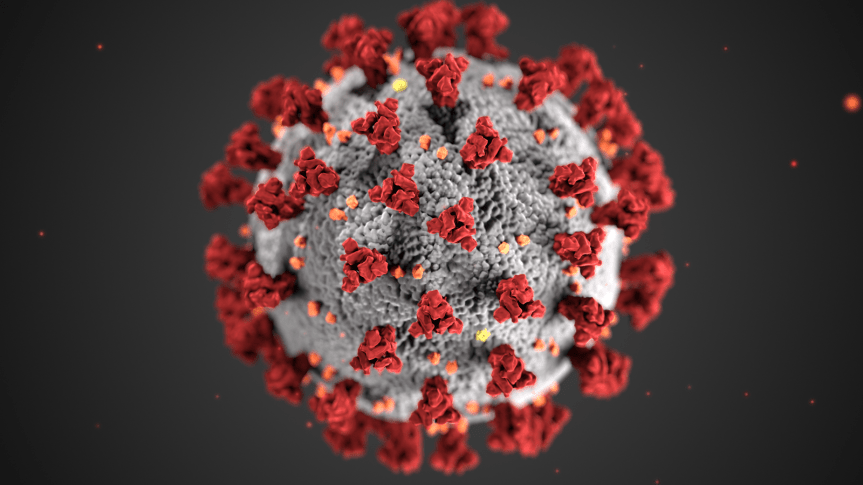
The global pandemic has troubled the world enough by taking many lives and taking down the economy of vast number of nations. People are praying and expecting that a vaccine is made as soon as possible and then the virus could be stopped.

3 new Covid-19 symptoms.

US healthy body adds 3 new symptoms of covid-19 which could be found in a person who might have contacted the virus. It was already been reported that person who has contracted the virus will have the following symptoms such as fever or chills, cough, shortness of breath or difficulty in breathing, muscle pain or body pain, fatigue, loss of smell or taste, headache or sore throat these are the symptoms which are already included in the covid-19 symptoms list. Here it has been reported that US centers for Disease Control and Prevention has added 3 more symptoms to the list and they are Congestion or runny nose, nausea and diarrhea which makes the total symptoms of 12. This list will be updating as new cases bring new symptoms and the people could experience any combination of symptoms from the following list. People having other sorts of disease or medical conditions are at a higher risk for developing much more serious complications if they contract the virus.

The virus does not seem to stop as the number keeps on increasing every day across the globe as we have around 10 million cases around the world approximately and have recorded 499,000 deaths so far in the last few months. Coming to India as per the reports India has reached around 5.28 Lakh infections and over 16,000 deaths till date.

Lockdown in Maharashtra extended till 31st July.

The Uddhav Thackeray has reportedly led the Maharashtra government today (Monday) and declared that the state would undergo Lockdown till the 31st of July.

Update on the Covid-19 Vaccine.

As the cases around the world are unstoppable there are many nations who have indulged in the making the vaccine for the corona virus. There are mostly 100 vaccines which are being developed worldwide, some of the nations are India, China, US, Russia and Israel. It has also been reported that the chief Scientist of world health organization named Dr Soumya Swaminathan reportedly said that around 2 billion dosses of corona virus vaccine would be available and ready to use by the end of next year. But the major question which arises is that who would get the first vaccine of the deadly virus ? Most probably the people of the country where the vaccine is made. Therefore there is a lot of pressure from various governments on their pharmaceutical companies and scientists to make the vaccine as soon as possible. It is reported that WHO said that Uk-based AstraZeneca was leading the chart for creating the vaccine of the deadly corona virus furthermore they added that the US-Based vaccine Moderna was not far behind.

However there has been many drugs which have shown positive results but the the proper cure or treatment is no where to found right now.

According to the Global Times the vaccine made by china shows promising results on human trials. According to the Chinese company around 1200 volunteers of phase 1 and phase 2 showed effective improvement after the dosage.

FIR against Ramdev, Patanjalli for Coronil drug.

An FIR has been filed against Yoga guru Ramdev by the Rajasthan police for reportedly launching an Ayrvedic drug for curing the dangerous corona virus but it has come to notice that there is no approval on the following product which is said by a senior officer. The drug named as Coronil was launched on Tuesday which claimed that it can cure the virus. They reported that when taken with some other Patanjalli products it has cured all the patients who took part in the trial within a period of 7 days.

How Starbucks captured the coffee & the world…!!!

With nearly 30,000 cafes across the world , Starbucks has become over just a household name. From its iconic cups, often adorned with misspelled names, to the espresso inside them, Starbucks has catapulted from one coffee bean shop in Seattle to a sprawling $80 billion business over the last 47 years.

Starbucks has a 'void in innovation' and healthy beverages won't ...

Starbucks sales account for 57 percent of the total cafe market. Yes, 57 percent, nearly two-thirds of all coffee sold at cafes in the U.S. comes from a Starbucks. But this impressive expansion hasn’t come without growing pains. With more than 14,000 locations in the U.S. alone, Starbucks has spread itself too thin. Having too many stores has led to fewer transactions at individual stores. To compensate, the company has raised prices. But doing this too quickly or too often can drive customers away. So how did this happen? And what’s a coffee giant to do about it? The year is 1970.
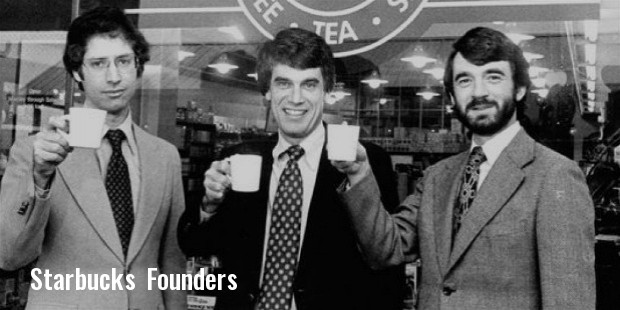
Three college friends, Zev Siegl, Jerry Baldwin and Gordon Bowker decide to get into the coffee business. They found a mentor in Alfred Peet, founder of Peet’s Coffee and the man responsible for bringing custom coffee roasting to the U.S. He knew the coffee industry inside and out, especially the gourmet end. He was the most educated coffee guy in the country at that time. So with Peet’s help, the three friends open Starbucks, a coffee bean shop and roastery at Seattle’s famous Pike Place Market in 1971. Peet provided the young entrepreneurs with roasted coffee beans and connected them with coffee brokers until they could set up their own roastery and source their own beans. For the first decade, the founders opened five more locations in Seattle. At this point, contemporary coffee consumers might have noticed a glaring absence: actual coffee drinks. But that’s the thing about the 70s coffee culture: it didn’t really exist outside the home. There were no coffee bars nor was there much of a requirement for espresso-based drinks. You purchased coffee beans and you either took them home as beans or we ground them for you in the store. Nobody expected to urge a beverage at a Starbucks coffee store until after 1980.

Starbucks Story - CEO, Founder, History | Coffee Company | Success ...
Starbucks’ initial focus was bringing high quality beans to consumers who were more accustomed to instant or canned coffee, but that changed with the addition of one man. The company hired its first really professional Director of Marketing and Sales, and that man was Howard Schultz. And he couldn’t figure out why we weren’t selling beverages. In 1983, Schultz travels to Italy and returns with an idea: turn the coffee bean stores into cafes. Starbucks served its first latte the next year. The experiment was a success, and four years later, Schultz partnered with investors and bought Starbucks for $3.8 million. He was only 34 at the time. Schultz pursued a strategy of aggressive expansion. By the time the company went public in 1992, it had 165 stores, in 1996 it had opened more than a thousand locations, including its first international cafes in Japan and Singapore.
Growth was so rapid that, just three years later, Starbucks opened its 2,000th location. Schultz switched from CEO to Executive Chairman in 2000, at which era Starbucks operated 3,500 stores in additional than a dozen countries. Between 2000 and 2007, the number of Starbucks cafes more than quadrupled, from 3,500 to over 15,000. During this era , the corporate opened a mean of 1,500 stores per annum , including 2,500 in 2007 alone. Sales shot up from $2 billion to $9.4 billion. Consumers were increasingly ditching their kitchen mugs for these iconic paper to-go cups. But then, Starbucks hit a wall: the 2007 financial crash. That year, its rapid growth screeched to a halt and its stock price plummeted by 50 percent as cash-strapped consumers backed away from pricey coffee habits. So, Starbucks brought back Howard Schultz. This news alone caused Starbucks stock to increase by 9 percent.

Xed Knowledge
Schultz halted growth and focused on customer experience. He shuttered cafes – more than 600 in 2008 and another 300 in 2009 – and laid off around 6,700 baristas. A month after his return, Schultz ordered Starbucks to shut all of its U.S. locations for one afternoon so he could retrain more than 135,000 baristas about how to make its signature espresso. Schultz’s goal was to remind customers what they loved about the brand by making the stores an experience, not just a place to get a quick coffee. They stopped selling breakfast sandwiches and brought back in-house grinding, infusing the cafes once again with that fresh coffee aroma. Schultz even mandated the removal of automatic espresso machines. These made service faster, but removed much of the romance and theatre of watching baristas craft each cup of coffee. Schultz’s makeover worked.

Starbucks | Description, History, & Facts | Britannica
The company’s stock soared more than 143 percent in 2009 and same-store sales rebounded. Starbucks has posted positive same-store sales ever since. During Schultz’s makeover of the cafes, Starbucks barely opened any new stores. But the pace picked up again in 2012. By 2017, Starbucks opened nearly 3,000 more locations, ending the year with 28,000 cafes round the world. However, this brings us back to the first problem: profit cannibalization. Over-saturation, particularly in urban locations, has spread sales thin. Because Starbucks has numerous locations, customers do not have to be loyal to only one. So albeit Starbucks overall sales are growing, its individual same-store sales won’t reflect it. Compounding this problem are changing consumer preferences. People are shying away from sugar-laden calorie bombs. which happens to be one of Starbucks’ staples. These signature Frappuccinos contain an average of 57 grams of sugar. That’s more than double the recommended daily limit of sugar. So, to combat these problems, Starbucks is changing once more . The company announced the closure of 150 stores in 2019. That may seem like a drop in the bucket for a sprawling company like Starbucks.

Starbucks App Users Now Drive 17 Pct Of Sales | PYMNTS.com

The company’s biggest undertaking is its new line of upscale stores: Starbucks Reserve Roasteries. These massive, 20,000-square foot stores are designed to be a tourist destination. Here, Starbucks baristas and bartenders’ experiment with different brewing methods and craft new, innovative beverages. These have proven popular. In the first weeks, the Shanghai Roastery made an average of $64,000 every day, which is double what a regular cafe makes in a week.

Alpha Femme Keto Genix

“The greatest wealth is health”. Being healthy means an overall sense of wellbeing; it includes feeling fit physically, mentally and emotionally. Obesity and overweight are two such issues which affect a person in all three areas. Excessive weight not only makes you less confident, it also is a threat to your healthy well being. A whole lot of medical problems are associated with excessive pounds. Its like obesity has a variety of hidden opportunistic diseases stuck with it. Being obese affects your life at the personal front too. You feel less confident about yourself, your body and in adverse cases begin to question your existence. Many people experience severe bullying due to being overweight which affects their mental peace and disturbs their life.
Obesity and overweight isn’t an untreatable problem. A good amount of exercise and follow up with a balanced diet can help you get rid of it. However, in today’s time people are more busy making money to fulfil their expenses. Its natural and obvious for them to not find time to devote to working out or preparing healthy diets. Fast foods are an easy choice for such work oriented people. Such people are the most vulnerable ones.
Don’t worry! Here we are introducing a revolutionary product that resolves your issue of excess weight and gives you the desired body. It’s named as Alpha Femme Keto Genix. It helps you lose fat within a limited time period. Unlike other regular supplements, it is free of any negative impact on your health.

Introduction to Alpha Femme Keto Genix Canada
Alpha Femme Keto Genix is a new product in the market which is a highly effective weight loss supplement. Unlike other regular supplements, it is a combination of only herbal ingredients which poses no threat to the health of an individual. It has proven to give the desired results in a limited timeframe. This product has gained certification from the Food and Drug Administration as the safest supplement to lose weight.
It works by inducing ketosis in the body which accelerates the cutting of fat and suppresses your high appetite. This supplement increases your overall metabolic rate which adds to your well being. Its standards are definitely higher than the existing other supplements in the market and its certain that whoever uses it, is going to love it.

Working
Let us know about how Alpha Femme Keto Genix work-
The working of this supplement is easy to comprehend. It works just similar to the keto diets. The only difference is that keto diets take a longer time to get you the desired results; however this product brings about a difference in just 30 days. It works by inducing ketosis in the body. Ketosis is simply a metabolic state in the body which makes use of fat, instead of carbs to generate energy for use by the body. Ketosis is very hard to achieve on your own naturally and takes several months to do that. This supplement helps you achieve ketosis a lot faster and burns fat for energy instead of carbs. When you are under ketosis, you feel energy and mental clarity like never before.
Alpha Femme Keto Genix consists of ingredients that play a major role in suppressing appetite. An elevated appetite forces a person to consume more fat rich foods and fast foods. This product solves this issue by suppressing appetite, so you feel full all the time. In addition to this, this formulation boosts the metabolism of the body, which leads to fat burning naturally. The production of citrate lyase is cut by the pills. Citrate lyase is responsible for conversion of carbs into fat. With all these benefits, you become full of vitality and stamina.

The Incredible month of Football.

Since the lockdown has been raised and the world is trying to live with the corona virus while taking precautions. Its been a month since football was given a green light in various parts of world but as a precautionary measure the matches had to be played behind closed doors without any audience. With the change in certain rules there will be 2 cooling breaks in a 90 minutes match including the halftime break. The players are not allowed to spit on the pitch. All the players who have started training for their respective clubs have tested negative for the virus. The previous week of football was something incredible and no football fan would want to miss it. Here we have what all happened during this week of football around the world.

Liverpool crowned Premiere League Champions.

Liverpool were crowned the premiere league champions on Thursday as Chelsea beat Manchester city by a score of 2-1. This ended the 30 year long wait of the reds to win the English Premiere League. This was the 19th league title for the reds. Liverpool still got seven games to play as they are now 23 points clear on top with Manchester city on the 2nd position. In the 31 league games played Liverpool were able to win 28 of them which prompted the Liverpool star Mohamed Salah to speak up and he said “now is our time to win the league”. It has been a tough time for the Liverpool fans as due to the pandemic there were chances of the league being called off and there would have been no declared winner on the other hand Liverpool had not won the trophy from the past 30 years but the wait was worth it as now all the Liverpool fans are celebrating around the world chanting “YOU WILL NEVER WALK ALONE”.

Barcelona’s La Liga title slipping away.

Barcelona drew with a score of 2-2 against Celta the previous night. With suarez opening the scoring for barcelona was a good sign for the striker as he had returned from an injury. Both the goals were scored by suarez and were assisted by messi. Everytime celta moved forward they seemed dangerous as they created many chances from the wings but failed to score in the first half. With the second half in hand celta looked to hurt barca on the counter and as they got the chance they scored to level the score 1-1 but later on suarez score another goal to make it 2-1 for the spanish giants. The twist came in the 87th minute of the match where celta had a freekick just outside the box. The captain stood up to take the freekick and scored an absolute beauty which leveled the scoreline and fortunately the final whistle was called off. Barcelona move on top of the table by just one point clear ahead of real madrid. The whites play espanyol today and if the zinedine zidane man pull off the victory they would move 2 points clear on top ahead of barcelona.

Juventus loose Coppa Italia to Napoli.

Napoli stunned the former Italian champions by dragging the match into the penalty shootout. Most of the talk was on ronaldo’s form as he was not able to make any major impact to the game. Ronaldo did not even get a chance to take a penalty as napoli won 4-2 on penalties. The Juventus coach spoke up and said “Cristiano Ronaldo is struggling to regain his famous acceleration speed after the shutdown forced by the corona virus pandemic”. After the result Cristiano Ronaldo’s sister slammed the Juventus coach and his tactics. She wrote on Instagram “what more can you do?This is it and that’s all, that’s why my darling cant work miracles on his ow… I don’t understand how you can play like this anyway … head up,my king.”

The return of football has already caused a lot of excitement, tension and controversies in just one month we look forward to the return of champions league which is expected to return on 7th of august.

BLACK HOLES – The great void

WHAT ARE BLACK HOLES ?

BLACK HOLES are points in space that are so dense they create deep gravity sinks. Beyond a certain region, not even light can escape the powerful tug of a black hole’s gravity. Because no light can get out, people can’t see black holes. They are invisible. Space telescopes with special tools can help find black holes. The special tools can see how stars that are very close to black holes act differently than other stars.

HOW ARE THEY FORMED ?

The most well-understood black holes are created when a massive star reaches the end of its life and implodes, collapsing in on itself.In their final stages, enormous stars go out with a bang in massive explosions known as supernovae. Such a burst flings star matter out into space but leaves behind the stellar core. when there are no longer forces to oppose that gravity, so the star core begins to collapse in on itself.

If its mass collapses into an infinitely small point, a black hole is born. Packing all of that bulk—many times the mass of our own sun—into such a tiny point gives black holes their powerful gravitational pull.

BLACK HOLES SWIRLING WITH STARS

Researchers have long estimated that the Milky Way is home to hundreds of millions of black holes, extremely dense objects whose gravitational fields are so intense, not even light can escape. But finding these dark objects has proven extremely difficult and majority of black holes in our galaxy are invisible, so the only way to find them is by observing their gravitational effects on surrounding objects.

After decades of black holes being known only as theoretical objects, the first physical black hole ever discovered was spotted in 1971. Then, in 2019 the Event Horizon Telescope (EHT) collaboration released the first image ever recorded of a black hole.

Using the Event Horizon Telescope, scientists obtained an image of the black hole at the center of galaxy M87

TYPES OF BLACK HOLES

The most common types of black holes are the stellar-mass and supermassive black holes. Stellar-mass black holes are created when massive stars explode, leaving behind a black hole with the mass of just a few suns. Supermassive black holes exist in the hearts of galaxies and usually contain the mass equivalent of millions of suns.

SUPERMASSIVE BLACK HOLES- BIRTH TO GIANTS

Small black holes populate the universe, but their cousins, supermassive black holes, dominate. These enormous black holes are millions or even billions of times as massive as the sun, but are about the same size in diameter. Such black holes are thought to lie at the center of pretty much every galaxy, including the Milky Way.Almost every galaxy, including our Milky Way, has a supermassive black hole at its heart, with masses of millions to billions of times the mass of the Sun. 

The supermassive black hole that lurks at the center of our galaxy, called Sgr A*, has a mass of about 4 million times that of our Sun. A black hole is a place in space where gravity is so strong that neither particles or light can escape from it. Surrounding Sgr A* is a dense cluster of stars. It is 26,000 light-years from the Solar System

On January 5, 2015, NASA reported observing an X-ray flare 400 times brighter than usual, a record-breaker, from Sagittarius A*. The unusual event may have been caused by the breaking apart of an asteroid falling into the black hole or by the entanglement of magnetic field lines within gas flowing into Sagittarius A*.

Sagittarius A* is the black hole at the center of the Milky Way galaxy. Credits: X-ray: NASA

FAMOUS BLACK HOLES

Cygnus X-1: a stellar-mass black hole and x-ray source that lies some 6,500 light-years away. It is a binary system that contains a blue supergiant variable star and the x-ray source thought to be the black hole.

Sagittarius A*: the supermassive black hole at the heart of the Milky Way Galaxy. It lies in the direction of the constellation Sagittarius. This black hole contains the mass of about 4 million suns.

M87: this elliptical galaxy has a 3.5 billion solar-mass black hole at its heart. The black hole is surrounded by a disk of super heated material and has a jet of super heated material streaming away from the black hole that extends across 5,000 light-years from the galaxy’s core.

Centaurus A: this galaxy, which lies in the direction of the constellation Centaurus, is a giant spiral galaxy with an incredibly active nucleus. It contains a 55 million solar-mass black hole at its heart, with two jets of material that stream away from the galaxy at about half the speed of light across a million light-years of space.

Amazing Facts :

1. Black holes will spaghettify you and everything else.

Black holes have this incredible ability to literally stretch you into a long spaghetti-like strand. Appropriately, this phenomenon is called ‘spaghettification’

2.Einstein didn’t discover black holes.

Einstein didn’t discover the existence of black holes – though his theory of relativity does predict their formation. Instead, Karl Schwarzschild was the first to use Einstein’s revolutionary equations and show that black holes could indeed form.

3. Black holes are the ultimate energy factories.

Black holes can generate energy more efficiently than our Sun.

4.Black holes slow down time

To understand why, think back on the twin experiment that is often used to explain how time and space work together in Einstein’s theory of general relativity: One twin stays on Earth while the other one zooms out into space at the speed of light, turns around, and returns home. The twin that travelled through space is significantly younger because the faster you move, the slower time passes for you. As you reach the event horizon, you are moving at such high speeds due to the strong gravitational force from the black hole, that time will slow down

5.Anything can become a black hole, in theory.

The only difference between a black hole and our Sun is that the centre of a black hole is made of extremely dense material, which gives the black hole a strong gravitational field. It’s that gravitational field that can trap everything, including light, which is why we can’t see black holes. You could theoretically turn anything into a black hole.

Useful and widely used language to learn

Intro

The best we have been able to do is to narrow down the timeline for origin of language and studying human phycology to know when we developed mid-brain for language. Magpie is the name given to English language as it has a mix of many languages that picks up word from all other language. Some language has understandably widened vocabulary of English than others. Modern English dictionaries contain more of a geographical melting pot than ever before.

 Global lists that are famous worldwide are listed down. There are some seventy thousand languages in world that are famous worldwide also English has borrowed language from these different languages.  Here goes the list of six such important languages that are spoken worldwide in large number.

CHINESE: 1197 million native speakers

So far it is the widely spoken language in the world. According to the Oxford English Dictionary, Chinese words have been recorded in English since the mid-16th century, with the earliest examples including the likes of tai chi (1736), ginseng (1634), yin and yang (1671), kumquat (1699) and fang shui (1797). One of the earliest of all is lychee (1588). Chinese is a linguistic that is also referred as macro language that comprises many forms to derive a different form and dialects that together have of 1.2 billion native speakers

2. SPANISH: 399 million

Mainly spoken in Mexico, but other part of the world where this language is spoken as a major language is Colombia (41 million) Argentina (38.8 million), and Venezuela (26.3 million). They are many native speakers in the United States of America. In English, Spanish loanwords like weaponry and military in termed as guerrilla, flotilla, armada, machetealso the animals name are as follow like chinchilla, alligator, cockroach, iguana.

3. ENGLISH: 335 million

As per Ethnologies the English language has some 335 million native speakers, that incudes2 55 million in United States itself, 55 million in the United Kingdom and 19 million in Canada. Few other main countries have also 15 million in Australia and 5 million in New Zealand. Though English is spoken in almost every Asian countries of the world and is most wide spread it is recorded to be spoken in 101 different countries and territories worldwide.

Additionally, the number of people that has opted English as a second linguistic Franca included, the total no of speaker could rise globally to one billion.

HINDI: 260 million

Hindi is native language of the world’s 260 million speakers that are mainly found in India and Nepal. Although some 120 million projected people in India uses Hindi as a second language.  Also it is spoken in many part of the world such as in Mauritius, Fiji, Suriname, Guyana, Trinidad & Tobago and Nepal. Hindi is declared to be official language of the union. The Indian constitution in 1950 declared the Devanagari script and made it an official one. However, Parliament decided the use of English for an official purpose was announced fifteen years after the constitution came into effect, i.e. on 26 January 1965.

PORTUGUESE: 203 million

The population of Portugal is around 12 million but Portuguese is enjoyed and spoken in large belt and it has 187 million native speakers. People in many of these countries adopted these languages mainly forcibly and many took it over their own language.  Adopting these languages made it spread too many other communities in a country.

Overthinking Worriers Are Probably Creative Geniuses

How many hours per day do you think? I never thought about that. So let me get this straight. You’re thinking all the time, and yet, you never realize how much time you spend thinking. That sounds like an addiction to me. I know, because I’m addicted to thinking too.

I am constantly overthinking things, whether it be focusing on irrelevant details, over complicating problems, psyching myself out, or getting overwhelmed by too many thoughts. It’s something I know a lot of people deal with, seemingly more in this generation than most, and it’s an interesting phenomenon. I can’t say exactly why I tend to overthink things (keep in mind I’m not a psychologist), but if I had to guess, I would say that it ties into the high expectations created by society and myself to be perfect, resulting in an unrealistic perfectionist attitude when approaching problems. I constantly have to remind myself that I’m focusing on the wrong parts of a problem and wasting time considering things that have little to no difference in my life in some futile search to be perfect. This problem of overthinking is most noticeable when I attempt to create art. Whether it be writing, drawing, making music, or even doodling, I always hit the brick wall of perfectionism. 

Overthinking can be one of the most frustrating, debilitating habits one can develop. Besides putting you through undue amounts of stress, overthinking can put your life on hold by preventing you from succeeding at work, damaging your relationships, and keeping you from chasing your dreams. It can throw your sleep patterns out of whack, cause you to stress-eat, and hold you back from appreciating your life for the gift that it is.

Much of the time, when we are overthinking, we are engaging in a destructive thought process that leads to unfavorable outcomes.

The “critical inner voice” in our heads that hones in on the negative aspects of a situation. This “voice” is like a sadistic coach that feeds us a ceaseless stream of criticism and undermines our goals. It’s that thought that pops up when we are about to go on a job interview: ‘You’ll never get this. You’re going to embarrass yourself. Just look how nervous you are.” It’s the dialogue that plays in your head analyzing your relationship: “Why is she so distant today? I must have said something stupid. She’s losing interest. She probably likes someone else.

So, why do we nurture this internal enemy that feeds us such negative commentary and dreadful advice? The truth is, we are all divided. All of us are split between our real self and our “anti-self.” While our real self is life-affirming, goal-directed and represents our true values and desires, our anti-self is like an internal enemy that is self-denying and self-critical, paranoid and suspicious, both toward ourselves and toward others. Our real self is built from positive life experiences, healthy developmental events and characteristics we witnessed in our parents and early caretakers. Our anti-self is shaped from our negative experiences, harmful events and attitudes we were exposed to early in life. 

Why do we live in our minds when we can just be living our life?  

It’s all about perspective and mindset.  While we’ve been contemplating situations that haven’t even come to fruition , or worrying about where we’ll be in five years, we could be celebrating the present and all the things going right in life.  Take a moment to breathe and think about all the great things in your world, and the things that make you happy: family, friends, children, relationships, vacation….football. The list is endless, but it takes a conscious shift in mindset to realize that what is bringing you down can weigh you down mentally, physically, and emotionally, too if you let it.

If you’re a classic over thinker, you analyze everything that happens in your life. You mull over every decision until you’re exhausted. You even brood about your tendency to brood. People who overthink tend to score high in the neurotic department. Neuroticism is one of the five big personality traits, along with openness, conscientiousness, extraversion and agreeableness. It’s linked to anxiety, fear, moodiness, worry, envy and frustration.

A lot of world-famous problem-solvers and artists were indeed worriers and over thinkers

There are a lot of incredibly creative scientists and artists on that list. If you have a tendency to worry about things to the point of being neurotic, there is a good chance you are a creative genius yourself.

Cheerful, happy-go-lucky people by definition do not brood about problems and so must be at a disadvantage when problem-solving compared to a more neurotic person. It is easy to observe that many geniuses seem to have a brooding, unhappy tendency that hints they are fairly high on the neuroticism spectrum. For example, think of the life stories of Isaac Newton, Charles Darwin, Vincent Van Gogh, etc. Perhaps the link between creativity and neuroticism was summed up most succinctly of all by John Lennon when he said: ‘Genius is pain.’

The overthinking hypothesis also explains the positives of neuroticism. The creativity of Isaac Newton and other neurotics may simply be the result of their tendency to dwell on problems far longer than average people.

Record recoveries in India,  highest new cases in 24 hours

Total coronavirus cases in India crossed 4.9 lakh

The number of active coronavirus cases in India stands at 189463 while 285636 people have recovered

The death toll has risen to 15,301

The total number of coronavirus cases in India jumped to 4,90,401 after 17,296 new cases were reported in 24 hours. This is the highest number of new cases reported in 24 hours. According to health ministry’s numbers released today morning, the number of active cases stands at 1,89,463 while 2,85,636 people have recovered and one patient has migrated. A record total of 13,940 COVID-19 patients were declared cured in a single day. The recovery rate has improved to 58.24%.

Covid-related deaths rose to 15,301 after 407 fatalities were reported in 24 hours.

Coronavirus testing facilities have been ramped up across the country with 1,007 diagnostic labs currently offering covid diagnostic facilities, the government said.

Medical research body ICMR has said that a total of 77.76 lakh samples have been tested up to June 25. And on Thursday over 2.15 lakh samples were tested.

According to figures released by the government on Thursday, coronavirus cases per lakh in India stand at 33.39 against the world’s average of 120.21 cases/lakh. Also, death/lakh in the country is currently amongst the lowest in the world with 1.06 deaths/lakh against the world average of 6.24 deaths/lakh, the government said.

A team from Union Ministry of Health and Family Welfare will visit Gujarat, Maharashtra and Telangana this weekend to interact with the state officials and coordinate with them to strengthen ongoing efforts for management of Covid-19.

Maharashtra, the worst affected state, has reported over 1,47,741 cases and 6,931 fatalities. Among other states, Delhi has reported 73,780 cases, Tamil Nadu 70,977 and Gujarat 29,520.

Globally, total coronavirus cases moved past 95 lakh while the death toll has crossed 4.8 lakh. US on Thursday reported record number of 37,000 cases in a day, taking its overall count to over 24 lakh. The country has reported over 1.24 lakh coronavirus-related fatalities.


16 Year Old Tik-Tok Star Siya Kakkar Commits Suicide.

The year 2020 has been a devastating and shocking year for everyone around the world. When it comes to the entertainment platform which mainly includes acting and dancing there had been many shocking up comings in this year which includes the death of the famous bollywood star sushant singh rajput due to poor mental health and depression. When everyone had not gotten over the death of sushant singh rajput there has been another incident where a famous tik-tok star has committed suicide in Delhi. The 16 year old had caught the eye of the audience with her brilliant set of dancing skills. It has been reported that the 16 year old lived with her family and was found dead around 9 pm the previous night. As per the police reports there has been no suicide note found.

It has been come to light that the star had around 11 lakh followers on tik-tok and her last post was 6 days prior to the incident. The news of the stars death was confirmed by her manager who reportedly said “This must be due to something personal…work wise she was doing well.I had a word with her last night for a new project and she sounded normal. Me and my company Fame Experts manage lots of artist and Siya was a bright Talent. I am heading to her home in Preet Vihar.” she said.

It is absolutely shocking that children of such age can take such a drastic step in their life and put an end to everything. It is the parents that have to suffer for the rest of their lives in guilt that they could not save their child irrespective of the situation. The digital world of movie stars and all sorts of actors and dancers have come under the spotlight as what kind of mental and peer pressure they tend to face in their lives.

Media in India: Politics of regulation in a time of false News

The media plays a pertinent role by providing information which is indispensable for two reasons. Primarily, it ensures that citizens formulate proper and updated views by analysing the authentic and genuine facts as provided by media. Secondly, it provides information as a “checking function” by guaranteeing that the chosen government and its representatives act upon electoral promises.

Media thus plays a central role since it is the single means through which public opinion is engendered. The stability of a country is assessed by the way the media report the news of that country. Thus, it becomes the obligation of the media to circulate only applicable and valid facts locally and globally.

The role of media has been changing from what it was perceived. The neutrality of news in reporting is missing in the mainstream media today because of the hidden agendas that many press and media outlets hold.

 Media in India is mostly self-regulated.  The existing bodies for regulation of media such as the Press Council of India which is a statutory body and the News Broadcasting Standards Authority, a self-regulatory organization, issue standards which are more in the nature of guidelines.   Press Council of India established under the PCI Act of 1978 for the purpose of preserving the freedom of the press and of maintaining and improving the standards of newspapers and news agencies in India.

Even though the Constitution guarantees freedom of the press, the government does regulate some media. Print media are largely unregulated, and newspapers and magazines can print nearly anything as long as they don’t slander anyone. The Internet has also gone largely unregulated, despite congressional efforts to restrict some controversial content. Broadcast media, however, are subject to the most government regulation.

Decision-making power in the Indian media regulation is fairly centralized, with the central Government and ministries making the final calls when it comes to new policies and appointments. Politicians have a keen interest in news media regulation owing to the high degree of political ownership in the sector. Thus, political and electoral logic shapes media regulation.

Prime Minister Narendra Modi at the top of the decision-making list.  Modi follows a centralized decision-making model with significant power allotted to his Prime Minister’s Office (PMO), Modi has been a vocal advocate of the use of online media for political mobilization, participation and propaganda. Key influencers in the Indian regulation include Mukesh Ambani, chairman of the Reliance Group of Industries, Amit Shah, an MP and current president of Bharatiya Janata Party (BJP), Subhash Chandra, the chairman of Essel Group, Bennett Coleman & Co. Ltd (BCCL), which owns The Times of India.

WhatsApp has become the platform of choice for politicians because of its massive reach that goes beyond a party’s loyal voter base, but also because of the lack of gatekeepers. Messages forwarded through the system have no context about where they originate, but benefit from the trust of coming from a contact . . one of the BJP leaders denies the  spreading polarising content, but public  WhatsApp data collected by analysts and anecdotal evidence show that Indians are being flooded with propaganda memes, much of it anti-Muslim and critical of the opposition Congress party.

In April smriti Irani’s  ministry issued a circular saying that in order to fight the rise in fake news in print and electronic media, the government had decided that journalists who had complaints of creating/propagating fake news against them, would immediately have their press accreditation suspended.The following day, the Prime Minister’s Office asked her ministry to withdraw it.

Recently A picture of Vadra with the Chinese envoy. Both Republic TV and Times Now got excited enough over a picture of Robert Vadra to launch hashtags and primetime shows. Alt News had to give a video tutorial to Times Now and Republic TV to avoid such rookie mistakes. The picture was from a Chinese food festival that was also attended by India’s Railway Minister Suresh Prabhu, Sitaram Yechuri from CPIM, KC Tyagi from JDU and other leaders from BJP such as Tarun Vijay and Udit Raj. A quick google search could have avoided these channels the embarrassment though we suspect that they neither consider this as an embarrassment nor are they interested in the truth.

Similarly there was a statement attributed to Arundhati Roy – ‘’70 lakh Indian soldiers cannot defeat Azadi gang in Kashmir”  . A fake statement made in a non-existent interview during a trip that never took place was enough to launch prime time debates on Republic TV and CNN News 18 attacking Roy. The fake news had originated from some obscure Pakistani website called times of Islamabad

What followed was attack on Roy by BJP MP Paresh Rawal and prime time debates on the topic. Arnab Goswami called Roy a “one book whiner wonder” and continued to rant about his favorite topic of Lutyens media and pseudo liberals. An investigation by The Wire revealed the truth behind the fake outrage fueled by the news channels and this piece  by News laundry explored it further News laundry had republished an op-ed responding to Roy’s fake quote and it apologised for its editorial oversight and retracted the piece. There was no retraction or apology from Republic TV or CNN News 18 for attacking Roy based on fake news.

Indian media is grappling with many problems, but the country’s regulators fail to address them.

It took the Ministry of Information and Broadcasting (MIB), a key player in India’s media policy, two years and seven months to release public data that had been officially requested in 2015 by TheHoot.org, a website mapping media ownership in India. The ministry said that such data couldn’t be released as it was “third party information.” The ministry’s argument was just tosh as media companies have to reveal ownership data to qualify for a license to operate.

The episode epitomizes the excessively bureaucratic, politicized and clientelistic media regulation in India whose decisions have negative consequences for news media operations

Decision-making in matters related to the Indian media is riddled with political influence, regulatory parallelism and clashes over jurisdiction, involving not only decision-making authorities but also industry players,

How the lockdown has changed our lives

Almost no nation has been spared as the novel coronavirus has swept around the world. But responses to the coronavirus have differed greatly from country to country. Quarantines and lockdowns have become ubiquitous, but even then there is great variance in their severity. In South Africa, tens of thousands of troops have been brought in to enforce one of the world’s strictest lockdowns, while countries like South Korea and Taiwan have managed to contain their outbreaks without closing everything down.

Drastic changes to our routines have forced us to alter our social habits and re-evaluate our relationships – the effects of which could continue into our lives after lockdown, according to experts speaking to Euronews.These changes could also have a significant impact on our mental health even as stringent stay-at-home measures continue to lift across Europe.”Massive levels of stress and anxiety are a big factor,” clinical psychologist Dr Eddie Murphy told Euronews. “It will impact different populations in different ways, but individual stresses have been ramping up.”

The Ireland-based psychologist noted that each nation would be looking at its own protections for mental health amid the pandemic, but stressed that psychological first aid would be necessary.He said: “This would be a one-off immediate approach, and would be around for the general public to use if they are distressed.”According to Dr Murphy, the interventions being crafted are built around three specific stages: the first being broad-based for stress and anxiety, a second for generalised anxiety and “disrupted grief”, and a peak level for those who could be experiencing post-traumatic stress disorder (PTSD).He said the interventions would be in place for everyone, but would be on a particular alert for children, those with disabilities, and the vulnerable.

It’s ‘time to re-prioritise’ what matters in relationships

The effect of lockdowns across Europe aren’t always negative. For many, they will have also proven to be a good opportunity to re-evaluate personal relationships.For cohabiting couples, social psychologist and relationship scientist Veronica Lamarche said partners could use the lockdown to work to “re-prioritise what they want to be getting out of these relationships.””Think of lockdown as a clean slate. Things that weren’t working well before, we can focus on and re-invest.”She then noted that some couples would be feeling a strain due to unusual circumstances “bringing to light issues” when spending a lot of time together.”Some countries will say there has been a sudden increase in divorce rate, which is partly natural because you’re forced to evaluate and re-prioritise what matters,” she said.But for others, she added: “Some are really valuing and appreciating the time they’re able to spend with their partners.”Before lockdown, external [factors] may have been taking away from the relationship.

The ‘value’ of face-to-face interaction

More widely than this, an extended lack of physical face-to-face communication could prompt people to realise just “how valuable” social interactions can be, according to behavioural psychologist Benjamin Voyer.He told Euronews: “Humans are very social by nature. The things we find to replace these [interactions] do have merit, but people are discovering how tiring virtual communication can be.

“With face-to-face communication, we can sense and communicate in a much more subtle way.”But with online interaction, we need to compensate for the lack of cues that we usually use to signal we are engaged, happy, etc.”This makes it more tiring.”

A cultural shift?

Voyer said lockdowns could also lead to a shift in values of Europe’s traditional cultural mindset – from one where “everyone is expected to take care of themselves” to another where “the default is to take care of others because you expect others to take care of you.””People are likely to develop these as they are forced to take the perspective of others and understand their difficulties – see parents realising that teaching children is much more challenging than it may look like.”

Examples of this level of empathy can be widely seen amid the pandemic, such as the #StayHomeSaveLives campaign in the UK that encourages people to consider protecting the lives of others.The personal merits of face-to-face interactions are also clear among those kept apart by lockdowns in public posts detailing things people have missed the most.

Will habits and detrimental psychological effects fade?

Any long term changes in social habits are more likely to be personal rather than societal, Voyer said, adding that this could vary depending on our experiences of the lockdowns.He added: “Some may have discovered working from home and may want to stick to it after the lockdown.”For others, it is about establishing a routine of video calls with friends – or getting everything delivered.”

“Virtual partying” is a term that has gained currency over the past two months as a world in quarantine looked around for new ways to socialise, along with other words or phrases that have become commonplace, like “social distancing” and “Zoom bombing”. And, as we take uncertain steps into a not-so-brave new world after lockdown, another term will perhaps get even more commonplace. The “new normal”.Though initially used to describe business conditions in the western world following the financial meltdown of 2007-2008, the term has resurged now globally following the Covid-19 pandemic. The “new normal” is already here, and the changes go way beyond the mask you have to wear.

 THERE’S NO PLACE LIKE HOME

The lockdown may have made us retreat into a bubble, but it is a digitised bubble—from virtual parties to conference calls, webinars to online learning courses. The trend is here to stay, at least to some extent. While the benefits for employees include saving time from commuting and better work-life balance, employers have actually experienced more productivity, accountability and transparency from employees. There are practical reasons, too. Social distancing norms mean many offices will not be able to function with full strength, at least until a vaccine for Covid-19 is found. WFH, coupled with hot-desking (allocating desks to workers when they are required or on rotation) and technology means you need lesser office spaces.

TOUCH ME NOT

In the post-Covid-19 world, “no contact” might become the standard. Sanitary- and gadget-makers are working hard to bring out products that work on sensors, and tech companies like Apple and Samsung are trying to bring out phones that could work as virtual debit cards. Recently, the Reserve Bank of India wrote to payment networks like Visa, Mastercard and the National Payments Corporation of India to allow tap-and-go functionality on card payments at all shops, soon, instead of swiping. “A contactless revolution in communication, collaboration and commerce is imminent.”

KEEP DISTANCE

The new rules of social engagement will include a big dose of distancing. IITs have already earmarked a new matrix for classrooms as well as staggered schedules. The directorate general of civil aviation has proposed a seating arrangement where a certain number of seats in flights are left vacant. From Restaurants Association of India talking about fewer tables and contactless menu to multiplexes talking about new seating arrangements, everyone is preparing themselves for a new reality.

HEAL THE WORLD

The lockdown period spawned many memes, some funny and some poignant, on human impact on the world. “Ideally, I would like this black swan event to help us lead lives that are less materialistic and leave less carbon footprints.” “Of course, the way our society has been leading this consumption-fuelled life has just been unsustainable. This is nature’s revenge; we have to change. In many ways, I am actually so respectful of this new normal.”But will it last? “While a few people may make lifestyle changes, I believe [soon enough], we will largely be sucked back into the same enticing lifestyle as before,” sighs Kumar. It will be curious to see whether the “new normal” is just a bump along the way or a path-changing reality.

Once the storm is over, you won’t remember how you made it through, how you managed to survive. You won’t even be sure whether the storm is really over. But one thing is certain. When you come out of the storm, you won’t be the same person who walked in.”

Haruki Murakami, Kafka on the Shore

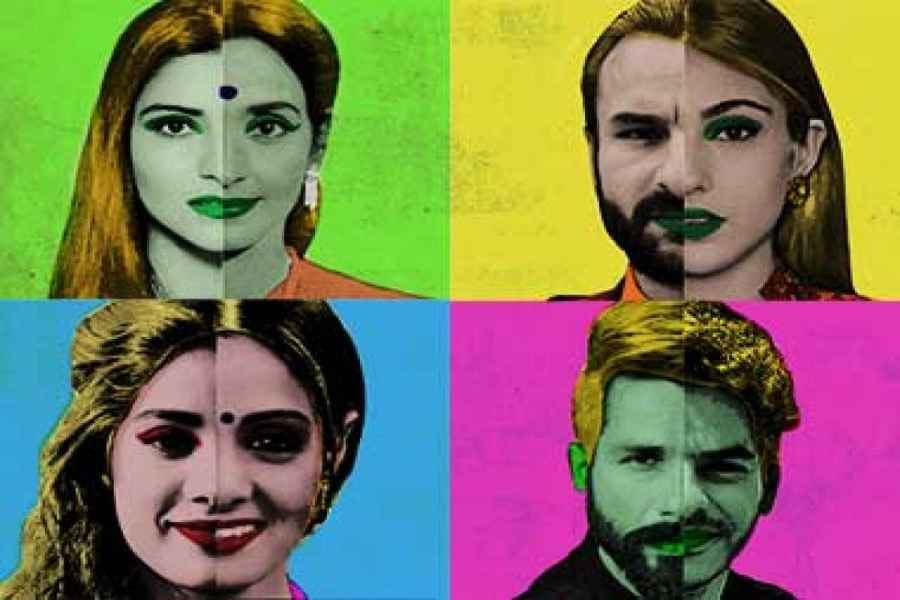
Nepotism in Bollywood.

Nepotism in bollywood has reached another level of toxicity. Ever since the demise of the bollywood star sushant singh rajput there is anger among the fans and audience as to why did sushant singh rajput kill himself and the fingers have been ultimately raised towards the industry on why on the first place was the star in depression which was the major cause of his death. It was reported that sushant singh rajput was not invited to any of the big parties and was ultimately ignored by the bollywood industry. One of sushant singh rajput’s friend wrote on instagram describing the star saying that he hated fake friends,phone calls and small talk. He didnt need a campus, he had his own kingdom. She also added that his friend was a fighter and made his own place in the industry. He was an outsider and never cared about being an insider as he had life beyond films. She was left in sorrow as she added that her friend was a fighter. Sushant singh rajput told that he used to be back ground dancer and it shows how much the person had struggled.

The focus has shifted to the topic that how talented actors are made to struggle in the industry where as the starkids are being launched just because of nepotism. The fingers are mainly being raised on the director karan johar who was called as the flag bearer of nepotism by kangana ranaut on his own show of coffee with karan. Karan has launched some of the star kids like alia bhatt and varun dhawan. Lets see what some of the star kids think of nepotism.

1- Alia bhatt

As some of the star kids admit there’s nepotism, some deny it. Alia Bhatt, daughter of famous film director Mahesh Bhatt, once said she feels like punching people who talk about nepotism. Having made her debut with Karan Johar’s Student of The Year in 2012, Alia has established herself as an accomplished actress.

“I want to punch all those people who say that star kids have it easy because it makes no sense. The way the world is today, either you have it or you don’t.”

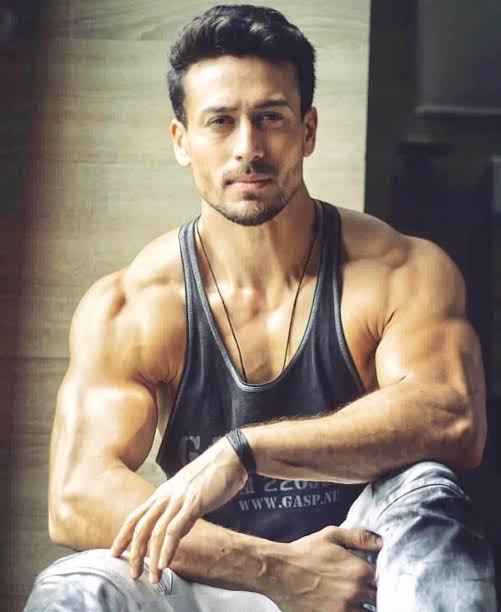
2- Tiger shroff

Tiger Shroff, son of popular actor Jackie Shroff and known for his dance moves and action stunts, told GQ Magazine revealed he would have never made it to acting, if he had to go through an audition. Sajid Nadiadwala happened to ‘find’ him.

“Had there been one, I wouldn’t have got it anyway.”

3- Sara Ali khan

Sara Ali Khan, daughter of Amrita Singh and Saif Ali Khan, has acknowledged that nepotism exists in Bollywood. However, she believes that one can stay in the business only if they work hard. This is what she had to say on nepotism to India Today.

“I definitely believe that knowing people in the industry does help. That’s not a fact that I can run away from. I’ve often admitted to the fact that the biggest advantage of nepotism is the fact that we have easy access to people. I can call up Karan Johar without doing any film. I can go to Rohit Shetty’s office. So these are privileges I’m well aware of.”

4 – Ananya pandey

Ananya Pandey, daughter of actor Chunky Pandey, debuted with Karan Johar’s Student of The Year 2 and has defended nepotism on several occasions. She was badly trolled as well.

When people hate on me for nepotism, I’m not going to shy away that I’m Chunky Pandey’s daughter. My Dad has worked really hard and he’s still working. My Dad never did a Dharma film, my Dad never went on Koffee with Karan. It isn’t as easy people say it is. Everyone has their own journey.”

The movie Om shanti Om which starred the famous Bollywood King khan Sharukh khan had unknowingly shown the product of nepotism as when Shahrukh khan had tried to act with the same set of skills when he was born in a poor family he failed. But with the same set of skills when the star was reborn as a star kid he was launched easily.

TALENT vs ROOTS

Over the past few months a lot has been said about Bollywood and, sadly, none of it has been positive. The film industry has been labelled corrupt, misogynistic, incestuous, corrosive and operating like the mafia.

Some may argue that trashing Bollywood is not new and has been going on since the first movies hit the screens, but the recent controversy is a low point for all of us and completely unwarranted.

 Bollywood no doubt in the last few years has taken itself to a totally different level. The craze for a Bollywood movie all across the globe is insane and as Indians we are really proud. The status bollywood industry has today is unparalleled, but there is a downside to it, something which has crippled it and grown its roots in the last 20 years and has been a hot topic of debate. This is the topic of nepotism.

It is indeed the bitter truth of Bollywood that the seeds of nepotism have now really grown into big trees.

The very famous movie Om Shanti om starring Shah Rukh Khan stated that the fact outsider Om Prakash was a struggling actor and had to die and take birth in the family of superstar to make it big says a lot about nepotism in bollywood.We cant deny the fact that there’s nepotism and favoritism existing in Bollywood.

Nepotism or not, star kids have always been a part of Bollywood. Some of those who made an entry riding on family names made a quick exit, while others like Alia, Ranbir Kapoor, Kareena Kapoor, Kajol, Hritik Roshan, have carved a niche for themselves without depending on their star parents.

The question is, should those using their lineage for a foothold in the industry stop pursuing acting as a career? Or should the ‘outsiders’ give up so easily, despite having oodles of talent?

It would be wrong to say and put all actors in the same plate and target them with bullets of nepotism and say that they don’t deserve their status as an actor. There are certain actors despite coming from privileged families of Bollywood  who have proved themselves worthy with their acting skills.

But yes they definitely had an upper hand over the people not coming from so called star families and they already got a kick start due to their connections.

credits- First Post

The debate of talent Vs privilege has been a contentious one

 If countless outsiders spend years slogging it out in small films, is it fair that star kids in their early twenties get to start their careers with lead roles in plum projects irrespective of their skills?The difference between star kids getting a movie as compared to an outsider is that they have to constantly struggle to prove themselves again and again to survive in this industry and these people literally have to thrive hard to be casted by good directors.

We cannot deny the fact that there are a lot of leading actor and actresses who doesn’t really have a Bollywood background but have still managed to make their way and have foot hold in this industry.

But the thing which has outraged a lot of people right now is why has privilege surpassed talent these days in b-town? Why actors who are really deserving doesn’t get those bright chances and on the contrary there is an entire PR machinery planning and executing  tricks and crores are been spent on an average star kid’s launch. Post launch, if the kid fails, there are the options of relaunch and re-relaunch. There are industry kids who are yet to score a single major hit even after over half a decade, but they still bag projects thanks to familial contacts, one such example is Arjun Kapoor. They always have something on their plate only because they belong to a privileged btown families.

The late Sridevi’s daughter Janhvi Kapoor and Shahid Kapoor’s half-brother Ishan Khatter in Dhadak, and Salman Khan’s brother-in-law Ayush Sharma in LoveYatri, were other blue-blood launches last year besides Sara. Although these films were forgettable, each debutant saw ample publicity boost.

last year Karan Johar, big daddy of B-Town nepotism, geared to introduce Chunky Pandey’s daughter Ananya in Student Of The Year 2 and is all set Sanjay Kapoor’s daughter Shanaya in an untitled project. Sunny Deol directs son Karan’s debut flick Pal Pal Dil Ke Paas. Sajid Nadiadwala shoulders responsibility of launching Suniel Shetty’s son Ahaan.

Be it when actor Kangana Ranaut called director-producer Karan Johar the ‘flag bearer of nepotism’ on his own show Koffee With Karan or the time when young Ananya Pandey ‘complained’ about it and debutant Siddhant Chaturvedi ‘silenced’ her, nepotism has and will always be one of the burning topics in the Hindi film industry. 

Being an outsider we really don’t know the reality going inside this industry but for sure this industry does have a dark side that directly or indirectly affects a lot of people who are struggling to be a part of this concept of pure art form and not a money making business scheme.

Coronil – Baba Ramdev’s Corona Cure or just a “Desi Nuska”

Yoga guru Ramdev’s company Patanjali yesterday launched the Coronil kit priced Rs 545, which he claims is a cure for coronavirus. The medicine kit will be available through the OrderMe app and in stores soon. Is it true? Here is all you need to know about this magical ‘cure’ for the respiratory disease.

Coronil: All You Need to Know About Ayurvedic Drug Which Claims to Cure Coronavirus Within a Week

Baba Ramdev’s Patanjali Ayurved on Tuesday launched ‘Coronil’, the first-ever clinically tested, evidence-based ayurvedic medicine for curing deadly coronavirus, which has killed more than 14,000 people across the country. While launching the medicine, Yoga Guru Ramdev claimed that 69 per cent of patients recovered within 3 days and 100 per cent in a week or 7 days.

Baba Ramdev’s Patanjali Ayurved on Tuesday launched ‘Coronil’, the first-ever clinically tested, evidence-based ayurvedic medicine for curing deadly coronavirus, which has killed more than 14,000 people across the country. While launching the medicine, Yoga Guru Ramdev claimed that 69 per cent of patients recovered within 3 days and 100 per cent in a week or 7 days. “The whole world has been waiting for someone to develop a medicine for coronavirus. Today, we are proud that we developed the first ayurvedic medicine for coronavirus. It has been named Coronil. We’ve prepared the first Ayurvedic-clinically controlled, research, evidence & trial based medicine for COVID19. We conducted a clinical case study and clinical controlled trial, and found 69% patients recovered in 3 days and 100% patients recovered in 7 days”, said Ramdev, while speaking to reporters about clinical trials.

WHAT IS CORONIL MADE OF?

During the launch, Ramdev said Ayurvedic elements are being used in the tablet. “There are more than 100 compounds used in the Coronil,” he said.He said that Coronil has been made from a combination of naturally occurring immunity-boosting substances such as Mulethi (liquorice), Giloy (moonseed), Tulsi (basil) and Ashwagandha (Indian ginseng).

HOW MUCH DOES IT COST?

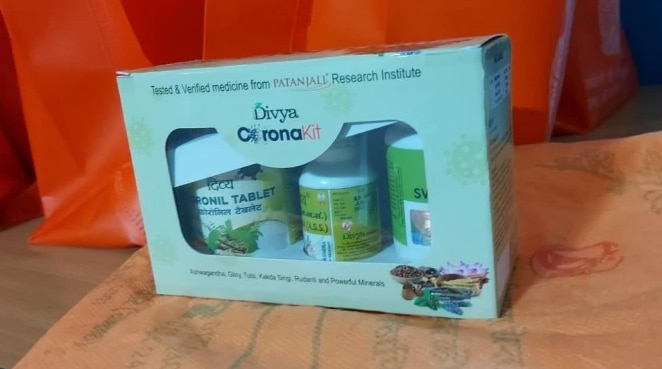
Patanjali has said that an entire kit is being made for consumers; the kit consists of Coronil as well as other immunity-boosting Ayurvedic medicines.The medicine comes as part of a kit which consists of tablets named Coronil and Swasari Vati, and oil called Anu Oil. The entire kit comes at Rs 600

Coronil dosage?

Panajali prescribes,”2-2 tablets should be consumed with hot water half an hour after meals. The above mentioned drug intake and quantity is suitable for people between 15 to 80 years of age. Half the amount of the above mentioned medicines can be used for children between the age of 6 to 14 years.”These are the written instructions on the pack. The other two medicines to be taken along with Coronil are ‘Shwasari’ which works on strengthening the respiratory system and cures the obvious symptoms of corona including cough, cold and fever and a nasal drop named ‘Anu Tel’ which helps build immunity, the firm said.

DOES IT REALLY WORK?

While Patanjali has claimed that it has conducted clinical trials to prove the effectiveness of Coronil, the full findings of the study are yet to be released.Moreover, no independent medical body has approved the use of Coronil as of yet.Patanjali claims those administered the medicine were fully cured and none died. Ramdev even claimed that 69 per cent of them recovered within 3 days.

“We’ve prepared the first Ayurvedic-clinically controlled, research evidence and trial-based medicine for Covid-19. We conducted a clinical case study and clinical-controlled trials and found that 69 patients recovered in 3 days and 100 per cent patients recovered in 7 days,” said Ramdev as he launched Patanjali’s Coronil tablet.

DOES CORONIL HAVE GOVERNMENT APPROVAL?

While Patanjali has made tall claims about the efficacy of Coronil, the ICMR and the Ayush Ministry have distanced themselves from commenting on the medicine.While Ayush Ministry officials claimed ICMR will speak on the medicine, the ICMR has said Ayurvedic medicines come under the jurisdiction of the Ayush Ministry and hence it should comment on it.Now, the Ayush Ministry has said that the Uttarakhand government has given clearance and licensing for the production of the medicine.

According to top sources in Patanjali, Coronil has received a license to be used as a medicine.”It contains salts and herbs prescribed by the Ayush Ministry. Allopaths call these salts anti-viral, whereas Ayurved knows them as immunity boosters,” the sources said.Later, the Ayush ministry said that it has taken cognizance of the news of Ayurvedic medicines developed for the treatment of Covid-19 by Patanjali Ayurved Ltd.”Facts of the claim and details of the stated scientific study are not known to the Ministry,” it said.

List of details

Patanjali Ayurved has been asked to provide, at the earliest, details of the name and composition of the medicines being claimed as successful in COVID-19 treatment; site(s)/ hospital(s) where the research study was conducted; the protocol, sample size, Institutional Ethics Committee clearance, Clinical Trials Registry-India (CTRI) registration, and results data of the study, and to stop advertising/publicising such claims till the issue had been duly examined.

Regulated by Act

“Also, the concerned Ayurvedic drug manufacturing company has been informed that such advertisements of drugs including Ayurvedic medicines are regulated under the provisions of the Drugs and Magic Remedies (Objectionable Advertisements) Act, 1954 and Rules thereunder and the directives issued by the Central Government in the wake of COVID outbreak. The Ministry had also issued a Gazette Notification on April 21, 2020 stating the requirements and the manner in which research studies on COVID-19 with Ayush interventions/medicines should be undertaken,’’ the Ministry said.

WHAT DO DOCTORS SAY?

Medical experts, however, were not convinced by Patanjali’s claims.Dr Ravi Shekhar Jha, Head of the department and senior consultant, Pulmonology, Fortis Escorts Hospital, Faridabad, said physiologically it is quite impossible that there is any medicine which can finish the viral load from the body in 5-7 days.”These claims can be very harmful because people, instead of taking actual medical help, may start rushing to these kinds of claims which have no proven clinical trial.

In the coming days, surely we’ll know whether Coronil is the cure or its just another “Desi Nuska”.