GTU to conduct Examination for final year students, here’s how it will be conducted…!

GTU – Gujarat Technological University to conduct online as well as offline exams on 2nd of July. V.C. of GTU Navin Seth and V.C. of MS University Parimal Vyas raised an issue about exams and said that:

“All private universities are conducting examinations and if state universities do not conduct exams, the students enrolled with them are going to face serious repercussions for the same – in terms of not being able to go for higher study, or even bag a job. “Their competence in the time to come will be challenged.”

So, the GTU has decided to conduct examination for final year candidates.

GTU (@GTUoffice) | Twitter

“Allow universities to frame examination guidelines as per their requirement and local dynamics. The new proposed guidelines may create further issues, so the framework of new guidelines regarding cancellation of examination must incorporate the flexibility of giving autonomy to individual universities for taking the decision regarding the date, mode of examination and other related guidelines in line with the set norms of UGC,” – the V.C. said.
GTU also plans to conducts for those who have fear and lives in containment zone via online mode as well as off in the month of September-October.
We have students from 32 states. To bring uniformity in exam patterns for Gujarat, out of state and of India students, we decided to conduct online exams for all. I raised only one point and asked All India University members that they should convey to UGC that universities should be given autonomy to decide and conduct exams. No mandatory guidelines for all universities should be set for blanket implementation,” Vyas said
GTU gets 'Most Trusted State University' - Times of India
The online mode of exam will be conducted with high safety in hand on hand with varasity, and planned to conduct exams of around 1600+ students with 1 supervisor for each 15 student and the computers will be completely checked there will be no copy-paste option available as well as browsing on the internet will also be disabled for an additional security each and every 1600+ students movement will be recorded, computers will be properly sanitized before and after use.
The offline exams will be conducted for those who are willing to go for offline mode. There will only 15 students on each class and 1 supervisor for each 15 students proper distance will be allotted between each student and proper sanitation procedure will be followed up.
The timings of the online mode is 2.5 hours where as for offline mode is 2 hours with the reduced question. For different typing speed of each student differs additional half hour time is allotted for students of online mode of examination.
GTU diploma, PDDC and BPH December 2018 exam result declared at ...

WHO : Astrazeneca leading in Covid-19 vaccine race, Moderna not far behind

The WHO is in talks with multiple Chinese manufacturers, including Sinovac, on potential vaccines

syringe and pills on blue background
Photo by Anna Shvets on Pexels.com

AstraZeneca’s experimental Covid-19 vaccine is probably the world’s leading candidate and most advanced in terms of development, the World Health Organization’s (WHO) chief scientist said on Friday.

The British drugmaker has already begun large-scale, mid-stage human trials of the vaccine, which was developed by researchers at University of Oxford.

This week, AstraZeneca signed its tenth supply-and-manufacturing deal.

“Certainly in terms of how advanced they are, the stage at which they are, they are I think probably the leading candidate,” WHO chief scientist Soumya Swaminathan told a news conference.

“So it’s possible they will have results quite early.”

Swaminathan said Moderna’s Covid-19 vaccine candidate was “not far behind” AstraZeneca’s, among more than 200 candidates, 15 of which have entered clinical trials.

ALSO READ: Coronavirus LIVE: Vaccine tests need over $30 bn in 12 months, says WHO

“We do know that Moderna’s vaccine is also going to go into phase three clinical trials, probably from the middle of July, and so that vaccine candidate is not far behind,” she said.

“But I think AstraZeneca certainly has a more global scope at the moment in terms of where they are doing and planning their vaccine trials.”

The WHO is in talks with multiple Chinese manufacturers, including Sinovac, on potential vaccines, as well as with Indian researchers, Swaminathan said.

She called for drugmakers to consider collaborating on Covid-19 vaccine trials, similar to the WHO’s ongoing Solidarity trial for drugs. A WHO-led coalition fighting the pandemic on Friday asked government and private sector donors to help raise $31.3 billion in the next 12 months to develop and deliver tests, treatments and vaccines for the disease. The initiative is called the ACT-Accelerator.

Andrew Witty, Special Envoy for the ACT-Accelerator, said it was important to consider a “portfolio of research efforts” for vaccines.

“It’s still very early days in this journey, we may be super lucky – which would be terrific – and have an early win,” Witty said. “Even if it takes 12 to 18 months that would be without precedent, the world’s fast development of vaccine.”


Electrified Fabric Could Zap the Coronavirus on Masks and Clothing

Prototype mask made from a fabric that can inactivate pathogens. Credit: Vomaris Innovations, Inc.

Wearing masks and other personal protective equipment (PPE) can slow the spread of COVID-19. The U.S. Centers for Disease Control and Prevention recommends everyone wear some kind of face covering in public places, especially where social distancing is difficult to maintain. And health workers are donning additional coverings, such as gowns. Yet all such protective gear shares one significant problem: people still risk becoming infected with the novel coronavirus if they accidentally touch areas of the fabric that are contaminated with viral particles. So researchers are working to develop cloth that could inactivate or repel coronaviruses—ideally including the one that causes COVID-19—and other pathogens.

People transfer infectious particles to their hands if they touch the front of a mask during use or when they remove gowns or other PPE, according to Chandan Sen, director of the Indiana Center for Regenerative Medicine and Engineering at Indiana University. He and his colleagues have been developing a way to render those particles and other infectious agents harmless. The team researches “electroceutical” materials that wirelessly “generate electric fields across the surface of the fabric,” Sen says. Those fields can disrupt the behavior of bacteria or viruses on the cloth.

“The beauty of this [technology] is the inherently simple design,” he says. The polyester material is printed with alternating spots of silver and zinc resembling polka dots. They are one to two millimeters wide and spaced one millimeter apart. When the electroceutical material is dry, it functions as an ordinary fabric. But if it gets dampened—say, with saliva, vapor from a coughed up droplet or other bodily fluids—ions in the liquid trigger an electrochemical reaction. The silver and zinc then generate a weak electric field that zaps pathogens on the surface.

The researchers co-developed the material with the biotechnology company Vomaris Innovations in 2012. Last year they showed that the technology could be used to treat bacterial biofilms in wounds. A clinical trial is underway to further evaluate the fabric’s effectiveness as a Food and Drug Administration–cleared dressing for wound care, Sen says.

In response to the COVID-19 pandemic, Sen’s team tested its existing material on a different coronavirus strain that causes a respiratory illness in pigs and on an unrelated type of pathogen called a lentivirus. “We wanted to know how broadly this principle could be applicable,” he says. In a study posted on the preprint server ChemRxiv in May, Sen’s team reported that its electroceutical fabric destabilized both viruses, leaving them unable to infect cells. The researchers plan to submit the results to a peer-reviewed journal as well.

To study the fabric’s action, they placed a liquid solution containing viral particles onto the electroceutical fabric and a polyester control fabric without the metal dots. After the droplets were fully absorbed, and the samples had rested for one to five minutes, the researchers recovered viral particles from both fabrics and tested whether they could still infect the types of cells they typically target.

“The data presented here show that, of the total virus that was recovered, a significant percentage was inactivated,” says Jeff Karp, a professor of medicine at Brigham and Women’s Hospital in Boston and co-leader of an N95 respirator working group at the Massachusetts General Brigham Center for COVID Innovation. Karp, who was not involved with the study, adds that the researchers did not test all of the virus that they had placed on the cloth. “In fact, the majority of virus was not recovered from the textiles examined in this study,” he says. Sen responds that his team focused on sampling only enough viral particles to show that the fabric had rendered them unable to infect cells. The researchers recovered roughly 44 percent of the particles from the electroceutical fabric samples that had rested for one minute. And they retrieved 24 percent of them from the samples that had rested for five minutes.

The material’s virus-fighting abilities have not been tested specifically on SARS-CoV-2, the coronavirus that causes COVID-19. The researchers’ findings with the two viruses they studied, however, gave them “hope that this could apply more widely,” Sen says. He adds that large-scale manufacturing of the electroceutical fabric is already possible and that the costs of producing it are relatively low. The metal dots could be printed directly onto the front surfaces of masks, he suggests. Or an electroceutical fabric could be inserted between the front of a mask and the wearer’s face.

If a virus-stopping PPE material were widely available, it could limit the novel coronavirus’s ability to spread. “There is a huge unmet need to better understand modes of viral transfer that lead to virus transmission,” Karp says. “As we develop a better understanding of this, there is a huge immediate need to develop and quickly apply solutions that can reduce transmission.”

Metal dots are not the only potential approach. Paul Leu, director of an advanced materials laboratory at the University of Pittsburgh, and his colleagues are developing a textile coating that repels bodily fluids, proteins and bacteria. It also repels one strain of adenovirus that causes respiratory illness and another that causes conjunctivitis, as reported in ACS Applied Materials & Interfaces in April. Leu’s team has also not tested the material with the novel coronavirus itself, however. “The main thing with testing [the coating on] SARS-CoV-2 is the biosafety level you need to test it, because it’s very hazardous,” he says. Still, his team plans to see how well textiles with this coating repel a different coronavirus.

Leu says the coating, which remains repellent even after ultrasonic washing and scraping with a razor blade, could make PPE safer for wearers to take off. It could also be used on hospital bed linens, drapes and waiting room chairs, the researchers note in the study. But Leu points out that the coating is intended for use with medical textiles that are already considered reusable. His team has not tested it on single-use masks or N95s, but he thinks it could potentially damage them. Still, he says, the coating could work well for cloth masks such as those now being worn by many among the general public.

By developing materials that kill or repel viruses, researchers hope to make masks and other protective gear safer to remove and more effective against all viruses. “If the common person were to have PPE that wouldn’t spread infection,” Sen says, “I think that’s a big, big deal.”


Justice for Jayraj and Fenix – The Need To Stop Custodial Deaths

More than 1,000 people of Sathankulam town in Tamil Nadu’s Thoothukudi district staged a dharna Tuesday after two persons were allegedly killed in police custody here. In a chilling case of police torture, a father and son died in a span of 10 hours, in judicial custody in Thoothukudi, a coastal town in south Tamil Nadu, allegedly after being subjected to third-degree tre­at­ment by the police. The incident triggered widespread political and societal outrage.

The deceased have been identified as Jayaraj (59) and his son Fenix Emmanuel (31).  Two sub-inspectors have been suspended. According to the protesters and other local residents, Jayaraj along with Fenix ran a mobile shop named APJ in the town. On Friday, he closed his shop around 8:15 pm. Personnel from the Sathankulam police station, who was on patrol duty, reportedly pulled him up for running the store beyond the permitted time, and an argument took place.

On Saturday evening, the police personnel visited the shop again and had an altercation with Jayaraj.  When Fenix intervened, both father and son were taken to the police station and booked under several sections of the IPC, including Section 188 (disobedience to order duly promulgated by public servant) and 353 (use of force to deter public servant from duty).

On Sunday, after a medical check-up, the duo was lodged in the Kovilpatti sub-jail. That evening, local residents alleged, Fenix complained of chest pain and Jayaraj had a high fever. Both were taken to the Kovilpatti government hospital, where Fenix died on Monday evening and Jayaraj succumbed to respiratory illness Tuesday morning.

Jayaraj’s wife Selvarani has lodged a complaint, alleging that police brutality led to the death of her husband and son. In her complaint letter to the district criminal court and Assistant Commissioner, she said the police brutally attacked her husband and son, used curse words, and threatened to kill them. She urged them to book the police officers responsible under section 302 of the IPC and suspend them from duty.Condemning the killing, all trader union bodies, various political outfits, activists, and the local public staged protests in various parts of the town. Kanniyakumari MP Vasanthakumar, former AIADMK MP Sasikala Pushpa, and other party functionaries participated in the protest. Their demands include the arrest and suspension of the police officers responsible for the incident, compensation of Rs 50 lakh to the family members of the deceased, a doctor from the protesters’ side to be allowed during the autopsy, and a government job to one member of the deceased’s family.

The series of violations in the case mock our procedures. Whenever there is a death in police custody, the concerned police officers are duty-bound to bring it to the notice of senior officers expeditiously.

In view of the perception that custodial deaths take place because of reckless incidents of arrest, amendments have been effected to the Criminal Procedure Code, stating arrests be made only in offences which attract punishment of more than seven years or in those offences where there is apprehension that the accused may commit similar offences or assist other accused to escape. As soon as the accused is arrested, he should be medically examined by competent government medical officers and necessary medical assistance should be provided as per the requirement. Information about the arrest should be communicated to his advocate and relatives/family members. Details of his arrest need to be conveyed to the police control room and displayed on the unit website. In addition, following directives from the Supreme Court, a State Police Complaints Authority has been formulated under the chairmanship of a retired High Court judge to look into grievances in this regard. All complaints about custodial death are also looked into minutely by NHRC and SHRC from time to time.

Even though all these directives are being underlined and well-published from time to time, it is a matter of concern why these are not implemented at the ground level. Once one gets a job in the police department and wears the police uniform, there is a misconception that this is a blanket approval to arrest anyone and obtain a confession by indulging in physical harassment. Several times, suspecting someone for petty theft or because of personal rivalry, complaints are registered by people of means, and this is followed by arrest and physical torture.

If the police officer does not do so, he is declared a good-for-nothing. Many a time, a police officer who indulges in beating a citizen in public and violates all norms is appreciated by people and he is considered a hero.  Kamte was working as officer-in-charge of detecting crimes in Sangli police station for the last three years, and had reportedly detected several offences using high handed tactics and was applauded by the public from time to time. This must-have led him to believe he is beyond any law.

NHRC, as well as SHRC, have clarified more than once that unless a person has gone to a police station to lodge a complaint, whether he is in the lock-up or outside, he would be treated as under arrest and it is the responsibility of the police officer in charge of the police station to take care of his health. The study of custodial deaths reveals that more than 65 per cent are attributed to suicide, about 25 per cent to mental shock and less than five per cent to police harassment. These are official statistics and they tell us that we need a whole range of steps – from safety measures to psychological inputs and an array of methods and systems to keep a check on these violations and create a culture of fair and proper investigations.

Acting with impunity

These incidents have brought into sharp focus the way Indian policemen torture and interrogate suspects in their custody leading to death in several cases. As a result, policemen all over the country have been severely criticised and condemned. Strictures passed against policemen from time to time by learned judges of various courts notwithstanding, the police continue to brazenly torture suspects in their custody.

The Central Bureau of Investigation too uses torture as a method of investigation. In September 2016, B.K. Bansal, Director General of Corporate Affairs, and his son Yogesh committed suicide. In their suicide note, the two men listed the names of officers who had tortured their family in connection with a case of disproportionate assets. Bansal’s wife and daughter too had committed suicide two months earlier. On the directions of the National Human Rights Commission, an inquiry was held by the CBI. Expectedly, the agency exonerated all the accused. Taking cognisance of the matter, the Central Vigilance Commission published a standard operating procedure laying down guidelines for interrogation of accused officials.

Custodial deaths have been on the increase in recent years. They increased by 9% from 92 in 2016 to 100 in 2017, according to the National Crime Records Bureau. Since policemen responsible for custodial deaths rarely get punished, they feel emboldened to continue using torture as the tool to get to the truth. In 2015, for instance, the police registered cases against fellow police officers in only 33 of the 97 custodial deaths.

A historic order

The Supreme Court delivered a historic order in 2006 on police reforms. It stated, among other things, that every State should have a Police Complaints Authority where any citizen can lodge a complaint against policemen for any act of misdemeanour. However, only a few states such as Kerala, Jharkhand, Haryana, Punjab and Maharashtra have implemented the order. Others have not taken the matter seriously.

Until exemplary punishment is meted out to policemen who are responsible for custodial deaths after proper judicial inquiry, not much can be expected to ameliorate the situation. Proper interrogation techniques coupled with the use of scientific methods to extract the truth from suspects can go a long way in reducing custodial deaths.

Therfore, It should be mandatory for every officer in charge of the unit to visit immediately all incidents of escape of prisoners or deaths in custody. If the unit in charge does not reach the spot of the incident promptly, she or he should be held accountable. Otherwise, such serious incidents would continue to recur. The time is now ripe for the Indian government to consider ratifying the international treaty against torture and declare her commitment to human dignity.

Sole Testimony of Victim of Sexual Abuse, If Found Reliable, is Sufficient

In a fresh, firm and favourable ruling for victims of sexual abuse and delivered just recently on June 15, 2020, the Uttarakhand High Court has in a latest, landmark and extremely laudable judgment titled Bhuwan Chandra Pandey Vs Union of India and others in Writ Petition (S/B) No. 153 of 2013 held in no uncertain terms that the sole testimony of the victim of sexual abuse is sufficient to hold the perpetrator guilty of misconduct in a departmental enquiry. There is no reason why the sole testimony of sexual abuse not be sufficient to hold the perpetrator guilty of misconduct in a departmental enquiry. There are so many notable rulings of Supreme Court and High Courts also which have held the perpetrator accountable even in such cases of sole testimony of sexual abuse!

                                         To start with, this noteworthy judgment authored by Chief Justice of Uttarakhand High Court – Ramesh Ranganathan for himself and Justice RC Khulbe sets the ball rolling by first and foremost posing a series of thought provoking questions in para 1 which goes as: “Is the sole testimony of the victim of sexual abuse, sufficient to hold the perpetrator guilty of misconduct in a departmental enquiry? Is the punishment of dismissal from service, imposed on the perpetrator as a consequence thereof, grossly disproportionate warranting interference by this Court in the exercise of its power of judicial review? These questions, among several others, arise for consideration in this writ petition.”

                                          While elaborating further, it is then stated in para 2 that, “The extra-ordinary jurisdiction of this Court, under Article 226 of the Constitution of India, has been involved by the petitioner seeking a writ of certiorari to quash the order of punishment of dismissal dated 10.05.2012, the appellate order, the order directing initiation of a de-novo enquiry, and the fresh charge sheet, declaring the same as illegal, dehors the rules and unconstitutional; to issue a writ of mandamus commanding the respondents to treat the petitioner as continuing in service, and reinstate him with all consequential benefits including promotion, upgradation of pay, revised pay scales and arrears of salary, as he would have been entitled to, if the impugned orders had not been passed; for a writ of mandamus to consider the petitioner’s claim for payment of damages on account of the tortuous act of the respondents; and to quantify the damages to be recovered from the erring officers, and persons who were instrumental and responsible for the same.”    

                                              While dwelling on the facts of the case, it is then stated clearly in para 3 that, “Facts, to the limited extent necessary, are that, for the para medic course (the duration of which was for a period of three months), the petitioner was nominated, for the three day period 16.08.1998 to 18.08.1998, as a guest instructor for an outdoor exercise with trainees, for conducting a half day theory class, a half night march exercise at the S.S.B. Academy Gwaldum, and to impart them training on military topics such as night navigation and map reading. On 18.08.1998 the trainees, including two lady members of the 94 medic course, were imparted training on theoretical subjects. The half night training exercise included a night march. However, because of heavy rains in that area, it was decided by the petitioner’s superior officers not to permit both the lady trainees to march in the wet and muddy hilly areas to prevent any casualty occurring thereby. In the affidavit, filed in support of the writ petition, the petitioner states that it was decided to give minimum or grace marks for the night march training to the two lady trainees as they did not participate in the night march.”

                                              In continuation of the above, it is then stated more relevantly in para 4 that, “After completion of the night training exercise, the petitioner, along with several other members including the two lady trainees, sat in the cabin of a truck which was coming back to Gwaldum station. It is in the cabin of the truck that the petitioner is said to have molested one of the lady trainees, and to have sexually harassed her.”        

                                       While elaborating further on what is stated above, it is then stated in para 5 that, “While this unsavory incident is said to have taken place in the cabin of the truck at around 11 p.m. on 18.08.1998, the victim trainee (hereinafter referred to as the “complainant”) lodged a complaint on 19.08.1998 to the DIG F.A. Gwaldum alleging sexual harassment by the petitioner during the return journey on 18.08.1998. Thereafter the petitioner was informed, by memorandum dated 08.10.1999, that it was proposed to take action against him under Rule 16 of the CCS (CCA) Rules, 1965 (for short the “1965 Rules”). A statement of imputations of misconduct/misbehavior, on which action was proposed to be taken, was issued giving the petitioner an opportunity to submit his representation thereto. Rule 16 of the 1965 Rules prescribes the procedure for imposing the minor penalties as specified under Rule 11. The inquiry committee, constituted thereafter, submitted its report on 21.09.2001 holding the petitioner guilty of the charges. The disciplinary authority agreed with the findings of the Inquiry Committee. Though minor penalty proceedings, under Rule 16 of the 1965 Rules, had been initiated against him by memorandum dated 08.10.1999, the petitioner, on being held guilty of the charges, was imposed, by proceedings dated 12.09.2003, the major penalty of dismissal from service.”         

                                          Importantly, it is then laid bare in para 106 that, “In the present case the Disciplinary Authority imposed, on the petitioner, the punishment of dismissal from service after concurring with the findings and conclusions of the Inquiry Committee that both Charges 1 and 2 were proved. The first charge, as noted hereinabove, related to sexual abuse and molestation by a superior paramilitary officer over his subordinate lady trainee. In the Paramilitary Forces, where the need to maintain discipline is of a very high order, such acts of a superior officer, in taking advantage of the vulnerability of a subordinate lady trainee and in indulging in such heinous acts of molestation and sexual abuse, justified the deterrent punishment of dismissal from service being imposed on him. Under no circumstances, be it in the Paramilitary Forces or elsewhere, can such acts either be condoned or a lenient view be taken thereof. The second charge, as held established is that the petitioner, after having indulged in such heinous acts, as also his father who was a high ranked official, in the cadre of Deputy Inspector General in the Sashastra Seema Bal, had sought to pressurize the complainant to withdraw the complaint.”

                           More importantly, while justifying the punishment imposed on the petitioner, it is then held in para 107 that, “The deponent of the counter-affidavit, filed in the present Writ Petition, is the Commandant, SSB, Gwaldam. It is not for him to sit in judgment over the decision of the President of India in imposing the punishment of dismissal from service on the petitioner for the charges held established. His concession, that the punishment is not proportionate, is therefore of no consequence. Even otherwise, we are satisfied that the punishment, imposed on the petitioner of dismissal from service, is commensurate to the charges held established. The contention urged on behalf of the petitioner, that the punishment of dismissal from service is shockingly disproportionate, therefore necessitated rejection.”

                                       Most importantly, it is very rightly observed in para 43 that, “As the sole testimony of a prosecutrix, in a criminal case involving sexual harassment and molestation, would suffice if it is otherwise reliable, there is no justifiable reason not to accept the sole testimony of a victim, of sexual harassment and molestation, in a departmental inquiry as the enquiry held by a domestic Tribunal is not unlike a Criminal Court, governed by the strict and technical rules of the Evidence Act. (Murlidhar Jena AIR 1963 SC 404). A disciplinary proceeding is not a criminal trial. The standard of proof required is that of preponderance of probabilities, and not proof beyond reasonable doubt. If the inference was one which a reasonable person would draw, from the proved facts of the case, the High Court cannot sit as a court of appeal over a decision based on it. (Sardar Bahadur (1972) 4 SCC 618). If the enquiry has been properly held, the question of adequacy or reliability of the evidence cannot be canvassed before the High Court. The only question is whether the proved facts of the case would warrant such an inference. (Sardar Bahadur (1972) 4 SCC 618; and S Sree Rama Rao AIR 1963 SC 1723). If the disciplinary inquiry has been conducted fairly without bias or predilection, in accordance with the relevant disciplinary rules and the Constitutional provisions, the order passed by such authority cannot be interfered with merely on the ground that it was based on evidence which would be insufficient for conviction of the delinquent on the same charge at a criminal trial. (Nand Kishore Prasad v. The State of Bihar and others AIR 1978 SC 1277).”

                                      Equally significant if not more is what is then stated in para 44 that, “Strict and sophisticated rules of evidence, under the Indian Evidence Act, are not applicable in a domestic enquiry. (State of Haryana vs. Rattan Singh (1977) 2 SCC 491; J.D. Jain v. Management of State Bank of India & Others (1982) 1 SCC 143). Sufficiency of evidence, in proof of the finding by a domestic tribunal is beyond scrutiny. (Rattan Singh). In a departmental enquiry, guilt need not be established beyond reasonable doubt. Proof of misconduct is sufficient. (J.D. Jain). All material, which are logically probative for a prudent mind, are permissible. There is no allergy even to hearsay evidence provided it has reasonable nexus and credibility. (Rattan Singh).”

                                             No less significant is what is then stated in para 45 that, “In the present case, the testimony of the complainant gives graphic and shocking details of acts of sexual molestation perpetrated by the petitioner on her. This evidence is also corroborated in part by the testimony of others. The Enquiry Committee has held that, before this incident, the petitioner and the complainant were not even personally acquainted with each other, and the petitioner’s claim, of the complainant having been instituted for extraneous considerations, was not tenable. In such circumstances, we see no reason why the Enquiry Committee should be faulted for largely relying on the testimony of the complainant. The contentions urged on behalf of the petitioner under this head, necessitate rejection.”

                                            Finally, the key point of the last para 113 is that, “For the reasons stated hereinabove, we see no reason to interfere either with the inquiry proceedings or with the order of punishment of dismissal from service imposed on the petitioner.”

                                    On a concluding note, this extremely laudable and latest judgment by a two Judge Bench of the Uttarakhand High Court including the Chief Justice Ramesh Ranganathan himself is a strong and stern warning to all men who dare to indulge in sexual harassment that if you dare to indulge in it then be ready to face the dire consequences. Even the sole testimony of sexual abuse, if found reliable, is sufficient to hold the perpetrator guilty of misconduct in departmental enquiry! Such men who dare to commit such heinous crimes must expect no reprieve from the courts anymore!    

Sanjeev Sirohi, Advocate,

s/o Col BPS Sirohi,

A 82, Defence Enclave,

Sardhana Road, Kankerkhera,

Meerut – 250001, Uttar Pradesh.

Bar On Certain Matters To Be Entertained As PIL

In a latest, landmark and extremely laudable judgment titled Soni Beniwal Vs State of Uttarakhand and others in Writ Petition (PIL) No. 191 of 2019, the Uttarakhand High Court has just recently on June 18, 2020 held in no uncertain terms that even if there is a bar on certain matters to be taken as PIL, there is always discretion available with the Court to do so in exercise of its inherent powers. Moreover, the Chief Justice-led Bench has also stated explicitly that even persons who are debarred under the High Court rules can be entertained to file public interest petitions where allegations of misappropriation of public funds by a government-aided college, receiving funds both from the State Government and the University Grants Commission, are involved. Very rightly so!

                                     To start with, this noteworthy judgment authored by Uttarakhand Chief Justice Ramesh Ranganathan for himself and Justice Ramesh Chandra Khulbe after hearing the lawyers from both sides in considerable detail sets the ball rolling by observing first and foremost in para 2 that, “The petitioner has invoked the jurisdiction of this Court seeking a writ of mandamus directing the State of Uttarakhand to proceed further with the investigation on the FIR dated 28.03.2017; a mandamus directing the State of Uttarakhand to recover the excess amount, as pointed out in the Audit conducted by the Auditors of the Comptroller and Auditor General as well as the State of Uttarakhand, from the personal account of the sixth respondent, who was then the acting Principal of the College, as also the fifth respondent, who was the Secretary of the M.K.P. Society; and a mandamus directing the Director General of Police to constitute a Special Investigation Team to investigate into the gambit of corrupt practices currently underway in the respondent-College, as outlined in the Audit Reports; and to probe the reasons why no action was taken in the F.I.R. lodged in the year 2017.”   

                                   While elaborating further, it is then mentioned in para 3 that, “We had, by our order dated 02.01.2020, granted time to the learned Standing Counsel, appearing on behalf of the State Government, to ascertain whether or not a Final Report, after  further investigation was caused under Section 173(8) Cr.P.C, had been filed before the Magistrate till date. Subsequently, by our order dated 20.03.2020, while taking the counter affidavit filed on behalf of respondents 1 and 4 on record, we noted the request of Mr. C.S. Rawat, learned Additional Chief Standing Counsel, for the matter to be taken up on 25.03.2020 to enable him to ascertain what action the Government intends to take pursuant to its admission, in the counter affidavit, that respondents 5 and 6 had indulged in grave and serious irregularities, including mis-appropriation of public funds.”

                                        What is then brought out in para 4 is that a counter-affidavit has now been filed on behalf of the fifth respondent raising objections both to the maintainability of the Writ Petition, as also on merits. Now coming to para 6, it states that, “The counter-affidavit, thereafter, states that the inquiry team had indicated that the prescribed procedure was violated in purchase of items/equipment from the UGC grant; at the relevant time, the sixth respondent was the Principal and the fifth respondent was the Secretary, who were equally responsible; a letter was addressed to the Registrar, Firms, Societies and Chits, Uttarakhand by the Additional Chief Secretary, Higher Education regarding irregularities in purchase of items/instruments from UGC funds; and, as per the findings in the Inquiry Report, respondents 5 and 6 were equally responsible for violation of the Rules and norms.”

                                       More crucially, it is then stated in simple and straight language in para 8 that, “The afore-extracted findings of the Inquiry Report are not from the affidavit filed in support of the Writ Petition, but from the counter-affidavit filed on behalf of the State Government. The subject College, of which the sixth respondent is the in-charge Principal and the fifth respondent is the Secretary, is a State Government aided institution and receives funds both from the State Government and the University Grants Commission. The serious allegations, made in the counter-affidavit filed on behalf of the State Government, would necessitate an inquiry being caused and action taken in the larger public interest of ensuring that public funds are not mis-utilized. As the cause is in the public interest, it matters little who has brought these facts to the notice of the Court. Allegations regarding personal animosity between the petitioner and the fifth respondent, or that the Writ Petition was filed at the behest of others inimically disposed towards the fifth respondent, need not detain us, as this Court can examine these allegations, non-suiting the petitioner and entertaining the Writ Petition suo-motu.”  

                                                     To put things in perspective, it is then made clear in para 10 that, “What Rule 3(4)(c) of the 2010 Rules prohibits is for a Writ Petition to be entertained, in the PIL jurisdiction of the High Court, where it relates to individual disputes in the arena of criminal jurisdiction. The present case relates to mis-utilization of public funds by those incharge of a Government aided institution, and does not relate to individual disputes in the arena of criminal jurisdiction. Further the jurisdiction which the High Court exercises, under Article 226 of the Constitution of India, is a part of the basic structure of the Constitution (L. Chandra Kumar v. Union of India : AIR 1997 SC 1225). As the power of judicial review is part of the basic structure, this power cannot be curtailed or negated even by an amendment to the Constitution, much less by legislation – plenary or subordinate.”

                                                   Be it noted, it is then brought out aptly in para 11 that, “The High Court of Uttarakhand P.I.L. Rules, 2010 have been made to guide the High Court in entertaining Writ Petitions in its Public Interest Litigation jurisdiction. That does not curtail or negate its jurisdiction to entertain cases where it is satisfied that larger public interest would be adversely affected if it fails to intervene. As the afore-extracted allegations are serious, and cannot be brushed aside, we are satisfied that an inquiry should be caused into these allegations, and action taken pursuant thereto in accordance with law.”

                                      Most crucially, it is then held in no uncertain terms in para 12 that, “In the present case, the allegations relate to misappropriation and mis-utilization of public funds. As this Court can even treat letters addressed to it, or newspaper reports, as Writ Petitions filed in public interest, we see no reason not to cause an inquiry into these serious allegations merely because a criminal investigation has been caused in the matter, and a Final Report is said to have been filed by the Investigating Officer.”

                                        Equally significant is what is then made amply clear by the Bench in its clarification in para 12 that, “Even if the Uttarakhand Audit Act, 2012 does not apply to the Society of which the fifth respondent is the Secretary, misutilization of public funds would undoubtedly, require an inquiry to be caused, and action taken pursuant thereto in accordance with law. Accepting the submission of Mr Neeraj Garg, learned counsel for the fifth respondent, that, in the absence of a specific provision either in the Uttarakhand Audit Act, 2012 or elsewhere, no inquiry can be caused, would enable persons, in charge of establishments which receive public funds, to misappropriate such funds and yet claim immunity from inquiry, and action being taken pursuant thereto.”

                               To sum up, the Uttarakhand High Court has made it amply clear in this leading case that even if there is a bar on certain matters to be taken as PIL, there is always discretion that is available with the Court to do so in exercise of its inherent powers. It is entirely up to the Court to exercise its power of discretion in exercise of its inherent powers hinging on the merits of the case! There can certainly be no ever denying or disputing it!

Sanjeev Sirohi, Advocate,

s/o Col BPS Sirohi,

A 82, Defence Enclave,

Sardhana Road, Kankerkhera,

Meerut – 250001, Uttar Pradesh.

INTERVIEW ADVICE Self Introduction for Job Interview

Self-introduction actually matters a lot across every industry- from politics, medical, education, real estate, to the healthcare industry. There is an endless number of studies and researches that prove this fact to be true. Whenever you meet a new person, you just have few seconds to either impress him or let him go!

Let’s take an example!

Joseph has come up for his very first interview after completing his graduation. He is well dressed in a carefully chosen formal suit, fully prepared with all the questions he’s expecting in the interview and waiting in the reception area to get a call for his turn.

Well, let me ask you a question here.

Is that all it takes to crack an interview? Are you prepared for the first question the interviewer is going to ask?

Yes, I am talking about the self-introduction part.

The misconception about self-introduction is that job seekers find this question as the easiest one, but actually it’s not. The majority of the candidates never prepare for this part, and during this question, they just say- Hi, My name is Nick….and then hope for the interviewer to take over.

Let’s be honest here!

This is not the approach that can help you get the job you have been dreaming of.

In this blog, we’ll discuss the basic things about the ‘Self Introduction’ part that every job seeker must know to grab the desirable job. Let’s get started!

What to include in the self-introduction

Self-introduction seems to be an obvious question, and nobody makes efforts on this part. But don’t forget that this part will either make or break the hiring decision. You need to invest good time and effort while planning this part. You must understand the interviewer’s intention behind this question and answer accordingly. Here I am listing a few things you need to include in the self-introduction for interview.

Who You Are? Start by greeting the interviewer with a smile on your face, introduce yourself by telling your name.

Where Are You From? You need to specify your native place and make sure you don’t drag it long. Explain in a brief one line only

Education Qualification: Once done with the formal introduction, now you need to mention your qualification details while telling the school and university’s name and location. Begin with the highest qualification, followed by under graduation, and then schooling.

Work Experience (freshers can skip this part): First of all, you need to tell the total experience you have, mention the current job and your role, briefly describe your responsibilities and things you are expert at.

Tips for improving the self-introduction part

Apart from adding the above things in your self-introduction part, you need to know a few tips that can make your self-introduction part an effective one. So, here you go!

Head held high with a smile on the face: No matter you are feeling nervous or not, you must have a smiling face. This signifies a good start of the interview. You must give a firm handshake and say ‘Hello’ to the interviewer.

Be prepared to give family details: Most of the recruiters ask the candidates about their family background and you need to be prepared for the answer in advance. Don’t hesitate, be comfortable and speak up freely.

Stay positive during the past experience part: While describing your past job experience, remember no matter how bad your experience was, you can’t negatively talk about the past employer. Because this will leave a negative impact on the interviewer and indicates unprofessional behavior.

Sharing hobbies and goals: Unlike in the past years, interviews have become interactive and comfortable than ever before. Candidates can freely mention their hobbies, aspirations, and goals to the interviewer. This will reflect your personality clearly.

Mistakes you can’t afford to make during a self-introduction

Keep the self-introduction part brief and concise, don’t make it lengthy. So, try avoiding irrelevant things that have nothing to do with the job role you have applied for.

Many job seekers even rehearse before giving an interview but still panic once they enter the interview cabin. You need to stay calm and have a smile on your face.

Stop being nervous, it’s just an interview. Talk openly with confidence.

If you aren’t confident enough about anything, don’t wander your eyes here and there. Maintain eye contact with the interviewer, it helps in making the conversation interactive.

Never badmouth your past employer or share any negative experience with any past co-workers.

Never interrupt in-between when the interviewer is speaking, start once he’s done.

Samples for Introducing Yourself in an Interview

Before you feel clueless when the interviewer asks you- ‘Tell me about yourself’, it’s high time that you have a few samples in your mind. So, I have listed a few effective samples of self-introduction for experienced candidates as well as freshers.


Self-Introduction Sample for a Fresher:

Of course, a fresher doesn’t have much to showcase in his resume, and the same goes for the self-introduction part. But you can do a lot more to make the self-introduction an effective thing. Here’s one such sample:

Good morning Sir/Madam, It’s a pleasure to introduce myself. My name is Jonas Smith born and brought up in Michigan. I have completed my schooling from Rochester Adams High School with 84% and presently pursuing my final year bachelor’s degree from Michigan State University. Coming to my strengths, I love taking challenges and turn them into opportunities. During failures, I learn a lot out in the future. My goal is to become a part of an organization that enables me to reach my true potential and develop in that field. That’s a brief about me, and thanks for this opportunity.

Let’s have a look at another self-introduction sample in which a fresher is aspiring to begin his career in teaching:

I am Robin, a graduate with no work experience yet. I completed my schooling from Brooklyn City School and now I am in the final year of B.ED. From my school time, I always dreamt of becoming a teacher. At times, I have even given home tuitions to school going kids and really had a great experience throughout. As of now, I am looking for an opportunity to join an institute or an educational center where I can polish my teaching skills.

Self-Introduction Sample for Experienced Job Seekers:

Experienced job seekers are from various industry segments, so I have listed a few industry-specific samples:

1) Self-Introduction sample for IT Professional

Good evening Sir/Madam

I am glad to be here for the interview.

I am Joseph, an engineering graduate from Hong Kong University. I graduated in the year 2013, and since then I have been working as a system administrator. I have worked upon various operating systems, troubleshooting, managing in-house servers, and so on. I always had an interest in exploring operating systems, and during my graduation, I had a good hold over managing PCs and windows of the college. As of now, I am looking forward to expanding my portfolio and enhance my technical skills as a senior system administrator.That’s a brief about me, and thanks for this opportunity.


2) Self-Introduction sample for Software Tester

Good evening Sir/Madam

I am Rihaan, an engineering graduate from Italy University. I graduated in 2012 and completed my internship program at HCL. Since then, I have been working as a Senior Software Tester. I have worked upon numerous software testing projects and have a stronghold over various software testing tools like Selenium, Cucumber, and so on. Presently, I am looking forward to joining a company where I get better opportunities in the software testing industry.


3) Self-Introduction sample for Sales Manager

Good evening Sir/Madam My name is Genelia. I am a graduate from Delhi University in the year 2011. I have worked in sales with Infosys for the last five years. At Infosys, I achieved notable growth over the past years and have successfully achieved challenging targets. My strong networking and relationship management skills have helped me achieve my goals on time. As of now, I am passionate to become a part of an organization where I can experience more growth opportunities.


4) Self-Introduction sample for a Medical Practitioner Morning Sir/Madam

I am Albert. I graduated from Carrington College, my major is clinical medicine. I live in San Jose and have been working as a Medical Practitioner since 2016. Being in the healthcare segment, I spend most of my time with the patients, understanding the ailments, symptoms and assisting them to get out of that ailment. I have carried out deep researches about many pharmaceutical products during my past internship programs. As of now, I am looking for a better growth opportunity where I can broaden my past experience and get better exposure.


5) Self-Introduction sample for a Business Analyst

Good Morning Sir/Madam


My name is Mathew. I have been a Business Analyst for the past five years and my domain expertise is in the retail banking and insurance segment, I have good exposure in numerous end-to-end development solutions and hold proficiency in diverse business phases. I have worked with enterprises with strategic development approach and also with ones that work upon other development methodologies like Waterfall, Agile, SDLC, and so on. I am comfortable working with the team and even complete the target single-handedly. As of now, I am seeking better growth opportunities as a Senior Business Analyst in your company.

Wrapping Up

Every job seeker is looking for something extraordinary in you. If you succeed in presenting that zeal to the interviewer, good for you; otherwise it’s time to put more focus on your resume and interview part. So, whenever you go for the next interview, keep the above points in mind, and rock the interview. This will definitely help to impress the recruiter, and you will get hired!Spread the love

Author: Arjun Singh


Who Is Responsible If People Die From Coronavirus On A Reopened Campus?

The loss of lives that could have been otherwise avoided, will attract the most serious penalty and incrimination. Institutional authorities must keep this in mind as they consider the decision to open campus while the pandemic continues to pose threat to life.

Students wearing protective masks appear in the higher secondary school examinations of Madhya Pradesh Board of Secondary Education, during the fifth phase of ongoing COVID-19 lockdown, in Bhopal.

July is almost here, and the autumn semester is not far away. Are we in a position to reopen schools, colleges and universities? What are the implications if we do? Who suffers if COVID-19 attacks campus, and who is responsible if lives are lost?

To open or not to open. Worldwide, this brings together three major crises: a public health crisis, an economic crisis, and the long crisis of higher education. For instance, in the US, due to the high cost of college and the importance of residential education, it is likely that a number of small colleges will go bankrupt, large number of jobs will be lost, and the quality of education will almost invariably suffer. “A kind of a shock therapy,” predicts The Chronicle of Higher Education, “will permanently restructure the higher-education sector.”

Few things in recent history have foregrounded social inequalities as the education sector under the pandemic. Here in India, poor and rural students have suffered the most, lacking the infrastructure to participate meaningfully in online education. In the West, the heads of institutions for racial minorities have championed reopening, pleading that institutions are the safest places for them, as their poor home networks make them more vulnerable to the disease than on campus.

Almost everywhere, education experts have argued that rich and well-prepared students will do fine online, but students from weaker segments of society, including those with poorer academic preparation and lower familiarity with technology, are certain to suffer if on-campus instruction does not resume.

On the other hand, if the campus of a school or college opens and people die from contracting the virus, who holds the legal (to say nothing of the human) liability of such deaths?

The leadership of a number of American colleges are scrambling to get people to sign waivers. However, as the Chronicle has pointed out, this is a fantasy: “No waiver can resolve all those headaches, according to a dozen lawyers who work with colleges.” More than ever, in this circumstance, asking something to sign a waiver is essentially telling them: “I might be doing something that could do you harm.”

Hope Sarah Goldstein, a partner with Bryan Cave Leighton Paisner, told the Chronicle that an employer cannot ask employees to sign away future claims from workplace-related injuries covered by workers’ compensation. Waivers cannot annul liability. On the other hand, a disclosure can raise awareness and underscore communal responsibilities that must be held in a public-health crisis.

What about institutions in India? What are their responsibilities on event of COVID-related fatalities due to virus contracted on a reopened campus?

Dr Abhik Majumdar, a faculty member at the National Law University, Odisha, elaborates on a range of possibilities. The liability of an institution depends on whether or not it reopens following a government order; whether the order in question is mandatory or merely an authorisation given to institutions to reopen at their discretion; and whether the institution is a private or a state body.

If an institution opens contrary to government orders, Prof Majumdar points out, it will attract punishment under Section 3 of the Epidemic Diseases Act 1897, read with Section 188 of the Indian Penal Code 1860. Sections 269 and 271 of the Penal Code might also become applicable in such a situation. It is, however, unlikely to happen, as no institution will be so reckless as to flout governmental orders in the present situation.

It remains important to note, however, that if the government orders educational institutions to open, then liability in case of untoward incidents will lie mainly with the Government. Institutions may incur liability if they fail to adequately provide for safety measures such as dispensing masks, maintaining social distancing, and so forth.

In the last situation, if the government merely permits (as opposed to compelling) institutions to open at their own discretion, the institution becomes liable if their action leads to the spread of the disease and fatalities resulting from the spread. The nature of liability will depend on whether it is a private institute or a state body. In the first case, the institution may incur liability in tort law. It may also be liable under the Epidemic Diseases Act as mentioned earlier, if it is found deficient in implementing appropriate rules. State bodies’ liability features an added dimension. Any deficiency on their part cam be construed as a violation of the right to life under Article 21 of the Constitution.

Surabhi Singh, an alum of NLU Odisha and a current LLM student at the University of Toronto points out that under the current legal regime, State institutions run the risk of being sued for a violation of broader constitutional rights as they are an arm of the government, under writ jurisdictions of the Supreme Court as well as the respective High Courts. A writ jurisdiction is broad, and the relief granted by the courts can range from asking the institute to shut in person classes, award compensation to affected students, refund fees etc. “All of this is of course speculative,” she says, “but as a practicing lawyer I can foresee it being asked for from courts.”

However, Singh thinks that this writ-based relief is less likely with private institutions. Also, should some student fall sick and die, there is the risk of being sued for criminal negligence, which can implicate individual administrators of the institute concerned. Tort claims of negligence can also be made by the students who may claim damages. If the infection spreads through food or water, State based laws on food and water safety may apply.

Life, livelihood, and learning – or at least its best practice. It may seem like a lose-lose situation. This is, however, an extended emergency, and in the end, loss of lives that could have been otherwise avoided, will attract the most serious penalty and incrimination. Institutional authorities must keep this in mind as they consider the decision to open campus while the pandemic continues to pose threat to life.

SAIKAT MAJUMDAR

Inspiring story of Google’s CEO: Sundar Pichai – Must read!!!

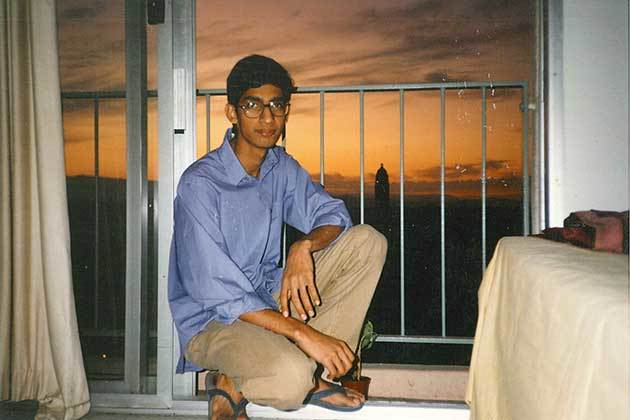
Growing up in India, like many of you, Sundar Pichai got my first telephone when he was 12. In case it turned out be a rotary phone, so it wasn’t that great for selfies. But he still loved to call my friends, play with it and sometimes take it apart. That telephone cemented my fascination with technology. Sundar Pichai remember in his parents’ house in Chennai, reading about the invention of the transistor at Bell labs. Of course, that initial invention helped found what became referred to as Silicon Valley and out of that came companies like fairchild semiconductor and Intel and every one the computers and software, that we all use today. You can draw an immediate line from that invention to the technology, that powers your Twitter feed or your WeChat messages today.

Google's Sundar Pichai travelled in buses, had no television while ...

Image source : GadegtsNow

When he was younger, people would say, this person didn’t get into this college or something and that is the end of the road. Sundar Pichai thought life is so different from that, and so he think it is important to you know, keep your hopes, keep your dreams and try to follow them and you recognize he think, most of how life plays out is up to you, not up to what happens outside of you. It’s important to keep that in mind and take the long-term view. As a teenager, jumping on to a crowded train. At Chennai and traveling for 24 hours, to attend my school at IIT Kharagpur and that opportunity changed the course of my life. You want to aim high enough that you fail, you know few times thought it is the natural part of the process. In fact, Larry accustomed say if you’re employed on really difficult things, you’re more happy because you’ve got no competition, others aren’t performing on that difficult a drag . And although you fail, you finish up doing something great within the process.

Sundar Pichai Biography - Childhood, Life Achievements & Timeline

Image source: Thefamousperson

You know, working the real world, it is important to be well rounded, it is important to try different things, or you know take some risks, he would encourage people to follow their passions a little bit more. To follow set lanes throughout your career. Getting into an elite institution doesn’t guarantee success, it matters plenty but it doesn’t guarantee success. It is important to stay that perspective in life and life may be a long road, and you know, you would like to require it at the proper pace and luxuriate in what you are doing. Sundar Pichai knew how much hard work it takes to pursue your dream of building a business. The long hours, time faraway from family, the ideas you recognize are brilliant, that just don’t seem to catch on. Reading that and thinking, it is the concept matters. It didn’t matter where you come from or what your background is.
One revolutionary idea, one brilliant invention can unleash other entrepreneurs to revolutionize, industries and ways you could never predict.

black samsung tablet display google browser on screen
Photo by PhotoMIX Company on Pexels.com

“Stop Worrying and Start Living” – Dale Carnegie – Book review

Dale Carnegie’s how to stop worrying and start living so the first big idea is ask yourself what’s the worst thing that can happen I remember the first year in college constantly worrying about my grades what was I getting to do if I got a B+ rather than an a well surely my life would be over and that i would never amount to anything in life like that was seriously the thought process browsing my 17 year old head now fast-forward five years.

How to Stop Worrying & Start Living
Carnegie tells a story of this guy in World War 2 who’s stuck in a submarine and basically knows that he’ll be dying in the next few hours and he sits there thinking about all the stuff he used to worry about at home and how absurd it was and makes a promise to never waste his life again like that if he survives now that might be hard to resonate with so let me give you a more contemporary example people are having their heads chopped off every single day every single day the only reason it’s not you is because you are born in a certain place. They weren’t that’s it now going back to my friend I told him look here’s what I want you to do every day you will start your morning by watching somebody’s head being chopped off and then you’ll go about the rest of the day.
He started freaking out about how he can’t do that and how he doesn’t like blood and whatever now here’s the thing. I know that’s really crass and morbid but I don’t care if you don’t worry about stuff great you don’t have to watch anything but if you’re worried about stupid all the time you have a disease so you either treat yourself or you never ask about how you can stop worrying again ever. Here’s what I will guarantee you if you start your day by watching someone else have their head chopped off nothing and I mean absolutely nothing could possibly happen to you for the rest of the day that you could get pissed off about and not feel like a complete retard yes when you’ve seen someone’s head chopped off you will have a weird feeling inside you as soon as you start to complain about how you deserve to be paid more at your job or what you’re going to do now since you bought a B+ rather than an A or how your washer is broken you’ll realize that.

automatic weapon bullet camouflage close up
Photo by Pixabay on Pexels.com

If the guy had been given the chance to live and wear that same dirty shirt for the rest of his life without ever being able to wash it he would have been the happiest man alive realize the absurdity of it all the third big idea staying busy now I don’t mean the average busy person actually those are the people that worry the foremost the guy who works 12-hour days then comes home and watches Fox all night worrying about whether some guy can marry another guy or about all the foreigners who will come and take his job you know because he’s the only one entitled to that job I’m not talking about that kind of busy here’s how I like to stay busy read a book that I like go to the gym with my girlfriend play around on the piano and compose cook amazing food work on a project. I’m passionate about now here’s what happens when you do that your brain can’t think of two things at one time it just doesn’t have that capability you can try right now if you want you can’t think of your broken washing machine and at the same time think of how much you love playing soccer it’s not how your brain works so the best way to get rid of the negative thoughts in your head is to actually start putting positive thoughts in there get busy with what you love and your brain simply won’t even have the power to stress . Finally, a question that really resonated with me here’s what you’re going to do in your life you’re going to work and worry your entire life so you can gather a bunch of stuff like your house and all the stupid.

woman working girl sitting
Photo by Alexander Dummer on Pexels.com

If you’re lucky after 50 years of all that worry and stress all of your stuff could be worth 1,000,000 dollars here’s the question would you sell your legs for a million dollars let me ask you this would you sell your legs for a billion dollars I wouldn’t and you probably wouldn’t either would you sell your arms for another billion dollars no there you go you have already got something that you simply value at two billion dollars actually hopefully more but you do not need to be all Zen you could be a greedy capitalist like me and understand this now here’s what you’re going to do you’re going to ignore and not utilize something worth two billion dollars because you’re too busy worrying and stressing about the things that might amount to 1 million dollars at the end of your life oh and you’ll be considered really lucky if that happens by the way all right.

cheerful barista in apron and hat with portafilter
Photo by Ketut Subiyanto on Pexels.com

So, I don’t know if you’re seeing how crazy that is but that’s kind of like having a huge mansion a personal jet every single car you ever wished for and not using and enjoying those things because you’re too worried about at some point having the ability to shop for a Corolla that’s crazy and sad you have already got everything that you value at billions and billions of dollars so stop ignoring wasting and treating it like for hours and days so you can worry and bitch about how your phone bill went up from a hundred dollars to a hundred and twenty.

You can buy this amazing book from here ( click here )

The Real Face of Current Situation @India 2020 ………//////

It seems like a huge mountain is fall in our countries head! This is the statement which almost every citizen of our country is saying and it’s true somewhere but the real fact is by here or there we only are responsible for it. Now the question how we are responsible? Will raise like a sun and will jump like a rat in empty stomach in your head until you will not get the answer so in this article I will let to understand each and every single point so that the rat of your empty stomach will remain till your stomach only.

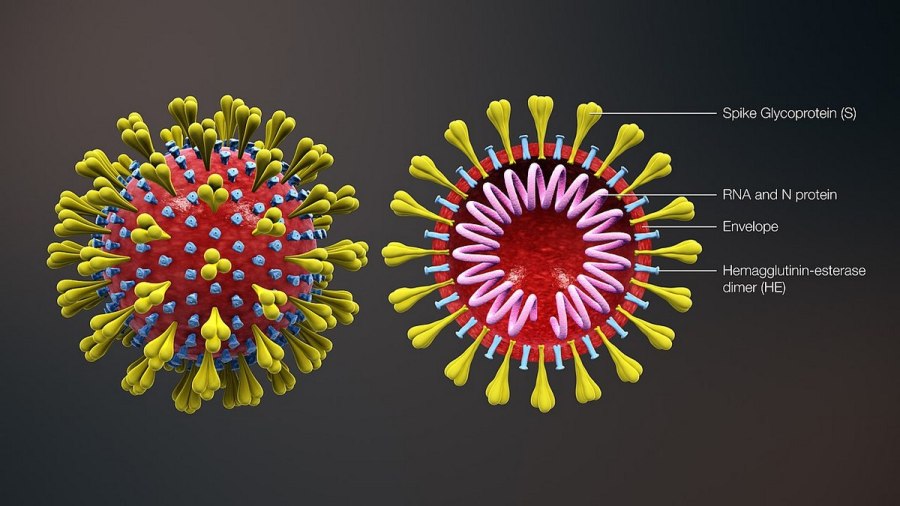
Starting from the biggest threat of the world CORONAVIRUS or COVID 19 VIRUS  so after having a big discussion we all know that from where this virus is came as nobody can hide the truth no matter how big and powerful you are. Today we are talking about India so just focus on the situation of coronavirus in India. We got the first case of corona virus on 30 January 2020 in Kerala which later increase and now we can let’s just pray as the vaccine is not yet discovered and don’t know how much time it will take and by that time how much will left uninfected. Let’s just pray for the best!

Credit : Third Party Reference

You will say why I am writing so negative but I must tell you that it’s not the think to become blindly positive it’s the thing to become preventive. Yes blindly positive and I am using this word because I can see a huge clusters of peoples roaming without mask and eating the street food in street stall by being blindly positive that the corona can’t infect me it seems like covid had signed any contract with them that you just roam in the way you want I will not infect you my majesty; like they had got Chirag-a-Aladdin to fight against the Corona.

After seeing this condition the question which arises in my mind is from where these people got the power to become so blindly positive and the answer which I got is our “respective honourable blind system”  for whom the condition becomes very critical and reaches in its top level when we see cases in thousands and the daily report was in hundreds and now when the condition is totally opposite when we see daily report in thousand, total in Lakh and every state has its own daily hundred then according to our honourable respective system ‘We are doing well, the condition is becoming normal’. I don’t know which normal they are talking about because the ‘normal’ which is there in my dictionary means the condition is improving and far apart I can’t see the even the ‘n’ of ‘normal’.

Credit : Third Party Reference

Do you know who is responsible in bringing corona to our country? Yes we can’t blame one personality or any authority but you all only think of the answer as you all are smart enough I will just tell you’ll some facts and reality. We know that the first case of Covid-19 was detected in November 2019 and the first case in India was detected in 30 January 2020 so that means there was a gap of 2 month so what India has planned in 2 months. What? The trip of Ahmedabad? Because there was no preventative measures was taken during those 2 months, as everyday international flights lands India and there was no checking of those travellers as there was many more and more important things which our government wants to held like in January at Delhi and in February at Ahmedabad. I think you all know about it.

Actually our System wake up when the India starts infected and they put whole India in sleep because that time we are facing a very critical situation which is become normal nowadays remember “normal” and do you know now international flights are also started seems like a Movie is going on where we are running from the reality and only telling lie from ourselves and to their citizens. I think Now it’s our time to wake up because when have seen what our government have done when they wake up. It’s our time to open our eyes and see the real of the condition of our country which can’t be expressed.

Stop being Blind Devotee of anyone first hears them, then use your brain, think that it’s wrong or right and then follow it. Stop being a blind follower otherwise you and our beautiful country will be in big trouble and nobody will come to save us.

So Wake up and See the reality and just remember it is just a big stone of that mountain which I have talked earlier. So I be back soon with another stone of that mountain. Till than is Safe in reality; Stop blindly following anyone, Keeps your Senses open and Be Awake.                     

An interesting case of forgery

Art heists, we see them countless times in movies as well as read about them in newspapers. They can be daring swiping of art works or plain robbing them outright. One such type of thieving is forgery. Forgery is a white-collar crime that generally refers to the false making or material alteration of a legal instrument with the specific intent to defraud anyone. Forgery in itself requires a lot of skill and mental acumen to pull-off. And as all crimes go once caught, one must prove their innocence in court to live freely. However, one case in Holland which included forgery was a little different, here the accuse pleaded guilty and tried to convince the court of his guilt. This was the case of  Han Van Meegeren in 1947.

Photo by u00b6Project Atlas on Pexels.com

Like the cliché which goes with art forgers, Meegeren was an artist whose original works failed to bring him renown so he set put to make fools of those who shut the door to the art world on him. Like it was stated this kind of thievery requires a lot of skill and practice. Meegeren worked for nearly 6 years, studying all about the old masters, their styles, their biographies, their techniques and their materials.  He chose a baroque painter from the 17th century by the name of Johannes Vermeer, a rather difficult choice given that Vermeer is celebrated throughout the art world for his technical brilliance in portraying domestic scenes. He carefully made meticulous practice pieces, going as far as to making his own brushes, and paint from his knowledge of Vermeer’s time. He was partly successful in his forgeries due to the fact that the sophisticated means of testing that are available now weren’t as advanced or widespread then. The other factor was his planning, the originality of the art work being tested depends on the art specialist reviewing them, and their popularity which is subjective. From his research he knew that the leading expert on Vermeer believed that he had an early fixation on religious painting and as there was no proof of this theory, Vermeer decided to provide one. Even thought it had some inconsistencies, as it was considered an early piece, it got the stamp of approval and he sold his fake for an equivalent of $4 million dollars. The success prompted him to make and sell more forgeries.  However, his triumph was to be short lived, soon Nazi Germany occupied holland, and Hitler’s top general Herman Goring wanted a Vermeer painting for his collection. And Van Meegeren was more than happy to sell his fake. However, when the allies won the world war, Meegeren was tried for his “treasonous” act and was to be sentenced to the electric chair for selling a Dutch “masterpiece”. Thus, began Meegeren’s trial and his fight to prove that it wasn’t an original. To prove this, he explained step by step how he had forged it. However, he faced an ironical obstacle, the very man he had used to dupe the world, now came forward to take him down. The very expert who had enabled him to do the scam, now fought to protect his own reputation. Thus, to prove his innocence Meegeren made another fake and submitted to the court and was thus acquitted for collaborating with the Nazis, but sentenced to one-year imprisonment for fraud. Thus, he went from the scum who collaborated with Nazis to the folk hero who managed to swindle them. Due to his notoriety his works became valuable is his own right. Later down the line even his son forged his father’s paintings to gain money.

Thus, his “lack of talent” in his peer’s eyes was actually the fuel that unlocked his real talent in his eye for detail and dealing the art.

15 Books Bill Gates recommend – Must Read!!!

An average person reads 1.5 books per year while your average top CEO reads over 50 books per year they do this so they can maintain a competitive edge in the game and find new ideas that could improve both their lifestyles and companies this  time we’re taking a look at the books multi billionaire Bill Gates thinks  everyone should read because they had such an incredible impact on his own journey.

Here is list of all 15 books that must be read by you to get a better life style:

1, Where good Ideas come from :- Steven Johnson

 Click here to view the book


2, Life is what you make it :- Peter Buffet

click here buy the book


3, Tap dancing to work :- Carol Loomis

Tap Dancing to Work: Warren Buffett on Practically Everything, 1966-2013click here to buy the book


4, Moonwalking with Einstein :- Joshua Foer

Moonwalking with Einstein: The Art and Science of Remembering Everything click here to buy the book


5, The Man Who Fed the World :- Leon Hesser

The Man Who Fed the World

Click here to buy the book


6, “The Sixth Extinction” by Elizabeth Kolbert

The Sixth Extinction: An Unnatural History click here to buy the book


7, Making the Modern World :- Vaclav Smil

Making the Modern World: Materials and Dematerialization click here to buy the book


8, The Rosie Project :- Graeme Simsion

The Rosie Project (The Rosie Project Series)

click here to buy the book


9, Business Adventures: Twelve Classic Tales from the World of Wall Street :- John Brooks

Business Adventures

click here to buy the book


10, The Great Gatsby :- F. Scott Fitzgerald

The Great Gatsby

click here to buy the book


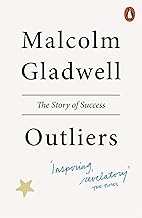
11, Outliers :- Malcolm Gladwell

Outliers: The Story of Success click here to buy the book


12, How to Lie With Statistics :- Darrell Huff

How To Lie With Statistics click here to buy the book


13, The Box :-  Marc Levinson

The Box – How the Shipping Container Made the World Smaller and the World Economy Bigger

click here to buy the book


14, How Not to Be Wrong :- Jordan Ellenberg

How Not to be Wrong: The Hidden Maths of Everyday Life

click here to buy the book


15, Sapiens: A Brief History of Humankind :- Yuval Noah Harari

Sapiens: A Brief History of Humankind

click here to buy the book


How to attract people in first 90 seconds- Must read!!!

These are the secrets from an amazing book called “How to Make people like you in 90 seconds or less” by Nicholas Booth Man. Likable people are always open, welcoming and friendly in nature and you can notice their sincerity, trust, and self-confidence in their behavior as well, and you can develop all these qualities in yourself by meeting other people in a regular manner. If other people do not find you interesting in first 90 seconds after meeting you, then they would want to get rid of you as soon as possible.

How to Maintain Communication and Culture as a Growing Startup ...

If you want that people like you more, then you have to invest your efforts from the very beginning, and this starts even before you speak a single word from your mouth. Any new person notices three basic things just after meeting you, these three things are your

  1. Body language
  2. Your eyes
  3. Expression on your face

Thus, it is essential that when you meet anyone, these three elements give the feeling of openness to other people. For doing this, you will have to show your interest in them, along with your body, you will have to move your brain as well toward them. This effort will show your sincerity and commitment and openness in the conversation and in them as well after this, you need to see directly in the eyes of other people, this establishes the trust and as soon as you make an eye contact with other person make sure you give a genuine smile to them before they think or assume anything else about you. Let your positive attitude shine with a broad and genuine smile with this simple action, other people will consider you as a genuine, open and sincere person with this simple effort, you already made a warm and welcoming mood for the situation, and now you need to initiate by introducing yourself. You can do that with a standard greeting, like Hi or hello and you must need to do that in a very pleasant tone. Along with that make sure you share your first name to the other person and it will encourage the other person to introduce themselves for example, you can say,….”Hello, I am Akash”. When you say this, then the other person will also share his or her name with you, and as soon as they share their name, you must need to repeat their name like wise you said… “Hello, I am Sahil” you got response… “Hi, I am Sohil” now you have to say, “Sohil, Nice to meet your Sohil.” In his famous book, “How to win friends and influence people,” Dale Carnage shared the fact that the name of any individual is the sweetest sound in the entire world for that person that is why it is essential that you repeat other person’s name in the conversation as much as possible. This method will increase your acceptance and respect, it will also make it easier for your to memorize their name. And finally, you have to lean forward slightly. Just a little leaning would be enough, just like Mr. Obama is slightly leaning forward in this photo.

How To Give A Proper Handshake - Business Insider

Image source: BusinessInsider

With your slight inclination, other people will assume you are showing interested in them, and you are listening to them carefully, also, it will give you a pleasant appearance. Just look at photo and tell who is looking more generous in both of them. Of course, it is Mr. Obama, because he is using this principle.

Studies proved that people hire those people that are similar to them and even most of the time they date people with similar people because they make them feel safe and comfortable. If you try to pay attention, you will find, you enjoy the company of those people who think like you, who behave like you and those who make you feel comfortable. You can be comfortable for them just by synching your voice with their voice. The synching of voice is a very powerful tool in communication skills for this, you need to speak at the same pace as other people are speaking that means if they talk slow, then you should not run fast and second thing, you shall try to use the same tone similar to them. If they are calm and relaxed, and you will speak loudly or with excitement, then it won’t work well for you. You need to use same volume and you need to relax while talking. With this, other people will think you are like them and they will feel more comfortable while talking to you.

photo of people doing handshakes
Photo by fauxels on Pexels.com

In 1979, Dr. Lisa Berkman did a study on 7000 people, and this study lasted for 9 years with this study, she found that people that do not have more social connections or those who do not meet other people, they get ill more often, and it increased their chances of earlier death as well and who meet other people more often, were likely to live longer. So, go and expand your social circle without having any fear, without any complications.


How Surat Boy and NIT Hamirpur Graduate Shantanu Yadav cracked CAT with 99.7%ile and got into IIM Ahmedabad for MBA 2020!

Shantanu Singh Yadav, CAT 2019 topper from Surat, cracked the exam with 99.73 percentile and has converted number of top B-schools including IIM Ahmedabad. A graduate from NIT Hamirpur, Shantanu belongs to a modest service class family. While preparing for CAT exam, he earned 3 years of working experience in a fertilizer industry. Read his CAT preparation strategy and success mantra

Coming from the small town of Surat in Gujarat, Shantanu Singh Yadav cracked CAT 2019 with 99.73 percentile and has converted number of top B-schools including IIM Ahmedabad. A graduate from NIT Hamirpur, Shantanu belongs to a modest service class family. While preparing for CAT exam, he earned 3 years of working experience in a fertilizer industry.

 

Shantanu appeared in CAT 2018 also, and scored 95.73 percentile but decided to prepare again to get his dream B-school. He likes playing Football and his hobbies and interests include Photography, Trekking and Hiking.


MBAUniverse.com invited Shantanu to share his exam taking strategy and GD-PI experience. Read on for his views and success mantras.


Q: How did you perform in CAT 2019?

A: I scored 99.73 overall percentile in CAT 2019; 89.44 percentile in VARC section; 99.76 in DILR Section and 99.86 percentile in Quantitative Ability section. I also appeared in CAT 2018 and scored 95.73 percentile.


Q: Apart from CAT 2019, which other exams did you appear?

A: Apart from CAT 2019, I appeared in XAT 2020 and scored 99.914 percentile; appeared in IIFT 2020 and scored 98.74 percentile.


Q: Which top B-schools have offered you admission and which one you have finally chosen?

A: Apart from getting final admission offer from IIM Ahmedabad, I have converted IIM Calcutta, IIM Shillong, MDI Gurgaon, all Baby IIMs. I have finally decided to join IIM Ahmedabad


Q: What have been your academics and family back ground? Do you have some work experience as well?

A: I graduated from NIT Hamirpur with Chemical Engineering in 2017 with 82.6 percent. I scored 91.2 percent in class X; 90.2 in class XII and 82.6 in Graduation. I have 3 years of work experience in the Fertilizer Industry. I belong to a service class family. My father is in Service, Mother is a housewife and younger brother is in 11th grade.


Q: What was your overall preparation strategy for CAT?

A: CAT 2019 was my second attempt at the exam, when the first one in 2018 fetched me admits to some new and baby IIMs. I started preparing again in May’19, mostly focusing on mocks and timing my attempts effectively. I started cross-checking and analysing my wrong answers, something I never used to do earlier.


The quants section was my strength but still I devoted equal time to all the three sections with some extra effort towards DI and LR which is I believe is the most unpredictable section in the exam. You could practice a hell lot of LR sets prior to the exam but might still hassle on the D-Day. LR sets are not straightforward like Quants or DI sets. Timing my complete mocks and sectional tests along with thoroughly analysing my wrong as well as right attempts turned out to be fruitful.


Q: Please share your sectional preparation strategy for VARC in CAT

A: For Verbal and RC, I used to read articles from diverse fields to get a hold of difficulty faced to comprehend as well as retain a column when it does not belong to something you’re usually used to. Reading articles from newspapers and business magazines not only helped in VA and RC but also made a solid base to ace the current affairs during the interview and GD rounds.


Q: Please share your preparation strategy for DILR Section

A: For DILR, I focused mostly on LR and LR based DI sets, as for the past few years you rarely get to see a pure DI set in the actual exam. LR being the most unpredictable section in CAT, I followed a strategy to solve and analyse each and every set I face either during mocks or during practise from dedicated books. Try looking for practise material online on GoogleDrive and you’ll find plenty of LR sets to solve. IMS’s mocks helped a lot in DI LR section as they had questions which were closest to the ones actually faced in the CAT Exam.


Q: Please share your preparation strategy for Quant Section

A: For Quants, I thoroughly practised books by Arun Sharma with a timed approach to solve at least 25-28 questions from various topics under 60 minutes. Apart from this I also solved previous years’ CAT papers with minimal use of on screen calculator.


Q: Was there any particular section/area that you were weak at? How did you overcome this challenge?

A: I was lagging a bit in VA and LR during my initial preparation. For VA there’s only one approach and that is to read, read and read. Read from publications you’re not familiar or used to. Read foreign journals/magazines, editorials in intl. newspapers etc. For LR I solved as many sets I could get my hands on with a timed approach, trying to crack the set within 10-12 minutes was my strategy.


Q: What role did Mocks play in your success? How many mocks did you attempt before the exam?

A: Mocks are the key to better preparation as well as time management skills. I solved about 40 mocks before the actual CAT.


Q: Did you self-prepare or attend a coaching centre and why?

A: I self-prepared for the exams and took guidance from IMS Surat for the WAT-GD-PI. I also enrolled for mocks with IMS because of their well-structured and closest to CAT mocks.


Q: Please share your strategy for the CAT Day. What was your last-minute preparation? How did you plan your CAT test taking?

A: Strategy for D-Day would be to avoid any last minute preparation. Since the syllabus for CAT is so wide and even has no boundaries defined for VARC and DILR, last minute hustle mostly turns fruitless and overloads you with added stress. I appeared for one mock, a day before the exam and scored just 16 in VARC which freaked me out. It somehow affected my actual performance in CAT where I scored merely 40 marks in VARC which took my sectional percentile below 90.


Take rest and sleep well a day before the exam, not much you’ll be able to change with a day’s preparation. I spent my rest of the day watching Netflix after flunking VARC a day before CAT.


Q: How did you prepare for GD/PI/WAT. Please share your GD/WAT topics & PI questions?

A: Post the release of response sheets by IIM Kozhikode and realizing I was scoring 180+, I started my preparation for GD and PI. The first thing I did was to prepare an exhaustive write-up about myself, starting from academics, work experience, achievements, projects, interests and hobbies, short and long term goals. Current affairs for GD and PI didn’t require much preparation owing to my habit of reading newspapers and magazines religiously.


I attended a few sessions from experts along with two mock GD and PI sessions, of which one was purely focused on my IIM Ahmedabad interview, which was only my second interview in a long list of 14-15 shortlists including IIM A,C,L,S, MDI, SPJIMR, XLRI and IIFT. I also prepared a few core subjects from my engineering and also mathematics, which eventually aided me a lot during my IIM A, C & L interviews.


Q: Your final message and tips for candidates preparing for CAT 2020.

A: I want to share following four tips for the prospective candidates:


Always analyse your mocks thoroughly. It’s not at all tough to land in the top 1 percentile.

Try not to appear for a mock on the penultimate day. Relax and sleep well for the D-Day.

Try not get stressed, during the exam and also in the interviews.

Never globe in the interviews. Professors will have a laugh and you’ll walk out looking like a clown.