Dissent By One Judge Not A Bar For Upholding Death Penalty

It has to be remarked right at the outset that in a very important observation made most recently on November 7, 2019 in a latest judgment titled Manoharan v State by Inspector of Police, Variety Hall Police Station, Coimbatore in Review Petition (Crl) Nos. 446-447 of 2019 in Criminal Appeal Nos. 1174-1175 of 2019, the Supreme Court has minced no words to hold that dissent by one Judge not a bar for upholding death penalty. In this latest case, the Supreme Court has thus dismissed the review petition filed by Manoharan whose death penalty was upheld by it a few months back. It may be recalled here that the Supreme Court (2:1) had in August 2019 upheld the death sentence that was awarded to Manoharan who was found involved in gang rape of a 10-year-old girl and thereafter murdering her and her brother. It must be disclosed here that Justice Rohinton Fali Nariman and Justice Surya Kant had upheld the death penalty and Justice Sanjiv Khanna had expressed his dissent against upholding the death penalty that was awarded to Manoharan.   

                                                   To start with, the ball is set rolling in para 1 of this noteworthy judgment authored by Justice Surya Kant for himself and Justice Rohinton Fali Nariman wherein it is observed that, “These review petitions are directed against the judgment dated 01.08.2019 passed in Manoharan v. State by Inspector of Police, (2019) 7 SCC 716, wherein this three-Judge Bench had affirmed conviction of the accused Manoharan for offences punishable under Sections 302, 376(2)(f) and (g) and 201 of the Indian Penal Code (in short “IPC”) and by majority upheld the death sentence confirmed by the High Court.”

                                   While dealing with the factual matrix, it is then laid bare in para 2 that, “Brief facts of the present case are as follows:

‘X’, a ten-year-old brother were enrolled in Classes V and II respectively in a private school at Coimbatore and would commute around 7:45 a.m. in a pickup vehicle owned by one Kartikeyan (PW-2). On 29.10.2010 the children left as usual with their school bags and lunch boxes and stood about two-hundred feet away from their home, in front of the Vinayakar Temple. Around 8:00 a.m., PW-2 came to the designated pick-up spot but did not find the children there. He contacted the children’s father, Ranjith Kumar Jain (PW-5) over mobile to enquire about their absence. Being in Hyderabad, PW-5 was unable to provide an immediate reply to the query of PW-2 and hence called his wife, the children’s mother – Sangeetha (PW-8), who informed him that both X and Y had already left home. Since the father of the children (PW-5) was already on his way back to Coimbatore, he entrusted his wife to look out for the children and co-ordinate with the van driver. Sangeetha informed Karthikeyan that the children had already left the house, whereafter she along with her relatives Vijay Kumar (PW-1) and Sanjai (PW-6) started searching for the children.”

                        While elaborating further, it is then pointed out in para 3 that, “Kamala Bai (PW-9), the paternal grandmother of the children had gone to a Jain Temple around 8:00 a.m. in the morning. Upon returning home at 10:30 a.m. and finding Sangeetha in panic, Kamala Bai informed her that the children had been picked up by a former van driver and it was conjectured that the children must be in school. Vijay Kumar (PW-1) then went to the school and found that the children had however not reached. After a frantic but futile search, PW-1 lodged a police complaint (Ex. P1) with Vasuki (Sub-Inspector of Police, (PW-42) at around 11 AM under Section 363 of the Indian Penal Code (in short “IPC”).”

                                   More pertinently, it is then elucidated in para 4 that, “The Investigating Officer (“10”, PW-47), thereafter, took over investigation and recorded statements of the informant (PW-1), the school’s principal-Anthony Raj (PW-10), as well as of the grandmother (PW-9) and the just returned father of the children (PW-5). First trace of the missing children was received at 6 PM when Anthony Raj (PW-10) informed the IO (PW-47) that one Chinnasamy (PW-22) had called to inform that two school bags with identity cards bearing names of X and Y were found floating in and later fished out from the Parambikulam-Axhiyar Project (“PAP”) Canal. A second lead came to the Police from Karthikeyan (PW-2) who received a call from his erstwhile employee – Anbu @ Gandhiraj (PW-7) who conveyed that one Mohanakrishnan had borrowed a Maruti Omni Van from him that morning. This aroused Kathikeyan’s suspicion since Mohanakrishnan was his former employee whose services were terminated after it had been discovered that he was borrowing money from the parents whose children were being transported to school by PW-2’s agency. The IO (PW-47) accordingly advised both Anbu (PW-7) and Karthikeyan (PW-2) to immediately alert the police whenever Mohanakrishnan came to return the Omni Van. At around 9:45 PM, Anbu alerted the police that Mohanakrishnan came to return the Van and he had also confessed to the kidnapping, rape and murder of the two missing children along with his friend Manoharan. Pursuant to the information received by Anbu Mohanakrishnan was arrested and a confessional statement was recorded in the presence of Anbu (PW-7) and one Santosh Kumar (not examined as a witness). The Maruti Omni Van along with one Nokia Cellphone and the driving license of Mohanakrishnan were also seized. The IO consequently sent a report (Ex. P-30) for alteration of charge from under Section 363, IPC to Sections 364(A), 376, 302 read with Section 201, IPC which was received by the Magistrate at 11:45 PM.”

                                         Furthermore, it is then observed in para 5 that, “Having observed certain saliva and yellow-coloured stains on the seized van, the IO requisitioned forensic assistance of Sarvanan (PW-43), Deputy Director of Mobile Unit of Tamil Nadu Forensic Sciences Department. In the presence of Sarvanan (PW-43), Anbu (PW-7) and one Santosh Kumar (unexamined), the van was thoroughly searched wherein a lady’s underwear bearing the inscription “SBT Kidswear 75c.m.” with hair strands were recovered. Sarvanan (PW-43) further collected the betel nut saliva stains on the left door of the van with a cotton swab for chemical examination, as well as dried yellow-colour stains found on the seat and floormat, and the clothes (namely pant, half shirt and underwear) worn by Mohanakrishnan (Mahazar Exs. P-5 & P-6).  Mohanakrishnan subsequently led a police team to the place where he claimed to have raped X as well as to Deepalapatti, the place from where the children had allegedly been pushed into the running waters of the PAP canal.”   

                                           To be sure, para 9 then illustrates that, “The present review-petitioner, Manoharan (hereinafter “petitioner”) who was stated to have perpetrated the crime along with Mohanakrishnan, was arrested on 31.10.2010 at 7AM, as recorded in Ex. D-4. Manoharan made a disclosure statement to the police (Ex. P-21) on the basis of which the IO (PW-47) recovered lunch box of Y from his house. Further, after being produced before the Magistrate the same day the petitioner was sent to judicial custody.”

                                   To put things in perspective, it is then enunciated in para 10 that, “A Test Identification Parade was conducted on request of the IO whereby Kamala Bai (PW-9) identified Mohanakrishnan as the driver of the van in which the children had been kidnapped. Subsequently, both the petitioner and Mohanakrishnan were medically examined on 04.11.2010 whereby samples of their blood and saliva were sent to the Tamil Nadu Forensic Science Laboratory for DNA Analysis. A potency test of the petitioner was conducted by Dr. J.R. Singh (PW-46), who in his medical report (Ex. P-56) found him potent and further noticed signs of injury around his private parts.”

                                       Be it noted, para 11 then reveals that, “During recovery proceedings under Section 27 of the Indian Evidence Act (in short “IEA”), whilst in police custody, Mohanakrishnan shot and wounded two police officers and was consequently shot dead by the Police on 09.11.2010. Thus, the trial against Mohanakrishnan was abated and the petitioner alone was left to be tried as an accused.”

                            As it turned out, the Bench then observes more damningly in para 12 that, “Succinctly, the prosecution’s version of events is that Mohanakrishnan using a borrowed school van, picked up two children (X and Y) who were waiting to go to school at about 7:50 a.m. He further picked up his friend, Manoharan from his house at 9:30 a.m. and subsequently, they took the children to a remote location where after the girl child was raped and sodomised. Subsequently, Manoharan and Mohanakrishnan purchased cow dung powder (a poisonous substance) which was mixed in milk and then administered to the children to end their life. However, both the children spat out the substance and only ingested a small portion. Since poisoning did not work, Mohankrishnan and the petitioner threw both the children into the turbulent waters of a nearby Canal, hence drowning them.”  

                                     While discussing about the sequence of events in the Trial Court, the Bench then observes in para 13 that, “Over the course of the trial, the prosecution examined forty-nine witnesses in all including persons who witnessed abduction, purchase of milk and cow dung powder and those having seen children in the custody of accused persons at various places. Further, various medical and forensic evidence were produced, proving drowning and rape as well as injuries on Petitioner’s body. A ‘last seen theory’ was built by the prosecution, in addition to use of a confessional statement made by the petitioner under Section 164 CrPC. The Trial Court ultimately held the Petitioner guilty under Section 120-B, 364-A, 376, 302 r/w 34 and 201 IPC. Under Section 376, the Petitioner was awarded life sentence and for offence under Section 302 IPC he was given death sentence.”

                                   Needless to say, para 14 then brings out that, “The Madras High Court set aside conviction of Petitioner under Sec. 120-B and 364A IPC but confirmed the sentences under Sec. 307, 302 r/w 34 and 201 IPC. After considering aggravating and mitigating circumstances, the High Court confirmed death sentence awarded by the Trial Court.”

                                     To say the least, it is then disclosed in para 15 among other things that, “Thereafter the Petitioner filed a Special Leave Petition under Article 136 whereby this Court dismissed his appeal and confirmed the death sentence by majority, observing that the case fell in the category of the ‘rarest of rare’ cases”. Para 16 then further discloses among other things that Justice Khanna in his minority opinion also upheld conviction under the various offences concerned, but dissented on the quantum of sentence.

                                             Going ahead, it is then observed in para 17 that, “The Petitioner then filed the present petition for review of the said judgment and order dated 01.08.2019 which was heard at considerable length in open Court following the parameters evolved in Mohd. Arif @ Ashfaq v. Registrar, Supreme Court of India, (2014) 9 SCC 737, wherein a Constitutional Bench of this Court held that in cases of death penalty, since the punishment is irreversible and Article 21 of the convict is violated, it is necessary to provide at least one opportunity for oral arguments on the question of sentence.”

                       More crucially, the majority while upholding death penalty minces no words to hold in para 65 that, “Even observed devoid of any aggravating circumstances, mere young age and presence of aged parents cannot be grounds for commutation. One may view that such young age poses a continuous burden on the State and presents a longer risk to society, hence warranting more serious intervention by Courts. Similarly, just because the now deceased co-accused Mohanakrishnan was the mastermind whose offence was comparatively more egregious, we cannot commute the otherwise barbarically shocking offences of the petitioner. We are also not inclined to give leeway of the lack of criminal record, considering that the current crime was not just one offence, but comprised of multiple offences over the series of many hours.”

                                     While convicting the majority also could not lose sight of what is stated so plainly in para 66 that, “Even if the cases involving confession merit some leniency and compassion, however, as was earlier noted in our majority opinion, the attempted retraction of the statement shows how the petitioner was in fact remorseless. Such belated retractions further lay rise to the fear that any remorse or repentance being shown by the petitioner now may be temporary and that he can relapse to his old ways. Irrespective of the underlying reasons behind such retraction, whether it be the fear of death or feeling that he was not getting any benefit of his earlier confession, but the possibility of recidivism has only been heightened and we can no longer look at the initial confession in a vacuum.”

                                         Most crucially, the majority while upholding conviction first observes in para 67 that, “Rather, the present case is essentially one where two accused misused societal trust to hold as captive two innocent school-going children, one of whom was brutally raped and sodomised, and thereupon administered poison and finally drowned by throwing them into a canal. It was not in the spur of the moment or a crime of passion; but craftily planned, meticulously executed and with multiple opportunities to cease and desist. We are of the view that the present offence(s) of the Petitioner are so grave as to shock the conscience of this Court and of society and would without doubt amount to rarest of the rare.”

                                          Lastly, it is then held in the last para 68 that, “Hence, we find that there exist no grounds to review our judgment upholding conviction and death penalty. The review petitions are accordingly dismissed.”  

                                         Before winding up, it has to be thus said that the majority view has prevailed that upholded conviction and death penalty while dismissing the review petitions. The contention raised by senior advocate Siddharth Luthra that death ought not to be awarded in case of a single dissent, notwithstanding the opinion of the majority was not accepted! Also, it was  clearly held that the offence committed by the petitioner was so grave so as to shock the conscience of this court and of society and would without doubt amount to ‘rarest of the rare’. Also, the crime was not in the spur of the moment or a crime of passion but was craftily planned, meticulously executed and with multiple opportunities to cease and desist as has been rightly held and pointed above! So the dissent by Justice Sanjeev Khanna on the question of sentencing alone could not come in for rescue in any manner in saving the petitioner from being sent to the gallows! Very rightly so!     

Sanjeev Sirohi, Advocate,

s/o Col BPS Sirohi,

A 82, Defence Enclave,

Sardhana Road, Kankerkhera,

Meerut – 250001, Uttar Pradesh.      

A tale of misuse of power

These days the age-old quote might makes right, rings true throughout the world. In every nation, the vile fruit of corruption has ripened. We have recently seen, protests about the massive misuse of power police have done in the US. However, it is not the case in just America, but rather every country in the world. But simply implying that the police have excessive power, cannot be true as the problem runs way deeper. Various cases of misuse of power arise due to the lack of accountability. None go more unchecked than when the political party has more influence than the opposition.

Like the case in India, where BJP has nigh invulnerability when it comes to misuse of power. Due to their opposition either being weak, or having lost the trust of the people, the BJP of today has seen a tremendous rise in power. And with a charismatic leader like Narendra Modi to lead them is just cherry on top. This makes it easier for the member of affiliates of the party to misuse their power for their own gain or to silence their enemies. Even the news that should be holding them accountable is either bought or silenced. The few who do report on them, a majority of them have ties outside of India and have been known to have worked against India in the past. All of this has put our motherland in a vulnerable situation right now. Thus, here we see that a single party gaining major influence can be a deterrent for a well-functioning democracy. Modi as been termed as borderline tyrannical by many a foreign news experts. However, this is not just the case in India, even in other nations such situations and problems have arisen. Take the example of USA, now a republican dominant country. Ever since Trump came into office with his motto of make America great again, many within the country feel like it has been anything but so. Many a times we have seen Trump blatantly showing his racist, misogynistic and overall apathic side, but due to less accountability he has had a free rein since the start of his term. He has often been seen slamming his opponents the way bullies do, name calling and spitting false facts. In fact, should a group or a person be in Trump’s good books, he has been seen going to any lengths to take their side. He has repeatedly referred to the charlotsville racists as “good people”, even defending people who have done reprehensible deeds just because they were associated with his image. He even goes as far as concocting conspiracy theories around people who stand up against him. The conspiracy theory actually makes a lot of sense once you delete your sense of empathy and humanity. Once you view your political opponents as soulless automata whose only purpose and motivation is to damage your personal agenda, you can easily believe that they’re going to risk death just to damage your political position. It’s just a more extreme version of an authority figure seeing a civilian’s every movement as a threat — once you stop viewing people as other humans with lives and aspirations and concerns and ONLY as opponents whose prime agenda is to hurt you, you will believe they will seize any opportunity to attack you, even at hopeless detriment of themselves. If you view their lives as not valuable, then you’re willing to believe they will unthinkingly trade that low value life for the privilege of threatening you. That’s how prejudice works. The same has also been seen in case of India’s ruling party

Master plan of China- DISCLOSED!!!

The life after the pandemic situation will not be normal again as this pandemic situation is also not normal.

Knowingly or unknowingly the virus developed in China (according to news) created the biggest impact in the health and economic sector of the world. Nobody knows how much time will it take to come out completely from this pandemic situation. China with the most power in terms of technology and population might have a master plan to be executed in the name of Novel Corona virus by supplying the goods of medical department and further other essential commodities which might be needed by the people in the near future to the world and soon they will earn billions of dollar by supplying it to the world. So, again now world will depend more on China than before.

download


We as a responsible citizen of India, need to stop the master plan of China as in the near future it will harm us very very badly. Let us understand by an example, India is surrounded by countries like Pakistan, Bangladesh, Sri lanka, Nepal this all countries have taken huge amount of money from China like wise Pakistan took huge money from China to develop a road passing from the mountain, so now Pakistan is in debt to pay the money and in return China can do anything to gain the money back. Pakistan took more money from China than from IMF, and has to pay around 19 billion US$, which will be extremely hard for Pakistan. In the same way Sri lanka owes 1.4 billion US$ which is left over from from 99 years and now China will ask for payback or will capture the Sri lanka. Bangladesh debt for 64.9 billion US$. India is also in debt of paying to China, but China will not capture India first it will first capture our surrounding countries and than head towards India. So, we need to become very attentive towards each step of China and understand their activity, we also need to stop buying Chinese goods to save our country and instead go for Made In India goods. JAY HIND…

made-in-india-vector-16416448

Karnataka HC Issues Guidelines To Keep Illegal Migrants In Foreign Detention Centres Even After Grant Of Bail

In a latest development, the Karnataka High Court in the case of Babul Khan And State of Karnataka in Case No. : CRL.P. No. 6578/2019 delivered on May 19, 2020 while taking a stern view of illegal migrants and foreigners overstaying in India has held in no uncertain terms that they should be kept in ‘detention centers’ till the further orders of the court or till they are deported to their mother country. It minced no words to put across that illegal migrants sometimes pose threat to national security and infringe rights of Indian citizens. It also made it clear that this cannot be allowed to go on with impunity!

                                          To start with, the ball is set rolling in the opening para of this latest judgment by stating that, “This petition is filed seeking grant of bail under Section 439 of Code of Criminal Procedure, pertaining to Crime No. 213/2018 of Sarjapur Police Station. The said case after charge sheet culminated into CC No. 1734/18. Finally after committal proceedings, it came to be registered as SC No. 5014/2019, pending on the file of III Additional District and Sessions Judge, Bangalore Rural District, sitting at Anekal. The said case was registered for the offence punishable under Sections 14A and 14B of the Foreigners Act, 1946; under Section 25 of the Indian Arms Act, 1959; and Section 34 of the Aadhaar Act, 2016.”

                                                 Delving deeper and setting the background, para 3 then envisages that, “The brief facts of the case divulged from the Charge sheet papers are that:

Accused Nos. 1 to 15 named in the Charge sheet belonged to Bangladesh, illegally migrated to Indian Territory, without Passport and Visa and they have been staying in Indian Territory without any legal documents or any license or permission from the competent authorities. It is also alleged that Accused Nos. 1, 3, 14 and 15 have illegally obtained Aadhaar Cards by fraud and misrepresenting themselves as Indian Citizens. It is further alleged that Accused No. 2 was possessing bullets and thereby the Accused persons have committed an offence under the Arms Act.”

                                                   While elaborating further, it is then pointed out in para 4 that, “On plain reading of the Charge sheet papers, it is seen that specific allegations have been made against the petitioners that, they are Bangladesh citizens, and they have been illegally migrated to Indian Territory and residing in India without any authority of law. Hence, they have committed the offence under Sections 14A and 14B of the Foreigners Act. So far as other offences are concerned, no such allegations are made against the petitioners.”

                                               Be it noted, a Bench of Karnataka High Court of Justice KN Phaneendra after going through the case in detail has issued the following detailed guidelines in para 112 on dealing with illegal migrants and foreigners facing proceedings under the Foreigners Act, 1946 which form the bedrock of this notable judgment:

  1. As soon as the offence under Foreigners Act and other Laws is detected and there is a strong prima facie material to show that the detected person is a foreign national, and if he has no Passport or Visa, or if the Visa is expired, and he has no right to stay in Indian Territory, proceedings shall be immediately started to deport him to his nation, without unnecessary delay, from the date of registration of FIR against such person.
  2. The jurisdictional police have to immediately take steps to inform the concerned competent authorities to initiate proceedings to deport such foreign nationals to his/her mother country vis-à-vis other competent authorities also share the details of such person amongst themselves and the concerned jurisdictional Court.
  3. If the Court refuses to grant bail to those persons (foreign nationals) in any criminal case, the Court shall keep such person in regular jail, till the disposal of the case.
  4. If for any reason the Court grants bail including anticipatory bail, in any criminal case where the offender is a foreign national, and the offences are under the Foreigners Act and/or also under any other Laws for the time being in force, and their Visa is cancelled or lapsed, or they have no Passport, or they are illegal migrants, then the Courts shall specifically order to keep them in detention centers, unless the competent authority has passed any order under section 3(2)(a) to (f) of Foreigners Act, 1946, or till further orders of the court or till they are deported to their mother country.
  5. If the case registered against the foreign nationals, ended in conviction, they shall be ordered to be kept in regular prison of the state till they serve the sentence, and after serving the sentence, they shall be kept in detention centers till, they are deported to their country.
  6. If the case ends up in discharge, release of the accused or acquittal, and their nationality is in dispute before the competent Tribunal, they shall be ordered to be kept in detention centers till they are deported to their country unless they have any right or otherwise entitled to remain in India, or the competent authority has passed any orders under section 3(2)(a) to (e) of Foreigners Act 1946, the acquittal, discharge or release of the accused is no bar for the concerned competent authorities to question the nationality of that person before the competent Tribunal.
  7. The Public Prosecutors, the Defence Counsel and the Courts shall make all their efforts to expeditiously deal with such cases by giving priority, for its early disposal, so as to enable other competent authorities to take appropriate steps under the facts and circumstances of each case for deportation of such foreign national (accused) as early as possible. The Court may also if permissible under law, and applicable to the facts and circumstances of a case may invoke sections 265A to 265L under chapter XXI (A) of Code of Criminal Procedure, after following due procedure.
  8. As far as possible where a foreign national is involved in a case, the courts shall make their endeavor to record evidence and write the judgment in English language, if the accused in such case is not conversant with the local language.
  9. The Central Government and the State Governments shall take all necessary steps to establish as many as necessary Detention Centers, at Cities, Districts and Taluka places as per the Detention Center Manual referred to in this judgment, with all necessary basic facilities, as per the Detention Center Manual, as per the directions and guidelines of the Hon’ble Apex Court in the case of Upadhyaya Vs State of A.P. and others reported in (2017) 15 SCC 337, so as to keep the foreign nationals, till their deportation whenever they are ordered to be kept in detention centers by competent authorities or by the Courts.
  10. In case, the accused/foreign national is a woman or a woman having a child or the child itself, the competent authorities, including jail authorities, detention centers and the Courts and Juvenile Justice Boards have to follow the guidelines of the Hon’ble Apex Court laid down in Upadhyaya’s case noted supra; in addition to the provisions under the Prisons Act as well as Prisons Rules, and Juvenile Justice Act and Rules strictly and meticulously in their letter and spirit.
  11. If a mother who is a foreign national, is in custody and having infant below the age of six years or up to six years, the court may order the child to accompany the mother during her custody. If, either of parents got arrested, then the custody of the child may be given to the other parent who is not arrested. If both the parents are arrested and they are in custody of children to their close relative or to Government shelter home, or to any other organization recognized or undertaking of the government where government or concerned authorities can monitor the well being of the child, as per Juvenile Justice (Care and Protection of Children) Act, 2015 and Rules.
  12. If a foreign national is convicted by the Court and any application for parole is made, the jail authorities have to take into consideration the conditions enumerated under Section 4 of the Foreigners Act, 1946, in addition to the Prisons Act and Rules.
  13. If a foreign national is found to be an illegal migrant and not a citizen of India, and has been involved in criminal offences under other law of the land for the time being in force, apart from Foreigners Act, the State Government or the Central Government as the case may be, take immediate necessary steps by exercising their discretion after applying their mind to the facts and circumstances of the case, if necessary and if the circumstances warrants, if the said offences are not heinous or anti-social, or not punishable with imprisonment for more than three years, or with fine only to withdraw those cases under Section 321 of Cr.PC., so as to enable the concerned authorities to take necessary steps to deport such persons to their mother country, as expeditiously as possible.
  14. The State Legal Services Authority, District Legal Services Authorities and Taluka Legal Services Committees, shall make a periodical visit to the jails and Detention Centers to ensure and satisfy itself that the concerned authorities have taken necessary steps to implement the directions issued by the Ho’nble Apex Court in Upadhyay’s case and also the Detention Center Manual, so as to take appropriate action to inform the concerned authorities to rectify their mistakes and also the Legal Services Authorities suo-motu can take steps in accordance with law to get the mistakes or errors rectified on the legal side.
  15. The Central Government and the respective State Governments shall often revise the Detention Center Manual and also the Prisons Act and Rules based on the need of the hour to bring necessary changes, so as to effectively and efficiently implement the very object of such Manual and laws.
  16. The Central Government, the State Government, the Karnataka State Legal Services Authority, Karnataka Judicial Academy and Police Academy in the State shall take appropriate necessary swift action to sensitize all the stake holders, Judges, Prosecutors, Police Officers, Custom and Immigration Officers (FRRO-FRO), Jail Authorities and Officers delegated in Detention Centers, in this regard.
  17. Registry is directed to send a copy of this order to the Chief Secretary, Principal Secretary to Home Department, Director General and Inspector General of Police, Karnataka State Legal Services Authority and Karnataka Judicial Academy, for appropriate necessary steps.

                                            Going forward, it is then aptly stated in para 115 that, “However, when the police have invoked Section 14 of the Foreigners Act, the presumption u/s. 9 of the Foreigners Act will come into play, unless it is shown to the court during the course of trial, that the petitioners are not foreign nationals, they should be presumed as foreign nationals. Apart from invoking Section 14A of the Foreigners Act, it is alleged that they were holding empty cartridges with them and therefore, the police have invoked Section 25 of the Indian Arms Act. However, the major offences are u/s 14A and 14B of the Foreigners Act. The offence u/s. 25 of the Arms Act is not punishable either with death or life imprisonment. Therefore, in my opinion, by means of imposing stringent conditions, the petitioners are entitled to be enlarged on bail. However, it is made clear that though the court is enlarging them on bail, they cannot be given free movements to wander across India as per their whims and fancies, till the case is decided or till the Government decides whether they have to be deported to their mother country or not. Till that point of time, in my opinion, they shall be kept in Detention Centre with all facilities as noted above and if they are acquitted in the case registered against them, the Government has to take appropriate steps whether the determination of their nationality has to be done by the Competent Authority and whether they are still to be deported to their mother country and thereafter only appropriate decision has to be taken by the Government. Further, if they are convicted for any reason, the Competent Authorities have to take appropriate steps to deport them to their country immediately.”

                                          In essence, this latest judgment pronounced by the Karnataka High Court lays down in no uncertain terms that illegal migrants have to be kept in any of the Foreign Detention Centers in Bangalore or at any place nearby Bengaluru city even after the grant of bail till the trial is concluded. They have to comply strictly with bail conditions and not indulge in hampering or tampering the prosecution witnesses! It also makes it clear that authorities have to provide proper facilities to children of illegal migrants who are in jail or detention centers till they are deported to their country in consonance with the UN Declaration with reference to the rights of the child as adopted by the General Assembly and Article 24 of the International Covenant on Civil and Political Rights, 1966! Same is the case with women also!

Sanjeev Sirohi, Advocate,

s/o Col BPS Sirohi,

A 82, Defence Enclave,

Sardhana Road, Kankerkhera,

Meerut – 250001, Uttar Pradesh.

Zero Tolerance For Violence Against Doctors And Healthcare Workers

Nothing on earth can be more disgusting, more degrading and more demoralizing than to see that how brazenly so many dastardly and cowardly acts of unprovoked and uncalled for attacks against doctors and healthcare workers have been carried out ever since the outbreak of this corona pandemic is going on! We must be honest enough to concede that the Covid-19 pandemic is akin to a full fledged war which is completely unprecedented where we don’t even know where the enemy is hiding and who can spread it so easily by just body contact also! We also must be gracious enough to concede that the doctors and other health staff are our new frontline soldiers and they must be protected from violence against any lumpen elements and those who dare to attack them must be meted out the most severe punishment so that a stern and strong message goes out that violence against them who risk their own lives to protect their patients will not go unpunished and unaccounted for!

                                    Truth be told, doctors are rendering willingly so many sacrifices and hardships that it cannot be described in words! Dr Javed Ali Huda had barely removed his PPE after a long day attending to the patients at the emergency OPD of Meerut’s Lala Lajpat Rai Memorial (LLRM) Medical College when he received the heart breaking news of his father’s untimely demise. He had to give the funeral a miss. He laid bare his feelings while controlling his emotions that, “I wanted to go home and see my father one last time. But, I am a doctor and could not have risked the lives of others back home. I was put on a video call and my family sent me pictures of my father’s burial!” There are so many such similar instances where doctors have willingly given the highest priority to their sacred duty placing them above their family and their near and dear ones! Still can we ever allow violence against doctors who are the living form of “God” who attend to their patients most willingly without any discrimination under any circumstances?

                                             Needless to say, the dire need for a strict law to protect doctors and health workers was felt most when two medical doctors – Zakiya Syed and Trupti Katdare were attacked and pelted with stones by a violent mob in a dense settlement in Indore.  These two medical doctors had then fled to save their own lives but they then returned to the spot a day later along with their team of health workers to screen people for the coronavirus disease (Covid-19). Dr Zakiya Syed said that, “I am injured but not scared at all. This won’t deter me from doing my duty.”

                                It is certainly a solace to see that the Union Government too acted with alacrity and approved an ordinance to amend and strengthen the Indian Epidemic Diseases Act, 1897, making offences against doctors and nurses cognizable, non-bailable and carrying imprisonment terms from six months to seven years. We also saw how even the Indian Medical Association too taking serious note of the repeated attacks on doctors and health workers did not shy away from calling a two-day strike by the doctors on April 22 and 23. When the Union Home Minister Amit Shah assured them that no guilty attackers would ever be spared under any circumstances that the strike was ultimately called off!

                                                 It is also most reassuring to see that even the PM Narendra Modi has strongly condemned the growing attacks against doctors and reiterated his government’s full solidarity with doctors and health workers by following a zero tolerance policy against all such attackers. This alone explains why it has not dithered in enacting a strict law also to protect doctors from dastardly attacks by those with criminal bent of mind. This was in fact the crying need of the hour also!

                                                As it turned out, soon after the Union Cabinet had approved the ordinance, Prime Minister Narendra Modi said that there can be no compromise on the safety of healthcare professionals fighting the Covid-19 pandemic. He also eloquently pointed out that, “The Epidemic Diseases (Amendment) Ordinance, 2020 manifests our commitment to protect each and every healthcare worker who is bravely battling COVID-19 on the frontline. It will ensure safety of our professionals”  The Centre has also made it clear that the law will mandate that the police complete the probe in such cases within 30 days and that the courts pronounce judgment within a year! Very rightly so!

                                              Be it noted, SK Sarin who is Director of Institute of Liver and Biliary Sciences, Delhi has minced no words in observing in his enlightening editorial titled “The safety of healers” in ‘The Indian Express’ dated April 27, 2020 that, “While hundreds of acts of violence against doctors have been reported every year for the past two decades, many more are never brought to light. Doctors, nurses and healthcare professionals will remember the day the Union government passed an ordinance ensuring that acts of violence against doctors and other medical staff will be a cognizable and non-bailable. Imprisonment from six months to seven years and a penalty from Rs 50,000 to Rs 7 lakh can be sanctioned by the courts. Such punishments will serve as a deterrent to unruly patients and their relatives, if found guilty.”

                                                    To be sure, in this same enlightening editorial, Dr SK Sarin while continuing in the same vein adds a caveat by pointing out that, “Will the courts change their outlook in the wake of the new ordinance? If these very warriors are ostracised while returning from work or are thrown out of their houses, bruised by a crowd pelting stones, will the courts and judges rise to the occasion and take suo motu action? Will they be able to deliver timely and exemplary punishments and safeguard the dignity and lives of HCPs? Healthcare professionals need a sensitive and accountable judicial system and this ordinance should be given more punch and wider applicability in the times to come.”

                              Furthermore, AIIMS Resident Doctors Association (RDA) General Secretary Dr Srinivas Rajkumar T said while welcoming the Centre’s decision that, “We appreciate the central government for taking note of this situation, albeit late, and ensuring immediate amendments are made as feasible so that frontline warriors are able to serve the country without fear.”

                               Interestingly enough, the Union Health Ministry also advised the Chief Secretaries of all states and Union Territories to adopt adequate measures in ensuring the safety of the health workers. Separately, the Union Home Ministry in a letter asked all states and Union Territories to provide adequate security to doctors and front-line health workers who are facing attacks from unruly people. Amit Shah who is Union Home Minister also told a group of doctors and representatives of the Indian Medical Association (IMA) that safety of health care professionals treating the virus infected patients is non-negotiable.

                                 Going forward, the Home Ministry letter sent by Home Secretary Ajay Bhalla to all State Chief Secretaries also urged that governments impose strict penalties against those obstructing the functioning of healthcare workers and against those offenders who obstruct the last rites of healthcare workers who may have died due to Covid-19 or any other reason. It also asked states and Union Territories to appoint a nodal officer both at the state and at the district level on a 24×7 basis, to redress any safety issues of medical professionals. It also conceded that at this time, even a single incident of violence against healthcare professionals was likely to create a sense of insecurity among the entire healthcare community!

                            Of course, we must also pay attention to what Dr Ullas Batra who is Senior Consultant, Medical Oncology of Rajiv Gandhi Institute and Research Centre Delhi says on the proposed ordinance which the President recently approved also that, “This ordinance is exclusively for those doctors who are working to treat COVID-19 patients. In my opinion, it needs to be extended to all medical doctors.” Centre too must pay heed to what Dr Batra has said so plainly!

                                          No doubt, this new ordinance protects not just doctors but also paramedical staff and accredited social health activists. It is also provided that two times the cost to be recovered from vandals if cars or clinics of health care professionals are damaged! There is also the provision of Rs 50 lakh insurance for health workers.

                                 All said and done, what now truly matters most is strict, swift and sincere implementation of the new law to ensure that there is zero tolerance for any kind of violence or threat or intimidation in any form  against not just doctors but also health workers which include nurses, paramedical staff among others! It is solely because of them that India has managed to limit the death casualty to such a low level not crossing the figure of even ten thousand even though in advanced and developed countries like USA, the death toll has exceeded one lakh and ten thousand for which they deserve full credit also! This has certainly  enhanced the reputation of our country at the world stage also!

                             In other words, this alone explains that why even PM Narendra Modi has also while appreciating the relentless work done by them expressed his firm commitment and resolve to ensure that those who attack them are dealt with sternly and strictly and not left scot free under any circumstances for which he certainly deserves accolades! It must be now ensured that not even a single act of violence against doctors, nurses and health workers should ever go unpunished under any circumstances, come what may! This again is possible only if this new ordinance is implemented in totality against all those who dare to attack doctors and health workers in any way!

                                 In conclusion, the ball is now clearly in the court of the courts, police and law enforcing agencies who must lead from the front by ensuring that no guilty is ever spared under any circumstances for which special police officers should also be appointed to serve its purpose! This will certainly help resolve the issue of scarcity of law enforcers for immediate response!

                          Only then will a loud and clear message go out to one and all that there shall be zero tolerance from now onwards against any form of dastardly attack against doctors and health workers! Also, the government must now leave no stone unturned to ensure that the provisions of this new ordinance are disseminated widely using all the tools at its disposal so that people become aware fully about it and are able to use it when needed!

                          Even the political parties too must now step forward and lead from the front and ask their cadres to inform the people of this new ordinance! Only then can this new ordinance serve its true purpose for which it has been enacted! There can be certainly  no denying or disputing it!

Sanjeev Sirohi, Advocate,

s/o Col BPS Sirohi,

A 82, Defence Enclave,

Sardhana Road, Kankerkhera,

Meerut – 250001, Uttar Pradesh.
12 July :- New conversations day

“Many are so in the habit of making lazy conversation about weather & sport that we don’t take the opportunity to ask interesting questions and have rewarding conversations” .

Awkward Silence are suggesting a number of alternative conversation starters that people can use including ‘Which birthday tradition should change?’, ‘How would you feel about your partner doing kissing scenes in a film?”, and ‘What do you want to achieve with your life?’. “Conversation is extremely powerful. It’s the where ideas blossom, it’s where connections are made, it’s the life-blood of relationships”

Yet despite how impactful it is, people tend to under-value its worth.” “This is why New Conversations Day is so important, it’s to help people wake up to how rewarding new conversations can be.”

New Conversations Day is about not waiting until tomorrow to have the conversations we could be having.Like asking each other what we should be doing with our lives & making decisions, or talking to our parents & discovering their stories, or simply sharing the big ideas on our hearts” said Mr Benbow.

We want people on 12 July to not be content with dull conversation, we want them having genuinely interesting conversations. We have hundreds of suggestions to get them started, but each conversation is unique.

Ask someone what they would have said if they were the first person on the moon, or whether it’s OK for couples to have secrets from each other. Ask someone what they would teach their children about alcohol, or whether they think animal have morals. Ask someone what their idea would be for a TV show, or about the last time they cried.

International Human Rights in Sports

Sports is about achieving excellence, about working individually and collectively as a team  to reach a common goal. The world of sports today is filled with thousands of enthusiastic people amongst whom a few stand out from the rest, but the challenge is to demonstrate how the world of sport can bring these benefits while preventing harms to people at every level. [1]Human rights refer to those rights that are inherent to the person and belong equally to all human beings regardless of their race, colour, sex, language, religion, political or other opinion, national or social origin, property, birth or other status. They deal with freedom from fear and want, and call for respect, protection, and fulfilment from duty-bearers. At the international level, human rights are laid down in numerous international treaties and declarations. There are some treaties, agreements and declarations that were signed and ratified by a great number of member countries of the UN, spread around the globe. The collection of such documents is called the Universal System of Human Rights Protection.

Sport is one of the best platforms to promote human rights and inclusion of all. Through sport, people learn values of co-existing with people of  cross gender, nationality, age or even physical condition. It is now the need of the hour to build stronger bridges to advocate for sport as a Human Right – to pledge, to defend and to promote it. Sports is closely connected to many human rights such as right to education, right to culture, right to health and wellbeing as well as the right to political participation. Sport is ought to be practiced without any kind of discrimination, such as race, colour, sex, sexual orientation, language, religion, political or other opinion, national or social origin, property, birth or other status.  Sports can easily inculcate many positive values, such as fairness, teambuilding, equality, discipline, inclusion, perseverance and respect, all of which can be found in the Olympic Charter, the Universal Declaration of Human Rights and the European Charter for Fundamental Rights.

[2]Despite this, many Human Rights violations occur in mega sporting events (MSE). The protection of various rights and freedoms have been affected during sporting events, an example of which, was the mass evictions of residents from the Rio favelas for the 2016 Olympic games. Other Human Rights violations range from labour rights, to migrants’ rights, children rights, and women rights in relation of Qatar Olympics 2022. Discriminatory policies are also introduced, against, for example, minorities, the freedom of press and the freedom of assembly in the case of the Russian-hosted FIFA World Cup 2018. Moreover, the rights of athletes are never a topic of discussion. There is still a major gap between the will to maximise results, and the dignity and the freedoms of athletes: freedom of movement, freedom of expression, religious freedoms, image rights, labour rights, right to privacy, etc. It is important that the fundamental rights of athletes are not based on a comparison between ‘the athletes’ and the ‘others’, and that their human dignity is protected. Several players across various sports have iconic moves that they perform after achieving a particular objective in the game. These players after a point in time are recognized by their celebratory moves by the common man and these particular celebratory moves are then associated with only that one person performing it. In today’s world of sports, the Ronaldo “SII” celebration is something that is largely associated with the Portuguese winger and nobody else.

Each time the celebration has been seen on television or elsewhere, the one person associated with it is Cristiano Ronaldo.[3] LeBron James is also associated with the “Silencer” celebration which has also been copied and followed by many other people across the sporting universe. Cristian Benteke, the Belgian footballer has gone on to use LeBron’s celebration during games.[4] The intent of protecting the celebrations of these persons is to maintain the originality of creator with the help of Copyright and Trademark to prevent others from taking wrongful advantages of the iconic posture or symbol that the creator of such posture or symbol uses.

The 2030 Agenda for Sustainable Development also points to sport as an important enabler of development and peace. At last December’s third annual Sporting Chance Forum, hosted in Paris at UNESCO, the stories of those who have faced sport-related human rights violations were heard first hand. They included stories of young athletes that experienced sexual abuse perpetrated by coaches or others in positions of authority; those forcibly displaced to make way for the infrastructure; workers building sporting facilities whose labour rights were violated during construction and fans and communities adversely impacted by harsh security and other public authority measures.

Yet despite these and many other attributes, the world of sport doesn’t always produce one’s wanted outcomes. All too often, sport is linked with harmful impacts on people—on athletes and communities, on workers at events or in supply chains, and on fans who cheer for their teams. The famous “You’ll never walk alone” chant that is constantly sung by Liverpool fans at Anfield, had originally been written Oscar Hammerstein and was then adopted by the English club and made the Liverpool Anthem.[5]The same anthem has also been adopted by clubs like Borussia Dortmund and Celtic. The fact that these clubs alter these songs and come up with entirely new compositions with their own artistic abilities, protection under Copyright must be granted. [6]Addressing these and other human rights challenges implies a major and important change within the world of sport itself. Fortunately, there are some positive signs that reforms are beginning to take place. Historic policy commitments to ensure respect for human rights have been made in recent years by some leading sport’s governing bodies (see for example, FIFA, the Commonwealth Games Federation, and UEFA), but many more have yet to acknowledge their responsibility to do no harm. Such commitments are only a first step, though a crucial one. They must lead to a larger effort to inculcate human rights due diligence into every aspect of sporting events, as well as spread rights awareness into regional and country-level activities and actors, and into the culture of sport at large.

To do so requires implementation of human rights standards and legal commitments into principles that can be readily understood by all involved in the sport industry, along with formal  steps for action. In practical terms, as a starting point, that means showing those involved how human rights have been impacted by sporting events or sport activity. Workshops and interactive sessions need to be organised to engage potentially affected groups, including those advocating for a range of fundamental rights such as decent working conditions, privacy rights, the rights of the LGBTQI+ community, persons with disabilities, and journalists, among others. These workshops should aim at generating practical recommendations that will shape how the organizers of a sporting event will seek to prevent and mitigate the risks identified, as well as establish effective grievance mechanisms.

Making long-term progress requires new levels of co-operation that can produce shared learning and collective action by the vast assembling of actors involved in sport. Sports bodies, intergovernmental organisations and representatives of governments, host actors, corporate sponsors, broadcasters, civil society, trade unions, employers and their associations, national human rights institutions, as well as athletes, all have important roles to play. We need institutions to help bring these actors together to generate the power of sport in ways that lead to greater realization of rights in practice. Over a passage of time, all involved in this process of generating power of sport have developed a strong sense of collective purpose. The challenge now moves towards converting the shared purpose and commitment into practical and effective action. We need to act now, as the structures as currently constituted aren’t sufficient. As per the current scenario, existing mechanisms for sport-related harms don’t address the particular needs of children or address risks to those that are without union representation, and don’t ensure protection of athletes with refugee status, among other gaps.

[7]The attempted forcible return of football player Hakeem al-Araibi to Bahrain despite his refugee status in Australia forced FIFA, the International Olympic Committee, human rights activists, governments and millions worldwide seeking to protect the rights of an athlete who is also a human rights defender. After imprisonment for over two months, Hakeem was returned home to Melbourne, thanks to the collective action and impact of the key actors involved who created leverage in public and behind the scenes. Given this and other cases often require urgent action, a key area of focus should be supporting improvement of credible and effective mechanisms to address accountability gaps and help create new structures where needed.

The sport and human rights movement is now actively mobilised. We have trusted spaces for constructive dialogue to address real-time challenges and dilemmas linked to sport. We  also have a growing body of knowledge and expertise that can be deployed to help build the capabilities of all actors involved in sport in order to prevent and remediate harms. Sport, because of global interest has the potential to create economic, social and political changes. From ancient times when the origin of sport were shaped at the foot of Mount Olympus in Greece, humanity is concerned with sport. Today, except from sporting events, there is no other event where representatives of different nations with conflicting interests interact with each other at this level, and this is a sign of the importance of sport in the stressful world today. [8]Firstly, the relationship between sports and human rights is extended, complex and evolving. Sports and human rights have developing interaction with each other as global phenomena. All sports and physical education are human rights. The second aspect, human rights relation with sport to protect the human rights of athletes at Sport arenas.

Today, sport organizations cannot be unrelated to international human rights. The needs for gender equality between male and female athletes, the need to anticipate the protective measures to children and create equal opportunities for disabled athletes are commitments of the sports institutions and agencies. Its third area, the relation of human rights with sport concerns the role of sport in maintaining and promoting human rights. Sport is of global interest and millions or even billions of spectators can serve human rights and transform the world to a better place to live accordingly. Sport can provide the context of a developed society by reducing costs related to health and non-communicable diseases such as cardiovascular disease.

In today’s world, the relationship between peace and human rights is undeniable. In this regard sport as a tool at the service of human rights can become a tool for creating and maintaining peace. The domestic and international disputes before the war, in a narrow sense, have brought challenge for humanity. Thus, sport can play a key role in peace building and protecting human rights at international stage.


[1] Adams, A, and Harris, K (2014). Making sense of the lack of evidence discourse, power and knowledge in the field of sport for development. International Journal of Public Sector Management. Vol 27 (2)

[2] Amnesty International November 2013 ‘TREAT US LIKE WE ARE HUMAN’ MIGRANT WORKERS IN QATAR

[3] Adnan Riaz, Cristiano Ronaldo Opens Up About His Trademark ‘Sii’ Celebration, SPORTS BIBLE, http://www.sportbible.com/football/news-cristiano-ronaldo-opens-up-about-his-Trademark-sii-celebration-20190805. 

[4] Ryan Bailey, Christian Benteke Does LeBron James’ ‘Silencer’ Celebration After Liverpool Goal, BLEACH REPORT (Dec. 26th, 2015), https://bleacherreport.com/articles/2602534-christian-benteke-does-lebron-james-silencer-celebration-after-liverpool-goal. 

[5] Oli Platt, YNWA: How you’ll never walk alone became a Liverpool FC anthem, Goal (Jul. 29th, 2019) https://www.goal.com/en-in/news/ynwa-how-youll-never-walk-alone-became-a-liverpool-fc-anthem/selbcrlre9lz1n9dat1b1e60q. 

[6] Alkemeyer, T. and Richartz, A (1993) The Olympics Games: From Ceremony to Show, The International Journal of Olympic Studies. Vol II, pp 79-89.

[7] Aljazeera (2014) Jerome Valcke: ‘FIFA is not the UN’, available at: http://www.aljazeera.com/programmes/talktojazeera/2014/04/jerome-valcke-fifa-not-un-201444155314260788.html. Accessed on 12 May 2014.

[8] Transnational Corporations and the Duty to Respect Basic Human Rights, Business Ethics Quarterly, 20, 3, pp. 371-399.Bairner, A. and Molnar, G. (2010)

Easing out the lockdown

The World Health Organization (WHO) has declared that the rate of infection of coronavirus has increased in those countries that relaxed the lockdown at once. They have indicated that underestimating the challenges that may arise in the future needs to be taken into consideration by the stakeholders.

WHO Director-General Tedros Adhanom Ghebreyesus has said that China and Germany have reported an increase in cases after a lockdown was relaxed. Any lifting of restrictions imposed for safeguarding the people be done with proper planning and catering for the contingencies, which includes testing on priority and vigilance of the government on every development.

The country lifting the lockdown should possess enough medical potential to deal with the development of new clusters of the coronavirus. Easing out the pressure on medical fraternity is the need for time as they are under stress for the last couple of months. A gradual and firm approach in lifting the restrictions is required. Indian public health system has been doing well when we think of coping up with the coronavirus pandemic.

India needs to facilitate investment in the health system to cope with any development of the second wave. The limitations of testing can be addressed by the government on top priority to avoid any resurgence going unnoticed for a longer period. A steep rise in the infected coronavirus cases can be seen for the last three days, India is about to touch the figure of the daily rise of coronavirus infected cases to ten thousand which is a matter of concern.

Rolling out of effective plans to revive the economy amidst the spread of coronavirus after keeping a lockdown for a considerable period is understood. However, hurried opening or relaxing the restrictions may boomerang on society and can cause a huge spread of coronavirus. Social distancing measures can be converted to the law for a certain period and people breaking the same can be imposed a penalty to stay in quarantine etc. this will reduce the unnecessary burden of movement of people.

Health and survival of the people be given the topmost priority over giving impetus to economics. A steep rise in the coronavirus cases during the past week in India is a sign to the government to monitor the cases more closely. The government needs to plan an effective exit strategy for a smooth transition from a complete halt.

Workplaces that require less manpower and contribute more to the development of the economy can be opened by the government on priority rather than the opening of malls and educational institutes that may become a hub of the spread of the infection. India has succeeded in keeping the mortality rate low due to coronavirus at a bare minimum in comparison with the developed countries of the world who delayed the lockdown and suffered the loss of lives.

Migrant workers moved to their native place causing economic loss to the place from where they moved and adding to the burden of accommodating them to their native place. Unemployment is increasing in urban areas and the migration of people has carried the infection to rural areas too. Unambiguous guidelines of the government are required and center-state face-off must be avoided on political grounds by both, rather the states should support the central government in dealing with the entire scenario diligently.

Worst incidents of 2020 till date!!!

2020 is probably the year of histories to be created and to taught in the coming decades that how intelligent and cruel are the humans!!!

There is the series of bad events on it self starting of the year…again and again humans are proved that the level of damage can be upmost by them. We are taking ourselves to the path of destruction which might not have any end. Let us see what are the events that give us hint that 2020 will be written in history.

1- Australian forest fire

Australia encounters fires almost every year but this time it gave a new signal. Over 1 billion animals are believed to be dead and an estimated 2,000 homes were lost, the overall damage and economic losses would reach 100 billion US$.

brown open field
Photo by Matthis Volquardsen on Pexels.com

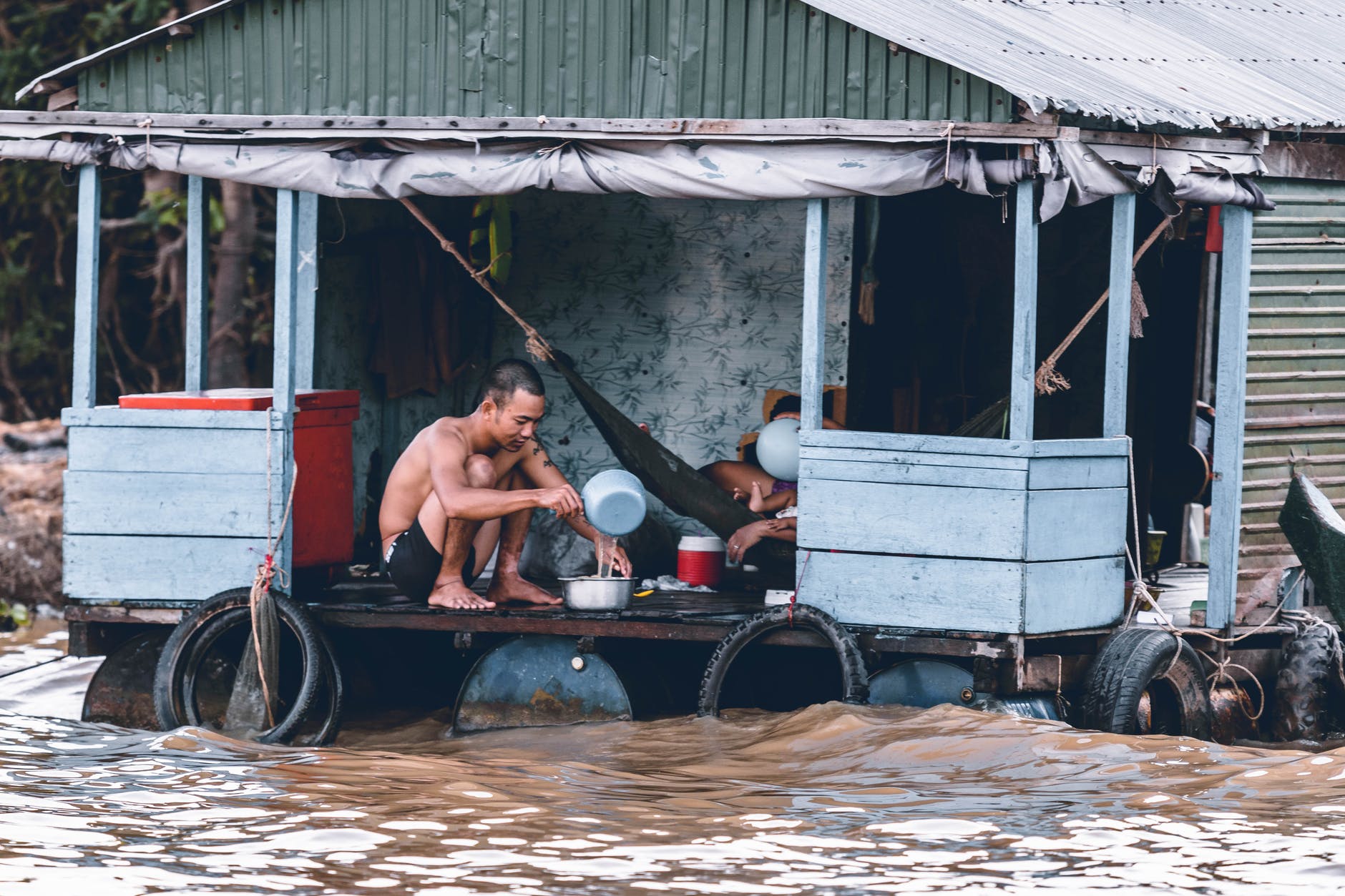
2- Flood in Jakarta- Indonesia

In Indonesia, flooding is common particularly during the rainy season of October-April, but this particular flood occurred in January and killed almost 70 people on Sulawesi Island and hundreds of people were displaced by heavy rain in West Java.

man pouring water from dipper on blue and grey house
Photo by hitesh choudhary on Pexels.com


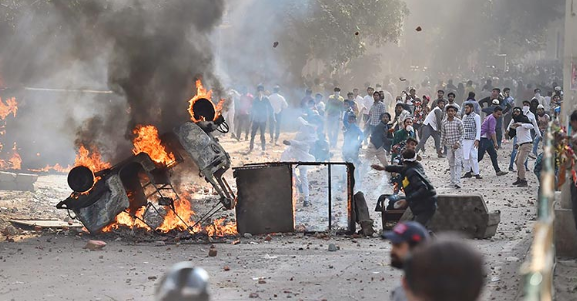
3- Riots in Delhi

Riots in Delhi was based on anti-CAA protest in which violence, property destruction and also rioting that killed 53 people, most of whom were Muslims shot, slashed with kicks and set on fire by Hindu mobs in North East Delhi.

image-75

Image source: This week

4- The Pandemic- COVID-19

This is the worst situation till date of 2020 a 2 gm virus( research says that total molecules of corona virus from all over the world would weigh 2 gm i.e. equal to a coin weigh) it almost broke the economic condition of every country in the world.

pexels-photo-4031867.jpeg
Photo by Edward Jenner on Pexels.com

5- Olympics & IPL- 2 biggest event of world brought to halt.

Due to COVID-19 outbreak 2 most popular event were called off which was very disappointing for the players as well as their supporter.


6- Brutal killing of Saints

This incident took place in Palghar were people of village mysteriously attacked the van on saints which was heading towards their senior saints funeral program. People on investigation said that they were informed that this van contain corona virus patient, it was more worse when police also joined people in this attack.

Man-Lynched

Image source: Siasat.com

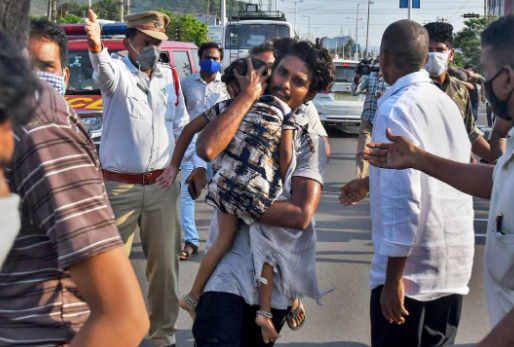
7- Gas leakage- Visakhapatnam

This was a major gas leak in LG polymers chemical plant in Visakhapatnam which killed 11 people, 800 were hospitalized and many more faced issues like headache, ill, vomiting etc.

image-4

Image source: The Hindu

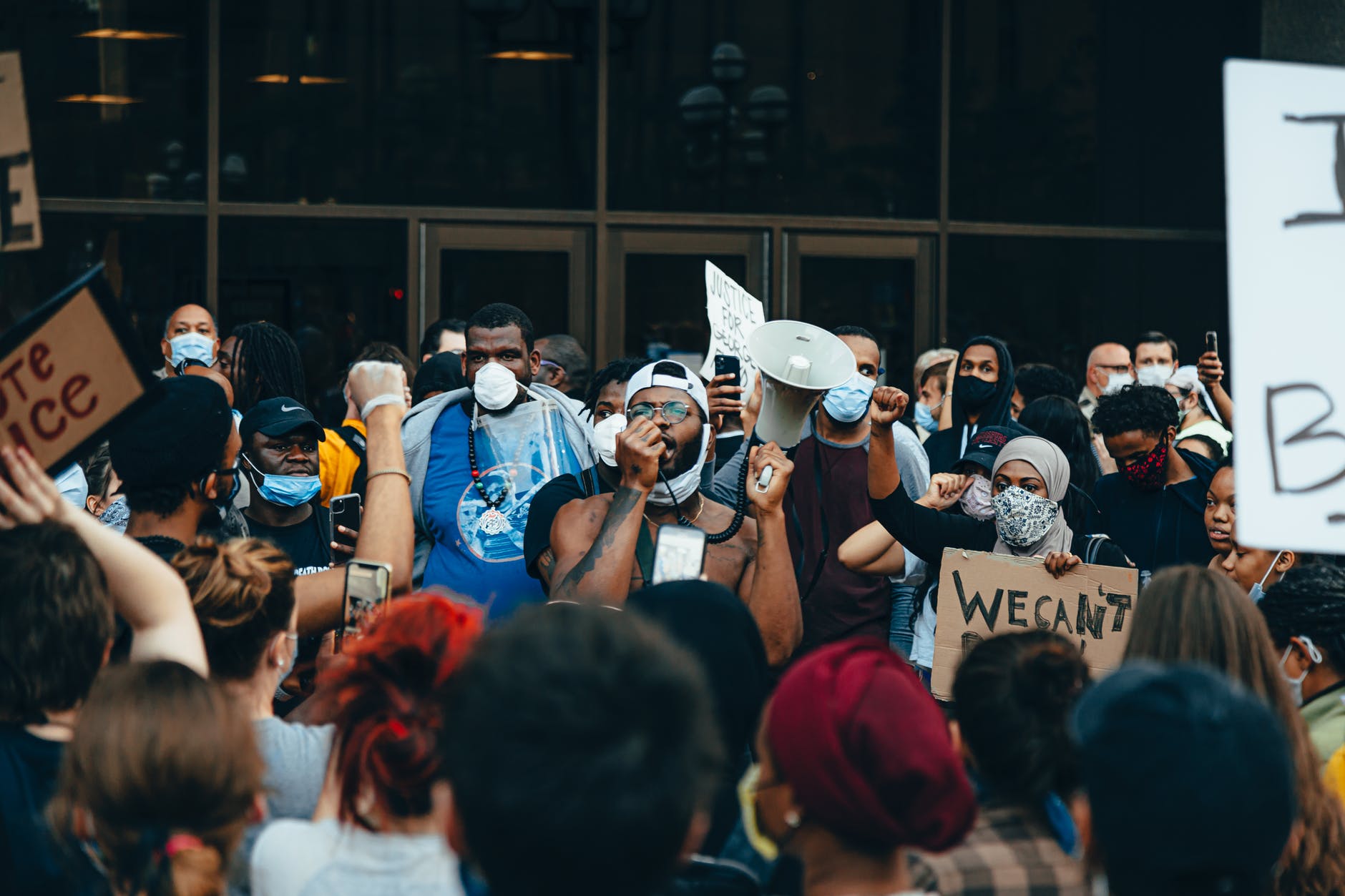
8- Justice for Blacks

The conflict raised when George Floyd, 46, died on May 25, after a video showing a white Minneapolis police officer kneeling on his neck for almost 9 minutes.

crowd of protesters holding signs
Photo by Josh Hild on Pexels.com

9- Indian cinema lost 2 gems

Bollywood lost 2 precious gems Irfan Khan an Rishi Kapoor. Actor Irfan Khan were facing problem related to Neuroendocrine tumor which became the reason for his death where as on the other hand actor Rishi Kapoor died by Leukemia.

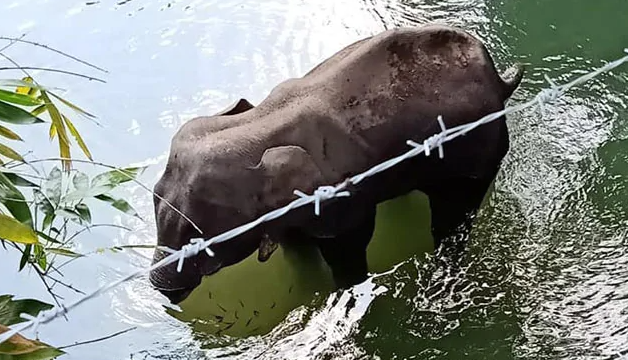
10- Brutal death of a pregnant Elephant- Kerala

This incident took place in Velliyar River in Kerela where a pregnant elephant came in search of food where local offered a pineapple loaded with fire cracker which exploded in her mouth, doctors tried to save her but unfortunately couldn’t save. Suspect was arrested by forest officials and was interrogated. This shows how cruel has mankind became over the years.

image-5

Image source: Facebook


Like, Comment and Share the post if you agree.

All you need to know about Cyberbullying ( and how to prevent it)

Cyberbullying, also known as cyberharassment, which happens using electronic means. It is also known as online bullying. It has become increasingly prevalent nowadays, especially among adolescents, as technology had advanced and the digital sphere has broadened. Cyber bullying occur on platforms like social media, chat rooms, and gaming sites where people can see and participate in sharing of content.

Cyber bullying is said to be happen, when someone bullies or harasses others on the internet and other digital spaces, usually on social media sites.

Cyber bullying behaviour involves posting threats, rumors, hateful comments on online platforms/apps, or via SMS or messaging in order to cause humiliation to other users. It includes posting, sending or sharing negative, Unpleasant or false information about an individual for causing humiliation and character assassination. It also involves posting threats, a victim’s personal information, hate speech or sexual remarks to someone on the internet.

Types of Cyber Bullying

An awareness of the different types of Cyberbullying is important. This helps parents and young adults to report cyber bullying and adopt various measures for the same. Following are some of the common types of cyber harassment:

• Trolling has become increasingly prevalent in these days and is the most common form of bullying that happens in an online community. This is done to evoke a reaction or disruption, or sometimes, even for personal amusement.

Cyberstalking is another type of bullying or harassment which involves electronic communications to stalk a victim; this may tend to be threatening to the victim.

• posting an embarrassing or unpleasant photo/video.

• faking identity online

• issuing online threats to hurt or provoke someone.

• posting hate comments or content triggering religious, racial, ethnic or political malice.

• Also Doxing, it is a practice common on the internet where personal information about an individual is reasearched and published. One finds out information from the person’s social media and other online platforms. It is then used for online defamation, harassment or other forms of cyber bullying.

Cyber Bullying in India 

Cyber bullying in India had increased prominently since availability of affordable data services and social media presence has increased. According to a research by Symantec, almost 8 out of 10 individuals are exposed to different types of internet bullying in India. Most of the victims are generally women and teenagers.

The same study categorises India as the country facing the highest cyber bullying in the Asia Pacific region, more than Australia and Japan.

Special Concerns

with the widespread presence of digital forums, social media websites, posts, comments, content shared by individual can be seen by strangers as well as acquaintances. Whatever content the individual shares online, be it personal or public, creates a kind of public record of their activities, views and behaviour. this can basically represents their personality, which may be accessible to schools, employers, college, clubs, and other institutions who may be researching an individual now or in the future. Cyberbullying can tamper the reputation of everyone involved, not just the the person being bullied but also those who are participating in the bullying. 

What can you do?

Ask for help: if you are experiencing any distress related to online bullying, reach out to someone for help. It maybe your friend, relative, colleague or someone you trust.

Use the technology to cut off the Bully: almost every social media site allows you to report or block someone. They also enable you to report inappropriate content or behaviour. 

Protect your Accounts: passwords are your private information. never share your passwords with anyone no matter who the person might be. Password protect your phone so that no one can use it for impersonation. 

Report Cyber Bullying: The Ministry of Women and Child Development launched a helpline to report cyber bullying/harassment, cyber defamation, especially for women and children as they are subject to cyberbullying the most. most institutions also have special faculty of development whom you may report to, about the bullying.

Helpline – complaint-mwcd@gov.in

Wake up, your child is going to do suicide

“If my parents understood my dreams than today I won’t be stealthy sitting on roof and writing this blog.”

So, you are a parent, if not than at one stage of life you’ll be ( but for now just read and share it with a parent). Every parent has great GREAT expectations from their offspring and sometimes that desire becomes so pressurizing that it takes the toll of the life of that little angel.

How many of you asked your child what he or she wants to become well many of you haven’t and in a rare case if you have, I am sorry to say that you didn’t took that seriously.

A child of 21st century is none less than the most busiest person on Earth, schooling, coaching, homework and much more trouble some tasks are a part of their life and after all that when they get the night time to rest, they wander in the land of dreams; the world that’s their own, they make ambitions and set goals for their life.

But do you even know the amount of grief and misery that your child feels when you say a crisp clear NO to them when they beg you to let them achieve what they want ?

Let me talk in statistics. Globally Around 65000 kids committed suicide in 2019 just because their parents didn’t allowed them to study in the field of their choice.

Just imagine the condition of a student who passed school working hard so that he could take admission in his dream college. But guess what, his CARING parents deny him that because the college is in another city . WTF, like seriously, we kids work our ass whole childhood to satisfy your marks hungry taste buds and what we get in return, a big rejection on our dreams.


As a parent your worries and thinking of well being of ur kid is justified. But you have to understand that the dreams and choice of your child also matters, afterall it’s them who would be studying and if they want to pursue a field of their choice then why deny it to them and become the reason of them going into depression or at worse, commuting suicide.


Parents, you have to understand this, your child knows his interests more than you or anyone else. Please, you just can’t put an end on their life by making them give up on their dreams.

Just go and talk to them, understand what ur child wants. Otherwise the day is not far when your child will cry silently in night and will fear to meet eye with people and will curse his very existence like I do. Please parents, wake up .


NEED OF FINANCIAL SUPPORT OF GOVERNMENT TO EDUCATION SECTOR

COVID-19 has halted all the productive sectors of economy resulting in financial imbalance. However, a unique sector that has emotions of our kids attached to it is their school, where they prepare themselves for the future. The teachers too have been forced to stay away from the school due to COVID-19 outbreak.

We have been hearing that government is providing some financial relief to certain sector. However, there is a necessity to provide some relief to the education sector too. Many educational institutes have taken loan to cater for variety of courses of instructions. The teachers of private and public educational institutes require support of the government, so that they can survive this tough phase. All the educational institutes and the staff working there needs to be supported financially for the time being.

We should ensure a respectful and dignified life for the teachers and support them to be stable and stay cheerful so that they develop the patience required to conduct the online classes for a longer period. A committee of educationist can be set up to look in to the concept of providing insurance cover against the Coronavirus to the school staff and the students. The government can include the public and private education sector in the list of sectors requiring economical support. Education sector has suffered financially and emotionally too.

A minimum financial help can be provided to all the teachers belonging to private sector on priority as it is a fact that they have not received their salaries since lock down was imposed from the month of March 2020.The plight of private school teachers has increased as these schools are totally dependent on fees from the parents.The management running the schools can support the teachers and hold their hands during this period of financial and health related crisis caused due to spread of Coronavirus.

The policies to hire and retain the teachers needs to be strengthened and redefined in the light of certain evil practices of hiring that are in vogue and have been in practiced. Such practices go unchecked specifically in the private hiring of the teachers. Hiring agencies are providing teachers to educational institutes at times overlooking all the laid down rules by the government. Though the efforts of private schools is commendable in contributing positively towards the growth of the students and in turn that of the society, certain scope of improvement in terms of treating teachers with respect exists. As a onetime special case some financial support can definitely be extended to the teachers so that they can support themselves during this uncertain lock downs due to COVID-19 spread.

A complete redefining of education sector can be done and many issues or evil practices that have intruded the system can be resolved and a new energy can be given to education sector for its revival. All the stakeholders need to accept the change for the betterment of students. The government has a greater role to play in this scenario and should come up with flexible policies for the revival of the education industry that can include granting subsidy to the educational institutes and extending some financial help to the teachers. The risk of COVID-19 is still there in the environment. We all have to treat this situation as an opportunity to learn.

Human – The Monsters

After the recent incident, where a pregnant elephant died in Kerala after a fruit filled with firecrackers burst in her mouth, triggered nation-wide outrage, a video of a pregnant cow injured in a similar fashion has been circulating on social media. In the video being shared online, one Gurdiyal Singh, a resident of Himachal Pradesh, who claims to be the owner of the injured pregnant cow, describes how the cow’s mouth had been injured after one Nandlal fed her explosives.

Owner of the preganant cow blames neighbour for the brutal act

Meanwhile, Gurdiyal Singh confirmed that Nandlal, the alleged accused, works as a mechanic in Singh’s neighbourhood. Singh said that Nandlal has no remorse for his action. Nandlal has said that he is not scared of the repercussions and that he will continue to do whatever he deems fit. “Even the village sarpanch cannot harm me”, challenged Nandlal when confronted by Singh.

The video of this brutal act was circulated soon after social media was aflutter with outrage and anger over the demise of an elephant in Kerala. Amid outrage, the district police on Thursday (June 4) constituted a special investigation team under a DSP-rank officer to probe the matter.

One suspect arrested in Kerala elephant killing case

The forest department in Kerala has arrested one suspect in the case of death of a pregnant wild elephant in Kerala. The person is being interrogated in the matter. The elephant had died after she was fed a pineapple filled with firecrackers by some villagers.

The autopsy report of the dead elephant has revealed that the crackers stuffed in the pineapple which was fed to the elephant burst in her mouth leading to severe injuries. The elephant was not able to eat anything due to the deep wounds, due to which she fell and drowned due to weakness. The elephant’s preliminary post-mortem examination was conducted at the Mannarkkad Forest Division. It revealed that the animal died as a result of drowning, followed by inhalation of water which led to lung failure. This has been identified as the immediate cause of the death of the elephant.

The investigation in the case has been moving on a faster pace and the forest department has started interrogating the suspect in custody. As per reports, three people are under suspicion of feeding the pineapple full of crackers.

Pregnant elephant dies in Kerala after cracker-filled pineapple burst in its mouth

Recently, in an act of utmost cruelty, a pregnant elephant had died after some locals fed her cracker-filled pineapple which later exploded in her mouth. The incident took place in Malappuram district of Kerala when the elephant had wandered into a village in search of food. It is being believed that some villagers stuffed pineapples filled with firecrackers on her tusks while she was walking on the streets.

From anybody who throws stones at stray dogs to anybody hurting a living soul,choose one face. A lot of these animals trust  humans because the have been helped by them in past. This is cruel beyond measure. When you lack empathy and kindness,you don’t deserve to be called a buman. To hurt someone is not human . Just stricter laws won’t help. We need a descent execution of law too.
Until the guilty are punished in the worst possible way, these wicked monsters will never fear law. Though it’s difficult, i hope they are able to find out the  one who committed this crime and  punish them  accordingly.

EVOLUTION VS CIVILIZATION

Humans are gradually developing themselves since the very beginning of the creation. They are continuously evolving. What is most important while evolving is to maintain the civilization, so that the society in which a person lives, does not get harmed or affected. Today, we have come a long way in terms of evolution but the question is, would we be able to protect the civilization?


Animal abuse by humans is not a new thing. Though cruelty to animals is a punishable offence, we, the so-called civilized humans cannot resist ourselves from tormenting those helpless and innocent creatures, just for mere entertainment. Our planet is blessed with diverse species, but because of the cruelties caused upon them some of the very beautiful species are on the verge of extinction. The humans have threatened their existence to such an extent that the Earth is no more a safe place for the animals to live. Being the strongest species in the entire eco system, humans are going beyond their limits to commit brutality on the pure and beautiful animals.


Recently, in a small village called Malappuram, in Kerala an extremely heinous crime was attempted by some of the villagers on a 15 years old pregnant elephant, who came into the village in search of food. The innocent elephant was fed a pineapple loaded with firecrackers by some of the villagers. The crackers exploded in her mouth causing severe injury to her tongue and jaws. To get some relief and to save her unborn child the elephant ran to a river nearby and stood in the water for a long time, but inspite of her brave attempts, she could not save herself and her child. These people do not deserve to be called civilized. How much regression is needed to commit such an atrocious crime to a guiltless, pure animal, is really not known. Since the humans have been thinking from a very long time now that they are the superior species amongst all, so, they can do anything they want and most of the times they even do not get punished for these mischievous acts. Being the superior creature, humans should be venerated for what facilities they have got. Instead, some of them are acting as demons by misusing those advantages and heading towards destruction.


Though it is not proved yet, if anyone deliberately fed the crackers stuffed pineapple to the pregnant elephant, they are still at fault. Even if the pineapple was lying on the road and the elephant ate it accidentally, how could anyone keep fruits stuffed with firecrackers on the roads knowing that animals can eat them? Human behavior will always remain an enigma. Elephants are the most expressive animals. There are conjectures that elephants’ mind react to humans the same way humans’ mind reacts to puppies. If the humans do not cause discomfort to them or torment them, they do not harm anyone. The innocent elephant trusted humankind and delightfully ate the food she got at the vicinity. As a result, she got deceived. Even in writhing pain, while running towards the river, she did not harm a single human. She knew the value of lives more than any human out there. May be because, she herself was creating a life inside her.


What happened with the innocent and voiceless elephant in Kerala, was really shameful as well as reprehensible. Yet the enlightened humans across the world are politicizing this incident and also quoting Kerala’s literacy rate since it has the highest literacy rate in India. What they have forgotten is literacy rate has nothing to do with animal maltreatment. Humanistic values do not come entirely from formal education. Humanity and literacy do not go in hand in hand. Many illiterate people may have more humanistic values than some highly educated people. More than being empathetic to the poor animal, some so-called educated people of our society are showing their hypocrisy by targeting and taunting Kerala for its highest literacy rate.


These incidents point out how we are evolving. From throwing stones or water to the stray dogs to feeding fruits loaded with explosives to a pregnant elephant, humans have shown how they have retained their civilization. May be, the animals have not evolved much, that is why corruption could not enter into their world. The speechless, innocent animals are already suffering a lot for the humans’ unending experiments and adventures. Our planet is as much theirs’ as ours’. Together we have to make the Earth a safe place for the animals to live on. Only then we will be able to evolve with the civilization in right means.

Order Convening General Court Martial Can Be Challenged Before AFT: SC

 In an interesting and significant development, the Supreme Court in Union Of India & Ors. Vs. P.S. Gill in Criminal Appeal No. 404 of 2013 decided on November 27, 2019 has held clearly and convincingly that an order convening a General Court Martial (GCM) can be challenged before an Armed Forces Tribunal (AFT). While differing with an order of the AFT, the Union of India had approached the top court claiming that an order by which the GCM was convened cannot be the subject matter of an appeal before the Tribunal. It was also contended that the jurisdiction of the Tribunal is only for adjudication of complaints and disputes regarding service matters and appeals arising out of the verdicts of the Court Martial.  But it got no relief on this and the top court made the picture clear by holding clearly and convincingly what has been stated above. It merits no reiteration that this should now certainly put to rest all speculations on this important topic.

                                       To start with, the ball is set rolling in para 1 of this noteworthy judgment authored by Justice L Nageswara Rao for himself and Justice Hemant Gupta wherein it is observed that, “The Union of India is in Appeal against the judgment of the Armed Forces Tribunal, Principal Bench, New Delhi (hereinafter, ‘the Tribunal’) quashing the order dated 23.02.2010 by which General Court Martial was convened against the Respondent.”

                                To recapitulate, it is then pointed out in para 2 that, “In the year 2005, the Chief of the Army Staff directed an investigation by the Court of Inquiry into the allegations pertaining to irregularities in procurement of ration, as a result of which the quality of supplies for the troops was compromised. A Court of Inquiry was convened on 10.10.2005 by the General Officer Commanding-in-Chief (GOC-in-C) Western Command to identify the Army personnel responsible for the aforementioned irregularities. Twenty-three witnesses were examined by the Court of Inquiry. The Court of Inquiry identified Twelve Army personnel who were prima facie responsible for the said improprieties. The Respondent who was working as the Chief Director of Purchase (CDP), Army Purchase Organisation, Ministry of Defence was one out of the twelve persons against whom a prima facie case was found. Disciplinary action was also initiated against the Respondent by the GOC-in-C, Western Command on 14.06.2006 which was challenged by the Respondent by filing a Writ Petition in the High Court of Delhi. By an order dated 11.01.2007, the High Court quashed the Court of Inquiry on the ground that Rule 180 of the Army Rules, 1954 (hereinafter, ‘the Army Rules’) was violated. However, an option was given to the Appellants to either hold a fresh Court of Inquiry after complying with Rule 180 of the Army Rules or to proceed directly under Rule 22 by hearing the charge without relying on the Court of Inquiry. The Court of Inquiry was re-constituted pursuant to the option given by the High Court. Later, the Appellants sought a modification of the order dated 29.07.2008 and informed the High Court that proceedings would be initiated under Rule 22 of the Army Rules since most of the officers involved had already retired and that it would be difficult to re-constitute a Court of Inquiry. The High Court permitted the Appellants to proceed under Rule 22 with the condition that no reliance can be placed on the old Court of Inquiry. The order of the Chief of the Army Staff by which cognizance was taken of the offences and the attachment order issued on 26.09.2008 were the subject matter of another Writ Petition filed by the Respondent in the High Court of Delhi which was dismissed on 03.10.2008.”      

                                   While elaborating further, it is then enumerated in para 3 stating that, “A hearing of the charge under Rule 22 against the Respondent was convened on 08.12.2008 and recording of summary of evidence under Rule 23 of the Army Rules was ordered against the Respondent on 24.12.2008. The Commanding Officer of the Respondent i.e. General Officer Commanding (GOC), 15 Infantry Division found that no offence was prima facie made out against the Respondent. The said view was approved by the GOC, 15 Corps on 28.04.2009. In the meanwhile, the Respondent retired on attaining the age of superannuation on 31.05.2009. However, Section 123 of the Army Act, 1950 was invoked by the Appellants to continue the proceedings against the Respondent. The GOC-in-C, Western Command examined the matter and the recommendations made by the GOC, 15 Infantry Division and GOC, 15 Corps and arrived at a conclusion that a prima facie case was made out against the Respondent. An attempt was made by the Respondent to challenge the findings of the GOC-in-C, Western Command, but in vain. The General Court Martial was convened by a letter dated 23.02.2010. The Respondent filed O.A. No. 147 of 2010, assailing the validity of the order convening the General Court Martial. He also sought for quashing the proceedings of the Court of Inquiry, summary of evidence and the conclusion of the GOC-in-C, Western Command holding him prima facie guilty. He further questioned the invocation of Section 123 of the Army Act against him to continue the proceedings even after his retirement. He also sought promotion to the rank of Major General along with his batchmates.”

                                         As it turned out, para 4 then holds that, “The Tribunal held that a prima facie case to proceed against the Respondent by a General Court Martial was not made out. The Tribunal was of the opinion that even if the entirety of evidence of the prosecution is taken to be true, no offence was made out against the Respondent. The Appellants made an attempt to obtain leave to Appeal under Section 31 of the Armed Forces Tribunal Act, 2007 (hereinafter, ‘the Act’) to approach this Court, which was not entertained. Aggrieved by the judgment of the Tribunal, the above Appeal is filed.”

                                   Be it noted, para 13 points out that, “At the outset, it is relevant to note that the O.A. was filed both under Sections 14 and 15 of the Act. Section 15 confers jurisdiction and power on the Tribunal to entertain appeal against any order, decision, finding or sentence passed by a Court Martial.”

                                   To put things in perspective, it is then pointed in para 14 that, “Section 15 (2) of the Act provides for an appeal which can be filed by the person aggrieved by an order, decision, finding or sentence passed by a Court Martial. The order challenged in the OA in this case is a proceeding by which the General Court Martial was convened. As there was no order, decision, finding or sentence by the Court Martial, an appeal under Section 15 per se is not maintainable.”

                                          While explaining the purpose of Section 14, it is then made clear in para 15 that, “Section 14 enables a person aggrieved to make an application to the Tribunal in any service matter. ‘Service matters’ are defined in Section 3 (o) to mean all matters relating to the conditions of their service, which shall include termination of service, inter alia. There are some matters which are excluded from the purview of the definition of ‘service matters’. There is no dispute in this case that the said exclusions do not come into play.”

                                      Of course, it is then also made clear in para 16 that, “Any matter relating to the conditions of service falls within the definition of ‘service matters’ under Section 3 (o) of the Act and can be the subject matter of an application filed before the Tribunal. ‘Conditions of service’ mean those conditions which regulate the holding of a post by any person right from the time of his appointment till his retirement and even after his retirement including pension etc. Therefore, conditions of service also include dismissal from service [State of Maharashtra v. Marwanjee Desai, (2002) 2 SCC 318].”

                                        To put it succinctly, the foregoing discussion leads the Bench to hold in para 18 that, “It is clear from the above that any proceeding which leads to an order of termination would fall within the expression ‘relating to conditions of service’. In any event, the proceedings initiated against the Respondent cannot be said to be not related to his service. A final order to be passed by the General Court Martial, apart from the imposition of other penalties, might have led to the termination of the service of the Respondent.”

                                      More importantly, the Bench then very rightly holds in para 19 that, “We have no doubt in our mind that Section 14 of the Act which confers jurisdiction over service matters of the Army personnel should receive wide construction. This Court had held that an interpretation which confers jurisdiction should be preferred over an interpretation which takes away jurisdiction. [Mantri Techozone v. Forward Foundation, 2019 SCC Online SC 322 (3JB).”

                                 Most importantly, it is then observed in para 20 that, “We are also conscious that the object with which the Act was made is to provide adjudication of complaints and disputes regarding service matters and not only appeals against the verdicts of the Court Martial. It is trite law that statement of objects and reasons can be used as a tool for interpretation. [S.S. Bola v. B.D. Sharma (1997) 2 SCC 522, State of Maharashtra v. Marwanjee F. Desai, (2002) 2 SCC 318]. The sequitur of the above discussion is that the impugned judgment of the Tribunal does not suffer from lack of jurisdiction.”

                                   Going ahead, it is then held in para 21 that, “Regarding the charges sought to be framed against the Respondent, we do not find any error in the approach of the Tribunal. The material on record was perused by the Tribunal to come to a conclusion that no prima facie case is made out against the Respondent. We do not see any reason to interfere with the said findings.” Finally, it is then held in the last para 22 that, “Accordingly, the Appeal is dismissed.”

                                      To summarise, we see that the Apex Court Bench in this latest, landmark and extremely laudable judgment very rightly upholds the AFT order. It has been very rightly held that an order convening a GCM can be challenged before an AFT. It was also rightly submitted by Mr K Ramesh that jurisdiction of the Tribunal cannot be curtailed on pedantic grounds and the order by which General Court Martial was convened was rightly set aside by the Tribunal. No wonder that the Apex Court Bench comprising of Justice L Nageswara Rao and Justice Hemant Gupta very rightly upheld the bona fide submission of the learned counsel Mr K Ramesh and emphatically ruled in his client’s favour while rejecting the submissions made by Ms. Diksha Rai who was the learned counsel appearing for the Appellant who contended that the judgment of the Tribunal is vitiated due to a jurisdictional error! There can be no denying or disputing it!    

Sanjeev Sirohi, Advocate,

s/o Col BPS Sirohi,

A 82, Defence Enclave,

Sardhana Road, Kankerkhera,

Meerut – 250001, Uttar Pradesh.