The State Executive

Our Constitution provides for a federal Government, having separate systems for administration, the Union, and the States. The Constitution comprises provisions for the governance of both. It provides a uniform structure for the state Government, in Part VI of the Constitution, which applies to all the states including the erstwhile State of Jammu and Kashmir.

The Governor:- At the head of the executive of a State stands the Governor. The executive powers of the state are vested in the Governor. Generally, there shall be a Governor for every state, but an amendment of 1956 makes it possible for the appointment of some person as the Governor for two or more States[Article 153].

Appointment and term of Office of the Governor:- The Governor of a State is not elected but is appointed by the President and holds his office at the pleasure of the President. Any citizen of India who has completed the age of 35 years is eligible for the office, but he must not hold any other office of profit, and should not be a member of the Legislature of the Union of any State [Article 158]. There is no bar for the selection of a Governor amongst the members of a Legislature, but if a Member of any Legislature is appointed as Governor, he should cease the position of member immediately after such appointment.

The normal term of a Governor’s Office shall be five years, but he can be terminated for the following reasons—

(i) Dismissal by the President, at whose pleasure he holds office [Article 158].

(ii) Resignation [Article156 (2)].

The President’s power can be used only in cases of gross delinquency, such as bribery, corruption, reason, and violation of any provision of the Constitution. There is no bar to a person begin appointed as Governor more than once.

Powers of the Governor:- The Governor has no diplomatic or military powers like the President, but he possesses executive, legislative, and judicial powers similar to those of the President.

(1) Executive Powers– The Governor has the power to appoint his Council of Ministers, the Advocate General, and the members of the State Public Service Commission and holds office during his pleasure. But the members of the State Public Service Commission cannot be removed by him [Article 317]. The Governor has no power to appoint the Judges of High Court he is entitled to consult the President in the matter [Article 217(1)]. He can also nominate 1/6th part of the total members of the Legislative Council.

(2) Legislative Power:- The Governor has a right to addressing and sending messages and summoning, prorogue, and dissolving, in association with the State Legislature, just like the President.

(3) Judicial Powers- The Governor has the power to grant pardon, reprieve, respite, or remission of punishment or to suspend, remit, or commute the sentence of any person convicted of any offense against any law relating to a matter to which executive power of the State extends [Article 161]. The Chief Justice and the Judges of the High Court of the State are appointed with the consultation of the Governor by the President.

(4) Emergency Powers- The Governor has no Emergency powers to perform.

Rules of Happiness

Be silent in the heat of Anger.

As we all do, In anger we never think twice before saying anything and this is the main reason behind the poor relationship. We cause harm to both others and us both.

Avoid caring what people think.

Before doing anything we always think to much about others think if I do that. And this leads to unhappiness and doubt on ourselves.

Don’t waste time in explanation.

There is no need to explain yourself always. Sometimes we have to believe on our own capabilities and prove others that what I did is right decision for me.Time reveals Everything.

Privacy is Everything.

Never tell everyone, everything. Everyone is not happy with your success. Don’t reveal your path to anyone before you achieve something.

Don’t screw your present, thinking of past.

Start working for your success now. Past has gone it never come back but why we waste our present and future by thinking of past. We design our future by make use of present.You are responsible for everything that you do. So start working for your future.

Stop overthinking, Sometimes it’s okay to not know answers.

We just ruin our life by overthinking. What we overthink is never going to happen. So just relax and enjoy your life without thinking anything.

It’s okay to not be okay.

Everyone’s mental state is not same. And sometimes It’s okay to feel low. It’s okay to be sad. We just have to believe on ourselves. And do what we want. Its okay, everything will be alright soon…

Don’t compare own life with others.

Everyone is different. And if we compare ourselves with other then we just ignore our own capabilities. So believe in yourself,your capabilities.

Don’t let others to disrupt your inner peace.

Sometimes, some people come in our life just to pull us down. But we have to focus on our goals. If we disrupt our inner peace then they will succeed in their intentions. We have to focus more whenever we meet any problems in between our goals.

We are always unattractive in the eyes of society.

No matter what we do, society will never going to appreciate us. So don’t worry about the society and do whatever you want. We always worry about “Chaar log” but no one ever saw them.

Take a charge of your own happiness, we are only responsible for ours not others.

HOW DID K-POP AND K-DRAMA BECOME SO POPULAR ?

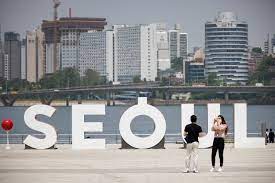
Prior to going to that point we should concentrate some set of experiences about South Korea also called Republic of Korea. South Korea got it autonomy on 15 August 1947 same as India. However, why it grew so quick that now it is considered as evolved country. At the point when South Korea got it’s freedom around then it was extremely poor. The food that U.S.A used to supply was just sustenance around then for individuals. Pushing forward, in the year 1997 South Korea was confronting major financial emergency. It was such a lot of that individuals didn’t have anything to eat, they were losing their employment and were neglecting to accomplish considerably pitiful assets. Around then Korean government took a credit of 58 billion dollar from I.M.F which should be paid off by 24 August 2001. So without with nothing to do the entire nation comes right into it. They began giving their gold, cash to the public authority.

K-Drama Couples - Free Instagram Stories Template by @itsmariaalyssa |  Korean drama list, Korean drama tv, Kdrama

SETTING UP THE K-POP INDUSTRY

Yet at the same time in the wake of doing that much they had the option to gather just 8 billion dollar actually left with 50 billion dollars. To take care of the remainder of the cash, they set up Korean inventive substance agency(KOCCA)which objective was to put Korean melody on the map in other nation to bring in cash. They got going by playing a Korean show in a Hong Kong’s T.V station free of charge. This didn’t give cash however offered a brief look at Korean culture in western market which as a trade off benefits them. They before long passed a law in which they will give 1% of state financial plan in culture. Three major organizations accepted the open door and they made the Korean Music Industry.

12 Times K-Pop Groups Made History In The Last Decade | Soompi

Korean music doesn’t have any one performer, it comprises of numerous individuals actually like BTS has 7 individuals. To interface with more western crowd they keep their gathering name in English and they additionally have some English verses in their tunes. These gathering individuals are prepared for quite a long time in singing, rapping and dancing. They buckle down since youthful age to turn into a part in a K-Pop group. However, online media likewise assumed a significant part in accomplishment of K-Pop and K-Drama. Gangnam style was the primary Korean music to contact the worldwide crowd. It was the first run through when individuals paid attention to Korean music however bunches like BTS, BLACKPINK and EXO have mainstreamed it. Till now BTS has added 3.6 billion dollar to Korean economy. BTS has additionally started a mission with UNICEF called Love Myself mission and they likewise gave 1 million dollars to BLACK LIVES MATTER.

BTS are encouraging the world to #SpeakYourself in their UN speech

Isn’t it’s extraordinary that the music business which was framed to take care of the obligation turned into the greatest music industry on the planet. This is the primary driver of South Korea’s turn of events.

RESOURCES:

Gender Roles In The Indian Society .

The family is a significant foundation that assumes a focal part in the existences of most Indians. As a collectivistic culture, Indians frequently accentuate unwaveringness and association. The interests of the family normally take need over those of the individual, and choices influencing one’s very own life –, for example, marriage and profession ways – are by and large made in discussion with one’s family. Individuals will in general demonstration to the greatest advantage of their family’s standing, as the demonstration of an individual might affect the impression of the whole family by their local area.

Albeit most relatives are inside topographical nearness or part of the equivalent word related gatherings, the development of urbanization and relocation has seen more youthful ages testing these impression of family. Today, numerous individuals have broad family networks that are spread across a wide range of locales and hold various occupations. The connections an Indian individual keeps up with their more distant family abroad are regularly a lot nearer than those of a great many people in English-speaking Western social orders. Indians living abroad likewise keep up with close associations with their family staying in India through standard calls, sending settlements or visiting if conditions permit.

Family Structure

The idea of family stretches out past the normal atomic unit to include the more extensive family circle. These huge multigenerational families can likewise be fundamental to giving financial security to a person. They regularly give a wellspring of work in a family agrarian business or lead to promising circumstances in urban areas where connection ties and outsider presentations are critical for employment.

Individuals might be urged to have associations with their aunties and uncles that are similarly just about as solid as parental connections. In numerous pieces of India, it is entirely expected to discover three or four ages living respectively. The dad (or oldest child, if the dad is absent) is normally the patriarch while his better half might manage any girls or girls in-law that have moved into the family. More distant families will in general concede to the older and notice a reasonable pecking order among relatives. In more metropolitan regions, individuals will generally live in more modest family units yet keep up with solid connections to their more distant family.

Sexual orientation Roles

The disparity between the situation with men and women is very articulated in India. There are fluctuating traditions encompassing a training known as ‘pardah’ that requires the disengagement of women in specific circumstances. It is rehearsed generally in northern India and among traditionalist Hindu or Muslim families. As per pardah, females are by and large expected to leave the homegrown domain just when hidden and joined by a man. Subtleties in the custom fluctuate between identities, religions and social foundations. For instance, hitched Hindu women specifically parts of northern India might wear a ‘ghoonghat’ (a particular sort of shroud or headscarf) within the sight of more seasoned male family members on their significant other’s side.

How much sexual orientation imbalances endure is going through persistent change. For instance, a sibling and sister in India are presently liable to get equivalent tutoring and treatment in the instructive framework. Albeit still limited by many obliging cultural assumptions, instructed women in the public arena are turning out to be more engaged through employment openings and political portrayal. There are likewise governmental policy regarding minorities in society programs for women to assist with tending to underlying disparities.

Connections and Marriage

Organized relationships are normal all through India, however assumptions and practices of conjugal arrangements fluctuate contingent upon the district and religion. Relationships are commonly organized through a go between, two or three’s folks or some other confided in outsider. Dissimilar to in the past where people would not be educated about their future accomplice, it is presently more normal for the family to counsel the couple for assent before the wedding.

Organized relationships are almost consistently impacted by station contemplations. Along these lines, endogamous relationships stay a typical practice (restricted to individuals from a similar standing or, sometimes, religion). This is to some degree since organizing relationships is a family action that is helped out through prior organizations of a more extensive local area. Despite the fact that individuals will wed inside a similar rank, families keep away from marriage inside the equivalent subcaste. The establishments of masterminded marriage and position endogamy empower guardians to impact the fates of their children just as support the neighborhood and social design. Intercaste relationships are rarely orchestrated. Such relationships are known as ‘affection relationships’ and are turning out to be more normal. Notwithstanding how one discovers a companion, the family is almost consistently counseled in the marriage cycle.

Generally, weddings are directed in the towns of the families, whether or not the family dwells in their town or in a significant city. To be sure, it isn’t unexpected for families to keep their town home with the end goal of weddings or other significant family occasions. Weddings might length over various days and explicit practices change contingent upon the locale and the religion of the families.

The Transgender Rights.

Transsexual individuals come from varying backgrounds, and HRC Foundation has assessed that there are multiple million of us across the United States. We are guardians, kin, and children. We are your collaborators, your neighbors, and your companions. We are 7-year-old children and 70-year-old grandparents. We are a different local area, addressing all racial and ethnic foundations, just as all confidence customs.

“Transsexual” – or trans – is an umbrella term for individuals whose sexual orientation character is not quite the same as the sex allocated to us upon entering the world. Albeit “transsexual” and our cutting edge meaning of it just came into utilization in the late twentieth century, individuals who might fit under this definition have existed in each culture all through written history.

Close by the expanded perceivability of trans big names like Laverne Cox, Jazz Jennings or the stars of the hit Netflix series “Posture,” three out of each ten grown-ups in the U.S. actually knows somebody who is trans. As trans individuals become more noticeable, we mean to expand comprehension of our local area among our companions, families, and society.

What’s the significance here to be trans?

The trans local area is staggeringly different. Some trans individuals distinguish as trans men or trans women, while others might depict themselves as non-twofold, genderqueer, sexual orientation non-adjusting, agender, bigender or different characters that mirror their own insight. A few of us take chemicals or have a medical procedure as a feature of our progress, while others might change our pronouns or appearance. About 3/4 of trans youth that reacted to a HRC Foundation and University of Connecticut overview related to terms other than stringently “kid” or “young lady.” This recommends that a bigger segment of this present age’s childhood are recognizing some place on the expansive trans range.

What difficulties do trans individuals confront?

While trans individuals are progressively apparent in both mainstream society and in every day life, we actually face serious segregation, shame and fundamental imbalance. A portion of the particular issues confronting the trans local area are:

Absence of lawful assurance Trans individuals face a general set of laws that regularly doesn’t shield us from separation dependent on our sexual orientation character. Regardless of a new U.S. High Court Decision that clarifies that trans individuals are lawfully shielded from segregation in the working environment, there is still no complete government non-separation law that incorporates sex character – which implies trans individuals might in any case need response on the off chance that we face separation when we’re looking for lodging or eating in an eatery. Besides, state assemblies the nation over are discussing – and sometimes passing – enactment explicitly intended to deny trans individuals from getting to public restrooms that compare with our sexual orientation personality, or making exclusions dependent on strict convictions that would permit oppression LGBTQ individuals.

Destitution Trans individuals live in neediness at raised rates, and for trans minorities, these rates are much higher. Around 29% of trans grown-ups live in destitution, also 39% of Black trans grown-ups, 48% of Latinx trans grown-ups and 35% of Alaska Native, Asian, Native Americans and Native Hawaiian or Pacific Islander trans grown-ups.

Shame, Harassment and Discrimination – About a large portion of 10 years prior, just one-fourth of individuals in the United States upheld trans rights, and backing expanded to 62% continuously 2019. Regardless of this advancement, the trans local area actually faces extensive shame due to over a hundred years of being described as mentally sick, socially degenerate and physically savage. While these bigoted perspectives have blurred lately for lesbians and gay men, trans individuals are regularly still criticized by a general public that doesn’t get us. This disgrace works out in an assortment of settings – from administrators who influence hostile to trans shame to score modest political focuses; to family, companions or associates who reject trans individuals after finding out about our trans characters; and to individuals who pester, menace and submit genuine brutality against trans individuals. This incorporates disgrace that keeps them from getting to fundamental administrations for their endurance and prosperity. Just 30% of women’s havens will house trans women. While ongoing lawful advancement has been made, 27% of trans individuals have been terminated, not recruited or denied an advancement because of their trans personality. Time after time, harassment has driven trans individuals to try not to practice their most essential rights to cast a ballot. HRC Foundation’s exploration shows that 49% of trans grown-ups, and 55% of trans grown-ups of shading said they couldn’t cast a ballot in something like one political decision in their life due to dread of or encountering separation at the surveys.

Savagery Against Trans People–Trans individuals experience viciousness at rates far more noteworthy than the normal individual. More than a larger part (54%) of trans individuals have encountered some type of cozy accomplice brutality, 47% have been physically attacked in the course of their life and almost one of every ten were actually attacked in the middle 2014 and 2015. This sort of viciousness can be lethal. No less than 27 trans and sexual orientation non-adjusting individuals have been viciously killed in 2020 hitherto, similar number of fatalities saw in 2019.

A TREATMENT TO YOUR HEART

We all have pain and happiness in our life. But Don’t lock yourself in a room thinking that life will take us in harsh places only . Believe that there is a lot of wonderful moments to see in your life too . The following are the important words that is to be remembered .

  1. You are worthable to live an incredible life .. You are special there is no one like you. You are worthable for doing something great and creditable.Think this quote always when you feel stressed.
  2. Do see around …There are people who can’t able to study and they are living in streets.God has given us the basic necessities like home, family , friends etc..this itself a major blessings. Don’t desire much . Accept the life offers to you and be happy. Maybe someone out there in this world are desperately wishing to live your life.
  3. Do use your blessings to help the people those who are in streets. Don’t be selfish . Always remember that doing for your self dies with you. Doing for someone will be remembered through ages eg.mother terasa.
  4. Praise others . It will make better about your self . Thinking good things and doing good things will heal and gives life your heart .
  5. Be mature. Every one and Every thing is temporary ( money, age, friends etc…)Sooner or later it will go one day. Accept this reality.Even us are temporary. So avoid being jealous, doing bad things,hurting others etc..as it will destroys heart liveliness and makes it unworthy of it working inside you.
  6. Make your thinking appropriate and logical. “Everyone in this world are fake” actually it’s a lie. Is your mom and dad love fake ?? . Are you fake ?? No right !!!! they why you are running around saying that everyone is fake. The truth is that this thought of yours is fake . You have an evidence that good and true people exists within your family circle itself .
  7. Always trust your energy and feelings. Sometimes we will know that this person is fake . Immediately withdraw that person from your Life. But after that don’t make up your mind that everyone is like that only. Believe that true persons also there. As I said not all are evil .

Gender Inequality in Education.

In the current presence, there have been plan of measures and projects that equivalent rights and openings ought to be made accessible to the young ladies. Previously, people had this perspective that male individuals from the family ought to be instructed. When the guys would gain schooling, they would deliver a huge commitment in advancing generosity and prosperity of their families through attainment of employment openings. However, in the current presence, in metropolitan just as in provincial networks, people and networks have achieved changes in their perspectives and viewpoints and are empowering young ladies also towards securing of training. Young ladies and women too can deliver a viable commitment in advancing government assistance of their families and networks. At the point when they acquire support from their folks, then, at that point they can achieve great quality training. Variables Causing Gender Inequality in EducationThere are presence of numerous and different associations between sexual orientation correspondence and fulfillment of the fundamental right to schooling. The women and young ladies are encountering refusal of common freedom to instruction in India, yet in different nations of the world also (Gender Discrimination in Education, 2012). The elements causing sex disparity in instruction have been expressed as follows: Conditions of Poverty When people are dwelling in the states of neediness, then, at that point they experience number of issues and difficulties in making a decent living. Now and again, they even experience issues in gathering their every day healthful requirements. The people and families, who are dwelling in the states of destitution have the essential goal of creating adequate pay to support their everyday environments agreeably. They generally don’t have monetary assets to meet the costs, engaged with the compatibility of training. In any event, when schooling is given liberated from cost, they actually need to meet different costs, involvedin instruction. These are, fixed things, books, sacks, outfits, transportation costs, etc. The destitution stricken people experience issues in gathering these costs. The destitution stricken people have this perspective that procurement of training is of most extreme importance in supporting one’s day to day environments. Consequently, they seek to get their

children joined up with schools. They have this perspective that instruction ought to be given to the children, so they can get occupied with great employment openings in future. Though, young ladies are prepared as far as execution of family duties and minor tasks to procure some pay to help their families. For example, when guardians are occupied with creation of things, then, at that point they empower their children, both young men and young ladies to help them underway and deals. The young men are needed to land occupied with this position after school hours. The young ladies are normally deterred from securing of instruction, because of restricted monetary resources.Their male kin show them, what they have realized in schools, principally to improve their essential proficiency abilities of perusing, composing and numeracy. Commonness of Traditional Viewpoints The people and networks generally had customary perspectives with respect to the schooling of young ladies. Especially, when they had restricted monetary assets, then, at that point theybelieved that these assets ought to be put something aside for marriage of their young ladies and ought not be spent on training. Another perspective was that in conjugal homes, young ladies would not have the option to use their instructive abilities and would fundamentally need to implement the family obligations. Thinking about this angle, from the underlying stage, they train their young ladies in regards to the implementation of family obligations. In the past period, young ladies and women were only kept to their homes and not permitted to take an interest in any friendly capacities or occasions. They were not permitted to communicate their perspectives and viewpoints in the dynamic issue. They basically supported their day to day environments on the pay procured by men and were intended to comply with the choices and rules detailed by them. Henceforth, because of the predominance of customary perspectives, they were oppressed and were denied of specific rights and openings. The procurement of training of young ladies, is generally influenced by conventional practices related with youthfulness. In some rustic networks, pervasiveness of certain customary practices end up being obstacles inside the course of obtaining of training with respect to the young ladies (Linda, 2014). Because of the pervasiveness of customary perspectives and viewpoints, girlsare denied from obtaining of instruction, yet in addition in accomplishing self-freedom. All in all, these are boundaries inside the course of attainment of empowerment openings. Accordingly, for achieving empowerment openings among women and young ladies, it is important to achieve changes in customary perspectives and offer equivalent rights and chances to women and young ladies.

Article 21 of Constitution of India: Protection of Life and Personal Liberty

‘Everybody has the option to life, freedom and the security of individual.’ The right to life is without a doubt the most fundamental, all things considered. Any remaining rights add quality to the life being referred to and rely upon the pre-presence of life itself for their activity. As basic freedoms can just append to living creatures, one may anticipate that the right should life itself to be in some sense essential, since none of different rights would have any worth or utility without it. There would have been no Fundamental Rights worth focusing on if Article 21 had been deciphered in its unique sense. This Section will inspect the right to life as deciphered and applied by the Supreme Court of India.

Article 21 of the Constitution of India, 1950 gives that, “No individual will be denied of his life or individual freedom besides as indicated by strategy set up by law.” ‘Life’ in Article 21 of the Constitution isn’t just the actual demonstration of relaxing. It doesn’t hint simple creature presence or proceeded with drudgery through life. It has a lot more extensive significance which incorporates right to live with human respect, right to work, right to wellbeing, right to contamination free air, and so forth

Right to life is fundamental to our very presence without which we can’t live as an individual and incorporates every one of those parts of life, which go to make a man’s life significant, complete, and worth living. It is the lone article in the Constitution that has gotten the most stretched out conceivable translation. Under the covering of Article 21, so numerous rights have discovered asylum, development, and nourishment. In this manner, the minimum essentials, least and fundamental requirements that are fundamental and unavoidable for an individual is the center idea of the right to life.

On account of Kharak Singh v. Province of Uttar Pradesh[i], the Supreme Court cited and held that:

By the expression “life” as here utilized something more is implied than simple creature presence. The hindrance against its hardship reaches out to every one of those appendages and resources by which life is appreciated. The arrangement similarly restricts the mutilation of the body by removal of a shielded leg or the pulling out of an eye, or the annihilation of some other organ of the body through which the spirit speaks with the external world.

In Sunil Batra v. Delhi Administration[ii], the Supreme Court repeated with the endorsement the above perceptions and held that the “right to life” incorporated the option to have a solid existence in order to partake in all resources of the human body thriving conditions. It would even incorporate the right to security of an individual’s practice, culture, legacy and all that offers importance to a man’s life. It incorporates the right to live in harmony, to rest in harmony and the option to rest and wellbeing.

Right To Live With Human Dignity

In Maneka Gandhi v. Association of India[iii], the Supreme Court gave another dimension to Art. 21 and held that the option to live isn’t simply an actual right yet incorporates inside its ambit the right to live with human pride. Elaborating a similar view, the Court in Francis Coralie v. Association Territory of Delhi[iv], saw that:

“The option to live incorporates the right to live with human poise and all that accompanies it, viz., the minimum essentials of life like satisfactory nourishment, dress and asylum over the head and offices for understanding composition and communicating one’s thoughts in assorted structures, uninhibitedly moving about and blending and blending with individual people and should incorporate the right to fundamental necessities the fundamental necessities of life and furthermore the option to continue capacities and exercises as establish the absolute minimum articulation of human self.”

Another expansive definition of the subject of life to nobility is to be found in Bandhua Mukti Morcha v. Association of India[v]. Describing Art. 21 as the core of fundamental rights, the Court gave it an extended understanding. Bhagwati J. noticed:

“It is the fundamental right of everybody in this nation… to live with human poise liberated from misuse. This right to live with human nobility cherished in Article 21 gets its life breath from the Directive Principles of State Policy and especially provisions (e) and (f) of Article 39 and Articles 41 and 42 and in any event, consequently, it should incorporate security of the wellbeing and strength of laborers, men and women, and of the young period of children against misuse, openings and offices for children to create in a solid way and in states of opportunity and pride, instructive offices, just and compassionate states of work and maternity help.

“These are the base requirements which should exist to empower an individual to live with human nobility and no State neither the Central Government nor any State Government-has the privilege to make any move which will deny an individual of the enjoyment of these fundamental things.”

Following the above-expressed cases, the Supreme Court in Peoples Union for Democratic Rights v. Association of India[vi], held that non-payment of least wages to the specialists utilized in different Asiad Projects in Delhi was a refusal to them of their right to live with essential human pride and violative of Article 21 of the Constitution.

Bhagwati J. held that rights and advantages presented on workmen utilized by a worker for hire under different labor laws are plainly proposed to guarantee fundamental human nobility to workmen. He held that the non-implementation by the private workers for hire drew in for developing a structure for holding Asian Games in Delhi, and non-enforcement of these laws by the State Authorities of the arrangements of these laws was held to be violative of the fundamental right of laborers to live with human pride contained in Art. 21.

In Chandra Raja Kumar v. Police Commissioner Hyderabad, it has been held that the right to everyday routine incorporates right to experience with human pride and goodness and, consequently, holding of excellence challenge is repulsive to respect or respectability of women and irritates Article 21 of the Constitution in particular if the equivalent is horribly revolting, profane, disgusting or expected for coercing. The government is engaged to forbid the challenge as questionable execution under Section 3 of the Andhra Pradesh Objectionable Performances Prohibition Act, 1956.

In State of Maharashtra v. Chandrabhan, the Court struck down an arrangement of Bombay Civil Service Rules, 1959, which given to payment of just an ostensible resource stipend of Re. 1 every month to a suspended Government Servant upon his conviction during the pendency of his allure as illegal on the ground that it was violative of Article 21 of the Constitution.


The Right To Education.

The Right of Children to Free and Compulsory Education Act or Right to Education Act (RTE), is an Act of the Parliament of India authorized on 4 August 2009, which portrays the modalities of the significance of free and obligatory schooling for children somewhere in the range of 6 and 14 in India under Article 21a of the Indian Constitution. India became one of 135 nations to make training a fundamental right of each child when the Act came into power on 1 April 2010.
The Act makes instruction a fundamental right of each child between the ages of 6 and 14 and determines least standards in elementary schools. It requires all non-public schools to save 25% of seats to children (to be repaid by the state as a component of the public-private organization plan). Children are conceded in to tuition based schools dependent on monetary status or rank based reservations. It likewise restricts all unnoticed schools from training, and makes arrangements for no gift or capitation expenses and no meeting of the child or parent for affirmation. The Act likewise gives that no child will be kept down, removed, or needed to breeze through a board assessment until the culmination of elementary schooling. There is likewise an arrangement for uncommon preparing of school quitters to carry them acceptable with understudies of a similar age.

The RTE Act requires overviews that will screen all areas, distinguish children requiring instruction, and set up offices for giving it. The World Bank instruction expert for India, Sam Carlson, has noticed: “The RTE Act is the principal enactment on the planet that puts the obligation of guaranteeing enrolment, participation and fruition on the Government. It is the guardians’ duty to send the children to schools in the US and different nations.”

The Right to Education of people with handicaps until 18 years old is set down under a different enactment – the Persons with Disabilities Act. Various different arrangements with respect to improvement of school framework, instructor understudy proportion and personnel are made in the Act.

Training in the Indian constitution is a simultaneous issue and both focus and states can administer on the issue. The Act sets down explicit obligations regarding the middle, state and neighborhood bodies for its implementation. The states have been clamoring that they need monetary ability to convey instruction of suitable norm in all the schools required for all inclusive training. In this manner plainly the focal government (which gathers the greater part of the income) will be needed to sponsor the states.

A board set up to contemplate the assets requirement and subsidizing at first assessed that INR 1710 billion or 1.71 trillion (US$38.2 billion) across five years was needed to implement the Act, and in April 2010 the focal government consented to sharing the financing for implementing the law in the proportion of 65 to 35 between the middle and the states, and a proportion of 90 to 10 for the north-eastern states. Be that as it may, in mid 2010, this figure was moved up to INR 2310 billion, and the middle consented to raise its offer to 68%. There is some disarray on this, with different media reports expressing that the a lot of the implementation costs would now be 70%. At that rate, most states should not have to expand their schooling financial plans generously.

A basic development in 2011 has been the choice taken on a basic level to stretch out the right to schooling till Class X (age 16) and into the preschool age range. The CABE board is currently investigating the ramifications of rolling out these improvements.

The Ministry of HRD set up an undeniable level, 14-part National Advisory Council (NAC) for implementation of the Act. The individuals included Kiran Karnik, previous leader of NASSCOM; Krishna Kumar, previous overseer of the NCERT; Mrinal Miri, previous bad habit chancellor of North-East Hill University; Yogendra Yadav – social researcher. India

Sajit Krishnan Kutty, Secretary of The Educators Assisting Children’s Hopes (TEACH) India; Annie Namala, an extremist and head of Center for Social Equity and Inclusion; and Aboobacker Ahmad, VP of Muslim Education Society, Kerala.

A report on the situation with implementation of the Act was delivered by the Ministry of Human Resource Development on the one year commemoration of the Act. The report concedes that 8.1 million children in the age bunch six-14 stay out of school and there’s a deficiency of 508,000 instructors country-wide. A shadow report by the RTE Forum addressing the main schooling networks in the nation, nonetheless, testing the discoveries bringing up that few key lawful commitments are falling behind the timetable. The Supreme Court of India has likewise mediated to request implementation of the Act in the Northeast. It has likewise given the lawful premise to guaranteeing pay equality between educators in government and government helped schools. Haryana Government has relegated the obligations and duties to Block Elementary Education Officers–cum–Block Resource Coordinators (BEEOs-cum-BRCs) for viable implementation and persistent checking of implementation of Right to Education Act in the State.

It has been called attention to that the RTE act isn’t new. Widespread grown-up establishment in the demonstration was gone against since the majority of the populace was unskilled. Article 45 in the Constitution of India was set up as a demonstration: The State will attempt to give, inside a time of a long time from the commencement of this Constitution, free of charge and necessary schooling for all children until they complete the age of fourteen years.

As that cutoff time was going to be passed numerous many years prior, the instruction serve at that point, MC Chagla, notably said: “Our Constitution fathers didn’t mean that we just set up cabins, put understudies there, give undeveloped instructors, give them terrible course readings, no jungle gyms, and say, we have consented to Article 45 and essential training is growing… They implied that genuine training ought to be given to our children between the ages of 6 and 14” – (MC Chagla, 1964).

During the 1990s, the World Bank subsidized various measures to set up schools inside simple reach of provincial ommunities. This work was solidified in the Sarva Shiksha Abhiyan model during the 1990s. RTE takes the interaction further, and makes the enrolment of children in schools a state right.

Pollution

Introduction:
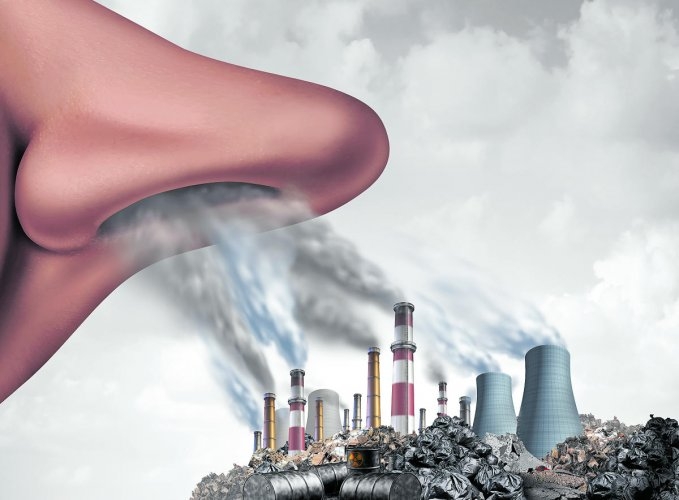
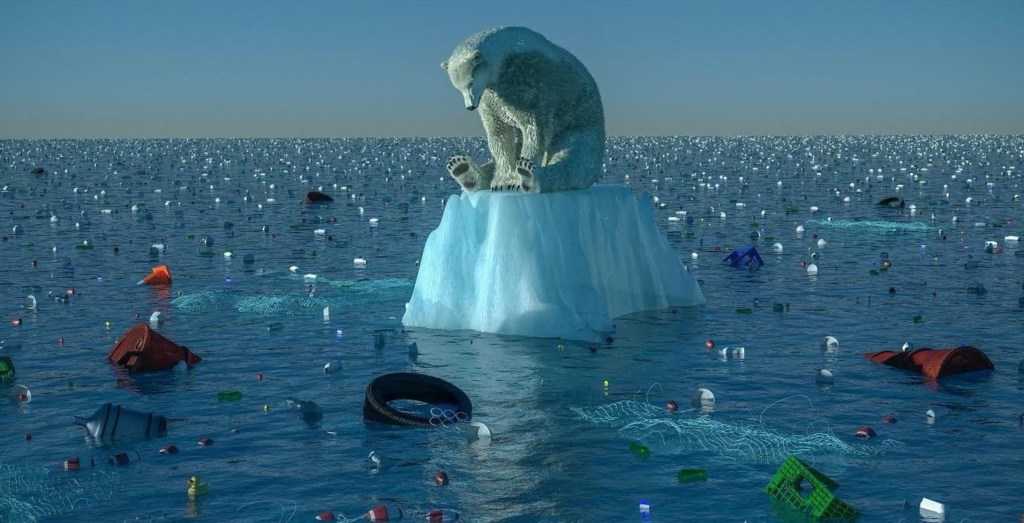
Pollution is a major issue or concern I today’s times. Pollution is when the natural environment gets contaminated by contaminants which in turn cause great damage to the environment. Pollution comes in many different substances such as noise, heat or light. It could be natural or which is created due to human activity like trash or factories. Pollution comes with the cost. It could affect our health as a whole and it will also cost a lot to the society clean it up. In this article I am mainly going to talk about the types of pollution such as water pollution, noise pollution, air pollution and plastic pollution.


• Water pollution:
Water pollution is the contamination of water and water bodies with either physical, chemical or biological properties of water due to the discharge of industrial elements or any substance like liquid, solid or gas into water. It could be dangerous for public health as consuming this contaminated water could lead to diseases and unsafe health conditions. It could also affect agriculture. It’s also possible to harm the marine life, the living organisms in water such as fishes, corals etc. The main way to prevent water pollution is if people and industries don’t throw waste and toxic discharge into the water.


• Noise pollution:
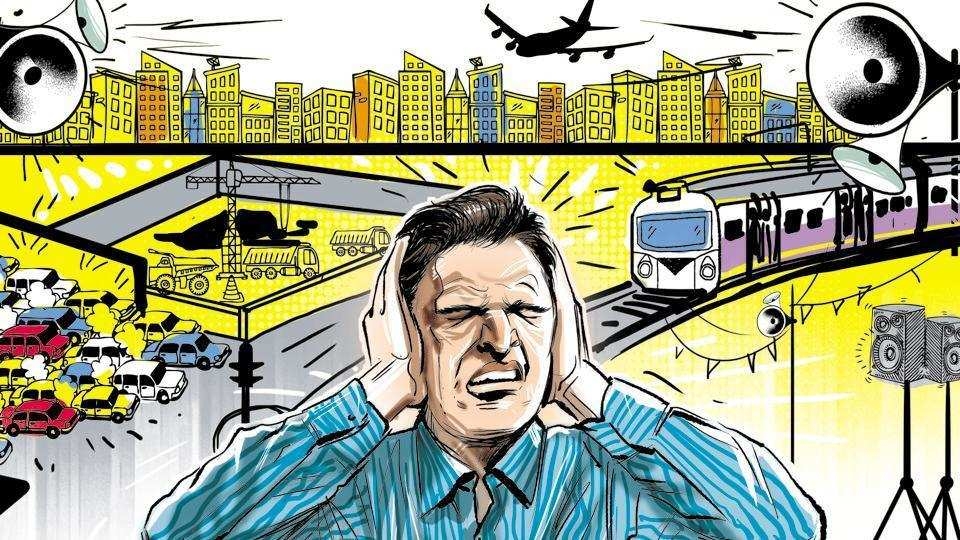
One of the most prominent types of pollution is the existence of noise pollution. It refers to the presence of excessive or loud sound or noise in the environment. It might not sound too dangerous but it could be dangerous for human and animal health. There can be many ways noise pollution can be created, some are from big vehicles, large industries or even during constructions, the constant noise can be very inconvenient and uncomfortable for many. Another reason could be due to loud speakers during festivals, concerts etc. Even listening to music at a loud volume could damage our hearing. Some ways to avoid damaging your ears would be to listen to volume at an acceptable volume and try to avoid any festival which use big, huge speakers.


• Air pollution:
Air pollution is something that happens when there is pollutant present in the atmosphere. It needs to be high in concentration to cause harm to humans, animals and plants. Anything which contaminates or harms the air or makes it dirty and not comfortable to breathe is called air pollution. Air pollution could cause great damage as it’s what we breathe every day and even if we can’t see effects immediately, it could affect us later in life. It affects every form of being, anything which breathes and needs oxygen to survive.


• Plastic pollution:
Plastic pollution mainly refers to the fact that the environment is getting contaminated by plastic and products made of plastic. Plastic products such as milk packets, plastic straws, plastic bags etc are all causes for the pollution. The only way to prevent this it is by making sure to not use plastic bags and even if you do, don’t throw it away especially into the ocean.


Conclusion:
It is very important to preserve our earth and contamination is not the way to do it. We must make sure that the planet we live in is safe for everyone, including ourselves. As global warming is increasing, we need to look back on our actions and help overcome this setback.

https://www.britannica.com/science/water-pollution

https://www.britannica.com/science/noise-pollution

https://www.nrdc.org/stories/air-pollution-everything-you-need-know

https://www.britannica.com/science/plastic-pollution

Content Writing As A Career

Over time content writing has evolved enormously in the market. Content writing as a career provides a tremendous opportunity. In today’s world, many big firms are hiring content writers exclusively to provide content solutions to clients. 

This brings us to the question that if content writing has such potential, What do I need to become a content writer? What are the career opportunities? Salary Expectation? Well, you will find all the answers needed in this article. 

What do you need to become a content writer?

While many of the companies prefer hiring an individual who has a degree in literature or journalism & mass communication, one with excellent writing and communication skills is also welcomed by the companies. In short, anyone with good writing and communication skills can apply for it. Also, thorough knowledge of the field you are writing about is always a plus point. 

What are the career opportunities?

Looking at the demand for content writers, it can be said that the demand will stay longer in the industry. Besides taking a job in a firm one can also become a freelance writer or a full-time blogger. Mentioned below are some of the different fields of content writing:-

I) Public Relations Writing: These days, most of the corporate hire in-house writers to write their newsletters, press releases, and bulletins.

II) Technical Writing: It mostly deals with literature like user manuals and do-it-yourself kits, etc.

III) Marketing Content: In this field, a writer should be able to attract customers through catchy headlines and slugs. As a marketing content writer, one needs to be creative to attract the attention of consumers and convince them. This type of writing includes brochures, fliers, etc.

IV) Web content: As websites need to update their content to stay fresh and relevant, they hire content writers. 

V) Others: Some of the other fields of content writing includes – health, lifestyle, financial, children’s writing, academic, copywriting, and fashion.

Salary Expectation

As an experienced freelance writer one can earn up to Rs 40-50 thousand in a month. And for the content writers working for a firm, the salary varies from company to company. The average starting salary for a content writer ranges from Rs 15,000 to Rs 20,000 per month. 

If you think you are made for writing then you should give content writing a short. 

Karakku

Caste discrimination faced by Bama

Introduction:
Karakku is a novel written by the Tamil Dalit writer Mary Faustina Fatima Rani. In this novel she speaks about a lot of problems faced by the Dalits and how they were discriminated and exploited. She expresses her angst and her pain through her writing. The most prominent one is the problems faced by the dalits is that of caste discrimination. Bama belongs to the untouchable class called Parayas.


• Even though her living standards were not luxurious, it was still a little better than others as her father was an army officer and because of that, whenever he came back home, there was always food at the table. She also had an older brother who made her aware of the conditions of Dalits and help to understand why it is important to overcome it.


• In the Indian society, the discrimination of people based on their caste was rampant. Every person was judged according to which caste they belong to and showed respect accordingly.


• The problem with food:
The people of the upper caste always got to eat all the tasty food like the fishes with fancy names but the lower caste people always had to settle for the cheap fishes as that is what they could afford. She tells us how the lower caste people are the ones who do all the work yet only the rich benefit from it.


• The problem of exploitation and untouchability:
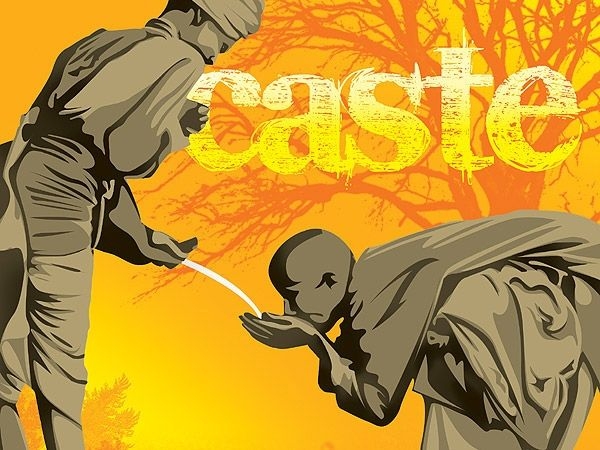
Bama mentions the exploitation of the poor Dalits by the rich Naickers and tells us how that is the reason that the Dalits haven’t prospered yet. She talks about work and how the Dalits had to work all their lives just to make ends meet and they were not even be rewarded for it. An example or incident is when a lady was holding a ‘bajji’ with a string so she does not touch it while giving it to a Naicker. At first Bama found this incident funny but after she was explained about the concept of untouchability by her brother she gets a little furious.


• The problem of Education:
The next problem that the Dalits face is the problem of education. Not all Dalits have the luxury or opportunity to attend school and receive an education. The children or not allowed education and even if they are, they are not given equal opportunities and are always identified by their caste.
Bama also faced or experienced these during her school days but she managed to gain the trust and respect of her peers and teachers as she was a very bright student. That is when Bama realised that if every child is given this opportunity to receive education, they would be independent and would not have to struggle to make ends meet and would also be a respectable citizen of the country.


• Visible Caste discrimination:
In the future when she joined the convent and taught for 5 years, Bama also realised that the caste discrimination still exists. She realised that where there was a vow to help the Dalit children, really care about that aspect. Nobody tried to teach the children what their rights are and how they can together work to overcome their problems as a community and prosper.


Conclusion:
All of these incidents show us the plight of the dalits and how difficult their lives are on a daily basis. They need to overcome problems every day, in every field they go to. There is no leniency for the poor which shows us that the hierarchy of caste is an atrocious topic and everyone should be treated equally.

Save a ‘GEOLOGICAL HERITAGE’ – Part 1.

Look at the photograph given here. This is The Three Stooges, a bizarre rock formation that can be found in Goblin Valley. There are some exceptionally unique rock formations all over the world.

Vanishing Rocks of Hyderabad:

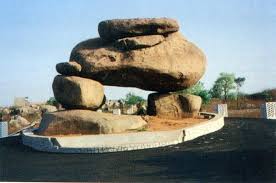
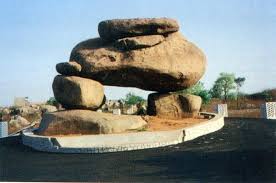
One of the most interesting facets of Hyderabad is the mammoth granite rocks in bewitching poses that capture one’s eye and imagination. Rocks large and small precariously balance on one another to form shapes that mesmerise the mind.These rocks, among the oldest in the world, are Hyderabad’s true heritage. Even the mighty Himalayas at 40-60 million years old are younger than these rocks!

Nature’s Sculptures:

The gigantic boulders inspire creativity and reverence in people, forcing them to look beyond the obvious shapes to create imaginary forms. These rocks seem to strike poses and imitate life-a puppy seated on its hind legs with its front legs raised in the air, a car-shaped formation, flying saucer resting on rocks, four chambers of the heart, and a woman standing with her face to the a woman standing with her face to the breeze; these are just a few shapes that tickle your imagination. It is no wonder then that people have taken to naming certain rocks after the shape they think they resemble or the idea they think they epitomise.

Some of these names have stuck on and the rocks have thus become landmarks in the city. And in some other places, rocks with their symbolic shapes have inspired the devout. Natural openings and cave like structures formed by the rocks have been used as temples by locals. Many people even consider them as symbols of the divine and worship these silent sentinels.

Tortoise Rock

Maintaining ecological balance:

Apart from being a visual treat for viewers, these rocks play an integral role in preserving and nurturing the ecological balance of the region. Lakes and ponds have always formed on adjoining rocky patches. This is a as rocks help natural occurrence create the natural drainage system of the area. Subterranean passages created by these rocks result in the natural flow of rain water to that area, aiding the formation of ponds and lakes and recharging ground water levels.

And where there is green, there are birds and bees. Rocky hills often act as the biodiversity hub for the area. Prickly thick shrubs and dry deciduous forests ensconce the rocks. Along the lakebeds, tall grass grows in wild abandon. Often even medicinal plants and aromatic herbs are found in the area. And hidden in this medley of plants are insects, birds and reptiles. So don’t be surprised if a Baya weaver flies by or a snake wiggles past you, when you are trekking about the rocks. Fauna and flora of varied kinds thrive in rocky eco-systems. Nature is at its best in these spots and here is where people can go to for a whiff of the wild, But today, such spots are disappearing with alarming alacrity. Rocks are being destroyed indiscriminately; the price the city is paying for growth.

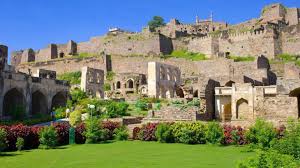
Image Source -google. Golconda fort of hyderabad.

Development at the cost of nature Part1:

It is easy to wonder why someone would destroy rocks that are billions of old. For centuries now these rocks have been the building material for the city. Even the famous Golconda fort of Hyderabad which sits atop a granite hill is made of the very same granite rock. The problem however lies at the speed and magnitude with which these rocks are now disappearing. Just consider the following statistics. The official 2001 census stated the Hyderabad population was around 3.7 million. But today the overflowing buses, traffic jammed streets, and expanding city borders tell a very different story. Today, this natural legacy is giving way to tall residential high-rises and software parks. Hills are being replaced with malls and buildings.

As the massive inflow of population continues, rocks are being quarried round- the-clock to cater to the exponential boom in the construction industry. Large tracts of land have been approved for residential or commercial use, without taking into consideration what actually lies on the land. The rocks are blown down, land is cleared and the hard crystalline rocks are used as construction material. In the past four years itself, vast stretches of hills around the city’s fringes have been turned to rubble or have completely disappeared. If you visit the places where the development is taking place your heart will bleed at the sight of the half quarried, half-eaten mountains…..

to be continued ……….,……..

Understanding Pegasus

How would you feel if someone says that you are being tapped 24/7 , someone is reading all your messages, accessing to all your private datas , recording you. Pretty sure everyone would be spooked out . This is what Pegasus project of Amnesty International claims.

What is Pegasus??

Pegasus has been derived from Greek mythology . It symbolizes a white horse with wings . But today Pegasus is a dangerous virus which can access your phone , steal your data and sell it to someone else. For this virus to enter your phone , you doesn’t have to click on any links , just a misscall is enough to infiltrate your phone.

Who developed this spyware and why?

This spyware was developed by NSO , an Israeli cyberarm firm . The actual motive behind this was to track down terrorist and criminals. This software is only sold to government. Maxican government confirmed that they used Pegasus spyware to capture Maxican druglord El Chappo.

What is the cost of installing this software?

Over half a million dollars ie over 3.5 crore rupees cost as installation fees and almost $650000 ie almost 5 crore to spy on just 10 Android or iPhone users. And hundreds of thousand dollars more for additional surveillance target.

What its relevance today??

Amnesty International with many others carried out Pegasus Project and alleged that many governments have been using this spyware to tap illegally its citizens. They listed out 50000 phone numbers in which pegasus infiltrated, or tried to, or are its potential targets. This list includes many known political leaders, media houses, journalist, lawyers and scholars.France’s President Macron charged his phone eversince his name was on the list.

This project alleged that countries like Togo, Rwanda ,Morocco, Saudi Arabia,Bahrain ,UAE,Azarbaizan,Kagakhstan,Mexico ,Hungary and India have used this spyware to spy on its citizens. It is important to note that this report clearly claims that just because numbers appears on the list it doesn’t means that their phone were attacked, its only suspicions.Many countries have already started investigation.

Though this project has not been proved right yet, this is a serious issue that needs to be addressed. It is terrifying just to know that such software even exist.

THE JOURNEY OF PURI TOWARDS FIRST CITY TO PROVIDE 24 X 7 CLEAN WATER

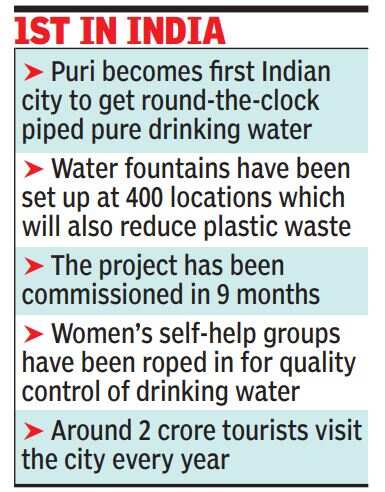
Puri is one of the major heritage cities of the country and every year more than 2 crore tourists visit every year. And this month the city earned an unique distinction of becoming the first Indian city to provide 24X7 pure drinking water. This is the landmark achievement for the city and state and is one of the major contributors for enhancing the status of sanitation and hygiene in Puri, Odisha. The city has become the first city to offer safe drinking water directly from taps to the residents and the tourists visiting the city every year and now has joined the group of global metropolitans like London and New York for providing safe drinking water.

The government launches “Sujal: Drink from Tap Mission” which has the goal of providing all time safe drinking water to all the residents and people visiting the cities directly through taps. The city has fulfilled and achieved the credentials of the ambitious mission and has achieved the goal of the mission. The 24 hour drink from tap facility provides water which can be used directly without filtration for different purposes such as drinking, cooking etc. This move is beneficial for the 2.5 lakh people residing in the city and the 2 crore tourists visiting the city every year. And the people don’t need to carry water bottles with them and can directly rely on the taps. This type of facility is present in very limited number of cities globally and Puri has established its place. Furthermore, the state government had installed 400 water fountains in different locations of the city with the aim of reducing the reliance and usage of plastic bottles in Puri. This will eventually reduce the amount of plastic wastes being can be reduced.

The government uses 5T initiative for increasing the efficiency and effectivity of the services being delivered across the city. The Chief Minister of the state emphasized on the linkage between safe drinking water with health, living standards and the economy, thereby, urging the people not to waste or pollute water. Transparency, teamwork, technology, time-frame and transformation form the 5Ts which has been adopted by the government for improving its governance. The budget for drinking water has been doubled in 5 years from Rs 200 crore to Rs 4000 crore thereby making the city the first heritage town in the country to get this facility. It is expected that the initiative will have great contribution in reducing the amount of plastic wastes generated. It is estimated that the amount of plastic waste being generated by the city will reduce by 400 tonne per annum. 1100 Stand posts were already present in the city and the state government has established additional 110 modern public stand posts along the Grand Road (Badadanda) and nine by the sea beach area have been installed. Old stand posts are being replaced with steel pipes and taps and at present 36 MLD clean water is being supplied everyday in the city. About 135 – 140 liters of drinking water per head per day is being provided to the residents everyday.