How to do a case study ?

Preparing the Case

Before you begin writing, follow these guidelines to help you prepare and understand the case study:

  1. Read and Examine the Case Thoroughly
    • Take notes, highlight relevant facts, underline key problems.
  2. Focus Your Analysis
    • Identify two to five key problems.
    • Why do they exist?
    • How do they impact the organization?
    • Who is responsible for them?
  3. Uncover Possible Solutions/Changes Needed
    • Review course readings, discussions, outside research, your experience.
  4. Select the Best Solution
    • Consider strong supporting evidence, pros, and cons. Is this solution realistic?

Drafting the Case

Once you have gathered the necessary information, a draft of your analysis should include these general sections, but these may differ depending on your assignment directions or your specific case study:

  1. Introduction
    • Identify the key problems and issues in the case study.
    • Formulate and include a thesis statement, summarizing the outcome of your analysis in 1–2 sentences.
  2. Background
    • Set the scene: background information, relevant facts, and the most important issues.
    • Demonstrate that you have researched the problems in this case study.
  3. Evaluation of the Case
    • Outline the various pieces of the case study that you are focusing on.
    • Evaluate these pieces by discussing what is working and what is not working.
    • State why these parts of the case study are or are not working well.
  4. Proposed Solution/Changes
    • Provide specific and realistic solution(s) or changes needed.
    • Explain why this solution was chosen.
    • Support this solution with solid evidence, such as:
      • Concepts from class (text readings, discussions, lectures)
      • Outside research
      • Personal experience (anecdotes)
  5. Recommendations
    • Determine and discuss specific strategies for accomplishing the proposed solution.
    • If applicable, recommend further action to resolve some of the issues.
    • What should be done and who should do it?

Finalizing the Case

After you have composed the first draft of your case study analysis, read through it to check for any gaps or inconsistencies in content or structure:

  • Is your thesis statement clear and direct?
  • Have you provided solid evidence?
  • Is any component from the analysis missing?

Health Benefits Of Natural Medicines.

NATURE’S MEDICINES.

The plant world is an immense store of active chemical compounds. Nearly half = the medicines we use today are herbal in origin, and a quarter contains plant extracts or active chemicals taken directly from plants. Many more are yet to be discovered, recorded and researched; only a few thousand have been studied. Across the globe, the hunt will always be on to find species that could form the bases of new medicines. Humans have always used plants to ease their pains. They imbued them with magical powers and then gradually learnt to identify their properties. We can now enjoy the benefits of herbal medicines because, over thousands of years, our ancestors discovered which plants were medicinally beneficial and which were highly toxic.

Thousands of years ago, the ancient Egyptians discovered simple ways to extract and use the active ingredients within plants. Egyptian papyrus manuscripts from 2000 B.C. record the use of perfumes and fine oils, and aromatic oils and gums in the embalming process.

In ancient Greece in the 5th and the 4th centuries BC, Hippocrates, the father of medicine, was already recommending asparagus and garlic for their diuretic qualities, poppy as a way of inducing sleep and willow leaves to relieve pain and fever. In the 1st century AD, another Greek doctor, Dioscorides, established the first collection of medicinal plants. His treatise on the subject was translated into Arabic and Persian. Centuries later, his work was also used by the Muslim scholars who influenced great universities of the period, particularly at Montpellier, Europe’s most famous centre for the study of botany.

As a result of trade with Africa and Asia, the Western world’s store of herbal medicines was enriched by the inclusion of camphor, cinnamon, ginger, ginseng, nutmeg, sandalwood, turmeric and henna. For a long time, however, the use of both local plants and those with more distant origins was based on more or less fanciful beliefs. Throughout the Middle Ages herbal medicine consisted of a mixture of magic, superstition and empirical observation. From the Renaissance onwards, scientists and their scientific studies, discoveries and inventions came to the fore, rejecting alchemists’ elixirs and other magical remedies. Local plants were carefully collected and widely used to make infusions, decoctions and ointments. These plants make up the major part of the traditional cures that we have inherited.

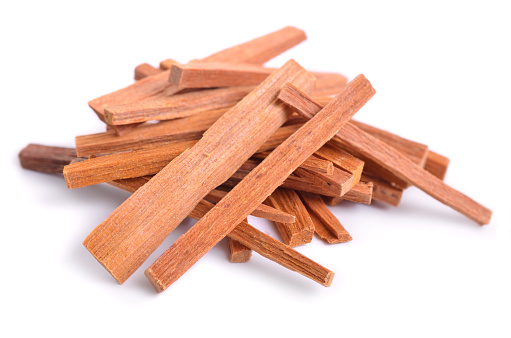
Chandan or sandalwood sticks.

History behind Nature’s Medicines:

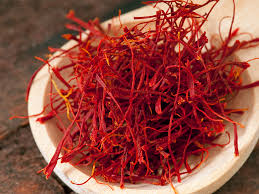
In the late 1700s, Carl Wilheim Scheele, a gifted Swedish chemist, obtained tartaric acid from grapes, citric acid from lemons and malic acid from apples. The techniques that he and his contemporaries used led to the isolation of the first purified compounds from plants that could be used as drugs. First came the isolation of morphine from the opium poppy in 1803, then caffeine from coffee beans in 1819, quinine from cinchona bark and colchicines from meadow saffron both in 1820 and atropine from deadly nightshade in 1835.

Image Source -google.

One tree that generated considerable interest among scientists was the willow. In the early 1800s, chemists from Germany, Italy and France began the search for the compounds responsible for the acclaimed pain-relieving effects of its bark. In 1828, the German pharmacist, Johann Buchner, was the first to obtain salicin, the major compound in a pure form. In 1838, the Italian chemist, Raffaele Piria also obtained salicylic acid from the bark by various chemical processes. But these early compounds caused blisters in the mouth, and stomach upsets when ingested. In 1853, a French chemist, Charles Frederic Gerhardt, synthesised a modified form of salicylic acid-acetylsalicylic acid. But still it wasn’t further modified form developed for more than 40 years until a German chemist, Felix Hoffman, working for Bayer, rediscovered Gerhardt’s compound. Hoffman gave it to his father who suffered from arthritis and reported the beneficial effects.

Bayer decided to market the acetylsalicylic acid as a new drug for pain relief and patented the compound acetylsalicylic acid in 1899. At last from the willow, the first modern drug was born and, with 12000 tons of aspirin sold every year throughout the world, it has kept its number one position.

From the 1930s onwards, advances in chemistry have made it much easier to reproduce the active ingredients in plants. But plants will continue to have a medicinal importance in their own right. Their active constituents may be slightly modified to improve their efficiency or to reduce their undesirable effects, but they are still vital for the treatment of disorders such as cancers and heart diseases or as a means of combating malaria. And they remain the essence of herbal medicine-an area that has still not been fully understood and explored.

Segmenting a market?

See everybody has their own likes and dislikes right? It is always possible that my need and your need can be different or even similar also. Market segmentation is just the most useful aspect in which a marketer can divide the whole market into subgroups of people having the same needs and wants. Must be wondering why it is done? So by this concept marketer gets the clear idea of the group demanding the same products and can easily satisfy their demand on that basis. Suppose if their is a group of teenagers than obviously their demand and needs about a product will be different from that of old age group. Likewise we have many different basis for market segmentation let us just understand them one by one:

  • Geographic Segmentation: This is the most simple method of market segmentation as in this the people living in one region of the country have different buying behaviours from that of the people living in some other region and thus this becomes the base for dividing the market .
  • Demographic Segmentation: Demographic elements such as age(teenagers/adults/retired), occupation, education, sex and income are used here for Segmentation.
  • Psycho-graphic Segmentation: Under this basis the consumers are divided into subgroups on the basis of their psychological attitude and also includes their personality and lifestyle.
  • Behavioral Segmentation: Consumers are here divided on the basis of the knowledge , attitude and use of actual products.
  • Volume Segmentation: It is assumed that most of the product is sold to a certain percentage of people. There are light , medium and heavy users of products. It is important for the business to give due consideration to the heavy users so that they must not switch to some other brand and also along with that they are required to adopt various techniques to convert light , medium and non users into the heavy one.
Easy explaination of its benefits.

How to Increase Productivity? (For Work)

“Focus on being productive instead of busy.”

– Tim Ferris

Introduction

The definition of productivity is the effectiveness of productive effort or the rate at which a person, company, or country does useful work. In these times every single person has a lot of work on their plate, be it work from the office, school, college, or work related to the house, some extra project you might be working on, or be it just your mental health. To finish the numerous tasks, we need to be productive to finish these effectively and still be left with some time to relax and hang back from the rush of daily life. So we can say that productivity is about getting the required result in less time and effort. Increased productivity is directly related to improved time management. This article aims to list ways to increase productivity for work.

Plan Ahead

The practice of approaching work at random is one of the hindrances to productivity. When you attack work at random, you are not sure about how much more is left and by when you will be able to get to it. To deal with this, you must plan ahead, it can be daily, weekly or monthly planning. It puts you in control of how much work you have and till when you can complete it. Planning offers you clarity.

Set Realistic Goals

You should set goals in such a manner that you have set milestones that help you in knowing your destination. The best way to set goals is to follow SMART.
S – specific, significant, stretching
M – measurable, meaningful, motivational
A – agreed upon, attainable, achievable, acceptable, action-oriented
R – realistic, relevant, reasonable, rewarding, results-oriented
T – time-based, timely, tangible, trackable.

Track and Limit

If you implement a tracking system through which you monitor how much time you take to finish one task, you will be able to understand if you are using your time effectively or not, and if not, then where are you wasting it. Every person has a different productive golden hour. By tracking your day, you will be able to understand when your golden hour is and you can schedule your work accordingly.

Be Proactive, Not Reactive

Being proactive helps you in avoiding the time you waste around and then rush to react in time. When you are reactive, you let others call the shot and give you the work to be done but when you are proactive, you are a few steps ahead of others and you get to call the shots.

Minimize Distractions

Most of our time gets wasted on the number of distractions that put us off our work path. Everyone has become addicted to being online and that is one of the major distractions. It is important to work smarter and set boundaries such as setting work hours during which time you will not be available to others, silencing notifications, setting time slots to check social media and emails, and not doing it during the work hour.

Get Enough Sleep

It is a known fact that not getting enough sleep has negative effects on our performance in all aspects of life but work gets affected the most. This happens because when you are working, you need logical reasoning which is done by your prefrontal cortex which gets impacted by the lack of sleep. Therefore, it is important to get at least 7-9 hours of sleep a night.

Conclusion

Once you understand the importance of productivity, you will learn that it will become a huge part of your whole life, not only when it comes to your work life but also your personal life, as when you are on top of all your work is only when you can give enough time to your personal life as well.

References

THE AGRARIAN REVOLUTION

The term Agrarian Revolution implies the great changes that took place in the agricultural methods of England during the second half of the 17th century and the first half of the eighteenth century.

Causes of the Revolution:

  • The old open field system was wasteful of land because, according to this arrangement, every year one of the three fields was to be out of cultivation.
  • Secondly, come the old system of distribution of land was wasteful of time.
  • Thirdly, there was the necessity of confirming the customs of the village and thus made experiments in agriculture method possible.

In the 18th century, the population was increasing and so more food was needed. Owing to the scarcity of food materials there was a rise in prices. The old-fashioned farmers thought that they could get more money if they produce more. This idea was an incentive for them to improve their agricultural methods.

Reallocation of Lands:

Reallocation of lands in consolidated blocks which could be enclosed, several Enclosure Acts were passed in the reign of George II and George III. There were many cases of the poor peasants being not satisfied with the reallocation. Such people sold their small holdings to wealthy businessmen of the city who were eager to possess lands of their own. The final result of this tendency was that the class of rural inhabitants known as yeomen disappeared.

Advantages of enclosure system:

One of the advantages of the enclosure system was that it gave scope for many enterprising people to make experiments. Jethro Tull of Berkshire was the inventor of the drill for sowing seeds. He also emphasized the necessity of capital selection of seeds if good crops were to be obtained.

Another pioneer is Charles Townshend of Norfolk. He adopted Tull’s principles and paid much attention to the question of rotation of crops. He introduced the four-course rotation of turnips, barley, clover, and ryegrass, and wheat. These measures prevented an unprotective fallow. His innovation made Norfolk a leading agricultural country. With the result that in the thirty years the rental of the one farm rose from 180 pounds to 800 pounds a year.

The work of Townshend was continued by Thomas Cook. He followed the precepts of Tull and in addition fed the soil with manures including bones. In nine years he was able to grow excellent wheat crops. He also introduced new artificial foods such as oil cake under led the way in fattening cattle for the London markets. He held a yearly meeting for farmers at his house and these meetings farming topics were discussed and much advice was given and received. It is estimated that the annual rental of his estate Rose from 2,200 pounds in 1776 to 20,000 pounds in 1816.

Cattle farming:

While Norfolk landlords were thus making great improvements in arable farming, a Leicestershire farmer, Kama Robert Bakewell was revolutionizing English methods of stock breathing. Up to this time sheep had been valued chiefly for their wool, the production of mutton had been only secondary. Bakewell was the first to turn his attention to the production of meat as the main consideration of stock breeding. By patient choice and experiment, he succeeded in producing a new breed of sheep with fattened quickly and weighed heavy. His success attracted the attention of many. Farmers from far and wide visited his farm at Dishley and became converts to his new methods. Others who did pioneering work in this field were George Culley, Charles Colling, and John Salman.

Board of agriculture:

Royal patronage was also given to the moment of revolutionizing the agriculture methods. George III, affectionately known to his subjects as a farmer George, established a model farm at Windsor. The success of the moment was due to the writings of agriculture writers, the most famous was Arthur Young. When a board of agriculture was established in 1793. Young was made its secretary.

Conclusion:

With the advent of the enclosure system, the English banking system also grows, for even the wealthy landlords did not have money to do the fencing and other improvements. So they have to borrow money from the banks. Through all those methods was very desirable from the point of view of production, it had a harmful effect on the partition. The system deprived him of the privilege of grazing his cattle and cutting fuel from the commons.

What is a Novel

Picaresque Novel

What Are The Five Love Language?

You might be showing affection to your partner on a daily basis, but do you take a moment to ensure that you’re conveying it in the manner that your spouse prefers to accept it? Whenever two couples have differing love languages, even love can be lost in translation.

Words of affirmation, quality time, receiving presents, acts of service, and physical contact are the five love languages, or means of expressing and receiving love. Not everybody expresses love in the same manner, and not everyone likes to accept love in the same way.

Gary Chapman, Ph.D., created the notion of love languages in his book The 5 Love Languages: The Secret to Lasting Love, in which he explains these five distinct methods of conveying love, categories he condensed from his expertise in marriage therapy and linguistics.

Here’s a rundown of each one of Chapman’s five love languages:

Words of affirmation

Those who use words of affirmation as a love language appreciate verbal expressions of affection, such as constant “I love yous,” praises, expressions of gratitude, vocal support, and often constant digital contact such as messages and social media involvement. These individuals value written and verbal expressions of love the most. They feel understood and valued when they hear these words.

Quality time

Those who have quality time as their love language feel the most appreciated when their spouse genuinely wants to spend more time with them and is always willing to hang out. They are especially fond of it when active listening, eye contact, and complete presence are stressed as relationship characteristics. 

This love language is all about providing your entire focus to that one particular person, without any of the distractions of television, phone displays, or any other outside interference. Individuals have a great desire to constantly spend some time with their loved one, holding deep talks or participating in leisure pastimes.

Acts of services

If acts of service are your love language, you appreciate it whenever your spouse goes out of their way to make your life simpler. It’s little gestures like getting you food when you’re ill, preparing your morning coffee, or going to pick up your laundry after a hard day at work.

This is the love language of those who think that gestures speak louder than words. People on this list, unlike those who want to hear how much they are cared for, desire to be shown how they’re being cherished. Such people value doing minor and large duties to make their life simpler or perhaps more pleasant.

Gifts

Gifts are a simple love language: you feel appreciated when others offer you “visual expressions of affection,” as Chapman puts it. It’s not so much about the monetary worth as it is about the emotional significance behind the gift. Those with this personality appreciate as well as acknowledge the gift-giving process: the thorough contemplation, the intentional selection of the gift to symbolize the connection, and the emotional rewards of getting the gift.

Individuals whose language of love involves getting presents like obtaining something both tangible and meaningful. The idea is to offer thoughtful gifts that are significant to them and represent their beliefs, rather than yours.

Physical touch

Physical touch as a love language makes a person feel cherished when they receive physical indications of love such as kissing, holding hands, snuggling on the sofa, and intimacy. For persons who use this love language, physical closeness and touch may be extremely encouraging and serve as a powerful emotional bond.

When they are hugged, kissed, or snuggled, those who convey their thanks in this language feel valued. They enjoy the sensations of warmth and protection that come from physical contact.

We all show and experience love in various ways. As a result, recognising such differences may have a significant influence on our relationships. Indeed, it is one of the easiest methods to strengthen your relationships.

What is Leadership?

Leadership, according to Peter DeLisle, is the ability to influence others, with or without authority. All successful endeavors are the result of human effort; thus, the ability to influence others is a derivation of Interpersonal Communications, Conflict Management, Problem solving. Leadership is a direct function of three elements of interpersonal effectiveness.

  1. Awareness : Awareness is a state of consciousness. It is the ability to recognize yourself, others, events and situations in real time.
  2. Ability : Ability to learn and understand technical issues is the basis of our careers – Ability to communicate, Ability to resolve conflicts, Ability to solve problems and make decisions.
  3. Commitment : Taking decisions without recognizing the impact in both positive and negative manner. To be dedicated and keeping engage.

Attributes or Characteristics of Leader

  • Guiding vision : Effective leaders know their strength to pursue the objectives and achieve the goals.
  • Passion :Leaders have a positive outlook on who they are, and they love what they do.
  • Integrity : Leaders know who they are, effective leaders are also aware of their weaknesses. They only make promises they can follow through on.
  • Honesty : Leaders convey an aura of honesty in both their professional and their personal lives.
  • Trust : Effective leaders earn the trust of their followers and act on behalf of their followers.
  • Risk : Effective leaders take calculated risks when necessary, to achieve their objectives . They learn from the
    mistake and use it as an opportunity to explore other avenues.
  • Dedication : The effective leaders are dedicated to their charge. The leader gives himself or herself entirely to the task when it is necessary.

Leadership Styles

1) Persuasive Leadership
• Leader engage his team through cooperation.
• Explains projects and values, stimulates, encourages, mobilizes resources.
• Remains accountable for every decision.
• Flexible on methods, supports co-workers.

2) Authoritative Leadership
• An Authoritative leader is self committed , gives instructions, structures the team activities.
• Sets precise objectives, defines evaluation criteria, solely accountable for decisions.
• Does not accept co-workers requests, does not accept failure.
• Always decides- does not listen

3) Delegative Leadership
• Defines the rules, mission and the responsibilities
• Plans and organizes the teams activities.
• Gives autonomy, only when required.
• Fosters mutual respect through expertise.

4) Democratic Leadership:
• Supports team work and offers collective projects
• Always encourages the team members to express freely
• Takes into account the individuals needs
• Fosters positive work environment and engages his team in decision making process.

Tips for better Leadership
• Be a good role model.
• Be clear about your rules and expectations.
• Leave room for input.
• Reward employees for good behavior.
• Be liked.
• Stamp out ‘them and us’ culture
• Honor the business roots
• Be passionate, enthusiastic and proud• Communicate effectively.
• Know your limits
• Learn from the past
• Keep meetings productive
• Walk your talk
• Presentations
• Motivational skills

Health & Ginger

Ginger is one of the common spices which is used all over the world .It is a very ordinary Spice which can be found in any kitchen . But did you know that it has extraordinary medicinal power? Yes ! Ginger is not only a spice but it is also an organic & aromatic medicine .Ginger is an important compound for making herbal tea which is used for various health purposes .Ginger is the important spice for Asian foods. Come and let’s talk about ginger .

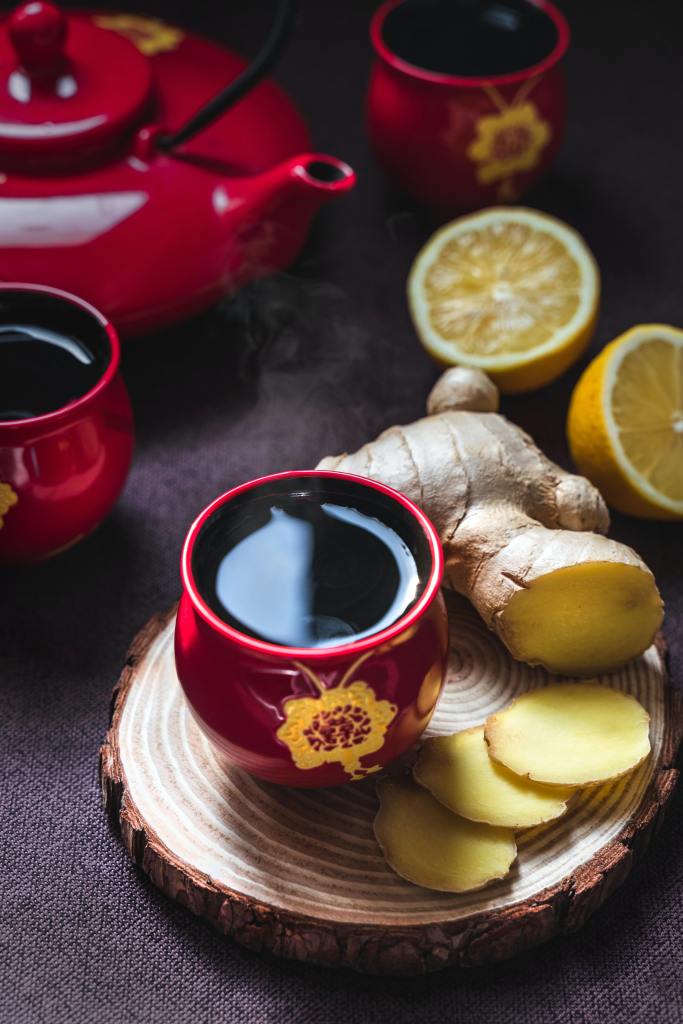
Herbal tea
Ginger Powder as Spice

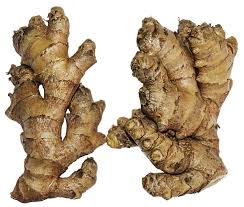
Ginger is the rooting part of a flowering Ginger plant . So obviously  we collect Ginger under soil .The binomial name of Ginger is Zingiber officinale . Ginger is closely connected to turmeric cardamom and some other spices .There are many types of Ginger all over the world .  The taste of the Ginger is very strong  & has a pungent smell .

Young ginger

Various Types of Ginger :   1) COMMON GINGER ( Its Scientific name is Zingiber Officinale . It is the most popular ginger in the world .)

COMMON GINGER

2) PEACOCK GINGER

PEACOCK GINGER Plant

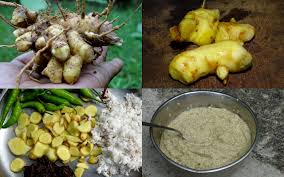
3)MANGO GINGER (Its biological name is Curcuma amada .This type of Ginger has the taste and smell of raw sweet mango . )

Mango Ginger & its Paste

4)GINGER LILY

GINGER LILY Plant & Flower

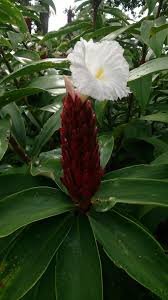
5)CREPE GINGER ( Cheilocostus speciosus is its scientific name & grow in a white crepe paper flowering plant ) 

CREPE GINGER Plant & Flower

6)BUTTERFLY LILY GINGER (  Hedychium coronarium is its botanical name)

BUTTERFLY LILY GINGER Plant & Flower

7)DANCING LILY GINGER ( Scientific name is Globba winitii & have honey sweet smelling unique structural flower)

8)YELLOW GINGER (Its botanical name is  Hedychium flavescens )

YELLOW GINGER

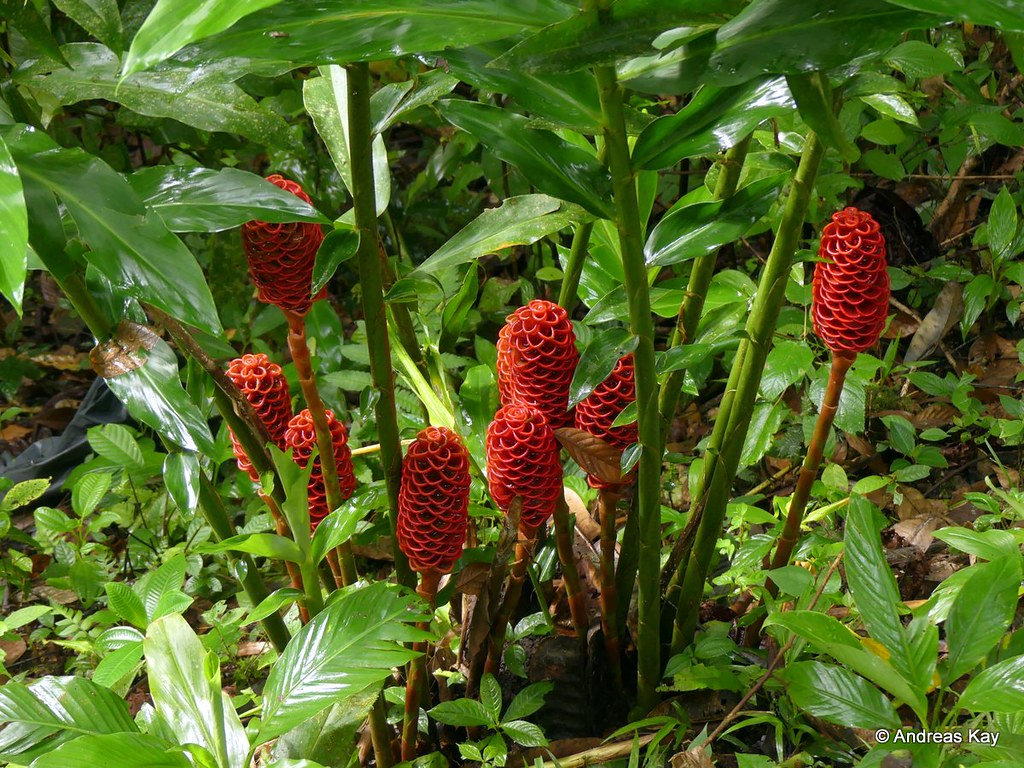
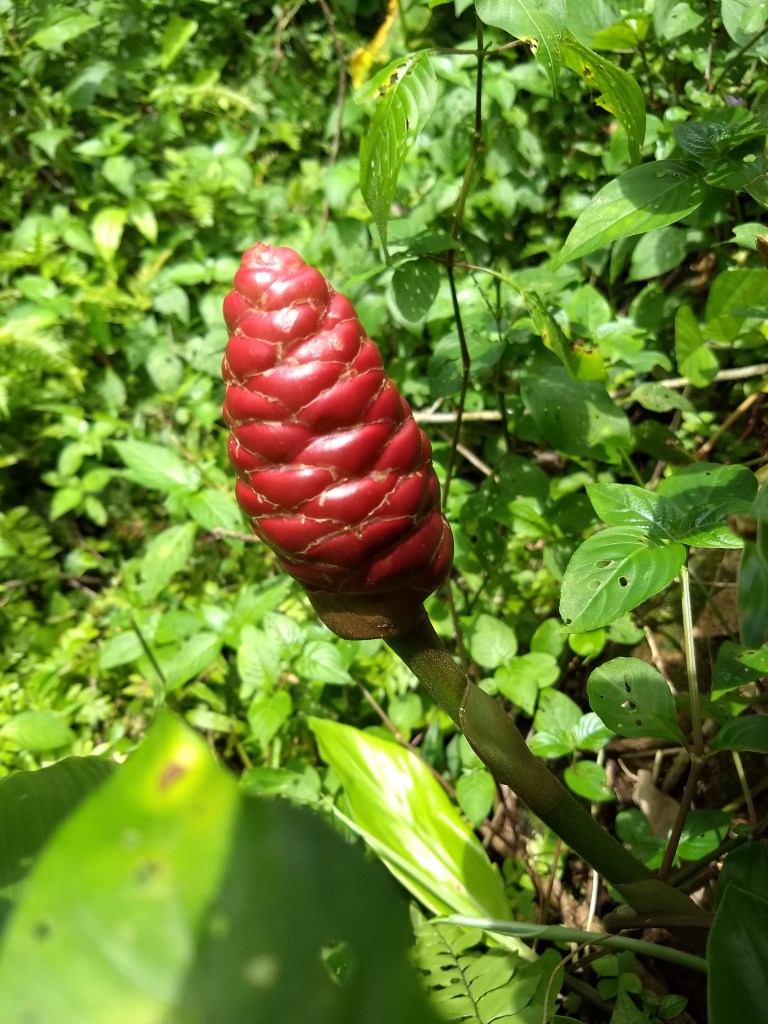
 Apart from this type of these Gingers there are many more  Red Ginger ,Thai Ginger, Japanese Ginger ,Torch Ginger ,Shell Ginger ,Blue Hawaiian Ginger ,Beehive Ginger ,Bitter Ginger , Culinary Ginger ,Spring Ginger , Red Ginger etc.

Beehive Ginger Flowering Plant
Bitter Ginger Flower
Culinary Ginger
Flower of Torch Ginger Flower
Red Ginger
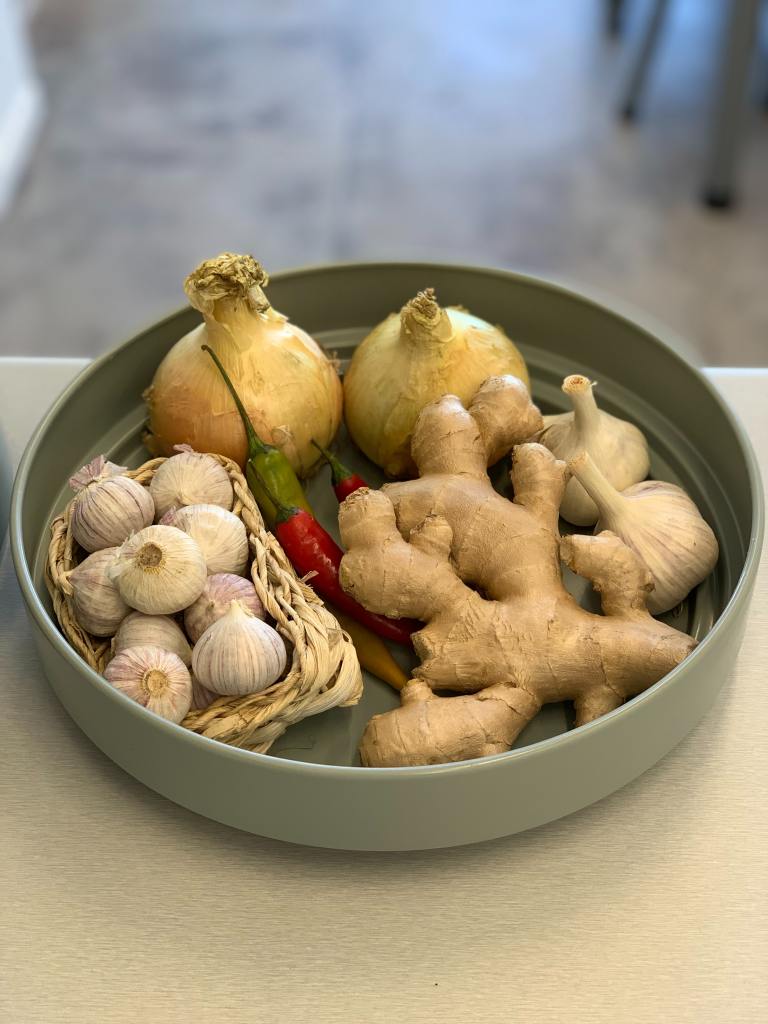
Ginger as common kitchen ingredient

Nutrients of Ginger :100 gm of ginger contain 

a)17.7 gram carbohydrate 

b) 1.7 gm sugar

c) 2 gram dietary fibre

d) 1.8 gram protein

e) 0.7 gram fat

f)  Some vitamins like – 0.7 mg vitamin B3 ,0.2 mg vitamin B5 ,0.16 mg Vitamin B6 ,5 mg Vitamin C ,0.26 mg Vitamin E                                                                                                                                        g) Some minerals – 16 mg calcium ,43 mg magnesium ,34 mg phosphorus ,415 mg potassium ,13 mg sodium ,0.6 mg iron ,0.2 mg manganese ,0.3 mg zinc .

h)Ginger also contains 79 gm water .

i) Ginger gives us 80 kilo cal energy .

j) Ginger also contains Vitamin B1 ,vitamin B2 ,folate . 

k)Ginger has excellent amount of Gingerol which is a powerful antioxidant

Effectiveness : 

1)Gingerol is a very strong and effective antioxidant ,which is found in Ginger in high amounts . It prevents the free radicals from damaging our body cells  by oxidation .

2)Ginger is very effective for pregnant women in the time of morning sickness . Ginger fights back the symptoms of nuisance .It is also helpful for nuisance created by chemical therapy for digestive nuisance and others .

3)Research in 2019 shows that Ginger has a low amount of fat so it is very good for a weight loss diet . 

4)Ginger is also helpful for osteoarthritis, joint pain and other bone problems . 

5)Ginger is able to act as a very powerful anti diabetic medicine which helps to decrease the amount of blood sugar in blood and protect our heart from any heart problems .

6)Menstrual pain during the monthly cycle is a very common problem for girls . This menstrual cramps is called Dysmenorrhea & Ginger is a very good pain reliever for Dysmenorrhea .

7)Some research  shows that Ginger has anticancer properties. It specially helps to prevent colorectal cancer .

8)Gingerol antioxidant which is present in Ginger , can ward off the infection problems .

9)Ginger is also good for an upset stomach ,indigestion and other digestion problems .

10)Ginger also prevents common cold and other symptoms of cold & cough .

Pain to Gain!

So the very title, and yes I probably do acknowledge how the initial word would appeal your mind. That’s fine. Stress, Failures, Rejections, Frustrations, Agony, Depression, Pessimism, cynicism, Indolence, Apathy, Indifference… How does these terms sounds like?.. Well am not the genius and even the experts couldn’t suggest a permanent lifetime solution to those who face these barriers. All I could do now is to suggest how they would  appear in someone’s lucid appearance, which may worth the time taken for your eyes to blink a second.

How mean it is to conceive that one is the most innocent victim for all the traps! So.. most probably, all of us would have come across this. While reading this, some amidst us may even think that they are the most experienced in all those. That’s not the issue. But the very thing lies in how we receive it. Again; it is an universal topic that it is not possible for me to discuss each corners and peripheral aspects of something called pain.

For instance a little boy gets slapped often by his parents, an innocent teenager is often blamed for something that he/she has not done, one feels sorry for themself in contrast with others state and what if one faces interruptions in all their endeavours.., It is definite to bring them some bitter feel. It’s never gonna be an astonishing fact that these bitterness is most often inflicted by the environment!

It would have caused much pain for the little boy when he realises someone is much happier next to his door, than the literal pain that he had received during his slaps. It would have caused much pain when someone does mistakes without being noticed whilst the innocent is blamed. It would have caused much pain to the one who is pursuing their studies for a long time while the other go for a work; and that other would feel for losing their studies for the sake of doing some job. It would have caused much pain when others get their things done easily, in accordance with time than the moment when that one person had repeatedly faced interruptions.

I couldn’t disagree with the point that we tend to live our lives with interdependence in this society. But it still remains as a wonder, why are we easily carried upon by others, as even the personal emotion is replaced with the very thought of others life. Pain is something which drives us in a good way when it is internalized. One tends to find the solution when he repeatedly sorts out his faults and amends it. The same feel could be disastrous when it is juxtaposed. There is a saying that ‘Everything appears upon our views’ and here, this could be the suitable one here! Such pessimistic thing would lead to an optimistic track when the pain is optimised in a personal manner.

I wouldn’t like to discuss about the gain here as it is a comfort zone for a  many. ‘Bed of thorns proves to be effective than the Bed of roses’ as as the senses in our skin as well as in our mind gets the strengthened stimulus. It really requires some effort to gain any a thing. It may also be success, happiness, cherishments, ecstacy, satisfaction… Both the pain and gain is something that is present in your ‘ain’ (Yourself).

“Turn the pain to gain, but not to disdain thy ain”!

The Missile Man

Introduction

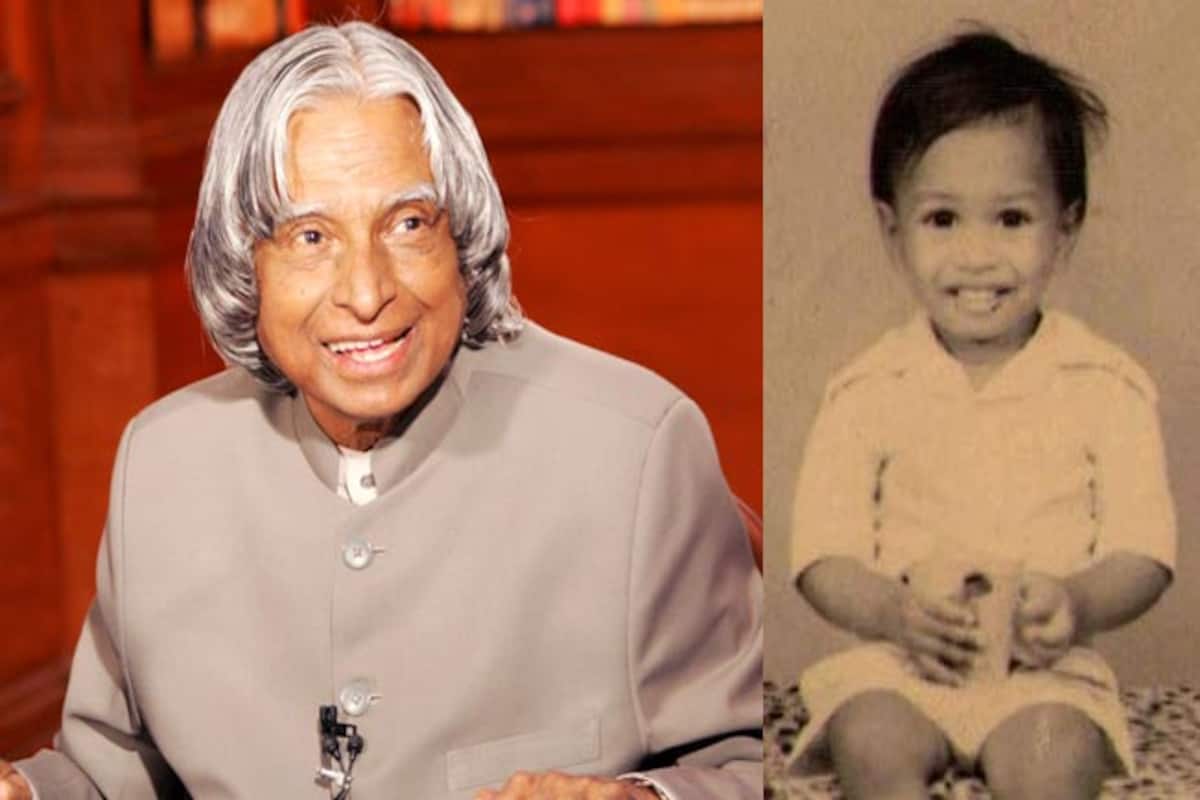
Dr. APJ Abdul Kalam was famously known as the “Missile Man” of India. He was also known for his humility. All the citizens of India are remembering him on his death anniversary on July 27th, when in 2015 he passed away because of a heart attack he suffered in Shillong. He is known to be the people’s President because of his simplicity and humility. He was one of the few Presidents every citizen loved and was fond of. He was the only President of India who did not have a political connection, that is, came from a non-political background. He was the 11th President of India, from 2002 to 2007. This year, July 27th, 2021 is his 6th death anniversary.

About Him

His full name was Avul Pakir Jainulabdeen Abdul Kalam. He was born on 15 October 1931. He was an Indian scientist and politician who played a major role in developing India’s missile and nuclear weapons programs. He was born into a Tamil Muslim family in the pilgrimage center of Rameswaram on Pamban Island, which was then in the Madras Presidency, which now is the State of Tamil Nadu. His father was a boat owner and an imam of their local mosque and his mother was a homemaker. He was the youngest of four brothers and one sister in his family. His ancestors were wealthy Marayakar traders and landowners but the family had lost all fortunes during the poverty-stricken time. Marayakar is a Muslim ethnic found in Tamil Nadu and Sri Lanka who are claimed to be descendants of Arab traders and local women. As a young boy, he sold newspapers to help his family in contributing income.

During his school years, he scored average grades but he was said to be a bright and hardworking student with a desire to learn. He spent a lot of his time studying, especially Mathematics. On completing his education, he went to Saint Joseph’s College, Tiruchirappalli, which was at that time affiliated with the University of Madras. He graduated from there in Physics in 1954. In 1955, he moved to Madras to study aerospace engineering from Madras Institute of Technology. Once while he was working on a senior project, the Dean was dissatisfied because of the lack of progress and he threatened Kalam to either finish the project in three days or get his scholarship revoked. To his surprise, Kalam met the deadline and impressed the Dean. His dream was to become a fighter pilot which he missed by one place.

Career as a Scientist

He had joined the Defense Research and Development Organization (DRDO) in 1958 as a senior scientific assistant. Later on, in 1969, he joined the Indian Space Research Organization (ISRO) where his responsibility was as the project director of the SLV-III, which is known as the first satellite launch vehicle.

He then rejoined DRDO in 1982 as the director. This is when he got the name of the “Missile Man” because of the implementation of the Integrated Guided Missile Development Program. He was then appointed as the senior scientific adviser to India’s defense minister in 1992. He also played an eminent role in the Pokhran-II tests in May 1998.

Awards

He won various awards:

  • Padma Bhushan – 1981
  • Padma Vibhushan – 1990
  • Bharat Ratna – 1997
  • Indira Gandhi Award for National Integration – 1997
  • Veer Savakar Award – 1998
  • SASTRA Ramanujan Prize – 2000
  • Von Braun Award – 2013

Conclusion

We should take a look at his inspiring quotes on this death anniversary and follow the great inspiration that he is to all of us. One of the most important one is “We are all born with a divine fire in us. Our efforts should be to give wings to this fire and fill the world with the glow of its goodness.”

References

Importance and Benefits of Reading Books.

Growing up we all have learned basic skills and out of all the skills, our ability to read is the most significant. Whatever you read, it ends up enlightening you. And when it comes to books, each book that you read is an opportunity to learn something new. By reading you can broaden your vocabulary, improve your writing skills, train your mind, enhance your wellness, lower stress, and most important thing you can discover something new about yourself. 

Why is reading important?

It has been said that a person who can read can educate themselves in any field of life they’d like to. In this modern era, everything is flooding with fresh information. And reading is the best way to clarify and relate to further information. 

Although you can find it easier to watch a Youtube video or listen to a podcast, reading still tastes the cake when it comes to comprehension and enhancing your education. 

What are the benefits of reading books? 

If you are a bookworm, you already know many of the benefits of reading books. And if you are not then you are reading the right article. Mentioned below are some of the benefits of reading books:-

I) Improves Concentration

Reading requires concentration, time, and patience. In simple words, reading forces you to use your brain. According to One World Literacy Foundation, “when you read, you need to reason things out that are unfamiliar to you.”

II)  Broaden Vocabulary 

If you read, you uncover new words, that allow understanding on a greater level. If you read an hour per day, you’ll end up exposing yourself to approx 4 million words in a year. Isn’t it amazing?

III) Reduces Stress

According to a study by Sussex University, reading can reduce stress by 68%. When you read you involve your mind in reading, which takes away your focus from all the worries.  

David Lewis​ (a cognitive neuropsychologist) said, “It doesn’t matter what book you read. By losing yourself in a thoroughly engrossing book you can escape from the worries and stresses of the everyday world and spend a while exploring the domain of the author’s imagination.”

IV) Makes You A Better Communicator

When you learn new vocabulary, you become a far better communicator. With all the new vocabulary, you’ll know which word is right for which context. For example, when you feel bad, it can be anything like you are feeling hungry, you have a fever, you have a headache, etc. But if you say that I am feeling bad then you are not specifying the feelings, which results in another person not understanding what are you going through. In that case, your vocabulary can help, that you learn by reading.

V) It Helps Your Writing

With all the creativity, vocabulary, and communication skills gained from reading, imagine what you can do with your writing skills. By reading other’s work you can experience their way of explaining a feeling or certain situation. Hence, you learn how to use other writers’ experiences to improve yours.

VI) Reading Improves Empathy

Empathy is being able to put yourself in someone’s else shoes. Reading fiction or non-fiction can bring you as close as you’ll ever be in someone”s shoes. Studies have shown that readers have a better sense of empathy. 

There is a saying, “Books are man’s best friend.” I believe every one of us should follow this and start reading. 

The President

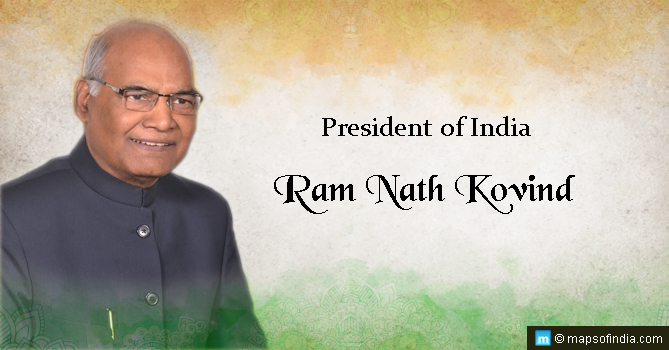
At the head of the Union Executive stands the President of India.

Election of the President of India:- The President of India is elected by indirect election, that is, by an electoral college, by the system of proportional representation using the single transferable vote. The electoral college shall consist of the following:

(a) the elected members of both the House of Parliament;

(b) the elected members of the Legislative Assembly of the state; and the elected members of the Legislative Assembly of the Union Territories [Article 54].

The system of indirect was criticized by some as falling short of the democratic ideal underlying universal franchise, but the indirect election was supported by the framers of the Constitution, on the following grounds-

(i) Direct election by an electorate of some 510 million people would mean an enormous loss of time, energy, and money.

(ii) Under the system of responsible Government introduced by the Constitution, real power would vest in the ministry; so, it would be bizarre to elect the President directly by the people without giving them real power.

Qualification of the President:- In order to be qualified as President of india, one must –

(a) be a citizen of India;

(b) has completed the age of 35 years;

(c) be qualified for election as a member of the House of the People; and

(d) must not hold any office of profit under the Government of India or the Government of any of the state or any local or other authority subject to the control of any of the said Government [Article 58].

Term of Office of President:- The President holds his office for five years from the date of the appointment in the office, and he is eligible for re-election [Article 56-57].

Appointment of the President:- The President is appointed by the Prime Minister into his office.

Termination:- The President’s office may terminate within the term of five years in either of the two ways-

(a) by written resignation in his handwriting, addressed to the Vice President of India.

(b) by removal for the violation of the Constitution [Article 61(1)].

Procedure for the impeachment of the President:- An impeachment is a quasi-judicial procedure in Parliament. Any of the House may charge for the violation of the Constitution, before the other, and shall either investigate the charges by themselves or may stimulate once to be investigated. But the charge cannot be preferable unless-

(a) a resolution passed by the any House of the Parliament with not less than 1/4 of the total members of that House within 14 days of notice.

(b) the resolution was then passed by a majority of not less than 2/3 of the members of both the House of the Parliament.

Employments Allowances of the President:- The President shall be entitled without payment of rent to the use of his official residence and shall also be entitled to such emoluments, allowances, and privileges as may be determined by the Parliament. The emoluments and allowances of the President cannot be diminished till he holds his office [Article 54(4)].

Difference between Robbery and Dacoity

Although they may appear similar in common usage, they are two distinct crimes under criminal law. What exactly is the legal meaning of robbery and dacoity? What are the requirements for a criminal act to be classified as a robbery or a dacoity? What is the distinction between robbery and dacoity? What are the punishments for these crimes under the Indian Penal Code? When you read the title, these thoughts may arise. This blog will attempt to answer these questions as thoroughly as possible.

Robbery

Robbery is a particular and intensified kind of theft or extortion that implies felonious stealing from the person of another or in his presence against his will, by violence or putting him in terror, and it becomes Dacoity when five or more people co-jointly do it.

When theft becomes robbery— Theft is “robbery” if, in order to commit the theft, or in committing the theft, or in carrying away or attempting to carry away property obtained by the theft, the offender voluntarily causes or attempts to cause death, hurt, or wrongful restraint to any person, or fear of instant death, hurt, or wrongful restraint.

When extortion becomes robbery.— Extortion is “robbery” if the offender is in the presence of the person put in fear at the time of committing the extortion, and commits the extortion by putting that person in fear of instant death, instant hurt, or instant wrongful restraint to that person or to some other person, and induces the person so put in fear then and there to deliver up the thing extorted.

Illustrations:-

(a) A restrains Z and steals Z’s money and diamonds from Z’s clothing without Z’s consent. In this case, A has committed theft and, in order to perpetrate that theft, has voluntarily restrained Z. As a result, A has committed robbery.

(b) A encounters Z on the high roads, brandishes a gun, and demands Z’s pocketbook. As a result, Z gives over his purse. Here, A has extorted the purse from Z by placing him in fear of immediate harm and conducting the extortion in his presence. As a result, A has committed robbery.

(c) On the highway, A encounters Z and Z’s child. A seizes the child and threatens to throw it down a cliff unless Z returns his purse. As a result, Z hands up his purse. Here, A has extorted the money from Z by making Z fearful of inflicting immediate harm to the kid who is present. As a result, A has committed robbery on Z.

Dacoity

When five or more people co-jointly commit or attempt to commit a robbery, or when the total number of people co-jointly committed or attempting to commit a robbery, as well as those present and aiding such commission or attempt, totals five or more, each person committing, attempting, or aiding is said to commit Dacoity.

In the case of Poolan Devi vs. State of Madhya Pradesh, Smt. Phoolan Devi has been in jail since February 12, 1983, when she claims to have willingly surrendered in the State of Madhya Pradesh despite having a criminal record. On this premise, it is argued that the petitioner’s custody for eleven years is sufficient to fulfil the criteria, and that all prosecutions pending against her in Uttar Pradesh courts should be dismissed. According to the petitioner, she is facing around 55 criminal trials in Uttar Pradesh courts for allegedly committing horrific crimes such as dacoity and murder.

Points of Difference between Robbery and Dacoity 

Robbery and Dacoity can be differentiated on the basis of various grounds:

Definition:

Robbery has been defined in Section 390 of IPC and Dacoity has been defined in Section 391 of IPC.

Essential Ingredients:

Essential ingredients of the offence of Robbery are as follows:

  • Theft as described in Section 378.
  • The offender caused or tried to cause the following to certain people: fear of death, bodily harm, or wrongful restraint.
  • Fear of sudden death, instant harm, or instant unlawful restraint.
  • The offender did not do such an act.
  • In order to commit theft.
  • While committing the theft.
  • In taking or attempting to take away the goods.

Essential ingredients of the offence of Dacoity are as follow:-

  • The accused commits or attempts robbery;
  • The number of people committing or attempting to commit robbery, as well as those present and assisting, must not be less than five.
  • All of these people should work together.

Note: The term “conjointly” refers to a coordinated or concerted action by five or more people in the act of committing the offence. In other words, five or more people must be involved in the commission of the crime and must commit or attempt to commit robbery.

Number Of Persons:

In Robbery the number of persons are less than five. It may be committed by a single person.

In Dacoity, the number of persons are five or more.

Seriousness:

Robbery is less serious in nature.

Dacoity is more serious offence than robbery because of the terror caused by the presence number of offenders.

Position of Abettors:

In Robbery, the abettors are liable independently.

In Dacoity abettors who are present and aiding when the crime is committed are counted in the number.

Jurisdiction of Court

In case of robbery, the offence is cognizable, non-bailable, non-compoundable and triable by Magistrate of the first class.

In case of dacoity the offence is cognizable, non-bailable, non-compoundable and triable by Court of Session.

Punishment:

Whoever commits robbery shall be punished with rigorous imprisonment for a term which shall not be less than three years, nor more than ten years and shall also be liable to fine.

Whoever commits dacoity shall be punished with imprisonment for life, or with rigorous impris­onment for a term which may extend to ten years, and shall also be liable to fine.

In the case of Ashfaq vs State, the Supreme Court ruled that weapon with which the offender is armed is a deadly weapon within the meaning of this section, if it is within the vision of the victim and is capable of creating terror in the mind of victim. It is also sufficient to satisfy the word ‘uses’ for the purpose of section 397 IPC.

Position In Highway:

If robbery is committed on the highway, the imprisonment may be extended to fourteen years.

The fact that the Dacoity is committed on the highway does not change the position or punishment. 

Conclusion

To summarise, the concept of robbery requires an accused to have the purpose to deprive another person of property from the start, and to that goal, either harm is caused or a person is placed. Under improper constraint, or it must be proven that the victim was put in immediate danger of death, bodily harm, or wrongful detention when the same conduct is committed by five or more severe offenders.


Drugs effect on Human body

Methodology

(i) Introduction

(ii) Physical harms of drugs on body

(iii) Addiction of drugs

(iv) Conclusion

(i) Introduction– Different substance affects the body in different ways, but all psychoactive drugs have chemical effects on the human body as well. The short-term effects that occur in drug users depend on the quantity they use and also whether it is mixed with any other mind-altering substances. Drugs have serious effects on the human body. It affects the thinking, mood, energy level, and also behavior of the person and sometimes also makes the human unconscious for several days and even further.

(ii) Physical harm from drug use:- Durg use can lead to risky and or out-of-character behavior. When affected by drug:

• One is more likely to have an accident wherever you are.

• One can commit sexual assault or other violent act.

• One may find unable to sleep, think, remember and solve the problem.

Drugs can also result in long-term health problems that include:

• harm to organs and systems of our body such as throat, stomach, lungs, liver, heart, brain, pancreas, and nervous system, etc.

• May cause cancer or other serious illness.

(iii) Addiction of drugs- All drugs cocaine, marijuana affects the brain. The brain reward circuit is a part of the limbic system. Drugs target this system causing a large amount of dopamine release, this flood of dopamine cause a high intoxication in the brain again and again and also from time to time. Although initial drug use may not be voluntary drugs. But continuous intoxication of the drugs makes the human body addicted to them which may affect the health of that particular person badly. And the addition can also become a cause of murder, robbery cases, etc.

Different drugs, different effects:- The three main types are depressants, hallucinogens, and stimulants.

Depressants- It slowdowns or depress the functions of the nervous system. They slow down the massage going to and from the brain. In small quantities, depressants can cause a feel relaxed and less inhibited. In large quantities, it can cause vomiting, unconsciousness, or even death.

hallucinogens- Distort one’s sense of reality. You can see or feel or hear things that are not real, or see things in a distorted way. Other effects include emotional and psychological euphoria, panic, upset, or nausea. Keta mine, LSD, PCP, magic mushrooms, and cannabis are some examples of hallucinogens.

Stimulants- Stimulate the central nervous system. They speed up massaging to and from the brain, which makes one feel more alter and confident. This can cause an increase to heart rate, blood pressure, and body temperature.

(iv) Conclusion:- Our body executes a natural cycle. And if we disturb this cycle, then it abruptly affects the working of the body. Taking drugs may sound cool for a while, but can cause serious illness for a lifetime. It can also lead to the death of an individual. Resisting these drugs at parties and celebrations is warned. Especially youth shouldn’t engage themselves in such activities which lead to the massive destruction of the one’s precious life.

Photography – The Poetry of Images

Photography is nothing less than an art form of absolute purity. Silent poetry with the moments
captured in an image is photography. The most memorable and beautiful way to remember the
special things in life with full clarity. Photos are a way of preserving the best memories and
moments for eternity. Photos are the permanent reminder of the past. Never get forgotten. They
will always be alive. The past, the memories, everything is hidden in the photos. Hidden but so
transparent in emotions. All the feelings just in a single place. They get old but are
unforgettable. But on the bright side, photos are a way of expressing your emotions in a
completely different and innovative way.

Photo by Kaique Rocha on Pexels.com


Photography is not just work, it is a passion filled with excitement and hope. It is a specific but
not so specific piece of art. It can be done in various forms with no boundaries. There’s nothing
to dislike in photography. It’s just another way to showcase talent of immense beauty.
Everything, every moment can be captured and kept for the rest of your life. Photos have the
finest texture and the most amazing depiction of a thing. It feels like it’s real.
Photographers have the ability and power to make a photo so great that it magnifies the
moment. They are able to drastically change the outcome of an image by using various
equipment for high quality and definition. Every small detail is shown through photos. It gives
pleasure to experience and relive the moments in life through photos.

Photos are not just a piece of paper or a file occupying a little space in your mobile or camera roll. They are an
explicit version of your life in brief. The small moments to the big memories, all are stored in a
single place for you to look after decades and enjoy living in the moment again. Photography depicts the vulnerability of the photographers through their art. Photographers use photography as a medium for creative expressions. They pour their heart out in the photos. They are artists of very fine quality and beauty in its purest form. The beauty and creativity can not be ignored by any living heart in this world. Embrace moments and capture them in real time
with photography.