Another Key to Success : Consistency


We all know, what maintaining consistency can do when it comes to bringing change or achieving something. Maintaining consistency for some time in any work or process can do wonders for you. 

But, What does it mean to be consistent? 

When we say an individual is consistent, it means, that individual is clear on what he/she wants to achieve and is taking crucial steps to achieve his/her goals. The level of consistency we maintain reflects our values and standards. Being consistent means doing things that are required today to achieve a better tomorrow. Consistency is simply about doing things on repetition over a while to achieve desired results. 

Then, Why many of us fail to maintain consistency? 

Well, there are numerous reasons why many of us fail to maintain consistency. Mentioned below are some of them:-

★ Lack of patience.

★ The desire for instant gratification.

★ Lack of clarity and focus.

★ Not having supporting habits or triggers.

★ Having a “all or nothing” mindset.

Anthony Jay Robbins (an American author, coach, speaker, and philanthropist) said, “It’s not what we do once in a while that shapes our lives. It’s what we do consistently.”

Why consistency is important? 

Knowing a few reasons will help you to give more attention to it. Mentioned below are five reasons why consistency is important:-

I) It will create accountability.

II) It will help you to stand out or be noticed. 

III) It develops discipline and self-control.

IV) It builds a higher level of trust.

V) It can help you fast-track your improvement or development in any area.

Ways to Develop Consistency

Although every individual has their their way of developing consistency. Mentioned below are some general ways to develop consistency:

I) Create a schedule or plan to stay on track.

II) Start with small steps.

III) Give yourself a break when you get off track.

IV) Start with small steps.

There are very low chances of achieving what we want without a proper strategy and consistency. In short, hard work and smart work together with consistency and the right attitude are the keys to success. 

WHAT IS PHONOLOGY AND PHONEME?

Our speech sounds can produce a wide variety of speech sounds. However , each language makes use of only a selected group of sounds .These selected sounds are organized in different ways in different languages .This selection and organization of speech sounds in an individual language is called Phonology .

PHONEMES

Every language has a definite number of distinctive sound units .These sound units constitute the phonemes of that language .They are the most basic and smallest elements in the expression system of a language .A phoneme may be defined as the minimal ,distinctive sound unit of a language .By minimal we mean that it cannot be sub-divide ; by distinctive we mean that , when one phoneme is substituted by another it produces a meaning change .Thus the phoneme is the smallest unit of sound that forms the basis of distinction between words in a language .The two words , for example , bat and cat are distinguished and differentiated by the initial phonemes of these two words , /b/ and /k/ .

When /p/ is substituted by /b/ in the word pit it becomes bit . With substitution , a different word with a different meaning is formed . Thus /p/ and /b/ are contrastive in English and hence they are two phonemes in English. Phonemic symbols are enclosed with in slant lines ; phonetic symbols within square brackets indicate the precise phonetic qualities of sounds represented by the symbols . It is also to be noted that phonemes refers to sounds and never to spellings .

The English RP has a system of forty four phonemes .Hindi has forty six phonemes and Malayalam has fifty two .All these languages have their own language specific phonemes .As phonemes are contrastive units of sound in the sound system of a particular language , they have validity only in that language.

WHAT IS PHONOLOGY AND PHONEME?

Our speech sounds can produce a wide variety of speech sounds. However , each language makes use of only a selected group of sounds .These selected sounds are organized in different ways in different languages .This selection and organization of speech sounds in an individual language is called Phonology .

PHONEMES

Every language has a definite number of distinctive sound units .These sound units constitute the phonemes of that language .They are the most basic and smallest elements in the expression system of a language .A phoneme may be defined as the minimal ,distinctive sound unit of a language .By minimal we mean that it cannot be sub-divide ; by distinctive we mean that , when one phoneme is substituted by another it produces a meaning change .Thus the phoneme is the smallest unit of sound that forms the basis of distinction between words in a language .The two words , for example , bat and cat are distinguished and differentiated by the initial phonemes of these two words , /b/ and /k/ .

When /p/ is substituted by /b/ in the word pit it becomes bit . With substitution , a different word with a different meaning is formed . Thus /p/ and /b/ are contrastive in English and hence they are two phonemes in English. Phonemic symbols are enclosed with in slant lines ; phonetic symbols within square brackets indicate the precise phonetic qualities of sounds represented by the symbols . It is also to be noted that phonemes refers to sounds and never to spellings .

The English RP has a system of forty four phonemes .Hindi has forty six phonemes and Malayalam has fifty two .All these languages have their own language specific phonemes .As phonemes are contrastive units of sound in the sound system of a particular language , they have validity only in that language.

Gender inequality

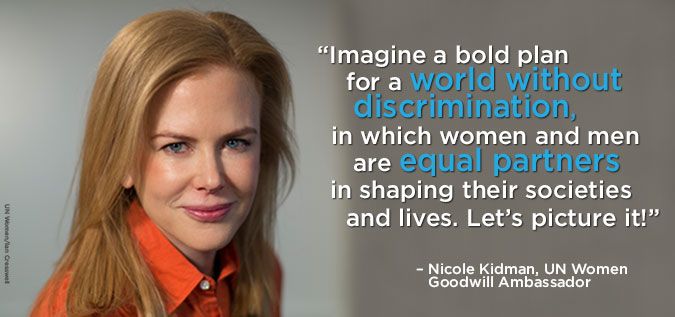
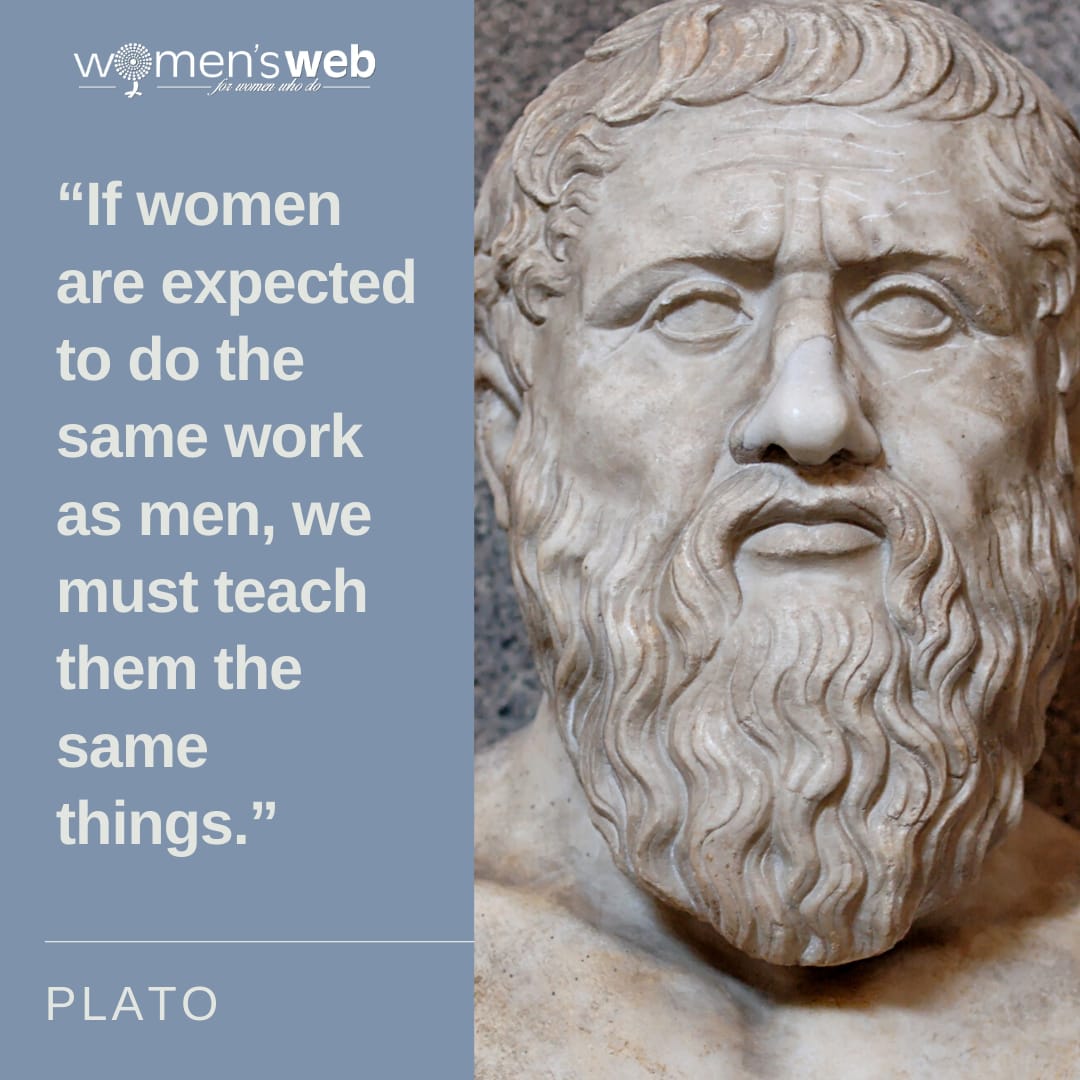
Gender inequality is the social process by which Mens, LGBTQ community and womens are not treated equally.

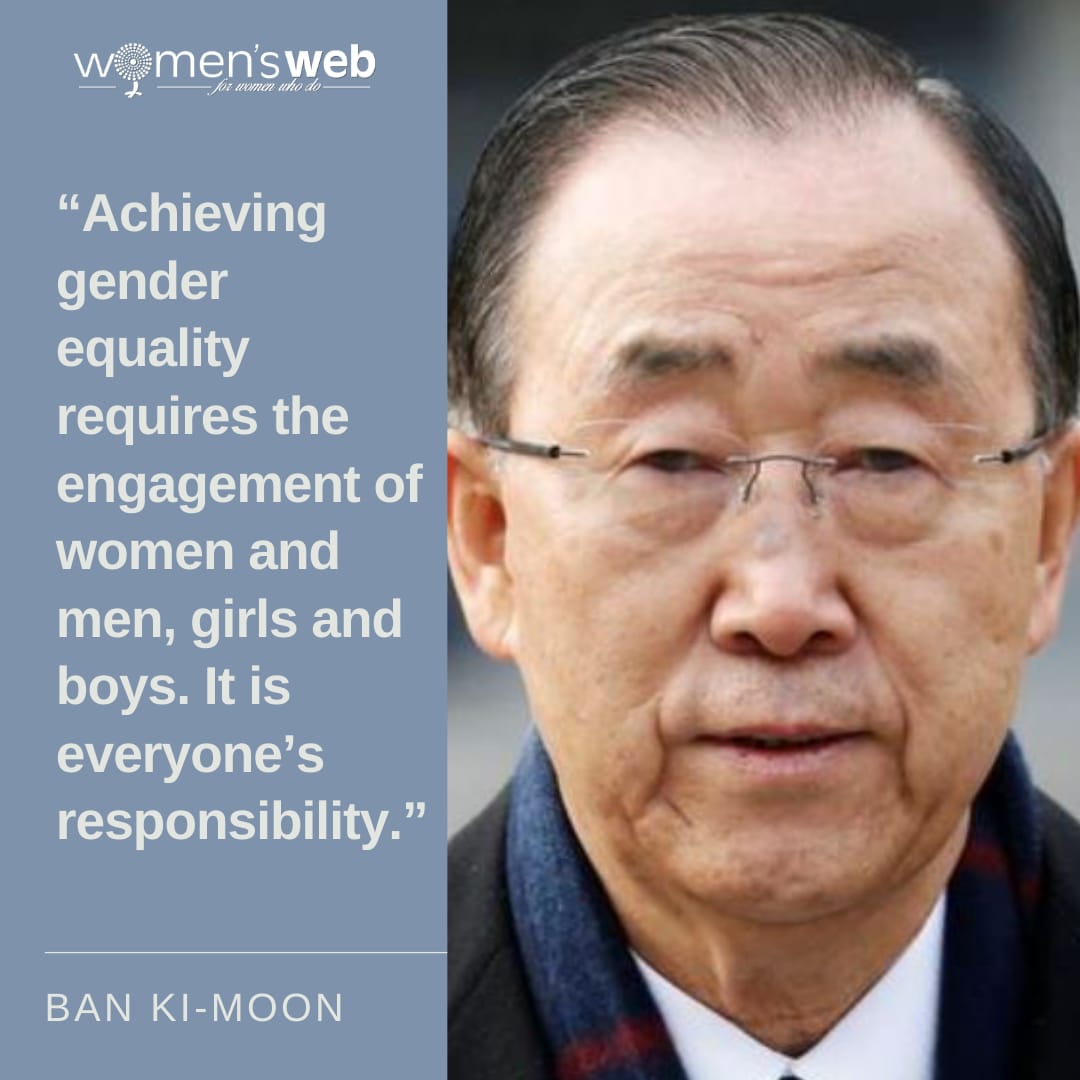
Gender equality is a human fight not a female fight.

Due to patriarchy many girls are hold back from striving for their dreams, receiving a quality education, medical facilities and overall awareness for their well being.

Everyday girls and boys see gender inequality in their homes, community, in textbooks, in media and among the adult.

Society assume an unequal responsibility for household work with mothers bearing the brunt of caregiving.

In schools, many girls receive less support than boys to pursue the studies they choose.

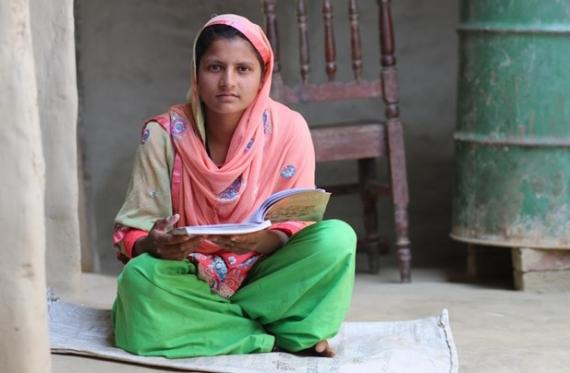
Rashida khatun says I realised the harm I would be causing myself if I agreed to get married. She in is enrolled in UNICEF supported program that provides out of school girls with basic numeracy, literacy and life skills.

Whenever we talk about gender inequality we always seems to focus on women but have anyone ever thought that what it’s like for men or LGBTQ community.

Gender equality, historically has been predominantly a women’s movement for women but I think the impact of gender inequality and how its affecting man hasn’t really been addressed.

Emma Watson

  • Generally we see in our families that boys told to pursue maths in higher studies and girls were told to pursue Biology so that the male became engineer for female can be a doctor.
  • Whenever a boy wants to be a cook, singer, dancer he is being discouraged by society or his parent by saying that these are for girls.
  • It’s a perception in our patriarchal society that boys do not cry that the crime is only for girls.
    • Mens are stronger than women and they will never bow in front of anyone
    • That’s why mens will never admit their faults because they are meant to be dominant in this patriarchal society.
  • When a girl wanted to be an officer then she is being discouraged by the family by saying that this is the job for Boys.
  • The perception of our societies that the household works are made for womens .
  • If people see a girl with short hair, the peoples in society tends to point at her and think of her as a freak.
  • If a girl is not interested in cooking but she still has to do it and she is pressurized by the family and Society by saying that you have to go to someone’s home and you have to do it because it is made for you.

Let’s talk about LGBTQ community. It is is the second of three issues focused on social inequalities.

  • LGBTQ community faces gender inequality in their everyday life.
  • They face inequalities in employment, education, health, survival and political empowerment.
  • It is not the only way by which they faces social inequalities.
  • Lgbtq people faces housing discrimination and workplace discrimination.
  • They faces basic human right such as – marriage and family adoption.
  • They have been discarded from their homes at their birth. The only reason of this is that they are not a male or female.
  • Peoples doesn’t behave properly with them.

Is this what we called Gender Equality??

We blame society for gender inequalities and for everything but why we forget that society is because of us. we are the part of society and to change this society we have to change our own mentality.

How I Spend An Evening?

“Evening time” is the end of the day, And at this time we try to relax our body and mind, and every individual has a different way of relaxing oneself. Every person has a different way of greeting others. The Internet and mobile phones change our life completely. In the past few months, we have spent most of our time with friends and families more, but Today we use mobile phones all day and night. In other words, Today we can not live without a mobile phone; not only that, since social media has come, every person likes chatting in social media instead of talking to each other.

It’s impossible to even imagine how our life would be if there were no various tasty snacks. Most of us get back home, or complete our work by evening and relax with a cup of tea or coffee with something to munch on. The time where you have the deepest conversation or maybe end up overthinking. Snack is loved by people of all ages because it brings us a good taste, good mood and helps us heal from harms. Good food always brings good mood.

We face hard times! I am an optimistic and happy-go-lucky student of Class VIII who has firm faith in the good life, but my parents want me to stay ahead of everybody in this competitive world. There was a time when coming back after school meant joy to me. Four- thirty in the afternoon was good food, and seven in the evening meant time for studies. There was the beautiful period from four- thirty to seven in the evening when it was either cricket or football for me! How times have changed!

Ever since I reached high school, tuitions have been encroaching on my life like a desert encroaches upon a green pasture to destroy it. Well, it is not that tuitions are not important. Nor can I complain of a lack of dedication in my tuition teachers, but what I fail to comprehend is my parents’ obsession to ensure that this giant python called tuitions should develop a crush for me (pun intended!).

If I tell my dad that I am being made to take tuitions when I am quite comfortable with the subject, he gives a mature smile which betrays his being intrigued at my attempts to reason. He is perhaps under the impression that evolution is yet to catch with me. The final result is that he ensures that I meekly visit the concerned tutorial. up Thus my first tuition begins at 5 o’clock. From then to 6.30, I cram the concepts of organic and inorganic Chemistry. I leave this coaching sharp at 6.35 pm to reach another tutorial located 2 kilometres away before 7 pm. There begins my struggle with Shakespeare. It is not that I do not enjoy Shakespeare, but I do not have much stamina left by the time I reach the English tuition.

Image Source – google

My parents fail to recognise that the best part of a student’s waking hours is spent in school. And after that if I am sent to continuous tuition classes, when do I study myself? Moreover, we are taught to play for good health. If a boy does his schooling from ten to four and then does his tuitions from five to nine, when does he play to maintain good health? Yes, one may definitely expect destiny to play with my health. Thus, till 9 pm I struggle to stay awake in my English tuition and then I complete my projects, courtesy the Internet, for an hour after I reach home at about nine-thirty in the night!

I have dinner at ten-thirty which is when I also surf the television channels to locate some interesting entertainment. When I finally go to sleep at about eleven, I browse through some interesting book. My teachers always stress that reading builds character. I agree! But I can’t read for long! Although my school begins at ten am although I have Geography tuitions from 7.30 am to 9.00 am. Ah! So much for the sweet happiness of childhood!

Psychological Disorders Part 8

Introduction

In Psychological Disorders Part 7, Depressive and Substance-Related disorders were discussed. They are both very serious disorders that need immediate help. Both can be dealt with by consulting a psychologist and taking the proper medication needed. This article will discuss Neurocognitive and Obsessive-Compulsive Disorders.

Neurocognitive Disorders

These disorders are accompanied by deficits in cognitive functioning. These are different from the disorders of impaired cognition present at birth.

Delirium is a serious disorder concerning disturbance in mental abilities that results in confused thinking and reduced awareness of the surrounding environment. Delirium is usually very rapid; it starts within hours or a few days. It usually arises because of contributing factors such as a chronic illness, changes in metabolic balance, medication, infection, surgery, or intoxication. It is important to note that delirium and dementia look very similar but are different. Symptoms for reduced awareness of the environment are the inability to stay focused or continuously switching topics, getting easily distracted by useless things, getting stuck on one idea, and being withdrawn. Symptoms for poor thinking skills are disorientation, poor memory, difficulty in speaking or recalling words, trouble understanding speech, rambling, and difficulty in reading or writing. Some of the behavioural changes are hallucinations, calling out or moaning, lethargy, disturbed sleep habits, agitation, being withdrawn, and reversal of the night-day cycle. Some of the emotional disturbances experienced are depression, euphoria, apathy, anxiety, paranoia, anger, unpredictable moods, and personality changes.

Neurocognitive Disorders used to be known as Organic brain syndrome. It is a group of conditions that leads to impaired mental function. These disorders usually occur in older people but that does not mean they cannot affect young adults. It includes problems with memory, changes in behaviour, trouble performing daily activities, and difficulty understanding language. These symptoms may be caused because of a neurodegenerative condition like Alzheimer’s disease or dementia. Neurodegenerative diseases result in the brain and nerves deteriorating over time which then causes loss of neurological function. Neurocognitive disorders can be a result of brain trauma or substance abuse. Symptoms for this are memory loss, confusion, anxiety, headaches, inability to focus, short-term memory loss, trouble performing normal tasks, changes in vision, and difficulty in walking and balancing. Some of the neurodegenerative diseases that cause this disorder are Alzheimer’s disease, Huntington’s disease, Parkinson’s disease, prion disease, dementia, and multiple sclerosis.

Obsessive-Compulsive Disorders

This is a category of psychiatric condition that includes obsessive-compulsive disorder (OCD), body-dysmorphic disorder, hoarding disorder, trichotillomania (hair-pulling disorder), excoriation disorder (skin picking), substance-induced OCD, and OCD because of a medical condition.

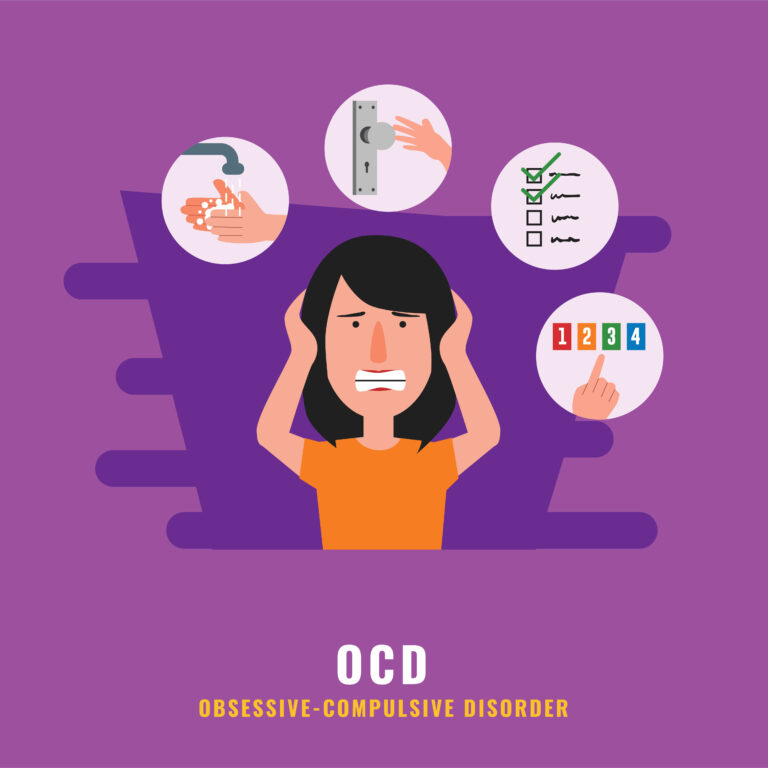
Obsessive-Compulsive Disorder is a pattern of unwanted fear (obsessions) which leads to doing repetitive behaviours (compulsions). This starts interfering in the daily activities. When a person tries to ignore the obsessions, the anxiety keeps increasing hence making the urge to do the compulsions stronger, and this is how the cycle of OCD is created. Obsessions usually have a theme such as fear of contamination, having difficulty tolerating uncertainty, needing things to be symmetrical, having horrific thoughts about losing control, and unwanted thoughts on religion or sexual subjects. Symptoms of obsession are fear of touching people because of contamination, doubts whether you have locked the door or turned off the stove, images of driving into a crowd of people, unpleasant sexual images, excessive stress when objects are not placed orderly, thoughts about acting inappropriately in public and avoiding situations that might trigger obsessions. Symptoms of compulsion are washing hands till the skin becomes raw, checking doors repeatedly, checking the stove repeatedly, counting in a pattern, silently repeating a word or phrase, and arranging things in a particular order.

Conclusion

Neurocognitive disorders remain chronic but they can be controlled and monitored by medication and therapy. There is no exact way to prevent OCD but it can be treated by consulting a psychologist and learning how to deal with the fears that lead to the compulsions.

References

Note: this is just Part 8 of the Psychological Disorders series.

MUST-READ TWO BOOKS BY PAULO COELHO – 2

Paulo Coelho wrote many best-selling books most of which are popular all around the world. And translated in various languages. One of his masterpieces is Alchemist. All of his works are related to self-help and motivational genres.

Book: Veronica Decides To Die

Veronica is a young woman who commits suicide due to being full of emptiness in her life. While she waiting for death after taking a lot of sleeping pills she fainted and found herself in an asylum alive. But Doctor said that she has only a few days to live due to a heart condition caused by the overdose. Her presence there affects all of the mental hospital’s patients, especially Zedka, who has clinical depression; Mari, who has panic attacks; and Eduard, who has schizophrenia, and with whom Veronika falls in love. At least she wants to live or not is the key base of this novel.

Why you should read this book: 

This one is not a boring plot, book content moves slow still does not let you drop the idea to read it. And this contains good vocabulary which is worth recommending to every reader. If you ever tried or at least thought once to end your life read this one it will make you believe in Miracle. 

Book Quotes:

People never learn anything by being told, they have to find out for themselves.

You are someone who is different, but who wants to be the same as everyone else. 

You have two choices, to control your mind or to let your mind control you.

Note: This book is also adapted as a film by Emily Young in 2009. 

Book: The Spy

Mata Hari, the beautiful woman, the dancer, the courtesan, and the spy. She was the center of attraction wherever she goes… As a dancer she delighted her audiences, as a courtesan, she bewitched the richest and powerful men of the era. But is she really a spy? 

Why you should read this one:

This book is based on real events. Mata Hari is a real person who is accused of espionage and executed.

On the back cover, it says, “Fiction.” But, I would rather love to say it’s a historical work. 

When a man sleeps with many women, do we care to say any terms? So, I can’t criticize Mata Hari for being a courtesan. 

In this work, I can visualize how men treated women as an object during those time. They gave preference for outer appearance. They wanted their wife to be loyal. But, those rules aren’t for them. And those things made my heart shrunk.

Book Quotes:

I decided to be who I always dreamed of. And the price of a dream is always high.

When we don’t know where life is taking us, we are never lost. 

At this moment, I look back at my life and realize that memory is a river, one that always runs backward.

Recommendations:

I don’t recommend both of these books to children especially if you are younger than sixteen. One book contains intimate scenes and another one contains sexual harassment scenes. Thus I would like to recommend these to elder readers who are more than sixteen.

TWO MUST-READ BOOKS OF PAULO COELHO https://eduindex.org/2021/07/18/two-must-read-books-of-paulo-coelho/

BOOK REVIEW: THE DA VINCI CODE https://eduindex.org/2021/07/19/book-review-the-da-vinci-code/

Poverty

Poverty! Poverty is lack of food, Poverty is lack of shelter, Poverty is being sick and can not afford medicines, Poverty is knowing how to read but can’t afford going to School, Poverty is being unemployed. And Poverty is lack of representation and freedom.Poverty has so many faces, and can describe in different ways. Most often, poverty is a situation people want to escape.

We have to take the step to reduce poverty so that many more may have enough food to eat, adequate shelter to cover their head, access to education and health.Overpopulation and underdevelopment in the country is the main cause for poverty. The birth rate in India is very high and the former has taken the measure of the ‘one child policy’ to change the situation, but the latter has not made any effort yet.

Underdevelopment is another reason, the country do not have enough economic growth to support their growing populations.Poverty in India can eradicate with some effective programmes, just need a joint effort from everyone not only from the government. Government of India should make effective policies aiming to develop rural areas through the key components like primary education, population control policies, family welfare, job creation and many more.

We can define poverty as the condition where the basic needs of a family, like food, shelter, clothing, and education are not fulfilled. It can lead to other problems like poor literacy, unemployment, malnutrition, etc. A poor person is not able to get education due to lack of money and therefore remains unemployed. An unemployed person is not able to buy enough & nutritious food for his family and their health decline. A weak person lacks the energy required for the job. A jobless person remains poor only. Thus we can say that poverty is the root cause of other problems.

How Poverty is Measured?

For measuring poverty United nations have devised two measures of poverty – Absolute & relative poverty.  Absolute poverty is used to measure poverty in developing countries like India. Relative poverty is used to measure poverty in developed countries like the USA. In absolute poverty, a line based on the minimum level of income has been created & is called a poverty line.  If per day income of a family is below this level, then it is poor or below the poverty line. If per day income of a family is above this level, then it is non-poor or above the poverty line. In India, the new poverty line is  Rs 32 in rural areas and Rs 47 in urban areas.

Causes of Poverty

According to the Noble prize winner South African leader, Nelson Mandela – “Poverty is not natural, it is manmade”. The above statement is true as the causes of poverty are generally man-made. There are various causes of poverty but the most important is population. Rising population is putting the burden on the resources & budget of countries. Governments are finding difficult to provide food, shelter & employment to the rising population.

The other causes are- lack of education, war, natural disaster, lack of employment, lack of infrastructure, political instability, etc. For instance- lack of employment opportunities makes a person jobless & he is not able to earn enough to fulfill the basic necessities of his family & becomes poor. Lack of education compels a person for less paying jobs & it makes him poorer. Lack of infrastructure means there are no industries, banks, etc. in a country resulting in lack of employment opportunities. Natural disasters like flood, earthquake also contribute to poverty.

In some countries, especially African countries like Somalia, a long period of civil war has made poverty widespread. This is because all the resources & money is being spent in war instead of public welfare. Countries like India, Pakistan, Bangladesh, etc. are prone to natural disasters like cyclone, etc. These disasters occur every year causing poverty to rise.

Ill Effects of Poverty

Poverty affects the life of a poor family. A poor person is not able to take proper food & nutrition &his capacity to work reduces. Reduced capacity to work further reduces his income, making him poorer. Children from poor family never get proper schooling & proper nutrition. They have to work to support their family & this destroys their childhood. Some of them may also involve in crimes like theft, murder, robbery, etc. A poor person remains uneducated & is forced to live under unhygienic conditions in slums. There are no proper sanitation & drinking water facility in slums & he falls ill often &  his health deteriorates. A poor person generally dies an early death. So, all social evils are related to poverty.

Government Schemes to Remove Poverty

The government of India also took several measures to eradicate poverty from India. Some of them are – creating employment opportunities, controlling population, etc. In India, about 60% of the population is still dependent on agriculture for its livelihood. Government has taken certain measures to promote agriculture in India. The government constructed certain dams & canals in our country to provide easy availability of water for irrigation. Government has also taken steps for the cheap availability of seeds & farming equipment to promote agriculture. Government is also promoting farming of cash crops like cotton, instead of food crops. In cities, the government is promoting industrialization to create more jobs. Government has also opened  ‘Ration shops’. Other measures include providing free & compulsory education for children up to 14 years of age, scholarship to deserving students from a poor background, providing subsidized houses to poor people, etc.

Poverty is a social evil, we can also contribute to control it. For example- we can simply donate old clothes to poor people, we can also sponsor the education of a poor child or we can utilize our free time by teaching poor students. Remember before wasting food, somebody is still sleeping hungry.

Photo by namo deet on Pexels.com

Time Management

Time management is the course of marshalling everyday routine to harness the maximum time available. Time management is a method to work smarter rather than harder to get more out of your time and resources. Everyone has the same amount of time – 24 hours a day; the key is to allocate appropriate time to your activities based on their importance.

It is up to one to utilize it whatever way one wants. One may waste it on insignificant things or use it productively; the decision is theirs. However, if one wants to get the maximum out of their time, one has to esteem time management. Time management can be very merely done through simple methodologies.

Photo by Lisa on Pexels.com

Students should make a priority-based schedule regarding their studies and assignments. Time to different subjects must be allotted based on the individual difficulties faced by the students in that particular subject.

For example, if a student is good at physics and not so good in Biology; then he/she should award biology with a little extra time than physics. Even the time one likes to spend on TV or other activities must be included in the schedule to keep one in full control of their available time.

In today’s scenario people are so busy in their lives that they are not getting time for themselves. Due to which time management has become the need of the hour. Time management is playing a vital role in mankind. Time management creates discipline or vice versa. If you want to be successful in life then you need to manage your time. As a result, various billionaires teach about time management.

The Meaning of Time ManagementIn our daily life, we have got only twenty-four hours in a day. Therefore we cannot do everything in one day. This creates limitations in our everyday work. In order to manage work, social life and sleep, division of time is important. In a particular way division of time is the need. This will help the person to complete all his tasks. You should write your tasks in a schedule.Designing has to be in a way that each task gets enough time. Your work should have the highest priority. The second priority should sleep. And the last but not the least your social life. Your social life includes family and friends.In order to live a happy and peaceful life socializing is important. Too much workload can make a person ill. So, give your mind a little rest. Spending time with family can help you with this. Moreover, the main purpose to work is to fulfill the needs of the family. Since the fulfillment of needs is important. Which makes a person happy.

Importance of Time Management for StudentsThough adults are working, the students are not spared with work. The students today have many studies to do. Because of this, they are not getting time to enjoy their childhood. Time management for students has become a crucial need. Education has become vast. Therefore proper scheduling of time is important.

A good student knows the importance of studies. But he should also know time never comes back. Thus a student should take out time for personal development too. Since personal development is important for their proper growth. Moreover, personality development is also important for a student. They should at least take out one hour for sports. Sports teach student teamwork. Since it is enjoyable it lessens the stress of the day.The daily routine is School or college, and then coaching. This leaves with no time of self-studies. Self-study is an important aspect of education. The student should not neglect this. As the day ends, they get too tired. Due to which there is no energy left. This degrades the performance of the student.There is a difference between a topper and an average student. That difference is proper time management. A topper student schedules his time. While an average student does not do that. And because he never manages time, he gets no time for self-study. Which in turn leaves him behind.

Brief steps for innovation in the era of E-commerce

As the Economist Joseph Schumpeter said Entrepreneurs can’t sit idle and try to innovate. They are the people who have an uncanny sense of using the resources from less productive use to more productive use. They are the ones who do Value creation, this is what we call innovation.

E-commerce belongs to this generation and Technology is irreversible; no one can hold it back and only curiosity won’t help us. Research activity is also needed. Scientific knowledge is essential (supported). Research is also supplemented by Developmental activities (R&D), closer to practical uses.

The Technological Innovation world involves product and process development activities (converted into manifestation forms). Then it transcends to the market/people with practical uses. Invention and discoveries constitute the technology world/innovation world- product process- market development activities (Administrative capabilities needed as well).

This all has to be assembled holistically and make the tech happen/forward driven with innovation. Business world needs tech entrepreneurship and administrative skills.

We have to question what value the tech will bring to our product. Simple innovation without value creation cannot create Blue Ocean/has no meaning.

Technological importance means the value that the technology brings to a product/potential product

We have to ensure not to bring value to other products in the competition. We need technological positioning. Frontier-ending R&D investment is needed to compete with the rival companies that are deeply entrenched in technology. Keep competitive parity is not an advantage.  

A technology portfolio consists of- Bet, Draw, Cash, and Fold

Regime of Appropriability

Is the effectiveness of legal mechanisms of protection of technology, Patents, copyrights, trade secrets, tacit knowledge, and codified knowledge.

Process innovation can’t be protected by patents.

Codified knowledge is very prone to industrial espionage, in other words, Hiring people from other companies. The regime of appropriability can be from high to low depending on the technology. E.g. KFC spice formula (easy to safeguard) or a new search algorithm (hard to seep safe).

Any innovation passes through two stages-

Pre Paradigm and Paradigm stage

Pre Paradigm is when a technology is in the process of innovation. Every innovation goes through this stage when it remains in the domain of the innovators and scientists.

In the Paradigm stage product designs are fluid and the manufacturing process is loosely organized whereas in the Paradigm stage less uncertainty for the design emerges and a final design emerges. The focus is now on process design.

Our objective is to transit from the pre paradigm stage to the paradigm stage as fast as possible. Successful transit of tech to practical use is called commercialization and has to be ensured with another set of capabilities called complementary assets.

The tinkering or invention needs to be followed by research and then a complimentary stage in development. Entrepreneurs have to ensure that complementary assets have to be built around innovation to be successful. Innovators need to have certain complementary assets which are not generic (highly specialized).

There is a third category of assets called Co specialized. These assets have a bilateral dependence. These assets have no other use other than their intended use. E.g.: A spacecraft manufacturing facility.

Many innovators fail and succumb and they don’t have the complementary assets. To counter that, entrepreneurs can do collaborative strategy by collaborating with partners with complementary assets. It should exclude the possibility of any other collaboration.  

Technology has to be adopted by people otherwise, it has no meaning. Early adopters need to leverage by patronizing the products. This gives way to the early majority who are more market-orientated. If they are satisfied they give way to the late majority. This transition will secure our position in the market.

But there is a catch, when technology falls between the transition space of early adopters and the early majority. This is known as ‘Chasm’. This change in emphasis poses a problem for innovating firms since incumbents are often much better equipped to meet the desire for complete products and low-risk purchases,and once you fall into this space. It gets really difficult to get out of it. A tornado (another group of people) is needed to take it out of the chasm and hit it into the mainstream.

E-commerce implementation can have two strategies:

Bottom-up approach and Top-down approach

Introduction of Ecommerce has complemented traditional business. This has also made traditional businesses more competitive.

Top-down approach implementation is preferred on a large scale and national level but when it comes to administrative (meeting the requirements of civil services), local trade and commerce services are suited to have a bottom-up approach.

Digital infrastructure is essential for making e-commerce successful. Cradle to grave digital identity is emerging as the new measure to the unique identification of people.

Common service center: Helps in providing e-Services to rural and remote locations where availability of computers and Internet is negligible or mostly absent. With the help of Interoperability and common information center data and information can be accessed at any location.

Mobile banking is another approach that is also increasing its proliferation.  But it’s still in its nascent stages.

Another concept that is emerging is Cashless transactions where all the POS and banking services can be attained remotely. Although the security issue remains which has to be taken care of by a central agency (Government).

One of the most important things to consider is Digital literacy. A certain amount of literacy is needed for availing all these digital infrastructure and access. For a widespread utilization of digital services, we have to ensure that more people are digitally literate.

We also have to keep in mind that common support ICT infrastructure and adequate private and public partnership will help to make these services more efficient and better.  With the help of aforementioned knowledge, an E-commerce can certainly endure in the realm of digital world.

References:

https://www.reed.edu/economics/parker/f10/201/cases/appropriability.html

https://smallbusiness.chron.com/stages-paradigm-shift-organization-78904.html

Control of Air pollution

National air quality monitoring programme

  • Central pollution control board is executing a nationwide program of ambient air quality monitoring known as National air quality monitoring programme.
  • National Ambient Air Quality standards prescribed specific standards for residential, ruler, Industrialand other sensitive areas.
  • N. A. M. P, four air pollutants – Sulphur Dioxide, oxides of Nitrogen, suspended particulate matter and respirable suspended particulate matter (pm10) have been identified for regular monitoring at all the locations.
  • Network consists of 683 operating stations covering 300 cities and town in 28 states and 9 union territories of country.
  • Annual average- Annual arithmetic mean of minimum 104 measurements in a year taken twice a week 24 hour at uniform interval.
  • The level of air quality necessary with an adequate margin of safety to protect the public health vegetation and its property.

Air quality index

  • Air quality index is tool for effective dissemination of air quality information to people.
  • There are six categories namely – good, satisfactory, moderately, polluted, poor, very poor and severe.
  • The propose 82 I will consider 8 pollutants PM 10, PM 2.5 NO2, SO2 Co, O3, NH3 and Pb.

Control of air pollution

  • Control measures
    1. Technological
    2. Legal
    3. Economic

Technological approach

  • Adapting Lifestyle that uses less energy and pollutes less or using energy sources that produce less amount of pollutant as by-product.
  • Remove pollutant generating stuff from energy sources
    • example- Remove sulphur from coal before burning it.
  • Reduce the energy used without changing the way of life
    • Use more energy efficient car and replace existing bulb with CFL bulb and LED bulb.
  • Check the generation of pollutant their burned
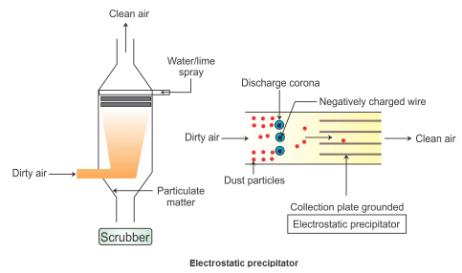
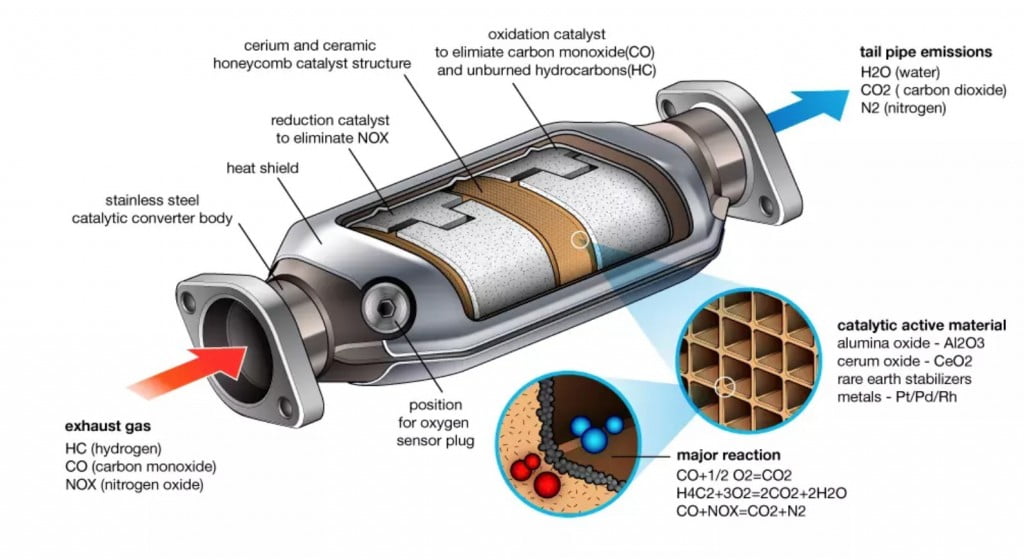
    • Catalytic converter, electrostatic precipitator, scrubber, Bag house collection of particulate emission, cyclone separator etc.
    • Encouraging mass transportation.

Legal approach

  • After Stockholm conference, 1972 the Government of India under article 253 of the Constitution of India in enacted the Air Act, 1981 for the prevention control and abatement of air pollution.
  • To empower the central and state pollution control board. Air Amendment Act, 1987( for prevention and control of pollution) was enacted but this was not strong enough to play precautionary role.
  • After Bhopal disaster of Environment protection Act was passed in 1986 this act has punitive power to restrict any activity that would harm the environment.
  • To regulate vehicles pollution, the central motor vehicle act of 1939 was amended in 1989.
  • As per the current requirement all the transport vehicles must carry a fitness certificate which is to be renewed each year after the first two year of new vehicle registration.
  • National fuel policy announced on October 6, 2003 , a phased program for implementing the emission standards in India by 2010.

Economic approach

  • Cost consideration of air pollution involves 2 factor:-
    1. Cost of controlling the air pollution
    2. Cost of not controlling the air pollution
  • Determination of cost of first in straight forward but that of second is difficult and can be subjective to some extent.
  • Direct air pollution control in India
    • Fuel wood and Biomass burning
    • Transport

Control

  • Using low sulphur coal.
  • Use Proper air pollution control devices in industry
  • Individual efforts to control air pollution
    • Inform to Road Transport office and PCB about the vehicle polluting the environment
    • Regular engine tune up replacement of old more polluting vehicles
    • Shifting to less polluting fuels
    • Using mass transportation
    • Do not use CFC containing sprays for freshners that deplete the ozone layer.
    • Planting more trees
    • Say no to fire crackers in Diwali and other occasions.

Climate change| Are we finally going to compensate for the damage we did?

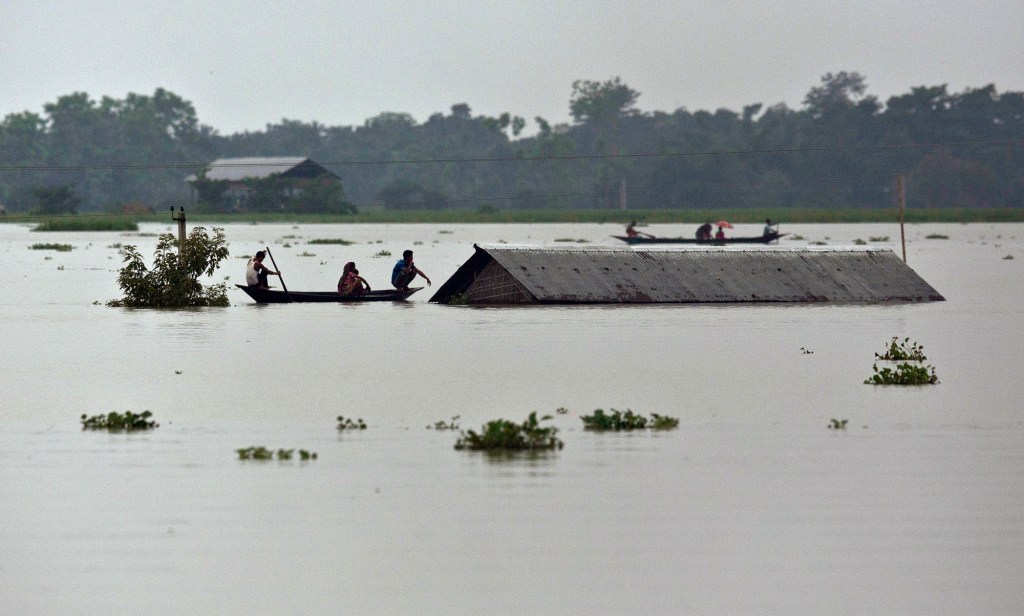
Death dolls due to floods in Italy, China, Germany and India keep rising. “Airpocalypse” in Siberia to forest fire, “Bootleg fire” in Oregon, flash floods in Southwest, Southeast and Northwestern Europe.

(AP Photo/Anupam Nath)

Climate change – When there’s a significant change in weather in a given area over a period.

Intense climate change can occur due to external as well as internal factors. External factors including change in solar emission, change in global energy balance due to change in the Earth’s orbit around the Sun, and volcanic activity.

Internal factors are human induced which leads to Greenhouse Effect.

The classical period used for describing a climate is 30 years, as defined by the World Meteorological Organization (WMO).

Floods:

A flood is an overflow of water that submerges land that is usually dry. In the sense of “flowing water”, the word may also be applied to the inflow of the tide.

NEWS:

China’s central Henan province received its heaviest rainfall which led to massive floods, killing over two dozen people. Many dams have breached and it  flooded the highly populated downstream areas. Scientists have said many factors contribute to flooding, but a warming atmosphere caused by climate change made extreme rainfall (Cloudburst) more likely.

The People’s Republic of China is the world’s leading annual emitter of greenhouse gases and mercury.

High levels of air pollution in China’s cities caused to 350,000–400,000 premature deaths.

In India, Himachal Pradesh experienced torrential rain, cloudburst, and putting in many lives and environment. Floods and landslides has caused mayhem in more than 4 states in India.

Of the 30 most polluted cities in the world, 21 were in India in 2019.

Germany has taken a terrifying hit; causalities cross 160. Angela Merkel, Chancellor of Germany, has demanded to take faster climate action as the casualties keep on climbing.

Every News channel now covers how terrifying rainfall has caused havoc over the world. Will it take more causalities, economic damages in rich nations to take a significant step to heal our world? To find ways to cut down their harmful amount of chemicals? To see past their greed for money, power, and status, and adhere to the environmental damage?

We are human. Everything we have is all due to nature, all due to the abode we call Earth. If Earth doesn’t remain the same, if there is no land or adhering to our selfish intent let’s say, fertile land left, we would be constantly fighting to even have a pure drop of water or food for us to fetch.

Reality is far from movie. It is not going to be like 2012 (Movie) or the Earth isn’t going to go for full apocalypses mode wherein humanity can start over. It is the feeble attempt to believe we can start over. What if cloudbursts never stop, the land we polluted probably will merge with the oceans rivers we polluted. There won’t be any quality of life not only for us humans but also for other living beings who have done nothing but trying to maintain the ecosystem.

There are many things to ponder upon. Why do we take climate change so lightly? Why are people who strive to heal nature met with false notices and hopes?

Greta Thunberg, 18 years old Swedish activist, is known for challenging world leaders to take immediate action for climate change mitigation. We are surely proud of her and many more environmentalists. She is very vocal and dedicated to spreading awareness about the climate crisis, taking steps herself to let us see ways to protect our Earth, and target those in the power of controlling carbon emission to take steps.

But, I feel we let her and many down in many ways. If you recall, she pushed Siemens to make the “only right decision regarding projects such as Adani Group’s Carmichael thermal coal project. It has been a focus of environmentalists since 2010. The voices went unheard, But, a cartoon of her getting assaulted spread, all due to just voicing her concerns enraged and disgusted lakhs.

EVERY PROBLEM HAS A SOLUTION. WE ARE JUST NOT LOOKING HARD ENOUGH (INTENTIONALLY AND CONSCIOUSLY).

I believe that we need to come together, to use our success in the scientific field, to use our intellectuality, and to actively come up with eco-friendly alternatives. We can encourage environmentalists and environmental engineers to go on with their endeavors and lend strength to deal with things that pose a great risk to nature.

  • To make plantation drives a mandatory event in schools.
  • To encourage beach, ocean, and any water bodies clean-ups.
  • To teach basic greener alternatives.
  • To learn why we need to fight against climate change.

Let our voices, actions come together despite our conflicts and work to give back to Mother Earth.

Web Development

Top Web Development Companies in Hyderabad | WebHopers

Web Development Roadmaps

WEB…. The world using websites to take , give informations and converted to its useful

Let we learn about Web development

Front-End Roadmap

STEP 1

•       Learn the Basics

•       Every Web Developer must have a basic understanding of    HTML, CSS, and JavaScript.

•       Responsive Web Design is used in all types of modern web development.

•       ECMAScript 5 (JavaScript 5) is supported in all modern browsers. Take a good look at it, especially the new array functions.

•       HTML     

•       HTMLHTTP /  XHR

•       CSS

•       CSSCSS Responsive

•       JavaScript

•       JavaScriptECMAScript 5

STEP 2
Dig Deeper

When you feel comfortable with HTML and CSS, it is time to dig deeper.

You should learn how to use Maps, Fonts and Icons in HTML.

On the JavaScript side, you should learn how to access the HTML DOM.

You should also learn how to use AJAX and JSON for making server requests.

HTML

HTML DOMGoogle MapsGoogle FontsGoogle Charts

CSS

CSS Icons

JavaScript

XMLJSONAJAX

  • STEP 3
    Choose Frameworks
  • Now it is time to look at some Frameworks.
  • On the CSS side you should choose a framework for reponsive web design:
  • Bootstrap  /  Material Design  /  W3.CSS
  • On the JavaScript side you should learn at least one modern framework:
  • React.js  /  Angular.js  /  Vue.js   /  W3.JS
  • Maybe the popularity of jQuery has passed the top, but it is still the most used JavaScript framework.
  • CSS
  • BootstrapW3.CSS
  • JavaScript
  • jQueryAngularJSVue.jsW3.JS
  • XML
  • XSLTXPathXQuery

Back-End Roadmaps

  • STEP 4
    Back-End Roadmaps
  • Fullstack
  • SQLPHPASPPython
  • Fullstack JS
  • SQLNode.jsMySQLMongo.db

Web Development

Web Development Roadmaps

WEB…. The world using websites to take , give informations and converted to its useful

Let we learn about Web development

Front-End Roadmap

STEP 1

•       Learn the Basics

•       Every Web Developer must have a basic understanding of    HTML, CSS, and JavaScript.

•       Responsive Web Design is used in all types of modern web development.

•       ECMAScript 5 (JavaScript 5) is supported in all modern browsers. Take a good look at it, especially the new array functions.

•       HTML     

•       HTMLHTTP /  XHR

•       CSS

•       CSSCSS Responsive

•       JavaScript

•       JavaScriptECMAScript 5

STEP 2
Dig Deeper

When you feel comfortable with HTML and CSS, it is time to dig deeper.

You should learn how to use Maps, Fonts and Icons in HTML.

On the JavaScript side, you should learn how to access the HTML DOM.

You should also learn how to use AJAX and JSON for making server requests.

HTML

HTML DOMGoogle MapsGoogle FontsGoogle Charts

CSS

CSS Icons

JavaScript

XMLJSONAJAX

  • STEP 3
    Choose Frameworks
  • Now it is time to look at some Frameworks.
  • On the CSS side you should choose a framework for reponsive web design:
  • Bootstrap  /  Material Design  /  W3.CSS
  • On the JavaScript side you should learn at least one modern framework:
  • React.js  /  Angular.js  /  Vue.js   /  W3.JS
  • Maybe the popularity of jQuery has passed the top, but it is still the most used JavaScript framework.
  • CSS
  • BootstrapW3.CSS
  • JavaScript
  • jQueryAngularJSVue.jsW3.JS
  • XML
  • XSLTXPathXQuery

Back-End Roadmaps

  • STEP 4
    Back-End Roadmaps
  • Fullstack
  • SQLPHPASPPython
  • Fullstack JS
  • SQLNode.jsMySQLMongo.db

THE CHIEF CHARACTERISTICS OF A SHAKESPEAREAN TRAGEDY:

Shakespeare wrote eleven tragedies such as Hamlet, Othello, Macbeth, King Lear, Julius Caesar, Antony and Cleopatra, Romeo and Juliet, etc… But, there are some chiefly Characters in Shakespearean tragedies. That’s what we are going to draught down one by one.

  1. Shakespeare’s tragedies are based on stories and incidents taken from history or legends. Some of the stories are borrowed from previous playwrights. He has recreated these stories giving them a sense of unity and ordering them into closely-knit plots. The essence of a Shakespearean tragedy is that action issues from character and plot. Generally, two groups of people and ideas are brought face to face leading to conflict. In a Shakespearean tragedy, the plot is composed of several parts like Exposition, Conflict, Crisis, Denouement, and Catastrophe. He did not observe the unities always.
  2. In a Shakespearean tragedy, the suffering of the hero is exceptional. A hero is a man of a high estates like Hamlet or King Lear. The hero identifies himself with a dominant passion from which he cannot deliver himself and which finally works out his destruction.
  3. Every tragic hero suffers from a ‘tragic flaw’ that leads him to the tragic end. Like, Othello
  4. The essence of a Shakespearean tragedy is conflict. The catastrophe rises out of the unsolved conflict. The conflict releases energy in the form of uncontrollable spiritual forces causing a violent disturbance in the moral order of the world. Thus, a Shakespearean tragedy in its final analysis is highly spiritual.
  5. There is a kind of fatality and inevitability in Shakespearean tragedy. All calamities come from a character in action. We feel helpless of man before the force he release. the tragic hero striking at himself. The hero’s character involves his fate.
  6. Shakespearean tragedy is not pessimistic. It gives us an insight into the possibilities of the human soul.
  7. Shakespeare presents abnormal states of mind like insanity, hallucination, and somnambulism in some of his tragedies like King Lear and Macbeth. Eg, supernatural agents like King Lear and Macbeth. Ghost’s in Macbeth.
  8. Shakespeare introduces accidents, chances, and prophecies in his tragedies. The most well-known among these are the incidents of the handkerchief in Othello and the witches in Macbeth.
  9. Shakespeare presents a moral world order in his tragedies. His concern was with the conflict causes a commotion in the moral world. Shakespeare’s tragedies show the successful emergence of good is destroyed but it survives. Thus, the tragedy is a presentation of ‘morality in emergence’. As Dowden says it is true that good can survive only at the expense of so much of the virtuous force of the world still it is well to be assured that evil, even at the expense of good can be subdued, such an assurance buoys us above despair.
  10. There is no poetic Justice in Shakespearean tragedies. But evil characters do not prosper. Iago goes away with a stern warning. Shakespeare was concerned with a stern warning. Shakespeare was concerned with the moral and spiritual order of the world and so his art refuses to recognize individual punishment or reward.

TWO MUST READ BOOKS BY PAULO COELHO https://eduindex.org/2021/07/18/two-must-read-books-of-paulo-coelho/

BOOK REVIEW: THE GIRL WHO SAVED THE KING OF SWEDEN https://eduindex.org/2021/07/19/book-review-the-girl-who-saved-the-king-of-sweden/

Cloud Computing

Cloud computing is the on-demand availability of computer system resources, especially data storage and computing power, without direct active management by the user. The term is generally used to describe data centers available to many users over the Internet. Large clouds, predominant today, often have functions distributed over multiple locations from central servers.

Cloud computing relies on sharing of resources to achieve coherence and economies of scale. Advocates of public and hybrid clouds note that cloud computing allows companies to avoid or minimize up-front IT infrastructure costs. Proponents also claim that cloud computing allows enterprises to get their applications up and running faster, with improved manageability and less maintenance, and that it enables IT teams to more rapidly adjust resources to meet fluctuating and unpredictable demand, providing the burst computing capability: high computing power at certain periods of peak demand.

Importance of Cloud Computing

Inexpensive

Cloud computing helps in reducing a considerable amount of CAPEX (Capital Expenditure) & OPEX (Operational Expenditures) an organization does not need to invest in expensive hardware’s, storage devices, & software’s etc. and you only have to pay for the resources you utilize.

Elasticity & flexibility

Cloud computing enables you to reduce and increase your resources demands as per your requirements. For e.g. if you have heavy traffic on your site you can increase your resources and vice versa. Cloud computing gives you the flexibility to work from wherever you want and whenever you want all you require is an internet connection.

Auto Updating

Software updates and upgrades can be a painful thing cloud computing simplifies it for you as all the software maintenance and upgrades are looked after and regulated by your cloud service provider.

Increased collaboration

Cloud computing enables employees to work in a more collaborative and coordinated manner as all the data and information about the organization, & ongoing projects is available to every employee and can be accessed from anywhere and anytime which helps in reducing delays and increase productivity.

Agility & Speed

Time is the most crucial factor when it comes to decision-making and execution.  Cloud computing services have a very prompt and customer-centric SLA’s (Service Level Agreements). Cloud Service providers offer up to 99.99% uptimes which ensure continuous flow of business operations and executions.