RAGS TO RICHES-KARSANBHAI PATEL

Karsan bhai khodidas patel is an Indian industrialist who is the founder of a Rs.42,500 crore nirma group, a company which majorly deals with detergents, cements and cosmetics. Karsan bhai patel was born in 1945 into a farmer family from Ruppur village, Mehsana, Gujarat. Karsan bhai completed his B.Sc in chemistry and he initially joined in a cotten mill as a lab technician in Ahmedabad later served for the state government.

He has an abaundant knowledge on chemicals and in 1969, he started manufacturing phosphate free detergent for domestic usage in his backyard. He named that detergent powder as “NIRMA” . He dedicated his time after the office hours to prepare and market the detergent. At initial stage this business was purely one-man-company.

Karsan bhai used to sell his handmade detergent packets door to door using his cycle. The hand made detergent packets were sold at Rs.3 per kg, which was one third of least priced compared to popular detergents at that time. This least price making strategy gave him instant success. At that time domestic detergent market was limited and mostly controlled by the top most MNC companies only but with entry of karsan bhai’s market strategy, nirma created a revolution in domestic detergent sector.

It made the best and environment friendly detergent than other brands and occupied the top most shares in the market with its innovative methods. With in a short span of time Nirma became the largest selling detergent company in India. Since, the industry was labour intensive nirma also builded a large scale of employment.

Now, the company was recognized as the 9th among the top FMCG brands in India as per the year 2002. In the year of 2010 Karshan bhai received “PADMA SRI AWARD” and in 2019 karsan bhai ranked with #30 by forbes magazine for the list of Indias richest persons.

CONCLUSION:

Finally, we can understand karsan bhai’s success story as a good source for marketing strategy because he understood the need and demand of the domestic detergents perfectly and he applied his innovative marketing formula strictly in his business and also he focused on the new technologies to develop his business as well and worked consistently to bag the success.

” SUCCESSFULL PEOPLE ARE NOT GIFTED BUT THEY DO HARD WORK TO ACHIEVE SUCCESS ON A PURPOSE “

UNDERRATED ART FORMS OF INDIA

India is a land of different cultures where over 1.5 billion people belonging to different communities live together . Many years back when India was called the GOLDEN BIRD , which was then brutally plundered by the foreign invaders, was not only because of the monetary wealth but also due to the rich culture and art form which the land once inhabited. Today centuries later, when we are still reeling from the affect of past attacks and with modernization reigning over, it has become extremely difficult and also important to preserve the dying art forms to save a remainder of our rich heritage . Also these art forms have been a source of income for lakhs of people .

While the term ART includes dance, singing and the paintings , in this blog we will have a glimpse on the five lesser known and underrated art forms which are desperately needed to be saved.

Madhubani Paintings

Originated in Madhubani district of Mithila region of Bihar, these paintings are said to have been made on the walls of every house of all the villages to celebrate the wedding of Lord Ram and Goddess Sita. The paintings are made using fingers, twigs, nib pens , brushes and matchsticks as tools. The color in the original Madhubani painting is given using natural dyes and pigments. Originally done on a freshly plastered mud wall , now for the commercial purposes the paintings are being made on a canvas or cloth. The paintings generally represents mythological Hindu deities, court scenes , traditional weddings and social gatherings. The All India Handicrafts Board and the Government of India in order to promote these traditional art form have asked women from the non agricultural backgrounds to continue painting on canvas or cloth and this has also become a source of income for many families.

Miniature Paintings

The origin of these paintings darts back to 7th century under the patronage of the Palas of Bengal. It is a kaleidoscope of history, scriptures and lives of people through ages made by the use of delicate brushwork, mixture of different colors and graceful forms. The paintings are so delicately made that even today in this world of modernization the brushes used for these paintings are made from Squirrel’s hairs. This intense labor of love illustrating the ancient mythology is created on palm leaves, paper, wood , ivory panel and cloth using natural colors such as stone dust, silver dust and real gold

Chambal Rumaal

This art form is an embroidered handicraft promoted under the patronage of the rulers of Chamba and was a common gift item exchanged during the marriages in ancient times. It is said that the earliest reported form of this art was made by Bebe Nanaki , the sister of Guru Nanak in 16th century and is still preserved in the Hoshiarpur Gurudwara. The art form is now continued in various parts of Himachal Pradesh and is made on a square or rectangle shaped cut muslin or khaddar material. Embroider Lalita Vakil got the NARI SHAKTI AWARD by the President of India Mr. Ram Nath Kovind for promoting this art form and giving employment to many women.

Gond Art

This art form is the tribal art of the Gond tribe which is one of the largest tribes of Madhya Pradesh. The art form preserves and communicate the culture of the Gond Tribal Community. The paintings constitute of two main designs called DIGNA and BHITTICHIBA . While the DIGNA designs constitutes of traditional geometric patterns which were originally made on the floors and walls of the house , the BHITTICHIBA designs constitutes the animals , plants and trees which were made on the walls of the houses.

Pattachitra Art

The art form includes the ancient artworks of Odisha which were generally used for ritual purposes and as a souvenir for the pilgrims of Puri and other temples. The cloth based scroll painting captures mythological narratives and folktales which are inscribed on the cloth with intricate details. The painting is made on a traditional canvas which is made by coating a gauze like fine cotton cloth with white stone powder and gum made of tamarind seeds which makes the canvas ready to accept the paints made by natural means. it is basically a dominant icon painting and almost all the chitarakars of this community hails from Puri , a small village in the heart of Odisha . It is also the only village in the entire country where everyone is engaged in one art form or the other such as patta painting, wooden toys making and stone crafting.

The rich ancient heritage of Indian art forms cannot be contained anywhere. This blog was just a means to let people know of the beautiful things which we are missing on.

Self-help and personality development

Self help and personality development is a weapon for us

The spirit of self help creates many good qualities in a person. … These people work more harder than a person who is reliable on others for their work. This leads to help them obtain strong will- power and determination.

Self-help or self-improvement is a self-guided improvement—economically, intellectually, or emotionally—often with a substantial psychological basis. … Many different self-help group programs exist, each with its own focus, techniques, associated beliefs, proponents and in some cases, leaders

The following are common examples of self-improvement.

  • Self-Awareness. A process of introspection to understand your own character, behavior, fears and ambitions.
  • Awareness. A process of extrospection to understand the world around you.
  • Health. …
  • Physical Fitness. …
  • Time Management. …
  • Productivity. …
  • Performance. …
  • Know-How

Here’s a look at some ways to build self-improvement into your daily routine and let go of negative thoughts about yourself.

  • Cultivate gratitude. …
  • Greet everyone you meet. …
  • Try a digital detox. …
  • Use positive self-talk. …
  • Practice random acts of kindness. …
  • Eat at least one meal mindfully. …
  • Get enough sleep. …
  • Breathe consciously.

Personality development refers to how the organized patterns of behavior that make up each person’s unique personality emerge over time. Many factors go into influencing personality, including genetics, environment, parenting, and societal variables.

Personality development helps you gain recognition and acceptance from the society as well as people around. Personality development plays an essential role not only in an individual’s professional but also personal lives. It makes an individual disciplined, punctual and an asset for his/her organization.

Here are  great ways to improve your personality:

  • Be a better listener. …
  • Read more and expand your interests. …
  • Be a good conversationalist. …
  • Have an Opinion. …
  • Meet New People. …
  • Be yourself. …
  • Have a positive outlook and attitude. …
  • Be fun and see the humorous side of life.

The four personality types are: Driver, Expressive, Amiable, and Analytical. There are two variables to identify any personality: Are they better at facts & data or relationships? And are they introverted or extroverted. Note: Most people will have major and minor type.

Death of the Aral

Introduction

The Aral Sea was an endorheic lake lying between Kazakhstan and Uzbekistan in Central Asia. By definition it is a lake contrary to it’s name, translates to ‘Sea of Islands’ as it had around 1000 islands dotting it’s waters. It’s drainage basin flows through Uzbekistan and parts of Tajikistan, Turkmenistan, Kyrgyzstan, Kazakhstan, Afghanistan and Iran. It was formerly the fourth largest lake in the world with an area of around 70,000 square km. The Lake began shrinking since 1960 and largely dried up by 2010s.

History

The lake began shrinking after the rivers that fed it were diverted by Soviet irrigation projects. Kazakhstan was not an independent country then but a state or a ‘ socialist republic’ of then USSR, known as Kazakh SSR. The Soviet Government wanted Cotton to become a major export. They devised many projects diverting the Amu Darya river in the south and the Syr Darya river in the east to irrigate the nearby desert in an attempt to grow cotton, rice and cereals. There were large scale construction of irrigation canals which were poorly built allowing leakage and evaporation. Overtime the lake began to shrink at an alarming rate which didn’t exactly surprise the Soviet engineers as they, in a twisted sense, expected it. The salinity of the lake increased at an alarming pace . By 1987, the lake split into two separate water bodies, the North and South Aral Seas. Uzbekistan gained independence in 1991 after the fall of the Soviet Union but it’s first leader, Islam Karimov’s government continued the previous Soviet policies destroying the already beleaguered lake and causing an unprecedented ecological disaster.

The Post Soviet era

Uzbekistan gained independence in 1991 after the fall of the Soviet Union but it’s first leader, Islam Karimov’s government continued the previous Soviet policies destroying the already beleaguered lake. In 2003, South Aral sea further divided into east and west basins. At the same time a plan was put into motion by the Uzbek Government to recover the North Aral Sea by building Dike Kokaral, a dam, which was completed in 2005 and in the next year substantial recovery of sea level was recorded. By 2009, the southeastern lake had disappeared. By 2014, the entire Eastern basin of Aral Sea had dried up, which is now known as the Aralkum desert.

Environment Effects

Due to it’s shrinking countless unfortunate impacts on environment, economy and public health have been recorded. Worsening of the soil, pollution of the lake due to pesticides, death of the local flora and fauna, fish species, spike in cancer, lung diseases, tuberculosis, anaemia due to the locals drinking water and inhalation of contaminated dust which has caused many fatalities. Bustling fishing towns along the shores have now become grim ship graveyards. The town of Aral’sk, the main fishing port is now many kilometres away from the lake and has seen its population decline, most notably the town of moynak on the southern shores of the Aral Sea which used to be Uzbekistan’s biggest port.

Restoration Plans

There have been many restoration strategies planned out for Aral sea’s recovery. There is the Aral Sea basin programs where all five Central Asian countries help in the stabilization and rehabilitation of the local environment. There is also the North Aral sea restoration plan which has so far succeeded in recovery. Kazakhstan has partially revived and replenished it’s parts of the Aral Sea while Uzbekistan isn’t planning on abandoning the Amu Darya to irrigate their number one export cotton and are even moving towards oil exploration in the South Aral seabed.

https://tidsskriftet.no/en/2017/10/global-helse/vanishing-aral-sea-health-consequences-environmental-disaster

https://www.wearewater.org/en-IN/the-aral-sea-the-difficult-return-of-water_322871

NATIONAL DOCTOR’S DAY

Doctor’s day is observed on various days across the world. It is an occasion marked to pay tribute to the physicians and their contributions to the society. In India, the same is celebrated on July 1 yearly in honor of birth and death anniversary of former bengal’s chief minister Dr. Bidhan Chandra Roy. Dr. Bidhan Chandra Roy was a great knowledgeable doctor. He was born on July 1, 1882, and died on the similar date in 1962.

Dr. Bidhan Roy was conferred with the honor of Bharat Ratna, on February 4, 1961. July 1 is thus celebrated to recognize the contribution of medical doctors in serving humanity.

HISTORY OF NATIONAL DOCTOR’S DAY

Talking about the history of National Doctor’s Day, Dr. Roy made an enormous contribution to the medical discipline and is one of the first ones to make high quality well being care providers obtainable to all. He performed a vital function in establishing the Indian institute of psychological well being, the infectious illness hospital and even Kolkata’s first-ever postgraduate medical school. He established medical institutes like RG Kar Medical School, Jadavpur TB Hospital, Chittaranjan Seva Sadan, Kamala Nehru Hospital and Chittaranjan Most cancers Hospital.

SIGNIFICANCE

The importance of the National Doctor’s Day is to create consciousness about the work which medical doctors do in serving lives. The day is supposed to recognize their function and obligations which medical doctors have.

Amid the coronavirus outbreak, when the instances have elevated tremendously, it’s the medical doctors who’re working 24 hours risking their lives and desperately making an attempt to save lots of individuals from the pandemic.

Pandemic has once again reminded us about the contributions and sacrifices made by doctors and healthcare workers around the globe.

Every year 1st July marks a very significant event called the National Doctor’s Day, in order to pay utmost respect and recognize the contribution of the doctors to our lives.

NATIONAL DOCTOR’S DAY 2021

Prime Minister Narendra Modi reminded the nation of the contributions made by doctors and corona warriors during the Coronavirus pandemic. He said that the nation “must pay its tributes to the doctors who ensured that India did not succumb to the challenges posed by Covid-19.

CAN WE THINK “WORLD WITHOUT ENGLISH”?

ENGLISH IN PRE-INDEPENDENCE DAYS

During the British rule in India English was imposed on Indians as a compulsory study. The British rulers wanted a class of interpreters between the rulers and ruled. Only a selected few could learn English and get good jobs under the British rulers. English education was confined to the chosen few. The foreign rulers had no desire to educate the mass.

ENGLISH AFTER INDEPENDENCE

English education, however, did one good thing to India. It created a batch of scholars who imbibed the best English education. The western culture, new ideas and thoughts about science and scientific studies slowly spread among us through English and we became aware of the tremendous progress that the nations of the west were making. This knowledge, rather the impact of this aerated a tremendous excitement among us and this was the root of the famous Renaissance Movement, which is a bright landmark in our social, cultural and educational sphere. After independence, some nationalists wanted the complete abolition of English from our academic programme. They pleaded for the abolition of English on the ground that its retention smacks of our slavery to England. But there were others who wanted English to continue as a subject for study.

IMPORTANCE OF ENGLISH ITS PLACE IN EDUCATION

The English language is known as the lingua franca of the world. English language is no longer the monopoly of English men. It is now used by a large number of people scattered geographically in different parts of the world. English language is the gateway to the various branches of knowledge and it opens the window to the outside world. It is studied now in many countries, and it is a very helpful means for international communication in commerce and culture. So narrow patriotism should not blur our vision about its importance. It is necessary to retain English as a link language, and as a second language to be read from class III. Regional language should be given first preference, and should be the medium of instruction up to the graduate level. We would see some of the vital reasons to hug English in the main course of life.

Knowledge of English will open doors of bigger opportunity in the field of higher studies on national and international platform.

No scientific and commercial knowledge can be complete without the proper knowledge of English.

This is the language one can study quickly and smoothly without troubles. So, it paves the way to greater studies hence generate greater interest in all type of knowledge acquisition.

International English Language Testing System (IELTS) opens wider prospects to enter in any renowned institution all over the world.

Meaningful study of English will make you conscious of the progress and the standard of living the world has achieved. English is the language of the media and a person can receive exceptional growth in books publishing, films, TV shows if one pursues English in these career prospect.

Technological growth prospers in the lap of English culture and skill. One receives ample support and strength if assisted by English in all level.

English knowing professional wins laurels and fatty salary packages in comparison to other besides promotion and felicitations in a company.  

English is the language of the internet. Right from website development to social media marketing every thing demands a solid base if English. So, the good learners are always getting an edge effect in all the matter.

English education knowledge and workings make you the greater professional, enhances your competitiveness and all-round exhibition of skill. It makes you to be a satisfied citizen of the world.

Knowledge of English gives greater depth in research work, thesis writing, contents composing, communication and future advancement of all the subjects known to the humanity.

So, education, civilization and communication demand a worldwide awakening of English learning culture, practice, use and application in all aspects of life.

Lessons From My Favorite Book

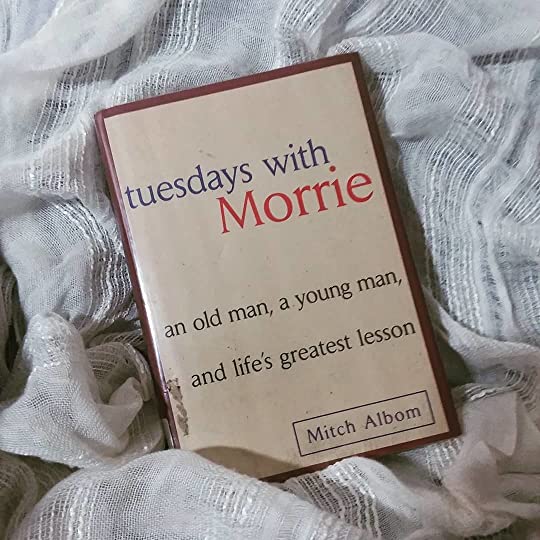
Tuesdays With Morrie by Mitch Albom

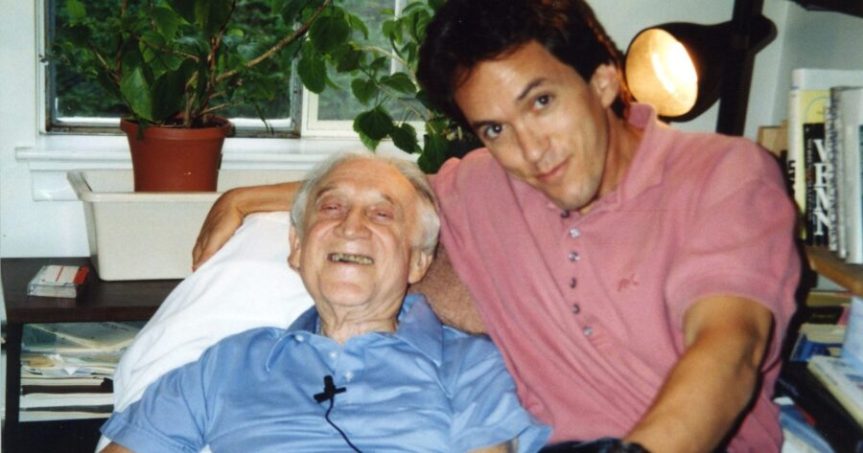
One should never underestimate the power of a good book. Books have the ability to help you discover your inner self. If you like books that force you to think about life and yourself, Tuesdays with Morrie is the book for you. Tuesdays with Morrie is my absolute favorite book. It is a memoir written by author Mitch Albom describing what his sociology professor, Morrie Schwartz taught him while he was slowly dying of ALS.

Here is a list of all the lessons I learnt from the book for which I will be forever grateful:

  • Stop feeling sorry for yourself: There are moments in our lives when everything seems to be out of control. During these moments we think about everything we have lost. However, Morrie taught me that it is okay to feel sorry for yourself but you must not focus on the bad part only. You should be grateful for everything good in your life especially during those low moments. Self-pity and loathing can rob you of everything good that’s going on.
  • Regrets: Regrets are a bigger part of our life than we admit. Spending your days thinking that if you did something differently your life would have been better now. These regrets have the capacity to eat you alive. If you stay hung up on the past mistakes, how will you ever have a better future. We are taught about forgiving others all our lives but why is forgiving so hard when it comes to forgiving ourselves. You must not torture yourself for a decision that could have gone either way. We cannot change our past because somethings are just out of our control. The healthy thing to do is move on and hope for a better future.
  • Death: “Learn how to die, and you learn how to live”, haven’t heard more accurate words. No one appreciates life like a person who is on their deathbed. They appreciate the little things in life that people generally take for granted.
  • Feel your emotions: Many a times we have these emotions that we aren’t able to let go. What I learnt is you should give yourself the freedom to feel them and have a good cry about it. Don’t let your emotions control you. As Morrie said, “Turn on the faucet. Wash yourself with emotions”.
  • Learn to Detach: This lesson is a bit complicated. It is about letting go and more. Morrie said that in order to let go of something, first you need to fully accept it. You need to let that experience, that emotion penetrate you and them you can detach yourself from it. If you don’t let yourself feel, you would never be able to let go because you would be nothing but afraid. Once you have felt it all, you would know that you need to detach yourself from that fear. Just step away.
  • Greed for Money: Since childhood we are taught that money cannot buy happiness but as we grow up we have learnt that buying things can bring you happiness but there is a catch. The happiness you feel is temporary. You use money to compensate for the love you never received. There is a difference between what we need and what we want. We must learn to separate the two. How much ever money you spend, you would never be able to receive the satisfaction you want because you would find yourself wanting more and more. And to be perfectly honest it is not entirely our fault because this is what we have been taught, “More is good”. In the words of Morrie, “Money is not a substitute for tenderness”. You must devote yourself to helping other people that is what would bring you real joy because only a life lived for someone is a life lived worthwhile.
  • Love: They say that people are never really gone, they stay alive in our hearts and it is absolutely true. Love is what keeps them alive always and forever.
  • Forgiveness: Forgiveness is tough. Whether it’s forgiving others or your own self, sometimes you just can’t gather the strength to wipe the slate clean. And yes I wrote ‘strength’. It takes a lot of courage to be the bigger man, to forget every exploitation and to move on. Morrie narrated a story where he and his friend had a falling out and how he regretted not giving him another chance before he died of cancer. Vengeance and pride can destroy you. These emotions are too heavy to be carried throughout your life. You need to make peace with everyone around you and then forgive yourself for everything you did wrong and everything you regret you didn’t do at all. Forgive those who hurt you and have the peace of mind you longed for before it’s too late.

One book, so many extraordinary lessons. Using any kind of adjective to describe this book would be an understatement. These kinds of books must be read, they must be felt and must be carried throughout life. That is the power of an exceptional book. I suggest you hurry and buy yourself a copy today.

Enjoy!!

All about CMAT exam

Photo by Thirdman on Pexels.com

CMAT or the Common Management Admission Test is an aptitude test conducted by the National Testing Agency (NTA) for admission to MBA/PGDM courses in over 1,000 B-Schools across India.

Eligibility Criteria

  • The CMAT aspirant must have completed graduation in any discipline or equivalent from a recognized university
  • Final year Graduation students (10+2+3) are also eligible to apply for CMAT 2022 but they will have to present passing certificate at the time of admission

It evaluates a candidate’s ability in Quantitative Technique, Logical Reasoning, Language Comprehension and General Awareness areas. A new optional section on Innovation and Entrepreneurship with 25 questions of 30 minutes duration is also added.

  • The first option is of 3 hours Exam which is divided in 4 sections with 25 questions in each section. The sections are Quantitative Technique, Logical Reasoning, Language Comprehension and General Awareness
  • The second option is of 3½ hours exam which is divided in 5 sections with 25 questions in each section. The sections are Quantitative Technique, Logical Reasoning, Language Comprehension, General Awareness and Innovation and Entrepreneurship
  • There will be 100 questions for 3 hours exam and 125 questions for 3½ hours exam.
  • All are of objective type questions in MCQs form.
  • Question difficulty level is easy to moderate
  • Each correct answer is awarded +4 Mark
  • Each wrong answer is penalized with negative marking of -1 mark
  • No Individual Time limit to attempt question paper. Candidates can attempt any question from any section within the overall CMAT exam time limit
  • Merit Score and percentile is calculated on the basis of 4 sections.
  • CMAT score card displays Actual score obtained out of 400/500 Marks, Sectional score obtained and the sectional and overall percentile obtained in the Exam

HISTORY OF CRICKET

Cricket is a global passion, played everywhere from Test match arenas to village greens, tropical beaches and dusty back lots. Just look at the varied cricket events sponsored by royal london: star-studded internationals for men and women; Britain’s club championship pairing 256 community teams, county cups for teens. It has a great history too…

LONG BACK

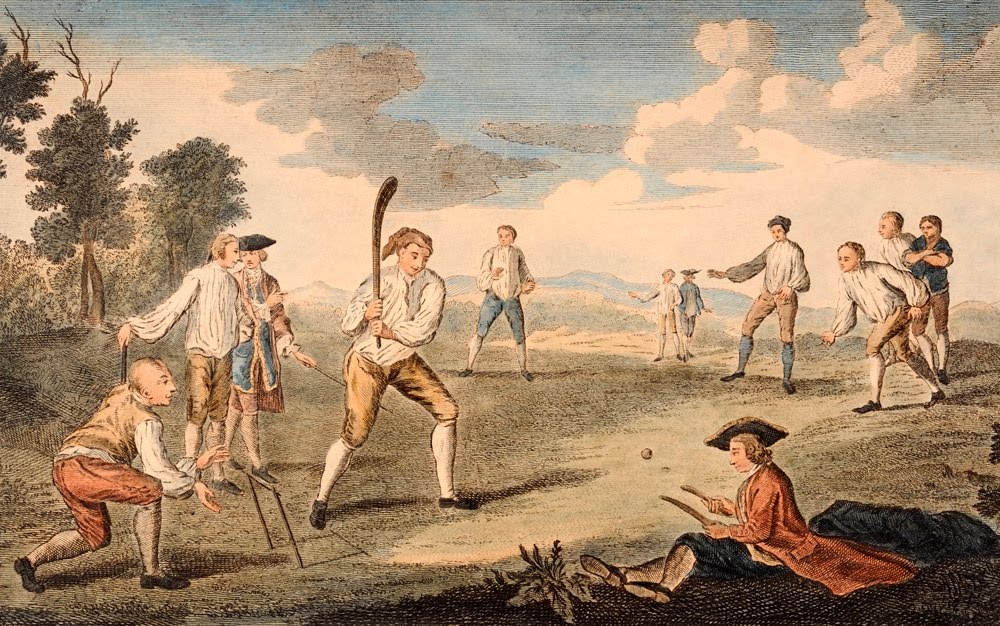
Cricket was first recorded in 16th-century England, and it was played in grammar schools, farm communities and everywhere in between. But things really took off when 18th-century nobles realised that not only was it a great sport but also an excellent opportunity for betting.

With sky-high stakes being wagered, it was deemed necessary to come up with agreed rules. The oldest surviving set of cricket laws date from 1744 – printed on a handkerchief, naturally. It’s now in the MCC Museum at Lord’s in London.

The oldest permanent fixture is the annual Eton v Harrow match, played since 1805. A young Lord Byron turned out for Harrow in the first match, though history doesn’t record how poetic – or “mad, bad and dangerous” – his bowling was.  

The first international match was in 1877 when Australia beat England in Melbourne. The match was dubbed a “Test”, since the gruelling nature of playing over five days was deemed the ultimate “test” for any side.

But it was Australia’s first win on English soil – in 1882 at The Oval in London – that led to matches between the two nations being christened the Ashes. Following the defeat, newspapers published an obituary mourning “the death of English cricket”, adding that “the body will be cremated and the ashes taken to Australia”.GREAT PLAYERS

GREAT PLAYERS

Cricket’s earliest star was WG Grace, who played 44 seasons from 1865 to 1908. Despite the game’s reputation as the epitome of fairness, Grace was as famous for his gamesmanship as his batting. He once ran three, then when the ball was flung in from the outfield, caught it, put it in his pocket and ran three more.

The top batsman in history is India’s Sachin Tendulkar, who retired in 2013 after scoring 15,921 runs in 200 Tests and 18,426 in 463 one-day internationals. He is the only player to have made 100 international centuries, was the first batsman to score a double century in a one-day International and is the only player to amass more than 30,000 international runs.

A special mention must go to West Indies’ legend Sir Garfield (Gary) Sobers, who became the first batsman to hit six sixes in a single over off six consecutive balls in first-class cricket, playing for Nottinghamshire against Glamorgan in 1968.

Mimesis in Aristotle’s Theory of Art [Part B]

In addition to imitation, representation and expression; mimetic activity produces appearance and illusion that affects the perception and behaviour of people, though this doesn’t negate Plato’s theory on the “realness” of imitation. For, though it is a common belief that perpetual experience allows us to have a closer look at the ‘real’ because works of art are encoded in such a way that humans are not duped into believing that they are the reality but rather recognise features from their own experience of the world within the work of art that cause the representation to seem valid and acceptable – not just existing object or element but beautifies, improves upon and universalises these artistic musings. Aristotle next explores how imitation gives knowledge not just only to the philosophers but to everyone, which in turn creates a delight. Art unlike Plato who dismisses the said notion of art as an imitative form brings about the best in an artist, in terms of how he produces art. It is also essential to note that Aristotle doesn’t put Mimesis in some hierarchical nomenclature like Plato who’d put it to the lowest level of stratification. In any Tragedy, Aristotle insists on a plot arousing Pity and Fear by spectacle/audience which adds more to comprehending imitation; the spectator need not see the object in person which though is crucial, isn’t a deal – breaker, as even a play which has this element of imitation – can convey the plot effectively this can. Be achieved by delivering the speech, actions, the chorus, setting and other elements in such a way that imitation of the desired idea is carried out with brilliance and would successfully be rousing the cathartic element of tragic pleasure is also an important idea with Mimesis.

He dwells upon how Art doesn’t reflect any aspect of natural life as origin of art to the human affinity is through imitation, and while doing so isn’t discarding or trampling is as something necessarily bad but is entirely critical of an artist. Furthermore, he speaks on The Theory of Art as a productive science — for Aristotle, something which only rational human beings can engage in — as the quality produced determines merit of Art, and so art in its absolute formation is acknowledged by Aristotle focusing on its imitative element, as all works of art are modes of mimesis. 

Mimesis in Aristotle’s Theory of Art [Part A]

Please make sure that you read cache up on the next post for more.

Aristotle in his Theory of Art reasons on the imitative nature of art; and further proposes that art imitates everything that is nature. In his theory he hints out that a poet, by his work tells us what is to happen unlike a historian who recites on what occurred in the past, which is put forth by Aristotle himself on the imitative nature of ‘poets’ work. The Oxford English Dictionary defines Mimesis as “a figure of speech, whereby words or actions of another are imitated” or “the deliberate imitation of the behaviour of one group of people by another as a factor in social change”. Mimicry as “the action, practice, or art of mimicking or closely imitating … the manner, gesture, speech, or mode of actions and persons, or the superficial characteristics of a thing” .
Aristotle focuses on the Mimetic nature of Art which isn’t a sole focus of Poetics, and while doing so, he had opposed to what Plato believed, that mimesis was manifested in ‘particulars’ which copies or imitates the forms from which they are derived; thus, the mimetic world (the world of representation and the world of structure of conscious experience) is inherently inferior in that it consists of imitations which will always be subordinate or auxiliary to their original. Aristotle, unlike Plato, has his own interpretation to the theory of imitation and thus doesn’t comply with what Plato presents when he talks about Mimesis. Aristotle has evidently accepted and agreed of the heterogeneous notion of art being produced by different artist differently, which gives a distinct identity to the theory of imitation and so he believes that an artist is responsible to birth an art form unlike Plato, who negates any form of Art – as it’s being thrice removed from reality. He contests these notions of reality and argues to the point that imitation is an extremely natural instinct in human nature, something very basic, the ability to imitate sets human beings apart from other animals and so not only it is natural to imitate it further helps to learn and simultaneously experience delight from it. In Poetics, what Aristotle has wrapped up for us isn’t a very definite answer, for what he means about ‘Mimesis’, instead has left it broad and elusive. Although various discussions on ‘Mimesis’ to be an integral fraction to the relationship between art and nature and to the relations governing works of art themselves. Therefore, we can assert the various species that Mimesis is distinguished in, i.e. Mean; Object; Mode of Imitation. Although for Aristotle, Imitation involves not merely physical resemblance, but also what one might call generally the relations between things or the ‘mechanism’ of things, he thus proposes the three key distinguishers through which one could filter imitations. Mean – is something a poet applies to his work of art, say Poetry and Dance, what distinguishes these two forms is; one requires spoken language to be at fruition and the other, not essentially emphasises on language and it thus could be substituted by music, similarly in Poetry difference in its metres or rhyme scheme and the structure in general could itself separately each genre from the other like Epics, Ballads or Elegy, et cetera. Next is Object of imitation – what the mean — the ‘matter’ of imitation — represent, and this would produce for better or worse or the same effect of the original piece imitated, here Aristotle points at the distinction of Tragedy and Comedy, for tragedy we’d need a better mode of imitation and for Comedy one uses caricature i.e. laughing at the object of imitation, to show an inferior or worse form of imitation to produce the choice effect. Further along is Means of imitation which in poem could be what the poet chooses as a form of delivering his work of imitation.

Is Literature taking us away from the real world?

Photo by Maria Orlova on Pexels.com

It is always considered that the people always acknowledge “ what is actual and reasonable” and in this instance often the imaginative world is denied by them!

Literature is not only a branch of academia which people are fond of for centuries but it has further become into a subject of the matter when it comes to fiction”. It is often unvalued by the fact that literature provides an absurd approach to the other branches of the world that believes in science and not in magical elements.

The fact that one should always remember is that the essence of literature is never gone even in spite of so many prejudices against it. Great writers Like John Donne, William Shakespeare, Rabindranath Tagore have upheld the pride of literature by their beautiful works.

Literature – A Backbone of the Inner society!

A very famous quote of all, which we have known for ages; “Literature is a mirror of society”, yet we forget this quote because non- Literature people are not very fond of poetry, essays, and novels. But one must know that Literature is not only a place for fictional lovers but also provides a reality of the real world.

Taking back to Chaucer’s age when writing was not so popular, yet “Canterbury Tales” was written and unexpectedly it turned out to be the legendary piece that literature holds to date. Being one of the best pieces of all, Canterbury tales was the background of the 14th-century society of England where people believe in god and considered god above humans.

When the English renaissance came people started to believe among themselves and considered humans and humanists as the great topic and wrote about them and their lives.

The whole background history is found in those classical works in the form of so called “Literature works”.

Now when people talk about the history and the consequences of the wars, it is literature that has preserved the whole history in several kinds of books that are cherished and protected by them who understood the purity of literature.

Every drop of works is poured into the petals of history and preserved by these eminent writers who contributed their emotions and portrayed the society of that era through their writings and contributed to the ocean of literature.

For some it’s a “Myth” :

There are several ideologies and theories are done in the matter of literature and they proved that literature is a myth as it doesn’t belong any place in the real world! So the question that arrives here is , what do literarians, bibliophiles and the readers think about?

This is a very controversial concern, as for some “Literature is an emotion which should be presevered for the coming eras, It is something to be conserved so that the coming generation would know the aesthetics of emotions, culture and people.

As the days are going by, the essence of humanity is decreasing day after the other, but certain emotional norms are still alive holding up because of literature, it is because of Great works like “Romeo and Juliet”, “Pride and Prejudice”, “Wuthering Heights”, that people still believe in love and its pure existence between two people. Even in this era where people are having an ill-fated relationship and are doomed by their own actions still believe that there are certain emotions present In them.

The world is a better place if people love each other and live in harmony. It is literature that teaches that still we all are humans and we should accept the fact that not everywhere facts and logical explanations are approved, rather it is emotional evidence that is more prominent.

Its time to save literature!

Every branch of academia is relevant in some way or the other which provides us the reality check of various elements present in the world , among them literature is one of them which still is remembered and exists in our society due to the tremendous works done by the crafters of literature ( The writers, poets).

Hiding it or erasing it would never be a good thing to do, as aestheticism always protected these works and still popular among people who believe in fantasy and poetry. It is rather a sense a catharsis which each reader goes through which is written by these dead writers.

Though the artists die, the art remains forever! Likewise, The art of literature can never be faded because the artist’s art is immortal, all we have to respond that we as ardent readers should make this immortal art live for many centuries and should never let them fade away in spite of any circumstances which the worlds demand us to do.

Vaccination

Before we start, please ensure that you — yourself and other are trying and registering yourself for the Covid-19 Vaccines.

The worlds largest vaccination drive, surely, but I’m tired of searching slots, and definitely who isn’t at this point. Be it Dose 1 or Dose 2, getting a slot — is equivalent to witting lottery, and you can’t argue with me, the lottery has amounts; price, money as a gift, with Vaccination slots, the nearer the Centre the bigger the jackpot. Oh.. what a nuisance. 

I just had to travel 10+ KM to get my jab, and mind you; I stay in a metropolis. After months, and I’m not exaggerating, months, I finally paid enough to get my first jab (a pat on my back).

Nonetheless, don’t get dishearten, getting these vaccinations are crucial, with the Delta Variant hanging over our head, it has been all the more important that we start taking care of our health more and more. 

Please still do follow all the social guidelines and public health notices, make sure you follow it for yourselves and that you don’t bring harm upon someone else; don’t complain if someone isn’t following the rules, you can insist them, but it’s their option and we have to respect, but that doesn’t mean you can compromise your safety. 

Eat healthy, eat well, stay door, maintain social distance and wear a mask. 

Go to the COWIN website and ensure that you have registered yourself by now, don’t make plans for a group vaccination day, it’s not a picnic, your health should be your primary focus. Keep on searching for slots in your district, or area, enrol yourself to sites/apps like PayTM to get notified when the nearest slot is available, the process is tough, with such a huge population, it can’t be avoided, that’s why you need to stay of top of your vaccination game, and take proper care once you do get your jab.

PLEASE CHECK THE COWIN WEBSITE HERE: https://www.cowin.gov.in/home

Think Before You Eat

Can our eating habits effect our environment? What we today will be responsible for tomorrow’s destruction? Is there a relation between between global warming and food we eat? Answer to all these questions is a big “YES”

The relation between food and environment can be understood through chain of carbon foot print. ‘Carbon footprint’ is amount of greenhouse gases that emits due to human activities which obviously includes ‘eating habits’. Almost every food we consume emits carbon gases in certain amount. But consumption of meat releases highest carbon gases as compared to other food products. The carbon hierarchy within meat is as follows-

Beef > lamb > pork> poultry.

According to Agriculture Organisation of United Nations (FAO) emission from global live stocks is estimated at 7.1 gigatons of carbon dioxide each year. Not only consumption but also food that we waste emits carbon gases. Decomposition of waste food is a long process and throughout this process certain amount of green house gases is released , thus, deteriorating the condition of our planet. According to FAO around 1.3 billion tons of food produced for human consumption are either lost or wasted every year.

So the question arises, how can we save our planet from further destruction ? Answer is quite simple — changing our diet. Planning our diet in a careful manner may create a huge impact not only globally but also in our individual health. Eating more leafy vegetables and cutting down meat consumption will surely contribute to a noble cause. We often ignore the food choices we make and try our best to satisfy our tummy. So next time before consuming food lets ask one question, is it good for my planet and my health? This simple question may change our future.

All about : Business enenvironment

Photo by Zeeshaan Shabbir on Pexels.com

The word ‘business environment’ indicates the aggregate total of all people, organisations and other forces that are outside the power of industry but that may affect its production. 

Business environment is an aggregate of all conditions, events and influences that surround and affect it. It is broad and ever changing as its separate elements interact. A single firm’s environment is narrow in scope than the total environment of business. It is complicated and continuously changing.” —Professor Keith Davis.

No business can exist in a vacuum. The rapidly changing business environment might shorten the life of a given strategy. The external changes might influence the activities and quality of decisions of both the firm and its competitors. George Salk says, “If you’re not faster than your competitor, you’re in a tenuous position, and if you’re only half as fast, you’re terminal.”

Hence, as Kenich Ohmae says that “environmental analysis is the critical starting point of strategic thinking.” Charles Darwin has said, “It is not the strongest of the species that survive nor the most intelligent, but the one most responsive to change.”

We live in a dynamic environment that changes all the time. Businesses must understand the changes in the environment and how these changes affect their performance. The process of thinking strategically requires that managers understand how the structure and competitive dynamics of their industry affect the performance and profitability of their companies. Armed with an appreciation of the forces in their industry that give rise to opportunities and threats, managers should be able to make better strategic decisions.

Successful managers must recognize opportunities and threats in their firm’s external environment. Regardless of the industry, the external environment is critical to a firm’s survival and success. A host of external factors influence a firm’s choice of direction and action.

https://byjus.com/commerce/business-environment/

https://www.google.com/url?sa=t&source=web&rct=j&url=https://www.economicsdiscussion.net/business-environment/business-environment/32496&ved=2ahUKEwi03ayMjsLxAhWH73MBHSywCNMQFjAdegQIQhAC&usg=AOvVaw0q8hAs46xYNiZxMosg94ta&cshid=1625151231113