Literature broadly is any collection of written work, but it is also used more narrowly for writings specifically considered to be an art form, especially prose fiction, drama, and poetry. In recent centuries, the definition has expanded to include oral literature, much of which has been transcribed.
A college is a dreamland in a student’s academic career. College phase is the golden period for the youngsters and no one can forgot those memories till from the first day of the college to the last day we spent in the college. At initial days when we join in a college, we all feel so excited and curious by seeing our surroundings but at the same time we all have a small doubt or fear that how to mould our self in the new place where every thing is almost unknown to us. Most of us start our college life without having any idea about what we want to be in our future. We all have roughly four years where we have to play around with academics and extra curricular activities along with figuring out the passions in our life.
At the initial days we all think that college lecturers are too strict and we have to be careful with them but as the days pass away we came to know that even our lecturers also be friendly with us and they help us a lot in every moment of college life. The most important candidates in our college life is our friends with whom we do a lot of crazy things and the enjoyment with friends will be at next level in hostel rooms, Yes our hostel roommates will become a next family to us with whom we can share all our things.
The most excited and scary event that happens at the beginning of our college days is “FRESHER’S DAY” where we all see our seniors as like most dangerous people on the world and fear about the ragging but our thoughts will be changed totally when we talk with seniors in a friendly manner and also they are the one who will be as a back bone to all of us in entire our college days but sometimes whatever we think may turn into wrong also.
Whatever the situation may be, we always be ready to face that situation especially in the case of examinations. The preparation strategies will differ from person to person but once after completing our graduation we will definitely laugh by memorizing all those days. The most interesting part in college life is college fest, tours and interacting with diversified people which helps us to develop the spirit of unity, personality and brotherhood.
At last I can say that college life is the beautiful blend of joys and memories. On the whole, everyday that we spent in our college is loaded with some colourful events such as special breaks, bunks and sports. These charms will never fade away but in todays situation most of the students are unable to make such a great college life experiences due to COVID-19 pandemic. Let us all hope that the past days will come back again and we can happily make a lot memories getting together in our colleges.
A 13-year-old girl who was introduced through her relatable chapter about teachers was how I remembered Anne Frank before reading her diary. I still remember her phrase, “Teachers are the most unpredictable creatures in this World” because it was the funniest and most truthful statement that I had ever come across in my grade-school life. But it wasn’t until recently, years later, when I decided to give a shot at reading the complete diary of Anne Frank. And let me tell me, it totally wowed me away.
Anne Frank was born in Frankfurt, Germany in 1929. She was a Jew and her full name was Annelise Marie Frank. On her 13th birthday, her father Otto Frank gifted her a diary as a birthday gift. However, this diary became a place of solace and the chronicles of German-Nazi events as recorded by Anne Frank when she went into hiding with her family from the German Nazi in ‘Secret Annexe’. (1942- 1944). She died in 1945 after her family was captured by the Nazis and later killed in Holocaust. Her father Otto Frank, who was the last survivor, discovered Anne’s diary and decided to publish it.
Anne’s diary carries her confessions, philosophies, and convictions. The beginning of her diary starts on a casual note as Anne confesses her emotions to her diary ‘Kitty. She talks about her social life, crushes, and school. However, these entries change once she goes into hiding with her family and admits her worries, faults, anxiety, and ideas that she faces in the ‘Secret Annex’. Her thoughts are profound and simple, exploring the tiniest details of life and her longing for the joys and sorrows of ordinary life.
When I first read her complete diary, there were many instances where I was shooked by her maturity and thoughtfulness, and there were moments where I sympathized, related, and longed for life with her. What was more intriguing for me was how the thoughts that I began to have when I was 18 were the thoughts that Anne had at the age of 13. Her keen observations about life and herself made me realize so many things that I was blind to before. There were instances where I found her childish side and there were instances where I saw the grown-up in her. At each stage she made me feel for her and her philosophies.
So here is a short compilation of her profound thoughts that I have picked for you. I hope you can learn and appreciate life and people the way Anne did, and maybe get a bit more curious about this girl and decide to grab her diary to explore more of her life and thoughts.
At such moments I don’t think about all the misery, but about the beauty that still remains. This is where Mother and I differ greatly. Her advice in the face of melancholy is: “Think about all the suffering in the world and be thankful you’re not part of it.” My advice is: “Go outside, to the country, enjoy the sun and all nature has to offer. Go outside and try to recapture the happiness within yourself; think of all the beauty in yourself and in everything around you and be happy.
We aren’t allowed to have any opinions. People can tell you to keep your mouth shut, but it doesn’t stop you from having your own opinion. Even if people are still very young, they shouldn’t be prevented from saying what they think.
How noble and good everyone could be if, every evening before falling asleep, they were to recall to their minds the events of the whole day and consider exactly what has been good and bad. Then without realizing it, you try to improve yourself at the start of each new day.
As long as this exists, this sunshine and this cloudless sky, and as long as I can enjoy it, how can I be sad?
I soothe my conscience now with the thought that it is better for hard words to be on paper than that Mummy should carry them in her heart.
This story not only epitomizes love, friendship, and resilience but also about loss, grief, and despair. This global pandemic has caught us in an infinite loop; the number of endless cases adding up each day and with it the increasing number of deaths.
A week ago, my best friend and also a Neurosurgeon, Ram Tripathi was infected by Covid-19 and was admitted to the same hospital. The day when he was admitted, his oxygen levels were plummeting. And as the days passed, his health worsened and we had to put him on the ventilator. Every day, I personally went to his bed for checkups. For those 2 mins, he would ask about no one but his wife and his baby girl. I can still remember the last words he said to me the day before he died – “Promise me you’ll take care of my wife and Naira (his 5-months old daughter). Meera always wanted to be a baker but… I’ll have to leave her this journey halfway” At that moment all I could do was just hold his hands and assure him that he’ll be fine.
The next day, I was asked to hurry to the hospital, there was an emergency; It was Ram taking his last breaths. We all tried our best to save him but we couldn’t. I couldn’t process all of this and was asked to call his wife and inform her about his death. Somehow, I gathered the courage to dial her number but stood quiet. She was getting anxious with every passing second and lined up questions if Ram’s doing okay and why am I not speaking up. After a min, I said her that we lost him. She screamed and wept; I could hear the baby girl crying in the background too, only if she knew that her dad won’t be back home ever again. Today, lying on the death bed, all that’s running in my mind is the promises I made to Ram. Also how after I die, my mother would be called and informed that she lost her son to Covid-19 too, how she won’t be able to believe that all her prayers were left unanswered. But fortunately, I lived and I feel the only reason I’m alive is that I’d to keep the promise, the one that I made to Ram. Till the day I recovered, it was time to scatter Ram’s ashes. In my absence, Meera and Naira stayed at my place with my parents. Meera had already gone into deep despair. I could see her eyes all red as if she cried herself to sleep every night and shed blood tears. She often called me Bhaiya and I took it as my responsibility to make my younger sister achieve all her dreams and also keep my promise to Ram. Years went and she was among the best bakers in our city yet I haven’t seen her smile in all these years. As if with Ram, her smile went along. Naira was her only ray of hope and only motivation. She wanted her to live a better life and did every possible thing that Ram would have dreamt for her daughter.
Just like millions of people lost their loved ones to this Covid-19, Meera( Ram’s wife) lost her husband, and Naira (his 5-months old daughter) lost her dad even before she could talk to him. Yet Meera didn’t lose hope and stood strong to take care of her child all by herself. She started her own bakery shop with the help of funds arranged by Mayank initially. Later, she lived her life on her own terms and would never let her daughter’s wish unfulfilled.
Like Meera, when one feels stuck in a loop of grief or despair, just remember,
Jesus Christ is the central figure of Christianity. He was born at Bethlehem; Judea in Roman empire in 4-6 B.C and his mother was Mary. The Christians traditionally believe that Jesus was born of a virgin, performed miracles and founded an independent religious movement. The majority of Christians worship Jesus as the incarnation of son of god, one of three divine persons of a trinity. A few Christian groups, however, reject trinitarianism, partly or wholly, taking it to be non- scriptural. The principal sources of information regarding Jesus are the four canonical gospels, and most critical scholars find them useful for reconstruction the life and teachings of Jesus. Some scholars believe apocryphal texts such as the gospel of Thomas and the gospel of Hebrews are also relevant.
Later on, the Bible has been divided into two parts- the Old Testament (before Christ) and the New Testament, containing the life of Jesus and principles of Christianity. In Islam, Jesus (transliterated in Arabic as Isa) is considered one of God’s prophets, and the product of a virgin birth; but do not believe that he was God incarnate.
Most of the historians agree that Jesus was a Jew regarded as a preacher and healer, and was crucified between the age of 33-36yrs in Jerusalem on the orders of the Roman Prefect of Judaea, Pontius Pilate, on charge of sedition against the Roman Empire. His date of death was 30-33 A.D.
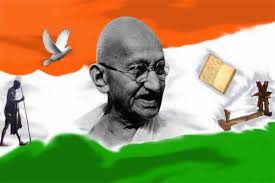
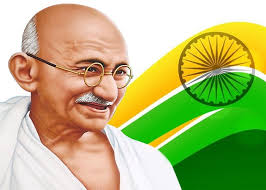
The name ‘Gandhi’ needs no introduction. Any part of the world that understands civilisation and humanitarian values appreciates Mahatma Gandhi (October 2, 1869-January 30, 1948). Thus it doesn’t come as a surprise that you find Gandhi fans in a diverse range-from the present American President, Barack Obama to philanthropic groups working in Rio
Movements launched by Mahatma Gandhi:
Mahatma Gandhi overcame insurmountable odds to bring the mighty British Empire to its knees. It is not merely because of the Non-cooperation Movement or the Dandi March (1931) that we know him today. It is true, of course, that these movements, along with the Quit India Movement (1942), brought the British Government to its knees. Gandhi was a man of the masses. Such was his popularity that the British went weak in their knees at the prospect of arresting him. They were afraid of making a martyr of him and thus adding to his popularity. This was no mean achievement for a man described by Winston Churchill as a ‘half- naked fakir’. Gandhi’s idea of non-violent resistance against the British rule appealed to the conscience of the Indian society groaning under the unjust rule of the British since the Battle of Plassey in 1757.
When Gandhi put Satyagraha into action for the first time in South Africa in1906 and became a success there, it didn’t take much time to recognise and hail the arrival of a great leader. But Gandhi was more than a messiah in the world of politics. He was a powerful social reformer who campaigned relentlessly to end discrimination against India’s untouchable class, whom he called the Harijans (children of God).
Mahatma Gandhi Awards:
• In 1930, Gandhi was named the Man of the Year by Time’s Magazine. • In 2011, Time magazine named Gandhi as one of the top 25 political icons of all time. • He did not receive the Nobel Peace Prize despite being nominated five times between 1937 and 1948.
• The Government of India institutionalized the annual Gandhi Peace Prize to distinguished social workers, world leaders, and citizens. Nelson Mandela, the leader of South Africa’s struggle against apartheid was a recipient of the award
About Mahatma gandhi Personality:
The spiritual strength of Gandhi’s personality has to be given due recognition. His autobiography My Experiments with Truth bears a living testimony to this. Gandhiji used his spiritual strength to overcome all opposition. He walked across the country’s villages trying to make its people realise the importance of sanitation and healthy habits. If this does not prove his sincerity, let us remember his fast-unto-death in the riot-hit Calcutta of September 1947, which brought the Hindus and Muslims together again after a terrible violence.
Would any of our leaders today dare to walk the riot-hit streets of Noakhali with only a Tagore song to give him company? It is stupid to question the courage of this man who perhaps might even have achieved the impossible task of unifying India and Pakistan again had he not been shot dead by a fanatic called Nathuram Godse on January 30, 1948.
Film on Mahatma Gandhi:
Ben Kingsley portrayed Mahatma Gandhi in the 1982 film Gandhi, which won the Academy Award for Best Picture. Therefore, Mahatma Gandhi would be remembered forever as he spread the message of non-violence, truth, faith in God, and also he fought for India’s Independence. His methods inspired various leaders, youth not only in India but also out of India. In Indian history, he is considered as a most prominent personality and as the simplest person who wears dhoti. He spread the message of swaraj and taught Indians how to become independent.
As more and more people invest in the stock market, dividends as a source of income gains popularity. Therefore, it is important to understand the legal framework of the process and its details in order to make a well-informed investment.
Sources of Dividend declaration
The basic principle of declaration of dividend is that it shall be paid out of profits only. However as per companies act dividend can be paid out of- 1) Current year’s profit of the company, or 2) Undistributed or accumulated profits of the previous years, or 3) Out of money provided by the Central Government or a State Government for the payment of dividend by the company in pursuance of a guarantee given by that Government.
Dividend Declaration Provisions
1) Depreciation: – Before the declaration of dividend, a company shall provide depreciation to all its depreciable assets, in accordance with the rates or useful life, as the case may be provided in Schedule – II of Companies Act -2013. 2) Transfer to Reserves:- A company may, before the declaration of any dividend in any financial year, transfer such percentage of its profits for that financial year, as it may consider appropriate to the reserves of the company. 3) Set off of previous year losses and depreciation: –A company shall not declare dividend unless carried over previous losses and depreciation not provided in previous year or years, are set off against profit of the company for the current year. 4) Free Reserves: – A company shall not declare or pay dividend out of its reserves, other than free reserves.
Conditions for declaration of dividend out of surplus reserves
As per Companies (Declaration and Payment of Dividend) Rules, 2014 a company may declare dividend out of surplus reserves subject to the fulfilment of the following conditions, namely: – 1) Rate of Dividend: – The rate of dividend declared shall not exceed the average of the rates at which dividend was declared by it in the three years immediately preceding that year. However, this condition shall not apply to a company, which has not declared any dividend in each of the three preceding financial year. 2) Total Amount to be withdrawn: – The total amount to be drawn from such accumulated profits shall not exceed one-tenth of the paid-up share capital and free reserves as appearing in the latest audited financial statement. 3) Utilization of withdrawn amount: – The amount so drawn shall first be utilized to set off the losses incurred in the financial year in which dividend is declared before any dividend in respect of equity shares is declared. 4) Balance amount of Reserves:- The balance of reserves after such withdrawal shall not fall below 15% of its paid up share capital as appearing in the latest audited financial statement.
Payment of dividend: According to section 123(5):
■ Dividends are payable in cash. Dividends that are payable to the shareholder in cash may be paid by cheque or warrant or in any electronic mode. ■ Dividend shall be payable only to the registered shareholder of the share or to his order or to his banker. ■ This subsection shall apply to the company, subject to that any dividend payable in cash may be paid by crediting the same to the account of the member, if the dividend is not claimed within 30 days from the date of declaration of the dividend. ■ Nothing in sub-section 5 of section 123, shall prohibit the capitalization of profits or reserves of a company for the purpose of issuing fully paid-up bonus shares or paying up any amount for the time being unpaid on any shares held by the members of the company.
In this digital era we always use an electronic device like computer for getting our works done but coming to the taste of experience a computer will never replace a book. There might be several reasons to say that computer is best than a book but for sure what ever the epic information that we see today in a computer was written in a book priorly. A good book in the words of John Milton is the precious lifeblood of a master spirit, embalmed and treasured up to a purpose of life.
The thoughts and ideas contained in a book are immortal like tulasidas’s Rama Charitra Manas, Veda Vyas Mahabaratha, The Bible and many other religious literary works like shakespere’s play etc… On the other hand, a computer is a machine that can visualize the contents of a specific book but thinking about the replacement of a book by a computer is unthinkable and far fetched.
A book provides the most cost effective for spreading education and literacy. It is available at a fraction of the cost of a computer. Moreover it is extremely portable and handy, it is not dependent on any external factors like availability of power supply, software and space which are essential prerequisites for a computer. To go through the contents of a book, the two basic ingredients required are time and inclination. It can be read at any time of day or night and anywhere, like while travelling or even while dozing off to sleep.
Though the above mentioned all phases can be full filled by an electronic gadget also reading a book does not create any physical discomfort or eye strain. We all are aware of the hazards of back pain and eye strain caused by a long stretch of viewing a computer screen. Another factor in favor of the book is the general high degree of respectability and faith commended by the written word. Thus while we may see or hear event on our computer terminal, there is nothing better than to confirm the same from a newspaper or a book. Besides helping in spreading education to masses, a plays an important role in developing our power of expression, and the generation of new ideas and thoughts, which help in modelling our personality .
A book is a source of knowledge on a particular subject, offering no diversion or distraction while a computer offers multiple sources like reading, entertainment, games or news on one go along with several advertisements which some times leads to the distraction of our mind and consequently hinders the acquisition of knowledge.
Thus the computer can never replace a book either now or in the near future, this is for the conviction and convenience offered by a book and it can never be possible through a computer. Moreover being a machine it has chance to break down or show an error, these factors are non-existent while reading a book.
Love is the most profound emotion known to Humans but still society has its own definition of beauty standard and if you don’t fit in that than you cant be perfect couple.
Well some examples are tall girl and short boy, older women and younger Men these are some beauty standards made by our society but if we think who is society society is made by us only, I think size, age should not be defining your definition of us if two people love each other they never think about it because love is irrespective of this and these are just stereotypes made by society and we have to improve this we have to accept the love weather its Love if young men and older women or love of bisexual.
love is love start valuing it irrespective of all bullshits. Accept flaws and move on. Love person not looks, age and other things.
Injuries to areas of the body that is usually protected /covered.
Delay in seeking medical attention for a child
Is violent to animals or other children
Tries to hide bruises or other injuries
May be extremely withdrawn or extremely aggressive
Is wary of adults or of a particular individual
Cannot recall how the injuries occurred or gives inconsistent explanations
Emotional Abuse
It occurs when a child’s emotional, psychological or social well-being and sense of worth is continually battered. It can include a pattern of criticizing, rejecting, discriminating, degrading, ignoring, isolating, corrupting, exploiting and terrorizing a child.
Indicator in child
Bed-wetting or bed soiling that has no medical cause
Frequent Headaches, nausea, abdominal pains
Has not attained significant developmental milestones
Displays attention seeking behaviours or displays extreme inhibition in play
When at play, behaviour may model or copy negative behaviour and language used at home
Suffers from severe developmental gaps
Indicator in adults
Constantly labels the child or publicly humiliates the child
Continually threatens the child with physical harm or forces the child to witness physical harm inflicted on a loved one
Has unrealistic expectations of the child
Sexual Abuse
Sexual abuse includes acts where an adult uses a child for a sexual purpose. While it may involve a stranger.
Indicator in child
Torn, stained or bloody underclothing
Bruises, lacerations, redness, swelling or bleeding in genital, vaginal or anal area
Blood in urine or faeces
Unusual or excessive itching or pain in the genital or anal area
Difficulty in sitting and/or walking
Signs of sexually transmitted disease Indicators in a child’s behaviour
Outburst of anger
Self-harm (cutting, burning or other harmful activities)
Age-inappropriate sexual play with toys, self, others
Sophisticated or unusual sexual knowledge
Nightmares, sleeping problems
Becoming withdrawn or very clingy
Becoming unusually secretive
Sudden unexplained personality changes, mood swings and seeming insecure
Regressing to younger behaviours, e.g. bedwetting
Fear of certain places or persons e.g. bedroom or bathroom, friend-uncle
Indicators in adult behaviour
Insist on physical affection such as kissing, hugging or wrestling even when the child clearly does not want it.
Insist on time alone with a child with no interruptions.
Spend most of their spare time with children and have little interest in spending time with people their own age.
Frequently walk in on children/ teenagers in the bathroom.
Treat a particular child as a favourite, making them feel ‘special’ compared with others in the family.
Regularly offer to baby-sit children for free or take children on overnight outings alone.
Buy children expensive gifts or give them money for no apparent reason.
What to do??
Learn to recognize the signs
Provide a listening ear
Offer help
Give helpful information
Explain that violence is not OK
Look for community systemic support for the family
Can contact Childline (1098) to talk over your concerns confidentially with a trained social worker.
Take following steps on Emergency
Step-1: Immediately contact parents if child is not abused by parents and if child can give information of his/her parents.
Step-2: Contact any one of the following agencies to provide required support to parents and child: DCPU, SJPU, Childline, CPCs, Police or CWC. You can also take help from credible NGOs working on Child Rights in your area.
Step-3: Provide emergency support such as medical aid, clothing, food and transportation to safe places. Make sure that you handover this child to responsible adults from above mentioned list only.
Step-4: Help authorities with whatever information and evidence you have as regards abuse of the child to make sure that the abuser is punished. If possible give written information.
Step-5: Maintain privacy to ensure that the name of the child is not disclosed to media or public in any ways.
Prevention
Create Safe places for children in community, neighbourhood and society.
Create Structures and Systems where children can express their feelings and emotions freely without any inhibitions.
Create Structures and Systems to ensure safety and to ensure that children are supervised.
Educate children about safety measures. Provide information about the emergency contact numbers.
Create awareness: About child protection systems and networks. Keep this information handy.
Build network of concern individuals and groups to help children. Develop support systems for children.
In an era where women were enclosed within the walls of customs and traditions, Kamala Das rose ferociously against the world. From expressing her relation struggles to her sexual desires Kamala Das is a writer who laid out her life in literature despite the criticisms she received for it.
Born in Punnayurkulam Kerala in 1934 Kamala Das was introduced to literature from a young age thanks to her parent’s literary background. However, Kamala spent her early years in Calcutta. She was married quite early, at 15, to a bank officer who was fairly older than her but encouraged her passion for writing. Kamala Das wrote in two languages, Malayalam (her native tongue) and English, and has expressed the criticisms she received for this in her poem, An Introduction;
Why not leave
Me alone, critics, friends, visiting cousins,
Every one of you? Why not let me speak in
Any language I like?
The language I speak
Becomes mine, its distortions, its queernesses,
All mine, mine alone. It is half English, half
Indian, funny perhaps, but it is honest,
It is human as I am human, don’t
You see?
Her most famous works include her poetry collections included in Summer in Calcutta (1965), The Descendants (1967), and The Old Playhouse, and Other Poems (1973). Her novel and short-stories such as “A Doll for the Child Prostitute” (1977) and her other Malayalam works were some of her most significant works. However, her most criticised work was her own autobiography My Story (1976) that invited harsh criticisms for her open and intimate sexual confessions.
The poet-author apart from her confessional poetry also sketched out the experiences of being a woman in India. The strong patriarchal opinions and her strong feministic yearnings make Kamala a woman who followed her own principles.
Apart from the negative lime-light Kamala’s literary art is one that speaks volume. Her poems are often filled with rich and intense imagery emotions with the verse outlined creatively to convey Kamala’s feelings and bring the experience of her abyss to her readers.
In her poem, Summer in Calcutta the beginning verse goes;
What is this drink but
The April sun, squeezed
Like an orange in
My glass? I sip the
Fire, I drink and drink
Again, I am drunk
The main idea of the poem is that Kamala Das is drunk on the summer vibes of Calcutta. She describes the April sun as an orange juice that is making her feel happy, satisfied and worry-free. She loves the heat of the sun and forgets all her pains of the past momentarily. One may assume Kamala to be drunk on alcohol while sitting in the sun although this cannot be true as Kamala re-iterates again and again that it is the sun that makes her drunk. The whole scene in the poem describes the transient happiness and pleasure that Kamala receives by being under the sun and away from her marital life.
In another poem, My Grandmother’s House, Kamala describes the sense of security she felt in her grandma’s house when she was young. She also explains how apart from being a haven how the house comforted her and made her felt proud for who she was. Her present life is so full of devastations that she now longs to go back to her past.
Kamala maybe majorly known for her explicit use of sexual imagery but her art always spoke for her, portrayed her emotions honestly and made her a woman who stood strong with her convictions.
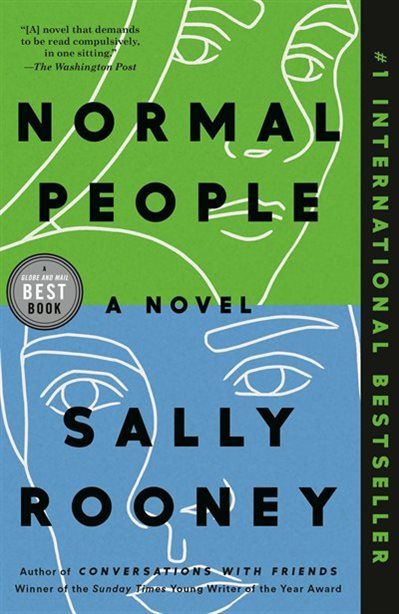
“Life offers up these moments of joy despite everything,”
Sally Rooney, Normal People.
About the book:
Author: Sally Rooney
Published on: 28th August 2018
Publisher: Faber and Faber
Genre: Literary fiction.
My rating: 3.5/5
The Plot:
The story follows the lives of two teenagers, each unique in their own way and personality. We have Marianne, who is very private, lonely, proud and studious and always looking for a good conversation, you can sometimes also call her pretentious and then there’s Connell, the popular football star who is well-liked by everyone. Their lives are intertwined in many ways, with them attending the school and Connell’s mother working at her house, they see each other every day and the only conversation they have are pleasantries. However, something shifts and a connection forms, one that both are determined to keep secret. After school, Marianne and Connell are studying at Trinity College in Dublin. Marianne has a whole new social circle to explore, while Connell has gone into his shell. However, as their college life begins they come together and together on a path of self-destruction each acting as a black hole, taking each other with them. With new opportunities coming their way, each having to choose an option.
Review:
This book received too much hype among the GenZ and Millennial groups, a lot of people were either recommending it or posting stories on various social media about it. Nowadays a lot of us, rely a lot on social media, and the things that we’ve seen too many times, we regard the same as the gold standard. So I went into this book, with so much enthusiasm and expectation, however, after reading it, the book did not live up to the amount of hype for me. However, this book paints a very realistic depiction of what teenagers are and how we think and that the only thing we cared about is how society perceives us, and judges us for who or what we are doing and how awkward and flawed we are! The book also addresses issues about the anxiety of moving to a new place, and the idea of not fitting in makes us feel. The thing about Sally Rooney’s writing is that she does not use quotation marks, which takes a while to get accustomed to. The thing about Sally Rooney’s this novel, makes me feel like all the fan-fiction I have read, however, that doesn’t mean I didn’t like this book, I honestly did and but would I re-read it again? Maybe.
Trigger Warning: sexual assault; domestic abuse; drug use; casual racism (called out); depression; anxiety; suicide and suicidal ideation.
“Life is the thing you bring with you inside your own head.”
Sally Rooney, Normal People.
About the author:
Sally Rooney is an Irish author and screenwriter, with her debut novel, ‘Conversations with Friends‘ which was published in 2017. It was nominated for various prizes like Folio Prize, International Dylan Thomas Prize and many others. Her debut novel won the 2017 Sunday Times/Peters Fraser & Dunlop Young Writer of the Year Award. ‘Normal People‘ was also nominated for various prizes and an adaptation of the same novel was premiered in the year 2020. Her upcoming work,’ Beautiful World, Where Are You‘, is set to be published in September of this year (2021).
Teacher‘s are a blessing for us. They help us in a myriad of ways throughout our life, & help us in achieving different milestone of success. In their honour, we have the teachers day on 5th September, every year. Teacher’s Day is celebrated in many countries around the world. including India. It falls on different days in different countries. In China it is celebrated on 28 September, which is the birthday of the great thinker, Confucius; in India it is celebrated on 5th September, the birthday of Dr Sarvapalli Radhakrishnan, a highly respected teacher who became the President of India.
The story behind it’s origin in India:
The story goes that when Dr Radhakrishnan became the country’s President in 1962, some of his students and friends went to him and requested him to allow them to celebrate his birthday. Dr Radhakrishnan replied, Instead of celebrating my birthday separately, it would be my proud privilege if 5th September is celebrated as Teachers’ Day.’ In our school, we start preparing for Teachers’ Day about a week before 5th September. Since we put up a variety entertainment for our teachers on that day, we first get together to decide what exactly we will do.
This day is celebrated with great Rejoicment throughout the world. We put up a variety entertainment for our teachers on that day. Every year there were songs, dances, skits, mimicry, and recitation. year It is the duty of the School Captain to prepare a speech in praise of our teachers. This year’s Captain used a quote that has stuck in my memory: ‘to teach is to touch lives forever.’ Then there is the important matter of choosing Teachers’ Day greeting cards. I check the words in my cards very carefully, to make sure they are suited to the teachers for whom they are meant. There is no point in giving a very funny card to a very serious teacher, is there? We pool our money to buy our class teacher a very special present. For our ‘subject teachers’ we buy smaller presents.
On Teachers’ Day, we go to school early to decorate our classrooms, and the best artist in the class writes Happy Teachers’ Day’ on the blackboard in big, bold letters. When the class teacher arrives, the monitor puts a ceremonial scarf around the teacher’s neck, while another pupil presents the gift or gifts. The teacher thanks us and takes his place in the last row among the students. Some bright student, who is dressed up as a teacher for the occasion, conducts a mini-class on a subject that he has chosen. Then the bell rings, and the whole school goes into the hall for the entertainment programme. This lasts for two hours, and by the time it ends, it feels wonderful for a teacher to be a teacher, and a student to be a student!
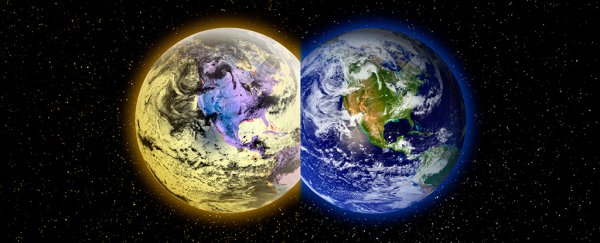
As far as we currently know, there is a single expanding blob of spacetime speckled with trillions of galaxies – that’s our Universe. If there are others, we have no compelling evidence for their existence.
That said, theories of cosmology, quantum physics, and the very philosophy of science have a few problems that could be solved if our blob of ‘everything’ wasn’t, well, everything.
That doesn’t mean other universes must exist. But what if they do?
What is a universe?
It should be a simple question to answer. But different areas of science will have subtly different takes on what a universe even is.
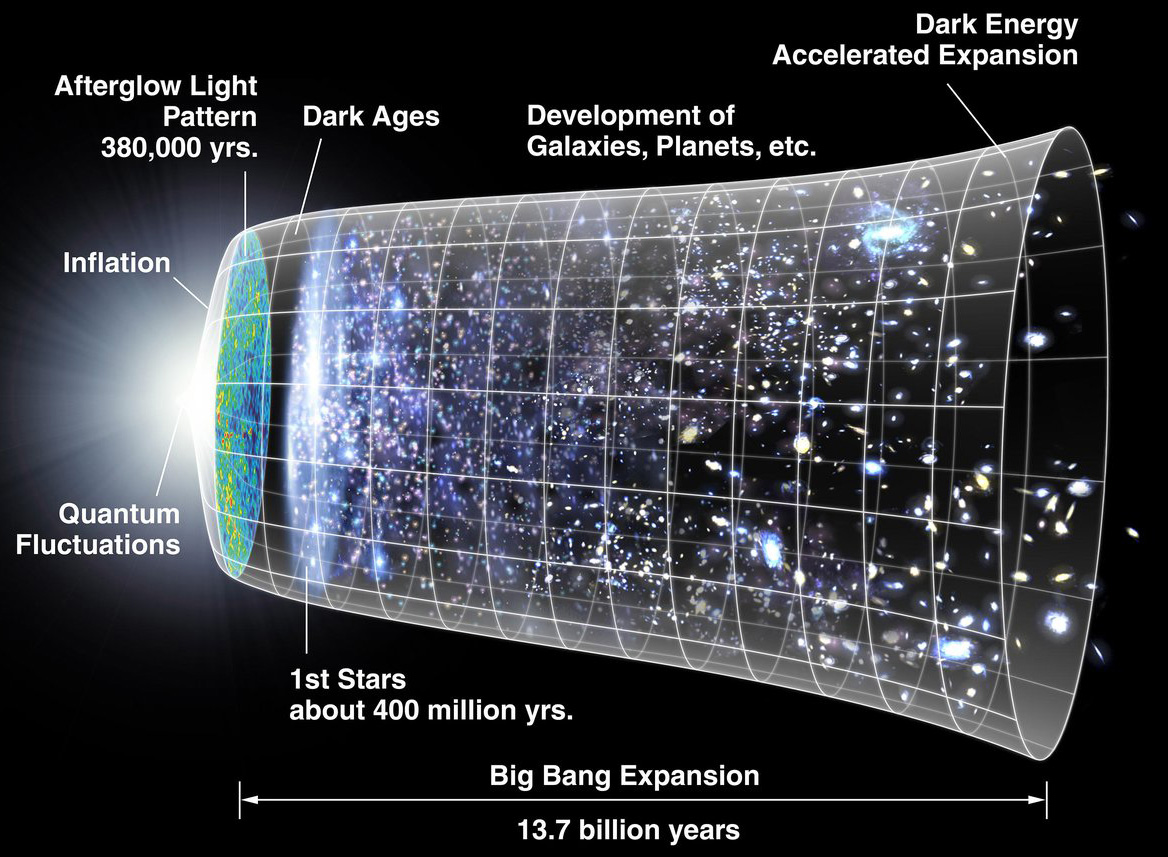
Cosmologists might say it describes the total mass of stuff (and the space in between) that has been slowly expanding from a highly concentrated volume over the past 13.77 billion years, becoming increasingly disordered with age.
It now stretches 93 billion light years from edge to edge, at least based on all of the visible (and invisible) stuff we can detect in some way. Beyond that limit, there are either things we can’t see, an infinite expanse of nothingness, or – in the unlikely scenario that all of space bends back around on itself – a round-trip back to the start across a hyperspherical universe.
If we’re talking quantum physics, though, a universe might refer to all fields and their particles, and their combined influences over one another. As a general rule, a universe (like ours, at least) is a closed system, meaning it can’t suddenly lose or gain a significant sum of energy.
Philosophically speaking, a universe might be a discrete set of fundamental laws that governs the behavior of everything we observe. A universe would be defined by its own rules that set its unique speed for light, tell particles how to push or pull, or space how it should expand.
What is a multiverse in cosmology?
A century of astronomical observations has told us a lot about the age, size, and evolution of galaxies, stars, matter and the four dimensions we sum up as spacetime.
We can theoretically squeeze all of the matter of the Universe down to a point where the concentration of energy reduces atoms to a soup of simpler particles and forces combine until we can’t tell them apart. Any smaller than that? Big shrugs.
If we go with what’s known as a cyclic model of cosmology, the parent universe preceded ours in some way. It might even be a lot like this one, only running in reverse compared with ours, shrinking over time into a concentrated point only to bounce back out for some reason. Played out for eternity, we might imagine the respective universes bounce back and forth in an endless yo-yo effect of growing and collapsing.
Or, if we go with what’s known as a conformal cyclic model, universes expand over trillions upon trillions of years until their cold, point-like particles are so spread out, for all mathematical purposes everything looks and acts like a brand new universe.
If you don’t like those, there’s a chance our Universe is a white hole – the hypothetical back end of a black hole from another universe. Which, logically, just might mean the black holes in our Universe could all be parents, pinching off new universes like cosmic amoebae.
What is a multiverse in quantum physics?
Early last century, physicists found theories that described matter as tiny objects only told half of the story. The other half was that matter behaved as if it also had characteristics of a wave.
Exactly what this dual nature of reality means is still a matter of debate, but from a mathematical perspective, that wave describes the rise and fall of a game of chance. Probability, you see, is built into the very machinery that makes up the gears of a universe like ours.
Of course, this isn’t our daily experience as vast collections of atoms. When we send a bucket of molecules called a rocket to the Moon as it zooms past 300,000 kilometres away, we’re not rolling dice. Classical old physics is as reliable as tomorrow’s sunrise.
But the closer we zoom in on a region of space or time, the more we need to take into account the possible range of measurements we might find.
This randomness isn’t the result of things we don’t know – it’s because the Universe itself is yet to make up its mind. There’s nothing in quantum mechanics explaining this transition either, leaving us to imagine what it all means. https://www.youtube.com/embed/dzKWfw68M5U?ab_channel=PBSSpaceTime
In his 1957 doctoral dissertation, American physicist Hugh Everett suggested the range of possibilities are all as real as one another, representing actual realities – separate universes, if you like – just like the one we’re all familiar with.
What makes any one universe in this many worlds interpretation distinct is how each wave correlates with a specific measurement taken of other waves, a phenomenon we call entanglement.
What ‘we’ means, and why ‘we’ experience one entangled set over waves over another, isn’t clear, and in some ways presents an even bigger problem to solve.
What is a multiverse in philosophy?
One of science’s most fundamental starting assumptions is that in spite of what your mother tells you, you’re not special. Nor is any other human, or our planet, or – by extension – our Universe.
While rare events occur from time to time, we don’t answer The Big Questions with ‘it just happened that way’.
So why does our Universe seem to have just the right tug-of-war of forces that allow not just particles to appear, but to congeal for long enough periods into atoms that can undergo complex chemistry to produce thinking minds like ours?
Philosophically speaking, the anthropic principle (or principles, since there are many different ways to spin the idea) suggests we might have it backwards. Without these conditions, no minds would have arisen to consider the amazing turn of events.
If just a single universe ‘just happened that way’ early one spring morning, it’d be one big coincidence. Too big really.
But if there were infinite universes, with infinite combinations of forces pushing and pulling, some would inevitably give rise to minds that just might ask ‘are we part of a multiverse?’
Will we ever discover other universes?
Given the very definition of a universe relies on some kind of physical fence keeping influencing factors apart, it’s hard to imagine ways we might ever observe the existence of a sibling for our universe. If we did, we might as well see it as an extension of our own Universe anyway.
That said, there could be some cheats that could give us a glimpse.
Any experiment to find one would have to rely on that ‘fence’ having some holes in it that allow particles or energy to leak across, either into ours, or away from it. Or, in the case of universes existing in our past, monumental events that left enough of a scar that not even a rebirth could erase.
For now, we still have no good reason to think our blob of everything is anything but unique. Given we’re still learning how our own Universe works, the current gaps in physics could yet be plugged without any need to imagine a reality other than ours.
In countless other versions of this article scattered throughout the multiverse, however, the question of whether we are alone just might have a different answer.
Modern art refers to the artistic work produced during the period of 1860s to the 1970s and represents the styles and philosophies of the art produced during that era. The term is usually pertains to the art in which the traditions of the past have been thrown aside in a spirit of experimentation. In India, the modern art movement began in the early 1900s. During 1900-1925, Bengal School dominated the Indian art. Bengal school of painting represented the first art movement in the country. Artists like Abindranath Tagore, Nandal Bose, Raja Ravi Verma, Jamini Roy were some of the pioneers of Bengal school. It was the rebirth of Indian art. Bengal school witnessed the departure of traditional painting methods like tempera. Chinese cloth painting and Japanese wash technique were used. The Japanese water colour technique called wash became the hallmark of Bengal school. This technique diluted the impact of the colours used giving the paintings a mystic sense of space and atmosphere. The these of the paintings included religious, social and historical events. Paintings of landscapes, birds and animals were also done. After 1925, artists refused to imitate the mannerisms of the art of the past. They argued that such imitation bounds the imagination and creativity of the artists. The contemporary artists stressed on liberating the imagination from the shackles of past. The art after 1925, was therefore very different from the previous Indian arts. There was variety in the techniques used and artworks were different from each other having more or less similarity. Technique like cubism was used by the artist Gaganendranath. Cubism is a European style of art which aims to show all of the possible viewpoints of a person or an object all at once. Cubistic artworks look like they are made out of cubes and other geometrical shapes. Chiaroscuro, which is a characteristic of the European Renaissance was used in his famous painting ‘Magician’. Chiaroscuro is the use of strong contrasts between light and dark, usually bold contrasts affecting a whole composition. The soft wash technique was discarded and oil painting started getting more recognition. These paintings had bold and contrasting colour scheme in comparison to the light wash technique of the Bengal school. The credit for popularising oil painting in India goes to Amrita Sher Gil. Graphic Prints stated getting popular as well. Artist Krishna Reddy used techniques like intaglio and kaleidoscopic effects in his graphic prints. Intaglio is a printmaking technique in which the image is incised into a surface and the incised line or sunken area holds the ink. It is a process of print on engraved design. In his painting ‘Whirlpool’ which is a intaglio on paper, Krishna Reddy has also used the method of viscosity printing. Viscosity printing is a multi-colour printmaking technique which is uses the viscosity of the paint or ink. Etching and aquatint was also used in contemporary print making. Etching is an intaglio printmaking process in which lines or areas are incised using acid into a metal plate in order to hold the ink. Aquatint is also an intaglio printmaking technique, a variant of etching that produces areas of tone rather than lines. Both of these techniques were used together to create contemporary prints. ‘The Children’ by Somnath Hore, ‘TheDevi’ by Jyoti Bhatt and ‘ Man, Women and Tree’ by K. Laxman Goud are some of the famous prints which have been made using these techniques.
When we read or listen to old love stories, we find that there were times when technology hadn’t suffocated the essence of love, the blue ticks didn’t exist, neither did facebook chats. Love was much more than putting up love struck captions for each other on our facebook display pictures or sending each other hearts and kisses on whatsapp. Lovers used to send each other letters from far off places, and the efforts they put into express their undying love was worth everything in the world. Not to say that relationships today are shallow and ingenuine, but somewhere down the line we miss , infact we lost the so called “Old school love/romance.”
Does anyone still express their love through hand written letters, or social media had completely taken over the matter?
Does anyone still appreciate street food dates, or they only prefer famous restaurants?
Does anyone still gifts flowers and chocolates to their partners or giving expensive rings and gifts now seem better?
Does anyone still appreciate poetries, notes written expressing one’s feeling or Social media’s post now makes more meaning?
Does anyone still takes time to know each other before getting engaged or have complete faith that Tinder find the perfect match?
Does anyone still believe in old school love and romance, or the way of expressing love in our generation enhanced?
















 (
(
 Eduindex
You must be logged in to post a comment.