
DIFFICULT ROADS OFTEN LEADS TO BEAUTIFUL DESTINATION…

Photo by Erik Jermaniu0161 on Pexels.com

“When Everything seems against you, remember that the airplane takes off against the wind, not with it” – Indeed, there’s isn’t a life where difficulties and struggles don’t come.

Someone rightly said, ‘‘If you don’t face any problem in a day, that means you are on a wrong path’’ We often say this proverb about struggles of life. Life is like a roller-coaster, it excites with all those fun frolic jovial moments to distressing moments in our life. Life is incomplete without failure and struggles.

Be a man with honesty and hard work, as it will give us a fruitful life ahead. “A man who struggles will always be the most ideal person in his life”. Life is full of opportunities and risks. In the process of achieving something we all have to sacrifice something, either it is your friends, family, or your loved ones.

Life is a tree, the more you give efforts by watering your knowledge, skills, talent, and hard work, the more successful we will be in our life.

There’s isn’t anything in the whole universe that we are not capable of! We will surely meet people in this process of our life who will let us demoralize or maybe manipulate us from our originality.

Always remember at the end of the day, it only you! There is no we, no us, and no everyone. Either it is a professional or personal life, never let yourself down, in the meantime never lose yourself! The most precious thing in the whole world is yourself, we all are unique in our own ways, our originality is the reason why we are existing.

To reach the destinations, one should pull off, all the hurdles by keeping faith in themselves. Life is really beautiful if you are strong enough to face the harsh reality. It’s not a fairy tale, where we are dependent on someone, there is no “The one”. It is you and your hard work!

Your endurance and your perseverance will make you a man of strength.

“Hope” is one of the most crucial elements presents in everyone which will always make you feel alive. To ponder or to achieve any kind of destination a hope is really important one should have within themselves.

Following your dreams and career doesn’t mean that one should be egocentric or selfish! Taking care of yourselves and your loved ones is really important. because we should make a world full of love and belongingness. Loving yourself is the foremost thing which is needed in any kind of dream to conquer! If one doesn’t have any self-confidence in themselves then, no goal can be achieved!

In the space of the difficult roads (i.e.; tour struggles, sufferings, breakdowns) and beautiful destination (your end goal), there is always a transparent line where your happiness is invisible. It is visible to only one who wants to enjoy their lives.

Any Path of life becomes more Fascinating if it has all emotions amalgamated in this beautiful journey of struggle and sacrifices. At the end of the destination, one should always be true to themselves because self-honesty will make us a man of worth. Remember we all are humans with imperfectness inscribed within us since we are born, so we all have certain faults that sometimes affect our struggling life, but one should always remember that the perfect life will never be as great if life has imperfectness in it. So, live your life according to yourself, because ultimately it is you and your beautiful destination!

Books – the elite partner

Who would not relish reading a book with a cup of coffee / tea? If you are a person who is not fond of reading books then you might be missing a great part of life even. Some may find it boring and consider it as of no use or waste of energy. But the fact provided by reading books is just a contrast to your mindset. The love towards reading books can protect you even from hazardous diseases of life. But for many reading books in their spare time is like a great craving. Nevertheless it is not like the other leisure time activities that we do to pass time. We are benefitted by books beyond what we think. It benefits both the physical and mental health and the benefits are enduring, lasts lifelong. It increases our creative thinking, imagination and molds us into better person. It aids us to formulate a better roadmap for our career. Books exposes us to new things which we might have failed to notice in our past times, renders more information, and fosters us to handle strenuous situations and provides us innovative ways to solve them and thus gives us a great exploration. It leads us to the other part life which is peaceful and gets you tension free apart from your regular hectic work. Reading good books widens our mind and uplifts our way of thinking.

Books can be referred to as the man’s best companion which is the power house of information and ingenuity. Even in the early times, writing system was invented and people used stones, clays, tree and different things that can be carved as a writing material. Fortunately today we have newspapers, magazines and books. We would have come across several books over the years. In our childhood we were fond of story books which would be flooded with pictures to fascinate little children and for the better understanding of the younger ones. And then as we grow up we would be interested in different genre of books like history, literature, science fiction, crime, fantasy, inspirational, adventure, horror, comics, detective, biographies and so on. All books are either nonfiction or fiction. Nonfiction books contain biographies, history books and contain factual information . Fiction books contain a story which is framed by the author. Technical books gives you technical insight, novels distracts you from the monotonous world and stimulates your imagination level. Comics is meant for enjoyment and relaxes you from your repetitive work. As writing is an art, so is reading and it an excellent habit. It should be inculcated in all from an early stage. The cognitive abilities of kids who read books regularly seem to be improved. It helps us on a larger scale to improve the vocabulary , communication skills, writing skills. As we read books we come know about the various fields engaged around us and it boosts the confidence & self esteem and helps us to become highly efficient and excel in various activities. It increases our concentration level and makes it elastic to grasp things quickly and easily.

With the gradual advancement in technology people are getting fascinated by the idea of e-books. E-books – It is the digital representation of a book publication on platforms like computers, smartphones etc. and provides an easy access to the readers. They are more flexible than paper books. It has many perks like we can enlarge the font size to make the reading more pleasurable and it is easy on the eyes. They are portable and handy making it easy to carry around. E books can be purchased through internet and also some are available for free of cost. E-books have a large scope for further developments and universal acceptability.

Paper and electronic books , both provide an effective way of reading . Paper books allow more precise reading and e books are quicker and more convenient. Books are like fellow mates with no demands and no anticipations, rather we could anticipate many stuffs from books. It gives us a kind of inner happiness and gives us an optimistic feel which enhances our knowledge and wisdom.

The 7 Best Books I’ve Ever Read About Writing

Writing has helped me to become better at thinking, speaking, and making decisions. And I’ve used books about writing to improve myself.

I firmly believe that anything worthwhile in your career should start with writing.

From creating resumes to business plans. If you don’t start with writing, you often lack clarity in your messaging.

And that was also the story of my life. In fact, it still is. Most people never think about it, but it’s damned hard to express yourself. Do you have a clear answer to questions like:

  • What’s the number one priority in your career?
  • Why did you apply for this job?
  • What does your business exactly do?

Often, we just come up with the first thing that pops up in our mind.

And after a barrage of meaningless words, we think, “what on earth did I just say?”

I’ve made a list of the best books I’ve read on writing. I must say that I don’t consider myself a writer first. Above everything else, I’m an entrepreneur. I like to share stories.

That’s why this list is more geared towards people who want to write better blogs, non-fiction, emails, cover letters, about pages, etc. Not people who want to write the next The Great Gatsby. I hope you find a book that’s relevant to you.

1. On Writing by Stephen King

Stephen King is one hell of a thinker and writer. And the man churns out books like it’s nothing. Only that fact makes you want to read more about how his mind works.

If you write, and you haven’t read On Writing, it’s time to stop everything you do and get that book. My favorite Stephen King quote?

Probably this:

“The scariest moment is always just before you start. After that, things can only get better.”

If you want to do something, don’t be such a weasel. Just start already.

2. On Writing Well by William Zinsser

A solid book with solid advice about writing non-fiction. When you start reading this book, you immediately can tell the man knows his business. And he knows it well.

Zinsser, a respected writer, and teacher, talks about the principles and methods of writing in this book. But he also shares tips about different writing forms such as memoirs, sports, business, and humor.

This is a valuable book for all people who want to improve their writing and messaging.

3. The Elements of Style by William Strunk and E.B. White

I like the simplicity of this book. It’s short, simple, and to the point. This is more of a technical book with style suggestions about the English language.

In this little book, Strunk and White do a great job of demonstrating the most common style errors.

Style is such a complicated thing that I try to refer to this book often. One of my favorite pieces of advice from this book is this:

“Write in a way that comes naturally.”

4. Ernest Hemingway on Writing by Larry W. Phillips

There’s no point in denying it; Hemingway was one of the best writers in modern history.

And this little book is a collection of letters he sent to his editor, friends, and other authors.

He didn’t want them to be published initially. Hemingway believed that there’s no pride in writing about writing.

This book is not only packed with writing advice. It also shows Hemingway’s character. He was a funny guy who took satisfaction in what he did.

5. Nobody Wants to Read Your Shit by Steven Pressfield

Pressfield is one of my favorite writers. The War Of Art is a classic.

In this book, he talks about why no one cares about your shit. If you’re trying to write and no one’s reading it, read this book.

Pressfield has a background in advertising. And you can tell. He knows how to sell his shit without being annoying.

We live in a world where everyone is trying to sell us all kinds of things. And it’s annoying. This book is essential if you want to stand out in an information-flooded world.

6. The Writers Journey by Christopher Vogler

The Writers Journey is the most in-depth book on this list. It’s also the most comprehensive book I’ve read on storytelling. It’s also a very practical book.

It’s more like a textbook that you want to take notes on. Vogler, a story consultant for major Hollywood film companies, talks about the relationship between mythology and storytelling in this book.

It’s a classic for screenwriters and playwrights. After reading this book, you’ll truly understand the art of storytelling.

However, putting this stuff into practice is another story. That takes a lot of practice.

7. Confessions of an Advertising Man by David Ogilvy

I think too many people romanticize writing. But I don’t like to like to look at writing from a starving artist’s point of view.

In life, everything is business. And so is writing. If you don’t know how to sell your writing, no one will ever read it.

And one of the best books you can read about copywriting, selling, and advertising is Confessions Of An Advertising Man. Ogilvy doesn’t need an introduction.

The man is a legend. And this book is definitely worth your time.

Studying vs. Doing

I hope you pick up one of these books and read them, or maybe reread them. However, never read too much about writing.

Because writing is not something you study, it’s something you do.

Aim High and Do Everything In Your Control to Become Your Best Self

The world is full of paradoxes. One of the biggest is the tradeoff between having high and low expectations. It’s a prerequisite to becoming your best self.

On the one hand, we need to expect to win at life, otherwise; what’s the point of even trying? But on the other hand, we can’t be discouraged when we lose.

The two different concepts are perfectly explained by the following two quotes.

  1. “You were born to win, but to be a winner, you must plan to win, prepare to win, and expect to win.” — Zig Ziglar
  2. “Blessed is he who expects nothing, for he shall never be disappointed.”― Alexander Pope

The first quote says we should expect to win, the second one says we shouldn’t expect to win. So which attitude do you pick?

This is a hard concept to wrap your head around. It took me years to find a balance that worked for me.

The Importance Of A Positive Attitude

You need a positive attitude if you want to win. All kinds of successful people from different fields will tell you that.

There’s no point in “trying.” When you do something, you must do it well, and expect to win. I think that’s the attitude many winners share.

But you and I both know that your attitude is only one part of the equation. Without putting in the work, you must realize that you will not win. You can have all the talent in the world, if you don’t put it to work, you will never reach your full potential.

Winning, becoming good at your job, getting recognition — it all requires a lot of work. To reach our full potential, we must prioritize learning over pleasure.

That means we can’t become great and go out every weekend, watch movies every night, play video games, go shopping, and just hang out on the couch.

The Danger Of Low Expectations

But expecting to win can also be harmful if you’re not mentally strong. I’ve always been an optimistic person. That attitude has helped me a lot in life.

However, in my early twenties, I almost got discouraged to reach for my goals. Time and time again, I was disappointed by failure. Especially when I got out of college, I tried to start many different businesses. And everything failed except for the business I started with my dad.

Naturally, I felt like I couldn’t do it on my own. Look back, it was too early for me. But those high expectations almost made me give up. I’m glad I kept going and stayed positive.

The problem is not whether you fail or not. It’s about this: What do you want to do about it?

Cry and moan and say, “Why does this happen!!” We all know that’s not helpful. Instead, we must be indifferent to outcomes.

But still, I do think we must expect to win at everything in life: Your career, relationships, and money. Aim high and do everything in your control to become your best self. That’s the most useful way to spend your time.

Compare Yourself To Who You Were Yesterday

I like this idea from Jordan Peterson, who talks about comparing yourself to who you were yesterday, in his book 12 Rules For Life.

When you focus on yourself, there’s no disappointment about external factors.

You do everything you can, and if you lose, you will do better next time. Nothing can destroy you.

And if you fail? So what? Being sad or disappointed when things don’t turn out the way you expected is completely normal. I still don’t like to fail. But what’s not normal is blaming others or yourself.

Here’s the thing: Don’t take yourself nor life too seriously. We all know that blaming others is what fools do. You only create resentment and hatred by blaming other people for your losses in life.

But sadly, many honest, self-aware, and positive people blame themselves. And that’s also wrong.

Expect The Best From Yourself — Not From “The World”

In short, this is what I’ve learned about high and low expectations:

  • Have high expectations from yourself. Put in the work. Aim for becoming your best self.
  • Have zero expectations from “the world.” Don’t expect other people to hand you anything.
  • Understand that you don’t control externals. Never blame yourself for bad outcomes.
  • But do blame yourself for not giving it your all. That’s something you control.

There are always people who say, “But what about this or that?” And I often say that I don’t know. Because it’s naïve to say you have the answers.

We’re all trying to make sense out of our careers, relationships, and most importantly: Our own actions.

It’s a never-ending process. We do. We fail. We learn. But we never give up.

Tennessee Williams as a Southern Writer

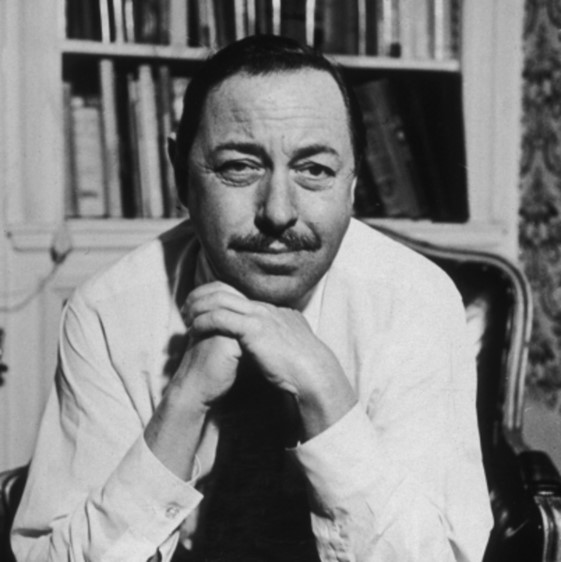
Tennessee Williams

Tennessee Williams is an American playwright hailing from the southern state of Mississippi. For him, writing was an outlet through which he explored the mores of Southern life and the eccentricities and complexities of his own family. His most notable works include The Glass Menagerie (1944) which was considered to be a turning point in his career, A Streetcar Named Desire (1947) and Cat on a Hot Tin Roof (1955) both of which received Pulitzers, Summer and Smoke (1948), Orpheus Descending (1957) etc. Although he wrote throughout his life, his subsequent works never achieved the high acclaim of his earlier works.

Williams as a Southern writer shared a love-hate relationship with the south which provided for dramatic conflicts and excitements. Most of his work reflected traditional topics like agrarianism vs urbanism, New South vs antebellum South, chevalier vs the upstart and so on. For example, his play The Streetcar Named Desire represents the fallen aristocracy with the ethnic denizens a new industrial order, and his play Cat on a Hot Tin Roof represents the different family dynamics of the neo-rich. He drew upon the full resources of language to convey their pictures of culture based on moral absolutes. His characters are portrayed in a way in which they are unable to escape the burdens of their regional histories. Most often, the weight of the southern history the power of racial and social divisions, his rituals and taboos often make self-determination and moral choice unachievable for the characters. In his world, any defiance of this code results in personal destruction.

One of Williams’ most prominent southern trait is the very theatrical display of emotions, dysfunctional characters and unalterable sociological circumstances. He deconstructs the magical appeal of the southern culture and portrays the tension between their dream of an idyllic life and the reality of living it. He also provides constant allusions to plantations like Belle Reve in The Streetcar Named Desire. He also adheres to certain stereotypes of small-town life like gossipy neighbours, fear of scandal, aristocratic families who are deferentially treated by the rest of the community etc.

The usual southern hero is usually almost like an epic figure who embodies the ideals of the society and performs chivalric behaviour which is distinctly different from northern protagonists. A typical southern hero is the leader of men, honest, compassionate, a defender of the faith. They are usually heterosexual, while being protective of the women. But no such southern character exists in Williams’ work. But instead of abandoning the concept of a hero, he has adapted it to the world which has been hopelessly corrupted. He questions the paternalistic order of old South, the enslavement of the black men, the subjugation of the female, the corrupting power of wealth, and the obsession with keeping up appearances. He instead shows guilt caused by the acknowledgement of one sexuality, and the guilt of black subjugation in an antebellum society. Williams attributes perversion and distortions of human behavior to the rigid gender stereotypes that he uncovers in the southern landscape. Certain characters like Brick, who is Blanche’s husband, are unable to cope with the extreme need for masculinity in men. He also questions hypocrisy of a society that denies a woman’s sexuality. Although he does cling to prevailing and romantic point of view past offered luxury and that the present forces the individual to accept barest realities.

“Williams understands human needs and aspirations and is supremely aware of the artist’s role in illuminating urgent personal and social issues; yet his consistent exposure of hypocrisy and his off-beat is reverent sense of humor never hides his deep compassion for those who fear the truth.”

-Kimball King

On one hand, he appreciates the elegance of the past, while on the other, he considers its denial of plurality sufficient cause for its demise. This reflects the love-hate relation that he shares with the South. He does not set out to explain the South and its effects on his characters, but he understands the South and presents characters as real people. He’s a regional writer who does not exploit the peculiarities of his region, and his exploration of the southern value system and conflicts has influenced several later dramatists. To quote Kimball King, “Williams understands human needs and aspirations and is supremely aware of the artist’s role in illuminating urgent personal and social issues; yet his consistent exposure of hypocrisy and his off-beat is reverent sense of humor never hides his deep compassion for those who fear the truth.”

Reference Links:

Self-help and personality development

Self help and personality development is a weapon for us

The spirit of self help creates many good qualities in a person. … These people work more harder than a person who is reliable on others for their work. This leads to help them obtain strong will- power and determination.

Self-help or self-improvement is a self-guided improvement—economically, intellectually, or emotionally—often with a substantial psychological basis. … Many different self-help group programs exist, each with its own focus, techniques, associated beliefs, proponents and in some cases, leaders

The following are common examples of self-improvement.

  • Self-Awareness. A process of introspection to understand your own character, behavior, fears and ambitions.
  • Awareness. A process of extrospection to understand the world around you.
  • Health. …
  • Physical Fitness. …
  • Time Management. …
  • Productivity. …
  • Performance. …
  • Know-How

Here’s a look at some ways to build self-improvement into your daily routine and let go of negative thoughts about yourself.

  • Cultivate gratitude. …
  • Greet everyone you meet. …
  • Try a digital detox. …
  • Use positive self-talk. …
  • Practice random acts of kindness. …
  • Eat at least one meal mindfully. …
  • Get enough sleep. …
  • Breathe consciously.

Personality development refers to how the organized patterns of behavior that make up each person’s unique personality emerge over time. Many factors go into influencing personality, including genetics, environment, parenting, and societal variables.

Personality development helps you gain recognition and acceptance from the society as well as people around. Personality development plays an essential role not only in an individual’s professional but also personal lives. It makes an individual disciplined, punctual and an asset for his/her organization.

Here are  great ways to improve your personality:

  • Be a better listener. …
  • Read more and expand your interests. …
  • Be a good conversationalist. …
  • Have an Opinion. …
  • Meet New People. …
  • Be yourself. …
  • Have a positive outlook and attitude. …
  • Be fun and see the humorous side of life.

The four personality types are: Driver, Expressive, Amiable, and Analytical. There are two variables to identify any personality: Are they better at facts & data or relationships? And are they introverted or extroverted. Note: Most people will have major and minor type.

CAN WE THINK “WORLD WITHOUT ENGLISH”?

ENGLISH IN PRE-INDEPENDENCE DAYS

During the British rule in India English was imposed on Indians as a compulsory study. The British rulers wanted a class of interpreters between the rulers and ruled. Only a selected few could learn English and get good jobs under the British rulers. English education was confined to the chosen few. The foreign rulers had no desire to educate the mass.

ENGLISH AFTER INDEPENDENCE

English education, however, did one good thing to India. It created a batch of scholars who imbibed the best English education. The western culture, new ideas and thoughts about science and scientific studies slowly spread among us through English and we became aware of the tremendous progress that the nations of the west were making. This knowledge, rather the impact of this aerated a tremendous excitement among us and this was the root of the famous Renaissance Movement, which is a bright landmark in our social, cultural and educational sphere. After independence, some nationalists wanted the complete abolition of English from our academic programme. They pleaded for the abolition of English on the ground that its retention smacks of our slavery to England. But there were others who wanted English to continue as a subject for study.

IMPORTANCE OF ENGLISH ITS PLACE IN EDUCATION

The English language is known as the lingua franca of the world. English language is no longer the monopoly of English men. It is now used by a large number of people scattered geographically in different parts of the world. English language is the gateway to the various branches of knowledge and it opens the window to the outside world. It is studied now in many countries, and it is a very helpful means for international communication in commerce and culture. So narrow patriotism should not blur our vision about its importance. It is necessary to retain English as a link language, and as a second language to be read from class III. Regional language should be given first preference, and should be the medium of instruction up to the graduate level. We would see some of the vital reasons to hug English in the main course of life.

Knowledge of English will open doors of bigger opportunity in the field of higher studies on national and international platform.

No scientific and commercial knowledge can be complete without the proper knowledge of English.

This is the language one can study quickly and smoothly without troubles. So, it paves the way to greater studies hence generate greater interest in all type of knowledge acquisition.

International English Language Testing System (IELTS) opens wider prospects to enter in any renowned institution all over the world.

Meaningful study of English will make you conscious of the progress and the standard of living the world has achieved. English is the language of the media and a person can receive exceptional growth in books publishing, films, TV shows if one pursues English in these career prospect.

Technological growth prospers in the lap of English culture and skill. One receives ample support and strength if assisted by English in all level.

English knowing professional wins laurels and fatty salary packages in comparison to other besides promotion and felicitations in a company.  

English is the language of the internet. Right from website development to social media marketing every thing demands a solid base if English. So, the good learners are always getting an edge effect in all the matter.

English education knowledge and workings make you the greater professional, enhances your competitiveness and all-round exhibition of skill. It makes you to be a satisfied citizen of the world.

Knowledge of English gives greater depth in research work, thesis writing, contents composing, communication and future advancement of all the subjects known to the humanity.

So, education, civilization and communication demand a worldwide awakening of English learning culture, practice, use and application in all aspects of life.

Mimesis in Aristotle’s Theory of Art [Part B]

In addition to imitation, representation and expression; mimetic activity produces appearance and illusion that affects the perception and behaviour of people, though this doesn’t negate Plato’s theory on the “realness” of imitation. For, though it is a common belief that perpetual experience allows us to have a closer look at the ‘real’ because works of art are encoded in such a way that humans are not duped into believing that they are the reality but rather recognise features from their own experience of the world within the work of art that cause the representation to seem valid and acceptable – not just existing object or element but beautifies, improves upon and universalises these artistic musings. Aristotle next explores how imitation gives knowledge not just only to the philosophers but to everyone, which in turn creates a delight. Art unlike Plato who dismisses the said notion of art as an imitative form brings about the best in an artist, in terms of how he produces art. It is also essential to note that Aristotle doesn’t put Mimesis in some hierarchical nomenclature like Plato who’d put it to the lowest level of stratification. In any Tragedy, Aristotle insists on a plot arousing Pity and Fear by spectacle/audience which adds more to comprehending imitation; the spectator need not see the object in person which though is crucial, isn’t a deal – breaker, as even a play which has this element of imitation – can convey the plot effectively this can. Be achieved by delivering the speech, actions, the chorus, setting and other elements in such a way that imitation of the desired idea is carried out with brilliance and would successfully be rousing the cathartic element of tragic pleasure is also an important idea with Mimesis.

He dwells upon how Art doesn’t reflect any aspect of natural life as origin of art to the human affinity is through imitation, and while doing so isn’t discarding or trampling is as something necessarily bad but is entirely critical of an artist. Furthermore, he speaks on The Theory of Art as a productive science — for Aristotle, something which only rational human beings can engage in — as the quality produced determines merit of Art, and so art in its absolute formation is acknowledged by Aristotle focusing on its imitative element, as all works of art are modes of mimesis. 

Mimesis in Aristotle’s Theory of Art [Part A]

Please make sure that you read cache up on the next post for more.

Aristotle in his Theory of Art reasons on the imitative nature of art; and further proposes that art imitates everything that is nature. In his theory he hints out that a poet, by his work tells us what is to happen unlike a historian who recites on what occurred in the past, which is put forth by Aristotle himself on the imitative nature of ‘poets’ work. The Oxford English Dictionary defines Mimesis as “a figure of speech, whereby words or actions of another are imitated” or “the deliberate imitation of the behaviour of one group of people by another as a factor in social change”. Mimicry as “the action, practice, or art of mimicking or closely imitating … the manner, gesture, speech, or mode of actions and persons, or the superficial characteristics of a thing” .
Aristotle focuses on the Mimetic nature of Art which isn’t a sole focus of Poetics, and while doing so, he had opposed to what Plato believed, that mimesis was manifested in ‘particulars’ which copies or imitates the forms from which they are derived; thus, the mimetic world (the world of representation and the world of structure of conscious experience) is inherently inferior in that it consists of imitations which will always be subordinate or auxiliary to their original. Aristotle, unlike Plato, has his own interpretation to the theory of imitation and thus doesn’t comply with what Plato presents when he talks about Mimesis. Aristotle has evidently accepted and agreed of the heterogeneous notion of art being produced by different artist differently, which gives a distinct identity to the theory of imitation and so he believes that an artist is responsible to birth an art form unlike Plato, who negates any form of Art – as it’s being thrice removed from reality. He contests these notions of reality and argues to the point that imitation is an extremely natural instinct in human nature, something very basic, the ability to imitate sets human beings apart from other animals and so not only it is natural to imitate it further helps to learn and simultaneously experience delight from it. In Poetics, what Aristotle has wrapped up for us isn’t a very definite answer, for what he means about ‘Mimesis’, instead has left it broad and elusive. Although various discussions on ‘Mimesis’ to be an integral fraction to the relationship between art and nature and to the relations governing works of art themselves. Therefore, we can assert the various species that Mimesis is distinguished in, i.e. Mean; Object; Mode of Imitation. Although for Aristotle, Imitation involves not merely physical resemblance, but also what one might call generally the relations between things or the ‘mechanism’ of things, he thus proposes the three key distinguishers through which one could filter imitations. Mean – is something a poet applies to his work of art, say Poetry and Dance, what distinguishes these two forms is; one requires spoken language to be at fruition and the other, not essentially emphasises on language and it thus could be substituted by music, similarly in Poetry difference in its metres or rhyme scheme and the structure in general could itself separately each genre from the other like Epics, Ballads or Elegy, et cetera. Next is Object of imitation – what the mean — the ‘matter’ of imitation — represent, and this would produce for better or worse or the same effect of the original piece imitated, here Aristotle points at the distinction of Tragedy and Comedy, for tragedy we’d need a better mode of imitation and for Comedy one uses caricature i.e. laughing at the object of imitation, to show an inferior or worse form of imitation to produce the choice effect. Further along is Means of imitation which in poem could be what the poet chooses as a form of delivering his work of imitation.

Is Literature taking us away from the real world?

Photo by Maria Orlova on Pexels.com

It is always considered that the people always acknowledge “ what is actual and reasonable” and in this instance often the imaginative world is denied by them!

Literature is not only a branch of academia which people are fond of for centuries but it has further become into a subject of the matter when it comes to fiction”. It is often unvalued by the fact that literature provides an absurd approach to the other branches of the world that believes in science and not in magical elements.

The fact that one should always remember is that the essence of literature is never gone even in spite of so many prejudices against it. Great writers Like John Donne, William Shakespeare, Rabindranath Tagore have upheld the pride of literature by their beautiful works.

Literature – A Backbone of the Inner society!

A very famous quote of all, which we have known for ages; “Literature is a mirror of society”, yet we forget this quote because non- Literature people are not very fond of poetry, essays, and novels. But one must know that Literature is not only a place for fictional lovers but also provides a reality of the real world.

Taking back to Chaucer’s age when writing was not so popular, yet “Canterbury Tales” was written and unexpectedly it turned out to be the legendary piece that literature holds to date. Being one of the best pieces of all, Canterbury tales was the background of the 14th-century society of England where people believe in god and considered god above humans.

When the English renaissance came people started to believe among themselves and considered humans and humanists as the great topic and wrote about them and their lives.

The whole background history is found in those classical works in the form of so called “Literature works”.

Now when people talk about the history and the consequences of the wars, it is literature that has preserved the whole history in several kinds of books that are cherished and protected by them who understood the purity of literature.

Every drop of works is poured into the petals of history and preserved by these eminent writers who contributed their emotions and portrayed the society of that era through their writings and contributed to the ocean of literature.

For some it’s a “Myth” :

There are several ideologies and theories are done in the matter of literature and they proved that literature is a myth as it doesn’t belong any place in the real world! So the question that arrives here is , what do literarians, bibliophiles and the readers think about?

This is a very controversial concern, as for some “Literature is an emotion which should be presevered for the coming eras, It is something to be conserved so that the coming generation would know the aesthetics of emotions, culture and people.

As the days are going by, the essence of humanity is decreasing day after the other, but certain emotional norms are still alive holding up because of literature, it is because of Great works like “Romeo and Juliet”, “Pride and Prejudice”, “Wuthering Heights”, that people still believe in love and its pure existence between two people. Even in this era where people are having an ill-fated relationship and are doomed by their own actions still believe that there are certain emotions present In them.

The world is a better place if people love each other and live in harmony. It is literature that teaches that still we all are humans and we should accept the fact that not everywhere facts and logical explanations are approved, rather it is emotional evidence that is more prominent.

Its time to save literature!

Every branch of academia is relevant in some way or the other which provides us the reality check of various elements present in the world , among them literature is one of them which still is remembered and exists in our society due to the tremendous works done by the crafters of literature ( The writers, poets).

Hiding it or erasing it would never be a good thing to do, as aestheticism always protected these works and still popular among people who believe in fantasy and poetry. It is rather a sense a catharsis which each reader goes through which is written by these dead writers.

Though the artists die, the art remains forever! Likewise, The art of literature can never be faded because the artist’s art is immortal, all we have to respond that we as ardent readers should make this immortal art live for many centuries and should never let them fade away in spite of any circumstances which the worlds demand us to do.

Capture Your Prey!

“Your intuition knows what to write, so get out of the way.”

Ray Bradbury

Today’s article speaks about being a Tiger and Capturing your Prey. I’m sure you are left wondering as to how a tiger is related to writing. Let’s quickly delve into the topic to learn how!

Consider the entire concept of Writing as a Forest and the Tiger as a writer. A tiger succeeds in capturing his prey efficiently and is thus, proficient. Similar is the case with Writing. We have to Capture Creative Wordings in order to prove our efficiency. In short, the way you write is all that matters. Your Content is the prey! Capture it and be the king! Capturing the prey could also mean capturing the ‘X’ factor in the writing process!

However, some aspects are necessary to cover when aspiring to reach the ‘X’ factor. Let us view some of them!

Read More And More!

Consider reading books of famous authors who use native English vocabulary because they sometimes tend to make use of interesting phrases and go – to lines which you could use for your content.

Subscribe To YouTube Channels For English Learning!

YouTube, a widely used video platform comes with all the remedies, doesn’t it? All you’ve got to do is, type in the search bar “English learning for beginners” and vast options are available for you to scroll by!

Audio Books Are Bae!

A new concept is out in the market! You could purchase audio books and read them while listening. Sounds cray cray, doesn’t it? But that’s exactly what you can do if you aren’t much of a bookworm and would prefer listening rather than reading!

Try Conversing More In English!

Conversation is the key where vocabulary is the lock,

Go about framing interesting sentences as you talk!

Said by The Laconic Writer! 😉 This may be said by me, but isn’t it true? Go about framing interesting sentences which you picked up from the above mentioned sources. After all, when you learn something, you should implement it for further enhancement. That’s how conversation comes in handy! When you learn some advanced words, try using them in your day to day conversation so that you capture that particular phrase or word in your head for next use. However, make sure you don’t use heavy oxford dictionary words during regular conversations. After all, you don’t want your friends wondering the meaning of your emotions and expressions! 😉

Hold That Pen!

Another way is to hold the pen and write as much as you can think of and resolving to incorporate as many advanced words in your write up as possible! This helps develop your vocabulary.

Make A Note Of Certain Interesting Facts!

Try noting down certain mind boggling and humorous facts which you could use for your content. When you incorporate fun facts, your content becomes all the more engaging. Clutch an important topic and write an amazing fact on the basis of that!

Try Inventing Some Of Your Own Peculiar Phrases And Quotes!

That works! That really does work! Readers consider it interesting to read something new that you come up with. You could frame your own acronyms, come up with creative illustrations by dragging your mundane daily life elements or using natural aspects. For instance, helping caterpillars bloom into a butterfly meaning helping novices become experts 😉

These are some of the ways to effective English learning. All that matters is how well you Capture the Prey at the end while remembering that it comes from within and requires utmost imagination.

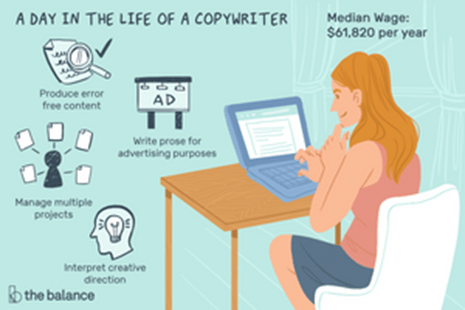
After you have gained expertise and strong hold on the reigns of vocabulary, remember to use your talent in copywriting. Don’t know what that is? Well, let me introduce you to it. Copywriting is content intending to make sales. It is solely used for marketing wherein you provide ample information regarding your services or products thereby compelling people to buy your facilities through the incorporation of various calls to action!

Call to action includes involvement of various links for customers to be redirected to the “buying” page. It also comprises of boosting content at the end that usually starts with a verb like, Try our products now and you won’t regret. You introduce discounts for your customers and create a sense of urgency by involving limited time periods for a specific offer or purchase of goods. You provide incentives to customers thereby getting them acquainted with the benefits of the product or service. You try creating convenient situations for them by providing money back guarantees. In short, customer satisfaction and well – being becomes your goal because marketing is all about understanding the pain points and desires of the mob.

Content is thus, the basis of digital marketing and to master copywriting, one needs to work on the creativity aspect of this interesting English language. Basic English vocabulary gives birth to intermediate expertise in it which in turn opens the doors to creativity and later helps you climb the advanced ladder of English language wherein you hop into copywriting.

A copy mustn’t ever include incorrect punctuations or grammar because that is enough to let your marketing efforts go down the drain!

Avoid redundancy or repetition of words. For instance, ‘We provide goods that are good enough for daily life.’ Sounds crazy doesn’t it?

Improper punctuation or overuse of it like, “We, provide, high quality, goods, and services.” Enough to infuriate the reader, isn’t it? That’s exactly why, it is advisable to work on enhancement of English before resolving to move towards copywriting.

Thus, now you know why improvement of vocabulary was stressed upon in the earlier part of this article.

What if you already are an ardent English fan and copywriting isn’t at all a monotonous or tedious task for you? Set up your own website and get marketing.

Thank You For Reading!

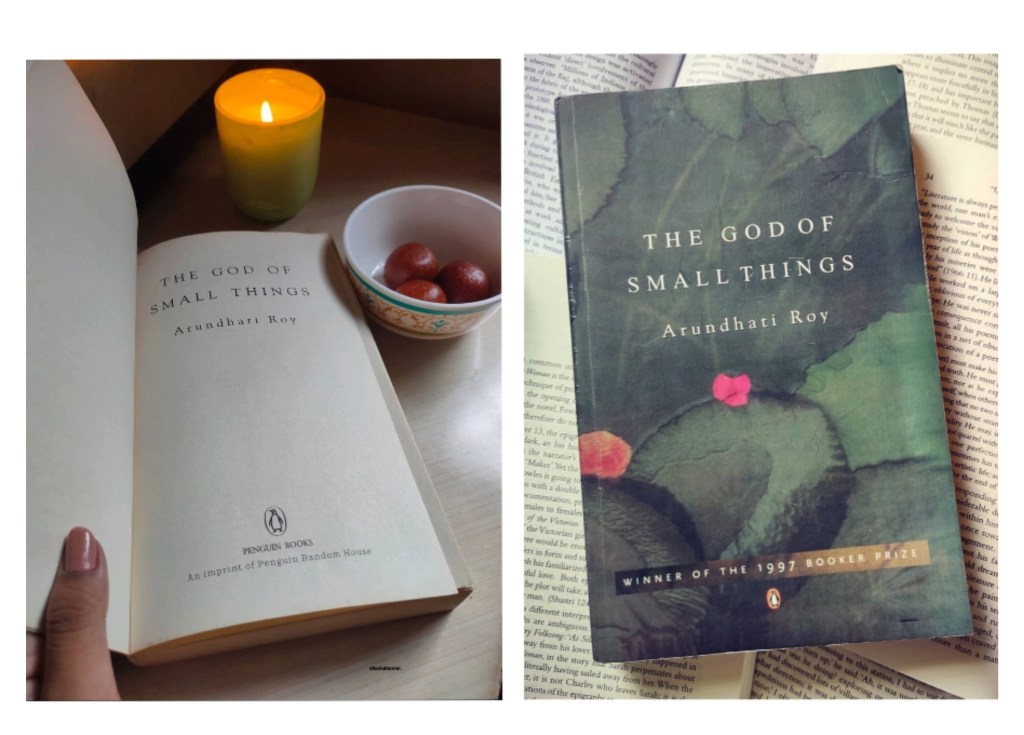
The God of Small Things by Arundhati Roy

Genre: Fiction, Drama

Rating: 4/5

“They all crossed into forbidden territory. They all tampered with the laws that lay down who should be loved and how. And how much.” Arundhati Roy – God of small things. 

This book was published and won the man booker prize in the year 1997.

A story about three generations of one broken family made up of flawed and broken individuals. It deals with themes of class and caste, love and sexuality, family and politics, and other little things. The God of Small Things is more than a novel. It’s an immersion of senses into a world, a language, a society, a culture that leaves you shattered. Arundhati Roy has crafted a world within the sleepy little town of Ayemenem. The way she has written is almost as if she invented her own language. The prose is so distinct and poetic that I’ve never read anything like it. At its heart, this is a story of family struggle (and everything that entails), but the trauma and division are beautifully balanced with lush descriptions of Kerala life.

‘May in Ayemenem is a hot, brooding month. The days are long and humid. The river shrinks and black crows gorge on bright mangoes in still, dustgreen trees. Red bananas ripen. Jackfruits burst. Dissolute bluebottles hum vacuously in the fruity air. Then they stun themselves against clear windowpanes and die, fatly baffled in the sun.’

Estha and Rahel, two-egg twins have met after years of staying apart. Set in the backwaters of Kerala during the height of Marxist influence, the book moves back-and-forth in time to establish the twins’ lives, and also that of their family – their parents, uncle, grandmother, and grandaunt. One tragic evening unravels any semblance of balance in their lives and leaves the family broken.

Arundhati Roy


“Perhaps it’s true that things can change in a day. That a few dozen hours can affect the outcome of whole lifetimes. And that when they do, those few dozen hours, like the salvaged remains of a burned house—the charred clock, the singed photograph, the scorched furniture—must be resurrected from the ruins and examined. Preserved. Accounted for. Little events, ordinary things, smashed and reconstituted. Imbued with new meaning. Suddenly they become the bleached bones of a story.”

Through the eyes of the twins, Estha and Rahel, she’s pointed out the hypocrisy, dejection, and sadness that is in the world. Specifically related to Love. About who should be loved and how much. Neither the questions asked, nor the answers given are easy. I can only imagine what her process might have been while writing this masterpiece. It is one of the finest pieces of literature I’ve ever read. The beautiful prose makes rain soaked, pickled flavour, cast ridden, left leaning Kerala come alive.


But what really bothered me is the constant repetition and lack of setting and description.
The story goes back and forth in time and and is filled with rich metaphors so it demands more attention.
If I have to describe it in a sentence I would say – It’s a lesson in sociology baked in prose poetry.

Pick this book up when your brain isn’t too scrambled.

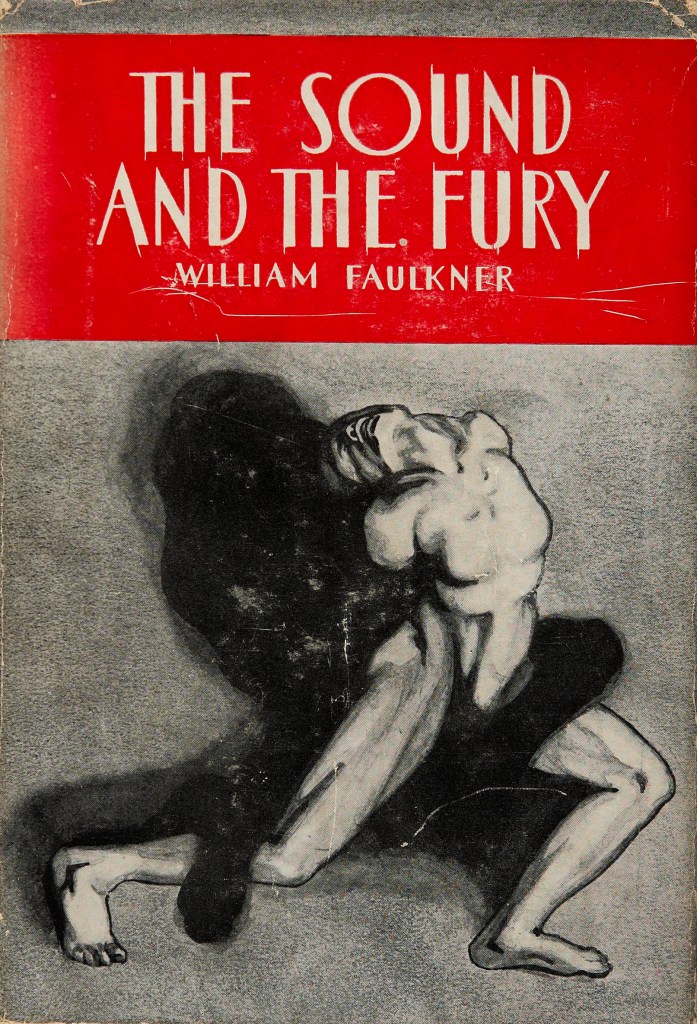
William Faulkner’s ‘The Sound and the Fury’

The Sound and the Fury is 1929 novel by the American author William Faulkner. Faulkner is widely renowned for his experimentation of the narrative technique called ‘stream of consciousness’. William James in his Principles of Psychology describes it as ‘the unbroken flow of perceptions, memories, thoughts and feelings in the waking mind’. In this narrative technique, the narrator seemingly rants about thoughts and introspections that flows through their mind. The novel is a true testament to this narrative.

The book follows the story of the Compson family who are slowly losing their way in the an postbellum (post-war) American South. The Composn family used to be wealthy and mighty in their olden days, but unlike their ancestors, the current members of the family cannot seem to command the power they once held. The story is divided into four parts. The first part takes place on April seventh 1928 and is narrated by Benjy Compson, the mentally challenged youngest son of the family. The second part takes place eighteen years prior on June second, 1910. It is narrated by the oldest son Quentin who is a student at Harvard. The third part takes place a day before the first part, on April sixth 1928. It is narrated by the headstrong third son Jason Compson. The final part takes place a day after the first part, on April eighth 1928. It is narrated by a seemingly omniscient narrator who records the observations of Dilsey, the family’s loyal black servant.

“Clocks slay time… time is dead as long as it is being clicked off by little wheels; only when the clock stops does time come to life.”

– William Faulkner

The story is fragmented and is narrated in a non-chronological manner. Most of the story has been uncovered based on audience’s interpretation to try and form a coherent narrative of the same. The story narrates the three Compson brothers’ seeming obsession over their sister Caddy, who surprisingly does not narrate any portion of the novel. Despite not having her own narrative, it is clear that Caddy has influenced her brothers and holds a strong presence throughout the novel. Growing up with an incompetent and absent-minded father, Caddy assumes charge of her brothers. This sense of control continues to grow and she proves that she is capable of making her own way in life. Her family disapproves of her promiscuity and banishes her after she gets pregnant out of wedlock.

The first part, narrated by Benjy is the most convoluted of all. It gives a glimpse of what his thoughts and records his accounts on how people around him treat him. His memories are interconnected and they create a domino effect as they are triggered by senses like smell or touch. For instance, a sensation that he experiences in the present triggers a memory of similar sensation in the past. Caddy is the only one who treated Benjy as a normal being and he misses her. They both share a strong emotional bond and lot of his memories are associated to her. The second narrator Quentin has a similar strong bond with Caddy. Being the older brother, he is overprotective of her and even hints of incestual jealousy over her. Quentin is also deeply disturbed by his sister’s promiscuity which is unlike the ‘Southern morals’. He is intelligent and his narration is crudely interspersed with philosophy and existential questioning. The narrator of the third part Jason is strongly against Caddy. He is petty and resentful and blames everyone else around him for his misfortunes. He blames Caddy for the loss of his job which was promised to him by her ex-husband. He is headstrong and clings desperately to the old power that the Compson family once held. He obtains this feeling by controlling his family including Caddy’s child. The narrator of the fourth part Dilsey is the only objective narrator in the family. Despite being a black woman in a post-slavery abolishment era, she serves the Compson family loyally and seems to be the only one holding the family together. Although the family bosses her around, she’s content and dedicated to the work she does and is the only ‘sane’ one among the rest.  

The Sound and the Fury is definitely worth a read to understand the complexities of a non-chronological narrative. It is impossible to be explained through a conventional synopsis as it only scratches the surface of the true depth of the novel. It is riddled with symbolisms and open-ended plotlines that motivates the readers to think for themselves. The realistic aspect of the novel also makes the characters more endearing to the readers. It is easily one of Faulkner’s best.

Reference Links:

Who Says You Have To Get Out Of Your Comfort Zone?

I love my comfort zone. To me, that’s where the real magic happens.

In my comfort zone, I have my family, friends, work, music, books, movies, bike, gym, park, you name it. Everything I love.

And from that place of safety, I’m more open to trying new things and take risks.

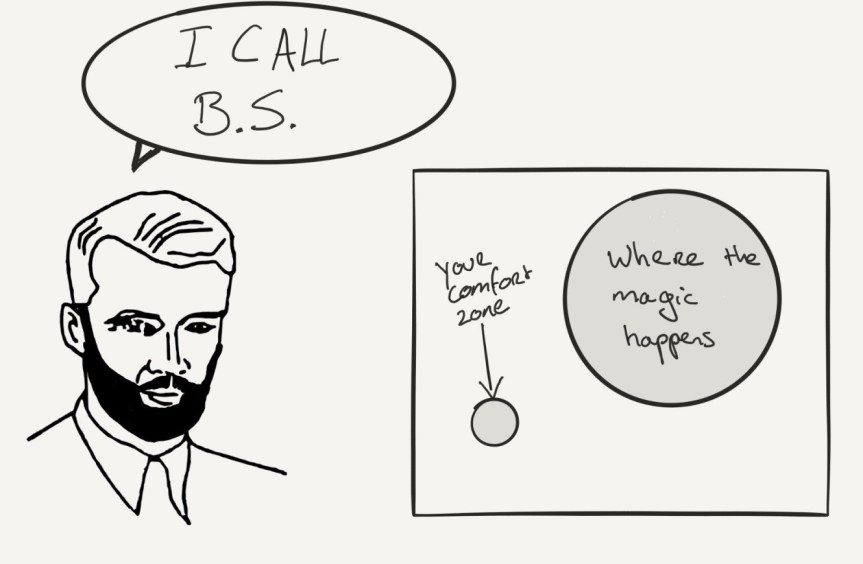
I’ve never believed the idea of that stupid little drawing. You know what I’m talking about, right?

  • “Your comfort zone.” A little circle.
  • “Where the magic happens.” A big circle that stands for the promise of success.

As if “magic” only happens when you step outside your comfort zone; that’s ridiculous. And while we’re at it; why pretend as if your comfort zone is bad? It’s this little pathetic circle displayed against the bigger “magical” circle.

Sure, I’m all about pushing yourself, trying new things, moving forward, growing, etc. But in contrast to many popular self-help people, I don’t believe the comfort zone is a bad thing.

Call me a pessimist. Call me a stoic. But more than anything, I’m merely a practical person.

And practically speaking, you don’t even want to make a huge leap outside your comfort zone. In fact, I believe in the slow road to “magic.”

Where’s The Magic People Talk About?

I’ve found that I do my best work when I don’t worry about money, finding new friends, getting familiar with a new environment, and anything else that is related to always moving around.

But don’t get me wrong. I’m not saying I prefer to stay put. Stagnation is a death sentence to me.

I believe that there are different phases to life. Sometimes, you take it easy, work on your skills, your character — you invest in yourself.

And sometimes, you just go out there and take a chance. Life’s too short to be a wimp.

But those two things are interconnected. If you don’t work on yourself, and if you lack self-confidence, you will never take a risk.

For years I wanted to do what I’m doing now. But instead of jumping out of my comfort zone (which was scary), I slowly took on new and bigger challenges.

First, I got two degrees in business. Then, I started a business together with my father. That was in 2010. And after two years of working on that business for six or seven days a week, I started doing freelance marketing work.

Again, after a few years of freelancing and starting (and failing) other businesses on my own, I took a job at a research advisory firm because I wanted to know how it is to work for a major corporation.

And after doing that for a year and a half, I finally decided to write and talk about productivity, career, and entrepreneurship on the internet.

By then, I‘d been doing the things I write about for more than 10 years. And yet, I don’t have all the answers—I just share the stuff I’ve learned.

So it would be ridiculous if I would join people who scream: “If you want to be successful, all you have to do is step outside your comfort zone. NOW!”

Well, have you ever stepped outside your comfort zone? Even just a little bit counts. And what did you find? A leprechaun with a bag of money?

That comfort zone shit is just a story. It might motivate some people, but you don’t have to believe it if you don’t want to. It’s just like when people claim you have to wake up early if you want to be successful. Says who?

I believe this: If you step outside your comfort zone, there’s only more work waiting for you. It’s not fancy at all. There’s no magic involved. Just blood, sweat, and tears.

Work Your Way Up From A Place Of Comfort

I think that most people who read these type of articles want to achieve something. Maybe you want to quit your job, start a business, grow your business, become an artist, publish a book, whatever.

And you probably also know that it’s not easy. So why do you make things even harder for yourself by doing shit that makes you very uncomfortable?

Instead, start from the very bottom. Build a strong foundation. Get comfortable before you do scary stuff.

“How does that foundation look like?”

If you want to live stress-free, you need enough money in your savings account so you can live and eat for six months in case things go south—see it as a fail-safe system. Again, that’s my practical mind speaking for me.

Make some calculations and figure your what that number is for you. And don’t even think about taking a risk before you have that money on your savings account.

Also, build a skill set that’s worth something. One of the reasons I don’t care about money is because I trust my ability to find work. Even when I go broke tomorrow, I’ll find a way to get work the next day. I’ve invested years and hundreds of thousands of dollars in my education.

The question is: What’s your skill? How can you add value to the world? What problems can you solve?

Other things that complete your foundation:

  1. Family. If you don’t have a family, create one.
  2. Friends. You can’t be friends with everyone. Stick to a few people who also stick to you.
  3. Yourself. Consciously improve your body and mind. Go to bed a little stronger and wiser every night.

Lastly, don’t try to be something you’re not. If you’re an introvert, don’t pretend that you can work in a boiler room. If you’re an extrovert, don’t pretend you can work in solitude.

Stay close to yourself—there’s no point in pushing yourself so badly that your life becomes miserable.

In the end, we all need comfort: It’s one of our basic needs as human beings. But we also need growth. So whatever you do, don’t stay in your comfort zone for too long.

Try to keep moving forward every day: Even if it’s just a tiny step. No magic. Just effort.

PROCRASTINATION- A CURSE

‘I will do it some other time’ is the biggest lie one can tell oneself. To start with this phrase, it is rightly said that this is the biggest lie we tell to ourselves because there is no tomorrow to do a work. If it’s not today, then it’s never, and if we elongate procrastinating a work it becomes our habit. It is possible that when we delay or postpone a work it would give us a sigh of relief for that very moment, thinking we don’t need to do this thing now and we will continue this later on but later on this is the thing which starts creating a mental pressure on our mind and we begin to panic around. In a way, it can also hamper our on going work because then we would have to stop that for a while and do the previous work first.

WHY DO WE PROCRASTINATE?

We have several reasons to why we procrastinate a work but the most dominating of all are the psychological reasons. When we need to get something done, we rely primarily on our self-control in order to bring our self to do it. Our self-control often receives support from our motivation which helps us get things done in a timely manner. In some cases, we experience certain demotivating factors such as anxiety or fear of failure, which have an opposite effect than our motivation. In addition, we sometimes experience certain hindering factors such as exhaustion or rewards that are far in the future, which interfere with our self-control and motivation.

People sometimes procrastinate as result of their perfectionism. Perfectionism can lead to procrastination in many ways, such as by making someone so afraid to commit a mistake that they end up not taking any action at all, or by making someone so worried of presenting something with any flaws that they end up reworking instead of moving forward.

Laziness is another factor that leads us to procrastinate from our work most of the times. This may come from unhealthy food habits and untimed sleep schedule. Thus, it is always said to lead a healthy lifestyle with healthy food habits and a good sleep schedule with some exercises included. Food habits affect in a way that if we have to work at sometime and we have a heavy meal before the same then we would probably end up taking a nap or resting instead of doing our assigned work for the time being. Similarly, if we don’t take adequate amount of sleep we would always feel tired and reluctant to work.

Fear of evaluation or negative feedback can lead to procrastination as well. This happens because people are afraid to be judged for a negative impact left back at them. In many cases, people’s fear in this regard are irrationally exaggerated or unjustified, either because the chances of receiving negative feedback are low or because the consequences of that feedback aren’t as significant as they feel.

HOW TO AVOID THIS?

As it is rightly said that it is much better to accept the truth than to believe in a lie that you already know is going to end one or the other day and you need to face the reality similarly, we should avoid compiling our work for some other day rather do the same on the spot, as and when required. We should set abstract goals and always keep ourselves motivated to work for the same with a positive energy. Do the work as and when required!