Cyberbullying, also known as cyberharassment, which happens using electronic means. It is also known as online bullying. It has become increasingly prevalent nowadays, especially among adolescents, as technology had advanced and the digital sphere has broadened. Cyber bullying occur on platforms like social media, chat rooms, and gaming sites where people can see and participate in sharing of content.
Cyber bullying is said to be happen, when someone bullies or harasses others on the internet and other digital spaces, usually on social media sites.
Cyber bullying behaviour involves posting threats, rumors, hateful comments on online platforms/apps, or via SMS or messaging in order to cause humiliation to other users. It includes posting, sending or sharing negative, Unpleasant or false information about an individual for causing humiliation and character assassination. It also involves posting threats, a victim’s personal information, hate speech or sexual remarks to someone on the internet.
Types of Cyber Bullying
An awareness of the different types of Cyberbullying is important. This helps parents and young adults to report cyber bullying and adopt various measures for the same. Following are some of the common types of cyber harassment:
• Trolling has become increasingly prevalent in these days and is the most common form of bullying that happens in an online community. This is done to evoke a reaction or disruption, or sometimes, even for personal amusement.
• Cyberstalking is another type of bullying or harassment which involves electronic communications to stalk a victim; this may tend to be threatening to the victim.
• posting an embarrassing or unpleasant photo/video.
• faking identity online
• issuing online threats to hurt or provoke someone.
• posting hate comments or content triggering religious, racial, ethnic or political malice.
• Also Doxing, it is a practice common on the internet where personal information about an individual is reasearched and published. One finds out information from the person’s social media and other online platforms. It is then used for online defamation, harassment or other forms of cyber bullying.
Cyber Bullying in India
Cyber bullying in India had increased prominently since availability of affordable data services and social media presence has increased. According to a research by Symantec, almost 8 out of 10 individuals are exposed to different types of internet bullying in India. Most of the victims are generally women and teenagers.
The same study categorises India as the country facing the highest cyber bullying in the Asia Pacific region, more than Australia and Japan.
Special Concerns
with the widespread presence of digital forums, social media websites, posts, comments, content shared by individual can be seen by strangers as well as acquaintances. Whatever content the individual shares online, be it personal or public, creates a kind of public record of their activities, views and behaviour. this can basically represents their personality, which may be accessible to schools, employers, college, clubs, and other institutions who may be researching an individual now or in the future. Cyberbullying can tamper the reputation of everyone involved, not just the the person being bullied but also those who are participating in the bullying.
What can you do?
Ask for help: if you are experiencing any distress related to online bullying, reach out to someone for help. It maybe your friend, relative, colleague or someone you trust.
Use the technology to cut off the Bully: almost every social media site allows you to report or block someone. They also enable you to report inappropriate content or behaviour.
Protect your Accounts: passwords are your private information. never share your passwords with anyone no matter who the person might be. Password protect your phone so that no one can use it for impersonation.
Report Cyber Bullying: The Ministry of Women and Child Development launched a helpline to report cyber bullying/harassment, cyber defamation, especially for women and children as they are subject to cyberbullying the most. most institutions also have special faculty of development whom you may report to, about the bullying.
“If my parents understood my dreams than today I won’t be stealthy sitting on roof and writing this blog.”
So, you are a parent, if not than at one stage of life you’ll be ( but for now just read and share it with a parent). Every parent has great GREAT expectations from their offspring and sometimes that desire becomes so pressurizing that it takes the toll of the life of that little angel.
How many of you asked your child what he or she wants to become well many of you haven’t and in a rare case if you have, I am sorry to say that you didn’t took that seriously.
A child of 21st century is none less than the most busiest person on Earth, schooling, coaching, homework and much more trouble some tasks are a part of their life and after all that when they get the night time to rest, they wander in the land of dreams; the world that’s their own, they make ambitions and set goals for their life.
But do you even know the amount of grief and misery that your child feels when you say a crisp clear NO to them when they beg you to let them achieve what they want ?
Let me talk in statistics. Globally Around 65000 kids committed suicide in 2019 just because their parents didn’t allowed them to study in the field of their choice.
Just imagine the condition of a student who passed school working hard so that he could take admission in his dream college. But guess what, his CARING parents deny him that because the college is in another city . WTF, like seriously, we kids work our ass whole childhood to satisfy your marks hungry taste buds and what we get in return, a big rejection on our dreams.
As a parent your worries and thinking of well being of ur kid is justified. But you have to understand that the dreams and choice of your child also matters, afterall it’s them who would be studying and if they want to pursue a field of their choice then why deny it to them and become the reason of them going into depression or at worse, commuting suicide.
Parents, you have to understand this, your child knows his interests more than you or anyone else. Please, you just can’t put an end on their life by making them give up on their dreams.
Just go and talk to them, understand what ur child wants. Otherwise the day is not far when your child will cry silently in night and will fear to meet eye with people and will curse his very existence like I do. Please parents, wake up .
COVID-19 has halted all the productive sectors of economy resulting in financial imbalance. However, a unique sector that has emotions of our kids attached to it is their school, where they prepare themselves for the future. The teachers too have been forced to stay away from the school due to COVID-19 outbreak.
We have been hearing that government is providing some financial relief to certain sector. However, there is a necessity to provide some relief to the education sector too. Many educational institutes have taken loan to cater for variety of courses of instructions. The teachers of private and public educational institutes require support of the government, so that they can survive this tough phase. All the educational institutes and the staff working there needs to be supported financially for the time being.
We should ensure a respectful and dignified life for the teachers and support them to be stable and stay cheerful so that they develop the patience required to conduct the online classes for a longer period. A committee of educationist can be set up to look in to the concept of providing insurance cover against the Coronavirus to the school staff and the students. The government can include the public and private education sector in the list of sectors requiring economical support. Education sector has suffered financially and emotionally too.
A minimum financial help can be provided to all the teachers belonging to private sector on priority as it is a fact that they have not received their salaries since lock down was imposed from the month of March 2020.The plight of private school teachers has increased as these schools are totally dependent on fees from the parents.The management running the schools can support the teachers and hold their hands during this period of financial and health related crisis caused due to spread of Coronavirus.
The policies to hire and retain the teachers needs to be strengthened and redefined in the light of certain evil practices of hiring that are in vogue and have been in practiced. Such practices go unchecked specifically in the private hiring of the teachers. Hiring agencies are providing teachers to educational institutes at times overlooking all the laid down rules by the government. Though the efforts of private schools is commendable in contributing positively towards the growth of the students and in turn that of the society, certain scope of improvement in terms of treating teachers with respect exists. As a onetime special case some financial support can definitely be extended to the teachers so that they can support themselves during this uncertain lock downs due to COVID-19 spread.
A complete redefining of education sector can be done and many issues or evil practices that have intruded the system can be resolved and a new energy can be given to education sector for its revival. All the stakeholders need to accept the change for the betterment of students. The government has a greater role to play in this scenario and should come up with flexible policies for the revival of the education industry that can include granting subsidy to the educational institutes and extending some financial help to the teachers. The risk of COVID-19 is still there in the environment. We all have to treat this situation as an opportunity to learn.
A 23 year old Thane engineer has developed worlds first-of-its-kind internet controlled robot which can be used to treat covid patients in hospitals.
The robot delivers food, water, beverages, medicines and even some good advices to the patients without the help of any hospital nurses or staffs.
“This aCoro-bot’ eliminates the need of physical presence or contact of nurses or ward boys with the patient. It can deliver food, water, medicines and interact with the patients through a camera. Through a speaker, it can also advise patients on various precautions like sanitizing their hands before picking up anything from the robotic tray,” Says Pratik tirodkar the creator and designer of this robot.
This smart boy is also the founder of a start up ‘PNT solutions’. Whatsmore this young lad had developed other unique creations when he had barely stepped to college. This include world’s first ‘Humanoid’ with 47 body (axis) movements, a robotic bird ornithopter for various outdoor applicationsapplications, a mini packaging robot and several others.
This genius has even given over a 100 guest lectures to the brain students of IITs and NITs in the country.
This robot can be operated from any part of the world through internet. The robot comes with 3 trays with a carrying capacity of 10-15 kg each, plus a 30-kg storage at the bottom, enabling it to serve the supplies to over a dozen patients at a time in the COVID-19 ward.
“There are separate dispensers for water, tea, coffee, besides sensors for sanitizers which flow out quickly when the patient holds his hand below it and cuts off the supply when the hand is removed. Thus there is minimum wastage,” Tirodkar explained.
“Not only the COVID-19 patients, Coro-bot can also take care of itself. It has three nozzles at the back to give itself a disinfectant bath regularly, it goes on spraying sanitisers on both sides of the path, plus disinfects the ground it moves on by using UV lights” Says the genius.
The Coro-bot also has LED lights illumination to make it convenient for night usage as well, timers for indicating lunch-dinner, emergency button, besides a small PC like screen on the top for basic computer work or entertainment, he said.
This is now successfully deployed at Holy Cross Hospital in kalyan. Impressed by this robot over a dozen of other hospitals have ordered coro-bot in Mumbai.
“The Coro-bot costs between Rs 1.60-Rs.3.80 lakhs, depending on various specifications like the load-carrying capacity, etc, and the Ornithopter is around Rs 30,000. I have a small manufacturing unit at Dombivali, but if I can get a good investor, I can get into mass production,” he said.
Pratik tirodkar is currently doing his Btech in instrumentation engineering from Bharati Vidyapeeth College of Engineering, Navi Mumbai.
After the recent incident, where a pregnant elephant died in Kerala after a fruit filled with firecrackers burst in her mouth, triggered nation-wide outrage, a video of a pregnant cow injured in a similar fashion has been circulating on social media. In the video being shared online, one Gurdiyal Singh, a resident of Himachal Pradesh, who claims to be the owner of the injured pregnant cow, describes how the cow’s mouth had been injured after one Nandlal fed her explosives.
Owner of the preganant cow blames neighbour for the brutal act
Meanwhile, Gurdiyal Singh confirmed that Nandlal, the alleged accused, works as a mechanic in Singh’s neighbourhood. Singh said that Nandlal has no remorse for his action. Nandlal has said that he is not scared of the repercussions and that he will continue to do whatever he deems fit. “Even the village sarpanch cannot harm me”, challenged Nandlal when confronted by Singh.
The video of this brutal act was circulated soon after social media was aflutter with outrage and anger over the demise of an elephant in Kerala. Amid outrage, the district police on Thursday (June 4) constituted a special investigation team under a DSP-rank officer to probe the matter.
One suspect arrested in Kerala elephant killing case
The forest department in Kerala has arrested one suspect in the case of death of a pregnant wild elephant in Kerala. The person is being interrogated in the matter. The elephant had died after she was fed a pineapple filled with firecrackers by some villagers.
The autopsy report of the dead elephant has revealed that the crackers stuffed in the pineapple which was fed to the elephant burst in her mouth leading to severe injuries. The elephant was not able to eat anything due to the deep wounds, due to which she fell and drowned due to weakness. The elephant’s preliminary post-mortem examination was conducted at the Mannarkkad Forest Division. It revealed that the animal died as a result of drowning, followed by inhalation of water which led to lung failure. This has been identified as the immediate cause of the death of the elephant.
The investigation in the case has been moving on a faster pace and the forest department has started interrogating the suspect in custody. As per reports, three people are under suspicion of feeding the pineapple full of crackers.
Pregnant elephant dies in Kerala after cracker-filled pineapple burst in its mouth
Recently, in an act of utmost cruelty, a pregnant elephant had died after some locals fed her cracker-filled pineapple which later exploded in her mouth. The incident took place in Malappuram district of Kerala when the elephant had wandered into a village in search of food. It is being believed that some villagers stuffed pineapples filled with firecrackers on her tusks while she was walking on the streets.
From anybody who throws stones at stray dogs to anybody hurting a living soul,choose one face. A lot of these animals trust humans because the have been helped by them in past. This is cruel beyond measure. When you lack empathy and kindness,you don’t deserve to be called a buman. To hurt someone is not human . Just stricter laws won’t help. We need a descent execution of law too. Until the guilty are punished in the worst possible way, these wicked monsters will never fear law. Though it’s difficult, i hope they are able to find out the one who committed this crime and punish them accordingly.
Why did I end up keeping a question mark at the end of the title? Is it in order to start my introduction with a question mark by questioning the title or which made me to write this sentence. The answer to this question is a question. Indian Education Future turns out to be a question mark and remains to be question for more far. Our future lies in the past and the past remained as a past and hence future will remain as a future. Past shouldn’t be past in order to make future as a future. Past should change so that our future will not change. Our children’s future can be ours but theirs shouldn’t be theirs which will be cycle and makes the future to be seen only in future’s future.
Chance to change
The change to change the educational system should change which is only possible by changing the mind sets of unchanged. This is only possible by changing the methods of bringing the awareness. Education is the only weapon which can change the change(money) of the unchanged.” Uneducated should be treated as a criminal and illiteracy must be treated as a crime which is the only way to increase the literacy rates”. Education should be mandatory which makes them to read since the only option left to them is it. Fear is the thing which wemake them to feel and the rest is automatically done. Fear for benefit will benefit the society. Before they overcome this fear at least they could have finished secondary education. As soon as they realise it, we make them to understand the importance of education. “If you can’t love to study, fear will make it so”. The feelings are different but the feeling is same. To make the future possible we should take action in the present.
Revolutionary decisions must be made in order to bring a revolution else the only thing we hear about it is “sun is revolving around the sun”.The harsh decisions that you take will make them hard and in turn shine like a diamond. Education can bring the change and in turn make the change like a unbreakable chain. If good has to happen then making bad decisions to make it is not at all a bad decision. Severe tax should be impelled on the parents who are not willing to send their children for the study and that tax will be utilised for the education of that child.
The situation in the world are very worse and so our hope for vaccine also. Scienticts are trying hard and hard to discover the vaccine. Scientist and pharma industry from all over the world are in danger in terms of health and wealth.
Here are some updates related to corona virus vaccine;
Moderna Therapeutics‘ invented mRNA-1273 vaccine prototypes which is heading towards success with high speed. The vaccine, is currently in its second phase of testing is more likely to be tested ahead on its third phase of clinical testing, Moderna therapeutics plans to involve about 30,000 participants between the ages of 18-55 and those who are at high risk of corona virus. If the trials are successful than it would be much relief for the people all around the world, by the time, Moderna promised to manufacture 100 million doses of the vaccine. The third phase of the testing is most likely to start in July.
Oxford University & AstraZeneca of Brazil which is worst affected country due to COVID-19 are jointly working to develop the corona virus vaccine. Once they tried to develop the vaccine but it failed in testing, now after much of research and time they again got hope and now they are soon ready to begin the trails on humans. To speed up the development of vaccine and minimizing the clinical trial time they are conducting both phase I and phase II trials at the same time.
Serum Institute of India (SII) India is also leading in development of vaccine it has already tested for 18-55 age but side effects were observed and is again under development and testing. If India is able to development the vaccine first than India will become super nation as India will show to world that still India can do better in health sector and obvious youth is also at great potential so, ultimately it will attract many of the MNCs to India.
If we have to live with a face mask in the foreseeable future, let it be a designer one. Luxury brands to corporate fashion, artisanal communities to even turban designers are redefining the face mask into a fashion accessory, albeit one that follows all the norms of WHO safety protocols.
The bizarre situation arising out of the COVID-19 pandemic has sparked an amazing amount of creativity among designers and artisans. Glamorous to the artistic, the range of masks flooding the market is exhilarating.
While the initial intention of designers and brands was to create masks for a more altruistic purpose — to rush supplies to frontline workers as a contribution to the fight against the pandemic, it is turning into another vertical of their business. For artisans, on the other hand, it is a means to survive the financial constraints imposed by the lockdown and tide over these uncertain times.
Globally, fashion brands such as Dior, Prada, Gucci and Louis Vuitton recalibrated their manufacturing units to make masks, protective gear and sanitizers. Their masks initiative has moved from public-spirited to a fashion offering. Indian designers and savvy artisans are fast catching up. Face masks are a canvas for self-expression and a means of survival at a time when most business has come to a halt. According to the book History of Surgical Face Masks by John L. Spooner, masks first made an appearance as protective gear for medical practitioners in the 19th century. They were adapted in China in 1910 to prevent spread of pneumonic plague.
Fashion in Asian countries such as China, Korea and Japan included designer face masks as a shield to deal with rising pollution. The rest of the world is waking up to the fact that your mask does not have to be boring or surgical if you aren’t a frontline healthcare worker or afflicted by COVID-19.
The Savile Row mask
Established tailors on this iconic London street are handcrafting and retailing face masks, which is now an essential accessory in our fight against the coronavirus. Huntsman, a big name on Savile Row, handcrafts soft masks made using 100 percent Egyptian cotton. The double-layered masks are embroidered with their signature alphabet ‘H’ and are sold in a classic box pleat design with elasticated straps.
The luxury monogrammed masks
LVMH, owner of brands such as Louis Vuitton, Dior, Givenchy and Fendi, has employed 300 additional artisans to make non-surgical face masks. The LV masks feature the classic brown monogram pattern in tan suede with gold rivets reinforcement and costs up to $1800. Pretty much like LV, Fendi has put out a logo-monogrammed mask in deep tan/brown shade that has been designed and hand-stitched by artisans in their Paris atelier.
The signature pattern face masks
Most designers have signature prints that they are known for. Priyanka Modi, creative Director of AMPM, an edgy fashion brand has dovetailed their prints with some colour “added keeping in mind the universal dreariness, to lift up the spirits of the people who end up wearing them”. The result is a collection of snug textured, patterned masks with contemporary aesthetics and angular lines. Functional to the tee, these masks can be bought online as well as at AMPM stores, and retail between Rs 4,000 to Rs 5,000.
The quilted ones
Leconet Hemant’s dreamy signature patterns and prints make way on to their 3-and-5 ply face masks. “We have used cotton poplin with polyester interlining, which feature prints and light quilting with fabric. Each mask undergoes UV-ray sterilisation before being packed in a fabric pouch made from the off cuts,” says designer and co-founder Hemant Sagar. The prices of the masks range from Rs 999 and Rs 1499 and they are being sold via the brand’s stores.
The Rajput-style masks
Rajputs are famous for their swag and their style, on display even in the most stressful of situations. Udaipur-based safa and turban designer Harendra Jodha, who studied the Rajput lifestyle at Chopasin School (they teach you how to live a life of leisure like a Rajput!) created a range of beautiful handloom cotton 3-ply masks to match the safas that the men wear, particularly at weddings or important ceremonies.
We are alone in the Universe ! It’s one of the biggest questions that haunts our imaginations. Astrobiologist Adam Frank argues in his new book “Light of the Stars” that we have never been in a better position to answer that question, thanks to a revolution in our knowledge gained by powerful telescopes like Hubble and space probes like Voyager. Indeed, the chances that there has never been another civilization in the universe are as low as one in ten billion trillion. But whether there is still one out there today is a more complicated question.
Your book centers on a relatively new field of study known as Astrobiology, which you call revolutionary. Explain what it means and why it is giving us new insights into our place in the universe.
Astrobiology is the study of life in its planetary or astronomical context. People will say we have only one example of life—here on Earth. But, if you take that position, you miss three revolutions that have happened in the last 30 years.
The first revolution is that we have been visiting other planets in our solar system. We have now sent probes to pretty much every kind of object in our solar system, including Mars. And from this we’ve learned about climate and how planets work in a generic sense. There’s an app you can pull up that will give you the weather on the Mars. We have climate models for Mars, Venus, and Saturn, and we know a huge amount about climate as a generic planetary phenomenon, not just on Earth.
Credit: Third Party Reference
The second revolution is studying the Earth’s history going back 4.5 billion years. We have been able to unspool in some detail the long history of the Earth and its life co-evolving over that time. We see that Earth has been many different kinds of planets, sometimes a snowball world, sometimes a hothouse world without ice. In the beginning there were no continents; it was pretty much a water world.
The last big revolution is the revolution. When I was a school student in 2006, I did not know whether there were any stars in the universe with planets around them. Now we know that the universe has ten billion trillion planets that are in the right place for life to form. Those three revolutions completely changed not only how we think about life and planets, but also leads us to think very differently about exo-civilizations.
There are two possibilities, we are either alone in the universe or we are not. Both of these are equally terrifying.” Arthur C Clarke.
Workers in the search for extraterrestrial intelligence (SETI) would have needed more than a little luck in the first 45 years of the modern hunt for like-minded colleagues out there. Radio astronomer Frank Drake’s landmark Project Ozma was certainly a triumph of hope over daunting odds. In 1960, Drake pointed a 26-meter radio telescope dish in Green Bank, West Virginia, at two stars for a few days each. Given the vacuum-tube technology of the time, he could scan across 0.4 megahertz of the microwave spectrum one channel at a time.
Credit: Third Party Reference
Almost 45 years later, the SETI Institute in Mountain View, California, completed its 10-year-long Project Phoenix. Often using the 350-meter antenna at Arecibo, Puerto Rico, Phoenix researchers searched 710 star systems at 28 million channels simultaneously across an 1800-megahertz range. All in all, the Phoenix search was 100 trillion times more effective than Ozma was.
“If Other beings live out there, if we’re to find them, we must do so before one or either of us is expired by the universe.” ~ Simon Farnell
Time as I have said before is such a relative thing, based on what we can perceive and measure with our minds. If we imagine the universe as a giant entity existing in its place we can maybe imagine that our existence is a fleeting and insignificant thing, a moment of time too short to measure and other races that may or may not exist will also be a similar fleeting moment.
Reference- divyanspacetech.wordpress.com and nationalgeographic.com
A lot has changed as per the new guidelines, so it’s best to plan ahead. As per the new rule, you have to reach the airport at least 2 hours in advance, as opposed to the earlier 40 minutes cut off. Also keep in mind, how you will be travelling to the airport as public transport will not be easily available.
Be Vigilant About Your Hygiene & Safety
Now I know that this one isn’t easy. We’ve never had to live or travel in a time with a highly infectious virus. So the best thing to do is not let your guard down. Start from the basic level and ensure that you are packed well. In an ideal scenario, ensure that you do not have to buy anything from a shop or from the airport. Make sure you have a mask, sanitizer and gloves easily accessible in your handbag. Ensure that you take maximum protection while heading to the airport and leaving your destination airport. You can never be too careful.
Pack Only One Hand Bag & One Carry On Bag . As per the new rules, only one hand bag and one cabin luggage is allowed. So make sure you pack light and pack efficiently. Only carry what you need. Also remember, to carry a handbag that is not so heavy that you have to leave it on the floor of the airport. Another important point to note is that metal & plastic are better breeding grounds for viruses. So ensure that you carry a bad that is made of fabric instead of metal.
Rethink Your Airport Look
Well, remember when airport looks were all the rage? You’re probably going to have to rethink that look now since the new look is all about hazmat suits, masks, sanitizers and gloves. As part of the new guidelines, just before you board the flight you have to compulsorily mask up and suit up to prevent infection and the spread of it. Wear comfy clothes underneath your protective gear and ideally pick a hazmat suit that you can dispose off with ease once you reach your destination.
Eat Well Before The Flight/Carry Food
As per the new guidelines no meals will be served onboard the flight, so do ensure that you either eat well before the flight or carry your own food that you can eat after the flight.
Let Your Loved Ones Know When You Are Travelling
We are not asking you to take permission, but do inform your friends and family about your travels and ideally do keep a backup option for stay and help at the destination you will be visiting. Mark your emergency contacts clearly.
Carry Enough Cash & Have Ready Finance Available
No, we are not asking you to carry a briefcase full of money like in those old Bollywood films, but do ensure that you have both some liquid cash available with you and some easily available money in the bank. In case you do have to be quarantined or in the unfortunate situation that you get infected, ensure you have enough money for treatment and for stay.
Every year, in the month of June, the LGBTQ community hosts pride celebration in various ways. It is a month long celebration of diversity, love, acceptance, inclusion and unabashed self-pride. Various events are held across the globe during this commemorative month as a way of recognising the LGBTQ community and their influence around the world.
Why the month of June?
The month of June was chosen for LGBTQ pride month to memorialise the riots held by LGBTQ community members against a police raid that occured at the Stonewall Inn, a gay club, in New York City on June 28, 1969.
The message was clear; to peacefully protest and raise political and social awareness of the issues facing by the community. The queer community wanted to be open about their sexual orientation and be free to go anywhere without the fear of being arrested.
Pride Month 2020: #21daysallychallenge
This year, because of the social distancing norms across the world, many pride parades and events are on hold. But still we would not be restricted to celebrate all forms of love. Due to the global pandemic concerns, this year a different approach have been taken by the Pride Circle to take aware and conscious steps to acknowledge and redress stereotypes and biases about the LGBTQ community and bring about social change.
The aim of the challenge is to bring together individuals and influencers from over 28 countries and 70 organisations to establish a global community of LGBTQ allies. It started on June 1, there will be 21 mini-challenges extended over a period of 21 days in the month of June. As per the Pride Circle’s Statement, “this is based on science that it takes 21 days to form a new habit. Anyone can participate free-of-cost and sign up for it by clicking on the link – https://thepridecircle.com/21daysallychallenge/
Some of the challenges of the initiative include building awareness about the existence and journey of an LGTBQ person, for instance, read or watch or find out about the coming out story of an LGTBQ person, laws associated with the community; show your allyship, test your biasness- have you ever made fun of or discriminated an LGBTQ. Wear something symbolic or just shout out, let the world know that you’re an ally. Build your knowledge about the community. Learn about the art and literature by them and go all out. Don’t hold back, talk about the stigma and bias against LGBTQ persons.
In our country, decriminalisation of homosexuality is yet to complete 2 years, this initiative which has sprouted in India could become our leap of faith to ignite a global movement to look out for equal rights and fair treatment for the people belonging to that community. Allies would be able to contribute in creating a safe space where people of every sexual orientation is welcome and respected. It will help bridge the gap and let people understand the importance of treating others, who may be different from them, with equality, fairness, acceptance and mutual respect. The #21daysallychallenge could be a favourable step in the direction of building and inclusive and conscientious society with support and trust.
The movement is supported by various organisations, along with eminent academic institutions such as IIMs, IITs, NMIMS, MICA and the only school in India participating in Pride month celebrations, Tagore International School, Vasant vihar. This is a great achievement towards creating safer schools, workplaces and society for the coming generation. Such support from organisations like these is the need of the hour as it plays a vital role in the bigger fight to advance the community and promote inclusion in all spheres of life.
Now, more than ever, we, the people of India, should encourage everyone who believes in LGTBQ equality to come out and be an ally or support in the best possible way. It’s time we move towards being a more accepting society and initiatives like these is the fundamental step towards that larger goal of “vasudhaiva kutumbakam”, i.e. “the world is one family”.
Amidst a wave of locust swarms sweeping across western and northwestern India, the Department of Agriculture and Farmers’ Welfare (DAC&FW) has stepped up locust control operations in the affected States of Rajasthan, Punjab, Gujarat and Madhya Pradesh. As of today, there are active swarms of immature locust in Barmer, Jodhpur, Nagaur, Bikaner, Ganganagar, Hanumangarh, Sikar, Jaipur Districts in Rajasthan and Satna, Gwalior, Seedhi, Rajgarh, Baitul, Devas, Agar Malwa district of Madhya Pradesh.
At present 200 Locust Circle Offices (LCO) are conducting survey & control operations in close coordination with District Administration and agriculture field machinery of the affected States. Locust control operations are in full swing in coordination with State Agriculture Departments and Local Administration. In Rajasthan 21 districts, in Madhya Pradesh 18 districts, in Punjab one district and in Gujarat 2 districts have undertaken Locust control till now. For effective control of locusts beyond Scheduled Desert Areas, temporary control camps have been established in Ajmer, Chittorgarh and Dausa in Rajasthan; Mandsaur, Ujjain and Shivpuri in Madhya Pradesh and Jhansi in Uttar Pradesh.
So far (till 26.05.2020), control operations against Locusts have been done in 47,308 hectare area in total 303 places in Rajasthan, Punjab, Gujarat and Madhya Pradesh by LCOs in coordination with District Administration and State Agriculture Department. 89 fire brigades for pesticide spray; 120 survey vehicles; 47 control vehicles with spray equipments and 810 tractor mounted sprayers have been deployed for effective locust control, as per requirement during different days.
Usually, the locust swarms enter the Scheduled Desert Area of India through Pakistan for summer breeding in the month of June/July with the advent of monsoon. This year, however the incursions of locust hoppers and pink swarms have been reported much earlier because of presence of residual population of Locusts in Pakistan which they couldn’t control last season. Since 11th April 2020, locust hoppers and from 30th April, 2020, the incursion of pink immature adults has been reported in bordering districts of Rajasthan and Punjab, which are being controlled. Pink immature adults fly high and cover long distances during day hours from one place to another along with the westerly winds coming from the Pakistan side. Most of these pink immature adults settle on the trees during night and mostly fly during day.
Concerned over the early attack of locust swarms this year, the Union Minister for Agriculture & Farmers’ Welfare, Shri Narendra Singh Tomar chaired a meeting with the pesticide manufacturers and all related stakeholders on 6th May, 2020 to review the preparedness for locust control in the affected States. Following directions of the Agriculture Minister Shri Tomar, a video conference was conducted under the chairmanship of Secretary (DAC&FW) Shri Sanjay Agarwal was conducted on 22nd May, 2020 with the District Administration and District Agriculture Officers of locust threatened districts of Punjab, Rajasthan, Gujarat, Madhya Pradesh and Uttar Pradesh along with the representatives of NDMA. Locust awareness literature, SOPs, approved pesticides and awareness videos were shared with the States in the meeting. Earlier, a video Conference was held on 5th May, 2020 with the Principal Secretary (Agriculture) and DMs of the locust prone districts of Rajasthan, Gujarat and Punjab under the chairmanship of Secretary, DAC&FW to review the preparedness and further coordination with the locust States for taking necessary action.
On 11th March, 2020 a High- Level virtual meeting on Desert Locust in South-West Asian countries was held at the office of the FAO representative in India. Representatives of four member countries (Afghanistan, India, Iran and Pakistan) and the Plant Protection Division of FAO, Rome also participated in the meeting. The MoS (Agriculture & FW) Shri Kailash Choudhury and Secretary DAC&FW attended the meeting. It was decided to hold the virtual meetings of technical officers of member countries every Monday via Skype and nine meetings have so far been held. Advisories have been issued to the States of Rajasthan, Gujarat, Haryana and Punjab regarding the locust attack and necessary measures to be taken for effective control and pesticides that are to be used for effective Locust control in the cropped area.
Currently Locust Control Offices have 21 Micronair and 26 Ulvamast (47 spray equipments) which are being utilized for locust control. On approval of the Agriculture Minister Shri Tomar, supply order for additional 60 sprayers has been placed to M/s. Micron, United Kingdom. e-Tender has been invited for the empanelling agencies to provide services of drones for aerial spraying of insecticides for effective control over tall trees and inaccessible areas. Ministry of Civil Aviation has approved “Conditional exemption to Government entity (DPPQS) for use of Remotely Piloted Aircraft System for anti-locust operations” on 21st May, 2020 and in accordance with this order, two firms have been finalized through tender for use of the drones for spray of pesticides for Locust control.
Meanwhile, supply order for procurement of additional 55 vehicles has been placed to strengthen the control potential. Adequate stock of Pesticide is being maintained (53,000 litres Malathion) with Locust Control Organizations. Under Sub-mission on Agriculture Mechanization, assistance for 800 tractors mounted spray equipments has been sanctioned for Rajasthan costing Rs. 2.86 crores. Also, under RKVY sanction for hiring of vehicles, tractors and for purchase of pesticides has been issued for Rajasthan worth Rs. 14 crores. Under RKVY sanction for purchase of vehicles, spray equipments, safety uniform, android application and training has also been issued for Gujarat at a cost of Rs. 1.80 crores.
As per FAO’s Locust Status Update of 21st May, 2020, the current situation remains extremely alarming in East Africa where it is an unprecedented threat to food security and livelihoods. New swarms will migrate to the summer breeding areas along both sides of the Indo-Pakistan border as well as to Sudan and West Africa. As vegetation dries out, more groups and swarms will form and move from these areas to the summer breeding areas along both sides of the Indo-Pakistan border. Good rains are predicted during the first half of June along the Indo-Pakistan border that would allow egg-laying to occur.
During 2019-20, India witnessed a massive locust attack which was successfully controlled. Starting from 21st May, 2019 till 17th February 2020, a total of 4,03,488 ha area was treated and locust was controlled. Along with this, the State Agriculture Department of Rajasthan and Gujarat coordinated Locust control in cropped areas of the State. During 2019-20, Control operations were done in 3,93,933 ha area of 11 districts of Rajasthan; 9,505 ha area in 2 districts of Gujarat and 50 ha area in 1 district of Punjab. Senior Locust Forecasting Officer of FAO who visited India on 16-17 January 2019 also appreciated the efforts of India in Locust control.
Everyday Locust Control Organizations and District Authorities and State Agriculture Department officials with control spray vehicles of LCOs, tractor mounted with sprayers and fire tenders, are undertaking Locust control operations in early morning hours. The immature locust is very active and their mobility makes it difficult to control the swarm at one location and it takes 4 to 5 days of control at different locations to control a particular locust swarm.
Locust is an omnivorous and migratory pest and has the ability to fly hundreds of kilometers collectively. It is a trans-border pest and attacks the crop in large swarm. Found in Africa, the Middle East and Asia, they inhabit some 60 countries and can cover one-fifth of Earth’s land surface. Desert locust plagues may threaten the economic livelihood of one-tenth of the world’s human population. Swarms of locusts in the desert come to India from Africa/ Gulf/ South West Asia during the summer monsoon season and go back towards Iran, Gulf & African countries for spring breeding.
In India more than 2 lakh square kilometers area comes under Scheduled Desert Area. Locust Warning Organization and 10 Locust Circle Offices (LCO) of Government of India are situated in Rajasthan (Jaisalmer, Bikaner, Phalodi, Barmer, Jalore, Churu, Nagaur, Suratgarh) and Gujarat (Palanpur and Bhuj) are responsible for monitoring, survey and control of Desert Locust in Scheduled Desert Area in coordination with State Governments.
The outbreak of the current pandemic has affected the lives of people, their health, and wellbeing. The sudden disruption of daily routine, undesired laws of social distancing, and receiving a flood of information puts all of us at risk of mental stress and dilemma. Persistent fear, anxious mood, irritability, feelings of guilt, pessimism and worthlessness, insomnia, loss of appetite or weight gain, poor concentration and, worsening of chronic health problems may be an indication that stress is affecting our health and immunity. During the lockdown period, our existing underlying diseases may also trigger in the absence of adequate physical activities and fear of the pandemic. So, there is a need to strengthen our physical strength and immunity system even if we do not have any lifestyle disease.
In the absence of any prescribed treatment, vaccine and therapeutic recommendations being available against COVID-19, governments of most countries and several authorised international health agencies like the World Health Organisation, the British Dietetic Association, and the UD Food and Administration are emphasizing on maximum use of raw vegetables and fruits, nuts, and seeds; pulses and wholegrain foods; unsaturated oils; limit the intake of soda, salt, sugar, and trans fats; and stop eating junk and sugary food. Apart from food, guidelines also recommend physical exercises, meditation and adequate sleep, and good exposure to sunlight.
These recommendations and guidelines have already been a part of the ancient healing system of India, i.e. Ayurveda, which suggests that life is standing on four pillars, namely, Aahar (diet), Vihar (lifestyle), Achar (conduct of individual with the external world) and Vichar (mental health). According to this, food is like a medicine that can recuperate an individual by establishing the connection between elements of life, food, and body. Individuals’ temperament, physical and emotional states can be determined and regulated by their food choices, quantities, and lifestyle. It is well known that there is a close relationship among genes, environment, food, and emotional factors that lead to a bidirectional vicious cycle of mood, food, and lifestyle diseases. Ayurveda recommends the intervention of healthy lifestyles, meditation, pranayama, adequate sleep, and Satvik food to live a healthy, peaceful life and fight against various diseases including COVID-19.
Ayurveda considers that proper food selection and dietary schedule help to maintain holistic health with a calm mind. BhagwadGitaand Yoga Shastras divided food into three types based on their qualities (termed as gunas). They are Sathva (satoguna), Rajasa (rajoguna), and Thamasa (tamoguna). Sathva means goodness, whereas Rajasa means aggressive/active, and ordered from “best” to “worst”. Thamasa means inactive. A Satvik diet is meant to include foods and eating habits that are natural, vital and energy-containing and provides calmness, purity and promote longevity, intelligence, strength, health and delight. Examples of Satvikfood items are fruits, vegetables, sprouted grains, cereals, nuts and seeds, low fat milk and milk products, pure fruit juices, and cooked food that is consumed within 3-4 hours of cooking, etc.
A Rajasic diet, the mode of passion, is one that is overly spicy, hot, or fried with pungent, sour, and salty taste. Rajasic food possesses attributes of negativity, passion, and restlessness. Examples of Rajasic food are caffeinated drinks (like coffee, fizzy soft drinks, tea), sugary foods (chocolate, cake, biscuits, chips, etc), or spicy food. As these foods are rich in glucose, they may provide immediate energy but eventually destroys the mind-body equilibrium, feeding the body at the expense of the mind.
A Tamsik diet, the mode of ignorance, is one that consists of overcooked, stale, fast, reheated, microwaved, or frozen food; dead food such as meat, fish, poultry, eggs; alcohol, cigarettes, and drugs of addiction. Tamsik foods are hard to digest and gift inertia, dullness, and induce sleep. All these are an important cause of obesity, diabetes, heart, and liver disease.
Rajasic and Tamsik foods, available as processed and junk foods, are full of of carbohydrates, sugar, and trans-fat in high proportions. The combination of high-fructose corn syrup (HFCS) and table sugar has become a primary choice of food industries as a sweetener due to its better shelf-life, more palatability and competitive price. This resulted in an additional 30% increase in overall sweetener intake and inability to regulate the hormones insulin and leptin and to inhibit the production of ghrelin, all factors that are known to affect the satiety centre in our brain, regulate blood glucose levels and appetite. Fast foods and fried foods like French fries, doughnuts, cakes, pie crusts, biscuits, frozen pizza, cookies, crackers, and stick margarines are made up by using hydrogenated or artificial trans-fats (or trans-fatty acids) which meets their food processing needs, easy to use, inexpensive and can be used many times in the commercial fryers. High sugar, high-fat and animal protein diets lead to disruption in the regulation of blood glucose levels, fat build-up in the liver, high uric acid concentrations,reduced kidney function and increase in arteriolar thickening, and fat deposition.
On the other hand, food rich in Prana (‘life-force’) is a combination of carbohydrates, fats, rich in dietary fibre, vitamins, minerals, and antioxidants with a limited amount of sugar, salt and oil, and no animal fat. It can be digested easily and utilize the six tastes in Ayurveda (sweet, sour, salty, pungent, bitter, astringent). Satvik food with recommended physical exercise, adequate rest, and a positive mindset is a source of energy and can reduce the risk of high body mass index, coronary artery disease, obesity, hypertension, type 2 diabetes, and osteoporosis. Satvik food is pure, natural, strong, wise, and full of energy to provide calmness and peace to the mind, thereby resulting in longevity of life in an individual.
On the other hand, Rajasic and Tamsik food like onion, garlic, asafoetida, caffeinated tea, and coffee; fried, spicy, high in sugar, and junk foods induce restlessness, lethargy, and sleep. Food like garlic and onion may be good as medicine but not for daily consumption. The daily consumption of food, which stimulates the nervous system, may lower the possibilities of experiencing life.
Food choices during the current pandemic
Recommended Food
Avoid (but could be taken rarely to satisfy taste buds)
Not Recommended
Fibrous food in the form of raw or freshly cooked colourful vegetables and fruits (good sources of vitamins A, C and E, as well as antioxidants, folate, and fibre (opt steaming, grilling or sautéing cooking methods)
Less spicy and oily food Garlic, onion, unseasonal veggies in a limited amount
Fried, over spicy and overcooked, or stale food
Pulses and wholegrain foods (oats, brown pasta, millet, and rice, quinoa and whole-wheat fresh chapatis and wraps)
Brown bread
Refined, processed grain foods (white pasta and rice, and white bread), deep-frozen foods
Low-fat or reduced-fat versions of milk and dairy products like curd, yoghurt (rich in probiotics that strengthen the digestive tract).
White meats like poultry and fish that are generally lower in fats than red meat; processed meat (though it is not a part of Satvik food)
Red meat
Unsalted nuts and seeds (like pumpkin, sunflower, and flax). They are great sources of vitamin E, niacin, riboflavin, protein, healthy fat, antioxidants, and fibre.
Homemade low fat/sugar snacks like idli, dosa, dhokla, upma, daliya, brown bread with pea-nut butter
Snacks that are high in salt and sugar (cookies, samosa, cakes, and chocolate); pickles, jams
Egg yolks, and fortified breakfast cereals
Canned food, used after washing it to remove extra salt or sugar
Unsaturated fats (e.g., found in fish, avocado, nuts, olive oil, soy, canola, sunflower and corn oils). The fat intake is recommended less than 30% of total energy intake, of which no more than 10% should come from saturated fat.
Saturated fats (e.g., found in fatty meat, butter, coconut oil, cream, cheese, and lard)
Trans-fats (processed food, fast and fried food, snacks, frozen pizza, pies, cookies, margarines, and spreads)
Fresh fruit juices, low fat lassi, chaaz, lemon water, coconut water/ hot water, herbal tea (packs a big punch of polyphenols, flavonoids, and antioxidants that destroy free radicals)
Soft drinks or sodas and other drinks that are high in sugar (e.g., packed fruit juices; fruit juice concentrates and syrups; flavoured milks and water; energy and sports drinks; and yogurt drinks, caffeinated tea, coffee, ready-to-drink tea, and coffee
Alcohol, tobacco, drugs
Honey and jaggery
Brown sugar
White sugar
Indian herbs:Coriander (Dhaniya), turmeric (contain Curcumin), fenugreek (methi), tulsi (Basil), cumin (jeera), fennel (sonph), cloves, black pepper (Kalimirch, contain Piperine), cinnamon (dalchini), ginger and curry leaves. These spices have antioxidant, antibacterial and anti-inflammatory properties, act as immune booster and may help to flush out any sinuses from the body.Rock salt (limit salt intake to 5 grams (equivalent to a teaspoon) a day.
Iodised salt
Non-iodised salt
The current guidelines of the Ministry of AYUSH, Government of India, recommend self-care guidelines for preventive health measures and boosting immunity. These guidelines recommend herbal tea and decoction (Kadha) made from Tulsi, Dalchini, Kalimirch, Shunthi (Dry Ginger) and Munakka (Raisin) with jaggery and/or fresh lemon juice to enhance the taste as immunity promoting measures against COVID-19. Guidelines also recommend avoiding cold, frozen, and heavy foods, which is a clear indication to avoid Rajasic and Tamsik food. Recommendations such as to take appropriate rest, timely sleep, exposure to sunlight, and practice of Yogasana and Pranayama also help to balance our body, mind, and lifestyle.
It is recommended that in this time of uncertainties and non-availability of treatment, it is important to remain healthy and peaceful. Good food with other recommendations, as explained in the above table, would help in building up our immunity as well as burst the stress while combating against COVID-19.
(Written by: Jyoti Sharma,Senior Scientist, DST and S.K. Varshney, Head, International Bilateral Cooperation Division, Department of Science and Technology.
The views expressed in the article are those of the authors and not of the organisation they belong to.)
The Cabinet in its meeting held today has approved the “Pradhan Mantri Matsya Sampada Yojana – A scheme to bring about Blue Revolution through sustainable and responsible development of fisheries sector in India”with highest ever investment of Rs. 20050 crores in fisheries sector comprising of Central share of Rs. 9407 crore, State share of Rs 4880 crore and Beneficiaries contribution of Rs. 5763 crore. PMMSY will be implemented over a period of 5 years from FY 2020-21 to FY 2024-25 in all States/Union Territories.
Aims and objectives of PMMSY
Harnessing of fisheries potential in a sustainable, responsible, inclusive and equitable manner
Enhancing of fish production and productivity through expansion, intensification, diversification and productive utilization of land and water
Modernizing and strengthening of value chain – post-harvest management and quality improvement
Doubling fishers and fish farmers incomes and generation of employment
Enhancing contribution to Agriculture GVA and exports
Social, physical and economic security for fishers and fish farmers
Robust fisheries management and regulatory framework
Background
Fisheries and aquaculture are an important source of food, nutrition, employment and income in India. The sector provides livelihood to more than 20 million fishers and fish farmers at the primary level and twice the number along the value chain. Fish being an affordable and rich source of animal protein, is one of the healthiest options to mitigate hunger and malnutrition.
The Gross Value Added (GVA) of fisheries sector in the national economy during 2018-19 stood at Rs 2,12,915 crores (current basic prices) which constituted 1.24% of the total National GVA and 7.28% share of Agricultural GVA. The sector has immense potential to double the fishers and fish farmers’ incomes as envisioned by government and usher in economic prosperity.
Fisheries sector in India has shown impressive growth with an average annual growth rate of 10.88% during the year from 2014-15 to 2018-19. The fish production in India has registered an average annual growth of 7.53% during last 5 years and stood at an all-time high of 137.58 lakh metric tons during 2018-19. The export of marine products stood at 13.93 lakh metric tons and valued at Rs.46,589 crores (USD 6.73 billion) during 2018-19.
Foreseeing the immense potential for development of fisheries and for providing focused attention to the sector, the Government in its Union Budget, 2019-20 has announced a new scheme, the Pradhan Mantri Matsya Sampada Yojana (PMMSY).
The scheme intends to address critical gaps in fish production and productivity, quality, technology, post-harvest infrastructure and management, modernization and strengthening of value chain, traceability, establishing a robust fisheries management framework and fishers’ welfare. It would also address issues like low productivity in inland Aquaculture, disease, sustainability of marine fisheries, sanitary and phyto-sanitary matters that impact the competitiveness of India’s exports along with global bench marking.
Implementation strategy
The PMMSY will be implemented as an umbrella scheme with two separate Components namely (a) Central Sector Scheme (CS) and (b) Centrally Sponsored Scheme (CSS).
Under the Central Sector Scheme Component an amount of Rs. 1720 crores has been earmarked. Under the Centrally Sponsored Scheme (CSS) Component, an investment of Rs. 18330 crores has been envisaged, which in turn is segregated into Non-beneficiary oriented and Beneficiary orientated sub-components/activities under the following three broad heads:
Enhancement of Production and Productivity
Infrastructure and Post-harvest Management
Fisheries Management and Regulatory Framework
Majority of the activities under the Scheme would be implemented with active participation of States/UTs. A well-structured implementation framework would be established for effective planning and implementation of PMMSY. This inter-alia includes creation of State Programme Units in all States/UTs & District Programme Units and Sub-District Programme Unit in high fisheries potential districts.
For optimal outcomes, ‘Cluster or area-based approach’ would be followed with requisite forward and backward linkages and end to end solutions. Suitable linkages and convergence will be fostered with other centre and state government schemes wherever feasible.
Thrust will be given for infusing new and emerging technologies like Re-circulatory Aquaculture Systems, Biofloc, Aquaponics, Cage Cultivation etc. to enhance production and productivity, quality, productive utilization of waste lands and water for Aquaculture.
Special focus on Coldwater fisheries development and expansion of Aquaculture in Brackish Water and Saline Areas.
Activities like Mariculture, Seaweed cultivation and Ornamental Fisheries having potential to generate huge employment will be promoted.
Focused attention would be given for fisheries development in Jammu and Kashmir, Ladakh, Islands, Northeast, and Aspirational Districts through area specific development plans.
PMMSY envisages promotion of high value species, establishing a national network of Brood Banks for all commercially important species, Genetic improvement and establishing Nucleus Breeding Center for self-reliance in Shrimp Brood stock, organic aquaculture promotion and certification, good aquaculture practices, end to end traceability from ‘catch to consumer’, use of Block Chain Technology, Global Standards and Certification, Accreditation of Brood banks, Hatcheries, Farms, residues issues and aquatic health management supported by a modern laboratory network.
PMSSY envisages development of Coastal fisher communities in a holistic manner through integrated modern coastal fishing villages with necessary infrastructure.
Collectivization of fishers and fish farmers through Fish Farmer Producer Organizations (FFPOs) to increase bargaining power of fishers and fish farmers is a key feature of PMMSY.
l. Aquaparks as hub of fisheries and aquaculture activities with assured, affordable, quality inputs under one roof, post-harvest infrastructure facilities, business enterprise zones, logistic support, business incubation centers, marketing facilities etc.
m. Insurance coverage for fishing vessels has been introduced for the first time. Annual Livelihood support for fishers during ban/lean period would be provided.
Well-structured extension support services are envisaged under PMMSY. Youth would be engaged in fisheries extension by creation of 3347 Sagar Mitras in coastal fisher villages. Besides, large number of Fisheries Extension Services Centers would be set up in private space to create job opportunities to young professionals.
o. Major investments in construction and modernization of Fishing Harbours and Landing centers for hygienic handling of fish, urban marketing infrastructure to deliver quality and affordable fish, development of state of the art whole sale fish markets, retail markets. E-marketing and E-trading of Fish etc.
Support will be provided for safety and security of fishers at sea, acquisition of technologically advanced fishing vessels for fishermen for promotion of deep-sea fishing, upgradation of Fishing vessels for improving the export competitiveness, communication and/or tracking devices and Bio-toilets in fishing vessels.
Private sector participation, development of entrepreneurship, business models, promotion of ease of doing business, innovations and innovative project activities including start-ups, incubators etc. in fisheries sector.
Major Impact, including employment generation potential
Enhancing fish production from 137.58 lakh metric tons (2018-19) to 220 lakh metric tons by 2024-25.
Sustained average annual growth of about 9% in fish production
An increase in the contribution of GVA of fisheries sector to the Agriculture GVA from 7.28% in 2018-19 to about 9% by 2024-25.
Double export earnings from Rs.46,589 crores (2018-19) to about Rs.1,00,000 crores by 2024-25.
Enhancing productivity in aquaculture from the present national average of 3 tonnes to about 5 tonnes per hectare.
Reduction of post-harvest losses from the reported 20-25% to about 10%.
Enhancement of the domestic fish consumption from about 5-6 kg to about 12 kg per capita.
Generate about 55 lakhs direct and indirect employment opportunities in the fisheries sector along the supply and value chain.
Intended Beneficiaries:
Fishers, Fish farmers, Fish workers, Fish vendors, SCs/STs/Women/Differently abled persons, Fisheries cooperatives/Federations, FFPOs, Fisheries Development corporations, Self Help Groups (SHGs)/Joint Liability Groups (JLGs) and Individual Entrepreneurs.
“The deteriorating situation of women safety in the entire country, especially in Uttar Pradesh, is a cause of grave concern. It is shocking that just within six months of the reporting of the case, the accused was allowed to come out on bail. The girl has suffered tremendously for raising her voice against a brutal crime inflicted on her. The root cause for crimes against women is the complete absence of fear of certain and swift punishment in the minds of the criminals.”
– Delhi Commission for Women Chief Swati Maliwal who is on indefinite hunger strike demanding speedy capital punishment for rapists.
Maliwal very rightly demands capital punishment for rapists within six months of their conviction. I will certainly not term capital punishment for rapists as “revenge” but will rather term it as “justice” for which the victim and her family runs from pillar to post and faces all sorts of inconveniences, threats and what not! But it must be uniformly imposed on all rapists and it is not once in 15 years that a poor rapist is hanged on circumstantial evidence alone as he was so poor that his petition was drafted by prisoners of Tihar jail as was pointed out by senior Supreme Court advocate Colin Gonsalves while in similar other cases the accused are not hanged just because they are affluent and are able to hire a battery of “eminent and experienced lawyers” who can argue most forcefully on their behalf! This injustice must stop! Why can’t thousands and thousands of rapists be hanged just like Dhananjoy Chatterjee was hanged in 2004? Why this selective hanging of rapists? Before Dhananjoy, it was Ranga and Birla who were hanged in 1982 as there was definite proof against them and there can be no sympathy for such rapists cum murderers but what about the other rapists? Why are they spared? Is this justice? Is this equality? What sort of equality is this?
It is being written in newspapers that the Union Home Ministry has recommended rejection of mercy plea of one of the convicts in the December 2012 Nirbhaya gangrape case to President Ram Nath Kovind. The President’s Secretariat is likely to decide on the mercy petition before December 16, said people aware of the matter. Vinay Sharma who is one of the convicts facing death sentence for the rape and murder of a 23-year-old paramedic student, had filed the mercy petition before the President. As per the law, the death penalty of other co-accused cannot be executed unless the government takes a decision on Sharma’s plea. Three others – Pawan Gupta, Akshay Thakur and Mukesh Singh – did not file any mercy plea while the fifth accused Ram Singh had allegedly committed suicide in Tihar jail in March 2013. Officials said Sharma’s mercy plea has been pending for more than four months.
The moot question is: Why does it take so long to decide on mercy petition? Why can’t mercy petition be decided in just few hours or few days or few weeks? Why does it take decades as we saw in case of killers of former PM Rajiv Gandhi in which case even in decades it was not decided due to which the killers get the benefit?
Bluntly put: Why so much of inordinate and unacceptable delay in deciding mercy petition? Why can’t a time frame be fixed in this regard? Why should the parents and relatives of victim keep waiting indefinitely for mercy petition to be decided?
Does it not make a complete mockery of our entire criminal justice system? Why no attention is paid to this all-important issue by our law makers? Should we be proud of it?
Why is it that in Nirbhaya’s case it was only after the case of gangrape and murder of a 26-year-old veterinary doctor in Hyderabad that the Delhi government expedited his appeal? Why earlier the Delhi government was just sitting over the appeal? Why Delhi government did not took the all-important decision of deciding mercy petition swiftly?
Whose interest was this inordinate delay serving? Could it not have been decided in time? It merits no description as we all know the ostensible answer.
Why it took so long for Delhi’s Lieutenant Governor Anil Baijal to send the file rejecting the mercy plea to the Home Ministry just recently? Why only interest of accused is safeguarded while deciding mercy petition and that of victim is blatantly, brutely and brazenly disregarded? Should we be proud of it? Why for decades the mercy petition of killers of former PM late Rajiv Gandhi was not decided? What image does this project of India in front of the world? That India does not have the courage to punish the killers of its own former PM late Rajiv Gandhi!
Why can’t even President decide on mercy petition as in case of Nirbhaya within few days? Why Delhi Lt Governor took an agonizingly long time of many months to decide on mercy petition? Why does it take so long to be decided?
Why the mental agony suffered by parents and victims families due to this inordinate delay in deciding mercy petition not taken into account? Why is mercy petition not abolished for heinous crimes like rape and terror cases? Why at least some time frame not fixed?
It cannot be denied that the President himself just recently while voicing sharply his serious concern on alarming rise in cases of crime against women had minced just no words in saying plainly that, “Women’s safety is a very serious issue. Incidents of demonic attacks on girls shake the conscience of the country. It is the responsibility of every parent to instill among boys the feeling of respect for women.”
I have the highest respect for President and I fully agree with what he said about women’s safety being a serious issue and also on instilling in boys the feeling of respect for women. But I humbly beg to differ with him on just one aspect. Just recently while speaking on cases where minor girls are raped, President Ram Nath Kovind had said that, “In this context, several things are coming up. Such convicts have been given the right of mercy petition by the Constitution. I have said that there should be reconsideration on this…In cases under Pocso (Protection of Children from Sexual Offences) Act, they be deprived of the right of mercy petition. They do not need any such right.”
With great pain I have to ask: Why only minor girls? Why those who rape even major women not be deprived of the right to mercy petition? Why should there be any discrimination of any kind between minor and major?
It cannot be overstated that a rape is a rape which under no circumstances can be ever justified! Those who indulge in it certainly deserve no mercy! Whether the victim is minor or major should just no matter at all! With full humility I must say that the President must reconsider his stand on this!
The Vice President of India M Venkaiah Naidu very rightly said that those minors who know how to rape should be punished just like others. They should not be allowed to escape easily which sets a very wrong precedent as we see most unfortunately in our country! Why should the minor not be at least sentenced to life who plays with the life of the women in the most brutal manner as we saw in Nirbhaya’s case that it was the minor boy who perpetrated the maximum brutality on Nirbhaya? Why should they be allowed to come out of reform home within two or three years as we see most unfortunately right now?
V Narayansamy who is Puducherry Chief Minister while hailing the killing of all 4 accused of gang rape and murder of Hyderabad’s 26-year-old veterinary doctor said, “This punishment (encounter killing) must be accepted as punishment by the Lord. Criminals must learn a lesson from this incident.” He is not alone in feeling so. There is a national rejoice over the killing of these 4 rape accused which is something unprecedented and it is for first time in my life that I have seen so even though some have sounded caution and restraint on this as this would only encourage “extrajudicial killings”!
Former Police Commissioner of Mumbai MN Singh wondered where the rule of law was. He minced no words in saying that, “This incident and the subsequent encounter deaths of the accused is a sad commentary on the criminal justice delivery system in India. People seem to have lost faith in the system because it doesn’t seem to be delivering justice and people want those involved in such heinous crimes to be punished expeditiously and sternly, which is not happening.”
On the 2012 Nirbhaya gangrape case, MN Singh said that, “The case is seven years old and has been lost in procedures. It is frustrating that people are celebrating when the accused are killed in encounters. They feel it brings justice to the system and deters criminals. People are losing faith because the system is so procedure-oriented and so prone to delay it doesn’t seem to be functional.”
How can the Supreme Court and our lawmakers take all this lying down? Why should a definite time frame not be fixed for deciding rape cases, gangrape cases and terror cases not just in trial court but also in High Court and Supreme Court too? Similarly why should a definite time frame not be fixed for deciding review petition and mercy petition till they are not abolished altogether?
Former Director General of Police Prakash Singh while lamenting at the Hyderabad encounter said that, “It just goes to show people’s eroding faith in the country’s criminal justice system. Look at the Nirbhaya case, it’s been seven years and despite the fast track court and media hype, the system has not hanged them (the accused) because the mercy petition is pending.”
To put it simple and straight: Does this not make a complete mockery of our criminal justice system and severely erodes the faith of people even in Supreme Court? Why is mercy petition not decided at the earliest? If mercy petition can’t be abolished as many human rights lawyers would argue then why can’t a definite time frame be fixed for deciding it? Certainly no one will object to this! Only adequate political will is needed as was pointed out by the Vice President Venkaiah Naidu!
We just cannot overlook what Julio Ribeiro who is former Mumbai Police Commissioner and Punjab DGP said while condemning the encounter that, “The judicial process system is not working. That is why these short-cuts are adopted under pressure from the public and politicians.” Ribeiro is a man of vast experience in police service and so what he says not only deserves a food for thought but the Supreme Court must also seriously introspect on this and try to complete such serious criminal cases of rape and gangrape well in time!
It must also be pointed out here that SS Virk who served as DGP of Maharashtra and Punjab said quite bluntly and most rightly that, “In the Nirbhaya case, strong legal action was taken against the accused. They were all sentenced to death but have not been hanged so far. The legal system loses its impact in such cases. When our criminal justice system becomes weak and ineffective, the public expects strong action. Then even if the action is not strictly legal, people welcome it. We have to fast-track our system, make it more effective.”
Senior Congress leader Sanjay Nirupam said, “Encounter killing of all 4 accused of # Hydrabad Rape-Case may seem like unlawful but it was the need of the hour. I congratulate # hydrabad police to instill sense of security in the women of our country. # Human Rights activists may not agree but a strong message had to be put out.” However, I personally very strongly feel that if they had been made to face trial in court of law and then sent to gallows, the happiness would have been much more. But the excruciatingly glacial pace with which our judicial system functions is certainly a matter of deepest concern for all of us!
It cannot be overlooked that just recently even the Union Law Minister Ravi Shankar Prasad on the solemn occasion of inauguration of a new building of the Rajasthan High Court in Jodhpur made a fervent appeal saying that, “I would urge the CJI and other senior judge that now there must be a mechanism to monitor the disposal of these cases so that India’s stature as a proud country governed by rule of law must be restored at the earliest.” Prasad also assured government funding for it which must be appreciated!
No doubt, Ravi Shankar Prasad has a point when he says that, “In the law relating to violence against women, we have already laid down capital punishment and other severe punishment including completion of trial in two months’ time.” But it also cannot be denied that capital punishment has not been made mandatory in our rape laws even for repeated offenders nor for gang rape on women under twelve years of age. All the discretion bombs” in the form of “may” and providing alternative of “life” in our rape laws need to be defused promptly if we really want to send a strong and stern message to all rapists that any misadventure by them would culminate in their being lined up for being hanged! Just cosmetic steps meant for public consumption won’t do! The fear of “swift and strict” punishment need to be ingrained in rapists which can be possible only if our rape laws are amended drastically so as to close all escape routes for rapists and gang rapists!
No doubt, Ravi Shankar has a point when he says there were 704 fast track courts for such offences and others. But it also cannot be denied that 15 states and Union Territories have failed to set up fast-track special courts (FTSC) for speedy rape trials, ignoring repeated reminders from the Centre. These states have not responded to the Centre’s proposal to start FTSCs to fast-track the trial of sexual assault cases, including those registered under the Protection of Children from Sexual Offences (Pocso) Act. It is quite glaring to note that both Telangana and Uttar Pradesh where rape incidents have sparked huge public outrage did not take adequate steps to designate special courts. Telangana constituted its first FTC on December 4 after the rape and murder of the 26-year-old veterinary doctor in Hyderabad. Earlier reminders were sent to the states on five occasions – September 5, October 15, October 22, November 5 and November 20. This is what is most shocking and reflects the callous attitude of the states on such an important issue. This alone explains why senior Supreme Court advocate VV Giri, who assisted the top court in the case resulting in the November order relating to fast track courts for Pocso cases, said the states had abdicated their duty by not setting up FTSCs in a time-bound manner. Giri further added that, “One needs a political will to set up FTSCs and not drag the matter. Besides, the state must also appoint a special prosecutor to conduct the trial on behalf of the prosecuting agency. The more the case gets prolonged, chances of tampering by the accused are also high.”
Smriti Irani who is Union Minister for Women and Children Development says that, “There are talks for enacting a provision of stricter punishment for rapists. The government has already come out with the provision of death penalty. Nothing can be more severe than handing capital punishment (for rapists).” She must read the rape laws enacted in IPC even after the 2018 amendments carefully. “Escape routes” in the form of “discretion bombs” are there not just for child rapists but even for repeated offenders. All these “escape routes’ must be fully closed and “discretion bombs” must be promptly defused by making death penalty mandatory with no option of life term! Only then will rapists think thousand times before even attempting to commit rape!
However, it is good to learn from Smriti Irani that funds are being utilized for setting up 1023 fast track courts in the country for speedy disposal of rape cases. It is also good to learn from her that a national database of more than 7 lakh offenders found guilty of rape is readied to keep an eye on them. I would rather say that, “Why should all these 7 lakh offenders found guilty of rape not be hanged? Why hang just one poor Dhanajoy Chatterjee in 15 years?
It cannot be denied that Smriti Rani rightly said that society should come forward to provide legal aid to rape survivors. She also rightly said that respect for women should begin from families as they are the centres for “nurturing moral values”. Strict laws alone even though imperative are not enough to check crimes against women! It merits no reiteration that the whole attitude of society must change hugely towards women and girl child and only then can we hope that crime against women will subside to a great extent in coming years!


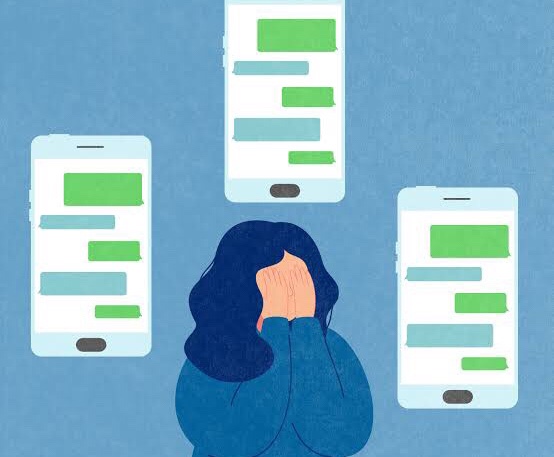
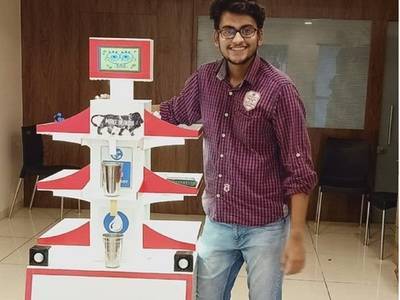
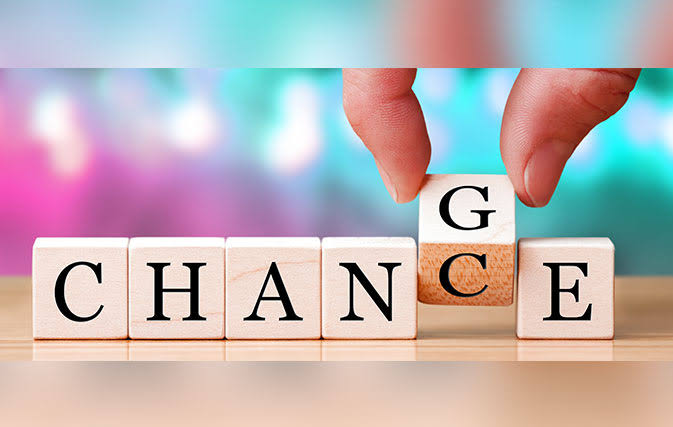




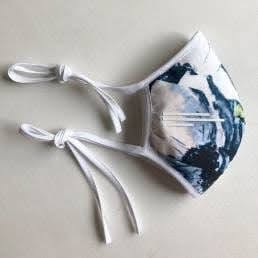






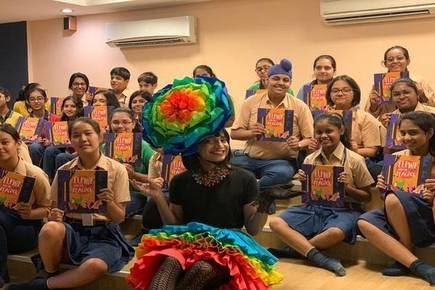



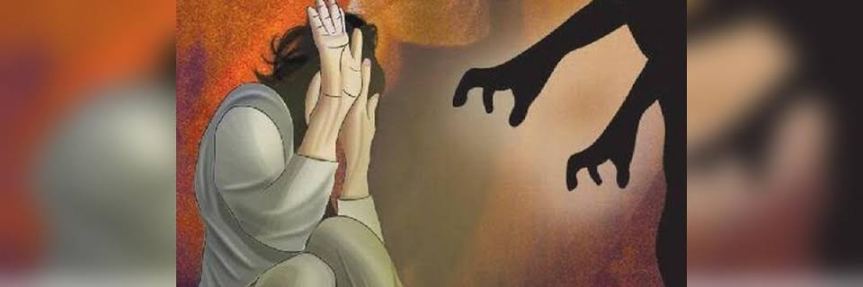
 Eduindex
You must be logged in to post a comment.